Compare commits
23 Commits
| Author | SHA1 | Date | |
|---|---|---|---|
 patil-suraj patil-suraj
|
ea238e821b | ||
|
patil-suraj
|
b6d1d670fc | ||
|
Dhruv Nair
|
4330a747d4 | ||
|
Sayak Paul
|
76de6a09fb | ||
|
Sayak Paul
|
25caf24ef9 | ||
|
Abubakar Abid
|
8db3c9bc9f | ||
|
Sayak Paul
|
e0e9f81971 | ||
|
M. Tolga Cangöz
|
5d848ec07c | ||
|
Dhruv Nair
|
4974b84564 | ||
|
Linoy Tsaban
|
83062fb872 | ||
|
Suraj Patil
|
b6d7e31d10 | ||
|
Anatoly Belikov
|
53e9aacc10 | ||
|
Dhruv Nair
|
41424466e3 | ||
|
Sayak Paul
|
95de1981c9 | ||
|
Kenneth Gerald Hamilton
|
0b45b58867 | ||
|
Beinsezii
|
d3986f18be | ||
|
Alexander Bonnet
|
ee6a3a993d | ||
|
Michael
|
b300517305 | ||
|
jnhuang
|
ac07b6dc6a | ||
|
Sayak Paul
|
46ab56a468 | ||
|
Sayak Paul
|
038ff70023 | ||
|
Manuel Brack
|
00eca4b887 | ||
|
Dhruv Nair
|
30132aba30 |
@@ -12,6 +12,7 @@ env:
|
||||
PYTEST_TIMEOUT: 600
|
||||
RUN_SLOW: yes
|
||||
RUN_NIGHTLY: yes
|
||||
SLACK_API_TOKEN: ${{ secrets.SLACK_CIFEEDBACK_BOT_TOKEN }}
|
||||
|
||||
jobs:
|
||||
run_nightly_tests:
|
||||
@@ -64,6 +65,7 @@ jobs:
|
||||
python -m uv pip install -e [quality,test]
|
||||
python -m uv pip install -U transformers@git+https://github.com/huggingface/transformers
|
||||
python -m uv pip install accelerate@git+https://github.com/huggingface/accelerate
|
||||
python -m uv pip install pytest-reportlog
|
||||
|
||||
- name: Environment
|
||||
run: |
|
||||
@@ -78,7 +80,8 @@ jobs:
|
||||
python -m pytest -n 1 --max-worker-restart=0 --dist=loadfile \
|
||||
-s -v -k "not Flax and not Onnx" \
|
||||
--make-reports=tests_${{ matrix.config.report }} \
|
||||
tests/
|
||||
--report-log=${{ matrix.config.report }}.log \
|
||||
tests/
|
||||
|
||||
- name: Run nightly Flax TPU tests
|
||||
if: ${{ matrix.config.framework == 'flax' }}
|
||||
@@ -89,6 +92,7 @@ jobs:
|
||||
python -m pytest -n 0 \
|
||||
-s -v -k "Flax" \
|
||||
--make-reports=tests_${{ matrix.config.report }} \
|
||||
--report-log=${{ matrix.config.report }}.log \
|
||||
tests/
|
||||
|
||||
- name: Run nightly ONNXRuntime CUDA tests
|
||||
@@ -100,6 +104,7 @@ jobs:
|
||||
python -m pytest -n 1 --max-worker-restart=0 --dist=loadfile \
|
||||
-s -v -k "Onnx" \
|
||||
--make-reports=tests_${{ matrix.config.report }} \
|
||||
--report-log=${{ matrix.config.report }}.log \
|
||||
tests/
|
||||
|
||||
- name: Failure short reports
|
||||
@@ -112,6 +117,12 @@ jobs:
|
||||
with:
|
||||
name: ${{ matrix.config.report }}_test_reports
|
||||
path: reports
|
||||
|
||||
- name: Generate Report and Notify Channel
|
||||
if: always()
|
||||
run: |
|
||||
pip install slack_sdk tabulate
|
||||
python scripts/log_reports.py >> $GITHUB_STEP_SUMMARY
|
||||
|
||||
run_nightly_tests_apple_m1:
|
||||
name: Nightly PyTorch MPS tests on MacOS
|
||||
@@ -140,6 +151,7 @@ jobs:
|
||||
${CONDA_RUN} python -m uv pip install -e [quality,test]
|
||||
${CONDA_RUN} python -m uv pip install torch torchvision torchaudio --extra-index-url https://download.pytorch.org/whl/cpu
|
||||
${CONDA_RUN} python -m uv pip install accelerate@git+https://github.com/huggingface/accelerate
|
||||
${CONDA_RUN} python -m uv pip install pytest-reportlog
|
||||
|
||||
- name: Environment
|
||||
shell: arch -arch arm64 bash {0}
|
||||
@@ -152,7 +164,9 @@ jobs:
|
||||
HF_HOME: /System/Volumes/Data/mnt/cache
|
||||
HUGGING_FACE_HUB_TOKEN: ${{ secrets.HUGGING_FACE_HUB_TOKEN }}
|
||||
run: |
|
||||
${CONDA_RUN} python -m pytest -n 1 -s -v --make-reports=tests_torch_mps tests/
|
||||
${CONDA_RUN} python -m pytest -n 1 -s -v --make-reports=tests_torch_mps \
|
||||
--report-log=tests_torch_mps.log \
|
||||
tests/
|
||||
|
||||
- name: Failure short reports
|
||||
if: ${{ failure() }}
|
||||
@@ -164,3 +178,9 @@ jobs:
|
||||
with:
|
||||
name: torch_mps_test_reports
|
||||
path: reports
|
||||
|
||||
- name: Generate Report and Notify Channel
|
||||
if: always()
|
||||
run: |
|
||||
pip install slack_sdk tabulate
|
||||
python scripts/log_reports.py >> $GITHUB_STEP_SUMMARY
|
||||
|
||||
@@ -0,0 +1,23 @@
|
||||
name: Notify Slack about a release
|
||||
|
||||
on:
|
||||
workflow_dispatch:
|
||||
release:
|
||||
types: [published]
|
||||
|
||||
jobs:
|
||||
build:
|
||||
runs-on: ubuntu-latest
|
||||
|
||||
steps:
|
||||
- uses: actions/checkout@v3
|
||||
|
||||
- name: Setup Python
|
||||
uses: actions/setup-python@v4
|
||||
with:
|
||||
python-version: '3.8'
|
||||
|
||||
- name: Notify Slack about the release
|
||||
env:
|
||||
SLACK_WEBHOOK_URL: ${{ secrets.SLACK_WEBHOOK_URL }}
|
||||
run: pip install requests && python utils/notify_slack_about_release.py
|
||||
@@ -0,0 +1,81 @@
|
||||
# Adapted from https://blog.deepjyoti30.dev/pypi-release-github-action
|
||||
|
||||
name: PyPI release
|
||||
|
||||
on:
|
||||
workflow_dispatch:
|
||||
push:
|
||||
tags:
|
||||
- "*"
|
||||
|
||||
jobs:
|
||||
find-and-checkout-latest-branch:
|
||||
runs-on: ubuntu-latest
|
||||
outputs:
|
||||
latest_branch: ${{ steps.set_latest_branch.outputs.latest_branch }}
|
||||
steps:
|
||||
- name: Checkout Repo
|
||||
uses: actions/checkout@v3
|
||||
|
||||
- name: Set up Python
|
||||
uses: actions/setup-python@v4
|
||||
with:
|
||||
python-version: '3.8'
|
||||
|
||||
- name: Fetch latest branch
|
||||
id: fetch_latest_branch
|
||||
run: |
|
||||
pip install -U requests packaging
|
||||
LATEST_BRANCH=$(python utils/fetch_latest_release_branch.py)
|
||||
echo "Latest branch: $LATEST_BRANCH"
|
||||
echo "latest_branch=$LATEST_BRANCH" >> $GITHUB_ENV
|
||||
|
||||
- name: Set latest branch output
|
||||
id: set_latest_branch
|
||||
run: echo "::set-output name=latest_branch::${{ env.latest_branch }}"
|
||||
|
||||
release:
|
||||
needs: find-and-checkout-latest-branch
|
||||
runs-on: ubuntu-latest
|
||||
|
||||
steps:
|
||||
- name: Checkout Repo
|
||||
uses: actions/checkout@v3
|
||||
with:
|
||||
ref: ${{ needs.find-and-checkout-latest-branch.outputs.latest_branch }}
|
||||
|
||||
- name: Setup Python
|
||||
uses: actions/setup-python@v4
|
||||
with:
|
||||
python-version: "3.8"
|
||||
|
||||
- name: Install dependencies
|
||||
run: |
|
||||
python -m pip install --upgrade pip
|
||||
pip install -U setuptools wheel twine
|
||||
pip install -U torch --index-url https://download.pytorch.org/whl/cpu
|
||||
pip install -U transformers
|
||||
|
||||
- name: Build the dist files
|
||||
run: python setup.py bdist_wheel && python setup.py sdist
|
||||
|
||||
- name: Publish to the test PyPI
|
||||
env:
|
||||
TWINE_USERNAME: ${{ secrets.TEST_PYPI_USERNAME }}
|
||||
TWINE_PASSWORD: ${{ secrets.TEST_PYPI_PASSWORD }}
|
||||
run: twine upload dist/* -r pypitest --repository-url=https://test.pypi.org/legacy/
|
||||
|
||||
- name: Test installing diffusers and importing
|
||||
run: |
|
||||
pip install diffusers && pip uninstall diffusers -y
|
||||
pip install -i https://testpypi.python.org/pypi diffusers
|
||||
python -c "from diffusers import __version__; print(__version__)"
|
||||
python -c "from diffusers import DiffusionPipeline; pipe = DiffusionPipeline.from_pretrained('fusing/unet-ldm-dummy-update'); pipe()"
|
||||
python -c "from diffusers import DiffusionPipeline; pipe = DiffusionPipeline.from_pretrained('hf-internal-testing/tiny-stable-diffusion-pipe', safety_checker=None); pipe('ah suh du')"
|
||||
python -c "from diffusers import *"
|
||||
|
||||
- name: Publish to PyPI
|
||||
env:
|
||||
TWINE_USERNAME: ${{ secrets.PYPI_USERNAME }}
|
||||
TWINE_PASSWORD: ${{ secrets.PYPI_PASSWORD }}
|
||||
run: twine upload dist/* -r pypi
|
||||
@@ -77,7 +77,7 @@ Please refer to the [How to use Stable Diffusion in Apple Silicon](https://huggi
|
||||
|
||||
## Quickstart
|
||||
|
||||
Generating outputs is super easy with 🤗 Diffusers. To generate an image from text, use the `from_pretrained` method to load any pretrained diffusion model (browse the [Hub](https://huggingface.co/models?library=diffusers&sort=downloads) for 19000+ checkpoints):
|
||||
Generating outputs is super easy with 🤗 Diffusers. To generate an image from text, use the `from_pretrained` method to load any pretrained diffusion model (browse the [Hub](https://huggingface.co/models?library=diffusers&sort=downloads) for 22000+ checkpoints):
|
||||
|
||||
```python
|
||||
from diffusers import DiffusionPipeline
|
||||
@@ -219,7 +219,7 @@ Also, say 👋 in our public Discord channel <a href="https://discord.gg/G7tWnz9
|
||||
- https://github.com/deep-floyd/IF
|
||||
- https://github.com/bentoml/BentoML
|
||||
- https://github.com/bmaltais/kohya_ss
|
||||
- +8000 other amazing GitHub repositories 💪
|
||||
- +9000 other amazing GitHub repositories 💪
|
||||
|
||||
Thank you for using us ❤️.
|
||||
|
||||
|
||||
@@ -104,6 +104,8 @@
|
||||
title: Latent Consistency Model-LoRA
|
||||
- local: using-diffusers/inference_with_lcm
|
||||
title: Latent Consistency Model
|
||||
- local: using-diffusers/inference_with_tcd_lora
|
||||
title: Trajectory Consistency Distillation-LoRA
|
||||
- local: using-diffusers/svd
|
||||
title: Stable Video Diffusion
|
||||
title: Specific pipeline examples
|
||||
@@ -304,6 +306,8 @@
|
||||
title: Latent Consistency Models
|
||||
- local: api/pipelines/latent_diffusion
|
||||
title: Latent Diffusion
|
||||
- local: api/pipelines/ledits_pp
|
||||
title: LEDITS++
|
||||
- local: api/pipelines/panorama
|
||||
title: MultiDiffusion
|
||||
- local: api/pipelines/musicldm
|
||||
@@ -396,6 +400,10 @@
|
||||
title: DPMSolverSDEScheduler
|
||||
- local: api/schedulers/singlestep_dpm_solver
|
||||
title: DPMSolverSinglestepScheduler
|
||||
- local: api/schedulers/edm_multistep_dpm_solver
|
||||
title: EDMDPMSolverMultistepScheduler
|
||||
- local: api/schedulers/edm_euler
|
||||
title: EDMEulerScheduler
|
||||
- local: api/schedulers/euler_ancestral
|
||||
title: EulerAncestralDiscreteScheduler
|
||||
- local: api/schedulers/euler
|
||||
|
||||
@@ -0,0 +1,54 @@
|
||||
<!--Copyright 2023 The HuggingFace Team. All rights reserved.
|
||||
|
||||
Licensed under the Apache License, Version 2.0 (the "License"); you may not use this file except in compliance with
|
||||
the License. You may obtain a copy of the License at
|
||||
|
||||
http://www.apache.org/licenses/LICENSE-2.0
|
||||
|
||||
Unless required by applicable law or agreed to in writing, software distributed under the License is distributed on
|
||||
an "AS IS" BASIS, WITHOUT WARRANTIES OR CONDITIONS OF ANY KIND, either express or implied. See the License for the
|
||||
specific language governing permissions and limitations under the License.
|
||||
-->
|
||||
|
||||
# LEDITS++
|
||||
|
||||
LEDITS++ was proposed in [LEDITS++: Limitless Image Editing using Text-to-Image Models](https://huggingface.co/papers/2311.16711) by Manuel Brack, Felix Friedrich, Katharina Kornmeier, Linoy Tsaban, Patrick Schramowski, Kristian Kersting, Apolinário Passos.
|
||||
|
||||
The abstract from the paper is:
|
||||
|
||||
*Text-to-image diffusion models have recently received increasing interest for their astonishing ability to produce high-fidelity images from solely text inputs. Subsequent research efforts aim to exploit and apply their capabilities to real image editing. However, existing image-to-image methods are often inefficient, imprecise, and of limited versatility. They either require time-consuming fine-tuning, deviate unnecessarily strongly from the input image, and/or lack support for multiple, simultaneous edits. To address these issues, we introduce LEDITS++, an efficient yet versatile and precise textual image manipulation technique. LEDITS++'s novel inversion approach requires no tuning nor optimization and produces high-fidelity results with a few diffusion steps. Second, our methodology supports multiple simultaneous edits and is architecture-agnostic. Third, we use a novel implicit masking technique that limits changes to relevant image regions. We propose the novel TEdBench++ benchmark as part of our exhaustive evaluation. Our results demonstrate the capabilities of LEDITS++ and its improvements over previous methods. The project page is available at https://leditsplusplus-project.static.hf.space .*
|
||||
|
||||
<Tip>
|
||||
|
||||
You can find additional information about LEDITS++ on the [project page](https://leditsplusplus-project.static.hf.space/index.html) and try it out in a [demo](https://huggingface.co/spaces/editing-images/leditsplusplus).
|
||||
|
||||
</Tip>
|
||||
|
||||
<Tip warning={true}>
|
||||
Due to some backward compatability issues with the current diffusers implementation of [`~schedulers.DPMSolverMultistepScheduler`] this implementation of LEdits++ can no longer guarantee perfect inversion.
|
||||
This issue is unlikely to have any noticeable effects on applied use-cases. However, we provide an alternative implementation that guarantees perfect inversion in a dedicated [GitHub repo](https://github.com/ml-research/ledits_pp).
|
||||
</Tip>
|
||||
|
||||
We provide two distinct pipelines based on different pre-trained models.
|
||||
|
||||
## LEditsPPPipelineStableDiffusion
|
||||
[[autodoc]] pipelines.ledits_pp.LEditsPPPipelineStableDiffusion
|
||||
- all
|
||||
- __call__
|
||||
- invert
|
||||
|
||||
## LEditsPPPipelineStableDiffusionXL
|
||||
[[autodoc]] pipelines.ledits_pp.LEditsPPPipelineStableDiffusionXL
|
||||
- all
|
||||
- __call__
|
||||
- invert
|
||||
|
||||
|
||||
|
||||
## LEditsPPDiffusionPipelineOutput
|
||||
[[autodoc]] pipelines.ledits_pp.pipeline_output.LEditsPPDiffusionPipelineOutput
|
||||
- all
|
||||
|
||||
## LEditsPPInversionPipelineOutput
|
||||
[[autodoc]] pipelines.ledits_pp.pipeline_output.LEditsPPInversionPipelineOutput
|
||||
- all
|
||||
@@ -57,6 +57,7 @@ The table below lists all the pipelines currently available in 🤗 Diffusers an
|
||||
| [Latent Consistency Models](latent_consistency_models) | text2image |
|
||||
| [Latent Diffusion](latent_diffusion) | text2image, super-resolution |
|
||||
| [LDM3D](stable_diffusion/ldm3d_diffusion) | text2image, text-to-3D, text-to-pano, upscaling |
|
||||
| [LEDITS++](ledits_pp) | image editing |
|
||||
| [MultiDiffusion](panorama) | text2image |
|
||||
| [MusicLDM](musicldm) | text2audio |
|
||||
| [Paint by Example](paint_by_example) | inpainting |
|
||||
|
||||
@@ -30,6 +30,6 @@ Make sure to check out the Schedulers [guide](../../using-diffusers/schedulers)
|
||||
- all
|
||||
- __call__
|
||||
|
||||
## StableDiffusionSafePipelineOutput
|
||||
## SemanticStableDiffusionPipelineOutput
|
||||
[[autodoc]] pipelines.semantic_stable_diffusion.pipeline_output.SemanticStableDiffusionPipelineOutput
|
||||
- all
|
||||
|
||||
@@ -172,3 +172,41 @@ inpaint = StableDiffusionInpaintPipeline(**text2img.components)
|
||||
|
||||
# now you can use text2img(...), img2img(...), inpaint(...) just like the call methods of each respective pipeline
|
||||
```
|
||||
|
||||
### Create web demos using `gradio`
|
||||
|
||||
The Stable Diffusion pipelines are automatically supported in [Gradio](https://github.com/gradio-app/gradio/), a library that makes creating beautiful and user-friendly machine learning apps on the web a breeze. First, make sure you have Gradio installed:
|
||||
|
||||
```
|
||||
pip install -U gradio
|
||||
```
|
||||
|
||||
Then, create a web demo around any Stable Diffusion-based pipeline. For example, you can create an image generation pipeline in a single line of code with Gradio's [`Interface.from_pipeline`](https://www.gradio.app/docs/interface#interface-from-pipeline) function:
|
||||
|
||||
```py
|
||||
from diffusers import StableDiffusionPipeline
|
||||
import gradio as gr
|
||||
|
||||
pipe = StableDiffusionPipeline.from_pretrained("CompVis/stable-diffusion-v1-4")
|
||||
|
||||
gr.Interface.from_pipeline(pipe).launch()
|
||||
```
|
||||
|
||||
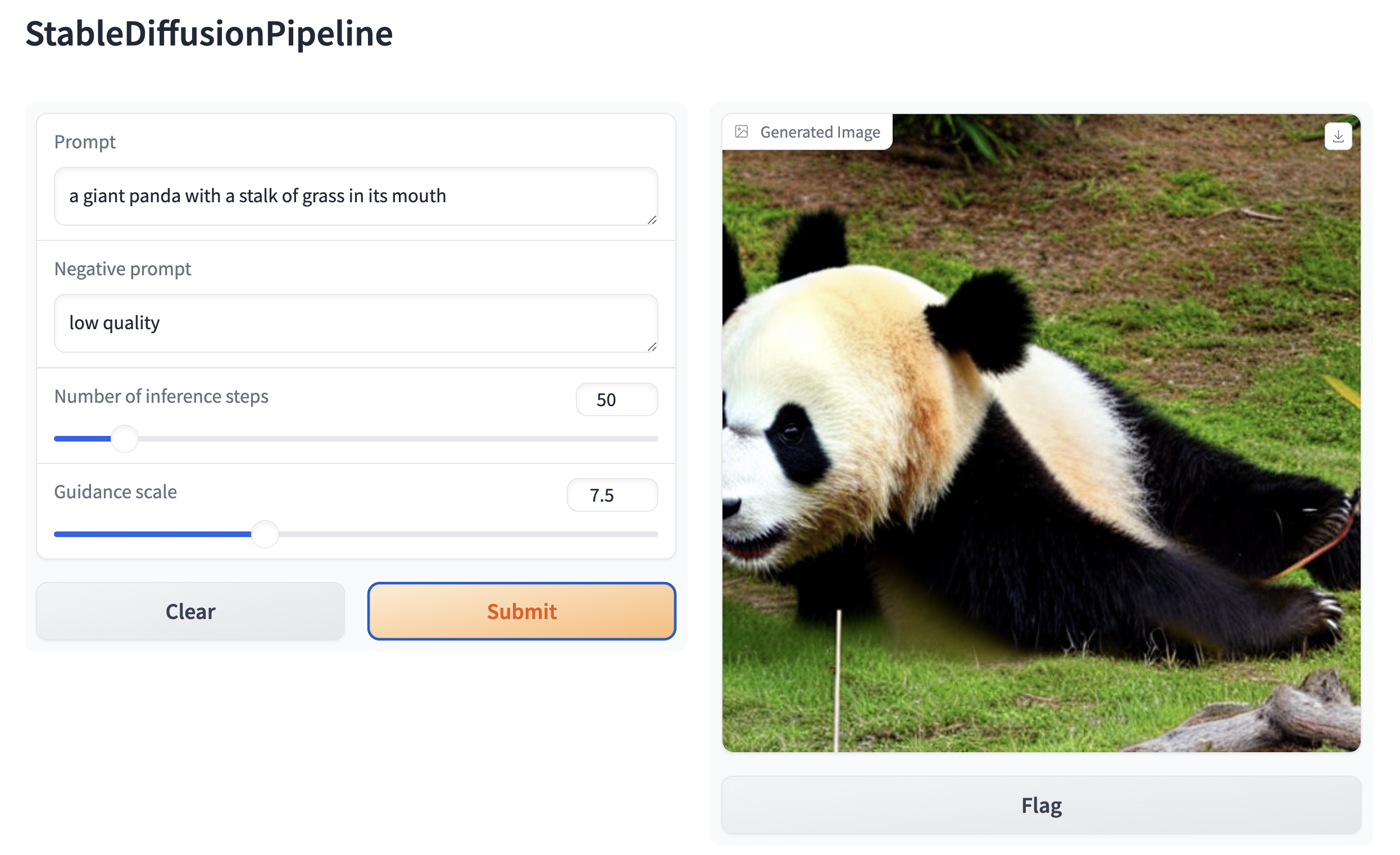
which opens an intuitive drag-and-drop interface in your browser:
|
||||
|
||||
|
||||
|
||||
Similarly, you could create a demo for an image-to-image pipeline with:
|
||||
|
||||
```py
|
||||
from diffusers import StableDiffusionImg2ImgPipeline
|
||||
import gradio as gr
|
||||
|
||||
|
||||
pipe = StableDiffusionImg2ImgPipeline.from_pretrained("runwayml/stable-diffusion-v1-5")
|
||||
|
||||
gr.Interface.from_pipeline(pipe).launch()
|
||||
```
|
||||
|
||||
By default, the web demo runs on a local server. If you'd like to share it with others, you can generate a temporary public
|
||||
link by setting `share=True` in `launch()`. Or, you can host your demo on [Hugging Face Spaces](https://huggingface.co/spaces)https://huggingface.co/spaces for a permanent link.
|
||||
@@ -0,0 +1,22 @@
|
||||
<!--Copyright 2024 The HuggingFace Team. All rights reserved.
|
||||
|
||||
Licensed under the Apache License, Version 2.0 (the "License"); you may not use this file except in compliance with
|
||||
the License. You may obtain a copy of the License at
|
||||
|
||||
http://www.apache.org/licenses/LICENSE-2.0
|
||||
|
||||
Unless required by applicable law or agreed to in writing, software distributed under the License is distributed on
|
||||
an "AS IS" BASIS, WITHOUT WARRANTIES OR CONDITIONS OF ANY KIND, either express or implied. See the License for the
|
||||
specific language governing permissions and limitations under the License.
|
||||
-->
|
||||
|
||||
# EDMEulerScheduler
|
||||
|
||||
The Karras formulation of the Euler scheduler (Algorithm 2) from the [Elucidating the Design Space of Diffusion-Based Generative Models](https://huggingface.co/papers/2206.00364) paper by Karras et al. This is a fast scheduler which can often generate good outputs in 20-30 steps. The scheduler is based on the original [k-diffusion](https://github.com/crowsonkb/k-diffusion/blob/481677d114f6ea445aa009cf5bd7a9cdee909e47/k_diffusion/sampling.py#L51) implementation by [Katherine Crowson](https://github.com/crowsonkb/).
|
||||
|
||||
|
||||
## EDMEulerScheduler
|
||||
[[autodoc]] EDMEulerScheduler
|
||||
|
||||
## EDMEulerSchedulerOutput
|
||||
[[autodoc]] schedulers.scheduling_edm_euler.EDMEulerSchedulerOutput
|
||||
@@ -0,0 +1,24 @@
|
||||
<!--Copyright 2024 The HuggingFace Team. All rights reserved.
|
||||
|
||||
Licensed under the Apache License, Version 2.0 (the "License"); you may not use this file except in compliance with
|
||||
the License. You may obtain a copy of the License at
|
||||
|
||||
http://www.apache.org/licenses/LICENSE-2.0
|
||||
|
||||
Unless required by applicable law or agreed to in writing, software distributed under the License is distributed on
|
||||
an "AS IS" BASIS, WITHOUT WARRANTIES OR CONDITIONS OF ANY KIND, either express or implied. See the License for the
|
||||
specific language governing permissions and limitations under the License.
|
||||
-->
|
||||
|
||||
# EDMDPMSolverMultistepScheduler
|
||||
|
||||
`EDMDPMSolverMultistepScheduler` is a [Karras formulation](https://huggingface.co/papers/2206.00364) of `DPMSolverMultistep`, a multistep scheduler from [DPM-Solver: A Fast ODE Solver for Diffusion Probabilistic Model Sampling in Around 10 Steps](https://huggingface.co/papers/2206.00927) and [DPM-Solver++: Fast Solver for Guided Sampling of Diffusion Probabilistic Models](https://huggingface.co/papers/2211.01095) by Cheng Lu, Yuhao Zhou, Fan Bao, Jianfei Chen, Chongxuan Li, and Jun Zhu.
|
||||
|
||||
DPMSolver (and the improved version DPMSolver++) is a fast dedicated high-order solver for diffusion ODEs with convergence order guarantee. Empirically, DPMSolver sampling with only 20 steps can generate high-quality
|
||||
samples, and it can generate quite good samples even in 10 steps.
|
||||
|
||||
## EDMDPMSolverMultistepScheduler
|
||||
[[autodoc]] EDMDPMSolverMultistepScheduler
|
||||
|
||||
## SchedulerOutput
|
||||
[[autodoc]] schedulers.scheduling_utils.SchedulerOutput
|
||||
@@ -0,0 +1,438 @@
|
||||
<!--Copyright 2024 The HuggingFace Team. All rights reserved.
|
||||
|
||||
Licensed under the Apache License, Version 2.0 (the "License"); you may not use this file except in compliance with
|
||||
the License. You may obtain a copy of the License at
|
||||
|
||||
http://www.apache.org/licenses/LICENSE-2.0
|
||||
|
||||
Unless required by applicable law or agreed to in writing, software distributed under the License is distributed on
|
||||
an "AS IS" BASIS, WITHOUT WARRANTIES OR CONDITIONS OF ANY KIND, either express or implied. See the License for the
|
||||
specific language governing permissions and limitations under the License.
|
||||
-->
|
||||
|
||||
[[open-in-colab]]
|
||||
|
||||
# Trajectory Consistency Distillation-LoRA
|
||||
|
||||
Trajectory Consistency Distillation (TCD) enables a model to generate higher quality and more detailed images with fewer steps. Moreover, owing to the effective error mitigation during the distillation process, TCD demonstrates superior performance even under conditions of large inference steps.
|
||||
|
||||
The major advantages of TCD are:
|
||||
|
||||
- Better than Teacher: TCD demonstrates superior generative quality at both small and large inference steps and exceeds the performance of [DPM-Solver++(2S)](../../api/schedulers/multistep_dpm_solver) with Stable Diffusion XL (SDXL). There is no additional discriminator or LPIPS supervision included during TCD training.
|
||||
|
||||
- Flexible Inference Steps: The inference steps for TCD sampling can be freely adjusted without adversely affecting the image quality.
|
||||
|
||||
- Freely change detail level: During inference, the level of detail in the image can be adjusted with a single hyperparameter, *gamma*.
|
||||
|
||||
> [!TIP]
|
||||
> For more technical details of TCD, please refer to the [paper](https://arxiv.org/abs/2402.19159) or official [project page](https://mhh0318.github.io/tcd/)).
|
||||
|
||||
For large models like SDXL, TCD is trained with [LoRA](https://huggingface.co/docs/peft/conceptual_guides/adapter#low-rank-adaptation-lora) to reduce memory usage. This is also useful because you can reuse LoRAs between different finetuned models, as long as they share the same base model, without further training.
|
||||
|
||||
|
||||
|
||||
This guide will show you how to perform inference with TCD-LoRAs for a variety of tasks like text-to-image and inpainting, as well as how you can easily combine TCD-LoRAs with other adapters. Choose one of the supported base model and it's corresponding TCD-LoRA checkpoint from the table below to get started.
|
||||
|
||||
| Base model | TCD-LoRA checkpoint |
|
||||
|-------------------------------------------------------------------------------------------------|----------------------------------------------------------------|
|
||||
| [stable-diffusion-v1-5](https://huggingface.co/runwayml/stable-diffusion-v1-5) | [TCD-SD15](https://huggingface.co/h1t/TCD-SD15-LoRA) |
|
||||
| [stable-diffusion-2-1-base](https://huggingface.co/stabilityai/stable-diffusion-2-1-base) | [TCD-SD21-base](https://huggingface.co/h1t/TCD-SD21-base-LoRA) |
|
||||
| [stable-diffusion-xl-base-1.0](https://huggingface.co/stabilityai/stable-diffusion-xl-base-1.0) | [TCD-SDXL](https://huggingface.co/h1t/TCD-SDXL-LoRA) |
|
||||
|
||||
|
||||
Make sure you have [PEFT](https://github.com/huggingface/peft) installed for better LoRA support.
|
||||
|
||||
```bash
|
||||
pip install -U peft
|
||||
```
|
||||
|
||||
## General tasks
|
||||
|
||||
In this guide, let's use the [`StableDiffusionXLPipeline`] and the [`TCDScheduler`]. Use the [`~StableDiffusionPipeline.load_lora_weights`] method to load the SDXL-compatible TCD-LoRA weights.
|
||||
|
||||
A few tips to keep in mind for TCD-LoRA inference are to:
|
||||
|
||||
- Keep the `num_inference_steps` between 4 and 50
|
||||
- Set `eta` (used to control stochasticity at each step) between 0 and 1. You should use a higher `eta` when increasing the number of inference steps, but the downside is that a larger `eta` in [`TCDScheduler`] leads to blurrier images. A value of 0.3 is recommended to produce good results.
|
||||
|
||||
<hfoptions id="tasks">
|
||||
<hfoption id="text-to-image">
|
||||
|
||||
```python
|
||||
import torch
|
||||
from diffusers import StableDiffusionXLPipeline, TCDScheduler
|
||||
|
||||
device = "cuda"
|
||||
base_model_id = "stabilityai/stable-diffusion-xl-base-1.0"
|
||||
tcd_lora_id = "h1t/TCD-SDXL-LoRA"
|
||||
|
||||
pipe = StableDiffusionXLPipeline.from_pretrained(base_model_id, torch_dtype=torch.float16, variant="fp16").to(device)
|
||||
pipe.scheduler = TCDScheduler.from_config(pipe.scheduler.config)
|
||||
|
||||
pipe.load_lora_weights(tcd_lora_id)
|
||||
pipe.fuse_lora()
|
||||
|
||||
prompt = "Painting of the orange cat Otto von Garfield, Count of Bismarck-Schönhausen, Duke of Lauenburg, Minister-President of Prussia. Depicted wearing a Prussian Pickelhaube and eating his favorite meal - lasagna."
|
||||
|
||||
image = pipe(
|
||||
prompt=prompt,
|
||||
num_inference_steps=4,
|
||||
guidance_scale=0,
|
||||
eta=0.3,
|
||||
generator=torch.Generator(device=device).manual_seed(0),
|
||||
).images[0]
|
||||
```
|
||||
|
||||

|
||||
|
||||
</hfoption>
|
||||
|
||||
<hfoption id="inpainting">
|
||||
|
||||
```python
|
||||
import torch
|
||||
from diffusers import AutoPipelineForInpainting, TCDScheduler
|
||||
from diffusers.utils import load_image, make_image_grid
|
||||
|
||||
device = "cuda"
|
||||
base_model_id = "diffusers/stable-diffusion-xl-1.0-inpainting-0.1"
|
||||
tcd_lora_id = "h1t/TCD-SDXL-LoRA"
|
||||
|
||||
pipe = AutoPipelineForInpainting.from_pretrained(base_model_id, torch_dtype=torch.float16, variant="fp16").to(device)
|
||||
pipe.scheduler = TCDScheduler.from_config(pipe.scheduler.config)
|
||||
|
||||
pipe.load_lora_weights(tcd_lora_id)
|
||||
pipe.fuse_lora()
|
||||
|
||||
img_url = "https://raw.githubusercontent.com/CompVis/latent-diffusion/main/data/inpainting_examples/overture-creations-5sI6fQgYIuo.png"
|
||||
mask_url = "https://raw.githubusercontent.com/CompVis/latent-diffusion/main/data/inpainting_examples/overture-creations-5sI6fQgYIuo_mask.png"
|
||||
|
||||
init_image = load_image(img_url).resize((1024, 1024))
|
||||
mask_image = load_image(mask_url).resize((1024, 1024))
|
||||
|
||||
prompt = "a tiger sitting on a park bench"
|
||||
|
||||
image = pipe(
|
||||
prompt=prompt,
|
||||
image=init_image,
|
||||
mask_image=mask_image,
|
||||
num_inference_steps=8,
|
||||
guidance_scale=0,
|
||||
eta=0.3,
|
||||
strength=0.99, # make sure to use `strength` below 1.0
|
||||
generator=torch.Generator(device=device).manual_seed(0),
|
||||
).images[0]
|
||||
|
||||
grid_image = make_image_grid([init_image, mask_image, image], rows=1, cols=3)
|
||||
```
|
||||
|
||||

|
||||
|
||||
|
||||
</hfoption>
|
||||
</hfoptions>
|
||||
|
||||
## Community models
|
||||
|
||||
TCD-LoRA also works with many community finetuned models and plugins. For example, load the [animagine-xl-3.0](https://huggingface.co/cagliostrolab/animagine-xl-3.0) checkpoint which is a community finetuned version of SDXL for generating anime images.
|
||||
|
||||
```python
|
||||
import torch
|
||||
from diffusers import StableDiffusionXLPipeline, TCDScheduler
|
||||
|
||||
device = "cuda"
|
||||
base_model_id = "cagliostrolab/animagine-xl-3.0"
|
||||
tcd_lora_id = "h1t/TCD-SDXL-LoRA"
|
||||
|
||||
pipe = StableDiffusionXLPipeline.from_pretrained(base_model_id, torch_dtype=torch.float16, variant="fp16").to(device)
|
||||
pipe.scheduler = TCDScheduler.from_config(pipe.scheduler.config)
|
||||
|
||||
pipe.load_lora_weights(tcd_lora_id)
|
||||
pipe.fuse_lora()
|
||||
|
||||
prompt = "A man, clad in a meticulously tailored military uniform, stands with unwavering resolve. The uniform boasts intricate details, and his eyes gleam with determination. Strands of vibrant, windswept hair peek out from beneath the brim of his cap."
|
||||
|
||||
image = pipe(
|
||||
prompt=prompt,
|
||||
num_inference_steps=8,
|
||||
guidance_scale=0,
|
||||
eta=0.3,
|
||||
generator=torch.Generator(device=device).manual_seed(0),
|
||||
).images[0]
|
||||
```
|
||||
|
||||

|
||||
|
||||
TCD-LoRA also supports other LoRAs trained on different styles. For example, let's load the [TheLastBen/Papercut_SDXL](https://huggingface.co/TheLastBen/Papercut_SDXL) LoRA and fuse it with the TCD-LoRA with the [`~loaders.UNet2DConditionLoadersMixin.set_adapters`] method.
|
||||
|
||||
> [!TIP]
|
||||
> Check out the [Merge LoRAs](merge_loras) guide to learn more about efficient merging methods.
|
||||
|
||||
```python
|
||||
import torch
|
||||
from diffusers import StableDiffusionXLPipeline
|
||||
from scheduling_tcd import TCDScheduler
|
||||
|
||||
device = "cuda"
|
||||
base_model_id = "stabilityai/stable-diffusion-xl-base-1.0"
|
||||
tcd_lora_id = "h1t/TCD-SDXL-LoRA"
|
||||
styled_lora_id = "TheLastBen/Papercut_SDXL"
|
||||
|
||||
pipe = StableDiffusionXLPipeline.from_pretrained(base_model_id, torch_dtype=torch.float16, variant="fp16").to(device)
|
||||
pipe.scheduler = TCDScheduler.from_config(pipe.scheduler.config)
|
||||
|
||||
pipe.load_lora_weights(tcd_lora_id, adapter_name="tcd")
|
||||
pipe.load_lora_weights(styled_lora_id, adapter_name="style")
|
||||
pipe.set_adapters(["tcd", "style"], adapter_weights=[1.0, 1.0])
|
||||
|
||||
prompt = "papercut of a winter mountain, snow"
|
||||
|
||||
image = pipe(
|
||||
prompt=prompt,
|
||||
num_inference_steps=4,
|
||||
guidance_scale=0,
|
||||
eta=0.3,
|
||||
generator=torch.Generator(device=device).manual_seed(0),
|
||||
).images[0]
|
||||
```
|
||||
|
||||

|
||||
|
||||
|
||||
## Adapters
|
||||
|
||||
TCD-LoRA is very versatile, and it can be combined with other adapter types like ControlNets, IP-Adapter, and AnimateDiff.
|
||||
|
||||
<hfoptions id="adapters">
|
||||
<hfoption id="ControlNet">
|
||||
|
||||
### Depth ControlNet
|
||||
|
||||
```python
|
||||
import torch
|
||||
import numpy as np
|
||||
from PIL import Image
|
||||
from transformers import DPTFeatureExtractor, DPTForDepthEstimation
|
||||
from diffusers import ControlNetModel, StableDiffusionXLControlNetPipeline
|
||||
from diffusers.utils import load_image, make_image_grid
|
||||
from scheduling_tcd import TCDScheduler
|
||||
|
||||
device = "cuda"
|
||||
depth_estimator = DPTForDepthEstimation.from_pretrained("Intel/dpt-hybrid-midas").to(device)
|
||||
feature_extractor = DPTFeatureExtractor.from_pretrained("Intel/dpt-hybrid-midas")
|
||||
|
||||
def get_depth_map(image):
|
||||
image = feature_extractor(images=image, return_tensors="pt").pixel_values.to(device)
|
||||
with torch.no_grad(), torch.autocast(device):
|
||||
depth_map = depth_estimator(image).predicted_depth
|
||||
|
||||
depth_map = torch.nn.functional.interpolate(
|
||||
depth_map.unsqueeze(1),
|
||||
size=(1024, 1024),
|
||||
mode="bicubic",
|
||||
align_corners=False,
|
||||
)
|
||||
depth_min = torch.amin(depth_map, dim=[1, 2, 3], keepdim=True)
|
||||
depth_max = torch.amax(depth_map, dim=[1, 2, 3], keepdim=True)
|
||||
depth_map = (depth_map - depth_min) / (depth_max - depth_min)
|
||||
image = torch.cat([depth_map] * 3, dim=1)
|
||||
|
||||
image = image.permute(0, 2, 3, 1).cpu().numpy()[0]
|
||||
image = Image.fromarray((image * 255.0).clip(0, 255).astype(np.uint8))
|
||||
return image
|
||||
|
||||
base_model_id = "stabilityai/stable-diffusion-xl-base-1.0"
|
||||
controlnet_id = "diffusers/controlnet-depth-sdxl-1.0"
|
||||
tcd_lora_id = "h1t/TCD-SDXL-LoRA"
|
||||
|
||||
controlnet = ControlNetModel.from_pretrained(
|
||||
controlnet_id,
|
||||
torch_dtype=torch.float16,
|
||||
variant="fp16",
|
||||
).to(device)
|
||||
pipe = StableDiffusionXLControlNetPipeline.from_pretrained(
|
||||
base_model_id,
|
||||
controlnet=controlnet,
|
||||
torch_dtype=torch.float16,
|
||||
variant="fp16",
|
||||
).to(device)
|
||||
pipe.enable_model_cpu_offload()
|
||||
|
||||
pipe.scheduler = TCDScheduler.from_config(pipe.scheduler.config)
|
||||
|
||||
pipe.load_lora_weights(tcd_lora_id)
|
||||
pipe.fuse_lora()
|
||||
|
||||
prompt = "stormtrooper lecture, photorealistic"
|
||||
|
||||
image = load_image("https://huggingface.co/lllyasviel/sd-controlnet-depth/resolve/main/images/stormtrooper.png")
|
||||
depth_image = get_depth_map(image)
|
||||
|
||||
controlnet_conditioning_scale = 0.5 # recommended for good generalization
|
||||
|
||||
image = pipe(
|
||||
prompt,
|
||||
image=depth_image,
|
||||
num_inference_steps=4,
|
||||
guidance_scale=0,
|
||||
eta=0.3,
|
||||
controlnet_conditioning_scale=controlnet_conditioning_scale,
|
||||
generator=torch.Generator(device=device).manual_seed(0),
|
||||
).images[0]
|
||||
|
||||
grid_image = make_image_grid([depth_image, image], rows=1, cols=2)
|
||||
```
|
||||
|
||||

|
||||
|
||||
### Canny ControlNet
|
||||
```python
|
||||
import torch
|
||||
from diffusers import ControlNetModel, StableDiffusionXLControlNetPipeline
|
||||
from diffusers.utils import load_image, make_image_grid
|
||||
from scheduling_tcd import TCDScheduler
|
||||
|
||||
device = "cuda"
|
||||
base_model_id = "stabilityai/stable-diffusion-xl-base-1.0"
|
||||
controlnet_id = "diffusers/controlnet-canny-sdxl-1.0"
|
||||
tcd_lora_id = "h1t/TCD-SDXL-LoRA"
|
||||
|
||||
controlnet = ControlNetModel.from_pretrained(
|
||||
controlnet_id,
|
||||
torch_dtype=torch.float16,
|
||||
variant="fp16",
|
||||
).to(device)
|
||||
pipe = StableDiffusionXLControlNetPipeline.from_pretrained(
|
||||
base_model_id,
|
||||
controlnet=controlnet,
|
||||
torch_dtype=torch.float16,
|
||||
variant="fp16",
|
||||
).to(device)
|
||||
pipe.enable_model_cpu_offload()
|
||||
|
||||
pipe.scheduler = TCDScheduler.from_config(pipe.scheduler.config)
|
||||
|
||||
pipe.load_lora_weights(tcd_lora_id)
|
||||
pipe.fuse_lora()
|
||||
|
||||
prompt = "ultrarealistic shot of a furry blue bird"
|
||||
|
||||
canny_image = load_image("https://huggingface.co/datasets/hf-internal-testing/diffusers-images/resolve/main/sd_controlnet/bird_canny.png")
|
||||
|
||||
controlnet_conditioning_scale = 0.5 # recommended for good generalization
|
||||
|
||||
image = pipe(
|
||||
prompt,
|
||||
image=canny_image,
|
||||
num_inference_steps=4,
|
||||
guidance_scale=0,
|
||||
eta=0.3,
|
||||
controlnet_conditioning_scale=controlnet_conditioning_scale,
|
||||
generator=torch.Generator(device=device).manual_seed(0),
|
||||
).images[0]
|
||||
|
||||
grid_image = make_image_grid([canny_image, image], rows=1, cols=2)
|
||||
```
|
||||

|
||||
|
||||
<Tip>
|
||||
The inference parameters in this example might not work for all examples, so we recommend you to try different values for `num_inference_steps`, `guidance_scale`, `controlnet_conditioning_scale` and `cross_attention_kwargs` parameters and choose the best one.
|
||||
</Tip>
|
||||
|
||||
</hfoption>
|
||||
<hfoption id="IP-Adapter">
|
||||
|
||||
This example shows how to use the TCD-LoRA with the [IP-Adapter](https://github.com/tencent-ailab/IP-Adapter/tree/main) and SDXL.
|
||||
|
||||
```python
|
||||
import torch
|
||||
from diffusers import StableDiffusionXLPipeline
|
||||
from diffusers.utils import load_image, make_image_grid
|
||||
|
||||
from ip_adapter import IPAdapterXL
|
||||
from scheduling_tcd import TCDScheduler
|
||||
|
||||
device = "cuda"
|
||||
base_model_path = "stabilityai/stable-diffusion-xl-base-1.0"
|
||||
image_encoder_path = "sdxl_models/image_encoder"
|
||||
ip_ckpt = "sdxl_models/ip-adapter_sdxl.bin"
|
||||
tcd_lora_id = "h1t/TCD-SDXL-LoRA"
|
||||
|
||||
pipe = StableDiffusionXLPipeline.from_pretrained(
|
||||
base_model_path,
|
||||
torch_dtype=torch.float16,
|
||||
variant="fp16"
|
||||
)
|
||||
pipe.scheduler = TCDScheduler.from_config(pipe.scheduler.config)
|
||||
|
||||
pipe.load_lora_weights(tcd_lora_id)
|
||||
pipe.fuse_lora()
|
||||
|
||||
ip_model = IPAdapterXL(pipe, image_encoder_path, ip_ckpt, device)
|
||||
|
||||
ref_image = load_image("https://raw.githubusercontent.com/tencent-ailab/IP-Adapter/main/assets/images/woman.png").resize((512, 512))
|
||||
|
||||
prompt = "best quality, high quality, wearing sunglasses"
|
||||
|
||||
image = ip_model.generate(
|
||||
pil_image=ref_image,
|
||||
prompt=prompt,
|
||||
scale=0.5,
|
||||
num_samples=1,
|
||||
num_inference_steps=4,
|
||||
guidance_scale=0,
|
||||
eta=0.3,
|
||||
seed=0,
|
||||
)[0]
|
||||
|
||||
grid_image = make_image_grid([ref_image, image], rows=1, cols=2)
|
||||
```
|
||||
|
||||

|
||||
|
||||
|
||||
|
||||
</hfoption>
|
||||
<hfoption id="AnimateDiff">
|
||||
|
||||
[`AnimateDiff`] allows animating images using Stable Diffusion models. TCD-LoRA can substantially accelerate the process without degrading image quality. The quality of animation with TCD-LoRA and AnimateDiff has a more lucid outcome.
|
||||
|
||||
```python
|
||||
import torch
|
||||
from diffusers import MotionAdapter, AnimateDiffPipeline, DDIMScheduler
|
||||
from scheduling_tcd import TCDScheduler
|
||||
from diffusers.utils import export_to_gif
|
||||
|
||||
adapter = MotionAdapter.from_pretrained("guoyww/animatediff-motion-adapter-v1-5")
|
||||
pipe = AnimateDiffPipeline.from_pretrained(
|
||||
"frankjoshua/toonyou_beta6",
|
||||
motion_adapter=adapter,
|
||||
).to("cuda")
|
||||
|
||||
# set TCDScheduler
|
||||
pipe.scheduler = TCDScheduler.from_config(pipe.scheduler.config)
|
||||
|
||||
# load TCD LoRA
|
||||
pipe.load_lora_weights("h1t/TCD-SD15-LoRA", adapter_name="tcd")
|
||||
pipe.load_lora_weights("guoyww/animatediff-motion-lora-zoom-in", weight_name="diffusion_pytorch_model.safetensors", adapter_name="motion-lora")
|
||||
|
||||
pipe.set_adapters(["tcd", "motion-lora"], adapter_weights=[1.0, 1.2])
|
||||
|
||||
prompt = "best quality, masterpiece, 1girl, looking at viewer, blurry background, upper body, contemporary, dress"
|
||||
generator = torch.manual_seed(0)
|
||||
frames = pipe(
|
||||
prompt=prompt,
|
||||
num_inference_steps=5,
|
||||
guidance_scale=0,
|
||||
cross_attention_kwargs={"scale": 1},
|
||||
num_frames=24,
|
||||
eta=0.3,
|
||||
generator=generator
|
||||
).frames[0]
|
||||
export_to_gif(frames, "animation.gif")
|
||||
```
|
||||
|
||||

|
||||
|
||||
</hfoption>
|
||||
</hfoptions>
|
||||
@@ -259,6 +259,50 @@ pip install git+https://github.com/huggingface/peft.git
|
||||
**Inference**
|
||||
The inference is the same as if you train a regular LoRA 🤗
|
||||
|
||||
## Conducting EDM-style training
|
||||
|
||||
It's now possible to perform EDM-style training as proposed in [Elucidating the Design Space of Diffusion-Based Generative Models](https://arxiv.org/abs/2206.00364).
|
||||
|
||||
simply set:
|
||||
|
||||
```diff
|
||||
+ --do_edm_style_training \
|
||||
```
|
||||
|
||||
Other SDXL-like models that use the EDM formulation, such as [playgroundai/playground-v2.5-1024px-aesthetic](https://huggingface.co/playgroundai/playground-v2.5-1024px-aesthetic), can also be DreamBooth'd with the script. Below is an example command:
|
||||
|
||||
```bash
|
||||
accelerate launch train_dreambooth_lora_sdxl_advanced.py \
|
||||
--pretrained_model_name_or_path="playgroundai/playground-v2.5-1024px-aesthetic" \
|
||||
--dataset_name="linoyts/3d_icon" \
|
||||
--instance_prompt="3d icon in the style of TOK" \
|
||||
--validation_prompt="a TOK icon of an astronaut riding a horse, in the style of TOK" \
|
||||
--output_dir="3d-icon-SDXL-LoRA" \
|
||||
--do_edm_style_training \
|
||||
--caption_column="prompt" \
|
||||
--mixed_precision="bf16" \
|
||||
--resolution=1024 \
|
||||
--train_batch_size=3 \
|
||||
--repeats=1 \
|
||||
--report_to="wandb"\
|
||||
--gradient_accumulation_steps=1 \
|
||||
--gradient_checkpointing \
|
||||
--learning_rate=1.0 \
|
||||
--text_encoder_lr=1.0 \
|
||||
--optimizer="prodigy"\
|
||||
--train_text_encoder_ti\
|
||||
--train_text_encoder_ti_frac=0.5\
|
||||
--lr_scheduler="constant" \
|
||||
--lr_warmup_steps=0 \
|
||||
--rank=8 \
|
||||
--max_train_steps=1000 \
|
||||
--checkpointing_steps=2000 \
|
||||
--seed="0" \
|
||||
--push_to_hub
|
||||
```
|
||||
|
||||
> [!CAUTION]
|
||||
> Min-SNR gamma is not supported with the EDM-style training yet. When training with the PlaygroundAI model, it's recommended to not pass any "variant".
|
||||
|
||||
### Tips and Tricks
|
||||
Check out [these recommended practices](https://huggingface.co/blog/sdxl_lora_advanced_script#additional-good-practices)
|
||||
|
||||
@@ -70,7 +70,7 @@ from diffusers.utils.import_utils import is_xformers_available
|
||||
|
||||
|
||||
# Will error if the minimal version of diffusers is not installed. Remove at your own risks.
|
||||
check_min_version("0.27.0.dev0")
|
||||
check_min_version("0.28.0.dev0")
|
||||
|
||||
logger = get_logger(__name__)
|
||||
|
||||
|
||||
@@ -14,9 +14,11 @@
|
||||
# See the License for the specific language governing permissions and
|
||||
|
||||
import argparse
|
||||
import contextlib
|
||||
import gc
|
||||
import hashlib
|
||||
import itertools
|
||||
import json
|
||||
import logging
|
||||
import math
|
||||
import os
|
||||
@@ -37,7 +39,7 @@ import transformers
|
||||
from accelerate import Accelerator
|
||||
from accelerate.logging import get_logger
|
||||
from accelerate.utils import DistributedDataParallelKwargs, ProjectConfiguration, set_seed
|
||||
from huggingface_hub import create_repo, upload_folder
|
||||
from huggingface_hub import create_repo, hf_hub_download, upload_folder
|
||||
from packaging import version
|
||||
from peft import LoraConfig, set_peft_model_state_dict
|
||||
from peft.utils import get_peft_model_state_dict
|
||||
@@ -55,6 +57,8 @@ from diffusers import (
|
||||
AutoencoderKL,
|
||||
DDPMScheduler,
|
||||
DPMSolverMultistepScheduler,
|
||||
EDMEulerScheduler,
|
||||
EulerDiscreteScheduler,
|
||||
StableDiffusionXLPipeline,
|
||||
UNet2DConditionModel,
|
||||
)
|
||||
@@ -74,11 +78,25 @@ from diffusers.utils.torch_utils import is_compiled_module
|
||||
|
||||
|
||||
# Will error if the minimal version of diffusers is not installed. Remove at your own risks.
|
||||
check_min_version("0.27.0.dev0")
|
||||
check_min_version("0.28.0.dev0")
|
||||
|
||||
logger = get_logger(__name__)
|
||||
|
||||
|
||||
def determine_scheduler_type(pretrained_model_name_or_path, revision):
|
||||
model_index_filename = "model_index.json"
|
||||
if os.path.isdir(pretrained_model_name_or_path):
|
||||
model_index = os.path.join(pretrained_model_name_or_path, model_index_filename)
|
||||
else:
|
||||
model_index = hf_hub_download(
|
||||
repo_id=pretrained_model_name_or_path, filename=model_index_filename, revision=revision
|
||||
)
|
||||
|
||||
with open(model_index, "r") as f:
|
||||
scheduler_type = json.load(f)["scheduler"][1]
|
||||
return scheduler_type
|
||||
|
||||
|
||||
def save_model_card(
|
||||
repo_id: str,
|
||||
use_dora: bool,
|
||||
@@ -370,6 +388,11 @@ def parse_args(input_args=None):
|
||||
" `args.validation_prompt` multiple times: `args.num_validation_images`."
|
||||
),
|
||||
)
|
||||
parser.add_argument(
|
||||
"--do_edm_style_training",
|
||||
action="store_true",
|
||||
help="Flag to conduct training using the EDM formulation as introduced in https://arxiv.org/abs/2206.00364.",
|
||||
)
|
||||
parser.add_argument(
|
||||
"--with_prior_preservation",
|
||||
default=False,
|
||||
@@ -1117,6 +1140,8 @@ def main(args):
|
||||
"You cannot use both --report_to=wandb and --hub_token due to a security risk of exposing your token."
|
||||
" Please use `huggingface-cli login` to authenticate with the Hub."
|
||||
)
|
||||
if args.do_edm_style_training and args.snr_gamma is not None:
|
||||
raise ValueError("Min-SNR formulation is not supported when conducting EDM-style training.")
|
||||
|
||||
logging_dir = Path(args.output_dir, args.logging_dir)
|
||||
|
||||
@@ -1234,7 +1259,19 @@ def main(args):
|
||||
)
|
||||
|
||||
# Load scheduler and models
|
||||
noise_scheduler = DDPMScheduler.from_pretrained(args.pretrained_model_name_or_path, subfolder="scheduler")
|
||||
scheduler_type = determine_scheduler_type(args.pretrained_model_name_or_path, args.revision)
|
||||
if "EDM" in scheduler_type:
|
||||
args.do_edm_style_training = True
|
||||
noise_scheduler = EDMEulerScheduler.from_pretrained(args.pretrained_model_name_or_path, subfolder="scheduler")
|
||||
logger.info("Performing EDM-style training!")
|
||||
elif args.do_edm_style_training:
|
||||
noise_scheduler = EulerDiscreteScheduler.from_pretrained(
|
||||
args.pretrained_model_name_or_path, subfolder="scheduler"
|
||||
)
|
||||
logger.info("Performing EDM-style training!")
|
||||
else:
|
||||
noise_scheduler = DDPMScheduler.from_pretrained(args.pretrained_model_name_or_path, subfolder="scheduler")
|
||||
|
||||
text_encoder_one = text_encoder_cls_one.from_pretrained(
|
||||
args.pretrained_model_name_or_path, subfolder="text_encoder", revision=args.revision, variant=args.variant
|
||||
)
|
||||
@@ -1252,7 +1289,12 @@ def main(args):
|
||||
revision=args.revision,
|
||||
variant=args.variant,
|
||||
)
|
||||
vae_scaling_factor = vae.config.scaling_factor
|
||||
latents_mean = latents_std = None
|
||||
if hasattr(vae.config, "latents_mean") and vae.config.latents_mean is not None:
|
||||
latents_mean = torch.tensor(vae.config.latents_mean).view(1, 4, 1, 1)
|
||||
if hasattr(vae.config, "latents_std") and vae.config.latents_std is not None:
|
||||
latents_std = torch.tensor(vae.config.latents_std).view(1, 4, 1, 1)
|
||||
|
||||
unet = UNet2DConditionModel.from_pretrained(
|
||||
args.pretrained_model_name_or_path, subfolder="unet", revision=args.revision, variant=args.variant
|
||||
)
|
||||
@@ -1790,6 +1832,19 @@ def main(args):
|
||||
disable=not accelerator.is_local_main_process,
|
||||
)
|
||||
|
||||
def get_sigmas(timesteps, n_dim=4, dtype=torch.float32):
|
||||
# TODO: revisit other sampling algorithms
|
||||
sigmas = noise_scheduler.sigmas.to(device=accelerator.device, dtype=dtype)
|
||||
schedule_timesteps = noise_scheduler.timesteps.to(accelerator.device)
|
||||
timesteps = timesteps.to(accelerator.device)
|
||||
|
||||
step_indices = [(schedule_timesteps == t).nonzero().item() for t in timesteps]
|
||||
|
||||
sigma = sigmas[step_indices].flatten()
|
||||
while len(sigma.shape) < n_dim:
|
||||
sigma = sigma.unsqueeze(-1)
|
||||
return sigma
|
||||
|
||||
if args.train_text_encoder:
|
||||
num_train_epochs_text_encoder = int(args.train_text_encoder_frac * args.num_train_epochs)
|
||||
elif args.train_text_encoder_ti: # args.train_text_encoder_ti
|
||||
@@ -1841,9 +1896,15 @@ def main(args):
|
||||
pixel_values = batch["pixel_values"].to(dtype=vae.dtype)
|
||||
model_input = vae.encode(pixel_values).latent_dist.sample()
|
||||
|
||||
model_input = model_input * vae_scaling_factor
|
||||
if args.pretrained_vae_model_name_or_path is None:
|
||||
model_input = model_input.to(weight_dtype)
|
||||
if latents_mean is None and latents_std is None:
|
||||
model_input = model_input * vae.config.scaling_factor
|
||||
if args.pretrained_vae_model_name_or_path is None:
|
||||
model_input = model_input.to(weight_dtype)
|
||||
else:
|
||||
latents_mean = latents_mean.to(device=model_input.device, dtype=model_input.dtype)
|
||||
latents_std = latents_std.to(device=model_input.device, dtype=model_input.dtype)
|
||||
model_input = (model_input - latents_mean) * vae.config.scaling_factor / latents_std
|
||||
model_input = model_input.to(dtype=weight_dtype)
|
||||
|
||||
# Sample noise that we'll add to the latents
|
||||
noise = torch.randn_like(model_input)
|
||||
@@ -1854,15 +1915,32 @@ def main(args):
|
||||
)
|
||||
|
||||
bsz = model_input.shape[0]
|
||||
|
||||
# Sample a random timestep for each image
|
||||
timesteps = torch.randint(
|
||||
0, noise_scheduler.config.num_train_timesteps, (bsz,), device=model_input.device
|
||||
)
|
||||
timesteps = timesteps.long()
|
||||
if not args.do_edm_style_training:
|
||||
timesteps = torch.randint(
|
||||
0, noise_scheduler.config.num_train_timesteps, (bsz,), device=model_input.device
|
||||
)
|
||||
timesteps = timesteps.long()
|
||||
else:
|
||||
# in EDM formulation, the model is conditioned on the pre-conditioned noise levels
|
||||
# instead of discrete timesteps, so here we sample indices to get the noise levels
|
||||
# from `scheduler.timesteps`
|
||||
indices = torch.randint(0, noise_scheduler.config.num_train_timesteps, (bsz,))
|
||||
timesteps = noise_scheduler.timesteps[indices].to(device=model_input.device)
|
||||
|
||||
# Add noise to the model input according to the noise magnitude at each timestep
|
||||
# (this is the forward diffusion process)
|
||||
noisy_model_input = noise_scheduler.add_noise(model_input, noise, timesteps)
|
||||
# For EDM-style training, we first obtain the sigmas based on the continuous timesteps.
|
||||
# We then precondition the final model inputs based on these sigmas instead of the timesteps.
|
||||
# Follow: Section 5 of https://arxiv.org/abs/2206.00364.
|
||||
if args.do_edm_style_training:
|
||||
sigmas = get_sigmas(timesteps, len(noisy_model_input.shape), noisy_model_input.dtype)
|
||||
if "EDM" in scheduler_type:
|
||||
inp_noisy_latents = noise_scheduler.precondition_inputs(noisy_model_input, sigmas)
|
||||
else:
|
||||
inp_noisy_latents = noisy_model_input / ((sigmas**2 + 1) ** 0.5)
|
||||
|
||||
# time ids
|
||||
add_time_ids = torch.cat(
|
||||
@@ -1888,7 +1966,7 @@ def main(args):
|
||||
}
|
||||
prompt_embeds_input = prompt_embeds.repeat(elems_to_repeat_text_embeds, 1, 1)
|
||||
model_pred = unet(
|
||||
noisy_model_input,
|
||||
inp_noisy_latents if args.do_edm_style_training else noisy_model_input,
|
||||
timesteps,
|
||||
prompt_embeds_input,
|
||||
added_cond_kwargs=unet_added_conditions,
|
||||
@@ -1906,14 +1984,42 @@ def main(args):
|
||||
)
|
||||
prompt_embeds_input = prompt_embeds.repeat(elems_to_repeat_text_embeds, 1, 1)
|
||||
model_pred = unet(
|
||||
noisy_model_input, timesteps, prompt_embeds_input, added_cond_kwargs=unet_added_conditions
|
||||
inp_noisy_latents if args.do_edm_style_training else noisy_model_input,
|
||||
timesteps,
|
||||
prompt_embeds_input,
|
||||
added_cond_kwargs=unet_added_conditions,
|
||||
).sample
|
||||
|
||||
weighting = None
|
||||
if args.do_edm_style_training:
|
||||
# Similar to the input preconditioning, the model predictions are also preconditioned
|
||||
# on noised model inputs (before preconditioning) and the sigmas.
|
||||
# Follow: Section 5 of https://arxiv.org/abs/2206.00364.
|
||||
if "EDM" in scheduler_type:
|
||||
model_pred = noise_scheduler.precondition_outputs(noisy_model_input, model_pred, sigmas)
|
||||
else:
|
||||
if noise_scheduler.config.prediction_type == "epsilon":
|
||||
model_pred = model_pred * (-sigmas) + noisy_model_input
|
||||
elif noise_scheduler.config.prediction_type == "v_prediction":
|
||||
model_pred = model_pred * (-sigmas / (sigmas**2 + 1) ** 0.5) + (
|
||||
noisy_model_input / (sigmas**2 + 1)
|
||||
)
|
||||
# We are not doing weighting here because it tends result in numerical problems.
|
||||
# See: https://github.com/huggingface/diffusers/pull/7126#issuecomment-1968523051
|
||||
# There might be other alternatives for weighting as well:
|
||||
# https://github.com/huggingface/diffusers/pull/7126#discussion_r1505404686
|
||||
if "EDM" not in scheduler_type:
|
||||
weighting = (sigmas**-2.0).float()
|
||||
|
||||
# Get the target for loss depending on the prediction type
|
||||
if noise_scheduler.config.prediction_type == "epsilon":
|
||||
target = noise
|
||||
target = model_input if args.do_edm_style_training else noise
|
||||
elif noise_scheduler.config.prediction_type == "v_prediction":
|
||||
target = noise_scheduler.get_velocity(model_input, noise, timesteps)
|
||||
target = (
|
||||
model_input
|
||||
if args.do_edm_style_training
|
||||
else noise_scheduler.get_velocity(model_input, noise, timesteps)
|
||||
)
|
||||
else:
|
||||
raise ValueError(f"Unknown prediction type {noise_scheduler.config.prediction_type}")
|
||||
|
||||
@@ -1923,10 +2029,28 @@ def main(args):
|
||||
target, target_prior = torch.chunk(target, 2, dim=0)
|
||||
|
||||
# Compute prior loss
|
||||
prior_loss = F.mse_loss(model_pred_prior.float(), target_prior.float(), reduction="mean")
|
||||
if weighting is not None:
|
||||
prior_loss = torch.mean(
|
||||
(weighting.float() * (model_pred_prior.float() - target_prior.float()) ** 2).reshape(
|
||||
target_prior.shape[0], -1
|
||||
),
|
||||
1,
|
||||
)
|
||||
prior_loss = prior_loss.mean()
|
||||
else:
|
||||
prior_loss = F.mse_loss(model_pred_prior.float(), target_prior.float(), reduction="mean")
|
||||
|
||||
if args.snr_gamma is None:
|
||||
loss = F.mse_loss(model_pred.float(), target.float(), reduction="mean")
|
||||
if weighting is not None:
|
||||
loss = torch.mean(
|
||||
(weighting.float() * (model_pred.float() - target.float()) ** 2).reshape(
|
||||
target.shape[0], -1
|
||||
),
|
||||
1,
|
||||
)
|
||||
loss = loss.mean()
|
||||
else:
|
||||
loss = F.mse_loss(model_pred.float(), target.float(), reduction="mean")
|
||||
else:
|
||||
# Compute loss-weights as per Section 3.4 of https://arxiv.org/abs/2303.09556.
|
||||
# Since we predict the noise instead of x_0, the original formulation is slightly changed.
|
||||
@@ -2049,17 +2173,18 @@ def main(args):
|
||||
# We train on the simplified learning objective. If we were previously predicting a variance, we need the scheduler to ignore it
|
||||
scheduler_args = {}
|
||||
|
||||
if "variance_type" in pipeline.scheduler.config:
|
||||
variance_type = pipeline.scheduler.config.variance_type
|
||||
if not args.do_edm_style_training:
|
||||
if "variance_type" in pipeline.scheduler.config:
|
||||
variance_type = pipeline.scheduler.config.variance_type
|
||||
|
||||
if variance_type in ["learned", "learned_range"]:
|
||||
variance_type = "fixed_small"
|
||||
if variance_type in ["learned", "learned_range"]:
|
||||
variance_type = "fixed_small"
|
||||
|
||||
scheduler_args["variance_type"] = variance_type
|
||||
scheduler_args["variance_type"] = variance_type
|
||||
|
||||
pipeline.scheduler = DPMSolverMultistepScheduler.from_config(
|
||||
pipeline.scheduler.config, **scheduler_args
|
||||
)
|
||||
pipeline.scheduler = DPMSolverMultistepScheduler.from_config(
|
||||
pipeline.scheduler.config, **scheduler_args
|
||||
)
|
||||
|
||||
pipeline = pipeline.to(accelerator.device)
|
||||
pipeline.set_progress_bar_config(disable=True)
|
||||
@@ -2067,8 +2192,13 @@ def main(args):
|
||||
# run inference
|
||||
generator = torch.Generator(device=accelerator.device).manual_seed(args.seed) if args.seed else None
|
||||
pipeline_args = {"prompt": args.validation_prompt}
|
||||
inference_ctx = (
|
||||
contextlib.nullcontext()
|
||||
if "playground" in args.pretrained_model_name_or_path
|
||||
else torch.cuda.amp.autocast()
|
||||
)
|
||||
|
||||
with torch.cuda.amp.autocast():
|
||||
with inference_ctx:
|
||||
images = [
|
||||
pipeline(**pipeline_args, generator=generator).images[0]
|
||||
for _ in range(args.num_validation_images)
|
||||
@@ -2144,15 +2274,18 @@ def main(args):
|
||||
# We train on the simplified learning objective. If we were previously predicting a variance, we need the scheduler to ignore it
|
||||
scheduler_args = {}
|
||||
|
||||
if "variance_type" in pipeline.scheduler.config:
|
||||
variance_type = pipeline.scheduler.config.variance_type
|
||||
if not args.do_edm_style_training:
|
||||
if "variance_type" in pipeline.scheduler.config:
|
||||
variance_type = pipeline.scheduler.config.variance_type
|
||||
|
||||
if variance_type in ["learned", "learned_range"]:
|
||||
variance_type = "fixed_small"
|
||||
if variance_type in ["learned", "learned_range"]:
|
||||
variance_type = "fixed_small"
|
||||
|
||||
scheduler_args["variance_type"] = variance_type
|
||||
scheduler_args["variance_type"] = variance_type
|
||||
|
||||
pipeline.scheduler = DPMSolverMultistepScheduler.from_config(pipeline.scheduler.config, **scheduler_args)
|
||||
pipeline.scheduler = DPMSolverMultistepScheduler.from_config(
|
||||
pipeline.scheduler.config, **scheduler_args
|
||||
)
|
||||
|
||||
# load attention processors
|
||||
pipeline.load_lora_weights(args.output_dir)
|
||||
|
||||
@@ -513,9 +513,7 @@ class LCMSchedulerWithTimestamp(SchedulerMixin, ConfigMixin):
|
||||
there is no previous alpha. When this option is `True` the previous alpha product is fixed to `1`,
|
||||
otherwise it uses the alpha value at step 0.
|
||||
steps_offset (`int`, defaults to 0):
|
||||
An offset added to the inference steps. You can use a combination of `offset=1` and
|
||||
`set_alpha_to_one=False` to make the last step use step 0 for the previous alpha product like in Stable
|
||||
Diffusion.
|
||||
An offset added to the inference steps, as required by some model families.
|
||||
prediction_type (`str`, defaults to `epsilon`, *optional*):
|
||||
Prediction type of the scheduler function; can be `epsilon` (predicts the noise of the diffusion process),
|
||||
`sample` (directly predicts the noisy sample`) or `v_prediction` (see section 2.4 of [Imagen
|
||||
|
||||
@@ -418,9 +418,7 @@ class LCMScheduler(SchedulerMixin, ConfigMixin):
|
||||
there is no previous alpha. When this option is `True` the previous alpha product is fixed to `1`,
|
||||
otherwise it uses the alpha value at step 0.
|
||||
steps_offset (`int`, defaults to 0):
|
||||
An offset added to the inference steps. You can use a combination of `offset=1` and
|
||||
`set_alpha_to_one=False` to make the last step use step 0 for the previous alpha product like in Stable
|
||||
Diffusion.
|
||||
An offset added to the inference steps, as required by some model families.
|
||||
prediction_type (`str`, defaults to `epsilon`, *optional*):
|
||||
Prediction type of the scheduler function; can be `epsilon` (predicts the noise of the diffusion process),
|
||||
`sample` (directly predicts the noisy sample`) or `v_prediction` (see section 2.4 of [Imagen
|
||||
|
||||
@@ -40,7 +40,7 @@ from diffusers.utils import BaseOutput, check_min_version
|
||||
|
||||
|
||||
# Will error if the minimal version of diffusers is not installed. Remove at your own risks.
|
||||
check_min_version("0.27.0.dev0")
|
||||
check_min_version("0.28.0.dev0")
|
||||
|
||||
|
||||
class MarigoldDepthOutput(BaseOutput):
|
||||
|
||||
@@ -171,9 +171,7 @@ class UFOGenScheduler(SchedulerMixin, ConfigMixin):
|
||||
The way the timesteps should be scaled. Refer to Table 2 of the [Common Diffusion Noise Schedules and
|
||||
Sample Steps are Flawed](https://huggingface.co/papers/2305.08891) for more information.
|
||||
steps_offset (`int`, defaults to 0):
|
||||
An offset added to the inference steps. You can use a combination of `offset=1` and
|
||||
`set_alpha_to_one=False` to make the last step use step 0 for the previous alpha product like in Stable
|
||||
Diffusion.
|
||||
An offset added to the inference steps, as required by some model families.
|
||||
rescale_betas_zero_snr (`bool`, defaults to `False`):
|
||||
Whether to rescale the betas to have zero terminal SNR. This enables the model to generate very bright and
|
||||
dark samples instead of limiting it to samples with medium brightness. Loosely related to
|
||||
|
||||
@@ -72,7 +72,7 @@ if is_wandb_available():
|
||||
import wandb
|
||||
|
||||
# Will error if the minimal version of diffusers is not installed. Remove at your own risks.
|
||||
check_min_version("0.27.0.dev0")
|
||||
check_min_version("0.28.0.dev0")
|
||||
|
||||
logger = get_logger(__name__)
|
||||
|
||||
|
||||
@@ -65,7 +65,7 @@ if is_wandb_available():
|
||||
import wandb
|
||||
|
||||
# Will error if the minimal version of diffusers is not installed. Remove at your own risks.
|
||||
check_min_version("0.27.0.dev0")
|
||||
check_min_version("0.28.0.dev0")
|
||||
|
||||
logger = get_logger(__name__)
|
||||
|
||||
|
||||
@@ -78,7 +78,7 @@ if is_wandb_available():
|
||||
import wandb
|
||||
|
||||
# Will error if the minimal version of diffusers is not installed. Remove at your own risks.
|
||||
check_min_version("0.27.0.dev0")
|
||||
check_min_version("0.28.0.dev0")
|
||||
|
||||
logger = get_logger(__name__)
|
||||
|
||||
|
||||
@@ -71,7 +71,7 @@ if is_wandb_available():
|
||||
import wandb
|
||||
|
||||
# Will error if the minimal version of diffusers is not installed. Remove at your own risks.
|
||||
check_min_version("0.27.0.dev0")
|
||||
check_min_version("0.28.0.dev0")
|
||||
|
||||
logger = get_logger(__name__)
|
||||
|
||||
|
||||
@@ -77,7 +77,7 @@ if is_wandb_available():
|
||||
import wandb
|
||||
|
||||
# Will error if the minimal version of diffusers is not installed. Remove at your own risks.
|
||||
check_min_version("0.27.0.dev0")
|
||||
check_min_version("0.28.0.dev0")
|
||||
|
||||
logger = get_logger(__name__)
|
||||
|
||||
|
||||
@@ -60,7 +60,7 @@ if is_wandb_available():
|
||||
import wandb
|
||||
|
||||
# Will error if the minimal version of diffusers is not installed. Remove at your own risks.
|
||||
check_min_version("0.27.0.dev0")
|
||||
check_min_version("0.28.0.dev0")
|
||||
|
||||
logger = get_logger(__name__)
|
||||
|
||||
|
||||
@@ -60,7 +60,7 @@ if is_wandb_available():
|
||||
import wandb
|
||||
|
||||
# Will error if the minimal version of diffusers is not installed. Remove at your own risks.
|
||||
check_min_version("0.27.0.dev0")
|
||||
check_min_version("0.28.0.dev0")
|
||||
|
||||
logger = logging.getLogger(__name__)
|
||||
|
||||
|
||||
@@ -61,7 +61,7 @@ if is_wandb_available():
|
||||
import wandb
|
||||
|
||||
# Will error if the minimal version of diffusers is not installed. Remove at your own risks.
|
||||
check_min_version("0.27.0.dev0")
|
||||
check_min_version("0.28.0.dev0")
|
||||
|
||||
logger = get_logger(__name__)
|
||||
|
||||
|
||||
@@ -63,7 +63,7 @@ from diffusers.utils.import_utils import is_xformers_available
|
||||
|
||||
|
||||
# Will error if the minimal version of diffusers is not installed. Remove at your own risks.
|
||||
check_min_version("0.27.0.dev0")
|
||||
check_min_version("0.28.0.dev0")
|
||||
|
||||
logger = get_logger(__name__)
|
||||
|
||||
@@ -1178,7 +1178,7 @@ def main(args):
|
||||
grads_text_encoder = text_encoder.get_input_embeddings().weight.grad
|
||||
# Get the index for tokens that we want to zero the grads for
|
||||
index_grads_to_zero = torch.arange(len(tokenizer)) != modifier_token_id[0]
|
||||
for i in range(len(modifier_token_id[1:])):
|
||||
for i in range(1, len(modifier_token_id)):
|
||||
index_grads_to_zero = index_grads_to_zero & (
|
||||
torch.arange(len(tokenizer)) != modifier_token_id[i]
|
||||
)
|
||||
|
||||
@@ -63,7 +63,7 @@ if is_wandb_available():
|
||||
import wandb
|
||||
|
||||
# Will error if the minimal version of diffusers is not installed. Remove at your own risks.
|
||||
check_min_version("0.27.0.dev0")
|
||||
check_min_version("0.28.0.dev0")
|
||||
|
||||
logger = get_logger(__name__)
|
||||
|
||||
|
||||
@@ -35,7 +35,7 @@ from diffusers.utils import check_min_version
|
||||
|
||||
|
||||
# Will error if the minimal version of diffusers is not installed. Remove at your own risks.
|
||||
check_min_version("0.27.0.dev0")
|
||||
check_min_version("0.28.0.dev0")
|
||||
|
||||
# Cache compiled models across invocations of this script.
|
||||
cc.initialize_cache(os.path.expanduser("~/.cache/jax/compilation_cache"))
|
||||
|
||||
@@ -70,7 +70,7 @@ if is_wandb_available():
|
||||
import wandb
|
||||
|
||||
# Will error if the minimal version of diffusers is not installed. Remove at your own risks.
|
||||
check_min_version("0.27.0.dev0")
|
||||
check_min_version("0.28.0.dev0")
|
||||
|
||||
logger = get_logger(__name__)
|
||||
|
||||
|
||||
@@ -75,7 +75,7 @@ if is_wandb_available():
|
||||
import wandb
|
||||
|
||||
# Will error if the minimal version of diffusers is not installed. Remove at your own risks.
|
||||
check_min_version("0.27.0.dev0")
|
||||
check_min_version("0.28.0.dev0")
|
||||
|
||||
logger = get_logger(__name__)
|
||||
|
||||
|
||||
@@ -53,7 +53,7 @@ from diffusers.utils.torch_utils import is_compiled_module
|
||||
|
||||
|
||||
# Will error if the minimal version of diffusers is not installed. Remove at your own risks.
|
||||
check_min_version("0.27.0.dev0")
|
||||
check_min_version("0.28.0.dev0")
|
||||
|
||||
logger = get_logger(__name__, log_level="INFO")
|
||||
|
||||
|
||||
@@ -59,7 +59,7 @@ if is_wandb_available():
|
||||
import wandb
|
||||
|
||||
# Will error if the minimal version of diffusers is not installed. Remove at your own risks.
|
||||
check_min_version("0.27.0.dev0")
|
||||
check_min_version("0.28.0.dev0")
|
||||
|
||||
logger = get_logger(__name__, log_level="INFO")
|
||||
|
||||
|
||||
@@ -52,7 +52,7 @@ if is_wandb_available():
|
||||
|
||||
|
||||
# Will error if the minimal version of diffusers is not installed. Remove at your own risks.
|
||||
check_min_version("0.27.0.dev0")
|
||||
check_min_version("0.28.0.dev0")
|
||||
|
||||
logger = get_logger(__name__, log_level="INFO")
|
||||
|
||||
|
||||
@@ -46,7 +46,7 @@ from diffusers.utils import check_min_version, is_wandb_available
|
||||
|
||||
|
||||
# Will error if the minimal version of diffusers is not installed. Remove at your own risks.
|
||||
check_min_version("0.27.0.dev0")
|
||||
check_min_version("0.28.0.dev0")
|
||||
|
||||
logger = get_logger(__name__, log_level="INFO")
|
||||
|
||||
|
||||
@@ -46,7 +46,7 @@ from diffusers.utils import check_min_version, is_wandb_available
|
||||
|
||||
|
||||
# Will error if the minimal version of diffusers is not installed. Remove at your own risks.
|
||||
check_min_version("0.27.0.dev0")
|
||||
check_min_version("0.28.0.dev0")
|
||||
|
||||
logger = get_logger(__name__, log_level="INFO")
|
||||
|
||||
|
||||
@@ -51,7 +51,7 @@ if is_wandb_available():
|
||||
|
||||
|
||||
# Will error if the minimal version of diffusers is not installed. Remove at your own risks.
|
||||
check_min_version("0.27.0.dev0")
|
||||
check_min_version("0.28.0.dev0")
|
||||
|
||||
logger = get_logger(__name__, log_level="INFO")
|
||||
|
||||
|
||||
+1
-1
@@ -637,7 +637,7 @@ def main(args):
|
||||
generator=generator,
|
||||
batch_size=args.eval_batch_size,
|
||||
num_inference_steps=args.ddpm_num_inference_steps,
|
||||
output_type="numpy",
|
||||
output_type="np",
|
||||
).images
|
||||
|
||||
if args.use_ema:
|
||||
|
||||
@@ -60,7 +60,7 @@ if is_wandb_available():
|
||||
import wandb
|
||||
|
||||
# Will error if the minimal version of diffusers is not installed. Remove at your own risks.
|
||||
check_min_version("0.27.0.dev0")
|
||||
check_min_version("0.28.0.dev0")
|
||||
|
||||
logger = get_logger(__name__)
|
||||
|
||||
|
||||
@@ -56,7 +56,7 @@ if is_wandb_available():
|
||||
|
||||
|
||||
# Will error if the minimal version of diffusers is not installed. Remove at your own risks.
|
||||
check_min_version("0.27.0.dev0")
|
||||
check_min_version("0.28.0.dev0")
|
||||
|
||||
logger = get_logger(__name__, log_level="INFO")
|
||||
|
||||
|
||||
@@ -49,7 +49,7 @@ from diffusers.utils import check_min_version
|
||||
|
||||
|
||||
# Will error if the minimal version of diffusers is not installed. Remove at your own risks.
|
||||
check_min_version("0.27.0.dev0")
|
||||
check_min_version("0.28.0.dev0")
|
||||
|
||||
logger = logging.getLogger(__name__)
|
||||
|
||||
|
||||
@@ -52,7 +52,7 @@ from diffusers.utils.torch_utils import is_compiled_module
|
||||
|
||||
|
||||
# Will error if the minimal version of diffusers is not installed. Remove at your own risks.
|
||||
check_min_version("0.27.0.dev0")
|
||||
check_min_version("0.28.0.dev0")
|
||||
|
||||
logger = get_logger(__name__, log_level="INFO")
|
||||
|
||||
|
||||
@@ -64,7 +64,7 @@ from diffusers.utils.torch_utils import is_compiled_module
|
||||
|
||||
|
||||
# Will error if the minimal version of diffusers is not installed. Remove at your own risks.
|
||||
check_min_version("0.27.0.dev0")
|
||||
check_min_version("0.28.0.dev0")
|
||||
|
||||
logger = get_logger(__name__)
|
||||
|
||||
@@ -425,6 +425,11 @@ def parse_args(input_args=None):
|
||||
default=4,
|
||||
help=("The dimension of the LoRA update matrices."),
|
||||
)
|
||||
parser.add_argument(
|
||||
"--debug_loss",
|
||||
action="store_true",
|
||||
help="debug loss for each image, if filenames are awailable in the dataset",
|
||||
)
|
||||
|
||||
if input_args is not None:
|
||||
args = parser.parse_args(input_args)
|
||||
@@ -603,6 +608,7 @@ def main(args):
|
||||
# Move unet, vae and text_encoder to device and cast to weight_dtype
|
||||
# The VAE is in float32 to avoid NaN losses.
|
||||
unet.to(accelerator.device, dtype=weight_dtype)
|
||||
|
||||
if args.pretrained_vae_model_name_or_path is None:
|
||||
vae.to(accelerator.device, dtype=torch.float32)
|
||||
else:
|
||||
@@ -890,13 +896,17 @@ def main(args):
|
||||
tokens_one, tokens_two = tokenize_captions(examples)
|
||||
examples["input_ids_one"] = tokens_one
|
||||
examples["input_ids_two"] = tokens_two
|
||||
if args.debug_loss:
|
||||
fnames = [os.path.basename(image.filename) for image in examples[image_column] if image.filename]
|
||||
if fnames:
|
||||
examples["filenames"] = fnames
|
||||
return examples
|
||||
|
||||
with accelerator.main_process_first():
|
||||
if args.max_train_samples is not None:
|
||||
dataset["train"] = dataset["train"].shuffle(seed=args.seed).select(range(args.max_train_samples))
|
||||
# Set the training transforms
|
||||
train_dataset = dataset["train"].with_transform(preprocess_train)
|
||||
train_dataset = dataset["train"].with_transform(preprocess_train, output_all_columns=True)
|
||||
|
||||
def collate_fn(examples):
|
||||
pixel_values = torch.stack([example["pixel_values"] for example in examples])
|
||||
@@ -905,7 +915,7 @@ def main(args):
|
||||
crop_top_lefts = [example["crop_top_lefts"] for example in examples]
|
||||
input_ids_one = torch.stack([example["input_ids_one"] for example in examples])
|
||||
input_ids_two = torch.stack([example["input_ids_two"] for example in examples])
|
||||
return {
|
||||
result = {
|
||||
"pixel_values": pixel_values,
|
||||
"input_ids_one": input_ids_one,
|
||||
"input_ids_two": input_ids_two,
|
||||
@@ -913,6 +923,11 @@ def main(args):
|
||||
"crop_top_lefts": crop_top_lefts,
|
||||
}
|
||||
|
||||
filenames = [example["filenames"] for example in examples if "filenames" in example]
|
||||
if filenames:
|
||||
result["filenames"] = filenames
|
||||
return result
|
||||
|
||||
# DataLoaders creation:
|
||||
train_dataloader = torch.utils.data.DataLoader(
|
||||
train_dataset,
|
||||
@@ -1105,7 +1120,9 @@ def main(args):
|
||||
loss = F.mse_loss(model_pred.float(), target.float(), reduction="none")
|
||||
loss = loss.mean(dim=list(range(1, len(loss.shape)))) * mse_loss_weights
|
||||
loss = loss.mean()
|
||||
|
||||
if args.debug_loss and "filenames" in batch:
|
||||
for fname in batch["filenames"]:
|
||||
accelerator.log({"loss_for_" + fname: loss}, step=global_step)
|
||||
# Gather the losses across all processes for logging (if we use distributed training).
|
||||
avg_loss = accelerator.gather(loss.repeat(args.train_batch_size)).mean()
|
||||
train_loss += avg_loss.item() / args.gradient_accumulation_steps
|
||||
|
||||
@@ -54,7 +54,7 @@ from diffusers.utils.torch_utils import is_compiled_module
|
||||
|
||||
|
||||
# Will error if the minimal version of diffusers is not installed. Remove at your own risks.
|
||||
check_min_version("0.27.0.dev0")
|
||||
check_min_version("0.28.0.dev0")
|
||||
|
||||
logger = get_logger(__name__)
|
||||
|
||||
|
||||
@@ -80,7 +80,7 @@ else:
|
||||
|
||||
|
||||
# Will error if the minimal version of diffusers is not installed. Remove at your own risks.
|
||||
check_min_version("0.27.0.dev0")
|
||||
check_min_version("0.28.0.dev0")
|
||||
|
||||
logger = get_logger(__name__)
|
||||
|
||||
|
||||
@@ -56,7 +56,7 @@ else:
|
||||
# ------------------------------------------------------------------------------
|
||||
|
||||
# Will error if the minimal version of diffusers is not installed. Remove at your own risks.
|
||||
check_min_version("0.27.0.dev0")
|
||||
check_min_version("0.28.0.dev0")
|
||||
|
||||
logger = logging.getLogger(__name__)
|
||||
|
||||
|
||||
@@ -76,7 +76,7 @@ else:
|
||||
|
||||
|
||||
# Will error if the minimal version of diffusers is not installed. Remove at your own risks.
|
||||
check_min_version("0.27.0.dev0")
|
||||
check_min_version("0.28.0.dev0")
|
||||
|
||||
logger = get_logger(__name__)
|
||||
|
||||
|
||||
@@ -29,7 +29,7 @@ from diffusers.utils.import_utils import is_xformers_available
|
||||
|
||||
|
||||
# Will error if the minimal version of diffusers is not installed. Remove at your own risks.
|
||||
check_min_version("0.27.0.dev0")
|
||||
check_min_version("0.28.0.dev0")
|
||||
|
||||
logger = get_logger(__name__, log_level="INFO")
|
||||
|
||||
@@ -648,7 +648,7 @@ def main(args):
|
||||
generator=generator,
|
||||
batch_size=args.eval_batch_size,
|
||||
num_inference_steps=args.ddpm_num_inference_steps,
|
||||
output_type="numpy",
|
||||
output_type="np",
|
||||
).images
|
||||
|
||||
if args.use_ema:
|
||||
|
||||
@@ -50,7 +50,7 @@ if is_wandb_available():
|
||||
|
||||
|
||||
# Will error if the minimal version of diffusers is not installed. Remove at your own risks.
|
||||
check_min_version("0.27.0.dev0")
|
||||
check_min_version("0.28.0.dev0")
|
||||
|
||||
logger = get_logger(__name__, log_level="INFO")
|
||||
|
||||
|
||||
@@ -51,7 +51,7 @@ if is_wandb_available():
|
||||
|
||||
|
||||
# Will error if the minimal version of diffusers is not installed. Remove at your own risks.
|
||||
check_min_version("0.27.0.dev0")
|
||||
check_min_version("0.28.0.dev0")
|
||||
|
||||
logger = get_logger(__name__, log_level="INFO")
|
||||
|
||||
|
||||
@@ -0,0 +1,139 @@
|
||||
import argparse
|
||||
import json
|
||||
import os
|
||||
from datetime import date
|
||||
from pathlib import Path
|
||||
|
||||
from slack_sdk import WebClient
|
||||
from tabulate import tabulate
|
||||
|
||||
|
||||
MAX_LEN_MESSAGE = 2900 # slack endpoint has a limit of 3001 characters
|
||||
|
||||
parser = argparse.ArgumentParser()
|
||||
parser.add_argument("--slack_channel_name", default="diffusers-ci-nightly")
|
||||
|
||||
|
||||
def main(slack_channel_name=None):
|
||||
failed = []
|
||||
passed = []
|
||||
|
||||
group_info = []
|
||||
|
||||
total_num_failed = 0
|
||||
empty_file = False or len(list(Path().glob("*.log"))) == 0
|
||||
|
||||
total_empty_files = []
|
||||
|
||||
for log in Path().glob("*.log"):
|
||||
section_num_failed = 0
|
||||
i = 0
|
||||
with open(log) as f:
|
||||
for line in f:
|
||||
line = json.loads(line)
|
||||
i += 1
|
||||
if line.get("nodeid", "") != "":
|
||||
test = line["nodeid"]
|
||||
if line.get("duration", None) is not None:
|
||||
duration = f'{line["duration"]:.4f}'
|
||||
if line.get("outcome", "") == "failed":
|
||||
section_num_failed += 1
|
||||
failed.append([test, duration, log.name.split("_")[0]])
|
||||
total_num_failed += 1
|
||||
else:
|
||||
passed.append([test, duration, log.name.split("_")[0]])
|
||||
empty_file = i == 0
|
||||
group_info.append([str(log), section_num_failed, failed])
|
||||
total_empty_files.append(empty_file)
|
||||
os.remove(log)
|
||||
failed = []
|
||||
text = (
|
||||
"🌞 There were no failures!"
|
||||
if not any(total_empty_files)
|
||||
else "Something went wrong there is at least one empty file - please check GH action results."
|
||||
)
|
||||
no_error_payload = {
|
||||
"type": "section",
|
||||
"text": {
|
||||
"type": "plain_text",
|
||||
"text": text,
|
||||
"emoji": True,
|
||||
},
|
||||
}
|
||||
|
||||
message = ""
|
||||
payload = [
|
||||
{
|
||||
"type": "header",
|
||||
"text": {
|
||||
"type": "plain_text",
|
||||
"text": "🤗 Results of the Diffusers scheduled nightly tests.",
|
||||
},
|
||||
},
|
||||
]
|
||||
if total_num_failed > 0:
|
||||
for i, (name, num_failed, failed_tests) in enumerate(group_info):
|
||||
if num_failed > 0:
|
||||
if num_failed == 1:
|
||||
message += f"*{name}: {num_failed} failed test*\n"
|
||||
else:
|
||||
message += f"*{name}: {num_failed} failed tests*\n"
|
||||
failed_table = []
|
||||
for test in failed_tests:
|
||||
failed_table.append(test[0].split("::"))
|
||||
failed_table = tabulate(
|
||||
failed_table,
|
||||
headers=["Test Location", "Test Case", "Test Name"],
|
||||
showindex="always",
|
||||
tablefmt="grid",
|
||||
maxcolwidths=[12, 12, 12],
|
||||
)
|
||||
message += "\n```\n" + failed_table + "\n```"
|
||||
|
||||
if total_empty_files[i]:
|
||||
message += f"\n*{name}: Warning! Empty file - please check the GitHub action job *\n"
|
||||
print(f"### {message}")
|
||||
else:
|
||||
payload.append(no_error_payload)
|
||||
|
||||
if len(message) > MAX_LEN_MESSAGE:
|
||||
print(f"Truncating long message from {len(message)} to {MAX_LEN_MESSAGE}")
|
||||
message = message[:MAX_LEN_MESSAGE] + "..."
|
||||
|
||||
if len(message) != 0:
|
||||
md_report = {
|
||||
"type": "section",
|
||||
"text": {"type": "mrkdwn", "text": message},
|
||||
}
|
||||
payload.append(md_report)
|
||||
action_button = {
|
||||
"type": "section",
|
||||
"text": {"type": "mrkdwn", "text": "*For more details:*"},
|
||||
"accessory": {
|
||||
"type": "button",
|
||||
"text": {"type": "plain_text", "text": "Check Action results", "emoji": True},
|
||||
"url": f"https://github.com/huggingface/diffusers/actions/runs/{os.environ['GITHUB_RUN_ID']}",
|
||||
},
|
||||
}
|
||||
payload.append(action_button)
|
||||
|
||||
date_report = {
|
||||
"type": "context",
|
||||
"elements": [
|
||||
{
|
||||
"type": "plain_text",
|
||||
"text": f"Nightly test results for {date.today()}",
|
||||
},
|
||||
],
|
||||
}
|
||||
payload.append(date_report)
|
||||
|
||||
print(payload)
|
||||
|
||||
client = WebClient(token=os.environ.get("SLACK_API_TOKEN"))
|
||||
client.chat_postMessage(channel=f"#{slack_channel_name}", text=message, blocks=payload)
|
||||
|
||||
|
||||
if __name__ == "__main__":
|
||||
args = parser.parse_args()
|
||||
main(args.slack_channel_name)
|
||||
@@ -249,7 +249,7 @@ version_range_max = max(sys.version_info[1], 10) + 1
|
||||
|
||||
setup(
|
||||
name="diffusers",
|
||||
version="0.27.0.dev0", # expected format is one of x.y.z.dev0, or x.y.z.rc1 or x.y.z (no to dashes, yes to dots)
|
||||
version="0.28.0.dev0", # expected format is one of x.y.z.dev0, or x.y.z.rc1 or x.y.z (no to dashes, yes to dots)
|
||||
description="State-of-the-art diffusion in PyTorch and JAX.",
|
||||
long_description=open("README.md", "r", encoding="utf-8").read(),
|
||||
long_description_content_type="text/markdown",
|
||||
|
||||
@@ -1,4 +1,4 @@
|
||||
__version__ = "0.27.0.dev0"
|
||||
__version__ = "0.28.0.dev0"
|
||||
|
||||
from typing import TYPE_CHECKING
|
||||
|
||||
@@ -253,6 +253,8 @@ else:
|
||||
"LatentConsistencyModelImg2ImgPipeline",
|
||||
"LatentConsistencyModelPipeline",
|
||||
"LDMTextToImagePipeline",
|
||||
"LEditsPPPipelineStableDiffusion",
|
||||
"LEditsPPPipelineStableDiffusionXL",
|
||||
"MusicLDMPipeline",
|
||||
"PaintByExamplePipeline",
|
||||
"PIAPipeline",
|
||||
@@ -623,6 +625,8 @@ if TYPE_CHECKING or DIFFUSERS_SLOW_IMPORT:
|
||||
LatentConsistencyModelImg2ImgPipeline,
|
||||
LatentConsistencyModelPipeline,
|
||||
LDMTextToImagePipeline,
|
||||
LEditsPPPipelineStableDiffusion,
|
||||
LEditsPPPipelineStableDiffusionXL,
|
||||
MusicLDMPipeline,
|
||||
PaintByExamplePipeline,
|
||||
PIAPipeline,
|
||||
|
||||
@@ -293,7 +293,7 @@ class BasicTransformerBlock(nn.Module):
|
||||
) -> torch.FloatTensor:
|
||||
if cross_attention_kwargs is not None:
|
||||
if cross_attention_kwargs.get("scale", None) is not None:
|
||||
logger.warning("Passing `scale` to `cross_attention_kwargs` is depcrecated. `scale` will be ignored.")
|
||||
logger.warning("Passing `scale` to `cross_attention_kwargs` is deprecated. `scale` will be ignored.")
|
||||
|
||||
# Notice that normalization is always applied before the real computation in the following blocks.
|
||||
# 0. Self-Attention
|
||||
|
||||
@@ -767,7 +767,18 @@ class AttnProcessor:
|
||||
query = attn.to_q(hidden_states)
|
||||
|
||||
if encoder_hidden_states is None:
|
||||
encoder_hidden_states = hidden_states
|
||||
# encoder_hidden_states = hidden_states
|
||||
batch, seq, dim = hidden_states.shape
|
||||
height = width = seq**0.5
|
||||
# reshape to (batch, height, width, dim)
|
||||
encoder_hidden_states = hidden_states.view(batch, height, width, dim)
|
||||
# reshape to (batch, dim, height, width)
|
||||
encoder_hidden_states = encoder_hidden_states.permute(0, 3, 1, 2)
|
||||
encoder_hidden_states = torch.nn.functional.avg_pool2d(hidden_states, kernel_size=4)
|
||||
# reshape to (batch, dim, seq)
|
||||
encoder_hidden_states = encoder_hidden_states.view(batch, dim, -1)
|
||||
# reshape to (batch, seq, dim)
|
||||
encoder_hidden_states = encoder_hidden_states.permute(0, 2, 1)
|
||||
elif attn.norm_cross:
|
||||
encoder_hidden_states = attn.norm_encoder_hidden_states(encoder_hidden_states)
|
||||
|
||||
@@ -1259,7 +1270,18 @@ class AttnProcessor2_0:
|
||||
query = attn.to_q(hidden_states)
|
||||
|
||||
if encoder_hidden_states is None:
|
||||
encoder_hidden_states = hidden_states
|
||||
# encoder_hidden_states = hidden_states
|
||||
batch, seq, dim = hidden_states.shape
|
||||
height = width = seq**0.5
|
||||
# reshape to (batch, height, width, dim)
|
||||
encoder_hidden_states = hidden_states.view(batch, height, width, dim)
|
||||
# reshape to (batch, dim, height, width)
|
||||
encoder_hidden_states = encoder_hidden_states.permute(0, 3, 1, 2)
|
||||
encoder_hidden_states = torch.nn.functional.avg_pool2d(hidden_states, kernel_size=4)
|
||||
# reshape to (batch, dim, seq)
|
||||
encoder_hidden_states = encoder_hidden_states.view(batch, dim, -1)
|
||||
# reshape to (batch, seq, dim)
|
||||
encoder_hidden_states = encoder_hidden_states.permute(0, 2, 1)
|
||||
elif attn.norm_cross:
|
||||
encoder_hidden_states = attn.norm_encoder_hidden_states(encoder_hidden_states)
|
||||
|
||||
|
||||
@@ -308,7 +308,7 @@ class Transformer2DModel(ModelMixin, ConfigMixin):
|
||||
"""
|
||||
if cross_attention_kwargs is not None:
|
||||
if cross_attention_kwargs.get("scale", None) is not None:
|
||||
logger.warning("Passing `scale` to `cross_attention_kwargs` is depcrecated. `scale` will be ignored.")
|
||||
logger.warning("Passing `scale` to `cross_attention_kwargs` is deprecated. `scale` will be ignored.")
|
||||
# ensure attention_mask is a bias, and give it a singleton query_tokens dimension.
|
||||
# we may have done this conversion already, e.g. if we came here via UNet2DConditionModel#forward.
|
||||
# we can tell by counting dims; if ndim == 2: it's a mask rather than a bias.
|
||||
|
||||
@@ -846,7 +846,7 @@ class UNetMidBlock2DCrossAttn(nn.Module):
|
||||
) -> torch.FloatTensor:
|
||||
if cross_attention_kwargs is not None:
|
||||
if cross_attention_kwargs.get("scale", None) is not None:
|
||||
logger.warning("Passing `scale` to `cross_attention_kwargs` is depcrecated. `scale` will be ignored.")
|
||||
logger.warning("Passing `scale` to `cross_attention_kwargs` is deprecated. `scale` will be ignored.")
|
||||
|
||||
hidden_states = self.resnets[0](hidden_states, temb)
|
||||
for attn, resnet in zip(self.attentions, self.resnets[1:]):
|
||||
@@ -986,7 +986,7 @@ class UNetMidBlock2DSimpleCrossAttn(nn.Module):
|
||||
) -> torch.FloatTensor:
|
||||
cross_attention_kwargs = cross_attention_kwargs if cross_attention_kwargs is not None else {}
|
||||
if cross_attention_kwargs.get("scale", None) is not None:
|
||||
logger.warning("Passing `scale` to `cross_attention_kwargs` is depcrecated. `scale` will be ignored.")
|
||||
logger.warning("Passing `scale` to `cross_attention_kwargs` is deprecated. `scale` will be ignored.")
|
||||
|
||||
if attention_mask is None:
|
||||
# if encoder_hidden_states is defined: we are doing cross-attn, so we should use cross-attn mask.
|
||||
@@ -1116,7 +1116,7 @@ class AttnDownBlock2D(nn.Module):
|
||||
) -> Tuple[torch.FloatTensor, Tuple[torch.FloatTensor, ...]]:
|
||||
cross_attention_kwargs = cross_attention_kwargs if cross_attention_kwargs is not None else {}
|
||||
if cross_attention_kwargs.get("scale", None) is not None:
|
||||
logger.warning("Passing `scale` to `cross_attention_kwargs` is depcrecated. `scale` will be ignored.")
|
||||
logger.warning("Passing `scale` to `cross_attention_kwargs` is deprecated. `scale` will be ignored.")
|
||||
|
||||
output_states = ()
|
||||
|
||||
@@ -1241,7 +1241,7 @@ class CrossAttnDownBlock2D(nn.Module):
|
||||
) -> Tuple[torch.FloatTensor, Tuple[torch.FloatTensor, ...]]:
|
||||
if cross_attention_kwargs is not None:
|
||||
if cross_attention_kwargs.get("scale", None) is not None:
|
||||
logger.warning("Passing `scale` to `cross_attention_kwargs` is depcrecated. `scale` will be ignored.")
|
||||
logger.warning("Passing `scale` to `cross_attention_kwargs` is deprecated. `scale` will be ignored.")
|
||||
|
||||
output_states = ()
|
||||
|
||||
@@ -1986,7 +1986,7 @@ class SimpleCrossAttnDownBlock2D(nn.Module):
|
||||
) -> Tuple[torch.FloatTensor, Tuple[torch.FloatTensor, ...]]:
|
||||
cross_attention_kwargs = cross_attention_kwargs if cross_attention_kwargs is not None else {}
|
||||
if cross_attention_kwargs.get("scale", None) is not None:
|
||||
logger.warning("Passing `scale` to `cross_attention_kwargs` is depcrecated. `scale` will be ignored.")
|
||||
logger.warning("Passing `scale` to `cross_attention_kwargs` is deprecated. `scale` will be ignored.")
|
||||
|
||||
output_states = ()
|
||||
|
||||
@@ -2201,7 +2201,7 @@ class KCrossAttnDownBlock2D(nn.Module):
|
||||
) -> Tuple[torch.FloatTensor, Tuple[torch.FloatTensor, ...]]:
|
||||
cross_attention_kwargs = cross_attention_kwargs if cross_attention_kwargs is not None else {}
|
||||
if cross_attention_kwargs.get("scale", None) is not None:
|
||||
logger.warning("Passing `scale` to `cross_attention_kwargs` is depcrecated. `scale` will be ignored.")
|
||||
logger.warning("Passing `scale` to `cross_attention_kwargs` is deprecated. `scale` will be ignored.")
|
||||
|
||||
output_states = ()
|
||||
|
||||
@@ -2483,7 +2483,7 @@ class CrossAttnUpBlock2D(nn.Module):
|
||||
) -> torch.FloatTensor:
|
||||
if cross_attention_kwargs is not None:
|
||||
if cross_attention_kwargs.get("scale", None) is not None:
|
||||
logger.warning("Passing `scale` to `cross_attention_kwargs` is depcrecated. `scale` will be ignored.")
|
||||
logger.warning("Passing `scale` to `cross_attention_kwargs` is deprecated. `scale` will be ignored.")
|
||||
|
||||
is_freeu_enabled = (
|
||||
getattr(self, "s1", None)
|
||||
@@ -3312,7 +3312,7 @@ class SimpleCrossAttnUpBlock2D(nn.Module):
|
||||
) -> torch.FloatTensor:
|
||||
cross_attention_kwargs = cross_attention_kwargs if cross_attention_kwargs is not None else {}
|
||||
if cross_attention_kwargs.get("scale", None) is not None:
|
||||
logger.warning("Passing `scale` to `cross_attention_kwargs` is depcrecated. `scale` will be ignored.")
|
||||
logger.warning("Passing `scale` to `cross_attention_kwargs` is deprecated. `scale` will be ignored.")
|
||||
|
||||
if attention_mask is None:
|
||||
# if encoder_hidden_states is defined: we are doing cross-attn, so we should use cross-attn mask.
|
||||
@@ -3694,7 +3694,7 @@ class KAttentionBlock(nn.Module):
|
||||
) -> torch.FloatTensor:
|
||||
cross_attention_kwargs = cross_attention_kwargs if cross_attention_kwargs is not None else {}
|
||||
if cross_attention_kwargs.get("scale", None) is not None:
|
||||
logger.warning("Passing `scale` to `cross_attention_kwargs` is depcrecated. `scale` will be ignored.")
|
||||
logger.warning("Passing `scale` to `cross_attention_kwargs` is deprecated. `scale` will be ignored.")
|
||||
|
||||
# 1. Self-Attention
|
||||
if self.add_self_attention:
|
||||
|
||||
@@ -80,7 +80,7 @@ class UNet2DConditionModel(ModelMixin, ConfigMixin, UNet2DConditionLoadersMixin,
|
||||
in_channels (`int`, *optional*, defaults to 4): Number of channels in the input sample.
|
||||
out_channels (`int`, *optional*, defaults to 4): Number of channels in the output.
|
||||
center_input_sample (`bool`, *optional*, defaults to `False`): Whether to center the input sample.
|
||||
flip_sin_to_cos (`bool`, *optional*, defaults to `False`):
|
||||
flip_sin_to_cos (`bool`, *optional*, defaults to `True`):
|
||||
Whether to flip the sin to cos in the time embedding.
|
||||
freq_shift (`int`, *optional*, defaults to 0): The frequency shift to apply to the time embedding.
|
||||
down_block_types (`Tuple[str]`, *optional*, defaults to `("CrossAttnDownBlock2D", "CrossAttnDownBlock2D", "CrossAttnDownBlock2D", "DownBlock2D")`):
|
||||
@@ -109,7 +109,7 @@ class UNet2DConditionModel(ModelMixin, ConfigMixin, UNet2DConditionLoadersMixin,
|
||||
The number of transformer blocks of type [`~models.attention.BasicTransformerBlock`]. Only relevant for
|
||||
[`~models.unet_2d_blocks.CrossAttnDownBlock2D`], [`~models.unet_2d_blocks.CrossAttnUpBlock2D`],
|
||||
[`~models.unet_2d_blocks.UNetMidBlock2DCrossAttn`].
|
||||
reverse_transformer_layers_per_block : (`Tuple[Tuple]`, *optional*, defaults to None):
|
||||
reverse_transformer_layers_per_block : (`Tuple[Tuple]`, *optional*, defaults to None):
|
||||
The number of transformer blocks of type [`~models.attention.BasicTransformerBlock`], in the upsampling
|
||||
blocks of the U-Net. Only relevant if `transformer_layers_per_block` is of type `Tuple[Tuple]` and for
|
||||
[`~models.unet_2d_blocks.CrossAttnDownBlock2D`], [`~models.unet_2d_blocks.CrossAttnUpBlock2D`],
|
||||
@@ -147,9 +147,9 @@ class UNet2DConditionModel(ModelMixin, ConfigMixin, UNet2DConditionLoadersMixin,
|
||||
The second activation function to use in timestep embedding. Choose from `silu`, `mish` and `gelu`.
|
||||
time_cond_proj_dim (`int`, *optional*, defaults to `None`):
|
||||
The dimension of `cond_proj` layer in the timestep embedding.
|
||||
conv_in_kernel (`int`, *optional*, default to `3`): The kernel size of `conv_in` layer. conv_out_kernel (`int`,
|
||||
*optional*, default to `3`): The kernel size of `conv_out` layer. projection_class_embeddings_input_dim (`int`,
|
||||
*optional*): The dimension of the `class_labels` input when
|
||||
conv_in_kernel (`int`, *optional*, default to `3`): The kernel size of `conv_in` layer.
|
||||
conv_out_kernel (`int`, *optional*, default to `3`): The kernel size of `conv_out` layer.
|
||||
projection_class_embeddings_input_dim (`int`, *optional*): The dimension of the `class_labels` input when
|
||||
`class_embed_type="projection"`. Required when `class_embed_type="projection"`.
|
||||
class_embeddings_concat (`bool`, *optional*, defaults to `False`): Whether to concatenate the time
|
||||
embeddings with the class embeddings.
|
||||
|
||||
@@ -1183,7 +1183,7 @@ class CrossAttnDownBlockMotion(nn.Module):
|
||||
):
|
||||
if cross_attention_kwargs is not None:
|
||||
if cross_attention_kwargs.get("scale", None) is not None:
|
||||
logger.warning("Passing `scale` to `cross_attention_kwargs` is depcrecated. `scale` will be ignored.")
|
||||
logger.warning("Passing `scale` to `cross_attention_kwargs` is deprecated. `scale` will be ignored.")
|
||||
|
||||
output_states = ()
|
||||
|
||||
@@ -1367,7 +1367,7 @@ class CrossAttnUpBlockMotion(nn.Module):
|
||||
) -> torch.FloatTensor:
|
||||
if cross_attention_kwargs is not None:
|
||||
if cross_attention_kwargs.get("scale", None) is not None:
|
||||
logger.warning("Passing `scale` to `cross_attention_kwargs` is depcrecated. `scale` will be ignored.")
|
||||
logger.warning("Passing `scale` to `cross_attention_kwargs` is deprecated. `scale` will be ignored.")
|
||||
|
||||
is_freeu_enabled = (
|
||||
getattr(self, "s1", None)
|
||||
@@ -1707,7 +1707,7 @@ class UNetMidBlockCrossAttnMotion(nn.Module):
|
||||
) -> torch.FloatTensor:
|
||||
if cross_attention_kwargs is not None:
|
||||
if cross_attention_kwargs.get("scale", None) is not None:
|
||||
logger.warning("Passing `scale` to `cross_attention_kwargs` is depcrecated. `scale` will be ignored.")
|
||||
logger.warning("Passing `scale` to `cross_attention_kwargs` is deprecated. `scale` will be ignored.")
|
||||
|
||||
hidden_states = self.resnets[0](hidden_states, temb)
|
||||
|
||||
|
||||
@@ -23,6 +23,7 @@ _import_structure = {
|
||||
"controlnet_xs": [],
|
||||
"deprecated": [],
|
||||
"latent_diffusion": [],
|
||||
"ledits_pp": [],
|
||||
"stable_diffusion": [],
|
||||
"stable_diffusion_xl": [],
|
||||
}
|
||||
@@ -171,6 +172,12 @@ else:
|
||||
"LatentConsistencyModelPipeline",
|
||||
]
|
||||
_import_structure["latent_diffusion"].extend(["LDMTextToImagePipeline"])
|
||||
_import_structure["ledits_pp"].extend(
|
||||
[
|
||||
"LEditsPPPipelineStableDiffusion",
|
||||
"LEditsPPPipelineStableDiffusionXL",
|
||||
]
|
||||
)
|
||||
_import_structure["musicldm"] = ["MusicLDMPipeline"]
|
||||
_import_structure["paint_by_example"] = ["PaintByExamplePipeline"]
|
||||
_import_structure["pia"] = ["PIAPipeline"]
|
||||
@@ -424,6 +431,12 @@ if TYPE_CHECKING or DIFFUSERS_SLOW_IMPORT:
|
||||
LatentConsistencyModelPipeline,
|
||||
)
|
||||
from .latent_diffusion import LDMTextToImagePipeline
|
||||
from .ledits_pp import (
|
||||
LEditsPPDiffusionPipelineOutput,
|
||||
LEditsPPInversionPipelineOutput,
|
||||
LEditsPPPipelineStableDiffusion,
|
||||
LEditsPPPipelineStableDiffusionXL,
|
||||
)
|
||||
from .musicldm import MusicLDMPipeline
|
||||
from .paint_by_example import PaintByExamplePipeline
|
||||
from .pia import PIAPipeline
|
||||
|
||||
@@ -127,7 +127,7 @@ class AmusedImg2ImgPipeline(DiffusionPipeline):
|
||||
on the amount of noise initially added. When `strength` is 1, added noise is maximum and the denoising
|
||||
process runs for the full number of iterations specified in `num_inference_steps`. A value of 1
|
||||
essentially ignores `image`.
|
||||
num_inference_steps (`int`, *optional*, defaults to 16):
|
||||
num_inference_steps (`int`, *optional*, defaults to 12):
|
||||
The number of denoising steps. More denoising steps usually lead to a higher quality image at the
|
||||
expense of slower inference.
|
||||
guidance_scale (`float`, *optional*, defaults to 10.0):
|
||||
@@ -191,7 +191,7 @@ class AmusedImg2ImgPipeline(DiffusionPipeline):
|
||||
negative_prompt_embeds is None and negative_encoder_hidden_states is not None
|
||||
):
|
||||
raise ValueError(
|
||||
"pass either both `negatve_prompt_embeds` and `negative_encoder_hidden_states` or neither"
|
||||
"pass either both `negative_prompt_embeds` and `negative_encoder_hidden_states` or neither"
|
||||
)
|
||||
|
||||
if (prompt is None and prompt_embeds is None) or (prompt is not None and prompt_embeds is not None):
|
||||
|
||||
@@ -824,20 +824,22 @@ class StableDiffusionControlNetPipeline(
|
||||
return latents
|
||||
|
||||
# Copied from diffusers.pipelines.latent_consistency_models.pipeline_latent_consistency_text2img.LatentConsistencyModelPipeline.get_guidance_scale_embedding
|
||||
def get_guidance_scale_embedding(self, w, embedding_dim=512, dtype=torch.float32):
|
||||
def get_guidance_scale_embedding(
|
||||
self, w: torch.Tensor, embedding_dim: int = 512, dtype: torch.dtype = torch.float32
|
||||
) -> torch.FloatTensor:
|
||||
"""
|
||||
See https://github.com/google-research/vdm/blob/dc27b98a554f65cdc654b800da5aa1846545d41b/model_vdm.py#L298
|
||||
|
||||
Args:
|
||||
timesteps (`torch.Tensor`):
|
||||
generate embedding vectors at these timesteps
|
||||
w (`torch.Tensor`):
|
||||
Generate embedding vectors with a specified guidance scale to subsequently enrich timestep embeddings.
|
||||
embedding_dim (`int`, *optional*, defaults to 512):
|
||||
dimension of the embeddings to generate
|
||||
dtype:
|
||||
data type of the generated embeddings
|
||||
Dimension of the embeddings to generate.
|
||||
dtype (`torch.dtype`, *optional*, defaults to `torch.float32`):
|
||||
Data type of the generated embeddings.
|
||||
|
||||
Returns:
|
||||
`torch.FloatTensor`: Embedding vectors with shape `(len(timesteps), embedding_dim)`
|
||||
`torch.FloatTensor`: Embedding vectors with shape `(len(w), embedding_dim)`.
|
||||
"""
|
||||
assert len(w.shape) == 1
|
||||
w = w * 1000.0
|
||||
|
||||
@@ -869,20 +869,22 @@ class StableDiffusionXLControlNetPipeline(
|
||||
self.vae.decoder.mid_block.to(dtype)
|
||||
|
||||
# Copied from diffusers.pipelines.latent_consistency_models.pipeline_latent_consistency_text2img.LatentConsistencyModelPipeline.get_guidance_scale_embedding
|
||||
def get_guidance_scale_embedding(self, w, embedding_dim=512, dtype=torch.float32):
|
||||
def get_guidance_scale_embedding(
|
||||
self, w: torch.Tensor, embedding_dim: int = 512, dtype: torch.dtype = torch.float32
|
||||
) -> torch.FloatTensor:
|
||||
"""
|
||||
See https://github.com/google-research/vdm/blob/dc27b98a554f65cdc654b800da5aa1846545d41b/model_vdm.py#L298
|
||||
|
||||
Args:
|
||||
timesteps (`torch.Tensor`):
|
||||
generate embedding vectors at these timesteps
|
||||
w (`torch.Tensor`):
|
||||
Generate embedding vectors with a specified guidance scale to subsequently enrich timestep embeddings.
|
||||
embedding_dim (`int`, *optional*, defaults to 512):
|
||||
dimension of the embeddings to generate
|
||||
dtype:
|
||||
data type of the generated embeddings
|
||||
Dimension of the embeddings to generate.
|
||||
dtype (`torch.dtype`, *optional*, defaults to `torch.float32`):
|
||||
Data type of the generated embeddings.
|
||||
|
||||
Returns:
|
||||
`torch.FloatTensor`: Embedding vectors with shape `(len(timesteps), embedding_dim)`
|
||||
`torch.FloatTensor`: Embedding vectors with shape `(len(w), embedding_dim)`.
|
||||
"""
|
||||
assert len(w.shape) == 1
|
||||
w = w * 1000.0
|
||||
|
||||
+5
-5
@@ -133,7 +133,7 @@ class SpectrogramDiffusionPipeline(DiffusionPipeline):
|
||||
generator: Optional[torch.Generator] = None,
|
||||
num_inference_steps: int = 100,
|
||||
return_dict: bool = True,
|
||||
output_type: str = "numpy",
|
||||
output_type: str = "np",
|
||||
callback: Optional[Callable[[int, int, torch.FloatTensor], None]] = None,
|
||||
callback_steps: int = 1,
|
||||
) -> Union[AudioPipelineOutput, Tuple]:
|
||||
@@ -157,7 +157,7 @@ class SpectrogramDiffusionPipeline(DiffusionPipeline):
|
||||
expense of slower inference.
|
||||
return_dict (`bool`, *optional*, defaults to `True`):
|
||||
Whether or not to return a [`~pipelines.AudioPipelineOutput`] instead of a plain tuple.
|
||||
output_type (`str`, *optional*, defaults to `"numpy"`):
|
||||
output_type (`str`, *optional*, defaults to `"np"`):
|
||||
The output format of the generated audio.
|
||||
callback (`Callable`, *optional*):
|
||||
A function that calls every `callback_steps` steps during inference. The function is called with the
|
||||
@@ -249,16 +249,16 @@ class SpectrogramDiffusionPipeline(DiffusionPipeline):
|
||||
|
||||
logger.info("Generated segment", i)
|
||||
|
||||
if output_type == "numpy" and not is_onnx_available():
|
||||
if output_type == "np" and not is_onnx_available():
|
||||
raise ValueError(
|
||||
"Cannot return output in 'np' format if ONNX is not available. Make sure to have ONNX installed or set 'output_type' to 'mel'."
|
||||
)
|
||||
elif output_type == "numpy" and self.melgan is None:
|
||||
elif output_type == "np" and self.melgan is None:
|
||||
raise ValueError(
|
||||
"Cannot return output in 'np' format if melgan component is not defined. Make sure to define `self.melgan` or set 'output_type' to 'mel'."
|
||||
)
|
||||
|
||||
if output_type == "numpy":
|
||||
if output_type == "np":
|
||||
output = self.melgan(input_features=full_pred_mel.astype(np.float32))
|
||||
else:
|
||||
output = full_pred_mel
|
||||
|
||||
@@ -2004,7 +2004,7 @@ class CrossAttnUpBlockFlat(nn.Module):
|
||||
) -> torch.FloatTensor:
|
||||
if cross_attention_kwargs is not None:
|
||||
if cross_attention_kwargs.get("scale", None) is not None:
|
||||
logger.warning("Passing `scale` to `cross_attention_kwargs` is depcrecated. `scale` will be ignored.")
|
||||
logger.warning("Passing `scale` to `cross_attention_kwargs` is deprecated. `scale` will be ignored.")
|
||||
|
||||
is_freeu_enabled = (
|
||||
getattr(self, "s1", None)
|
||||
@@ -2338,7 +2338,7 @@ class UNetMidBlockFlatCrossAttn(nn.Module):
|
||||
) -> torch.FloatTensor:
|
||||
if cross_attention_kwargs is not None:
|
||||
if cross_attention_kwargs.get("scale", None) is not None:
|
||||
logger.warning("Passing `scale` to `cross_attention_kwargs` is depcrecated. `scale` will be ignored.")
|
||||
logger.warning("Passing `scale` to `cross_attention_kwargs` is deprecated. `scale` will be ignored.")
|
||||
|
||||
hidden_states = self.resnets[0](hidden_states, temb)
|
||||
for attn, resnet in zip(self.attentions, self.resnets[1:]):
|
||||
@@ -2479,7 +2479,7 @@ class UNetMidBlockFlatSimpleCrossAttn(nn.Module):
|
||||
) -> torch.FloatTensor:
|
||||
cross_attention_kwargs = cross_attention_kwargs if cross_attention_kwargs is not None else {}
|
||||
if cross_attention_kwargs.get("scale", None) is not None:
|
||||
logger.warning("Passing `scale` to `cross_attention_kwargs` is depcrecated. `scale` will be ignored.")
|
||||
logger.warning("Passing `scale` to `cross_attention_kwargs` is deprecated. `scale` will be ignored.")
|
||||
|
||||
if attention_mask is None:
|
||||
# if encoder_hidden_states is defined: we are doing cross-attn, so we should use cross-attn mask.
|
||||
|
||||
+9
-7
@@ -548,20 +548,22 @@ class LatentConsistencyModelImg2ImgPipeline(
|
||||
return latents
|
||||
|
||||
# Copied from diffusers.pipelines.latent_consistency_models.pipeline_latent_consistency_text2img.LatentConsistencyModelPipeline.get_guidance_scale_embedding
|
||||
def get_guidance_scale_embedding(self, w, embedding_dim=512, dtype=torch.float32):
|
||||
def get_guidance_scale_embedding(
|
||||
self, w: torch.Tensor, embedding_dim: int = 512, dtype: torch.dtype = torch.float32
|
||||
) -> torch.FloatTensor:
|
||||
"""
|
||||
See https://github.com/google-research/vdm/blob/dc27b98a554f65cdc654b800da5aa1846545d41b/model_vdm.py#L298
|
||||
|
||||
Args:
|
||||
timesteps (`torch.Tensor`):
|
||||
generate embedding vectors at these timesteps
|
||||
w (`torch.Tensor`):
|
||||
Generate embedding vectors with a specified guidance scale to subsequently enrich timestep embeddings.
|
||||
embedding_dim (`int`, *optional*, defaults to 512):
|
||||
dimension of the embeddings to generate
|
||||
dtype:
|
||||
data type of the generated embeddings
|
||||
Dimension of the embeddings to generate.
|
||||
dtype (`torch.dtype`, *optional*, defaults to `torch.float32`):
|
||||
Data type of the generated embeddings.
|
||||
|
||||
Returns:
|
||||
`torch.FloatTensor`: Embedding vectors with shape `(len(timesteps), embedding_dim)`
|
||||
`torch.FloatTensor`: Embedding vectors with shape `(len(w), embedding_dim)`.
|
||||
"""
|
||||
assert len(w.shape) == 1
|
||||
w = w * 1000.0
|
||||
|
||||
+9
-7
@@ -490,20 +490,22 @@ class LatentConsistencyModelPipeline(
|
||||
latents = latents * self.scheduler.init_noise_sigma
|
||||
return latents
|
||||
|
||||
def get_guidance_scale_embedding(self, w, embedding_dim=512, dtype=torch.float32):
|
||||
def get_guidance_scale_embedding(
|
||||
self, w: torch.Tensor, embedding_dim: int = 512, dtype: torch.dtype = torch.float32
|
||||
) -> torch.FloatTensor:
|
||||
"""
|
||||
See https://github.com/google-research/vdm/blob/dc27b98a554f65cdc654b800da5aa1846545d41b/model_vdm.py#L298
|
||||
|
||||
Args:
|
||||
timesteps (`torch.Tensor`):
|
||||
generate embedding vectors at these timesteps
|
||||
w (`torch.Tensor`):
|
||||
Generate embedding vectors with a specified guidance scale to subsequently enrich timestep embeddings.
|
||||
embedding_dim (`int`, *optional*, defaults to 512):
|
||||
dimension of the embeddings to generate
|
||||
dtype:
|
||||
data type of the generated embeddings
|
||||
Dimension of the embeddings to generate.
|
||||
dtype (`torch.dtype`, *optional*, defaults to `torch.float32`):
|
||||
Data type of the generated embeddings.
|
||||
|
||||
Returns:
|
||||
`torch.FloatTensor`: Embedding vectors with shape `(len(timesteps), embedding_dim)`
|
||||
`torch.FloatTensor`: Embedding vectors with shape `(len(w), embedding_dim)`.
|
||||
"""
|
||||
assert len(w.shape) == 1
|
||||
w = w * 1000.0
|
||||
|
||||
@@ -0,0 +1,55 @@
|
||||
from typing import TYPE_CHECKING
|
||||
|
||||
from ...utils import (
|
||||
DIFFUSERS_SLOW_IMPORT,
|
||||
OptionalDependencyNotAvailable,
|
||||
_LazyModule,
|
||||
get_objects_from_module,
|
||||
is_torch_available,
|
||||
is_transformers_available,
|
||||
)
|
||||
|
||||
|
||||
_dummy_objects = {}
|
||||
_import_structure = {}
|
||||
|
||||
try:
|
||||
if not (is_transformers_available() and is_torch_available()):
|
||||
raise OptionalDependencyNotAvailable()
|
||||
except OptionalDependencyNotAvailable:
|
||||
from ...utils import dummy_torch_and_transformers_objects # noqa F403
|
||||
|
||||
_dummy_objects.update(get_objects_from_module(dummy_torch_and_transformers_objects))
|
||||
else:
|
||||
_import_structure["pipeline_leditspp_stable_diffusion"] = ["LEditsPPPipelineStableDiffusion"]
|
||||
_import_structure["pipeline_leditspp_stable_diffusion_xl"] = ["LEditsPPPipelineStableDiffusionXL"]
|
||||
|
||||
_import_structure["pipeline_output"] = ["LEditsPPDiffusionPipelineOutput", "LEditsPPDiffusionPipelineOutput"]
|
||||
|
||||
if TYPE_CHECKING or DIFFUSERS_SLOW_IMPORT:
|
||||
try:
|
||||
if not (is_transformers_available() and is_torch_available()):
|
||||
raise OptionalDependencyNotAvailable()
|
||||
|
||||
except OptionalDependencyNotAvailable:
|
||||
from ...utils.dummy_torch_and_transformers_objects import *
|
||||
else:
|
||||
from .pipeline_leditspp_stable_diffusion import (
|
||||
LEditsPPDiffusionPipelineOutput,
|
||||
LEditsPPInversionPipelineOutput,
|
||||
LEditsPPPipelineStableDiffusion,
|
||||
)
|
||||
from .pipeline_leditspp_stable_diffusion_xl import LEditsPPPipelineStableDiffusionXL
|
||||
|
||||
else:
|
||||
import sys
|
||||
|
||||
sys.modules[__name__] = _LazyModule(
|
||||
__name__,
|
||||
globals()["__file__"],
|
||||
_import_structure,
|
||||
module_spec=__spec__,
|
||||
)
|
||||
|
||||
for name, value in _dummy_objects.items():
|
||||
setattr(sys.modules[__name__], name, value)
|
||||
File diff suppressed because it is too large
Load Diff
File diff suppressed because it is too large
Load Diff
@@ -0,0 +1,43 @@
|
||||
from dataclasses import dataclass
|
||||
from typing import List, Optional, Union
|
||||
|
||||
import numpy as np
|
||||
import PIL.Image
|
||||
|
||||
from ...utils import BaseOutput
|
||||
|
||||
|
||||
@dataclass
|
||||
class LEditsPPDiffusionPipelineOutput(BaseOutput):
|
||||
"""
|
||||
Output class for LEdits++ Diffusion pipelines.
|
||||
|
||||
Args:
|
||||
images (`List[PIL.Image.Image]` or `np.ndarray`)
|
||||
List of denoised PIL images of length `batch_size` or NumPy array of shape `(batch_size, height, width,
|
||||
num_channels)`.
|
||||
nsfw_content_detected (`List[bool]`)
|
||||
List indicating whether the corresponding generated image contains “not-safe-for-work” (nsfw) content or
|
||||
`None` if safety checking could not be performed.
|
||||
"""
|
||||
|
||||
images: Union[List[PIL.Image.Image], np.ndarray]
|
||||
nsfw_content_detected: Optional[List[bool]]
|
||||
|
||||
|
||||
@dataclass
|
||||
class LEditsPPInversionPipelineOutput(BaseOutput):
|
||||
"""
|
||||
Output class for LEdits++ Diffusion pipelines.
|
||||
|
||||
Args:
|
||||
input_images (`List[PIL.Image.Image]` or `np.ndarray`)
|
||||
List of the cropped and resized input images as PIL images of length `batch_size` or NumPy array of shape `
|
||||
(batch_size, height, width, num_channels)`.
|
||||
vae_reconstruction_images (`List[PIL.Image.Image]` or `np.ndarray`)
|
||||
List of VAE reconstruction of all input images as PIL images of length `batch_size` or NumPy array of shape `
|
||||
(batch_size, height, width, num_channels)`.
|
||||
"""
|
||||
|
||||
images: Union[List[PIL.Image.Image], np.ndarray]
|
||||
vae_reconstruction_images: Union[List[PIL.Image.Image], np.ndarray]
|
||||
@@ -669,20 +669,22 @@ class StableDiffusionPipeline(
|
||||
return latents
|
||||
|
||||
# Copied from diffusers.pipelines.latent_consistency_models.pipeline_latent_consistency_text2img.LatentConsistencyModelPipeline.get_guidance_scale_embedding
|
||||
def get_guidance_scale_embedding(self, w, embedding_dim=512, dtype=torch.float32):
|
||||
def get_guidance_scale_embedding(
|
||||
self, w: torch.Tensor, embedding_dim: int = 512, dtype: torch.dtype = torch.float32
|
||||
) -> torch.FloatTensor:
|
||||
"""
|
||||
See https://github.com/google-research/vdm/blob/dc27b98a554f65cdc654b800da5aa1846545d41b/model_vdm.py#L298
|
||||
|
||||
Args:
|
||||
timesteps (`torch.Tensor`):
|
||||
generate embedding vectors at these timesteps
|
||||
w (`torch.Tensor`):
|
||||
Generate embedding vectors with a specified guidance scale to subsequently enrich timestep embeddings.
|
||||
embedding_dim (`int`, *optional*, defaults to 512):
|
||||
dimension of the embeddings to generate
|
||||
dtype:
|
||||
data type of the generated embeddings
|
||||
Dimension of the embeddings to generate.
|
||||
dtype (`torch.dtype`, *optional*, defaults to `torch.float32`):
|
||||
Data type of the generated embeddings.
|
||||
|
||||
Returns:
|
||||
`torch.FloatTensor`: Embedding vectors with shape `(len(timesteps), embedding_dim)`
|
||||
`torch.FloatTensor`: Embedding vectors with shape `(len(w), embedding_dim)`.
|
||||
"""
|
||||
assert len(w.shape) == 1
|
||||
w = w * 1000.0
|
||||
|
||||
@@ -767,20 +767,22 @@ class StableDiffusionImg2ImgPipeline(
|
||||
return latents
|
||||
|
||||
# Copied from diffusers.pipelines.latent_consistency_models.pipeline_latent_consistency_text2img.LatentConsistencyModelPipeline.get_guidance_scale_embedding
|
||||
def get_guidance_scale_embedding(self, w, embedding_dim=512, dtype=torch.float32):
|
||||
def get_guidance_scale_embedding(
|
||||
self, w: torch.Tensor, embedding_dim: int = 512, dtype: torch.dtype = torch.float32
|
||||
) -> torch.FloatTensor:
|
||||
"""
|
||||
See https://github.com/google-research/vdm/blob/dc27b98a554f65cdc654b800da5aa1846545d41b/model_vdm.py#L298
|
||||
|
||||
Args:
|
||||
timesteps (`torch.Tensor`):
|
||||
generate embedding vectors at these timesteps
|
||||
w (`torch.Tensor`):
|
||||
Generate embedding vectors with a specified guidance scale to subsequently enrich timestep embeddings.
|
||||
embedding_dim (`int`, *optional*, defaults to 512):
|
||||
dimension of the embeddings to generate
|
||||
dtype:
|
||||
data type of the generated embeddings
|
||||
Dimension of the embeddings to generate.
|
||||
dtype (`torch.dtype`, *optional*, defaults to `torch.float32`):
|
||||
Data type of the generated embeddings.
|
||||
|
||||
Returns:
|
||||
`torch.FloatTensor`: Embedding vectors with shape `(len(timesteps), embedding_dim)`
|
||||
`torch.FloatTensor`: Embedding vectors with shape `(len(w), embedding_dim)`.
|
||||
"""
|
||||
assert len(w.shape) == 1
|
||||
w = w * 1000.0
|
||||
|
||||
@@ -909,20 +909,22 @@ class StableDiffusionInpaintPipeline(
|
||||
return timesteps, num_inference_steps - t_start
|
||||
|
||||
# Copied from diffusers.pipelines.latent_consistency_models.pipeline_latent_consistency_text2img.LatentConsistencyModelPipeline.get_guidance_scale_embedding
|
||||
def get_guidance_scale_embedding(self, w, embedding_dim=512, dtype=torch.float32):
|
||||
def get_guidance_scale_embedding(
|
||||
self, w: torch.Tensor, embedding_dim: int = 512, dtype: torch.dtype = torch.float32
|
||||
) -> torch.FloatTensor:
|
||||
"""
|
||||
See https://github.com/google-research/vdm/blob/dc27b98a554f65cdc654b800da5aa1846545d41b/model_vdm.py#L298
|
||||
|
||||
Args:
|
||||
timesteps (`torch.Tensor`):
|
||||
generate embedding vectors at these timesteps
|
||||
w (`torch.Tensor`):
|
||||
Generate embedding vectors with a specified guidance scale to subsequently enrich timestep embeddings.
|
||||
embedding_dim (`int`, *optional*, defaults to 512):
|
||||
dimension of the embeddings to generate
|
||||
dtype:
|
||||
data type of the generated embeddings
|
||||
Dimension of the embeddings to generate.
|
||||
dtype (`torch.dtype`, *optional*, defaults to `torch.float32`):
|
||||
Data type of the generated embeddings.
|
||||
|
||||
Returns:
|
||||
`torch.FloatTensor`: Embedding vectors with shape `(len(timesteps), embedding_dim)`
|
||||
`torch.FloatTensor`: Embedding vectors with shape `(len(w), embedding_dim)`.
|
||||
"""
|
||||
assert len(w.shape) == 1
|
||||
w = w * 1000.0
|
||||
|
||||
+2
-2
@@ -1304,7 +1304,7 @@ class StableDiffusionDiffEditPipeline(
|
||||
callback: Optional[Callable[[int, int, torch.FloatTensor], None]] = None,
|
||||
callback_steps: int = 1,
|
||||
cross_attention_kwargs: Optional[Dict[str, Any]] = None,
|
||||
clip_ckip: int = None,
|
||||
clip_skip: int = None,
|
||||
):
|
||||
r"""
|
||||
The call function to the pipeline for generation.
|
||||
@@ -1426,7 +1426,7 @@ class StableDiffusionDiffEditPipeline(
|
||||
prompt_embeds=prompt_embeds,
|
||||
negative_prompt_embeds=negative_prompt_embeds,
|
||||
lora_scale=text_encoder_lora_scale,
|
||||
clip_skip=clip_ckip,
|
||||
clip_skip=clip_skip,
|
||||
)
|
||||
# For classifier free guidance, we need to do two forward passes.
|
||||
# Here we concatenate the unconditional and text embeddings into a single batch
|
||||
|
||||
@@ -644,20 +644,22 @@ class StableDiffusionLDM3DPipeline(
|
||||
return latents
|
||||
|
||||
# Copied from diffusers.pipelines.latent_consistency_models.pipeline_latent_consistency_text2img.LatentConsistencyModelPipeline.get_guidance_scale_embedding
|
||||
def get_guidance_scale_embedding(self, w, embedding_dim=512, dtype=torch.float32):
|
||||
def get_guidance_scale_embedding(
|
||||
self, w: torch.Tensor, embedding_dim: int = 512, dtype: torch.dtype = torch.float32
|
||||
) -> torch.FloatTensor:
|
||||
"""
|
||||
See https://github.com/google-research/vdm/blob/dc27b98a554f65cdc654b800da5aa1846545d41b/model_vdm.py#L298
|
||||
|
||||
Args:
|
||||
timesteps (`torch.Tensor`):
|
||||
generate embedding vectors at these timesteps
|
||||
w (`torch.Tensor`):
|
||||
Generate embedding vectors with a specified guidance scale to subsequently enrich timestep embeddings.
|
||||
embedding_dim (`int`, *optional*, defaults to 512):
|
||||
dimension of the embeddings to generate
|
||||
dtype:
|
||||
data type of the generated embeddings
|
||||
Dimension of the embeddings to generate.
|
||||
dtype (`torch.dtype`, *optional*, defaults to `torch.float32`):
|
||||
Data type of the generated embeddings.
|
||||
|
||||
Returns:
|
||||
`torch.FloatTensor`: Embedding vectors with shape `(len(timesteps), embedding_dim)`
|
||||
`torch.FloatTensor`: Embedding vectors with shape `(len(w), embedding_dim)`.
|
||||
"""
|
||||
assert len(w.shape) == 1
|
||||
w = w * 1000.0
|
||||
|
||||
@@ -632,7 +632,7 @@ class StableDiffusionSAGPipeline(DiffusionPipeline, StableDiffusionMixin, Textua
|
||||
# corresponds to doing no classifier free guidance.
|
||||
do_classifier_free_guidance = guidance_scale > 1.0
|
||||
# and `sag_scale` is` `s` of equation (16)
|
||||
# of the self-attentnion guidance paper: https://arxiv.org/pdf/2210.00939.pdf
|
||||
# of the self-attention guidance paper: https://arxiv.org/pdf/2210.00939.pdf
|
||||
# `sag_scale = 0` means no self-attention guidance
|
||||
do_self_attention_guidance = sag_scale > 0.0
|
||||
|
||||
@@ -667,7 +667,7 @@ class StableDiffusionSAGPipeline(DiffusionPipeline, StableDiffusionMixin, Textua
|
||||
|
||||
if timesteps.dtype not in [torch.int16, torch.int32, torch.int64]:
|
||||
raise ValueError(
|
||||
f"{self.__class__.__name__} does not support using a scheduler of type {self.scheduler.__class__.__name__}. Please make sure to use one of 'DDIMScheduler, PNDMScheduler, DDPMScheduler, DEISMultistepScheduler, UniPCMultistepScheduler, DPMSolverMultistepScheduler, DPMSolverSinlgestepScheduler'."
|
||||
f"{self.__class__.__name__} does not support using a scheduler of type {self.scheduler.__class__.__name__}. Please make sure to use one of 'DDIMScheduler, PNDMScheduler, DDPMScheduler, DEISMultistepScheduler, UniPCMultistepScheduler, DPMSolverMultistepScheduler, DPMSolverSinglestepScheduler'."
|
||||
)
|
||||
|
||||
# 5. Prepare latent variables
|
||||
@@ -723,7 +723,7 @@ class StableDiffusionSAGPipeline(DiffusionPipeline, StableDiffusionMixin, Textua
|
||||
noise_pred_uncond, noise_pred_text = noise_pred.chunk(2)
|
||||
noise_pred = noise_pred_uncond + guidance_scale * (noise_pred_text - noise_pred_uncond)
|
||||
|
||||
# perform self-attention guidance with the stored self-attentnion map
|
||||
# perform self-attention guidance with the stored self-attention map
|
||||
if do_self_attention_guidance:
|
||||
# classifier-free guidance produces two chunks of attention map
|
||||
# and we only use unconditional one according to equation (25)
|
||||
|
||||
@@ -740,20 +740,22 @@ class StableDiffusionXLPipeline(
|
||||
self.vae.decoder.mid_block.to(dtype)
|
||||
|
||||
# Copied from diffusers.pipelines.latent_consistency_models.pipeline_latent_consistency_text2img.LatentConsistencyModelPipeline.get_guidance_scale_embedding
|
||||
def get_guidance_scale_embedding(self, w, embedding_dim=512, dtype=torch.float32):
|
||||
def get_guidance_scale_embedding(
|
||||
self, w: torch.Tensor, embedding_dim: int = 512, dtype: torch.dtype = torch.float32
|
||||
) -> torch.FloatTensor:
|
||||
"""
|
||||
See https://github.com/google-research/vdm/blob/dc27b98a554f65cdc654b800da5aa1846545d41b/model_vdm.py#L298
|
||||
|
||||
Args:
|
||||
timesteps (`torch.Tensor`):
|
||||
generate embedding vectors at these timesteps
|
||||
w (`torch.Tensor`):
|
||||
Generate embedding vectors with a specified guidance scale to subsequently enrich timestep embeddings.
|
||||
embedding_dim (`int`, *optional*, defaults to 512):
|
||||
dimension of the embeddings to generate
|
||||
dtype:
|
||||
data type of the generated embeddings
|
||||
Dimension of the embeddings to generate.
|
||||
dtype (`torch.dtype`, *optional*, defaults to `torch.float32`):
|
||||
Data type of the generated embeddings.
|
||||
|
||||
Returns:
|
||||
`torch.FloatTensor`: Embedding vectors with shape `(len(timesteps), embedding_dim)`
|
||||
`torch.FloatTensor`: Embedding vectors with shape `(len(w), embedding_dim)`.
|
||||
"""
|
||||
assert len(w.shape) == 1
|
||||
w = w * 1000.0
|
||||
|
||||
@@ -874,20 +874,22 @@ class StableDiffusionXLImg2ImgPipeline(
|
||||
self.vae.decoder.mid_block.to(dtype)
|
||||
|
||||
# Copied from diffusers.pipelines.latent_consistency_models.pipeline_latent_consistency_text2img.LatentConsistencyModelPipeline.get_guidance_scale_embedding
|
||||
def get_guidance_scale_embedding(self, w, embedding_dim=512, dtype=torch.float32):
|
||||
def get_guidance_scale_embedding(
|
||||
self, w: torch.Tensor, embedding_dim: int = 512, dtype: torch.dtype = torch.float32
|
||||
) -> torch.FloatTensor:
|
||||
"""
|
||||
See https://github.com/google-research/vdm/blob/dc27b98a554f65cdc654b800da5aa1846545d41b/model_vdm.py#L298
|
||||
|
||||
Args:
|
||||
timesteps (`torch.Tensor`):
|
||||
generate embedding vectors at these timesteps
|
||||
w (`torch.Tensor`):
|
||||
Generate embedding vectors with a specified guidance scale to subsequently enrich timestep embeddings.
|
||||
embedding_dim (`int`, *optional*, defaults to 512):
|
||||
dimension of the embeddings to generate
|
||||
dtype:
|
||||
data type of the generated embeddings
|
||||
Dimension of the embeddings to generate.
|
||||
dtype (`torch.dtype`, *optional*, defaults to `torch.float32`):
|
||||
Data type of the generated embeddings.
|
||||
|
||||
Returns:
|
||||
`torch.FloatTensor`: Embedding vectors with shape `(len(timesteps), embedding_dim)`
|
||||
`torch.FloatTensor`: Embedding vectors with shape `(len(w), embedding_dim)`.
|
||||
"""
|
||||
assert len(w.shape) == 1
|
||||
w = w * 1000.0
|
||||
|
||||
@@ -1110,20 +1110,22 @@ class StableDiffusionXLInpaintPipeline(
|
||||
self.vae.decoder.mid_block.to(dtype)
|
||||
|
||||
# Copied from diffusers.pipelines.latent_consistency_models.pipeline_latent_consistency_text2img.LatentConsistencyModelPipeline.get_guidance_scale_embedding
|
||||
def get_guidance_scale_embedding(self, w, embedding_dim=512, dtype=torch.float32):
|
||||
def get_guidance_scale_embedding(
|
||||
self, w: torch.Tensor, embedding_dim: int = 512, dtype: torch.dtype = torch.float32
|
||||
) -> torch.FloatTensor:
|
||||
"""
|
||||
See https://github.com/google-research/vdm/blob/dc27b98a554f65cdc654b800da5aa1846545d41b/model_vdm.py#L298
|
||||
|
||||
Args:
|
||||
timesteps (`torch.Tensor`):
|
||||
generate embedding vectors at these timesteps
|
||||
w (`torch.Tensor`):
|
||||
Generate embedding vectors with a specified guidance scale to subsequently enrich timestep embeddings.
|
||||
embedding_dim (`int`, *optional*, defaults to 512):
|
||||
dimension of the embeddings to generate
|
||||
dtype:
|
||||
data type of the generated embeddings
|
||||
Dimension of the embeddings to generate.
|
||||
dtype (`torch.dtype`, *optional*, defaults to `torch.float32`):
|
||||
Data type of the generated embeddings.
|
||||
|
||||
Returns:
|
||||
`torch.FloatTensor`: Embedding vectors with shape `(len(timesteps), embedding_dim)`
|
||||
`torch.FloatTensor`: Embedding vectors with shape `(len(w), embedding_dim)`.
|
||||
"""
|
||||
assert len(w.shape) == 1
|
||||
w = w * 1000.0
|
||||
|
||||
@@ -613,20 +613,22 @@ class StableDiffusionAdapterPipeline(DiffusionPipeline, StableDiffusionMixin):
|
||||
return height, width
|
||||
|
||||
# Copied from diffusers.pipelines.latent_consistency_models.pipeline_latent_consistency_text2img.LatentConsistencyModelPipeline.get_guidance_scale_embedding
|
||||
def get_guidance_scale_embedding(self, w, embedding_dim=512, dtype=torch.float32):
|
||||
def get_guidance_scale_embedding(
|
||||
self, w: torch.Tensor, embedding_dim: int = 512, dtype: torch.dtype = torch.float32
|
||||
) -> torch.FloatTensor:
|
||||
"""
|
||||
See https://github.com/google-research/vdm/blob/dc27b98a554f65cdc654b800da5aa1846545d41b/model_vdm.py#L298
|
||||
|
||||
Args:
|
||||
timesteps (`torch.Tensor`):
|
||||
generate embedding vectors at these timesteps
|
||||
w (`torch.Tensor`):
|
||||
Generate embedding vectors with a specified guidance scale to subsequently enrich timestep embeddings.
|
||||
embedding_dim (`int`, *optional*, defaults to 512):
|
||||
dimension of the embeddings to generate
|
||||
dtype:
|
||||
data type of the generated embeddings
|
||||
Dimension of the embeddings to generate.
|
||||
dtype (`torch.dtype`, *optional*, defaults to `torch.float32`):
|
||||
Data type of the generated embeddings.
|
||||
|
||||
Returns:
|
||||
`torch.FloatTensor`: Embedding vectors with shape `(len(timesteps), embedding_dim)`
|
||||
`torch.FloatTensor`: Embedding vectors with shape `(len(w), embedding_dim)`.
|
||||
"""
|
||||
assert len(w.shape) == 1
|
||||
w = w * 1000.0
|
||||
|
||||
@@ -784,20 +784,22 @@ class StableDiffusionXLAdapterPipeline(
|
||||
return height, width
|
||||
|
||||
# Copied from diffusers.pipelines.latent_consistency_models.pipeline_latent_consistency_text2img.LatentConsistencyModelPipeline.get_guidance_scale_embedding
|
||||
def get_guidance_scale_embedding(self, w, embedding_dim=512, dtype=torch.float32):
|
||||
def get_guidance_scale_embedding(
|
||||
self, w: torch.Tensor, embedding_dim: int = 512, dtype: torch.dtype = torch.float32
|
||||
) -> torch.FloatTensor:
|
||||
"""
|
||||
See https://github.com/google-research/vdm/blob/dc27b98a554f65cdc654b800da5aa1846545d41b/model_vdm.py#L298
|
||||
|
||||
Args:
|
||||
timesteps (`torch.Tensor`):
|
||||
generate embedding vectors at these timesteps
|
||||
w (`torch.Tensor`):
|
||||
Generate embedding vectors with a specified guidance scale to subsequently enrich timestep embeddings.
|
||||
embedding_dim (`int`, *optional*, defaults to 512):
|
||||
dimension of the embeddings to generate
|
||||
dtype:
|
||||
data type of the generated embeddings
|
||||
Dimension of the embeddings to generate.
|
||||
dtype (`torch.dtype`, *optional*, defaults to `torch.float32`):
|
||||
Data type of the generated embeddings.
|
||||
|
||||
Returns:
|
||||
`torch.FloatTensor`: Embedding vectors with shape `(len(timesteps), embedding_dim)`
|
||||
`torch.FloatTensor`: Embedding vectors with shape `(len(w), embedding_dim)`.
|
||||
"""
|
||||
assert len(w.shape) == 1
|
||||
w = w * 1000.0
|
||||
|
||||
@@ -575,8 +575,8 @@ class TextToVideoZeroPipeline(DiffusionPipeline, StableDiffusionMixin, TextualIn
|
||||
Pre-generated noisy latents sampled from a Gaussian distribution, to be used as inputs for video
|
||||
generation. Can be used to tweak the same generation with different prompts. If not provided, a latents
|
||||
tensor is generated by sampling using the supplied random `generator`.
|
||||
output_type (`str`, *optional*, defaults to `"numpy"`):
|
||||
The output format of the generated video. Choose between `"latent"` and `"numpy"`.
|
||||
output_type (`str`, *optional*, defaults to `"np"`):
|
||||
The output format of the generated video. Choose between `"latent"` and `"np"`.
|
||||
return_dict (`bool`, *optional*, defaults to `True`):
|
||||
Whether or not to return a
|
||||
[`~pipelines.text_to_video_synthesis.pipeline_text_to_video_zero.TextToVideoPipelineOutput`] instead of
|
||||
|
||||
@@ -157,9 +157,7 @@ class DDIMScheduler(SchedulerMixin, ConfigMixin):
|
||||
there is no previous alpha. When this option is `True` the previous alpha product is fixed to `1`,
|
||||
otherwise it uses the alpha value at step 0.
|
||||
steps_offset (`int`, defaults to 0):
|
||||
An offset added to the inference steps. You can use a combination of `offset=1` and
|
||||
`set_alpha_to_one=False` to make the last step use step 0 for the previous alpha product like in Stable
|
||||
Diffusion.
|
||||
An offset added to the inference steps, as required by some model families.
|
||||
prediction_type (`str`, defaults to `epsilon`, *optional*):
|
||||
Prediction type of the scheduler function; can be `epsilon` (predicts the noise of the diffusion process),
|
||||
`sample` (directly predicts the noisy sample`) or `v_prediction` (see section 2.4 of [Imagen
|
||||
|
||||
@@ -93,9 +93,7 @@ class FlaxDDIMScheduler(FlaxSchedulerMixin, ConfigMixin):
|
||||
step there is no previous alpha. When this option is `True` the previous alpha product is fixed to `1`,
|
||||
otherwise it uses the value of alpha at step 0.
|
||||
steps_offset (`int`, default `0`):
|
||||
an offset added to the inference steps. You can use a combination of `offset=1` and
|
||||
`set_alpha_to_one=False`, to make the last step use step 0 for the previous alpha product, as done in
|
||||
stable diffusion.
|
||||
An offset added to the inference steps, as required by some model families.
|
||||
prediction_type (`str`, default `epsilon`):
|
||||
indicates whether the model predicts the noise (epsilon), or the samples. One of `epsilon`, `sample`.
|
||||
`v-prediction` is not supported for this scheduler.
|
||||
|
||||
@@ -155,9 +155,7 @@ class DDIMInverseScheduler(SchedulerMixin, ConfigMixin):
|
||||
there is no previous alpha. When this option is `True` the previous alpha product is fixed to 0, otherwise
|
||||
it uses the alpha value at step `num_train_timesteps - 1`.
|
||||
steps_offset (`int`, defaults to 0):
|
||||
An offset added to the inference steps. You can use a combination of `offset=1` and
|
||||
`set_alpha_to_one=False` to make the last step use `num_train_timesteps - 1` for the previous alpha
|
||||
product.
|
||||
An offset added to the inference steps, as required by some model families.
|
||||
prediction_type (`str`, defaults to `epsilon`, *optional*):
|
||||
Prediction type of the scheduler function; can be `epsilon` (predicts the noise of the diffusion process),
|
||||
`sample` (directly predicts the noisy sample`) or `v_prediction` (see section 2.4 of [Imagen
|
||||
|
||||
@@ -159,9 +159,7 @@ class DDIMParallelScheduler(SchedulerMixin, ConfigMixin):
|
||||
step there is no previous alpha. When this option is `True` the previous alpha product is fixed to `1`,
|
||||
otherwise it uses the value of alpha at step 0.
|
||||
steps_offset (`int`, default `0`):
|
||||
an offset added to the inference steps. You can use a combination of `offset=1` and
|
||||
`set_alpha_to_one=False`, to make the last step use step 0 for the previous alpha product, as done in
|
||||
stable diffusion.
|
||||
An offset added to the inference steps, as required by some model families.
|
||||
prediction_type (`str`, default `epsilon`, optional):
|
||||
prediction type of the scheduler function, one of `epsilon` (predicting the noise of the diffusion
|
||||
process), `sample` (directly predicting the noisy sample`) or `v_prediction` (see section 2.4
|
||||
|
||||
@@ -167,9 +167,7 @@ class DDPMScheduler(SchedulerMixin, ConfigMixin):
|
||||
The way the timesteps should be scaled. Refer to Table 2 of the [Common Diffusion Noise Schedules and
|
||||
Sample Steps are Flawed](https://huggingface.co/papers/2305.08891) for more information.
|
||||
steps_offset (`int`, defaults to 0):
|
||||
An offset added to the inference steps. You can use a combination of `offset=1` and
|
||||
`set_alpha_to_one=False` to make the last step use step 0 for the previous alpha product like in Stable
|
||||
Diffusion.
|
||||
An offset added to the inference steps, as required by some model families.
|
||||
rescale_betas_zero_snr (`bool`, defaults to `False`):
|
||||
Whether to rescale the betas to have zero terminal SNR. This enables the model to generate very bright and
|
||||
dark samples instead of limiting it to samples with medium brightness. Loosely related to
|
||||
|
||||
@@ -173,9 +173,7 @@ class DDPMParallelScheduler(SchedulerMixin, ConfigMixin):
|
||||
The way the timesteps should be scaled. Refer to Table 2. of [Common Diffusion Noise Schedules and Sample
|
||||
Steps are Flawed](https://arxiv.org/abs/2305.08891) for more information.
|
||||
steps_offset (`int`, default `0`):
|
||||
an offset added to the inference steps. You can use a combination of `offset=1` and
|
||||
`set_alpha_to_one=False`, to make the last step use step 0 for the previous alpha product, as done in
|
||||
stable diffusion.
|
||||
An offset added to the inference steps, as required by some model families.
|
||||
rescale_betas_zero_snr (`bool`, defaults to `False`):
|
||||
Whether to rescale the betas to have zero terminal SNR. This enables the model to generate very bright and
|
||||
dark samples instead of limiting it to samples with medium brightness. Loosely related to
|
||||
|
||||
@@ -115,9 +115,7 @@ class DEISMultistepScheduler(SchedulerMixin, ConfigMixin):
|
||||
The way the timesteps should be scaled. Refer to Table 2 of the [Common Diffusion Noise Schedules and
|
||||
Sample Steps are Flawed](https://huggingface.co/papers/2305.08891) for more information.
|
||||
steps_offset (`int`, defaults to 0):
|
||||
An offset added to the inference steps. You can use a combination of `offset=1` and
|
||||
`set_alpha_to_one=False` to make the last step use step 0 for the previous alpha product like in Stable
|
||||
Diffusion.
|
||||
An offset added to the inference steps, as required by some model families.
|
||||
"""
|
||||
|
||||
_compatibles = [e.name for e in KarrasDiffusionSchedulers]
|
||||
|
||||
@@ -178,9 +178,7 @@ class DPMSolverMultistepScheduler(SchedulerMixin, ConfigMixin):
|
||||
The way the timesteps should be scaled. Refer to Table 2 of the [Common Diffusion Noise Schedules and
|
||||
Sample Steps are Flawed](https://huggingface.co/papers/2305.08891) for more information.
|
||||
steps_offset (`int`, defaults to 0):
|
||||
An offset added to the inference steps. You can use a combination of `offset=1` and
|
||||
`set_alpha_to_one=False` to make the last step use step 0 for the previous alpha product like in Stable
|
||||
Diffusion.
|
||||
An offset added to the inference steps, as required by some model families.
|
||||
rescale_betas_zero_snr (`bool`, defaults to `False`):
|
||||
Whether to rescale the betas to have zero terminal SNR. This enables the model to generate very bright and
|
||||
dark samples instead of limiting it to samples with medium brightness. Loosely related to
|
||||
@@ -899,6 +897,7 @@ class DPMSolverMultistepScheduler(SchedulerMixin, ConfigMixin):
|
||||
timestep: int,
|
||||
sample: torch.FloatTensor,
|
||||
generator=None,
|
||||
variance_noise: Optional[torch.FloatTensor] = None,
|
||||
return_dict: bool = True,
|
||||
) -> Union[SchedulerOutput, Tuple]:
|
||||
"""
|
||||
@@ -914,6 +913,9 @@ class DPMSolverMultistepScheduler(SchedulerMixin, ConfigMixin):
|
||||
A current instance of a sample created by the diffusion process.
|
||||
generator (`torch.Generator`, *optional*):
|
||||
A random number generator.
|
||||
variance_noise (`torch.FloatTensor`):
|
||||
Alternative to generating noise with `generator` by directly providing the noise for the variance
|
||||
itself. Useful for methods such as [`LEdits++`].
|
||||
return_dict (`bool`):
|
||||
Whether or not to return a [`~schedulers.scheduling_utils.SchedulerOutput`] or `tuple`.
|
||||
|
||||
@@ -948,11 +950,12 @@ class DPMSolverMultistepScheduler(SchedulerMixin, ConfigMixin):
|
||||
|
||||
# Upcast to avoid precision issues when computing prev_sample
|
||||
sample = sample.to(torch.float32)
|
||||
|
||||
if self.config.algorithm_type in ["sde-dpmsolver", "sde-dpmsolver++"]:
|
||||
if self.config.algorithm_type in ["sde-dpmsolver", "sde-dpmsolver++"] and variance_noise is None:
|
||||
noise = randn_tensor(
|
||||
model_output.shape, generator=generator, device=model_output.device, dtype=torch.float32
|
||||
)
|
||||
elif self.config.algorithm_type in ["sde-dpmsolver", "sde-dpmsolver++"]:
|
||||
noise = variance_noise.to(device=model_output.device, dtype=torch.float32)
|
||||
else:
|
||||
noise = None
|
||||
|
||||
|
||||
@@ -134,9 +134,7 @@ class DPMSolverMultistepInverseScheduler(SchedulerMixin, ConfigMixin):
|
||||
The way the timesteps should be scaled. Refer to Table 2 of the [Common Diffusion Noise Schedules and
|
||||
Sample Steps are Flawed](https://huggingface.co/papers/2305.08891) for more information.
|
||||
steps_offset (`int`, defaults to 0):
|
||||
An offset added to the inference steps. You can use a combination of `offset=1` and
|
||||
`set_alpha_to_one=False` to make the last step use step 0 for the previous alpha product like in Stable
|
||||
Diffusion.
|
||||
An offset added to the inference steps, as required by some model families.
|
||||
"""
|
||||
|
||||
_compatibles = [e.name for e in KarrasDiffusionSchedulers]
|
||||
@@ -792,6 +790,7 @@ class DPMSolverMultistepInverseScheduler(SchedulerMixin, ConfigMixin):
|
||||
timestep: int,
|
||||
sample: torch.FloatTensor,
|
||||
generator=None,
|
||||
variance_noise: Optional[torch.FloatTensor] = None,
|
||||
return_dict: bool = True,
|
||||
) -> Union[SchedulerOutput, Tuple]:
|
||||
"""
|
||||
@@ -807,6 +806,9 @@ class DPMSolverMultistepInverseScheduler(SchedulerMixin, ConfigMixin):
|
||||
A current instance of a sample created by the diffusion process.
|
||||
generator (`torch.Generator`, *optional*):
|
||||
A random number generator.
|
||||
variance_noise (`torch.FloatTensor`):
|
||||
Alternative to generating noise with `generator` by directly providing the noise for the variance
|
||||
itself. Useful for methods such as [`CycleDiffusion`].
|
||||
return_dict (`bool`):
|
||||
Whether or not to return a [`~schedulers.scheduling_utils.SchedulerOutput`] or `tuple`.
|
||||
|
||||
@@ -837,10 +839,12 @@ class DPMSolverMultistepInverseScheduler(SchedulerMixin, ConfigMixin):
|
||||
self.model_outputs[i] = self.model_outputs[i + 1]
|
||||
self.model_outputs[-1] = model_output
|
||||
|
||||
if self.config.algorithm_type in ["sde-dpmsolver", "sde-dpmsolver++"]:
|
||||
if self.config.algorithm_type in ["sde-dpmsolver", "sde-dpmsolver++"] and variance_noise is None:
|
||||
noise = randn_tensor(
|
||||
model_output.shape, generator=generator, device=model_output.device, dtype=model_output.dtype
|
||||
)
|
||||
elif self.config.algorithm_type in ["sde-dpmsolver", "sde-dpmsolver++"]:
|
||||
noise = variance_noise
|
||||
else:
|
||||
noise = None
|
||||
|
||||
|
||||
@@ -153,9 +153,7 @@ class DPMSolverSDEScheduler(SchedulerMixin, ConfigMixin):
|
||||
The way the timesteps should be scaled. Refer to Table 2 of the [Common Diffusion Noise Schedules and
|
||||
Sample Steps are Flawed](https://huggingface.co/papers/2305.08891) for more information.
|
||||
steps_offset (`int`, defaults to 0):
|
||||
An offset added to the inference steps. You can use a combination of `offset=1` and
|
||||
`set_alpha_to_one=False` to make the last step use step 0 for the previous alpha product like in Stable
|
||||
Diffusion.
|
||||
An offset added to the inference steps, as required by some model families.
|
||||
"""
|
||||
|
||||
_compatibles = [e.name for e in KarrasDiffusionSchedulers]
|
||||
|
||||
@@ -223,6 +223,8 @@ class DPMSolverSinglestepScheduler(SchedulerMixin, ConfigMixin):
|
||||
"""
|
||||
steps = num_inference_steps
|
||||
order = self.config.solver_order
|
||||
if order > 3:
|
||||
raise ValueError("Order > 3 is not supported by this scheduler")
|
||||
if self.config.lower_order_final:
|
||||
if order == 3:
|
||||
if steps % 3 == 0:
|
||||
|
||||
@@ -156,9 +156,7 @@ class EulerAncestralDiscreteScheduler(SchedulerMixin, ConfigMixin):
|
||||
The way the timesteps should be scaled. Refer to Table 2 of the [Common Diffusion Noise Schedules and
|
||||
Sample Steps are Flawed](https://huggingface.co/papers/2305.08891) for more information.
|
||||
steps_offset (`int`, defaults to 0):
|
||||
An offset added to the inference steps. You can use a combination of `offset=1` and
|
||||
`set_alpha_to_one=False` to make the last step use step 0 for the previous alpha product like in Stable
|
||||
Diffusion.
|
||||
An offset added to the inference steps, as required by some model families.
|
||||
rescale_betas_zero_snr (`bool`, defaults to `False`):
|
||||
Whether to rescale the betas to have zero terminal SNR. This enables the model to generate very bright and
|
||||
dark samples instead of limiting it to samples with medium brightness. Loosely related to
|
||||
|
||||
@@ -162,9 +162,7 @@ class EulerDiscreteScheduler(SchedulerMixin, ConfigMixin):
|
||||
The way the timesteps should be scaled. Refer to Table 2 of the [Common Diffusion Noise Schedules and
|
||||
Sample Steps are Flawed](https://huggingface.co/papers/2305.08891) for more information.
|
||||
steps_offset (`int`, defaults to 0):
|
||||
An offset added to the inference steps. You can use a combination of `offset=1` and
|
||||
`set_alpha_to_one=False` to make the last step use step 0 for the previous alpha product like in Stable
|
||||
Diffusion.
|
||||
An offset added to the inference steps, as required by some model families.
|
||||
rescale_betas_zero_snr (`bool`, defaults to `False`):
|
||||
Whether to rescale the betas to have zero terminal SNR. This enables the model to generate very bright and
|
||||
dark samples instead of limiting it to samples with medium brightness. Loosely related to
|
||||
|
||||
@@ -101,9 +101,7 @@ class HeunDiscreteScheduler(SchedulerMixin, ConfigMixin):
|
||||
The way the timesteps should be scaled. Refer to Table 2 of the [Common Diffusion Noise Schedules and
|
||||
Sample Steps are Flawed](https://huggingface.co/papers/2305.08891) for more information.
|
||||
steps_offset (`int`, defaults to 0):
|
||||
An offset added to the inference steps. You can use a combination of `offset=1` and
|
||||
`set_alpha_to_one=False` to make the last step use step 0 for the previous alpha product like in Stable
|
||||
Diffusion.
|
||||
An offset added to the inference steps, as required by some model families.
|
||||
"""
|
||||
|
||||
_compatibles = [e.name for e in KarrasDiffusionSchedulers]
|
||||
|
||||
@@ -99,9 +99,7 @@ class KDPM2AncestralDiscreteScheduler(SchedulerMixin, ConfigMixin):
|
||||
The way the timesteps should be scaled. Refer to Table 2 of the [Common Diffusion Noise Schedules and
|
||||
Sample Steps are Flawed](https://huggingface.co/papers/2305.08891) for more information.
|
||||
steps_offset (`int`, defaults to 0):
|
||||
An offset added to the inference steps. You can use a combination of `offset=1` and
|
||||
`set_alpha_to_one=False` to make the last step use step 0 for the previous alpha product like in Stable
|
||||
Diffusion.
|
||||
An offset added to the inference steps, as required by some model families.
|
||||
"""
|
||||
|
||||
_compatibles = [e.name for e in KarrasDiffusionSchedulers]
|
||||
|
||||
@@ -98,9 +98,7 @@ class KDPM2DiscreteScheduler(SchedulerMixin, ConfigMixin):
|
||||
The way the timesteps should be scaled. Refer to Table 2 of the [Common Diffusion Noise Schedules and
|
||||
Sample Steps are Flawed](https://huggingface.co/papers/2305.08891) for more information.
|
||||
steps_offset (`int`, defaults to 0):
|
||||
An offset added to the inference steps. You can use a combination of `offset=1` and
|
||||
`set_alpha_to_one=False` to make the last step use step 0 for the previous alpha product like in Stable
|
||||
Diffusion.
|
||||
An offset added to the inference steps, as required by some model families.
|
||||
"""
|
||||
|
||||
_compatibles = [e.name for e in KarrasDiffusionSchedulers]
|
||||
|
||||
Some files were not shown because too many files have changed in this diff Show More
Reference in New Issue
Block a user