Compare commits
4 Commits
| Author | SHA1 | Date | |
|---|---|---|---|
 Sayak Paul Sayak Paul
|
a75bc61b71 | ||
|
sayakpaul
|
8de27500da | ||
|
sayakpaul
|
5575303be0 | ||
|
sayakpaul
|
235ff8808f |
@@ -19,7 +19,7 @@ env:
|
||||
jobs:
|
||||
setup_torch_cuda_pipeline_matrix:
|
||||
name: Setup Torch Pipelines Matrix
|
||||
runs-on: diffusers/diffusers-pytorch-cpu
|
||||
runs-on: ubuntu-latest
|
||||
outputs:
|
||||
pipeline_test_matrix: ${{ steps.fetch_pipeline_matrix.outputs.pipeline_test_matrix }}
|
||||
steps:
|
||||
@@ -67,19 +67,19 @@ jobs:
|
||||
fetch-depth: 2
|
||||
- name: NVIDIA-SMI
|
||||
run: nvidia-smi
|
||||
|
||||
|
||||
- name: Install dependencies
|
||||
run: |
|
||||
python -m venv /opt/venv && export PATH="/opt/venv/bin:$PATH"
|
||||
python -m uv pip install -e [quality,test]
|
||||
python -m uv pip install accelerate@git+https://github.com/huggingface/accelerate.git
|
||||
python -m uv pip install pytest-reportlog
|
||||
|
||||
|
||||
- name: Environment
|
||||
run: |
|
||||
python utils/print_env.py
|
||||
|
||||
- name: Nightly PyTorch CUDA checkpoint (pipelines) tests
|
||||
|
||||
- name: Nightly PyTorch CUDA checkpoint (pipelines) tests
|
||||
env:
|
||||
HUGGING_FACE_HUB_TOKEN: ${{ secrets.HUGGING_FACE_HUB_TOKEN }}
|
||||
# https://pytorch.org/docs/stable/notes/randomness.html#avoiding-nondeterministic-algorithms
|
||||
@@ -88,9 +88,9 @@ jobs:
|
||||
python -m pytest -n 1 --max-worker-restart=0 --dist=loadfile \
|
||||
-s -v -k "not Flax and not Onnx" \
|
||||
--make-reports=tests_pipeline_${{ matrix.module }}_cuda \
|
||||
--report-log=tests_pipeline_${{ matrix.module }}_cuda.log \
|
||||
--report-log=tests_pipeline_${{ matrix.module }}_cuda.log \
|
||||
tests/pipelines/${{ matrix.module }}
|
||||
|
||||
|
||||
- name: Failure short reports
|
||||
if: ${{ failure() }}
|
||||
run: |
|
||||
@@ -103,7 +103,7 @@ jobs:
|
||||
with:
|
||||
name: pipeline_${{ matrix.module }}_test_reports
|
||||
path: reports
|
||||
|
||||
|
||||
- name: Generate Report and Notify Channel
|
||||
if: always()
|
||||
run: |
|
||||
@@ -112,7 +112,7 @@ jobs:
|
||||
|
||||
run_nightly_tests_for_other_torch_modules:
|
||||
name: Torch Non-Pipelines CUDA Nightly Tests
|
||||
runs-on: [single-gpu, nvidia-gpu, t4, ci]
|
||||
runs-on: docker-gpu
|
||||
container:
|
||||
image: diffusers/diffusers-pytorch-cuda
|
||||
options: --shm-size "16gb" --ipc host -v /mnt/hf_cache:/mnt/cache/ --gpus 0
|
||||
@@ -139,7 +139,7 @@ jobs:
|
||||
run: python utils/print_env.py
|
||||
|
||||
- name: Run nightly PyTorch CUDA tests for non-pipeline modules
|
||||
if: ${{ matrix.module != 'examples'}}
|
||||
if: ${{ matrix.module != 'examples'}}
|
||||
env:
|
||||
HUGGING_FACE_HUB_TOKEN: ${{ secrets.HUGGING_FACE_HUB_TOKEN }}
|
||||
# https://pytorch.org/docs/stable/notes/randomness.html#avoiding-nondeterministic-algorithms
|
||||
@@ -148,7 +148,7 @@ jobs:
|
||||
python -m pytest -n 1 --max-worker-restart=0 --dist=loadfile \
|
||||
-s -v -k "not Flax and not Onnx" \
|
||||
--make-reports=tests_torch_${{ matrix.module }}_cuda \
|
||||
--report-log=tests_torch_${{ matrix.module }}_cuda.log \
|
||||
--report-log=tests_torch_${{ matrix.module }}_cuda.log \
|
||||
tests/${{ matrix.module }}
|
||||
|
||||
- name: Run nightly example tests with Torch
|
||||
@@ -161,13 +161,13 @@ jobs:
|
||||
python -m uv pip install peft@git+https://github.com/huggingface/peft.git
|
||||
python -m pytest -n 1 --max-worker-restart=0 --dist=loadfile \
|
||||
-s -v --make-reports=examples_torch_cuda \
|
||||
--report-log=examples_torch_cuda.log \
|
||||
--report-log=examples_torch_cuda.log \
|
||||
examples/
|
||||
|
||||
- name: Failure short reports
|
||||
if: ${{ failure() }}
|
||||
run: |
|
||||
cat reports/tests_torch_${{ matrix.module }}_cuda_stats.txt
|
||||
cat reports/tests_torch_${{ matrix.module }}_cuda_stats.txt
|
||||
cat reports/tests_torch_${{ matrix.module }}_cuda_failures_short.txt
|
||||
|
||||
- name: Test suite reports artifacts
|
||||
@@ -185,7 +185,7 @@ jobs:
|
||||
|
||||
run_lora_nightly_tests:
|
||||
name: Nightly LoRA Tests with PEFT and TORCH
|
||||
runs-on: [single-gpu, nvidia-gpu, t4, ci]
|
||||
runs-on: docker-gpu
|
||||
container:
|
||||
image: diffusers/diffusers-pytorch-cuda
|
||||
options: --shm-size "16gb" --ipc host -v /mnt/hf_cache:/mnt/cache/ --gpus 0
|
||||
@@ -218,13 +218,13 @@ jobs:
|
||||
python -m pytest -n 1 --max-worker-restart=0 --dist=loadfile \
|
||||
-s -v -k "not Flax and not Onnx" \
|
||||
--make-reports=tests_torch_lora_cuda \
|
||||
--report-log=tests_torch_lora_cuda.log \
|
||||
--report-log=tests_torch_lora_cuda.log \
|
||||
tests/lora
|
||||
|
||||
|
||||
- name: Failure short reports
|
||||
if: ${{ failure() }}
|
||||
run: |
|
||||
cat reports/tests_torch_lora_cuda_stats.txt
|
||||
cat reports/tests_torch_lora_cuda_stats.txt
|
||||
cat reports/tests_torch_lora_cuda_failures_short.txt
|
||||
|
||||
- name: Test suite reports artifacts
|
||||
@@ -239,12 +239,12 @@ jobs:
|
||||
run: |
|
||||
pip install slack_sdk tabulate
|
||||
python scripts/log_reports.py >> $GITHUB_STEP_SUMMARY
|
||||
|
||||
|
||||
run_flax_tpu_tests:
|
||||
name: Nightly Flax TPU Tests
|
||||
runs-on: docker-tpu
|
||||
if: github.event_name == 'schedule'
|
||||
|
||||
|
||||
container:
|
||||
image: diffusers/diffusers-flax-tpu
|
||||
options: --shm-size "16gb" --ipc host -v /mnt/hf_cache:/mnt/cache/ --privileged
|
||||
@@ -274,7 +274,7 @@ jobs:
|
||||
python -m pytest -n 0 \
|
||||
-s -v -k "Flax" \
|
||||
--make-reports=tests_flax_tpu \
|
||||
--report-log=tests_flax_tpu.log \
|
||||
--report-log=tests_flax_tpu.log \
|
||||
tests/
|
||||
|
||||
- name: Failure short reports
|
||||
@@ -298,11 +298,11 @@ jobs:
|
||||
|
||||
run_nightly_onnx_tests:
|
||||
name: Nightly ONNXRuntime CUDA tests on Ubuntu
|
||||
runs-on: [single-gpu, nvidia-gpu, t4, ci]
|
||||
runs-on: docker-gpu
|
||||
container:
|
||||
image: diffusers/diffusers-onnxruntime-cuda
|
||||
options: --gpus 0 --shm-size "16gb" --ipc host -v /mnt/hf_cache:/mnt/cache/
|
||||
|
||||
|
||||
steps:
|
||||
- name: Checkout diffusers
|
||||
uses: actions/checkout@v3
|
||||
@@ -321,7 +321,7 @@ jobs:
|
||||
|
||||
- name: Environment
|
||||
run: python utils/print_env.py
|
||||
|
||||
|
||||
- name: Run nightly ONNXRuntime CUDA tests
|
||||
env:
|
||||
HUGGING_FACE_HUB_TOKEN: ${{ secrets.HUGGING_FACE_HUB_TOKEN }}
|
||||
@@ -329,7 +329,7 @@ jobs:
|
||||
python -m pytest -n 1 --max-worker-restart=0 --dist=loadfile \
|
||||
-s -v -k "Onnx" \
|
||||
--make-reports=tests_onnx_cuda \
|
||||
--report-log=tests_onnx_cuda.log \
|
||||
--report-log=tests_onnx_cuda.log \
|
||||
tests/
|
||||
|
||||
- name: Failure short reports
|
||||
@@ -344,7 +344,7 @@ jobs:
|
||||
with:
|
||||
name: ${{ matrix.config.report }}_test_reports
|
||||
path: reports
|
||||
|
||||
|
||||
- name: Generate Report and Notify Channel
|
||||
if: always()
|
||||
run: |
|
||||
|
||||
@@ -15,7 +15,7 @@ concurrency:
|
||||
jobs:
|
||||
setup_pr_tests:
|
||||
name: Setup PR Tests
|
||||
runs-on: [ self-hosted, intel-cpu, 8-cpu, ci ]
|
||||
runs-on: docker-cpu
|
||||
container:
|
||||
image: diffusers/diffusers-pytorch-cpu
|
||||
options: --shm-size "16gb" --ipc host -v /mnt/hf_cache:/mnt/cache/
|
||||
@@ -73,7 +73,7 @@ jobs:
|
||||
max-parallel: 2
|
||||
matrix:
|
||||
modules: ${{ fromJson(needs.setup_pr_tests.outputs.matrix) }}
|
||||
runs-on: [ self-hosted, intel-cpu, 8-cpu, ci ]
|
||||
runs-on: docker-cpu
|
||||
container:
|
||||
image: diffusers/diffusers-pytorch-cpu
|
||||
options: --shm-size "16gb" --ipc host -v /mnt/hf_cache:/mnt/cache/
|
||||
@@ -123,7 +123,7 @@ jobs:
|
||||
config:
|
||||
- name: Hub tests for models, schedulers, and pipelines
|
||||
framework: hub_tests_pytorch
|
||||
runner: [ self-hosted, intel-cpu, 8-cpu, ci ]
|
||||
runner: docker-cpu
|
||||
image: diffusers/diffusers-pytorch-cpu
|
||||
report: torch_hub
|
||||
|
||||
|
||||
@@ -21,9 +21,7 @@ env:
|
||||
jobs:
|
||||
setup_torch_cuda_pipeline_matrix:
|
||||
name: Setup Torch Pipelines CUDA Slow Tests Matrix
|
||||
runs-on: [ self-hosted, intel-cpu, 8-cpu, ci ]
|
||||
container:
|
||||
image: diffusers/diffusers-pytorch-cpu
|
||||
runs-on: ubuntu-latest
|
||||
outputs:
|
||||
pipeline_test_matrix: ${{ steps.fetch_pipeline_matrix.outputs.pipeline_test_matrix }}
|
||||
steps:
|
||||
@@ -31,13 +29,14 @@ jobs:
|
||||
uses: actions/checkout@v3
|
||||
with:
|
||||
fetch-depth: 2
|
||||
- name: Set up Python
|
||||
uses: actions/setup-python@v4
|
||||
with:
|
||||
python-version: "3.8"
|
||||
- name: Install dependencies
|
||||
run: |
|
||||
python -m venv /opt/venv && export PATH="/opt/venv/bin:$PATH"
|
||||
python -m uv pip install -e [quality,test]
|
||||
- name: Environment
|
||||
run: |
|
||||
python utils/print_env.py
|
||||
pip install -e .
|
||||
pip install huggingface_hub
|
||||
- name: Fetch Pipeline Matrix
|
||||
id: fetch_pipeline_matrix
|
||||
run: |
|
||||
@@ -56,13 +55,12 @@ jobs:
|
||||
needs: setup_torch_cuda_pipeline_matrix
|
||||
strategy:
|
||||
fail-fast: false
|
||||
max-parallel: 8
|
||||
matrix:
|
||||
module: ${{ fromJson(needs.setup_torch_cuda_pipeline_matrix.outputs.pipeline_test_matrix) }}
|
||||
runs-on: [single-gpu, nvidia-gpu, t4, ci]
|
||||
container:
|
||||
image: diffusers/diffusers-pytorch-cuda
|
||||
options: --shm-size "16gb" --ipc host -v /mnt/cache/.cache/huggingface/diffusers:/mnt/cache/ --gpus 0 --privileged
|
||||
options: --shm-size "16gb" --ipc host -v /mnt/hf_cache:/mnt/cache/ --gpus 0 --privileged
|
||||
steps:
|
||||
- name: Checkout diffusers
|
||||
uses: actions/checkout@v3
|
||||
@@ -116,16 +114,16 @@ jobs:
|
||||
|
||||
torch_cuda_tests:
|
||||
name: Torch CUDA Tests
|
||||
runs-on: [single-gpu, nvidia-gpu, t4, ci]
|
||||
runs-on: docker-gpu
|
||||
container:
|
||||
image: diffusers/diffusers-pytorch-cuda
|
||||
options: --shm-size "16gb" --ipc host -v /mnt/cache/.cache/huggingface/diffusers:/mnt/cache/ --gpus 0
|
||||
options: --shm-size "16gb" --ipc host -v /mnt/hf_cache:/mnt/cache/ --gpus 0
|
||||
defaults:
|
||||
run:
|
||||
shell: bash
|
||||
strategy:
|
||||
matrix:
|
||||
module: [models, schedulers, lora, others, single_file]
|
||||
module: [models, schedulers, lora, others]
|
||||
steps:
|
||||
- name: Checkout diffusers
|
||||
uses: actions/checkout@v3
|
||||
@@ -168,10 +166,10 @@ jobs:
|
||||
|
||||
peft_cuda_tests:
|
||||
name: PEFT CUDA Tests
|
||||
runs-on: [single-gpu, nvidia-gpu, t4, ci]
|
||||
runs-on: docker-gpu
|
||||
container:
|
||||
image: diffusers/diffusers-pytorch-cuda
|
||||
options: --shm-size "16gb" --ipc host -v /mnt/cache/.cache/huggingface/diffusers:/mnt/cache/ --gpus 0
|
||||
options: --shm-size "16gb" --ipc host -v /mnt/hf_cache:/mnt/cache/ --gpus 0
|
||||
defaults:
|
||||
run:
|
||||
shell: bash
|
||||
@@ -221,7 +219,7 @@ jobs:
|
||||
runs-on: docker-tpu
|
||||
container:
|
||||
image: diffusers/diffusers-flax-tpu
|
||||
options: --shm-size "16gb" --ipc host -v /mnt/cache/.cache/huggingface:/mnt/cache/ --privileged
|
||||
options: --shm-size "16gb" --ipc host -v /mnt/hf_cache:/mnt/cache/ --privileged
|
||||
defaults:
|
||||
run:
|
||||
shell: bash
|
||||
@@ -265,10 +263,10 @@ jobs:
|
||||
|
||||
onnx_cuda_tests:
|
||||
name: ONNX CUDA Tests
|
||||
runs-on: [single-gpu, nvidia-gpu, t4, ci]
|
||||
runs-on: docker-gpu
|
||||
container:
|
||||
image: diffusers/diffusers-onnxruntime-cuda
|
||||
options: --shm-size "16gb" --ipc host -v /mnt/cache/.cache/huggingface:/mnt/cache/ --gpus 0
|
||||
options: --shm-size "16gb" --ipc host -v /mnt/hf_cache:/mnt/cache/ --gpus 0
|
||||
defaults:
|
||||
run:
|
||||
shell: bash
|
||||
@@ -313,11 +311,11 @@ jobs:
|
||||
run_torch_compile_tests:
|
||||
name: PyTorch Compile CUDA tests
|
||||
|
||||
runs-on: [single-gpu, nvidia-gpu, t4, ci]
|
||||
runs-on: docker-gpu
|
||||
|
||||
container:
|
||||
image: diffusers/diffusers-pytorch-compile-cuda
|
||||
options: --gpus 0 --shm-size "16gb" --ipc host -v /mnt/cache/.cache/huggingface:/mnt/cache/
|
||||
options: --gpus 0 --shm-size "16gb" --ipc host -v /mnt/hf_cache:/mnt/cache/
|
||||
|
||||
steps:
|
||||
- name: Checkout diffusers
|
||||
@@ -354,11 +352,11 @@ jobs:
|
||||
run_xformers_tests:
|
||||
name: PyTorch xformers CUDA tests
|
||||
|
||||
runs-on: [single-gpu, nvidia-gpu, t4, ci]
|
||||
runs-on: docker-gpu
|
||||
|
||||
container:
|
||||
image: diffusers/diffusers-pytorch-xformers-cuda
|
||||
options: --gpus 0 --shm-size "16gb" --ipc host -v /mnt/cache/.cache/huggingface:/mnt/cache/
|
||||
options: --gpus 0 --shm-size "16gb" --ipc host -v /mnt/hf_cache:/mnt/cache/
|
||||
|
||||
steps:
|
||||
- name: Checkout diffusers
|
||||
@@ -395,11 +393,11 @@ jobs:
|
||||
run_examples_tests:
|
||||
name: Examples PyTorch CUDA tests on Ubuntu
|
||||
|
||||
runs-on: [single-gpu, nvidia-gpu, t4, ci]
|
||||
runs-on: docker-gpu
|
||||
|
||||
container:
|
||||
image: diffusers/diffusers-pytorch-cuda
|
||||
options: --gpus 0 --shm-size "16gb" --ipc host -v /mnt/cache/.cache/huggingface:/mnt/cache/
|
||||
options: --gpus 0 --shm-size "16gb" --ipc host -v /mnt/hf_cache:/mnt/cache/
|
||||
|
||||
steps:
|
||||
- name: Checkout diffusers
|
||||
|
||||
@@ -4,25 +4,22 @@ LABEL repository="diffusers"
|
||||
|
||||
ENV DEBIAN_FRONTEND=noninteractive
|
||||
|
||||
RUN apt-get -y update \
|
||||
&& apt-get install -y software-properties-common \
|
||||
&& add-apt-repository ppa:deadsnakes/ppa
|
||||
|
||||
RUN apt install -y bash \
|
||||
build-essential \
|
||||
git \
|
||||
git-lfs \
|
||||
curl \
|
||||
ca-certificates \
|
||||
libsndfile1-dev \
|
||||
libgl1 \
|
||||
python3.10 \
|
||||
python3-pip \
|
||||
python3.10-venv && \
|
||||
RUN apt update && \
|
||||
apt install -y bash \
|
||||
build-essential \
|
||||
git \
|
||||
git-lfs \
|
||||
curl \
|
||||
ca-certificates \
|
||||
libsndfile1-dev \
|
||||
libgl1 \
|
||||
python3.8 \
|
||||
python3-pip \
|
||||
python3.8-venv && \
|
||||
rm -rf /var/lib/apt/lists
|
||||
|
||||
# make sure to use venv
|
||||
RUN python3.10 -m venv /opt/venv
|
||||
RUN python3 -m venv /opt/venv
|
||||
ENV PATH="/opt/venv/bin:$PATH"
|
||||
|
||||
# pre-install the heavy dependencies (these can later be overridden by the deps from setup.py)
|
||||
|
||||
@@ -4,11 +4,8 @@ LABEL repository="diffusers"
|
||||
|
||||
ENV DEBIAN_FRONTEND=noninteractive
|
||||
|
||||
RUN apt-get -y update \
|
||||
&& apt-get install -y software-properties-common \
|
||||
&& add-apt-repository ppa:deadsnakes/ppa
|
||||
|
||||
RUN apt install -y bash \
|
||||
RUN apt update && \
|
||||
apt install -y bash \
|
||||
build-essential \
|
||||
git \
|
||||
git-lfs \
|
||||
@@ -16,13 +13,13 @@ RUN apt install -y bash \
|
||||
ca-certificates \
|
||||
libsndfile1-dev \
|
||||
libgl1 \
|
||||
python3.10 \
|
||||
python3.8 \
|
||||
python3-pip \
|
||||
python3.10-venv && \
|
||||
python3.8-venv && \
|
||||
rm -rf /var/lib/apt/lists
|
||||
|
||||
# make sure to use venv
|
||||
RUN python3.10 -m venv /opt/venv
|
||||
RUN python3 -m venv /opt/venv
|
||||
ENV PATH="/opt/venv/bin:$PATH"
|
||||
|
||||
# pre-install the heavy dependencies (these can later be overridden by the deps from setup.py)
|
||||
|
||||
@@ -4,11 +4,8 @@ LABEL repository="diffusers"
|
||||
|
||||
ENV DEBIAN_FRONTEND=noninteractive
|
||||
|
||||
RUN apt-get -y update \
|
||||
&& apt-get install -y software-properties-common \
|
||||
&& add-apt-repository ppa:deadsnakes/ppa
|
||||
|
||||
RUN apt install -y bash \
|
||||
RUN apt update && \
|
||||
apt install -y bash \
|
||||
build-essential \
|
||||
git \
|
||||
git-lfs \
|
||||
@@ -16,13 +13,13 @@ RUN apt install -y bash \
|
||||
ca-certificates \
|
||||
libsndfile1-dev \
|
||||
libgl1 \
|
||||
python3.10 \
|
||||
python3.8 \
|
||||
python3-pip \
|
||||
python3.10-venv && \
|
||||
python3.8-venv && \
|
||||
rm -rf /var/lib/apt/lists
|
||||
|
||||
# make sure to use venv
|
||||
RUN python3.10 -m venv /opt/venv
|
||||
RUN python3 -m venv /opt/venv
|
||||
ENV PATH="/opt/venv/bin:$PATH"
|
||||
|
||||
# pre-install the heavy dependencies (these can later be overridden by the deps from setup.py)
|
||||
|
||||
@@ -4,11 +4,8 @@ LABEL repository="diffusers"
|
||||
|
||||
ENV DEBIAN_FRONTEND=noninteractive
|
||||
|
||||
RUN apt-get -y update \
|
||||
&& apt-get install -y software-properties-common \
|
||||
&& add-apt-repository ppa:deadsnakes/ppa
|
||||
|
||||
RUN apt install -y bash \
|
||||
RUN apt update && \
|
||||
apt install -y bash \
|
||||
build-essential \
|
||||
git \
|
||||
git-lfs \
|
||||
@@ -16,24 +13,24 @@ RUN apt install -y bash \
|
||||
ca-certificates \
|
||||
libsndfile1-dev \
|
||||
libgl1 \
|
||||
python3.10 \
|
||||
python3.8 \
|
||||
python3-pip \
|
||||
python3.10-venv && \
|
||||
python3.8-venv && \
|
||||
rm -rf /var/lib/apt/lists
|
||||
|
||||
# make sure to use venv
|
||||
RUN python3.10 -m venv /opt/venv
|
||||
RUN python3 -m venv /opt/venv
|
||||
ENV PATH="/opt/venv/bin:$PATH"
|
||||
|
||||
# pre-install the heavy dependencies (these can later be overridden by the deps from setup.py)
|
||||
RUN python3.10 -m pip install --no-cache-dir --upgrade pip uv==0.1.11 && \
|
||||
python3.10 -m uv pip install --no-cache-dir \
|
||||
RUN python3 -m pip install --no-cache-dir --upgrade pip uv==0.1.11 && \
|
||||
python3 -m uv pip install --no-cache-dir \
|
||||
torch \
|
||||
torchvision \
|
||||
torchaudio \
|
||||
"onnxruntime-gpu>=1.13.1" \
|
||||
--extra-index-url https://download.pytorch.org/whl/cu117 && \
|
||||
python3.10 -m uv pip install --no-cache-dir \
|
||||
python3 -m uv pip install --no-cache-dir \
|
||||
accelerate \
|
||||
datasets \
|
||||
hf-doc-builder \
|
||||
|
||||
@@ -4,11 +4,8 @@ LABEL repository="diffusers"
|
||||
|
||||
ENV DEBIAN_FRONTEND=noninteractive
|
||||
|
||||
RUN apt-get -y update \
|
||||
&& apt-get install -y software-properties-common \
|
||||
&& add-apt-repository ppa:deadsnakes/ppa
|
||||
|
||||
RUN apt install -y bash \
|
||||
RUN apt update && \
|
||||
apt install -y bash \
|
||||
build-essential \
|
||||
git \
|
||||
git-lfs \
|
||||
@@ -16,23 +13,24 @@ RUN apt install -y bash \
|
||||
ca-certificates \
|
||||
libsndfile1-dev \
|
||||
libgl1 \
|
||||
python3.10 \
|
||||
python3.9 \
|
||||
python3.9-dev \
|
||||
python3-pip \
|
||||
python3.10-venv && \
|
||||
python3.9-venv && \
|
||||
rm -rf /var/lib/apt/lists
|
||||
|
||||
# make sure to use venv
|
||||
RUN python3.10 -m venv /opt/venv
|
||||
RUN python3.9 -m venv /opt/venv
|
||||
ENV PATH="/opt/venv/bin:$PATH"
|
||||
|
||||
# pre-install the heavy dependencies (these can later be overridden by the deps from setup.py)
|
||||
RUN python3.10 -m pip install --no-cache-dir --upgrade pip uv==0.1.11 && \
|
||||
python3.10 -m uv pip install --no-cache-dir \
|
||||
RUN python3.9 -m pip install --no-cache-dir --upgrade pip uv==0.1.11 && \
|
||||
python3.9 -m uv pip install --no-cache-dir \
|
||||
torch \
|
||||
torchvision \
|
||||
torchaudio \
|
||||
invisible_watermark && \
|
||||
python3.10 -m pip install --no-cache-dir \
|
||||
python3.9 -m pip install --no-cache-dir \
|
||||
accelerate \
|
||||
datasets \
|
||||
hf-doc-builder \
|
||||
|
||||
@@ -4,36 +4,33 @@ LABEL repository="diffusers"
|
||||
|
||||
ENV DEBIAN_FRONTEND=noninteractive
|
||||
|
||||
RUN apt-get -y update \
|
||||
&& apt-get install -y software-properties-common \
|
||||
&& add-apt-repository ppa:deadsnakes/ppa
|
||||
|
||||
RUN apt install -y bash \
|
||||
RUN apt update && \
|
||||
apt install -y bash \
|
||||
build-essential \
|
||||
git \
|
||||
git-lfs \
|
||||
curl \
|
||||
ca-certificates \
|
||||
libsndfile1-dev \
|
||||
python3.10 \
|
||||
python3.8 \
|
||||
python3-pip \
|
||||
libgl1 \
|
||||
python3.10-venv && \
|
||||
python3.8-venv && \
|
||||
rm -rf /var/lib/apt/lists
|
||||
|
||||
# make sure to use venv
|
||||
RUN python3.10 -m venv /opt/venv
|
||||
RUN python3 -m venv /opt/venv
|
||||
ENV PATH="/opt/venv/bin:$PATH"
|
||||
|
||||
# pre-install the heavy dependencies (these can later be overridden by the deps from setup.py)
|
||||
RUN python3.10 -m pip install --no-cache-dir --upgrade pip uv==0.1.11 && \
|
||||
python3.10 -m uv pip install --no-cache-dir \
|
||||
RUN python3 -m pip install --no-cache-dir --upgrade pip uv==0.1.11 && \
|
||||
python3 -m uv pip install --no-cache-dir \
|
||||
torch \
|
||||
torchvision \
|
||||
torchaudio \
|
||||
invisible_watermark \
|
||||
--extra-index-url https://download.pytorch.org/whl/cpu && \
|
||||
python3.10 -m uv pip install --no-cache-dir \
|
||||
python3 -m uv pip install --no-cache-dir \
|
||||
accelerate \
|
||||
datasets \
|
||||
hf-doc-builder \
|
||||
|
||||
@@ -4,11 +4,8 @@ LABEL repository="diffusers"
|
||||
|
||||
ENV DEBIAN_FRONTEND=noninteractive
|
||||
|
||||
RUN apt-get -y update \
|
||||
&& apt-get install -y software-properties-common \
|
||||
&& add-apt-repository ppa:deadsnakes/ppa
|
||||
|
||||
RUN apt install -y bash \
|
||||
RUN apt update && \
|
||||
apt install -y bash \
|
||||
build-essential \
|
||||
git \
|
||||
git-lfs \
|
||||
@@ -16,23 +13,23 @@ RUN apt install -y bash \
|
||||
ca-certificates \
|
||||
libsndfile1-dev \
|
||||
libgl1 \
|
||||
python3.10 \
|
||||
python3.8 \
|
||||
python3-pip \
|
||||
python3.10-venv && \
|
||||
python3.8-venv && \
|
||||
rm -rf /var/lib/apt/lists
|
||||
|
||||
# make sure to use venv
|
||||
RUN python3.10 -m venv /opt/venv
|
||||
RUN python3 -m venv /opt/venv
|
||||
ENV PATH="/opt/venv/bin:$PATH"
|
||||
|
||||
# pre-install the heavy dependencies (these can later be overridden by the deps from setup.py)
|
||||
RUN python3.10 -m pip install --no-cache-dir --upgrade pip uv==0.1.11 && \
|
||||
python3.10 -m uv pip install --no-cache-dir \
|
||||
RUN python3 -m pip install --no-cache-dir --upgrade pip uv==0.1.11 && \
|
||||
python3 -m uv pip install --no-cache-dir \
|
||||
torch \
|
||||
torchvision \
|
||||
torchaudio \
|
||||
invisible_watermark && \
|
||||
python3.10 -m pip install --no-cache-dir \
|
||||
python3 -m pip install --no-cache-dir \
|
||||
accelerate \
|
||||
datasets \
|
||||
hf-doc-builder \
|
||||
|
||||
@@ -4,11 +4,8 @@ LABEL repository="diffusers"
|
||||
|
||||
ENV DEBIAN_FRONTEND=noninteractive
|
||||
|
||||
RUN apt-get -y update \
|
||||
&& apt-get install -y software-properties-common \
|
||||
&& add-apt-repository ppa:deadsnakes/ppa
|
||||
|
||||
RUN apt install -y bash \
|
||||
RUN apt update && \
|
||||
apt install -y bash \
|
||||
build-essential \
|
||||
git \
|
||||
git-lfs \
|
||||
@@ -16,23 +13,23 @@ RUN apt install -y bash \
|
||||
ca-certificates \
|
||||
libsndfile1-dev \
|
||||
libgl1 \
|
||||
python3.10 \
|
||||
python3.8 \
|
||||
python3-pip \
|
||||
python3.10-venv && \
|
||||
python3.8-venv && \
|
||||
rm -rf /var/lib/apt/lists
|
||||
|
||||
# make sure to use venv
|
||||
RUN python3.10 -m venv /opt/venv
|
||||
RUN python3 -m venv /opt/venv
|
||||
ENV PATH="/opt/venv/bin:$PATH"
|
||||
|
||||
# pre-install the heavy dependencies (these can later be overridden by the deps from setup.py)
|
||||
RUN python3.10 -m pip install --no-cache-dir --upgrade pip uv==0.1.11 && \
|
||||
python3.10 -m pip install --no-cache-dir \
|
||||
RUN python3 -m pip install --no-cache-dir --upgrade pip uv==0.1.11 && \
|
||||
python3 -m pip install --no-cache-dir \
|
||||
torch \
|
||||
torchvision \
|
||||
torchaudio \
|
||||
invisible_watermark && \
|
||||
python3.10 -m uv pip install --no-cache-dir \
|
||||
python3 -m uv pip install --no-cache-dir \
|
||||
accelerate \
|
||||
datasets \
|
||||
hf-doc-builder \
|
||||
|
||||
+3
-3
@@ -242,10 +242,10 @@ Here's an example of a tuple return, comprising several objects:
|
||||
|
||||
```
|
||||
Returns:
|
||||
`tuple(torch.Tensor)` comprising various elements depending on the configuration ([`BertConfig`]) and inputs:
|
||||
- ** loss** (*optional*, returned when `masked_lm_labels` is provided) `torch.Tensor` of shape `(1,)` --
|
||||
`tuple(torch.FloatTensor)` comprising various elements depending on the configuration ([`BertConfig`]) and inputs:
|
||||
- ** loss** (*optional*, returned when `masked_lm_labels` is provided) `torch.FloatTensor` of shape `(1,)` --
|
||||
Total loss is the sum of the masked language modeling loss and the next sequence prediction (classification) loss.
|
||||
- **prediction_scores** (`torch.Tensor` of shape `(batch_size, sequence_length, config.vocab_size)`) --
|
||||
- **prediction_scores** (`torch.FloatTensor` of shape `(batch_size, sequence_length, config.vocab_size)`) --
|
||||
Prediction scores of the language modeling head (scores for each vocabulary token before SoftMax).
|
||||
```
|
||||
|
||||
|
||||
@@ -81,14 +81,16 @@
|
||||
title: ControlNet
|
||||
- local: using-diffusers/t2i_adapter
|
||||
title: T2I-Adapter
|
||||
- local: using-diffusers/inference_with_lcm
|
||||
title: Latent Consistency Model
|
||||
- local: using-diffusers/textual_inversion_inference
|
||||
title: Textual inversion
|
||||
- local: using-diffusers/shap-e
|
||||
title: Shap-E
|
||||
- local: using-diffusers/diffedit
|
||||
title: DiffEdit
|
||||
- local: using-diffusers/inference_with_lcm_lora
|
||||
title: Latent Consistency Model-LoRA
|
||||
- local: using-diffusers/inference_with_lcm
|
||||
title: Latent Consistency Model
|
||||
- local: using-diffusers/inference_with_tcd_lora
|
||||
title: Trajectory Consistency Distillation-LoRA
|
||||
- local: using-diffusers/svd
|
||||
@@ -139,6 +141,8 @@
|
||||
- sections:
|
||||
- local: optimization/fp16
|
||||
title: Speed up inference
|
||||
- local: using-diffusers/distilled_sd
|
||||
title: Distilled Stable Diffusion inference
|
||||
- local: optimization/memory
|
||||
title: Reduce memory usage
|
||||
- local: optimization/torch2.0
|
||||
@@ -439,8 +443,6 @@
|
||||
title: Utilities
|
||||
- local: api/image_processor
|
||||
title: VAE Image Processor
|
||||
- local: api/video_processor
|
||||
title: Video Processor
|
||||
title: Internal classes
|
||||
isExpanded: false
|
||||
title: API
|
||||
|
||||
@@ -55,6 +55,3 @@ An attention processor is a class for applying different types of attention mech
|
||||
|
||||
## XFormersAttnProcessor
|
||||
[[autodoc]] models.attention_processor.XFormersAttnProcessor
|
||||
|
||||
## AttnProcessorNPU
|
||||
[[autodoc]] models.attention_processor.AttnProcessorNPU
|
||||
|
||||
@@ -25,11 +25,3 @@ All pipelines with [`VaeImageProcessor`] accept PIL Image, PyTorch tensor, or Nu
|
||||
The [`VaeImageProcessorLDM3D`] accepts RGB and depth inputs and returns RGB and depth outputs.
|
||||
|
||||
[[autodoc]] image_processor.VaeImageProcessorLDM3D
|
||||
|
||||
## PixArtImageProcessor
|
||||
|
||||
[[autodoc]] image_processor.PixArtImageProcessor
|
||||
|
||||
## IPAdapterMaskProcessor
|
||||
|
||||
[[autodoc]] image_processor.IPAdapterMaskProcessor
|
||||
|
||||
@@ -10,124 +10,13 @@ an "AS IS" BASIS, WITHOUT WARRANTIES OR CONDITIONS OF ANY KIND, either express o
|
||||
specific language governing permissions and limitations under the License.
|
||||
-->
|
||||
|
||||
# Loading Pipelines and Models via `from_single_file`
|
||||
# Single files
|
||||
|
||||
The `from_single_file` method allows you to load supported pipelines using a single checkpoint file as opposed to the folder format used by Diffusers. This is useful if you are working with many of the Stable Diffusion Web UI's (such as A1111) that extensively rely on a single file to distribute all the components of a diffusion model.
|
||||
Diffusers supports loading pretrained pipeline (or model) weights stored in a single file, such as a `ckpt` or `safetensors` file. These single file types are typically produced from community trained models. There are three classes for loading single file weights:
|
||||
|
||||
The `from_single_file` method also supports loading models in their originally distributed format. This means that supported models that have been finetuned with other services can be loaded directly into supported Diffusers model objects and pipelines.
|
||||
|
||||
## Pipelines that currently support `from_single_file` loading
|
||||
|
||||
- [`StableDiffusionPipeline`]
|
||||
- [`StableDiffusionImg2ImgPipeline`]
|
||||
- [`StableDiffusionInpaintPipeline`]
|
||||
- [`StableDiffusionControlNetPipeline`]
|
||||
- [`StableDiffusionControlNetImg2ImgPipeline`]
|
||||
- [`StableDiffusionControlNetInpaintPipeline`]
|
||||
- [`StableDiffusionUpscalePipeline`]
|
||||
- [`StableDiffusionXLPipeline`]
|
||||
- [`StableDiffusionXLImg2ImgPipeline`]
|
||||
- [`StableDiffusionXLInpaintPipeline`]
|
||||
- [`StableDiffusionXLInstructPix2PixPipeline`]
|
||||
- [`StableDiffusionXLControlNetPipeline`]
|
||||
- [`StableDiffusionXLKDiffusionPipeline`]
|
||||
- [`LatentConsistencyModelPipeline`]
|
||||
- [`LatentConsistencyModelImg2ImgPipeline`]
|
||||
- [`StableDiffusionControlNetXSPipeline`]
|
||||
- [`StableDiffusionXLControlNetXSPipeline`]
|
||||
- [`LEditsPPPipelineStableDiffusion`]
|
||||
- [`LEditsPPPipelineStableDiffusionXL`]
|
||||
- [`PIAPipeline`]
|
||||
|
||||
## Models that currently support `from_single_file` loading
|
||||
|
||||
- [`UNet2DConditionModel`]
|
||||
- [`StableCascadeUNet`]
|
||||
- [`AutoencoderKL`]
|
||||
- [`ControlNetModel`]
|
||||
|
||||
## Usage Examples
|
||||
|
||||
## Loading a Pipeline using `from_single_file`
|
||||
|
||||
```python
|
||||
from diffusers import StableDiffusionXLPipeline
|
||||
|
||||
ckpt_path = "https://huggingface.co/stabilityai/stable-diffusion-xl-base-1.0/blob/main/sd_xl_base_1.0_0.9vae.safetensors"
|
||||
pipe = StableDiffusionXLPipeline.from_single_file(ckpt_path)
|
||||
```
|
||||
|
||||
## Setting components in a Pipeline using `from_single_file`
|
||||
|
||||
Swap components of the pipeline by passing them directly to the `from_single_file` method. e.g If you would like use a different scheduler than the pipeline default.
|
||||
|
||||
```python
|
||||
from diffusers import StableDiffusionXLPipeline, DDIMScheduler
|
||||
|
||||
ckpt_path = "https://huggingface.co/stabilityai/stable-diffusion-xl-base-1.0/blob/main/sd_xl_base_1.0_0.9vae.safetensors"
|
||||
|
||||
scheduler = DDIMScheduler()
|
||||
pipe = StableDiffusionXLPipeline.from_single_file(ckpt_path, scheduler=scheduler)
|
||||
|
||||
```
|
||||
|
||||
```python
|
||||
from diffusers import StableDiffusionPipeline, ControlNetModel
|
||||
|
||||
ckpt_path = "https://huggingface.co/runwayml/stable-diffusion-v1-5/blob/main/v1-5-pruned-emaonly.safetensors"
|
||||
|
||||
controlnet = ControlNetModel.from_pretrained("https://huggingface.co/runwayml/stable-diffusion-v1-5/blob/main/v1-5-pruned-emaonly.safetensors")
|
||||
pipe = StableDiffusionPipeline.from_single_file(ckpt_path, controlnet=controlnet)
|
||||
|
||||
```
|
||||
|
||||
## Loading a Model using `from_single_file`
|
||||
|
||||
```python
|
||||
from diffusers import StableCascadeUNet
|
||||
|
||||
ckpt_path = "https://huggingface.co/stabilityai/stable-cascade/blob/main/stage_b_lite.safetensors"
|
||||
model = StableCascadeUNet.from_single_file(ckpt_path)
|
||||
|
||||
```
|
||||
|
||||
## Using a Diffusers model repository to configure single file loading
|
||||
|
||||
Under the hood, `from_single_file` will try to determine a model repository to use to configure the components of the pipeline. You can also pass in a repository id to the `config` argument of the `from_single_file` method to explicitly set the repository to use.
|
||||
|
||||
```python
|
||||
from diffusers import StableDiffusionXLPipeline
|
||||
|
||||
ckpt_path = "https://huggingface.co/segmind/SSD-1B/blob/main/SSD-1B.safetensors"
|
||||
repo_id = "segmind/SSD-1B"
|
||||
|
||||
pipe = StableDiffusionXLPipeline.from_single_file(ckpt_path, config=repo_id)
|
||||
|
||||
```
|
||||
|
||||
## Override configuration options when using single file loading
|
||||
|
||||
Override the default model or pipeline configuration options when using `from_single_file` by passing in the relevant arguments directly to the `from_single_file` method. Any argument that is supported by the model or pipeline class can be configured in this way:
|
||||
|
||||
```python
|
||||
from diffusers import StableDiffusionXLInstructPix2PixPipeline
|
||||
|
||||
ckpt_path = "https://huggingface.co/stabilityai/cosxl/blob/main/cosxl_edit.safetensors"
|
||||
pipe = StableDiffusionXLInstructPix2PixPipeline.from_single_file(ckpt_path, config="diffusers/sdxl-instructpix2pix-768", is_cosxl_edit=True)
|
||||
|
||||
```
|
||||
|
||||
```python
|
||||
from diffusers import UNet2DConditionModel
|
||||
|
||||
ckpt_path = "https://huggingface.co/stabilityai/stable-diffusion-xl-base-1.0/blob/main/sd_xl_base_1.0_0.9vae.safetensors"
|
||||
model = UNet2DConditionModel.from_single_file(ckpt_path, upcast_attention=True)
|
||||
|
||||
```
|
||||
|
||||
In the example above, since we explicitly passed `repo_id="segmind/SSD-1B"`, it will use this [configuration file](https://huggingface.co/segmind/SSD-1B/blob/main/unet/config.json) from the "unet" subfolder in `"segmind/SSD-1B"` to configure the unet component included in the checkpoint; Similarly, it will use the `config.json` file from `"vae"` subfolder to configure the vae model, `config.json` file from text_encoder folder to configure text_encoder and so on.
|
||||
|
||||
Note that most of the time you do not need to explicitly a `config` argument, `from_single_file` will automatically map the checkpoint to a repo id (we will discuss this in more details in next section). However, this can be useful in cases where model components might have been changed from what was originally distributed or in cases where a checkpoint file might not have the necessary metadata to correctly determine the configuration to use for the pipeline.
|
||||
- [`FromSingleFileMixin`] supports loading pretrained pipeline weights stored in a single file, which can either be a `ckpt` or `safetensors` file.
|
||||
- [`FromOriginalVAEMixin`] supports loading a pretrained [`AutoencoderKL`] from pretrained ControlNet weights stored in a single file, which can either be a `ckpt` or `safetensors` file.
|
||||
- [`FromOriginalControlnetMixin`] supports loading pretrained ControlNet weights stored in a single file, which can either be a `ckpt` or `safetensors` file.
|
||||
|
||||
<Tip>
|
||||
|
||||
@@ -135,114 +24,14 @@ To learn more about how to load single file weights, see the [Load different Sta
|
||||
|
||||
</Tip>
|
||||
|
||||
## Working with local files
|
||||
|
||||
As of `diffusers>=0.28.0` the `from_single_file` method will attempt to configure a pipeline or model by first inferring the model type from the checkpoint file and then using the model type to determine the appropriate model repo configuration to use from the Hugging Face Hub. For example, any single file checkpoint based on the Stable Diffusion XL base model will use the [`stabilityai/stable-diffusion-xl-base-1.0`](https://huggingface.co/stabilityai/stable-diffusion-xl-base-1.0) model repo to configure the pipeline.
|
||||
|
||||
If you are working in an environment with restricted internet access, it is recommended to download the config files and checkpoints for the model to your preferred directory and pass the local paths to the `pretrained_model_link_or_path` and `config` arguments of the `from_single_file` method.
|
||||
|
||||
```python
|
||||
from huggingface_hub import hf_hub_download, snapshot_download
|
||||
|
||||
my_local_checkpoint_path = hf_hub_download(
|
||||
repo_id="segmind/SSD-1B",
|
||||
filename="SSD-1B.safetensors"
|
||||
)
|
||||
|
||||
my_local_config_path = snapshot_download(
|
||||
repo_id="segmind/SSD-1B",
|
||||
allowed_patterns=["*.json", "**/*.json", "*.txt", "**/*.txt"]
|
||||
)
|
||||
|
||||
pipe = StableDiffusionXLPipeline.from_single_file(my_local_checkpoint_path, config=my_local_config_path, local_files_only=True)
|
||||
|
||||
```
|
||||
|
||||
By default this will download the checkpoints and config files to the [Hugging Face Hub cache directory](https://huggingface.co/docs/huggingface_hub/en/guides/manage-cache). You can also specify a local directory to download the files to by passing the `local_dir` argument to the `hf_hub_download` and `snapshot_download` functions.
|
||||
|
||||
```python
|
||||
from huggingface_hub import hf_hub_download, snapshot_download
|
||||
|
||||
my_local_checkpoint_path = hf_hub_download(
|
||||
repo_id="segmind/SSD-1B",
|
||||
filename="SSD-1B.safetensors"
|
||||
local_dir="my_local_checkpoints"
|
||||
)
|
||||
|
||||
my_local_config_path = snapshot_download(
|
||||
repo_id="segmind/SSD-1B",
|
||||
allowed_patterns=["*.json", "**/*.json", "*.txt", "**/*.txt"]
|
||||
local_dir="my_local_config"
|
||||
)
|
||||
|
||||
pipe = StableDiffusionXLPipeline.from_single_file(my_local_checkpoint_path, config=my_local_config_path, local_files_only=True)
|
||||
|
||||
```
|
||||
|
||||
## Working with local files on file systems that do not support symlinking
|
||||
|
||||
By default the `from_single_file` method relies on the `huggingface_hub` caching mechanism to fetch and store checkpoints and config files for models and pipelines. If you are working with a file system that does not support symlinking, it is recommended that you first download the checkpoint file to a local directory and disable symlinking by passing the `local_dir_use_symlink=False` argument to the `hf_hub_download` and `snapshot_download` functions.
|
||||
|
||||
```python
|
||||
from huggingface_hub import hf_hub_download, snapshot_download
|
||||
|
||||
my_local_checkpoint_path = hf_hub_download(
|
||||
repo_id="segmind/SSD-1B",
|
||||
filename="SSD-1B.safetensors"
|
||||
local_dir="my_local_checkpoints",
|
||||
local_dir_use_symlinks=False
|
||||
)
|
||||
print("My local checkpoint: ", my_local_checkpoint_path)
|
||||
|
||||
my_local_config_path = snapshot_download(
|
||||
repo_id="segmind/SSD-1B",
|
||||
allowed_patterns=["*.json", "**/*.json", "*.txt", "**/*.txt"]
|
||||
local_dir_use_symlinks=False,
|
||||
)
|
||||
print("My local config: ", my_local_config_path)
|
||||
|
||||
```
|
||||
|
||||
Then pass the local paths to the `pretrained_model_link_or_path` and `config` arguments of the `from_single_file` method.
|
||||
|
||||
```python
|
||||
pipe = StableDiffusionXLPipeline.from_single_file(my_local_checkpoint_path, config=my_local_config_path, local_files_only=True)
|
||||
|
||||
```
|
||||
|
||||
<Tip>
|
||||
Disabling symlinking means that the `huggingface_hub` caching mechanism has no way to determine whether a file has already been downloaded to the local directory. This means that the `hf_hub_download` and `snapshot_download` functions will download files to the local directory each time they are executed. If you are disabling symlinking, it is recommended that you separate the model download and loading steps to avoid downloading the same file multiple times.
|
||||
|
||||
</Tip>
|
||||
|
||||
## Using the original configuration file of a model
|
||||
|
||||
If you would like to configure the parameters of the model components in the pipeline using the orignal YAML configuration file, you can pass a local path or url to the original configuration file to the `original_config` argument of the `from_single_file` method.
|
||||
|
||||
```python
|
||||
from diffusers import StableDiffusionXLPipeline
|
||||
|
||||
ckpt_path = "https://huggingface.co/stabilityai/stable-diffusion-xl-base-1.0/blob/main/sd_xl_base_1.0_0.9vae.safetensors"
|
||||
repo_id = "stabilityai/stable-diffusion-xl-base-1.0"
|
||||
original_config = "https://raw.githubusercontent.com/Stability-AI/generative-models/main/configs/inference/sd_xl_base.yaml"
|
||||
|
||||
pipe = StableDiffusionXLPipeline.from_single_file(ckpt_path, original_config=original_config)
|
||||
```
|
||||
|
||||
In the example above, the `original_config` file is only used to configure the parameters of the individual model components of the pipeline. For example it will be used to configure parameters such as the `in_channels` of the `vae` model and `unet` model. It is not used to determine the type of component objects in the pipeline.
|
||||
|
||||
|
||||
<Tip>
|
||||
When using `original_config` with local_files_only=True`, Diffusers will attempt to infer the components based on the type signatures of pipeline class, rather than attempting to fetch the pipeline config from the Hugging Face Hub. This is to prevent backwards breaking changes in existing code that might not be able to connect to the internet to fetch the necessary pipeline config files.
|
||||
|
||||
This is not as reliable as providing a path to a local config repo and might lead to errors when configuring the pipeline. To avoid this, please run the pipeline with `local_files_only=False` once to download the appropriate pipeline config files to the local cache.
|
||||
</Tip>
|
||||
|
||||
|
||||
## FromSingleFileMixin
|
||||
|
||||
[[autodoc]] loaders.single_file.FromSingleFileMixin
|
||||
|
||||
## FromOriginalModelMixin
|
||||
## FromOriginalVAEMixin
|
||||
|
||||
[[autodoc]] loaders.single_file_model.FromOriginalModelMixin
|
||||
[[autodoc]] loaders.autoencoder.FromOriginalVAEMixin
|
||||
|
||||
## FromOriginalControlnetMixin
|
||||
|
||||
[[autodoc]] loaders.controlnet.FromOriginalControlNetMixin
|
||||
@@ -101,53 +101,6 @@ AnimateDiff tends to work better with finetuned Stable Diffusion models. If you
|
||||
|
||||
</Tip>
|
||||
|
||||
### AnimateDiffSDXLPipeline
|
||||
|
||||
AnimateDiff can also be used with SDXL models. This is currently an experimental feature as only a beta release of the motion adapter checkpoint is available.
|
||||
|
||||
```python
|
||||
import torch
|
||||
from diffusers.models import MotionAdapter
|
||||
from diffusers import AnimateDiffSDXLPipeline, DDIMScheduler
|
||||
from diffusers.utils import export_to_gif
|
||||
|
||||
adapter = MotionAdapter.from_pretrained("guoyww/animatediff-motion-adapter-sdxl-beta", torch_dtype=torch.float16)
|
||||
|
||||
model_id = "stabilityai/stable-diffusion-xl-base-1.0"
|
||||
scheduler = DDIMScheduler.from_pretrained(
|
||||
model_id,
|
||||
subfolder="scheduler",
|
||||
clip_sample=False,
|
||||
timestep_spacing="linspace",
|
||||
beta_schedule="linear",
|
||||
steps_offset=1,
|
||||
)
|
||||
pipe = AnimateDiffSDXLPipeline.from_pretrained(
|
||||
model_id,
|
||||
motion_adapter=adapter,
|
||||
scheduler=scheduler,
|
||||
torch_dtype=torch.float16,
|
||||
variant="fp16",
|
||||
).to("cuda")
|
||||
|
||||
# enable memory savings
|
||||
pipe.enable_vae_slicing()
|
||||
pipe.enable_vae_tiling()
|
||||
|
||||
output = pipe(
|
||||
prompt="a panda surfing in the ocean, realistic, high quality",
|
||||
negative_prompt="low quality, worst quality",
|
||||
num_inference_steps=20,
|
||||
guidance_scale=8,
|
||||
width=1024,
|
||||
height=1024,
|
||||
num_frames=16,
|
||||
)
|
||||
|
||||
frames = output.frames[0]
|
||||
export_to_gif(frames, "animation.gif")
|
||||
```
|
||||
|
||||
### AnimateDiffVideoToVideoPipeline
|
||||
|
||||
AnimateDiff can also be used to generate visually similar videos or enable style/character/background or other edits starting from an initial video, allowing you to seamlessly explore creative possibilities.
|
||||
@@ -569,12 +522,6 @@ export_to_gif(frames, "animatelcm-motion-lora.gif")
|
||||
- all
|
||||
- __call__
|
||||
|
||||
## AnimateDiffSDXLPipeline
|
||||
|
||||
[[autodoc]] AnimateDiffSDXLPipeline
|
||||
- all
|
||||
- __call__
|
||||
|
||||
## AnimateDiffVideoToVideoPipeline
|
||||
|
||||
[[autodoc]] AnimateDiffVideoToVideoPipeline
|
||||
|
||||
@@ -1,15 +0,0 @@
|
||||
<!--Copyright 2024 The HuggingFace Team. All rights reserved.
|
||||
|
||||
Licensed under the Apache License, Version 2.0 (the "License"); you may not use this file except in compliance with
|
||||
the License. You may obtain a copy of the License at
|
||||
|
||||
http://www.apache.org/licenses/LICENSE-2.0
|
||||
|
||||
Unless required by applicable law or agreed to in writing, software distributed under the License is distributed on
|
||||
an "AS IS" BASIS, WITHOUT WARRANTIES OR CONDITIONS OF ANY KIND, either express or implied. See the License for the
|
||||
specific language governing permissions and limitations under the License.
|
||||
-->
|
||||
|
||||
# Video Processor
|
||||
|
||||
The `VideoProcessor` provides a unified API for video pipelines to prepare inputs for VAE encoding and post-processing outputs once they're decoded. The class inherits [`VaeImageProcessor`] so it includes transformations such as resizing, normalization, and conversion between PIL Image, PyTorch, and NumPy arrays.
|
||||
@@ -112,7 +112,7 @@ pip install -e ".[flax]"
|
||||
|
||||
These commands will link the folder you cloned the repository to and your Python library paths.
|
||||
Python will now look inside the folder you cloned to in addition to the normal library paths.
|
||||
For example, if your Python packages are typically installed in `~/anaconda3/envs/main/lib/python3.10/site-packages/`, Python will also search the `~/diffusers/` folder you cloned to.
|
||||
For example, if your Python packages are typically installed in `~/anaconda3/envs/main/lib/python3.8/site-packages/`, Python will also search the `~/diffusers/` folder you cloned to.
|
||||
|
||||
<Tip warning={true}>
|
||||
|
||||
|
||||
@@ -12,23 +12,27 @@ specific language governing permissions and limitations under the License.
|
||||
|
||||
# Speed up inference
|
||||
|
||||
There are several ways to optimize Diffusers for inference speed, such as reducing the computational burden by lowering the data precision or using a lightweight distilled model. There are also memory-efficient attention implementations, [xFormers](xformers) and [scaled dot product attetntion](https://pytorch.org/docs/stable/generated/torch.nn.functional.scaled_dot_product_attention.html) in PyTorch 2.0, that reduce memory usage which also indirectly speeds up inference. Different speed optimizations can be stacked together to get the fastest inference times.
|
||||
There are several ways to optimize 🤗 Diffusers for inference speed. As a general rule of thumb, we recommend using either [xFormers](xformers) or `torch.nn.functional.scaled_dot_product_attention` in PyTorch 2.0 for their memory-efficient attention.
|
||||
|
||||
> [!TIP]
|
||||
> Optimizing for inference speed or reduced memory usage can lead to improved performance in the other category, so you should try to optimize for both whenever you can. This guide focuses on inference speed, but you can learn more about lowering memory usage in the [Reduce memory usage](memory) guide.
|
||||
<Tip>
|
||||
|
||||
The inference times below are obtained from generating a single 512x512 image from the prompt "a photo of an astronaut riding a horse on mars" with 50 DDIM steps on a NVIDIA A100.
|
||||
In many cases, optimizing for speed or memory leads to improved performance in the other, so you should try to optimize for both whenever you can. This guide focuses on inference speed, but you can learn more about preserving memory in the [Reduce memory usage](memory) guide.
|
||||
|
||||
| setup | latency | speed-up |
|
||||
|----------|---------|----------|
|
||||
| baseline | 5.27s | x1 |
|
||||
| tf32 | 4.14s | x1.27 |
|
||||
| fp16 | 3.51s | x1.50 |
|
||||
| combined | 3.41s | x1.54 |
|
||||
</Tip>
|
||||
|
||||
## TensorFloat-32
|
||||
The results below are obtained from generating a single 512x512 image from the prompt `a photo of an astronaut riding a horse on mars` with 50 DDIM steps on a Nvidia Titan RTX, demonstrating the speed-up you can expect.
|
||||
|
||||
On Ampere and later CUDA devices, matrix multiplications and convolutions can use the [TensorFloat-32 (tf32)](https://blogs.nvidia.com/blog/2020/05/14/tensorfloat-32-precision-format/) mode for faster, but slightly less accurate computations. By default, PyTorch enables tf32 mode for convolutions but not matrix multiplications. Unless your network requires full float32 precision, we recommend enabling tf32 for matrix multiplications. It can significantly speed up computations with typically negligible loss in numerical accuracy.
|
||||
| | latency | speed-up |
|
||||
| ---------------- | ------- | ------- |
|
||||
| original | 9.50s | x1 |
|
||||
| fp16 | 3.61s | x2.63 |
|
||||
| channels last | 3.30s | x2.88 |
|
||||
| traced UNet | 3.21s | x2.96 |
|
||||
| memory efficient attention | 2.63s | x3.61 |
|
||||
|
||||
## Use TensorFloat-32
|
||||
|
||||
On Ampere and later CUDA devices, matrix multiplications and convolutions can use the [TensorFloat-32 (TF32)](https://blogs.nvidia.com/blog/2020/05/14/tensorfloat-32-precision-format/) mode for faster, but slightly less accurate computations. By default, PyTorch enables TF32 mode for convolutions but not matrix multiplications. Unless your network requires full float32 precision, we recommend enabling TF32 for matrix multiplications. It can significantly speeds up computations with typically negligible loss in numerical accuracy.
|
||||
|
||||
```python
|
||||
import torch
|
||||
@@ -36,11 +40,11 @@ import torch
|
||||
torch.backends.cuda.matmul.allow_tf32 = True
|
||||
```
|
||||
|
||||
Learn more about tf32 in the [Mixed precision training](https://huggingface.co/docs/transformers/en/perf_train_gpu_one#tf32) guide.
|
||||
You can learn more about TF32 in the [Mixed precision training](https://huggingface.co/docs/transformers/en/perf_train_gpu_one#tf32) guide.
|
||||
|
||||
## Half-precision weights
|
||||
|
||||
To save GPU memory and get more speed, set `torch_dtype=torch.float16` to load and run the model weights directly with half-precision weights.
|
||||
To save GPU memory and get more speed, try loading and running the model weights directly in half-precision or float16:
|
||||
|
||||
```Python
|
||||
import torch
|
||||
@@ -52,76 +56,19 @@ pipe = DiffusionPipeline.from_pretrained(
|
||||
use_safetensors=True,
|
||||
)
|
||||
pipe = pipe.to("cuda")
|
||||
|
||||
prompt = "a photo of an astronaut riding a horse on mars"
|
||||
image = pipe(prompt).images[0]
|
||||
```
|
||||
|
||||
> [!WARNING]
|
||||
> Don't use [torch.autocast](https://pytorch.org/docs/stable/amp.html#torch.autocast) in any of the pipelines as it can lead to black images and is always slower than pure float16 precision.
|
||||
<Tip warning={true}>
|
||||
|
||||
Don't use [`torch.autocast`](https://pytorch.org/docs/stable/amp.html#torch.autocast) in any of the pipelines as it can lead to black images and is always slower than pure float16 precision.
|
||||
|
||||
</Tip>
|
||||
|
||||
## Distilled model
|
||||
|
||||
You could also use a distilled Stable Diffusion model and autoencoder to speed up inference. During distillation, many of the UNet's residual and attention blocks are shed to reduce the model size by 51% and improve latency on CPU/GPU by 43%. The distilled model is faster and uses less memory while generating images of comparable quality to the full Stable Diffusion model.
|
||||
You could also use a distilled Stable Diffusion model and autoencoder to speed up inference. During distillation, many of the UNet's residual and attention blocks are shed to reduce the model size. The distilled model is faster and uses less memory while generating images of comparable quality to the full Stable Diffusion model.
|
||||
|
||||
> [!TIP]
|
||||
> Read the [Open-sourcing Knowledge Distillation Code and Weights of SD-Small and SD-Tiny](https://huggingface.co/blog/sd_distillation) blog post to learn more about how knowledge distillation training works to produce a faster, smaller, and cheaper generative model.
|
||||
|
||||
The inference times below are obtained from generating 4 images from the prompt "a photo of an astronaut riding a horse on mars" with 25 PNDM steps on a NVIDIA A100. Each generation is repeated 3 times with the distilled Stable Diffusion v1.4 model by [Nota AI](https://hf.co/nota-ai).
|
||||
|
||||
| setup | latency | speed-up |
|
||||
|------------------------------|---------|----------|
|
||||
| baseline | 6.37s | x1 |
|
||||
| distilled | 4.18s | x1.52 |
|
||||
| distilled + tiny autoencoder | 3.83s | x1.66 |
|
||||
|
||||
Let's load the distilled Stable Diffusion model and compare it against the original Stable Diffusion model.
|
||||
|
||||
```py
|
||||
from diffusers import StableDiffusionPipeline
|
||||
import torch
|
||||
|
||||
distilled = StableDiffusionPipeline.from_pretrained(
|
||||
"nota-ai/bk-sdm-small", torch_dtype=torch.float16, use_safetensors=True,
|
||||
).to("cuda")
|
||||
prompt = "a golden vase with different flowers"
|
||||
generator = torch.manual_seed(2023)
|
||||
image = distilled("a golden vase with different flowers", num_inference_steps=25, generator=generator).images[0]
|
||||
image
|
||||
```
|
||||
|
||||
<div class="flex gap-4">
|
||||
<div>
|
||||
<img class="rounded-xl" src="https://huggingface.co/datasets/huggingface/documentation-images/resolve/main/diffusers/original_sd.png"/>
|
||||
<figcaption class="mt-2 text-center text-sm text-gray-500">original Stable Diffusion</figcaption>
|
||||
</div>
|
||||
<div>
|
||||
<img class="rounded-xl" src="https://huggingface.co/datasets/huggingface/documentation-images/resolve/main/diffusers/distilled_sd.png"/>
|
||||
<figcaption class="mt-2 text-center text-sm text-gray-500">distilled Stable Diffusion</figcaption>
|
||||
</div>
|
||||
</div>
|
||||
|
||||
### Tiny AutoEncoder
|
||||
|
||||
To speed inference up even more, replace the autoencoder with a [distilled version](https://huggingface.co/sayakpaul/taesdxl-diffusers) of it.
|
||||
|
||||
```py
|
||||
import torch
|
||||
from diffusers import AutoencoderTiny, StableDiffusionPipeline
|
||||
|
||||
distilled = StableDiffusionPipeline.from_pretrained(
|
||||
"nota-ai/bk-sdm-small", torch_dtype=torch.float16, use_safetensors=True,
|
||||
).to("cuda")
|
||||
distilled.vae = AutoencoderTiny.from_pretrained(
|
||||
"sayakpaul/taesd-diffusers", torch_dtype=torch.float16, use_safetensors=True,
|
||||
).to("cuda")
|
||||
|
||||
prompt = "a golden vase with different flowers"
|
||||
generator = torch.manual_seed(2023)
|
||||
image = distilled("a golden vase with different flowers", num_inference_steps=25, generator=generator).images[0]
|
||||
image
|
||||
```
|
||||
|
||||
<div class="flex justify-center">
|
||||
<div>
|
||||
<img class="rounded-xl" src="https://huggingface.co/datasets/huggingface/documentation-images/resolve/main/diffusers/distilled_sd_vae.png" />
|
||||
<figcaption class="mt-2 text-center text-sm text-gray-500">distilled Stable Diffusion + Tiny AutoEncoder</figcaption>
|
||||
</div>
|
||||
</div>
|
||||
Learn more about in the [Distilled Stable Diffusion inference](../using-diffusers/distilled_sd) guide!
|
||||
|
||||
@@ -261,7 +261,7 @@ from dataclasses import dataclass
|
||||
|
||||
@dataclass
|
||||
class UNet2DConditionOutput:
|
||||
sample: torch.Tensor
|
||||
sample: torch.FloatTensor
|
||||
|
||||
|
||||
pipe = StableDiffusionPipeline.from_pretrained(
|
||||
|
||||
@@ -205,7 +205,7 @@ model_pred = unet(noisy_latents, timesteps, None, added_cond_kwargs=added_cond_k
|
||||
|
||||
Once you’ve made all your changes or you’re okay with the default configuration, you’re ready to launch the training script! 🚀
|
||||
|
||||
You'll train on the [Naruto BLIP captions](https://huggingface.co/datasets/lambdalabs/naruto-blip-captions) dataset to generate your own Naruto characters, but you can also create and train on your own dataset by following the [Create a dataset for training](create_dataset) guide. Set the environment variable `DATASET_NAME` to the name of the dataset on the Hub or if you're training on your own files, set the environment variable `TRAIN_DIR` to a path to your dataset.
|
||||
You'll train on the [Pokémon BLIP captions](https://huggingface.co/datasets/lambdalabs/pokemon-blip-captions) dataset to generate your own Pokémon, but you can also create and train on your own dataset by following the [Create a dataset for training](create_dataset) guide. Set the environment variable `DATASET_NAME` to the name of the dataset on the Hub or if you're training on your own files, set the environment variable `TRAIN_DIR` to a path to your dataset.
|
||||
|
||||
If you’re training on more than one GPU, add the `--multi_gpu` parameter to the `accelerate launch` command.
|
||||
|
||||
@@ -219,7 +219,7 @@ To monitor training progress with Weights & Biases, add the `--report_to=wandb`
|
||||
<hfoption id="prior model">
|
||||
|
||||
```bash
|
||||
export DATASET_NAME="lambdalabs/naruto-blip-captions"
|
||||
export DATASET_NAME="lambdalabs/pokemon-blip-captions"
|
||||
|
||||
accelerate launch --mixed_precision="fp16" train_text_to_image_prior.py \
|
||||
--dataset_name=$DATASET_NAME \
|
||||
@@ -232,17 +232,17 @@ accelerate launch --mixed_precision="fp16" train_text_to_image_prior.py \
|
||||
--checkpoints_total_limit=3 \
|
||||
--lr_scheduler="constant" \
|
||||
--lr_warmup_steps=0 \
|
||||
--validation_prompts="A robot naruto, 4k photo" \
|
||||
--validation_prompts="A robot pokemon, 4k photo" \
|
||||
--report_to="wandb" \
|
||||
--push_to_hub \
|
||||
--output_dir="kandi2-prior-naruto-model"
|
||||
--output_dir="kandi2-prior-pokemon-model"
|
||||
```
|
||||
|
||||
</hfoption>
|
||||
<hfoption id="decoder model">
|
||||
|
||||
```bash
|
||||
export DATASET_NAME="lambdalabs/naruto-blip-captions"
|
||||
export DATASET_NAME="lambdalabs/pokemon-blip-captions"
|
||||
|
||||
accelerate launch --mixed_precision="fp16" train_text_to_image_decoder.py \
|
||||
--dataset_name=$DATASET_NAME \
|
||||
@@ -256,10 +256,10 @@ accelerate launch --mixed_precision="fp16" train_text_to_image_decoder.py \
|
||||
--checkpoints_total_limit=3 \
|
||||
--lr_scheduler="constant" \
|
||||
--lr_warmup_steps=0 \
|
||||
--validation_prompts="A robot naruto, 4k photo" \
|
||||
--validation_prompts="A robot pokemon, 4k photo" \
|
||||
--report_to="wandb" \
|
||||
--push_to_hub \
|
||||
--output_dir="kandi2-decoder-naruto-model"
|
||||
--output_dir="kandi2-decoder-pokemon-model"
|
||||
```
|
||||
|
||||
</hfoption>
|
||||
@@ -279,7 +279,7 @@ prior_components = {"prior_" + k: v for k,v in prior_pipeline.components.items()
|
||||
pipeline = AutoPipelineForText2Image.from_pretrained("kandinsky-community/kandinsky-2-2-decoder", **prior_components, torch_dtype=torch.float16)
|
||||
|
||||
pipe.enable_model_cpu_offload()
|
||||
prompt="A robot naruto, 4k photo"
|
||||
prompt="A robot pokemon, 4k photo"
|
||||
image = pipeline(prompt=prompt, negative_prompt=negative_prompt).images[0]
|
||||
```
|
||||
|
||||
@@ -299,7 +299,7 @@ import torch
|
||||
pipeline = AutoPipelineForText2Image.from_pretrained("path/to/saved/model", torch_dtype=torch.float16)
|
||||
pipeline.enable_model_cpu_offload()
|
||||
|
||||
prompt="A robot naruto, 4k photo"
|
||||
prompt="A robot pokemon, 4k photo"
|
||||
image = pipeline(prompt=prompt).images[0]
|
||||
```
|
||||
|
||||
@@ -313,7 +313,7 @@ unet = UNet2DConditionModel.from_pretrained("path/to/saved/model" + "/checkpoint
|
||||
pipeline = AutoPipelineForText2Image.from_pretrained("kandinsky-community/kandinsky-2-2-decoder", unet=unet, torch_dtype=torch.float16)
|
||||
pipeline.enable_model_cpu_offload()
|
||||
|
||||
image = pipeline(prompt="A robot naruto, 4k photo").images[0]
|
||||
image = pipeline(prompt="A robot pokemon, 4k photo").images[0]
|
||||
```
|
||||
|
||||
</hfoption>
|
||||
|
||||
@@ -170,7 +170,7 @@ Aside from setting up the LoRA layers, the training script is more or less the s
|
||||
|
||||
Once you've made all your changes or you're okay with the default configuration, you're ready to launch the training script! 🚀
|
||||
|
||||
Let's train on the [Naruto BLIP captions](https://huggingface.co/datasets/lambdalabs/naruto-blip-captions) dataset to generate your own Naruto characters. Set the environment variables `MODEL_NAME` and `DATASET_NAME` to the model and dataset respectively. You should also specify where to save the model in `OUTPUT_DIR`, and the name of the model to save to on the Hub with `HUB_MODEL_ID`. The script creates and saves the following files to your repository:
|
||||
Let's train on the [Pokémon BLIP captions](https://huggingface.co/datasets/lambdalabs/pokemon-blip-captions) dataset to generate our own Pokémon. Set the environment variables `MODEL_NAME` and `DATASET_NAME` to the model and dataset respectively. You should also specify where to save the model in `OUTPUT_DIR`, and the name of the model to save to on the Hub with `HUB_MODEL_ID`. The script creates and saves the following files to your repository:
|
||||
|
||||
- saved model checkpoints
|
||||
- `pytorch_lora_weights.safetensors` (the trained LoRA weights)
|
||||
@@ -185,9 +185,9 @@ A full training run takes ~5 hours on a 2080 Ti GPU with 11GB of VRAM.
|
||||
|
||||
```bash
|
||||
export MODEL_NAME="runwayml/stable-diffusion-v1-5"
|
||||
export OUTPUT_DIR="/sddata/finetune/lora/naruto"
|
||||
export HUB_MODEL_ID="naruto-lora"
|
||||
export DATASET_NAME="lambdalabs/naruto-blip-captions"
|
||||
export OUTPUT_DIR="/sddata/finetune/lora/pokemon"
|
||||
export HUB_MODEL_ID="pokemon-lora"
|
||||
export DATASET_NAME="lambdalabs/pokemon-blip-captions"
|
||||
|
||||
accelerate launch --mixed_precision="fp16" train_text_to_image_lora.py \
|
||||
--pretrained_model_name_or_path=$MODEL_NAME \
|
||||
@@ -208,7 +208,7 @@ accelerate launch --mixed_precision="fp16" train_text_to_image_lora.py \
|
||||
--hub_model_id=${HUB_MODEL_ID} \
|
||||
--report_to=wandb \
|
||||
--checkpointing_steps=500 \
|
||||
--validation_prompt="A naruto with blue eyes." \
|
||||
--validation_prompt="A pokemon with blue eyes." \
|
||||
--seed=1337
|
||||
```
|
||||
|
||||
@@ -220,7 +220,7 @@ import torch
|
||||
|
||||
pipeline = AutoPipelineForText2Image.from_pretrained("runwayml/stable-diffusion-v1-5", torch_dtype=torch.float16).to("cuda")
|
||||
pipeline.load_lora_weights("path/to/lora/model", weight_name="pytorch_lora_weights.safetensors")
|
||||
image = pipeline("A naruto with blue eyes").images[0]
|
||||
image = pipeline("A pokemon with blue eyes").images[0]
|
||||
```
|
||||
|
||||
## Next steps
|
||||
|
||||
@@ -176,7 +176,7 @@ If you want to learn more about how the training loop works, check out the [Unde
|
||||
|
||||
Once you’ve made all your changes or you’re okay with the default configuration, you’re ready to launch the training script! 🚀
|
||||
|
||||
Let’s train on the [Naruto BLIP captions](https://huggingface.co/datasets/lambdalabs/naruto-blip-captions) dataset to generate your own Naruto characters. Set the environment variables `MODEL_NAME` and `DATASET_NAME` to the model and the dataset (either from the Hub or a local path). You should also specify a VAE other than the SDXL VAE (either from the Hub or a local path) with `VAE_NAME` to avoid numerical instabilities.
|
||||
Let’s train on the [Pokémon BLIP captions](https://huggingface.co/datasets/lambdalabs/pokemon-blip-captions) dataset to generate your own Pokémon. Set the environment variables `MODEL_NAME` and `DATASET_NAME` to the model and the dataset (either from the Hub or a local path). You should also specify a VAE other than the SDXL VAE (either from the Hub or a local path) with `VAE_NAME` to avoid numerical instabilities.
|
||||
|
||||
<Tip>
|
||||
|
||||
@@ -187,7 +187,7 @@ To monitor training progress with Weights & Biases, add the `--report_to=wandb`
|
||||
```bash
|
||||
export MODEL_NAME="stabilityai/stable-diffusion-xl-base-1.0"
|
||||
export VAE_NAME="madebyollin/sdxl-vae-fp16-fix"
|
||||
export DATASET_NAME="lambdalabs/naruto-blip-captions"
|
||||
export DATASET_NAME="lambdalabs/pokemon-blip-captions"
|
||||
|
||||
accelerate launch train_text_to_image_sdxl.py \
|
||||
--pretrained_model_name_or_path=$MODEL_NAME \
|
||||
@@ -211,7 +211,7 @@ accelerate launch train_text_to_image_sdxl.py \
|
||||
--validation_prompt="a cute Sundar Pichai creature" \
|
||||
--validation_epochs 5 \
|
||||
--checkpointing_steps=5000 \
|
||||
--output_dir="sdxl-naruto-model" \
|
||||
--output_dir="sdxl-pokemon-model" \
|
||||
--push_to_hub
|
||||
```
|
||||
|
||||
@@ -226,9 +226,9 @@ import torch
|
||||
|
||||
pipeline = DiffusionPipeline.from_pretrained("path/to/your/model", torch_dtype=torch.float16).to("cuda")
|
||||
|
||||
prompt = "A naruto with green eyes and red legs."
|
||||
prompt = "A pokemon with green eyes and red legs."
|
||||
image = pipeline(prompt, num_inference_steps=30, guidance_scale=7.5).images[0]
|
||||
image.save("naruto.png")
|
||||
image.save("pokemon.png")
|
||||
```
|
||||
|
||||
</hfoption>
|
||||
@@ -244,11 +244,11 @@ import torch_xla.core.xla_model as xm
|
||||
device = xm.xla_device()
|
||||
pipeline = DiffusionPipeline.from_pretrained("stabilityai/stable-diffusion-xl-base-1.0").to(device)
|
||||
|
||||
prompt = "A naruto with green eyes and red legs."
|
||||
prompt = "A pokemon with green eyes and red legs."
|
||||
start = time()
|
||||
image = pipeline(prompt, num_inference_steps=inference_steps).images[0]
|
||||
print(f'Compilation time is {time()-start} sec')
|
||||
image.save("naruto.png")
|
||||
image.save("pokemon.png")
|
||||
|
||||
start = time()
|
||||
image = pipeline(prompt, num_inference_steps=inference_steps).images[0]
|
||||
|
||||
@@ -158,7 +158,7 @@ Once you've made all your changes or you're okay with the default configuration,
|
||||
<hfoptions id="training-inference">
|
||||
<hfoption id="PyTorch">
|
||||
|
||||
Let's train on the [Naruto BLIP captions](https://huggingface.co/datasets/lambdalabs/naruto-blip-captions) dataset to generate your own Naruto characters. Set the environment variables `MODEL_NAME` and `dataset_name` to the model and the dataset (either from the Hub or a local path). If you're training on more than one GPU, add the `--multi_gpu` parameter to the `accelerate launch` command.
|
||||
Let's train on the [Pokémon BLIP captions](https://huggingface.co/datasets/lambdalabs/pokemon-blip-captions) dataset to generate your own Pokémon. Set the environment variables `MODEL_NAME` and `dataset_name` to the model and the dataset (either from the Hub or a local path). If you're training on more than one GPU, add the `--multi_gpu` parameter to the `accelerate launch` command.
|
||||
|
||||
<Tip>
|
||||
|
||||
@@ -168,7 +168,7 @@ To train on a local dataset, set the `TRAIN_DIR` and `OUTPUT_DIR` environment va
|
||||
|
||||
```bash
|
||||
export MODEL_NAME="runwayml/stable-diffusion-v1-5"
|
||||
export dataset_name="lambdalabs/naruto-blip-captions"
|
||||
export dataset_name="lambdalabs/pokemon-blip-captions"
|
||||
|
||||
accelerate launch --mixed_precision="fp16" train_text_to_image.py \
|
||||
--pretrained_model_name_or_path=$MODEL_NAME \
|
||||
@@ -183,7 +183,7 @@ accelerate launch --mixed_precision="fp16" train_text_to_image.py \
|
||||
--max_grad_norm=1 \
|
||||
--enable_xformers_memory_efficient_attention
|
||||
--lr_scheduler="constant" --lr_warmup_steps=0 \
|
||||
--output_dir="sd-naruto-model" \
|
||||
--output_dir="sd-pokemon-model" \
|
||||
--push_to_hub
|
||||
```
|
||||
|
||||
@@ -202,7 +202,7 @@ To train on a local dataset, set the `TRAIN_DIR` and `OUTPUT_DIR` environment va
|
||||
|
||||
```bash
|
||||
export MODEL_NAME="runwayml/stable-diffusion-v1-5"
|
||||
export dataset_name="lambdalabs/naruto-blip-captions"
|
||||
export dataset_name="lambdalabs/pokemon-blip-captions"
|
||||
|
||||
python train_text_to_image_flax.py \
|
||||
--pretrained_model_name_or_path=$MODEL_NAME \
|
||||
@@ -212,7 +212,7 @@ python train_text_to_image_flax.py \
|
||||
--max_train_steps=15000 \
|
||||
--learning_rate=1e-05 \
|
||||
--max_grad_norm=1 \
|
||||
--output_dir="sd-naruto-model" \
|
||||
--output_dir="sd-pokemon-model" \
|
||||
--push_to_hub
|
||||
```
|
||||
|
||||
@@ -231,7 +231,7 @@ import torch
|
||||
pipeline = StableDiffusionPipeline.from_pretrained("path/to/saved_model", torch_dtype=torch.float16, use_safetensors=True).to("cuda")
|
||||
|
||||
image = pipeline(prompt="yoda").images[0]
|
||||
image.save("yoda-naruto.png")
|
||||
image.save("yoda-pokemon.png")
|
||||
```
|
||||
|
||||
</hfoption>
|
||||
@@ -246,7 +246,7 @@ from diffusers import FlaxStableDiffusionPipeline
|
||||
|
||||
pipeline, params = FlaxStableDiffusionPipeline.from_pretrained("path/to/saved_model", dtype=jax.numpy.bfloat16)
|
||||
|
||||
prompt = "yoda naruto"
|
||||
prompt = "yoda pokemon"
|
||||
prng_seed = jax.random.PRNGKey(0)
|
||||
num_inference_steps = 50
|
||||
|
||||
@@ -261,7 +261,7 @@ prompt_ids = shard(prompt_ids)
|
||||
|
||||
images = pipeline(prompt_ids, params, prng_seed, num_inference_steps, jit=True).images
|
||||
images = pipeline.numpy_to_pil(np.asarray(images.reshape((num_samples,) + images.shape[-3:])))
|
||||
image.save("yoda-naruto.png")
|
||||
image.save("yoda-pokemon.png")
|
||||
```
|
||||
|
||||
</hfoption>
|
||||
|
||||
@@ -131,7 +131,7 @@ If you want to learn more about how the training loop works, check out the [Unde
|
||||
|
||||
Once you’ve made all your changes or you’re okay with the default configuration, you’re ready to launch the training script! 🚀
|
||||
|
||||
Set the `DATASET_NAME` environment variable to the dataset name from the Hub. This guide uses the [Naruto BLIP captions](https://huggingface.co/datasets/lambdalabs/naruto-blip-captions) dataset, but you can create and train on your own datasets as well (see the [Create a dataset for training](create_dataset) guide).
|
||||
Set the `DATASET_NAME` environment variable to the dataset name from the Hub. This guide uses the [Pokémon BLIP captions](https://huggingface.co/datasets/lambdalabs/pokemon-blip-captions) dataset, but you can create and train on your own datasets as well (see the [Create a dataset for training](create_dataset) guide).
|
||||
|
||||
<Tip>
|
||||
|
||||
@@ -140,7 +140,7 @@ To monitor training progress with Weights & Biases, add the `--report_to=wandb`
|
||||
</Tip>
|
||||
|
||||
```bash
|
||||
export DATASET_NAME="lambdalabs/naruto-blip-captions"
|
||||
export DATASET_NAME="lambdalabs/pokemon-blip-captions"
|
||||
|
||||
accelerate launch train_text_to_image_prior.py \
|
||||
--mixed_precision="fp16" \
|
||||
@@ -156,10 +156,10 @@ accelerate launch train_text_to_image_prior.py \
|
||||
--checkpoints_total_limit=3 \
|
||||
--lr_scheduler="constant" \
|
||||
--lr_warmup_steps=0 \
|
||||
--validation_prompts="A robot naruto, 4k photo" \
|
||||
--validation_prompts="A robot pokemon, 4k photo" \
|
||||
--report_to="wandb" \
|
||||
--push_to_hub \
|
||||
--output_dir="wuerstchen-prior-naruto-model"
|
||||
--output_dir="wuerstchen-prior-pokemon-model"
|
||||
```
|
||||
|
||||
Once training is complete, you can use your newly trained model for inference!
|
||||
@@ -171,7 +171,7 @@ from diffusers.pipelines.wuerstchen import DEFAULT_STAGE_C_TIMESTEPS
|
||||
|
||||
pipeline = AutoPipelineForText2Image.from_pretrained("path/to/saved/model", torch_dtype=torch.float16).to("cuda")
|
||||
|
||||
caption = "A cute bird naruto holding a shield"
|
||||
caption = "A cute bird pokemon holding a shield"
|
||||
images = pipeline(
|
||||
caption,
|
||||
width=1024,
|
||||
|
||||
@@ -0,0 +1,133 @@
|
||||
<!--Copyright 2024 The HuggingFace Team. All rights reserved.
|
||||
|
||||
Licensed under the Apache License, Version 2.0 (the "License"); you may not use this file except in compliance with
|
||||
the License. You may obtain a copy of the License at
|
||||
|
||||
http://www.apache.org/licenses/LICENSE-2.0
|
||||
|
||||
Unless required by applicable law or agreed to in writing, software distributed under the License is distributed on
|
||||
an "AS IS" BASIS, WITHOUT WARRANTIES OR CONDITIONS OF ANY KIND, either express or implied. See the License for the
|
||||
specific language governing permissions and limitations under the License.
|
||||
-->
|
||||
|
||||
# Distilled Stable Diffusion inference
|
||||
|
||||
[[open-in-colab]]
|
||||
|
||||
Stable Diffusion inference can be a computationally intensive process because it must iteratively denoise the latents to generate an image. To reduce the computational burden, you can use a *distilled* version of the Stable Diffusion model from [Nota AI](https://huggingface.co/nota-ai). The distilled version of their Stable Diffusion model eliminates some of the residual and attention blocks from the UNet, reducing the model size by 51% and improving latency on CPU/GPU by 43%.
|
||||
|
||||
<Tip>
|
||||
|
||||
Read this [blog post](https://huggingface.co/blog/sd_distillation) to learn more about how knowledge distillation training works to produce a faster, smaller, and cheaper generative model.
|
||||
|
||||
</Tip>
|
||||
|
||||
Let's load the distilled Stable Diffusion model and compare it against the original Stable Diffusion model:
|
||||
|
||||
```py
|
||||
from diffusers import StableDiffusionPipeline
|
||||
import torch
|
||||
|
||||
distilled = StableDiffusionPipeline.from_pretrained(
|
||||
"nota-ai/bk-sdm-small", torch_dtype=torch.float16, use_safetensors=True,
|
||||
).to("cuda")
|
||||
|
||||
original = StableDiffusionPipeline.from_pretrained(
|
||||
"CompVis/stable-diffusion-v1-4", torch_dtype=torch.float16, use_safetensors=True,
|
||||
).to("cuda")
|
||||
```
|
||||
|
||||
Given a prompt, get the inference time for the original model:
|
||||
|
||||
```py
|
||||
import time
|
||||
|
||||
seed = 2023
|
||||
generator = torch.manual_seed(seed)
|
||||
|
||||
NUM_ITERS_TO_RUN = 3
|
||||
NUM_INFERENCE_STEPS = 25
|
||||
NUM_IMAGES_PER_PROMPT = 4
|
||||
|
||||
prompt = "a golden vase with different flowers"
|
||||
|
||||
start = time.time_ns()
|
||||
for _ in range(NUM_ITERS_TO_RUN):
|
||||
images = original(
|
||||
prompt,
|
||||
num_inference_steps=NUM_INFERENCE_STEPS,
|
||||
generator=generator,
|
||||
num_images_per_prompt=NUM_IMAGES_PER_PROMPT
|
||||
).images
|
||||
end = time.time_ns()
|
||||
original_sd = f"{(end - start) / 1e6:.1f}"
|
||||
|
||||
print(f"Execution time -- {original_sd} ms\n")
|
||||
"Execution time -- 45781.5 ms"
|
||||
```
|
||||
|
||||
Time the distilled model inference:
|
||||
|
||||
```py
|
||||
start = time.time_ns()
|
||||
for _ in range(NUM_ITERS_TO_RUN):
|
||||
images = distilled(
|
||||
prompt,
|
||||
num_inference_steps=NUM_INFERENCE_STEPS,
|
||||
generator=generator,
|
||||
num_images_per_prompt=NUM_IMAGES_PER_PROMPT
|
||||
).images
|
||||
end = time.time_ns()
|
||||
|
||||
distilled_sd = f"{(end - start) / 1e6:.1f}"
|
||||
print(f"Execution time -- {distilled_sd} ms\n")
|
||||
"Execution time -- 29884.2 ms"
|
||||
```
|
||||
|
||||
<div class="flex gap-4">
|
||||
<div>
|
||||
<img class="rounded-xl" src="https://huggingface.co/datasets/huggingface/documentation-images/resolve/main/diffusers/original_sd.png"/>
|
||||
<figcaption class="mt-2 text-center text-sm text-gray-500">original Stable Diffusion (45781.5 ms)</figcaption>
|
||||
</div>
|
||||
<div>
|
||||
<img class="rounded-xl" src="https://huggingface.co/datasets/huggingface/documentation-images/resolve/main/diffusers/distilled_sd.png"/>
|
||||
<figcaption class="mt-2 text-center text-sm text-gray-500">distilled Stable Diffusion (29884.2 ms)</figcaption>
|
||||
</div>
|
||||
</div>
|
||||
|
||||
## Tiny AutoEncoder
|
||||
|
||||
To speed inference up even more, use a tiny distilled version of the [Stable Diffusion VAE](https://huggingface.co/sayakpaul/taesdxl-diffusers) to denoise the latents into images. Replace the VAE in the distilled Stable Diffusion model with the tiny VAE:
|
||||
|
||||
```py
|
||||
from diffusers import AutoencoderTiny
|
||||
|
||||
distilled.vae = AutoencoderTiny.from_pretrained(
|
||||
"sayakpaul/taesd-diffusers", torch_dtype=torch.float16, use_safetensors=True,
|
||||
).to("cuda")
|
||||
```
|
||||
|
||||
Time the distilled model and distilled VAE inference:
|
||||
|
||||
```py
|
||||
start = time.time_ns()
|
||||
for _ in range(NUM_ITERS_TO_RUN):
|
||||
images = distilled(
|
||||
prompt,
|
||||
num_inference_steps=NUM_INFERENCE_STEPS,
|
||||
generator=generator,
|
||||
num_images_per_prompt=NUM_IMAGES_PER_PROMPT
|
||||
).images
|
||||
end = time.time_ns()
|
||||
|
||||
distilled_tiny_sd = f"{(end - start) / 1e6:.1f}"
|
||||
print(f"Execution time -- {distilled_tiny_sd} ms\n")
|
||||
"Execution time -- 27165.7 ms"
|
||||
```
|
||||
|
||||
<div class="flex justify-center">
|
||||
<div>
|
||||
<img class="rounded-xl" src="https://huggingface.co/datasets/huggingface/documentation-images/resolve/main/diffusers/distilled_sd_vae.png" />
|
||||
<figcaption class="mt-2 text-center text-sm text-gray-500">distilled Stable Diffusion + Tiny AutoEncoder (27165.7 ms)</figcaption>
|
||||
</div>
|
||||
</div>
|
||||
@@ -10,30 +10,29 @@ an "AS IS" BASIS, WITHOUT WARRANTIES OR CONDITIONS OF ANY KIND, either express o
|
||||
specific language governing permissions and limitations under the License.
|
||||
-->
|
||||
|
||||
# Latent Consistency Model
|
||||
|
||||
[[open-in-colab]]
|
||||
|
||||
[Latent Consistency Models (LCMs)](https://hf.co/papers/2310.04378) enable fast high-quality image generation by directly predicting the reverse diffusion process in the latent rather than pixel space. In other words, LCMs try to predict the noiseless image from the noisy image in contrast to typical diffusion models that iteratively remove noise from the noisy image. By avoiding the iterative sampling process, LCMs are able to generate high-quality images in 2-4 steps instead of 20-30 steps.
|
||||
# Latent Consistency Model
|
||||
|
||||
LCMs are distilled from pretrained models which requires ~32 hours of A100 compute. To speed this up, [LCM-LoRAs](https://hf.co/papers/2311.05556) train a [LoRA adapter](https://huggingface.co/docs/peft/conceptual_guides/adapter#low-rank-adaptation-lora) which have much fewer parameters to train compared to the full model. The LCM-LoRA can be plugged into a diffusion model once it has been trained.
|
||||
Latent Consistency Models (LCM) enable quality image generation in typically 2-4 steps making it possible to use diffusion models in almost real-time settings.
|
||||
|
||||
This guide will show you how to use LCMs and LCM-LoRAs for fast inference on tasks and how to use them with other adapters like ControlNet or T2I-Adapter.
|
||||
From the [official website](https://latent-consistency-models.github.io/):
|
||||
|
||||
> [!TIP]
|
||||
> LCMs and LCM-LoRAs are available for Stable Diffusion v1.5, Stable Diffusion XL, and the SSD-1B model. You can find their checkpoints on the [Latent Consistency](https://hf.co/collections/latent-consistency/latent-consistency-models-weights-654ce61a95edd6dffccef6a8) Collections.
|
||||
> LCMs can be distilled from any pre-trained Stable Diffusion (SD) in only 4,000 training steps (~32 A100 GPU Hours) for generating high quality 768 x 768 resolution images in 2~4 steps or even one step, significantly accelerating text-to-image generation. We employ LCM to distill the Dreamshaper-V7 version of SD in just 4,000 training iterations.
|
||||
|
||||
For a more technical overview of LCMs, refer to [the paper](https://huggingface.co/papers/2310.04378).
|
||||
|
||||
LCM distilled models are available for [stable-diffusion-v1-5](https://huggingface.co/runwayml/stable-diffusion-v1-5), [stable-diffusion-xl-base-1.0](https://huggingface.co/stabilityai/stable-diffusion-xl-base-1.0), and the [SSD-1B](https://huggingface.co/segmind/SSD-1B) model. All the checkpoints can be found in this [collection](https://huggingface.co/collections/latent-consistency/latent-consistency-models-weights-654ce61a95edd6dffccef6a8).
|
||||
|
||||
This guide shows how to perform inference with LCMs for
|
||||
- text-to-image
|
||||
- image-to-image
|
||||
- combined with style LoRAs
|
||||
- ControlNet/T2I-Adapter
|
||||
|
||||
## Text-to-image
|
||||
|
||||
<hfoptions id="lcm-text2img">
|
||||
<hfoption id="LCM">
|
||||
|
||||
To use LCMs, you need to load the LCM checkpoint for your supported model into [`UNet2DConditionModel`] and replace the scheduler with the [`LCMScheduler`]. Then you can use the pipeline as usual, and pass a text prompt to generate an image in just 4 steps.
|
||||
|
||||
A couple of notes to keep in mind when using LCMs are:
|
||||
|
||||
* Typically, batch size is doubled inside the pipeline for classifier-free guidance. But LCM applies guidance with guidance embeddings and doesn't need to double the batch size, which leads to faster inference. The downside is that negative prompts don't work with LCM because they don't have any effect on the denoising process.
|
||||
* The ideal range for `guidance_scale` is [3., 13.] because that is what the UNet was trained with. However, disabling `guidance_scale` with a value of 1.0 is also effective in most cases.
|
||||
You'll use the [`StableDiffusionXLPipeline`] pipeline with the [`LCMScheduler`] and then load the LCM-LoRA. Together with the LCM-LoRA and the scheduler, the pipeline enables a fast inference workflow, overcoming the slow iterative nature of diffusion models.
|
||||
|
||||
```python
|
||||
from diffusers import StableDiffusionXLPipeline, UNet2DConditionModel, LCMScheduler
|
||||
@@ -50,69 +49,31 @@ pipe = StableDiffusionXLPipeline.from_pretrained(
|
||||
pipe.scheduler = LCMScheduler.from_config(pipe.scheduler.config)
|
||||
|
||||
prompt = "Self-portrait oil painting, a beautiful cyborg with golden hair, 8k"
|
||||
|
||||
generator = torch.manual_seed(0)
|
||||
image = pipe(
|
||||
prompt=prompt, num_inference_steps=4, generator=generator, guidance_scale=8.0
|
||||
).images[0]
|
||||
image
|
||||
```
|
||||
|
||||
<div class="flex justify-center">
|
||||
<img src="https://huggingface.co/datasets/huggingface/documentation-images/resolve/main/diffusers/lcm/lcm_full_sdxl_t2i.png"/>
|
||||
</div>
|
||||
|
||||
|
||||
</hfoption>
|
||||
<hfoption id="LCM-LoRA">
|
||||
Notice that we use only 4 steps for generation which is way less than what's typically used for standard SDXL.
|
||||
|
||||
To use LCM-LoRAs, you need to replace the scheduler with the [`LCMScheduler`] and load the LCM-LoRA weights with the [`~loaders.LoraLoaderMixin.load_lora_weights`] method. Then you can use the pipeline as usual, and pass a text prompt to generate an image in just 4 steps.
|
||||
Some details to keep in mind:
|
||||
|
||||
A couple of notes to keep in mind when using LCM-LoRAs are:
|
||||
* To perform classifier-free guidance, batch size is usually doubled inside the pipeline. LCM, however, applies guidance using guidance embeddings, so the batch size does not have to be doubled in this case. This leads to a faster inference time, with the drawback that negative prompts don't have any effect on the denoising process.
|
||||
* The UNet was trained using the [3., 13.] guidance scale range. So, that is the ideal range for `guidance_scale`. However, disabling `guidance_scale` using a value of 1.0 is also effective in most cases.
|
||||
|
||||
* Typically, batch size is doubled inside the pipeline for classifier-free guidance. But LCM applies guidance with guidance embeddings and doesn't need to double the batch size, which leads to faster inference. The downside is that negative prompts don't work with LCM because they don't have any effect on the denoising process.
|
||||
* You could use guidance with LCM-LoRAs, but it is very sensitive to high `guidance_scale` values and can lead to artifacts in the generated image. The best values we've found are between [1.0, 2.0].
|
||||
* Replace [stabilityai/stable-diffusion-xl-base-1.0](https://hf.co/stabilityai/stable-diffusion-xl-base-1.0) with any finetuned model. For example, try using the [animagine-xl](https://huggingface.co/Linaqruf/animagine-xl) checkpoint to generate anime images with SDXL.
|
||||
|
||||
```py
|
||||
import torch
|
||||
from diffusers import DiffusionPipeline, LCMScheduler
|
||||
|
||||
pipe = DiffusionPipeline.from_pretrained(
|
||||
"stabilityai/stable-diffusion-xl-base-1.0",
|
||||
variant="fp16",
|
||||
torch_dtype=torch.float16
|
||||
).to("cuda")
|
||||
pipe.scheduler = LCMScheduler.from_config(pipe.scheduler.config)
|
||||
pipe.load_lora_weights("latent-consistency/lcm-lora-sdxl")
|
||||
|
||||
prompt = "Self-portrait oil painting, a beautiful cyborg with golden hair, 8k"
|
||||
generator = torch.manual_seed(42)
|
||||
image = pipe(
|
||||
prompt=prompt, num_inference_steps=4, generator=generator, guidance_scale=1.0
|
||||
).images[0]
|
||||
image
|
||||
```
|
||||
|
||||
<div class="flex justify-center">
|
||||
<img src="https://huggingface.co/datasets/huggingface/documentation-images/resolve/main/diffusers/lcm/lcm_sdxl_t2i.png"/>
|
||||
</div>
|
||||
|
||||
</hfoption>
|
||||
</hfoptions>
|
||||
|
||||
## Image-to-image
|
||||
|
||||
<hfoptions id="lcm-img2img">
|
||||
<hfoption id="LCM">
|
||||
|
||||
To use LCMs for image-to-image, you need to load the LCM checkpoint for your supported model into [`UNet2DConditionModel`] and replace the scheduler with the [`LCMScheduler`]. Then you can use the pipeline as usual, and pass a text prompt and initial image to generate an image in just 4 steps.
|
||||
|
||||
> [!TIP]
|
||||
> Experiment with different values for `num_inference_steps`, `strength`, and `guidance_scale` to get the best results.
|
||||
LCMs can be applied to image-to-image tasks too. For this example, we'll use the [LCM_Dreamshaper_v7](https://huggingface.co/SimianLuo/LCM_Dreamshaper_v7) model, but the same steps can be applied to other LCM models as well.
|
||||
|
||||
```python
|
||||
import torch
|
||||
from diffusers import AutoPipelineForImage2Image, UNet2DConditionModel, LCMScheduler
|
||||
from diffusers.utils import load_image
|
||||
from diffusers.utils import make_image_grid, load_image
|
||||
|
||||
unet = UNet2DConditionModel.from_pretrained(
|
||||
"SimianLuo/LCM_Dreamshaper_v7",
|
||||
@@ -128,8 +89,12 @@ pipe = AutoPipelineForImage2Image.from_pretrained(
|
||||
).to("cuda")
|
||||
pipe.scheduler = LCMScheduler.from_config(pipe.scheduler.config)
|
||||
|
||||
init_image = load_image("https://huggingface.co/datasets/huggingface/documentation-images/resolve/main/diffusers/img2img-init.png")
|
||||
# prepare image
|
||||
url = "https://huggingface.co/datasets/huggingface/documentation-images/resolve/main/diffusers/img2img-init.png"
|
||||
init_image = load_image(url)
|
||||
prompt = "Astronauts in a jungle, cold color palette, muted colors, detailed, 8k"
|
||||
|
||||
# pass prompt and image to pipeline
|
||||
generator = torch.manual_seed(0)
|
||||
image = pipe(
|
||||
prompt,
|
||||
@@ -139,130 +104,22 @@ image = pipe(
|
||||
strength=0.5,
|
||||
generator=generator
|
||||
).images[0]
|
||||
image
|
||||
make_image_grid([init_image, image], rows=1, cols=2)
|
||||
```
|
||||
|
||||
<div class="flex gap-4">
|
||||
<div>
|
||||
<img class="rounded-xl" src="https://huggingface.co/datasets/huggingface/documentation-images/resolve/main/diffusers/img2img-init.png"/>
|
||||
<figcaption class="mt-2 text-center text-sm text-gray-500">initial image</figcaption>
|
||||
</div>
|
||||
<div>
|
||||
<img class="rounded-xl" src="https://huggingface.co/datasets/huggingface/documentation-images/resolve/main/diffusers/lcm-img2img.png"/>
|
||||
<figcaption class="mt-2 text-center text-sm text-gray-500">generated image</figcaption>
|
||||
</div>
|
||||
</div>
|
||||

|
||||
|
||||
</hfoption>
|
||||
<hfoption id="LCM-LoRA">
|
||||
|
||||
To use LCM-LoRAs for image-to-image, you need to replace the scheduler with the [`LCMScheduler`] and load the LCM-LoRA weights with the [`~loaders.LoraLoaderMixin.load_lora_weights`] method. Then you can use the pipeline as usual, and pass a text prompt and initial image to generate an image in just 4 steps.
|
||||
<Tip>
|
||||
|
||||
> [!TIP]
|
||||
> Experiment with different values for `num_inference_steps`, `strength`, and `guidance_scale` to get the best results.
|
||||
You can get different results based on your prompt and the image you provide. To get the best results, we recommend trying different values for `num_inference_steps`, `strength`, and `guidance_scale` parameters and choose the best one.
|
||||
|
||||
```py
|
||||
import torch
|
||||
from diffusers import AutoPipelineForImage2Image, LCMScheduler
|
||||
from diffusers.utils import make_image_grid, load_image
|
||||
</Tip>
|
||||
|
||||
pipe = AutoPipelineForImage2Image.from_pretrained(
|
||||
"Lykon/dreamshaper-7",
|
||||
torch_dtype=torch.float16,
|
||||
variant="fp16",
|
||||
).to("cuda")
|
||||
|
||||
pipe.scheduler = LCMScheduler.from_config(pipe.scheduler.config)
|
||||
## Combine with style LoRAs
|
||||
|
||||
pipe.load_lora_weights("latent-consistency/lcm-lora-sdv1-5")
|
||||
|
||||
init_image = load_image("https://huggingface.co/datasets/huggingface/documentation-images/resolve/main/diffusers/img2img-init.png")
|
||||
prompt = "Astronauts in a jungle, cold color palette, muted colors, detailed, 8k"
|
||||
|
||||
generator = torch.manual_seed(0)
|
||||
image = pipe(
|
||||
prompt,
|
||||
image=init_image,
|
||||
num_inference_steps=4,
|
||||
guidance_scale=1,
|
||||
strength=0.6,
|
||||
generator=generator
|
||||
).images[0]
|
||||
image
|
||||
```
|
||||
|
||||
<div class="flex gap-4">
|
||||
<div>
|
||||
<img class="rounded-xl" src="https://huggingface.co/datasets/huggingface/documentation-images/resolve/main/diffusers/img2img-init.png"/>
|
||||
<figcaption class="mt-2 text-center text-sm text-gray-500">initial image</figcaption>
|
||||
</div>
|
||||
<div>
|
||||
<img class="rounded-xl" src="https://huggingface.co/datasets/huggingface/documentation-images/resolve/main/diffusers/lcm-lora-img2img.png"/>
|
||||
<figcaption class="mt-2 text-center text-sm text-gray-500">generated image</figcaption>
|
||||
</div>
|
||||
</div>
|
||||
|
||||
</hfoption>
|
||||
</hfoptions>
|
||||
|
||||
## Inpainting
|
||||
|
||||
To use LCM-LoRAs for inpainting, you need to replace the scheduler with the [`LCMScheduler`] and load the LCM-LoRA weights with the [`~loaders.LoraLoaderMixin.load_lora_weights`] method. Then you can use the pipeline as usual, and pass a text prompt, initial image, and mask image to generate an image in just 4 steps.
|
||||
|
||||
```py
|
||||
import torch
|
||||
from diffusers import AutoPipelineForInpainting, LCMScheduler
|
||||
from diffusers.utils import load_image, make_image_grid
|
||||
|
||||
pipe = AutoPipelineForInpainting.from_pretrained(
|
||||
"runwayml/stable-diffusion-inpainting",
|
||||
torch_dtype=torch.float16,
|
||||
variant="fp16",
|
||||
).to("cuda")
|
||||
|
||||
pipe.scheduler = LCMScheduler.from_config(pipe.scheduler.config)
|
||||
|
||||
pipe.load_lora_weights("latent-consistency/lcm-lora-sdv1-5")
|
||||
|
||||
init_image = load_image("https://huggingface.co/datasets/huggingface/documentation-images/resolve/main/diffusers/inpaint.png")
|
||||
mask_image = load_image("https://huggingface.co/datasets/huggingface/documentation-images/resolve/main/diffusers/inpaint_mask.png")
|
||||
|
||||
prompt = "concept art digital painting of an elven castle, inspired by lord of the rings, highly detailed, 8k"
|
||||
generator = torch.manual_seed(0)
|
||||
image = pipe(
|
||||
prompt=prompt,
|
||||
image=init_image,
|
||||
mask_image=mask_image,
|
||||
generator=generator,
|
||||
num_inference_steps=4,
|
||||
guidance_scale=4,
|
||||
).images[0]
|
||||
image
|
||||
```
|
||||
|
||||
<div class="flex gap-4">
|
||||
<div>
|
||||
<img class="rounded-xl" src="https://huggingface.co/datasets/huggingface/documentation-images/resolve/main/diffusers/inpaint.png"/>
|
||||
<figcaption class="mt-2 text-center text-sm text-gray-500">initial image</figcaption>
|
||||
</div>
|
||||
<div>
|
||||
<img class="rounded-xl" src="https://huggingface.co/datasets/huggingface/documentation-images/resolve/main/diffusers/lcm-lora-inpaint.png"/>
|
||||
<figcaption class="mt-2 text-center text-sm text-gray-500">generated image</figcaption>
|
||||
</div>
|
||||
</div>
|
||||
|
||||
## Adapters
|
||||
|
||||
LCMs are compatible with adapters like LoRA, ControlNet, T2I-Adapter, and AnimateDiff. You can bring the speed of LCMs to these adapters to generate images in a certain style or condition the model on another input like a canny image.
|
||||
|
||||
### LoRA
|
||||
|
||||
[LoRA](../using-diffusers/loading_adapters#lora) adapters can be rapidly finetuned to learn a new style from just a few images and plugged into a pretrained model to generate images in that style.
|
||||
|
||||
<hfoptions id="lcm-lora">
|
||||
<hfoption id="LCM">
|
||||
|
||||
Load the LCM checkpoint for your supported model into [`UNet2DConditionModel`] and replace the scheduler with the [`LCMScheduler`]. Then you can use the [`~loaders.LoraLoaderMixin.load_lora_weights`] method to load the LoRA weights into the LCM and generate a styled image in a few steps.
|
||||
LCMs can be used with other styled LoRAs to generate styled-images in very few steps (4-8). In the following example, we'll use the [papercut LoRA](TheLastBen/Papercut_SDXL).
|
||||
|
||||
```python
|
||||
from diffusers import StableDiffusionXLPipeline, UNet2DConditionModel, LCMScheduler
|
||||
@@ -277,9 +134,11 @@ pipe = StableDiffusionXLPipeline.from_pretrained(
|
||||
"stabilityai/stable-diffusion-xl-base-1.0", unet=unet, torch_dtype=torch.float16, variant="fp16",
|
||||
).to("cuda")
|
||||
pipe.scheduler = LCMScheduler.from_config(pipe.scheduler.config)
|
||||
|
||||
pipe.load_lora_weights("TheLastBen/Papercut_SDXL", weight_name="papercut.safetensors", adapter_name="papercut")
|
||||
|
||||
prompt = "papercut, a cute fox"
|
||||
|
||||
generator = torch.manual_seed(0)
|
||||
image = pipe(
|
||||
prompt=prompt, num_inference_steps=4, generator=generator, guidance_scale=8.0
|
||||
@@ -287,58 +146,15 @@ image = pipe(
|
||||
image
|
||||
```
|
||||
|
||||
<div class="flex justify-center">
|
||||
<img src="https://huggingface.co/datasets/huggingface/documentation-images/resolve/main/diffusers/lcm/lcm_full_sdx_lora_mix.png"/>
|
||||
</div>
|
||||

|
||||
|
||||
</hfoption>
|
||||
<hfoption id="LCM-LoRA">
|
||||
|
||||
Replace the scheduler with the [`LCMScheduler`]. Then you can use the [`~loaders.LoraLoaderMixin.load_lora_weights`] method to load the LCM-LoRA weights and the style LoRA you want to use. Combine both LoRA adapters with the [`~loaders.UNet2DConditionLoadersMixin.set_adapters`] method and generate a styled image in a few steps.
|
||||
## ControlNet/T2I-Adapter
|
||||
|
||||
```py
|
||||
import torch
|
||||
from diffusers import DiffusionPipeline, LCMScheduler
|
||||
|
||||
pipe = DiffusionPipeline.from_pretrained(
|
||||
"stabilityai/stable-diffusion-xl-base-1.0",
|
||||
variant="fp16",
|
||||
torch_dtype=torch.float16
|
||||
).to("cuda")
|
||||
|
||||
pipe.scheduler = LCMScheduler.from_config(pipe.scheduler.config)
|
||||
|
||||
pipe.load_lora_weights("latent-consistency/lcm-lora-sdxl", adapter_name="lcm")
|
||||
pipe.load_lora_weights("TheLastBen/Papercut_SDXL", weight_name="papercut.safetensors", adapter_name="papercut")
|
||||
|
||||
pipe.set_adapters(["lcm", "papercut"], adapter_weights=[1.0, 0.8])
|
||||
|
||||
prompt = "papercut, a cute fox"
|
||||
generator = torch.manual_seed(0)
|
||||
image = pipe(prompt, num_inference_steps=4, guidance_scale=1, generator=generator).images[0]
|
||||
image
|
||||
```
|
||||
|
||||
<div class="flex justify-center">
|
||||
<img src="https://huggingface.co/datasets/huggingface/documentation-images/resolve/main/diffusers/lcm/lcm_sdx_lora_mix.png"/>
|
||||
</div>
|
||||
|
||||
</hfoption>
|
||||
</hfoptions>
|
||||
Let's look at how we can perform inference with ControlNet/T2I-Adapter and a LCM.
|
||||
|
||||
### ControlNet
|
||||
|
||||
[ControlNet](./controlnet) are adapters that can be trained on a variety of inputs like canny edge, pose estimation, or depth. The ControlNet can be inserted into the pipeline to provide additional conditioning and control to the model for more accurate generation.
|
||||
|
||||
You can find additional ControlNet models trained on other inputs in [lllyasviel's](https://hf.co/lllyasviel) repository.
|
||||
|
||||
<hfoptions id="lcm-controlnet">
|
||||
<hfoption id="LCM">
|
||||
|
||||
Load a ControlNet model trained on canny images and pass it to the [`ControlNetModel`]. Then you can load a LCM model into [`StableDiffusionControlNetPipeline`] and replace the scheduler with the [`LCMScheduler`]. Now pass the canny image to the pipeline and generate an image.
|
||||
|
||||
> [!TIP]
|
||||
> Experiment with different values for `num_inference_steps`, `controlnet_conditioning_scale`, `cross_attention_kwargs`, and `guidance_scale` to get the best results.
|
||||
For this example, we'll use the [LCM_Dreamshaper_v7](https://huggingface.co/SimianLuo/LCM_Dreamshaper_v7) model with canny ControlNet, but the same steps can be applied to other LCM models as well.
|
||||
|
||||
```python
|
||||
import torch
|
||||
@@ -370,6 +186,8 @@ pipe = StableDiffusionControlNetPipeline.from_pretrained(
|
||||
torch_dtype=torch.float16,
|
||||
safety_checker=None,
|
||||
).to("cuda")
|
||||
|
||||
# set scheduler
|
||||
pipe.scheduler = LCMScheduler.from_config(pipe.scheduler.config)
|
||||
|
||||
generator = torch.manual_seed(0)
|
||||
@@ -382,84 +200,16 @@ image = pipe(
|
||||
make_image_grid([canny_image, image], rows=1, cols=2)
|
||||
```
|
||||
|
||||
<div class="flex justify-center">
|
||||
<img src="https://huggingface.co/datasets/huggingface/documentation-images/resolve/main/diffusers/lcm/lcm_full_sdv1-5_controlnet.png"/>
|
||||
</div>
|
||||
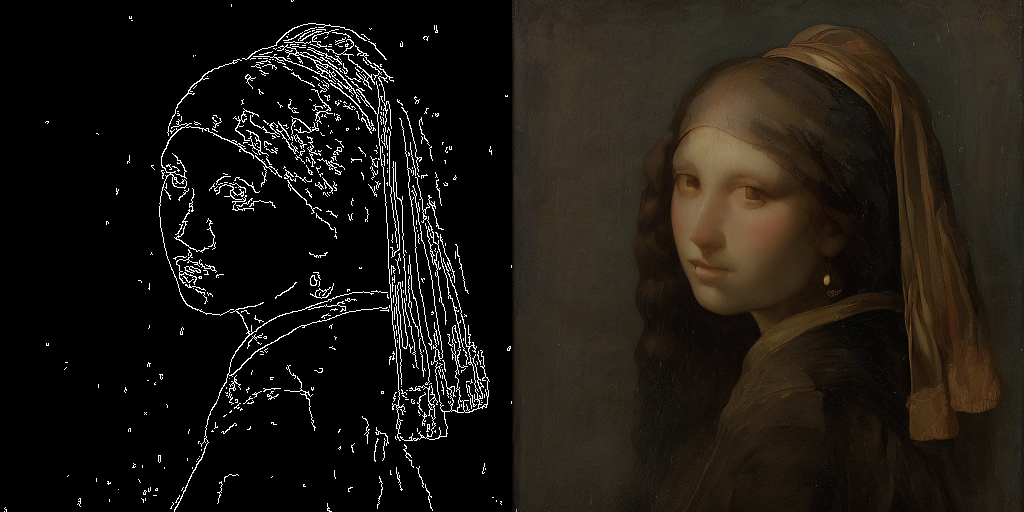
|
||||
|
||||
</hfoption>
|
||||
<hfoption id="LCM-LoRA">
|
||||
|
||||
Load a ControlNet model trained on canny images and pass it to the [`ControlNetModel`]. Then you can load a Stable Diffusion v1.5 model into [`StableDiffusionControlNetPipeline`] and replace the scheduler with the [`LCMScheduler`]. Use the [`~loaders.LoraLoaderMixin.load_lora_weights`] method to load the LCM-LoRA weights, and pass the canny image to the pipeline and generate an image.
|
||||
|
||||
> [!TIP]
|
||||
> Experiment with different values for `num_inference_steps`, `controlnet_conditioning_scale`, `cross_attention_kwargs`, and `guidance_scale` to get the best results.
|
||||
|
||||
```py
|
||||
import torch
|
||||
import cv2
|
||||
import numpy as np
|
||||
from PIL import Image
|
||||
|
||||
from diffusers import StableDiffusionControlNetPipeline, ControlNetModel, LCMScheduler
|
||||
from diffusers.utils import load_image
|
||||
|
||||
image = load_image(
|
||||
"https://hf.co/datasets/huggingface/documentation-images/resolve/main/diffusers/input_image_vermeer.png"
|
||||
).resize((512, 512))
|
||||
|
||||
image = np.array(image)
|
||||
|
||||
low_threshold = 100
|
||||
high_threshold = 200
|
||||
|
||||
image = cv2.Canny(image, low_threshold, high_threshold)
|
||||
image = image[:, :, None]
|
||||
image = np.concatenate([image, image, image], axis=2)
|
||||
canny_image = Image.fromarray(image)
|
||||
|
||||
controlnet = ControlNetModel.from_pretrained("lllyasviel/sd-controlnet-canny", torch_dtype=torch.float16)
|
||||
pipe = StableDiffusionControlNetPipeline.from_pretrained(
|
||||
"runwayml/stable-diffusion-v1-5",
|
||||
controlnet=controlnet,
|
||||
torch_dtype=torch.float16,
|
||||
safety_checker=None,
|
||||
variant="fp16"
|
||||
).to("cuda")
|
||||
|
||||
pipe.scheduler = LCMScheduler.from_config(pipe.scheduler.config)
|
||||
|
||||
pipe.load_lora_weights("latent-consistency/lcm-lora-sdv1-5")
|
||||
|
||||
generator = torch.manual_seed(0)
|
||||
image = pipe(
|
||||
"the mona lisa",
|
||||
image=canny_image,
|
||||
num_inference_steps=4,
|
||||
guidance_scale=1.5,
|
||||
controlnet_conditioning_scale=0.8,
|
||||
cross_attention_kwargs={"scale": 1},
|
||||
generator=generator,
|
||||
).images[0]
|
||||
image
|
||||
```
|
||||
|
||||
<div class="flex justify-center">
|
||||
<img src="https://huggingface.co/datasets/huggingface/documentation-images/resolve/main/diffusers/lcm/lcm_sdv1-5_controlnet.png"/>
|
||||
</div>
|
||||
|
||||
</hfoption>
|
||||
</hfoptions>
|
||||
<Tip>
|
||||
The inference parameters in this example might not work for all examples, so we recommend trying different values for the `num_inference_steps`, `guidance_scale`, `controlnet_conditioning_scale`, and `cross_attention_kwargs` parameters and choosing the best one.
|
||||
</Tip>
|
||||
|
||||
### T2I-Adapter
|
||||
|
||||
[T2I-Adapter](./t2i_adapter) is an even more lightweight adapter than ControlNet, that provides an additional input to condition a pretrained model with. It is faster than ControlNet but the results may be slightly worse.
|
||||
|
||||
You can find additional T2I-Adapter checkpoints trained on other inputs in [TencentArc's](https://hf.co/TencentARC) repository.
|
||||
|
||||
<hfoptions id="lcm-t2i">
|
||||
<hfoption id="LCM">
|
||||
|
||||
Load a T2IAdapter trained on canny images and pass it to the [`StableDiffusionXLAdapterPipeline`]. Then load a LCM checkpoint into [`UNet2DConditionModel`] and replace the scheduler with the [`LCMScheduler`]. Now pass the canny image to the pipeline and generate an image.
|
||||
This example shows how to use the `lcm-sdxl` with the [Canny T2I-Adapter](TencentARC/t2i-adapter-canny-sdxl-1.0).
|
||||
|
||||
```python
|
||||
import torch
|
||||
@@ -470,9 +220,10 @@ from PIL import Image
|
||||
from diffusers import StableDiffusionXLAdapterPipeline, UNet2DConditionModel, T2IAdapter, LCMScheduler
|
||||
from diffusers.utils import load_image, make_image_grid
|
||||
|
||||
# detect the canny map in low resolution to avoid high-frequency details
|
||||
# Prepare image
|
||||
# Detect the canny map in low resolution to avoid high-frequency details
|
||||
image = load_image(
|
||||
"https://hf.co/datasets/huggingface/documentation-images/resolve/main/diffusers/input_image_vermeer.png"
|
||||
"https://huggingface.co/Adapter/t2iadapter/resolve/main/figs_SDXLV1.0/org_canny.jpg"
|
||||
).resize((384, 384))
|
||||
|
||||
image = np.array(image)
|
||||
@@ -485,6 +236,7 @@ image = image[:, :, None]
|
||||
image = np.concatenate([image, image, image], axis=2)
|
||||
canny_image = Image.fromarray(image).resize((1024, 1216))
|
||||
|
||||
# load adapter
|
||||
adapter = T2IAdapter.from_pretrained("TencentARC/t2i-adapter-canny-sdxl-1.0", torch_dtype=torch.float16, varient="fp16").to("cuda")
|
||||
|
||||
unet = UNet2DConditionModel.from_pretrained(
|
||||
@@ -502,7 +254,7 @@ pipe = StableDiffusionXLAdapterPipeline.from_pretrained(
|
||||
|
||||
pipe.scheduler = LCMScheduler.from_config(pipe.scheduler.config)
|
||||
|
||||
prompt = "the mona lisa, 4k picture, high quality"
|
||||
prompt = "Mystical fairy in real, magic, 4k picture, high quality"
|
||||
negative_prompt = "extra digit, fewer digits, cropped, worst quality, low quality, glitch, deformed, mutated, ugly, disfigured"
|
||||
|
||||
generator = torch.manual_seed(0)
|
||||
@@ -516,116 +268,7 @@ image = pipe(
|
||||
adapter_conditioning_factor=1,
|
||||
generator=generator,
|
||||
).images[0]
|
||||
grid = make_image_grid([canny_image, image], rows=1, cols=2)
|
||||
```
|
||||
|
||||
<div class="flex justify-center">
|
||||
<img src="https://huggingface.co/datasets/huggingface/documentation-images/resolve/main/diffusers/lcm-t2i.png"/>
|
||||
</div>
|
||||
|
||||
</hfoption>
|
||||
<hfoption id="LCM-LoRA">
|
||||
|
||||
Load a T2IAdapter trained on canny images and pass it to the [`StableDiffusionXLAdapterPipeline`]. Replace the scheduler with the [`LCMScheduler`], and use the [`~loaders.LoraLoaderMixin.load_lora_weights`] method to load the LCM-LoRA weights. Pass the canny image to the pipeline and generate an image.
|
||||
|
||||
```py
|
||||
import torch
|
||||
import cv2
|
||||
import numpy as np
|
||||
from PIL import Image
|
||||
|
||||
from diffusers import StableDiffusionXLAdapterPipeline, UNet2DConditionModel, T2IAdapter, LCMScheduler
|
||||
from diffusers.utils import load_image, make_image_grid
|
||||
|
||||
# detect the canny map in low resolution to avoid high-frequency details
|
||||
image = load_image(
|
||||
"https://hf.co/datasets/huggingface/documentation-images/resolve/main/diffusers/input_image_vermeer.png"
|
||||
).resize((384, 384))
|
||||
|
||||
image = np.array(image)
|
||||
|
||||
low_threshold = 100
|
||||
high_threshold = 200
|
||||
|
||||
image = cv2.Canny(image, low_threshold, high_threshold)
|
||||
image = image[:, :, None]
|
||||
image = np.concatenate([image, image, image], axis=2)
|
||||
canny_image = Image.fromarray(image).resize((1024, 1024))
|
||||
|
||||
adapter = T2IAdapter.from_pretrained("TencentARC/t2i-adapter-canny-sdxl-1.0", torch_dtype=torch.float16, varient="fp16").to("cuda")
|
||||
|
||||
pipe = StableDiffusionXLAdapterPipeline.from_pretrained(
|
||||
"stabilityai/stable-diffusion-xl-base-1.0",
|
||||
adapter=adapter,
|
||||
torch_dtype=torch.float16,
|
||||
variant="fp16",
|
||||
).to("cuda")
|
||||
|
||||
pipe.scheduler = LCMScheduler.from_config(pipe.scheduler.config)
|
||||
|
||||
pipe.load_lora_weights("latent-consistency/lcm-lora-sdxl")
|
||||
|
||||
prompt = "the mona lisa, 4k picture, high quality"
|
||||
negative_prompt = "extra digit, fewer digits, cropped, worst quality, low quality, glitch, deformed, mutated, ugly, disfigured"
|
||||
|
||||
generator = torch.manual_seed(0)
|
||||
image = pipe(
|
||||
prompt=prompt,
|
||||
negative_prompt=negative_prompt,
|
||||
image=canny_image,
|
||||
num_inference_steps=4,
|
||||
guidance_scale=1.5,
|
||||
adapter_conditioning_scale=0.8,
|
||||
adapter_conditioning_factor=1,
|
||||
generator=generator,
|
||||
).images[0]
|
||||
```
|
||||
|
||||
<div class="flex justify-center">
|
||||
<img src="https://huggingface.co/datasets/huggingface/documentation-images/resolve/main/diffusers/lcm-lora-t2i.png"/>
|
||||
</div>
|
||||
|
||||
</hfoption>
|
||||
</hfoptions>
|
||||
|
||||
### AnimateDiff
|
||||
|
||||
[AnimateDiff](../api/pipelines/animatediff) is an adapter that adds motion to an image. It can be used with most Stable Diffusion models, effectively turning them into "video generation" models. Generating good results with a video model usually requires generating multiple frames (16-24), which can be very slow with a regular Stable Diffusion model. LCM-LoRA can speed up this process by only taking 4-8 steps for each frame.
|
||||
|
||||
Load a [`AnimateDiffPipeline`] and pass a [`MotionAdapter`] to it. Then replace the scheduler with the [`LCMScheduler`], and combine both LoRA adapters with the [`~loaders.UNet2DConditionLoadersMixin.set_adapters`] method. Now you can pass a prompt to the pipeline and generate an animated image.
|
||||
|
||||
```py
|
||||
import torch
|
||||
from diffusers import MotionAdapter, AnimateDiffPipeline, DDIMScheduler, LCMScheduler
|
||||
from diffusers.utils import export_to_gif
|
||||
|
||||
adapter = MotionAdapter.from_pretrained("guoyww/animatediff-motion-adapter-v1-5")
|
||||
pipe = AnimateDiffPipeline.from_pretrained(
|
||||
"frankjoshua/toonyou_beta6",
|
||||
motion_adapter=adapter,
|
||||
).to("cuda")
|
||||
|
||||
# set scheduler
|
||||
pipe.scheduler = LCMScheduler.from_config(pipe.scheduler.config)
|
||||
|
||||
# load LCM-LoRA
|
||||
pipe.load_lora_weights("latent-consistency/lcm-lora-sdv1-5", adapter_name="lcm")
|
||||
pipe.load_lora_weights("guoyww/animatediff-motion-lora-zoom-in", weight_name="diffusion_pytorch_model.safetensors", adapter_name="motion-lora")
|
||||
|
||||
pipe.set_adapters(["lcm", "motion-lora"], adapter_weights=[0.55, 1.2])
|
||||
|
||||
prompt = "best quality, masterpiece, 1girl, looking at viewer, blurry background, upper body, contemporary, dress"
|
||||
generator = torch.manual_seed(0)
|
||||
frames = pipe(
|
||||
prompt=prompt,
|
||||
num_inference_steps=5,
|
||||
guidance_scale=1.25,
|
||||
cross_attention_kwargs={"scale": 1},
|
||||
num_frames=24,
|
||||
generator=generator
|
||||
).frames[0]
|
||||
export_to_gif(frames, "animation.gif")
|
||||
```
|
||||
|
||||
<div class="flex justify-center">
|
||||
<img src="https://huggingface.co/datasets/huggingface/documentation-images/resolve/main/diffusers/lcm-lora-animatediff.gif"/>
|
||||
</div>
|
||||
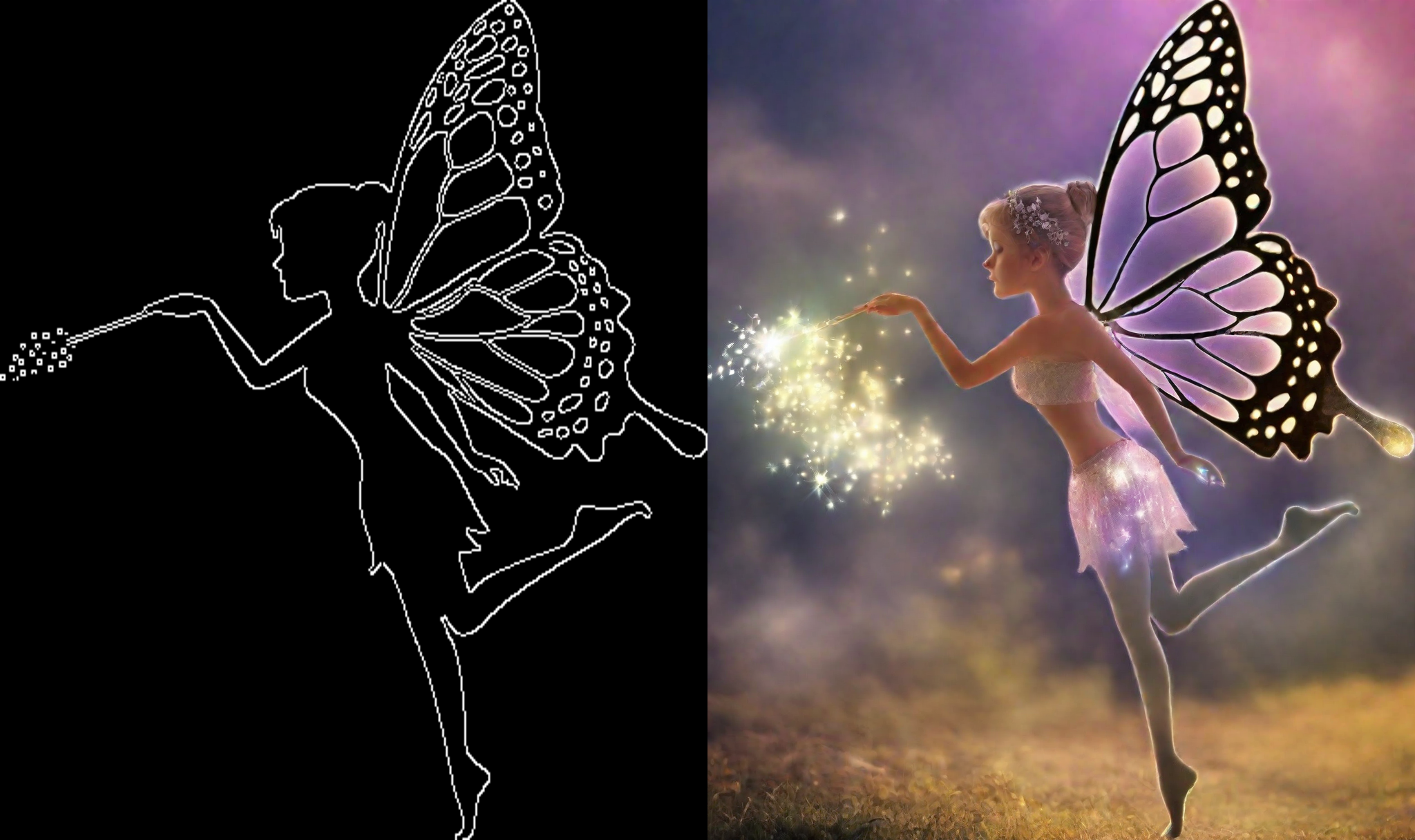
|
||||
|
||||
@@ -0,0 +1,422 @@
|
||||
<!--Copyright 2024 The HuggingFace Team. All rights reserved.
|
||||
|
||||
Licensed under the Apache License, Version 2.0 (the "License"); you may not use this file except in compliance with
|
||||
the License. You may obtain a copy of the License at
|
||||
|
||||
http://www.apache.org/licenses/LICENSE-2.0
|
||||
|
||||
Unless required by applicable law or agreed to in writing, software distributed under the License is distributed on
|
||||
an "AS IS" BASIS, WITHOUT WARRANTIES OR CONDITIONS OF ANY KIND, either express or implied. See the License for the
|
||||
specific language governing permissions and limitations under the License.
|
||||
-->
|
||||
|
||||
[[open-in-colab]]
|
||||
|
||||
# Performing inference with LCM-LoRA
|
||||
|
||||
Latent Consistency Models (LCM) enable quality image generation in typically 2-4 steps making it possible to use diffusion models in almost real-time settings.
|
||||
|
||||
From the [official website](https://latent-consistency-models.github.io/):
|
||||
|
||||
> LCMs can be distilled from any pre-trained Stable Diffusion (SD) in only 4,000 training steps (~32 A100 GPU Hours) for generating high quality 768 x 768 resolution images in 2~4 steps or even one step, significantly accelerating text-to-image generation. We employ LCM to distill the Dreamshaper-V7 version of SD in just 4,000 training iterations.
|
||||
|
||||
For a more technical overview of LCMs, refer to [the paper](https://huggingface.co/papers/2310.04378).
|
||||
|
||||
However, each model needs to be distilled separately for latent consistency distillation. The core idea with LCM-LoRA is to train just a few adapter layers, the adapter being LoRA in this case.
|
||||
This way, we don't have to train the full model and keep the number of trainable parameters manageable. The resulting LoRAs can then be applied to any fine-tuned version of the model without distilling them separately.
|
||||
Additionally, the LoRAs can be applied to image-to-image, ControlNet/T2I-Adapter, inpainting, AnimateDiff etc.
|
||||
The LCM-LoRA can also be combined with other LoRAs to generate styled images in very few steps (4-8).
|
||||
|
||||
LCM-LoRAs are available for [stable-diffusion-v1-5](https://huggingface.co/runwayml/stable-diffusion-v1-5), [stable-diffusion-xl-base-1.0](https://huggingface.co/stabilityai/stable-diffusion-xl-base-1.0), and the [SSD-1B](https://huggingface.co/segmind/SSD-1B) model. All the checkpoints can be found in this [collection](https://huggingface.co/collections/latent-consistency/latent-consistency-models-loras-654cdd24e111e16f0865fba6).
|
||||
|
||||
For more details about LCM-LoRA, refer to [the technical report](https://huggingface.co/papers/2311.05556).
|
||||
|
||||
This guide shows how to perform inference with LCM-LoRAs for
|
||||
- text-to-image
|
||||
- image-to-image
|
||||
- combined with styled LoRAs
|
||||
- ControlNet/T2I-Adapter
|
||||
- inpainting
|
||||
- AnimateDiff
|
||||
|
||||
Before going through this guide, we'll take a look at the general workflow for performing inference with LCM-LoRAs.
|
||||
LCM-LoRAs are similar to other Stable Diffusion LoRAs so they can be used with any [`DiffusionPipeline`] that supports LoRAs.
|
||||
|
||||
- Load the task specific pipeline and model.
|
||||
- Set the scheduler to [`LCMScheduler`].
|
||||
- Load the LCM-LoRA weights for the model.
|
||||
- Reduce the `guidance_scale` between `[1.0, 2.0]` and set the `num_inference_steps` between [4, 8].
|
||||
- Perform inference with the pipeline with the usual parameters.
|
||||
|
||||
Let's look at how we can perform inference with LCM-LoRAs for different tasks.
|
||||
|
||||
First, make sure you have [peft](https://github.com/huggingface/peft) installed, for better LoRA support.
|
||||
|
||||
```bash
|
||||
pip install -U peft
|
||||
```
|
||||
|
||||
## Text-to-image
|
||||
|
||||
You'll use the [`StableDiffusionXLPipeline`] with the scheduler: [`LCMScheduler`] and then load the LCM-LoRA. Together with the LCM-LoRA and the scheduler, the pipeline enables a fast inference workflow overcoming the slow iterative nature of diffusion models.
|
||||
|
||||
```python
|
||||
import torch
|
||||
from diffusers import DiffusionPipeline, LCMScheduler
|
||||
|
||||
pipe = DiffusionPipeline.from_pretrained(
|
||||
"stabilityai/stable-diffusion-xl-base-1.0",
|
||||
variant="fp16",
|
||||
torch_dtype=torch.float16
|
||||
).to("cuda")
|
||||
|
||||
# set scheduler
|
||||
pipe.scheduler = LCMScheduler.from_config(pipe.scheduler.config)
|
||||
|
||||
# load LCM-LoRA
|
||||
pipe.load_lora_weights("latent-consistency/lcm-lora-sdxl")
|
||||
|
||||
prompt = "Self-portrait oil painting, a beautiful cyborg with golden hair, 8k"
|
||||
|
||||
generator = torch.manual_seed(42)
|
||||
image = pipe(
|
||||
prompt=prompt, num_inference_steps=4, generator=generator, guidance_scale=1.0
|
||||
).images[0]
|
||||
```
|
||||
|
||||
|
||||
|
||||
Notice that we use only 4 steps for generation which is way less than what's typically used for standard SDXL.
|
||||
|
||||
<Tip>
|
||||
|
||||
You may have noticed that we set `guidance_scale=1.0`, which disables classifer-free-guidance. This is because the LCM-LoRA is trained with guidance, so the batch size does not have to be doubled in this case. This leads to a faster inference time, with the drawback that negative prompts don't have any effect on the denoising process.
|
||||
|
||||
You can also use guidance with LCM-LoRA, but due to the nature of training the model is very sensitve to the `guidance_scale` values, high values can lead to artifacts in the generated images. In our experiments, we found that the best values are in the range of [1.0, 2.0].
|
||||
|
||||
</Tip>
|
||||
|
||||
### Inference with a fine-tuned model
|
||||
|
||||
As mentioned above, the LCM-LoRA can be applied to any fine-tuned version of the model without having to distill them separately. Let's look at how we can perform inference with a fine-tuned model. In this example, we'll use the [animagine-xl](https://huggingface.co/Linaqruf/animagine-xl) model, which is a fine-tuned version of the SDXL model for generating anime.
|
||||
|
||||
```python
|
||||
from diffusers import DiffusionPipeline, LCMScheduler
|
||||
|
||||
pipe = DiffusionPipeline.from_pretrained(
|
||||
"Linaqruf/animagine-xl",
|
||||
variant="fp16",
|
||||
torch_dtype=torch.float16
|
||||
).to("cuda")
|
||||
|
||||
# set scheduler
|
||||
pipe.scheduler = LCMScheduler.from_config(pipe.scheduler.config)
|
||||
|
||||
# load LCM-LoRA
|
||||
pipe.load_lora_weights("latent-consistency/lcm-lora-sdxl")
|
||||
|
||||
prompt = "face focus, cute, masterpiece, best quality, 1girl, green hair, sweater, looking at viewer, upper body, beanie, outdoors, night, turtleneck"
|
||||
|
||||
generator = torch.manual_seed(0)
|
||||
image = pipe(
|
||||
prompt=prompt, num_inference_steps=4, generator=generator, guidance_scale=1.0
|
||||
).images[0]
|
||||
```
|
||||
|
||||

|
||||
|
||||
|
||||
## Image-to-image
|
||||
|
||||
LCM-LoRA can be applied to image-to-image tasks too. Let's look at how we can perform image-to-image generation with LCMs. For this example we'll use the [dreamshaper-7](https://huggingface.co/Lykon/dreamshaper-7) model and the LCM-LoRA for `stable-diffusion-v1-5 `.
|
||||
|
||||
```python
|
||||
import torch
|
||||
from diffusers import AutoPipelineForImage2Image, LCMScheduler
|
||||
from diffusers.utils import make_image_grid, load_image
|
||||
|
||||
pipe = AutoPipelineForImage2Image.from_pretrained(
|
||||
"Lykon/dreamshaper-7",
|
||||
torch_dtype=torch.float16,
|
||||
variant="fp16",
|
||||
).to("cuda")
|
||||
|
||||
# set scheduler
|
||||
pipe.scheduler = LCMScheduler.from_config(pipe.scheduler.config)
|
||||
|
||||
# load LCM-LoRA
|
||||
pipe.load_lora_weights("latent-consistency/lcm-lora-sdv1-5")
|
||||
|
||||
# prepare image
|
||||
url = "https://huggingface.co/datasets/huggingface/documentation-images/resolve/main/diffusers/img2img-init.png"
|
||||
init_image = load_image(url)
|
||||
prompt = "Astronauts in a jungle, cold color palette, muted colors, detailed, 8k"
|
||||
|
||||
# pass prompt and image to pipeline
|
||||
generator = torch.manual_seed(0)
|
||||
image = pipe(
|
||||
prompt,
|
||||
image=init_image,
|
||||
num_inference_steps=4,
|
||||
guidance_scale=1,
|
||||
strength=0.6,
|
||||
generator=generator
|
||||
).images[0]
|
||||
make_image_grid([init_image, image], rows=1, cols=2)
|
||||
```
|
||||
|
||||

|
||||
|
||||
|
||||
<Tip>
|
||||
|
||||
You can get different results based on your prompt and the image you provide. To get the best results, we recommend trying different values for `num_inference_steps`, `strength`, and `guidance_scale` parameters and choose the best one.
|
||||
|
||||
</Tip>
|
||||
|
||||
|
||||
## Combine with styled LoRAs
|
||||
|
||||
LCM-LoRA can be combined with other LoRAs to generate styled-images in very few steps (4-8). In the following example, we'll use the LCM-LoRA with the [papercut LoRA](TheLastBen/Papercut_SDXL).
|
||||
To learn more about how to combine LoRAs, refer to [this guide](https://huggingface.co/docs/diffusers/tutorials/using_peft_for_inference#combine-multiple-adapters).
|
||||
|
||||
```python
|
||||
import torch
|
||||
from diffusers import DiffusionPipeline, LCMScheduler
|
||||
|
||||
pipe = DiffusionPipeline.from_pretrained(
|
||||
"stabilityai/stable-diffusion-xl-base-1.0",
|
||||
variant="fp16",
|
||||
torch_dtype=torch.float16
|
||||
).to("cuda")
|
||||
|
||||
# set scheduler
|
||||
pipe.scheduler = LCMScheduler.from_config(pipe.scheduler.config)
|
||||
|
||||
# load LoRAs
|
||||
pipe.load_lora_weights("latent-consistency/lcm-lora-sdxl", adapter_name="lcm")
|
||||
pipe.load_lora_weights("TheLastBen/Papercut_SDXL", weight_name="papercut.safetensors", adapter_name="papercut")
|
||||
|
||||
# Combine LoRAs
|
||||
pipe.set_adapters(["lcm", "papercut"], adapter_weights=[1.0, 0.8])
|
||||
|
||||
prompt = "papercut, a cute fox"
|
||||
generator = torch.manual_seed(0)
|
||||
image = pipe(prompt, num_inference_steps=4, guidance_scale=1, generator=generator).images[0]
|
||||
image
|
||||
```
|
||||
|
||||
|
||||
|
||||
|
||||
## ControlNet/T2I-Adapter
|
||||
|
||||
Let's look at how we can perform inference with ControlNet/T2I-Adapter and LCM-LoRA.
|
||||
|
||||
### ControlNet
|
||||
For this example, we'll use the SD-v1-5 model and the LCM-LoRA for SD-v1-5 with canny ControlNet.
|
||||
|
||||
```python
|
||||
import torch
|
||||
import cv2
|
||||
import numpy as np
|
||||
from PIL import Image
|
||||
|
||||
from diffusers import StableDiffusionControlNetPipeline, ControlNetModel, LCMScheduler
|
||||
from diffusers.utils import load_image
|
||||
|
||||
image = load_image(
|
||||
"https://hf.co/datasets/huggingface/documentation-images/resolve/main/diffusers/input_image_vermeer.png"
|
||||
).resize((512, 512))
|
||||
|
||||
image = np.array(image)
|
||||
|
||||
low_threshold = 100
|
||||
high_threshold = 200
|
||||
|
||||
image = cv2.Canny(image, low_threshold, high_threshold)
|
||||
image = image[:, :, None]
|
||||
image = np.concatenate([image, image, image], axis=2)
|
||||
canny_image = Image.fromarray(image)
|
||||
|
||||
controlnet = ControlNetModel.from_pretrained("lllyasviel/sd-controlnet-canny", torch_dtype=torch.float16)
|
||||
pipe = StableDiffusionControlNetPipeline.from_pretrained(
|
||||
"runwayml/stable-diffusion-v1-5",
|
||||
controlnet=controlnet,
|
||||
torch_dtype=torch.float16,
|
||||
safety_checker=None,
|
||||
variant="fp16"
|
||||
).to("cuda")
|
||||
|
||||
# set scheduler
|
||||
pipe.scheduler = LCMScheduler.from_config(pipe.scheduler.config)
|
||||
|
||||
# load LCM-LoRA
|
||||
pipe.load_lora_weights("latent-consistency/lcm-lora-sdv1-5")
|
||||
|
||||
generator = torch.manual_seed(0)
|
||||
image = pipe(
|
||||
"the mona lisa",
|
||||
image=canny_image,
|
||||
num_inference_steps=4,
|
||||
guidance_scale=1.5,
|
||||
controlnet_conditioning_scale=0.8,
|
||||
cross_attention_kwargs={"scale": 1},
|
||||
generator=generator,
|
||||
).images[0]
|
||||
make_image_grid([canny_image, image], rows=1, cols=2)
|
||||
```
|
||||
|
||||
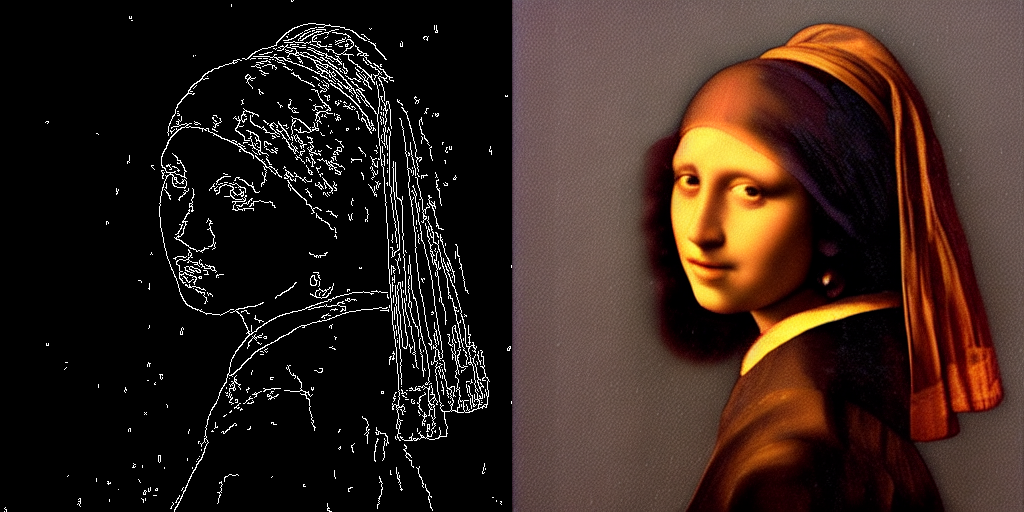
|
||||
|
||||
|
||||
<Tip>
|
||||
The inference parameters in this example might not work for all examples, so we recommend you to try different values for `num_inference_steps`, `guidance_scale`, `controlnet_conditioning_scale` and `cross_attention_kwargs` parameters and choose the best one.
|
||||
</Tip>
|
||||
|
||||
### T2I-Adapter
|
||||
|
||||
This example shows how to use the LCM-LoRA with the [Canny T2I-Adapter](TencentARC/t2i-adapter-canny-sdxl-1.0) and SDXL.
|
||||
|
||||
```python
|
||||
import torch
|
||||
import cv2
|
||||
import numpy as np
|
||||
from PIL import Image
|
||||
|
||||
from diffusers import StableDiffusionXLAdapterPipeline, T2IAdapter, LCMScheduler
|
||||
from diffusers.utils import load_image, make_image_grid
|
||||
|
||||
# Prepare image
|
||||
# Detect the canny map in low resolution to avoid high-frequency details
|
||||
image = load_image(
|
||||
"https://huggingface.co/Adapter/t2iadapter/resolve/main/figs_SDXLV1.0/org_canny.jpg"
|
||||
).resize((384, 384))
|
||||
|
||||
image = np.array(image)
|
||||
|
||||
low_threshold = 100
|
||||
high_threshold = 200
|
||||
|
||||
image = cv2.Canny(image, low_threshold, high_threshold)
|
||||
image = image[:, :, None]
|
||||
image = np.concatenate([image, image, image], axis=2)
|
||||
canny_image = Image.fromarray(image).resize((1024, 1024))
|
||||
|
||||
# load adapter
|
||||
adapter = T2IAdapter.from_pretrained("TencentARC/t2i-adapter-canny-sdxl-1.0", torch_dtype=torch.float16, varient="fp16").to("cuda")
|
||||
|
||||
pipe = StableDiffusionXLAdapterPipeline.from_pretrained(
|
||||
"stabilityai/stable-diffusion-xl-base-1.0",
|
||||
adapter=adapter,
|
||||
torch_dtype=torch.float16,
|
||||
variant="fp16",
|
||||
).to("cuda")
|
||||
|
||||
# set scheduler
|
||||
pipe.scheduler = LCMScheduler.from_config(pipe.scheduler.config)
|
||||
|
||||
# load LCM-LoRA
|
||||
pipe.load_lora_weights("latent-consistency/lcm-lora-sdxl")
|
||||
|
||||
prompt = "Mystical fairy in real, magic, 4k picture, high quality"
|
||||
negative_prompt = "extra digit, fewer digits, cropped, worst quality, low quality, glitch, deformed, mutated, ugly, disfigured"
|
||||
|
||||
generator = torch.manual_seed(0)
|
||||
image = pipe(
|
||||
prompt=prompt,
|
||||
negative_prompt=negative_prompt,
|
||||
image=canny_image,
|
||||
num_inference_steps=4,
|
||||
guidance_scale=1.5,
|
||||
adapter_conditioning_scale=0.8,
|
||||
adapter_conditioning_factor=1,
|
||||
generator=generator,
|
||||
).images[0]
|
||||
make_image_grid([canny_image, image], rows=1, cols=2)
|
||||
```
|
||||
|
||||
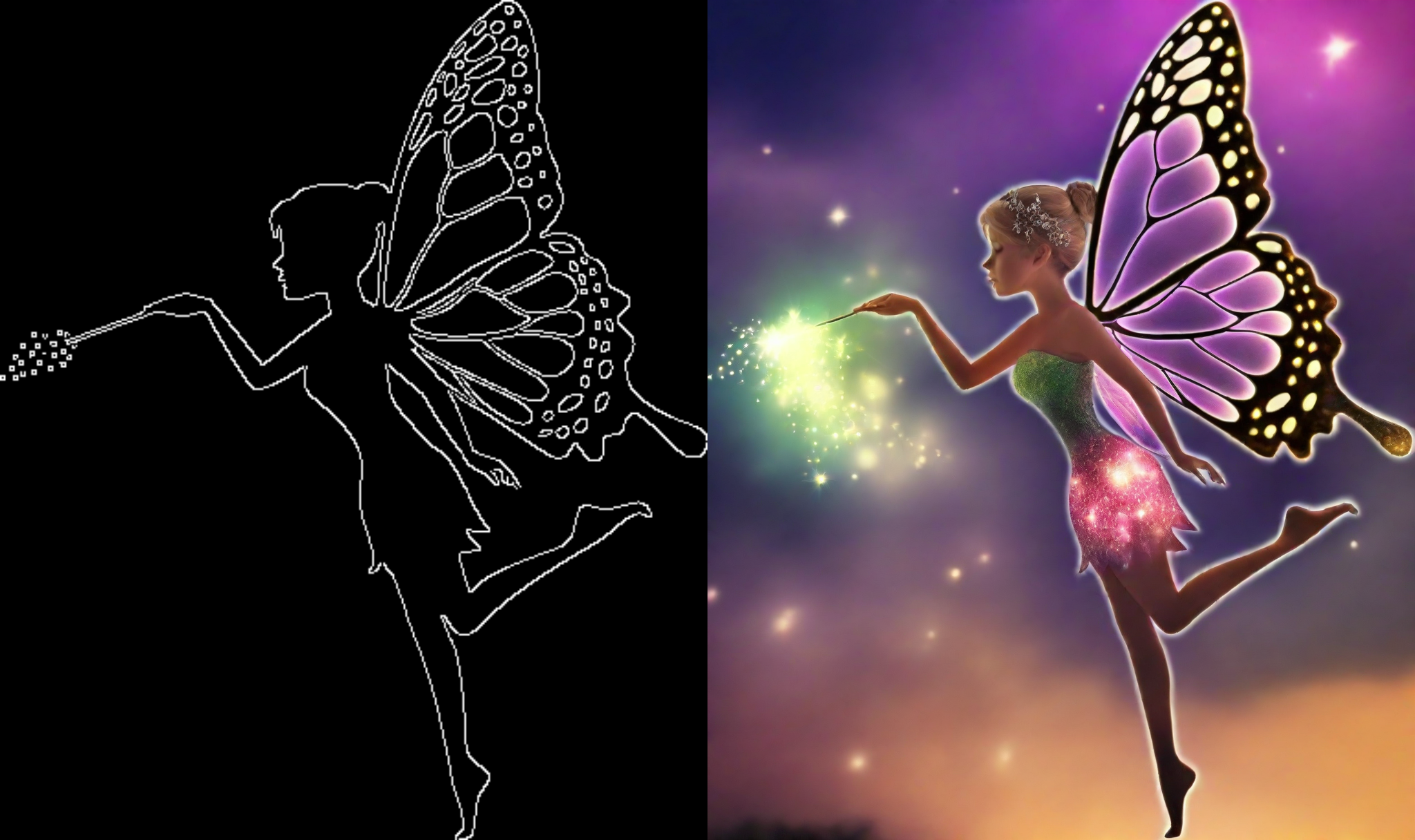
|
||||
|
||||
|
||||
## Inpainting
|
||||
|
||||
LCM-LoRA can be used for inpainting as well.
|
||||
|
||||
```python
|
||||
import torch
|
||||
from diffusers import AutoPipelineForInpainting, LCMScheduler
|
||||
from diffusers.utils import load_image, make_image_grid
|
||||
|
||||
pipe = AutoPipelineForInpainting.from_pretrained(
|
||||
"runwayml/stable-diffusion-inpainting",
|
||||
torch_dtype=torch.float16,
|
||||
variant="fp16",
|
||||
).to("cuda")
|
||||
|
||||
# set scheduler
|
||||
pipe.scheduler = LCMScheduler.from_config(pipe.scheduler.config)
|
||||
|
||||
# load LCM-LoRA
|
||||
pipe.load_lora_weights("latent-consistency/lcm-lora-sdv1-5")
|
||||
|
||||
# load base and mask image
|
||||
init_image = load_image("https://huggingface.co/datasets/huggingface/documentation-images/resolve/main/diffusers/inpaint.png")
|
||||
mask_image = load_image("https://huggingface.co/datasets/huggingface/documentation-images/resolve/main/diffusers/inpaint_mask.png")
|
||||
|
||||
# generator = torch.Generator("cuda").manual_seed(92)
|
||||
prompt = "concept art digital painting of an elven castle, inspired by lord of the rings, highly detailed, 8k"
|
||||
generator = torch.manual_seed(0)
|
||||
image = pipe(
|
||||
prompt=prompt,
|
||||
image=init_image,
|
||||
mask_image=mask_image,
|
||||
generator=generator,
|
||||
num_inference_steps=4,
|
||||
guidance_scale=4,
|
||||
).images[0]
|
||||
make_image_grid([init_image, mask_image, image], rows=1, cols=3)
|
||||
```
|
||||
|
||||
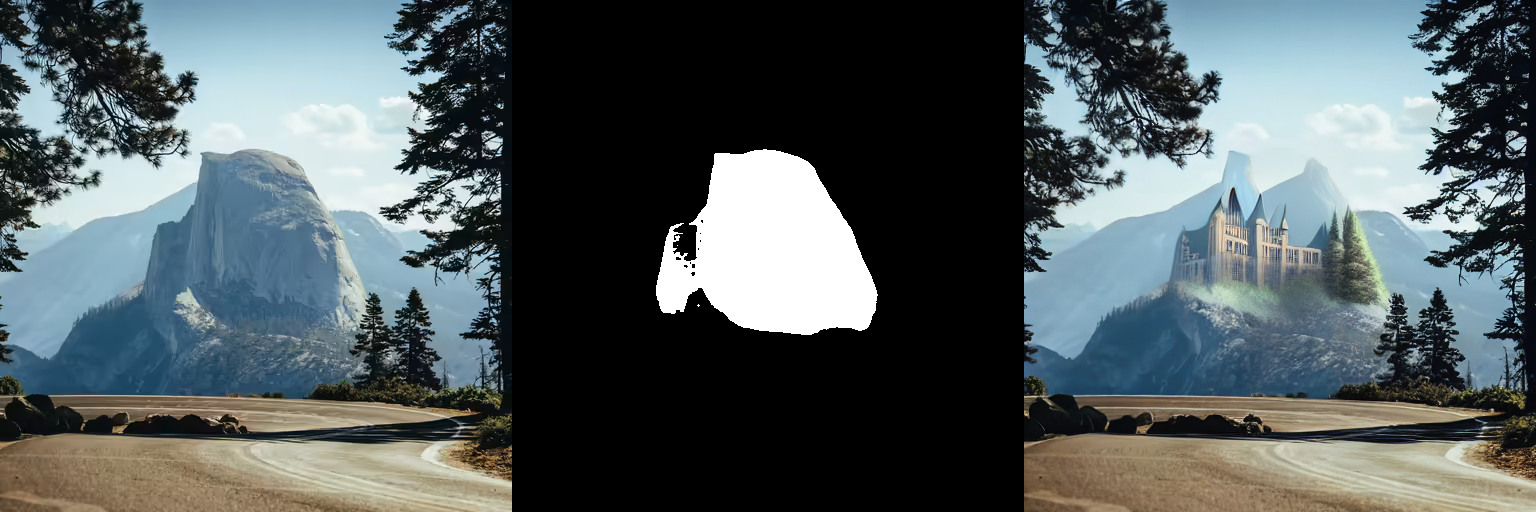
|
||||
|
||||
|
||||
## AnimateDiff
|
||||
|
||||
[`AnimateDiff`] allows you to animate images using Stable Diffusion models. To get good results, we need to generate multiple frames (16-24), and doing this with standard SD models can be very slow.
|
||||
LCM-LoRA can be used to speed up the process significantly, as you just need to do 4-8 steps for each frame. Let's look at how we can perform animation with LCM-LoRA and AnimateDiff.
|
||||
|
||||
```python
|
||||
import torch
|
||||
from diffusers import MotionAdapter, AnimateDiffPipeline, DDIMScheduler, LCMScheduler
|
||||
from diffusers.utils import export_to_gif
|
||||
|
||||
adapter = MotionAdapter.from_pretrained("diffusers/animatediff-motion-adapter-v1-5")
|
||||
pipe = AnimateDiffPipeline.from_pretrained(
|
||||
"frankjoshua/toonyou_beta6",
|
||||
motion_adapter=adapter,
|
||||
).to("cuda")
|
||||
|
||||
# set scheduler
|
||||
pipe.scheduler = LCMScheduler.from_config(pipe.scheduler.config)
|
||||
|
||||
# load LCM-LoRA
|
||||
pipe.load_lora_weights("latent-consistency/lcm-lora-sdv1-5", adapter_name="lcm")
|
||||
pipe.load_lora_weights("guoyww/animatediff-motion-lora-zoom-in", weight_name="diffusion_pytorch_model.safetensors", adapter_name="motion-lora")
|
||||
|
||||
pipe.set_adapters(["lcm", "motion-lora"], adapter_weights=[0.55, 1.2])
|
||||
|
||||
prompt = "best quality, masterpiece, 1girl, looking at viewer, blurry background, upper body, contemporary, dress"
|
||||
generator = torch.manual_seed(0)
|
||||
frames = pipe(
|
||||
prompt=prompt,
|
||||
num_inference_steps=5,
|
||||
guidance_scale=1.25,
|
||||
cross_attention_kwargs={"scale": 1},
|
||||
num_frames=24,
|
||||
generator=generator
|
||||
).frames[0]
|
||||
export_to_gif(frames, "animation.gif")
|
||||
```
|
||||
|
||||
|
||||
@@ -212,62 +212,6 @@ images = pipeline(prompt_ids, params, prng_seed, num_inference_steps, jit=True).
|
||||
images = pipeline.numpy_to_pil(np.asarray(images.reshape((num_samples,) + images.shape[-3:])))
|
||||
```
|
||||
|
||||
## Custom Timestep Schedules
|
||||
|
||||
With all our schedulers, you can choose one of the popular timestep schedules using configurations such as `timestep_spacing`, `interpolation_type`, and `use_karras_sigmas`. Some schedulers also provide the flexibility to use a custom timestep schedule. You can use any list of arbitrary timesteps, we will use the AYS timestep schedule here as example. It is a set of 10-step optimized timestep schedules released by researchers from Nvidia that can achieve significantly better quality compared to the preset timestep schedules. You can read more about their research [here](https://research.nvidia.com/labs/toronto-ai/AlignYourSteps/).
|
||||
|
||||
```python
|
||||
from diffusers.schedulers import AysSchedules
|
||||
sampling_schedule = AysSchedules["StableDiffusionXLTimesteps"]
|
||||
print(sampling_schedule)
|
||||
```
|
||||
```
|
||||
[999, 845, 730, 587, 443, 310, 193, 116, 53, 13]
|
||||
```
|
||||
|
||||
You can then create a pipeline and pass this custom timestep schedule to it as `timesteps`.
|
||||
|
||||
```python
|
||||
pipe = StableDiffusionXLPipeline.from_pretrained(
|
||||
"SG161222/RealVisXL_V4.0",
|
||||
torch_dtype=torch.float16,
|
||||
variant="fp16",
|
||||
).to("cuda")
|
||||
|
||||
pipe.scheduler = DPMSolverMultistepScheduler.from_config(pipe.scheduler.config, algorithm_type="sde-dpmsolver++")
|
||||
|
||||
prompt = "A cinematic shot of a cute little rabbit wearing a jacket and doing a thumbs up"
|
||||
|
||||
generator = torch.Generator(device="cpu").manual_seed(2487854446)
|
||||
|
||||
image = pipe(
|
||||
prompt=prompt,
|
||||
negative_prompt="",
|
||||
generator=generator,
|
||||
timesteps=sampling_schedule,
|
||||
).images[0]
|
||||
```
|
||||
The generated image has better quality than the default linear timestep schedule for the same number of steps, and it is similar to the default timestep scheduler when running for 25 steps.
|
||||
|
||||
<div class="flex gap-4">
|
||||
<div>
|
||||
<img class="rounded-xl" src="https://huggingface.co/datasets/YiYiXu/testing-images/resolve/main/ays.png"/>
|
||||
<figcaption class="mt-2 text-center text-sm text-gray-500">AYS timestep schedule 10 steps</figcaption>
|
||||
</div>
|
||||
<div>
|
||||
<img class="rounded-xl" src="https://huggingface.co/datasets/YiYiXu/testing-images/resolve/main/10.png"/>
|
||||
<figcaption class="mt-2 text-center text-sm text-gray-500">Linearly-spaced timestep schedule 10 steps</figcaption>
|
||||
</div>
|
||||
<div>
|
||||
<img class="rounded-xl" src="https://huggingface.co/datasets/YiYiXu/testing-images/resolve/main/25.png"/>
|
||||
<figcaption class="mt-2 text-center text-sm text-gray-500">Linearly-spaced timestep schedule 25 steps</figcaption>
|
||||
</div>
|
||||
</div>
|
||||
|
||||
> [!TIP]
|
||||
> 🤗 Diffusers currently only supports `timesteps` and `sigmas` for a selected list of schedulers and pipelines, but feel free to open a [feature request](https://github.com/huggingface/diffusers/issues/new/choose) if you want to extend feature to a scheduler and pipeline that does not currently support it!
|
||||
|
||||
|
||||
## Models
|
||||
|
||||
Models are loaded from the [`ModelMixin.from_pretrained`] method, which downloads and caches the latest version of the model weights and configurations. If the latest files are available in the local cache, [`~ModelMixin.from_pretrained`] reuses files in the cache instead of re-downloading them.
|
||||
|
||||
@@ -106,7 +106,7 @@ pip install -e ".[flax]"
|
||||
|
||||
これらのコマンドは、リポジトリをクローンしたフォルダと Python のライブラリパスをリンクします。
|
||||
Python は通常のライブラリパスに加えて、クローンしたフォルダの中を探すようになります。
|
||||
例えば、Python パッケージが通常 `~/anaconda3/envs/main/lib/python3.10/site-packages/` にインストールされている場合、Python はクローンした `~/diffusers/` フォルダも同様に参照します。
|
||||
例えば、Python パッケージが通常 `~/anaconda3/envs/main/lib/python3.8/site-packages/` にインストールされている場合、Python はクローンした `~/diffusers/` フォルダも同様に参照します。
|
||||
|
||||
<Tip warning={true}>
|
||||
|
||||
|
||||
@@ -105,7 +105,7 @@ pip install -e ".[flax]"
|
||||
|
||||
이러한 명령어들은 저장소를 복제한 폴더와 Python 라이브러리 경로를 연결합니다.
|
||||
Python은 이제 일반 라이브러리 경로에 더하여 복제한 폴더 내부를 살펴봅니다.
|
||||
예를들어 Python 패키지가 `~/anaconda3/envs/main/lib/python3.10/site-packages/`에 설치되어 있는 경우 Python은 복제한 폴더인 `~/diffusers/`도 검색합니다.
|
||||
예를들어 Python 패키지가 `~/anaconda3/envs/main/lib/python3.8/site-packages/`에 설치되어 있는 경우 Python은 복제한 폴더인 `~/diffusers/`도 검색합니다.
|
||||
|
||||
<Tip warning={true}>
|
||||
|
||||
|
||||
@@ -339,7 +339,7 @@ from dataclasses import dataclass
|
||||
|
||||
@dataclass
|
||||
class UNet2DConditionOutput:
|
||||
sample: torch.Tensor
|
||||
sample: torch.FloatTensor
|
||||
|
||||
|
||||
pipe = StableDiffusionPipeline.from_pretrained(
|
||||
|
||||
@@ -49,15 +49,15 @@ huggingface-cli login
|
||||
|
||||
### 학습[[dreambooth-training]]
|
||||
|
||||
[Naruto BLIP 캡션](https://huggingface.co/datasets/lambdalabs/naruto-blip-captions) 데이터셋으로 [`stable-diffusion-v1-5`](https://huggingface.co/runwayml/stable-diffusion-v1-5)를 파인튜닝해 나만의 포켓몬을 생성해 보겠습니다.
|
||||
[Pokémon BLIP 캡션](https://huggingface.co/datasets/lambdalabs/pokemon-blip-captions) 데이터셋으로 [`stable-diffusion-v1-5`](https://huggingface.co/runwayml/stable-diffusion-v1-5)를 파인튜닝해 나만의 포켓몬을 생성해 보겠습니다.
|
||||
|
||||
시작하려면 `MODEL_NAME` 및 `DATASET_NAME` 환경 변수가 설정되어 있는지 확인하십시오. `OUTPUT_DIR` 및 `HUB_MODEL_ID` 변수는 선택 사항이며 허브에서 모델을 저장할 위치를 지정합니다.
|
||||
|
||||
```bash
|
||||
export MODEL_NAME="runwayml/stable-diffusion-v1-5"
|
||||
export OUTPUT_DIR="/sddata/finetune/lora/naruto"
|
||||
export HUB_MODEL_ID="naruto-lora"
|
||||
export DATASET_NAME="lambdalabs/naruto-blip-captions"
|
||||
export OUTPUT_DIR="/sddata/finetune/lora/pokemon"
|
||||
export HUB_MODEL_ID="pokemon-lora"
|
||||
export DATASET_NAME="lambdalabs/pokemon-blip-captions"
|
||||
```
|
||||
|
||||
학습을 시작하기 전에 알아야 할 몇 가지 플래그가 있습니다.
|
||||
|
||||
@@ -73,12 +73,12 @@ xFormers는 Flax에 사용할 수 없습니다.
|
||||
|
||||
<frameworkcontent>
|
||||
<pt>
|
||||
다음과 같이 [Naruto BLIP 캡션](https://huggingface.co/datasets/lambdalabs/naruto-blip-captions) 데이터셋에서 파인튜닝 실행을 위해 [PyTorch 학습 스크립트](https://github.com/huggingface/diffusers/blob/main/examples/text_to_image/train_text_to_image.py)를 실행합니다:
|
||||
다음과 같이 [Pokémon BLIP 캡션](https://huggingface.co/datasets/lambdalabs/pokemon-blip-captions) 데이터셋에서 파인튜닝 실행을 위해 [PyTorch 학습 스크립트](https://github.com/huggingface/diffusers/blob/main/examples/text_to_image/train_text_to_image.py)를 실행합니다:
|
||||
|
||||
|
||||
```bash
|
||||
export MODEL_NAME="CompVis/stable-diffusion-v1-4"
|
||||
export dataset_name="lambdalabs/naruto-blip-captions"
|
||||
export dataset_name="lambdalabs/pokemon-blip-captions"
|
||||
|
||||
accelerate launch train_text_to_image.py \
|
||||
--pretrained_model_name_or_path=$MODEL_NAME \
|
||||
@@ -93,7 +93,7 @@ accelerate launch train_text_to_image.py \
|
||||
--learning_rate=1e-05 \
|
||||
--max_grad_norm=1 \
|
||||
--lr_scheduler="constant" --lr_warmup_steps=0 \
|
||||
--output_dir="sd-naruto-model"
|
||||
--output_dir="sd-pokemon-model"
|
||||
```
|
||||
|
||||
자체 데이터셋으로 파인튜닝하려면 🤗 [Datasets](https://huggingface.co/docs/datasets/index)에서 요구하는 형식에 따라 데이터셋을 준비하세요. [데이터셋을 허브에 업로드](https://huggingface.co/docs/datasets/image_dataset#upload-dataset-to-the-hub)하거나 [파일들이 있는 로컬 폴더를 준비](https ://huggingface.co/docs/datasets/image_dataset#imagefolder)할 수 있습니다.
|
||||
@@ -136,7 +136,7 @@ pip install -U -r requirements_flax.txt
|
||||
|
||||
```bash
|
||||
export MODEL_NAME="runwayml/stable-diffusion-v1-5"
|
||||
export dataset_name="lambdalabs/naruto-blip-captions"
|
||||
export dataset_name="lambdalabs/pokemon-blip-captions"
|
||||
|
||||
python train_text_to_image_flax.py \
|
||||
--pretrained_model_name_or_path=$MODEL_NAME \
|
||||
@@ -146,7 +146,7 @@ python train_text_to_image_flax.py \
|
||||
--max_train_steps=15000 \
|
||||
--learning_rate=1e-05 \
|
||||
--max_grad_norm=1 \
|
||||
--output_dir="sd-naruto-model"
|
||||
--output_dir="sd-pokemon-model"
|
||||
```
|
||||
|
||||
자체 데이터셋으로 파인튜닝하려면 🤗 [Datasets](https://huggingface.co/docs/datasets/index)에서 요구하는 형식에 따라 데이터셋을 준비하세요. [데이터셋을 허브에 업로드](https://huggingface.co/docs/datasets/image_dataset#upload-dataset-to-the-hub)하거나 [파일들이 있는 로컬 폴더를 준비](https ://huggingface.co/docs/datasets/image_dataset#imagefolder)할 수 있습니다.
|
||||
@@ -166,7 +166,7 @@ python train_text_to_image_flax.py \
|
||||
--max_train_steps=15000 \
|
||||
--learning_rate=1e-05 \
|
||||
--max_grad_norm=1 \
|
||||
--output_dir="sd-naruto-model"
|
||||
--output_dir="sd-pokemon-model"
|
||||
```
|
||||
</jax>
|
||||
</frameworkcontent>
|
||||
@@ -189,7 +189,7 @@ pipe = StableDiffusionPipeline.from_pretrained(model_path, torch_dtype=torch.flo
|
||||
pipe.to("cuda")
|
||||
|
||||
image = pipe(prompt="yoda").images[0]
|
||||
image.save("yoda-naruto.png")
|
||||
image.save("yoda-pokemon.png")
|
||||
```
|
||||
</pt>
|
||||
<jax>
|
||||
@@ -203,7 +203,7 @@ from diffusers import FlaxStableDiffusionPipeline
|
||||
model_path = "path_to_saved_model"
|
||||
pipe, params = FlaxStableDiffusionPipeline.from_pretrained(model_path, dtype=jax.numpy.bfloat16)
|
||||
|
||||
prompt = "yoda naruto"
|
||||
prompt = "yoda pokemon"
|
||||
prng_seed = jax.random.PRNGKey(0)
|
||||
num_inference_steps = 50
|
||||
|
||||
@@ -218,7 +218,7 @@ prompt_ids = shard(prompt_ids)
|
||||
|
||||
images = pipeline(prompt_ids, params, prng_seed, num_inference_steps, jit=True).images
|
||||
images = pipeline.numpy_to_pil(np.asarray(images.reshape((num_samples,) + images.shape[-3:])))
|
||||
image.save("yoda-naruto.png")
|
||||
image.save("yoda-pokemon.png")
|
||||
```
|
||||
</jax>
|
||||
</frameworkcontent>
|
||||
@@ -103,13 +103,13 @@ accelerate launch train_unconditional.py \
|
||||
<div class="flex justify-center">
|
||||
<img src="https://user-images.githubusercontent.com/26864830/180248660-a0b143d0-b89a-42c5-8656-2ebf6ece7e52.png"/>
|
||||
</div>
|
||||
[Naruto](https://huggingface.co/datasets/lambdalabs/naruto-blip-captions) 데이터셋을 사용할 경우:
|
||||
[Pokemon](https://huggingface.co/datasets/huggan/pokemon) 데이터셋을 사용할 경우:
|
||||
|
||||
```bash
|
||||
accelerate launch train_unconditional.py \
|
||||
--dataset_name="lambdalabs/naruto-blip-captions" \
|
||||
--dataset_name="huggan/pokemon" \
|
||||
--resolution=64 \
|
||||
--output_dir="ddpm-ema-naruto-64" \
|
||||
--output_dir="ddpm-ema-pokemon-64" \
|
||||
--train_batch_size=16 \
|
||||
--num_epochs=100 \
|
||||
--gradient_accumulation_steps=1 \
|
||||
@@ -129,9 +129,9 @@ accelerate launch train_unconditional.py \
|
||||
|
||||
```bash
|
||||
accelerate launch --mixed_precision="fp16" --multi_gpu train_unconditional.py \
|
||||
--dataset_name="lambdalabs/naruto-blip-captions" \
|
||||
--dataset_name="huggan/pokemon" \
|
||||
--resolution=64 --center_crop --random_flip \
|
||||
--output_dir="ddpm-ema-naruto-64" \
|
||||
--output_dir="ddpm-ema-pokemon-64" \
|
||||
--train_batch_size=16 \
|
||||
--num_epochs=100 \
|
||||
--gradient_accumulation_steps=1 \
|
||||
|
||||
@@ -102,7 +102,7 @@ pip install -e ".[flax]"
|
||||
|
||||
Esses comandos irá linkar a pasta que você clonou o repositório e os caminhos das suas bibliotecas Python.
|
||||
Python então irá procurar dentro da pasta que você clonou além dos caminhos normais das bibliotecas.
|
||||
Por exemplo, se o pacote python for tipicamente instalado no `~/anaconda3/envs/main/lib/python3.10/site-packages/`, o Python também irá procurar na pasta `~/diffusers/` que você clonou.
|
||||
Por exemplo, se o pacote python for tipicamente instalado no `~/anaconda3/envs/main/lib/python3.8/site-packages/`, o Python também irá procurar na pasta `~/diffusers/` que você clonou.
|
||||
|
||||
<Tip warning={true}>
|
||||
|
||||
|
||||
@@ -107,7 +107,7 @@ pip install -e ".[flax]"
|
||||
|
||||
这些命令将连接到你克隆的版本库和你的 Python 库路径。
|
||||
现在,不只是在通常的库路径,Python 还会在你克隆的文件夹内寻找包。
|
||||
例如,如果你的 Python 包通常安装在 `~/anaconda3/envs/main/lib/python3.10/Site-packages/`,Python 也会搜索你克隆到的文件夹。`~/diffusers/`。
|
||||
例如,如果你的 Python 包通常安装在 `~/anaconda3/envs/main/lib/python3.8/Site-packages/`,Python 也会搜索你克隆到的文件夹。`~/diffusers/`。
|
||||
|
||||
<Tip warning={true}>
|
||||
|
||||
|
||||
@@ -44,9 +44,9 @@ def bits_to_decimal(x, bits=BITS):
|
||||
# modified scheduler step functions for clamping the predicted x_0 between -bit_scale and +bit_scale
|
||||
def ddim_bit_scheduler_step(
|
||||
self,
|
||||
model_output: torch.Tensor,
|
||||
model_output: torch.FloatTensor,
|
||||
timestep: int,
|
||||
sample: torch.Tensor,
|
||||
sample: torch.FloatTensor,
|
||||
eta: float = 0.0,
|
||||
use_clipped_model_output: bool = True,
|
||||
generator=None,
|
||||
@@ -56,9 +56,9 @@ def ddim_bit_scheduler_step(
|
||||
Predict the sample at the previous timestep by reversing the SDE. Core function to propagate the diffusion
|
||||
process from the learned model outputs (most often the predicted noise).
|
||||
Args:
|
||||
model_output (`torch.Tensor`): direct output from learned diffusion model.
|
||||
model_output (`torch.FloatTensor`): direct output from learned diffusion model.
|
||||
timestep (`int`): current discrete timestep in the diffusion chain.
|
||||
sample (`torch.Tensor`):
|
||||
sample (`torch.FloatTensor`):
|
||||
current instance of sample being created by diffusion process.
|
||||
eta (`float`): weight of noise for added noise in diffusion step.
|
||||
use_clipped_model_output (`bool`): TODO
|
||||
@@ -134,9 +134,9 @@ def ddim_bit_scheduler_step(
|
||||
|
||||
def ddpm_bit_scheduler_step(
|
||||
self,
|
||||
model_output: torch.Tensor,
|
||||
model_output: torch.FloatTensor,
|
||||
timestep: int,
|
||||
sample: torch.Tensor,
|
||||
sample: torch.FloatTensor,
|
||||
prediction_type="epsilon",
|
||||
generator=None,
|
||||
return_dict: bool = True,
|
||||
@@ -145,9 +145,9 @@ def ddpm_bit_scheduler_step(
|
||||
Predict the sample at the previous timestep by reversing the SDE. Core function to propagate the diffusion
|
||||
process from the learned model outputs (most often the predicted noise).
|
||||
Args:
|
||||
model_output (`torch.Tensor`): direct output from learned diffusion model.
|
||||
model_output (`torch.FloatTensor`): direct output from learned diffusion model.
|
||||
timestep (`int`): current discrete timestep in the diffusion chain.
|
||||
sample (`torch.Tensor`):
|
||||
sample (`torch.FloatTensor`):
|
||||
current instance of sample being created by diffusion process.
|
||||
prediction_type (`str`, default `epsilon`):
|
||||
indicates whether the model predicts the noise (epsilon), or the samples (`sample`).
|
||||
|
||||
@@ -138,6 +138,7 @@ class CheckpointMergerPipeline(DiffusionPipeline):
|
||||
comparison_result &= self._compare_model_configs(config_dicts[idx - 1], config_dicts[idx])
|
||||
if not force and comparison_result is False:
|
||||
raise ValueError("Incompatible checkpoints. Please check model_index.json for the models.")
|
||||
print(config_dicts[0], config_dicts[1])
|
||||
print("Compatible model_index.json files found")
|
||||
# Step 2: Basic Validation has succeeded. Let's download the models and save them into our local files.
|
||||
cached_folders = []
|
||||
|
||||
@@ -233,8 +233,8 @@ class CLIPGuidedImagesMixingStableDiffusion(DiffusionPipeline, StableDiffusionMi
|
||||
@torch.no_grad()
|
||||
def __call__(
|
||||
self,
|
||||
style_image: Union[torch.Tensor, PIL.Image.Image],
|
||||
content_image: Union[torch.Tensor, PIL.Image.Image],
|
||||
style_image: Union[torch.FloatTensor, PIL.Image.Image],
|
||||
content_image: Union[torch.FloatTensor, PIL.Image.Image],
|
||||
style_prompt: Optional[str] = None,
|
||||
content_prompt: Optional[str] = None,
|
||||
height: Optional[int] = 512,
|
||||
|
||||
@@ -180,7 +180,7 @@ class CLIPGuidedStableDiffusion(DiffusionPipeline, StableDiffusionMixin):
|
||||
num_cutouts: Optional[int] = 4,
|
||||
use_cutouts: Optional[bool] = True,
|
||||
generator: Optional[torch.Generator] = None,
|
||||
latents: Optional[torch.Tensor] = None,
|
||||
latents: Optional[torch.FloatTensor] = None,
|
||||
output_type: Optional[str] = "pil",
|
||||
return_dict: bool = True,
|
||||
):
|
||||
|
||||
@@ -306,7 +306,7 @@ class CLIPGuidedStableDiffusion(DiffusionPipeline, StableDiffusionMixin):
|
||||
prompt: Union[str, List[str]],
|
||||
height: Optional[int] = 512,
|
||||
width: Optional[int] = 512,
|
||||
image: Union[torch.Tensor, PIL.Image.Image] = None,
|
||||
image: Union[torch.FloatTensor, PIL.Image.Image] = None,
|
||||
strength: float = 0.8,
|
||||
num_inference_steps: Optional[int] = 50,
|
||||
guidance_scale: Optional[float] = 7.5,
|
||||
@@ -317,7 +317,7 @@ class CLIPGuidedStableDiffusion(DiffusionPipeline, StableDiffusionMixin):
|
||||
num_cutouts: Optional[int] = 4,
|
||||
use_cutouts: Optional[bool] = True,
|
||||
generator: Optional[torch.Generator] = None,
|
||||
latents: Optional[torch.Tensor] = None,
|
||||
latents: Optional[torch.FloatTensor] = None,
|
||||
output_type: Optional[str] = "pil",
|
||||
return_dict: bool = True,
|
||||
):
|
||||
|
||||
@@ -354,10 +354,10 @@ class ComposableStableDiffusionPipeline(DiffusionPipeline, StableDiffusionMixin)
|
||||
num_images_per_prompt: Optional[int] = 1,
|
||||
eta: float = 0.0,
|
||||
generator: Optional[torch.Generator] = None,
|
||||
latents: Optional[torch.Tensor] = None,
|
||||
latents: Optional[torch.FloatTensor] = None,
|
||||
output_type: Optional[str] = "pil",
|
||||
return_dict: bool = True,
|
||||
callback: Optional[Callable[[int, int, torch.Tensor], None]] = None,
|
||||
callback: Optional[Callable[[int, int, torch.FloatTensor], None]] = None,
|
||||
callback_steps: int = 1,
|
||||
weights: Optional[str] = "",
|
||||
):
|
||||
@@ -391,7 +391,7 @@ class ComposableStableDiffusionPipeline(DiffusionPipeline, StableDiffusionMixin)
|
||||
generator (`torch.Generator`, *optional*):
|
||||
A [torch generator](https://pytorch.org/docs/stable/generated/torch.Generator.html) to make generation
|
||||
deterministic.
|
||||
latents (`torch.Tensor`, *optional*):
|
||||
latents (`torch.FloatTensor`, *optional*):
|
||||
Pre-generated noisy latents, sampled from a Gaussian distribution, to be used as inputs for image
|
||||
generation. Can be used to tweak the same generation with different prompts. If not provided, a latents
|
||||
tensor will ge generated by sampling using the supplied random `generator`.
|
||||
@@ -403,7 +403,7 @@ class ComposableStableDiffusionPipeline(DiffusionPipeline, StableDiffusionMixin)
|
||||
plain tuple.
|
||||
callback (`Callable`, *optional*):
|
||||
A function that will be called every `callback_steps` steps during inference. The function will be
|
||||
called with the following arguments: `callback(step: int, timestep: int, latents: torch.Tensor)`.
|
||||
called with the following arguments: `callback(step: int, timestep: int, latents: torch.FloatTensor)`.
|
||||
callback_steps (`int`, *optional*, defaults to 1):
|
||||
The frequency at which the `callback` function will be called. If not specified, the callback will be
|
||||
called at every step.
|
||||
|
||||
@@ -103,7 +103,7 @@ class DDIMNoiseComparativeAnalysisPipeline(DiffusionPipeline):
|
||||
@torch.no_grad()
|
||||
def __call__(
|
||||
self,
|
||||
image: Union[torch.Tensor, PIL.Image.Image] = None,
|
||||
image: Union[torch.FloatTensor, PIL.Image.Image] = None,
|
||||
strength: float = 0.8,
|
||||
batch_size: int = 1,
|
||||
generator: Optional[Union[torch.Generator, List[torch.Generator]]] = None,
|
||||
@@ -115,7 +115,7 @@ class DDIMNoiseComparativeAnalysisPipeline(DiffusionPipeline):
|
||||
) -> Union[ImagePipelineOutput, Tuple]:
|
||||
r"""
|
||||
Args:
|
||||
image (`torch.Tensor` or `PIL.Image.Image`):
|
||||
image (`torch.FloatTensor` or `PIL.Image.Image`):
|
||||
`Image`, or tensor representing an image batch, that will be used as the starting point for the
|
||||
process.
|
||||
strength (`float`, *optional*, defaults to 0.8):
|
||||
|
||||
@@ -205,7 +205,7 @@ class GlueGenStableDiffusionPipeline(DiffusionPipeline, StableDiffusionMixin, Lo
|
||||
safety_checker: StableDiffusionSafetyChecker,
|
||||
feature_extractor: CLIPImageProcessor,
|
||||
language_adapter: TranslatorNoLN = None,
|
||||
tensor_norm: torch.Tensor = None,
|
||||
tensor_norm: torch.FloatTensor = None,
|
||||
requires_safety_checker: bool = True,
|
||||
):
|
||||
super().__init__()
|
||||
@@ -231,7 +231,7 @@ class GlueGenStableDiffusionPipeline(DiffusionPipeline, StableDiffusionMixin, Lo
|
||||
num_token: int,
|
||||
dim: int,
|
||||
dim_out: int,
|
||||
tensor_norm: torch.Tensor,
|
||||
tensor_norm: torch.FloatTensor,
|
||||
mult: int = 2,
|
||||
depth: int = 5,
|
||||
):
|
||||
@@ -242,7 +242,7 @@ class GlueGenStableDiffusionPipeline(DiffusionPipeline, StableDiffusionMixin, Lo
|
||||
)
|
||||
self.language_adapter.load_state_dict(torch.load(model_path))
|
||||
|
||||
def _adapt_language(self, prompt_embeds: torch.Tensor):
|
||||
def _adapt_language(self, prompt_embeds: torch.FloatTensor):
|
||||
prompt_embeds = prompt_embeds / 3
|
||||
prompt_embeds = self.language_adapter(prompt_embeds) * (self.tensor_norm / 2)
|
||||
return prompt_embeds
|
||||
@@ -254,8 +254,8 @@ class GlueGenStableDiffusionPipeline(DiffusionPipeline, StableDiffusionMixin, Lo
|
||||
num_images_per_prompt,
|
||||
do_classifier_free_guidance,
|
||||
negative_prompt=None,
|
||||
prompt_embeds: Optional[torch.Tensor] = None,
|
||||
negative_prompt_embeds: Optional[torch.Tensor] = None,
|
||||
prompt_embeds: Optional[torch.FloatTensor] = None,
|
||||
negative_prompt_embeds: Optional[torch.FloatTensor] = None,
|
||||
lora_scale: Optional[float] = None,
|
||||
clip_skip: Optional[int] = None,
|
||||
):
|
||||
@@ -275,10 +275,10 @@ class GlueGenStableDiffusionPipeline(DiffusionPipeline, StableDiffusionMixin, Lo
|
||||
The prompt or prompts not to guide the image generation. If not defined, one has to pass
|
||||
`negative_prompt_embeds` instead. Ignored when not using guidance (i.e., ignored if `guidance_scale` is
|
||||
less than `1`).
|
||||
prompt_embeds (`torch.Tensor`, *optional*):
|
||||
prompt_embeds (`torch.FloatTensor`, *optional*):
|
||||
Pre-generated text embeddings. Can be used to easily tweak text inputs, *e.g.* prompt weighting. If not
|
||||
provided, text embeddings will be generated from `prompt` input argument.
|
||||
negative_prompt_embeds (`torch.Tensor`, *optional*):
|
||||
negative_prompt_embeds (`torch.FloatTensor`, *optional*):
|
||||
Pre-generated negative text embeddings. Can be used to easily tweak text inputs, *e.g.* prompt
|
||||
weighting. If not provided, negative_prompt_embeds will be generated from `negative_prompt` input
|
||||
argument.
|
||||
@@ -535,7 +535,7 @@ class GlueGenStableDiffusionPipeline(DiffusionPipeline, StableDiffusionMixin, Lo
|
||||
data type of the generated embeddings
|
||||
|
||||
Returns:
|
||||
`torch.Tensor`: Embedding vectors with shape `(len(timesteps), embedding_dim)`
|
||||
`torch.FloatTensor`: Embedding vectors with shape `(len(timesteps), embedding_dim)`
|
||||
"""
|
||||
assert len(w.shape) == 1
|
||||
w = w * 1000.0
|
||||
@@ -594,9 +594,9 @@ class GlueGenStableDiffusionPipeline(DiffusionPipeline, StableDiffusionMixin, Lo
|
||||
num_images_per_prompt: Optional[int] = 1,
|
||||
eta: float = 0.0,
|
||||
generator: Optional[Union[torch.Generator, List[torch.Generator]]] = None,
|
||||
latents: Optional[torch.Tensor] = None,
|
||||
prompt_embeds: Optional[torch.Tensor] = None,
|
||||
negative_prompt_embeds: Optional[torch.Tensor] = None,
|
||||
latents: Optional[torch.FloatTensor] = None,
|
||||
prompt_embeds: Optional[torch.FloatTensor] = None,
|
||||
negative_prompt_embeds: Optional[torch.FloatTensor] = None,
|
||||
output_type: Optional[str] = "pil",
|
||||
return_dict: bool = True,
|
||||
cross_attention_kwargs: Optional[Dict[str, Any]] = None,
|
||||
@@ -635,14 +635,14 @@ class GlueGenStableDiffusionPipeline(DiffusionPipeline, StableDiffusionMixin, Lo
|
||||
generator (`torch.Generator` or `List[torch.Generator]`, *optional*):
|
||||
A [`torch.Generator`](https://pytorch.org/docs/stable/generated/torch.Generator.html) to make
|
||||
generation deterministic.
|
||||
latents (`torch.Tensor`, *optional*):
|
||||
latents (`torch.FloatTensor`, *optional*):
|
||||
Pre-generated noisy latents sampled from a Gaussian distribution, to be used as inputs for image
|
||||
generation. Can be used to tweak the same generation with different prompts. If not provided, a latents
|
||||
tensor is generated by sampling using the supplied random `generator`.
|
||||
prompt_embeds (`torch.Tensor`, *optional*):
|
||||
prompt_embeds (`torch.FloatTensor`, *optional*):
|
||||
Pre-generated text embeddings. Can be used to easily tweak text inputs (prompt weighting). If not
|
||||
provided, text embeddings are generated from the `prompt` input argument.
|
||||
negative_prompt_embeds (`torch.Tensor`, *optional*):
|
||||
negative_prompt_embeds (`torch.FloatTensor`, *optional*):
|
||||
Pre-generated negative text embeddings. Can be used to easily tweak text inputs (prompt weighting). If
|
||||
not provided, `negative_prompt_embeds` are generated from the `negative_prompt` input argument.
|
||||
ip_adapter_image: (`PipelineImageInput`, *optional*): Optional image input to work with IP Adapters.
|
||||
|
||||
@@ -28,10 +28,10 @@ class RASGAttnProcessor:
|
||||
def __call__(
|
||||
self,
|
||||
attn: Attention,
|
||||
hidden_states: torch.Tensor,
|
||||
encoder_hidden_states: Optional[torch.Tensor] = None,
|
||||
attention_mask: Optional[torch.Tensor] = None,
|
||||
temb: Optional[torch.Tensor] = None,
|
||||
hidden_states: torch.FloatTensor,
|
||||
encoder_hidden_states: Optional[torch.FloatTensor] = None,
|
||||
attention_mask: Optional[torch.FloatTensor] = None,
|
||||
temb: Optional[torch.FloatTensor] = None,
|
||||
scale: float = 1.0,
|
||||
) -> torch.Tensor:
|
||||
# Same as the default AttnProcessor up untill the part where similarity matrix gets saved
|
||||
@@ -111,10 +111,10 @@ class PAIntAAttnProcessor:
|
||||
def __call__(
|
||||
self,
|
||||
attn: Attention,
|
||||
hidden_states: torch.Tensor,
|
||||
encoder_hidden_states: Optional[torch.Tensor] = None,
|
||||
attention_mask: Optional[torch.Tensor] = None,
|
||||
temb: Optional[torch.Tensor] = None,
|
||||
hidden_states: torch.FloatTensor,
|
||||
encoder_hidden_states: Optional[torch.FloatTensor] = None,
|
||||
attention_mask: Optional[torch.FloatTensor] = None,
|
||||
temb: Optional[torch.FloatTensor] = None,
|
||||
scale: float = 1.0,
|
||||
) -> torch.Tensor:
|
||||
# Automatically recognize the resolution of the current attention layer and resize the masks accordingly
|
||||
@@ -454,7 +454,7 @@ class StableDiffusionHDPainterPipeline(StableDiffusionInpaintPipeline):
|
||||
prompt: Union[str, List[str]] = None,
|
||||
image: PipelineImageInput = None,
|
||||
mask_image: PipelineImageInput = None,
|
||||
masked_image_latents: torch.Tensor = None,
|
||||
masked_image_latents: torch.FloatTensor = None,
|
||||
height: Optional[int] = None,
|
||||
width: Optional[int] = None,
|
||||
padding_mask_crop: Optional[int] = None,
|
||||
@@ -467,9 +467,9 @@ class StableDiffusionHDPainterPipeline(StableDiffusionInpaintPipeline):
|
||||
num_images_per_prompt: Optional[int] = 1,
|
||||
eta: float = 0.01,
|
||||
generator: Optional[Union[torch.Generator, List[torch.Generator]]] = None,
|
||||
latents: Optional[torch.Tensor] = None,
|
||||
prompt_embeds: Optional[torch.Tensor] = None,
|
||||
negative_prompt_embeds: Optional[torch.Tensor] = None,
|
||||
latents: Optional[torch.FloatTensor] = None,
|
||||
prompt_embeds: Optional[torch.FloatTensor] = None,
|
||||
negative_prompt_embeds: Optional[torch.FloatTensor] = None,
|
||||
ip_adapter_image: Optional[PipelineImageInput] = None,
|
||||
output_type: Optional[str] = "pil",
|
||||
return_dict: bool = True,
|
||||
|
||||
+10
-10
@@ -17,21 +17,21 @@ class IADBScheduler(SchedulerMixin, ConfigMixin):
|
||||
|
||||
def step(
|
||||
self,
|
||||
model_output: torch.Tensor,
|
||||
model_output: torch.FloatTensor,
|
||||
timestep: int,
|
||||
x_alpha: torch.Tensor,
|
||||
) -> torch.Tensor:
|
||||
x_alpha: torch.FloatTensor,
|
||||
) -> torch.FloatTensor:
|
||||
"""
|
||||
Predict the sample at the previous timestep by reversing the ODE. Core function to propagate the diffusion
|
||||
process from the learned model outputs (most often the predicted noise).
|
||||
|
||||
Args:
|
||||
model_output (`torch.Tensor`): direct output from learned diffusion model. It is the direction from x0 to x1.
|
||||
model_output (`torch.FloatTensor`): direct output from learned diffusion model. It is the direction from x0 to x1.
|
||||
timestep (`float`): current timestep in the diffusion chain.
|
||||
x_alpha (`torch.Tensor`): x_alpha sample for the current timestep
|
||||
x_alpha (`torch.FloatTensor`): x_alpha sample for the current timestep
|
||||
|
||||
Returns:
|
||||
`torch.Tensor`: the sample at the previous timestep
|
||||
`torch.FloatTensor`: the sample at the previous timestep
|
||||
|
||||
"""
|
||||
if self.num_inference_steps is None:
|
||||
@@ -53,10 +53,10 @@ class IADBScheduler(SchedulerMixin, ConfigMixin):
|
||||
|
||||
def add_noise(
|
||||
self,
|
||||
original_samples: torch.Tensor,
|
||||
noise: torch.Tensor,
|
||||
alpha: torch.Tensor,
|
||||
) -> torch.Tensor:
|
||||
original_samples: torch.FloatTensor,
|
||||
noise: torch.FloatTensor,
|
||||
alpha: torch.FloatTensor,
|
||||
) -> torch.FloatTensor:
|
||||
return original_samples * alpha + noise * (1 - alpha)
|
||||
|
||||
def __len__(self):
|
||||
|
||||
@@ -110,7 +110,7 @@ class ImagicStableDiffusionPipeline(DiffusionPipeline, StableDiffusionMixin):
|
||||
def train(
|
||||
self,
|
||||
prompt: Union[str, List[str]],
|
||||
image: Union[torch.Tensor, PIL.Image.Image],
|
||||
image: Union[torch.FloatTensor, PIL.Image.Image],
|
||||
height: Optional[int] = 512,
|
||||
width: Optional[int] = 512,
|
||||
generator: Optional[torch.Generator] = None,
|
||||
@@ -144,7 +144,7 @@ class ImagicStableDiffusionPipeline(DiffusionPipeline, StableDiffusionMixin):
|
||||
generator (`torch.Generator`, *optional*):
|
||||
A [torch generator](https://pytorch.org/docs/stable/generated/torch.Generator.html) to make generation
|
||||
deterministic.
|
||||
latents (`torch.Tensor`, *optional*):
|
||||
latents (`torch.FloatTensor`, *optional*):
|
||||
Pre-generated noisy latents, sampled from a Gaussian distribution, to be used as inputs for image
|
||||
generation. Can be used to tweak the same generation with different prompts. If not provided, a latents
|
||||
tensor will ge generated by sampling using the supplied random `generator`.
|
||||
|
||||
@@ -133,9 +133,9 @@ class ImageToImageInpaintingPipeline(DiffusionPipeline):
|
||||
def __call__(
|
||||
self,
|
||||
prompt: Union[str, List[str]],
|
||||
image: Union[torch.Tensor, PIL.Image.Image],
|
||||
inner_image: Union[torch.Tensor, PIL.Image.Image],
|
||||
mask_image: Union[torch.Tensor, PIL.Image.Image],
|
||||
image: Union[torch.FloatTensor, PIL.Image.Image],
|
||||
inner_image: Union[torch.FloatTensor, PIL.Image.Image],
|
||||
mask_image: Union[torch.FloatTensor, PIL.Image.Image],
|
||||
height: int = 512,
|
||||
width: int = 512,
|
||||
num_inference_steps: int = 50,
|
||||
@@ -144,10 +144,10 @@ class ImageToImageInpaintingPipeline(DiffusionPipeline):
|
||||
num_images_per_prompt: Optional[int] = 1,
|
||||
eta: float = 0.0,
|
||||
generator: Optional[torch.Generator] = None,
|
||||
latents: Optional[torch.Tensor] = None,
|
||||
latents: Optional[torch.FloatTensor] = None,
|
||||
output_type: Optional[str] = "pil",
|
||||
return_dict: bool = True,
|
||||
callback: Optional[Callable[[int, int, torch.Tensor], None]] = None,
|
||||
callback: Optional[Callable[[int, int, torch.FloatTensor], None]] = None,
|
||||
callback_steps: int = 1,
|
||||
**kwargs,
|
||||
):
|
||||
@@ -194,7 +194,7 @@ class ImageToImageInpaintingPipeline(DiffusionPipeline):
|
||||
generator (`torch.Generator`, *optional*):
|
||||
A [torch generator](https://pytorch.org/docs/stable/generated/torch.Generator.html) to make generation
|
||||
deterministic.
|
||||
latents (`torch.Tensor`, *optional*):
|
||||
latents (`torch.FloatTensor`, *optional*):
|
||||
Pre-generated noisy latents, sampled from a Gaussian distribution, to be used as inputs for image
|
||||
generation. Can be used to tweak the same generation with different prompts. If not provided, a latents
|
||||
tensor will ge generated by sampling using the supplied random `generator`.
|
||||
@@ -206,7 +206,7 @@ class ImageToImageInpaintingPipeline(DiffusionPipeline):
|
||||
plain tuple.
|
||||
callback (`Callable`, *optional*):
|
||||
A function that will be called every `callback_steps` steps during inference. The function will be
|
||||
called with the following arguments: `callback(step: int, timestep: int, latents: torch.Tensor)`.
|
||||
called with the following arguments: `callback(step: int, timestep: int, latents: torch.FloatTensor)`.
|
||||
callback_steps (`int`, *optional*, defaults to 1):
|
||||
The frequency at which the `callback` function will be called. If not specified, the callback will be
|
||||
called at every step.
|
||||
|
||||
@@ -189,8 +189,8 @@ class InstaFlowPipeline(
|
||||
num_images_per_prompt,
|
||||
do_classifier_free_guidance,
|
||||
negative_prompt=None,
|
||||
prompt_embeds: Optional[torch.Tensor] = None,
|
||||
negative_prompt_embeds: Optional[torch.Tensor] = None,
|
||||
prompt_embeds: Optional[torch.FloatTensor] = None,
|
||||
negative_prompt_embeds: Optional[torch.FloatTensor] = None,
|
||||
lora_scale: Optional[float] = None,
|
||||
):
|
||||
deprecation_message = "`_encode_prompt()` is deprecated and it will be removed in a future version. Use `encode_prompt()` instead. Also, be aware that the output format changed from a concatenated tensor to a tuple."
|
||||
@@ -219,8 +219,8 @@ class InstaFlowPipeline(
|
||||
num_images_per_prompt,
|
||||
do_classifier_free_guidance,
|
||||
negative_prompt=None,
|
||||
prompt_embeds: Optional[torch.Tensor] = None,
|
||||
negative_prompt_embeds: Optional[torch.Tensor] = None,
|
||||
prompt_embeds: Optional[torch.FloatTensor] = None,
|
||||
negative_prompt_embeds: Optional[torch.FloatTensor] = None,
|
||||
lora_scale: Optional[float] = None,
|
||||
):
|
||||
r"""
|
||||
@@ -239,10 +239,10 @@ class InstaFlowPipeline(
|
||||
The prompt or prompts not to guide the image generation. If not defined, one has to pass
|
||||
`negative_prompt_embeds` instead. Ignored when not using guidance (i.e., ignored if `guidance_scale` is
|
||||
less than `1`).
|
||||
prompt_embeds (`torch.Tensor`, *optional*):
|
||||
prompt_embeds (`torch.FloatTensor`, *optional*):
|
||||
Pre-generated text embeddings. Can be used to easily tweak text inputs, *e.g.* prompt weighting. If not
|
||||
provided, text embeddings will be generated from `prompt` input argument.
|
||||
negative_prompt_embeds (`torch.Tensor`, *optional*):
|
||||
negative_prompt_embeds (`torch.FloatTensor`, *optional*):
|
||||
Pre-generated negative text embeddings. Can be used to easily tweak text inputs, *e.g.* prompt
|
||||
weighting. If not provided, negative_prompt_embeds will be generated from `negative_prompt` input
|
||||
argument.
|
||||
@@ -501,12 +501,12 @@ class InstaFlowPipeline(
|
||||
num_images_per_prompt: Optional[int] = 1,
|
||||
eta: float = 0.0,
|
||||
generator: Optional[Union[torch.Generator, List[torch.Generator]]] = None,
|
||||
latents: Optional[torch.Tensor] = None,
|
||||
prompt_embeds: Optional[torch.Tensor] = None,
|
||||
negative_prompt_embeds: Optional[torch.Tensor] = None,
|
||||
latents: Optional[torch.FloatTensor] = None,
|
||||
prompt_embeds: Optional[torch.FloatTensor] = None,
|
||||
negative_prompt_embeds: Optional[torch.FloatTensor] = None,
|
||||
output_type: Optional[str] = "pil",
|
||||
return_dict: bool = True,
|
||||
callback: Optional[Callable[[int, int, torch.Tensor], None]] = None,
|
||||
callback: Optional[Callable[[int, int, torch.FloatTensor], None]] = None,
|
||||
callback_steps: int = 1,
|
||||
cross_attention_kwargs: Optional[Dict[str, Any]] = None,
|
||||
guidance_rescale: float = 0.0,
|
||||
@@ -538,14 +538,14 @@ class InstaFlowPipeline(
|
||||
generator (`torch.Generator` or `List[torch.Generator]`, *optional*):
|
||||
A [`torch.Generator`](https://pytorch.org/docs/stable/generated/torch.Generator.html) to make
|
||||
generation deterministic.
|
||||
latents (`torch.Tensor`, *optional*):
|
||||
latents (`torch.FloatTensor`, *optional*):
|
||||
Pre-generated noisy latents sampled from a Gaussian distribution, to be used as inputs for image
|
||||
generation. Can be used to tweak the same generation with different prompts. If not provided, a latents
|
||||
tensor is generated by sampling using the supplied random `generator`.
|
||||
prompt_embeds (`torch.Tensor`, *optional*):
|
||||
prompt_embeds (`torch.FloatTensor`, *optional*):
|
||||
Pre-generated text embeddings. Can be used to easily tweak text inputs (prompt weighting). If not
|
||||
provided, text embeddings are generated from the `prompt` input argument.
|
||||
negative_prompt_embeds (`torch.Tensor`, *optional*):
|
||||
negative_prompt_embeds (`torch.FloatTensor`, *optional*):
|
||||
Pre-generated negative text embeddings. Can be used to easily tweak text inputs (prompt weighting). If
|
||||
not provided, `negative_prompt_embeds` are generated from the `negative_prompt` input argument.
|
||||
output_type (`str`, *optional*, defaults to `"pil"`):
|
||||
@@ -555,7 +555,7 @@ class InstaFlowPipeline(
|
||||
plain tuple.
|
||||
callback (`Callable`, *optional*):
|
||||
A function that calls every `callback_steps` steps during inference. The function is called with the
|
||||
following arguments: `callback(step: int, timestep: int, latents: torch.Tensor)`.
|
||||
following arguments: `callback(step: int, timestep: int, latents: torch.FloatTensor)`.
|
||||
callback_steps (`int`, *optional*, defaults to 1):
|
||||
The frequency at which the `callback` function is called. If not specified, the callback is called at
|
||||
every step.
|
||||
|
||||
@@ -132,12 +132,12 @@ class StableDiffusionWalkPipeline(DiffusionPipeline, StableDiffusionMixin):
|
||||
num_images_per_prompt: Optional[int] = 1,
|
||||
eta: float = 0.0,
|
||||
generator: Optional[torch.Generator] = None,
|
||||
latents: Optional[torch.Tensor] = None,
|
||||
latents: Optional[torch.FloatTensor] = None,
|
||||
output_type: Optional[str] = "pil",
|
||||
return_dict: bool = True,
|
||||
callback: Optional[Callable[[int, int, torch.Tensor], None]] = None,
|
||||
callback: Optional[Callable[[int, int, torch.FloatTensor], None]] = None,
|
||||
callback_steps: int = 1,
|
||||
text_embeddings: Optional[torch.Tensor] = None,
|
||||
text_embeddings: Optional[torch.FloatTensor] = None,
|
||||
**kwargs,
|
||||
):
|
||||
r"""
|
||||
@@ -170,7 +170,7 @@ class StableDiffusionWalkPipeline(DiffusionPipeline, StableDiffusionMixin):
|
||||
generator (`torch.Generator`, *optional*):
|
||||
A [torch generator](https://pytorch.org/docs/stable/generated/torch.Generator.html) to make generation
|
||||
deterministic.
|
||||
latents (`torch.Tensor`, *optional*):
|
||||
latents (`torch.FloatTensor`, *optional*):
|
||||
Pre-generated noisy latents, sampled from a Gaussian distribution, to be used as inputs for image
|
||||
generation. Can be used to tweak the same generation with different prompts. If not provided, a latents
|
||||
tensor will ge generated by sampling using the supplied random `generator`.
|
||||
@@ -182,11 +182,11 @@ class StableDiffusionWalkPipeline(DiffusionPipeline, StableDiffusionMixin):
|
||||
plain tuple.
|
||||
callback (`Callable`, *optional*):
|
||||
A function that will be called every `callback_steps` steps during inference. The function will be
|
||||
called with the following arguments: `callback(step: int, timestep: int, latents: torch.Tensor)`.
|
||||
called with the following arguments: `callback(step: int, timestep: int, latents: torch.FloatTensor)`.
|
||||
callback_steps (`int`, *optional*, defaults to 1):
|
||||
The frequency at which the `callback` function will be called. If not specified, the callback will be
|
||||
called at every step.
|
||||
text_embeddings (`torch.Tensor`, *optional*, defaults to `None`):
|
||||
text_embeddings (`torch.FloatTensor`, *optional*, defaults to `None`):
|
||||
Pre-generated text embeddings to be used as inputs for image generation. Can be used in place of
|
||||
`prompt` to avoid re-computing the embeddings. If not provided, the embeddings will be generated from
|
||||
the supplied `prompt`.
|
||||
|
||||
@@ -62,7 +62,7 @@ class IPAdapterFullImageProjection(nn.Module):
|
||||
self.ff = FeedForward(image_embed_dim, cross_attention_dim * num_tokens, mult=mult, activation_fn="gelu")
|
||||
self.norm = nn.LayerNorm(cross_attention_dim)
|
||||
|
||||
def forward(self, image_embeds: torch.Tensor):
|
||||
def forward(self, image_embeds: torch.FloatTensor):
|
||||
x = self.ff(image_embeds)
|
||||
x = x.reshape(-1, self.num_tokens, self.cross_attention_dim)
|
||||
return self.norm(x)
|
||||
@@ -452,8 +452,8 @@ class IPAdapterFaceIDStableDiffusionPipeline(
|
||||
num_images_per_prompt,
|
||||
do_classifier_free_guidance,
|
||||
negative_prompt=None,
|
||||
prompt_embeds: Optional[torch.Tensor] = None,
|
||||
negative_prompt_embeds: Optional[torch.Tensor] = None,
|
||||
prompt_embeds: Optional[torch.FloatTensor] = None,
|
||||
negative_prompt_embeds: Optional[torch.FloatTensor] = None,
|
||||
lora_scale: Optional[float] = None,
|
||||
**kwargs,
|
||||
):
|
||||
@@ -484,8 +484,8 @@ class IPAdapterFaceIDStableDiffusionPipeline(
|
||||
num_images_per_prompt,
|
||||
do_classifier_free_guidance,
|
||||
negative_prompt=None,
|
||||
prompt_embeds: Optional[torch.Tensor] = None,
|
||||
negative_prompt_embeds: Optional[torch.Tensor] = None,
|
||||
prompt_embeds: Optional[torch.FloatTensor] = None,
|
||||
negative_prompt_embeds: Optional[torch.FloatTensor] = None,
|
||||
lora_scale: Optional[float] = None,
|
||||
clip_skip: Optional[int] = None,
|
||||
):
|
||||
@@ -505,10 +505,10 @@ class IPAdapterFaceIDStableDiffusionPipeline(
|
||||
The prompt or prompts not to guide the image generation. If not defined, one has to pass
|
||||
`negative_prompt_embeds` instead. Ignored when not using guidance (i.e., ignored if `guidance_scale` is
|
||||
less than `1`).
|
||||
prompt_embeds (`torch.Tensor`, *optional*):
|
||||
prompt_embeds (`torch.FloatTensor`, *optional*):
|
||||
Pre-generated text embeddings. Can be used to easily tweak text inputs, *e.g.* prompt weighting. If not
|
||||
provided, text embeddings will be generated from `prompt` input argument.
|
||||
negative_prompt_embeds (`torch.Tensor`, *optional*):
|
||||
negative_prompt_embeds (`torch.FloatTensor`, *optional*):
|
||||
Pre-generated negative text embeddings. Can be used to easily tweak text inputs, *e.g.* prompt
|
||||
weighting. If not provided, negative_prompt_embeds will be generated from `negative_prompt` input
|
||||
argument.
|
||||
@@ -788,7 +788,7 @@ class IPAdapterFaceIDStableDiffusionPipeline(
|
||||
data type of the generated embeddings
|
||||
|
||||
Returns:
|
||||
`torch.Tensor`: Embedding vectors with shape `(len(timesteps), embedding_dim)`
|
||||
`torch.FloatTensor`: Embedding vectors with shape `(len(timesteps), embedding_dim)`
|
||||
"""
|
||||
assert len(w.shape) == 1
|
||||
w = w * 1000.0
|
||||
@@ -847,10 +847,10 @@ class IPAdapterFaceIDStableDiffusionPipeline(
|
||||
num_images_per_prompt: Optional[int] = 1,
|
||||
eta: float = 0.0,
|
||||
generator: Optional[Union[torch.Generator, List[torch.Generator]]] = None,
|
||||
latents: Optional[torch.Tensor] = None,
|
||||
prompt_embeds: Optional[torch.Tensor] = None,
|
||||
negative_prompt_embeds: Optional[torch.Tensor] = None,
|
||||
image_embeds: Optional[torch.Tensor] = None,
|
||||
latents: Optional[torch.FloatTensor] = None,
|
||||
prompt_embeds: Optional[torch.FloatTensor] = None,
|
||||
negative_prompt_embeds: Optional[torch.FloatTensor] = None,
|
||||
image_embeds: Optional[torch.FloatTensor] = None,
|
||||
output_type: Optional[str] = "pil",
|
||||
return_dict: bool = True,
|
||||
cross_attention_kwargs: Optional[Dict[str, Any]] = None,
|
||||
@@ -891,17 +891,17 @@ class IPAdapterFaceIDStableDiffusionPipeline(
|
||||
generator (`torch.Generator` or `List[torch.Generator]`, *optional*):
|
||||
A [`torch.Generator`](https://pytorch.org/docs/stable/generated/torch.Generator.html) to make
|
||||
generation deterministic.
|
||||
latents (`torch.Tensor`, *optional*):
|
||||
latents (`torch.FloatTensor`, *optional*):
|
||||
Pre-generated noisy latents sampled from a Gaussian distribution, to be used as inputs for image
|
||||
generation. Can be used to tweak the same generation with different prompts. If not provided, a latents
|
||||
tensor is generated by sampling using the supplied random `generator`.
|
||||
prompt_embeds (`torch.Tensor`, *optional*):
|
||||
prompt_embeds (`torch.FloatTensor`, *optional*):
|
||||
Pre-generated text embeddings. Can be used to easily tweak text inputs (prompt weighting). If not
|
||||
provided, text embeddings are generated from the `prompt` input argument.
|
||||
negative_prompt_embeds (`torch.Tensor`, *optional*):
|
||||
negative_prompt_embeds (`torch.FloatTensor`, *optional*):
|
||||
Pre-generated negative text embeddings. Can be used to easily tweak text inputs (prompt weighting). If
|
||||
not provided, `negative_prompt_embeds` are generated from the `negative_prompt` input argument.
|
||||
image_embeds (`torch.Tensor`, *optional*):
|
||||
image_embeds (`torch.FloatTensor`, *optional*):
|
||||
Pre-generated image embeddings.
|
||||
output_type (`str`, *optional*, defaults to `"pil"`):
|
||||
The output format of the generated image. Choose between `PIL.Image` or `np.array`.
|
||||
|
||||
@@ -88,7 +88,7 @@ class LatentConsistencyModelImg2ImgPipeline(DiffusionPipeline):
|
||||
torch device
|
||||
num_images_per_prompt (`int`):
|
||||
number of images that should be generated per prompt
|
||||
prompt_embeds (`torch.Tensor`, *optional*):
|
||||
prompt_embeds (`torch.FloatTensor`, *optional*):
|
||||
Pre-generated text embeddings. Can be used to easily tweak text inputs, *e.g.* prompt weighting. If not
|
||||
provided, text embeddings will be generated from `prompt` input argument.
|
||||
"""
|
||||
@@ -240,6 +240,14 @@ class LatentConsistencyModelImg2ImgPipeline(DiffusionPipeline):
|
||||
|
||||
return latents
|
||||
|
||||
if latents is None:
|
||||
latents = torch.randn(shape, dtype=dtype).to(device)
|
||||
else:
|
||||
latents = latents.to(device)
|
||||
# scale the initial noise by the standard deviation required by the scheduler
|
||||
latents = latents * self.scheduler.init_noise_sigma
|
||||
return latents
|
||||
|
||||
def get_w_embedding(self, w, embedding_dim=512, dtype=torch.float32):
|
||||
"""
|
||||
see https://github.com/google-research/vdm/blob/dc27b98a554f65cdc654b800da5aa1846545d41b/model_vdm.py#L298
|
||||
@@ -282,10 +290,10 @@ class LatentConsistencyModelImg2ImgPipeline(DiffusionPipeline):
|
||||
width: Optional[int] = 768,
|
||||
guidance_scale: float = 7.5,
|
||||
num_images_per_prompt: Optional[int] = 1,
|
||||
latents: Optional[torch.Tensor] = None,
|
||||
latents: Optional[torch.FloatTensor] = None,
|
||||
num_inference_steps: int = 4,
|
||||
lcm_origin_steps: int = 50,
|
||||
prompt_embeds: Optional[torch.Tensor] = None,
|
||||
prompt_embeds: Optional[torch.FloatTensor] = None,
|
||||
output_type: Optional[str] = "pil",
|
||||
return_dict: bool = True,
|
||||
cross_attention_kwargs: Optional[Dict[str, Any]] = None,
|
||||
@@ -395,16 +403,16 @@ class LCMSchedulerOutput(BaseOutput):
|
||||
"""
|
||||
Output class for the scheduler's `step` function output.
|
||||
Args:
|
||||
prev_sample (`torch.Tensor` of shape `(batch_size, num_channels, height, width)` for images):
|
||||
prev_sample (`torch.FloatTensor` of shape `(batch_size, num_channels, height, width)` for images):
|
||||
Computed sample `(x_{t-1})` of previous timestep. `prev_sample` should be used as next model input in the
|
||||
denoising loop.
|
||||
pred_original_sample (`torch.Tensor` of shape `(batch_size, num_channels, height, width)` for images):
|
||||
pred_original_sample (`torch.FloatTensor` of shape `(batch_size, num_channels, height, width)` for images):
|
||||
The predicted denoised sample `(x_{0})` based on the model output from the current timestep.
|
||||
`pred_original_sample` can be used to preview progress or for guidance.
|
||||
"""
|
||||
|
||||
prev_sample: torch.Tensor
|
||||
denoised: Optional[torch.Tensor] = None
|
||||
prev_sample: torch.FloatTensor
|
||||
denoised: Optional[torch.FloatTensor] = None
|
||||
|
||||
|
||||
# Copied from diffusers.schedulers.scheduling_ddpm.betas_for_alpha_bar
|
||||
@@ -452,10 +460,10 @@ def rescale_zero_terminal_snr(betas):
|
||||
"""
|
||||
Rescales betas to have zero terminal SNR Based on https://arxiv.org/pdf/2305.08891.pdf (Algorithm 1)
|
||||
Args:
|
||||
betas (`torch.Tensor`):
|
||||
betas (`torch.FloatTensor`):
|
||||
the betas that the scheduler is being initialized with.
|
||||
Returns:
|
||||
`torch.Tensor`: rescaled betas with zero terminal SNR
|
||||
`torch.FloatTensor`: rescaled betas with zero terminal SNR
|
||||
"""
|
||||
# Convert betas to alphas_bar_sqrt
|
||||
alphas = 1.0 - betas
|
||||
@@ -587,17 +595,17 @@ class LCMSchedulerWithTimestamp(SchedulerMixin, ConfigMixin):
|
||||
self.num_inference_steps = None
|
||||
self.timesteps = torch.from_numpy(np.arange(0, num_train_timesteps)[::-1].copy().astype(np.int64))
|
||||
|
||||
def scale_model_input(self, sample: torch.Tensor, timestep: Optional[int] = None) -> torch.Tensor:
|
||||
def scale_model_input(self, sample: torch.FloatTensor, timestep: Optional[int] = None) -> torch.FloatTensor:
|
||||
"""
|
||||
Ensures interchangeability with schedulers that need to scale the denoising model input depending on the
|
||||
current timestep.
|
||||
Args:
|
||||
sample (`torch.Tensor`):
|
||||
sample (`torch.FloatTensor`):
|
||||
The input sample.
|
||||
timestep (`int`, *optional*):
|
||||
The current timestep in the diffusion chain.
|
||||
Returns:
|
||||
`torch.Tensor`:
|
||||
`torch.FloatTensor`:
|
||||
A scaled input sample.
|
||||
"""
|
||||
return sample
|
||||
@@ -613,7 +621,7 @@ class LCMSchedulerWithTimestamp(SchedulerMixin, ConfigMixin):
|
||||
return variance
|
||||
|
||||
# Copied from diffusers.schedulers.scheduling_ddpm.DDPMScheduler._threshold_sample
|
||||
def _threshold_sample(self, sample: torch.Tensor) -> torch.Tensor:
|
||||
def _threshold_sample(self, sample: torch.FloatTensor) -> torch.FloatTensor:
|
||||
"""
|
||||
"Dynamic thresholding: At each sampling step we set s to a certain percentile absolute pixel value in xt0 (the
|
||||
prediction of x_0 at timestep t), and if s > 1, then we threshold xt0 to the range [-s, s] and then divide by
|
||||
@@ -685,25 +693,25 @@ class LCMSchedulerWithTimestamp(SchedulerMixin, ConfigMixin):
|
||||
|
||||
def step(
|
||||
self,
|
||||
model_output: torch.Tensor,
|
||||
model_output: torch.FloatTensor,
|
||||
timeindex: int,
|
||||
timestep: int,
|
||||
sample: torch.Tensor,
|
||||
sample: torch.FloatTensor,
|
||||
eta: float = 0.0,
|
||||
use_clipped_model_output: bool = False,
|
||||
generator=None,
|
||||
variance_noise: Optional[torch.Tensor] = None,
|
||||
variance_noise: Optional[torch.FloatTensor] = None,
|
||||
return_dict: bool = True,
|
||||
) -> Union[LCMSchedulerOutput, Tuple]:
|
||||
"""
|
||||
Predict the sample from the previous timestep by reversing the SDE. This function propagates the diffusion
|
||||
process from the learned model outputs (most often the predicted noise).
|
||||
Args:
|
||||
model_output (`torch.Tensor`):
|
||||
model_output (`torch.FloatTensor`):
|
||||
The direct output from learned diffusion model.
|
||||
timestep (`float`):
|
||||
The current discrete timestep in the diffusion chain.
|
||||
sample (`torch.Tensor`):
|
||||
sample (`torch.FloatTensor`):
|
||||
A current instance of a sample created by the diffusion process.
|
||||
eta (`float`):
|
||||
The weight of noise for added noise in diffusion step.
|
||||
@@ -714,7 +722,7 @@ class LCMSchedulerWithTimestamp(SchedulerMixin, ConfigMixin):
|
||||
`use_clipped_model_output` has no effect.
|
||||
generator (`torch.Generator`, *optional*):
|
||||
A random number generator.
|
||||
variance_noise (`torch.Tensor`):
|
||||
variance_noise (`torch.FloatTensor`):
|
||||
Alternative to generating noise with `generator` by directly providing the noise for the variance
|
||||
itself. Useful for methods such as [`CycleDiffusion`].
|
||||
return_dict (`bool`, *optional*, defaults to `True`):
|
||||
@@ -777,10 +785,10 @@ class LCMSchedulerWithTimestamp(SchedulerMixin, ConfigMixin):
|
||||
# Copied from diffusers.schedulers.scheduling_ddpm.DDPMScheduler.add_noise
|
||||
def add_noise(
|
||||
self,
|
||||
original_samples: torch.Tensor,
|
||||
noise: torch.Tensor,
|
||||
original_samples: torch.FloatTensor,
|
||||
noise: torch.FloatTensor,
|
||||
timesteps: torch.IntTensor,
|
||||
) -> torch.Tensor:
|
||||
) -> torch.FloatTensor:
|
||||
# Make sure alphas_cumprod and timestep have same device and dtype as original_samples
|
||||
alphas_cumprod = self.alphas_cumprod.to(device=original_samples.device, dtype=original_samples.dtype)
|
||||
timesteps = timesteps.to(original_samples.device)
|
||||
@@ -799,7 +807,9 @@ class LCMSchedulerWithTimestamp(SchedulerMixin, ConfigMixin):
|
||||
return noisy_samples
|
||||
|
||||
# Copied from diffusers.schedulers.scheduling_ddpm.DDPMScheduler.get_velocity
|
||||
def get_velocity(self, sample: torch.Tensor, noise: torch.Tensor, timesteps: torch.IntTensor) -> torch.Tensor:
|
||||
def get_velocity(
|
||||
self, sample: torch.FloatTensor, noise: torch.FloatTensor, timesteps: torch.IntTensor
|
||||
) -> torch.FloatTensor:
|
||||
# Make sure alphas_cumprod and timestep have same device and dtype as sample
|
||||
alphas_cumprod = self.alphas_cumprod.to(device=sample.device, dtype=sample.dtype)
|
||||
timesteps = timesteps.to(sample.device)
|
||||
|
||||
@@ -281,8 +281,8 @@ class LatentConsistencyModelWalkPipeline(
|
||||
num_images_per_prompt,
|
||||
do_classifier_free_guidance,
|
||||
negative_prompt=None,
|
||||
prompt_embeds: Optional[torch.Tensor] = None,
|
||||
negative_prompt_embeds: Optional[torch.Tensor] = None,
|
||||
prompt_embeds: Optional[torch.FloatTensor] = None,
|
||||
negative_prompt_embeds: Optional[torch.FloatTensor] = None,
|
||||
lora_scale: Optional[float] = None,
|
||||
clip_skip: Optional[int] = None,
|
||||
):
|
||||
@@ -302,10 +302,10 @@ class LatentConsistencyModelWalkPipeline(
|
||||
The prompt or prompts not to guide the image generation. If not defined, one has to pass
|
||||
`negative_prompt_embeds` instead. Ignored when not using guidance (i.e., ignored if `guidance_scale` is
|
||||
less than `1`).
|
||||
prompt_embeds (`torch.Tensor`, *optional*):
|
||||
prompt_embeds (`torch.FloatTensor`, *optional*):
|
||||
Pre-generated text embeddings. Can be used to easily tweak text inputs, *e.g.* prompt weighting. If not
|
||||
provided, text embeddings will be generated from `prompt` input argument.
|
||||
negative_prompt_embeds (`torch.Tensor`, *optional*):
|
||||
negative_prompt_embeds (`torch.FloatTensor`, *optional*):
|
||||
Pre-generated negative text embeddings. Can be used to easily tweak text inputs, *e.g.* prompt
|
||||
weighting. If not provided, negative_prompt_embeds will be generated from `negative_prompt` input
|
||||
argument.
|
||||
@@ -506,7 +506,7 @@ class LatentConsistencyModelWalkPipeline(
|
||||
data type of the generated embeddings
|
||||
|
||||
Returns:
|
||||
`torch.Tensor`: Embedding vectors with shape `(len(timesteps), embedding_dim)`
|
||||
`torch.FloatTensor`: Embedding vectors with shape `(len(timesteps), embedding_dim)`
|
||||
"""
|
||||
assert len(w.shape) == 1
|
||||
w = w * 1000.0
|
||||
@@ -546,7 +546,7 @@ class LatentConsistencyModelWalkPipeline(
|
||||
height: int,
|
||||
width: int,
|
||||
callback_steps: int,
|
||||
prompt_embeds: Optional[torch.Tensor] = None,
|
||||
prompt_embeds: Optional[torch.FloatTensor] = None,
|
||||
callback_on_step_end_tensor_inputs=None,
|
||||
):
|
||||
if height % 8 != 0 or width % 8 != 0:
|
||||
@@ -580,11 +580,11 @@ class LatentConsistencyModelWalkPipeline(
|
||||
@torch.no_grad()
|
||||
def interpolate_embedding(
|
||||
self,
|
||||
start_embedding: torch.Tensor,
|
||||
end_embedding: torch.Tensor,
|
||||
start_embedding: torch.FloatTensor,
|
||||
end_embedding: torch.FloatTensor,
|
||||
num_interpolation_steps: Union[int, List[int]],
|
||||
interpolation_type: str,
|
||||
) -> torch.Tensor:
|
||||
) -> torch.FloatTensor:
|
||||
if interpolation_type == "lerp":
|
||||
interpolation_fn = lerp
|
||||
elif interpolation_type == "slerp":
|
||||
@@ -611,11 +611,11 @@ class LatentConsistencyModelWalkPipeline(
|
||||
@torch.no_grad()
|
||||
def interpolate_latent(
|
||||
self,
|
||||
start_latent: torch.Tensor,
|
||||
end_latent: torch.Tensor,
|
||||
start_latent: torch.FloatTensor,
|
||||
end_latent: torch.FloatTensor,
|
||||
num_interpolation_steps: Union[int, List[int]],
|
||||
interpolation_type: str,
|
||||
) -> torch.Tensor:
|
||||
) -> torch.FloatTensor:
|
||||
if interpolation_type == "lerp":
|
||||
interpolation_fn = lerp
|
||||
elif interpolation_type == "slerp":
|
||||
@@ -663,8 +663,8 @@ class LatentConsistencyModelWalkPipeline(
|
||||
guidance_scale: float = 8.5,
|
||||
num_images_per_prompt: Optional[int] = 1,
|
||||
generator: Optional[Union[torch.Generator, List[torch.Generator]]] = None,
|
||||
latents: Optional[torch.Tensor] = None,
|
||||
prompt_embeds: Optional[torch.Tensor] = None,
|
||||
latents: Optional[torch.FloatTensor] = None,
|
||||
prompt_embeds: Optional[torch.FloatTensor] = None,
|
||||
output_type: Optional[str] = "pil",
|
||||
return_dict: bool = True,
|
||||
cross_attention_kwargs: Optional[Dict[str, Any]] = None,
|
||||
@@ -705,11 +705,11 @@ class LatentConsistencyModelWalkPipeline(
|
||||
generator (`torch.Generator` or `List[torch.Generator]`, *optional*):
|
||||
A [`torch.Generator`](https://pytorch.org/docs/stable/generated/torch.Generator.html) to make
|
||||
generation deterministic.
|
||||
latents (`torch.Tensor`, *optional*):
|
||||
latents (`torch.FloatTensor`, *optional*):
|
||||
Pre-generated noisy latents sampled from a Gaussian distribution, to be used as inputs for image
|
||||
generation. Can be used to tweak the same generation with different prompts. If not provided, a latents
|
||||
tensor is generated by sampling using the supplied random `generator`.
|
||||
prompt_embeds (`torch.Tensor`, *optional*):
|
||||
prompt_embeds (`torch.FloatTensor`, *optional*):
|
||||
Pre-generated text embeddings. Can be used to easily tweak text inputs (prompt weighting). If not
|
||||
provided, text embeddings are generated from the `prompt` input argument.
|
||||
output_type (`str`, *optional*, defaults to `"pil"`):
|
||||
|
||||
@@ -86,7 +86,7 @@ class LatentConsistencyModelPipeline(DiffusionPipeline):
|
||||
torch device
|
||||
num_images_per_prompt (`int`):
|
||||
number of images that should be generated per prompt
|
||||
prompt_embeds (`torch.Tensor`, *optional*):
|
||||
prompt_embeds (`torch.FloatTensor`, *optional*):
|
||||
Pre-generated text embeddings. Can be used to easily tweak text inputs, *e.g.* prompt weighting. If not
|
||||
provided, text embeddings will be generated from `prompt` input argument.
|
||||
"""
|
||||
@@ -208,10 +208,10 @@ class LatentConsistencyModelPipeline(DiffusionPipeline):
|
||||
width: Optional[int] = 768,
|
||||
guidance_scale: float = 7.5,
|
||||
num_images_per_prompt: Optional[int] = 1,
|
||||
latents: Optional[torch.Tensor] = None,
|
||||
latents: Optional[torch.FloatTensor] = None,
|
||||
num_inference_steps: int = 4,
|
||||
lcm_origin_steps: int = 50,
|
||||
prompt_embeds: Optional[torch.Tensor] = None,
|
||||
prompt_embeds: Optional[torch.FloatTensor] = None,
|
||||
output_type: Optional[str] = "pil",
|
||||
return_dict: bool = True,
|
||||
cross_attention_kwargs: Optional[Dict[str, Any]] = None,
|
||||
@@ -310,16 +310,16 @@ class LCMSchedulerOutput(BaseOutput):
|
||||
"""
|
||||
Output class for the scheduler's `step` function output.
|
||||
Args:
|
||||
prev_sample (`torch.Tensor` of shape `(batch_size, num_channels, height, width)` for images):
|
||||
prev_sample (`torch.FloatTensor` of shape `(batch_size, num_channels, height, width)` for images):
|
||||
Computed sample `(x_{t-1})` of previous timestep. `prev_sample` should be used as next model input in the
|
||||
denoising loop.
|
||||
pred_original_sample (`torch.Tensor` of shape `(batch_size, num_channels, height, width)` for images):
|
||||
pred_original_sample (`torch.FloatTensor` of shape `(batch_size, num_channels, height, width)` for images):
|
||||
The predicted denoised sample `(x_{0})` based on the model output from the current timestep.
|
||||
`pred_original_sample` can be used to preview progress or for guidance.
|
||||
"""
|
||||
|
||||
prev_sample: torch.Tensor
|
||||
denoised: Optional[torch.Tensor] = None
|
||||
prev_sample: torch.FloatTensor
|
||||
denoised: Optional[torch.FloatTensor] = None
|
||||
|
||||
|
||||
# Copied from diffusers.schedulers.scheduling_ddpm.betas_for_alpha_bar
|
||||
@@ -367,10 +367,10 @@ def rescale_zero_terminal_snr(betas):
|
||||
"""
|
||||
Rescales betas to have zero terminal SNR Based on https://arxiv.org/pdf/2305.08891.pdf (Algorithm 1)
|
||||
Args:
|
||||
betas (`torch.Tensor`):
|
||||
betas (`torch.FloatTensor`):
|
||||
the betas that the scheduler is being initialized with.
|
||||
Returns:
|
||||
`torch.Tensor`: rescaled betas with zero terminal SNR
|
||||
`torch.FloatTensor`: rescaled betas with zero terminal SNR
|
||||
"""
|
||||
# Convert betas to alphas_bar_sqrt
|
||||
alphas = 1.0 - betas
|
||||
@@ -499,17 +499,17 @@ class LCMScheduler(SchedulerMixin, ConfigMixin):
|
||||
self.num_inference_steps = None
|
||||
self.timesteps = torch.from_numpy(np.arange(0, num_train_timesteps)[::-1].copy().astype(np.int64))
|
||||
|
||||
def scale_model_input(self, sample: torch.Tensor, timestep: Optional[int] = None) -> torch.Tensor:
|
||||
def scale_model_input(self, sample: torch.FloatTensor, timestep: Optional[int] = None) -> torch.FloatTensor:
|
||||
"""
|
||||
Ensures interchangeability with schedulers that need to scale the denoising model input depending on the
|
||||
current timestep.
|
||||
Args:
|
||||
sample (`torch.Tensor`):
|
||||
sample (`torch.FloatTensor`):
|
||||
The input sample.
|
||||
timestep (`int`, *optional*):
|
||||
The current timestep in the diffusion chain.
|
||||
Returns:
|
||||
`torch.Tensor`:
|
||||
`torch.FloatTensor`:
|
||||
A scaled input sample.
|
||||
"""
|
||||
return sample
|
||||
@@ -525,7 +525,7 @@ class LCMScheduler(SchedulerMixin, ConfigMixin):
|
||||
return variance
|
||||
|
||||
# Copied from diffusers.schedulers.scheduling_ddpm.DDPMScheduler._threshold_sample
|
||||
def _threshold_sample(self, sample: torch.Tensor) -> torch.Tensor:
|
||||
def _threshold_sample(self, sample: torch.FloatTensor) -> torch.FloatTensor:
|
||||
"""
|
||||
"Dynamic thresholding: At each sampling step we set s to a certain percentile absolute pixel value in xt0 (the
|
||||
prediction of x_0 at timestep t), and if s > 1, then we threshold xt0 to the range [-s, s] and then divide by
|
||||
@@ -593,25 +593,25 @@ class LCMScheduler(SchedulerMixin, ConfigMixin):
|
||||
|
||||
def step(
|
||||
self,
|
||||
model_output: torch.Tensor,
|
||||
model_output: torch.FloatTensor,
|
||||
timeindex: int,
|
||||
timestep: int,
|
||||
sample: torch.Tensor,
|
||||
sample: torch.FloatTensor,
|
||||
eta: float = 0.0,
|
||||
use_clipped_model_output: bool = False,
|
||||
generator=None,
|
||||
variance_noise: Optional[torch.Tensor] = None,
|
||||
variance_noise: Optional[torch.FloatTensor] = None,
|
||||
return_dict: bool = True,
|
||||
) -> Union[LCMSchedulerOutput, Tuple]:
|
||||
"""
|
||||
Predict the sample from the previous timestep by reversing the SDE. This function propagates the diffusion
|
||||
process from the learned model outputs (most often the predicted noise).
|
||||
Args:
|
||||
model_output (`torch.Tensor`):
|
||||
model_output (`torch.FloatTensor`):
|
||||
The direct output from learned diffusion model.
|
||||
timestep (`float`):
|
||||
The current discrete timestep in the diffusion chain.
|
||||
sample (`torch.Tensor`):
|
||||
sample (`torch.FloatTensor`):
|
||||
A current instance of a sample created by the diffusion process.
|
||||
eta (`float`):
|
||||
The weight of noise for added noise in diffusion step.
|
||||
@@ -622,7 +622,7 @@ class LCMScheduler(SchedulerMixin, ConfigMixin):
|
||||
`use_clipped_model_output` has no effect.
|
||||
generator (`torch.Generator`, *optional*):
|
||||
A random number generator.
|
||||
variance_noise (`torch.Tensor`):
|
||||
variance_noise (`torch.FloatTensor`):
|
||||
Alternative to generating noise with `generator` by directly providing the noise for the variance
|
||||
itself. Useful for methods such as [`CycleDiffusion`].
|
||||
return_dict (`bool`, *optional*, defaults to `True`):
|
||||
@@ -685,10 +685,10 @@ class LCMScheduler(SchedulerMixin, ConfigMixin):
|
||||
# Copied from diffusers.schedulers.scheduling_ddpm.DDPMScheduler.add_noise
|
||||
def add_noise(
|
||||
self,
|
||||
original_samples: torch.Tensor,
|
||||
noise: torch.Tensor,
|
||||
original_samples: torch.FloatTensor,
|
||||
noise: torch.FloatTensor,
|
||||
timesteps: torch.IntTensor,
|
||||
) -> torch.Tensor:
|
||||
) -> torch.FloatTensor:
|
||||
# Make sure alphas_cumprod and timestep have same device and dtype as original_samples
|
||||
alphas_cumprod = self.alphas_cumprod.to(device=original_samples.device, dtype=original_samples.dtype)
|
||||
timesteps = timesteps.to(original_samples.device)
|
||||
@@ -707,7 +707,9 @@ class LCMScheduler(SchedulerMixin, ConfigMixin):
|
||||
return noisy_samples
|
||||
|
||||
# Copied from diffusers.schedulers.scheduling_ddpm.DDPMScheduler.get_velocity
|
||||
def get_velocity(self, sample: torch.Tensor, noise: torch.Tensor, timesteps: torch.IntTensor) -> torch.Tensor:
|
||||
def get_velocity(
|
||||
self, sample: torch.FloatTensor, noise: torch.FloatTensor, timesteps: torch.IntTensor
|
||||
) -> torch.FloatTensor:
|
||||
# Make sure alphas_cumprod and timestep have same device and dtype as sample
|
||||
alphas_cumprod = self.alphas_cumprod.to(device=sample.device, dtype=sample.dtype)
|
||||
timesteps = timesteps.to(sample.device)
|
||||
|
||||
@@ -756,13 +756,13 @@ class LLMGroundedDiffusionPipeline(
|
||||
num_images_per_prompt: Optional[int] = 1,
|
||||
eta: float = 0.0,
|
||||
generator: Optional[Union[torch.Generator, List[torch.Generator]]] = None,
|
||||
latents: Optional[torch.Tensor] = None,
|
||||
prompt_embeds: Optional[torch.Tensor] = None,
|
||||
negative_prompt_embeds: Optional[torch.Tensor] = None,
|
||||
latents: Optional[torch.FloatTensor] = None,
|
||||
prompt_embeds: Optional[torch.FloatTensor] = None,
|
||||
negative_prompt_embeds: Optional[torch.FloatTensor] = None,
|
||||
ip_adapter_image: Optional[PipelineImageInput] = None,
|
||||
output_type: Optional[str] = "pil",
|
||||
return_dict: bool = True,
|
||||
callback: Optional[Callable[[int, int, torch.Tensor], None]] = None,
|
||||
callback: Optional[Callable[[int, int, torch.FloatTensor], None]] = None,
|
||||
callback_steps: int = 1,
|
||||
cross_attention_kwargs: Optional[Dict[str, Any]] = None,
|
||||
clip_skip: Optional[int] = None,
|
||||
@@ -807,14 +807,14 @@ class LLMGroundedDiffusionPipeline(
|
||||
generator (`torch.Generator` or `List[torch.Generator]`, *optional*):
|
||||
A [`torch.Generator`](https://pytorch.org/docs/stable/generated/torch.Generator.html) to make
|
||||
generation deterministic.
|
||||
latents (`torch.Tensor`, *optional*):
|
||||
latents (`torch.FloatTensor`, *optional*):
|
||||
Pre-generated noisy latents sampled from a Gaussian distribution, to be used as inputs for image
|
||||
generation. Can be used to tweak the same generation with different prompts. If not provided, a latents
|
||||
tensor is generated by sampling using the supplied random `generator`.
|
||||
prompt_embeds (`torch.Tensor`, *optional*):
|
||||
prompt_embeds (`torch.FloatTensor`, *optional*):
|
||||
Pre-generated text embeddings. Can be used to easily tweak text inputs (prompt weighting). If not
|
||||
provided, text embeddings are generated from the `prompt` input argument.
|
||||
negative_prompt_embeds (`torch.Tensor`, *optional*):
|
||||
negative_prompt_embeds (`torch.FloatTensor`, *optional*):
|
||||
Pre-generated negative text embeddings. Can be used to easily tweak text inputs (prompt weighting). If
|
||||
not provided, `negative_prompt_embeds` are generated from the `negative_prompt` input argument.
|
||||
ip_adapter_image: (`PipelineImageInput`, *optional*): Optional image input to work with IP Adapters.
|
||||
@@ -825,7 +825,7 @@ class LLMGroundedDiffusionPipeline(
|
||||
plain tuple.
|
||||
callback (`Callable`, *optional*):
|
||||
A function that calls every `callback_steps` steps during inference. The function is called with the
|
||||
following arguments: `callback(step: int, timestep: int, latents: torch.Tensor)`.
|
||||
following arguments: `callback(step: int, timestep: int, latents: torch.FloatTensor)`.
|
||||
callback_steps (`int`, *optional*, defaults to 1):
|
||||
The frequency at which the `callback` function is called. If not specified, the callback is called at
|
||||
every step.
|
||||
@@ -1194,8 +1194,8 @@ class LLMGroundedDiffusionPipeline(
|
||||
num_images_per_prompt,
|
||||
do_classifier_free_guidance,
|
||||
negative_prompt=None,
|
||||
prompt_embeds: Optional[torch.Tensor] = None,
|
||||
negative_prompt_embeds: Optional[torch.Tensor] = None,
|
||||
prompt_embeds: Optional[torch.FloatTensor] = None,
|
||||
negative_prompt_embeds: Optional[torch.FloatTensor] = None,
|
||||
lora_scale: Optional[float] = None,
|
||||
**kwargs,
|
||||
):
|
||||
@@ -1227,8 +1227,8 @@ class LLMGroundedDiffusionPipeline(
|
||||
num_images_per_prompt,
|
||||
do_classifier_free_guidance,
|
||||
negative_prompt=None,
|
||||
prompt_embeds: Optional[torch.Tensor] = None,
|
||||
negative_prompt_embeds: Optional[torch.Tensor] = None,
|
||||
prompt_embeds: Optional[torch.FloatTensor] = None,
|
||||
negative_prompt_embeds: Optional[torch.FloatTensor] = None,
|
||||
lora_scale: Optional[float] = None,
|
||||
clip_skip: Optional[int] = None,
|
||||
):
|
||||
@@ -1248,10 +1248,10 @@ class LLMGroundedDiffusionPipeline(
|
||||
The prompt or prompts not to guide the image generation. If not defined, one has to pass
|
||||
`negative_prompt_embeds` instead. Ignored when not using guidance (i.e., ignored if `guidance_scale` is
|
||||
less than `1`).
|
||||
prompt_embeds (`torch.Tensor`, *optional*):
|
||||
prompt_embeds (`torch.FloatTensor`, *optional*):
|
||||
Pre-generated text embeddings. Can be used to easily tweak text inputs, *e.g.* prompt weighting. If not
|
||||
provided, text embeddings will be generated from `prompt` input argument.
|
||||
negative_prompt_embeds (`torch.Tensor`, *optional*):
|
||||
negative_prompt_embeds (`torch.FloatTensor`, *optional*):
|
||||
Pre-generated negative text embeddings. Can be used to easily tweak text inputs, *e.g.* prompt
|
||||
weighting. If not provided, negative_prompt_embeds will be generated from `negative_prompt` input
|
||||
argument.
|
||||
@@ -1509,7 +1509,7 @@ class LLMGroundedDiffusionPipeline(
|
||||
data type of the generated embeddings
|
||||
|
||||
Returns:
|
||||
`torch.Tensor`: Embedding vectors with shape `(len(timesteps), embedding_dim)`
|
||||
`torch.FloatTensor`: Embedding vectors with shape `(len(timesteps), embedding_dim)`
|
||||
"""
|
||||
assert len(w.shape) == 1
|
||||
w = w * 1000.0
|
||||
|
||||
@@ -378,7 +378,7 @@ def preprocess_image(image, batch_size):
|
||||
|
||||
|
||||
def preprocess_mask(mask, batch_size, scale_factor=8):
|
||||
if not isinstance(mask, torch.Tensor):
|
||||
if not isinstance(mask, torch.FloatTensor):
|
||||
mask = mask.convert("L")
|
||||
w, h = mask.size
|
||||
w, h = (x - x % 8 for x in (w, h)) # resize to integer multiple of 8
|
||||
@@ -543,8 +543,8 @@ class StableDiffusionLongPromptWeightingPipeline(
|
||||
do_classifier_free_guidance,
|
||||
negative_prompt=None,
|
||||
max_embeddings_multiples=3,
|
||||
prompt_embeds: Optional[torch.Tensor] = None,
|
||||
negative_prompt_embeds: Optional[torch.Tensor] = None,
|
||||
prompt_embeds: Optional[torch.FloatTensor] = None,
|
||||
negative_prompt_embeds: Optional[torch.FloatTensor] = None,
|
||||
):
|
||||
r"""
|
||||
Encodes the prompt into text encoder hidden states.
|
||||
@@ -767,8 +767,8 @@ class StableDiffusionLongPromptWeightingPipeline(
|
||||
self,
|
||||
prompt: Union[str, List[str]],
|
||||
negative_prompt: Optional[Union[str, List[str]]] = None,
|
||||
image: Union[torch.Tensor, PIL.Image.Image] = None,
|
||||
mask_image: Union[torch.Tensor, PIL.Image.Image] = None,
|
||||
image: Union[torch.FloatTensor, PIL.Image.Image] = None,
|
||||
mask_image: Union[torch.FloatTensor, PIL.Image.Image] = None,
|
||||
height: int = 512,
|
||||
width: int = 512,
|
||||
num_inference_steps: int = 50,
|
||||
@@ -778,13 +778,13 @@ class StableDiffusionLongPromptWeightingPipeline(
|
||||
add_predicted_noise: Optional[bool] = False,
|
||||
eta: float = 0.0,
|
||||
generator: Optional[Union[torch.Generator, List[torch.Generator]]] = None,
|
||||
latents: Optional[torch.Tensor] = None,
|
||||
prompt_embeds: Optional[torch.Tensor] = None,
|
||||
negative_prompt_embeds: Optional[torch.Tensor] = None,
|
||||
latents: Optional[torch.FloatTensor] = None,
|
||||
prompt_embeds: Optional[torch.FloatTensor] = None,
|
||||
negative_prompt_embeds: Optional[torch.FloatTensor] = None,
|
||||
max_embeddings_multiples: Optional[int] = 3,
|
||||
output_type: Optional[str] = "pil",
|
||||
return_dict: bool = True,
|
||||
callback: Optional[Callable[[int, int, torch.Tensor], None]] = None,
|
||||
callback: Optional[Callable[[int, int, torch.FloatTensor], None]] = None,
|
||||
is_cancelled_callback: Optional[Callable[[], bool]] = None,
|
||||
callback_steps: int = 1,
|
||||
cross_attention_kwargs: Optional[Dict[str, Any]] = None,
|
||||
@@ -798,10 +798,10 @@ class StableDiffusionLongPromptWeightingPipeline(
|
||||
negative_prompt (`str` or `List[str]`, *optional*):
|
||||
The prompt or prompts not to guide the image generation. Ignored when not using guidance (i.e., ignored
|
||||
if `guidance_scale` is less than `1`).
|
||||
image (`torch.Tensor` or `PIL.Image.Image`):
|
||||
image (`torch.FloatTensor` or `PIL.Image.Image`):
|
||||
`Image`, or tensor representing an image batch, that will be used as the starting point for the
|
||||
process.
|
||||
mask_image (`torch.Tensor` or `PIL.Image.Image`):
|
||||
mask_image (`torch.FloatTensor` or `PIL.Image.Image`):
|
||||
`Image`, or tensor representing an image batch, to mask `image`. White pixels in the mask will be
|
||||
replaced by noise and therefore repainted, while black pixels will be preserved. If `mask_image` is a
|
||||
PIL image, it will be converted to a single channel (luminance) before use. If it's a tensor, it should
|
||||
@@ -836,14 +836,14 @@ class StableDiffusionLongPromptWeightingPipeline(
|
||||
generator (`torch.Generator` or `List[torch.Generator]`, *optional*):
|
||||
One or a list of [torch generator(s)](https://pytorch.org/docs/stable/generated/torch.Generator.html)
|
||||
to make generation deterministic.
|
||||
latents (`torch.Tensor`, *optional*):
|
||||
latents (`torch.FloatTensor`, *optional*):
|
||||
Pre-generated noisy latents, sampled from a Gaussian distribution, to be used as inputs for image
|
||||
generation. Can be used to tweak the same generation with different prompts. If not provided, a latents
|
||||
tensor will ge generated by sampling using the supplied random `generator`.
|
||||
prompt_embeds (`torch.Tensor`, *optional*):
|
||||
prompt_embeds (`torch.FloatTensor`, *optional*):
|
||||
Pre-generated text embeddings. Can be used to easily tweak text inputs, *e.g.* prompt weighting. If not
|
||||
provided, text embeddings will be generated from `prompt` input argument.
|
||||
negative_prompt_embeds (`torch.Tensor`, *optional*):
|
||||
negative_prompt_embeds (`torch.FloatTensor`, *optional*):
|
||||
Pre-generated negative text embeddings. Can be used to easily tweak text inputs, *e.g.* prompt
|
||||
weighting. If not provided, negative_prompt_embeds will be generated from `negative_prompt` input
|
||||
argument.
|
||||
@@ -857,7 +857,7 @@ class StableDiffusionLongPromptWeightingPipeline(
|
||||
plain tuple.
|
||||
callback (`Callable`, *optional*):
|
||||
A function that will be called every `callback_steps` steps during inference. The function will be
|
||||
called with the following arguments: `callback(step: int, timestep: int, latents: torch.Tensor)`.
|
||||
called with the following arguments: `callback(step: int, timestep: int, latents: torch.FloatTensor)`.
|
||||
is_cancelled_callback (`Callable`, *optional*):
|
||||
A function that will be called every `callback_steps` steps during inference. If the function returns
|
||||
`True`, the inference will be cancelled.
|
||||
@@ -1032,13 +1032,13 @@ class StableDiffusionLongPromptWeightingPipeline(
|
||||
num_images_per_prompt: Optional[int] = 1,
|
||||
eta: float = 0.0,
|
||||
generator: Optional[Union[torch.Generator, List[torch.Generator]]] = None,
|
||||
latents: Optional[torch.Tensor] = None,
|
||||
prompt_embeds: Optional[torch.Tensor] = None,
|
||||
negative_prompt_embeds: Optional[torch.Tensor] = None,
|
||||
latents: Optional[torch.FloatTensor] = None,
|
||||
prompt_embeds: Optional[torch.FloatTensor] = None,
|
||||
negative_prompt_embeds: Optional[torch.FloatTensor] = None,
|
||||
max_embeddings_multiples: Optional[int] = 3,
|
||||
output_type: Optional[str] = "pil",
|
||||
return_dict: bool = True,
|
||||
callback: Optional[Callable[[int, int, torch.Tensor], None]] = None,
|
||||
callback: Optional[Callable[[int, int, torch.FloatTensor], None]] = None,
|
||||
is_cancelled_callback: Optional[Callable[[], bool]] = None,
|
||||
callback_steps: int = 1,
|
||||
cross_attention_kwargs: Optional[Dict[str, Any]] = None,
|
||||
@@ -1072,14 +1072,14 @@ class StableDiffusionLongPromptWeightingPipeline(
|
||||
generator (`torch.Generator` or `List[torch.Generator]`, *optional*):
|
||||
One or a list of [torch generator(s)](https://pytorch.org/docs/stable/generated/torch.Generator.html)
|
||||
to make generation deterministic.
|
||||
latents (`torch.Tensor`, *optional*):
|
||||
latents (`torch.FloatTensor`, *optional*):
|
||||
Pre-generated noisy latents, sampled from a Gaussian distribution, to be used as inputs for image
|
||||
generation. Can be used to tweak the same generation with different prompts. If not provided, a latents
|
||||
tensor will ge generated by sampling using the supplied random `generator`.
|
||||
prompt_embeds (`torch.Tensor`, *optional*):
|
||||
prompt_embeds (`torch.FloatTensor`, *optional*):
|
||||
Pre-generated text embeddings. Can be used to easily tweak text inputs, *e.g.* prompt weighting. If not
|
||||
provided, text embeddings will be generated from `prompt` input argument.
|
||||
negative_prompt_embeds (`torch.Tensor`, *optional*):
|
||||
negative_prompt_embeds (`torch.FloatTensor`, *optional*):
|
||||
Pre-generated negative text embeddings. Can be used to easily tweak text inputs, *e.g.* prompt
|
||||
weighting. If not provided, negative_prompt_embeds will be generated from `negative_prompt` input
|
||||
argument.
|
||||
@@ -1093,7 +1093,7 @@ class StableDiffusionLongPromptWeightingPipeline(
|
||||
plain tuple.
|
||||
callback (`Callable`, *optional*):
|
||||
A function that will be called every `callback_steps` steps during inference. The function will be
|
||||
called with the following arguments: `callback(step: int, timestep: int, latents: torch.Tensor)`.
|
||||
called with the following arguments: `callback(step: int, timestep: int, latents: torch.FloatTensor)`.
|
||||
is_cancelled_callback (`Callable`, *optional*):
|
||||
A function that will be called every `callback_steps` steps during inference. If the function returns
|
||||
`True`, the inference will be cancelled.
|
||||
@@ -1137,7 +1137,7 @@ class StableDiffusionLongPromptWeightingPipeline(
|
||||
|
||||
def img2img(
|
||||
self,
|
||||
image: Union[torch.Tensor, PIL.Image.Image],
|
||||
image: Union[torch.FloatTensor, PIL.Image.Image],
|
||||
prompt: Union[str, List[str]],
|
||||
negative_prompt: Optional[Union[str, List[str]]] = None,
|
||||
strength: float = 0.8,
|
||||
@@ -1146,12 +1146,12 @@ class StableDiffusionLongPromptWeightingPipeline(
|
||||
num_images_per_prompt: Optional[int] = 1,
|
||||
eta: Optional[float] = 0.0,
|
||||
generator: Optional[Union[torch.Generator, List[torch.Generator]]] = None,
|
||||
prompt_embeds: Optional[torch.Tensor] = None,
|
||||
negative_prompt_embeds: Optional[torch.Tensor] = None,
|
||||
prompt_embeds: Optional[torch.FloatTensor] = None,
|
||||
negative_prompt_embeds: Optional[torch.FloatTensor] = None,
|
||||
max_embeddings_multiples: Optional[int] = 3,
|
||||
output_type: Optional[str] = "pil",
|
||||
return_dict: bool = True,
|
||||
callback: Optional[Callable[[int, int, torch.Tensor], None]] = None,
|
||||
callback: Optional[Callable[[int, int, torch.FloatTensor], None]] = None,
|
||||
is_cancelled_callback: Optional[Callable[[], bool]] = None,
|
||||
callback_steps: int = 1,
|
||||
cross_attention_kwargs: Optional[Dict[str, Any]] = None,
|
||||
@@ -1159,7 +1159,7 @@ class StableDiffusionLongPromptWeightingPipeline(
|
||||
r"""
|
||||
Function for image-to-image generation.
|
||||
Args:
|
||||
image (`torch.Tensor` or `PIL.Image.Image`):
|
||||
image (`torch.FloatTensor` or `PIL.Image.Image`):
|
||||
`Image`, or tensor representing an image batch, that will be used as the starting point for the
|
||||
process.
|
||||
prompt (`str` or `List[str]`):
|
||||
@@ -1190,10 +1190,10 @@ class StableDiffusionLongPromptWeightingPipeline(
|
||||
generator (`torch.Generator` or `List[torch.Generator]`, *optional*):
|
||||
One or a list of [torch generator(s)](https://pytorch.org/docs/stable/generated/torch.Generator.html)
|
||||
to make generation deterministic.
|
||||
prompt_embeds (`torch.Tensor`, *optional*):
|
||||
prompt_embeds (`torch.FloatTensor`, *optional*):
|
||||
Pre-generated text embeddings. Can be used to easily tweak text inputs, *e.g.* prompt weighting. If not
|
||||
provided, text embeddings will be generated from `prompt` input argument.
|
||||
negative_prompt_embeds (`torch.Tensor`, *optional*):
|
||||
negative_prompt_embeds (`torch.FloatTensor`, *optional*):
|
||||
Pre-generated negative text embeddings. Can be used to easily tweak text inputs, *e.g.* prompt
|
||||
weighting. If not provided, negative_prompt_embeds will be generated from `negative_prompt` input
|
||||
argument.
|
||||
@@ -1207,7 +1207,7 @@ class StableDiffusionLongPromptWeightingPipeline(
|
||||
plain tuple.
|
||||
callback (`Callable`, *optional*):
|
||||
A function that will be called every `callback_steps` steps during inference. The function will be
|
||||
called with the following arguments: `callback(step: int, timestep: int, latents: torch.Tensor)`.
|
||||
called with the following arguments: `callback(step: int, timestep: int, latents: torch.FloatTensor)`.
|
||||
is_cancelled_callback (`Callable`, *optional*):
|
||||
A function that will be called every `callback_steps` steps during inference. If the function returns
|
||||
`True`, the inference will be cancelled.
|
||||
@@ -1249,8 +1249,8 @@ class StableDiffusionLongPromptWeightingPipeline(
|
||||
|
||||
def inpaint(
|
||||
self,
|
||||
image: Union[torch.Tensor, PIL.Image.Image],
|
||||
mask_image: Union[torch.Tensor, PIL.Image.Image],
|
||||
image: Union[torch.FloatTensor, PIL.Image.Image],
|
||||
mask_image: Union[torch.FloatTensor, PIL.Image.Image],
|
||||
prompt: Union[str, List[str]],
|
||||
negative_prompt: Optional[Union[str, List[str]]] = None,
|
||||
strength: float = 0.8,
|
||||
@@ -1260,12 +1260,12 @@ class StableDiffusionLongPromptWeightingPipeline(
|
||||
add_predicted_noise: Optional[bool] = False,
|
||||
eta: Optional[float] = 0.0,
|
||||
generator: Optional[Union[torch.Generator, List[torch.Generator]]] = None,
|
||||
prompt_embeds: Optional[torch.Tensor] = None,
|
||||
negative_prompt_embeds: Optional[torch.Tensor] = None,
|
||||
prompt_embeds: Optional[torch.FloatTensor] = None,
|
||||
negative_prompt_embeds: Optional[torch.FloatTensor] = None,
|
||||
max_embeddings_multiples: Optional[int] = 3,
|
||||
output_type: Optional[str] = "pil",
|
||||
return_dict: bool = True,
|
||||
callback: Optional[Callable[[int, int, torch.Tensor], None]] = None,
|
||||
callback: Optional[Callable[[int, int, torch.FloatTensor], None]] = None,
|
||||
is_cancelled_callback: Optional[Callable[[], bool]] = None,
|
||||
callback_steps: int = 1,
|
||||
cross_attention_kwargs: Optional[Dict[str, Any]] = None,
|
||||
@@ -1273,10 +1273,10 @@ class StableDiffusionLongPromptWeightingPipeline(
|
||||
r"""
|
||||
Function for inpaint.
|
||||
Args:
|
||||
image (`torch.Tensor` or `PIL.Image.Image`):
|
||||
image (`torch.FloatTensor` or `PIL.Image.Image`):
|
||||
`Image`, or tensor representing an image batch, that will be used as the starting point for the
|
||||
process. This is the image whose masked region will be inpainted.
|
||||
mask_image (`torch.Tensor` or `PIL.Image.Image`):
|
||||
mask_image (`torch.FloatTensor` or `PIL.Image.Image`):
|
||||
`Image`, or tensor representing an image batch, to mask `image`. White pixels in the mask will be
|
||||
replaced by noise and therefore repainted, while black pixels will be preserved. If `mask_image` is a
|
||||
PIL image, it will be converted to a single channel (luminance) before use. If it's a tensor, it should
|
||||
@@ -1311,10 +1311,10 @@ class StableDiffusionLongPromptWeightingPipeline(
|
||||
generator (`torch.Generator` or `List[torch.Generator]`, *optional*):
|
||||
One or a list of [torch generator(s)](https://pytorch.org/docs/stable/generated/torch.Generator.html)
|
||||
to make generation deterministic.
|
||||
prompt_embeds (`torch.Tensor`, *optional*):
|
||||
prompt_embeds (`torch.FloatTensor`, *optional*):
|
||||
Pre-generated text embeddings. Can be used to easily tweak text inputs, *e.g.* prompt weighting. If not
|
||||
provided, text embeddings will be generated from `prompt` input argument.
|
||||
negative_prompt_embeds (`torch.Tensor`, *optional*):
|
||||
negative_prompt_embeds (`torch.FloatTensor`, *optional*):
|
||||
Pre-generated negative text embeddings. Can be used to easily tweak text inputs, *e.g.* prompt
|
||||
weighting. If not provided, negative_prompt_embeds will be generated from `negative_prompt` input
|
||||
argument.
|
||||
@@ -1328,7 +1328,7 @@ class StableDiffusionLongPromptWeightingPipeline(
|
||||
plain tuple.
|
||||
callback (`Callable`, *optional*):
|
||||
A function that will be called every `callback_steps` steps during inference. The function will be
|
||||
called with the following arguments: `callback(step: int, timestep: int, latents: torch.Tensor)`.
|
||||
called with the following arguments: `callback(step: int, timestep: int, latents: torch.FloatTensor)`.
|
||||
is_cancelled_callback (`Callable`, *optional*):
|
||||
A function that will be called every `callback_steps` steps during inference. If the function returns
|
||||
`True`, the inference will be cancelled.
|
||||
|
||||
@@ -694,10 +694,10 @@ class SDXLLongPromptWeightingPipeline(
|
||||
do_classifier_free_guidance: bool = True,
|
||||
negative_prompt: Optional[str] = None,
|
||||
negative_prompt_2: Optional[str] = None,
|
||||
prompt_embeds: Optional[torch.Tensor] = None,
|
||||
negative_prompt_embeds: Optional[torch.Tensor] = None,
|
||||
pooled_prompt_embeds: Optional[torch.Tensor] = None,
|
||||
negative_pooled_prompt_embeds: Optional[torch.Tensor] = None,
|
||||
prompt_embeds: Optional[torch.FloatTensor] = None,
|
||||
negative_prompt_embeds: Optional[torch.FloatTensor] = None,
|
||||
pooled_prompt_embeds: Optional[torch.FloatTensor] = None,
|
||||
negative_pooled_prompt_embeds: Optional[torch.FloatTensor] = None,
|
||||
lora_scale: Optional[float] = None,
|
||||
):
|
||||
r"""
|
||||
@@ -722,17 +722,17 @@ class SDXLLongPromptWeightingPipeline(
|
||||
negative_prompt_2 (`str` or `List[str]`, *optional*):
|
||||
The prompt or prompts not to guide the image generation to be sent to `tokenizer_2` and
|
||||
`text_encoder_2`. If not defined, `negative_prompt` is used in both text-encoders
|
||||
prompt_embeds (`torch.Tensor`, *optional*):
|
||||
prompt_embeds (`torch.FloatTensor`, *optional*):
|
||||
Pre-generated text embeddings. Can be used to easily tweak text inputs, *e.g.* prompt weighting. If not
|
||||
provided, text embeddings will be generated from `prompt` input argument.
|
||||
negative_prompt_embeds (`torch.Tensor`, *optional*):
|
||||
negative_prompt_embeds (`torch.FloatTensor`, *optional*):
|
||||
Pre-generated negative text embeddings. Can be used to easily tweak text inputs, *e.g.* prompt
|
||||
weighting. If not provided, negative_prompt_embeds will be generated from `negative_prompt` input
|
||||
argument.
|
||||
pooled_prompt_embeds (`torch.Tensor`, *optional*):
|
||||
pooled_prompt_embeds (`torch.FloatTensor`, *optional*):
|
||||
Pre-generated pooled text embeddings. Can be used to easily tweak text inputs, *e.g.* prompt weighting.
|
||||
If not provided, pooled text embeddings will be generated from `prompt` input argument.
|
||||
negative_pooled_prompt_embeds (`torch.Tensor`, *optional*):
|
||||
negative_pooled_prompt_embeds (`torch.FloatTensor`, *optional*):
|
||||
Pre-generated negative pooled text embeddings. Can be used to easily tweak text inputs, *e.g.* prompt
|
||||
weighting. If not provided, pooled negative_prompt_embeds will be generated from `negative_prompt`
|
||||
input argument.
|
||||
@@ -1320,7 +1320,7 @@ class SDXLLongPromptWeightingPipeline(
|
||||
data type of the generated embeddings
|
||||
|
||||
Returns:
|
||||
`torch.Tensor`: Embedding vectors with shape `(len(timesteps), embedding_dim)`
|
||||
`torch.FloatTensor`: Embedding vectors with shape `(len(timesteps), embedding_dim)`
|
||||
"""
|
||||
assert len(w.shape) == 1
|
||||
w = w * 1000.0
|
||||
@@ -1378,7 +1378,7 @@ class SDXLLongPromptWeightingPipeline(
|
||||
prompt_2: Optional[str] = None,
|
||||
image: Optional[PipelineImageInput] = None,
|
||||
mask_image: Optional[PipelineImageInput] = None,
|
||||
masked_image_latents: Optional[torch.Tensor] = None,
|
||||
masked_image_latents: Optional[torch.FloatTensor] = None,
|
||||
height: Optional[int] = None,
|
||||
width: Optional[int] = None,
|
||||
strength: float = 0.8,
|
||||
@@ -1392,12 +1392,12 @@ class SDXLLongPromptWeightingPipeline(
|
||||
num_images_per_prompt: Optional[int] = 1,
|
||||
eta: float = 0.0,
|
||||
generator: Optional[Union[torch.Generator, List[torch.Generator]]] = None,
|
||||
latents: Optional[torch.Tensor] = None,
|
||||
latents: Optional[torch.FloatTensor] = None,
|
||||
ip_adapter_image: Optional[PipelineImageInput] = None,
|
||||
prompt_embeds: Optional[torch.Tensor] = None,
|
||||
negative_prompt_embeds: Optional[torch.Tensor] = None,
|
||||
pooled_prompt_embeds: Optional[torch.Tensor] = None,
|
||||
negative_pooled_prompt_embeds: Optional[torch.Tensor] = None,
|
||||
prompt_embeds: Optional[torch.FloatTensor] = None,
|
||||
negative_prompt_embeds: Optional[torch.FloatTensor] = None,
|
||||
pooled_prompt_embeds: Optional[torch.FloatTensor] = None,
|
||||
negative_pooled_prompt_embeds: Optional[torch.FloatTensor] = None,
|
||||
output_type: Optional[str] = "pil",
|
||||
return_dict: bool = True,
|
||||
cross_attention_kwargs: Optional[Dict[str, Any]] = None,
|
||||
@@ -1481,23 +1481,23 @@ class SDXLLongPromptWeightingPipeline(
|
||||
generator (`torch.Generator` or `List[torch.Generator]`, *optional*):
|
||||
One or a list of [torch generator(s)](https://pytorch.org/docs/stable/generated/torch.Generator.html)
|
||||
to make generation deterministic.
|
||||
latents (`torch.Tensor`, *optional*):
|
||||
latents (`torch.FloatTensor`, *optional*):
|
||||
Pre-generated noisy latents, sampled from a Gaussian distribution, to be used as inputs for image
|
||||
generation. Can be used to tweak the same generation with different prompts. If not provided, a latents
|
||||
tensor will ge generated by sampling using the supplied random `generator`.
|
||||
ip_adapter_image: (`PipelineImageInput`, *optional*):
|
||||
Optional image input to work with IP Adapters.
|
||||
prompt_embeds (`torch.Tensor`, *optional*):
|
||||
prompt_embeds (`torch.FloatTensor`, *optional*):
|
||||
Pre-generated text embeddings. Can be used to easily tweak text inputs, *e.g.* prompt weighting. If not
|
||||
provided, text embeddings will be generated from `prompt` input argument.
|
||||
negative_prompt_embeds (`torch.Tensor`, *optional*):
|
||||
negative_prompt_embeds (`torch.FloatTensor`, *optional*):
|
||||
Pre-generated negative text embeddings. Can be used to easily tweak text inputs, *e.g.* prompt
|
||||
weighting. If not provided, negative_prompt_embeds will be generated from `negative_prompt` input
|
||||
argument.
|
||||
pooled_prompt_embeds (`torch.Tensor`, *optional*):
|
||||
pooled_prompt_embeds (`torch.FloatTensor`, *optional*):
|
||||
Pre-generated pooled text embeddings. Can be used to easily tweak text inputs, *e.g.* prompt weighting.
|
||||
If not provided, pooled text embeddings will be generated from `prompt` input argument.
|
||||
negative_pooled_prompt_embeds (`torch.Tensor`, *optional*):
|
||||
negative_pooled_prompt_embeds (`torch.FloatTensor`, *optional*):
|
||||
Pre-generated negative pooled text embeddings. Can be used to easily tweak text inputs, *e.g.* prompt
|
||||
weighting. If not provided, pooled negative_prompt_embeds will be generated from `negative_prompt`
|
||||
input argument.
|
||||
@@ -1926,12 +1926,12 @@ class SDXLLongPromptWeightingPipeline(
|
||||
num_images_per_prompt: Optional[int] = 1,
|
||||
eta: float = 0.0,
|
||||
generator: Optional[Union[torch.Generator, List[torch.Generator]]] = None,
|
||||
latents: Optional[torch.Tensor] = None,
|
||||
latents: Optional[torch.FloatTensor] = None,
|
||||
ip_adapter_image: Optional[PipelineImageInput] = None,
|
||||
prompt_embeds: Optional[torch.Tensor] = None,
|
||||
negative_prompt_embeds: Optional[torch.Tensor] = None,
|
||||
pooled_prompt_embeds: Optional[torch.Tensor] = None,
|
||||
negative_pooled_prompt_embeds: Optional[torch.Tensor] = None,
|
||||
prompt_embeds: Optional[torch.FloatTensor] = None,
|
||||
negative_prompt_embeds: Optional[torch.FloatTensor] = None,
|
||||
pooled_prompt_embeds: Optional[torch.FloatTensor] = None,
|
||||
negative_pooled_prompt_embeds: Optional[torch.FloatTensor] = None,
|
||||
output_type: Optional[str] = "pil",
|
||||
return_dict: bool = True,
|
||||
cross_attention_kwargs: Optional[Dict[str, Any]] = None,
|
||||
@@ -2001,12 +2001,12 @@ class SDXLLongPromptWeightingPipeline(
|
||||
num_images_per_prompt: Optional[int] = 1,
|
||||
eta: float = 0.0,
|
||||
generator: Optional[Union[torch.Generator, List[torch.Generator]]] = None,
|
||||
latents: Optional[torch.Tensor] = None,
|
||||
latents: Optional[torch.FloatTensor] = None,
|
||||
ip_adapter_image: Optional[PipelineImageInput] = None,
|
||||
prompt_embeds: Optional[torch.Tensor] = None,
|
||||
negative_prompt_embeds: Optional[torch.Tensor] = None,
|
||||
pooled_prompt_embeds: Optional[torch.Tensor] = None,
|
||||
negative_pooled_prompt_embeds: Optional[torch.Tensor] = None,
|
||||
prompt_embeds: Optional[torch.FloatTensor] = None,
|
||||
negative_prompt_embeds: Optional[torch.FloatTensor] = None,
|
||||
pooled_prompt_embeds: Optional[torch.FloatTensor] = None,
|
||||
negative_pooled_prompt_embeds: Optional[torch.FloatTensor] = None,
|
||||
output_type: Optional[str] = "pil",
|
||||
return_dict: bool = True,
|
||||
cross_attention_kwargs: Optional[Dict[str, Any]] = None,
|
||||
@@ -2066,7 +2066,7 @@ class SDXLLongPromptWeightingPipeline(
|
||||
prompt_2: Optional[str] = None,
|
||||
image: Optional[PipelineImageInput] = None,
|
||||
mask_image: Optional[PipelineImageInput] = None,
|
||||
masked_image_latents: Optional[torch.Tensor] = None,
|
||||
masked_image_latents: Optional[torch.FloatTensor] = None,
|
||||
height: Optional[int] = None,
|
||||
width: Optional[int] = None,
|
||||
strength: float = 0.8,
|
||||
@@ -2080,12 +2080,12 @@ class SDXLLongPromptWeightingPipeline(
|
||||
num_images_per_prompt: Optional[int] = 1,
|
||||
eta: float = 0.0,
|
||||
generator: Optional[Union[torch.Generator, List[torch.Generator]]] = None,
|
||||
latents: Optional[torch.Tensor] = None,
|
||||
latents: Optional[torch.FloatTensor] = None,
|
||||
ip_adapter_image: Optional[PipelineImageInput] = None,
|
||||
prompt_embeds: Optional[torch.Tensor] = None,
|
||||
negative_prompt_embeds: Optional[torch.Tensor] = None,
|
||||
pooled_prompt_embeds: Optional[torch.Tensor] = None,
|
||||
negative_pooled_prompt_embeds: Optional[torch.Tensor] = None,
|
||||
prompt_embeds: Optional[torch.FloatTensor] = None,
|
||||
negative_prompt_embeds: Optional[torch.FloatTensor] = None,
|
||||
pooled_prompt_embeds: Optional[torch.FloatTensor] = None,
|
||||
negative_pooled_prompt_embeds: Optional[torch.FloatTensor] = None,
|
||||
output_type: Optional[str] = "pil",
|
||||
return_dict: bool = True,
|
||||
cross_attention_kwargs: Optional[Dict[str, Any]] = None,
|
||||
|
||||
@@ -16,10 +16,10 @@ class MaskedStableDiffusionImg2ImgPipeline(StableDiffusionImg2ImgPipeline):
|
||||
self,
|
||||
prompt: Union[str, List[str]] = None,
|
||||
image: Union[
|
||||
torch.Tensor,
|
||||
torch.FloatTensor,
|
||||
PIL.Image.Image,
|
||||
np.ndarray,
|
||||
List[torch.Tensor],
|
||||
List[torch.FloatTensor],
|
||||
List[PIL.Image.Image],
|
||||
List[np.ndarray],
|
||||
] = None,
|
||||
@@ -30,18 +30,18 @@ class MaskedStableDiffusionImg2ImgPipeline(StableDiffusionImg2ImgPipeline):
|
||||
num_images_per_prompt: Optional[int] = 1,
|
||||
eta: Optional[float] = 0.0,
|
||||
generator: Optional[Union[torch.Generator, List[torch.Generator]]] = None,
|
||||
prompt_embeds: Optional[torch.Tensor] = None,
|
||||
negative_prompt_embeds: Optional[torch.Tensor] = None,
|
||||
prompt_embeds: Optional[torch.FloatTensor] = None,
|
||||
negative_prompt_embeds: Optional[torch.FloatTensor] = None,
|
||||
output_type: Optional[str] = "pil",
|
||||
return_dict: bool = True,
|
||||
callback: Optional[Callable[[int, int, torch.Tensor], None]] = None,
|
||||
callback: Optional[Callable[[int, int, torch.FloatTensor], None]] = None,
|
||||
callback_steps: int = 1,
|
||||
cross_attention_kwargs: Optional[Dict[str, Any]] = None,
|
||||
mask: Union[
|
||||
torch.Tensor,
|
||||
torch.FloatTensor,
|
||||
PIL.Image.Image,
|
||||
np.ndarray,
|
||||
List[torch.Tensor],
|
||||
List[torch.FloatTensor],
|
||||
List[PIL.Image.Image],
|
||||
List[np.ndarray],
|
||||
] = None,
|
||||
@@ -52,7 +52,7 @@ class MaskedStableDiffusionImg2ImgPipeline(StableDiffusionImg2ImgPipeline):
|
||||
Args:
|
||||
prompt (`str` or `List[str]`, *optional*):
|
||||
The prompt or prompts to guide image generation. If not defined, you need to pass `prompt_embeds`.
|
||||
image (`torch.Tensor`, `PIL.Image.Image`, `np.ndarray`, `List[torch.Tensor]`, `List[PIL.Image.Image]`, or `List[np.ndarray]`):
|
||||
image (`torch.FloatTensor`, `PIL.Image.Image`, `np.ndarray`, `List[torch.FloatTensor]`, `List[PIL.Image.Image]`, or `List[np.ndarray]`):
|
||||
`Image` or tensor representing an image batch to be used as the starting point. Can also accept image
|
||||
latents as `image`, but if passing latents directly it is not encoded again.
|
||||
strength (`float`, *optional*, defaults to 0.8):
|
||||
@@ -78,10 +78,10 @@ class MaskedStableDiffusionImg2ImgPipeline(StableDiffusionImg2ImgPipeline):
|
||||
generator (`torch.Generator` or `List[torch.Generator]`, *optional*):
|
||||
A [`torch.Generator`](https://pytorch.org/docs/stable/generated/torch.Generator.html) to make
|
||||
generation deterministic.
|
||||
prompt_embeds (`torch.Tensor`, *optional*):
|
||||
prompt_embeds (`torch.FloatTensor`, *optional*):
|
||||
Pre-generated text embeddings. Can be used to easily tweak text inputs (prompt weighting). If not
|
||||
provided, text embeddings are generated from the `prompt` input argument.
|
||||
negative_prompt_embeds (`torch.Tensor`, *optional*):
|
||||
negative_prompt_embeds (`torch.FloatTensor`, *optional*):
|
||||
Pre-generated negative text embeddings. Can be used to easily tweak text inputs (prompt weighting). If
|
||||
not provided, `negative_prompt_embeds` are generated from the `negative_prompt` input argument.
|
||||
output_type (`str`, *optional*, defaults to `"pil"`):
|
||||
@@ -91,14 +91,14 @@ class MaskedStableDiffusionImg2ImgPipeline(StableDiffusionImg2ImgPipeline):
|
||||
plain tuple.
|
||||
callback (`Callable`, *optional*):
|
||||
A function that calls every `callback_steps` steps during inference. The function is called with the
|
||||
following arguments: `callback(step: int, timestep: int, latents: torch.Tensor)`.
|
||||
following arguments: `callback(step: int, timestep: int, latents: torch.FloatTensor)`.
|
||||
callback_steps (`int`, *optional*, defaults to 1):
|
||||
The frequency at which the `callback` function is called. If not specified, the callback is called at
|
||||
every step.
|
||||
cross_attention_kwargs (`dict`, *optional*):
|
||||
A kwargs dictionary that if specified is passed along to the [`AttentionProcessor`] as defined in
|
||||
[`self.processor`](https://github.com/huggingface/diffusers/blob/main/src/diffusers/models/attention_processor.py).
|
||||
mask (`torch.Tensor`, `PIL.Image.Image`, `np.ndarray`, `List[torch.Tensor]`, `List[PIL.Image.Image]`, or `List[np.ndarray]`, *optional*):
|
||||
mask (`torch.FloatTensor`, `PIL.Image.Image`, `np.ndarray`, `List[torch.FloatTensor]`, `List[PIL.Image.Image]`, or `List[np.ndarray]`, *optional*):
|
||||
A mask with non-zero elements for the area to be inpainted. If not specified, no mask is applied.
|
||||
Examples:
|
||||
|
||||
|
||||
@@ -154,7 +154,7 @@ class Text2ImageRegion(DiffusionRegion):
|
||||
class Image2ImageRegion(DiffusionRegion):
|
||||
"""Class defining a region where an image guided diffusion process is acting"""
|
||||
|
||||
reference_image: torch.Tensor = None
|
||||
reference_image: torch.FloatTensor = None
|
||||
strength: float = 0.8 # Strength of the image
|
||||
|
||||
def __post_init__(self):
|
||||
|
||||
@@ -147,10 +147,10 @@ class MultilingualStableDiffusion(DiffusionPipeline, StableDiffusionMixin):
|
||||
num_images_per_prompt: Optional[int] = 1,
|
||||
eta: float = 0.0,
|
||||
generator: Optional[torch.Generator] = None,
|
||||
latents: Optional[torch.Tensor] = None,
|
||||
latents: Optional[torch.FloatTensor] = None,
|
||||
output_type: Optional[str] = "pil",
|
||||
return_dict: bool = True,
|
||||
callback: Optional[Callable[[int, int, torch.Tensor], None]] = None,
|
||||
callback: Optional[Callable[[int, int, torch.FloatTensor], None]] = None,
|
||||
callback_steps: int = 1,
|
||||
**kwargs,
|
||||
):
|
||||
@@ -184,7 +184,7 @@ class MultilingualStableDiffusion(DiffusionPipeline, StableDiffusionMixin):
|
||||
generator (`torch.Generator`, *optional*):
|
||||
A [torch generator](https://pytorch.org/docs/stable/generated/torch.Generator.html) to make generation
|
||||
deterministic.
|
||||
latents (`torch.Tensor`, *optional*):
|
||||
latents (`torch.FloatTensor`, *optional*):
|
||||
Pre-generated noisy latents, sampled from a Gaussian distribution, to be used as inputs for image
|
||||
generation. Can be used to tweak the same generation with different prompts. If not provided, a latents
|
||||
tensor will ge generated by sampling using the supplied random `generator`.
|
||||
@@ -196,7 +196,7 @@ class MultilingualStableDiffusion(DiffusionPipeline, StableDiffusionMixin):
|
||||
plain tuple.
|
||||
callback (`Callable`, *optional*):
|
||||
A function that will be called every `callback_steps` steps during inference. The function will be
|
||||
called with the following arguments: `callback(step: int, timestep: int, latents: torch.Tensor)`.
|
||||
called with the following arguments: `callback(step: int, timestep: int, latents: torch.FloatTensor)`.
|
||||
callback_steps (`int`, *optional*, defaults to 1):
|
||||
The frequency at which the `callback` function will be called. If not specified, the callback will be
|
||||
called at every step.
|
||||
|
||||
@@ -198,8 +198,8 @@ class AnimateDiffControlNetPipeline(
|
||||
num_images_per_prompt,
|
||||
do_classifier_free_guidance,
|
||||
negative_prompt=None,
|
||||
prompt_embeds: Optional[torch.Tensor] = None,
|
||||
negative_prompt_embeds: Optional[torch.Tensor] = None,
|
||||
prompt_embeds: Optional[torch.FloatTensor] = None,
|
||||
negative_prompt_embeds: Optional[torch.FloatTensor] = None,
|
||||
lora_scale: Optional[float] = None,
|
||||
clip_skip: Optional[int] = None,
|
||||
):
|
||||
@@ -219,10 +219,10 @@ class AnimateDiffControlNetPipeline(
|
||||
The prompt or prompts not to guide the image generation. If not defined, one has to pass
|
||||
`negative_prompt_embeds` instead. Ignored when not using guidance (i.e., ignored if `guidance_scale` is
|
||||
less than `1`).
|
||||
prompt_embeds (`torch.Tensor`, *optional*):
|
||||
prompt_embeds (`torch.FloatTensor`, *optional*):
|
||||
Pre-generated text embeddings. Can be used to easily tweak text inputs, *e.g.* prompt weighting. If not
|
||||
provided, text embeddings will be generated from `prompt` input argument.
|
||||
negative_prompt_embeds (`torch.Tensor`, *optional*):
|
||||
negative_prompt_embeds (`torch.FloatTensor`, *optional*):
|
||||
Pre-generated negative text embeddings. Can be used to easily tweak text inputs, *e.g.* prompt
|
||||
weighting. If not provided, negative_prompt_embeds will be generated from `negative_prompt` input
|
||||
argument.
|
||||
@@ -752,9 +752,9 @@ class AnimateDiffControlNetPipeline(
|
||||
num_videos_per_prompt: Optional[int] = 1,
|
||||
eta: float = 0.0,
|
||||
generator: Optional[Union[torch.Generator, List[torch.Generator]]] = None,
|
||||
latents: Optional[torch.Tensor] = None,
|
||||
prompt_embeds: Optional[torch.Tensor] = None,
|
||||
negative_prompt_embeds: Optional[torch.Tensor] = None,
|
||||
latents: Optional[torch.FloatTensor] = None,
|
||||
prompt_embeds: Optional[torch.FloatTensor] = None,
|
||||
negative_prompt_embeds: Optional[torch.FloatTensor] = None,
|
||||
ip_adapter_image: Optional[PipelineImageInput] = None,
|
||||
ip_adapter_image_embeds: Optional[PipelineImageInput] = None,
|
||||
conditioning_frames: Optional[List[PipelineImageInput]] = None,
|
||||
@@ -798,20 +798,20 @@ class AnimateDiffControlNetPipeline(
|
||||
generator (`torch.Generator` or `List[torch.Generator]`, *optional*):
|
||||
A [`torch.Generator`](https://pytorch.org/docs/stable/generated/torch.Generator.html) to make
|
||||
generation deterministic.
|
||||
latents (`torch.Tensor`, *optional*):
|
||||
latents (`torch.FloatTensor`, *optional*):
|
||||
Pre-generated noisy latents sampled from a Gaussian distribution, to be used as inputs for video
|
||||
generation. Can be used to tweak the same generation with different prompts. If not provided, a latents
|
||||
tensor is generated by sampling using the supplied random `generator`. Latents should be of shape
|
||||
`(batch_size, num_channel, num_frames, height, width)`.
|
||||
prompt_embeds (`torch.Tensor`, *optional*):
|
||||
prompt_embeds (`torch.FloatTensor`, *optional*):
|
||||
Pre-generated text embeddings. Can be used to easily tweak text inputs (prompt weighting). If not
|
||||
provided, text embeddings are generated from the `prompt` input argument.
|
||||
negative_prompt_embeds (`torch.Tensor`, *optional*):
|
||||
negative_prompt_embeds (`torch.FloatTensor`, *optional*):
|
||||
Pre-generated negative text embeddings. Can be used to easily tweak text inputs (prompt weighting). If
|
||||
not provided, `negative_prompt_embeds` are generated from the `negative_prompt` input argument.
|
||||
ip_adapter_image (`PipelineImageInput`, *optional*):
|
||||
Optional image input to work with IP Adapters.
|
||||
ip_adapter_image_embeds (`List[torch.Tensor]`, *optional*):
|
||||
ip_adapter_image_embeds (`List[torch.FloatTensor]`, *optional*):
|
||||
Pre-generated image embeddings for IP-Adapter. It should be a list of length same as number of IP-adapters.
|
||||
Each element should be a tensor of shape `(batch_size, num_images, emb_dim)`. It should contain the negative image embedding
|
||||
if `do_classifier_free_guidance` is set to `True`.
|
||||
@@ -821,7 +821,7 @@ class AnimateDiffControlNetPipeline(
|
||||
are specified, images must be passed as a list such that each element of the list can be correctly
|
||||
batched for input to a single ControlNet.
|
||||
output_type (`str`, *optional*, defaults to `"pil"`):
|
||||
The output format of the generated video. Choose between `torch.Tensor`, `PIL.Image` or
|
||||
The output format of the generated video. Choose between `torch.FloatTensor`, `PIL.Image` or
|
||||
`np.array`.
|
||||
return_dict (`bool`, *optional*, defaults to `True`):
|
||||
Whether or not to return a [`~pipelines.text_to_video_synthesis.TextToVideoSDPipelineOutput`] instead
|
||||
|
||||
@@ -315,8 +315,8 @@ class AnimateDiffImgToVideoPipeline(
|
||||
num_images_per_prompt,
|
||||
do_classifier_free_guidance,
|
||||
negative_prompt=None,
|
||||
prompt_embeds: Optional[torch.Tensor] = None,
|
||||
negative_prompt_embeds: Optional[torch.Tensor] = None,
|
||||
prompt_embeds: Optional[torch.FloatTensor] = None,
|
||||
negative_prompt_embeds: Optional[torch.FloatTensor] = None,
|
||||
lora_scale: Optional[float] = None,
|
||||
clip_skip: Optional[int] = None,
|
||||
):
|
||||
@@ -336,10 +336,10 @@ class AnimateDiffImgToVideoPipeline(
|
||||
The prompt or prompts not to guide the image generation. If not defined, one has to pass
|
||||
`negative_prompt_embeds` instead. Ignored when not using guidance (i.e., ignored if `guidance_scale` is
|
||||
less than `1`).
|
||||
prompt_embeds (`torch.Tensor`, *optional*):
|
||||
prompt_embeds (`torch.FloatTensor`, *optional*):
|
||||
Pre-generated text embeddings. Can be used to easily tweak text inputs, *e.g.* prompt weighting. If not
|
||||
provided, text embeddings will be generated from `prompt` input argument.
|
||||
negative_prompt_embeds (`torch.Tensor`, *optional*):
|
||||
negative_prompt_embeds (`torch.FloatTensor`, *optional*):
|
||||
Pre-generated negative text embeddings. Can be used to easily tweak text inputs, *e.g.* prompt
|
||||
weighting. If not provided, negative_prompt_embeds will be generated from `negative_prompt` input
|
||||
argument.
|
||||
@@ -746,14 +746,14 @@ class AnimateDiffImgToVideoPipeline(
|
||||
num_videos_per_prompt: Optional[int] = 1,
|
||||
eta: float = 0.0,
|
||||
generator: Optional[Union[torch.Generator, List[torch.Generator]]] = None,
|
||||
latents: Optional[torch.Tensor] = None,
|
||||
prompt_embeds: Optional[torch.Tensor] = None,
|
||||
negative_prompt_embeds: Optional[torch.Tensor] = None,
|
||||
latents: Optional[torch.FloatTensor] = None,
|
||||
prompt_embeds: Optional[torch.FloatTensor] = None,
|
||||
negative_prompt_embeds: Optional[torch.FloatTensor] = None,
|
||||
ip_adapter_image: Optional[PipelineImageInput] = None,
|
||||
ip_adapter_image_embeds: Optional[PipelineImageInput] = None,
|
||||
output_type: Optional[str] = "pil",
|
||||
return_dict: bool = True,
|
||||
callback: Optional[Callable[[int, int, torch.Tensor], None]] = None,
|
||||
callback: Optional[Callable[[int, int, torch.FloatTensor], None]] = None,
|
||||
callback_steps: Optional[int] = 1,
|
||||
cross_attention_kwargs: Optional[Dict[str, Any]] = None,
|
||||
clip_skip: Optional[int] = None,
|
||||
@@ -791,33 +791,33 @@ class AnimateDiffImgToVideoPipeline(
|
||||
generator (`torch.Generator` or `List[torch.Generator]`, *optional*):
|
||||
A [`torch.Generator`](https://pytorch.org/docs/stable/generated/torch.Generator.html) to make
|
||||
generation deterministic.
|
||||
latents (`torch.Tensor`, *optional*):
|
||||
latents (`torch.FloatTensor`, *optional*):
|
||||
Pre-generated noisy latents sampled from a Gaussian distribution, to be used as inputs for video
|
||||
generation. Can be used to tweak the same generation with different prompts. If not provided, a latents
|
||||
tensor is generated by sampling using the supplied random `generator`. Latents should be of shape
|
||||
`(batch_size, num_channel, num_frames, height, width)`.
|
||||
prompt_embeds (`torch.Tensor`, *optional*):
|
||||
prompt_embeds (`torch.FloatTensor`, *optional*):
|
||||
Pre-generated text embeddings. Can be used to easily tweak text inputs (prompt weighting). If not
|
||||
provided, text embeddings are generated from the `prompt` input argument.
|
||||
negative_prompt_embeds (`torch.Tensor`, *optional*):
|
||||
negative_prompt_embeds (`torch.FloatTensor`, *optional*):
|
||||
Pre-generated negative text embeddings. Can be used to easily tweak text inputs (prompt weighting). If
|
||||
not provided, `negative_prompt_embeds` are generated from the `negative_prompt` input argument.
|
||||
ip_adapter_image: (`PipelineImageInput`, *optional*):
|
||||
Optional image input to work with IP Adapters.
|
||||
ip_adapter_image_embeds (`List[torch.Tensor]`, *optional*):
|
||||
ip_adapter_image_embeds (`List[torch.FloatTensor]`, *optional*):
|
||||
Pre-generated image embeddings for IP-Adapter. It should be a list of length same as number of IP-adapters.
|
||||
Each element should be a tensor of shape `(batch_size, num_images, emb_dim)`. It should contain the negative image embedding
|
||||
if `do_classifier_free_guidance` is set to `True`.
|
||||
If not provided, embeddings are computed from the `ip_adapter_image` input argument.
|
||||
output_type (`str`, *optional*, defaults to `"pil"`):
|
||||
The output format of the generated video. Choose between `torch.Tensor`, `PIL.Image` or
|
||||
The output format of the generated video. Choose between `torch.FloatTensor`, `PIL.Image` or
|
||||
`np.array`.
|
||||
return_dict (`bool`, *optional*, defaults to `True`):
|
||||
Whether or not to return a [`AnimateDiffImgToVideoPipelineOutput`] instead
|
||||
of a plain tuple.
|
||||
callback (`Callable`, *optional*):
|
||||
A function that calls every `callback_steps` steps during inference. The function is called with the
|
||||
following arguments: `callback(step: int, timestep: int, latents: torch.Tensor)`.
|
||||
following arguments: `callback(step: int, timestep: int, latents: torch.FloatTensor)`.
|
||||
callback_steps (`int`, *optional*, defaults to 1):
|
||||
The frequency at which the `callback` function is called. If not specified, the callback is called at
|
||||
every step.
|
||||
|
||||
@@ -187,10 +187,10 @@ class DemoFusionSDXLPipeline(
|
||||
do_classifier_free_guidance: bool = True,
|
||||
negative_prompt: Optional[str] = None,
|
||||
negative_prompt_2: Optional[str] = None,
|
||||
prompt_embeds: Optional[torch.Tensor] = None,
|
||||
negative_prompt_embeds: Optional[torch.Tensor] = None,
|
||||
pooled_prompt_embeds: Optional[torch.Tensor] = None,
|
||||
negative_pooled_prompt_embeds: Optional[torch.Tensor] = None,
|
||||
prompt_embeds: Optional[torch.FloatTensor] = None,
|
||||
negative_prompt_embeds: Optional[torch.FloatTensor] = None,
|
||||
pooled_prompt_embeds: Optional[torch.FloatTensor] = None,
|
||||
negative_pooled_prompt_embeds: Optional[torch.FloatTensor] = None,
|
||||
lora_scale: Optional[float] = None,
|
||||
):
|
||||
r"""
|
||||
@@ -215,17 +215,17 @@ class DemoFusionSDXLPipeline(
|
||||
negative_prompt_2 (`str` or `List[str]`, *optional*):
|
||||
The prompt or prompts not to guide the image generation to be sent to `tokenizer_2` and
|
||||
`text_encoder_2`. If not defined, `negative_prompt` is used in both text-encoders
|
||||
prompt_embeds (`torch.Tensor`, *optional*):
|
||||
prompt_embeds (`torch.FloatTensor`, *optional*):
|
||||
Pre-generated text embeddings. Can be used to easily tweak text inputs, *e.g.* prompt weighting. If not
|
||||
provided, text embeddings will be generated from `prompt` input argument.
|
||||
negative_prompt_embeds (`torch.Tensor`, *optional*):
|
||||
negative_prompt_embeds (`torch.FloatTensor`, *optional*):
|
||||
Pre-generated negative text embeddings. Can be used to easily tweak text inputs, *e.g.* prompt
|
||||
weighting. If not provided, negative_prompt_embeds will be generated from `negative_prompt` input
|
||||
argument.
|
||||
pooled_prompt_embeds (`torch.Tensor`, *optional*):
|
||||
pooled_prompt_embeds (`torch.FloatTensor`, *optional*):
|
||||
Pre-generated pooled text embeddings. Can be used to easily tweak text inputs, *e.g.* prompt weighting.
|
||||
If not provided, pooled text embeddings will be generated from `prompt` input argument.
|
||||
negative_pooled_prompt_embeds (`torch.Tensor`, *optional*):
|
||||
negative_pooled_prompt_embeds (`torch.FloatTensor`, *optional*):
|
||||
Pre-generated negative pooled text embeddings. Can be used to easily tweak text inputs, *e.g.* prompt
|
||||
weighting. If not provided, pooled negative_prompt_embeds will be generated from `negative_prompt`
|
||||
input argument.
|
||||
@@ -642,14 +642,14 @@ class DemoFusionSDXLPipeline(
|
||||
num_images_per_prompt: Optional[int] = 1,
|
||||
eta: float = 0.0,
|
||||
generator: Optional[Union[torch.Generator, List[torch.Generator]]] = None,
|
||||
latents: Optional[torch.Tensor] = None,
|
||||
prompt_embeds: Optional[torch.Tensor] = None,
|
||||
negative_prompt_embeds: Optional[torch.Tensor] = None,
|
||||
pooled_prompt_embeds: Optional[torch.Tensor] = None,
|
||||
negative_pooled_prompt_embeds: Optional[torch.Tensor] = None,
|
||||
latents: Optional[torch.FloatTensor] = None,
|
||||
prompt_embeds: Optional[torch.FloatTensor] = None,
|
||||
negative_prompt_embeds: Optional[torch.FloatTensor] = None,
|
||||
pooled_prompt_embeds: Optional[torch.FloatTensor] = None,
|
||||
negative_pooled_prompt_embeds: Optional[torch.FloatTensor] = None,
|
||||
output_type: Optional[str] = "pil",
|
||||
return_dict: bool = False,
|
||||
callback: Optional[Callable[[int, int, torch.Tensor], None]] = None,
|
||||
callback: Optional[Callable[[int, int, torch.FloatTensor], None]] = None,
|
||||
callback_steps: int = 1,
|
||||
cross_attention_kwargs: Optional[Dict[str, Any]] = None,
|
||||
guidance_rescale: float = 0.0,
|
||||
@@ -720,21 +720,21 @@ class DemoFusionSDXLPipeline(
|
||||
generator (`torch.Generator` or `List[torch.Generator]`, *optional*):
|
||||
One or a list of [torch generator(s)](https://pytorch.org/docs/stable/generated/torch.Generator.html)
|
||||
to make generation deterministic.
|
||||
latents (`torch.Tensor`, *optional*):
|
||||
latents (`torch.FloatTensor`, *optional*):
|
||||
Pre-generated noisy latents, sampled from a Gaussian distribution, to be used as inputs for image
|
||||
generation. Can be used to tweak the same generation with different prompts. If not provided, a latents
|
||||
tensor will ge generated by sampling using the supplied random `generator`.
|
||||
prompt_embeds (`torch.Tensor`, *optional*):
|
||||
prompt_embeds (`torch.FloatTensor`, *optional*):
|
||||
Pre-generated text embeddings. Can be used to easily tweak text inputs, *e.g.* prompt weighting. If not
|
||||
provided, text embeddings will be generated from `prompt` input argument.
|
||||
negative_prompt_embeds (`torch.Tensor`, *optional*):
|
||||
negative_prompt_embeds (`torch.FloatTensor`, *optional*):
|
||||
Pre-generated negative text embeddings. Can be used to easily tweak text inputs, *e.g.* prompt
|
||||
weighting. If not provided, negative_prompt_embeds will be generated from `negative_prompt` input
|
||||
argument.
|
||||
pooled_prompt_embeds (`torch.Tensor`, *optional*):
|
||||
pooled_prompt_embeds (`torch.FloatTensor`, *optional*):
|
||||
Pre-generated pooled text embeddings. Can be used to easily tweak text inputs, *e.g.* prompt weighting.
|
||||
If not provided, pooled text embeddings will be generated from `prompt` input argument.
|
||||
negative_pooled_prompt_embeds (`torch.Tensor`, *optional*):
|
||||
negative_pooled_prompt_embeds (`torch.FloatTensor`, *optional*):
|
||||
Pre-generated negative pooled text embeddings. Can be used to easily tweak text inputs, *e.g.* prompt
|
||||
weighting. If not provided, pooled negative_prompt_embeds will be generated from `negative_prompt`
|
||||
input argument.
|
||||
@@ -746,7 +746,7 @@ class DemoFusionSDXLPipeline(
|
||||
of a plain tuple.
|
||||
callback (`Callable`, *optional*):
|
||||
A function that will be called every `callback_steps` steps during inference. The function will be
|
||||
called with the following arguments: `callback(step: int, timestep: int, latents: torch.Tensor)`.
|
||||
called with the following arguments: `callback(step: int, timestep: int, latents: torch.FloatTensor)`.
|
||||
callback_steps (`int`, *optional*, defaults to 1):
|
||||
The frequency at which the `callback` function will be called. If not specified, the callback will be
|
||||
called at every step.
|
||||
@@ -1304,11 +1304,7 @@ class DemoFusionSDXLPipeline(
|
||||
if isinstance(component, torch.nn.Module):
|
||||
if hasattr(component, "_hf_hook"):
|
||||
is_model_cpu_offload = isinstance(getattr(component, "_hf_hook"), CpuOffload)
|
||||
is_sequential_cpu_offload = (
|
||||
isinstance(getattr(component, "_hf_hook"), AlignDevicesHook)
|
||||
or hasattr(component._hf_hook, "hooks")
|
||||
and isinstance(component._hf_hook.hooks[0], AlignDevicesHook)
|
||||
)
|
||||
is_sequential_cpu_offload = isinstance(getattr(component, "_hf_hook"), AlignDevicesHook)
|
||||
logger.info(
|
||||
"Accelerate hooks detected. Since you have called `load_lora_weights()`, the previous hooks will be first removed. Then the LoRA parameters will be loaded and the hooks will be applied again."
|
||||
)
|
||||
|
||||
@@ -190,8 +190,8 @@ class FabricPipeline(DiffusionPipeline):
|
||||
num_images_per_prompt,
|
||||
do_classifier_free_guidance,
|
||||
negative_prompt=None,
|
||||
prompt_embeds: Optional[torch.Tensor] = None,
|
||||
negative_prompt_embeds: Optional[torch.Tensor] = None,
|
||||
prompt_embeds: Optional[torch.FloatTensor] = None,
|
||||
negative_prompt_embeds: Optional[torch.FloatTensor] = None,
|
||||
lora_scale: Optional[float] = None,
|
||||
):
|
||||
r"""
|
||||
@@ -210,10 +210,10 @@ class FabricPipeline(DiffusionPipeline):
|
||||
The prompt or prompts not to guide the image generation. If not defined, one has to pass
|
||||
`negative_prompt_embeds` instead. Ignored when not using guidance (i.e., ignored if `guidance_scale` is
|
||||
less than `1`).
|
||||
prompt_embeds (`torch.Tensor`, *optional*):
|
||||
prompt_embeds (`torch.FloatTensor`, *optional*):
|
||||
Pre-generated text embeddings. Can be used to easily tweak text inputs, *e.g.* prompt weighting. If not
|
||||
provided, text embeddings will be generated from `prompt` input argument.
|
||||
negative_prompt_embeds (`torch.Tensor`, *optional*):
|
||||
negative_prompt_embeds (`torch.FloatTensor`, *optional*):
|
||||
Pre-generated negative text embeddings. Can be used to easily tweak text inputs, *e.g.* prompt
|
||||
weighting. If not provided, negative_prompt_embeds will be generated from `negative_prompt` input
|
||||
argument.
|
||||
@@ -512,7 +512,7 @@ class FabricPipeline(DiffusionPipeline):
|
||||
neg_scale: float = 0.5,
|
||||
pos_bottleneck_scale: float = 1.0,
|
||||
neg_bottleneck_scale: float = 1.0,
|
||||
latents: Optional[torch.Tensor] = None,
|
||||
latents: Optional[torch.FloatTensor] = None,
|
||||
):
|
||||
r"""
|
||||
The call function to the pipeline for generation. Generate a trajectory of images with binary feedback. The
|
||||
|
||||
@@ -217,8 +217,8 @@ class Prompt2PromptPipeline(
|
||||
num_images_per_prompt,
|
||||
do_classifier_free_guidance,
|
||||
negative_prompt=None,
|
||||
prompt_embeds: Optional[torch.Tensor] = None,
|
||||
negative_prompt_embeds: Optional[torch.Tensor] = None,
|
||||
prompt_embeds: Optional[torch.FloatTensor] = None,
|
||||
negative_prompt_embeds: Optional[torch.FloatTensor] = None,
|
||||
lora_scale: Optional[float] = None,
|
||||
**kwargs,
|
||||
):
|
||||
@@ -250,8 +250,8 @@ class Prompt2PromptPipeline(
|
||||
num_images_per_prompt,
|
||||
do_classifier_free_guidance,
|
||||
negative_prompt=None,
|
||||
prompt_embeds: Optional[torch.Tensor] = None,
|
||||
negative_prompt_embeds: Optional[torch.Tensor] = None,
|
||||
prompt_embeds: Optional[torch.FloatTensor] = None,
|
||||
negative_prompt_embeds: Optional[torch.FloatTensor] = None,
|
||||
lora_scale: Optional[float] = None,
|
||||
clip_skip: Optional[int] = None,
|
||||
):
|
||||
@@ -271,10 +271,10 @@ class Prompt2PromptPipeline(
|
||||
The prompt or prompts not to guide the image generation. If not defined, one has to pass
|
||||
`negative_prompt_embeds` instead. Ignored when not using guidance (i.e., ignored if `guidance_scale` is
|
||||
less than `1`).
|
||||
prompt_embeds (`torch.Tensor`, *optional*):
|
||||
prompt_embeds (`torch.FloatTensor`, *optional*):
|
||||
Pre-generated text embeddings. Can be used to easily tweak text inputs, *e.g.* prompt weighting. If not
|
||||
provided, text embeddings will be generated from `prompt` input argument.
|
||||
negative_prompt_embeds (`torch.Tensor`, *optional*):
|
||||
negative_prompt_embeds (`torch.FloatTensor`, *optional*):
|
||||
Pre-generated negative text embeddings. Can be used to easily tweak text inputs, *e.g.* prompt
|
||||
weighting. If not provided, negative_prompt_embeds will be generated from `negative_prompt` input
|
||||
argument.
|
||||
@@ -564,12 +564,12 @@ class Prompt2PromptPipeline(
|
||||
num_images_per_prompt: Optional[int] = 1,
|
||||
eta: float = 0.0,
|
||||
generator: Optional[Union[torch.Generator, List[torch.Generator]]] = None,
|
||||
latents: Optional[torch.Tensor] = None,
|
||||
prompt_embeds: Optional[torch.Tensor] = None,
|
||||
negative_prompt_embeds: Optional[torch.Tensor] = None,
|
||||
latents: Optional[torch.FloatTensor] = None,
|
||||
prompt_embeds: Optional[torch.FloatTensor] = None,
|
||||
negative_prompt_embeds: Optional[torch.FloatTensor] = None,
|
||||
output_type: Optional[str] = "pil",
|
||||
return_dict: bool = True,
|
||||
callback: Optional[Callable[[int, int, torch.Tensor], None]] = None,
|
||||
callback: Optional[Callable[[int, int, torch.FloatTensor], None]] = None,
|
||||
callback_steps: Optional[int] = 1,
|
||||
cross_attention_kwargs: Optional[Dict[str, Any]] = None,
|
||||
guidance_rescale: float = 0.0,
|
||||
@@ -604,7 +604,7 @@ class Prompt2PromptPipeline(
|
||||
generator (`torch.Generator`, *optional*):
|
||||
One or a list of [torch generator(s)](https://pytorch.org/docs/stable/generated/torch.Generator.html)
|
||||
to make generation deterministic.
|
||||
latents (`torch.Tensor`, *optional*):
|
||||
latents (`torch.FloatTensor`, *optional*):
|
||||
Pre-generated noisy latents, sampled from a Gaussian distribution, to be used as inputs for image
|
||||
generation. Can be used to tweak the same generation with different prompts. If not provided, a latents
|
||||
tensor will ge generated by sampling using the supplied random `generator`.
|
||||
@@ -616,7 +616,7 @@ class Prompt2PromptPipeline(
|
||||
plain tuple.
|
||||
callback (`Callable`, *optional*):
|
||||
A function that will be called every `callback_steps` steps during inference. The function will be
|
||||
called with the following arguments: `callback(step: int, timestep: int, latents: torch.Tensor)`.
|
||||
called with the following arguments: `callback(step: int, timestep: int, latents: torch.FloatTensor)`.
|
||||
callback_steps (`int`, *optional*, defaults to 1):
|
||||
The frequency at which the `callback` function will be called. If not specified, the callback will be
|
||||
called at every step.
|
||||
|
||||
@@ -514,10 +514,10 @@ class StyleAlignedSDXLPipeline(
|
||||
do_classifier_free_guidance: bool = True,
|
||||
negative_prompt: Optional[str] = None,
|
||||
negative_prompt_2: Optional[str] = None,
|
||||
prompt_embeds: Optional[torch.Tensor] = None,
|
||||
negative_prompt_embeds: Optional[torch.Tensor] = None,
|
||||
pooled_prompt_embeds: Optional[torch.Tensor] = None,
|
||||
negative_pooled_prompt_embeds: Optional[torch.Tensor] = None,
|
||||
prompt_embeds: Optional[torch.FloatTensor] = None,
|
||||
negative_prompt_embeds: Optional[torch.FloatTensor] = None,
|
||||
pooled_prompt_embeds: Optional[torch.FloatTensor] = None,
|
||||
negative_pooled_prompt_embeds: Optional[torch.FloatTensor] = None,
|
||||
lora_scale: Optional[float] = None,
|
||||
clip_skip: Optional[int] = None,
|
||||
):
|
||||
@@ -543,17 +543,17 @@ class StyleAlignedSDXLPipeline(
|
||||
negative_prompt_2 (`str` or `List[str]`, *optional*):
|
||||
The prompt or prompts not to guide the image generation to be sent to `tokenizer_2` and
|
||||
`text_encoder_2`. If not defined, `negative_prompt` is used in both text-encoders
|
||||
prompt_embeds (`torch.Tensor`, *optional*):
|
||||
prompt_embeds (`torch.FloatTensor`, *optional*):
|
||||
Pre-generated text embeddings. Can be used to easily tweak text inputs, *e.g.* prompt weighting. If not
|
||||
provided, text embeddings will be generated from `prompt` input argument.
|
||||
negative_prompt_embeds (`torch.Tensor`, *optional*):
|
||||
negative_prompt_embeds (`torch.FloatTensor`, *optional*):
|
||||
Pre-generated negative text embeddings. Can be used to easily tweak text inputs, *e.g.* prompt
|
||||
weighting. If not provided, negative_prompt_embeds will be generated from `negative_prompt` input
|
||||
argument.
|
||||
pooled_prompt_embeds (`torch.Tensor`, *optional*):
|
||||
pooled_prompt_embeds (`torch.FloatTensor`, *optional*):
|
||||
Pre-generated pooled text embeddings. Can be used to easily tweak text inputs, *e.g.* prompt weighting.
|
||||
If not provided, pooled text embeddings will be generated from `prompt` input argument.
|
||||
negative_pooled_prompt_embeds (`torch.Tensor`, *optional*):
|
||||
negative_pooled_prompt_embeds (`torch.FloatTensor`, *optional*):
|
||||
Pre-generated negative pooled text embeddings. Can be used to easily tweak text inputs, *e.g.* prompt
|
||||
weighting. If not provided, pooled negative_prompt_embeds will be generated from `negative_prompt`
|
||||
input argument.
|
||||
@@ -1325,7 +1325,7 @@ class StyleAlignedSDXLPipeline(
|
||||
data type of the generated embeddings
|
||||
|
||||
Returns:
|
||||
`torch.Tensor`: Embedding vectors with shape `(len(timesteps), embedding_dim)`
|
||||
`torch.FloatTensor`: Embedding vectors with shape `(len(timesteps), embedding_dim)`
|
||||
"""
|
||||
assert len(w.shape) == 1
|
||||
w = w * 1000.0
|
||||
@@ -1387,7 +1387,7 @@ class StyleAlignedSDXLPipeline(
|
||||
prompt_2: Optional[Union[str, List[str]]] = None,
|
||||
image: Optional[PipelineImageInput] = None,
|
||||
mask_image: Optional[PipelineImageInput] = None,
|
||||
masked_image_latents: Optional[torch.Tensor] = None,
|
||||
masked_image_latents: Optional[torch.FloatTensor] = None,
|
||||
strength: float = 0.3,
|
||||
height: Optional[int] = None,
|
||||
width: Optional[int] = None,
|
||||
@@ -1401,11 +1401,11 @@ class StyleAlignedSDXLPipeline(
|
||||
num_images_per_prompt: Optional[int] = 1,
|
||||
eta: float = 0.0,
|
||||
generator: Optional[Union[torch.Generator, List[torch.Generator]]] = None,
|
||||
latents: Optional[torch.Tensor] = None,
|
||||
prompt_embeds: Optional[torch.Tensor] = None,
|
||||
negative_prompt_embeds: Optional[torch.Tensor] = None,
|
||||
pooled_prompt_embeds: Optional[torch.Tensor] = None,
|
||||
negative_pooled_prompt_embeds: Optional[torch.Tensor] = None,
|
||||
latents: Optional[torch.FloatTensor] = None,
|
||||
prompt_embeds: Optional[torch.FloatTensor] = None,
|
||||
negative_prompt_embeds: Optional[torch.FloatTensor] = None,
|
||||
pooled_prompt_embeds: Optional[torch.FloatTensor] = None,
|
||||
negative_pooled_prompt_embeds: Optional[torch.FloatTensor] = None,
|
||||
ip_adapter_image: Optional[PipelineImageInput] = None,
|
||||
output_type: Optional[str] = "pil",
|
||||
return_dict: bool = True,
|
||||
@@ -1474,21 +1474,21 @@ class StyleAlignedSDXLPipeline(
|
||||
generator (`torch.Generator` or `List[torch.Generator]`, *optional*):
|
||||
One or a list of [torch generator(s)](https://pytorch.org/docs/stable/generated/torch.Generator.html)
|
||||
to make generation deterministic.
|
||||
latents (`torch.Tensor`, *optional*):
|
||||
latents (`torch.FloatTensor`, *optional*):
|
||||
Pre-generated noisy latents, sampled from a Gaussian distribution, to be used as inputs for image
|
||||
generation. Can be used to tweak the same generation with different prompts. If not provided, a latents
|
||||
tensor will ge generated by sampling using the supplied random `generator`.
|
||||
prompt_embeds (`torch.Tensor`, *optional*):
|
||||
prompt_embeds (`torch.FloatTensor`, *optional*):
|
||||
Pre-generated text embeddings. Can be used to easily tweak text inputs, *e.g.* prompt weighting. If not
|
||||
provided, text embeddings will be generated from `prompt` input argument.
|
||||
negative_prompt_embeds (`torch.Tensor`, *optional*):
|
||||
negative_prompt_embeds (`torch.FloatTensor`, *optional*):
|
||||
Pre-generated negative text embeddings. Can be used to easily tweak text inputs, *e.g.* prompt
|
||||
weighting. If not provided, negative_prompt_embeds will be generated from `negative_prompt` input
|
||||
argument.
|
||||
pooled_prompt_embeds (`torch.Tensor`, *optional*):
|
||||
pooled_prompt_embeds (`torch.FloatTensor`, *optional*):
|
||||
Pre-generated pooled text embeddings. Can be used to easily tweak text inputs, *e.g.* prompt weighting.
|
||||
If not provided, pooled text embeddings will be generated from `prompt` input argument.
|
||||
negative_pooled_prompt_embeds (`torch.Tensor`, *optional*):
|
||||
negative_pooled_prompt_embeds (`torch.FloatTensor`, *optional*):
|
||||
Pre-generated negative pooled text embeddings. Can be used to easily tweak text inputs, *e.g.* prompt
|
||||
weighting. If not provided, pooled negative_prompt_embeds will be generated from `negative_prompt`
|
||||
input argument.
|
||||
|
||||
@@ -1,5 +1,4 @@
|
||||
# Implementation of StableDiffusionPipeline with PAG
|
||||
# https://ku-cvlab.github.io/Perturbed-Attention-Guidance
|
||||
# Implementation of StableDiffusionPAGPipeline
|
||||
|
||||
import inspect
|
||||
from typing import Any, Callable, Dict, List, Optional, Union
|
||||
@@ -57,13 +56,13 @@ class PAGIdentitySelfAttnProcessor:
|
||||
def __call__(
|
||||
self,
|
||||
attn: Attention,
|
||||
hidden_states: torch.Tensor,
|
||||
encoder_hidden_states: Optional[torch.Tensor] = None,
|
||||
attention_mask: Optional[torch.Tensor] = None,
|
||||
temb: Optional[torch.Tensor] = None,
|
||||
hidden_states: torch.FloatTensor,
|
||||
encoder_hidden_states: Optional[torch.FloatTensor] = None,
|
||||
attention_mask: Optional[torch.FloatTensor] = None,
|
||||
temb: Optional[torch.FloatTensor] = None,
|
||||
*args,
|
||||
**kwargs,
|
||||
) -> torch.Tensor:
|
||||
) -> torch.FloatTensor:
|
||||
if len(args) > 0 or kwargs.get("scale", None) is not None:
|
||||
deprecation_message = "The `scale` argument is deprecated and will be ignored. Please remove it, as passing it will raise an error in the future. `scale` should directly be passed while calling the underlying pipeline component i.e., via `cross_attention_kwargs`."
|
||||
deprecate("scale", "1.0.0", deprecation_message)
|
||||
@@ -135,8 +134,8 @@ class PAGIdentitySelfAttnProcessor:
|
||||
|
||||
value = attn.to_v(hidden_states_ptb)
|
||||
|
||||
# hidden_states_ptb = torch.zeros(value.shape).to(value.get_device())
|
||||
hidden_states_ptb = value
|
||||
hidden_states_ptb = torch.zeros(value.shape).to(value.get_device())
|
||||
# hidden_states_ptb = value
|
||||
|
||||
hidden_states_ptb = hidden_states_ptb.to(query.dtype)
|
||||
|
||||
@@ -171,13 +170,13 @@ class PAGCFGIdentitySelfAttnProcessor:
|
||||
def __call__(
|
||||
self,
|
||||
attn: Attention,
|
||||
hidden_states: torch.Tensor,
|
||||
encoder_hidden_states: Optional[torch.Tensor] = None,
|
||||
attention_mask: Optional[torch.Tensor] = None,
|
||||
temb: Optional[torch.Tensor] = None,
|
||||
hidden_states: torch.FloatTensor,
|
||||
encoder_hidden_states: Optional[torch.FloatTensor] = None,
|
||||
attention_mask: Optional[torch.FloatTensor] = None,
|
||||
temb: Optional[torch.FloatTensor] = None,
|
||||
*args,
|
||||
**kwargs,
|
||||
) -> torch.Tensor:
|
||||
) -> torch.FloatTensor:
|
||||
if len(args) > 0 or kwargs.get("scale", None) is not None:
|
||||
deprecation_message = "The `scale` argument is deprecated and will be ignored. Please remove it, as passing it will raise an error in the future. `scale` should directly be passed while calling the underlying pipeline component i.e., via `cross_attention_kwargs`."
|
||||
deprecate("scale", "1.0.0", deprecation_message)
|
||||
@@ -493,8 +492,8 @@ class StableDiffusionPAGPipeline(
|
||||
num_images_per_prompt,
|
||||
do_classifier_free_guidance,
|
||||
negative_prompt=None,
|
||||
prompt_embeds: Optional[torch.Tensor] = None,
|
||||
negative_prompt_embeds: Optional[torch.Tensor] = None,
|
||||
prompt_embeds: Optional[torch.FloatTensor] = None,
|
||||
negative_prompt_embeds: Optional[torch.FloatTensor] = None,
|
||||
lora_scale: Optional[float] = None,
|
||||
**kwargs,
|
||||
):
|
||||
@@ -525,8 +524,8 @@ class StableDiffusionPAGPipeline(
|
||||
num_images_per_prompt,
|
||||
do_classifier_free_guidance,
|
||||
negative_prompt=None,
|
||||
prompt_embeds: Optional[torch.Tensor] = None,
|
||||
negative_prompt_embeds: Optional[torch.Tensor] = None,
|
||||
prompt_embeds: Optional[torch.FloatTensor] = None,
|
||||
negative_prompt_embeds: Optional[torch.FloatTensor] = None,
|
||||
lora_scale: Optional[float] = None,
|
||||
clip_skip: Optional[int] = None,
|
||||
):
|
||||
@@ -545,10 +544,10 @@ class StableDiffusionPAGPipeline(
|
||||
The prompt or prompts not to guide the image generation. If not defined, one has to pass
|
||||
`negative_prompt_embeds` instead. Ignored when not using guidance (i.e., ignored if `guidance_scale` is
|
||||
less than `1`).
|
||||
prompt_embeds (`torch.Tensor`, *optional*):
|
||||
prompt_embeds (`torch.FloatTensor`, *optional*):
|
||||
Pre-generated text embeddings. Can be used to easily tweak text inputs, *e.g.* prompt weighting. If not
|
||||
provided, text embeddings will be generated from `prompt` input argument.
|
||||
negative_prompt_embeds (`torch.Tensor`, *optional*):
|
||||
negative_prompt_embeds (`torch.FloatTensor`, *optional*):
|
||||
Pre-generated negative text embeddings. Can be used to easily tweak text inputs, *e.g.* prompt
|
||||
weighting. If not provided, negative_prompt_embeds will be generated from `negative_prompt` input
|
||||
argument.
|
||||
@@ -966,7 +965,7 @@ class StableDiffusionPAGPipeline(
|
||||
dtype:
|
||||
data type of the generated embeddings
|
||||
Returns:
|
||||
`torch.Tensor`: Embedding vectors with shape `(len(timesteps), embedding_dim)`
|
||||
`torch.FloatTensor`: Embedding vectors with shape `(len(timesteps), embedding_dim)`
|
||||
"""
|
||||
assert len(w.shape) == 1
|
||||
w = w * 1000.0
|
||||
@@ -1046,7 +1045,7 @@ class StableDiffusionPAGPipeline(
|
||||
return self._pag_scale
|
||||
|
||||
@property
|
||||
def do_perturbed_attention_guidance(self):
|
||||
def do_adversarial_guidance(self):
|
||||
return self._pag_scale > 0
|
||||
|
||||
@property
|
||||
@@ -1057,6 +1056,14 @@ class StableDiffusionPAGPipeline(
|
||||
def do_pag_adaptive_scaling(self):
|
||||
return self._pag_adaptive_scaling > 0
|
||||
|
||||
@property
|
||||
def pag_drop_rate(self):
|
||||
return self._pag_drop_rate
|
||||
|
||||
@property
|
||||
def pag_applied_layers(self):
|
||||
return self._pag_applied_layers
|
||||
|
||||
@property
|
||||
def pag_applied_layers_index(self):
|
||||
return self._pag_applied_layers_index
|
||||
@@ -1073,16 +1080,18 @@ class StableDiffusionPAGPipeline(
|
||||
guidance_scale: float = 7.5,
|
||||
pag_scale: float = 0.0,
|
||||
pag_adaptive_scaling: float = 0.0,
|
||||
pag_drop_rate: float = 0.5,
|
||||
pag_applied_layers: List[str] = ["down"], # ['down', 'mid', 'up']
|
||||
pag_applied_layers_index: List[str] = ["d4"], # ['d4', 'd5', 'm0']
|
||||
negative_prompt: Optional[Union[str, List[str]]] = None,
|
||||
num_images_per_prompt: Optional[int] = 1,
|
||||
eta: float = 0.0,
|
||||
generator: Optional[Union[torch.Generator, List[torch.Generator]]] = None,
|
||||
latents: Optional[torch.Tensor] = None,
|
||||
prompt_embeds: Optional[torch.Tensor] = None,
|
||||
negative_prompt_embeds: Optional[torch.Tensor] = None,
|
||||
latents: Optional[torch.FloatTensor] = None,
|
||||
prompt_embeds: Optional[torch.FloatTensor] = None,
|
||||
negative_prompt_embeds: Optional[torch.FloatTensor] = None,
|
||||
ip_adapter_image: Optional[PipelineImageInput] = None,
|
||||
ip_adapter_image_embeds: Optional[List[torch.Tensor]] = None,
|
||||
ip_adapter_image_embeds: Optional[List[torch.FloatTensor]] = None,
|
||||
output_type: Optional[str] = "pil",
|
||||
return_dict: bool = True,
|
||||
cross_attention_kwargs: Optional[Dict[str, Any]] = None,
|
||||
@@ -1122,18 +1131,18 @@ class StableDiffusionPAGPipeline(
|
||||
generator (`torch.Generator` or `List[torch.Generator]`, *optional*):
|
||||
A [`torch.Generator`](https://pytorch.org/docs/stable/generated/torch.Generator.html) to make
|
||||
generation deterministic.
|
||||
latents (`torch.Tensor`, *optional*):
|
||||
latents (`torch.FloatTensor`, *optional*):
|
||||
Pre-generated noisy latents sampled from a Gaussian distribution, to be used as inputs for image
|
||||
generation. Can be used to tweak the same generation with different prompts. If not provided, a latents
|
||||
tensor is generated by sampling using the supplied random `generator`.
|
||||
prompt_embeds (`torch.Tensor`, *optional*):
|
||||
prompt_embeds (`torch.FloatTensor`, *optional*):
|
||||
Pre-generated text embeddings. Can be used to easily tweak text inputs (prompt weighting). If not
|
||||
provided, text embeddings are generated from the `prompt` input argument.
|
||||
negative_prompt_embeds (`torch.Tensor`, *optional*):
|
||||
negative_prompt_embeds (`torch.FloatTensor`, *optional*):
|
||||
Pre-generated negative text embeddings. Can be used to easily tweak text inputs (prompt weighting). If
|
||||
not provided, `negative_prompt_embeds` are generated from the `negative_prompt` input argument.
|
||||
ip_adapter_image: (`PipelineImageInput`, *optional*): Optional image input to work with IP Adapters.
|
||||
ip_adapter_image_embeds (`List[torch.Tensor]`, *optional*):
|
||||
ip_adapter_image_embeds (`List[torch.FloatTensor]`, *optional*):
|
||||
Pre-generated image embeddings for IP-Adapter. If not
|
||||
provided, embeddings are computed from the `ip_adapter_image` input argument.
|
||||
output_type (`str`, *optional*, defaults to `"pil"`):
|
||||
@@ -1212,6 +1221,8 @@ class StableDiffusionPAGPipeline(
|
||||
|
||||
self._pag_scale = pag_scale
|
||||
self._pag_adaptive_scaling = pag_adaptive_scaling
|
||||
self._pag_drop_rate = pag_drop_rate
|
||||
self._pag_applied_layers = pag_applied_layers
|
||||
self._pag_applied_layers_index = pag_applied_layers_index
|
||||
|
||||
# 2. Define call parameters
|
||||
@@ -1246,13 +1257,13 @@ class StableDiffusionPAGPipeline(
|
||||
# to avoid doing two forward passes
|
||||
|
||||
# cfg
|
||||
if self.do_classifier_free_guidance and not self.do_perturbed_attention_guidance:
|
||||
if self.do_classifier_free_guidance and not self.do_adversarial_guidance:
|
||||
prompt_embeds = torch.cat([negative_prompt_embeds, prompt_embeds])
|
||||
# pag
|
||||
elif not self.do_classifier_free_guidance and self.do_perturbed_attention_guidance:
|
||||
elif not self.do_classifier_free_guidance and self.do_adversarial_guidance:
|
||||
prompt_embeds = torch.cat([prompt_embeds, prompt_embeds])
|
||||
# both
|
||||
elif self.do_classifier_free_guidance and self.do_perturbed_attention_guidance:
|
||||
elif self.do_classifier_free_guidance and self.do_adversarial_guidance:
|
||||
prompt_embeds = torch.cat([negative_prompt_embeds, prompt_embeds, prompt_embeds])
|
||||
|
||||
if ip_adapter_image is not None or ip_adapter_image_embeds is not None:
|
||||
@@ -1295,7 +1306,7 @@ class StableDiffusionPAGPipeline(
|
||||
).to(device=device, dtype=latents.dtype)
|
||||
|
||||
# 7. Denoising loop
|
||||
if self.do_perturbed_attention_guidance:
|
||||
if self.do_adversarial_guidance:
|
||||
down_layers = []
|
||||
mid_layers = []
|
||||
up_layers = []
|
||||
@@ -1311,29 +1322,6 @@ class StableDiffusionPAGPipeline(
|
||||
else:
|
||||
raise ValueError(f"Invalid layer type: {layer_type}")
|
||||
|
||||
# change attention layer in UNet if use PAG
|
||||
if self.do_perturbed_attention_guidance:
|
||||
if self.do_classifier_free_guidance:
|
||||
replace_processor = PAGCFGIdentitySelfAttnProcessor()
|
||||
else:
|
||||
replace_processor = PAGIdentitySelfAttnProcessor()
|
||||
|
||||
drop_layers = self.pag_applied_layers_index
|
||||
for drop_layer in drop_layers:
|
||||
try:
|
||||
if drop_layer[0] == "d":
|
||||
down_layers[int(drop_layer[1])].processor = replace_processor
|
||||
elif drop_layer[0] == "m":
|
||||
mid_layers[int(drop_layer[1])].processor = replace_processor
|
||||
elif drop_layer[0] == "u":
|
||||
up_layers[int(drop_layer[1])].processor = replace_processor
|
||||
else:
|
||||
raise ValueError(f"Invalid layer type: {drop_layer[0]}")
|
||||
except IndexError:
|
||||
raise ValueError(
|
||||
f"Invalid layer index: {drop_layer}. Available layers: {len(down_layers)} down layers, {len(mid_layers)} mid layers, {len(up_layers)} up layers."
|
||||
)
|
||||
|
||||
num_warmup_steps = len(timesteps) - num_inference_steps * self.scheduler.order
|
||||
self._num_timesteps = len(timesteps)
|
||||
with self.progress_bar(total=num_inference_steps) as progress_bar:
|
||||
@@ -1342,18 +1330,41 @@ class StableDiffusionPAGPipeline(
|
||||
continue
|
||||
|
||||
# cfg
|
||||
if self.do_classifier_free_guidance and not self.do_perturbed_attention_guidance:
|
||||
if self.do_classifier_free_guidance and not self.do_adversarial_guidance:
|
||||
latent_model_input = torch.cat([latents] * 2)
|
||||
# pag
|
||||
elif not self.do_classifier_free_guidance and self.do_perturbed_attention_guidance:
|
||||
elif not self.do_classifier_free_guidance and self.do_adversarial_guidance:
|
||||
latent_model_input = torch.cat([latents] * 2)
|
||||
# both
|
||||
elif self.do_classifier_free_guidance and self.do_perturbed_attention_guidance:
|
||||
elif self.do_classifier_free_guidance and self.do_adversarial_guidance:
|
||||
latent_model_input = torch.cat([latents] * 3)
|
||||
# no
|
||||
else:
|
||||
latent_model_input = latents
|
||||
|
||||
# change attention layer in UNet if use PAG
|
||||
if self.do_adversarial_guidance:
|
||||
if self.do_classifier_free_guidance:
|
||||
replace_processor = PAGCFGIdentitySelfAttnProcessor()
|
||||
else:
|
||||
replace_processor = PAGIdentitySelfAttnProcessor()
|
||||
|
||||
drop_layers = self.pag_applied_layers_index
|
||||
for drop_layer in drop_layers:
|
||||
try:
|
||||
if drop_layer[0] == "d":
|
||||
down_layers[int(drop_layer[1])].processor = replace_processor
|
||||
elif drop_layer[0] == "m":
|
||||
mid_layers[int(drop_layer[1])].processor = replace_processor
|
||||
elif drop_layer[0] == "u":
|
||||
up_layers[int(drop_layer[1])].processor = replace_processor
|
||||
else:
|
||||
raise ValueError(f"Invalid layer type: {drop_layer[0]}")
|
||||
except IndexError:
|
||||
raise ValueError(
|
||||
f"Invalid layer index: {drop_layer}. Available layers: {len(down_layers)} down layers, {len(mid_layers)} mid layers, {len(up_layers)} up layers."
|
||||
)
|
||||
|
||||
latent_model_input = self.scheduler.scale_model_input(latent_model_input, t)
|
||||
|
||||
# predict the noise residual
|
||||
@@ -1370,14 +1381,14 @@ class StableDiffusionPAGPipeline(
|
||||
# perform guidance
|
||||
|
||||
# cfg
|
||||
if self.do_classifier_free_guidance and not self.do_perturbed_attention_guidance:
|
||||
if self.do_classifier_free_guidance and not self.do_adversarial_guidance:
|
||||
noise_pred_uncond, noise_pred_text = noise_pred.chunk(2)
|
||||
|
||||
delta = noise_pred_text - noise_pred_uncond
|
||||
noise_pred = noise_pred_uncond + self.guidance_scale * delta
|
||||
|
||||
# pag
|
||||
elif not self.do_classifier_free_guidance and self.do_perturbed_attention_guidance:
|
||||
elif not self.do_classifier_free_guidance and self.do_adversarial_guidance:
|
||||
noise_pred_original, noise_pred_perturb = noise_pred.chunk(2)
|
||||
|
||||
signal_scale = self.pag_scale
|
||||
@@ -1389,7 +1400,7 @@ class StableDiffusionPAGPipeline(
|
||||
noise_pred = noise_pred_original + signal_scale * (noise_pred_original - noise_pred_perturb)
|
||||
|
||||
# both
|
||||
elif self.do_classifier_free_guidance and self.do_perturbed_attention_guidance:
|
||||
elif self.do_classifier_free_guidance and self.do_adversarial_guidance:
|
||||
noise_pred_uncond, noise_pred_text, noise_pred_text_perturb = noise_pred.chunk(3)
|
||||
|
||||
signal_scale = self.pag_scale
|
||||
@@ -1447,8 +1458,11 @@ class StableDiffusionPAGPipeline(
|
||||
# Offload all models
|
||||
self.maybe_free_model_hooks()
|
||||
|
||||
if not return_dict:
|
||||
return (image, has_nsfw_concept)
|
||||
|
||||
# change attention layer in UNet if use PAG
|
||||
if self.do_perturbed_attention_guidance:
|
||||
if self.do_adversarial_guidance:
|
||||
drop_layers = self.pag_applied_layers_index
|
||||
for drop_layer in drop_layers:
|
||||
try:
|
||||
@@ -1465,7 +1479,4 @@ class StableDiffusionPAGPipeline(
|
||||
f"Invalid layer index: {drop_layer}. Available layers: {len(down_layers)} down layers, {len(mid_layers)} mid layers, {len(up_layers)} up layers."
|
||||
)
|
||||
|
||||
if not return_dict:
|
||||
return (image, has_nsfw_concept)
|
||||
|
||||
return StableDiffusionPipelineOutput(images=image, nsfw_content_detected=has_nsfw_concept)
|
||||
|
||||
@@ -164,8 +164,8 @@ class StableDiffusionUpscaleLDM3DPipeline(
|
||||
num_images_per_prompt,
|
||||
do_classifier_free_guidance,
|
||||
negative_prompt=None,
|
||||
prompt_embeds: Optional[torch.Tensor] = None,
|
||||
negative_prompt_embeds: Optional[torch.Tensor] = None,
|
||||
prompt_embeds: Optional[torch.FloatTensor] = None,
|
||||
negative_prompt_embeds: Optional[torch.FloatTensor] = None,
|
||||
lora_scale: Optional[float] = None,
|
||||
**kwargs,
|
||||
):
|
||||
@@ -197,8 +197,8 @@ class StableDiffusionUpscaleLDM3DPipeline(
|
||||
num_images_per_prompt,
|
||||
do_classifier_free_guidance,
|
||||
negative_prompt=None,
|
||||
prompt_embeds: Optional[torch.Tensor] = None,
|
||||
negative_prompt_embeds: Optional[torch.Tensor] = None,
|
||||
prompt_embeds: Optional[torch.FloatTensor] = None,
|
||||
negative_prompt_embeds: Optional[torch.FloatTensor] = None,
|
||||
lora_scale: Optional[float] = None,
|
||||
clip_skip: Optional[int] = None,
|
||||
):
|
||||
@@ -218,10 +218,10 @@ class StableDiffusionUpscaleLDM3DPipeline(
|
||||
The prompt or prompts not to guide the image generation. If not defined, one has to pass
|
||||
`negative_prompt_embeds` instead. Ignored when not using guidance (i.e., ignored if `guidance_scale` is
|
||||
less than `1`).
|
||||
prompt_embeds (`torch.Tensor`, *optional*):
|
||||
prompt_embeds (`torch.FloatTensor`, *optional*):
|
||||
Pre-generated text embeddings. Can be used to easily tweak text inputs, *e.g.* prompt weighting. If not
|
||||
provided, text embeddings will be generated from `prompt` input argument.
|
||||
negative_prompt_embeds (`torch.Tensor`, *optional*):
|
||||
negative_prompt_embeds (`torch.FloatTensor`, *optional*):
|
||||
Pre-generated negative text embeddings. Can be used to easily tweak text inputs, *e.g.* prompt
|
||||
weighting. If not provided, negative_prompt_embeds will be generated from `negative_prompt` input
|
||||
argument.
|
||||
@@ -535,12 +535,12 @@ class StableDiffusionUpscaleLDM3DPipeline(
|
||||
num_images_per_prompt: Optional[int] = 1,
|
||||
eta: float = 0.0,
|
||||
generator: Optional[Union[torch.Generator, List[torch.Generator]]] = None,
|
||||
latents: Optional[torch.Tensor] = None,
|
||||
prompt_embeds: Optional[torch.Tensor] = None,
|
||||
negative_prompt_embeds: Optional[torch.Tensor] = None,
|
||||
latents: Optional[torch.FloatTensor] = None,
|
||||
prompt_embeds: Optional[torch.FloatTensor] = None,
|
||||
negative_prompt_embeds: Optional[torch.FloatTensor] = None,
|
||||
output_type: Optional[str] = "pil",
|
||||
return_dict: bool = True,
|
||||
callback: Optional[Callable[[int, int, torch.Tensor], None]] = None,
|
||||
callback: Optional[Callable[[int, int, torch.FloatTensor], None]] = None,
|
||||
callback_steps: int = 1,
|
||||
cross_attention_kwargs: Optional[Dict[str, Any]] = None,
|
||||
target_res: Optional[List[int]] = [1024, 1024],
|
||||
@@ -551,7 +551,7 @@ class StableDiffusionUpscaleLDM3DPipeline(
|
||||
Args:
|
||||
prompt (`str` or `List[str]`, *optional*):
|
||||
The prompt or prompts to guide image generation. If not defined, you need to pass `prompt_embeds`.
|
||||
image (`torch.Tensor`, `PIL.Image.Image`, `np.ndarray`, `List[torch.Tensor]`, `List[PIL.Image.Image]`, or `List[np.ndarray]`):
|
||||
image (`torch.FloatTensor`, `PIL.Image.Image`, `np.ndarray`, `List[torch.FloatTensor]`, `List[PIL.Image.Image]`, or `List[np.ndarray]`):
|
||||
`Image` or tensor representing an image batch to be upscaled.
|
||||
num_inference_steps (`int`, *optional*, defaults to 50):
|
||||
The number of denoising steps. More denoising steps usually lead to a higher quality image at the
|
||||
@@ -570,14 +570,14 @@ class StableDiffusionUpscaleLDM3DPipeline(
|
||||
generator (`torch.Generator` or `List[torch.Generator]`, *optional*):
|
||||
A [`torch.Generator`](https://pytorch.org/docs/stable/generated/torch.Generator.html) to make
|
||||
generation deterministic.
|
||||
latents (`torch.Tensor`, *optional*):
|
||||
latents (`torch.FloatTensor`, *optional*):
|
||||
Pre-generated noisy latents sampled from a Gaussian distribution, to be used as inputs for image
|
||||
generation. Can be used to tweak the same generation with different prompts. If not provided, a latents
|
||||
tensor is generated by sampling using the supplied random `generator`.
|
||||
prompt_embeds (`torch.Tensor`, *optional*):
|
||||
prompt_embeds (`torch.FloatTensor`, *optional*):
|
||||
Pre-generated text embeddings. Can be used to easily tweak text inputs (prompt weighting). If not
|
||||
provided, text embeddings are generated from the `prompt` input argument.
|
||||
negative_prompt_embeds (`torch.Tensor`, *optional*):
|
||||
negative_prompt_embeds (`torch.FloatTensor`, *optional*):
|
||||
Pre-generated negative text embeddings. Can be used to easily tweak text inputs (prompt weighting). If
|
||||
not provided, `negative_prompt_embeds` are generated from the `negative_prompt` input argument.
|
||||
output_type (`str`, *optional*, defaults to `"pil"`):
|
||||
@@ -587,7 +587,7 @@ class StableDiffusionUpscaleLDM3DPipeline(
|
||||
plain tuple.
|
||||
callback (`Callable`, *optional*):
|
||||
A function that calls every `callback_steps` steps during inference. The function is called with the
|
||||
following arguments: `callback(step: int, timestep: int, latents: torch.Tensor)`.
|
||||
following arguments: `callback(step: int, timestep: int, latents: torch.FloatTensor)`.
|
||||
callback_steps (`int`, *optional*, defaults to 1):
|
||||
The frequency at which the `callback` function is called. If not specified, the callback is called at
|
||||
every step.
|
||||
|
||||
@@ -248,10 +248,10 @@ class StableDiffusionXLControlNetAdapterPipeline(
|
||||
do_classifier_free_guidance: bool = True,
|
||||
negative_prompt: Optional[str] = None,
|
||||
negative_prompt_2: Optional[str] = None,
|
||||
prompt_embeds: Optional[torch.Tensor] = None,
|
||||
negative_prompt_embeds: Optional[torch.Tensor] = None,
|
||||
pooled_prompt_embeds: Optional[torch.Tensor] = None,
|
||||
negative_pooled_prompt_embeds: Optional[torch.Tensor] = None,
|
||||
prompt_embeds: Optional[torch.FloatTensor] = None,
|
||||
negative_prompt_embeds: Optional[torch.FloatTensor] = None,
|
||||
pooled_prompt_embeds: Optional[torch.FloatTensor] = None,
|
||||
negative_pooled_prompt_embeds: Optional[torch.FloatTensor] = None,
|
||||
lora_scale: Optional[float] = None,
|
||||
clip_skip: Optional[int] = None,
|
||||
):
|
||||
@@ -277,17 +277,17 @@ class StableDiffusionXLControlNetAdapterPipeline(
|
||||
negative_prompt_2 (`str` or `List[str]`, *optional*):
|
||||
The prompt or prompts not to guide the image generation to be sent to `tokenizer_2` and
|
||||
`text_encoder_2`. If not defined, `negative_prompt` is used in both text-encoders
|
||||
prompt_embeds (`torch.Tensor`, *optional*):
|
||||
prompt_embeds (`torch.FloatTensor`, *optional*):
|
||||
Pre-generated text embeddings. Can be used to easily tweak text inputs, *e.g.* prompt weighting. If not
|
||||
provided, text embeddings will be generated from `prompt` input argument.
|
||||
negative_prompt_embeds (`torch.Tensor`, *optional*):
|
||||
negative_prompt_embeds (`torch.FloatTensor`, *optional*):
|
||||
Pre-generated negative text embeddings. Can be used to easily tweak text inputs, *e.g.* prompt
|
||||
weighting. If not provided, negative_prompt_embeds will be generated from `negative_prompt` input
|
||||
argument.
|
||||
pooled_prompt_embeds (`torch.Tensor`, *optional*):
|
||||
pooled_prompt_embeds (`torch.FloatTensor`, *optional*):
|
||||
Pre-generated pooled text embeddings. Can be used to easily tweak text inputs, *e.g.* prompt weighting.
|
||||
If not provided, pooled text embeddings will be generated from `prompt` input argument.
|
||||
negative_pooled_prompt_embeds (`torch.Tensor`, *optional*):
|
||||
negative_pooled_prompt_embeds (`torch.FloatTensor`, *optional*):
|
||||
Pre-generated negative pooled text embeddings. Can be used to easily tweak text inputs, *e.g.* prompt
|
||||
weighting. If not provided, pooled negative_prompt_embeds will be generated from `negative_prompt`
|
||||
input argument.
|
||||
@@ -887,14 +887,14 @@ class StableDiffusionXLControlNetAdapterPipeline(
|
||||
num_images_per_prompt: Optional[int] = 1,
|
||||
eta: float = 0.0,
|
||||
generator: Optional[Union[torch.Generator, List[torch.Generator]]] = None,
|
||||
latents: Optional[torch.Tensor] = None,
|
||||
prompt_embeds: Optional[torch.Tensor] = None,
|
||||
negative_prompt_embeds: Optional[torch.Tensor] = None,
|
||||
pooled_prompt_embeds: Optional[torch.Tensor] = None,
|
||||
negative_pooled_prompt_embeds: Optional[torch.Tensor] = None,
|
||||
latents: Optional[torch.FloatTensor] = None,
|
||||
prompt_embeds: Optional[torch.FloatTensor] = None,
|
||||
negative_prompt_embeds: Optional[torch.FloatTensor] = None,
|
||||
pooled_prompt_embeds: Optional[torch.FloatTensor] = None,
|
||||
negative_pooled_prompt_embeds: Optional[torch.FloatTensor] = None,
|
||||
output_type: Optional[str] = "pil",
|
||||
return_dict: bool = True,
|
||||
callback: Optional[Callable[[int, int, torch.Tensor], None]] = None,
|
||||
callback: Optional[Callable[[int, int, torch.FloatTensor], None]] = None,
|
||||
callback_steps: int = 1,
|
||||
cross_attention_kwargs: Optional[Dict[str, Any]] = None,
|
||||
guidance_rescale: float = 0.0,
|
||||
@@ -922,14 +922,14 @@ class StableDiffusionXLControlNetAdapterPipeline(
|
||||
prompt_2 (`str` or `List[str]`, *optional*):
|
||||
The prompt or prompts to be sent to the `tokenizer_2` and `text_encoder_2`. If not defined, `prompt` is
|
||||
used in both text-encoders
|
||||
adapter_image (`torch.Tensor`, `PIL.Image.Image`, `List[torch.Tensor]` or `List[PIL.Image.Image]` or `List[List[PIL.Image.Image]]`):
|
||||
adapter_image (`torch.FloatTensor`, `PIL.Image.Image`, `List[torch.FloatTensor]` or `List[PIL.Image.Image]` or `List[List[PIL.Image.Image]]`):
|
||||
The Adapter input condition. Adapter uses this input condition to generate guidance to Unet. If the
|
||||
type is specified as `torch.Tensor`, it is passed to Adapter as is. PIL.Image.Image` can also be
|
||||
type is specified as `Torch.FloatTensor`, it is passed to Adapter as is. PIL.Image.Image` can also be
|
||||
accepted as an image. The control image is automatically resized to fit the output image.
|
||||
control_image (`torch.Tensor`, `PIL.Image.Image`, `np.ndarray`, `List[torch.Tensor]`, `List[PIL.Image.Image]`, `List[np.ndarray]`,:
|
||||
`List[List[torch.Tensor]]`, `List[List[np.ndarray]]` or `List[List[PIL.Image.Image]]`):
|
||||
control_image (`torch.FloatTensor`, `PIL.Image.Image`, `np.ndarray`, `List[torch.FloatTensor]`, `List[PIL.Image.Image]`, `List[np.ndarray]`,:
|
||||
`List[List[torch.FloatTensor]]`, `List[List[np.ndarray]]` or `List[List[PIL.Image.Image]]`):
|
||||
The ControlNet input condition to provide guidance to the `unet` for generation. If the type is
|
||||
specified as `torch.Tensor`, it is passed to ControlNet as is. `PIL.Image.Image` can also be
|
||||
specified as `torch.FloatTensor`, it is passed to ControlNet as is. `PIL.Image.Image` can also be
|
||||
accepted as an image. The dimensions of the output image defaults to `image`'s dimensions. If height
|
||||
and/or width are passed, `image` is resized accordingly. If multiple ControlNets are specified in
|
||||
`init`, images must be passed as a list such that each element of the list can be correctly batched for
|
||||
@@ -973,21 +973,21 @@ class StableDiffusionXLControlNetAdapterPipeline(
|
||||
generator (`torch.Generator` or `List[torch.Generator]`, *optional*):
|
||||
One or a list of [torch generator(s)](https://pytorch.org/docs/stable/generated/torch.Generator.html)
|
||||
to make generation deterministic.
|
||||
latents (`torch.Tensor`, *optional*):
|
||||
latents (`torch.FloatTensor`, *optional*):
|
||||
Pre-generated noisy latents, sampled from a Gaussian distribution, to be used as inputs for image
|
||||
generation. Can be used to tweak the same generation with different prompts. If not provided, a latents
|
||||
tensor will ge generated by sampling using the supplied random `generator`.
|
||||
prompt_embeds (`torch.Tensor`, *optional*):
|
||||
prompt_embeds (`torch.FloatTensor`, *optional*):
|
||||
Pre-generated text embeddings. Can be used to easily tweak text inputs, *e.g.* prompt weighting. If not
|
||||
provided, text embeddings will be generated from `prompt` input argument.
|
||||
negative_prompt_embeds (`torch.Tensor`, *optional*):
|
||||
negative_prompt_embeds (`torch.FloatTensor`, *optional*):
|
||||
Pre-generated negative text embeddings. Can be used to easily tweak text inputs, *e.g.* prompt
|
||||
weighting. If not provided, negative_prompt_embeds will be generated from `negative_prompt` input
|
||||
argument.
|
||||
pooled_prompt_embeds (`torch.Tensor`, *optional*):
|
||||
pooled_prompt_embeds (`torch.FloatTensor`, *optional*):
|
||||
Pre-generated pooled text embeddings. Can be used to easily tweak text inputs, *e.g.* prompt weighting.
|
||||
If not provided, pooled text embeddings will be generated from `prompt` input argument.
|
||||
negative_pooled_prompt_embeds (`torch.Tensor`, *optional*):
|
||||
negative_pooled_prompt_embeds (`torch.FloatTensor`, *optional*):
|
||||
Pre-generated negative pooled text embeddings. Can be used to easily tweak text inputs, *e.g.* prompt
|
||||
weighting. If not provided, pooled negative_prompt_embeds will be generated from `negative_prompt`
|
||||
input argument.
|
||||
@@ -999,7 +999,7 @@ class StableDiffusionXLControlNetAdapterPipeline(
|
||||
instead of a plain tuple.
|
||||
callback (`Callable`, *optional*):
|
||||
A function that will be called every `callback_steps` steps during inference. The function will be
|
||||
called with the following arguments: `callback(step: int, timestep: int, latents: torch.Tensor)`.
|
||||
called with the following arguments: `callback(step: int, timestep: int, latents: torch.FloatTensor)`.
|
||||
callback_steps (`int`, *optional*, defaults to 1):
|
||||
The frequency at which the `callback` function will be called. If not specified, the callback will be
|
||||
called at every step.
|
||||
|
||||
@@ -396,10 +396,10 @@ class StableDiffusionXLControlNetAdapterInpaintPipeline(
|
||||
do_classifier_free_guidance: bool = True,
|
||||
negative_prompt: Optional[str] = None,
|
||||
negative_prompt_2: Optional[str] = None,
|
||||
prompt_embeds: Optional[torch.Tensor] = None,
|
||||
negative_prompt_embeds: Optional[torch.Tensor] = None,
|
||||
pooled_prompt_embeds: Optional[torch.Tensor] = None,
|
||||
negative_pooled_prompt_embeds: Optional[torch.Tensor] = None,
|
||||
prompt_embeds: Optional[torch.FloatTensor] = None,
|
||||
negative_prompt_embeds: Optional[torch.FloatTensor] = None,
|
||||
pooled_prompt_embeds: Optional[torch.FloatTensor] = None,
|
||||
negative_pooled_prompt_embeds: Optional[torch.FloatTensor] = None,
|
||||
lora_scale: Optional[float] = None,
|
||||
clip_skip: Optional[int] = None,
|
||||
):
|
||||
@@ -425,17 +425,17 @@ class StableDiffusionXLControlNetAdapterInpaintPipeline(
|
||||
negative_prompt_2 (`str` or `List[str]`, *optional*):
|
||||
The prompt or prompts not to guide the image generation to be sent to `tokenizer_2` and
|
||||
`text_encoder_2`. If not defined, `negative_prompt` is used in both text-encoders
|
||||
prompt_embeds (`torch.Tensor`, *optional*):
|
||||
prompt_embeds (`torch.FloatTensor`, *optional*):
|
||||
Pre-generated text embeddings. Can be used to easily tweak text inputs, *e.g.* prompt weighting. If not
|
||||
provided, text embeddings will be generated from `prompt` input argument.
|
||||
negative_prompt_embeds (`torch.Tensor`, *optional*):
|
||||
negative_prompt_embeds (`torch.FloatTensor`, *optional*):
|
||||
Pre-generated negative text embeddings. Can be used to easily tweak text inputs, *e.g.* prompt
|
||||
weighting. If not provided, negative_prompt_embeds will be generated from `negative_prompt` input
|
||||
argument.
|
||||
pooled_prompt_embeds (`torch.Tensor`, *optional*):
|
||||
pooled_prompt_embeds (`torch.FloatTensor`, *optional*):
|
||||
Pre-generated pooled text embeddings. Can be used to easily tweak text inputs, *e.g.* prompt weighting.
|
||||
If not provided, pooled text embeddings will be generated from `prompt` input argument.
|
||||
negative_pooled_prompt_embeds (`torch.Tensor`, *optional*):
|
||||
negative_pooled_prompt_embeds (`torch.FloatTensor`, *optional*):
|
||||
Pre-generated negative pooled text embeddings. Can be used to easily tweak text inputs, *e.g.* prompt
|
||||
weighting. If not provided, pooled negative_prompt_embeds will be generated from `negative_prompt`
|
||||
input argument.
|
||||
@@ -1229,14 +1229,14 @@ class StableDiffusionXLControlNetAdapterInpaintPipeline(
|
||||
num_images_per_prompt: Optional[int] = 1,
|
||||
eta: float = 0.0,
|
||||
generator: Optional[Union[torch.Generator, List[torch.Generator]]] = None,
|
||||
latents: Optional[Union[torch.Tensor]] = None,
|
||||
prompt_embeds: Optional[torch.Tensor] = None,
|
||||
negative_prompt_embeds: Optional[torch.Tensor] = None,
|
||||
pooled_prompt_embeds: Optional[torch.Tensor] = None,
|
||||
negative_pooled_prompt_embeds: Optional[torch.Tensor] = None,
|
||||
latents: Optional[Union[torch.FloatTensor]] = None,
|
||||
prompt_embeds: Optional[torch.FloatTensor] = None,
|
||||
negative_prompt_embeds: Optional[torch.FloatTensor] = None,
|
||||
pooled_prompt_embeds: Optional[torch.FloatTensor] = None,
|
||||
negative_pooled_prompt_embeds: Optional[torch.FloatTensor] = None,
|
||||
output_type: Optional[str] = "pil",
|
||||
return_dict: bool = True,
|
||||
callback: Optional[Callable[[int, int, torch.Tensor], None]] = None,
|
||||
callback: Optional[Callable[[int, int, torch.FloatTensor], None]] = None,
|
||||
callback_steps: int = 1,
|
||||
cross_attention_kwargs: Optional[Dict[str, Any]] = None,
|
||||
guidance_rescale: float = 0.0,
|
||||
@@ -1270,14 +1270,14 @@ class StableDiffusionXLControlNetAdapterInpaintPipeline(
|
||||
repainted, while black pixels will be preserved. If `mask_image` is a PIL image, it will be converted
|
||||
to a single channel (luminance) before use. If it's a tensor, it should contain one color channel (L)
|
||||
instead of 3, so the expected shape would be `(B, H, W, 1)`.
|
||||
adapter_image (`torch.Tensor`, `PIL.Image.Image`, `List[torch.Tensor]` or `List[PIL.Image.Image]` or `List[List[PIL.Image.Image]]`):
|
||||
adapter_image (`torch.FloatTensor`, `PIL.Image.Image`, `List[torch.FloatTensor]` or `List[PIL.Image.Image]` or `List[List[PIL.Image.Image]]`):
|
||||
The Adapter input condition. Adapter uses this input condition to generate guidance to Unet. If the
|
||||
type is specified as `torch.Tensor`, it is passed to Adapter as is. PIL.Image.Image` can also be
|
||||
type is specified as `Torch.FloatTensor`, it is passed to Adapter as is. PIL.Image.Image` can also be
|
||||
accepted as an image. The control image is automatically resized to fit the output image.
|
||||
control_image (`torch.Tensor`, `PIL.Image.Image`, `np.ndarray`, `List[torch.Tensor]`, `List[PIL.Image.Image]`, `List[np.ndarray]`,:
|
||||
`List[List[torch.Tensor]]`, `List[List[np.ndarray]]` or `List[List[PIL.Image.Image]]`):
|
||||
control_image (`torch.FloatTensor`, `PIL.Image.Image`, `np.ndarray`, `List[torch.FloatTensor]`, `List[PIL.Image.Image]`, `List[np.ndarray]`,:
|
||||
`List[List[torch.FloatTensor]]`, `List[List[np.ndarray]]` or `List[List[PIL.Image.Image]]`):
|
||||
The ControlNet input condition to provide guidance to the `unet` for generation. If the type is
|
||||
specified as `torch.Tensor`, it is passed to ControlNet as is. `PIL.Image.Image` can also be
|
||||
specified as `torch.FloatTensor`, it is passed to ControlNet as is. `PIL.Image.Image` can also be
|
||||
accepted as an image. The dimensions of the output image defaults to `image`'s dimensions. If height
|
||||
and/or width are passed, `image` is resized accordingly. If multiple ControlNets are specified in
|
||||
`init`, images must be passed as a list such that each element of the list can be correctly batched for
|
||||
@@ -1330,21 +1330,21 @@ class StableDiffusionXLControlNetAdapterInpaintPipeline(
|
||||
generator (`torch.Generator` or `List[torch.Generator]`, *optional*):
|
||||
One or a list of [torch generator(s)](https://pytorch.org/docs/stable/generated/torch.Generator.html)
|
||||
to make generation deterministic.
|
||||
latents (`torch.Tensor`, *optional*):
|
||||
latents (`torch.FloatTensor`, *optional*):
|
||||
Pre-generated noisy latents, sampled from a Gaussian distribution, to be used as inputs for image
|
||||
generation. Can be used to tweak the same generation with different prompts. If not provided, a latents
|
||||
tensor will ge generated by sampling using the supplied random `generator`.
|
||||
prompt_embeds (`torch.Tensor`, *optional*):
|
||||
prompt_embeds (`torch.FloatTensor`, *optional*):
|
||||
Pre-generated text embeddings. Can be used to easily tweak text inputs, *e.g.* prompt weighting. If not
|
||||
provided, text embeddings will be generated from `prompt` input argument.
|
||||
negative_prompt_embeds (`torch.Tensor`, *optional*):
|
||||
negative_prompt_embeds (`torch.FloatTensor`, *optional*):
|
||||
Pre-generated negative text embeddings. Can be used to easily tweak text inputs, *e.g.* prompt
|
||||
weighting. If not provided, negative_prompt_embeds will be generated from `negative_prompt` input
|
||||
argument.
|
||||
pooled_prompt_embeds (`torch.Tensor`, *optional*):
|
||||
pooled_prompt_embeds (`torch.FloatTensor`, *optional*):
|
||||
Pre-generated pooled text embeddings. Can be used to easily tweak text inputs, *e.g.* prompt weighting.
|
||||
If not provided, pooled text embeddings will be generated from `prompt` input argument.
|
||||
negative_pooled_prompt_embeds (`torch.Tensor`, *optional*):
|
||||
negative_pooled_prompt_embeds (`torch.FloatTensor`, *optional*):
|
||||
Pre-generated negative pooled text embeddings. Can be used to easily tweak text inputs, *e.g.* prompt
|
||||
weighting. If not provided, pooled negative_prompt_embeds will be generated from `negative_prompt`
|
||||
input argument.
|
||||
@@ -1356,7 +1356,7 @@ class StableDiffusionXLControlNetAdapterInpaintPipeline(
|
||||
instead of a plain tuple.
|
||||
callback (`Callable`, *optional*):
|
||||
A function that will be called every `callback_steps` steps during inference. The function will be
|
||||
called with the following arguments: `callback(step: int, timestep: int, latents: torch.Tensor)`.
|
||||
called with the following arguments: `callback(step: int, timestep: int, latents: torch.FloatTensor)`.
|
||||
callback_steps (`int`, *optional*, defaults to 1):
|
||||
The frequency at which the `callback` function will be called. If not specified, the callback will be
|
||||
called at every step.
|
||||
|
||||
@@ -280,10 +280,10 @@ class StableDiffusionXLDifferentialImg2ImgPipeline(
|
||||
do_classifier_free_guidance: bool = True,
|
||||
negative_prompt: Optional[str] = None,
|
||||
negative_prompt_2: Optional[str] = None,
|
||||
prompt_embeds: Optional[torch.Tensor] = None,
|
||||
negative_prompt_embeds: Optional[torch.Tensor] = None,
|
||||
pooled_prompt_embeds: Optional[torch.Tensor] = None,
|
||||
negative_pooled_prompt_embeds: Optional[torch.Tensor] = None,
|
||||
prompt_embeds: Optional[torch.FloatTensor] = None,
|
||||
negative_prompt_embeds: Optional[torch.FloatTensor] = None,
|
||||
pooled_prompt_embeds: Optional[torch.FloatTensor] = None,
|
||||
negative_pooled_prompt_embeds: Optional[torch.FloatTensor] = None,
|
||||
lora_scale: Optional[float] = None,
|
||||
clip_skip: Optional[int] = None,
|
||||
):
|
||||
@@ -309,17 +309,17 @@ class StableDiffusionXLDifferentialImg2ImgPipeline(
|
||||
negative_prompt_2 (`str` or `List[str]`, *optional*):
|
||||
The prompt or prompts not to guide the image generation to be sent to `tokenizer_2` and
|
||||
`text_encoder_2`. If not defined, `negative_prompt` is used in both text-encoders
|
||||
prompt_embeds (`torch.Tensor`, *optional*):
|
||||
prompt_embeds (`torch.FloatTensor`, *optional*):
|
||||
Pre-generated text embeddings. Can be used to easily tweak text inputs, *e.g.* prompt weighting. If not
|
||||
provided, text embeddings will be generated from `prompt` input argument.
|
||||
negative_prompt_embeds (`torch.Tensor`, *optional*):
|
||||
negative_prompt_embeds (`torch.FloatTensor`, *optional*):
|
||||
Pre-generated negative text embeddings. Can be used to easily tweak text inputs, *e.g.* prompt
|
||||
weighting. If not provided, negative_prompt_embeds will be generated from `negative_prompt` input
|
||||
argument.
|
||||
pooled_prompt_embeds (`torch.Tensor`, *optional*):
|
||||
pooled_prompt_embeds (`torch.FloatTensor`, *optional*):
|
||||
Pre-generated pooled text embeddings. Can be used to easily tweak text inputs, *e.g.* prompt weighting.
|
||||
If not provided, pooled text embeddings will be generated from `prompt` input argument.
|
||||
negative_pooled_prompt_embeds (`torch.Tensor`, *optional*):
|
||||
negative_pooled_prompt_embeds (`torch.FloatTensor`, *optional*):
|
||||
Pre-generated negative pooled text embeddings. Can be used to easily tweak text inputs, *e.g.* prompt
|
||||
weighting. If not provided, pooled negative_prompt_embeds will be generated from `negative_prompt`
|
||||
input argument.
|
||||
@@ -868,7 +868,7 @@ class StableDiffusionXLDifferentialImg2ImgPipeline(
|
||||
# Copied from diffusers.pipelines.latent_consistency_models.pipeline_latent_consistency_text2img.LatentConsistencyModelPipeline.get_guidance_scale_embedding
|
||||
def get_guidance_scale_embedding(
|
||||
self, w: torch.Tensor, embedding_dim: int = 512, dtype: torch.dtype = torch.float32
|
||||
) -> torch.Tensor:
|
||||
) -> torch.FloatTensor:
|
||||
"""
|
||||
See https://github.com/google-research/vdm/blob/dc27b98a554f65cdc654b800da5aa1846545d41b/model_vdm.py#L298
|
||||
|
||||
@@ -881,7 +881,7 @@ class StableDiffusionXLDifferentialImg2ImgPipeline(
|
||||
Data type of the generated embeddings.
|
||||
|
||||
Returns:
|
||||
`torch.Tensor`: Embedding vectors with shape `(len(w), embedding_dim)`.
|
||||
`torch.FloatTensor`: Embedding vectors with shape `(len(w), embedding_dim)`.
|
||||
"""
|
||||
assert len(w.shape) == 1
|
||||
w = w * 1000.0
|
||||
@@ -942,10 +942,10 @@ class StableDiffusionXLDifferentialImg2ImgPipeline(
|
||||
prompt: Union[str, List[str]] = None,
|
||||
prompt_2: Optional[Union[str, List[str]]] = None,
|
||||
image: Union[
|
||||
torch.Tensor,
|
||||
torch.FloatTensor,
|
||||
PIL.Image.Image,
|
||||
np.ndarray,
|
||||
List[torch.Tensor],
|
||||
List[torch.FloatTensor],
|
||||
List[PIL.Image.Image],
|
||||
List[np.ndarray],
|
||||
] = None,
|
||||
@@ -960,13 +960,13 @@ class StableDiffusionXLDifferentialImg2ImgPipeline(
|
||||
num_images_per_prompt: Optional[int] = 1,
|
||||
eta: float = 0.0,
|
||||
generator: Optional[Union[torch.Generator, List[torch.Generator]]] = None,
|
||||
latents: Optional[torch.Tensor] = None,
|
||||
prompt_embeds: Optional[torch.Tensor] = None,
|
||||
negative_prompt_embeds: Optional[torch.Tensor] = None,
|
||||
pooled_prompt_embeds: Optional[torch.Tensor] = None,
|
||||
negative_pooled_prompt_embeds: Optional[torch.Tensor] = None,
|
||||
latents: Optional[torch.FloatTensor] = None,
|
||||
prompt_embeds: Optional[torch.FloatTensor] = None,
|
||||
negative_prompt_embeds: Optional[torch.FloatTensor] = None,
|
||||
pooled_prompt_embeds: Optional[torch.FloatTensor] = None,
|
||||
negative_pooled_prompt_embeds: Optional[torch.FloatTensor] = None,
|
||||
ip_adapter_image: Optional[PipelineImageInput] = None,
|
||||
ip_adapter_image_embeds: Optional[List[torch.Tensor]] = None,
|
||||
ip_adapter_image_embeds: Optional[List[torch.FloatTensor]] = None,
|
||||
output_type: Optional[str] = "pil",
|
||||
return_dict: bool = True,
|
||||
cross_attention_kwargs: Optional[Dict[str, Any]] = None,
|
||||
@@ -982,12 +982,12 @@ class StableDiffusionXLDifferentialImg2ImgPipeline(
|
||||
clip_skip: Optional[int] = None,
|
||||
callback_on_step_end: Optional[Callable[[int, int, Dict], None]] = None,
|
||||
callback_on_step_end_tensor_inputs: List[str] = ["latents"],
|
||||
map: torch.Tensor = None,
|
||||
map: torch.FloatTensor = None,
|
||||
original_image: Union[
|
||||
torch.Tensor,
|
||||
torch.FloatTensor,
|
||||
PIL.Image.Image,
|
||||
np.ndarray,
|
||||
List[torch.Tensor],
|
||||
List[torch.FloatTensor],
|
||||
List[PIL.Image.Image],
|
||||
List[np.ndarray],
|
||||
] = None,
|
||||
@@ -1003,7 +1003,7 @@ class StableDiffusionXLDifferentialImg2ImgPipeline(
|
||||
prompt_2 (`str` or `List[str]`, *optional*):
|
||||
The prompt or prompts to be sent to the `tokenizer_2` and `text_encoder_2`. If not defined, `prompt` is
|
||||
used in both text-encoders
|
||||
image (`torch.Tensor` or `PIL.Image.Image` or `np.ndarray` or `List[torch.Tensor]` or `List[PIL.Image.Image]` or `List[np.ndarray]`):
|
||||
image (`torch.FloatTensor` or `PIL.Image.Image` or `np.ndarray` or `List[torch.FloatTensor]` or `List[PIL.Image.Image]` or `List[np.ndarray]`):
|
||||
The image(s) to modify with the pipeline.
|
||||
strength (`float`, *optional*, defaults to 0.3):
|
||||
Conceptually, indicates how much to transform the reference `image`. Must be between 0 and 1. `image`
|
||||
@@ -1051,26 +1051,26 @@ class StableDiffusionXLDifferentialImg2ImgPipeline(
|
||||
generator (`torch.Generator` or `List[torch.Generator]`, *optional*):
|
||||
One or a list of [torch generator(s)](https://pytorch.org/docs/stable/generated/torch.Generator.html)
|
||||
to make generation deterministic.
|
||||
latents (`torch.Tensor`, *optional*):
|
||||
latents (`torch.FloatTensor`, *optional*):
|
||||
Pre-generated noisy latents, sampled from a Gaussian distribution, to be used as inputs for image
|
||||
generation. Can be used to tweak the same generation with different prompts. If not provided, a latents
|
||||
tensor will ge generated by sampling using the supplied random `generator`.
|
||||
prompt_embeds (`torch.Tensor`, *optional*):
|
||||
prompt_embeds (`torch.FloatTensor`, *optional*):
|
||||
Pre-generated text embeddings. Can be used to easily tweak text inputs, *e.g.* prompt weighting. If not
|
||||
provided, text embeddings will be generated from `prompt` input argument.
|
||||
negative_prompt_embeds (`torch.Tensor`, *optional*):
|
||||
negative_prompt_embeds (`torch.FloatTensor`, *optional*):
|
||||
Pre-generated negative text embeddings. Can be used to easily tweak text inputs, *e.g.* prompt
|
||||
weighting. If not provided, negative_prompt_embeds will be generated from `negative_prompt` input
|
||||
argument.
|
||||
pooled_prompt_embeds (`torch.Tensor`, *optional*):
|
||||
pooled_prompt_embeds (`torch.FloatTensor`, *optional*):
|
||||
Pre-generated pooled text embeddings. Can be used to easily tweak text inputs, *e.g.* prompt weighting.
|
||||
If not provided, pooled text embeddings will be generated from `prompt` input argument.
|
||||
negative_pooled_prompt_embeds (`torch.Tensor`, *optional*):
|
||||
negative_pooled_prompt_embeds (`torch.FloatTensor`, *optional*):
|
||||
Pre-generated negative pooled text embeddings. Can be used to easily tweak text inputs, *e.g.* prompt
|
||||
weighting. If not provided, pooled negative_prompt_embeds will be generated from `negative_prompt`
|
||||
input argument.
|
||||
ip_adapter_image: (`PipelineImageInput`, *optional*): Optional image input to work with IP Adapters.
|
||||
ip_adapter_image_embeds (`List[torch.Tensor]`, *optional*):
|
||||
ip_adapter_image_embeds (`List[torch.FloatTensor]`, *optional*):
|
||||
Pre-generated image embeddings for IP-Adapter. It should be a list of length same as number of IP-adapters.
|
||||
Each element should be a tensor of shape `(batch_size, num_images, emb_dim)`. It should contain the negative image embedding
|
||||
if `do_classifier_free_guidance` is set to `True`.
|
||||
@@ -1083,7 +1083,7 @@ class StableDiffusionXLDifferentialImg2ImgPipeline(
|
||||
plain tuple.
|
||||
callback (`Callable`, *optional*):
|
||||
A function that will be called every `callback_steps` steps during inference. The function will be
|
||||
called with the following arguments: `callback(step: int, timestep: int, latents: torch.Tensor)`.
|
||||
called with the following arguments: `callback(step: int, timestep: int, latents: torch.FloatTensor)`.
|
||||
callback_steps (`int`, *optional*, defaults to 1):
|
||||
The frequency at which the `callback` function will be called. If not specified, the callback will be
|
||||
called at every step.
|
||||
|
||||
@@ -561,12 +561,12 @@ class StableDiffusionXLInstantIDImg2ImgPipeline(StableDiffusionXLControlNetImg2I
|
||||
num_images_per_prompt: Optional[int] = 1,
|
||||
eta: float = 0.0,
|
||||
generator: Optional[Union[torch.Generator, List[torch.Generator]]] = None,
|
||||
latents: Optional[torch.Tensor] = None,
|
||||
prompt_embeds: Optional[torch.Tensor] = None,
|
||||
negative_prompt_embeds: Optional[torch.Tensor] = None,
|
||||
pooled_prompt_embeds: Optional[torch.Tensor] = None,
|
||||
negative_pooled_prompt_embeds: Optional[torch.Tensor] = None,
|
||||
image_embeds: Optional[torch.Tensor] = None,
|
||||
latents: Optional[torch.FloatTensor] = None,
|
||||
prompt_embeds: Optional[torch.FloatTensor] = None,
|
||||
negative_prompt_embeds: Optional[torch.FloatTensor] = None,
|
||||
pooled_prompt_embeds: Optional[torch.FloatTensor] = None,
|
||||
negative_pooled_prompt_embeds: Optional[torch.FloatTensor] = None,
|
||||
image_embeds: Optional[torch.FloatTensor] = None,
|
||||
output_type: Optional[str] = "pil",
|
||||
return_dict: bool = True,
|
||||
cross_attention_kwargs: Optional[Dict[str, Any]] = None,
|
||||
@@ -596,10 +596,10 @@ class StableDiffusionXLInstantIDImg2ImgPipeline(StableDiffusionXLControlNetImg2I
|
||||
prompt_2 (`str` or `List[str]`, *optional*):
|
||||
The prompt or prompts to be sent to `tokenizer_2` and `text_encoder_2`. If not defined, `prompt` is
|
||||
used in both text-encoders.
|
||||
image (`torch.Tensor`, `PIL.Image.Image`, `np.ndarray`, `List[torch.Tensor]`, `List[PIL.Image.Image]`, `List[np.ndarray]`,:
|
||||
`List[List[torch.Tensor]]`, `List[List[np.ndarray]]` or `List[List[PIL.Image.Image]]`):
|
||||
image (`torch.FloatTensor`, `PIL.Image.Image`, `np.ndarray`, `List[torch.FloatTensor]`, `List[PIL.Image.Image]`, `List[np.ndarray]`,:
|
||||
`List[List[torch.FloatTensor]]`, `List[List[np.ndarray]]` or `List[List[PIL.Image.Image]]`):
|
||||
The ControlNet input condition to provide guidance to the `unet` for generation. If the type is
|
||||
specified as `torch.Tensor`, it is passed to ControlNet as is. `PIL.Image.Image` can also be
|
||||
specified as `torch.FloatTensor`, it is passed to ControlNet as is. `PIL.Image.Image` can also be
|
||||
accepted as an image. The dimensions of the output image defaults to `image`'s dimensions. If height
|
||||
and/or width are passed, `image` is resized accordingly. If multiple ControlNets are specified in
|
||||
`init`, images must be passed as a list such that each element of the list can be correctly batched for
|
||||
@@ -632,24 +632,24 @@ class StableDiffusionXLInstantIDImg2ImgPipeline(StableDiffusionXLControlNetImg2I
|
||||
generator (`torch.Generator` or `List[torch.Generator]`, *optional*):
|
||||
A [`torch.Generator`](https://pytorch.org/docs/stable/generated/torch.Generator.html) to make
|
||||
generation deterministic.
|
||||
latents (`torch.Tensor`, *optional*):
|
||||
latents (`torch.FloatTensor`, *optional*):
|
||||
Pre-generated noisy latents sampled from a Gaussian distribution, to be used as inputs for image
|
||||
generation. Can be used to tweak the same generation with different prompts. If not provided, a latents
|
||||
tensor is generated by sampling using the supplied random `generator`.
|
||||
prompt_embeds (`torch.Tensor`, *optional*):
|
||||
prompt_embeds (`torch.FloatTensor`, *optional*):
|
||||
Pre-generated text embeddings. Can be used to easily tweak text inputs (prompt weighting). If not
|
||||
provided, text embeddings are generated from the `prompt` input argument.
|
||||
negative_prompt_embeds (`torch.Tensor`, *optional*):
|
||||
negative_prompt_embeds (`torch.FloatTensor`, *optional*):
|
||||
Pre-generated negative text embeddings. Can be used to easily tweak text inputs (prompt weighting). If
|
||||
not provided, `negative_prompt_embeds` are generated from the `negative_prompt` input argument.
|
||||
pooled_prompt_embeds (`torch.Tensor`, *optional*):
|
||||
pooled_prompt_embeds (`torch.FloatTensor`, *optional*):
|
||||
Pre-generated pooled text embeddings. Can be used to easily tweak text inputs (prompt weighting). If
|
||||
not provided, pooled text embeddings are generated from `prompt` input argument.
|
||||
negative_pooled_prompt_embeds (`torch.Tensor`, *optional*):
|
||||
negative_pooled_prompt_embeds (`torch.FloatTensor`, *optional*):
|
||||
Pre-generated negative pooled text embeddings. Can be used to easily tweak text inputs (prompt
|
||||
weighting). If not provided, pooled `negative_prompt_embeds` are generated from `negative_prompt` input
|
||||
argument.
|
||||
image_embeds (`torch.Tensor`, *optional*):
|
||||
image_embeds (`torch.FloatTensor`, *optional*):
|
||||
Pre-generated image embeddings.
|
||||
output_type (`str`, *optional*, defaults to `"pil"`):
|
||||
The output format of the generated image. Choose between `PIL.Image` or `np.array`.
|
||||
|
||||
@@ -559,12 +559,12 @@ class StableDiffusionXLInstantIDPipeline(StableDiffusionXLControlNetPipeline):
|
||||
num_images_per_prompt: Optional[int] = 1,
|
||||
eta: float = 0.0,
|
||||
generator: Optional[Union[torch.Generator, List[torch.Generator]]] = None,
|
||||
latents: Optional[torch.Tensor] = None,
|
||||
prompt_embeds: Optional[torch.Tensor] = None,
|
||||
negative_prompt_embeds: Optional[torch.Tensor] = None,
|
||||
pooled_prompt_embeds: Optional[torch.Tensor] = None,
|
||||
negative_pooled_prompt_embeds: Optional[torch.Tensor] = None,
|
||||
image_embeds: Optional[torch.Tensor] = None,
|
||||
latents: Optional[torch.FloatTensor] = None,
|
||||
prompt_embeds: Optional[torch.FloatTensor] = None,
|
||||
negative_prompt_embeds: Optional[torch.FloatTensor] = None,
|
||||
pooled_prompt_embeds: Optional[torch.FloatTensor] = None,
|
||||
negative_pooled_prompt_embeds: Optional[torch.FloatTensor] = None,
|
||||
image_embeds: Optional[torch.FloatTensor] = None,
|
||||
output_type: Optional[str] = "pil",
|
||||
return_dict: bool = True,
|
||||
cross_attention_kwargs: Optional[Dict[str, Any]] = None,
|
||||
@@ -592,10 +592,10 @@ class StableDiffusionXLInstantIDPipeline(StableDiffusionXLControlNetPipeline):
|
||||
prompt_2 (`str` or `List[str]`, *optional*):
|
||||
The prompt or prompts to be sent to `tokenizer_2` and `text_encoder_2`. If not defined, `prompt` is
|
||||
used in both text-encoders.
|
||||
image (`torch.Tensor`, `PIL.Image.Image`, `np.ndarray`, `List[torch.Tensor]`, `List[PIL.Image.Image]`, `List[np.ndarray]`,:
|
||||
`List[List[torch.Tensor]]`, `List[List[np.ndarray]]` or `List[List[PIL.Image.Image]]`):
|
||||
image (`torch.FloatTensor`, `PIL.Image.Image`, `np.ndarray`, `List[torch.FloatTensor]`, `List[PIL.Image.Image]`, `List[np.ndarray]`,:
|
||||
`List[List[torch.FloatTensor]]`, `List[List[np.ndarray]]` or `List[List[PIL.Image.Image]]`):
|
||||
The ControlNet input condition to provide guidance to the `unet` for generation. If the type is
|
||||
specified as `torch.Tensor`, it is passed to ControlNet as is. `PIL.Image.Image` can also be
|
||||
specified as `torch.FloatTensor`, it is passed to ControlNet as is. `PIL.Image.Image` can also be
|
||||
accepted as an image. The dimensions of the output image defaults to `image`'s dimensions. If height
|
||||
and/or width are passed, `image` is resized accordingly. If multiple ControlNets are specified in
|
||||
`init`, images must be passed as a list such that each element of the list can be correctly batched for
|
||||
@@ -628,24 +628,24 @@ class StableDiffusionXLInstantIDPipeline(StableDiffusionXLControlNetPipeline):
|
||||
generator (`torch.Generator` or `List[torch.Generator]`, *optional*):
|
||||
A [`torch.Generator`](https://pytorch.org/docs/stable/generated/torch.Generator.html) to make
|
||||
generation deterministic.
|
||||
latents (`torch.Tensor`, *optional*):
|
||||
latents (`torch.FloatTensor`, *optional*):
|
||||
Pre-generated noisy latents sampled from a Gaussian distribution, to be used as inputs for image
|
||||
generation. Can be used to tweak the same generation with different prompts. If not provided, a latents
|
||||
tensor is generated by sampling using the supplied random `generator`.
|
||||
prompt_embeds (`torch.Tensor`, *optional*):
|
||||
prompt_embeds (`torch.FloatTensor`, *optional*):
|
||||
Pre-generated text embeddings. Can be used to easily tweak text inputs (prompt weighting). If not
|
||||
provided, text embeddings are generated from the `prompt` input argument.
|
||||
negative_prompt_embeds (`torch.Tensor`, *optional*):
|
||||
negative_prompt_embeds (`torch.FloatTensor`, *optional*):
|
||||
Pre-generated negative text embeddings. Can be used to easily tweak text inputs (prompt weighting). If
|
||||
not provided, `negative_prompt_embeds` are generated from the `negative_prompt` input argument.
|
||||
pooled_prompt_embeds (`torch.Tensor`, *optional*):
|
||||
pooled_prompt_embeds (`torch.FloatTensor`, *optional*):
|
||||
Pre-generated pooled text embeddings. Can be used to easily tweak text inputs (prompt weighting). If
|
||||
not provided, pooled text embeddings are generated from `prompt` input argument.
|
||||
negative_pooled_prompt_embeds (`torch.Tensor`, *optional*):
|
||||
negative_pooled_prompt_embeds (`torch.FloatTensor`, *optional*):
|
||||
Pre-generated negative pooled text embeddings. Can be used to easily tweak text inputs (prompt
|
||||
weighting). If not provided, pooled `negative_prompt_embeds` are generated from `negative_prompt` input
|
||||
argument.
|
||||
image_embeds (`torch.Tensor`, *optional*):
|
||||
image_embeds (`torch.FloatTensor`, *optional*):
|
||||
Pre-generated image embeddings.
|
||||
output_type (`str`, *optional*, defaults to `"pil"`):
|
||||
The output format of the generated image. Choose between `PIL.Image` or `np.array`.
|
||||
|
||||
@@ -276,10 +276,10 @@ class StableDiffusionXLPipelineIpex(
|
||||
do_classifier_free_guidance: bool = True,
|
||||
negative_prompt: Optional[str] = None,
|
||||
negative_prompt_2: Optional[str] = None,
|
||||
prompt_embeds: Optional[torch.Tensor] = None,
|
||||
negative_prompt_embeds: Optional[torch.Tensor] = None,
|
||||
pooled_prompt_embeds: Optional[torch.Tensor] = None,
|
||||
negative_pooled_prompt_embeds: Optional[torch.Tensor] = None,
|
||||
prompt_embeds: Optional[torch.FloatTensor] = None,
|
||||
negative_prompt_embeds: Optional[torch.FloatTensor] = None,
|
||||
pooled_prompt_embeds: Optional[torch.FloatTensor] = None,
|
||||
negative_pooled_prompt_embeds: Optional[torch.FloatTensor] = None,
|
||||
lora_scale: Optional[float] = None,
|
||||
clip_skip: Optional[int] = None,
|
||||
):
|
||||
@@ -305,17 +305,17 @@ class StableDiffusionXLPipelineIpex(
|
||||
negative_prompt_2 (`str` or `List[str]`, *optional*):
|
||||
The prompt or prompts not to guide the image generation to be sent to `tokenizer_2` and
|
||||
`text_encoder_2`. If not defined, `negative_prompt` is used in both text-encoders
|
||||
prompt_embeds (`torch.Tensor`, *optional*):
|
||||
prompt_embeds (`torch.FloatTensor`, *optional*):
|
||||
Pre-generated text embeddings. Can be used to easily tweak text inputs, *e.g.* prompt weighting. If not
|
||||
provided, text embeddings will be generated from `prompt` input argument.
|
||||
negative_prompt_embeds (`torch.Tensor`, *optional*):
|
||||
negative_prompt_embeds (`torch.FloatTensor`, *optional*):
|
||||
Pre-generated negative text embeddings. Can be used to easily tweak text inputs, *e.g.* prompt
|
||||
weighting. If not provided, negative_prompt_embeds will be generated from `negative_prompt` input
|
||||
argument.
|
||||
pooled_prompt_embeds (`torch.Tensor`, *optional*):
|
||||
pooled_prompt_embeds (`torch.FloatTensor`, *optional*):
|
||||
Pre-generated pooled text embeddings. Can be used to easily tweak text inputs, *e.g.* prompt weighting.
|
||||
If not provided, pooled text embeddings will be generated from `prompt` input argument.
|
||||
negative_pooled_prompt_embeds (`torch.Tensor`, *optional*):
|
||||
negative_pooled_prompt_embeds (`torch.FloatTensor`, *optional*):
|
||||
Pre-generated negative pooled text embeddings. Can be used to easily tweak text inputs, *e.g.* prompt
|
||||
weighting. If not provided, pooled negative_prompt_embeds will be generated from `negative_prompt`
|
||||
input argument.
|
||||
@@ -687,7 +687,7 @@ class StableDiffusionXLPipelineIpex(
|
||||
data type of the generated embeddings
|
||||
|
||||
Returns:
|
||||
`torch.Tensor`: Embedding vectors with shape `(len(timesteps), embedding_dim)`
|
||||
`torch.FloatTensor`: Embedding vectors with shape `(len(timesteps), embedding_dim)`
|
||||
"""
|
||||
assert len(w.shape) == 1
|
||||
w = w * 1000.0
|
||||
@@ -750,11 +750,11 @@ class StableDiffusionXLPipelineIpex(
|
||||
num_images_per_prompt: Optional[int] = 1,
|
||||
eta: float = 0.0,
|
||||
generator: Optional[Union[torch.Generator, List[torch.Generator]]] = None,
|
||||
latents: Optional[torch.Tensor] = None,
|
||||
prompt_embeds: Optional[torch.Tensor] = None,
|
||||
negative_prompt_embeds: Optional[torch.Tensor] = None,
|
||||
pooled_prompt_embeds: Optional[torch.Tensor] = None,
|
||||
negative_pooled_prompt_embeds: Optional[torch.Tensor] = None,
|
||||
latents: Optional[torch.FloatTensor] = None,
|
||||
prompt_embeds: Optional[torch.FloatTensor] = None,
|
||||
negative_prompt_embeds: Optional[torch.FloatTensor] = None,
|
||||
pooled_prompt_embeds: Optional[torch.FloatTensor] = None,
|
||||
negative_pooled_prompt_embeds: Optional[torch.FloatTensor] = None,
|
||||
ip_adapter_image: Optional[PipelineImageInput] = None,
|
||||
output_type: Optional[str] = "pil",
|
||||
return_dict: bool = True,
|
||||
@@ -826,21 +826,21 @@ class StableDiffusionXLPipelineIpex(
|
||||
generator (`torch.Generator` or `List[torch.Generator]`, *optional*):
|
||||
One or a list of [torch generator(s)](https://pytorch.org/docs/stable/generated/torch.Generator.html)
|
||||
to make generation deterministic.
|
||||
latents (`torch.Tensor`, *optional*):
|
||||
latents (`torch.FloatTensor`, *optional*):
|
||||
Pre-generated noisy latents, sampled from a Gaussian distribution, to be used as inputs for image
|
||||
generation. Can be used to tweak the same generation with different prompts. If not provided, a latents
|
||||
tensor will ge generated by sampling using the supplied random `generator`.
|
||||
prompt_embeds (`torch.Tensor`, *optional*):
|
||||
prompt_embeds (`torch.FloatTensor`, *optional*):
|
||||
Pre-generated text embeddings. Can be used to easily tweak text inputs, *e.g.* prompt weighting. If not
|
||||
provided, text embeddings will be generated from `prompt` input argument.
|
||||
negative_prompt_embeds (`torch.Tensor`, *optional*):
|
||||
negative_prompt_embeds (`torch.FloatTensor`, *optional*):
|
||||
Pre-generated negative text embeddings. Can be used to easily tweak text inputs, *e.g.* prompt
|
||||
weighting. If not provided, negative_prompt_embeds will be generated from `negative_prompt` input
|
||||
argument.
|
||||
pooled_prompt_embeds (`torch.Tensor`, *optional*):
|
||||
pooled_prompt_embeds (`torch.FloatTensor`, *optional*):
|
||||
Pre-generated pooled text embeddings. Can be used to easily tweak text inputs, *e.g.* prompt weighting.
|
||||
If not provided, pooled text embeddings will be generated from `prompt` input argument.
|
||||
negative_pooled_prompt_embeds (`torch.Tensor`, *optional*):
|
||||
negative_pooled_prompt_embeds (`torch.FloatTensor`, *optional*):
|
||||
Pre-generated negative pooled text embeddings. Can be used to easily tweak text inputs, *e.g.* prompt
|
||||
weighting. If not provided, pooled negative_prompt_embeds will be generated from `negative_prompt`
|
||||
input argument.
|
||||
@@ -1190,11 +1190,11 @@ class StableDiffusionXLPipelineIpex(
|
||||
num_images_per_prompt: Optional[int] = 1,
|
||||
eta: float = 0.0,
|
||||
generator: Optional[Union[torch.Generator, List[torch.Generator]]] = None,
|
||||
latents: Optional[torch.Tensor] = None,
|
||||
prompt_embeds: Optional[torch.Tensor] = None,
|
||||
negative_prompt_embeds: Optional[torch.Tensor] = None,
|
||||
pooled_prompt_embeds: Optional[torch.Tensor] = None,
|
||||
negative_pooled_prompt_embeds: Optional[torch.Tensor] = None,
|
||||
latents: Optional[torch.FloatTensor] = None,
|
||||
prompt_embeds: Optional[torch.FloatTensor] = None,
|
||||
negative_prompt_embeds: Optional[torch.FloatTensor] = None,
|
||||
pooled_prompt_embeds: Optional[torch.FloatTensor] = None,
|
||||
negative_pooled_prompt_embeds: Optional[torch.FloatTensor] = None,
|
||||
ip_adapter_image: Optional[PipelineImageInput] = None,
|
||||
output_type: Optional[str] = "pil",
|
||||
return_dict: bool = True,
|
||||
|
||||
@@ -192,8 +192,8 @@ class Zero1to3StableDiffusionPipeline(DiffusionPipeline, StableDiffusionMixin):
|
||||
num_images_per_prompt,
|
||||
do_classifier_free_guidance,
|
||||
negative_prompt=None,
|
||||
prompt_embeds: Optional[torch.Tensor] = None,
|
||||
negative_prompt_embeds: Optional[torch.Tensor] = None,
|
||||
prompt_embeds: Optional[torch.FloatTensor] = None,
|
||||
negative_prompt_embeds: Optional[torch.FloatTensor] = None,
|
||||
):
|
||||
r"""
|
||||
Encodes the prompt into text encoder hidden states.
|
||||
@@ -211,10 +211,10 @@ class Zero1to3StableDiffusionPipeline(DiffusionPipeline, StableDiffusionMixin):
|
||||
The prompt or prompts not to guide the image generation. If not defined, one has to pass
|
||||
`negative_prompt_embeds`. instead. If not defined, one has to pass `negative_prompt_embeds`. instead.
|
||||
Ignored when not using guidance (i.e., ignored if `guidance_scale` is less than `1`).
|
||||
prompt_embeds (`torch.Tensor`, *optional*):
|
||||
prompt_embeds (`torch.FloatTensor`, *optional*):
|
||||
Pre-generated text embeddings. Can be used to easily tweak text inputs, *e.g.* prompt weighting. If not
|
||||
provided, text embeddings will be generated from `prompt` input argument.
|
||||
negative_prompt_embeds (`torch.Tensor`, *optional*):
|
||||
negative_prompt_embeds (`torch.FloatTensor`, *optional*):
|
||||
Pre-generated negative text embeddings. Can be used to easily tweak text inputs, *e.g.* prompt
|
||||
weighting. If not provided, negative_prompt_embeds will be generated from `negative_prompt` input
|
||||
argument.
|
||||
@@ -481,7 +481,7 @@ class Zero1to3StableDiffusionPipeline(DiffusionPipeline, StableDiffusionMixin):
|
||||
and not isinstance(image, list)
|
||||
):
|
||||
raise ValueError(
|
||||
"`image` has to be of type `torch.Tensor` or `PIL.Image.Image` or `List[PIL.Image.Image]` but is"
|
||||
"`image` has to be of type `torch.FloatTensor` or `PIL.Image.Image` or `List[PIL.Image.Image]` but is"
|
||||
f" {type(image)}"
|
||||
)
|
||||
|
||||
@@ -595,8 +595,8 @@ class Zero1to3StableDiffusionPipeline(DiffusionPipeline, StableDiffusionMixin):
|
||||
@replace_example_docstring(EXAMPLE_DOC_STRING)
|
||||
def __call__(
|
||||
self,
|
||||
input_imgs: Union[torch.Tensor, PIL.Image.Image] = None,
|
||||
prompt_imgs: Union[torch.Tensor, PIL.Image.Image] = None,
|
||||
input_imgs: Union[torch.FloatTensor, PIL.Image.Image] = None,
|
||||
prompt_imgs: Union[torch.FloatTensor, PIL.Image.Image] = None,
|
||||
poses: Union[List[float], List[List[float]]] = None,
|
||||
torch_dtype=torch.float32,
|
||||
height: Optional[int] = None,
|
||||
@@ -607,12 +607,12 @@ class Zero1to3StableDiffusionPipeline(DiffusionPipeline, StableDiffusionMixin):
|
||||
num_images_per_prompt: Optional[int] = 1,
|
||||
eta: float = 0.0,
|
||||
generator: Optional[Union[torch.Generator, List[torch.Generator]]] = None,
|
||||
latents: Optional[torch.Tensor] = None,
|
||||
prompt_embeds: Optional[torch.Tensor] = None,
|
||||
negative_prompt_embeds: Optional[torch.Tensor] = None,
|
||||
latents: Optional[torch.FloatTensor] = None,
|
||||
prompt_embeds: Optional[torch.FloatTensor] = None,
|
||||
negative_prompt_embeds: Optional[torch.FloatTensor] = None,
|
||||
output_type: Optional[str] = "pil",
|
||||
return_dict: bool = True,
|
||||
callback: Optional[Callable[[int, int, torch.Tensor], None]] = None,
|
||||
callback: Optional[Callable[[int, int, torch.FloatTensor], None]] = None,
|
||||
callback_steps: int = 1,
|
||||
cross_attention_kwargs: Optional[Dict[str, Any]] = None,
|
||||
controlnet_conditioning_scale: float = 1.0,
|
||||
@@ -650,14 +650,14 @@ class Zero1to3StableDiffusionPipeline(DiffusionPipeline, StableDiffusionMixin):
|
||||
generator (`torch.Generator` or `List[torch.Generator]`, *optional*):
|
||||
One or a list of [torch generator(s)](https://pytorch.org/docs/stable/generated/torch.Generator.html)
|
||||
to make generation deterministic.
|
||||
latents (`torch.Tensor`, *optional*):
|
||||
latents (`torch.FloatTensor`, *optional*):
|
||||
Pre-generated noisy latents, sampled from a Gaussian distribution, to be used as inputs for image
|
||||
generation. Can be used to tweak the same generation with different prompts. If not provided, a latents
|
||||
tensor will ge generated by sampling using the supplied random `generator`.
|
||||
prompt_embeds (`torch.Tensor`, *optional*):
|
||||
prompt_embeds (`torch.FloatTensor`, *optional*):
|
||||
Pre-generated text embeddings. Can be used to easily tweak text inputs, *e.g.* prompt weighting. If not
|
||||
provided, text embeddings will be generated from `prompt` input argument.
|
||||
negative_prompt_embeds (`torch.Tensor`, *optional*):
|
||||
negative_prompt_embeds (`torch.FloatTensor`, *optional*):
|
||||
Pre-generated negative text embeddings. Can be used to easily tweak text inputs, *e.g.* prompt
|
||||
weighting. If not provided, negative_prompt_embeds will be generated from `negative_prompt` input
|
||||
argument.
|
||||
@@ -669,7 +669,7 @@ class Zero1to3StableDiffusionPipeline(DiffusionPipeline, StableDiffusionMixin):
|
||||
plain tuple.
|
||||
callback (`Callable`, *optional*):
|
||||
A function that will be called every `callback_steps` steps during inference. The function will be
|
||||
called with the following arguments: `callback(step: int, timestep: int, latents: torch.Tensor)`.
|
||||
called with the following arguments: `callback(step: int, timestep: int, latents: torch.FloatTensor)`.
|
||||
callback_steps (`int`, *optional*, defaults to 1):
|
||||
The frequency at which the `callback` function will be called. If not specified, the callback will be
|
||||
called at every step.
|
||||
|
||||
@@ -104,7 +104,7 @@ class RegionalPromptingStableDiffusionPipeline(StableDiffusionPipeline):
|
||||
num_images_per_prompt: Optional[int] = 1,
|
||||
eta: float = 0.0,
|
||||
generator: Optional[torch.Generator] = None,
|
||||
latents: Optional[torch.Tensor] = None,
|
||||
latents: Optional[torch.FloatTensor] = None,
|
||||
output_type: Optional[str] = "pil",
|
||||
return_dict: bool = True,
|
||||
rp_args: Dict[str, str] = None,
|
||||
@@ -168,7 +168,7 @@ class RegionalPromptingStableDiffusionPipeline(StableDiffusionPipeline):
|
||||
orig_hw = (height, width)
|
||||
revers = True
|
||||
|
||||
def pcallback(s_self, step: int, timestep: int, latents: torch.Tensor, selfs=None):
|
||||
def pcallback(s_self, step: int, timestep: int, latents: torch.FloatTensor, selfs=None):
|
||||
if "PRO" in mode: # in Prompt mode, make masks from sum of attension maps
|
||||
self.step = step
|
||||
|
||||
@@ -198,10 +198,10 @@ class RegionalPromptingStableDiffusionPipeline(StableDiffusionPipeline):
|
||||
def hook_forward(module):
|
||||
# diffusers==0.23.2
|
||||
def forward(
|
||||
hidden_states: torch.Tensor,
|
||||
encoder_hidden_states: Optional[torch.Tensor] = None,
|
||||
attention_mask: Optional[torch.Tensor] = None,
|
||||
temb: Optional[torch.Tensor] = None,
|
||||
hidden_states: torch.FloatTensor,
|
||||
encoder_hidden_states: Optional[torch.FloatTensor] = None,
|
||||
attention_mask: Optional[torch.FloatTensor] = None,
|
||||
temb: Optional[torch.FloatTensor] = None,
|
||||
scale: float = 1.0,
|
||||
) -> torch.Tensor:
|
||||
attn = module
|
||||
|
||||
@@ -142,12 +142,12 @@ class TextToVideoSDPipelineOutput(BaseOutput):
|
||||
Output class for text-to-video pipelines.
|
||||
|
||||
Args:
|
||||
frames (`List[np.ndarray]` or `torch.Tensor`)
|
||||
frames (`List[np.ndarray]` or `torch.FloatTensor`)
|
||||
List of denoised frames (essentially images) as NumPy arrays of shape `(height, width, num_channels)` or as
|
||||
a `torch` tensor. The length of the list denotes the video length (the number of frames).
|
||||
"""
|
||||
|
||||
frames: Union[List[np.ndarray], torch.Tensor]
|
||||
frames: Union[List[np.ndarray], torch.FloatTensor]
|
||||
|
||||
|
||||
@torch.no_grad()
|
||||
@@ -589,20 +589,20 @@ class RerenderAVideoPipeline(StableDiffusionControlNetImg2ImgPipeline):
|
||||
def __call__(
|
||||
self,
|
||||
prompt: Union[str, List[str]] = None,
|
||||
frames: Union[List[np.ndarray], torch.Tensor] = None,
|
||||
control_frames: Union[List[np.ndarray], torch.Tensor] = None,
|
||||
frames: Union[List[np.ndarray], torch.FloatTensor] = None,
|
||||
control_frames: Union[List[np.ndarray], torch.FloatTensor] = None,
|
||||
strength: float = 0.8,
|
||||
num_inference_steps: int = 50,
|
||||
guidance_scale: float = 7.5,
|
||||
negative_prompt: Optional[Union[str, List[str]]] = None,
|
||||
eta: float = 0.0,
|
||||
generator: Optional[Union[torch.Generator, List[torch.Generator]]] = None,
|
||||
latents: Optional[torch.Tensor] = None,
|
||||
prompt_embeds: Optional[torch.Tensor] = None,
|
||||
negative_prompt_embeds: Optional[torch.Tensor] = None,
|
||||
latents: Optional[torch.FloatTensor] = None,
|
||||
prompt_embeds: Optional[torch.FloatTensor] = None,
|
||||
negative_prompt_embeds: Optional[torch.FloatTensor] = None,
|
||||
output_type: Optional[str] = "pil",
|
||||
return_dict: bool = True,
|
||||
callback: Optional[Callable[[int, int, torch.Tensor], None]] = None,
|
||||
callback: Optional[Callable[[int, int, torch.FloatTensor], None]] = None,
|
||||
callback_steps: int = 1,
|
||||
cross_attention_kwargs: Optional[Dict[str, Any]] = None,
|
||||
controlnet_conditioning_scale: Union[float, List[float]] = 0.8,
|
||||
@@ -624,8 +624,8 @@ class RerenderAVideoPipeline(StableDiffusionControlNetImg2ImgPipeline):
|
||||
prompt (`str` or `List[str]`, *optional*):
|
||||
The prompt or prompts to guide the image generation. If not defined, one has to pass `prompt_embeds`.
|
||||
instead.
|
||||
frames (`List[np.ndarray]` or `torch.Tensor`): The input images to be used as the starting point for the image generation process.
|
||||
control_frames (`List[np.ndarray]` or `torch.Tensor`): The ControlNet input images condition to provide guidance to the `unet` for generation.
|
||||
frames (`List[np.ndarray]` or `torch.FloatTensor`): The input images to be used as the starting point for the image generation process.
|
||||
control_frames (`List[np.ndarray]` or `torch.FloatTensor`): The ControlNet input images condition to provide guidance to the `unet` for generation.
|
||||
strength ('float'): SDEdit strength.
|
||||
num_inference_steps (`int`, *optional*, defaults to 50):
|
||||
The number of denoising steps. More denoising steps usually lead to a higher quality image at the
|
||||
@@ -646,14 +646,14 @@ class RerenderAVideoPipeline(StableDiffusionControlNetImg2ImgPipeline):
|
||||
generator (`torch.Generator` or `List[torch.Generator]`, *optional*):
|
||||
One or a list of [torch generator(s)](https://pytorch.org/docs/stable/generated/torch.Generator.html)
|
||||
to make generation deterministic.
|
||||
latents (`torch.Tensor`, *optional*):
|
||||
latents (`torch.FloatTensor`, *optional*):
|
||||
Pre-generated noisy latents, sampled from a Gaussian distribution, to be used as inputs for image
|
||||
generation. Can be used to tweak the same generation with different prompts. If not provided, a latents
|
||||
tensor will ge generated by sampling using the supplied random `generator`.
|
||||
prompt_embeds (`torch.Tensor`, *optional*):
|
||||
prompt_embeds (`torch.FloatTensor`, *optional*):
|
||||
Pre-generated text embeddings. Can be used to easily tweak text inputs, *e.g.* prompt weighting. If not
|
||||
provided, text embeddings will be generated from `prompt` input argument.
|
||||
negative_prompt_embeds (`torch.Tensor`, *optional*):
|
||||
negative_prompt_embeds (`torch.FloatTensor`, *optional*):
|
||||
Pre-generated negative text embeddings. Can be used to easily tweak text inputs, *e.g.* prompt
|
||||
weighting. If not provided, negative_prompt_embeds will be generated from `negative_prompt` input
|
||||
argument.
|
||||
@@ -665,7 +665,7 @@ class RerenderAVideoPipeline(StableDiffusionControlNetImg2ImgPipeline):
|
||||
plain tuple.
|
||||
callback (`Callable`, *optional*):
|
||||
A function that will be called every `callback_steps` steps during inference. The function will be
|
||||
called with the following arguments: `callback(step: int, timestep: int, latents: torch.Tensor)`.
|
||||
called with the following arguments: `callback(step: int, timestep: int, latents: torch.FloatTensor)`.
|
||||
callback_steps (`int`, *optional*, defaults to 1):
|
||||
The frequency at which the `callback` function will be called. If not specified, the callback will be
|
||||
called at every step.
|
||||
|
||||
@@ -507,18 +507,18 @@ class OnnxStableDiffusionControlNetImg2ImgPipeline(DiffusionPipeline):
|
||||
fp16: bool = True,
|
||||
prompt: Union[str, List[str]] = None,
|
||||
image: Union[
|
||||
torch.Tensor,
|
||||
torch.FloatTensor,
|
||||
PIL.Image.Image,
|
||||
np.ndarray,
|
||||
List[torch.Tensor],
|
||||
List[torch.FloatTensor],
|
||||
List[PIL.Image.Image],
|
||||
List[np.ndarray],
|
||||
] = None,
|
||||
control_image: Union[
|
||||
torch.Tensor,
|
||||
torch.FloatTensor,
|
||||
PIL.Image.Image,
|
||||
np.ndarray,
|
||||
List[torch.Tensor],
|
||||
List[torch.FloatTensor],
|
||||
List[PIL.Image.Image],
|
||||
List[np.ndarray],
|
||||
] = None,
|
||||
@@ -531,12 +531,12 @@ class OnnxStableDiffusionControlNetImg2ImgPipeline(DiffusionPipeline):
|
||||
num_images_per_prompt: Optional[int] = 1,
|
||||
eta: float = 0.0,
|
||||
generator: Optional[Union[torch.Generator, List[torch.Generator]]] = None,
|
||||
latents: Optional[torch.Tensor] = None,
|
||||
prompt_embeds: Optional[torch.Tensor] = None,
|
||||
negative_prompt_embeds: Optional[torch.Tensor] = None,
|
||||
latents: Optional[torch.FloatTensor] = None,
|
||||
prompt_embeds: Optional[torch.FloatTensor] = None,
|
||||
negative_prompt_embeds: Optional[torch.FloatTensor] = None,
|
||||
output_type: Optional[str] = "pil",
|
||||
return_dict: bool = True,
|
||||
callback: Optional[Callable[[int, int, torch.Tensor], None]] = None,
|
||||
callback: Optional[Callable[[int, int, torch.FloatTensor], None]] = None,
|
||||
callback_steps: int = 1,
|
||||
cross_attention_kwargs: Optional[Dict[str, Any]] = None,
|
||||
controlnet_conditioning_scale: Union[float, List[float]] = 0.8,
|
||||
@@ -551,14 +551,14 @@ class OnnxStableDiffusionControlNetImg2ImgPipeline(DiffusionPipeline):
|
||||
prompt (`str` or `List[str]`, *optional*):
|
||||
The prompt or prompts to guide the image generation. If not defined, one has to pass `prompt_embeds`.
|
||||
instead.
|
||||
image (`torch.Tensor`, `PIL.Image.Image`, `np.ndarray`, `List[torch.Tensor]`, `List[PIL.Image.Image]`, `List[np.ndarray]`,:
|
||||
`List[List[torch.Tensor]]`, `List[List[np.ndarray]]` or `List[List[PIL.Image.Image]]`):
|
||||
image (`torch.FloatTensor`, `PIL.Image.Image`, `np.ndarray`, `List[torch.FloatTensor]`, `List[PIL.Image.Image]`, `List[np.ndarray]`,:
|
||||
`List[List[torch.FloatTensor]]`, `List[List[np.ndarray]]` or `List[List[PIL.Image.Image]]`):
|
||||
The initial image will be used as the starting point for the image generation process. Can also accept
|
||||
image latents as `image`, if passing latents directly, it will not be encoded again.
|
||||
control_image (`torch.Tensor`, `PIL.Image.Image`, `np.ndarray`, `List[torch.Tensor]`, `List[PIL.Image.Image]`, `List[np.ndarray]`,:
|
||||
`List[List[torch.Tensor]]`, `List[List[np.ndarray]]` or `List[List[PIL.Image.Image]]`):
|
||||
control_image (`torch.FloatTensor`, `PIL.Image.Image`, `np.ndarray`, `List[torch.FloatTensor]`, `List[PIL.Image.Image]`, `List[np.ndarray]`,:
|
||||
`List[List[torch.FloatTensor]]`, `List[List[np.ndarray]]` or `List[List[PIL.Image.Image]]`):
|
||||
The ControlNet input condition. ControlNet uses this input condition to generate guidance to Unet. If
|
||||
the type is specified as `torch.Tensor`, it is passed to ControlNet as is. `PIL.Image.Image` can
|
||||
the type is specified as `Torch.FloatTensor`, it is passed to ControlNet as is. `PIL.Image.Image` can
|
||||
also be accepted as an image. The dimensions of the output image defaults to `image`'s dimensions. If
|
||||
height and/or width are passed, `image` is resized according to them. If multiple ControlNets are
|
||||
specified in init, images must be passed as a list such that each element of the list can be correctly
|
||||
@@ -588,14 +588,14 @@ class OnnxStableDiffusionControlNetImg2ImgPipeline(DiffusionPipeline):
|
||||
generator (`torch.Generator` or `List[torch.Generator]`, *optional*):
|
||||
One or a list of [torch generator(s)](https://pytorch.org/docs/stable/generated/torch.Generator.html)
|
||||
to make generation deterministic.
|
||||
latents (`torch.Tensor`, *optional*):
|
||||
latents (`torch.FloatTensor`, *optional*):
|
||||
Pre-generated noisy latents, sampled from a Gaussian distribution, to be used as inputs for image
|
||||
generation. Can be used to tweak the same generation with different prompts. If not provided, a latents
|
||||
tensor will ge generated by sampling using the supplied random `generator`.
|
||||
prompt_embeds (`torch.Tensor`, *optional*):
|
||||
prompt_embeds (`torch.FloatTensor`, *optional*):
|
||||
Pre-generated text embeddings. Can be used to easily tweak text inputs, *e.g.* prompt weighting. If not
|
||||
provided, text embeddings will be generated from `prompt` input argument.
|
||||
negative_prompt_embeds (`torch.Tensor`, *optional*):
|
||||
negative_prompt_embeds (`torch.FloatTensor`, *optional*):
|
||||
Pre-generated negative text embeddings. Can be used to easily tweak text inputs, *e.g.* prompt
|
||||
weighting. If not provided, negative_prompt_embeds will be generated from `negative_prompt` input
|
||||
argument.
|
||||
@@ -607,7 +607,7 @@ class OnnxStableDiffusionControlNetImg2ImgPipeline(DiffusionPipeline):
|
||||
plain tuple.
|
||||
callback (`Callable`, *optional*):
|
||||
A function that will be called every `callback_steps` steps during inference. The function will be
|
||||
called with the following arguments: `callback(step: int, timestep: int, latents: torch.Tensor)`.
|
||||
called with the following arguments: `callback(step: int, timestep: int, latents: torch.FloatTensor)`.
|
||||
callback_steps (`int`, *optional*, defaults to 1):
|
||||
The frequency at which the `callback` function will be called. If not specified, the callback will be
|
||||
called at every step.
|
||||
|
||||
@@ -611,18 +611,18 @@ class TensorRTStableDiffusionControlNetImg2ImgPipeline(DiffusionPipeline):
|
||||
fp16: bool = True,
|
||||
prompt: Union[str, List[str]] = None,
|
||||
image: Union[
|
||||
torch.Tensor,
|
||||
torch.FloatTensor,
|
||||
PIL.Image.Image,
|
||||
np.ndarray,
|
||||
List[torch.Tensor],
|
||||
List[torch.FloatTensor],
|
||||
List[PIL.Image.Image],
|
||||
List[np.ndarray],
|
||||
] = None,
|
||||
control_image: Union[
|
||||
torch.Tensor,
|
||||
torch.FloatTensor,
|
||||
PIL.Image.Image,
|
||||
np.ndarray,
|
||||
List[torch.Tensor],
|
||||
List[torch.FloatTensor],
|
||||
List[PIL.Image.Image],
|
||||
List[np.ndarray],
|
||||
] = None,
|
||||
@@ -635,12 +635,12 @@ class TensorRTStableDiffusionControlNetImg2ImgPipeline(DiffusionPipeline):
|
||||
num_images_per_prompt: Optional[int] = 1,
|
||||
eta: float = 0.0,
|
||||
generator: Optional[Union[torch.Generator, List[torch.Generator]]] = None,
|
||||
latents: Optional[torch.Tensor] = None,
|
||||
prompt_embeds: Optional[torch.Tensor] = None,
|
||||
negative_prompt_embeds: Optional[torch.Tensor] = None,
|
||||
latents: Optional[torch.FloatTensor] = None,
|
||||
prompt_embeds: Optional[torch.FloatTensor] = None,
|
||||
negative_prompt_embeds: Optional[torch.FloatTensor] = None,
|
||||
output_type: Optional[str] = "pil",
|
||||
return_dict: bool = True,
|
||||
callback: Optional[Callable[[int, int, torch.Tensor], None]] = None,
|
||||
callback: Optional[Callable[[int, int, torch.FloatTensor], None]] = None,
|
||||
callback_steps: int = 1,
|
||||
cross_attention_kwargs: Optional[Dict[str, Any]] = None,
|
||||
controlnet_conditioning_scale: Union[float, List[float]] = 0.8,
|
||||
@@ -655,14 +655,14 @@ class TensorRTStableDiffusionControlNetImg2ImgPipeline(DiffusionPipeline):
|
||||
prompt (`str` or `List[str]`, *optional*):
|
||||
The prompt or prompts to guide the image generation. If not defined, one has to pass `prompt_embeds`.
|
||||
instead.
|
||||
image (`torch.Tensor`, `PIL.Image.Image`, `np.ndarray`, `List[torch.Tensor]`, `List[PIL.Image.Image]`, `List[np.ndarray]`,:
|
||||
`List[List[torch.Tensor]]`, `List[List[np.ndarray]]` or `List[List[PIL.Image.Image]]`):
|
||||
image (`torch.FloatTensor`, `PIL.Image.Image`, `np.ndarray`, `List[torch.FloatTensor]`, `List[PIL.Image.Image]`, `List[np.ndarray]`,:
|
||||
`List[List[torch.FloatTensor]]`, `List[List[np.ndarray]]` or `List[List[PIL.Image.Image]]`):
|
||||
The initial image will be used as the starting point for the image generation process. Can also accept
|
||||
image latents as `image`, if passing latents directly, it will not be encoded again.
|
||||
control_image (`torch.Tensor`, `PIL.Image.Image`, `np.ndarray`, `List[torch.Tensor]`, `List[PIL.Image.Image]`, `List[np.ndarray]`,:
|
||||
`List[List[torch.Tensor]]`, `List[List[np.ndarray]]` or `List[List[PIL.Image.Image]]`):
|
||||
control_image (`torch.FloatTensor`, `PIL.Image.Image`, `np.ndarray`, `List[torch.FloatTensor]`, `List[PIL.Image.Image]`, `List[np.ndarray]`,:
|
||||
`List[List[torch.FloatTensor]]`, `List[List[np.ndarray]]` or `List[List[PIL.Image.Image]]`):
|
||||
The ControlNet input condition. ControlNet uses this input condition to generate guidance to Unet. If
|
||||
the type is specified as `torch.Tensor`, it is passed to ControlNet as is. `PIL.Image.Image` can
|
||||
the type is specified as `Torch.FloatTensor`, it is passed to ControlNet as is. `PIL.Image.Image` can
|
||||
also be accepted as an image. The dimensions of the output image defaults to `image`'s dimensions. If
|
||||
height and/or width are passed, `image` is resized according to them. If multiple ControlNets are
|
||||
specified in init, images must be passed as a list such that each element of the list can be correctly
|
||||
@@ -692,14 +692,14 @@ class TensorRTStableDiffusionControlNetImg2ImgPipeline(DiffusionPipeline):
|
||||
generator (`torch.Generator` or `List[torch.Generator]`, *optional*):
|
||||
One or a list of [torch generator(s)](https://pytorch.org/docs/stable/generated/torch.Generator.html)
|
||||
to make generation deterministic.
|
||||
latents (`torch.Tensor`, *optional*):
|
||||
latents (`torch.FloatTensor`, *optional*):
|
||||
Pre-generated noisy latents, sampled from a Gaussian distribution, to be used as inputs for image
|
||||
generation. Can be used to tweak the same generation with different prompts. If not provided, a latents
|
||||
tensor will ge generated by sampling using the supplied random `generator`.
|
||||
prompt_embeds (`torch.Tensor`, *optional*):
|
||||
prompt_embeds (`torch.FloatTensor`, *optional*):
|
||||
Pre-generated text embeddings. Can be used to easily tweak text inputs, *e.g.* prompt weighting. If not
|
||||
provided, text embeddings will be generated from `prompt` input argument.
|
||||
negative_prompt_embeds (`torch.Tensor`, *optional*):
|
||||
negative_prompt_embeds (`torch.FloatTensor`, *optional*):
|
||||
Pre-generated negative text embeddings. Can be used to easily tweak text inputs, *e.g.* prompt
|
||||
weighting. If not provided, negative_prompt_embeds will be generated from `negative_prompt` input
|
||||
argument.
|
||||
@@ -711,7 +711,7 @@ class TensorRTStableDiffusionControlNetImg2ImgPipeline(DiffusionPipeline):
|
||||
plain tuple.
|
||||
callback (`Callable`, *optional*):
|
||||
A function that will be called every `callback_steps` steps during inference. The function will be
|
||||
called with the following arguments: `callback(step: int, timestep: int, latents: torch.Tensor)`.
|
||||
called with the following arguments: `callback(step: int, timestep: int, latents: torch.FloatTensor)`.
|
||||
callback_steps (`int`, *optional*, defaults to 1):
|
||||
The frequency at which the `callback` function will be called. If not specified, the callback will be
|
||||
called at every step.
|
||||
|
||||
@@ -34,16 +34,16 @@ class UFOGenSchedulerOutput(BaseOutput):
|
||||
Output class for the scheduler's `step` function output.
|
||||
|
||||
Args:
|
||||
prev_sample (`torch.Tensor` of shape `(batch_size, num_channels, height, width)` for images):
|
||||
prev_sample (`torch.FloatTensor` of shape `(batch_size, num_channels, height, width)` for images):
|
||||
Computed sample `(x_{t-1})` of previous timestep. `prev_sample` should be used as next model input in the
|
||||
denoising loop.
|
||||
pred_original_sample (`torch.Tensor` of shape `(batch_size, num_channels, height, width)` for images):
|
||||
pred_original_sample (`torch.FloatTensor` of shape `(batch_size, num_channels, height, width)` for images):
|
||||
The predicted denoised sample `(x_{0})` based on the model output from the current timestep.
|
||||
`pred_original_sample` can be used to preview progress or for guidance.
|
||||
"""
|
||||
|
||||
prev_sample: torch.Tensor
|
||||
pred_original_sample: Optional[torch.Tensor] = None
|
||||
prev_sample: torch.FloatTensor
|
||||
pred_original_sample: Optional[torch.FloatTensor] = None
|
||||
|
||||
|
||||
# Copied from diffusers.schedulers.scheduling_ddpm.betas_for_alpha_bar
|
||||
@@ -98,11 +98,11 @@ def rescale_zero_terminal_snr(betas):
|
||||
|
||||
|
||||
Args:
|
||||
betas (`torch.Tensor`):
|
||||
betas (`torch.FloatTensor`):
|
||||
the betas that the scheduler is being initialized with.
|
||||
|
||||
Returns:
|
||||
`torch.Tensor`: rescaled betas with zero terminal SNR
|
||||
`torch.FloatTensor`: rescaled betas with zero terminal SNR
|
||||
"""
|
||||
# Convert betas to alphas_bar_sqrt
|
||||
alphas = 1.0 - betas
|
||||
@@ -240,19 +240,19 @@ class UFOGenScheduler(SchedulerMixin, ConfigMixin):
|
||||
self.num_inference_steps = None
|
||||
self.timesteps = torch.from_numpy(np.arange(0, num_train_timesteps)[::-1].copy())
|
||||
|
||||
def scale_model_input(self, sample: torch.Tensor, timestep: Optional[int] = None) -> torch.Tensor:
|
||||
def scale_model_input(self, sample: torch.FloatTensor, timestep: Optional[int] = None) -> torch.FloatTensor:
|
||||
"""
|
||||
Ensures interchangeability with schedulers that need to scale the denoising model input depending on the
|
||||
current timestep.
|
||||
|
||||
Args:
|
||||
sample (`torch.Tensor`):
|
||||
sample (`torch.FloatTensor`):
|
||||
The input sample.
|
||||
timestep (`int`, *optional*):
|
||||
The current timestep in the diffusion chain.
|
||||
|
||||
Returns:
|
||||
`torch.Tensor`:
|
||||
`torch.FloatTensor`:
|
||||
A scaled input sample.
|
||||
"""
|
||||
return sample
|
||||
@@ -340,7 +340,7 @@ class UFOGenScheduler(SchedulerMixin, ConfigMixin):
|
||||
self.timesteps = torch.from_numpy(timesteps).to(device)
|
||||
|
||||
# Copied from diffusers.schedulers.scheduling_ddpm.DDPMScheduler._threshold_sample
|
||||
def _threshold_sample(self, sample: torch.Tensor) -> torch.Tensor:
|
||||
def _threshold_sample(self, sample: torch.FloatTensor) -> torch.FloatTensor:
|
||||
"""
|
||||
"Dynamic thresholding: At each sampling step we set s to a certain percentile absolute pixel value in xt0 (the
|
||||
prediction of x_0 at timestep t), and if s > 1, then we threshold xt0 to the range [-s, s] and then divide by
|
||||
@@ -375,9 +375,9 @@ class UFOGenScheduler(SchedulerMixin, ConfigMixin):
|
||||
|
||||
def step(
|
||||
self,
|
||||
model_output: torch.Tensor,
|
||||
model_output: torch.FloatTensor,
|
||||
timestep: int,
|
||||
sample: torch.Tensor,
|
||||
sample: torch.FloatTensor,
|
||||
generator: Optional[torch.Generator] = None,
|
||||
return_dict: bool = True,
|
||||
) -> Union[UFOGenSchedulerOutput, Tuple]:
|
||||
@@ -386,11 +386,11 @@ class UFOGenScheduler(SchedulerMixin, ConfigMixin):
|
||||
process from the learned model outputs (most often the predicted noise).
|
||||
|
||||
Args:
|
||||
model_output (`torch.Tensor`):
|
||||
model_output (`torch.FloatTensor`):
|
||||
The direct output from learned diffusion model.
|
||||
timestep (`float`):
|
||||
The current discrete timestep in the diffusion chain.
|
||||
sample (`torch.Tensor`):
|
||||
sample (`torch.FloatTensor`):
|
||||
A current instance of a sample created by the diffusion process.
|
||||
generator (`torch.Generator`, *optional*):
|
||||
A random number generator.
|
||||
@@ -461,10 +461,10 @@ class UFOGenScheduler(SchedulerMixin, ConfigMixin):
|
||||
# Copied from diffusers.schedulers.scheduling_ddpm.DDPMScheduler.add_noise
|
||||
def add_noise(
|
||||
self,
|
||||
original_samples: torch.Tensor,
|
||||
noise: torch.Tensor,
|
||||
original_samples: torch.FloatTensor,
|
||||
noise: torch.FloatTensor,
|
||||
timesteps: torch.IntTensor,
|
||||
) -> torch.Tensor:
|
||||
) -> torch.FloatTensor:
|
||||
# Make sure alphas_cumprod and timestep have same device and dtype as original_samples
|
||||
alphas_cumprod = self.alphas_cumprod.to(device=original_samples.device, dtype=original_samples.dtype)
|
||||
timesteps = timesteps.to(original_samples.device)
|
||||
@@ -483,7 +483,9 @@ class UFOGenScheduler(SchedulerMixin, ConfigMixin):
|
||||
return noisy_samples
|
||||
|
||||
# Copied from diffusers.schedulers.scheduling_ddpm.DDPMScheduler.get_velocity
|
||||
def get_velocity(self, sample: torch.Tensor, noise: torch.Tensor, timesteps: torch.IntTensor) -> torch.Tensor:
|
||||
def get_velocity(
|
||||
self, sample: torch.FloatTensor, noise: torch.FloatTensor, timesteps: torch.IntTensor
|
||||
) -> torch.FloatTensor:
|
||||
# Make sure alphas_cumprod and timestep have same device and dtype as sample
|
||||
alphas_cumprod = self.alphas_cumprod.to(device=sample.device, dtype=sample.dtype)
|
||||
timesteps = timesteps.to(sample.device)
|
||||
|
||||
@@ -286,10 +286,10 @@ class StableDiffusionPipeline(DiffusionPipeline, StableDiffusionMixin):
|
||||
num_images_per_prompt: Optional[int] = 1,
|
||||
eta: float = 0.0,
|
||||
generator: Optional[torch.Generator] = None,
|
||||
latents: Optional[torch.Tensor] = None,
|
||||
latents: Optional[torch.FloatTensor] = None,
|
||||
output_type: Optional[str] = "pil",
|
||||
return_dict: bool = True,
|
||||
callback: Optional[Callable[[int, int, torch.Tensor], None]] = None,
|
||||
callback: Optional[Callable[[int, int, torch.FloatTensor], None]] = None,
|
||||
callback_steps: int = 1,
|
||||
**kwargs,
|
||||
):
|
||||
@@ -323,7 +323,7 @@ class StableDiffusionPipeline(DiffusionPipeline, StableDiffusionMixin):
|
||||
generator (`torch.Generator`, *optional*):
|
||||
A [torch generator](https://pytorch.org/docs/stable/generated/torch.Generator.html) to make generation
|
||||
deterministic.
|
||||
latents (`torch.Tensor`, *optional*):
|
||||
latents (`torch.FloatTensor`, *optional*):
|
||||
Pre-generated noisy latents, sampled from a Gaussian distribution, to be used as inputs for image
|
||||
generation. Can be used to tweak the same generation with different prompts. If not provided, a latents
|
||||
tensor will ge generated by sampling using the supplied random `generator`.
|
||||
@@ -335,7 +335,7 @@ class StableDiffusionPipeline(DiffusionPipeline, StableDiffusionMixin):
|
||||
plain tuple.
|
||||
callback (`Callable`, *optional*):
|
||||
A function that will be called every `callback_steps` steps during inference. The function will be
|
||||
called with the following arguments: `callback(step: int, timestep: int, latents: torch.Tensor)`.
|
||||
called with the following arguments: `callback(step: int, timestep: int, latents: torch.FloatTensor)`.
|
||||
callback_steps (`int`, *optional*, defaults to 1):
|
||||
The frequency at which the `callback` function will be called. If not specified, the callback will be
|
||||
called at every step.
|
||||
|
||||
@@ -81,12 +81,12 @@ class SeedResizeStableDiffusionPipeline(DiffusionPipeline, StableDiffusionMixin)
|
||||
num_images_per_prompt: Optional[int] = 1,
|
||||
eta: float = 0.0,
|
||||
generator: Optional[torch.Generator] = None,
|
||||
latents: Optional[torch.Tensor] = None,
|
||||
latents: Optional[torch.FloatTensor] = None,
|
||||
output_type: Optional[str] = "pil",
|
||||
return_dict: bool = True,
|
||||
callback: Optional[Callable[[int, int, torch.Tensor], None]] = None,
|
||||
callback: Optional[Callable[[int, int, torch.FloatTensor], None]] = None,
|
||||
callback_steps: int = 1,
|
||||
text_embeddings: Optional[torch.Tensor] = None,
|
||||
text_embeddings: Optional[torch.FloatTensor] = None,
|
||||
**kwargs,
|
||||
):
|
||||
r"""
|
||||
@@ -119,7 +119,7 @@ class SeedResizeStableDiffusionPipeline(DiffusionPipeline, StableDiffusionMixin)
|
||||
generator (`torch.Generator`, *optional*):
|
||||
A [torch generator](https://pytorch.org/docs/stable/generated/torch.Generator.html) to make generation
|
||||
deterministic.
|
||||
latents (`torch.Tensor`, *optional*):
|
||||
latents (`torch.FloatTensor`, *optional*):
|
||||
Pre-generated noisy latents, sampled from a Gaussian distribution, to be used as inputs for image
|
||||
generation. Can be used to tweak the same generation with different prompts. If not provided, a latents
|
||||
tensor will ge generated by sampling using the supplied random `generator`.
|
||||
@@ -131,7 +131,7 @@ class SeedResizeStableDiffusionPipeline(DiffusionPipeline, StableDiffusionMixin)
|
||||
plain tuple.
|
||||
callback (`Callable`, *optional*):
|
||||
A function that will be called every `callback_steps` steps during inference. The function will be
|
||||
called with the following arguments: `callback(step: int, timestep: int, latents: torch.Tensor)`.
|
||||
called with the following arguments: `callback(step: int, timestep: int, latents: torch.FloatTensor)`.
|
||||
callback_steps (`int`, *optional*, defaults to 1):
|
||||
The frequency at which the `callback` function will be called. If not specified, the callback will be
|
||||
called at every step.
|
||||
|
||||
@@ -76,10 +76,10 @@ class SpeechToImagePipeline(DiffusionPipeline, StableDiffusionMixin):
|
||||
num_images_per_prompt: Optional[int] = 1,
|
||||
eta: float = 0.0,
|
||||
generator: Optional[torch.Generator] = None,
|
||||
latents: Optional[torch.Tensor] = None,
|
||||
latents: Optional[torch.FloatTensor] = None,
|
||||
output_type: Optional[str] = "pil",
|
||||
return_dict: bool = True,
|
||||
callback: Optional[Callable[[int, int, torch.Tensor], None]] = None,
|
||||
callback: Optional[Callable[[int, int, torch.FloatTensor], None]] = None,
|
||||
callback_steps: int = 1,
|
||||
**kwargs,
|
||||
):
|
||||
|
||||
@@ -96,10 +96,10 @@ class StableDiffusionComparisonPipeline(DiffusionPipeline, StableDiffusionMixin)
|
||||
num_images_per_prompt: Optional[int] = 1,
|
||||
eta: float = 0.0,
|
||||
generator: Optional[torch.Generator] = None,
|
||||
latents: Optional[torch.Tensor] = None,
|
||||
latents: Optional[torch.FloatTensor] = None,
|
||||
output_type: Optional[str] = "pil",
|
||||
return_dict: bool = True,
|
||||
callback: Optional[Callable[[int, int, torch.Tensor], None]] = None,
|
||||
callback: Optional[Callable[[int, int, torch.FloatTensor], None]] = None,
|
||||
callback_steps: int = 1,
|
||||
**kwargs,
|
||||
):
|
||||
@@ -133,10 +133,10 @@ class StableDiffusionComparisonPipeline(DiffusionPipeline, StableDiffusionMixin)
|
||||
num_images_per_prompt: Optional[int] = 1,
|
||||
eta: float = 0.0,
|
||||
generator: Optional[torch.Generator] = None,
|
||||
latents: Optional[torch.Tensor] = None,
|
||||
latents: Optional[torch.FloatTensor] = None,
|
||||
output_type: Optional[str] = "pil",
|
||||
return_dict: bool = True,
|
||||
callback: Optional[Callable[[int, int, torch.Tensor], None]] = None,
|
||||
callback: Optional[Callable[[int, int, torch.FloatTensor], None]] = None,
|
||||
callback_steps: int = 1,
|
||||
**kwargs,
|
||||
):
|
||||
@@ -170,10 +170,10 @@ class StableDiffusionComparisonPipeline(DiffusionPipeline, StableDiffusionMixin)
|
||||
num_images_per_prompt: Optional[int] = 1,
|
||||
eta: float = 0.0,
|
||||
generator: Optional[torch.Generator] = None,
|
||||
latents: Optional[torch.Tensor] = None,
|
||||
latents: Optional[torch.FloatTensor] = None,
|
||||
output_type: Optional[str] = "pil",
|
||||
return_dict: bool = True,
|
||||
callback: Optional[Callable[[int, int, torch.Tensor], None]] = None,
|
||||
callback: Optional[Callable[[int, int, torch.FloatTensor], None]] = None,
|
||||
callback_steps: int = 1,
|
||||
**kwargs,
|
||||
):
|
||||
@@ -207,10 +207,10 @@ class StableDiffusionComparisonPipeline(DiffusionPipeline, StableDiffusionMixin)
|
||||
num_images_per_prompt: Optional[int] = 1,
|
||||
eta: float = 0.0,
|
||||
generator: Optional[torch.Generator] = None,
|
||||
latents: Optional[torch.Tensor] = None,
|
||||
latents: Optional[torch.FloatTensor] = None,
|
||||
output_type: Optional[str] = "pil",
|
||||
return_dict: bool = True,
|
||||
callback: Optional[Callable[[int, int, torch.Tensor], None]] = None,
|
||||
callback: Optional[Callable[[int, int, torch.FloatTensor], None]] = None,
|
||||
callback_steps: int = 1,
|
||||
**kwargs,
|
||||
):
|
||||
@@ -244,10 +244,10 @@ class StableDiffusionComparisonPipeline(DiffusionPipeline, StableDiffusionMixin)
|
||||
num_images_per_prompt: Optional[int] = 1,
|
||||
eta: float = 0.0,
|
||||
generator: Optional[torch.Generator] = None,
|
||||
latents: Optional[torch.Tensor] = None,
|
||||
latents: Optional[torch.FloatTensor] = None,
|
||||
output_type: Optional[str] = "pil",
|
||||
return_dict: bool = True,
|
||||
callback: Optional[Callable[[int, int, torch.Tensor], None]] = None,
|
||||
callback: Optional[Callable[[int, int, torch.FloatTensor], None]] = None,
|
||||
callback_steps: int = 1,
|
||||
**kwargs,
|
||||
):
|
||||
@@ -276,7 +276,7 @@ class StableDiffusionComparisonPipeline(DiffusionPipeline, StableDiffusionMixin)
|
||||
generator (`torch.Generator`, optional):
|
||||
A [torch generator](https://pytorch.org/docs/stable/generated/torch.Generator.html) to make generation
|
||||
deterministic.
|
||||
latents (`torch.Tensor`, optional):
|
||||
latents (`torch.FloatTensor`, optional):
|
||||
Pre-generated noisy latents, sampled from a Gaussian distribution, to be used as inputs for image
|
||||
generation. Can be used to tweak the same generation with different prompts. If not provided, a latents
|
||||
tensor will ge generated by sampling using the supplied random `generator`.
|
||||
|
||||
@@ -189,8 +189,8 @@ class StableDiffusionControlNetImg2ImgPipeline(DiffusionPipeline, StableDiffusio
|
||||
num_images_per_prompt,
|
||||
do_classifier_free_guidance,
|
||||
negative_prompt=None,
|
||||
prompt_embeds: Optional[torch.Tensor] = None,
|
||||
negative_prompt_embeds: Optional[torch.Tensor] = None,
|
||||
prompt_embeds: Optional[torch.FloatTensor] = None,
|
||||
negative_prompt_embeds: Optional[torch.FloatTensor] = None,
|
||||
):
|
||||
r"""
|
||||
Encodes the prompt into text encoder hidden states.
|
||||
@@ -207,10 +207,10 @@ class StableDiffusionControlNetImg2ImgPipeline(DiffusionPipeline, StableDiffusio
|
||||
negative_prompt (`str` or `List[str]`, *optional*):
|
||||
The prompt or prompts not to guide the image generation. If not defined, one has to pass
|
||||
`negative_prompt_embeds` instead. Ignored when not using guidance (i.e., ignored if `guidance_scale` is less than `1`).
|
||||
prompt_embeds (`torch.Tensor`, *optional*):
|
||||
prompt_embeds (`torch.FloatTensor`, *optional*):
|
||||
Pre-generated text embeddings. Can be used to easily tweak text inputs, *e.g.* prompt weighting. If not
|
||||
provided, text embeddings will be generated from `prompt` input argument.
|
||||
negative_prompt_embeds (`torch.Tensor`, *optional*):
|
||||
negative_prompt_embeds (`torch.FloatTensor`, *optional*):
|
||||
Pre-generated negative text embeddings. Can be used to easily tweak text inputs, *e.g.* prompt
|
||||
weighting. If not provided, negative_prompt_embeds will be generated from `negative_prompt` input
|
||||
argument.
|
||||
@@ -600,7 +600,7 @@ class StableDiffusionControlNetImg2ImgPipeline(DiffusionPipeline, StableDiffusio
|
||||
prompt: Union[str, List[str]] = None,
|
||||
image: Union[torch.Tensor, PIL.Image.Image] = None,
|
||||
controlnet_conditioning_image: Union[
|
||||
torch.Tensor, PIL.Image.Image, List[torch.Tensor], List[PIL.Image.Image]
|
||||
torch.FloatTensor, PIL.Image.Image, List[torch.FloatTensor], List[PIL.Image.Image]
|
||||
] = None,
|
||||
strength: float = 0.8,
|
||||
height: Optional[int] = None,
|
||||
@@ -611,12 +611,12 @@ class StableDiffusionControlNetImg2ImgPipeline(DiffusionPipeline, StableDiffusio
|
||||
num_images_per_prompt: Optional[int] = 1,
|
||||
eta: float = 0.0,
|
||||
generator: Optional[Union[torch.Generator, List[torch.Generator]]] = None,
|
||||
latents: Optional[torch.Tensor] = None,
|
||||
prompt_embeds: Optional[torch.Tensor] = None,
|
||||
negative_prompt_embeds: Optional[torch.Tensor] = None,
|
||||
latents: Optional[torch.FloatTensor] = None,
|
||||
prompt_embeds: Optional[torch.FloatTensor] = None,
|
||||
negative_prompt_embeds: Optional[torch.FloatTensor] = None,
|
||||
output_type: Optional[str] = "pil",
|
||||
return_dict: bool = True,
|
||||
callback: Optional[Callable[[int, int, torch.Tensor], None]] = None,
|
||||
callback: Optional[Callable[[int, int, torch.FloatTensor], None]] = None,
|
||||
callback_steps: int = 1,
|
||||
cross_attention_kwargs: Optional[Dict[str, Any]] = None,
|
||||
controlnet_conditioning_scale: Union[float, List[float]] = 1.0,
|
||||
@@ -633,9 +633,9 @@ class StableDiffusionControlNetImg2ImgPipeline(DiffusionPipeline, StableDiffusio
|
||||
image (`torch.Tensor` or `PIL.Image.Image`):
|
||||
`Image`, or tensor representing an image batch which will be inpainted, *i.e.* parts of the image will
|
||||
be masked out with `mask_image` and repainted according to `prompt`.
|
||||
controlnet_conditioning_image (`torch.Tensor`, `PIL.Image.Image`, `List[torch.Tensor]` or `List[PIL.Image.Image]`):
|
||||
controlnet_conditioning_image (`torch.FloatTensor`, `PIL.Image.Image`, `List[torch.FloatTensor]` or `List[PIL.Image.Image]`):
|
||||
The ControlNet input condition. ControlNet uses this input condition to generate guidance to Unet. If
|
||||
the type is specified as `torch.Tensor`, it is passed to ControlNet as is. PIL.Image.Image` can
|
||||
the type is specified as `Torch.FloatTensor`, it is passed to ControlNet as is. PIL.Image.Image` can
|
||||
also be accepted as an image. The control image is automatically resized to fit the output image.
|
||||
strength (`float`, *optional*):
|
||||
Conceptually, indicates how much to transform the reference `image`. Must be between 0 and 1. `image`
|
||||
@@ -667,14 +667,14 @@ class StableDiffusionControlNetImg2ImgPipeline(DiffusionPipeline, StableDiffusio
|
||||
generator (`torch.Generator` or `List[torch.Generator]`, *optional*):
|
||||
One or a list of [torch generator(s)](https://pytorch.org/docs/stable/generated/torch.Generator.html)
|
||||
to make generation deterministic.
|
||||
latents (`torch.Tensor`, *optional*):
|
||||
latents (`torch.FloatTensor`, *optional*):
|
||||
Pre-generated noisy latents, sampled from a Gaussian distribution, to be used as inputs for image
|
||||
generation. Can be used to tweak the same generation with different prompts. If not provided, a latents
|
||||
tensor will ge generated by sampling using the supplied random `generator`.
|
||||
prompt_embeds (`torch.Tensor`, *optional*):
|
||||
prompt_embeds (`torch.FloatTensor`, *optional*):
|
||||
Pre-generated text embeddings. Can be used to easily tweak text inputs, *e.g.* prompt weighting. If not
|
||||
provided, text embeddings will be generated from `prompt` input argument.
|
||||
negative_prompt_embeds (`torch.Tensor`, *optional*):
|
||||
negative_prompt_embeds (`torch.FloatTensor`, *optional*):
|
||||
Pre-generated negative text embeddings. Can be used to easily tweak text inputs, *e.g.* prompt
|
||||
weighting. If not provided, negative_prompt_embeds will be generated from `negative_prompt` input
|
||||
argument.
|
||||
@@ -686,7 +686,7 @@ class StableDiffusionControlNetImg2ImgPipeline(DiffusionPipeline, StableDiffusio
|
||||
plain tuple.
|
||||
callback (`Callable`, *optional*):
|
||||
A function that will be called every `callback_steps` steps during inference. The function will be
|
||||
called with the following arguments: `callback(step: int, timestep: int, latents: torch.Tensor)`.
|
||||
called with the following arguments: `callback(step: int, timestep: int, latents: torch.FloatTensor)`.
|
||||
callback_steps (`int`, *optional*, defaults to 1):
|
||||
The frequency at which the `callback` function will be called. If not specified, the callback will be
|
||||
called at every step.
|
||||
|
||||
@@ -288,8 +288,8 @@ class StableDiffusionControlNetInpaintPipeline(DiffusionPipeline, StableDiffusio
|
||||
num_images_per_prompt,
|
||||
do_classifier_free_guidance,
|
||||
negative_prompt=None,
|
||||
prompt_embeds: Optional[torch.Tensor] = None,
|
||||
negative_prompt_embeds: Optional[torch.Tensor] = None,
|
||||
prompt_embeds: Optional[torch.FloatTensor] = None,
|
||||
negative_prompt_embeds: Optional[torch.FloatTensor] = None,
|
||||
):
|
||||
r"""
|
||||
Encodes the prompt into text encoder hidden states.
|
||||
@@ -306,10 +306,10 @@ class StableDiffusionControlNetInpaintPipeline(DiffusionPipeline, StableDiffusio
|
||||
negative_prompt (`str` or `List[str]`, *optional*):
|
||||
The prompt or prompts not to guide the image generation. If not defined, one has to pass `negative_prompt_embeds` instead.
|
||||
Ignored when not using guidance (i.e., ignored if `guidance_scale` is less than `1`).
|
||||
prompt_embeds (`torch.Tensor`, *optional*):
|
||||
prompt_embeds (`torch.FloatTensor`, *optional*):
|
||||
Pre-generated text embeddings. Can be used to easily tweak text inputs, *e.g.* prompt weighting. If not
|
||||
provided, text embeddings will be generated from `prompt` input argument.
|
||||
negative_prompt_embeds (`torch.Tensor`, *optional*):
|
||||
negative_prompt_embeds (`torch.FloatTensor`, *optional*):
|
||||
Pre-generated negative text embeddings. Can be used to easily tweak text inputs, *e.g.* prompt
|
||||
weighting. If not provided, negative_prompt_embeds will be generated from `negative_prompt` input
|
||||
argument.
|
||||
@@ -744,7 +744,7 @@ class StableDiffusionControlNetInpaintPipeline(DiffusionPipeline, StableDiffusio
|
||||
image: Union[torch.Tensor, PIL.Image.Image] = None,
|
||||
mask_image: Union[torch.Tensor, PIL.Image.Image] = None,
|
||||
controlnet_conditioning_image: Union[
|
||||
torch.Tensor, PIL.Image.Image, List[torch.Tensor], List[PIL.Image.Image]
|
||||
torch.FloatTensor, PIL.Image.Image, List[torch.FloatTensor], List[PIL.Image.Image]
|
||||
] = None,
|
||||
height: Optional[int] = None,
|
||||
width: Optional[int] = None,
|
||||
@@ -754,12 +754,12 @@ class StableDiffusionControlNetInpaintPipeline(DiffusionPipeline, StableDiffusio
|
||||
num_images_per_prompt: Optional[int] = 1,
|
||||
eta: float = 0.0,
|
||||
generator: Optional[Union[torch.Generator, List[torch.Generator]]] = None,
|
||||
latents: Optional[torch.Tensor] = None,
|
||||
prompt_embeds: Optional[torch.Tensor] = None,
|
||||
negative_prompt_embeds: Optional[torch.Tensor] = None,
|
||||
latents: Optional[torch.FloatTensor] = None,
|
||||
prompt_embeds: Optional[torch.FloatTensor] = None,
|
||||
negative_prompt_embeds: Optional[torch.FloatTensor] = None,
|
||||
output_type: Optional[str] = "pil",
|
||||
return_dict: bool = True,
|
||||
callback: Optional[Callable[[int, int, torch.Tensor], None]] = None,
|
||||
callback: Optional[Callable[[int, int, torch.FloatTensor], None]] = None,
|
||||
callback_steps: int = 1,
|
||||
cross_attention_kwargs: Optional[Dict[str, Any]] = None,
|
||||
controlnet_conditioning_scale: Union[float, List[float]] = 1.0,
|
||||
@@ -779,9 +779,9 @@ class StableDiffusionControlNetInpaintPipeline(DiffusionPipeline, StableDiffusio
|
||||
repainted, while black pixels will be preserved. If `mask_image` is a PIL image, it will be converted
|
||||
to a single channel (luminance) before use. If it's a tensor, it should contain one color channel (L)
|
||||
instead of 3, so the expected shape would be `(B, H, W, 1)`.
|
||||
controlnet_conditioning_image (`torch.Tensor`, `PIL.Image.Image`, `List[torch.Tensor]` or `List[PIL.Image.Image]`):
|
||||
controlnet_conditioning_image (`torch.FloatTensor`, `PIL.Image.Image`, `List[torch.FloatTensor]` or `List[PIL.Image.Image]`):
|
||||
The ControlNet input condition. ControlNet uses this input condition to generate guidance to Unet. If
|
||||
the type is specified as `torch.Tensor`, it is passed to ControlNet as is. PIL.Image.Image` can
|
||||
the type is specified as `Torch.FloatTensor`, it is passed to ControlNet as is. PIL.Image.Image` can
|
||||
also be accepted as an image. The control image is automatically resized to fit the output image.
|
||||
height (`int`, *optional*, defaults to self.unet.config.sample_size * self.vae_scale_factor):
|
||||
The height in pixels of the generated image.
|
||||
@@ -807,14 +807,14 @@ class StableDiffusionControlNetInpaintPipeline(DiffusionPipeline, StableDiffusio
|
||||
generator (`torch.Generator` or `List[torch.Generator]`, *optional*):
|
||||
One or a list of [torch generator(s)](https://pytorch.org/docs/stable/generated/torch.Generator.html)
|
||||
to make generation deterministic.
|
||||
latents (`torch.Tensor`, *optional*):
|
||||
latents (`torch.FloatTensor`, *optional*):
|
||||
Pre-generated noisy latents, sampled from a Gaussian distribution, to be used as inputs for image
|
||||
generation. Can be used to tweak the same generation with different prompts. If not provided, a latents
|
||||
tensor will ge generated by sampling using the supplied random `generator`.
|
||||
prompt_embeds (`torch.Tensor`, *optional*):
|
||||
prompt_embeds (`torch.FloatTensor`, *optional*):
|
||||
Pre-generated text embeddings. Can be used to easily tweak text inputs, *e.g.* prompt weighting. If not
|
||||
provided, text embeddings will be generated from `prompt` input argument.
|
||||
negative_prompt_embeds (`torch.Tensor`, *optional*):
|
||||
negative_prompt_embeds (`torch.FloatTensor`, *optional*):
|
||||
Pre-generated negative text embeddings. Can be used to easily tweak text inputs, *e.g.* prompt
|
||||
weighting. If not provided, negative_prompt_embeds will be generated from `negative_prompt` input
|
||||
argument.
|
||||
@@ -826,7 +826,7 @@ class StableDiffusionControlNetInpaintPipeline(DiffusionPipeline, StableDiffusio
|
||||
plain tuple.
|
||||
callback (`Callable`, *optional*):
|
||||
A function that will be called every `callback_steps` steps during inference. The function will be
|
||||
called with the following arguments: `callback(step: int, timestep: int, latents: torch.Tensor)`.
|
||||
called with the following arguments: `callback(step: int, timestep: int, latents: torch.FloatTensor)`.
|
||||
callback_steps (`int`, *optional*, defaults to 1):
|
||||
The frequency at which the `callback` function will be called. If not specified, the callback will be
|
||||
called at every step.
|
||||
|
||||
@@ -273,8 +273,8 @@ class StableDiffusionControlNetInpaintImg2ImgPipeline(DiffusionPipeline, StableD
|
||||
num_images_per_prompt,
|
||||
do_classifier_free_guidance,
|
||||
negative_prompt=None,
|
||||
prompt_embeds: Optional[torch.Tensor] = None,
|
||||
negative_prompt_embeds: Optional[torch.Tensor] = None,
|
||||
prompt_embeds: Optional[torch.FloatTensor] = None,
|
||||
negative_prompt_embeds: Optional[torch.FloatTensor] = None,
|
||||
):
|
||||
r"""
|
||||
Encodes the prompt into text encoder hidden states.
|
||||
@@ -291,10 +291,10 @@ class StableDiffusionControlNetInpaintImg2ImgPipeline(DiffusionPipeline, StableD
|
||||
negative_prompt (`str` or `List[str]`, *optional*):
|
||||
The prompt or prompts not to guide the image generation. If not defined, one has to pass `negative_prompt_embeds` instead.
|
||||
Ignored when not using guidance (i.e., ignored if `guidance_scale` is less than `1`).
|
||||
prompt_embeds (`torch.Tensor`, *optional*):
|
||||
prompt_embeds (`torch.FloatTensor`, *optional*):
|
||||
Pre-generated text embeddings. Can be used to easily tweak text inputs, *e.g.* prompt weighting. If not
|
||||
provided, text embeddings will be generated from `prompt` input argument.
|
||||
negative_prompt_embeds (`torch.Tensor`, *optional*):
|
||||
negative_prompt_embeds (`torch.FloatTensor`, *optional*):
|
||||
Pre-generated negative text embeddings. Can be used to easily tweak text inputs, *e.g.* prompt
|
||||
weighting. If not provided, negative_prompt_embeds will be generated from `negative_prompt` input
|
||||
argument.
|
||||
@@ -731,7 +731,7 @@ class StableDiffusionControlNetInpaintImg2ImgPipeline(DiffusionPipeline, StableD
|
||||
image: Union[torch.Tensor, PIL.Image.Image] = None,
|
||||
mask_image: Union[torch.Tensor, PIL.Image.Image] = None,
|
||||
controlnet_conditioning_image: Union[
|
||||
torch.Tensor, PIL.Image.Image, List[torch.Tensor], List[PIL.Image.Image]
|
||||
torch.FloatTensor, PIL.Image.Image, List[torch.FloatTensor], List[PIL.Image.Image]
|
||||
] = None,
|
||||
strength: float = 0.8,
|
||||
height: Optional[int] = None,
|
||||
@@ -742,12 +742,12 @@ class StableDiffusionControlNetInpaintImg2ImgPipeline(DiffusionPipeline, StableD
|
||||
num_images_per_prompt: Optional[int] = 1,
|
||||
eta: float = 0.0,
|
||||
generator: Optional[Union[torch.Generator, List[torch.Generator]]] = None,
|
||||
latents: Optional[torch.Tensor] = None,
|
||||
prompt_embeds: Optional[torch.Tensor] = None,
|
||||
negative_prompt_embeds: Optional[torch.Tensor] = None,
|
||||
latents: Optional[torch.FloatTensor] = None,
|
||||
prompt_embeds: Optional[torch.FloatTensor] = None,
|
||||
negative_prompt_embeds: Optional[torch.FloatTensor] = None,
|
||||
output_type: Optional[str] = "pil",
|
||||
return_dict: bool = True,
|
||||
callback: Optional[Callable[[int, int, torch.Tensor], None]] = None,
|
||||
callback: Optional[Callable[[int, int, torch.FloatTensor], None]] = None,
|
||||
callback_steps: int = 1,
|
||||
cross_attention_kwargs: Optional[Dict[str, Any]] = None,
|
||||
controlnet_conditioning_scale: float = 1.0,
|
||||
@@ -767,9 +767,9 @@ class StableDiffusionControlNetInpaintImg2ImgPipeline(DiffusionPipeline, StableD
|
||||
repainted, while black pixels will be preserved. If `mask_image` is a PIL image, it will be converted
|
||||
to a single channel (luminance) before use. If it's a tensor, it should contain one color channel (L)
|
||||
instead of 3, so the expected shape would be `(B, H, W, 1)`.
|
||||
controlnet_conditioning_image (`torch.Tensor`, `PIL.Image.Image`, `List[torch.Tensor]` or `List[PIL.Image.Image]`):
|
||||
controlnet_conditioning_image (`torch.FloatTensor`, `PIL.Image.Image`, `List[torch.FloatTensor]` or `List[PIL.Image.Image]`):
|
||||
The ControlNet input condition. ControlNet uses this input condition to generate guidance to Unet. If
|
||||
the type is specified as `torch.Tensor`, it is passed to ControlNet as is. PIL.Image.Image` can
|
||||
the type is specified as `Torch.FloatTensor`, it is passed to ControlNet as is. PIL.Image.Image` can
|
||||
also be accepted as an image. The control image is automatically resized to fit the output image.
|
||||
strength (`float`, *optional*):
|
||||
Conceptually, indicates how much to transform the reference `image`. Must be between 0 and 1. `image`
|
||||
@@ -801,14 +801,14 @@ class StableDiffusionControlNetInpaintImg2ImgPipeline(DiffusionPipeline, StableD
|
||||
generator (`torch.Generator` or `List[torch.Generator]`, *optional*):
|
||||
One or a list of [torch generator(s)](https://pytorch.org/docs/stable/generated/torch.Generator.html)
|
||||
to make generation deterministic.
|
||||
latents (`torch.Tensor`, *optional*):
|
||||
latents (`torch.FloatTensor`, *optional*):
|
||||
Pre-generated noisy latents, sampled from a Gaussian distribution, to be used as inputs for image
|
||||
generation. Can be used to tweak the same generation with different prompts. If not provided, a latents
|
||||
tensor will ge generated by sampling using the supplied random `generator`.
|
||||
prompt_embeds (`torch.Tensor`, *optional*):
|
||||
prompt_embeds (`torch.FloatTensor`, *optional*):
|
||||
Pre-generated text embeddings. Can be used to easily tweak text inputs, *e.g.* prompt weighting. If not
|
||||
provided, text embeddings will be generated from `prompt` input argument.
|
||||
negative_prompt_embeds (`torch.Tensor`, *optional*):
|
||||
negative_prompt_embeds (`torch.FloatTensor`, *optional*):
|
||||
Pre-generated negative text embeddings. Can be used to easily tweak text inputs, *e.g.* prompt
|
||||
weighting. If not provided, negative_prompt_embeds will be generated from `negative_prompt` input
|
||||
argument.
|
||||
@@ -820,7 +820,7 @@ class StableDiffusionControlNetInpaintImg2ImgPipeline(DiffusionPipeline, StableD
|
||||
plain tuple.
|
||||
callback (`Callable`, *optional*):
|
||||
A function that will be called every `callback_steps` steps during inference. The function will be
|
||||
called with the following arguments: `callback(step: int, timestep: int, latents: torch.Tensor)`.
|
||||
called with the following arguments: `callback(step: int, timestep: int, latents: torch.FloatTensor)`.
|
||||
callback_steps (`int`, *optional*, defaults to 1):
|
||||
The frequency at which the `callback` function will be called. If not specified, the callback will be
|
||||
called at every step.
|
||||
|
||||
@@ -100,14 +100,14 @@ class StableDiffusionControlNetReferencePipeline(StableDiffusionControlNetPipeli
|
||||
self,
|
||||
prompt: Union[str, List[str]] = None,
|
||||
image: Union[
|
||||
torch.Tensor,
|
||||
torch.FloatTensor,
|
||||
PIL.Image.Image,
|
||||
np.ndarray,
|
||||
List[torch.Tensor],
|
||||
List[torch.FloatTensor],
|
||||
List[PIL.Image.Image],
|
||||
List[np.ndarray],
|
||||
] = None,
|
||||
ref_image: Union[torch.Tensor, PIL.Image.Image] = None,
|
||||
ref_image: Union[torch.FloatTensor, PIL.Image.Image] = None,
|
||||
height: Optional[int] = None,
|
||||
width: Optional[int] = None,
|
||||
num_inference_steps: int = 50,
|
||||
@@ -116,12 +116,12 @@ class StableDiffusionControlNetReferencePipeline(StableDiffusionControlNetPipeli
|
||||
num_images_per_prompt: Optional[int] = 1,
|
||||
eta: float = 0.0,
|
||||
generator: Optional[Union[torch.Generator, List[torch.Generator]]] = None,
|
||||
latents: Optional[torch.Tensor] = None,
|
||||
prompt_embeds: Optional[torch.Tensor] = None,
|
||||
negative_prompt_embeds: Optional[torch.Tensor] = None,
|
||||
latents: Optional[torch.FloatTensor] = None,
|
||||
prompt_embeds: Optional[torch.FloatTensor] = None,
|
||||
negative_prompt_embeds: Optional[torch.FloatTensor] = None,
|
||||
output_type: Optional[str] = "pil",
|
||||
return_dict: bool = True,
|
||||
callback: Optional[Callable[[int, int, torch.Tensor], None]] = None,
|
||||
callback: Optional[Callable[[int, int, torch.FloatTensor], None]] = None,
|
||||
callback_steps: int = 1,
|
||||
cross_attention_kwargs: Optional[Dict[str, Any]] = None,
|
||||
controlnet_conditioning_scale: Union[float, List[float]] = 1.0,
|
||||
@@ -139,17 +139,17 @@ class StableDiffusionControlNetReferencePipeline(StableDiffusionControlNetPipeli
|
||||
prompt (`str` or `List[str]`, *optional*):
|
||||
The prompt or prompts to guide the image generation. If not defined, one has to pass `prompt_embeds`.
|
||||
instead.
|
||||
image (`torch.Tensor`, `PIL.Image.Image`, `np.ndarray`, `List[torch.Tensor]`, `List[PIL.Image.Image]`, `List[np.ndarray]`,:
|
||||
`List[List[torch.Tensor]]`, `List[List[np.ndarray]]` or `List[List[PIL.Image.Image]]`):
|
||||
image (`torch.FloatTensor`, `PIL.Image.Image`, `np.ndarray`, `List[torch.FloatTensor]`, `List[PIL.Image.Image]`, `List[np.ndarray]`,:
|
||||
`List[List[torch.FloatTensor]]`, `List[List[np.ndarray]]` or `List[List[PIL.Image.Image]]`):
|
||||
The ControlNet input condition. ControlNet uses this input condition to generate guidance to Unet. If
|
||||
the type is specified as `torch.Tensor`, it is passed to ControlNet as is. `PIL.Image.Image` can
|
||||
the type is specified as `Torch.FloatTensor`, it is passed to ControlNet as is. `PIL.Image.Image` can
|
||||
also be accepted as an image. The dimensions of the output image defaults to `image`'s dimensions. If
|
||||
height and/or width are passed, `image` is resized according to them. If multiple ControlNets are
|
||||
specified in init, images must be passed as a list such that each element of the list can be correctly
|
||||
batched for input to a single controlnet.
|
||||
ref_image (`torch.Tensor`, `PIL.Image.Image`):
|
||||
ref_image (`torch.FloatTensor`, `PIL.Image.Image`):
|
||||
The Reference Control input condition. Reference Control uses this input condition to generate guidance to Unet. If
|
||||
the type is specified as `torch.Tensor`, it is passed to Reference Control as is. `PIL.Image.Image` can
|
||||
the type is specified as `Torch.FloatTensor`, it is passed to Reference Control as is. `PIL.Image.Image` can
|
||||
also be accepted as an image.
|
||||
height (`int`, *optional*, defaults to self.unet.config.sample_size * self.vae_scale_factor):
|
||||
The height in pixels of the generated image.
|
||||
@@ -176,14 +176,14 @@ class StableDiffusionControlNetReferencePipeline(StableDiffusionControlNetPipeli
|
||||
generator (`torch.Generator` or `List[torch.Generator]`, *optional*):
|
||||
One or a list of [torch generator(s)](https://pytorch.org/docs/stable/generated/torch.Generator.html)
|
||||
to make generation deterministic.
|
||||
latents (`torch.Tensor`, *optional*):
|
||||
latents (`torch.FloatTensor`, *optional*):
|
||||
Pre-generated noisy latents, sampled from a Gaussian distribution, to be used as inputs for image
|
||||
generation. Can be used to tweak the same generation with different prompts. If not provided, a latents
|
||||
tensor will ge generated by sampling using the supplied random `generator`.
|
||||
prompt_embeds (`torch.Tensor`, *optional*):
|
||||
prompt_embeds (`torch.FloatTensor`, *optional*):
|
||||
Pre-generated text embeddings. Can be used to easily tweak text inputs, *e.g.* prompt weighting. If not
|
||||
provided, text embeddings will be generated from `prompt` input argument.
|
||||
negative_prompt_embeds (`torch.Tensor`, *optional*):
|
||||
negative_prompt_embeds (`torch.FloatTensor`, *optional*):
|
||||
Pre-generated negative text embeddings. Can be used to easily tweak text inputs, *e.g.* prompt
|
||||
weighting. If not provided, negative_prompt_embeds will be generated from `negative_prompt` input
|
||||
argument.
|
||||
@@ -195,7 +195,7 @@ class StableDiffusionControlNetReferencePipeline(StableDiffusionControlNetPipeli
|
||||
plain tuple.
|
||||
callback (`Callable`, *optional*):
|
||||
A function that will be called every `callback_steps` steps during inference. The function will be
|
||||
called with the following arguments: `callback(step: int, timestep: int, latents: torch.Tensor)`.
|
||||
called with the following arguments: `callback(step: int, timestep: int, latents: torch.FloatTensor)`.
|
||||
callback_steps (`int`, *optional*, defaults to 1):
|
||||
The frequency at which the `callback` function will be called. If not specified, the callback will be
|
||||
called at every step.
|
||||
@@ -374,10 +374,10 @@ class StableDiffusionControlNetReferencePipeline(StableDiffusionControlNetPipeli
|
||||
|
||||
def hacked_basic_transformer_inner_forward(
|
||||
self,
|
||||
hidden_states: torch.Tensor,
|
||||
attention_mask: Optional[torch.Tensor] = None,
|
||||
encoder_hidden_states: Optional[torch.Tensor] = None,
|
||||
encoder_attention_mask: Optional[torch.Tensor] = None,
|
||||
hidden_states: torch.FloatTensor,
|
||||
attention_mask: Optional[torch.FloatTensor] = None,
|
||||
encoder_hidden_states: Optional[torch.FloatTensor] = None,
|
||||
encoder_attention_mask: Optional[torch.FloatTensor] = None,
|
||||
timestep: Optional[torch.LongTensor] = None,
|
||||
cross_attention_kwargs: Dict[str, Any] = None,
|
||||
class_labels: Optional[torch.LongTensor] = None,
|
||||
@@ -492,12 +492,12 @@ class StableDiffusionControlNetReferencePipeline(StableDiffusionControlNetPipeli
|
||||
|
||||
def hack_CrossAttnDownBlock2D_forward(
|
||||
self,
|
||||
hidden_states: torch.Tensor,
|
||||
temb: Optional[torch.Tensor] = None,
|
||||
encoder_hidden_states: Optional[torch.Tensor] = None,
|
||||
attention_mask: Optional[torch.Tensor] = None,
|
||||
hidden_states: torch.FloatTensor,
|
||||
temb: Optional[torch.FloatTensor] = None,
|
||||
encoder_hidden_states: Optional[torch.FloatTensor] = None,
|
||||
attention_mask: Optional[torch.FloatTensor] = None,
|
||||
cross_attention_kwargs: Optional[Dict[str, Any]] = None,
|
||||
encoder_attention_mask: Optional[torch.Tensor] = None,
|
||||
encoder_attention_mask: Optional[torch.FloatTensor] = None,
|
||||
):
|
||||
eps = 1e-6
|
||||
|
||||
@@ -588,14 +588,14 @@ class StableDiffusionControlNetReferencePipeline(StableDiffusionControlNetPipeli
|
||||
|
||||
def hacked_CrossAttnUpBlock2D_forward(
|
||||
self,
|
||||
hidden_states: torch.Tensor,
|
||||
res_hidden_states_tuple: Tuple[torch.Tensor, ...],
|
||||
temb: Optional[torch.Tensor] = None,
|
||||
encoder_hidden_states: Optional[torch.Tensor] = None,
|
||||
hidden_states: torch.FloatTensor,
|
||||
res_hidden_states_tuple: Tuple[torch.FloatTensor, ...],
|
||||
temb: Optional[torch.FloatTensor] = None,
|
||||
encoder_hidden_states: Optional[torch.FloatTensor] = None,
|
||||
cross_attention_kwargs: Optional[Dict[str, Any]] = None,
|
||||
upsample_size: Optional[int] = None,
|
||||
attention_mask: Optional[torch.Tensor] = None,
|
||||
encoder_attention_mask: Optional[torch.Tensor] = None,
|
||||
attention_mask: Optional[torch.FloatTensor] = None,
|
||||
encoder_attention_mask: Optional[torch.FloatTensor] = None,
|
||||
):
|
||||
eps = 1e-6
|
||||
# TODO(Patrick, William) - attention mask is not used
|
||||
|
||||
@@ -311,8 +311,8 @@ class StableDiffusionIPEXPipeline(
|
||||
num_images_per_prompt,
|
||||
do_classifier_free_guidance,
|
||||
negative_prompt=None,
|
||||
prompt_embeds: Optional[torch.Tensor] = None,
|
||||
negative_prompt_embeds: Optional[torch.Tensor] = None,
|
||||
prompt_embeds: Optional[torch.FloatTensor] = None,
|
||||
negative_prompt_embeds: Optional[torch.FloatTensor] = None,
|
||||
):
|
||||
r"""
|
||||
Encodes the prompt into text encoder hidden states.
|
||||
@@ -330,10 +330,10 @@ class StableDiffusionIPEXPipeline(
|
||||
The prompt or prompts not to guide the image generation. If not defined, one has to pass
|
||||
`negative_prompt_embeds`. instead. If not defined, one has to pass `negative_prompt_embeds`. instead.
|
||||
Ignored when not using guidance (i.e., ignored if `guidance_scale` is less than `1`).
|
||||
prompt_embeds (`torch.Tensor`, *optional*):
|
||||
prompt_embeds (`torch.FloatTensor`, *optional*):
|
||||
Pre-generated text embeddings. Can be used to easily tweak text inputs, *e.g.* prompt weighting. If not
|
||||
provided, text embeddings will be generated from `prompt` input argument.
|
||||
negative_prompt_embeds (`torch.Tensor`, *optional*):
|
||||
negative_prompt_embeds (`torch.FloatTensor`, *optional*):
|
||||
Pre-generated negative text embeddings. Can be used to easily tweak text inputs, *e.g.* prompt
|
||||
weighting. If not provided, negative_prompt_embeds will be generated from `negative_prompt` input
|
||||
argument.
|
||||
@@ -567,12 +567,12 @@ class StableDiffusionIPEXPipeline(
|
||||
num_images_per_prompt: Optional[int] = 1,
|
||||
eta: float = 0.0,
|
||||
generator: Optional[Union[torch.Generator, List[torch.Generator]]] = None,
|
||||
latents: Optional[torch.Tensor] = None,
|
||||
prompt_embeds: Optional[torch.Tensor] = None,
|
||||
negative_prompt_embeds: Optional[torch.Tensor] = None,
|
||||
latents: Optional[torch.FloatTensor] = None,
|
||||
prompt_embeds: Optional[torch.FloatTensor] = None,
|
||||
negative_prompt_embeds: Optional[torch.FloatTensor] = None,
|
||||
output_type: Optional[str] = "pil",
|
||||
return_dict: bool = True,
|
||||
callback: Optional[Callable[[int, int, torch.Tensor], None]] = None,
|
||||
callback: Optional[Callable[[int, int, torch.FloatTensor], None]] = None,
|
||||
callback_steps: int = 1,
|
||||
cross_attention_kwargs: Optional[Dict[str, Any]] = None,
|
||||
):
|
||||
@@ -608,14 +608,14 @@ class StableDiffusionIPEXPipeline(
|
||||
generator (`torch.Generator` or `List[torch.Generator]`, *optional*):
|
||||
One or a list of [torch generator(s)](https://pytorch.org/docs/stable/generated/torch.Generator.html)
|
||||
to make generation deterministic.
|
||||
latents (`torch.Tensor`, *optional*):
|
||||
latents (`torch.FloatTensor`, *optional*):
|
||||
Pre-generated noisy latents, sampled from a Gaussian distribution, to be used as inputs for image
|
||||
generation. Can be used to tweak the same generation with different prompts. If not provided, a latents
|
||||
tensor will ge generated by sampling using the supplied random `generator`.
|
||||
prompt_embeds (`torch.Tensor`, *optional*):
|
||||
prompt_embeds (`torch.FloatTensor`, *optional*):
|
||||
Pre-generated text embeddings. Can be used to easily tweak text inputs, *e.g.* prompt weighting. If not
|
||||
provided, text embeddings will be generated from `prompt` input argument.
|
||||
negative_prompt_embeds (`torch.Tensor`, *optional*):
|
||||
negative_prompt_embeds (`torch.FloatTensor`, *optional*):
|
||||
Pre-generated negative text embeddings. Can be used to easily tweak text inputs, *e.g.* prompt
|
||||
weighting. If not provided, negative_prompt_embeds will be generated from `negative_prompt` input
|
||||
argument.
|
||||
@@ -627,7 +627,7 @@ class StableDiffusionIPEXPipeline(
|
||||
plain tuple.
|
||||
callback (`Callable`, *optional*):
|
||||
A function that will be called every `callback_steps` steps during inference. The function will be
|
||||
called with the following arguments: `callback(step: int, timestep: int, latents: torch.Tensor)`.
|
||||
called with the following arguments: `callback(step: int, timestep: int, latents: torch.FloatTensor)`.
|
||||
callback_steps (`int`, *optional*, defaults to 1):
|
||||
The frequency at which the `callback` function will be called. If not specified, the callback will be
|
||||
called at every step.
|
||||
|
||||
@@ -99,8 +99,8 @@ class StableDiffusionMegaPipeline(DiffusionPipeline, StableDiffusionMixin):
|
||||
def inpaint(
|
||||
self,
|
||||
prompt: Union[str, List[str]],
|
||||
image: Union[torch.Tensor, PIL.Image.Image],
|
||||
mask_image: Union[torch.Tensor, PIL.Image.Image],
|
||||
image: Union[torch.FloatTensor, PIL.Image.Image],
|
||||
mask_image: Union[torch.FloatTensor, PIL.Image.Image],
|
||||
strength: float = 0.8,
|
||||
num_inference_steps: Optional[int] = 50,
|
||||
guidance_scale: Optional[float] = 7.5,
|
||||
@@ -110,7 +110,7 @@ class StableDiffusionMegaPipeline(DiffusionPipeline, StableDiffusionMixin):
|
||||
generator: Optional[torch.Generator] = None,
|
||||
output_type: Optional[str] = "pil",
|
||||
return_dict: bool = True,
|
||||
callback: Optional[Callable[[int, int, torch.Tensor], None]] = None,
|
||||
callback: Optional[Callable[[int, int, torch.FloatTensor], None]] = None,
|
||||
callback_steps: int = 1,
|
||||
):
|
||||
# For more information on how this function works, please see: https://huggingface.co/docs/diffusers/api/pipelines/stable_diffusion#diffusers.StableDiffusionImg2ImgPipeline
|
||||
@@ -134,7 +134,7 @@ class StableDiffusionMegaPipeline(DiffusionPipeline, StableDiffusionMixin):
|
||||
def img2img(
|
||||
self,
|
||||
prompt: Union[str, List[str]],
|
||||
image: Union[torch.Tensor, PIL.Image.Image],
|
||||
image: Union[torch.FloatTensor, PIL.Image.Image],
|
||||
strength: float = 0.8,
|
||||
num_inference_steps: Optional[int] = 50,
|
||||
guidance_scale: Optional[float] = 7.5,
|
||||
@@ -144,7 +144,7 @@ class StableDiffusionMegaPipeline(DiffusionPipeline, StableDiffusionMixin):
|
||||
generator: Optional[torch.Generator] = None,
|
||||
output_type: Optional[str] = "pil",
|
||||
return_dict: bool = True,
|
||||
callback: Optional[Callable[[int, int, torch.Tensor], None]] = None,
|
||||
callback: Optional[Callable[[int, int, torch.FloatTensor], None]] = None,
|
||||
callback_steps: int = 1,
|
||||
**kwargs,
|
||||
):
|
||||
@@ -177,10 +177,10 @@ class StableDiffusionMegaPipeline(DiffusionPipeline, StableDiffusionMixin):
|
||||
num_images_per_prompt: Optional[int] = 1,
|
||||
eta: float = 0.0,
|
||||
generator: Optional[torch.Generator] = None,
|
||||
latents: Optional[torch.Tensor] = None,
|
||||
latents: Optional[torch.FloatTensor] = None,
|
||||
output_type: Optional[str] = "pil",
|
||||
return_dict: bool = True,
|
||||
callback: Optional[Callable[[int, int, torch.Tensor], None]] = None,
|
||||
callback: Optional[Callable[[int, int, torch.FloatTensor], None]] = None,
|
||||
callback_steps: int = 1,
|
||||
):
|
||||
# For more information on how this function https://huggingface.co/docs/diffusers/api/pipelines/stable_diffusion#diffusers.StableDiffusionPipeline
|
||||
|
||||
@@ -268,10 +268,10 @@ class StableDiffusionReferencePipeline(
|
||||
width: int,
|
||||
callback_steps: Optional[int],
|
||||
negative_prompt: Optional[str] = None,
|
||||
prompt_embeds: Optional[torch.Tensor] = None,
|
||||
negative_prompt_embeds: Optional[torch.Tensor] = None,
|
||||
prompt_embeds: Optional[torch.FloatTensor] = None,
|
||||
negative_prompt_embeds: Optional[torch.FloatTensor] = None,
|
||||
ip_adapter_image: Optional[torch.Tensor] = None,
|
||||
ip_adapter_image_embeds: Optional[torch.Tensor] = None,
|
||||
ip_adapter_image_embeds: Optional[torch.FloatTensor] = None,
|
||||
callback_on_step_end_tensor_inputs: Optional[List[str]] = None,
|
||||
) -> None:
|
||||
"""
|
||||
@@ -283,10 +283,10 @@ class StableDiffusionReferencePipeline(
|
||||
width (int): The width of the input image.
|
||||
callback_steps (Optional[int]): The number of steps to perform the callback on.
|
||||
negative_prompt (Optional[str]): The negative prompt text.
|
||||
prompt_embeds (Optional[torch.Tensor]): The prompt embeddings.
|
||||
negative_prompt_embeds (Optional[torch.Tensor]): The negative prompt embeddings.
|
||||
prompt_embeds (Optional[torch.FloatTensor]): The prompt embeddings.
|
||||
negative_prompt_embeds (Optional[torch.FloatTensor]): The negative prompt embeddings.
|
||||
ip_adapter_image (Optional[torch.Tensor]): The input adapter image.
|
||||
ip_adapter_image_embeds (Optional[torch.Tensor]): The input adapter image embeddings.
|
||||
ip_adapter_image_embeds (Optional[torch.FloatTensor]): The input adapter image embeddings.
|
||||
callback_on_step_end_tensor_inputs (Optional[List[str]]): The list of tensor inputs to perform the callback on.
|
||||
|
||||
Raises:
|
||||
@@ -357,11 +357,11 @@ class StableDiffusionReferencePipeline(
|
||||
num_images_per_prompt: int,
|
||||
do_classifier_free_guidance: bool,
|
||||
negative_prompt: Optional[Union[str, List[str]]] = None,
|
||||
prompt_embeds: Optional[torch.Tensor] = None,
|
||||
negative_prompt_embeds: Optional[torch.Tensor] = None,
|
||||
prompt_embeds: Optional[torch.FloatTensor] = None,
|
||||
negative_prompt_embeds: Optional[torch.FloatTensor] = None,
|
||||
lora_scale: Optional[float] = None,
|
||||
**kwargs,
|
||||
) -> torch.Tensor:
|
||||
) -> torch.FloatTensor:
|
||||
r"""
|
||||
Encodes the prompt into embeddings.
|
||||
|
||||
@@ -371,13 +371,13 @@ class StableDiffusionReferencePipeline(
|
||||
num_images_per_prompt (int): The number of images per prompt.
|
||||
do_classifier_free_guidance (bool): Whether to use classifier-free guidance.
|
||||
negative_prompt (Optional[Union[str, List[str]]], optional): The negative prompt text or a list of negative prompt texts. Defaults to None.
|
||||
prompt_embeds (Optional[torch.Tensor], optional): The prompt embeddings. Defaults to None.
|
||||
negative_prompt_embeds (Optional[torch.Tensor], optional): The negative prompt embeddings. Defaults to None.
|
||||
prompt_embeds (Optional[torch.FloatTensor], optional): The prompt embeddings. Defaults to None.
|
||||
negative_prompt_embeds (Optional[torch.FloatTensor], optional): The negative prompt embeddings. Defaults to None.
|
||||
lora_scale (Optional[float], optional): The LoRA scale. Defaults to None.
|
||||
**kwargs: Additional keyword arguments.
|
||||
|
||||
Returns:
|
||||
torch.Tensor: The encoded prompt embeddings.
|
||||
torch.FloatTensor: The encoded prompt embeddings.
|
||||
"""
|
||||
deprecation_message = "`_encode_prompt()` is deprecated and it will be removed in a future version. Use `encode_prompt()` instead. Also, be aware that the output format changed from a concatenated tensor to a tuple."
|
||||
deprecate("_encode_prompt()", "1.0.0", deprecation_message, standard_warn=False)
|
||||
@@ -407,11 +407,11 @@ class StableDiffusionReferencePipeline(
|
||||
num_images_per_prompt: int,
|
||||
do_classifier_free_guidance: bool,
|
||||
negative_prompt: Optional[str] = None,
|
||||
prompt_embeds: Optional[torch.Tensor] = None,
|
||||
negative_prompt_embeds: Optional[torch.Tensor] = None,
|
||||
prompt_embeds: Optional[torch.FloatTensor] = None,
|
||||
negative_prompt_embeds: Optional[torch.FloatTensor] = None,
|
||||
lora_scale: Optional[float] = None,
|
||||
clip_skip: Optional[int] = None,
|
||||
) -> torch.Tensor:
|
||||
) -> torch.FloatTensor:
|
||||
r"""
|
||||
Encodes the prompt into text encoder hidden states.
|
||||
|
||||
@@ -428,10 +428,10 @@ class StableDiffusionReferencePipeline(
|
||||
The prompt or prompts not to guide the image generation. If not defined, one has to pass
|
||||
`negative_prompt_embeds` instead. Ignored when not using guidance (i.e., ignored if `guidance_scale` is
|
||||
less than `1`).
|
||||
prompt_embeds (`torch.Tensor`, *optional*):
|
||||
prompt_embeds (`torch.FloatTensor`, *optional*):
|
||||
Pre-generated text embeddings. Can be used to easily tweak text inputs, *e.g.* prompt weighting. If not
|
||||
provided, text embeddings will be generated from `prompt` input argument.
|
||||
negative_prompt_embeds (`torch.Tensor`, *optional*):
|
||||
negative_prompt_embeds (`torch.FloatTensor`, *optional*):
|
||||
Pre-generated negative text embeddings. Can be used to easily tweak text inputs, *e.g.* prompt
|
||||
weighting. If not provided, negative_prompt_embeds will be generated from `negative_prompt` input
|
||||
argument.
|
||||
@@ -813,7 +813,7 @@ class StableDiffusionReferencePipeline(
|
||||
def __call__(
|
||||
self,
|
||||
prompt: Union[str, List[str]] = None,
|
||||
ref_image: Union[torch.Tensor, PIL.Image.Image] = None,
|
||||
ref_image: Union[torch.FloatTensor, PIL.Image.Image] = None,
|
||||
height: Optional[int] = None,
|
||||
width: Optional[int] = None,
|
||||
num_inference_steps: int = 50,
|
||||
@@ -822,12 +822,12 @@ class StableDiffusionReferencePipeline(
|
||||
num_images_per_prompt: Optional[int] = 1,
|
||||
eta: float = 0.0,
|
||||
generator: Optional[Union[torch.Generator, List[torch.Generator]]] = None,
|
||||
latents: Optional[torch.Tensor] = None,
|
||||
prompt_embeds: Optional[torch.Tensor] = None,
|
||||
negative_prompt_embeds: Optional[torch.Tensor] = None,
|
||||
latents: Optional[torch.FloatTensor] = None,
|
||||
prompt_embeds: Optional[torch.FloatTensor] = None,
|
||||
negative_prompt_embeds: Optional[torch.FloatTensor] = None,
|
||||
output_type: Optional[str] = "pil",
|
||||
return_dict: bool = True,
|
||||
callback: Optional[Callable[[int, int, torch.Tensor], None]] = None,
|
||||
callback: Optional[Callable[[int, int, torch.FloatTensor], None]] = None,
|
||||
callback_steps: int = 1,
|
||||
cross_attention_kwargs: Optional[Dict[str, Any]] = None,
|
||||
guidance_rescale: float = 0.0,
|
||||
@@ -844,9 +844,9 @@ class StableDiffusionReferencePipeline(
|
||||
prompt (`str` or `List[str]`, *optional*):
|
||||
The prompt or prompts to guide the image generation. If not defined, one has to pass `prompt_embeds`.
|
||||
instead.
|
||||
ref_image (`torch.Tensor`, `PIL.Image.Image`):
|
||||
ref_image (`torch.FloatTensor`, `PIL.Image.Image`):
|
||||
The Reference Control input condition. Reference Control uses this input condition to generate guidance to Unet. If
|
||||
the type is specified as `torch.Tensor`, it is passed to Reference Control as is. `PIL.Image.Image` can
|
||||
the type is specified as `Torch.FloatTensor`, it is passed to Reference Control as is. `PIL.Image.Image` can
|
||||
also be accepted as an image.
|
||||
height (`int`, *optional*, defaults to self.unet.config.sample_size * self.vae_scale_factor):
|
||||
The height in pixels of the generated image.
|
||||
@@ -873,14 +873,14 @@ class StableDiffusionReferencePipeline(
|
||||
generator (`torch.Generator` or `List[torch.Generator]`, *optional*):
|
||||
One or a list of [torch generator(s)](https://pytorch.org/docs/stable/generated/torch.Generator.html)
|
||||
to make generation deterministic.
|
||||
latents (`torch.Tensor`, *optional*):
|
||||
latents (`torch.FloatTensor`, *optional*):
|
||||
Pre-generated noisy latents, sampled from a Gaussian distribution, to be used as inputs for image
|
||||
generation. Can be used to tweak the same generation with different prompts. If not provided, a latents
|
||||
tensor will ge generated by sampling using the supplied random `generator`.
|
||||
prompt_embeds (`torch.Tensor`, *optional*):
|
||||
prompt_embeds (`torch.FloatTensor`, *optional*):
|
||||
Pre-generated text embeddings. Can be used to easily tweak text inputs, *e.g.* prompt weighting. If not
|
||||
provided, text embeddings will be generated from `prompt` input argument.
|
||||
negative_prompt_embeds (`torch.Tensor`, *optional*):
|
||||
negative_prompt_embeds (`torch.FloatTensor`, *optional*):
|
||||
Pre-generated negative text embeddings. Can be used to easily tweak text inputs, *e.g.* prompt
|
||||
weighting. If not provided, negative_prompt_embeds will be generated from `negative_prompt` input
|
||||
argument.
|
||||
@@ -892,7 +892,7 @@ class StableDiffusionReferencePipeline(
|
||||
plain tuple.
|
||||
callback (`Callable`, *optional*):
|
||||
A function that will be called every `callback_steps` steps during inference. The function will be
|
||||
called with the following arguments: `callback(step: int, timestep: int, latents: torch.Tensor)`.
|
||||
called with the following arguments: `callback(step: int, timestep: int, latents: torch.FloatTensor)`.
|
||||
callback_steps (`int`, *optional*, defaults to 1):
|
||||
The frequency at which the `callback` function will be called. If not specified, the callback will be
|
||||
called at every step.
|
||||
@@ -1017,10 +1017,10 @@ class StableDiffusionReferencePipeline(
|
||||
|
||||
def hacked_basic_transformer_inner_forward(
|
||||
self,
|
||||
hidden_states: torch.Tensor,
|
||||
attention_mask: Optional[torch.Tensor] = None,
|
||||
encoder_hidden_states: Optional[torch.Tensor] = None,
|
||||
encoder_attention_mask: Optional[torch.Tensor] = None,
|
||||
hidden_states: torch.FloatTensor,
|
||||
attention_mask: Optional[torch.FloatTensor] = None,
|
||||
encoder_hidden_states: Optional[torch.FloatTensor] = None,
|
||||
encoder_attention_mask: Optional[torch.FloatTensor] = None,
|
||||
timestep: Optional[torch.LongTensor] = None,
|
||||
cross_attention_kwargs: Dict[str, Any] = None,
|
||||
class_labels: Optional[torch.LongTensor] = None,
|
||||
@@ -1135,12 +1135,12 @@ class StableDiffusionReferencePipeline(
|
||||
|
||||
def hack_CrossAttnDownBlock2D_forward(
|
||||
self,
|
||||
hidden_states: torch.Tensor,
|
||||
temb: Optional[torch.Tensor] = None,
|
||||
encoder_hidden_states: Optional[torch.Tensor] = None,
|
||||
attention_mask: Optional[torch.Tensor] = None,
|
||||
hidden_states: torch.FloatTensor,
|
||||
temb: Optional[torch.FloatTensor] = None,
|
||||
encoder_hidden_states: Optional[torch.FloatTensor] = None,
|
||||
attention_mask: Optional[torch.FloatTensor] = None,
|
||||
cross_attention_kwargs: Optional[Dict[str, Any]] = None,
|
||||
encoder_attention_mask: Optional[torch.Tensor] = None,
|
||||
encoder_attention_mask: Optional[torch.FloatTensor] = None,
|
||||
):
|
||||
eps = 1e-6
|
||||
|
||||
@@ -1191,10 +1191,10 @@ class StableDiffusionReferencePipeline(
|
||||
|
||||
def hacked_DownBlock2D_forward(
|
||||
self,
|
||||
hidden_states: torch.Tensor,
|
||||
temb: Optional[torch.Tensor] = None,
|
||||
hidden_states: torch.FloatTensor,
|
||||
temb: Optional[torch.FloatTensor] = None,
|
||||
**kwargs: Any,
|
||||
) -> Tuple[torch.Tensor, ...]:
|
||||
) -> Tuple[torch.FloatTensor, ...]:
|
||||
eps = 1e-6
|
||||
|
||||
output_states = ()
|
||||
@@ -1236,15 +1236,15 @@ class StableDiffusionReferencePipeline(
|
||||
|
||||
def hacked_CrossAttnUpBlock2D_forward(
|
||||
self,
|
||||
hidden_states: torch.Tensor,
|
||||
res_hidden_states_tuple: Tuple[torch.Tensor, ...],
|
||||
temb: Optional[torch.Tensor] = None,
|
||||
encoder_hidden_states: Optional[torch.Tensor] = None,
|
||||
hidden_states: torch.FloatTensor,
|
||||
res_hidden_states_tuple: Tuple[torch.FloatTensor, ...],
|
||||
temb: Optional[torch.FloatTensor] = None,
|
||||
encoder_hidden_states: Optional[torch.FloatTensor] = None,
|
||||
cross_attention_kwargs: Optional[Dict[str, Any]] = None,
|
||||
upsample_size: Optional[int] = None,
|
||||
attention_mask: Optional[torch.Tensor] = None,
|
||||
encoder_attention_mask: Optional[torch.Tensor] = None,
|
||||
) -> torch.Tensor:
|
||||
attention_mask: Optional[torch.FloatTensor] = None,
|
||||
encoder_attention_mask: Optional[torch.FloatTensor] = None,
|
||||
) -> torch.FloatTensor:
|
||||
eps = 1e-6
|
||||
# TODO(Patrick, William) - attention mask is not used
|
||||
for i, (resnet, attn) in enumerate(zip(self.resnets, self.attentions)):
|
||||
@@ -1292,12 +1292,12 @@ class StableDiffusionReferencePipeline(
|
||||
|
||||
def hacked_UpBlock2D_forward(
|
||||
self,
|
||||
hidden_states: torch.Tensor,
|
||||
res_hidden_states_tuple: Tuple[torch.Tensor, ...],
|
||||
temb: Optional[torch.Tensor] = None,
|
||||
hidden_states: torch.FloatTensor,
|
||||
res_hidden_states_tuple: Tuple[torch.FloatTensor, ...],
|
||||
temb: Optional[torch.FloatTensor] = None,
|
||||
upsample_size: Optional[int] = None,
|
||||
**kwargs: Any,
|
||||
) -> torch.Tensor:
|
||||
) -> torch.FloatTensor:
|
||||
eps = 1e-6
|
||||
for i, resnet in enumerate(self.resnets):
|
||||
# pop res hidden states
|
||||
|
||||
@@ -285,8 +285,8 @@ class StableDiffusionRepaintPipeline(
|
||||
num_images_per_prompt,
|
||||
do_classifier_free_guidance,
|
||||
negative_prompt=None,
|
||||
prompt_embeds: Optional[torch.Tensor] = None,
|
||||
negative_prompt_embeds: Optional[torch.Tensor] = None,
|
||||
prompt_embeds: Optional[torch.FloatTensor] = None,
|
||||
negative_prompt_embeds: Optional[torch.FloatTensor] = None,
|
||||
):
|
||||
r"""
|
||||
Encodes the prompt into text encoder hidden states.
|
||||
@@ -303,10 +303,10 @@ class StableDiffusionRepaintPipeline(
|
||||
The prompt or prompts not to guide the image generation. If not defined, one has to pass
|
||||
`negative_prompt_embeds` instead. Ignored when not using guidance (i.e., ignored if `guidance_scale` is
|
||||
less than `1`).
|
||||
prompt_embeds (`torch.Tensor`, *optional*):
|
||||
prompt_embeds (`torch.FloatTensor`, *optional*):
|
||||
Pre-generated text embeddings. Can be used to easily tweak text inputs, *e.g.* prompt weighting. If not
|
||||
provided, text embeddings will be generated from `prompt` input argument.
|
||||
negative_prompt_embeds (`torch.Tensor`, *optional*):
|
||||
negative_prompt_embeds (`torch.FloatTensor`, *optional*):
|
||||
Pre-generated negative text embeddings. Can be used to easily tweak text inputs, *e.g.* prompt
|
||||
weighting. If not provided, negative_prompt_embeds will be generated from `negative_prompt` input
|
||||
argument.
|
||||
@@ -606,8 +606,8 @@ class StableDiffusionRepaintPipeline(
|
||||
def __call__(
|
||||
self,
|
||||
prompt: Union[str, List[str]] = None,
|
||||
image: Union[torch.Tensor, PIL.Image.Image] = None,
|
||||
mask_image: Union[torch.Tensor, PIL.Image.Image] = None,
|
||||
image: Union[torch.FloatTensor, PIL.Image.Image] = None,
|
||||
mask_image: Union[torch.FloatTensor, PIL.Image.Image] = None,
|
||||
height: Optional[int] = None,
|
||||
width: Optional[int] = None,
|
||||
num_inference_steps: int = 50,
|
||||
@@ -618,12 +618,12 @@ class StableDiffusionRepaintPipeline(
|
||||
num_images_per_prompt: Optional[int] = 1,
|
||||
eta: float = 0.0,
|
||||
generator: Optional[Union[torch.Generator, List[torch.Generator]]] = None,
|
||||
latents: Optional[torch.Tensor] = None,
|
||||
prompt_embeds: Optional[torch.Tensor] = None,
|
||||
negative_prompt_embeds: Optional[torch.Tensor] = None,
|
||||
latents: Optional[torch.FloatTensor] = None,
|
||||
prompt_embeds: Optional[torch.FloatTensor] = None,
|
||||
negative_prompt_embeds: Optional[torch.FloatTensor] = None,
|
||||
output_type: Optional[str] = "pil",
|
||||
return_dict: bool = True,
|
||||
callback: Optional[Callable[[int, int, torch.Tensor], None]] = None,
|
||||
callback: Optional[Callable[[int, int, torch.FloatTensor], None]] = None,
|
||||
callback_steps: int = 1,
|
||||
):
|
||||
r"""
|
||||
@@ -671,14 +671,14 @@ class StableDiffusionRepaintPipeline(
|
||||
generator (`torch.Generator`, *optional*):
|
||||
One or a list of [torch generator(s)](https://pytorch.org/docs/stable/generated/torch.Generator.html)
|
||||
to make generation deterministic.
|
||||
latents (`torch.Tensor`, *optional*):
|
||||
latents (`torch.FloatTensor`, *optional*):
|
||||
Pre-generated noisy latents, sampled from a Gaussian distribution, to be used as inputs for image
|
||||
generation. Can be used to tweak the same generation with different prompts. If not provided, a latents
|
||||
tensor will ge generated by sampling using the supplied random `generator`.
|
||||
prompt_embeds (`torch.Tensor`, *optional*):
|
||||
prompt_embeds (`torch.FloatTensor`, *optional*):
|
||||
Pre-generated text embeddings. Can be used to easily tweak text inputs, *e.g.* prompt weighting. If not
|
||||
provided, text embeddings will be generated from `prompt` input argument.
|
||||
negative_prompt_embeds (`torch.Tensor`, *optional*):
|
||||
negative_prompt_embeds (`torch.FloatTensor`, *optional*):
|
||||
Pre-generated negative text embeddings. Can be used to easily tweak text inputs, *e.g.* prompt
|
||||
weighting. If not provided, negative_prompt_embeds will be generated from `negative_prompt` input
|
||||
argument.
|
||||
@@ -690,7 +690,7 @@ class StableDiffusionRepaintPipeline(
|
||||
plain tuple.
|
||||
callback (`Callable`, *optional*):
|
||||
A function that will be called every `callback_steps` steps during inference. The function will be
|
||||
called with the following arguments: `callback(step: int, timestep: int, latents: torch.Tensor)`.
|
||||
called with the following arguments: `callback(step: int, timestep: int, latents: torch.FloatTensor)`.
|
||||
callback_steps (`int`, *optional*, defaults to 1):
|
||||
The frequency at which the `callback` function will be called. If not specified, the callback will be
|
||||
called at every step.
|
||||
|
||||
@@ -962,7 +962,7 @@ class TensorRTStableDiffusionImg2ImgPipeline(StableDiffusionImg2ImgPipeline):
|
||||
def __call__(
|
||||
self,
|
||||
prompt: Union[str, List[str]] = None,
|
||||
image: Union[torch.Tensor, PIL.Image.Image] = None,
|
||||
image: Union[torch.FloatTensor, PIL.Image.Image] = None,
|
||||
strength: float = 0.8,
|
||||
num_inference_steps: int = 50,
|
||||
guidance_scale: float = 7.5,
|
||||
|
||||
@@ -962,8 +962,8 @@ class TensorRTStableDiffusionInpaintPipeline(StableDiffusionInpaintPipeline):
|
||||
def __call__(
|
||||
self,
|
||||
prompt: Union[str, List[str]] = None,
|
||||
image: Union[torch.Tensor, PIL.Image.Image] = None,
|
||||
mask_image: Union[torch.Tensor, PIL.Image.Image] = None,
|
||||
image: Union[torch.FloatTensor, PIL.Image.Image] = None,
|
||||
mask_image: Union[torch.FloatTensor, PIL.Image.Image] = None,
|
||||
strength: float = 1.0,
|
||||
num_inference_steps: int = 50,
|
||||
guidance_scale: float = 7.5,
|
||||
|
||||
@@ -190,7 +190,7 @@ class StableDiffusionXLReferencePipeline(StableDiffusionXLPipeline):
|
||||
self,
|
||||
prompt: Union[str, List[str]] = None,
|
||||
prompt_2: Optional[Union[str, List[str]]] = None,
|
||||
ref_image: Union[torch.Tensor, PIL.Image.Image] = None,
|
||||
ref_image: Union[torch.FloatTensor, PIL.Image.Image] = None,
|
||||
height: Optional[int] = None,
|
||||
width: Optional[int] = None,
|
||||
num_inference_steps: int = 50,
|
||||
@@ -201,14 +201,14 @@ class StableDiffusionXLReferencePipeline(StableDiffusionXLPipeline):
|
||||
num_images_per_prompt: Optional[int] = 1,
|
||||
eta: float = 0.0,
|
||||
generator: Optional[Union[torch.Generator, List[torch.Generator]]] = None,
|
||||
latents: Optional[torch.Tensor] = None,
|
||||
prompt_embeds: Optional[torch.Tensor] = None,
|
||||
negative_prompt_embeds: Optional[torch.Tensor] = None,
|
||||
pooled_prompt_embeds: Optional[torch.Tensor] = None,
|
||||
negative_pooled_prompt_embeds: Optional[torch.Tensor] = None,
|
||||
latents: Optional[torch.FloatTensor] = None,
|
||||
prompt_embeds: Optional[torch.FloatTensor] = None,
|
||||
negative_prompt_embeds: Optional[torch.FloatTensor] = None,
|
||||
pooled_prompt_embeds: Optional[torch.FloatTensor] = None,
|
||||
negative_pooled_prompt_embeds: Optional[torch.FloatTensor] = None,
|
||||
output_type: Optional[str] = "pil",
|
||||
return_dict: bool = True,
|
||||
callback: Optional[Callable[[int, int, torch.Tensor], None]] = None,
|
||||
callback: Optional[Callable[[int, int, torch.FloatTensor], None]] = None,
|
||||
callback_steps: int = 1,
|
||||
cross_attention_kwargs: Optional[Dict[str, Any]] = None,
|
||||
guidance_rescale: float = 0.0,
|
||||
@@ -335,10 +335,10 @@ class StableDiffusionXLReferencePipeline(StableDiffusionXLPipeline):
|
||||
|
||||
def hacked_basic_transformer_inner_forward(
|
||||
self,
|
||||
hidden_states: torch.Tensor,
|
||||
attention_mask: Optional[torch.Tensor] = None,
|
||||
encoder_hidden_states: Optional[torch.Tensor] = None,
|
||||
encoder_attention_mask: Optional[torch.Tensor] = None,
|
||||
hidden_states: torch.FloatTensor,
|
||||
attention_mask: Optional[torch.FloatTensor] = None,
|
||||
encoder_hidden_states: Optional[torch.FloatTensor] = None,
|
||||
encoder_attention_mask: Optional[torch.FloatTensor] = None,
|
||||
timestep: Optional[torch.LongTensor] = None,
|
||||
cross_attention_kwargs: Dict[str, Any] = None,
|
||||
class_labels: Optional[torch.LongTensor] = None,
|
||||
@@ -453,12 +453,12 @@ class StableDiffusionXLReferencePipeline(StableDiffusionXLPipeline):
|
||||
|
||||
def hack_CrossAttnDownBlock2D_forward(
|
||||
self,
|
||||
hidden_states: torch.Tensor,
|
||||
temb: Optional[torch.Tensor] = None,
|
||||
encoder_hidden_states: Optional[torch.Tensor] = None,
|
||||
attention_mask: Optional[torch.Tensor] = None,
|
||||
hidden_states: torch.FloatTensor,
|
||||
temb: Optional[torch.FloatTensor] = None,
|
||||
encoder_hidden_states: Optional[torch.FloatTensor] = None,
|
||||
attention_mask: Optional[torch.FloatTensor] = None,
|
||||
cross_attention_kwargs: Optional[Dict[str, Any]] = None,
|
||||
encoder_attention_mask: Optional[torch.Tensor] = None,
|
||||
encoder_attention_mask: Optional[torch.FloatTensor] = None,
|
||||
):
|
||||
eps = 1e-6
|
||||
|
||||
@@ -549,14 +549,14 @@ class StableDiffusionXLReferencePipeline(StableDiffusionXLPipeline):
|
||||
|
||||
def hacked_CrossAttnUpBlock2D_forward(
|
||||
self,
|
||||
hidden_states: torch.Tensor,
|
||||
res_hidden_states_tuple: Tuple[torch.Tensor, ...],
|
||||
temb: Optional[torch.Tensor] = None,
|
||||
encoder_hidden_states: Optional[torch.Tensor] = None,
|
||||
hidden_states: torch.FloatTensor,
|
||||
res_hidden_states_tuple: Tuple[torch.FloatTensor, ...],
|
||||
temb: Optional[torch.FloatTensor] = None,
|
||||
encoder_hidden_states: Optional[torch.FloatTensor] = None,
|
||||
cross_attention_kwargs: Optional[Dict[str, Any]] = None,
|
||||
upsample_size: Optional[int] = None,
|
||||
attention_mask: Optional[torch.Tensor] = None,
|
||||
encoder_attention_mask: Optional[torch.Tensor] = None,
|
||||
attention_mask: Optional[torch.FloatTensor] = None,
|
||||
encoder_attention_mask: Optional[torch.FloatTensor] = None,
|
||||
):
|
||||
eps = 1e-6
|
||||
# TODO(Patrick, William) - attention mask is not used
|
||||
|
||||
@@ -191,7 +191,7 @@ class StableUnCLIPPipeline(DiffusionPipeline):
|
||||
num_images_per_prompt: int = 1,
|
||||
prior_num_inference_steps: int = 25,
|
||||
generator: Optional[torch.Generator] = None,
|
||||
prior_latents: Optional[torch.Tensor] = None,
|
||||
prior_latents: Optional[torch.FloatTensor] = None,
|
||||
text_model_output: Optional[Union[CLIPTextModelOutput, Tuple]] = None,
|
||||
text_attention_mask: Optional[torch.Tensor] = None,
|
||||
prior_guidance_scale: float = 4.0,
|
||||
|
||||
@@ -125,7 +125,7 @@ class TextInpainting(DiffusionPipeline, StableDiffusionMixin):
|
||||
def __call__(
|
||||
self,
|
||||
prompt: Union[str, List[str]],
|
||||
image: Union[torch.Tensor, PIL.Image.Image],
|
||||
image: Union[torch.FloatTensor, PIL.Image.Image],
|
||||
text: str,
|
||||
height: int = 512,
|
||||
width: int = 512,
|
||||
@@ -135,10 +135,10 @@ class TextInpainting(DiffusionPipeline, StableDiffusionMixin):
|
||||
num_images_per_prompt: Optional[int] = 1,
|
||||
eta: float = 0.0,
|
||||
generator: Optional[torch.Generator] = None,
|
||||
latents: Optional[torch.Tensor] = None,
|
||||
latents: Optional[torch.FloatTensor] = None,
|
||||
output_type: Optional[str] = "pil",
|
||||
return_dict: bool = True,
|
||||
callback: Optional[Callable[[int, int, torch.Tensor], None]] = None,
|
||||
callback: Optional[Callable[[int, int, torch.FloatTensor], None]] = None,
|
||||
callback_steps: int = 1,
|
||||
**kwargs,
|
||||
):
|
||||
@@ -177,7 +177,7 @@ class TextInpainting(DiffusionPipeline, StableDiffusionMixin):
|
||||
generator (`torch.Generator`, *optional*):
|
||||
A [torch generator](https://pytorch.org/docs/stable/generated/torch.Generator.html) to make generation
|
||||
deterministic.
|
||||
latents (`torch.Tensor`, *optional*):
|
||||
latents (`torch.FloatTensor`, *optional*):
|
||||
Pre-generated noisy latents, sampled from a Gaussian distribution, to be used as inputs for image
|
||||
generation. Can be used to tweak the same generation with different prompts. If not provided, a latents
|
||||
tensor will ge generated by sampling using the supplied random `generator`.
|
||||
@@ -189,7 +189,7 @@ class TextInpainting(DiffusionPipeline, StableDiffusionMixin):
|
||||
plain tuple.
|
||||
callback (`Callable`, *optional*):
|
||||
A function that will be called every `callback_steps` steps during inference. The function will be
|
||||
called with the following arguments: `callback(step: int, timestep: int, latents: torch.Tensor)`.
|
||||
called with the following arguments: `callback(step: int, timestep: int, latents: torch.FloatTensor)`.
|
||||
callback_steps (`int`, *optional*, defaults to 1):
|
||||
The frequency at which the `callback` function will be called. If not specified, the callback will be
|
||||
called at every step.
|
||||
|
||||
@@ -193,8 +193,8 @@ class StableDiffusionTiledUpscalePipeline(StableDiffusionUpscalePipeline):
|
||||
num_images_per_prompt: Optional[int] = 1,
|
||||
eta: float = 0.0,
|
||||
generator: Optional[torch.Generator] = None,
|
||||
latents: Optional[torch.Tensor] = None,
|
||||
callback: Optional[Callable[[int, int, torch.Tensor], None]] = None,
|
||||
latents: Optional[torch.FloatTensor] = None,
|
||||
callback: Optional[Callable[[int, int, torch.FloatTensor], None]] = None,
|
||||
callback_steps: int = 1,
|
||||
tile_size: int = 128,
|
||||
tile_border: int = 32,
|
||||
@@ -206,7 +206,7 @@ class StableDiffusionTiledUpscalePipeline(StableDiffusionUpscalePipeline):
|
||||
Args:
|
||||
prompt (`str` or `List[str]`):
|
||||
The prompt or prompts to guide the image generation.
|
||||
image (`PIL.Image.Image` or List[`PIL.Image.Image`] or `torch.Tensor`):
|
||||
image (`PIL.Image.Image` or List[`PIL.Image.Image`] or `torch.FloatTensor`):
|
||||
`Image`, or tensor representing an image batch which will be upscaled. *
|
||||
num_inference_steps (`int`, *optional*, defaults to 50):
|
||||
The number of denoising steps. More denoising steps usually lead to a higher quality image at the
|
||||
@@ -228,7 +228,7 @@ class StableDiffusionTiledUpscalePipeline(StableDiffusionUpscalePipeline):
|
||||
generator (`torch.Generator`, *optional*):
|
||||
A [torch generator](https://pytorch.org/docs/stable/generated/torch.Generator.html) to make generation
|
||||
deterministic.
|
||||
latents (`torch.Tensor`, *optional*):
|
||||
latents (`torch.FloatTensor`, *optional*):
|
||||
Pre-generated noisy latents, sampled from a Gaussian distribution, to be used as inputs for image
|
||||
generation. Can be used to tweak the same generation with different prompts. If not provided, a latents
|
||||
tensor will ge generated by sampling using the supplied random `generator`.
|
||||
|
||||
Some files were not shown because too many files have changed in this diff Show More
Reference in New Issue
Block a user