Compare commits
1 Commits
| Author | SHA1 | Date | |
|---|---|---|---|
 Dhruv Nair Dhruv Nair
|
43fce96f47 |
@@ -19,7 +19,7 @@ env:
|
||||
jobs:
|
||||
setup_torch_cuda_pipeline_matrix:
|
||||
name: Setup Torch Pipelines Matrix
|
||||
runs-on: diffusers/diffusers-pytorch-cpu
|
||||
runs-on: ubuntu-latest
|
||||
outputs:
|
||||
pipeline_test_matrix: ${{ steps.fetch_pipeline_matrix.outputs.pipeline_test_matrix }}
|
||||
steps:
|
||||
@@ -67,19 +67,19 @@ jobs:
|
||||
fetch-depth: 2
|
||||
- name: NVIDIA-SMI
|
||||
run: nvidia-smi
|
||||
|
||||
|
||||
- name: Install dependencies
|
||||
run: |
|
||||
python -m venv /opt/venv && export PATH="/opt/venv/bin:$PATH"
|
||||
python -m uv pip install -e [quality,test]
|
||||
python -m uv pip install accelerate@git+https://github.com/huggingface/accelerate.git
|
||||
python -m uv pip install pytest-reportlog
|
||||
|
||||
|
||||
- name: Environment
|
||||
run: |
|
||||
python utils/print_env.py
|
||||
|
||||
- name: Nightly PyTorch CUDA checkpoint (pipelines) tests
|
||||
|
||||
- name: Nightly PyTorch CUDA checkpoint (pipelines) tests
|
||||
env:
|
||||
HUGGING_FACE_HUB_TOKEN: ${{ secrets.HUGGING_FACE_HUB_TOKEN }}
|
||||
# https://pytorch.org/docs/stable/notes/randomness.html#avoiding-nondeterministic-algorithms
|
||||
@@ -88,9 +88,9 @@ jobs:
|
||||
python -m pytest -n 1 --max-worker-restart=0 --dist=loadfile \
|
||||
-s -v -k "not Flax and not Onnx" \
|
||||
--make-reports=tests_pipeline_${{ matrix.module }}_cuda \
|
||||
--report-log=tests_pipeline_${{ matrix.module }}_cuda.log \
|
||||
--report-log=tests_pipeline_${{ matrix.module }}_cuda.log \
|
||||
tests/pipelines/${{ matrix.module }}
|
||||
|
||||
|
||||
- name: Failure short reports
|
||||
if: ${{ failure() }}
|
||||
run: |
|
||||
@@ -103,7 +103,7 @@ jobs:
|
||||
with:
|
||||
name: pipeline_${{ matrix.module }}_test_reports
|
||||
path: reports
|
||||
|
||||
|
||||
- name: Generate Report and Notify Channel
|
||||
if: always()
|
||||
run: |
|
||||
@@ -112,7 +112,7 @@ jobs:
|
||||
|
||||
run_nightly_tests_for_other_torch_modules:
|
||||
name: Torch Non-Pipelines CUDA Nightly Tests
|
||||
runs-on: [single-gpu, nvidia-gpu, t4, ci]
|
||||
runs-on: docker-gpu
|
||||
container:
|
||||
image: diffusers/diffusers-pytorch-cuda
|
||||
options: --shm-size "16gb" --ipc host -v /mnt/hf_cache:/mnt/cache/ --gpus 0
|
||||
@@ -139,7 +139,7 @@ jobs:
|
||||
run: python utils/print_env.py
|
||||
|
||||
- name: Run nightly PyTorch CUDA tests for non-pipeline modules
|
||||
if: ${{ matrix.module != 'examples'}}
|
||||
if: ${{ matrix.module != 'examples'}}
|
||||
env:
|
||||
HUGGING_FACE_HUB_TOKEN: ${{ secrets.HUGGING_FACE_HUB_TOKEN }}
|
||||
# https://pytorch.org/docs/stable/notes/randomness.html#avoiding-nondeterministic-algorithms
|
||||
@@ -148,7 +148,7 @@ jobs:
|
||||
python -m pytest -n 1 --max-worker-restart=0 --dist=loadfile \
|
||||
-s -v -k "not Flax and not Onnx" \
|
||||
--make-reports=tests_torch_${{ matrix.module }}_cuda \
|
||||
--report-log=tests_torch_${{ matrix.module }}_cuda.log \
|
||||
--report-log=tests_torch_${{ matrix.module }}_cuda.log \
|
||||
tests/${{ matrix.module }}
|
||||
|
||||
- name: Run nightly example tests with Torch
|
||||
@@ -161,13 +161,13 @@ jobs:
|
||||
python -m uv pip install peft@git+https://github.com/huggingface/peft.git
|
||||
python -m pytest -n 1 --max-worker-restart=0 --dist=loadfile \
|
||||
-s -v --make-reports=examples_torch_cuda \
|
||||
--report-log=examples_torch_cuda.log \
|
||||
--report-log=examples_torch_cuda.log \
|
||||
examples/
|
||||
|
||||
- name: Failure short reports
|
||||
if: ${{ failure() }}
|
||||
run: |
|
||||
cat reports/tests_torch_${{ matrix.module }}_cuda_stats.txt
|
||||
cat reports/tests_torch_${{ matrix.module }}_cuda_stats.txt
|
||||
cat reports/tests_torch_${{ matrix.module }}_cuda_failures_short.txt
|
||||
|
||||
- name: Test suite reports artifacts
|
||||
@@ -185,7 +185,7 @@ jobs:
|
||||
|
||||
run_lora_nightly_tests:
|
||||
name: Nightly LoRA Tests with PEFT and TORCH
|
||||
runs-on: [single-gpu, nvidia-gpu, t4, ci]
|
||||
runs-on: docker-gpu
|
||||
container:
|
||||
image: diffusers/diffusers-pytorch-cuda
|
||||
options: --shm-size "16gb" --ipc host -v /mnt/hf_cache:/mnt/cache/ --gpus 0
|
||||
@@ -218,13 +218,13 @@ jobs:
|
||||
python -m pytest -n 1 --max-worker-restart=0 --dist=loadfile \
|
||||
-s -v -k "not Flax and not Onnx" \
|
||||
--make-reports=tests_torch_lora_cuda \
|
||||
--report-log=tests_torch_lora_cuda.log \
|
||||
--report-log=tests_torch_lora_cuda.log \
|
||||
tests/lora
|
||||
|
||||
|
||||
- name: Failure short reports
|
||||
if: ${{ failure() }}
|
||||
run: |
|
||||
cat reports/tests_torch_lora_cuda_stats.txt
|
||||
cat reports/tests_torch_lora_cuda_stats.txt
|
||||
cat reports/tests_torch_lora_cuda_failures_short.txt
|
||||
|
||||
- name: Test suite reports artifacts
|
||||
@@ -239,12 +239,12 @@ jobs:
|
||||
run: |
|
||||
pip install slack_sdk tabulate
|
||||
python scripts/log_reports.py >> $GITHUB_STEP_SUMMARY
|
||||
|
||||
|
||||
run_flax_tpu_tests:
|
||||
name: Nightly Flax TPU Tests
|
||||
runs-on: docker-tpu
|
||||
if: github.event_name == 'schedule'
|
||||
|
||||
|
||||
container:
|
||||
image: diffusers/diffusers-flax-tpu
|
||||
options: --shm-size "16gb" --ipc host -v /mnt/hf_cache:/mnt/cache/ --privileged
|
||||
@@ -274,7 +274,7 @@ jobs:
|
||||
python -m pytest -n 0 \
|
||||
-s -v -k "Flax" \
|
||||
--make-reports=tests_flax_tpu \
|
||||
--report-log=tests_flax_tpu.log \
|
||||
--report-log=tests_flax_tpu.log \
|
||||
tests/
|
||||
|
||||
- name: Failure short reports
|
||||
@@ -298,11 +298,11 @@ jobs:
|
||||
|
||||
run_nightly_onnx_tests:
|
||||
name: Nightly ONNXRuntime CUDA tests on Ubuntu
|
||||
runs-on: [single-gpu, nvidia-gpu, t4, ci]
|
||||
runs-on: docker-gpu
|
||||
container:
|
||||
image: diffusers/diffusers-onnxruntime-cuda
|
||||
options: --gpus 0 --shm-size "16gb" --ipc host -v /mnt/hf_cache:/mnt/cache/
|
||||
|
||||
|
||||
steps:
|
||||
- name: Checkout diffusers
|
||||
uses: actions/checkout@v3
|
||||
@@ -321,7 +321,7 @@ jobs:
|
||||
|
||||
- name: Environment
|
||||
run: python utils/print_env.py
|
||||
|
||||
|
||||
- name: Run nightly ONNXRuntime CUDA tests
|
||||
env:
|
||||
HUGGING_FACE_HUB_TOKEN: ${{ secrets.HUGGING_FACE_HUB_TOKEN }}
|
||||
@@ -329,7 +329,7 @@ jobs:
|
||||
python -m pytest -n 1 --max-worker-restart=0 --dist=loadfile \
|
||||
-s -v -k "Onnx" \
|
||||
--make-reports=tests_onnx_cuda \
|
||||
--report-log=tests_onnx_cuda.log \
|
||||
--report-log=tests_onnx_cuda.log \
|
||||
tests/
|
||||
|
||||
- name: Failure short reports
|
||||
@@ -344,7 +344,7 @@ jobs:
|
||||
with:
|
||||
name: ${{ matrix.config.report }}_test_reports
|
||||
path: reports
|
||||
|
||||
|
||||
- name: Generate Report and Notify Channel
|
||||
if: always()
|
||||
run: |
|
||||
|
||||
@@ -15,7 +15,7 @@ concurrency:
|
||||
jobs:
|
||||
setup_pr_tests:
|
||||
name: Setup PR Tests
|
||||
runs-on: [ self-hosted, intel-cpu, 8-cpu, ci ]
|
||||
runs-on: docker-cpu
|
||||
container:
|
||||
image: diffusers/diffusers-pytorch-cpu
|
||||
options: --shm-size "16gb" --ipc host -v /mnt/hf_cache:/mnt/cache/
|
||||
@@ -73,7 +73,7 @@ jobs:
|
||||
max-parallel: 2
|
||||
matrix:
|
||||
modules: ${{ fromJson(needs.setup_pr_tests.outputs.matrix) }}
|
||||
runs-on: [ self-hosted, intel-cpu, 8-cpu, ci ]
|
||||
runs-on: docker-cpu
|
||||
container:
|
||||
image: diffusers/diffusers-pytorch-cpu
|
||||
options: --shm-size "16gb" --ipc host -v /mnt/hf_cache:/mnt/cache/
|
||||
@@ -123,7 +123,7 @@ jobs:
|
||||
config:
|
||||
- name: Hub tests for models, schedulers, and pipelines
|
||||
framework: hub_tests_pytorch
|
||||
runner: [ self-hosted, intel-cpu, 8-cpu, ci ]
|
||||
runner: docker-cpu
|
||||
image: diffusers/diffusers-pytorch-cpu
|
||||
report: torch_hub
|
||||
|
||||
|
||||
@@ -21,9 +21,7 @@ env:
|
||||
jobs:
|
||||
setup_torch_cuda_pipeline_matrix:
|
||||
name: Setup Torch Pipelines CUDA Slow Tests Matrix
|
||||
runs-on: [ self-hosted, intel-cpu, 8-cpu, ci ]
|
||||
container:
|
||||
image: diffusers/diffusers-pytorch-cpu
|
||||
runs-on: ubuntu-latest
|
||||
outputs:
|
||||
pipeline_test_matrix: ${{ steps.fetch_pipeline_matrix.outputs.pipeline_test_matrix }}
|
||||
steps:
|
||||
@@ -31,13 +29,14 @@ jobs:
|
||||
uses: actions/checkout@v3
|
||||
with:
|
||||
fetch-depth: 2
|
||||
- name: Set up Python
|
||||
uses: actions/setup-python@v4
|
||||
with:
|
||||
python-version: "3.8"
|
||||
- name: Install dependencies
|
||||
run: |
|
||||
python -m venv /opt/venv && export PATH="/opt/venv/bin:$PATH"
|
||||
python -m uv pip install -e [quality,test]
|
||||
- name: Environment
|
||||
run: |
|
||||
python utils/print_env.py
|
||||
pip install -e .
|
||||
pip install huggingface_hub
|
||||
- name: Fetch Pipeline Matrix
|
||||
id: fetch_pipeline_matrix
|
||||
run: |
|
||||
@@ -56,13 +55,12 @@ jobs:
|
||||
needs: setup_torch_cuda_pipeline_matrix
|
||||
strategy:
|
||||
fail-fast: false
|
||||
max-parallel: 8
|
||||
matrix:
|
||||
module: ${{ fromJson(needs.setup_torch_cuda_pipeline_matrix.outputs.pipeline_test_matrix) }}
|
||||
runs-on: [single-gpu, nvidia-gpu, t4, ci]
|
||||
container:
|
||||
image: diffusers/diffusers-pytorch-cuda
|
||||
options: --shm-size "16gb" --ipc host -v /mnt/cache/.cache/huggingface/diffusers:/mnt/cache/ --gpus 0 --privileged
|
||||
options: --shm-size "16gb" --ipc host -v /mnt/hf_cache:/mnt/cache/ --gpus 0 --privileged
|
||||
steps:
|
||||
- name: Checkout diffusers
|
||||
uses: actions/checkout@v3
|
||||
@@ -116,10 +114,10 @@ jobs:
|
||||
|
||||
torch_cuda_tests:
|
||||
name: Torch CUDA Tests
|
||||
runs-on: [single-gpu, nvidia-gpu, t4, ci]
|
||||
runs-on: docker-gpu
|
||||
container:
|
||||
image: diffusers/diffusers-pytorch-cuda
|
||||
options: --shm-size "16gb" --ipc host -v /mnt/cache/.cache/huggingface/diffusers:/mnt/cache/ --gpus 0
|
||||
options: --shm-size "16gb" --ipc host -v /mnt/hf_cache:/mnt/cache/ --gpus 0
|
||||
defaults:
|
||||
run:
|
||||
shell: bash
|
||||
@@ -168,10 +166,10 @@ jobs:
|
||||
|
||||
peft_cuda_tests:
|
||||
name: PEFT CUDA Tests
|
||||
runs-on: [single-gpu, nvidia-gpu, t4, ci]
|
||||
runs-on: docker-gpu
|
||||
container:
|
||||
image: diffusers/diffusers-pytorch-cuda
|
||||
options: --shm-size "16gb" --ipc host -v /mnt/cache/.cache/huggingface/diffusers:/mnt/cache/ --gpus 0
|
||||
options: --shm-size "16gb" --ipc host -v /mnt/hf_cache:/mnt/cache/ --gpus 0
|
||||
defaults:
|
||||
run:
|
||||
shell: bash
|
||||
@@ -221,7 +219,7 @@ jobs:
|
||||
runs-on: docker-tpu
|
||||
container:
|
||||
image: diffusers/diffusers-flax-tpu
|
||||
options: --shm-size "16gb" --ipc host -v /mnt/cache/.cache/huggingface:/mnt/cache/ --privileged
|
||||
options: --shm-size "16gb" --ipc host -v /mnt/hf_cache:/mnt/cache/ --privileged
|
||||
defaults:
|
||||
run:
|
||||
shell: bash
|
||||
@@ -265,10 +263,10 @@ jobs:
|
||||
|
||||
onnx_cuda_tests:
|
||||
name: ONNX CUDA Tests
|
||||
runs-on: [single-gpu, nvidia-gpu, t4, ci]
|
||||
runs-on: docker-gpu
|
||||
container:
|
||||
image: diffusers/diffusers-onnxruntime-cuda
|
||||
options: --shm-size "16gb" --ipc host -v /mnt/cache/.cache/huggingface:/mnt/cache/ --gpus 0
|
||||
options: --shm-size "16gb" --ipc host -v /mnt/hf_cache:/mnt/cache/ --gpus 0
|
||||
defaults:
|
||||
run:
|
||||
shell: bash
|
||||
@@ -313,11 +311,11 @@ jobs:
|
||||
run_torch_compile_tests:
|
||||
name: PyTorch Compile CUDA tests
|
||||
|
||||
runs-on: [single-gpu, nvidia-gpu, t4, ci]
|
||||
runs-on: docker-gpu
|
||||
|
||||
container:
|
||||
image: diffusers/diffusers-pytorch-compile-cuda
|
||||
options: --gpus 0 --shm-size "16gb" --ipc host -v /mnt/cache/.cache/huggingface:/mnt/cache/
|
||||
options: --gpus 0 --shm-size "16gb" --ipc host -v /mnt/hf_cache:/mnt/cache/
|
||||
|
||||
steps:
|
||||
- name: Checkout diffusers
|
||||
@@ -354,11 +352,11 @@ jobs:
|
||||
run_xformers_tests:
|
||||
name: PyTorch xformers CUDA tests
|
||||
|
||||
runs-on: [single-gpu, nvidia-gpu, t4, ci]
|
||||
runs-on: docker-gpu
|
||||
|
||||
container:
|
||||
image: diffusers/diffusers-pytorch-xformers-cuda
|
||||
options: --gpus 0 --shm-size "16gb" --ipc host -v /mnt/cache/.cache/huggingface:/mnt/cache/
|
||||
options: --gpus 0 --shm-size "16gb" --ipc host -v /mnt/hf_cache:/mnt/cache/
|
||||
|
||||
steps:
|
||||
- name: Checkout diffusers
|
||||
@@ -395,11 +393,11 @@ jobs:
|
||||
run_examples_tests:
|
||||
name: Examples PyTorch CUDA tests on Ubuntu
|
||||
|
||||
runs-on: [single-gpu, nvidia-gpu, t4, ci]
|
||||
runs-on: docker-gpu
|
||||
|
||||
container:
|
||||
image: diffusers/diffusers-pytorch-cuda
|
||||
options: --gpus 0 --shm-size "16gb" --ipc host -v /mnt/cache/.cache/huggingface:/mnt/cache/
|
||||
options: --gpus 0 --shm-size "16gb" --ipc host -v /mnt/hf_cache:/mnt/cache/
|
||||
|
||||
steps:
|
||||
- name: Checkout diffusers
|
||||
|
||||
@@ -1,46 +0,0 @@
|
||||
name: SSH into runners
|
||||
|
||||
on:
|
||||
workflow_dispatch:
|
||||
inputs:
|
||||
runner_type:
|
||||
description: 'Type of runner to test (a10 or t4)'
|
||||
required: true
|
||||
docker_image:
|
||||
description: 'Name of the Docker image'
|
||||
required: true
|
||||
|
||||
env:
|
||||
IS_GITHUB_CI: "1"
|
||||
HF_HUB_READ_TOKEN: ${{ secrets.HF_HUB_READ_TOKEN }}
|
||||
HF_HOME: /mnt/cache
|
||||
DIFFUSERS_IS_CI: yes
|
||||
OMP_NUM_THREADS: 8
|
||||
MKL_NUM_THREADS: 8
|
||||
RUN_SLOW: yes
|
||||
|
||||
jobs:
|
||||
ssh_runner:
|
||||
name: "SSH"
|
||||
runs-on: [single-gpu, nvidia-gpu, "${{ github.event.inputs.runner_type }}", ci]
|
||||
container:
|
||||
image: ${{ github.event.inputs.docker_image }}
|
||||
options: --gpus all --privileged --ipc host -v /mnt/cache/.cache/huggingface:/mnt/cache/
|
||||
|
||||
steps:
|
||||
- name: Checkout diffusers
|
||||
uses: actions/checkout@v3
|
||||
with:
|
||||
fetch-depth: 2
|
||||
|
||||
- name: NVIDIA-SMI
|
||||
run: |
|
||||
nvidia-smi
|
||||
|
||||
- name: Tailscale # In order to be able to SSH when a test fails
|
||||
uses: huggingface/tailscale-action@v1
|
||||
with:
|
||||
authkey: ${{ secrets.TAILSCALE_SSH_AUTHKEY }}
|
||||
slackChannel: ${{ secrets.SLACK_CIFEEDBACK_CHANNEL }}
|
||||
slackToken: ${{ secrets.SLACK_CIFEEDBACK_BOT_TOKEN }}
|
||||
waitForSSH: true
|
||||
+147
-131
@@ -23,134 +23,156 @@
|
||||
title: Accelerate inference of text-to-image diffusion models
|
||||
title: Tutorials
|
||||
- sections:
|
||||
- local: using-diffusers/loading
|
||||
title: Load pipelines
|
||||
- local: using-diffusers/custom_pipeline_overview
|
||||
title: Load community pipelines and components
|
||||
- local: using-diffusers/schedulers
|
||||
title: Load schedulers and models
|
||||
- local: using-diffusers/using_safetensors
|
||||
title: Load safetensors
|
||||
- local: using-diffusers/other-formats
|
||||
title: Load different Stable Diffusion formats
|
||||
- local: using-diffusers/loading_adapters
|
||||
title: Load adapters
|
||||
- local: using-diffusers/push_to_hub
|
||||
title: Push files to the Hub
|
||||
title: Load pipelines and adapters
|
||||
- sections:
|
||||
- local: using-diffusers/unconditional_image_generation
|
||||
title: Unconditional image generation
|
||||
- local: using-diffusers/conditional_image_generation
|
||||
title: Text-to-image
|
||||
- local: using-diffusers/img2img
|
||||
title: Image-to-image
|
||||
- local: using-diffusers/inpaint
|
||||
title: Inpainting
|
||||
- local: using-diffusers/text-img2vid
|
||||
title: Text or image-to-video
|
||||
- local: using-diffusers/depth2img
|
||||
title: Depth-to-image
|
||||
title: Generative tasks
|
||||
- sections:
|
||||
- local: using-diffusers/overview_techniques
|
||||
title: Overview
|
||||
- local: training/distributed_inference
|
||||
title: Distributed inference with multiple GPUs
|
||||
- local: using-diffusers/merge_loras
|
||||
title: Merge LoRAs
|
||||
- local: using-diffusers/callback
|
||||
title: Pipeline callbacks
|
||||
- local: using-diffusers/reusing_seeds
|
||||
title: Reproducible pipelines
|
||||
- local: using-diffusers/image_quality
|
||||
title: Controlling image quality
|
||||
- local: using-diffusers/weighted_prompts
|
||||
title: Prompt techniques
|
||||
title: Inference techniques
|
||||
- sections:
|
||||
- local: using-diffusers/sdxl
|
||||
title: Stable Diffusion XL
|
||||
- local: using-diffusers/sdxl_turbo
|
||||
title: SDXL Turbo
|
||||
- local: using-diffusers/kandinsky
|
||||
title: Kandinsky
|
||||
- local: using-diffusers/ip_adapter
|
||||
title: IP-Adapter
|
||||
- local: using-diffusers/controlnet
|
||||
title: ControlNet
|
||||
- local: using-diffusers/t2i_adapter
|
||||
title: T2I-Adapter
|
||||
- local: using-diffusers/inference_with_lcm
|
||||
title: Latent Consistency Model
|
||||
- local: using-diffusers/textual_inversion_inference
|
||||
title: Textual inversion
|
||||
- local: using-diffusers/shap-e
|
||||
title: Shap-E
|
||||
- local: using-diffusers/diffedit
|
||||
title: DiffEdit
|
||||
- local: using-diffusers/inference_with_tcd_lora
|
||||
title: Trajectory Consistency Distillation-LoRA
|
||||
- local: using-diffusers/svd
|
||||
title: Stable Video Diffusion
|
||||
title: Specific pipeline examples
|
||||
- sections:
|
||||
- local: training/overview
|
||||
title: Overview
|
||||
- local: training/create_dataset
|
||||
title: Create a dataset for training
|
||||
- local: training/adapt_a_model
|
||||
title: Adapt a model to a new task
|
||||
- sections:
|
||||
- local: training/unconditional_training
|
||||
- local: using-diffusers/loading
|
||||
title: Load pipelines
|
||||
- local: using-diffusers/custom_pipeline_overview
|
||||
title: Load community pipelines and components
|
||||
- local: using-diffusers/schedulers
|
||||
title: Load schedulers and models
|
||||
- local: using-diffusers/using_safetensors
|
||||
title: Load safetensors
|
||||
- local: using-diffusers/other-formats
|
||||
title: Load different Stable Diffusion formats
|
||||
- local: using-diffusers/loading_adapters
|
||||
title: Load adapters
|
||||
- local: using-diffusers/push_to_hub
|
||||
title: Push files to the Hub
|
||||
title: Loading & Hub
|
||||
- sections:
|
||||
- local: using-diffusers/pipeline_overview
|
||||
title: Overview
|
||||
- local: using-diffusers/unconditional_image_generation
|
||||
title: Unconditional image generation
|
||||
- local: training/text2image
|
||||
- local: using-diffusers/conditional_image_generation
|
||||
title: Text-to-image
|
||||
- local: training/sdxl
|
||||
title: Stable Diffusion XL
|
||||
- local: training/kandinsky
|
||||
title: Kandinsky 2.2
|
||||
- local: training/wuerstchen
|
||||
title: Wuerstchen
|
||||
- local: training/controlnet
|
||||
title: ControlNet
|
||||
- local: training/t2i_adapters
|
||||
title: T2I-Adapters
|
||||
- local: training/instructpix2pix
|
||||
title: InstructPix2Pix
|
||||
title: Models
|
||||
isExpanded: false
|
||||
- local: using-diffusers/img2img
|
||||
title: Image-to-image
|
||||
- local: using-diffusers/inpaint
|
||||
title: Inpainting
|
||||
- local: using-diffusers/text-img2vid
|
||||
title: Text or image-to-video
|
||||
- local: using-diffusers/depth2img
|
||||
title: Depth-to-image
|
||||
title: Tasks
|
||||
- sections:
|
||||
- local: training/text_inversion
|
||||
title: Textual Inversion
|
||||
- local: training/dreambooth
|
||||
title: DreamBooth
|
||||
- local: training/lora
|
||||
title: LoRA
|
||||
- local: training/custom_diffusion
|
||||
title: Custom Diffusion
|
||||
- local: training/lcm_distill
|
||||
title: Latent Consistency Distillation
|
||||
- local: training/ddpo
|
||||
title: Reinforcement learning training with DDPO
|
||||
title: Methods
|
||||
isExpanded: false
|
||||
title: Training
|
||||
- local: using-diffusers/textual_inversion_inference
|
||||
title: Textual inversion
|
||||
- local: using-diffusers/ip_adapter
|
||||
title: IP-Adapter
|
||||
- local: using-diffusers/merge_loras
|
||||
title: Merge LoRAs
|
||||
- local: training/distributed_inference
|
||||
title: Distributed inference with multiple GPUs
|
||||
- local: using-diffusers/reusing_seeds
|
||||
title: Improve image quality with deterministic generation
|
||||
- local: using-diffusers/control_brightness
|
||||
title: Control image brightness
|
||||
- local: using-diffusers/weighted_prompts
|
||||
title: Prompt techniques
|
||||
- local: using-diffusers/freeu
|
||||
title: Improve generation quality with FreeU
|
||||
title: Techniques
|
||||
- sections:
|
||||
- local: using-diffusers/pipeline_overview
|
||||
title: Overview
|
||||
- local: using-diffusers/sdxl
|
||||
title: Stable Diffusion XL
|
||||
- local: using-diffusers/sdxl_turbo
|
||||
title: SDXL Turbo
|
||||
- local: using-diffusers/kandinsky
|
||||
title: Kandinsky
|
||||
- local: using-diffusers/controlnet
|
||||
title: ControlNet
|
||||
- local: using-diffusers/t2i_adapter
|
||||
title: T2I-Adapter
|
||||
- local: using-diffusers/shap-e
|
||||
title: Shap-E
|
||||
- local: using-diffusers/diffedit
|
||||
title: DiffEdit
|
||||
- local: using-diffusers/distilled_sd
|
||||
title: Distilled Stable Diffusion inference
|
||||
- local: using-diffusers/callback
|
||||
title: Pipeline callbacks
|
||||
- local: using-diffusers/reproducibility
|
||||
title: Create reproducible pipelines
|
||||
- local: using-diffusers/custom_pipeline_examples
|
||||
title: Community pipelines
|
||||
- local: using-diffusers/contribute_pipeline
|
||||
title: Contribute a community pipeline
|
||||
- local: using-diffusers/inference_with_lcm_lora
|
||||
title: Latent Consistency Model-LoRA
|
||||
- local: using-diffusers/inference_with_lcm
|
||||
title: Latent Consistency Model
|
||||
- local: using-diffusers/inference_with_tcd_lora
|
||||
title: Trajectory Consistency Distillation-LoRA
|
||||
- local: using-diffusers/svd
|
||||
title: Stable Video Diffusion
|
||||
title: Specific pipeline examples
|
||||
- sections:
|
||||
- local: training/overview
|
||||
title: Overview
|
||||
- local: training/create_dataset
|
||||
title: Create a dataset for training
|
||||
- local: training/adapt_a_model
|
||||
title: Adapt a model to a new task
|
||||
- sections:
|
||||
- local: training/unconditional_training
|
||||
title: Unconditional image generation
|
||||
- local: training/text2image
|
||||
title: Text-to-image
|
||||
- local: training/sdxl
|
||||
title: Stable Diffusion XL
|
||||
- local: training/kandinsky
|
||||
title: Kandinsky 2.2
|
||||
- local: training/wuerstchen
|
||||
title: Wuerstchen
|
||||
- local: training/controlnet
|
||||
title: ControlNet
|
||||
- local: training/t2i_adapters
|
||||
title: T2I-Adapters
|
||||
- local: training/instructpix2pix
|
||||
title: InstructPix2Pix
|
||||
title: Models
|
||||
- sections:
|
||||
- local: training/text_inversion
|
||||
title: Textual Inversion
|
||||
- local: training/dreambooth
|
||||
title: DreamBooth
|
||||
- local: training/lora
|
||||
title: LoRA
|
||||
- local: training/custom_diffusion
|
||||
title: Custom Diffusion
|
||||
- local: training/lcm_distill
|
||||
title: Latent Consistency Distillation
|
||||
- local: training/ddpo
|
||||
title: Reinforcement learning training with DDPO
|
||||
title: Methods
|
||||
title: Training
|
||||
- sections:
|
||||
- local: using-diffusers/other-modalities
|
||||
title: Other Modalities
|
||||
title: Taking Diffusers Beyond Images
|
||||
title: Using Diffusers
|
||||
- sections:
|
||||
- local: optimization/fp16
|
||||
title: Speed up inference
|
||||
- local: optimization/memory
|
||||
title: Reduce memory usage
|
||||
- local: optimization/torch2.0
|
||||
title: PyTorch 2.0
|
||||
- local: optimization/xformers
|
||||
title: xFormers
|
||||
- local: optimization/tome
|
||||
title: Token merging
|
||||
- local: optimization/deepcache
|
||||
title: DeepCache
|
||||
- local: optimization/tgate
|
||||
title: TGATE
|
||||
- local: optimization/opt_overview
|
||||
title: Overview
|
||||
- sections:
|
||||
- local: optimization/fp16
|
||||
title: Speed up inference
|
||||
- local: optimization/memory
|
||||
title: Reduce memory usage
|
||||
- local: optimization/torch2.0
|
||||
title: PyTorch 2.0
|
||||
- local: optimization/xformers
|
||||
title: xFormers
|
||||
- local: optimization/tome
|
||||
title: Token merging
|
||||
- local: optimization/deepcache
|
||||
title: DeepCache
|
||||
- local: optimization/tgate
|
||||
title: TGATE
|
||||
title: General optimizations
|
||||
- sections:
|
||||
- local: using-diffusers/stable_diffusion_jax_how_to
|
||||
title: JAX/Flax
|
||||
@@ -160,14 +182,14 @@
|
||||
title: OpenVINO
|
||||
- local: optimization/coreml
|
||||
title: Core ML
|
||||
title: Optimized model formats
|
||||
title: Optimized model types
|
||||
- sections:
|
||||
- local: optimization/mps
|
||||
title: Metal Performance Shaders (MPS)
|
||||
- local: optimization/habana
|
||||
title: Habana Gaudi
|
||||
title: Optimized hardware
|
||||
title: Accelerate inference and reduce memory
|
||||
title: Optimization
|
||||
- sections:
|
||||
- local: conceptual/philosophy
|
||||
title: Philosophy
|
||||
@@ -189,7 +211,6 @@
|
||||
- local: api/outputs
|
||||
title: Outputs
|
||||
title: Main Classes
|
||||
isExpanded: false
|
||||
- sections:
|
||||
- local: api/loaders/ip_adapter
|
||||
title: IP-Adapter
|
||||
@@ -204,7 +225,6 @@
|
||||
- local: api/loaders/peft
|
||||
title: PEFT
|
||||
title: Loaders
|
||||
isExpanded: false
|
||||
- sections:
|
||||
- local: api/models/overview
|
||||
title: Overview
|
||||
@@ -239,7 +259,6 @@
|
||||
- local: api/models/controlnet
|
||||
title: ControlNet
|
||||
title: Models
|
||||
isExpanded: false
|
||||
- sections:
|
||||
- local: api/pipelines/overview
|
||||
title: Overview
|
||||
@@ -364,7 +383,6 @@
|
||||
- local: api/pipelines/wuerstchen
|
||||
title: Wuerstchen
|
||||
title: Pipelines
|
||||
isExpanded: false
|
||||
- sections:
|
||||
- local: api/schedulers/overview
|
||||
title: Overview
|
||||
@@ -425,7 +443,6 @@
|
||||
- local: api/schedulers/vq_diffusion
|
||||
title: VQDiffusionScheduler
|
||||
title: Schedulers
|
||||
isExpanded: false
|
||||
- sections:
|
||||
- local: api/internal_classes_overview
|
||||
title: Overview
|
||||
@@ -440,5 +457,4 @@
|
||||
- local: api/image_processor
|
||||
title: VAE Image Processor
|
||||
title: Internal classes
|
||||
isExpanded: false
|
||||
title: API
|
||||
|
||||
@@ -55,6 +55,3 @@ An attention processor is a class for applying different types of attention mech
|
||||
|
||||
## XFormersAttnProcessor
|
||||
[[autodoc]] models.attention_processor.XFormersAttnProcessor
|
||||
|
||||
## AttnProcessorNPU
|
||||
[[autodoc]] models.attention_processor.AttnProcessorNPU
|
||||
|
||||
@@ -12,10 +12,42 @@ specific language governing permissions and limitations under the License.
|
||||
|
||||
# AutoPipeline
|
||||
|
||||
The `AutoPipeline` is designed to make it easy to load a checkpoint for a task without needing to know the specific pipeline class. Based on the task, the `AutoPipeline` automatically retrieves the correct pipeline class from the checkpoint `model_index.json` file.
|
||||
`AutoPipeline` is designed to:
|
||||
|
||||
1. make it easy for you to load a checkpoint for a task without knowing the specific pipeline class to use
|
||||
2. use multiple pipelines in your workflow
|
||||
|
||||
Based on the task, the `AutoPipeline` class automatically retrieves the relevant pipeline given the name or path to the pretrained weights with the `from_pretrained()` method.
|
||||
|
||||
To seamlessly switch between tasks with the same checkpoint without reallocating additional memory, use the `from_pipe()` method to transfer the components from the original pipeline to the new one.
|
||||
|
||||
```py
|
||||
from diffusers import AutoPipelineForText2Image
|
||||
import torch
|
||||
|
||||
pipeline = AutoPipelineForText2Image.from_pretrained(
|
||||
"runwayml/stable-diffusion-v1-5", torch_dtype=torch.float16, use_safetensors=True
|
||||
).to("cuda")
|
||||
prompt = "Astronaut in a jungle, cold color palette, muted colors, detailed, 8k"
|
||||
|
||||
image = pipeline(prompt, num_inference_steps=25).images[0]
|
||||
```
|
||||
|
||||
<Tip>
|
||||
|
||||
Check out the [AutoPipeline](../../tutorials/autopipeline) tutorial to learn how to use this API!
|
||||
|
||||
</Tip>
|
||||
|
||||
`AutoPipeline` supports text-to-image, image-to-image, and inpainting for the following diffusion models:
|
||||
|
||||
- [Stable Diffusion](./stable_diffusion/overview)
|
||||
- [ControlNet](./controlnet)
|
||||
- [Stable Diffusion XL (SDXL)](./stable_diffusion/stable_diffusion_xl)
|
||||
- [DeepFloyd IF](./deepfloyd_if)
|
||||
- [Kandinsky 2.1](./kandinsky)
|
||||
- [Kandinsky 2.2](./kandinsky_v22)
|
||||
|
||||
> [!TIP]
|
||||
> Check out the [AutoPipeline](../../tutorials/autopipeline) tutorial to learn how to use this API!
|
||||
|
||||
## AutoPipelineForText2Image
|
||||
|
||||
|
||||
@@ -97,11 +97,6 @@ The table below lists all the pipelines currently available in 🤗 Diffusers an
|
||||
- to
|
||||
- components
|
||||
|
||||
|
||||
[[autodoc]] pipelines.StableDiffusionMixin.enable_freeu
|
||||
|
||||
[[autodoc]] pipelines.StableDiffusionMixin.disable_freeu
|
||||
|
||||
## FlaxDiffusionPipeline
|
||||
|
||||
[[autodoc]] pipelines.pipeline_flax_utils.FlaxDiffusionPipeline
|
||||
|
||||
@@ -37,7 +37,3 @@ Utility and helper functions for working with 🤗 Diffusers.
|
||||
## make_image_grid
|
||||
|
||||
[[autodoc]] utils.make_image_grid
|
||||
|
||||
## randn_tensor
|
||||
|
||||
[[autodoc]] utils.torch_utils.randn_tensor
|
||||
|
||||
@@ -198,81 +198,38 @@ Anything displayed on [the official Diffusers doc page](https://huggingface.co/d
|
||||
|
||||
Please have a look at [this page](https://github.com/huggingface/diffusers/tree/main/docs) on how to verify changes made to the documentation locally.
|
||||
|
||||
|
||||
### 6. Contribute a community pipeline
|
||||
|
||||
> [!TIP]
|
||||
> Read the [Community pipelines](../using-diffusers/custom_pipeline_overview#community-pipelines) guide to learn more about the difference between a GitHub and Hugging Face Hub community pipeline. If you're interested in why we have community pipelines, take a look at GitHub Issue [#841](https://github.com/huggingface/diffusers/issues/841) (basically, we can't maintain all the possible ways diffusion models can be used for inference but we also don't want to prevent the community from building them).
|
||||
[Pipelines](https://huggingface.co/docs/diffusers/api/pipelines/overview) are usually the first point of contact between the Diffusers library and the user.
|
||||
Pipelines are examples of how to use Diffusers [models](https://huggingface.co/docs/diffusers/api/models/overview) and [schedulers](https://huggingface.co/docs/diffusers/api/schedulers/overview).
|
||||
We support two types of pipelines:
|
||||
|
||||
Contributing a community pipeline is a great way to share your creativity and work with the community. It lets you build on top of the [`DiffusionPipeline`] so that anyone can load and use it by setting the `custom_pipeline` parameter. This section will walk you through how to create a simple pipeline where the UNet only does a single forward pass and calls the scheduler once (a "one-step" pipeline).
|
||||
- Official Pipelines
|
||||
- Community Pipelines
|
||||
|
||||
1. Create a one_step_unet.py file for your community pipeline. This file can contain whatever package you want to use as long as it's installed by the user. Make sure you only have one pipeline class that inherits from [`DiffusionPipeline`] to load model weights and the scheduler configuration from the Hub. Add a UNet and scheduler to the `__init__` function.
|
||||
Both official and community pipelines follow the same design and consist of the same type of components.
|
||||
|
||||
You should also add the `register_modules` function to ensure your pipeline and its components can be saved with [`~DiffusionPipeline.save_pretrained`].
|
||||
Official pipelines are tested and maintained by the core maintainers of Diffusers. Their code
|
||||
resides in [src/diffusers/pipelines](https://github.com/huggingface/diffusers/tree/main/src/diffusers/pipelines).
|
||||
In contrast, community pipelines are contributed and maintained purely by the **community** and are **not** tested.
|
||||
They reside in [examples/community](https://github.com/huggingface/diffusers/tree/main/examples/community) and while they can be accessed via the [PyPI diffusers package](https://pypi.org/project/diffusers/), their code is not part of the PyPI distribution.
|
||||
|
||||
```py
|
||||
from diffusers import DiffusionPipeline
|
||||
import torch
|
||||
The reason for the distinction is that the core maintainers of the Diffusers library cannot maintain and test all
|
||||
possible ways diffusion models can be used for inference, but some of them may be of interest to the community.
|
||||
Officially released diffusion pipelines,
|
||||
such as Stable Diffusion are added to the core src/diffusers/pipelines package which ensures
|
||||
high quality of maintenance, no backward-breaking code changes, and testing.
|
||||
More bleeding edge pipelines should be added as community pipelines. If usage for a community pipeline is high, the pipeline can be moved to the official pipelines upon request from the community. This is one of the ways we strive to be a community-driven library.
|
||||
|
||||
class UnetSchedulerOneForwardPipeline(DiffusionPipeline):
|
||||
def __init__(self, unet, scheduler):
|
||||
super().__init__()
|
||||
To add a community pipeline, one should add a <name-of-the-community>.py file to [examples/community](https://github.com/huggingface/diffusers/tree/main/examples/community) and adapt the [examples/community/README.md](https://github.com/huggingface/diffusers/tree/main/examples/community/README.md) to include an example of the new pipeline.
|
||||
|
||||
self.register_modules(unet=unet, scheduler=scheduler)
|
||||
```
|
||||
An example can be seen [here](https://github.com/huggingface/diffusers/pull/2400).
|
||||
|
||||
1. In the forward pass (which we recommend defining as `__call__`), you can add any feature you'd like. For the "one-step" pipeline, create a random image and call the UNet and scheduler once by setting `timestep=1`.
|
||||
Community pipeline PRs are only checked at a superficial level and ideally they should be maintained by their original authors.
|
||||
|
||||
```py
|
||||
from diffusers import DiffusionPipeline
|
||||
import torch
|
||||
|
||||
class UnetSchedulerOneForwardPipeline(DiffusionPipeline):
|
||||
def __init__(self, unet, scheduler):
|
||||
super().__init__()
|
||||
|
||||
self.register_modules(unet=unet, scheduler=scheduler)
|
||||
|
||||
def __call__(self):
|
||||
image = torch.randn(
|
||||
(1, self.unet.config.in_channels, self.unet.config.sample_size, self.unet.config.sample_size),
|
||||
)
|
||||
timestep = 1
|
||||
|
||||
model_output = self.unet(image, timestep).sample
|
||||
scheduler_output = self.scheduler.step(model_output, timestep, image).prev_sample
|
||||
|
||||
return scheduler_output
|
||||
```
|
||||
|
||||
Now you can run the pipeline by passing a UNet and scheduler to it or load pretrained weights if the pipeline structure is identical.
|
||||
|
||||
```py
|
||||
from diffusers import DDPMScheduler, UNet2DModel
|
||||
|
||||
scheduler = DDPMScheduler()
|
||||
unet = UNet2DModel()
|
||||
|
||||
pipeline = UnetSchedulerOneForwardPipeline(unet=unet, scheduler=scheduler)
|
||||
output = pipeline()
|
||||
# load pretrained weights
|
||||
pipeline = UnetSchedulerOneForwardPipeline.from_pretrained("google/ddpm-cifar10-32", use_safetensors=True)
|
||||
output = pipeline()
|
||||
```
|
||||
|
||||
You can either share your pipeline as a GitHub community pipeline or Hub community pipeline.
|
||||
|
||||
<hfoptions id="pipeline type">
|
||||
<hfoption id="GitHub pipeline">
|
||||
|
||||
Share your GitHub pipeline by opening a pull request on the Diffusers [repository](https://github.com/huggingface/diffusers) and add the one_step_unet.py file to the [examples/community](https://github.com/huggingface/diffusers/tree/main/examples/community) subfolder.
|
||||
|
||||
</hfoption>
|
||||
<hfoption id="Hub pipeline">
|
||||
|
||||
Share your Hub pipeline by creating a model repository on the Hub and uploading the one_step_unet.py file to it.
|
||||
|
||||
</hfoption>
|
||||
</hfoptions>
|
||||
Contributing a community pipeline is a great way to understand how Diffusers models and schedulers work. Having contributed a community pipeline is usually the first stepping stone to contributing an official pipeline to the
|
||||
core package.
|
||||
|
||||
### 7. Contribute to training examples
|
||||
|
||||
|
||||
@@ -12,23 +12,27 @@ specific language governing permissions and limitations under the License.
|
||||
|
||||
# Speed up inference
|
||||
|
||||
There are several ways to optimize Diffusers for inference speed, such as reducing the computational burden by lowering the data precision or using a lightweight distilled model. There are also memory-efficient attention implementations, [xFormers](xformers) and [scaled dot product attetntion](https://pytorch.org/docs/stable/generated/torch.nn.functional.scaled_dot_product_attention.html) in PyTorch 2.0, that reduce memory usage which also indirectly speeds up inference. Different speed optimizations can be stacked together to get the fastest inference times.
|
||||
There are several ways to optimize 🤗 Diffusers for inference speed. As a general rule of thumb, we recommend using either [xFormers](xformers) or `torch.nn.functional.scaled_dot_product_attention` in PyTorch 2.0 for their memory-efficient attention.
|
||||
|
||||
> [!TIP]
|
||||
> Optimizing for inference speed or reduced memory usage can lead to improved performance in the other category, so you should try to optimize for both whenever you can. This guide focuses on inference speed, but you can learn more about lowering memory usage in the [Reduce memory usage](memory) guide.
|
||||
<Tip>
|
||||
|
||||
The inference times below are obtained from generating a single 512x512 image from the prompt "a photo of an astronaut riding a horse on mars" with 50 DDIM steps on a NVIDIA A100.
|
||||
In many cases, optimizing for speed or memory leads to improved performance in the other, so you should try to optimize for both whenever you can. This guide focuses on inference speed, but you can learn more about preserving memory in the [Reduce memory usage](memory) guide.
|
||||
|
||||
| setup | latency | speed-up |
|
||||
|----------|---------|----------|
|
||||
| baseline | 5.27s | x1 |
|
||||
| tf32 | 4.14s | x1.27 |
|
||||
| fp16 | 3.51s | x1.50 |
|
||||
| combined | 3.41s | x1.54 |
|
||||
</Tip>
|
||||
|
||||
## TensorFloat-32
|
||||
The results below are obtained from generating a single 512x512 image from the prompt `a photo of an astronaut riding a horse on mars` with 50 DDIM steps on a Nvidia Titan RTX, demonstrating the speed-up you can expect.
|
||||
|
||||
On Ampere and later CUDA devices, matrix multiplications and convolutions can use the [TensorFloat-32 (tf32)](https://blogs.nvidia.com/blog/2020/05/14/tensorfloat-32-precision-format/) mode for faster, but slightly less accurate computations. By default, PyTorch enables tf32 mode for convolutions but not matrix multiplications. Unless your network requires full float32 precision, we recommend enabling tf32 for matrix multiplications. It can significantly speed up computations with typically negligible loss in numerical accuracy.
|
||||
| | latency | speed-up |
|
||||
| ---------------- | ------- | ------- |
|
||||
| original | 9.50s | x1 |
|
||||
| fp16 | 3.61s | x2.63 |
|
||||
| channels last | 3.30s | x2.88 |
|
||||
| traced UNet | 3.21s | x2.96 |
|
||||
| memory efficient attention | 2.63s | x3.61 |
|
||||
|
||||
## Use TensorFloat-32
|
||||
|
||||
On Ampere and later CUDA devices, matrix multiplications and convolutions can use the [TensorFloat-32 (TF32)](https://blogs.nvidia.com/blog/2020/05/14/tensorfloat-32-precision-format/) mode for faster, but slightly less accurate computations. By default, PyTorch enables TF32 mode for convolutions but not matrix multiplications. Unless your network requires full float32 precision, we recommend enabling TF32 for matrix multiplications. It can significantly speeds up computations with typically negligible loss in numerical accuracy.
|
||||
|
||||
```python
|
||||
import torch
|
||||
@@ -36,11 +40,11 @@ import torch
|
||||
torch.backends.cuda.matmul.allow_tf32 = True
|
||||
```
|
||||
|
||||
Learn more about tf32 in the [Mixed precision training](https://huggingface.co/docs/transformers/en/perf_train_gpu_one#tf32) guide.
|
||||
You can learn more about TF32 in the [Mixed precision training](https://huggingface.co/docs/transformers/en/perf_train_gpu_one#tf32) guide.
|
||||
|
||||
## Half-precision weights
|
||||
|
||||
To save GPU memory and get more speed, set `torch_dtype=torch.float16` to load and run the model weights directly with half-precision weights.
|
||||
To save GPU memory and get more speed, try loading and running the model weights directly in half-precision or float16:
|
||||
|
||||
```Python
|
||||
import torch
|
||||
@@ -52,76 +56,19 @@ pipe = DiffusionPipeline.from_pretrained(
|
||||
use_safetensors=True,
|
||||
)
|
||||
pipe = pipe.to("cuda")
|
||||
|
||||
prompt = "a photo of an astronaut riding a horse on mars"
|
||||
image = pipe(prompt).images[0]
|
||||
```
|
||||
|
||||
> [!WARNING]
|
||||
> Don't use [torch.autocast](https://pytorch.org/docs/stable/amp.html#torch.autocast) in any of the pipelines as it can lead to black images and is always slower than pure float16 precision.
|
||||
<Tip warning={true}>
|
||||
|
||||
Don't use [`torch.autocast`](https://pytorch.org/docs/stable/amp.html#torch.autocast) in any of the pipelines as it can lead to black images and is always slower than pure float16 precision.
|
||||
|
||||
</Tip>
|
||||
|
||||
## Distilled model
|
||||
|
||||
You could also use a distilled Stable Diffusion model and autoencoder to speed up inference. During distillation, many of the UNet's residual and attention blocks are shed to reduce the model size by 51% and improve latency on CPU/GPU by 43%. The distilled model is faster and uses less memory while generating images of comparable quality to the full Stable Diffusion model.
|
||||
You could also use a distilled Stable Diffusion model and autoencoder to speed up inference. During distillation, many of the UNet's residual and attention blocks are shed to reduce the model size. The distilled model is faster and uses less memory while generating images of comparable quality to the full Stable Diffusion model.
|
||||
|
||||
> [!TIP]
|
||||
> Read the [Open-sourcing Knowledge Distillation Code and Weights of SD-Small and SD-Tiny](https://huggingface.co/blog/sd_distillation) blog post to learn more about how knowledge distillation training works to produce a faster, smaller, and cheaper generative model.
|
||||
|
||||
The inference times below are obtained from generating 4 images from the prompt "a photo of an astronaut riding a horse on mars" with 25 PNDM steps on a NVIDIA A100. Each generation is repeated 3 times with the distilled Stable Diffusion v1.4 model by [Nota AI](https://hf.co/nota-ai).
|
||||
|
||||
| setup | latency | speed-up |
|
||||
|------------------------------|---------|----------|
|
||||
| baseline | 6.37s | x1 |
|
||||
| distilled | 4.18s | x1.52 |
|
||||
| distilled + tiny autoencoder | 3.83s | x1.66 |
|
||||
|
||||
Let's load the distilled Stable Diffusion model and compare it against the original Stable Diffusion model.
|
||||
|
||||
```py
|
||||
from diffusers import StableDiffusionPipeline
|
||||
import torch
|
||||
|
||||
distilled = StableDiffusionPipeline.from_pretrained(
|
||||
"nota-ai/bk-sdm-small", torch_dtype=torch.float16, use_safetensors=True,
|
||||
).to("cuda")
|
||||
prompt = "a golden vase with different flowers"
|
||||
generator = torch.manual_seed(2023)
|
||||
image = distilled("a golden vase with different flowers", num_inference_steps=25, generator=generator).images[0]
|
||||
image
|
||||
```
|
||||
|
||||
<div class="flex gap-4">
|
||||
<div>
|
||||
<img class="rounded-xl" src="https://huggingface.co/datasets/huggingface/documentation-images/resolve/main/diffusers/original_sd.png"/>
|
||||
<figcaption class="mt-2 text-center text-sm text-gray-500">original Stable Diffusion</figcaption>
|
||||
</div>
|
||||
<div>
|
||||
<img class="rounded-xl" src="https://huggingface.co/datasets/huggingface/documentation-images/resolve/main/diffusers/distilled_sd.png"/>
|
||||
<figcaption class="mt-2 text-center text-sm text-gray-500">distilled Stable Diffusion</figcaption>
|
||||
</div>
|
||||
</div>
|
||||
|
||||
### Tiny AutoEncoder
|
||||
|
||||
To speed inference up even more, replace the autoencoder with a [distilled version](https://huggingface.co/sayakpaul/taesdxl-diffusers) of it.
|
||||
|
||||
```py
|
||||
import torch
|
||||
from diffusers import AutoencoderTiny, StableDiffusionPipeline
|
||||
|
||||
distilled = StableDiffusionPipeline.from_pretrained(
|
||||
"nota-ai/bk-sdm-small", torch_dtype=torch.float16, use_safetensors=True,
|
||||
).to("cuda")
|
||||
distilled.vae = AutoencoderTiny.from_pretrained(
|
||||
"sayakpaul/taesd-diffusers", torch_dtype=torch.float16, use_safetensors=True,
|
||||
).to("cuda")
|
||||
|
||||
prompt = "a golden vase with different flowers"
|
||||
generator = torch.manual_seed(2023)
|
||||
image = distilled("a golden vase with different flowers", num_inference_steps=25, generator=generator).images[0]
|
||||
image
|
||||
```
|
||||
|
||||
<div class="flex justify-center">
|
||||
<div>
|
||||
<img class="rounded-xl" src="https://huggingface.co/datasets/huggingface/documentation-images/resolve/main/diffusers/distilled_sd_vae.png" />
|
||||
<figcaption class="mt-2 text-center text-sm text-gray-500">distilled Stable Diffusion + Tiny AutoEncoder</figcaption>
|
||||
</div>
|
||||
</div>
|
||||
Learn more about in the [Distilled Stable Diffusion inference](../using-diffusers/distilled_sd) guide!
|
||||
|
||||
@@ -0,0 +1,17 @@
|
||||
<!--Copyright 2024 The HuggingFace Team. All rights reserved.
|
||||
|
||||
Licensed under the Apache License, Version 2.0 (the "License"); you may not use this file except in compliance with
|
||||
the License. You may obtain a copy of the License at
|
||||
|
||||
http://www.apache.org/licenses/LICENSE-2.0
|
||||
|
||||
Unless required by applicable law or agreed to in writing, software distributed under the License is distributed on
|
||||
an "AS IS" BASIS, WITHOUT WARRANTIES OR CONDITIONS OF ANY KIND, either express or implied. See the License for the
|
||||
specific language governing permissions and limitations under the License.
|
||||
-->
|
||||
|
||||
# Overview
|
||||
|
||||
Generating high-quality outputs is computationally intensive, especially during each iterative step where you go from a noisy output to a less noisy output. One of 🤗 Diffuser's goals is to make this technology widely accessible to everyone, which includes enabling fast inference on consumer and specialized hardware.
|
||||
|
||||
This section will cover tips and tricks - like half-precision weights and sliced attention - for optimizing inference speed and reducing memory-consumption. You'll also learn how to speed up your PyTorch code with [`torch.compile`](https://pytorch.org/tutorials/intermediate/torch_compile_tutorial.html) or [ONNX Runtime](https://onnxruntime.ai/docs/), and enable memory-efficient attention with [xFormers](https://facebookresearch.github.io/xformers/). There are also guides for running inference on specific hardware like Apple Silicon, and Intel or Habana processors.
|
||||
@@ -49,7 +49,7 @@ One of the simplest ways to speed up inference is to place the pipeline on a GPU
|
||||
pipeline = pipeline.to("cuda")
|
||||
```
|
||||
|
||||
To make sure you can use the same image and improve on it, use a [`Generator`](https://pytorch.org/docs/stable/generated/torch.Generator.html) and set a seed for [reproducibility](./using-diffusers/reusing_seeds):
|
||||
To make sure you can use the same image and improve on it, use a [`Generator`](https://pytorch.org/docs/stable/generated/torch.Generator.html) and set a seed for [reproducibility](./using-diffusers/reproducibility):
|
||||
|
||||
```python
|
||||
import torch
|
||||
|
||||
@@ -12,74 +12,75 @@ specific language governing permissions and limitations under the License.
|
||||
|
||||
# AutoPipeline
|
||||
|
||||
Diffusers provides many pipelines for basic tasks like generating images, videos, audio, and inpainting. On top of these, there are specialized pipelines for adapters and features like upscaling, super-resolution, and more. Different pipeline classes can even use the same checkpoint because they share the same pretrained model! With so many different pipelines, it can be overwhelming to know which pipeline class to use.
|
||||
🤗 Diffusers is able to complete many different tasks, and you can often reuse the same pretrained weights for multiple tasks such as text-to-image, image-to-image, and inpainting. If you're new to the library and diffusion models though, it may be difficult to know which pipeline to use for a task. For example, if you're using the [runwayml/stable-diffusion-v1-5](https://huggingface.co/runwayml/stable-diffusion-v1-5) checkpoint for text-to-image, you might not know that you could also use it for image-to-image and inpainting by loading the checkpoint with the [`StableDiffusionImg2ImgPipeline`] and [`StableDiffusionInpaintPipeline`] classes respectively.
|
||||
|
||||
The [AutoPipeline](../api/pipelines/auto_pipeline) class is designed to simplify the variety of pipelines in Diffusers. It is a generic *task-first* pipeline that lets you focus on a task ([`AutoPipelineForText2Image`], [`AutoPipelineForImage2Image`], and [`AutoPipelineForInpainting`]) without needing to know the specific pipeline class. The [AutoPipeline](../api/pipelines/auto_pipeline) automatically detects the correct pipeline class to use.
|
||||
The `AutoPipeline` class is designed to simplify the variety of pipelines in 🤗 Diffusers. It is a generic, *task-first* pipeline that lets you focus on the task. The `AutoPipeline` automatically detects the correct pipeline class to use, which makes it easier to load a checkpoint for a task without knowing the specific pipeline class name.
|
||||
|
||||
For example, let's use the [dreamlike-art/dreamlike-photoreal-2.0](https://hf.co/dreamlike-art/dreamlike-photoreal-2.0) checkpoint.
|
||||
<Tip>
|
||||
|
||||
Under the hood, [AutoPipeline](../api/pipelines/auto_pipeline):
|
||||
Take a look at the [AutoPipeline](../api/pipelines/auto_pipeline) reference to see which tasks are supported. Currently, it supports text-to-image, image-to-image, and inpainting.
|
||||
|
||||
1. Detects a `"stable-diffusion"` class from the [model_index.json](https://hf.co/dreamlike-art/dreamlike-photoreal-2.0/blob/main/model_index.json) file.
|
||||
2. Depending on the task you're interested in, it loads the [`StableDiffusionPipeline`], [`StableDiffusionImg2ImgPipeline`], or [`StableDiffusionInpaintPipeline`]. Any parameter (`strength`, `num_inference_steps`, etc.) you would pass to these specific pipelines can also be passed to the [AutoPipeline](../api/pipelines/auto_pipeline).
|
||||
</Tip>
|
||||
|
||||
<hfoptions id="autopipeline">
|
||||
<hfoption id="text-to-image">
|
||||
This tutorial shows you how to use an `AutoPipeline` to automatically infer the pipeline class to load for a specific task, given the pretrained weights.
|
||||
|
||||
## Choose an AutoPipeline for your task
|
||||
|
||||
Start by picking a checkpoint. For example, if you're interested in text-to-image with the [runwayml/stable-diffusion-v1-5](https://huggingface.co/runwayml/stable-diffusion-v1-5) checkpoint, use [`AutoPipelineForText2Image`]:
|
||||
|
||||
```py
|
||||
from diffusers import AutoPipelineForText2Image
|
||||
import torch
|
||||
|
||||
pipe_txt2img = AutoPipelineForText2Image.from_pretrained(
|
||||
"dreamlike-art/dreamlike-photoreal-2.0", torch_dtype=torch.float16, use_safetensors=True
|
||||
pipeline = AutoPipelineForText2Image.from_pretrained(
|
||||
"runwayml/stable-diffusion-v1-5", torch_dtype=torch.float16, use_safetensors=True
|
||||
).to("cuda")
|
||||
prompt = "peasant and dragon combat, wood cutting style, viking era, bevel with rune"
|
||||
|
||||
prompt = "cinematic photo of Godzilla eating sushi with a cat in a izakaya, 35mm photograph, film, professional, 4k, highly detailed"
|
||||
generator = torch.Generator(device="cpu").manual_seed(37)
|
||||
image = pipe_txt2img(prompt, generator=generator).images[0]
|
||||
image = pipeline(prompt, num_inference_steps=25).images[0]
|
||||
image
|
||||
```
|
||||
|
||||
<div class="flex justify-center">
|
||||
<img src="https://huggingface.co/datasets/huggingface/documentation-images/resolve/main/diffusers/autopipeline-text2img.png"/>
|
||||
<img src="https://huggingface.co/datasets/huggingface/documentation-images/resolve/main/diffusers/autopipeline-text2img.png" alt="generated image of peasant fighting dragon in wood cutting style"/>
|
||||
</div>
|
||||
|
||||
</hfoption>
|
||||
<hfoption id="image-to-image">
|
||||
Under the hood, [`AutoPipelineForText2Image`]:
|
||||
|
||||
1. automatically detects a `"stable-diffusion"` class from the [`model_index.json`](https://huggingface.co/runwayml/stable-diffusion-v1-5/blob/main/model_index.json) file
|
||||
2. loads the corresponding text-to-image [`StableDiffusionPipeline`] based on the `"stable-diffusion"` class name
|
||||
|
||||
Likewise, for image-to-image, [`AutoPipelineForImage2Image`] detects a `"stable-diffusion"` checkpoint from the `model_index.json` file and it'll load the corresponding [`StableDiffusionImg2ImgPipeline`] behind the scenes. You can also pass any additional arguments specific to the pipeline class such as `strength`, which determines the amount of noise or variation added to an input image:
|
||||
|
||||
```py
|
||||
from diffusers import AutoPipelineForImage2Image
|
||||
from diffusers.utils import load_image
|
||||
import torch
|
||||
import requests
|
||||
from PIL import Image
|
||||
from io import BytesIO
|
||||
|
||||
pipe_img2img = AutoPipelineForImage2Image.from_pretrained(
|
||||
"dreamlike-art/dreamlike-photoreal-2.0", torch_dtype=torch.float16, use_safetensors=True
|
||||
pipeline = AutoPipelineForImage2Image.from_pretrained(
|
||||
"runwayml/stable-diffusion-v1-5",
|
||||
torch_dtype=torch.float16,
|
||||
use_safetensors=True,
|
||||
).to("cuda")
|
||||
prompt = "a portrait of a dog wearing a pearl earring"
|
||||
|
||||
init_image = load_image("https://huggingface.co/datasets/huggingface/documentation-images/resolve/main/diffusers/autopipeline-text2img.png")
|
||||
url = "https://upload.wikimedia.org/wikipedia/commons/thumb/0/0f/1665_Girl_with_a_Pearl_Earring.jpg/800px-1665_Girl_with_a_Pearl_Earring.jpg"
|
||||
|
||||
prompt = "cinematic photo of Godzilla eating burgers with a cat in a fast food restaurant, 35mm photograph, film, professional, 4k, highly detailed"
|
||||
generator = torch.Generator(device="cpu").manual_seed(53)
|
||||
image = pipe_img2img(prompt, image=init_image, generator=generator).images[0]
|
||||
response = requests.get(url)
|
||||
image = Image.open(BytesIO(response.content)).convert("RGB")
|
||||
image.thumbnail((768, 768))
|
||||
|
||||
image = pipeline(prompt, image, num_inference_steps=200, strength=0.75, guidance_scale=10.5).images[0]
|
||||
image
|
||||
```
|
||||
|
||||
Notice how the [dreamlike-art/dreamlike-photoreal-2.0](https://hf.co/dreamlike-art/dreamlike-photoreal-2.0) checkpoint is used for both text-to-image and image-to-image tasks? To save memory and avoid loading the checkpoint twice, use the [`~DiffusionPipeline.from_pipe`] method.
|
||||
|
||||
```py
|
||||
pipe_img2img = AutoPipelineForImage2Image.from_pipe(pipe_txt2img).to("cuda")
|
||||
image = pipeline(prompt, image=init_image, generator=generator).images[0]
|
||||
image
|
||||
```
|
||||
|
||||
You can learn more about the [`~DiffusionPipeline.from_pipe`] method in the [Reuse a pipeline](../using-diffusers/loading#reuse-a-pipeline) guide.
|
||||
|
||||
<div class="flex justify-center">
|
||||
<img src="https://huggingface.co/datasets/huggingface/documentation-images/resolve/main/diffusers/autopipeline-img2img.png"/>
|
||||
<img src="https://huggingface.co/datasets/huggingface/documentation-images/resolve/main/diffusers/autopipeline-img2img.png" alt="generated image of a vermeer portrait of a dog wearing a pearl earring"/>
|
||||
</div>
|
||||
|
||||
</hfoption>
|
||||
<hfoption id="inpainting">
|
||||
And if you want to do inpainting, then [`AutoPipelineForInpainting`] loads the underlying [`StableDiffusionInpaintPipeline`] class in the same way:
|
||||
|
||||
```py
|
||||
from diffusers import AutoPipelineForInpainting
|
||||
@@ -90,27 +91,22 @@ pipeline = AutoPipelineForInpainting.from_pretrained(
|
||||
"stabilityai/stable-diffusion-xl-base-1.0", torch_dtype=torch.float16, use_safetensors=True
|
||||
).to("cuda")
|
||||
|
||||
init_image = load_image("https://huggingface.co/datasets/huggingface/documentation-images/resolve/main/diffusers/autopipeline-img2img.png")
|
||||
mask_image = load_image("https://huggingface.co/datasets/huggingface/documentation-images/resolve/main/diffusers/autopipeline-mask.png")
|
||||
img_url = "https://raw.githubusercontent.com/CompVis/latent-diffusion/main/data/inpainting_examples/overture-creations-5sI6fQgYIuo.png"
|
||||
mask_url = "https://raw.githubusercontent.com/CompVis/latent-diffusion/main/data/inpainting_examples/overture-creations-5sI6fQgYIuo_mask.png"
|
||||
|
||||
prompt = "cinematic photo of a owl, 35mm photograph, film, professional, 4k, highly detailed"
|
||||
generator = torch.Generator(device="cpu").manual_seed(38)
|
||||
image = pipeline(prompt, image=init_image, mask_image=mask_image, generator=generator, strength=0.4).images[0]
|
||||
init_image = load_image(img_url).convert("RGB")
|
||||
mask_image = load_image(mask_url).convert("RGB")
|
||||
|
||||
prompt = "A majestic tiger sitting on a bench"
|
||||
image = pipeline(prompt, image=init_image, mask_image=mask_image, num_inference_steps=50, strength=0.80).images[0]
|
||||
image
|
||||
```
|
||||
|
||||
<div class="flex justify-center">
|
||||
<img src="https://huggingface.co/datasets/huggingface/documentation-images/resolve/main/diffusers/autopipeline-inpaint.png"/>
|
||||
<img src="https://huggingface.co/datasets/huggingface/documentation-images/resolve/main/diffusers/autopipeline-inpaint.png" alt="generated image of a tiger sitting on a bench"/>
|
||||
</div>
|
||||
|
||||
</hfoption>
|
||||
</hfoptions>
|
||||
|
||||
## Unsupported checkpoints
|
||||
|
||||
The [AutoPipeline](../api/pipelines/auto_pipeline) supports [Stable Diffusion](../api/pipelines/stable_diffusion/overview), [Stable Diffusion XL](../api/pipelines/stable_diffusion/stable_diffusion_xl), [ControlNet](../api/pipelines/controlnet), [Kandinsky 2.1](../api/pipelines/kandinsky.md), [Kandinsky 2.2](../api/pipelines/kandinsky_v22), and [DeepFloyd IF](../api/pipelines/deepfloyd_if) checkpoints.
|
||||
|
||||
If you try to load an unsupported checkpoint, you'll get an error.
|
||||
If you try to load an unsupported checkpoint, it'll throw an error:
|
||||
|
||||
```py
|
||||
from diffusers import AutoPipelineForImage2Image
|
||||
@@ -121,3 +117,54 @@ pipeline = AutoPipelineForImage2Image.from_pretrained(
|
||||
)
|
||||
"ValueError: AutoPipeline can't find a pipeline linked to ShapEImg2ImgPipeline for None"
|
||||
```
|
||||
|
||||
## Use multiple pipelines
|
||||
|
||||
For some workflows or if you're loading many pipelines, it is more memory-efficient to reuse the same components from a checkpoint instead of reloading them which would unnecessarily consume additional memory. For example, if you're using a checkpoint for text-to-image and you want to use it again for image-to-image, use the [`~AutoPipelineForImage2Image.from_pipe`] method. This method creates a new pipeline from the components of a previously loaded pipeline at no additional memory cost.
|
||||
|
||||
The [`~AutoPipelineForImage2Image.from_pipe`] method detects the original pipeline class and maps it to the new pipeline class corresponding to the task you want to do. For example, if you load a `"stable-diffusion"` class pipeline for text-to-image:
|
||||
|
||||
```py
|
||||
from diffusers import AutoPipelineForText2Image, AutoPipelineForImage2Image
|
||||
import torch
|
||||
|
||||
pipeline_text2img = AutoPipelineForText2Image.from_pretrained(
|
||||
"runwayml/stable-diffusion-v1-5", torch_dtype=torch.float16, use_safetensors=True
|
||||
)
|
||||
print(type(pipeline_text2img))
|
||||
"<class 'diffusers.pipelines.stable_diffusion.pipeline_stable_diffusion.StableDiffusionPipeline'>"
|
||||
```
|
||||
|
||||
Then [`~AutoPipelineForImage2Image.from_pipe`] maps the original `"stable-diffusion"` pipeline class to [`StableDiffusionImg2ImgPipeline`]:
|
||||
|
||||
```py
|
||||
pipeline_img2img = AutoPipelineForImage2Image.from_pipe(pipeline_text2img)
|
||||
print(type(pipeline_img2img))
|
||||
"<class 'diffusers.pipelines.stable_diffusion.pipeline_stable_diffusion_img2img.StableDiffusionImg2ImgPipeline'>"
|
||||
```
|
||||
|
||||
If you passed an optional argument - like disabling the safety checker - to the original pipeline, this argument is also passed on to the new pipeline:
|
||||
|
||||
```py
|
||||
from diffusers import AutoPipelineForText2Image, AutoPipelineForImage2Image
|
||||
import torch
|
||||
|
||||
pipeline_text2img = AutoPipelineForText2Image.from_pretrained(
|
||||
"runwayml/stable-diffusion-v1-5",
|
||||
torch_dtype=torch.float16,
|
||||
use_safetensors=True,
|
||||
requires_safety_checker=False,
|
||||
).to("cuda")
|
||||
|
||||
pipeline_img2img = AutoPipelineForImage2Image.from_pipe(pipeline_text2img)
|
||||
print(pipeline_img2img.config.requires_safety_checker)
|
||||
"False"
|
||||
```
|
||||
|
||||
You can overwrite any of the arguments and even configuration from the original pipeline if you want to change the behavior of the new pipeline. For example, to turn the safety checker back on and add the `strength` argument:
|
||||
|
||||
```py
|
||||
pipeline_img2img = AutoPipelineForImage2Image.from_pipe(pipeline_text2img, requires_safety_checker=True, strength=0.3)
|
||||
print(pipeline_img2img.config.requires_safety_checker)
|
||||
"True"
|
||||
```
|
||||
|
||||
@@ -0,0 +1,184 @@
|
||||
<!--Copyright 2024 The HuggingFace Team. All rights reserved.
|
||||
|
||||
Licensed under the Apache License, Version 2.0 (the "License"); you may not use this file except in compliance with
|
||||
the License. You may obtain a copy of the License at
|
||||
|
||||
http://www.apache.org/licenses/LICENSE-2.0
|
||||
|
||||
Unless required by applicable law or agreed to in writing, software distributed under the License is distributed on
|
||||
an "AS IS" BASIS, WITHOUT WARRANTIES OR CONDITIONS OF ANY KIND, either express or implied. See the License for the
|
||||
specific language governing permissions and limitations under the License.
|
||||
-->
|
||||
|
||||
# Contribute a community pipeline
|
||||
|
||||
<Tip>
|
||||
|
||||
💡 Take a look at GitHub Issue [#841](https://github.com/huggingface/diffusers/issues/841) for more context about why we're adding community pipelines to help everyone easily share their work without being slowed down.
|
||||
|
||||
</Tip>
|
||||
|
||||
Community pipelines allow you to add any additional features you'd like on top of the [`DiffusionPipeline`]. The main benefit of building on top of the `DiffusionPipeline` is anyone can load and use your pipeline by only adding one more argument, making it super easy for the community to access.
|
||||
|
||||
This guide will show you how to create a community pipeline and explain how they work. To keep things simple, you'll create a "one-step" pipeline where the `UNet` does a single forward pass and calls the scheduler once.
|
||||
|
||||
## Initialize the pipeline
|
||||
|
||||
You should start by creating a `one_step_unet.py` file for your community pipeline. In this file, create a pipeline class that inherits from the [`DiffusionPipeline`] to be able to load model weights and the scheduler configuration from the Hub. The one-step pipeline needs a `UNet` and a scheduler, so you'll need to add these as arguments to the `__init__` function:
|
||||
|
||||
```python
|
||||
from diffusers import DiffusionPipeline
|
||||
import torch
|
||||
|
||||
class UnetSchedulerOneForwardPipeline(DiffusionPipeline):
|
||||
def __init__(self, unet, scheduler):
|
||||
super().__init__()
|
||||
```
|
||||
|
||||
To ensure your pipeline and its components (`unet` and `scheduler`) can be saved with [`~DiffusionPipeline.save_pretrained`], add them to the `register_modules` function:
|
||||
|
||||
```diff
|
||||
from diffusers import DiffusionPipeline
|
||||
import torch
|
||||
|
||||
class UnetSchedulerOneForwardPipeline(DiffusionPipeline):
|
||||
def __init__(self, unet, scheduler):
|
||||
super().__init__()
|
||||
|
||||
+ self.register_modules(unet=unet, scheduler=scheduler)
|
||||
```
|
||||
|
||||
Cool, the `__init__` step is done and you can move to the forward pass now! 🔥
|
||||
|
||||
## Define the forward pass
|
||||
|
||||
In the forward pass, which we recommend defining as `__call__`, you have complete creative freedom to add whatever feature you'd like. For our amazing one-step pipeline, create a random image and only call the `unet` and `scheduler` once by setting `timestep=1`:
|
||||
|
||||
```diff
|
||||
from diffusers import DiffusionPipeline
|
||||
import torch
|
||||
|
||||
class UnetSchedulerOneForwardPipeline(DiffusionPipeline):
|
||||
def __init__(self, unet, scheduler):
|
||||
super().__init__()
|
||||
|
||||
self.register_modules(unet=unet, scheduler=scheduler)
|
||||
|
||||
+ def __call__(self):
|
||||
+ image = torch.randn(
|
||||
+ (1, self.unet.config.in_channels, self.unet.config.sample_size, self.unet.config.sample_size),
|
||||
+ )
|
||||
+ timestep = 1
|
||||
|
||||
+ model_output = self.unet(image, timestep).sample
|
||||
+ scheduler_output = self.scheduler.step(model_output, timestep, image).prev_sample
|
||||
|
||||
+ return scheduler_output
|
||||
```
|
||||
|
||||
That's it! 🚀 You can now run this pipeline by passing a `unet` and `scheduler` to it:
|
||||
|
||||
```python
|
||||
from diffusers import DDPMScheduler, UNet2DModel
|
||||
|
||||
scheduler = DDPMScheduler()
|
||||
unet = UNet2DModel()
|
||||
|
||||
pipeline = UnetSchedulerOneForwardPipeline(unet=unet, scheduler=scheduler)
|
||||
|
||||
output = pipeline()
|
||||
```
|
||||
|
||||
But what's even better is you can load pre-existing weights into the pipeline if the pipeline structure is identical. For example, you can load the [`google/ddpm-cifar10-32`](https://huggingface.co/google/ddpm-cifar10-32) weights into the one-step pipeline:
|
||||
|
||||
```python
|
||||
pipeline = UnetSchedulerOneForwardPipeline.from_pretrained("google/ddpm-cifar10-32", use_safetensors=True)
|
||||
|
||||
output = pipeline()
|
||||
```
|
||||
|
||||
## Share your pipeline
|
||||
|
||||
Open a Pull Request on the 🧨 Diffusers [repository](https://github.com/huggingface/diffusers) to add your awesome pipeline in `one_step_unet.py` to the [examples/community](https://github.com/huggingface/diffusers/tree/main/examples/community) subfolder.
|
||||
|
||||
Once it is merged, anyone with `diffusers >= 0.4.0` installed can use this pipeline magically 🪄 by specifying it in the `custom_pipeline` argument:
|
||||
|
||||
```python
|
||||
from diffusers import DiffusionPipeline
|
||||
|
||||
pipe = DiffusionPipeline.from_pretrained(
|
||||
"google/ddpm-cifar10-32", custom_pipeline="one_step_unet", use_safetensors=True
|
||||
)
|
||||
pipe()
|
||||
```
|
||||
|
||||
Another way to share your community pipeline is to upload the `one_step_unet.py` file directly to your preferred [model repository](https://huggingface.co/docs/hub/models-uploading) on the Hub. Instead of specifying the `one_step_unet.py` file, pass the model repository id to the `custom_pipeline` argument:
|
||||
|
||||
```python
|
||||
from diffusers import DiffusionPipeline
|
||||
|
||||
pipeline = DiffusionPipeline.from_pretrained(
|
||||
"google/ddpm-cifar10-32", custom_pipeline="stevhliu/one_step_unet", use_safetensors=True
|
||||
)
|
||||
```
|
||||
|
||||
Take a look at the following table to compare the two sharing workflows to help you decide the best option for you:
|
||||
|
||||
| | GitHub community pipeline | HF Hub community pipeline |
|
||||
|----------------|------------------------------------------------------------------------------------------------------------------|-------------------------------------------------------------------------------------------|
|
||||
| usage | same | same |
|
||||
| review process | open a Pull Request on GitHub and undergo a review process from the Diffusers team before merging; may be slower | upload directly to a Hub repository without any review; this is the fastest workflow |
|
||||
| visibility | included in the official Diffusers repository and documentation | included on your HF Hub profile and relies on your own usage/promotion to gain visibility |
|
||||
|
||||
<Tip>
|
||||
|
||||
💡 You can use whatever package you want in your community pipeline file - as long as the user has it installed, everything will work fine. Make sure you have one and only one pipeline class that inherits from `DiffusionPipeline` because this is automatically detected.
|
||||
|
||||
</Tip>
|
||||
|
||||
## How do community pipelines work?
|
||||
|
||||
A community pipeline is a class that inherits from [`DiffusionPipeline`] which means:
|
||||
|
||||
- It can be loaded with the [`custom_pipeline`] argument.
|
||||
- The model weights and scheduler configuration are loaded from [`pretrained_model_name_or_path`].
|
||||
- The code that implements a feature in the community pipeline is defined in a `pipeline.py` file.
|
||||
|
||||
Sometimes you can't load all the pipeline components weights from an official repository. In this case, the other components should be passed directly to the pipeline:
|
||||
|
||||
```python
|
||||
from diffusers import DiffusionPipeline
|
||||
from transformers import CLIPImageProcessor, CLIPModel
|
||||
|
||||
model_id = "CompVis/stable-diffusion-v1-4"
|
||||
clip_model_id = "laion/CLIP-ViT-B-32-laion2B-s34B-b79K"
|
||||
|
||||
feature_extractor = CLIPImageProcessor.from_pretrained(clip_model_id)
|
||||
clip_model = CLIPModel.from_pretrained(clip_model_id, torch_dtype=torch.float16)
|
||||
|
||||
pipeline = DiffusionPipeline.from_pretrained(
|
||||
model_id,
|
||||
custom_pipeline="clip_guided_stable_diffusion",
|
||||
clip_model=clip_model,
|
||||
feature_extractor=feature_extractor,
|
||||
scheduler=scheduler,
|
||||
torch_dtype=torch.float16,
|
||||
use_safetensors=True,
|
||||
)
|
||||
```
|
||||
|
||||
The magic behind community pipelines is contained in the following code. It allows the community pipeline to be loaded from GitHub or the Hub, and it'll be available to all 🧨 Diffusers packages.
|
||||
|
||||
```python
|
||||
# 2. Load the pipeline class, if using custom module then load it from the Hub
|
||||
# if we load from explicit class, let's use it
|
||||
if custom_pipeline is not None:
|
||||
pipeline_class = get_class_from_dynamic_module(
|
||||
custom_pipeline, module_file=CUSTOM_PIPELINE_FILE_NAME, cache_dir=custom_pipeline
|
||||
)
|
||||
elif cls != DiffusionPipeline:
|
||||
pipeline_class = cls
|
||||
else:
|
||||
diffusers_module = importlib.import_module(cls.__module__.split(".")[0])
|
||||
pipeline_class = getattr(diffusers_module, config_dict["_class_name"])
|
||||
```
|
||||
@@ -0,0 +1,58 @@
|
||||
<!--Copyright 2024 The HuggingFace Team. All rights reserved.
|
||||
|
||||
Licensed under the Apache License, Version 2.0 (the "License"); you may not use this file except in compliance with
|
||||
the License. You may obtain a copy of the License at
|
||||
|
||||
http://www.apache.org/licenses/LICENSE-2.0
|
||||
|
||||
Unless required by applicable law or agreed to in writing, software distributed under the License is distributed on
|
||||
an "AS IS" BASIS, WITHOUT WARRANTIES OR CONDITIONS OF ANY KIND, either express or implied. See the License for the
|
||||
specific language governing permissions and limitations under the License.
|
||||
-->
|
||||
|
||||
# Control image brightness
|
||||
|
||||
The Stable Diffusion pipeline is mediocre at generating images that are either very bright or dark as explained in the [Common Diffusion Noise Schedules and Sample Steps are Flawed](https://huggingface.co/papers/2305.08891) paper. The solutions proposed in the paper are currently implemented in the [`DDIMScheduler`] which you can use to improve the lighting in your images.
|
||||
|
||||
<Tip>
|
||||
|
||||
💡 Take a look at the paper linked above for more details about the proposed solutions!
|
||||
|
||||
</Tip>
|
||||
|
||||
One of the solutions is to train a model with *v prediction* and *v loss*. Add the following flag to the [`train_text_to_image.py`](https://github.com/huggingface/diffusers/blob/main/examples/text_to_image/train_text_to_image.py) or [`train_text_to_image_lora.py`](https://github.com/huggingface/diffusers/blob/main/examples/text_to_image/train_text_to_image_lora.py) scripts to enable `v_prediction`:
|
||||
|
||||
```bash
|
||||
--prediction_type="v_prediction"
|
||||
```
|
||||
|
||||
For example, let's use the [`ptx0/pseudo-journey-v2`](https://huggingface.co/ptx0/pseudo-journey-v2) checkpoint which has been finetuned with `v_prediction`.
|
||||
|
||||
Next, configure the following parameters in the [`DDIMScheduler`]:
|
||||
|
||||
1. `rescale_betas_zero_snr=True`, rescales the noise schedule to zero terminal signal-to-noise ratio (SNR)
|
||||
2. `timestep_spacing="trailing"`, starts sampling from the last timestep
|
||||
|
||||
```py
|
||||
from diffusers import DiffusionPipeline, DDIMScheduler
|
||||
|
||||
pipeline = DiffusionPipeline.from_pretrained("ptx0/pseudo-journey-v2", use_safetensors=True)
|
||||
|
||||
# switch the scheduler in the pipeline to use the DDIMScheduler
|
||||
pipeline.scheduler = DDIMScheduler.from_config(
|
||||
pipeline.scheduler.config, rescale_betas_zero_snr=True, timestep_spacing="trailing"
|
||||
)
|
||||
pipeline.to("cuda")
|
||||
```
|
||||
|
||||
Finally, in your call to the pipeline, set `guidance_rescale` to prevent overexposure:
|
||||
|
||||
```py
|
||||
prompt = "A lion in galaxies, spirals, nebulae, stars, smoke, iridescent, intricate detail, octane render, 8k"
|
||||
image = pipeline(prompt, guidance_rescale=0.7).images[0]
|
||||
image
|
||||
```
|
||||
|
||||
<div class="flex justify-center">
|
||||
<img src="https://huggingface.co/datasets/huggingface/documentation-images/resolve/main/diffusers/zero_snr.png"/>
|
||||
</div>
|
||||
@@ -0,0 +1,119 @@
|
||||
<!--Copyright 2024 The HuggingFace Team. All rights reserved.
|
||||
|
||||
Licensed under the Apache License, Version 2.0 (the "License"); you may not use this file except in compliance with
|
||||
the License. You may obtain a copy of the License at
|
||||
|
||||
http://www.apache.org/licenses/LICENSE-2.0
|
||||
|
||||
Unless required by applicable law or agreed to in writing, software distributed under the License is distributed on
|
||||
an "AS IS" BASIS, WITHOUT WARRANTIES OR CONDITIONS OF ANY KIND, either express or implied. See the License for the
|
||||
specific language governing permissions and limitations under the License.
|
||||
-->
|
||||
|
||||
# Community pipelines
|
||||
|
||||
[[open-in-colab]]
|
||||
|
||||
<Tip>
|
||||
|
||||
For more context about the design choices behind community pipelines, please have a look at [this issue](https://github.com/huggingface/diffusers/issues/841).
|
||||
|
||||
</Tip>
|
||||
|
||||
Community pipelines allow you to get creative and build your own unique pipelines to share with the community. You can find all community pipelines in the [diffusers/examples/community](https://github.com/huggingface/diffusers/tree/main/examples/community) folder along with inference and training examples for how to use them. This guide showcases some of the community pipelines and hopefully it'll inspire you to create your own (feel free to open a PR with your own pipeline and we will merge it!).
|
||||
|
||||
To load a community pipeline, use the `custom_pipeline` argument in [`DiffusionPipeline`] to specify one of the files in [diffusers/examples/community](https://github.com/huggingface/diffusers/tree/main/examples/community):
|
||||
|
||||
```py
|
||||
from diffusers import DiffusionPipeline
|
||||
|
||||
pipe = DiffusionPipeline.from_pretrained(
|
||||
"CompVis/stable-diffusion-v1-4", custom_pipeline="filename_in_the_community_folder", use_safetensors=True
|
||||
)
|
||||
```
|
||||
|
||||
If a community pipeline doesn't work as expected, please open a GitHub issue and mention the author.
|
||||
|
||||
You can learn more about community pipelines in the how to [load community pipelines](custom_pipeline_overview) and how to [contribute a community pipeline](contribute_pipeline) guides.
|
||||
|
||||
## Multilingual Stable Diffusion
|
||||
|
||||
The multilingual Stable Diffusion pipeline uses a pretrained [XLM-RoBERTa](https://huggingface.co/papluca/xlm-roberta-base-language-detection) to identify a language and the [mBART-large-50](https://huggingface.co/facebook/mbart-large-50-many-to-one-mmt) model to handle the translation. This allows you to generate images from text in 20 languages.
|
||||
|
||||
```py
|
||||
import torch
|
||||
from diffusers import DiffusionPipeline
|
||||
from diffusers.utils import make_image_grid
|
||||
from transformers import (
|
||||
pipeline,
|
||||
MBart50TokenizerFast,
|
||||
MBartForConditionalGeneration,
|
||||
)
|
||||
|
||||
device = "cuda" if torch.cuda.is_available() else "cpu"
|
||||
device_dict = {"cuda": 0, "cpu": -1}
|
||||
|
||||
# add language detection pipeline
|
||||
language_detection_model_ckpt = "papluca/xlm-roberta-base-language-detection"
|
||||
language_detection_pipeline = pipeline("text-classification",
|
||||
model=language_detection_model_ckpt,
|
||||
device=device_dict[device])
|
||||
|
||||
# add model for language translation
|
||||
translation_tokenizer = MBart50TokenizerFast.from_pretrained("facebook/mbart-large-50-many-to-one-mmt")
|
||||
translation_model = MBartForConditionalGeneration.from_pretrained("facebook/mbart-large-50-many-to-one-mmt").to(device)
|
||||
|
||||
diffuser_pipeline = DiffusionPipeline.from_pretrained(
|
||||
"CompVis/stable-diffusion-v1-4",
|
||||
custom_pipeline="multilingual_stable_diffusion",
|
||||
detection_pipeline=language_detection_pipeline,
|
||||
translation_model=translation_model,
|
||||
translation_tokenizer=translation_tokenizer,
|
||||
torch_dtype=torch.float16,
|
||||
)
|
||||
|
||||
diffuser_pipeline.enable_attention_slicing()
|
||||
diffuser_pipeline = diffuser_pipeline.to(device)
|
||||
|
||||
prompt = ["a photograph of an astronaut riding a horse",
|
||||
"Una casa en la playa",
|
||||
"Ein Hund, der Orange isst",
|
||||
"Un restaurant parisien"]
|
||||
|
||||
images = diffuser_pipeline(prompt).images
|
||||
make_image_grid(images, rows=2, cols=2)
|
||||
```
|
||||
|
||||
<div class="flex justify-center">
|
||||
<img src="https://user-images.githubusercontent.com/4313860/198328706-295824a4-9856-4ce5-8e66-278ceb42fd29.png"/>
|
||||
</div>
|
||||
|
||||
## MagicMix
|
||||
|
||||
[MagicMix](https://huggingface.co/papers/2210.16056) is a pipeline that can mix an image and text prompt to generate a new image that preserves the image structure. The `mix_factor` determines how much influence the prompt has on the layout generation, `kmin` controls the number of steps during the content generation process, and `kmax` determines how much information is kept in the layout of the original image.
|
||||
|
||||
```py
|
||||
from diffusers import DiffusionPipeline, DDIMScheduler
|
||||
from diffusers.utils import load_image, make_image_grid
|
||||
|
||||
pipeline = DiffusionPipeline.from_pretrained(
|
||||
"CompVis/stable-diffusion-v1-4",
|
||||
custom_pipeline="magic_mix",
|
||||
scheduler=DDIMScheduler.from_pretrained("CompVis/stable-diffusion-v1-4", subfolder="scheduler"),
|
||||
).to('cuda')
|
||||
|
||||
img = load_image("https://user-images.githubusercontent.com/59410571/209578593-141467c7-d831-4792-8b9a-b17dc5e47816.jpg")
|
||||
mix_img = pipeline(img, prompt="bed", kmin=0.3, kmax=0.5, mix_factor=0.5)
|
||||
make_image_grid([img, mix_img], rows=1, cols=2)
|
||||
```
|
||||
|
||||
<div class="flex gap-4">
|
||||
<div>
|
||||
<img class="rounded-xl" src="https://user-images.githubusercontent.com/59410571/209578593-141467c7-d831-4792-8b9a-b17dc5e47816.jpg" />
|
||||
<figcaption class="mt-2 text-center text-sm text-gray-500">original image</figcaption>
|
||||
</div>
|
||||
<div>
|
||||
<img class="rounded-xl" src="https://user-images.githubusercontent.com/59410571/209578602-70f323fa-05b7-4dd6-b055-e40683e37914.jpg" />
|
||||
<figcaption class="mt-2 text-center text-sm text-gray-500">image and text prompt mix</figcaption>
|
||||
</div>
|
||||
</div>
|
||||
@@ -16,19 +16,11 @@ specific language governing permissions and limitations under the License.
|
||||
|
||||
## Community pipelines
|
||||
|
||||
> [!TIP] Take a look at GitHub Issue [#841](https://github.com/huggingface/diffusers/issues/841) for more context about why we're adding community pipelines to help everyone easily share their work without being slowed down.
|
||||
|
||||
Community pipelines are any [`DiffusionPipeline`] class that are different from the original paper implementation (for example, the [`StableDiffusionControlNetPipeline`] corresponds to the [Text-to-Image Generation with ControlNet Conditioning](https://arxiv.org/abs/2302.05543) paper). They provide additional functionality or extend the original implementation of a pipeline.
|
||||
|
||||
There are many cool community pipelines like [Marigold Depth Estimation](https://github.com/huggingface/diffusers/tree/main/examples/community#marigold-depth-estimation) or [InstantID](https://github.com/huggingface/diffusers/tree/main/examples/community#instantid-pipeline), and you can find all the official community pipelines [here](https://github.com/huggingface/diffusers/tree/main/examples/community).
|
||||
|
||||
There are two types of community pipelines, those stored on the Hugging Face Hub and those stored on Diffusers GitHub repository. Hub pipelines are completely customizable (scheduler, models, pipeline code, etc.) while Diffusers GitHub pipelines are only limited to custom pipeline code.
|
||||
|
||||
| | GitHub community pipeline | HF Hub community pipeline |
|
||||
|----------------|------------------------------------------------------------------------------------------------------------------|-------------------------------------------------------------------------------------------|
|
||||
| usage | same | same |
|
||||
| review process | open a Pull Request on GitHub and undergo a review process from the Diffusers team before merging; may be slower | upload directly to a Hub repository without any review; this is the fastest workflow |
|
||||
| visibility | included in the official Diffusers repository and documentation | included on your HF Hub profile and relies on your own usage/promotion to gain visibility |
|
||||
There are two types of community pipelines, those stored on the Hugging Face Hub and those stored on Diffusers GitHub repository. Hub pipelines are completely customizable (scheduler, models, pipeline code, etc.) while Diffusers GitHub pipelines are only limited to custom pipeline code. Refer to this [table](./contribute_pipeline#share-your-pipeline) for a more detailed comparison of Hub vs GitHub community pipelines.
|
||||
|
||||
<hfoptions id="community">
|
||||
<hfoption id="Hub pipelines">
|
||||
@@ -169,97 +161,6 @@ out_lpw
|
||||
</div>
|
||||
</div>
|
||||
|
||||
## Example community pipelines
|
||||
|
||||
Community pipelines are a really fun and creative way to extend the capabilities of the original pipeline with new and unique features. You can find all community pipelines in the [diffusers/examples/community](https://github.com/huggingface/diffusers/tree/main/examples/community) folder with inference and training examples for how to use them.
|
||||
|
||||
This section showcases a couple of the community pipelines and hopefully it'll inspire you to create your own (feel free to open a PR for your community pipeline and ping us for a review)!
|
||||
|
||||
> [!TIP]
|
||||
> The [`~DiffusionPipeline.from_pipe`] method is particularly useful for loading community pipelines because many of them don't have pretrained weights and add a feature on top of an existing pipeline like Stable Diffusion or Stable Diffusion XL. You can learn more about the [`~DiffusionPipeline.from_pipe`] method in the [Load with from_pipe](custom_pipeline_overview#load-with-from_pipe) section.
|
||||
|
||||
<hfoptions id="community">
|
||||
<hfoption id="Marigold">
|
||||
|
||||
[Marigold](https://marigoldmonodepth.github.io/) is a depth estimation diffusion pipeline that uses the rich existing and inherent visual knowledge in diffusion models. It takes an input image and denoises and decodes it into a depth map. Marigold performs well even on images it hasn't seen before.
|
||||
|
||||
```py
|
||||
import torch
|
||||
from PIL import Image
|
||||
from diffusers import DiffusionPipeline
|
||||
from diffusers.utils import load_image
|
||||
|
||||
pipeline = DiffusionPipeline.from_pretrained(
|
||||
"prs-eth/marigold-lcm-v1-0",
|
||||
custom_pipeline="marigold_depth_estimation",
|
||||
torch_dtype=torch.float16,
|
||||
variant="fp16",
|
||||
)
|
||||
|
||||
pipeline.to("cuda")
|
||||
image = load_image("https://huggingface.co/datasets/huggingface/documentation-images/resolve/main/diffusers/community-marigold.png")
|
||||
output = pipeline(
|
||||
image,
|
||||
denoising_steps=4,
|
||||
ensemble_size=5,
|
||||
processing_res=768,
|
||||
match_input_res=True,
|
||||
batch_size=0,
|
||||
seed=33,
|
||||
color_map="Spectral",
|
||||
show_progress_bar=True,
|
||||
)
|
||||
depth_colored: Image.Image = output.depth_colored
|
||||
depth_colored.save("./depth_colored.png")
|
||||
```
|
||||
|
||||
<div class="flex flex-row gap-4">
|
||||
<div class="flex-1">
|
||||
<img class="rounded-xl" src="https://huggingface.co/datasets/huggingface/documentation-images/resolve/main/diffusers/community-marigold.png"/>
|
||||
<figcaption class="mt-2 text-center text-sm text-gray-500">original image</figcaption>
|
||||
</div>
|
||||
<div class="flex-1">
|
||||
<img class="rounded-xl" src="https://huggingface.co/datasets/huggingface/documentation-images/resolve/main/diffusers/marigold-depth.png"/>
|
||||
<figcaption class="mt-2 text-center text-sm text-gray-500">colorized depth image</figcaption>
|
||||
</div>
|
||||
</div>
|
||||
|
||||
</hfoption>
|
||||
<hfoption id="HD-Painter">
|
||||
|
||||
[HD-Painter](https://hf.co/papers/2312.14091) is a high-resolution inpainting pipeline. It introduces a *Prompt-Aware Introverted Attention (PAIntA)* layer to better align a prompt with the area to be inpainted, and *Reweighting Attention Score Guidance (RASG)* to keep the latents more prompt-aligned and within their trained domain to generate realistc images.
|
||||
|
||||
```py
|
||||
import torch
|
||||
from diffusers import DiffusionPipeline, DDIMScheduler
|
||||
from diffusers.utils import load_image
|
||||
|
||||
pipeline = DiffusionPipeline.from_pretrained(
|
||||
"Lykon/dreamshaper-8-inpainting",
|
||||
custom_pipeline="hd_painter"
|
||||
)
|
||||
pipeline.scheduler = DDIMScheduler.from_config(pipeline.scheduler.config)
|
||||
init_image = load_image("https://huggingface.co/datasets/huggingface/documentation-images/resolve/main/diffusers/hd-painter.jpg")
|
||||
mask_image = load_image("https://huggingface.co/datasets/huggingface/documentation-images/resolve/main/diffusers/hd-painter-mask.png")
|
||||
prompt = "football"
|
||||
image = pipeline(prompt, init_image, mask_image, use_rasg=True, use_painta=True, generator=torch.manual_seed(0)).images[0]
|
||||
image
|
||||
```
|
||||
|
||||
<div class="flex flex-row gap-4">
|
||||
<div class="flex-1">
|
||||
<img class="rounded-xl" src="https://huggingface.co/datasets/huggingface/documentation-images/resolve/main/diffusers/hd-painter.jpg"/>
|
||||
<figcaption class="mt-2 text-center text-sm text-gray-500">original image</figcaption>
|
||||
</div>
|
||||
<div class="flex-1">
|
||||
<img class="rounded-xl" src="https://huggingface.co/datasets/huggingface/documentation-images/resolve/main/diffusers/hd-painter-output.png"/>
|
||||
<figcaption class="mt-2 text-center text-sm text-gray-500">generated image</figcaption>
|
||||
</div>
|
||||
</div>
|
||||
|
||||
</hfoption>
|
||||
</hfoptions>
|
||||
|
||||
## Community components
|
||||
|
||||
Community components allow users to build pipelines that may have customized components that are not a part of Diffusers. If your pipeline has custom components that Diffusers doesn't already support, you need to provide their implementations as Python modules. These customized components could be a VAE, UNet, and scheduler. In most cases, the text encoder is imported from the Transformers library. The pipeline code itself can also be customized.
|
||||
|
||||
@@ -0,0 +1,133 @@
|
||||
<!--Copyright 2024 The HuggingFace Team. All rights reserved.
|
||||
|
||||
Licensed under the Apache License, Version 2.0 (the "License"); you may not use this file except in compliance with
|
||||
the License. You may obtain a copy of the License at
|
||||
|
||||
http://www.apache.org/licenses/LICENSE-2.0
|
||||
|
||||
Unless required by applicable law or agreed to in writing, software distributed under the License is distributed on
|
||||
an "AS IS" BASIS, WITHOUT WARRANTIES OR CONDITIONS OF ANY KIND, either express or implied. See the License for the
|
||||
specific language governing permissions and limitations under the License.
|
||||
-->
|
||||
|
||||
# Distilled Stable Diffusion inference
|
||||
|
||||
[[open-in-colab]]
|
||||
|
||||
Stable Diffusion inference can be a computationally intensive process because it must iteratively denoise the latents to generate an image. To reduce the computational burden, you can use a *distilled* version of the Stable Diffusion model from [Nota AI](https://huggingface.co/nota-ai). The distilled version of their Stable Diffusion model eliminates some of the residual and attention blocks from the UNet, reducing the model size by 51% and improving latency on CPU/GPU by 43%.
|
||||
|
||||
<Tip>
|
||||
|
||||
Read this [blog post](https://huggingface.co/blog/sd_distillation) to learn more about how knowledge distillation training works to produce a faster, smaller, and cheaper generative model.
|
||||
|
||||
</Tip>
|
||||
|
||||
Let's load the distilled Stable Diffusion model and compare it against the original Stable Diffusion model:
|
||||
|
||||
```py
|
||||
from diffusers import StableDiffusionPipeline
|
||||
import torch
|
||||
|
||||
distilled = StableDiffusionPipeline.from_pretrained(
|
||||
"nota-ai/bk-sdm-small", torch_dtype=torch.float16, use_safetensors=True,
|
||||
).to("cuda")
|
||||
|
||||
original = StableDiffusionPipeline.from_pretrained(
|
||||
"CompVis/stable-diffusion-v1-4", torch_dtype=torch.float16, use_safetensors=True,
|
||||
).to("cuda")
|
||||
```
|
||||
|
||||
Given a prompt, get the inference time for the original model:
|
||||
|
||||
```py
|
||||
import time
|
||||
|
||||
seed = 2023
|
||||
generator = torch.manual_seed(seed)
|
||||
|
||||
NUM_ITERS_TO_RUN = 3
|
||||
NUM_INFERENCE_STEPS = 25
|
||||
NUM_IMAGES_PER_PROMPT = 4
|
||||
|
||||
prompt = "a golden vase with different flowers"
|
||||
|
||||
start = time.time_ns()
|
||||
for _ in range(NUM_ITERS_TO_RUN):
|
||||
images = original(
|
||||
prompt,
|
||||
num_inference_steps=NUM_INFERENCE_STEPS,
|
||||
generator=generator,
|
||||
num_images_per_prompt=NUM_IMAGES_PER_PROMPT
|
||||
).images
|
||||
end = time.time_ns()
|
||||
original_sd = f"{(end - start) / 1e6:.1f}"
|
||||
|
||||
print(f"Execution time -- {original_sd} ms\n")
|
||||
"Execution time -- 45781.5 ms"
|
||||
```
|
||||
|
||||
Time the distilled model inference:
|
||||
|
||||
```py
|
||||
start = time.time_ns()
|
||||
for _ in range(NUM_ITERS_TO_RUN):
|
||||
images = distilled(
|
||||
prompt,
|
||||
num_inference_steps=NUM_INFERENCE_STEPS,
|
||||
generator=generator,
|
||||
num_images_per_prompt=NUM_IMAGES_PER_PROMPT
|
||||
).images
|
||||
end = time.time_ns()
|
||||
|
||||
distilled_sd = f"{(end - start) / 1e6:.1f}"
|
||||
print(f"Execution time -- {distilled_sd} ms\n")
|
||||
"Execution time -- 29884.2 ms"
|
||||
```
|
||||
|
||||
<div class="flex gap-4">
|
||||
<div>
|
||||
<img class="rounded-xl" src="https://huggingface.co/datasets/huggingface/documentation-images/resolve/main/diffusers/original_sd.png"/>
|
||||
<figcaption class="mt-2 text-center text-sm text-gray-500">original Stable Diffusion (45781.5 ms)</figcaption>
|
||||
</div>
|
||||
<div>
|
||||
<img class="rounded-xl" src="https://huggingface.co/datasets/huggingface/documentation-images/resolve/main/diffusers/distilled_sd.png"/>
|
||||
<figcaption class="mt-2 text-center text-sm text-gray-500">distilled Stable Diffusion (29884.2 ms)</figcaption>
|
||||
</div>
|
||||
</div>
|
||||
|
||||
## Tiny AutoEncoder
|
||||
|
||||
To speed inference up even more, use a tiny distilled version of the [Stable Diffusion VAE](https://huggingface.co/sayakpaul/taesdxl-diffusers) to denoise the latents into images. Replace the VAE in the distilled Stable Diffusion model with the tiny VAE:
|
||||
|
||||
```py
|
||||
from diffusers import AutoencoderTiny
|
||||
|
||||
distilled.vae = AutoencoderTiny.from_pretrained(
|
||||
"sayakpaul/taesd-diffusers", torch_dtype=torch.float16, use_safetensors=True,
|
||||
).to("cuda")
|
||||
```
|
||||
|
||||
Time the distilled model and distilled VAE inference:
|
||||
|
||||
```py
|
||||
start = time.time_ns()
|
||||
for _ in range(NUM_ITERS_TO_RUN):
|
||||
images = distilled(
|
||||
prompt,
|
||||
num_inference_steps=NUM_INFERENCE_STEPS,
|
||||
generator=generator,
|
||||
num_images_per_prompt=NUM_IMAGES_PER_PROMPT
|
||||
).images
|
||||
end = time.time_ns()
|
||||
|
||||
distilled_tiny_sd = f"{(end - start) / 1e6:.1f}"
|
||||
print(f"Execution time -- {distilled_tiny_sd} ms\n")
|
||||
"Execution time -- 27165.7 ms"
|
||||
```
|
||||
|
||||
<div class="flex justify-center">
|
||||
<div>
|
||||
<img class="rounded-xl" src="https://huggingface.co/datasets/huggingface/documentation-images/resolve/main/diffusers/distilled_sd_vae.png" />
|
||||
<figcaption class="mt-2 text-center text-sm text-gray-500">distilled Stable Diffusion + Tiny AutoEncoder (27165.7 ms)</figcaption>
|
||||
</div>
|
||||
</div>
|
||||
@@ -0,0 +1,135 @@
|
||||
<!--Copyright 2024 The HuggingFace Team. All rights reserved.
|
||||
|
||||
Licensed under the Apache License, Version 2.0 (the "License"); you may not use this file except in compliance with
|
||||
the License. You may obtain a copy of the License at
|
||||
|
||||
http://www.apache.org/licenses/LICENSE-2.0
|
||||
|
||||
Unless required by applicable law or agreed to in writing, software distributed under the License is distributed on
|
||||
an "AS IS" BASIS, WITHOUT WARRANTIES OR CONDITIONS OF ANY KIND, either express or implied. See the License for the
|
||||
specific language governing permissions and limitations under the License.
|
||||
-->
|
||||
|
||||
# Improve generation quality with FreeU
|
||||
|
||||
[[open-in-colab]]
|
||||
|
||||
The UNet is responsible for denoising during the reverse diffusion process, and there are two distinct features in its architecture:
|
||||
|
||||
1. Backbone features primarily contribute to the denoising process
|
||||
2. Skip features mainly introduce high-frequency features into the decoder module and can make the network overlook the semantics in the backbone features
|
||||
|
||||
However, the skip connection can sometimes introduce unnatural image details. [FreeU](https://hf.co/papers/2309.11497) is a technique for improving image quality by rebalancing the contributions from the UNet’s skip connections and backbone feature maps.
|
||||
|
||||
FreeU is applied during inference and it does not require any additional training. The technique works for different tasks such as text-to-image, image-to-image, and text-to-video.
|
||||
|
||||
In this guide, you will apply FreeU to the [`StableDiffusionPipeline`], [`StableDiffusionXLPipeline`], and [`TextToVideoSDPipeline`]. You need to install Diffusers from source to run the examples below.
|
||||
|
||||
## StableDiffusionPipeline
|
||||
|
||||
Load the pipeline:
|
||||
|
||||
```py
|
||||
from diffusers import DiffusionPipeline
|
||||
import torch
|
||||
|
||||
pipeline = DiffusionPipeline.from_pretrained(
|
||||
"runwayml/stable-diffusion-v1-5", torch_dtype=torch.float16, safety_checker=None
|
||||
).to("cuda")
|
||||
```
|
||||
|
||||
Then enable the FreeU mechanism with the FreeU-specific hyperparameters. These values are scaling factors for the backbone and skip features.
|
||||
|
||||
```py
|
||||
pipeline.enable_freeu(s1=0.9, s2=0.2, b1=1.2, b2=1.4)
|
||||
```
|
||||
|
||||
The values above are from the official FreeU [code repository](https://github.com/ChenyangSi/FreeU) where you can also find [reference hyperparameters](https://github.com/ChenyangSi/FreeU#range-for-more-parameters) for different models.
|
||||
|
||||
<Tip>
|
||||
|
||||
Disable the FreeU mechanism by calling `disable_freeu()` on a pipeline.
|
||||
|
||||
</Tip>
|
||||
|
||||
And then run inference:
|
||||
|
||||
```py
|
||||
prompt = "A squirrel eating a burger"
|
||||
seed = 2023
|
||||
image = pipeline(prompt, generator=torch.manual_seed(seed)).images[0]
|
||||
image
|
||||
```
|
||||
|
||||
The figure below compares non-FreeU and FreeU results respectively for the same hyperparameters used above (`prompt` and `seed`):
|
||||
|
||||
|
||||
|
||||
|
||||
Let's see how Stable Diffusion 2 results are impacted:
|
||||
|
||||
```py
|
||||
from diffusers import DiffusionPipeline
|
||||
import torch
|
||||
|
||||
pipeline = DiffusionPipeline.from_pretrained(
|
||||
"stabilityai/stable-diffusion-2-1", torch_dtype=torch.float16, safety_checker=None
|
||||
).to("cuda")
|
||||
|
||||
prompt = "A squirrel eating a burger"
|
||||
seed = 2023
|
||||
|
||||
pipeline.enable_freeu(s1=0.9, s2=0.2, b1=1.1, b2=1.2)
|
||||
image = pipeline(prompt, generator=torch.manual_seed(seed)).images[0]
|
||||
image
|
||||
```
|
||||
|
||||
|
||||
|
||||
## Stable Diffusion XL
|
||||
|
||||
Finally, let's take a look at how FreeU affects Stable Diffusion XL results:
|
||||
|
||||
```py
|
||||
from diffusers import DiffusionPipeline
|
||||
import torch
|
||||
|
||||
pipeline = DiffusionPipeline.from_pretrained(
|
||||
"stabilityai/stable-diffusion-xl-base-1.0", torch_dtype=torch.float16,
|
||||
).to("cuda")
|
||||
|
||||
prompt = "A squirrel eating a burger"
|
||||
seed = 2023
|
||||
|
||||
# Comes from
|
||||
# https://wandb.ai/nasirk24/UNET-FreeU-SDXL/reports/FreeU-SDXL-Optimal-Parameters--Vmlldzo1NDg4NTUw
|
||||
pipeline.enable_freeu(s1=0.6, s2=0.4, b1=1.1, b2=1.2)
|
||||
image = pipeline(prompt, generator=torch.manual_seed(seed)).images[0]
|
||||
image
|
||||
```
|
||||
|
||||
|
||||
|
||||
## Text-to-video generation
|
||||
|
||||
FreeU can also be used to improve video quality:
|
||||
|
||||
```python
|
||||
from diffusers import DiffusionPipeline
|
||||
from diffusers.utils import export_to_video
|
||||
import torch
|
||||
|
||||
model_id = "cerspense/zeroscope_v2_576w"
|
||||
pipe = DiffusionPipeline.from_pretrained(model_id, torch_dtype=torch.float16).to("cuda")
|
||||
|
||||
prompt = "an astronaut riding a horse on mars"
|
||||
seed = 2023
|
||||
|
||||
# The values come from
|
||||
# https://github.com/lyn-rgb/FreeU_Diffusers#video-pipelines
|
||||
pipe.enable_freeu(b1=1.2, b2=1.4, s1=0.9, s2=0.2)
|
||||
video_frames = pipe(prompt, height=320, width=576, num_frames=30, generator=torch.manual_seed(seed)).frames[0]
|
||||
export_to_video(video_frames, "astronaut_rides_horse.mp4")
|
||||
```
|
||||
|
||||
Thanks to [kadirnar](https://github.com/kadirnar/) for helping to integrate the feature, and to [justindujardin](https://github.com/justindujardin) for the helpful discussions.
|
||||
@@ -1,190 +0,0 @@
|
||||
<!--Copyright 2024 The HuggingFace Team. All rights reserved.
|
||||
|
||||
Licensed under the Apache License, Version 2.0 (the "License"); you may not use this file except in compliance with
|
||||
the License. You may obtain a copy of the License at
|
||||
|
||||
http://www.apache.org/licenses/LICENSE-2.0
|
||||
|
||||
Unless required by applicable law or agreed to in writing, software distributed under the License is distributed on
|
||||
an "AS IS" BASIS, WITHOUT WARRANTIES OR CONDITIONS OF ANY KIND, either express or implied. See the License for the
|
||||
specific language governing permissions and limitations under the License.
|
||||
-->
|
||||
|
||||
# Controlling image quality
|
||||
|
||||
The components of a diffusion model, like the UNet and scheduler, can be optimized to improve the quality of generated images leading to better image lighting and details. These techniques are especially useful if you don't have the resources to simply use a larger model for inference. You can enable these techniques during inference without any additional training.
|
||||
|
||||
This guide will show you how to turn these techniques on in your pipeline and how to configure them to improve the quality of your generated images.
|
||||
|
||||
## Lighting
|
||||
|
||||
The Stable Diffusion models aren't very good at generating images that are very bright or dark because the scheduler doesn't start sampling from the last timestep and it doesn't enforce a zero signal-to-noise ratio (SNR). The [Common Diffusion Noise Schedules and Sample Steps are Flawed](https://hf.co/papers/2305.08891) paper fixes these issues which are now available in some Diffusers schedulers.
|
||||
|
||||
> [!TIP]
|
||||
> For inference, you need a model that has been trained with *v_prediction*. To train your own model with *v_prediction*, add the following flag to the [train_text_to_image.py](https://github.com/huggingface/diffusers/blob/main/examples/text_to_image/train_text_to_image.py) or [train_text_to_image_lora.py](https://github.com/huggingface/diffusers/blob/main/examples/text_to_image/train_text_to_image_lora.py) scripts.
|
||||
>
|
||||
> ```bash
|
||||
> --prediction_type="v_prediction"
|
||||
> ```
|
||||
|
||||
For example, load the [ptx0/pseudo-journey-v2](https://hf.co/ptx0/pseudo-journey-v2) checkpoint which was trained with `v_prediction` and the [`DDIMScheduler`]. Now you should configure the following parameters in the [`DDIMScheduler`].
|
||||
|
||||
* `rescale_betas_zero_snr=True` to rescale the noise schedule to zero SNR
|
||||
* `timestep_spacing="trailing"` to start sampling from the last timestep
|
||||
|
||||
Set `guidance_rescale` in the pipeline to prevent over-exposure. A lower value increases brightness but some of the details may appear washed out.
|
||||
|
||||
```py
|
||||
from diffusers import DiffusionPipeline, DDIMScheduler
|
||||
|
||||
pipeline = DiffusionPipeline.from_pretrained("ptx0/pseudo-journey-v2", use_safetensors=True)
|
||||
|
||||
pipeline.scheduler = DDIMScheduler.from_config(
|
||||
pipeline.scheduler.config, rescale_betas_zero_snr=True, timestep_spacing="trailing"
|
||||
)
|
||||
pipeline.to("cuda")
|
||||
prompt = "cinematic photo of a snowy mountain at night with the northern lights aurora borealis overhead, 35mm photograph, film, professional, 4k, highly detailed"
|
||||
generator = torch.Generator(device="cpu").manual_seed(23)
|
||||
image = pipeline(prompt, guidance_rescale=0.7, generator=generator).images[0]
|
||||
image
|
||||
```
|
||||
|
||||
<div class="flex gap-4">
|
||||
<div>
|
||||
<img class="rounded-xl" src="https://huggingface.co/datasets/huggingface/documentation-images/resolve/main/diffusers/no-zero-snr.png"/>
|
||||
<figcaption class="mt-2 text-center text-sm text-gray-500">default Stable Diffusion v2-1 image</figcaption>
|
||||
</div>
|
||||
<div>
|
||||
<img class="rounded-xl" src="https://huggingface.co/datasets/huggingface/documentation-images/resolve/main/diffusers/zero-snr.png"/>
|
||||
<figcaption class="mt-2 text-center text-sm text-gray-500">image with zero SNR and trailing timestep spacing enabled</figcaption>
|
||||
</div>
|
||||
</div>
|
||||
|
||||
## Details
|
||||
|
||||
[FreeU](https://hf.co/papers/2309.11497) improves image details by rebalancing the UNet's backbone and skip connection weights. The skip connections can cause the model to overlook some of the backbone semantics which may lead to unnatural image details in the generated image. This technique does not require any additional training and can be applied on the fly during inference for tasks like image-to-image and text-to-video.
|
||||
|
||||
Use the [`~pipelines.StableDiffusionMixin.enable_freeu`] method on your pipeline and configure the scaling factors for the backbone (`b1` and `b2`) and skip connections (`s1` and `s2`). The number after each scaling factor corresponds to the stage in the UNet where the factor is applied. Take a look at the [FreeU](https://github.com/ChenyangSi/FreeU#parameters) repository for reference hyperparameters for different models.
|
||||
|
||||
<hfoptions id="freeu">
|
||||
<hfoption id="Stable Diffusion v1-5">
|
||||
|
||||
```py
|
||||
import torch
|
||||
from diffusers import DiffusionPipeline
|
||||
|
||||
pipeline = DiffusionPipeline.from_pretrained(
|
||||
"runwayml/stable-diffusion-v1-5", torch_dtype=torch.float16, safety_checker=None
|
||||
).to("cuda")
|
||||
pipeline.enable_freeu(s1=0.9, s2=0.2, b1=1.5, b2=1.6)
|
||||
generator = torch.Generator(device="cpu").manual_seed(33)
|
||||
prompt = ""
|
||||
image = pipeline(prompt, generator=generator).images[0]
|
||||
image
|
||||
```
|
||||
|
||||
<div class="flex gap-4">
|
||||
<div>
|
||||
<img class="rounded-xl" src="https://huggingface.co/datasets/huggingface/documentation-images/resolve/main/diffusers/sdv15-no-freeu.png"/>
|
||||
<figcaption class="mt-2 text-center text-sm text-gray-500">FreeU disabled</figcaption>
|
||||
</div>
|
||||
<div>
|
||||
<img class="rounded-xl" src="https://huggingface.co/datasets/huggingface/documentation-images/resolve/main/diffusers/sdv15-freeu.png"/>
|
||||
<figcaption class="mt-2 text-center text-sm text-gray-500">FreeU enabled</figcaption>
|
||||
</div>
|
||||
</div>
|
||||
|
||||
</hfoption>
|
||||
<hfoption id="Stable Diffusion v2-1">
|
||||
|
||||
```py
|
||||
import torch
|
||||
from diffusers import DiffusionPipeline
|
||||
|
||||
pipeline = DiffusionPipeline.from_pretrained(
|
||||
"stabilityai/stable-diffusion-2-1", torch_dtype=torch.float16, safety_checker=None
|
||||
).to("cuda")
|
||||
pipeline.enable_freeu(s1=0.9, s2=0.2, b1=1.4, b2=1.6)
|
||||
generator = torch.Generator(device="cpu").manual_seed(80)
|
||||
prompt = "A squirrel eating a burger"
|
||||
image = pipeline(prompt, generator=generator).images[0]
|
||||
image
|
||||
```
|
||||
|
||||
<div class="flex gap-4">
|
||||
<div>
|
||||
<img class="rounded-xl" src="https://huggingface.co/datasets/huggingface/documentation-images/resolve/main/diffusers/sdv21-no-freeu.png"/>
|
||||
<figcaption class="mt-2 text-center text-sm text-gray-500">FreeU disabled</figcaption>
|
||||
</div>
|
||||
<div>
|
||||
<img class="rounded-xl" src="https://huggingface.co/datasets/huggingface/documentation-images/resolve/main/diffusers/sdv21-freeu.png"/>
|
||||
<figcaption class="mt-2 text-center text-sm text-gray-500">FreeU enabled</figcaption>
|
||||
</div>
|
||||
</div>
|
||||
|
||||
</hfoption>
|
||||
<hfoption id="Stable Diffusion XL">
|
||||
|
||||
```py
|
||||
import torch
|
||||
from diffusers import DiffusionPipeline
|
||||
|
||||
pipeline = DiffusionPipeline.from_pretrained(
|
||||
"stabilityai/stable-diffusion-xl-base-1.0", torch_dtype=torch.float16,
|
||||
).to("cuda")
|
||||
pipeline.enable_freeu(s1=0.9, s2=0.2, b1=1.3, b2=1.4)
|
||||
generator = torch.Generator(device="cpu").manual_seed(13)
|
||||
prompt = "A squirrel eating a burger"
|
||||
image = pipeline(prompt, generator=generator).images[0]
|
||||
image
|
||||
```
|
||||
|
||||
<div class="flex gap-4">
|
||||
<div>
|
||||
<img class="rounded-xl" src="https://huggingface.co/datasets/huggingface/documentation-images/resolve/main/diffusers/sdxl-no-freeu.png"/>
|
||||
<figcaption class="mt-2 text-center text-sm text-gray-500">FreeU disabled</figcaption>
|
||||
</div>
|
||||
<div>
|
||||
<img class="rounded-xl" src="https://huggingface.co/datasets/huggingface/documentation-images/resolve/main/diffusers/sdxl-freeu.png"/>
|
||||
<figcaption class="mt-2 text-center text-sm text-gray-500">FreeU enabled</figcaption>
|
||||
</div>
|
||||
</div>
|
||||
|
||||
</hfoption>
|
||||
<hfoption id="Zeroscope">
|
||||
|
||||
```py
|
||||
import torch
|
||||
from diffusers import DiffusionPipeline
|
||||
from diffusers.utils import export_to_video
|
||||
|
||||
pipeline = DiffusionPipeline.from_pretrained(
|
||||
"damo-vilab/text-to-video-ms-1.7b", torch_dtype=torch.float16
|
||||
).to("cuda")
|
||||
# values come from https://github.com/lyn-rgb/FreeU_Diffusers#video-pipelines
|
||||
pipeline.enable_freeu(b1=1.2, b2=1.4, s1=0.9, s2=0.2)
|
||||
prompt = "Confident teddy bear surfer rides the wave in the tropics"
|
||||
generator = torch.Generator(device="cpu").manual_seed(47)
|
||||
video_frames = pipeline(prompt, generator=generator).frames[0]
|
||||
export_to_video(video_frames, "teddy_bear.mp4", fps=10)
|
||||
```
|
||||
|
||||
<div class="flex gap-4">
|
||||
<div>
|
||||
<img class="rounded-xl" src="https://huggingface.co/datasets/huggingface/documentation-images/resolve/main/diffusers/video-no-freeu.gif"/>
|
||||
<figcaption class="mt-2 text-center text-sm text-gray-500">FreeU disabled</figcaption>
|
||||
</div>
|
||||
<div>
|
||||
<img class="rounded-xl" src="https://huggingface.co/datasets/huggingface/documentation-images/resolve/main/diffusers/video-freeu.gif"/>
|
||||
<figcaption class="mt-2 text-center text-sm text-gray-500">FreeU enabled</figcaption>
|
||||
</div>
|
||||
</div>
|
||||
|
||||
</hfoption>
|
||||
</hfoptions>
|
||||
|
||||
Call the [`pipelines.StableDiffusionMixin.disable_freeu`] method to disable FreeU.
|
||||
|
||||
```py
|
||||
pipeline.disable_freeu()
|
||||
```
|
||||
@@ -10,30 +10,29 @@ an "AS IS" BASIS, WITHOUT WARRANTIES OR CONDITIONS OF ANY KIND, either express o
|
||||
specific language governing permissions and limitations under the License.
|
||||
-->
|
||||
|
||||
# Latent Consistency Model
|
||||
|
||||
[[open-in-colab]]
|
||||
|
||||
[Latent Consistency Models (LCMs)](https://hf.co/papers/2310.04378) enable fast high-quality image generation by directly predicting the reverse diffusion process in the latent rather than pixel space. In other words, LCMs try to predict the noiseless image from the noisy image in contrast to typical diffusion models that iteratively remove noise from the noisy image. By avoiding the iterative sampling process, LCMs are able to generate high-quality images in 2-4 steps instead of 20-30 steps.
|
||||
# Latent Consistency Model
|
||||
|
||||
LCMs are distilled from pretrained models which requires ~32 hours of A100 compute. To speed this up, [LCM-LoRAs](https://hf.co/papers/2311.05556) train a [LoRA adapter](https://huggingface.co/docs/peft/conceptual_guides/adapter#low-rank-adaptation-lora) which have much fewer parameters to train compared to the full model. The LCM-LoRA can be plugged into a diffusion model once it has been trained.
|
||||
Latent Consistency Models (LCM) enable quality image generation in typically 2-4 steps making it possible to use diffusion models in almost real-time settings.
|
||||
|
||||
This guide will show you how to use LCMs and LCM-LoRAs for fast inference on tasks and how to use them with other adapters like ControlNet or T2I-Adapter.
|
||||
From the [official website](https://latent-consistency-models.github.io/):
|
||||
|
||||
> [!TIP]
|
||||
> LCMs and LCM-LoRAs are available for Stable Diffusion v1.5, Stable Diffusion XL, and the SSD-1B model. You can find their checkpoints on the [Latent Consistency](https://hf.co/collections/latent-consistency/latent-consistency-models-weights-654ce61a95edd6dffccef6a8) Collections.
|
||||
> LCMs can be distilled from any pre-trained Stable Diffusion (SD) in only 4,000 training steps (~32 A100 GPU Hours) for generating high quality 768 x 768 resolution images in 2~4 steps or even one step, significantly accelerating text-to-image generation. We employ LCM to distill the Dreamshaper-V7 version of SD in just 4,000 training iterations.
|
||||
|
||||
For a more technical overview of LCMs, refer to [the paper](https://huggingface.co/papers/2310.04378).
|
||||
|
||||
LCM distilled models are available for [stable-diffusion-v1-5](https://huggingface.co/runwayml/stable-diffusion-v1-5), [stable-diffusion-xl-base-1.0](https://huggingface.co/stabilityai/stable-diffusion-xl-base-1.0), and the [SSD-1B](https://huggingface.co/segmind/SSD-1B) model. All the checkpoints can be found in this [collection](https://huggingface.co/collections/latent-consistency/latent-consistency-models-weights-654ce61a95edd6dffccef6a8).
|
||||
|
||||
This guide shows how to perform inference with LCMs for
|
||||
- text-to-image
|
||||
- image-to-image
|
||||
- combined with style LoRAs
|
||||
- ControlNet/T2I-Adapter
|
||||
|
||||
## Text-to-image
|
||||
|
||||
<hfoptions id="lcm-text2img">
|
||||
<hfoption id="LCM">
|
||||
|
||||
To use LCMs, you need to load the LCM checkpoint for your supported model into [`UNet2DConditionModel`] and replace the scheduler with the [`LCMScheduler`]. Then you can use the pipeline as usual, and pass a text prompt to generate an image in just 4 steps.
|
||||
|
||||
A couple of notes to keep in mind when using LCMs are:
|
||||
|
||||
* Typically, batch size is doubled inside the pipeline for classifier-free guidance. But LCM applies guidance with guidance embeddings and doesn't need to double the batch size, which leads to faster inference. The downside is that negative prompts don't work with LCM because they don't have any effect on the denoising process.
|
||||
* The ideal range for `guidance_scale` is [3., 13.] because that is what the UNet was trained with. However, disabling `guidance_scale` with a value of 1.0 is also effective in most cases.
|
||||
You'll use the [`StableDiffusionXLPipeline`] pipeline with the [`LCMScheduler`] and then load the LCM-LoRA. Together with the LCM-LoRA and the scheduler, the pipeline enables a fast inference workflow, overcoming the slow iterative nature of diffusion models.
|
||||
|
||||
```python
|
||||
from diffusers import StableDiffusionXLPipeline, UNet2DConditionModel, LCMScheduler
|
||||
@@ -50,69 +49,31 @@ pipe = StableDiffusionXLPipeline.from_pretrained(
|
||||
pipe.scheduler = LCMScheduler.from_config(pipe.scheduler.config)
|
||||
|
||||
prompt = "Self-portrait oil painting, a beautiful cyborg with golden hair, 8k"
|
||||
|
||||
generator = torch.manual_seed(0)
|
||||
image = pipe(
|
||||
prompt=prompt, num_inference_steps=4, generator=generator, guidance_scale=8.0
|
||||
).images[0]
|
||||
image
|
||||
```
|
||||
|
||||
<div class="flex justify-center">
|
||||
<img src="https://huggingface.co/datasets/huggingface/documentation-images/resolve/main/diffusers/lcm/lcm_full_sdxl_t2i.png"/>
|
||||
</div>
|
||||
|
||||
|
||||
</hfoption>
|
||||
<hfoption id="LCM-LoRA">
|
||||
Notice that we use only 4 steps for generation which is way less than what's typically used for standard SDXL.
|
||||
|
||||
To use LCM-LoRAs, you need to replace the scheduler with the [`LCMScheduler`] and load the LCM-LoRA weights with the [`~loaders.LoraLoaderMixin.load_lora_weights`] method. Then you can use the pipeline as usual, and pass a text prompt to generate an image in just 4 steps.
|
||||
Some details to keep in mind:
|
||||
|
||||
A couple of notes to keep in mind when using LCM-LoRAs are:
|
||||
* To perform classifier-free guidance, batch size is usually doubled inside the pipeline. LCM, however, applies guidance using guidance embeddings, so the batch size does not have to be doubled in this case. This leads to a faster inference time, with the drawback that negative prompts don't have any effect on the denoising process.
|
||||
* The UNet was trained using the [3., 13.] guidance scale range. So, that is the ideal range for `guidance_scale`. However, disabling `guidance_scale` using a value of 1.0 is also effective in most cases.
|
||||
|
||||
* Typically, batch size is doubled inside the pipeline for classifier-free guidance. But LCM applies guidance with guidance embeddings and doesn't need to double the batch size, which leads to faster inference. The downside is that negative prompts don't work with LCM because they don't have any effect on the denoising process.
|
||||
* You could use guidance with LCM-LoRAs, but it is very sensitive to high `guidance_scale` values and can lead to artifacts in the generated image. The best values we've found are between [1.0, 2.0].
|
||||
* Replace [stabilityai/stable-diffusion-xl-base-1.0](https://hf.co/stabilityai/stable-diffusion-xl-base-1.0) with any finetuned model. For example, try using the [animagine-xl](https://huggingface.co/Linaqruf/animagine-xl) checkpoint to generate anime images with SDXL.
|
||||
|
||||
```py
|
||||
import torch
|
||||
from diffusers import DiffusionPipeline, LCMScheduler
|
||||
|
||||
pipe = DiffusionPipeline.from_pretrained(
|
||||
"stabilityai/stable-diffusion-xl-base-1.0",
|
||||
variant="fp16",
|
||||
torch_dtype=torch.float16
|
||||
).to("cuda")
|
||||
pipe.scheduler = LCMScheduler.from_config(pipe.scheduler.config)
|
||||
pipe.load_lora_weights("latent-consistency/lcm-lora-sdxl")
|
||||
|
||||
prompt = "Self-portrait oil painting, a beautiful cyborg with golden hair, 8k"
|
||||
generator = torch.manual_seed(42)
|
||||
image = pipe(
|
||||
prompt=prompt, num_inference_steps=4, generator=generator, guidance_scale=1.0
|
||||
).images[0]
|
||||
image
|
||||
```
|
||||
|
||||
<div class="flex justify-center">
|
||||
<img src="https://huggingface.co/datasets/huggingface/documentation-images/resolve/main/diffusers/lcm/lcm_sdxl_t2i.png"/>
|
||||
</div>
|
||||
|
||||
</hfoption>
|
||||
</hfoptions>
|
||||
|
||||
## Image-to-image
|
||||
|
||||
<hfoptions id="lcm-img2img">
|
||||
<hfoption id="LCM">
|
||||
|
||||
To use LCMs for image-to-image, you need to load the LCM checkpoint for your supported model into [`UNet2DConditionModel`] and replace the scheduler with the [`LCMScheduler`]. Then you can use the pipeline as usual, and pass a text prompt and initial image to generate an image in just 4 steps.
|
||||
|
||||
> [!TIP]
|
||||
> Experiment with different values for `num_inference_steps`, `strength`, and `guidance_scale` to get the best results.
|
||||
LCMs can be applied to image-to-image tasks too. For this example, we'll use the [LCM_Dreamshaper_v7](https://huggingface.co/SimianLuo/LCM_Dreamshaper_v7) model, but the same steps can be applied to other LCM models as well.
|
||||
|
||||
```python
|
||||
import torch
|
||||
from diffusers import AutoPipelineForImage2Image, UNet2DConditionModel, LCMScheduler
|
||||
from diffusers.utils import load_image
|
||||
from diffusers.utils import make_image_grid, load_image
|
||||
|
||||
unet = UNet2DConditionModel.from_pretrained(
|
||||
"SimianLuo/LCM_Dreamshaper_v7",
|
||||
@@ -128,8 +89,12 @@ pipe = AutoPipelineForImage2Image.from_pretrained(
|
||||
).to("cuda")
|
||||
pipe.scheduler = LCMScheduler.from_config(pipe.scheduler.config)
|
||||
|
||||
init_image = load_image("https://huggingface.co/datasets/huggingface/documentation-images/resolve/main/diffusers/img2img-init.png")
|
||||
# prepare image
|
||||
url = "https://huggingface.co/datasets/huggingface/documentation-images/resolve/main/diffusers/img2img-init.png"
|
||||
init_image = load_image(url)
|
||||
prompt = "Astronauts in a jungle, cold color palette, muted colors, detailed, 8k"
|
||||
|
||||
# pass prompt and image to pipeline
|
||||
generator = torch.manual_seed(0)
|
||||
image = pipe(
|
||||
prompt,
|
||||
@@ -139,130 +104,22 @@ image = pipe(
|
||||
strength=0.5,
|
||||
generator=generator
|
||||
).images[0]
|
||||
image
|
||||
make_image_grid([init_image, image], rows=1, cols=2)
|
||||
```
|
||||
|
||||
<div class="flex gap-4">
|
||||
<div>
|
||||
<img class="rounded-xl" src="https://huggingface.co/datasets/huggingface/documentation-images/resolve/main/diffusers/img2img-init.png"/>
|
||||
<figcaption class="mt-2 text-center text-sm text-gray-500">initial image</figcaption>
|
||||
</div>
|
||||
<div>
|
||||
<img class="rounded-xl" src="https://huggingface.co/datasets/huggingface/documentation-images/resolve/main/diffusers/lcm-img2img.png"/>
|
||||
<figcaption class="mt-2 text-center text-sm text-gray-500">generated image</figcaption>
|
||||
</div>
|
||||
</div>
|
||||
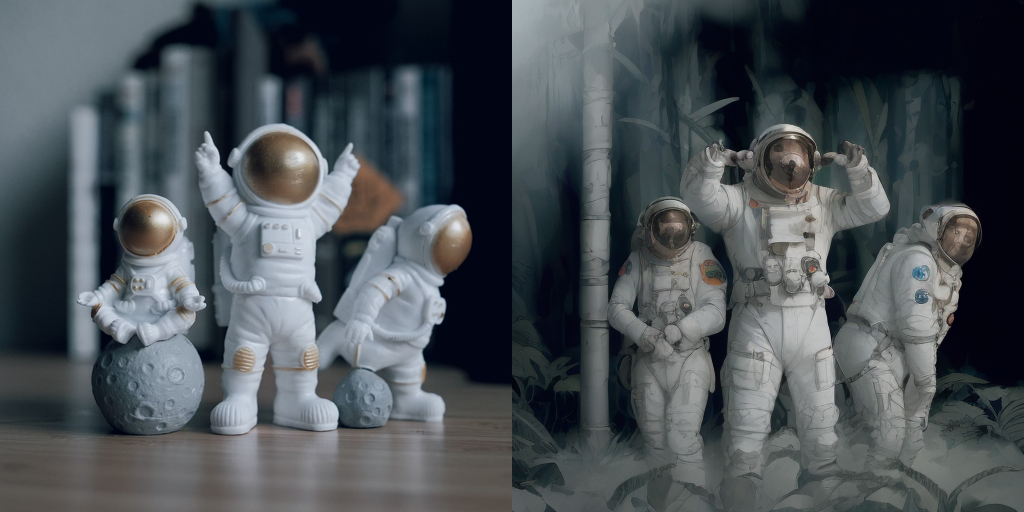
|
||||
|
||||
</hfoption>
|
||||
<hfoption id="LCM-LoRA">
|
||||
|
||||
To use LCM-LoRAs for image-to-image, you need to replace the scheduler with the [`LCMScheduler`] and load the LCM-LoRA weights with the [`~loaders.LoraLoaderMixin.load_lora_weights`] method. Then you can use the pipeline as usual, and pass a text prompt and initial image to generate an image in just 4 steps.
|
||||
<Tip>
|
||||
|
||||
> [!TIP]
|
||||
> Experiment with different values for `num_inference_steps`, `strength`, and `guidance_scale` to get the best results.
|
||||
You can get different results based on your prompt and the image you provide. To get the best results, we recommend trying different values for `num_inference_steps`, `strength`, and `guidance_scale` parameters and choose the best one.
|
||||
|
||||
```py
|
||||
import torch
|
||||
from diffusers import AutoPipelineForImage2Image, LCMScheduler
|
||||
from diffusers.utils import make_image_grid, load_image
|
||||
</Tip>
|
||||
|
||||
pipe = AutoPipelineForImage2Image.from_pretrained(
|
||||
"Lykon/dreamshaper-7",
|
||||
torch_dtype=torch.float16,
|
||||
variant="fp16",
|
||||
).to("cuda")
|
||||
|
||||
pipe.scheduler = LCMScheduler.from_config(pipe.scheduler.config)
|
||||
## Combine with style LoRAs
|
||||
|
||||
pipe.load_lora_weights("latent-consistency/lcm-lora-sdv1-5")
|
||||
|
||||
init_image = load_image("https://huggingface.co/datasets/huggingface/documentation-images/resolve/main/diffusers/img2img-init.png")
|
||||
prompt = "Astronauts in a jungle, cold color palette, muted colors, detailed, 8k"
|
||||
|
||||
generator = torch.manual_seed(0)
|
||||
image = pipe(
|
||||
prompt,
|
||||
image=init_image,
|
||||
num_inference_steps=4,
|
||||
guidance_scale=1,
|
||||
strength=0.6,
|
||||
generator=generator
|
||||
).images[0]
|
||||
image
|
||||
```
|
||||
|
||||
<div class="flex gap-4">
|
||||
<div>
|
||||
<img class="rounded-xl" src="https://huggingface.co/datasets/huggingface/documentation-images/resolve/main/diffusers/img2img-init.png"/>
|
||||
<figcaption class="mt-2 text-center text-sm text-gray-500">initial image</figcaption>
|
||||
</div>
|
||||
<div>
|
||||
<img class="rounded-xl" src="https://huggingface.co/datasets/huggingface/documentation-images/resolve/main/diffusers/lcm-lora-img2img.png"/>
|
||||
<figcaption class="mt-2 text-center text-sm text-gray-500">generated image</figcaption>
|
||||
</div>
|
||||
</div>
|
||||
|
||||
</hfoption>
|
||||
</hfoptions>
|
||||
|
||||
## Inpainting
|
||||
|
||||
To use LCM-LoRAs for inpainting, you need to replace the scheduler with the [`LCMScheduler`] and load the LCM-LoRA weights with the [`~loaders.LoraLoaderMixin.load_lora_weights`] method. Then you can use the pipeline as usual, and pass a text prompt, initial image, and mask image to generate an image in just 4 steps.
|
||||
|
||||
```py
|
||||
import torch
|
||||
from diffusers import AutoPipelineForInpainting, LCMScheduler
|
||||
from diffusers.utils import load_image, make_image_grid
|
||||
|
||||
pipe = AutoPipelineForInpainting.from_pretrained(
|
||||
"runwayml/stable-diffusion-inpainting",
|
||||
torch_dtype=torch.float16,
|
||||
variant="fp16",
|
||||
).to("cuda")
|
||||
|
||||
pipe.scheduler = LCMScheduler.from_config(pipe.scheduler.config)
|
||||
|
||||
pipe.load_lora_weights("latent-consistency/lcm-lora-sdv1-5")
|
||||
|
||||
init_image = load_image("https://huggingface.co/datasets/huggingface/documentation-images/resolve/main/diffusers/inpaint.png")
|
||||
mask_image = load_image("https://huggingface.co/datasets/huggingface/documentation-images/resolve/main/diffusers/inpaint_mask.png")
|
||||
|
||||
prompt = "concept art digital painting of an elven castle, inspired by lord of the rings, highly detailed, 8k"
|
||||
generator = torch.manual_seed(0)
|
||||
image = pipe(
|
||||
prompt=prompt,
|
||||
image=init_image,
|
||||
mask_image=mask_image,
|
||||
generator=generator,
|
||||
num_inference_steps=4,
|
||||
guidance_scale=4,
|
||||
).images[0]
|
||||
image
|
||||
```
|
||||
|
||||
<div class="flex gap-4">
|
||||
<div>
|
||||
<img class="rounded-xl" src="https://huggingface.co/datasets/huggingface/documentation-images/resolve/main/diffusers/inpaint.png"/>
|
||||
<figcaption class="mt-2 text-center text-sm text-gray-500">initial image</figcaption>
|
||||
</div>
|
||||
<div>
|
||||
<img class="rounded-xl" src="https://huggingface.co/datasets/huggingface/documentation-images/resolve/main/diffusers/lcm-lora-inpaint.png"/>
|
||||
<figcaption class="mt-2 text-center text-sm text-gray-500">generated image</figcaption>
|
||||
</div>
|
||||
</div>
|
||||
|
||||
## Adapters
|
||||
|
||||
LCMs are compatible with adapters like LoRA, ControlNet, T2I-Adapter, and AnimateDiff. You can bring the speed of LCMs to these adapters to generate images in a certain style or condition the model on another input like a canny image.
|
||||
|
||||
### LoRA
|
||||
|
||||
[LoRA](../using-diffusers/loading_adapters#lora) adapters can be rapidly finetuned to learn a new style from just a few images and plugged into a pretrained model to generate images in that style.
|
||||
|
||||
<hfoptions id="lcm-lora">
|
||||
<hfoption id="LCM">
|
||||
|
||||
Load the LCM checkpoint for your supported model into [`UNet2DConditionModel`] and replace the scheduler with the [`LCMScheduler`]. Then you can use the [`~loaders.LoraLoaderMixin.load_lora_weights`] method to load the LoRA weights into the LCM and generate a styled image in a few steps.
|
||||
LCMs can be used with other styled LoRAs to generate styled-images in very few steps (4-8). In the following example, we'll use the [papercut LoRA](TheLastBen/Papercut_SDXL).
|
||||
|
||||
```python
|
||||
from diffusers import StableDiffusionXLPipeline, UNet2DConditionModel, LCMScheduler
|
||||
@@ -277,9 +134,11 @@ pipe = StableDiffusionXLPipeline.from_pretrained(
|
||||
"stabilityai/stable-diffusion-xl-base-1.0", unet=unet, torch_dtype=torch.float16, variant="fp16",
|
||||
).to("cuda")
|
||||
pipe.scheduler = LCMScheduler.from_config(pipe.scheduler.config)
|
||||
|
||||
pipe.load_lora_weights("TheLastBen/Papercut_SDXL", weight_name="papercut.safetensors", adapter_name="papercut")
|
||||
|
||||
prompt = "papercut, a cute fox"
|
||||
|
||||
generator = torch.manual_seed(0)
|
||||
image = pipe(
|
||||
prompt=prompt, num_inference_steps=4, generator=generator, guidance_scale=8.0
|
||||
@@ -287,58 +146,15 @@ image = pipe(
|
||||
image
|
||||
```
|
||||
|
||||
<div class="flex justify-center">
|
||||
<img src="https://huggingface.co/datasets/huggingface/documentation-images/resolve/main/diffusers/lcm/lcm_full_sdx_lora_mix.png"/>
|
||||
</div>
|
||||

|
||||
|
||||
</hfoption>
|
||||
<hfoption id="LCM-LoRA">
|
||||
|
||||
Replace the scheduler with the [`LCMScheduler`]. Then you can use the [`~loaders.LoraLoaderMixin.load_lora_weights`] method to load the LCM-LoRA weights and the style LoRA you want to use. Combine both LoRA adapters with the [`~loaders.UNet2DConditionLoadersMixin.set_adapters`] method and generate a styled image in a few steps.
|
||||
## ControlNet/T2I-Adapter
|
||||
|
||||
```py
|
||||
import torch
|
||||
from diffusers import DiffusionPipeline, LCMScheduler
|
||||
|
||||
pipe = DiffusionPipeline.from_pretrained(
|
||||
"stabilityai/stable-diffusion-xl-base-1.0",
|
||||
variant="fp16",
|
||||
torch_dtype=torch.float16
|
||||
).to("cuda")
|
||||
|
||||
pipe.scheduler = LCMScheduler.from_config(pipe.scheduler.config)
|
||||
|
||||
pipe.load_lora_weights("latent-consistency/lcm-lora-sdxl", adapter_name="lcm")
|
||||
pipe.load_lora_weights("TheLastBen/Papercut_SDXL", weight_name="papercut.safetensors", adapter_name="papercut")
|
||||
|
||||
pipe.set_adapters(["lcm", "papercut"], adapter_weights=[1.0, 0.8])
|
||||
|
||||
prompt = "papercut, a cute fox"
|
||||
generator = torch.manual_seed(0)
|
||||
image = pipe(prompt, num_inference_steps=4, guidance_scale=1, generator=generator).images[0]
|
||||
image
|
||||
```
|
||||
|
||||
<div class="flex justify-center">
|
||||
<img src="https://huggingface.co/datasets/huggingface/documentation-images/resolve/main/diffusers/lcm/lcm_sdx_lora_mix.png"/>
|
||||
</div>
|
||||
|
||||
</hfoption>
|
||||
</hfoptions>
|
||||
Let's look at how we can perform inference with ControlNet/T2I-Adapter and a LCM.
|
||||
|
||||
### ControlNet
|
||||
|
||||
[ControlNet](./controlnet) are adapters that can be trained on a variety of inputs like canny edge, pose estimation, or depth. The ControlNet can be inserted into the pipeline to provide additional conditioning and control to the model for more accurate generation.
|
||||
|
||||
You can find additional ControlNet models trained on other inputs in [lllyasviel's](https://hf.co/lllyasviel) repository.
|
||||
|
||||
<hfoptions id="lcm-controlnet">
|
||||
<hfoption id="LCM">
|
||||
|
||||
Load a ControlNet model trained on canny images and pass it to the [`ControlNetModel`]. Then you can load a LCM model into [`StableDiffusionControlNetPipeline`] and replace the scheduler with the [`LCMScheduler`]. Now pass the canny image to the pipeline and generate an image.
|
||||
|
||||
> [!TIP]
|
||||
> Experiment with different values for `num_inference_steps`, `controlnet_conditioning_scale`, `cross_attention_kwargs`, and `guidance_scale` to get the best results.
|
||||
For this example, we'll use the [LCM_Dreamshaper_v7](https://huggingface.co/SimianLuo/LCM_Dreamshaper_v7) model with canny ControlNet, but the same steps can be applied to other LCM models as well.
|
||||
|
||||
```python
|
||||
import torch
|
||||
@@ -370,6 +186,8 @@ pipe = StableDiffusionControlNetPipeline.from_pretrained(
|
||||
torch_dtype=torch.float16,
|
||||
safety_checker=None,
|
||||
).to("cuda")
|
||||
|
||||
# set scheduler
|
||||
pipe.scheduler = LCMScheduler.from_config(pipe.scheduler.config)
|
||||
|
||||
generator = torch.manual_seed(0)
|
||||
@@ -382,84 +200,16 @@ image = pipe(
|
||||
make_image_grid([canny_image, image], rows=1, cols=2)
|
||||
```
|
||||
|
||||
<div class="flex justify-center">
|
||||
<img src="https://huggingface.co/datasets/huggingface/documentation-images/resolve/main/diffusers/lcm/lcm_full_sdv1-5_controlnet.png"/>
|
||||
</div>
|
||||
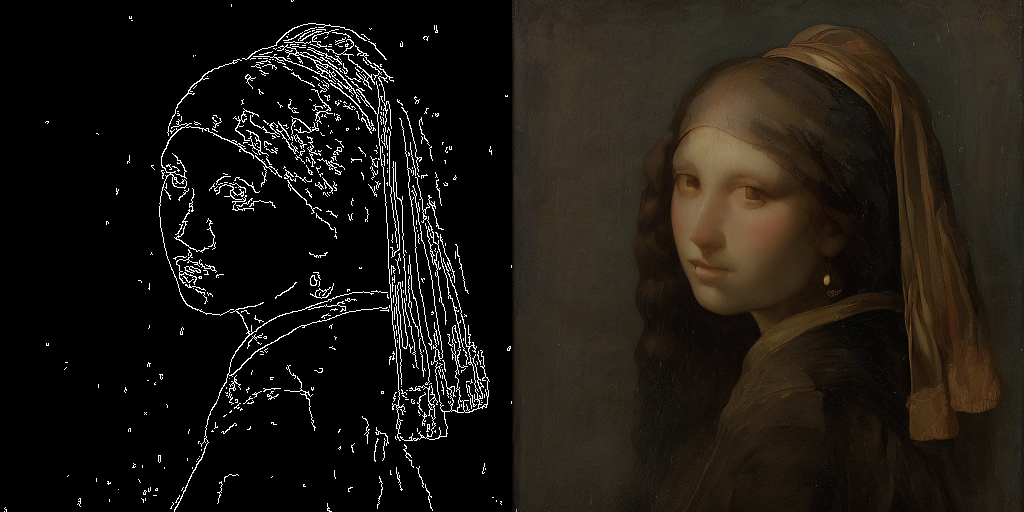
|
||||
|
||||
</hfoption>
|
||||
<hfoption id="LCM-LoRA">
|
||||
|
||||
Load a ControlNet model trained on canny images and pass it to the [`ControlNetModel`]. Then you can load a Stable Diffusion v1.5 model into [`StableDiffusionControlNetPipeline`] and replace the scheduler with the [`LCMScheduler`]. Use the [`~loaders.LoraLoaderMixin.load_lora_weights`] method to load the LCM-LoRA weights, and pass the canny image to the pipeline and generate an image.
|
||||
|
||||
> [!TIP]
|
||||
> Experiment with different values for `num_inference_steps`, `controlnet_conditioning_scale`, `cross_attention_kwargs`, and `guidance_scale` to get the best results.
|
||||
|
||||
```py
|
||||
import torch
|
||||
import cv2
|
||||
import numpy as np
|
||||
from PIL import Image
|
||||
|
||||
from diffusers import StableDiffusionControlNetPipeline, ControlNetModel, LCMScheduler
|
||||
from diffusers.utils import load_image
|
||||
|
||||
image = load_image(
|
||||
"https://hf.co/datasets/huggingface/documentation-images/resolve/main/diffusers/input_image_vermeer.png"
|
||||
).resize((512, 512))
|
||||
|
||||
image = np.array(image)
|
||||
|
||||
low_threshold = 100
|
||||
high_threshold = 200
|
||||
|
||||
image = cv2.Canny(image, low_threshold, high_threshold)
|
||||
image = image[:, :, None]
|
||||
image = np.concatenate([image, image, image], axis=2)
|
||||
canny_image = Image.fromarray(image)
|
||||
|
||||
controlnet = ControlNetModel.from_pretrained("lllyasviel/sd-controlnet-canny", torch_dtype=torch.float16)
|
||||
pipe = StableDiffusionControlNetPipeline.from_pretrained(
|
||||
"runwayml/stable-diffusion-v1-5",
|
||||
controlnet=controlnet,
|
||||
torch_dtype=torch.float16,
|
||||
safety_checker=None,
|
||||
variant="fp16"
|
||||
).to("cuda")
|
||||
|
||||
pipe.scheduler = LCMScheduler.from_config(pipe.scheduler.config)
|
||||
|
||||
pipe.load_lora_weights("latent-consistency/lcm-lora-sdv1-5")
|
||||
|
||||
generator = torch.manual_seed(0)
|
||||
image = pipe(
|
||||
"the mona lisa",
|
||||
image=canny_image,
|
||||
num_inference_steps=4,
|
||||
guidance_scale=1.5,
|
||||
controlnet_conditioning_scale=0.8,
|
||||
cross_attention_kwargs={"scale": 1},
|
||||
generator=generator,
|
||||
).images[0]
|
||||
image
|
||||
```
|
||||
|
||||
<div class="flex justify-center">
|
||||
<img src="https://huggingface.co/datasets/huggingface/documentation-images/resolve/main/diffusers/lcm/lcm_sdv1-5_controlnet.png"/>
|
||||
</div>
|
||||
|
||||
</hfoption>
|
||||
</hfoptions>
|
||||
<Tip>
|
||||
The inference parameters in this example might not work for all examples, so we recommend trying different values for the `num_inference_steps`, `guidance_scale`, `controlnet_conditioning_scale`, and `cross_attention_kwargs` parameters and choosing the best one.
|
||||
</Tip>
|
||||
|
||||
### T2I-Adapter
|
||||
|
||||
[T2I-Adapter](./t2i_adapter) is an even more lightweight adapter than ControlNet, that provides an additional input to condition a pretrained model with. It is faster than ControlNet but the results may be slightly worse.
|
||||
|
||||
You can find additional T2I-Adapter checkpoints trained on other inputs in [TencentArc's](https://hf.co/TencentARC) repository.
|
||||
|
||||
<hfoptions id="lcm-t2i">
|
||||
<hfoption id="LCM">
|
||||
|
||||
Load a T2IAdapter trained on canny images and pass it to the [`StableDiffusionXLAdapterPipeline`]. Then load a LCM checkpoint into [`UNet2DConditionModel`] and replace the scheduler with the [`LCMScheduler`]. Now pass the canny image to the pipeline and generate an image.
|
||||
This example shows how to use the `lcm-sdxl` with the [Canny T2I-Adapter](TencentARC/t2i-adapter-canny-sdxl-1.0).
|
||||
|
||||
```python
|
||||
import torch
|
||||
@@ -470,9 +220,10 @@ from PIL import Image
|
||||
from diffusers import StableDiffusionXLAdapterPipeline, UNet2DConditionModel, T2IAdapter, LCMScheduler
|
||||
from diffusers.utils import load_image, make_image_grid
|
||||
|
||||
# detect the canny map in low resolution to avoid high-frequency details
|
||||
# Prepare image
|
||||
# Detect the canny map in low resolution to avoid high-frequency details
|
||||
image = load_image(
|
||||
"https://hf.co/datasets/huggingface/documentation-images/resolve/main/diffusers/input_image_vermeer.png"
|
||||
"https://huggingface.co/Adapter/t2iadapter/resolve/main/figs_SDXLV1.0/org_canny.jpg"
|
||||
).resize((384, 384))
|
||||
|
||||
image = np.array(image)
|
||||
@@ -485,6 +236,7 @@ image = image[:, :, None]
|
||||
image = np.concatenate([image, image, image], axis=2)
|
||||
canny_image = Image.fromarray(image).resize((1024, 1216))
|
||||
|
||||
# load adapter
|
||||
adapter = T2IAdapter.from_pretrained("TencentARC/t2i-adapter-canny-sdxl-1.0", torch_dtype=torch.float16, varient="fp16").to("cuda")
|
||||
|
||||
unet = UNet2DConditionModel.from_pretrained(
|
||||
@@ -502,7 +254,7 @@ pipe = StableDiffusionXLAdapterPipeline.from_pretrained(
|
||||
|
||||
pipe.scheduler = LCMScheduler.from_config(pipe.scheduler.config)
|
||||
|
||||
prompt = "the mona lisa, 4k picture, high quality"
|
||||
prompt = "Mystical fairy in real, magic, 4k picture, high quality"
|
||||
negative_prompt = "extra digit, fewer digits, cropped, worst quality, low quality, glitch, deformed, mutated, ugly, disfigured"
|
||||
|
||||
generator = torch.manual_seed(0)
|
||||
@@ -516,116 +268,7 @@ image = pipe(
|
||||
adapter_conditioning_factor=1,
|
||||
generator=generator,
|
||||
).images[0]
|
||||
grid = make_image_grid([canny_image, image], rows=1, cols=2)
|
||||
```
|
||||
|
||||
<div class="flex justify-center">
|
||||
<img src="https://huggingface.co/datasets/huggingface/documentation-images/resolve/main/diffusers/lcm-t2i.png"/>
|
||||
</div>
|
||||
|
||||
</hfoption>
|
||||
<hfoption id="LCM-LoRA">
|
||||
|
||||
Load a T2IAdapter trained on canny images and pass it to the [`StableDiffusionXLAdapterPipeline`]. Replace the scheduler with the [`LCMScheduler`], and use the [`~loaders.LoraLoaderMixin.load_lora_weights`] method to load the LCM-LoRA weights. Pass the canny image to the pipeline and generate an image.
|
||||
|
||||
```py
|
||||
import torch
|
||||
import cv2
|
||||
import numpy as np
|
||||
from PIL import Image
|
||||
|
||||
from diffusers import StableDiffusionXLAdapterPipeline, UNet2DConditionModel, T2IAdapter, LCMScheduler
|
||||
from diffusers.utils import load_image, make_image_grid
|
||||
|
||||
# detect the canny map in low resolution to avoid high-frequency details
|
||||
image = load_image(
|
||||
"https://hf.co/datasets/huggingface/documentation-images/resolve/main/diffusers/input_image_vermeer.png"
|
||||
).resize((384, 384))
|
||||
|
||||
image = np.array(image)
|
||||
|
||||
low_threshold = 100
|
||||
high_threshold = 200
|
||||
|
||||
image = cv2.Canny(image, low_threshold, high_threshold)
|
||||
image = image[:, :, None]
|
||||
image = np.concatenate([image, image, image], axis=2)
|
||||
canny_image = Image.fromarray(image).resize((1024, 1024))
|
||||
|
||||
adapter = T2IAdapter.from_pretrained("TencentARC/t2i-adapter-canny-sdxl-1.0", torch_dtype=torch.float16, varient="fp16").to("cuda")
|
||||
|
||||
pipe = StableDiffusionXLAdapterPipeline.from_pretrained(
|
||||
"stabilityai/stable-diffusion-xl-base-1.0",
|
||||
adapter=adapter,
|
||||
torch_dtype=torch.float16,
|
||||
variant="fp16",
|
||||
).to("cuda")
|
||||
|
||||
pipe.scheduler = LCMScheduler.from_config(pipe.scheduler.config)
|
||||
|
||||
pipe.load_lora_weights("latent-consistency/lcm-lora-sdxl")
|
||||
|
||||
prompt = "the mona lisa, 4k picture, high quality"
|
||||
negative_prompt = "extra digit, fewer digits, cropped, worst quality, low quality, glitch, deformed, mutated, ugly, disfigured"
|
||||
|
||||
generator = torch.manual_seed(0)
|
||||
image = pipe(
|
||||
prompt=prompt,
|
||||
negative_prompt=negative_prompt,
|
||||
image=canny_image,
|
||||
num_inference_steps=4,
|
||||
guidance_scale=1.5,
|
||||
adapter_conditioning_scale=0.8,
|
||||
adapter_conditioning_factor=1,
|
||||
generator=generator,
|
||||
).images[0]
|
||||
```
|
||||
|
||||
<div class="flex justify-center">
|
||||
<img src="https://huggingface.co/datasets/huggingface/documentation-images/resolve/main/diffusers/lcm-lora-t2i.png"/>
|
||||
</div>
|
||||
|
||||
</hfoption>
|
||||
</hfoptions>
|
||||
|
||||
### AnimateDiff
|
||||
|
||||
[AnimateDiff](../api/pipelines/animatediff) is an adapter that adds motion to an image. It can be used with most Stable Diffusion models, effectively turning them into "video generation" models. Generating good results with a video model usually requires generating multiple frames (16-24), which can be very slow with a regular Stable Diffusion model. LCM-LoRA can speed up this process by only taking 4-8 steps for each frame.
|
||||
|
||||
Load a [`AnimateDiffPipeline`] and pass a [`MotionAdapter`] to it. Then replace the scheduler with the [`LCMScheduler`], and combine both LoRA adapters with the [`~loaders.UNet2DConditionLoadersMixin.set_adapters`] method. Now you can pass a prompt to the pipeline and generate an animated image.
|
||||
|
||||
```py
|
||||
import torch
|
||||
from diffusers import MotionAdapter, AnimateDiffPipeline, DDIMScheduler, LCMScheduler
|
||||
from diffusers.utils import export_to_gif
|
||||
|
||||
adapter = MotionAdapter.from_pretrained("guoyww/animatediff-motion-adapter-v1-5")
|
||||
pipe = AnimateDiffPipeline.from_pretrained(
|
||||
"frankjoshua/toonyou_beta6",
|
||||
motion_adapter=adapter,
|
||||
).to("cuda")
|
||||
|
||||
# set scheduler
|
||||
pipe.scheduler = LCMScheduler.from_config(pipe.scheduler.config)
|
||||
|
||||
# load LCM-LoRA
|
||||
pipe.load_lora_weights("latent-consistency/lcm-lora-sdv1-5", adapter_name="lcm")
|
||||
pipe.load_lora_weights("guoyww/animatediff-motion-lora-zoom-in", weight_name="diffusion_pytorch_model.safetensors", adapter_name="motion-lora")
|
||||
|
||||
pipe.set_adapters(["lcm", "motion-lora"], adapter_weights=[0.55, 1.2])
|
||||
|
||||
prompt = "best quality, masterpiece, 1girl, looking at viewer, blurry background, upper body, contemporary, dress"
|
||||
generator = torch.manual_seed(0)
|
||||
frames = pipe(
|
||||
prompt=prompt,
|
||||
num_inference_steps=5,
|
||||
guidance_scale=1.25,
|
||||
cross_attention_kwargs={"scale": 1},
|
||||
num_frames=24,
|
||||
generator=generator
|
||||
).frames[0]
|
||||
export_to_gif(frames, "animation.gif")
|
||||
```
|
||||
|
||||
<div class="flex justify-center">
|
||||
<img src="https://huggingface.co/datasets/huggingface/documentation-images/resolve/main/diffusers/lcm-lora-animatediff.gif"/>
|
||||
</div>
|
||||
|
||||
|
||||
@@ -0,0 +1,422 @@
|
||||
<!--Copyright 2024 The HuggingFace Team. All rights reserved.
|
||||
|
||||
Licensed under the Apache License, Version 2.0 (the "License"); you may not use this file except in compliance with
|
||||
the License. You may obtain a copy of the License at
|
||||
|
||||
http://www.apache.org/licenses/LICENSE-2.0
|
||||
|
||||
Unless required by applicable law or agreed to in writing, software distributed under the License is distributed on
|
||||
an "AS IS" BASIS, WITHOUT WARRANTIES OR CONDITIONS OF ANY KIND, either express or implied. See the License for the
|
||||
specific language governing permissions and limitations under the License.
|
||||
-->
|
||||
|
||||
[[open-in-colab]]
|
||||
|
||||
# Performing inference with LCM-LoRA
|
||||
|
||||
Latent Consistency Models (LCM) enable quality image generation in typically 2-4 steps making it possible to use diffusion models in almost real-time settings.
|
||||
|
||||
From the [official website](https://latent-consistency-models.github.io/):
|
||||
|
||||
> LCMs can be distilled from any pre-trained Stable Diffusion (SD) in only 4,000 training steps (~32 A100 GPU Hours) for generating high quality 768 x 768 resolution images in 2~4 steps or even one step, significantly accelerating text-to-image generation. We employ LCM to distill the Dreamshaper-V7 version of SD in just 4,000 training iterations.
|
||||
|
||||
For a more technical overview of LCMs, refer to [the paper](https://huggingface.co/papers/2310.04378).
|
||||
|
||||
However, each model needs to be distilled separately for latent consistency distillation. The core idea with LCM-LoRA is to train just a few adapter layers, the adapter being LoRA in this case.
|
||||
This way, we don't have to train the full model and keep the number of trainable parameters manageable. The resulting LoRAs can then be applied to any fine-tuned version of the model without distilling them separately.
|
||||
Additionally, the LoRAs can be applied to image-to-image, ControlNet/T2I-Adapter, inpainting, AnimateDiff etc.
|
||||
The LCM-LoRA can also be combined with other LoRAs to generate styled images in very few steps (4-8).
|
||||
|
||||
LCM-LoRAs are available for [stable-diffusion-v1-5](https://huggingface.co/runwayml/stable-diffusion-v1-5), [stable-diffusion-xl-base-1.0](https://huggingface.co/stabilityai/stable-diffusion-xl-base-1.0), and the [SSD-1B](https://huggingface.co/segmind/SSD-1B) model. All the checkpoints can be found in this [collection](https://huggingface.co/collections/latent-consistency/latent-consistency-models-loras-654cdd24e111e16f0865fba6).
|
||||
|
||||
For more details about LCM-LoRA, refer to [the technical report](https://huggingface.co/papers/2311.05556).
|
||||
|
||||
This guide shows how to perform inference with LCM-LoRAs for
|
||||
- text-to-image
|
||||
- image-to-image
|
||||
- combined with styled LoRAs
|
||||
- ControlNet/T2I-Adapter
|
||||
- inpainting
|
||||
- AnimateDiff
|
||||
|
||||
Before going through this guide, we'll take a look at the general workflow for performing inference with LCM-LoRAs.
|
||||
LCM-LoRAs are similar to other Stable Diffusion LoRAs so they can be used with any [`DiffusionPipeline`] that supports LoRAs.
|
||||
|
||||
- Load the task specific pipeline and model.
|
||||
- Set the scheduler to [`LCMScheduler`].
|
||||
- Load the LCM-LoRA weights for the model.
|
||||
- Reduce the `guidance_scale` between `[1.0, 2.0]` and set the `num_inference_steps` between [4, 8].
|
||||
- Perform inference with the pipeline with the usual parameters.
|
||||
|
||||
Let's look at how we can perform inference with LCM-LoRAs for different tasks.
|
||||
|
||||
First, make sure you have [peft](https://github.com/huggingface/peft) installed, for better LoRA support.
|
||||
|
||||
```bash
|
||||
pip install -U peft
|
||||
```
|
||||
|
||||
## Text-to-image
|
||||
|
||||
You'll use the [`StableDiffusionXLPipeline`] with the scheduler: [`LCMScheduler`] and then load the LCM-LoRA. Together with the LCM-LoRA and the scheduler, the pipeline enables a fast inference workflow overcoming the slow iterative nature of diffusion models.
|
||||
|
||||
```python
|
||||
import torch
|
||||
from diffusers import DiffusionPipeline, LCMScheduler
|
||||
|
||||
pipe = DiffusionPipeline.from_pretrained(
|
||||
"stabilityai/stable-diffusion-xl-base-1.0",
|
||||
variant="fp16",
|
||||
torch_dtype=torch.float16
|
||||
).to("cuda")
|
||||
|
||||
# set scheduler
|
||||
pipe.scheduler = LCMScheduler.from_config(pipe.scheduler.config)
|
||||
|
||||
# load LCM-LoRA
|
||||
pipe.load_lora_weights("latent-consistency/lcm-lora-sdxl")
|
||||
|
||||
prompt = "Self-portrait oil painting, a beautiful cyborg with golden hair, 8k"
|
||||
|
||||
generator = torch.manual_seed(42)
|
||||
image = pipe(
|
||||
prompt=prompt, num_inference_steps=4, generator=generator, guidance_scale=1.0
|
||||
).images[0]
|
||||
```
|
||||
|
||||
|
||||
|
||||
Notice that we use only 4 steps for generation which is way less than what's typically used for standard SDXL.
|
||||
|
||||
<Tip>
|
||||
|
||||
You may have noticed that we set `guidance_scale=1.0`, which disables classifer-free-guidance. This is because the LCM-LoRA is trained with guidance, so the batch size does not have to be doubled in this case. This leads to a faster inference time, with the drawback that negative prompts don't have any effect on the denoising process.
|
||||
|
||||
You can also use guidance with LCM-LoRA, but due to the nature of training the model is very sensitve to the `guidance_scale` values, high values can lead to artifacts in the generated images. In our experiments, we found that the best values are in the range of [1.0, 2.0].
|
||||
|
||||
</Tip>
|
||||
|
||||
### Inference with a fine-tuned model
|
||||
|
||||
As mentioned above, the LCM-LoRA can be applied to any fine-tuned version of the model without having to distill them separately. Let's look at how we can perform inference with a fine-tuned model. In this example, we'll use the [animagine-xl](https://huggingface.co/Linaqruf/animagine-xl) model, which is a fine-tuned version of the SDXL model for generating anime.
|
||||
|
||||
```python
|
||||
from diffusers import DiffusionPipeline, LCMScheduler
|
||||
|
||||
pipe = DiffusionPipeline.from_pretrained(
|
||||
"Linaqruf/animagine-xl",
|
||||
variant="fp16",
|
||||
torch_dtype=torch.float16
|
||||
).to("cuda")
|
||||
|
||||
# set scheduler
|
||||
pipe.scheduler = LCMScheduler.from_config(pipe.scheduler.config)
|
||||
|
||||
# load LCM-LoRA
|
||||
pipe.load_lora_weights("latent-consistency/lcm-lora-sdxl")
|
||||
|
||||
prompt = "face focus, cute, masterpiece, best quality, 1girl, green hair, sweater, looking at viewer, upper body, beanie, outdoors, night, turtleneck"
|
||||
|
||||
generator = torch.manual_seed(0)
|
||||
image = pipe(
|
||||
prompt=prompt, num_inference_steps=4, generator=generator, guidance_scale=1.0
|
||||
).images[0]
|
||||
```
|
||||
|
||||

|
||||
|
||||
|
||||
## Image-to-image
|
||||
|
||||
LCM-LoRA can be applied to image-to-image tasks too. Let's look at how we can perform image-to-image generation with LCMs. For this example we'll use the [dreamshaper-7](https://huggingface.co/Lykon/dreamshaper-7) model and the LCM-LoRA for `stable-diffusion-v1-5 `.
|
||||
|
||||
```python
|
||||
import torch
|
||||
from diffusers import AutoPipelineForImage2Image, LCMScheduler
|
||||
from diffusers.utils import make_image_grid, load_image
|
||||
|
||||
pipe = AutoPipelineForImage2Image.from_pretrained(
|
||||
"Lykon/dreamshaper-7",
|
||||
torch_dtype=torch.float16,
|
||||
variant="fp16",
|
||||
).to("cuda")
|
||||
|
||||
# set scheduler
|
||||
pipe.scheduler = LCMScheduler.from_config(pipe.scheduler.config)
|
||||
|
||||
# load LCM-LoRA
|
||||
pipe.load_lora_weights("latent-consistency/lcm-lora-sdv1-5")
|
||||
|
||||
# prepare image
|
||||
url = "https://huggingface.co/datasets/huggingface/documentation-images/resolve/main/diffusers/img2img-init.png"
|
||||
init_image = load_image(url)
|
||||
prompt = "Astronauts in a jungle, cold color palette, muted colors, detailed, 8k"
|
||||
|
||||
# pass prompt and image to pipeline
|
||||
generator = torch.manual_seed(0)
|
||||
image = pipe(
|
||||
prompt,
|
||||
image=init_image,
|
||||
num_inference_steps=4,
|
||||
guidance_scale=1,
|
||||
strength=0.6,
|
||||
generator=generator
|
||||
).images[0]
|
||||
make_image_grid([init_image, image], rows=1, cols=2)
|
||||
```
|
||||
|
||||
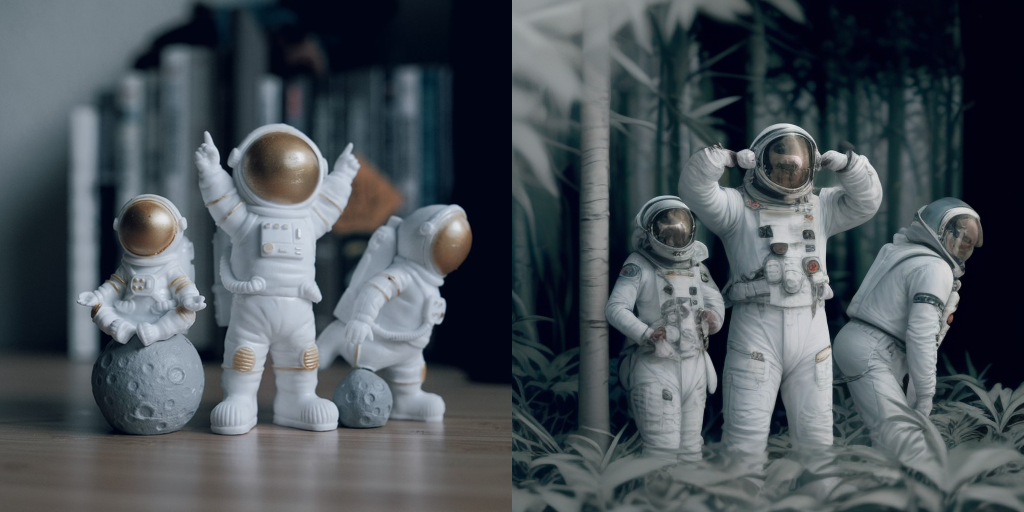
|
||||
|
||||
|
||||
<Tip>
|
||||
|
||||
You can get different results based on your prompt and the image you provide. To get the best results, we recommend trying different values for `num_inference_steps`, `strength`, and `guidance_scale` parameters and choose the best one.
|
||||
|
||||
</Tip>
|
||||
|
||||
|
||||
## Combine with styled LoRAs
|
||||
|
||||
LCM-LoRA can be combined with other LoRAs to generate styled-images in very few steps (4-8). In the following example, we'll use the LCM-LoRA with the [papercut LoRA](TheLastBen/Papercut_SDXL).
|
||||
To learn more about how to combine LoRAs, refer to [this guide](https://huggingface.co/docs/diffusers/tutorials/using_peft_for_inference#combine-multiple-adapters).
|
||||
|
||||
```python
|
||||
import torch
|
||||
from diffusers import DiffusionPipeline, LCMScheduler
|
||||
|
||||
pipe = DiffusionPipeline.from_pretrained(
|
||||
"stabilityai/stable-diffusion-xl-base-1.0",
|
||||
variant="fp16",
|
||||
torch_dtype=torch.float16
|
||||
).to("cuda")
|
||||
|
||||
# set scheduler
|
||||
pipe.scheduler = LCMScheduler.from_config(pipe.scheduler.config)
|
||||
|
||||
# load LoRAs
|
||||
pipe.load_lora_weights("latent-consistency/lcm-lora-sdxl", adapter_name="lcm")
|
||||
pipe.load_lora_weights("TheLastBen/Papercut_SDXL", weight_name="papercut.safetensors", adapter_name="papercut")
|
||||
|
||||
# Combine LoRAs
|
||||
pipe.set_adapters(["lcm", "papercut"], adapter_weights=[1.0, 0.8])
|
||||
|
||||
prompt = "papercut, a cute fox"
|
||||
generator = torch.manual_seed(0)
|
||||
image = pipe(prompt, num_inference_steps=4, guidance_scale=1, generator=generator).images[0]
|
||||
image
|
||||
```
|
||||
|
||||
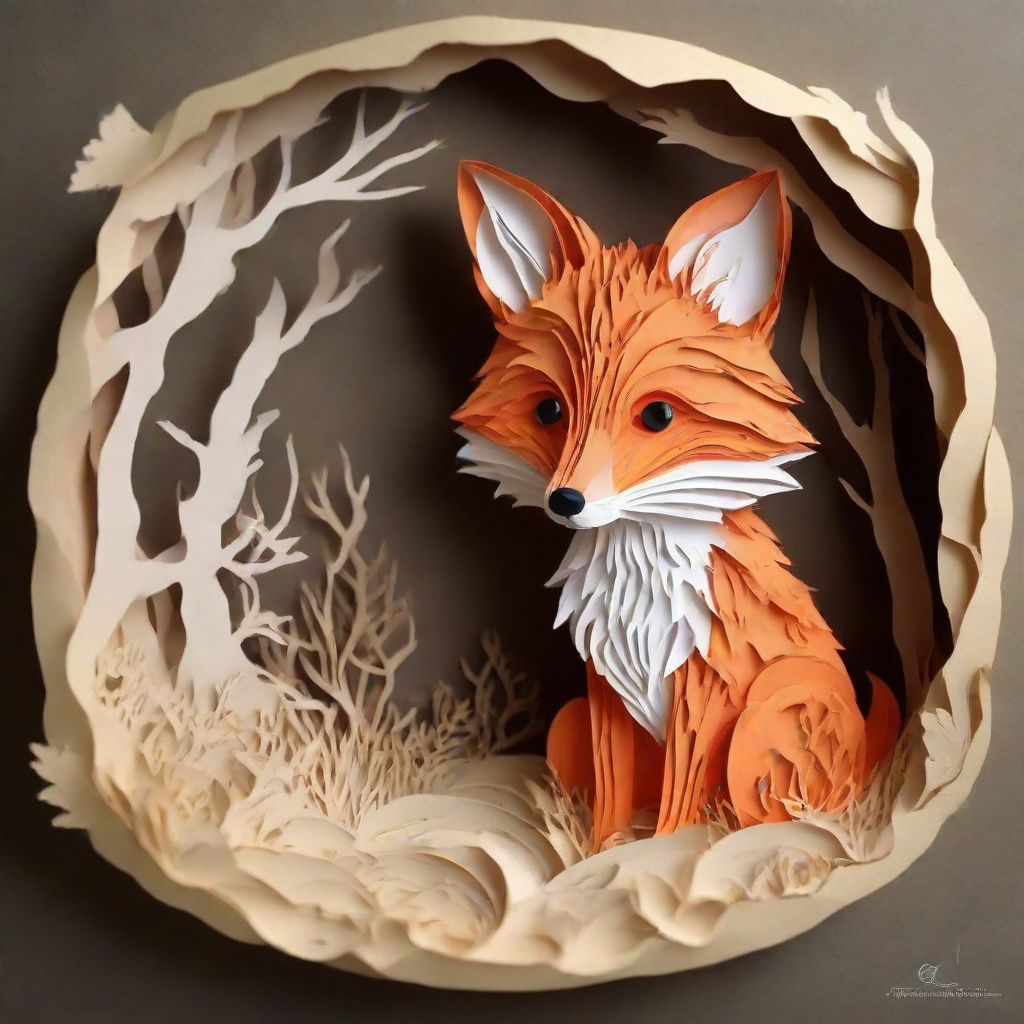
|
||||
|
||||
|
||||
## ControlNet/T2I-Adapter
|
||||
|
||||
Let's look at how we can perform inference with ControlNet/T2I-Adapter and LCM-LoRA.
|
||||
|
||||
### ControlNet
|
||||
For this example, we'll use the SD-v1-5 model and the LCM-LoRA for SD-v1-5 with canny ControlNet.
|
||||
|
||||
```python
|
||||
import torch
|
||||
import cv2
|
||||
import numpy as np
|
||||
from PIL import Image
|
||||
|
||||
from diffusers import StableDiffusionControlNetPipeline, ControlNetModel, LCMScheduler
|
||||
from diffusers.utils import load_image
|
||||
|
||||
image = load_image(
|
||||
"https://hf.co/datasets/huggingface/documentation-images/resolve/main/diffusers/input_image_vermeer.png"
|
||||
).resize((512, 512))
|
||||
|
||||
image = np.array(image)
|
||||
|
||||
low_threshold = 100
|
||||
high_threshold = 200
|
||||
|
||||
image = cv2.Canny(image, low_threshold, high_threshold)
|
||||
image = image[:, :, None]
|
||||
image = np.concatenate([image, image, image], axis=2)
|
||||
canny_image = Image.fromarray(image)
|
||||
|
||||
controlnet = ControlNetModel.from_pretrained("lllyasviel/sd-controlnet-canny", torch_dtype=torch.float16)
|
||||
pipe = StableDiffusionControlNetPipeline.from_pretrained(
|
||||
"runwayml/stable-diffusion-v1-5",
|
||||
controlnet=controlnet,
|
||||
torch_dtype=torch.float16,
|
||||
safety_checker=None,
|
||||
variant="fp16"
|
||||
).to("cuda")
|
||||
|
||||
# set scheduler
|
||||
pipe.scheduler = LCMScheduler.from_config(pipe.scheduler.config)
|
||||
|
||||
# load LCM-LoRA
|
||||
pipe.load_lora_weights("latent-consistency/lcm-lora-sdv1-5")
|
||||
|
||||
generator = torch.manual_seed(0)
|
||||
image = pipe(
|
||||
"the mona lisa",
|
||||
image=canny_image,
|
||||
num_inference_steps=4,
|
||||
guidance_scale=1.5,
|
||||
controlnet_conditioning_scale=0.8,
|
||||
cross_attention_kwargs={"scale": 1},
|
||||
generator=generator,
|
||||
).images[0]
|
||||
make_image_grid([canny_image, image], rows=1, cols=2)
|
||||
```
|
||||
|
||||
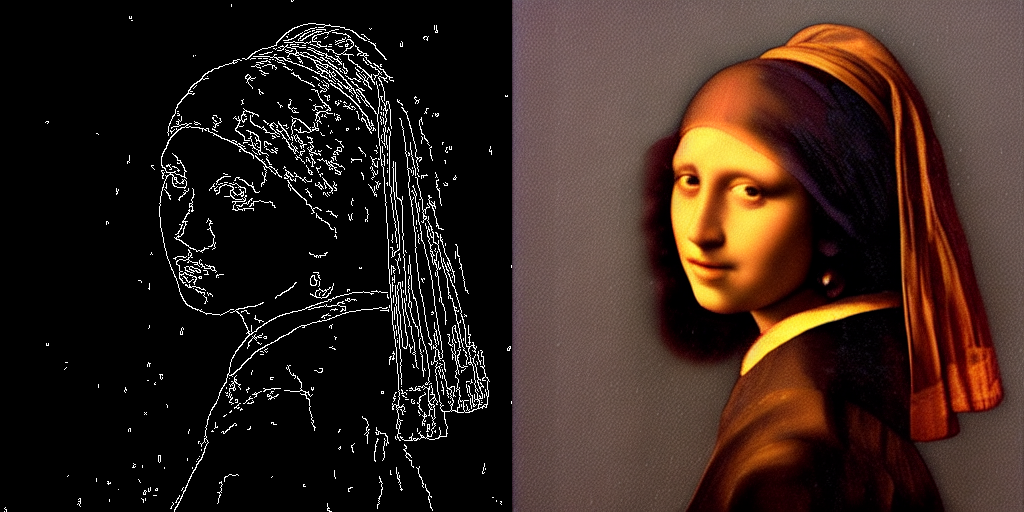
|
||||
|
||||
|
||||
<Tip>
|
||||
The inference parameters in this example might not work for all examples, so we recommend you to try different values for `num_inference_steps`, `guidance_scale`, `controlnet_conditioning_scale` and `cross_attention_kwargs` parameters and choose the best one.
|
||||
</Tip>
|
||||
|
||||
### T2I-Adapter
|
||||
|
||||
This example shows how to use the LCM-LoRA with the [Canny T2I-Adapter](TencentARC/t2i-adapter-canny-sdxl-1.0) and SDXL.
|
||||
|
||||
```python
|
||||
import torch
|
||||
import cv2
|
||||
import numpy as np
|
||||
from PIL import Image
|
||||
|
||||
from diffusers import StableDiffusionXLAdapterPipeline, T2IAdapter, LCMScheduler
|
||||
from diffusers.utils import load_image, make_image_grid
|
||||
|
||||
# Prepare image
|
||||
# Detect the canny map in low resolution to avoid high-frequency details
|
||||
image = load_image(
|
||||
"https://huggingface.co/Adapter/t2iadapter/resolve/main/figs_SDXLV1.0/org_canny.jpg"
|
||||
).resize((384, 384))
|
||||
|
||||
image = np.array(image)
|
||||
|
||||
low_threshold = 100
|
||||
high_threshold = 200
|
||||
|
||||
image = cv2.Canny(image, low_threshold, high_threshold)
|
||||
image = image[:, :, None]
|
||||
image = np.concatenate([image, image, image], axis=2)
|
||||
canny_image = Image.fromarray(image).resize((1024, 1024))
|
||||
|
||||
# load adapter
|
||||
adapter = T2IAdapter.from_pretrained("TencentARC/t2i-adapter-canny-sdxl-1.0", torch_dtype=torch.float16, varient="fp16").to("cuda")
|
||||
|
||||
pipe = StableDiffusionXLAdapterPipeline.from_pretrained(
|
||||
"stabilityai/stable-diffusion-xl-base-1.0",
|
||||
adapter=adapter,
|
||||
torch_dtype=torch.float16,
|
||||
variant="fp16",
|
||||
).to("cuda")
|
||||
|
||||
# set scheduler
|
||||
pipe.scheduler = LCMScheduler.from_config(pipe.scheduler.config)
|
||||
|
||||
# load LCM-LoRA
|
||||
pipe.load_lora_weights("latent-consistency/lcm-lora-sdxl")
|
||||
|
||||
prompt = "Mystical fairy in real, magic, 4k picture, high quality"
|
||||
negative_prompt = "extra digit, fewer digits, cropped, worst quality, low quality, glitch, deformed, mutated, ugly, disfigured"
|
||||
|
||||
generator = torch.manual_seed(0)
|
||||
image = pipe(
|
||||
prompt=prompt,
|
||||
negative_prompt=negative_prompt,
|
||||
image=canny_image,
|
||||
num_inference_steps=4,
|
||||
guidance_scale=1.5,
|
||||
adapter_conditioning_scale=0.8,
|
||||
adapter_conditioning_factor=1,
|
||||
generator=generator,
|
||||
).images[0]
|
||||
make_image_grid([canny_image, image], rows=1, cols=2)
|
||||
```
|
||||
|
||||
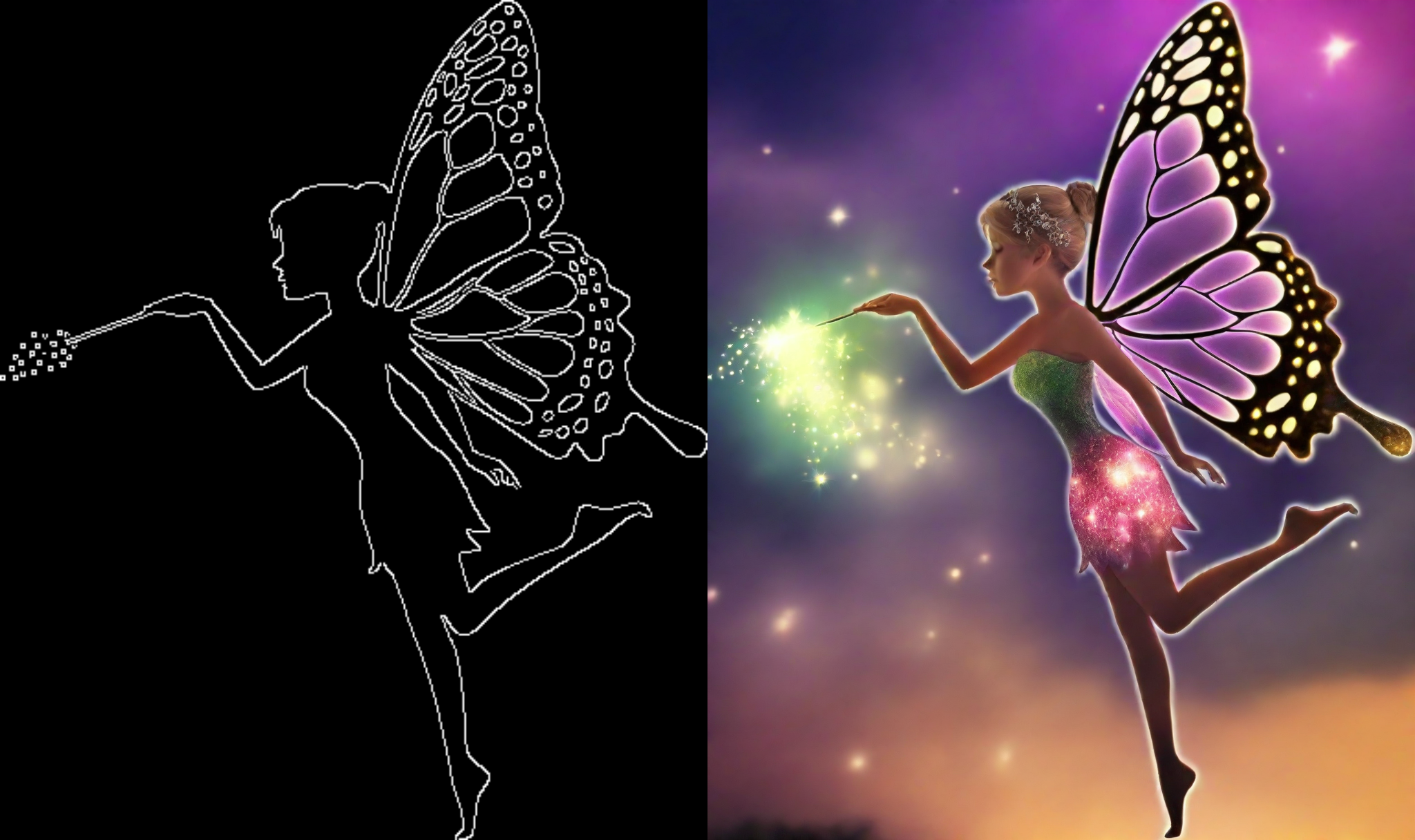
|
||||
|
||||
|
||||
## Inpainting
|
||||
|
||||
LCM-LoRA can be used for inpainting as well.
|
||||
|
||||
```python
|
||||
import torch
|
||||
from diffusers import AutoPipelineForInpainting, LCMScheduler
|
||||
from diffusers.utils import load_image, make_image_grid
|
||||
|
||||
pipe = AutoPipelineForInpainting.from_pretrained(
|
||||
"runwayml/stable-diffusion-inpainting",
|
||||
torch_dtype=torch.float16,
|
||||
variant="fp16",
|
||||
).to("cuda")
|
||||
|
||||
# set scheduler
|
||||
pipe.scheduler = LCMScheduler.from_config(pipe.scheduler.config)
|
||||
|
||||
# load LCM-LoRA
|
||||
pipe.load_lora_weights("latent-consistency/lcm-lora-sdv1-5")
|
||||
|
||||
# load base and mask image
|
||||
init_image = load_image("https://huggingface.co/datasets/huggingface/documentation-images/resolve/main/diffusers/inpaint.png")
|
||||
mask_image = load_image("https://huggingface.co/datasets/huggingface/documentation-images/resolve/main/diffusers/inpaint_mask.png")
|
||||
|
||||
# generator = torch.Generator("cuda").manual_seed(92)
|
||||
prompt = "concept art digital painting of an elven castle, inspired by lord of the rings, highly detailed, 8k"
|
||||
generator = torch.manual_seed(0)
|
||||
image = pipe(
|
||||
prompt=prompt,
|
||||
image=init_image,
|
||||
mask_image=mask_image,
|
||||
generator=generator,
|
||||
num_inference_steps=4,
|
||||
guidance_scale=4,
|
||||
).images[0]
|
||||
make_image_grid([init_image, mask_image, image], rows=1, cols=3)
|
||||
```
|
||||
|
||||
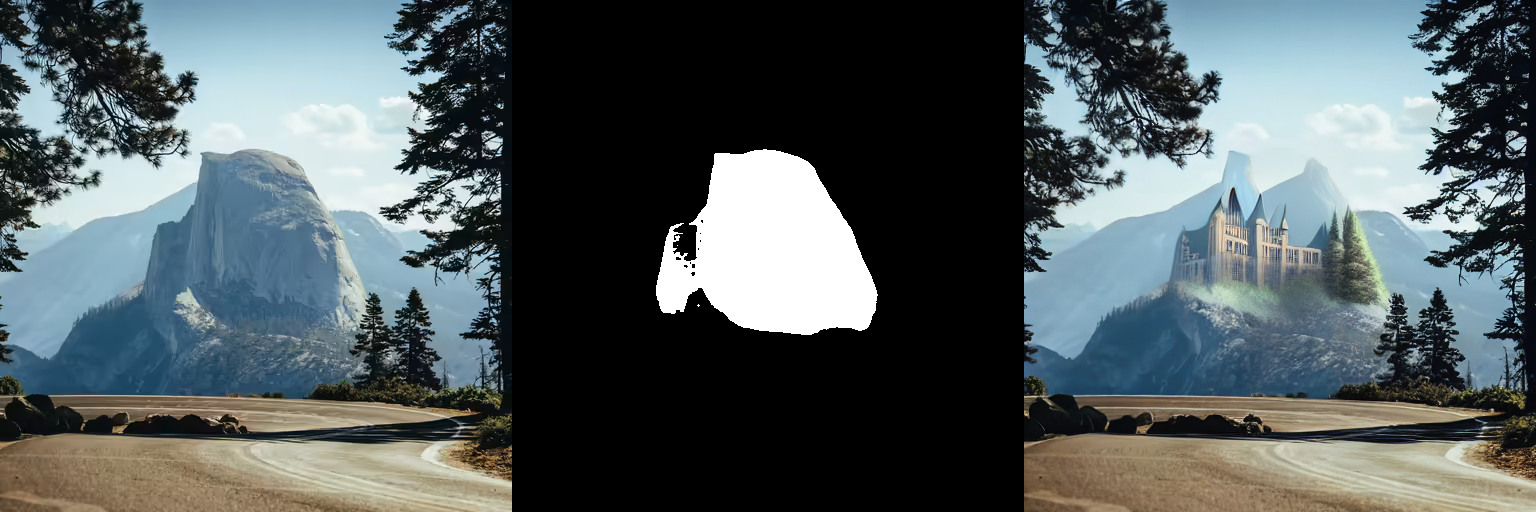
|
||||
|
||||
|
||||
## AnimateDiff
|
||||
|
||||
[`AnimateDiff`] allows you to animate images using Stable Diffusion models. To get good results, we need to generate multiple frames (16-24), and doing this with standard SD models can be very slow.
|
||||
LCM-LoRA can be used to speed up the process significantly, as you just need to do 4-8 steps for each frame. Let's look at how we can perform animation with LCM-LoRA and AnimateDiff.
|
||||
|
||||
```python
|
||||
import torch
|
||||
from diffusers import MotionAdapter, AnimateDiffPipeline, DDIMScheduler, LCMScheduler
|
||||
from diffusers.utils import export_to_gif
|
||||
|
||||
adapter = MotionAdapter.from_pretrained("diffusers/animatediff-motion-adapter-v1-5")
|
||||
pipe = AnimateDiffPipeline.from_pretrained(
|
||||
"frankjoshua/toonyou_beta6",
|
||||
motion_adapter=adapter,
|
||||
).to("cuda")
|
||||
|
||||
# set scheduler
|
||||
pipe.scheduler = LCMScheduler.from_config(pipe.scheduler.config)
|
||||
|
||||
# load LCM-LoRA
|
||||
pipe.load_lora_weights("latent-consistency/lcm-lora-sdv1-5", adapter_name="lcm")
|
||||
pipe.load_lora_weights("guoyww/animatediff-motion-lora-zoom-in", weight_name="diffusion_pytorch_model.safetensors", adapter_name="motion-lora")
|
||||
|
||||
pipe.set_adapters(["lcm", "motion-lora"], adapter_weights=[0.55, 1.2])
|
||||
|
||||
prompt = "best quality, masterpiece, 1girl, looking at viewer, blurry background, upper body, contemporary, dress"
|
||||
generator = torch.manual_seed(0)
|
||||
frames = pipe(
|
||||
prompt=prompt,
|
||||
num_inference_steps=5,
|
||||
guidance_scale=1.25,
|
||||
cross_attention_kwargs={"scale": 1},
|
||||
num_frames=24,
|
||||
generator=generator
|
||||
).frames[0]
|
||||
export_to_gif(frames, "animation.gif")
|
||||
```
|
||||
|
||||
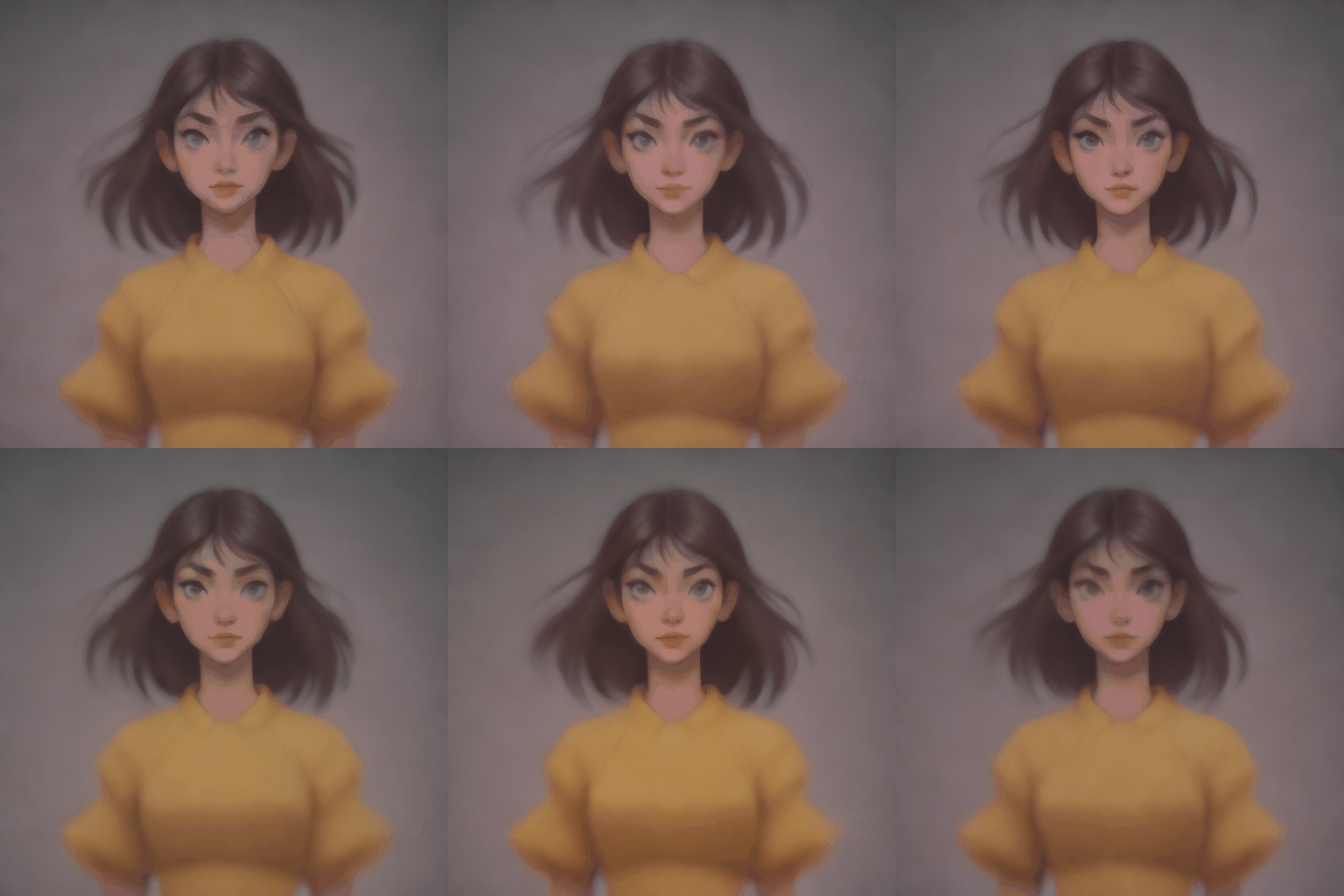
|
||||
@@ -277,7 +277,7 @@ images = pipeline(
|
||||
|
||||
### IP-Adapter masking
|
||||
|
||||
Binary masks specify which portion of the output image should be assigned to an IP-Adapter. This is useful for composing more than one IP-Adapter image. For each input IP-Adapter image, you must provide a binary mask.
|
||||
Binary masks specify which portion of the output image should be assigned to an IP-Adapter. This is useful for composing more than one IP-Adapter image. For each input IP-Adapter image, you must provide a binary mask an an IP-Adapter.
|
||||
|
||||
To start, preprocess the input IP-Adapter images with the [`~image_processor.IPAdapterMaskProcessor.preprocess()`] to generate their masks. For optimal results, provide the output height and width to [`~image_processor.IPAdapterMaskProcessor.preprocess()`]. This ensures masks with different aspect ratios are appropriately stretched. If the input masks already match the aspect ratio of the generated image, you don't have to set the `height` and `width`.
|
||||
|
||||
@@ -305,18 +305,13 @@ masks = processor.preprocess([mask1, mask2], height=output_height, width=output_
|
||||
</div>
|
||||
</div>
|
||||
|
||||
When there is more than one input IP-Adapter image, load them as a list and provide the IP-Adapter scale list. Each of the input IP-Adapter images here corresponds to one of the masks generated above.
|
||||
When there is more than one input IP-Adapter image, load them as a list to ensure each image is assigned to a different IP-Adapter. Each of the input IP-Adapter images here correspond to the masks generated above.
|
||||
|
||||
```py
|
||||
pipeline.load_ip_adapter("h94/IP-Adapter", subfolder="sdxl_models", weight_name=["ip-adapter-plus-face_sdxl_vit-h.safetensors"])
|
||||
pipeline.set_ip_adapter_scale([[0.7, 0.7]]) # one scale for each image-mask pair
|
||||
|
||||
face_image1 = load_image("https://huggingface.co/datasets/huggingface/documentation-images/resolve/main/diffusers/ip_mask_girl1.png")
|
||||
face_image2 = load_image("https://huggingface.co/datasets/huggingface/documentation-images/resolve/main/diffusers/ip_mask_girl2.png")
|
||||
|
||||
ip_images = [[face_image1, face_image2]]
|
||||
|
||||
masks = [masks.reshape(1, masks.shape[0], masks.shape[2], masks.shape[3])]
|
||||
ip_images = [[face_image1], [face_image2]]
|
||||
```
|
||||
|
||||
<div class="flex flex-row gap-4">
|
||||
@@ -333,6 +328,8 @@ masks = [masks.reshape(1, masks.shape[0], masks.shape[2], masks.shape[3])]
|
||||
Now pass the preprocessed masks to `cross_attention_kwargs` in the pipeline call.
|
||||
|
||||
```py
|
||||
pipeline.load_ip_adapter("h94/IP-Adapter", subfolder="sdxl_models", weight_name=["ip-adapter-plus-face_sdxl_vit-h.safetensors"] * 2)
|
||||
pipeline.set_ip_adapter_scale([0.7] * 2)
|
||||
generator = torch.Generator(device="cpu").manual_seed(0)
|
||||
num_images = 1
|
||||
|
||||
@@ -439,7 +436,7 @@ image = torch.from_numpy(faces[0].normed_embedding)
|
||||
ref_images_embeds.append(image.unsqueeze(0))
|
||||
ref_images_embeds = torch.stack(ref_images_embeds, dim=0).unsqueeze(0)
|
||||
neg_ref_images_embeds = torch.zeros_like(ref_images_embeds)
|
||||
id_embeds = torch.cat([neg_ref_images_embeds, ref_images_embeds]).to(dtype=torch.float16, device="cuda")
|
||||
id_embeds = torch.cat([neg_ref_images_embeds, ref_images_embeds]).to(dtype=torch.float16, device="cuda"))
|
||||
|
||||
generator = torch.Generator(device="cpu").manual_seed(42)
|
||||
|
||||
@@ -455,28 +452,13 @@ images = pipeline(
|
||||
Both IP-Adapter FaceID Plus and Plus v2 models require CLIP image embeddings. You can prepare face embeddings as shown previously, then you can extract and pass CLIP embeddings to the hidden image projection layers.
|
||||
|
||||
```py
|
||||
from insightface.utils import face_align
|
||||
|
||||
ref_images_embeds = []
|
||||
ip_adapter_images = []
|
||||
app = FaceAnalysis(name="buffalo_l", providers=['CUDAExecutionProvider', 'CPUExecutionProvider'])
|
||||
app.prepare(ctx_id=0, det_size=(640, 640))
|
||||
image = cv2.cvtColor(np.asarray(image), cv2.COLOR_BGR2RGB)
|
||||
faces = app.get(image)
|
||||
ip_adapter_images.append(face_align.norm_crop(image, landmark=faces[0].kps, image_size=224))
|
||||
image = torch.from_numpy(faces[0].normed_embedding)
|
||||
ref_images_embeds.append(image.unsqueeze(0))
|
||||
ref_images_embeds = torch.stack(ref_images_embeds, dim=0).unsqueeze(0)
|
||||
neg_ref_images_embeds = torch.zeros_like(ref_images_embeds)
|
||||
id_embeds = torch.cat([neg_ref_images_embeds, ref_images_embeds]).to(dtype=torch.float16, device="cuda")
|
||||
|
||||
clip_embeds = pipeline.prepare_ip_adapter_image_embeds(
|
||||
[ip_adapter_images], None, torch.device("cuda"), num_images, True)[0]
|
||||
clip_embeds = pipeline.prepare_ip_adapter_image_embeds([ip_adapter_images], None, torch.device("cuda"), num_images, True)[0]
|
||||
|
||||
pipeline.unet.encoder_hid_proj.image_projection_layers[0].clip_embeds = clip_embeds.to(dtype=torch.float16)
|
||||
pipeline.unet.encoder_hid_proj.image_projection_layers[0].shortcut = False # True if Plus v2
|
||||
```
|
||||
|
||||
|
||||
### Multi IP-Adapter
|
||||
|
||||
More than one IP-Adapter can be used at the same time to generate specific images in more diverse styles. For example, you can use IP-Adapter-Face to generate consistent faces and characters, and IP-Adapter Plus to generate those faces in a specific style.
|
||||
@@ -658,87 +640,3 @@ image
|
||||
<div class="flex justify-center">
|
||||
<img src="https://huggingface.co/datasets/YiYiXu/testing-images/resolve/main/ipa-controlnet-out.png" />
|
||||
</div>
|
||||
|
||||
### Style & layout control
|
||||
|
||||
[InstantStyle](https://arxiv.org/abs/2404.02733) is a plug-and-play method on top of IP-Adapter, which disentangles style and layout from image prompt to control image generation. This way, you can generate images following only the style or layout from image prompt, with significantly improved diversity. This is achieved by only activating IP-Adapters to specific parts of the model.
|
||||
|
||||
By default IP-Adapters are inserted to all layers of the model. Use the [`~loaders.IPAdapterMixin.set_ip_adapter_scale`] method with a dictionary to assign scales to IP-Adapter at different layers.
|
||||
|
||||
```py
|
||||
from diffusers import AutoPipelineForText2Image
|
||||
from diffusers.utils import load_image
|
||||
import torch
|
||||
|
||||
pipeline = AutoPipelineForText2Image.from_pretrained("stabilityai/stable-diffusion-xl-base-1.0", torch_dtype=torch.float16).to("cuda")
|
||||
pipeline.load_ip_adapter("h94/IP-Adapter", subfolder="sdxl_models", weight_name="ip-adapter_sdxl.bin")
|
||||
|
||||
scale = {
|
||||
"down": {"block_2": [0.0, 1.0]},
|
||||
"up": {"block_0": [0.0, 1.0, 0.0]},
|
||||
}
|
||||
pipeline.set_ip_adapter_scale(scale)
|
||||
```
|
||||
|
||||
This will activate IP-Adapter at the second layer in the model's down-part block 2 and up-part block 0. The former is the layer where IP-Adapter injects layout information and the latter injects style. Inserting IP-Adapter to these two layers you can generate images following both the style and layout from image prompt, but with contents more aligned to text prompt.
|
||||
|
||||
```py
|
||||
style_image = load_image("https://huggingface.co/datasets/huggingface/documentation-images/resolve/0052a70beed5bf71b92610a43a52df6d286cd5f3/diffusers/rabbit.jpg")
|
||||
|
||||
generator = torch.Generator(device="cpu").manual_seed(26)
|
||||
image = pipeline(
|
||||
prompt="a cat, masterpiece, best quality, high quality",
|
||||
ip_adapter_image=style_image,
|
||||
negative_prompt="text, watermark, lowres, low quality, worst quality, deformed, glitch, low contrast, noisy, saturation, blurry",
|
||||
guidance_scale=5,
|
||||
num_inference_steps=30,
|
||||
generator=generator,
|
||||
).images[0]
|
||||
image
|
||||
```
|
||||
|
||||
<div class="flex flex-row gap-4">
|
||||
<div class="flex-1">
|
||||
<img class="rounded-xl" src="https://huggingface.co/datasets/huggingface/documentation-images/resolve/0052a70beed5bf71b92610a43a52df6d286cd5f3/diffusers/rabbit.jpg"/>
|
||||
<figcaption class="mt-2 text-center text-sm text-gray-500">IP-Adapter image</figcaption>
|
||||
</div>
|
||||
<div class="flex-1">
|
||||
<img class="rounded-xl" src="https://huggingface.co/datasets/huggingface/documentation-images/resolve/main/datasets/cat_style_layout.png"/>
|
||||
<figcaption class="mt-2 text-center text-sm text-gray-500">generated image</figcaption>
|
||||
</div>
|
||||
</div>
|
||||
|
||||
In contrast, inserting IP-Adapter to all layers will often generate images that overly focus on image prompt and diminish diversity.
|
||||
|
||||
Activate IP-Adapter only in the style layer and then call the pipeline again.
|
||||
|
||||
```py
|
||||
scale = {
|
||||
"up": {"block_0": [0.0, 1.0, 0.0]},
|
||||
}
|
||||
pipeline.set_ip_adapter_scale(scale)
|
||||
|
||||
generator = torch.Generator(device="cpu").manual_seed(26)
|
||||
image = pipeline(
|
||||
prompt="a cat, masterpiece, best quality, high quality",
|
||||
ip_adapter_image=style_image,
|
||||
negative_prompt="text, watermark, lowres, low quality, worst quality, deformed, glitch, low contrast, noisy, saturation, blurry",
|
||||
guidance_scale=5,
|
||||
num_inference_steps=30,
|
||||
generator=generator,
|
||||
).images[0]
|
||||
image
|
||||
```
|
||||
|
||||
<div class="flex flex-row gap-4">
|
||||
<div class="flex-1">
|
||||
<img class="rounded-xl" src="https://huggingface.co/datasets/huggingface/documentation-images/resolve/main/datasets/cat_style_only.png"/>
|
||||
<figcaption class="mt-2 text-center text-sm text-gray-500">IP-Adapter only in style layer</figcaption>
|
||||
</div>
|
||||
<div class="flex-1">
|
||||
<img class="rounded-xl" src="https://huggingface.co/datasets/huggingface/documentation-images/resolve/main/datasets/cat_ip_adapter.png"/>
|
||||
<figcaption class="mt-2 text-center text-sm text-gray-500">IP-Adapter in all layers</figcaption>
|
||||
</div>
|
||||
</div>
|
||||
|
||||
Note that you don't have to specify all layers in the dictionary. Those not included in the dictionary will be set to scale 0 which means disable IP-Adapter by default.
|
||||
|
||||
@@ -154,10 +154,7 @@ When you load multiple pipelines that share the same model components, it makes
|
||||
1. You generated an image with the [`StableDiffusionPipeline`] but you want to improve its quality with the [`StableDiffusionSAGPipeline`]. Both of these pipelines share the same pretrained model, so it'd be a waste of memory to load the same model twice.
|
||||
2. You want to add a model component, like a [`MotionAdapter`](../api/pipelines/animatediff#animatediffpipeline), to [`AnimateDiffPipeline`] which was instantiated from an existing [`StableDiffusionPipeline`]. Again, both pipelines share the same pretrained model, so it'd be a waste of memory to load an entirely new pipeline again.
|
||||
|
||||
With the [`DiffusionPipeline.from_pipe`] API, you can switch between multiple pipelines to take advantage of their different features without increasing memory-usage. It is similar to turning on and off a feature in your pipeline.
|
||||
|
||||
> [!TIP]
|
||||
> To switch between tasks (rather than features), use the [`~DiffusionPipeline.from_pipe`] method with the [AutoPipeline](../api/pipelines/auto_pipeline) class, which automatically identifies the pipeline class based on the task (learn more in the [AutoPipeline](../tutorials/autopipeline) tutorial).
|
||||
With the [`DiffusionPipeline.from_pipe`] API, you can switch between multiple pipelines to take advantage of their different features without increasing memory-usage. It is similar to turning on and off a feature in your pipeline. To switch between tasks, use the [`~DiffusionPipeline.from_pipe`] method with the [`AutoPipeline`](../api/pipelines/auto_pipeline) class, which automatically identifies the pipeline class based on the task (learn more in the [AutoPipeline](../tutorials/autopipeline) tutorial).
|
||||
|
||||
Let's start with a [`StableDiffusionPipeline`] and then reuse the loaded model components to create a [`StableDiffusionSAGPipeline`] to increase generation quality. You'll use the [`StableDiffusionPipeline`] with an [IP-Adapter](./ip_adapter) to generate a bear eating pizza.
|
||||
|
||||
|
||||
@@ -0,0 +1,21 @@
|
||||
<!--Copyright 2024 The HuggingFace Team. All rights reserved.
|
||||
|
||||
Licensed under the Apache License, Version 2.0 (the "License"); you may not use this file except in compliance with
|
||||
the License. You may obtain a copy of the License at
|
||||
|
||||
http://www.apache.org/licenses/LICENSE-2.0
|
||||
|
||||
Unless required by applicable law or agreed to in writing, software distributed under the License is distributed on
|
||||
an "AS IS" BASIS, WITHOUT WARRANTIES OR CONDITIONS OF ANY KIND, either express or implied. See the License for the
|
||||
specific language governing permissions and limitations under the License.
|
||||
-->
|
||||
|
||||
# Using Diffusers with other modalities
|
||||
|
||||
Diffusers is in the process of expanding to modalities other than images.
|
||||
|
||||
Example type | Colab | Pipeline |
|
||||
:-------------------------:|:-------------------------:|:-------------------------:|
|
||||
[Molecule conformation](https://www.nature.com/subjects/molecular-conformation#:~:text=Definition,to%20changes%20in%20their%20environment.) generation | [](https://colab.research.google.com/github/huggingface/notebooks/blob/main/diffusers/geodiff_molecule_conformation.ipynb) | ❌
|
||||
|
||||
More coming soon!
|
||||
@@ -1,18 +0,0 @@
|
||||
<!--Copyright 2024 The HuggingFace Team. All rights reserved.
|
||||
|
||||
Licensed under the Apache License, Version 2.0 (the "License"); you may not use this file except in compliance with
|
||||
the License. You may obtain a copy of the License at
|
||||
|
||||
http://www.apache.org/licenses/LICENSE-2.0
|
||||
|
||||
Unless required by applicable law or agreed to in writing, software distributed under the License is distributed on
|
||||
an "AS IS" BASIS, WITHOUT WARRANTIES OR CONDITIONS OF ANY KIND, either express or implied. See the License for the
|
||||
specific language governing permissions and limitations under the License.
|
||||
-->
|
||||
|
||||
# Overview
|
||||
|
||||
The inference pipeline supports and enables a wide range of techniques that are divided into two categories:
|
||||
|
||||
* Pipeline functionality: these techniques modify the pipeline or extend it for other applications. For example, pipeline callbacks add new features to a pipeline and a pipeline can also be extended for distributed inference.
|
||||
* Improve inference quality: these techniques increase the visual quality of the generated images. For example, you can enhance your prompts with GPT2 to create better images with lower effort.
|
||||
@@ -0,0 +1,17 @@
|
||||
<!--Copyright 2024 The HuggingFace Team. All rights reserved.
|
||||
|
||||
Licensed under the Apache License, Version 2.0 (the "License"); you may not use this file except in compliance with
|
||||
the License. You may obtain a copy of the License at
|
||||
|
||||
http://www.apache.org/licenses/LICENSE-2.0
|
||||
|
||||
Unless required by applicable law or agreed to in writing, software distributed under the License is distributed on
|
||||
an "AS IS" BASIS, WITHOUT WARRANTIES OR CONDITIONS OF ANY KIND, either express or implied. See the License for the
|
||||
specific language governing permissions and limitations under the License.
|
||||
-->
|
||||
|
||||
# Overview
|
||||
|
||||
A pipeline is an end-to-end class that provides a quick and easy way to use a diffusion system for inference by bundling independently trained models and schedulers together. Certain combinations of models and schedulers define specific pipeline types, like [`StableDiffusionXLPipeline`] or [`StableDiffusionControlNetPipeline`], with specific capabilities. All pipeline types inherit from the base [`DiffusionPipeline`] class; pass it any checkpoint, and it'll automatically detect the pipeline type and load the necessary components.
|
||||
|
||||
This section demonstrates how to use specific pipelines such as Stable Diffusion XL, ControlNet, and DiffEdit. You'll also learn how to use a distilled version of the Stable Diffusion model to speed up inference, how to create reproducible pipelines, and how to use and contribute community pipelines.
|
||||
@@ -0,0 +1,191 @@
|
||||
<!--Copyright 2024 The HuggingFace Team. All rights reserved.
|
||||
|
||||
Licensed under the Apache License, Version 2.0 (the "License"); you may not use this file except in compliance with
|
||||
the License. You may obtain a copy of the License at
|
||||
|
||||
http://www.apache.org/licenses/LICENSE-2.0
|
||||
|
||||
Unless required by applicable law or agreed to in writing, software distributed under the License is distributed on
|
||||
an "AS IS" BASIS, WITHOUT WARRANTIES OR CONDITIONS OF ANY KIND, either express or implied. See the License for the
|
||||
specific language governing permissions and limitations under the License.
|
||||
-->
|
||||
|
||||
# Create reproducible pipelines
|
||||
|
||||
[[open-in-colab]]
|
||||
|
||||
Reproducibility is important for testing, replicating results, and can even be used to [improve image quality](reusing_seeds). However, the randomness in diffusion models is a desired property because it allows the pipeline to generate different images every time it is run. While you can't expect to get the exact same results across platforms, you can expect results to be reproducible across releases and platforms within a certain tolerance range. Even then, tolerance varies depending on the diffusion pipeline and checkpoint.
|
||||
|
||||
This is why it's important to understand how to control sources of randomness in diffusion models or use deterministic algorithms.
|
||||
|
||||
<Tip>
|
||||
|
||||
💡 We strongly recommend reading PyTorch's [statement about reproducibility](https://pytorch.org/docs/stable/notes/randomness.html):
|
||||
|
||||
> Completely reproducible results are not guaranteed across PyTorch releases, individual commits, or different platforms. Furthermore, results may not be reproducible between CPU and GPU executions, even when using identical seeds.
|
||||
|
||||
</Tip>
|
||||
|
||||
## Control randomness
|
||||
|
||||
During inference, pipelines rely heavily on random sampling operations which include creating the
|
||||
Gaussian noise tensors to denoise and adding noise to the scheduling step.
|
||||
|
||||
Take a look at the tensor values in the [`DDIMPipeline`] after two inference steps:
|
||||
|
||||
```python
|
||||
from diffusers import DDIMPipeline
|
||||
import numpy as np
|
||||
|
||||
model_id = "google/ddpm-cifar10-32"
|
||||
|
||||
# load model and scheduler
|
||||
ddim = DDIMPipeline.from_pretrained(model_id, use_safetensors=True)
|
||||
|
||||
# run pipeline for just two steps and return numpy tensor
|
||||
image = ddim(num_inference_steps=2, output_type="np").images
|
||||
print(np.abs(image).sum())
|
||||
```
|
||||
|
||||
Running the code above prints one value, but if you run it again you get a different value. What is going on here?
|
||||
|
||||
Every time the pipeline is run, [`torch.randn`](https://pytorch.org/docs/stable/generated/torch.randn.html) uses a different random seed to create Gaussian noise which is denoised stepwise. This leads to a different result each time it is run, which is great for diffusion pipelines since it generates a different random image each time.
|
||||
|
||||
But if you need to reliably generate the same image, that'll depend on whether you're running the pipeline on a CPU or GPU.
|
||||
|
||||
### CPU
|
||||
|
||||
To generate reproducible results on a CPU, you'll need to use a PyTorch [`Generator`](https://pytorch.org/docs/stable/generated/torch.Generator.html) and set a seed:
|
||||
|
||||
```python
|
||||
import torch
|
||||
from diffusers import DDIMPipeline
|
||||
import numpy as np
|
||||
|
||||
model_id = "google/ddpm-cifar10-32"
|
||||
|
||||
# load model and scheduler
|
||||
ddim = DDIMPipeline.from_pretrained(model_id, use_safetensors=True)
|
||||
|
||||
# create a generator for reproducibility
|
||||
generator = torch.Generator(device="cpu").manual_seed(0)
|
||||
|
||||
# run pipeline for just two steps and return numpy tensor
|
||||
image = ddim(num_inference_steps=2, output_type="np", generator=generator).images
|
||||
print(np.abs(image).sum())
|
||||
```
|
||||
|
||||
Now when you run the code above, it always prints a value of `1491.1711` no matter what because the `Generator` object with the seed is passed to all the random functions of the pipeline.
|
||||
|
||||
If you run this code example on your specific hardware and PyTorch version, you should get a similar, if not the same, result.
|
||||
|
||||
<Tip>
|
||||
|
||||
💡 It might be a bit unintuitive at first to pass `Generator` objects to the pipeline instead of
|
||||
just integer values representing the seed, but this is the recommended design when dealing with
|
||||
probabilistic models in PyTorch, as `Generator`s are *random states* that can be
|
||||
passed to multiple pipelines in a sequence.
|
||||
|
||||
</Tip>
|
||||
|
||||
### GPU
|
||||
|
||||
Writing a reproducible pipeline on a GPU is a bit trickier, and full reproducibility across different hardware is not guaranteed because matrix multiplication - which diffusion pipelines require a lot of - is less deterministic on a GPU than a CPU. For example, if you run the same code example above on a GPU:
|
||||
|
||||
```python
|
||||
import torch
|
||||
from diffusers import DDIMPipeline
|
||||
import numpy as np
|
||||
|
||||
model_id = "google/ddpm-cifar10-32"
|
||||
|
||||
# load model and scheduler
|
||||
ddim = DDIMPipeline.from_pretrained(model_id, use_safetensors=True)
|
||||
ddim.to("cuda")
|
||||
|
||||
# create a generator for reproducibility
|
||||
generator = torch.Generator(device="cuda").manual_seed(0)
|
||||
|
||||
# run pipeline for just two steps and return numpy tensor
|
||||
image = ddim(num_inference_steps=2, output_type="np", generator=generator).images
|
||||
print(np.abs(image).sum())
|
||||
```
|
||||
|
||||
The result is not the same even though you're using an identical seed because the GPU uses a different random number generator than the CPU.
|
||||
|
||||
To circumvent this problem, 🧨 Diffusers has a [`~diffusers.utils.torch_utils.randn_tensor`] function for creating random noise on the CPU, and then moving the tensor to a GPU if necessary. The `randn_tensor` function is used everywhere inside the pipeline, allowing the user to **always** pass a CPU `Generator` even if the pipeline is run on a GPU.
|
||||
|
||||
You'll see the results are much closer now!
|
||||
|
||||
```python
|
||||
import torch
|
||||
from diffusers import DDIMPipeline
|
||||
import numpy as np
|
||||
|
||||
model_id = "google/ddpm-cifar10-32"
|
||||
|
||||
# load model and scheduler
|
||||
ddim = DDIMPipeline.from_pretrained(model_id, use_safetensors=True)
|
||||
ddim.to("cuda")
|
||||
|
||||
# create a generator for reproducibility; notice you don't place it on the GPU!
|
||||
generator = torch.manual_seed(0)
|
||||
|
||||
# run pipeline for just two steps and return numpy tensor
|
||||
image = ddim(num_inference_steps=2, output_type="np", generator=generator).images
|
||||
print(np.abs(image).sum())
|
||||
```
|
||||
|
||||
<Tip>
|
||||
|
||||
💡 If reproducibility is important, we recommend always passing a CPU generator.
|
||||
The performance loss is often neglectable, and you'll generate much more similar
|
||||
values than if the pipeline had been run on a GPU.
|
||||
|
||||
</Tip>
|
||||
|
||||
Finally, for more complex pipelines such as [`UnCLIPPipeline`], these are often extremely
|
||||
susceptible to precision error propagation. Don't expect similar results across
|
||||
different GPU hardware or PyTorch versions. In this case, you'll need to run
|
||||
exactly the same hardware and PyTorch version for full reproducibility.
|
||||
|
||||
## Deterministic algorithms
|
||||
|
||||
You can also configure PyTorch to use deterministic algorithms to create a reproducible pipeline. However, you should be aware that deterministic algorithms may be slower than nondeterministic ones and you may observe a decrease in performance. But if reproducibility is important to you, then this is the way to go!
|
||||
|
||||
Nondeterministic behavior occurs when operations are launched in more than one CUDA stream. To avoid this, set the environment variable [`CUBLAS_WORKSPACE_CONFIG`](https://docs.nvidia.com/cuda/cublas/index.html#results-reproducibility) to `:16:8` to only use one buffer size during runtime.
|
||||
|
||||
PyTorch typically benchmarks multiple algorithms to select the fastest one, but if you want reproducibility, you should disable this feature because the benchmark may select different algorithms each time. Lastly, pass `True` to [`torch.use_deterministic_algorithms`](https://pytorch.org/docs/stable/generated/torch.use_deterministic_algorithms.html) to enable deterministic algorithms.
|
||||
|
||||
```py
|
||||
import os
|
||||
import torch
|
||||
|
||||
os.environ["CUBLAS_WORKSPACE_CONFIG"] = ":16:8"
|
||||
|
||||
torch.backends.cudnn.benchmark = False
|
||||
torch.use_deterministic_algorithms(True)
|
||||
```
|
||||
|
||||
Now when you run the same pipeline twice, you'll get identical results.
|
||||
|
||||
```py
|
||||
import torch
|
||||
from diffusers import DDIMScheduler, StableDiffusionPipeline
|
||||
|
||||
model_id = "runwayml/stable-diffusion-v1-5"
|
||||
pipe = StableDiffusionPipeline.from_pretrained(model_id, use_safetensors=True).to("cuda")
|
||||
pipe.scheduler = DDIMScheduler.from_config(pipe.scheduler.config)
|
||||
g = torch.Generator(device="cuda")
|
||||
|
||||
prompt = "A bear is playing a guitar on Times Square"
|
||||
|
||||
g.manual_seed(0)
|
||||
result1 = pipe(prompt=prompt, num_inference_steps=50, generator=g, output_type="latent").images
|
||||
|
||||
g.manual_seed(0)
|
||||
result2 = pipe(prompt=prompt, num_inference_steps=50, generator=g, output_type="latent").images
|
||||
|
||||
print("L_inf dist =", abs(result1 - result2).max())
|
||||
"L_inf dist = tensor(0., device='cuda:0')"
|
||||
```
|
||||
@@ -10,179 +10,72 @@ an "AS IS" BASIS, WITHOUT WARRANTIES OR CONDITIONS OF ANY KIND, either express o
|
||||
specific language governing permissions and limitations under the License.
|
||||
-->
|
||||
|
||||
# Reproducible pipelines
|
||||
# Improve image quality with deterministic generation
|
||||
|
||||
Diffusion models are inherently random which is what allows it to generate different outputs every time it is run. But there are certain times when you want to generate the same output every time, like when you're testing, replicating results, and even [improving image quality](#deterministic-batch-generation). While you can't expect to get identical results across platforms, you can expect reproducible results across releases and platforms within a certain tolerance range (though even this may vary).
|
||||
[[open-in-colab]]
|
||||
|
||||
This guide will show you how to control randomness for deterministic generation on a CPU and GPU.
|
||||
A common way to improve the quality of generated images is with *deterministic batch generation*, generate a batch of images and select one image to improve with a more detailed prompt in a second round of inference. The key is to pass a list of [`torch.Generator`](https://pytorch.org/docs/stable/generated/torch.Generator.html#generator)'s to the pipeline for batched image generation, and tie each `Generator` to a seed so you can reuse it for an image.
|
||||
|
||||
> [!TIP]
|
||||
> We strongly recommend reading PyTorch's [statement about reproducibility](https://pytorch.org/docs/stable/notes/randomness.html):
|
||||
>
|
||||
> "Completely reproducible results are not guaranteed across PyTorch releases, individual commits, or different platforms. Furthermore, results may not be reproducible between CPU and GPU executions, even when using identical seeds."
|
||||
|
||||
## Control randomness
|
||||
|
||||
During inference, pipelines rely heavily on random sampling operations which include creating the
|
||||
Gaussian noise tensors to denoise and adding noise to the scheduling step.
|
||||
|
||||
Take a look at the tensor values in the [`DDIMPipeline`] after two inference steps.
|
||||
|
||||
```python
|
||||
from diffusers import DDIMPipeline
|
||||
import numpy as np
|
||||
|
||||
ddim = DDIMPipeline.from_pretrained( "google/ddpm-cifar10-32", use_safetensors=True)
|
||||
image = ddim(num_inference_steps=2, output_type="np").images
|
||||
print(np.abs(image).sum())
|
||||
```
|
||||
|
||||
Running the code above prints one value, but if you run it again you get a different value.
|
||||
|
||||
Each time the pipeline is run, [torch.randn](https://pytorch.org/docs/stable/generated/torch.randn.html) uses a different random seed to create the Gaussian noise tensors. This leads to a different result each time it is run and enables the diffusion pipeline to generate a different random image each time.
|
||||
|
||||
But if you need to reliably generate the same image, that depends on whether you're running the pipeline on a CPU or GPU.
|
||||
|
||||
> [!TIP]
|
||||
> It might seem unintuitive to pass `Generator` objects to a pipeline instead of the integer value representing the seed. However, this is the recommended design when working with probabilistic models in PyTorch because a `Generator` is a *random state* that can be passed to multiple pipelines in a sequence. As soon as the `Generator` is consumed, the *state* is changed in place which means even if you passed the same `Generator` to a different pipeline, it won't produce the same result because the state is already changed.
|
||||
|
||||
<hfoptions id="hardware">
|
||||
<hfoption id="CPU">
|
||||
|
||||
To generate reproducible results on a CPU, you'll need to use a PyTorch [Generator](https://pytorch.org/docs/stable/generated/torch.Generator.html) and set a seed. Now when you run the code, it always prints a value of `1491.1711` because the `Generator` object with the seed is passed to all the random functions in the pipeline. You should get a similar, if not the same, result on whatever hardware and PyTorch version you're using.
|
||||
|
||||
```python
|
||||
import torch
|
||||
import numpy as np
|
||||
from diffusers import DDIMPipeline
|
||||
|
||||
ddim = DDIMPipeline.from_pretrained("google/ddpm-cifar10-32", use_safetensors=True)
|
||||
generator = torch.Generator(device="cpu").manual_seed(0)
|
||||
image = ddim(num_inference_steps=2, output_type="np", generator=generator).images
|
||||
print(np.abs(image).sum())
|
||||
```
|
||||
|
||||
</hfoption>
|
||||
<hfoption id="GPU">
|
||||
|
||||
Writing a reproducible pipeline on a GPU is a bit trickier, and full reproducibility across different hardware is not guaranteed because matrix multiplication - which diffusion pipelines require a lot of - is less deterministic on a GPU than a CPU. For example, if you run the same code example from the CPU example, you'll get a different result even though the seed is identical. This is because the GPU uses a different random number generator than the CPU.
|
||||
|
||||
```python
|
||||
import torch
|
||||
import numpy as np
|
||||
from diffusers import DDIMPipeline
|
||||
|
||||
ddim = DDIMPipeline.from_pretrained("google/ddpm-cifar10-32", use_safetensors=True)
|
||||
ddim.to("cuda")
|
||||
generator = torch.Generator(device="cuda").manual_seed(0)
|
||||
image = ddim(num_inference_steps=2, output_type="np", generator=generator).images
|
||||
print(np.abs(image).sum())
|
||||
```
|
||||
|
||||
To avoid this issue, Diffusers has a [`~utils.torch_utils.randn_tensor`] function for creating random noise on the CPU, and then moving the tensor to a GPU if necessary. The [`~utils.torch_utils.randn_tensor`] function is used everywhere inside the pipeline. Now you can call [torch.manual_seed](https://pytorch.org/docs/stable/generated/torch.manual_seed.html) which automatically creates a CPU `Generator` that can be passed to the pipeline even if it is being run on a GPU.
|
||||
|
||||
```python
|
||||
import torch
|
||||
import numpy as np
|
||||
from diffusers import DDIMPipeline
|
||||
|
||||
ddim = DDIMPipeline.from_pretrained("google/ddpm-cifar10-32", use_safetensors=True)
|
||||
ddim.to("cuda")
|
||||
generator = torch.manual_seed(0)
|
||||
image = ddim(num_inference_steps=2, output_type="np", generator=generator).images
|
||||
print(np.abs(image).sum())
|
||||
```
|
||||
|
||||
> [!TIP]
|
||||
> If reproducibility is important to your use case, we recommend always passing a CPU `Generator`. The performance loss is often negligible and you'll generate more similar values than if the pipeline had been run on a GPU.
|
||||
|
||||
Finally, more complex pipelines such as [`UnCLIPPipeline`], are often extremely
|
||||
susceptible to precision error propagation. You'll need to use
|
||||
exactly the same hardware and PyTorch version for full reproducibility.
|
||||
|
||||
</hfoption>
|
||||
</hfoptions>
|
||||
|
||||
## Deterministic algorithms
|
||||
|
||||
You can also configure PyTorch to use deterministic algorithms to create a reproducible pipeline. The downside is that deterministic algorithms may be slower than non-deterministic ones and you may observe a decrease in performance.
|
||||
|
||||
Non-deterministic behavior occurs when operations are launched in more than one CUDA stream. To avoid this, set the environment variable [CUBLAS_WORKSPACE_CONFIG](https://docs.nvidia.com/cuda/cublas/index.html#results-reproducibility) to `:16:8` to only use one buffer size during runtime.
|
||||
|
||||
PyTorch typically benchmarks multiple algorithms to select the fastest one, but if you want reproducibility, you should disable this feature because the benchmark may select different algorithms each time. Set Diffusers [enable_full_determinism](https://github.com/huggingface/diffusers/blob/142f353e1c638ff1d20bd798402b68f72c1ebbdd/src/diffusers/utils/testing_utils.py#L861) to enable deterministic algorithms.
|
||||
Let's use [`runwayml/stable-diffusion-v1-5`](https://huggingface.co/runwayml/stable-diffusion-v1-5) for example, and generate several versions of the following prompt:
|
||||
|
||||
```py
|
||||
enable_full_determinism()
|
||||
prompt = "Labrador in the style of Vermeer"
|
||||
```
|
||||
|
||||
Now when you run the same pipeline twice, you'll get identical results.
|
||||
Instantiate a pipeline with [`DiffusionPipeline.from_pretrained`] and place it on a GPU (if available):
|
||||
|
||||
```py
|
||||
import torch
|
||||
from diffusers import DDIMScheduler, StableDiffusionPipeline
|
||||
|
||||
pipe = StableDiffusionPipeline.from_pretrained("runwayml/stable-diffusion-v1-5", use_safetensors=True).to("cuda")
|
||||
pipe.scheduler = DDIMScheduler.from_config(pipe.scheduler.config)
|
||||
g = torch.Generator(device="cuda")
|
||||
|
||||
prompt = "A bear is playing a guitar on Times Square"
|
||||
|
||||
g.manual_seed(0)
|
||||
result1 = pipe(prompt=prompt, num_inference_steps=50, generator=g, output_type="latent").images
|
||||
|
||||
g.manual_seed(0)
|
||||
result2 = pipe(prompt=prompt, num_inference_steps=50, generator=g, output_type="latent").images
|
||||
|
||||
print("L_inf dist =", abs(result1 - result2).max())
|
||||
"L_inf dist = tensor(0., device='cuda:0')"
|
||||
```
|
||||
|
||||
## Deterministic batch generation
|
||||
|
||||
A practical application of creating reproducible pipelines is *deterministic batch generation*. You generate a batch of images and select one image to improve with a more detailed prompt. The main idea is to pass a list of [Generator's](https://pytorch.org/docs/stable/generated/torch.Generator.html) to the pipeline and tie each `Generator` to a seed so you can reuse it.
|
||||
|
||||
Let's use the [runwayml/stable-diffusion-v1-5](https://huggingface.co/runwayml/stable-diffusion-v1-5) checkpoint and generate a batch of images.
|
||||
|
||||
```py
|
||||
```python
|
||||
import torch
|
||||
from diffusers import DiffusionPipeline
|
||||
from diffusers.utils import make_image_grid
|
||||
|
||||
pipeline = DiffusionPipeline.from_pretrained(
|
||||
pipe = DiffusionPipeline.from_pretrained(
|
||||
"runwayml/stable-diffusion-v1-5", torch_dtype=torch.float16, use_safetensors=True
|
||||
)
|
||||
pipeline = pipeline.to("cuda")
|
||||
pipe = pipe.to("cuda")
|
||||
```
|
||||
|
||||
Define four different `Generator`s and assign each `Generator` a seed (`0` to `3`). Then generate a batch of images and pick one to iterate on.
|
||||
|
||||
> [!WARNING]
|
||||
> Use a list comprehension that iterates over the batch size specified in `range()` to create a unique `Generator` object for each image in the batch. If you multiply the `Generator` by the batch size integer, it only creates *one* `Generator` object that is used sequentially for each image in the batch.
|
||||
>
|
||||
> ```py
|
||||
> [torch.Generator().manual_seed(seed)] * 4
|
||||
> ```
|
||||
Now, define four different `Generator`s and assign each `Generator` a seed (`0` to `3`) so you can reuse a `Generator` later for a specific image:
|
||||
|
||||
```python
|
||||
generator = [torch.Generator(device="cuda").manual_seed(i) for i in range(4)]
|
||||
prompt = "Labrador in the style of Vermeer"
|
||||
images = pipeline(prompt, generator=generator, num_images_per_prompt=4).images[0]
|
||||
```
|
||||
|
||||
<Tip warning={true}>
|
||||
|
||||
To create a batched seed, you should use a list comprehension that iterates over the length specified in `range()`. This creates a unique `Generator` object for each image in the batch. If you only multiply the `Generator` by the batch size, this only creates one `Generator` object that is used sequentially for each image in the batch.
|
||||
|
||||
For example, if you want to use the same seed to create 4 identical images:
|
||||
|
||||
```py
|
||||
❌ [torch.Generator().manual_seed(seed)] * 4
|
||||
|
||||
✅ [torch.Generator().manual_seed(seed) for _ in range(4)]
|
||||
```
|
||||
|
||||
</Tip>
|
||||
|
||||
Generate the images and have a look:
|
||||
|
||||
```python
|
||||
images = pipe(prompt, generator=generator, num_images_per_prompt=4).images
|
||||
make_image_grid(images, rows=2, cols=2)
|
||||
```
|
||||
|
||||
<div class="flex justify-center">
|
||||
<img src="https://huggingface.co/datasets/diffusers/diffusers-images-docs/resolve/main/reusabe_seeds.jpg"/>
|
||||
</div>
|
||||
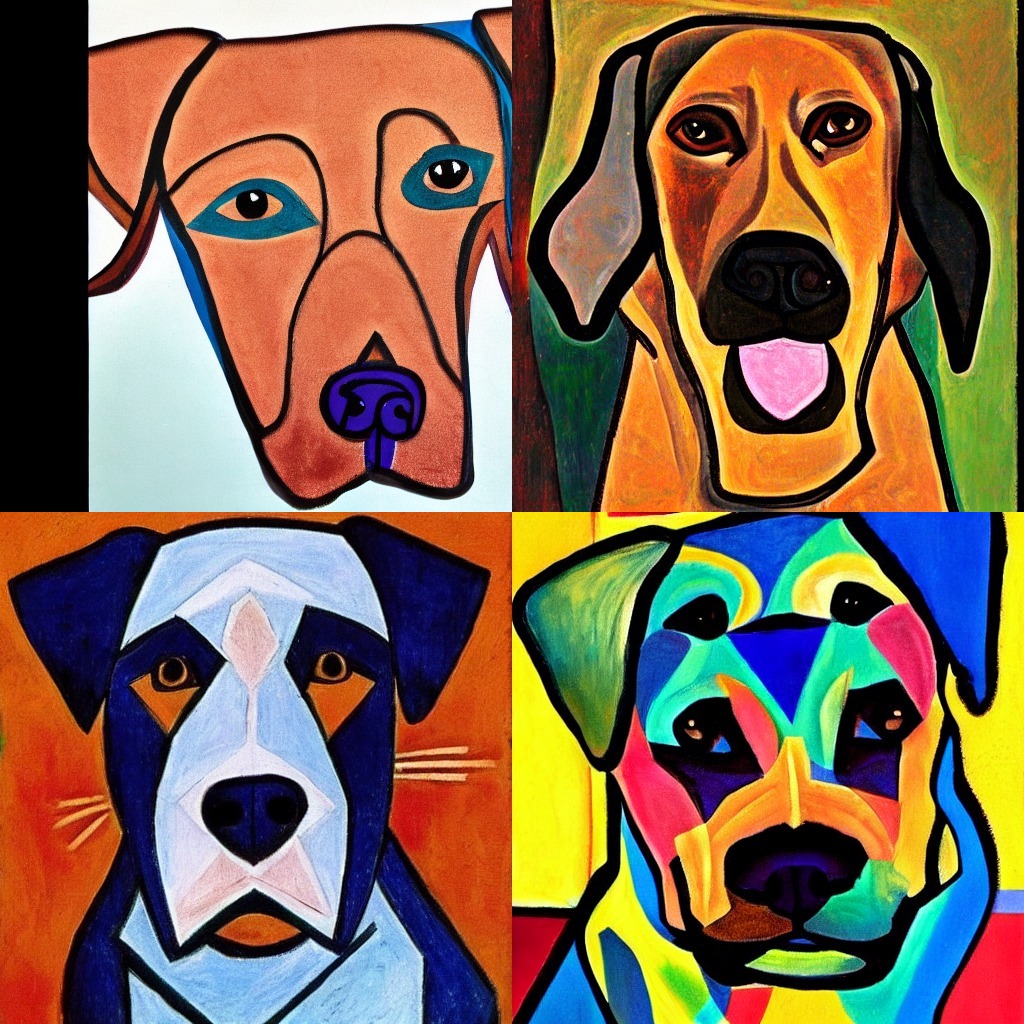
|
||||
|
||||
Let's improve the first image (you can choose any image you want) which corresponds to the `Generator` with seed `0`. Add some additional text to your prompt and then make sure you reuse the same `Generator` with seed `0`. All the generated images should resemble the first image.
|
||||
In this example, you'll improve upon the first image - but in reality, you can use any image you want (even the image with double sets of eyes!). The first image used the `Generator` with seed `0`, so you'll reuse that `Generator` for the second round of inference. To improve the quality of the image, add some additional text to the prompt:
|
||||
|
||||
```python
|
||||
prompt = [prompt + t for t in [", highly realistic", ", artsy", ", trending", ", colorful"]]
|
||||
generator = [torch.Generator(device="cuda").manual_seed(0) for i in range(4)]
|
||||
images = pipeline(prompt, generator=generator).images
|
||||
```
|
||||
|
||||
Create four generators with seed `0`, and generate another batch of images, all of which should look like the first image from the previous round!
|
||||
|
||||
```python
|
||||
images = pipe(prompt, generator=generator).images
|
||||
make_image_grid(images, rows=2, cols=2)
|
||||
```
|
||||
|
||||
<div class="flex justify-center">
|
||||
<img src="https://huggingface.co/datasets/diffusers/diffusers-images-docs/resolve/main/reusabe_seeds_2.jpg"/>
|
||||
</div>
|
||||
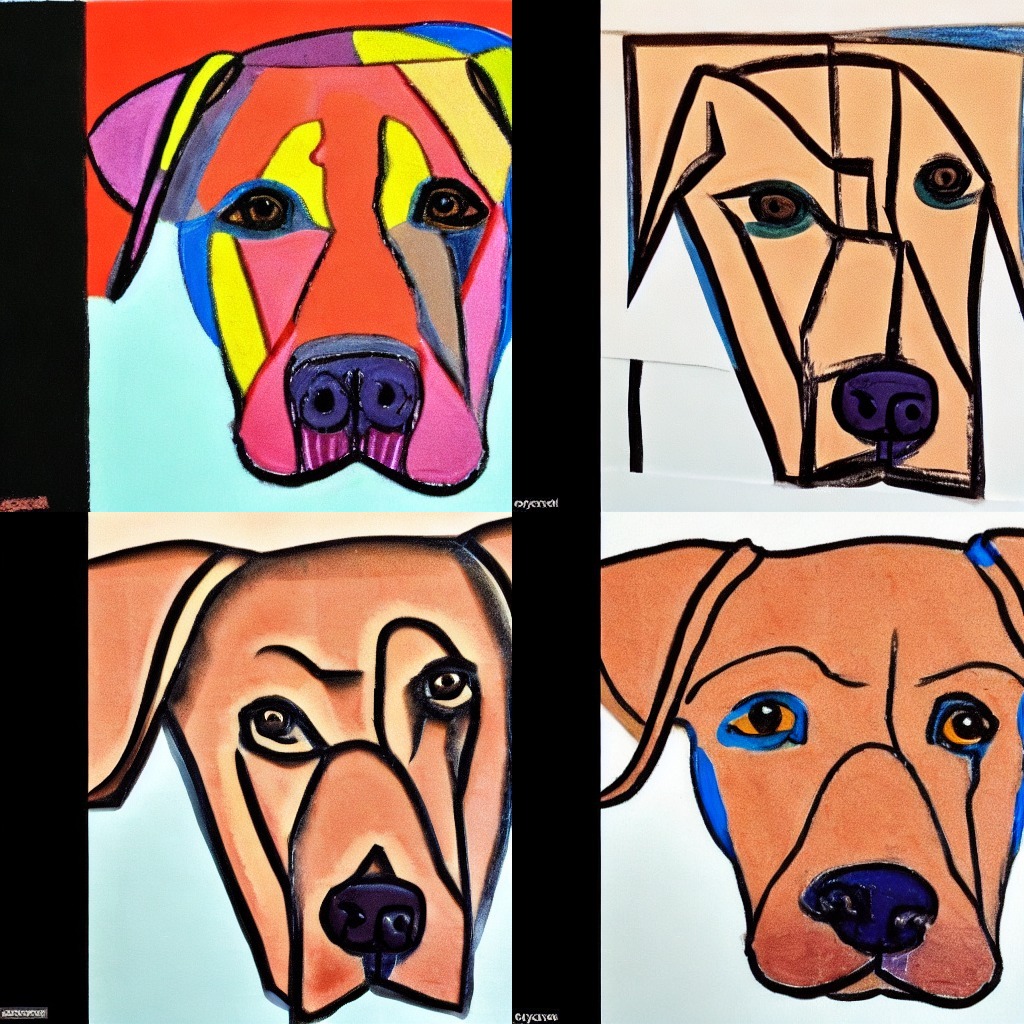
|
||||
|
||||
@@ -49,7 +49,7 @@ prompt = "portrait photo of a old warrior chief"
|
||||
pipeline = pipeline.to("cuda")
|
||||
```
|
||||
|
||||
同じイメージを使って改良できるようにするには、[`Generator`](https://pytorch.org/docs/stable/generated/torch.Generator.html)を使い、[reproducibility](./using-diffusers/reusing_seeds)の種を設定します:
|
||||
同じイメージを使って改良できるようにするには、[`Generator`](https://pytorch.org/docs/stable/generated/torch.Generator.html)を使い、[reproducibility](./using-diffusers/reproducibility)の種を設定します:
|
||||
|
||||
```python
|
||||
import torch
|
||||
|
||||
@@ -49,7 +49,7 @@ prompt = "portrait photo of a old warrior chief"
|
||||
pipeline = pipeline.to("cuda")
|
||||
```
|
||||
|
||||
동일한 이미지를 사용하고 개선할 수 있는지 확인하려면 [`Generator`](https://pytorch.org/docs/stable/generated/torch.Generator.html)를 사용하고 [재현성](./using-diffusers/reusing_seeds)에 대한 시드를 설정하세요:
|
||||
동일한 이미지를 사용하고 개선할 수 있는지 확인하려면 [`Generator`](https://pytorch.org/docs/stable/generated/torch.Generator.html)를 사용하고 [재현성](./using-diffusers/reproducibility)에 대한 시드를 설정하세요:
|
||||
|
||||
```python
|
||||
import torch
|
||||
|
||||
@@ -51,7 +51,7 @@ prompt = "portrait photo of a old warrior chief"
|
||||
pipeline = pipeline.to("cuda")
|
||||
```
|
||||
|
||||
为了确保您可以使用相同的图像并对其进行改进,使用 [`Generator`](https://pytorch.org/docs/stable/generated/torch.Generator.html) 方法,然后设置一个随机数种子 以确保其 [复现性](./using-diffusers/reusing_seeds):
|
||||
为了确保您可以使用相同的图像并对其进行改进,使用 [`Generator`](https://pytorch.org/docs/stable/generated/torch.Generator.html) 方法,然后设置一个随机数种子 以确保其 [复现性](./using-diffusers/reproducibility):
|
||||
|
||||
```python
|
||||
import torch
|
||||
|
||||
@@ -234,7 +234,7 @@ In ComfyUI we will load a LoRA and a textual embedding at the same time.
|
||||
SDXL's VAE is known to suffer from numerical instability issues. This is why we also expose a CLI argument namely `--pretrained_vae_model_name_or_path` that lets you specify the location of a better VAE (such as [this one](https://huggingface.co/madebyollin/sdxl-vae-fp16-fix)).
|
||||
|
||||
### DoRA training
|
||||
The advanced script supports DoRA training too!
|
||||
The advanced script now supports DoRA training too!
|
||||
> Proposed in [DoRA: Weight-Decomposed Low-Rank Adaptation](https://arxiv.org/abs/2402.09353),
|
||||
**DoRA** is very similar to LoRA, except it decomposes the pre-trained weight into two components, **magnitude** and **direction** and employs LoRA for _directional_ updates to efficiently minimize the number of trainable parameters.
|
||||
The authors found that by using DoRA, both the learning capacity and training stability of LoRA are enhanced without any additional overhead during inference.
|
||||
@@ -304,147 +304,6 @@ accelerate launch train_dreambooth_lora_sdxl_advanced.py \
|
||||
> [!CAUTION]
|
||||
> Min-SNR gamma is not supported with the EDM-style training yet. When training with the PlaygroundAI model, it's recommended to not pass any "variant".
|
||||
|
||||
### B-LoRA training
|
||||
The advanced script now supports B-LoRA training too!
|
||||
> Proposed in [Implicit Style-Content Separation using B-LoRA](https://arxiv.org/abs/2403.14572),
|
||||
B-LoRA is a method that leverages LoRA to implicitly separate the style and content components of a **single** image.
|
||||
It was shown that learning the LoRA weights of two specific blocks (referred to as B-LoRAs)
|
||||
achieves style-content separation that cannot be achieved by training each B-LoRA independently.
|
||||
Once trained, the two B-LoRAs can be used as independent components to allow various image stylization tasks
|
||||
|
||||
**Usage**
|
||||
Enable B-LoRA training by adding this flag
|
||||
```bash
|
||||
--use_blora
|
||||
```
|
||||
You can train a B-LoRA with as little as 1 image, and 1000 steps. Try this default configuration as a start:
|
||||
```bash
|
||||
!accelerate launch train_dreambooth_b-lora_sdxl.py \
|
||||
--pretrained_model_name_or_path="stabilityai/stable-diffusion-xl-base-1.0" \
|
||||
--instance_data_dir="linoyts/B-LoRA_teddy_bear" \
|
||||
--output_dir="B-LoRA_teddy_bear" \
|
||||
--instance_prompt="a [v18]" \
|
||||
--resolution=1024 \
|
||||
--rank=64 \
|
||||
--train_batch_size=1 \
|
||||
--learning_rate=5e-5 \
|
||||
--lr_scheduler="constant" \
|
||||
--lr_warmup_steps=0 \
|
||||
--max_train_steps=1000 \
|
||||
--checkpointing_steps=2000 \
|
||||
--seed="0" \
|
||||
--gradient_checkpointing \
|
||||
--mixed_precision="fp16"
|
||||
```
|
||||
**Inference**
|
||||
The inference is a bit different:
|
||||
1. we need load *specific* unet layers (as opposed to a regular LoRA/DoRA)
|
||||
2. the trained layers we load, changes based on our objective (e.g. style/content)
|
||||
|
||||
```python
|
||||
import torch
|
||||
from diffusers import StableDiffusionXLPipeline, AutoencoderKL
|
||||
|
||||
# taken & modified from B-LoRA repo - https://github.com/yardenfren1996/B-LoRA/blob/main/blora_utils.py
|
||||
def is_belong_to_blocks(key, blocks):
|
||||
try:
|
||||
for g in blocks:
|
||||
if g in key:
|
||||
return True
|
||||
return False
|
||||
except Exception as e:
|
||||
raise type(e)(f'failed to is_belong_to_block, due to: {e}')
|
||||
|
||||
def lora_lora_unet_blocks(lora_path, alpha, target_blocks):
|
||||
state_dict, _ = pipeline.lora_state_dict(lora_path)
|
||||
filtered_state_dict = {k: v * alpha for k, v in state_dict.items() if is_belong_to_blocks(k, target_blocks)}
|
||||
return filtered_state_dict
|
||||
|
||||
vae = AutoencoderKL.from_pretrained("madebyollin/sdxl-vae-fp16-fix", torch_dtype=torch.float16)
|
||||
pipeline = StableDiffusionXLPipeline.from_pretrained(
|
||||
"stabilityai/stable-diffusion-xl-base-1.0",
|
||||
vae=vae,
|
||||
torch_dtype=torch.float16,
|
||||
).to("cuda")
|
||||
|
||||
# pick a blora for content/style (you can also set one to None)
|
||||
content_B_lora_path = "lora-library/B-LoRA-teddybear"
|
||||
style_B_lora_path= "lora-library/B-LoRA-pen_sketch"
|
||||
|
||||
|
||||
content_B_LoRA = lora_lora_unet_blocks(content_B_lora_path,alpha=1,target_blocks=["unet.up_blocks.0.attentions.0"])
|
||||
style_B_LoRA = lora_lora_unet_blocks(style_B_lora_path,alpha=1.1,target_blocks=["unet.up_blocks.0.attentions.1"])
|
||||
combined_lora = {**content_B_LoRA, **style_B_LoRA}
|
||||
|
||||
# Load both loras
|
||||
pipeline.load_lora_into_unet(combined_lora, None, pipeline.unet)
|
||||
|
||||
#generate
|
||||
prompt = "a [v18] in [v30] style"
|
||||
pipeline(prompt, num_images_per_prompt=4).images
|
||||
```
|
||||
### LoRA training of Targeted U-net Blocks
|
||||
The advanced script now supports custom choice of U-net blocks to train during Dreambooth LoRA tuning.
|
||||
> [!NOTE]
|
||||
> This feature is still experimental
|
||||
|
||||
> Recently, works like B-LoRA showed the potential advantages of learning the LoRA weights of specific U-net blocks, not only in speed & memory,
|
||||
> but also in reducing the amount of needed data, improving style manipulation and overcoming overfitting issues.
|
||||
> In light of this, we're introducing a new feature to the advanced script to allow for configurable U-net learned blocks.
|
||||
|
||||
**Usage**
|
||||
Configure LoRA learned U-net blocks adding a `lora_unet_blocks` flag, with a comma seperated string specifying the targeted blocks.
|
||||
e.g:
|
||||
```bash
|
||||
--lora_unet_blocks="unet.up_blocks.0.attentions.0,unet.up_blocks.0.attentions.1"
|
||||
```
|
||||
|
||||
> [!NOTE]
|
||||
> if you specify both `--use_blora` and `--lora_unet_blocks`, values given in --lora_unet_blocks will be ignored.
|
||||
> When enabling --use_blora, targeted U-net blocks are automatically set to be "unet.up_blocks.0.attentions.0,unet.up_blocks.0.attentions.1" as discussed in the paper.
|
||||
> If you wish to experiment with different blocks, specify `--lora_unet_blocks` only.
|
||||
|
||||
**Inference**
|
||||
Inference is the same as for B-LoRAs, except the input targeted blocks should be modified based on your training configuration.
|
||||
```python
|
||||
import torch
|
||||
from diffusers import StableDiffusionXLPipeline, AutoencoderKL
|
||||
|
||||
# taken & modified from B-LoRA repo - https://github.com/yardenfren1996/B-LoRA/blob/main/blora_utils.py
|
||||
def is_belong_to_blocks(key, blocks):
|
||||
try:
|
||||
for g in blocks:
|
||||
if g in key:
|
||||
return True
|
||||
return False
|
||||
except Exception as e:
|
||||
raise type(e)(f'failed to is_belong_to_block, due to: {e}')
|
||||
|
||||
def lora_lora_unet_blocks(lora_path, alpha, target_blocks):
|
||||
state_dict, _ = pipeline.lora_state_dict(lora_path)
|
||||
filtered_state_dict = {k: v * alpha for k, v in state_dict.items() if is_belong_to_blocks(k, target_blocks)}
|
||||
return filtered_state_dict
|
||||
|
||||
vae = AutoencoderKL.from_pretrained("madebyollin/sdxl-vae-fp16-fix", torch_dtype=torch.float16)
|
||||
pipeline = StableDiffusionXLPipeline.from_pretrained(
|
||||
"stabilityai/stable-diffusion-xl-base-1.0",
|
||||
vae=vae,
|
||||
torch_dtype=torch.float16,
|
||||
).to("cuda")
|
||||
|
||||
lora_path = "lora-library/B-LoRA-pen_sketch"
|
||||
|
||||
state_dict = lora_lora_unet_blocks(content_B_lora_path,alpha=1,target_blocks=["unet.up_blocks.0.attentions.0"])
|
||||
|
||||
# Load traine dlora layers into the unet
|
||||
pipeline.load_lora_into_unet(state_dict, None, pipeline.unet)
|
||||
|
||||
#generate
|
||||
prompt = "a dog in [v30] style"
|
||||
pipeline(prompt, num_images_per_prompt=4).images
|
||||
```
|
||||
|
||||
|
||||
### Tips and Tricks
|
||||
Check out [these recommended practices](https://huggingface.co/blog/sdxl_lora_advanced_script#additional-good-practices)
|
||||
|
||||
|
||||
@@ -15,6 +15,7 @@
|
||||
|
||||
import argparse
|
||||
import gc
|
||||
import hashlib
|
||||
import itertools
|
||||
import json
|
||||
import logging
|
||||
@@ -39,7 +40,6 @@ from accelerate import Accelerator
|
||||
from accelerate.logging import get_logger
|
||||
from accelerate.utils import DistributedDataParallelKwargs, ProjectConfiguration, set_seed
|
||||
from huggingface_hub import create_repo, hf_hub_download, upload_folder
|
||||
from huggingface_hub.utils import insecure_hashlib
|
||||
from packaging import version
|
||||
from peft import LoraConfig, set_peft_model_state_dict
|
||||
from peft.utils import get_peft_model_state_dict
|
||||
@@ -696,23 +696,6 @@ def parse_args(input_args=None):
|
||||
"Note: to use DoRA you need to install peft from main, `pip install git+https://github.com/huggingface/peft.git`"
|
||||
),
|
||||
)
|
||||
parser.add_argument(
|
||||
"--lora_unet_blocks",
|
||||
type=str,
|
||||
default=None,
|
||||
help=(
|
||||
"the U-net blocks to tune during training. please specify them in a comma separated string, e.g. `unet.up_blocks.0.attentions.0,unet.up_blocks.0.attentions.1` etc."
|
||||
"NOTE: By default (if not specified) - regular LoRA training is performed. "
|
||||
"if --use_blora is enabled, this arg will be ignored, since in B-LoRA training, targeted U-net blocks are `unet.up_blocks.0.attentions.0` and `unet.up_blocks.0.attentions.1`"
|
||||
),
|
||||
)
|
||||
parser.add_argument(
|
||||
"--use_blora",
|
||||
action="store_true",
|
||||
help=(
|
||||
"Whether to train a B-LoRA as proposed in- Implicit Style-Content Separation using B-LoRA https://arxiv.org/abs/2403.14572. "
|
||||
),
|
||||
)
|
||||
parser.add_argument(
|
||||
"--cache_latents",
|
||||
action="store_true",
|
||||
@@ -737,11 +720,6 @@ def parse_args(input_args=None):
|
||||
"For full LoRA text encoder training check --train_text_encoder, for textual "
|
||||
"inversion training check `--train_text_encoder_ti`"
|
||||
)
|
||||
if args.use_blora and args.lora_unet_blocks:
|
||||
warnings.warn(
|
||||
"You specified both `--use_blora` and `--lora_unet_blocks`, for B-LoRA training, target unet blocks are: `unet.up_blocks.0.attentions.0` and `unet.up_blocks.0.attentions.1`. "
|
||||
"If you wish to target different U-net blocks, don't enable `--use_blora`"
|
||||
)
|
||||
|
||||
env_local_rank = int(os.environ.get("LOCAL_RANK", -1))
|
||||
if env_local_rank != -1 and env_local_rank != args.local_rank:
|
||||
@@ -762,40 +740,6 @@ def parse_args(input_args=None):
|
||||
return args
|
||||
|
||||
|
||||
# Taken (and slightly modified) from B-LoRA repo https://github.com/yardenfren1996/B-LoRA/blob/main/blora_utils.py
|
||||
def is_belong_to_blocks(key, blocks):
|
||||
try:
|
||||
for g in blocks:
|
||||
if g in key:
|
||||
return True
|
||||
return False
|
||||
except Exception as e:
|
||||
raise type(e)(f"failed to is_belong_to_block, due to: {e}")
|
||||
|
||||
|
||||
def get_unet_lora_target_modules(unet, use_blora, target_blocks=None):
|
||||
if use_blora:
|
||||
content_b_lora_blocks = "unet.up_blocks.0.attentions.0"
|
||||
style_b_lora_blocks = "unet.up_blocks.0.attentions.1"
|
||||
target_blocks = [content_b_lora_blocks, style_b_lora_blocks]
|
||||
try:
|
||||
blocks = [(".").join(blk.split(".")[1:]) for blk in target_blocks]
|
||||
|
||||
attns = [
|
||||
attn_processor_name.rsplit(".", 1)[0]
|
||||
for attn_processor_name, _ in unet.attn_processors.items()
|
||||
if is_belong_to_blocks(attn_processor_name, blocks)
|
||||
]
|
||||
|
||||
target_modules = [f"{attn}.{mat}" for mat in ["to_k", "to_q", "to_v", "to_out.0"] for attn in attns]
|
||||
return target_modules
|
||||
except Exception as e:
|
||||
raise type(e)(
|
||||
f"failed to get_target_modules, due to: {e}. "
|
||||
f"Please check the modules specified in --lora_unet_blocks are correct"
|
||||
)
|
||||
|
||||
|
||||
# Taken from https://github.com/replicate/cog-sdxl/blob/main/dataset_and_utils.py
|
||||
class TokenEmbeddingsHandler:
|
||||
def __init__(self, text_encoders, tokenizers):
|
||||
@@ -1002,20 +946,16 @@ class DreamBoothDataset(Dataset):
|
||||
transforms.Normalize([0.5], [0.5]),
|
||||
]
|
||||
)
|
||||
# if using B-LoRA for single image. do not use transformations
|
||||
single_image = len(self.instance_images) < 2
|
||||
for image in self.instance_images:
|
||||
if not single_image:
|
||||
image = exif_transpose(image)
|
||||
image = exif_transpose(image)
|
||||
if not image.mode == "RGB":
|
||||
image = image.convert("RGB")
|
||||
self.original_sizes.append((image.height, image.width))
|
||||
image = train_resize(image)
|
||||
|
||||
if not single_image and args.random_flip and random.random() < 0.5:
|
||||
if args.random_flip and random.random() < 0.5:
|
||||
# flip
|
||||
image = train_flip(image)
|
||||
if args.center_crop or single_image:
|
||||
if args.center_crop:
|
||||
y1 = max(0, int(round((image.height - args.resolution) / 2.0)))
|
||||
x1 = max(0, int(round((image.width - args.resolution) / 2.0)))
|
||||
image = train_crop(image)
|
||||
@@ -1276,7 +1216,7 @@ def main(args):
|
||||
images = pipeline(example["prompt"]).images
|
||||
|
||||
for i, image in enumerate(images):
|
||||
hash_image = insecure_hashlib.sha1(image.tobytes()).hexdigest()
|
||||
hash_image = hashlib.sha1(image.tobytes()).hexdigest()
|
||||
image_filename = class_images_dir / f"{example['index'][i] + cur_class_images}-{hash_image}.jpg"
|
||||
image.save(image_filename)
|
||||
|
||||
@@ -1434,24 +1374,12 @@ def main(args):
|
||||
text_encoder_two.gradient_checkpointing_enable()
|
||||
|
||||
# now we will add new LoRA weights to the attention layers
|
||||
|
||||
if args.use_blora:
|
||||
# if using B-LoRA, the targeted blocks to train are automatically set
|
||||
target_modules = get_unet_lora_target_modules(unet, use_blora=True)
|
||||
elif args.lora_unet_blocks:
|
||||
# if training specific unet blocks not in the B-LoRA scheme
|
||||
target_blocks_list = "".join(args.lora_unet_blocks.split()).split(",")
|
||||
logger.info(f"list of unet blocks to train: {target_blocks_list}")
|
||||
target_modules = get_unet_lora_target_modules(unet, use_blora=False, target_blocks=target_blocks_list)
|
||||
else:
|
||||
target_modules = ["to_k", "to_q", "to_v", "to_out.0"]
|
||||
|
||||
unet_lora_config = LoraConfig(
|
||||
r=args.rank,
|
||||
use_dora=args.use_dora,
|
||||
lora_alpha=args.rank,
|
||||
use_dora=args.use_dora,
|
||||
init_lora_weights="gaussian",
|
||||
target_modules=target_modules,
|
||||
target_modules=["to_k", "to_q", "to_v", "to_out.0"],
|
||||
)
|
||||
unet.add_adapter(unet_lora_config)
|
||||
|
||||
@@ -1460,8 +1388,8 @@ def main(args):
|
||||
if args.train_text_encoder:
|
||||
text_lora_config = LoraConfig(
|
||||
r=args.rank,
|
||||
use_dora=args.use_dora,
|
||||
lora_alpha=args.rank,
|
||||
use_dora=args.use_dora,
|
||||
init_lora_weights="gaussian",
|
||||
target_modules=["q_proj", "k_proj", "v_proj", "out_proj"],
|
||||
)
|
||||
@@ -1577,7 +1505,6 @@ def main(args):
|
||||
models = [unet_]
|
||||
if args.train_text_encoder:
|
||||
models.extend([text_encoder_one_, text_encoder_two_])
|
||||
# only upcast trainable parameters (LoRA) into fp32
|
||||
cast_training_params(models)
|
||||
|
||||
accelerator.register_save_state_pre_hook(save_model_hook)
|
||||
@@ -1598,8 +1525,6 @@ def main(args):
|
||||
models = [unet]
|
||||
if args.train_text_encoder:
|
||||
models.extend([text_encoder_one, text_encoder_two])
|
||||
|
||||
# only upcast trainable parameters (LoRA) into fp32
|
||||
cast_training_params(models, dtype=torch.float32)
|
||||
|
||||
unet_lora_parameters = list(filter(lambda p: p.requires_grad, unet.parameters()))
|
||||
@@ -1855,12 +1780,7 @@ def main(args):
|
||||
# We need to initialize the trackers we use, and also store our configuration.
|
||||
# The trackers initializes automatically on the main process.
|
||||
if accelerator.is_main_process:
|
||||
tracker_name = (
|
||||
"dreambooth-lora-sd-xl"
|
||||
if "playground" not in args.pretrained_model_name_or_path
|
||||
else "dreambooth-lora-playground"
|
||||
)
|
||||
accelerator.init_trackers(tracker_name, config=vars(args))
|
||||
accelerator.init_trackers("dreambooth-lora-sd-xl", config=vars(args))
|
||||
|
||||
# Train!
|
||||
total_batch_size = args.train_batch_size * accelerator.num_processes * args.gradient_accumulation_steps
|
||||
@@ -1913,6 +1833,7 @@ def main(args):
|
||||
)
|
||||
|
||||
def get_sigmas(timesteps, n_dim=4, dtype=torch.float32):
|
||||
# TODO: revisit other sampling algorithms
|
||||
sigmas = noise_scheduler.sigmas.to(device=accelerator.device, dtype=dtype)
|
||||
schedule_timesteps = noise_scheduler.timesteps.to(accelerator.device)
|
||||
timesteps = timesteps.to(accelerator.device)
|
||||
@@ -1931,7 +1852,6 @@ def main(args):
|
||||
# flag used for textual inversion
|
||||
pivoted = False
|
||||
for epoch in range(first_epoch, args.num_train_epochs):
|
||||
unet.train()
|
||||
# if performing any kind of optimization of text_encoder params
|
||||
if args.train_text_encoder or args.train_text_encoder_ti:
|
||||
if epoch == num_train_epochs_text_encoder:
|
||||
@@ -1949,6 +1869,7 @@ def main(args):
|
||||
text_encoder_one.text_model.embeddings.requires_grad_(True)
|
||||
text_encoder_two.text_model.embeddings.requires_grad_(True)
|
||||
|
||||
unet.train()
|
||||
for step, batch in enumerate(train_dataloader):
|
||||
if pivoted:
|
||||
# stopping optimization of text_encoder params
|
||||
@@ -2049,8 +1970,7 @@ def main(args):
|
||||
timesteps,
|
||||
prompt_embeds_input,
|
||||
added_cond_kwargs=unet_added_conditions,
|
||||
return_dict=False,
|
||||
)[0]
|
||||
).sample
|
||||
else:
|
||||
unet_added_conditions = {"time_ids": add_time_ids}
|
||||
prompt_embeds, pooled_prompt_embeds = encode_prompt(
|
||||
@@ -2068,8 +1988,7 @@ def main(args):
|
||||
timesteps,
|
||||
prompt_embeds_input,
|
||||
added_cond_kwargs=unet_added_conditions,
|
||||
return_dict=False,
|
||||
)[0]
|
||||
).sample
|
||||
|
||||
weighting = None
|
||||
if args.do_edm_style_training:
|
||||
|
||||
@@ -359,16 +359,9 @@ class CLIPGuidedStableDiffusion(DiffusionPipeline, StableDiffusionMixin):
|
||||
|
||||
# Preprocess image
|
||||
image = preprocess(image, width, height)
|
||||
if latents is None:
|
||||
latents = self.prepare_latents(
|
||||
image,
|
||||
latent_timestep,
|
||||
batch_size,
|
||||
num_images_per_prompt,
|
||||
text_embeddings.dtype,
|
||||
self.device,
|
||||
generator,
|
||||
)
|
||||
latents = self.prepare_latents(
|
||||
image, latent_timestep, batch_size, num_images_per_prompt, text_embeddings.dtype, self.device, generator
|
||||
)
|
||||
|
||||
if clip_guidance_scale > 0:
|
||||
if clip_prompt is not None:
|
||||
|
||||
@@ -335,18 +335,17 @@ class LatentConsistencyModelImg2ImgPipeline(DiffusionPipeline):
|
||||
|
||||
# 5. Prepare latent variable
|
||||
num_channels_latents = self.unet.config.in_channels
|
||||
if latents is None:
|
||||
latents = self.prepare_latents(
|
||||
image,
|
||||
latent_timestep,
|
||||
batch_size * num_images_per_prompt,
|
||||
num_channels_latents,
|
||||
height,
|
||||
width,
|
||||
prompt_embeds.dtype,
|
||||
device,
|
||||
latents,
|
||||
)
|
||||
latents = self.prepare_latents(
|
||||
image,
|
||||
latent_timestep,
|
||||
batch_size * num_images_per_prompt,
|
||||
num_channels_latents,
|
||||
height,
|
||||
width,
|
||||
prompt_embeds.dtype,
|
||||
device,
|
||||
latents,
|
||||
)
|
||||
bs = batch_size * num_images_per_prompt
|
||||
|
||||
# 6. Get Guidance Scale Embedding
|
||||
|
||||
@@ -1304,11 +1304,7 @@ class DemoFusionSDXLPipeline(
|
||||
if isinstance(component, torch.nn.Module):
|
||||
if hasattr(component, "_hf_hook"):
|
||||
is_model_cpu_offload = isinstance(getattr(component, "_hf_hook"), CpuOffload)
|
||||
is_sequential_cpu_offload = (
|
||||
isinstance(getattr(component, "_hf_hook"), AlignDevicesHook)
|
||||
or hasattr(component._hf_hook, "hooks")
|
||||
and isinstance(component._hf_hook.hooks[0], AlignDevicesHook)
|
||||
)
|
||||
is_sequential_cpu_offload = isinstance(getattr(component, "_hf_hook"), AlignDevicesHook)
|
||||
logger.info(
|
||||
"Accelerate hooks detected. Since you have called `load_lora_weights()`, the previous hooks will be first removed. Then the LoRA parameters will be loaded and the hooks will be applied again."
|
||||
)
|
||||
|
||||
@@ -802,16 +802,15 @@ class StableDiffusionControlNetImg2ImgPipeline(DiffusionPipeline, StableDiffusio
|
||||
latent_timestep = timesteps[:1].repeat(batch_size * num_images_per_prompt)
|
||||
|
||||
# 6. Prepare latent variables
|
||||
if latents is None:
|
||||
latents = self.prepare_latents(
|
||||
image,
|
||||
latent_timestep,
|
||||
batch_size,
|
||||
num_images_per_prompt,
|
||||
prompt_embeds.dtype,
|
||||
device,
|
||||
generator,
|
||||
)
|
||||
latents = self.prepare_latents(
|
||||
image,
|
||||
latent_timestep,
|
||||
batch_size,
|
||||
num_images_per_prompt,
|
||||
prompt_embeds.dtype,
|
||||
device,
|
||||
generator,
|
||||
)
|
||||
|
||||
# 7. Prepare extra step kwargs. TODO: Logic should ideally just be moved out of the pipeline
|
||||
extra_step_kwargs = self.prepare_extra_step_kwargs(generator, eta)
|
||||
|
||||
@@ -907,16 +907,15 @@ class StableDiffusionControlNetInpaintImg2ImgPipeline(DiffusionPipeline, StableD
|
||||
latent_timestep = timesteps[:1].repeat(batch_size * num_images_per_prompt)
|
||||
|
||||
# 6. Prepare latent variables
|
||||
if latents is None:
|
||||
latents = self.prepare_latents(
|
||||
image,
|
||||
latent_timestep,
|
||||
batch_size,
|
||||
num_images_per_prompt,
|
||||
prompt_embeds.dtype,
|
||||
device,
|
||||
generator,
|
||||
)
|
||||
latents = self.prepare_latents(
|
||||
image,
|
||||
latent_timestep,
|
||||
batch_size,
|
||||
num_images_per_prompt,
|
||||
prompt_embeds.dtype,
|
||||
device,
|
||||
generator,
|
||||
)
|
||||
|
||||
mask_image_latents = self.prepare_mask_latents(
|
||||
mask_image,
|
||||
|
||||
@@ -32,7 +32,7 @@ import torch.utils.checkpoint
|
||||
import transformers
|
||||
from accelerate import Accelerator
|
||||
from accelerate.logging import get_logger
|
||||
from accelerate.utils import DistributedType, ProjectConfiguration, set_seed
|
||||
from accelerate.utils import ProjectConfiguration, set_seed
|
||||
from datasets import load_dataset
|
||||
from huggingface_hub import create_repo, upload_folder
|
||||
from packaging import version
|
||||
@@ -53,7 +53,7 @@ from diffusers import (
|
||||
from diffusers.optimization import get_scheduler
|
||||
from diffusers.utils import check_min_version, is_wandb_available, make_image_grid
|
||||
from diffusers.utils.hub_utils import load_or_create_model_card, populate_model_card
|
||||
from diffusers.utils.import_utils import is_torch_npu_available, is_xformers_available
|
||||
from diffusers.utils.import_utils import is_xformers_available
|
||||
from diffusers.utils.torch_utils import is_compiled_module
|
||||
|
||||
|
||||
@@ -64,8 +64,6 @@ if is_wandb_available():
|
||||
check_min_version("0.28.0.dev0")
|
||||
|
||||
logger = get_logger(__name__)
|
||||
if is_torch_npu_available():
|
||||
torch.npu.config.allow_internal_format = False
|
||||
|
||||
|
||||
def log_validation(vae, unet, controlnet, args, accelerator, weight_dtype, step, is_final_validation=False):
|
||||
@@ -473,9 +471,6 @@ def parse_args(input_args=None):
|
||||
parser.add_argument(
|
||||
"--enable_xformers_memory_efficient_attention", action="store_true", help="Whether or not to use xformers."
|
||||
)
|
||||
parser.add_argument(
|
||||
"--enable_npu_flash_attention", action="store_true", help="Whether or not to use npu flash attention."
|
||||
)
|
||||
parser.add_argument(
|
||||
"--set_grads_to_none",
|
||||
action="store_true",
|
||||
@@ -941,13 +936,6 @@ def main(args):
|
||||
text_encoder_two.requires_grad_(False)
|
||||
controlnet.train()
|
||||
|
||||
if args.enable_npu_flash_attention:
|
||||
if is_torch_npu_available():
|
||||
logger.info("npu flash attention enabled.")
|
||||
unet.enable_npu_flash_attention()
|
||||
else:
|
||||
raise ValueError("npu flash attention requires torch_npu extensions and is supported only on npu devices.")
|
||||
|
||||
if args.enable_xformers_memory_efficient_attention:
|
||||
if is_xformers_available():
|
||||
import xformers
|
||||
@@ -1247,8 +1235,7 @@ def main(args):
|
||||
progress_bar.update(1)
|
||||
global_step += 1
|
||||
|
||||
# DeepSpeed requires saving weights on every device; saving weights only on the main process would cause issues.
|
||||
if accelerator.distributed_type == DistributedType.DEEPSPEED or accelerator.is_main_process:
|
||||
if accelerator.is_main_process:
|
||||
if global_step % args.checkpointing_steps == 0:
|
||||
# _before_ saving state, check if this save would set us over the `checkpoints_total_limit`
|
||||
if args.checkpoints_total_limit is not None:
|
||||
|
||||
@@ -1,6 +0,0 @@
|
||||
# GeoDiff
|
||||
|
||||
> [!TIP]
|
||||
> This notebook is not actively maintained by the Diffusers team. For any questions or comments, please contact [natolambert](https://twitter.com/natolambert).
|
||||
|
||||
This is an experimental research notebook demonstrating how to generate stable 3D structures of molecules with [GeoDiff](https://github.com/MinkaiXu/GeoDiff) and Diffusers.
|
||||
File diff suppressed because one or more lines are too long
@@ -170,11 +170,6 @@ For our small Pokemons dataset, the effects of Min-SNR weighting strategy might
|
||||
|
||||
Also, note that in this example, we either predict `epsilon` (i.e., the noise) or the `v_prediction`. For both of these cases, the formulation of the Min-SNR weighting strategy that we have used holds.
|
||||
|
||||
#### Training with DREAM
|
||||
|
||||
We support training epsilon (noise) prediction models using the [DREAM (Diffusion Rectification and Estimation-Adaptive Models) strategy](https://arxiv.org/abs/2312.00210). DREAM claims to increase model fidelity for the performance cost of an extra grad-less unet `forward` step in the training loop. You can turn on DREAM training by using the `--dream_training` argument. The `--dream_detail_preservation` argument controls the detail preservation variable p and is the default of 1 from the paper.
|
||||
|
||||
|
||||
## Training with LoRA
|
||||
|
||||
Low-Rank Adaption of Large Language Models was first introduced by Microsoft in [LoRA: Low-Rank Adaptation of Large Language Models](https://arxiv.org/abs/2106.09685) by *Edward J. Hu, Yelong Shen, Phillip Wallis, Zeyuan Allen-Zhu, Yuanzhi Li, Shean Wang, Lu Wang, Weizhu Chen*.
|
||||
|
||||
@@ -45,7 +45,7 @@ from transformers.utils import ContextManagers
|
||||
import diffusers
|
||||
from diffusers import AutoencoderKL, DDPMScheduler, StableDiffusionPipeline, UNet2DConditionModel
|
||||
from diffusers.optimization import get_scheduler
|
||||
from diffusers.training_utils import EMAModel, compute_dream_and_update_latents, compute_snr
|
||||
from diffusers.training_utils import EMAModel, compute_snr
|
||||
from diffusers.utils import check_min_version, deprecate, is_wandb_available, make_image_grid
|
||||
from diffusers.utils.hub_utils import load_or_create_model_card, populate_model_card
|
||||
from diffusers.utils.import_utils import is_xformers_available
|
||||
@@ -361,20 +361,6 @@ def parse_args():
|
||||
help="SNR weighting gamma to be used if rebalancing the loss. Recommended value is 5.0. "
|
||||
"More details here: https://arxiv.org/abs/2303.09556.",
|
||||
)
|
||||
parser.add_argument(
|
||||
"--dream_training",
|
||||
action="store_true",
|
||||
help=(
|
||||
"Use the DREAM training method, which makes training more efficient and accurate at the ",
|
||||
"expense of doing an extra forward pass. See: https://arxiv.org/abs/2312.00210",
|
||||
),
|
||||
)
|
||||
parser.add_argument(
|
||||
"--dream_detail_preservation",
|
||||
type=float,
|
||||
default=1.0,
|
||||
help="Dream detail preservation factor p (should be greater than 0; default=1.0, as suggested in the paper)",
|
||||
)
|
||||
parser.add_argument(
|
||||
"--use_8bit_adam", action="store_true", help="Whether or not to use 8-bit Adam from bitsandbytes."
|
||||
)
|
||||
@@ -962,18 +948,6 @@ def main():
|
||||
else:
|
||||
raise ValueError(f"Unknown prediction type {noise_scheduler.config.prediction_type}")
|
||||
|
||||
if args.dream_training:
|
||||
noisy_latents, target = compute_dream_and_update_latents(
|
||||
unet,
|
||||
noise_scheduler,
|
||||
timesteps,
|
||||
noise,
|
||||
noisy_latents,
|
||||
target,
|
||||
encoder_hidden_states,
|
||||
args.dream_detail_preservation,
|
||||
)
|
||||
|
||||
# Predict the noise residual and compute loss
|
||||
model_pred = unet(noisy_latents, timesteps, encoder_hidden_states, return_dict=False)[0]
|
||||
|
||||
|
||||
@@ -32,7 +32,7 @@ import torch.utils.checkpoint
|
||||
import transformers
|
||||
from accelerate import Accelerator
|
||||
from accelerate.logging import get_logger
|
||||
from accelerate.utils import DistributedDataParallelKwargs, DistributedType, ProjectConfiguration, set_seed
|
||||
from accelerate.utils import DistributedDataParallelKwargs, ProjectConfiguration, set_seed
|
||||
from datasets import load_dataset
|
||||
from huggingface_hub import create_repo, upload_folder
|
||||
from packaging import version
|
||||
@@ -60,7 +60,7 @@ from diffusers.utils import (
|
||||
is_wandb_available,
|
||||
)
|
||||
from diffusers.utils.hub_utils import load_or_create_model_card, populate_model_card
|
||||
from diffusers.utils.import_utils import is_torch_npu_available, is_xformers_available
|
||||
from diffusers.utils.import_utils import is_xformers_available
|
||||
from diffusers.utils.torch_utils import is_compiled_module
|
||||
|
||||
|
||||
@@ -68,8 +68,6 @@ from diffusers.utils.torch_utils import is_compiled_module
|
||||
check_min_version("0.28.0.dev0")
|
||||
|
||||
logger = get_logger(__name__)
|
||||
if is_torch_npu_available():
|
||||
torch.npu.config.allow_internal_format = False
|
||||
|
||||
|
||||
def save_model_card(
|
||||
@@ -421,9 +419,6 @@ def parse_args(input_args=None):
|
||||
parser.add_argument(
|
||||
"--enable_xformers_memory_efficient_attention", action="store_true", help="Whether or not to use xformers."
|
||||
)
|
||||
parser.add_argument(
|
||||
"--enable_npu_flash_attention", action="store_true", help="Whether or not to use npu flash attention."
|
||||
)
|
||||
parser.add_argument("--noise_offset", type=float, default=0, help="The scale of noise offset.")
|
||||
parser.add_argument(
|
||||
"--rank",
|
||||
@@ -628,13 +623,6 @@ def main(args):
|
||||
text_encoder_one.to(accelerator.device, dtype=weight_dtype)
|
||||
text_encoder_two.to(accelerator.device, dtype=weight_dtype)
|
||||
|
||||
if args.enable_npu_flash_attention:
|
||||
if is_torch_npu_available():
|
||||
logger.info("npu flash attention enabled.")
|
||||
unet.enable_npu_flash_attention()
|
||||
else:
|
||||
raise ValueError("npu flash attention requires torch_npu extensions and is supported only on npu devices.")
|
||||
|
||||
if args.enable_xformers_memory_efficient_attention:
|
||||
if is_xformers_available():
|
||||
import xformers
|
||||
@@ -1161,8 +1149,7 @@ def main(args):
|
||||
accelerator.log({"train_loss": train_loss}, step=global_step)
|
||||
train_loss = 0.0
|
||||
|
||||
# DeepSpeed requires saving weights on every device; saving weights only on the main process would cause issues.
|
||||
if accelerator.distributed_type == DistributedType.DEEPSPEED or accelerator.is_main_process:
|
||||
if accelerator.is_main_process:
|
||||
if global_step % args.checkpointing_steps == 0:
|
||||
# _before_ saving state, check if this save would set us over the `checkpoints_total_limit`
|
||||
if args.checkpoints_total_limit is not None:
|
||||
|
||||
@@ -1,7 +1,7 @@
|
||||
import argparse
|
||||
|
||||
import torch
|
||||
from safetensors.torch import load_file, save_file
|
||||
from safetensors.torch import save_file
|
||||
|
||||
|
||||
def convert_motion_module(original_state_dict):
|
||||
@@ -34,10 +34,7 @@ def get_args():
|
||||
if __name__ == "__main__":
|
||||
args = get_args()
|
||||
|
||||
if args.ckpt_path.endswith(".safetensors"):
|
||||
state_dict = load_file(args.ckpt_path)
|
||||
else:
|
||||
state_dict = torch.load(args.ckpt_path, map_location="cpu")
|
||||
state_dict = torch.load(args.ckpt_path, map_location="cpu")
|
||||
|
||||
if "state_dict" in state_dict.keys():
|
||||
state_dict = state_dict["state_dict"]
|
||||
|
||||
@@ -1,7 +1,6 @@
|
||||
import argparse
|
||||
|
||||
import torch
|
||||
from safetensors.torch import load_file
|
||||
|
||||
from diffusers import MotionAdapter
|
||||
|
||||
@@ -39,11 +38,7 @@ def get_args():
|
||||
if __name__ == "__main__":
|
||||
args = get_args()
|
||||
|
||||
if args.ckpt_path.endswith(".safetensors"):
|
||||
state_dict = load_file(args.ckpt_path)
|
||||
else:
|
||||
state_dict = torch.load(args.ckpt_path, map_location="cpu")
|
||||
|
||||
state_dict = torch.load(args.ckpt_path, map_location="cpu")
|
||||
if "state_dict" in state_dict.keys():
|
||||
state_dict = state_dict["state_dict"]
|
||||
|
||||
|
||||
@@ -1,223 +0,0 @@
|
||||
import argparse
|
||||
import os
|
||||
|
||||
import torch
|
||||
from transformers import T5EncoderModel, T5Tokenizer
|
||||
|
||||
from diffusers import AutoencoderKL, DPMSolverMultistepScheduler, PixArtSigmaPipeline, Transformer2DModel
|
||||
|
||||
|
||||
ckpt_id = "PixArt-alpha"
|
||||
# https://github.com/PixArt-alpha/PixArt-sigma/blob/dd087141864e30ec44f12cb7448dd654be065e88/scripts/inference.py#L158
|
||||
interpolation_scale = {256: 0.5, 512: 1, 1024: 2, 2048: 4}
|
||||
|
||||
|
||||
def main(args):
|
||||
all_state_dict = torch.load(args.orig_ckpt_path)
|
||||
state_dict = all_state_dict.pop("state_dict")
|
||||
converted_state_dict = {}
|
||||
|
||||
# Patch embeddings.
|
||||
converted_state_dict["pos_embed.proj.weight"] = state_dict.pop("x_embedder.proj.weight")
|
||||
converted_state_dict["pos_embed.proj.bias"] = state_dict.pop("x_embedder.proj.bias")
|
||||
|
||||
# Caption projection.
|
||||
converted_state_dict["caption_projection.linear_1.weight"] = state_dict.pop("y_embedder.y_proj.fc1.weight")
|
||||
converted_state_dict["caption_projection.linear_1.bias"] = state_dict.pop("y_embedder.y_proj.fc1.bias")
|
||||
converted_state_dict["caption_projection.linear_2.weight"] = state_dict.pop("y_embedder.y_proj.fc2.weight")
|
||||
converted_state_dict["caption_projection.linear_2.bias"] = state_dict.pop("y_embedder.y_proj.fc2.bias")
|
||||
|
||||
# AdaLN-single LN
|
||||
converted_state_dict["adaln_single.emb.timestep_embedder.linear_1.weight"] = state_dict.pop(
|
||||
"t_embedder.mlp.0.weight"
|
||||
)
|
||||
converted_state_dict["adaln_single.emb.timestep_embedder.linear_1.bias"] = state_dict.pop("t_embedder.mlp.0.bias")
|
||||
converted_state_dict["adaln_single.emb.timestep_embedder.linear_2.weight"] = state_dict.pop(
|
||||
"t_embedder.mlp.2.weight"
|
||||
)
|
||||
converted_state_dict["adaln_single.emb.timestep_embedder.linear_2.bias"] = state_dict.pop("t_embedder.mlp.2.bias")
|
||||
|
||||
if args.micro_condition:
|
||||
# Resolution.
|
||||
converted_state_dict["adaln_single.emb.resolution_embedder.linear_1.weight"] = state_dict.pop(
|
||||
"csize_embedder.mlp.0.weight"
|
||||
)
|
||||
converted_state_dict["adaln_single.emb.resolution_embedder.linear_1.bias"] = state_dict.pop(
|
||||
"csize_embedder.mlp.0.bias"
|
||||
)
|
||||
converted_state_dict["adaln_single.emb.resolution_embedder.linear_2.weight"] = state_dict.pop(
|
||||
"csize_embedder.mlp.2.weight"
|
||||
)
|
||||
converted_state_dict["adaln_single.emb.resolution_embedder.linear_2.bias"] = state_dict.pop(
|
||||
"csize_embedder.mlp.2.bias"
|
||||
)
|
||||
# Aspect ratio.
|
||||
converted_state_dict["adaln_single.emb.aspect_ratio_embedder.linear_1.weight"] = state_dict.pop(
|
||||
"ar_embedder.mlp.0.weight"
|
||||
)
|
||||
converted_state_dict["adaln_single.emb.aspect_ratio_embedder.linear_1.bias"] = state_dict.pop(
|
||||
"ar_embedder.mlp.0.bias"
|
||||
)
|
||||
converted_state_dict["adaln_single.emb.aspect_ratio_embedder.linear_2.weight"] = state_dict.pop(
|
||||
"ar_embedder.mlp.2.weight"
|
||||
)
|
||||
converted_state_dict["adaln_single.emb.aspect_ratio_embedder.linear_2.bias"] = state_dict.pop(
|
||||
"ar_embedder.mlp.2.bias"
|
||||
)
|
||||
# Shared norm.
|
||||
converted_state_dict["adaln_single.linear.weight"] = state_dict.pop("t_block.1.weight")
|
||||
converted_state_dict["adaln_single.linear.bias"] = state_dict.pop("t_block.1.bias")
|
||||
|
||||
for depth in range(28):
|
||||
# Transformer blocks.
|
||||
converted_state_dict[f"transformer_blocks.{depth}.scale_shift_table"] = state_dict.pop(
|
||||
f"blocks.{depth}.scale_shift_table"
|
||||
)
|
||||
# Attention is all you need 🤘
|
||||
|
||||
# Self attention.
|
||||
q, k, v = torch.chunk(state_dict.pop(f"blocks.{depth}.attn.qkv.weight"), 3, dim=0)
|
||||
q_bias, k_bias, v_bias = torch.chunk(state_dict.pop(f"blocks.{depth}.attn.qkv.bias"), 3, dim=0)
|
||||
converted_state_dict[f"transformer_blocks.{depth}.attn1.to_q.weight"] = q
|
||||
converted_state_dict[f"transformer_blocks.{depth}.attn1.to_q.bias"] = q_bias
|
||||
converted_state_dict[f"transformer_blocks.{depth}.attn1.to_k.weight"] = k
|
||||
converted_state_dict[f"transformer_blocks.{depth}.attn1.to_k.bias"] = k_bias
|
||||
converted_state_dict[f"transformer_blocks.{depth}.attn1.to_v.weight"] = v
|
||||
converted_state_dict[f"transformer_blocks.{depth}.attn1.to_v.bias"] = v_bias
|
||||
# Projection.
|
||||
converted_state_dict[f"transformer_blocks.{depth}.attn1.to_out.0.weight"] = state_dict.pop(
|
||||
f"blocks.{depth}.attn.proj.weight"
|
||||
)
|
||||
converted_state_dict[f"transformer_blocks.{depth}.attn1.to_out.0.bias"] = state_dict.pop(
|
||||
f"blocks.{depth}.attn.proj.bias"
|
||||
)
|
||||
if args.qk_norm:
|
||||
converted_state_dict[f"transformer_blocks.{depth}.attn1.q_norm.weight"] = state_dict.pop(
|
||||
f"blocks.{depth}.attn.q_norm.weight"
|
||||
)
|
||||
converted_state_dict[f"transformer_blocks.{depth}.attn1.q_norm.bias"] = state_dict.pop(
|
||||
f"blocks.{depth}.attn.q_norm.bias"
|
||||
)
|
||||
converted_state_dict[f"transformer_blocks.{depth}.attn1.k_norm.weight"] = state_dict.pop(
|
||||
f"blocks.{depth}.attn.k_norm.weight"
|
||||
)
|
||||
converted_state_dict[f"transformer_blocks.{depth}.attn1.k_norm.bias"] = state_dict.pop(
|
||||
f"blocks.{depth}.attn.k_norm.bias"
|
||||
)
|
||||
|
||||
# Feed-forward.
|
||||
converted_state_dict[f"transformer_blocks.{depth}.ff.net.0.proj.weight"] = state_dict.pop(
|
||||
f"blocks.{depth}.mlp.fc1.weight"
|
||||
)
|
||||
converted_state_dict[f"transformer_blocks.{depth}.ff.net.0.proj.bias"] = state_dict.pop(
|
||||
f"blocks.{depth}.mlp.fc1.bias"
|
||||
)
|
||||
converted_state_dict[f"transformer_blocks.{depth}.ff.net.2.weight"] = state_dict.pop(
|
||||
f"blocks.{depth}.mlp.fc2.weight"
|
||||
)
|
||||
converted_state_dict[f"transformer_blocks.{depth}.ff.net.2.bias"] = state_dict.pop(
|
||||
f"blocks.{depth}.mlp.fc2.bias"
|
||||
)
|
||||
|
||||
# Cross-attention.
|
||||
q = state_dict.pop(f"blocks.{depth}.cross_attn.q_linear.weight")
|
||||
q_bias = state_dict.pop(f"blocks.{depth}.cross_attn.q_linear.bias")
|
||||
k, v = torch.chunk(state_dict.pop(f"blocks.{depth}.cross_attn.kv_linear.weight"), 2, dim=0)
|
||||
k_bias, v_bias = torch.chunk(state_dict.pop(f"blocks.{depth}.cross_attn.kv_linear.bias"), 2, dim=0)
|
||||
|
||||
converted_state_dict[f"transformer_blocks.{depth}.attn2.to_q.weight"] = q
|
||||
converted_state_dict[f"transformer_blocks.{depth}.attn2.to_q.bias"] = q_bias
|
||||
converted_state_dict[f"transformer_blocks.{depth}.attn2.to_k.weight"] = k
|
||||
converted_state_dict[f"transformer_blocks.{depth}.attn2.to_k.bias"] = k_bias
|
||||
converted_state_dict[f"transformer_blocks.{depth}.attn2.to_v.weight"] = v
|
||||
converted_state_dict[f"transformer_blocks.{depth}.attn2.to_v.bias"] = v_bias
|
||||
|
||||
converted_state_dict[f"transformer_blocks.{depth}.attn2.to_out.0.weight"] = state_dict.pop(
|
||||
f"blocks.{depth}.cross_attn.proj.weight"
|
||||
)
|
||||
converted_state_dict[f"transformer_blocks.{depth}.attn2.to_out.0.bias"] = state_dict.pop(
|
||||
f"blocks.{depth}.cross_attn.proj.bias"
|
||||
)
|
||||
|
||||
# Final block.
|
||||
converted_state_dict["proj_out.weight"] = state_dict.pop("final_layer.linear.weight")
|
||||
converted_state_dict["proj_out.bias"] = state_dict.pop("final_layer.linear.bias")
|
||||
converted_state_dict["scale_shift_table"] = state_dict.pop("final_layer.scale_shift_table")
|
||||
|
||||
# PixArt XL/2
|
||||
transformer = Transformer2DModel(
|
||||
sample_size=args.image_size // 8,
|
||||
num_layers=28,
|
||||
attention_head_dim=72,
|
||||
in_channels=4,
|
||||
out_channels=8,
|
||||
patch_size=2,
|
||||
attention_bias=True,
|
||||
num_attention_heads=16,
|
||||
cross_attention_dim=1152,
|
||||
activation_fn="gelu-approximate",
|
||||
num_embeds_ada_norm=1000,
|
||||
norm_type="ada_norm_single",
|
||||
norm_elementwise_affine=False,
|
||||
norm_eps=1e-6,
|
||||
caption_channels=4096,
|
||||
interpolation_scale=interpolation_scale[args.image_size],
|
||||
use_additional_conditions=args.micro_condition,
|
||||
)
|
||||
transformer.load_state_dict(converted_state_dict, strict=True)
|
||||
|
||||
assert transformer.pos_embed.pos_embed is not None
|
||||
try:
|
||||
state_dict.pop("y_embedder.y_embedding")
|
||||
state_dict.pop("pos_embed")
|
||||
except Exception as e:
|
||||
print(f"Skipping {str(e)}")
|
||||
pass
|
||||
assert len(state_dict) == 0, f"State dict is not empty, {state_dict.keys()}"
|
||||
|
||||
num_model_params = sum(p.numel() for p in transformer.parameters())
|
||||
print(f"Total number of transformer parameters: {num_model_params}")
|
||||
|
||||
if args.only_transformer:
|
||||
transformer.save_pretrained(os.path.join(args.dump_path, "transformer"))
|
||||
else:
|
||||
# pixart-Sigma vae link: https://huggingface.co/PixArt-alpha/pixart_sigma_sdxlvae_T5_diffusers/tree/main/vae
|
||||
vae = AutoencoderKL.from_pretrained(f"{ckpt_id}/pixart_sigma_sdxlvae_T5_diffusers", subfolder="vae")
|
||||
|
||||
scheduler = DPMSolverMultistepScheduler()
|
||||
|
||||
tokenizer = T5Tokenizer.from_pretrained(f"{ckpt_id}/pixart_sigma_sdxlvae_T5_diffusers", subfolder="tokenizer")
|
||||
text_encoder = T5EncoderModel.from_pretrained(
|
||||
f"{ckpt_id}/pixart_sigma_sdxlvae_T5_diffusers", subfolder="text_encoder"
|
||||
)
|
||||
|
||||
pipeline = PixArtSigmaPipeline(
|
||||
tokenizer=tokenizer, text_encoder=text_encoder, transformer=transformer, vae=vae, scheduler=scheduler
|
||||
)
|
||||
|
||||
pipeline.save_pretrained(args.dump_path)
|
||||
|
||||
|
||||
if __name__ == "__main__":
|
||||
parser = argparse.ArgumentParser()
|
||||
|
||||
parser.add_argument(
|
||||
"--micro_condition", action="store_true", help="If use Micro-condition in PixArtMS structure during training."
|
||||
)
|
||||
parser.add_argument("--qk_norm", action="store_true", help="If use qk norm during training.")
|
||||
parser.add_argument(
|
||||
"--orig_ckpt_path", default=None, type=str, required=False, help="Path to the checkpoint to convert."
|
||||
)
|
||||
parser.add_argument(
|
||||
"--image_size",
|
||||
default=1024,
|
||||
type=int,
|
||||
choices=[256, 512, 1024, 2048],
|
||||
required=False,
|
||||
help="Image size of pretrained model, 256, 512, 1024, or 2048.",
|
||||
)
|
||||
parser.add_argument("--dump_path", default=None, type=str, required=True, help="Path to the output pipeline.")
|
||||
parser.add_argument("--only_transformer", default=True, type=bool, required=True)
|
||||
|
||||
args = parser.parse_args()
|
||||
main(args)
|
||||
@@ -261,7 +261,6 @@ else:
|
||||
"PaintByExamplePipeline",
|
||||
"PIAPipeline",
|
||||
"PixArtAlphaPipeline",
|
||||
"PixArtSigmaPipeline",
|
||||
"SemanticStableDiffusionPipeline",
|
||||
"ShapEImg2ImgPipeline",
|
||||
"ShapEPipeline",
|
||||
@@ -638,7 +637,6 @@ if TYPE_CHECKING or DIFFUSERS_SLOW_IMPORT:
|
||||
PaintByExamplePipeline,
|
||||
PIAPipeline,
|
||||
PixArtAlphaPipeline,
|
||||
PixArtSigmaPipeline,
|
||||
SemanticStableDiffusionPipeline,
|
||||
ShapEImg2ImgPipeline,
|
||||
ShapEPipeline,
|
||||
|
||||
@@ -310,9 +310,9 @@ class ConfigMixin:
|
||||
force_download (`bool`, *optional*, defaults to `False`):
|
||||
Whether or not to force the (re-)download of the model weights and configuration files, overriding the
|
||||
cached versions if they exist.
|
||||
resume_download:
|
||||
Deprecated and ignored. All downloads are now resumed by default when possible. Will be removed in v1
|
||||
of Diffusers.
|
||||
resume_download (`bool`, *optional*, defaults to `False`):
|
||||
Whether or not to resume downloading the model weights and configuration files. If set to `False`, any
|
||||
incompletely downloaded files are deleted.
|
||||
proxies (`Dict[str, str]`, *optional*):
|
||||
A dictionary of proxy servers to use by protocol or endpoint, for example, `{'http': 'foo.bar:3128',
|
||||
'http://hostname': 'foo.bar:4012'}`. The proxies are used on each request.
|
||||
@@ -341,7 +341,7 @@ class ConfigMixin:
|
||||
"""
|
||||
cache_dir = kwargs.pop("cache_dir", None)
|
||||
force_download = kwargs.pop("force_download", False)
|
||||
resume_download = kwargs.pop("resume_download", None)
|
||||
resume_download = kwargs.pop("resume_download", False)
|
||||
proxies = kwargs.pop("proxies", None)
|
||||
token = kwargs.pop("token", None)
|
||||
local_files_only = kwargs.pop("local_files_only", False)
|
||||
@@ -450,8 +450,8 @@ class ConfigMixin:
|
||||
return outputs
|
||||
|
||||
@staticmethod
|
||||
def _get_init_keys(input_class):
|
||||
return set(dict(inspect.signature(input_class.__init__).parameters).keys())
|
||||
def _get_init_keys(cls):
|
||||
return set(dict(inspect.signature(cls.__init__).parameters).keys())
|
||||
|
||||
@classmethod
|
||||
def extract_init_dict(cls, config_dict, **kwargs):
|
||||
|
||||
@@ -994,77 +994,3 @@ class IPAdapterMaskProcessor(VaeImageProcessor):
|
||||
)
|
||||
|
||||
return mask_downsample
|
||||
|
||||
|
||||
class PixArtImageProcessor(VaeImageProcessor):
|
||||
"""
|
||||
Image processor for PixArt image resize and crop.
|
||||
|
||||
Args:
|
||||
do_resize (`bool`, *optional*, defaults to `True`):
|
||||
Whether to downscale the image's (height, width) dimensions to multiples of `vae_scale_factor`. Can accept
|
||||
`height` and `width` arguments from [`image_processor.VaeImageProcessor.preprocess`] method.
|
||||
vae_scale_factor (`int`, *optional*, defaults to `8`):
|
||||
VAE scale factor. If `do_resize` is `True`, the image is automatically resized to multiples of this factor.
|
||||
resample (`str`, *optional*, defaults to `lanczos`):
|
||||
Resampling filter to use when resizing the image.
|
||||
do_normalize (`bool`, *optional*, defaults to `True`):
|
||||
Whether to normalize the image to [-1,1].
|
||||
do_binarize (`bool`, *optional*, defaults to `False`):
|
||||
Whether to binarize the image to 0/1.
|
||||
do_convert_rgb (`bool`, *optional*, defaults to be `False`):
|
||||
Whether to convert the images to RGB format.
|
||||
do_convert_grayscale (`bool`, *optional*, defaults to be `False`):
|
||||
Whether to convert the images to grayscale format.
|
||||
"""
|
||||
|
||||
@register_to_config
|
||||
def __init__(
|
||||
self,
|
||||
do_resize: bool = True,
|
||||
vae_scale_factor: int = 8,
|
||||
resample: str = "lanczos",
|
||||
do_normalize: bool = True,
|
||||
do_binarize: bool = False,
|
||||
do_convert_grayscale: bool = False,
|
||||
):
|
||||
super().__init__(
|
||||
do_resize=do_resize,
|
||||
vae_scale_factor=vae_scale_factor,
|
||||
resample=resample,
|
||||
do_normalize=do_normalize,
|
||||
do_binarize=do_binarize,
|
||||
do_convert_grayscale=do_convert_grayscale,
|
||||
)
|
||||
|
||||
@staticmethod
|
||||
def classify_height_width_bin(height: int, width: int, ratios: dict) -> Tuple[int, int]:
|
||||
"""Returns binned height and width."""
|
||||
ar = float(height / width)
|
||||
closest_ratio = min(ratios.keys(), key=lambda ratio: abs(float(ratio) - ar))
|
||||
default_hw = ratios[closest_ratio]
|
||||
return int(default_hw[0]), int(default_hw[1])
|
||||
|
||||
@staticmethod
|
||||
def resize_and_crop_tensor(samples: torch.Tensor, new_width: int, new_height: int) -> torch.Tensor:
|
||||
orig_height, orig_width = samples.shape[2], samples.shape[3]
|
||||
|
||||
# Check if resizing is needed
|
||||
if orig_height != new_height or orig_width != new_width:
|
||||
ratio = max(new_height / orig_height, new_width / orig_width)
|
||||
resized_width = int(orig_width * ratio)
|
||||
resized_height = int(orig_height * ratio)
|
||||
|
||||
# Resize
|
||||
samples = F.interpolate(
|
||||
samples, size=(resized_height, resized_width), mode="bilinear", align_corners=False
|
||||
)
|
||||
|
||||
# Center Crop
|
||||
start_x = (resized_width - new_width) // 2
|
||||
end_x = start_x + new_width
|
||||
start_y = (resized_height - new_height) // 2
|
||||
end_y = start_y + new_height
|
||||
samples = samples[:, :, start_y:end_y, start_x:end_x]
|
||||
|
||||
return samples
|
||||
|
||||
@@ -50,9 +50,9 @@ class FromOriginalVAEMixin:
|
||||
cache_dir (`Union[str, os.PathLike]`, *optional*):
|
||||
Path to a directory where a downloaded pretrained model configuration is cached if the standard cache
|
||||
is not used.
|
||||
resume_download:
|
||||
Deprecated and ignored. All downloads are now resumed by default when possible. Will be removed in v1
|
||||
of Diffusers.
|
||||
resume_download (`bool`, *optional*, defaults to `False`):
|
||||
Whether or not to resume downloading the model weights and configuration files. If set to `False`, any
|
||||
incompletely downloaded files are deleted.
|
||||
proxies (`Dict[str, str]`, *optional*):
|
||||
A dictionary of proxy servers to use by protocol or endpoint, for example, `{'http': 'foo.bar:3128',
|
||||
'http://hostname': 'foo.bar:4012'}`. The proxies are used on each request.
|
||||
@@ -99,7 +99,7 @@ class FromOriginalVAEMixin:
|
||||
|
||||
original_config_file = kwargs.pop("original_config_file", None)
|
||||
config_file = kwargs.pop("config_file", None)
|
||||
resume_download = kwargs.pop("resume_download", None)
|
||||
resume_download = kwargs.pop("resume_download", False)
|
||||
force_download = kwargs.pop("force_download", False)
|
||||
proxies = kwargs.pop("proxies", None)
|
||||
token = kwargs.pop("token", None)
|
||||
|
||||
@@ -50,9 +50,9 @@ class FromOriginalControlNetMixin:
|
||||
cache_dir (`Union[str, os.PathLike]`, *optional*):
|
||||
Path to a directory where a downloaded pretrained model configuration is cached if the standard cache
|
||||
is not used.
|
||||
resume_download:
|
||||
Deprecated and ignored. All downloads are now resumed by default when possible. Will be removed in v1
|
||||
of Diffusers.
|
||||
resume_download (`bool`, *optional*, defaults to `False`):
|
||||
Whether or not to resume downloading the model weights and configuration files. If set to `False`, any
|
||||
incompletely downloaded files are deleted.
|
||||
proxies (`Dict[str, str]`, *optional*):
|
||||
A dictionary of proxy servers to use by protocol or endpoint, for example, `{'http': 'foo.bar:3128',
|
||||
'http://hostname': 'foo.bar:4012'}`. The proxies are used on each request.
|
||||
@@ -89,7 +89,7 @@ class FromOriginalControlNetMixin:
|
||||
"""
|
||||
original_config_file = kwargs.pop("original_config_file", None)
|
||||
config_file = kwargs.pop("config_file", None)
|
||||
resume_download = kwargs.pop("resume_download", None)
|
||||
resume_download = kwargs.pop("resume_download", False)
|
||||
force_download = kwargs.pop("force_download", False)
|
||||
proxies = kwargs.pop("proxies", None)
|
||||
token = kwargs.pop("token", None)
|
||||
|
||||
@@ -16,7 +16,6 @@ from pathlib import Path
|
||||
from typing import Dict, List, Optional, Union
|
||||
|
||||
import torch
|
||||
import torch.nn.functional as F
|
||||
from huggingface_hub.utils import validate_hf_hub_args
|
||||
from safetensors import safe_open
|
||||
|
||||
@@ -29,7 +28,6 @@ from ..utils import (
|
||||
is_transformers_available,
|
||||
logging,
|
||||
)
|
||||
from .unet_loader_utils import _maybe_expand_lora_scales
|
||||
|
||||
|
||||
if is_transformers_available():
|
||||
@@ -39,8 +37,6 @@ if is_transformers_available():
|
||||
)
|
||||
|
||||
from ..models.attention_processor import (
|
||||
AttnProcessor,
|
||||
AttnProcessor2_0,
|
||||
IPAdapterAttnProcessor,
|
||||
IPAdapterAttnProcessor2_0,
|
||||
)
|
||||
@@ -90,9 +86,9 @@ class IPAdapterMixin:
|
||||
force_download (`bool`, *optional*, defaults to `False`):
|
||||
Whether or not to force the (re-)download of the model weights and configuration files, overriding the
|
||||
cached versions if they exist.
|
||||
resume_download:
|
||||
Deprecated and ignored. All downloads are now resumed by default when possible. Will be removed in v1
|
||||
of Diffusers.
|
||||
resume_download (`bool`, *optional*, defaults to `False`):
|
||||
Whether or not to resume downloading the model weights and configuration files. If set to `False`, any
|
||||
incompletely downloaded files are deleted.
|
||||
proxies (`Dict[str, str]`, *optional*):
|
||||
A dictionary of proxy servers to use by protocol or endpoint, for example, `{'http': 'foo.bar:3128',
|
||||
'http://hostname': 'foo.bar:4012'}`. The proxies are used on each request.
|
||||
@@ -135,7 +131,7 @@ class IPAdapterMixin:
|
||||
# Load the main state dict first.
|
||||
cache_dir = kwargs.pop("cache_dir", None)
|
||||
force_download = kwargs.pop("force_download", False)
|
||||
resume_download = kwargs.pop("resume_download", None)
|
||||
resume_download = kwargs.pop("resume_download", False)
|
||||
proxies = kwargs.pop("proxies", None)
|
||||
local_files_only = kwargs.pop("local_files_only", None)
|
||||
token = kwargs.pop("token", None)
|
||||
@@ -247,55 +243,25 @@ class IPAdapterMixin:
|
||||
|
||||
def set_ip_adapter_scale(self, scale):
|
||||
"""
|
||||
Set IP-Adapter scales per-transformer block. Input `scale` could be a single config or a list of configs for
|
||||
granular control over each IP-Adapter behavior. A config can be a float or a dictionary.
|
||||
Sets the conditioning scale between text and image.
|
||||
|
||||
Example:
|
||||
|
||||
```py
|
||||
# To use original IP-Adapter
|
||||
scale = 1.0
|
||||
pipeline.set_ip_adapter_scale(scale)
|
||||
|
||||
# To use style block only
|
||||
scale = {
|
||||
"up": {"block_0": [0.0, 1.0, 0.0]},
|
||||
}
|
||||
pipeline.set_ip_adapter_scale(scale)
|
||||
|
||||
# To use style+layout blocks
|
||||
scale = {
|
||||
"down": {"block_2": [0.0, 1.0]},
|
||||
"up": {"block_0": [0.0, 1.0, 0.0]},
|
||||
}
|
||||
pipeline.set_ip_adapter_scale(scale)
|
||||
|
||||
# To use style and layout from 2 reference images
|
||||
scales = [{"down": {"block_2": [0.0, 1.0]}}, {"up": {"block_0": [0.0, 1.0, 0.0]}}]
|
||||
pipeline.set_ip_adapter_scale(scales)
|
||||
pipeline.set_ip_adapter_scale(0.5)
|
||||
```
|
||||
"""
|
||||
unet = getattr(self, self.unet_name) if not hasattr(self, "unet") else self.unet
|
||||
if not isinstance(scale, list):
|
||||
scale = [scale]
|
||||
scale_configs = _maybe_expand_lora_scales(unet, scale, default_scale=0.0)
|
||||
|
||||
for attn_name, attn_processor in unet.attn_processors.items():
|
||||
for attn_processor in unet.attn_processors.values():
|
||||
if isinstance(attn_processor, (IPAdapterAttnProcessor, IPAdapterAttnProcessor2_0)):
|
||||
if len(scale_configs) != len(attn_processor.scale):
|
||||
if not isinstance(scale, list):
|
||||
scale = [scale] * len(attn_processor.scale)
|
||||
if len(attn_processor.scale) != len(scale):
|
||||
raise ValueError(
|
||||
f"Cannot assign {len(scale_configs)} scale_configs to "
|
||||
f"{len(attn_processor.scale)} IP-Adapter."
|
||||
f"`scale` should be a list of same length as the number if ip-adapters "
|
||||
f"Expected {len(attn_processor.scale)} but got {len(scale)}."
|
||||
)
|
||||
elif len(scale_configs) == 1:
|
||||
scale_configs = scale_configs * len(attn_processor.scale)
|
||||
for i, scale_config in enumerate(scale_configs):
|
||||
if isinstance(scale_config, dict):
|
||||
for k, s in scale_config.items():
|
||||
if attn_name.startswith(k):
|
||||
attn_processor.scale[i] = s
|
||||
else:
|
||||
attn_processor.scale[i] = scale_config
|
||||
attn_processor.scale = scale
|
||||
|
||||
def unload_ip_adapter(self):
|
||||
"""
|
||||
@@ -326,14 +292,4 @@ class IPAdapterMixin:
|
||||
self.config.encoder_hid_dim_type = None
|
||||
|
||||
# restore original Unet attention processors layers
|
||||
attn_procs = {}
|
||||
for name, value in self.unet.attn_processors.items():
|
||||
attn_processor_class = (
|
||||
AttnProcessor2_0() if hasattr(F, "scaled_dot_product_attention") else AttnProcessor()
|
||||
)
|
||||
attn_procs[name] = (
|
||||
attn_processor_class
|
||||
if isinstance(value, (IPAdapterAttnProcessor, IPAdapterAttnProcessor2_0))
|
||||
else value.__class__()
|
||||
)
|
||||
self.unet.set_attn_processor(attn_procs)
|
||||
self.unet.set_default_attn_processor()
|
||||
|
||||
@@ -176,9 +176,9 @@ class LoraLoaderMixin:
|
||||
force_download (`bool`, *optional*, defaults to `False`):
|
||||
Whether or not to force the (re-)download of the model weights and configuration files, overriding the
|
||||
cached versions if they exist.
|
||||
resume_download:
|
||||
Deprecated and ignored. All downloads are now resumed by default when possible. Will be removed in v1
|
||||
of Diffusers.
|
||||
resume_download (`bool`, *optional*, defaults to `False`):
|
||||
Whether or not to resume downloading the model weights and configuration files. If set to `False`, any
|
||||
incompletely downloaded files are deleted.
|
||||
proxies (`Dict[str, str]`, *optional*):
|
||||
A dictionary of proxy servers to use by protocol or endpoint, for example, `{'http': 'foo.bar:3128',
|
||||
'http://hostname': 'foo.bar:4012'}`. The proxies are used on each request.
|
||||
@@ -208,7 +208,7 @@ class LoraLoaderMixin:
|
||||
# UNet and text encoder or both.
|
||||
cache_dir = kwargs.pop("cache_dir", None)
|
||||
force_download = kwargs.pop("force_download", False)
|
||||
resume_download = kwargs.pop("resume_download", None)
|
||||
resume_download = kwargs.pop("resume_download", False)
|
||||
proxies = kwargs.pop("proxies", None)
|
||||
local_files_only = kwargs.pop("local_files_only", None)
|
||||
token = kwargs.pop("token", None)
|
||||
@@ -369,11 +369,7 @@ class LoraLoaderMixin:
|
||||
if not is_model_cpu_offload:
|
||||
is_model_cpu_offload = isinstance(component._hf_hook, CpuOffload)
|
||||
if not is_sequential_cpu_offload:
|
||||
is_sequential_cpu_offload = (
|
||||
isinstance(component._hf_hook, AlignDevicesHook)
|
||||
or hasattr(component._hf_hook, "hooks")
|
||||
and isinstance(component._hf_hook.hooks[0], AlignDevicesHook)
|
||||
)
|
||||
is_sequential_cpu_offload = isinstance(component._hf_hook, AlignDevicesHook)
|
||||
|
||||
logger.info(
|
||||
"Accelerate hooks detected. Since you have called `load_lora_weights()`, the previous hooks will be first removed. Then the LoRA parameters will be loaded and the hooks will be applied again."
|
||||
@@ -1272,10 +1268,9 @@ class LoraLoaderMixin:
|
||||
unet_module.lora_A[adapter_name].to(device)
|
||||
unet_module.lora_B[adapter_name].to(device)
|
||||
# this is a param, not a module, so device placement is not in-place -> re-assign
|
||||
if hasattr(unet_module, "lora_magnitude_vector") and unet_module.lora_magnitude_vector is not None:
|
||||
unet_module.lora_magnitude_vector[adapter_name] = unet_module.lora_magnitude_vector[
|
||||
adapter_name
|
||||
].to(device)
|
||||
unet_module.lora_magnitude_vector[adapter_name] = unet_module.lora_magnitude_vector[
|
||||
adapter_name
|
||||
].to(device)
|
||||
|
||||
# Handle the text encoder
|
||||
modules_to_process = []
|
||||
@@ -1293,13 +1288,9 @@ class LoraLoaderMixin:
|
||||
text_encoder_module.lora_A[adapter_name].to(device)
|
||||
text_encoder_module.lora_B[adapter_name].to(device)
|
||||
# this is a param, not a module, so device placement is not in-place -> re-assign
|
||||
if (
|
||||
hasattr(text_encoder, "lora_magnitude_vector")
|
||||
and text_encoder_module.lora_magnitude_vector is not None
|
||||
):
|
||||
text_encoder_module.lora_magnitude_vector[
|
||||
adapter_name
|
||||
] = text_encoder_module.lora_magnitude_vector[adapter_name].to(device)
|
||||
text_encoder_module.lora_magnitude_vector[
|
||||
adapter_name
|
||||
] = text_encoder_module.lora_magnitude_vector[adapter_name].to(device)
|
||||
|
||||
|
||||
class StableDiffusionXLLoraLoaderMixin(LoraLoaderMixin):
|
||||
|
||||
@@ -177,9 +177,9 @@ class FromSingleFileMixin:
|
||||
cache_dir (`Union[str, os.PathLike]`, *optional*):
|
||||
Path to a directory where a downloaded pretrained model configuration is cached if the standard cache
|
||||
is not used.
|
||||
resume_download:
|
||||
Deprecated and ignored. All downloads are now resumed by default when possible. Will be removed in v1
|
||||
of Diffusers.
|
||||
resume_download (`bool`, *optional*, defaults to `False`):
|
||||
Whether or not to resume downloading the model weights and configuration files. If set to `False`, any
|
||||
incompletely downloaded files are deleted.
|
||||
proxies (`Dict[str, str]`, *optional*):
|
||||
A dictionary of proxy servers to use by protocol or endpoint, for example, `{'http': 'foo.bar:3128',
|
||||
'http://hostname': 'foo.bar:4012'}`. The proxies are used on each request.
|
||||
@@ -244,7 +244,7 @@ class FromSingleFileMixin:
|
||||
```
|
||||
"""
|
||||
original_config_file = kwargs.pop("original_config_file", None)
|
||||
resume_download = kwargs.pop("resume_download", None)
|
||||
resume_download = kwargs.pop("resume_download", False)
|
||||
force_download = kwargs.pop("force_download", False)
|
||||
proxies = kwargs.pop("proxies", None)
|
||||
token = kwargs.pop("token", None)
|
||||
|
||||
@@ -305,7 +305,7 @@ def fetch_ldm_config_and_checkpoint(
|
||||
pretrained_model_link_or_path,
|
||||
class_name,
|
||||
original_config_file=None,
|
||||
resume_download=None,
|
||||
resume_download=False,
|
||||
force_download=False,
|
||||
proxies=None,
|
||||
token=None,
|
||||
|
||||
@@ -38,7 +38,7 @@ TEXT_INVERSION_NAME_SAFE = "learned_embeds.safetensors"
|
||||
def load_textual_inversion_state_dicts(pretrained_model_name_or_paths, **kwargs):
|
||||
cache_dir = kwargs.pop("cache_dir", None)
|
||||
force_download = kwargs.pop("force_download", False)
|
||||
resume_download = kwargs.pop("resume_download", None)
|
||||
resume_download = kwargs.pop("resume_download", False)
|
||||
proxies = kwargs.pop("proxies", None)
|
||||
local_files_only = kwargs.pop("local_files_only", None)
|
||||
token = kwargs.pop("token", None)
|
||||
@@ -308,9 +308,9 @@ class TextualInversionLoaderMixin:
|
||||
force_download (`bool`, *optional*, defaults to `False`):
|
||||
Whether or not to force the (re-)download of the model weights and configuration files, overriding the
|
||||
cached versions if they exist.
|
||||
resume_download:
|
||||
Deprecated and ignored. All downloads are now resumed by default when possible. Will be removed in v1
|
||||
of Diffusers.
|
||||
resume_download (`bool`, *optional*, defaults to `False`):
|
||||
Whether or not to resume downloading the model weights and configuration files. If set to `False`, any
|
||||
incompletely downloaded files are deleted.
|
||||
proxies (`Dict[str, str]`, *optional*):
|
||||
A dictionary of proxy servers to use by protocol or endpoint, for example, `{'http': 'foo.bar:3128',
|
||||
'http://hostname': 'foo.bar:4012'}`. The proxies are used on each request.
|
||||
@@ -423,11 +423,7 @@ class TextualInversionLoaderMixin:
|
||||
if isinstance(component, nn.Module):
|
||||
if hasattr(component, "_hf_hook"):
|
||||
is_model_cpu_offload = isinstance(getattr(component, "_hf_hook"), CpuOffload)
|
||||
is_sequential_cpu_offload = (
|
||||
isinstance(getattr(component, "_hf_hook"), AlignDevicesHook)
|
||||
or hasattr(component._hf_hook, "hooks")
|
||||
and isinstance(component._hf_hook.hooks[0], AlignDevicesHook)
|
||||
)
|
||||
is_sequential_cpu_offload = isinstance(getattr(component, "_hf_hook"), AlignDevicesHook)
|
||||
logger.info(
|
||||
"Accelerate hooks detected. Since you have called `load_textual_inversion()`, the previous hooks will be first removed. Then the textual inversion parameters will be loaded and the hooks will be applied again."
|
||||
)
|
||||
|
||||
@@ -103,9 +103,9 @@ class UNet2DConditionLoadersMixin:
|
||||
force_download (`bool`, *optional*, defaults to `False`):
|
||||
Whether or not to force the (re-)download of the model weights and configuration files, overriding the
|
||||
cached versions if they exist.
|
||||
resume_download:
|
||||
Deprecated and ignored. All downloads are now resumed by default when possible. Will be removed in v1
|
||||
of Diffusers.
|
||||
resume_download (`bool`, *optional*, defaults to `False`):
|
||||
Whether or not to resume downloading the model weights and configuration files. If set to `False`, any
|
||||
incompletely downloaded files are deleted.
|
||||
proxies (`Dict[str, str]`, *optional*):
|
||||
A dictionary of proxy servers to use by protocol or endpoint, for example, `{'http': 'foo.bar:3128',
|
||||
'http://hostname': 'foo.bar:4012'}`. The proxies are used on each request.
|
||||
@@ -149,7 +149,7 @@ class UNet2DConditionLoadersMixin:
|
||||
|
||||
cache_dir = kwargs.pop("cache_dir", None)
|
||||
force_download = kwargs.pop("force_download", False)
|
||||
resume_download = kwargs.pop("resume_download", None)
|
||||
resume_download = kwargs.pop("resume_download", False)
|
||||
proxies = kwargs.pop("proxies", None)
|
||||
local_files_only = kwargs.pop("local_files_only", None)
|
||||
token = kwargs.pop("token", None)
|
||||
@@ -359,11 +359,7 @@ class UNet2DConditionLoadersMixin:
|
||||
for _, component in _pipeline.components.items():
|
||||
if isinstance(component, nn.Module) and hasattr(component, "_hf_hook"):
|
||||
is_model_cpu_offload = isinstance(getattr(component, "_hf_hook"), CpuOffload)
|
||||
is_sequential_cpu_offload = (
|
||||
isinstance(getattr(component, "_hf_hook"), AlignDevicesHook)
|
||||
or hasattr(component._hf_hook, "hooks")
|
||||
and isinstance(component._hf_hook.hooks[0], AlignDevicesHook)
|
||||
)
|
||||
is_sequential_cpu_offload = isinstance(getattr(component, "_hf_hook"), AlignDevicesHook)
|
||||
|
||||
logger.info(
|
||||
"Accelerate hooks detected. Since you have called `load_lora_weights()`, the previous hooks will be first removed. Then the LoRA parameters will be loaded and the hooks will be applied again."
|
||||
@@ -1090,9 +1086,9 @@ class FromOriginalUNetMixin:
|
||||
cache_dir (`Union[str, os.PathLike]`, *optional*):
|
||||
Path to a directory where a downloaded pretrained model configuration is cached if the standard cache
|
||||
is not used.
|
||||
resume_download:
|
||||
Deprecated and ignored. All downloads are now resumed by default when possible. Will be removed in v1
|
||||
of Diffusers.
|
||||
resume_download (`bool`, *optional*, defaults to `False`):
|
||||
Whether or not to resume downloading the model weights and configuration files. If set to `False`, any
|
||||
incompletely downloaded files are deleted.
|
||||
proxies (`Dict[str, str]`, *optional*):
|
||||
A dictionary of proxy servers to use by protocol or endpoint, for example, `{'http': 'foo.bar:3128',
|
||||
'http://hostname': 'foo.bar:4012'}`. The proxies are used on each request.
|
||||
@@ -1114,7 +1110,7 @@ class FromOriginalUNetMixin:
|
||||
raise ValueError("FromOriginalUNetMixin is currently only compatible with StableCascadeUNet")
|
||||
|
||||
config = kwargs.pop("config", None)
|
||||
resume_download = kwargs.pop("resume_download", None)
|
||||
resume_download = kwargs.pop("resume_download", False)
|
||||
force_download = kwargs.pop("force_download", False)
|
||||
proxies = kwargs.pop("proxies", None)
|
||||
token = kwargs.pop("token", None)
|
||||
|
||||
@@ -38,9 +38,7 @@ def _translate_into_actual_layer_name(name):
|
||||
return ".".join((updown, block, attn))
|
||||
|
||||
|
||||
def _maybe_expand_lora_scales(
|
||||
unet: "UNet2DConditionModel", weight_scales: List[Union[float, Dict]], default_scale=1.0
|
||||
):
|
||||
def _maybe_expand_lora_scales(unet: "UNet2DConditionModel", weight_scales: List[Union[float, Dict]]):
|
||||
blocks_with_transformer = {
|
||||
"down": [i for i, block in enumerate(unet.down_blocks) if hasattr(block, "attentions")],
|
||||
"up": [i for i, block in enumerate(unet.up_blocks) if hasattr(block, "attentions")],
|
||||
@@ -49,11 +47,7 @@ def _maybe_expand_lora_scales(
|
||||
|
||||
expanded_weight_scales = [
|
||||
_maybe_expand_lora_scales_for_one_adapter(
|
||||
weight_for_adapter,
|
||||
blocks_with_transformer,
|
||||
transformer_per_block,
|
||||
unet.state_dict(),
|
||||
default_scale=default_scale,
|
||||
weight_for_adapter, blocks_with_transformer, transformer_per_block, unet.state_dict()
|
||||
)
|
||||
for weight_for_adapter in weight_scales
|
||||
]
|
||||
@@ -66,7 +60,6 @@ def _maybe_expand_lora_scales_for_one_adapter(
|
||||
blocks_with_transformer: Dict[str, int],
|
||||
transformer_per_block: Dict[str, int],
|
||||
state_dict: None,
|
||||
default_scale: float = 1.0,
|
||||
):
|
||||
"""
|
||||
Expands the inputs into a more granular dictionary. See the example below for more details.
|
||||
@@ -115,36 +108,21 @@ def _maybe_expand_lora_scales_for_one_adapter(
|
||||
scales = copy.deepcopy(scales)
|
||||
|
||||
if "mid" not in scales:
|
||||
scales["mid"] = default_scale
|
||||
elif isinstance(scales["mid"], list):
|
||||
if len(scales["mid"]) == 1:
|
||||
scales["mid"] = scales["mid"][0]
|
||||
else:
|
||||
raise ValueError(f"Expected 1 scales for mid, got {len(scales['mid'])}.")
|
||||
scales["mid"] = 1
|
||||
|
||||
for updown in ["up", "down"]:
|
||||
if updown not in scales:
|
||||
scales[updown] = default_scale
|
||||
scales[updown] = 1
|
||||
|
||||
# eg {"down": 1} to {"down": {"block_1": 1, "block_2": 1}}}
|
||||
if not isinstance(scales[updown], dict):
|
||||
scales[updown] = {f"block_{i}": copy.deepcopy(scales[updown]) for i in blocks_with_transformer[updown]}
|
||||
scales[updown] = {f"block_{i}": scales[updown] for i in blocks_with_transformer[updown]}
|
||||
|
||||
# eg {"down": {"block_1": 1}} to {"down": {"block_1": [1, 1]}}
|
||||
# eg {"down": "block_1": 1}} to {"down": "block_1": [1, 1]}}
|
||||
for i in blocks_with_transformer[updown]:
|
||||
block = f"block_{i}"
|
||||
# set not assigned blocks to default scale
|
||||
if block not in scales[updown]:
|
||||
scales[updown][block] = default_scale
|
||||
if not isinstance(scales[updown][block], list):
|
||||
scales[updown][block] = [scales[updown][block] for _ in range(transformer_per_block[updown])]
|
||||
elif len(scales[updown][block]) == 1:
|
||||
# a list specifying scale to each masked IP input
|
||||
scales[updown][block] = scales[updown][block] * transformer_per_block[updown]
|
||||
elif len(scales[updown][block]) != transformer_per_block[updown]:
|
||||
raise ValueError(
|
||||
f"Expected {transformer_per_block[updown]} scales for {updown}.{block}, got {len(scales[updown][block])}."
|
||||
)
|
||||
|
||||
# eg {"down": "block_1": [1, 1]}} to {"down.block_1.0": 1, "down.block_1.1": 1}
|
||||
for i in blocks_with_transformer[updown]:
|
||||
|
||||
@@ -18,12 +18,8 @@ import torch.nn.functional as F
|
||||
from torch import nn
|
||||
|
||||
from ..utils import deprecate
|
||||
from ..utils.import_utils import is_torch_npu_available
|
||||
|
||||
|
||||
if is_torch_npu_available():
|
||||
import torch_npu
|
||||
|
||||
ACTIVATION_FUNCTIONS = {
|
||||
"swish": nn.SiLU(),
|
||||
"silu": nn.SiLU(),
|
||||
@@ -102,13 +98,9 @@ class GEGLU(nn.Module):
|
||||
if len(args) > 0 or kwargs.get("scale", None) is not None:
|
||||
deprecation_message = "The `scale` argument is deprecated and will be ignored. Please remove it, as passing it will raise an error in the future. `scale` should directly be passed while calling the underlying pipeline component i.e., via `cross_attention_kwargs`."
|
||||
deprecate("scale", "1.0.0", deprecation_message)
|
||||
hidden_states = self.proj(hidden_states)
|
||||
if is_torch_npu_available():
|
||||
# using torch_npu.npu_geglu can run faster and save memory on NPU.
|
||||
return torch_npu.npu_geglu(hidden_states, dim=-1, approximate=1)[0]
|
||||
else:
|
||||
hidden_states, gate = hidden_states.chunk(2, dim=-1)
|
||||
return hidden_states * self.gelu(gate)
|
||||
|
||||
hidden_states, gate = self.proj(hidden_states).chunk(2, dim=-1)
|
||||
return hidden_states * self.gelu(gate)
|
||||
|
||||
|
||||
class ApproximateGELU(nn.Module):
|
||||
|
||||
@@ -12,7 +12,6 @@
|
||||
# See the License for the specific language governing permissions and
|
||||
# limitations under the License.
|
||||
import inspect
|
||||
import math
|
||||
from importlib import import_module
|
||||
from typing import Callable, List, Optional, Union
|
||||
|
||||
@@ -22,15 +21,13 @@ from torch import nn
|
||||
|
||||
from ..image_processor import IPAdapterMaskProcessor
|
||||
from ..utils import deprecate, logging
|
||||
from ..utils.import_utils import is_torch_npu_available, is_xformers_available
|
||||
from ..utils.import_utils import is_xformers_available
|
||||
from ..utils.torch_utils import maybe_allow_in_graph
|
||||
from .lora import LoRALinearLayer
|
||||
|
||||
|
||||
logger = logging.get_logger(__name__) # pylint: disable=invalid-name
|
||||
|
||||
if is_torch_npu_available():
|
||||
import torch_npu
|
||||
|
||||
if is_xformers_available():
|
||||
import xformers
|
||||
@@ -212,23 +209,6 @@ class Attention(nn.Module):
|
||||
)
|
||||
self.set_processor(processor)
|
||||
|
||||
def set_use_npu_flash_attention(self, use_npu_flash_attention: bool) -> None:
|
||||
r"""
|
||||
Set whether to use npu flash attention from `torch_npu` or not.
|
||||
|
||||
"""
|
||||
if use_npu_flash_attention:
|
||||
processor = AttnProcessorNPU()
|
||||
else:
|
||||
# set attention processor
|
||||
# We use the AttnProcessor2_0 by default when torch 2.x is used which uses
|
||||
# torch.nn.functional.scaled_dot_product_attention for native Flash/memory_efficient_attention
|
||||
# but only if it has the default `scale` argument. TODO remove scale_qk check when we move to torch 2.1
|
||||
processor = (
|
||||
AttnProcessor2_0() if hasattr(F, "scaled_dot_product_attention") and self.scale_qk else AttnProcessor()
|
||||
)
|
||||
self.set_processor(processor)
|
||||
|
||||
def set_use_memory_efficient_attention_xformers(
|
||||
self, use_memory_efficient_attention_xformers: bool, attention_op: Optional[Callable] = None
|
||||
) -> None:
|
||||
@@ -1227,116 +1207,6 @@ class XFormersAttnProcessor:
|
||||
return hidden_states
|
||||
|
||||
|
||||
class AttnProcessorNPU:
|
||||
|
||||
r"""
|
||||
Processor for implementing flash attention using torch_npu. Torch_npu supports only fp16 and bf16 data types. If
|
||||
fp32 is used, F.scaled_dot_product_attention will be used for computation, but the acceleration effect on NPU is
|
||||
not significant.
|
||||
|
||||
"""
|
||||
|
||||
def __init__(self):
|
||||
if not is_torch_npu_available():
|
||||
raise ImportError("AttnProcessorNPU requires torch_npu extensions and is supported only on npu devices.")
|
||||
|
||||
def __call__(
|
||||
self,
|
||||
attn: Attention,
|
||||
hidden_states: torch.FloatTensor,
|
||||
encoder_hidden_states: Optional[torch.FloatTensor] = None,
|
||||
attention_mask: Optional[torch.FloatTensor] = None,
|
||||
temb: Optional[torch.FloatTensor] = None,
|
||||
*args,
|
||||
**kwargs,
|
||||
) -> torch.FloatTensor:
|
||||
if len(args) > 0 or kwargs.get("scale", None) is not None:
|
||||
deprecation_message = "The `scale` argument is deprecated and will be ignored. Please remove it, as passing it will raise an error in the future. `scale` should directly be passed while calling the underlying pipeline component i.e., via `cross_attention_kwargs`."
|
||||
deprecate("scale", "1.0.0", deprecation_message)
|
||||
|
||||
residual = hidden_states
|
||||
if attn.spatial_norm is not None:
|
||||
hidden_states = attn.spatial_norm(hidden_states, temb)
|
||||
|
||||
input_ndim = hidden_states.ndim
|
||||
|
||||
if input_ndim == 4:
|
||||
batch_size, channel, height, width = hidden_states.shape
|
||||
hidden_states = hidden_states.view(batch_size, channel, height * width).transpose(1, 2)
|
||||
|
||||
batch_size, sequence_length, _ = (
|
||||
hidden_states.shape if encoder_hidden_states is None else encoder_hidden_states.shape
|
||||
)
|
||||
|
||||
if attention_mask is not None:
|
||||
attention_mask = attn.prepare_attention_mask(attention_mask, sequence_length, batch_size)
|
||||
# scaled_dot_product_attention expects attention_mask shape to be
|
||||
# (batch, heads, source_length, target_length)
|
||||
attention_mask = attention_mask.view(batch_size, attn.heads, -1, attention_mask.shape[-1])
|
||||
|
||||
if attn.group_norm is not None:
|
||||
hidden_states = attn.group_norm(hidden_states.transpose(1, 2)).transpose(1, 2)
|
||||
|
||||
query = attn.to_q(hidden_states)
|
||||
|
||||
if encoder_hidden_states is None:
|
||||
encoder_hidden_states = hidden_states
|
||||
elif attn.norm_cross:
|
||||
encoder_hidden_states = attn.norm_encoder_hidden_states(encoder_hidden_states)
|
||||
|
||||
key = attn.to_k(encoder_hidden_states)
|
||||
value = attn.to_v(encoder_hidden_states)
|
||||
|
||||
inner_dim = key.shape[-1]
|
||||
head_dim = inner_dim // attn.heads
|
||||
|
||||
query = query.view(batch_size, -1, attn.heads, head_dim).transpose(1, 2)
|
||||
|
||||
key = key.view(batch_size, -1, attn.heads, head_dim).transpose(1, 2)
|
||||
value = value.view(batch_size, -1, attn.heads, head_dim).transpose(1, 2)
|
||||
|
||||
# the output of sdp = (batch, num_heads, seq_len, head_dim)
|
||||
if query.dtype in (torch.float16, torch.bfloat16):
|
||||
hidden_states = torch_npu.npu_fusion_attention(
|
||||
query,
|
||||
key,
|
||||
value,
|
||||
attn.heads,
|
||||
input_layout="BNSD",
|
||||
pse=None,
|
||||
atten_mask=attention_mask,
|
||||
scale=1.0 / math.sqrt(query.shape[-1]),
|
||||
pre_tockens=65536,
|
||||
next_tockens=65536,
|
||||
keep_prob=1.0,
|
||||
sync=False,
|
||||
inner_precise=0,
|
||||
)[0]
|
||||
else:
|
||||
# TODO: add support for attn.scale when we move to Torch 2.1
|
||||
hidden_states = F.scaled_dot_product_attention(
|
||||
query, key, value, attn_mask=attention_mask, dropout_p=0.0, is_causal=False
|
||||
)
|
||||
|
||||
hidden_states = hidden_states.transpose(1, 2).reshape(batch_size, -1, attn.heads * head_dim)
|
||||
hidden_states = hidden_states.to(query.dtype)
|
||||
|
||||
# linear proj
|
||||
hidden_states = attn.to_out[0](hidden_states)
|
||||
# dropout
|
||||
hidden_states = attn.to_out[1](hidden_states)
|
||||
|
||||
if input_ndim == 4:
|
||||
hidden_states = hidden_states.transpose(-1, -2).reshape(batch_size, channel, height, width)
|
||||
|
||||
if attn.residual_connection:
|
||||
hidden_states = hidden_states + residual
|
||||
|
||||
hidden_states = hidden_states / attn.rescale_output_factor
|
||||
|
||||
return hidden_states
|
||||
|
||||
|
||||
class AttnProcessor2_0:
|
||||
r"""
|
||||
Processor for implementing scaled dot-product attention (enabled by default if you're using PyTorch 2.0).
|
||||
@@ -2359,51 +2229,44 @@ class IPAdapterAttnProcessor(nn.Module):
|
||||
for current_ip_hidden_states, scale, to_k_ip, to_v_ip, mask in zip(
|
||||
ip_hidden_states, self.scale, self.to_k_ip, self.to_v_ip, ip_adapter_masks
|
||||
):
|
||||
skip = False
|
||||
if isinstance(scale, list):
|
||||
if all(s == 0 for s in scale):
|
||||
skip = True
|
||||
elif scale == 0:
|
||||
skip = True
|
||||
if not skip:
|
||||
if mask is not None:
|
||||
if not isinstance(scale, list):
|
||||
scale = [scale] * mask.shape[1]
|
||||
if mask is not None:
|
||||
if not isinstance(scale, list):
|
||||
scale = [scale]
|
||||
|
||||
current_num_images = mask.shape[1]
|
||||
for i in range(current_num_images):
|
||||
ip_key = to_k_ip(current_ip_hidden_states[:, i, :, :])
|
||||
ip_value = to_v_ip(current_ip_hidden_states[:, i, :, :])
|
||||
|
||||
ip_key = attn.head_to_batch_dim(ip_key)
|
||||
ip_value = attn.head_to_batch_dim(ip_value)
|
||||
|
||||
ip_attention_probs = attn.get_attention_scores(query, ip_key, None)
|
||||
_current_ip_hidden_states = torch.bmm(ip_attention_probs, ip_value)
|
||||
_current_ip_hidden_states = attn.batch_to_head_dim(_current_ip_hidden_states)
|
||||
|
||||
mask_downsample = IPAdapterMaskProcessor.downsample(
|
||||
mask[:, i, :, :],
|
||||
batch_size,
|
||||
_current_ip_hidden_states.shape[1],
|
||||
_current_ip_hidden_states.shape[2],
|
||||
)
|
||||
|
||||
mask_downsample = mask_downsample.to(dtype=query.dtype, device=query.device)
|
||||
|
||||
hidden_states = hidden_states + scale[i] * (_current_ip_hidden_states * mask_downsample)
|
||||
else:
|
||||
ip_key = to_k_ip(current_ip_hidden_states)
|
||||
ip_value = to_v_ip(current_ip_hidden_states)
|
||||
current_num_images = mask.shape[1]
|
||||
for i in range(current_num_images):
|
||||
ip_key = to_k_ip(current_ip_hidden_states[:, i, :, :])
|
||||
ip_value = to_v_ip(current_ip_hidden_states[:, i, :, :])
|
||||
|
||||
ip_key = attn.head_to_batch_dim(ip_key)
|
||||
ip_value = attn.head_to_batch_dim(ip_value)
|
||||
|
||||
ip_attention_probs = attn.get_attention_scores(query, ip_key, None)
|
||||
current_ip_hidden_states = torch.bmm(ip_attention_probs, ip_value)
|
||||
current_ip_hidden_states = attn.batch_to_head_dim(current_ip_hidden_states)
|
||||
_current_ip_hidden_states = torch.bmm(ip_attention_probs, ip_value)
|
||||
_current_ip_hidden_states = attn.batch_to_head_dim(_current_ip_hidden_states)
|
||||
|
||||
hidden_states = hidden_states + scale * current_ip_hidden_states
|
||||
mask_downsample = IPAdapterMaskProcessor.downsample(
|
||||
mask[:, i, :, :],
|
||||
batch_size,
|
||||
_current_ip_hidden_states.shape[1],
|
||||
_current_ip_hidden_states.shape[2],
|
||||
)
|
||||
|
||||
mask_downsample = mask_downsample.to(dtype=query.dtype, device=query.device)
|
||||
|
||||
hidden_states = hidden_states + scale[i] * (_current_ip_hidden_states * mask_downsample)
|
||||
else:
|
||||
ip_key = to_k_ip(current_ip_hidden_states)
|
||||
ip_value = to_v_ip(current_ip_hidden_states)
|
||||
|
||||
ip_key = attn.head_to_batch_dim(ip_key)
|
||||
ip_value = attn.head_to_batch_dim(ip_value)
|
||||
|
||||
ip_attention_probs = attn.get_attention_scores(query, ip_key, None)
|
||||
current_ip_hidden_states = torch.bmm(ip_attention_probs, ip_value)
|
||||
current_ip_hidden_states = attn.batch_to_head_dim(current_ip_hidden_states)
|
||||
|
||||
hidden_states = hidden_states + scale * current_ip_hidden_states
|
||||
|
||||
# linear proj
|
||||
hidden_states = attn.to_out[0](hidden_states)
|
||||
@@ -2576,64 +2439,57 @@ class IPAdapterAttnProcessor2_0(torch.nn.Module):
|
||||
for current_ip_hidden_states, scale, to_k_ip, to_v_ip, mask in zip(
|
||||
ip_hidden_states, self.scale, self.to_k_ip, self.to_v_ip, ip_adapter_masks
|
||||
):
|
||||
skip = False
|
||||
if isinstance(scale, list):
|
||||
if all(s == 0 for s in scale):
|
||||
skip = True
|
||||
elif scale == 0:
|
||||
skip = True
|
||||
if not skip:
|
||||
if mask is not None:
|
||||
if not isinstance(scale, list):
|
||||
scale = [scale] * mask.shape[1]
|
||||
if mask is not None:
|
||||
if not isinstance(scale, list):
|
||||
scale = [scale]
|
||||
|
||||
current_num_images = mask.shape[1]
|
||||
for i in range(current_num_images):
|
||||
ip_key = to_k_ip(current_ip_hidden_states[:, i, :, :])
|
||||
ip_value = to_v_ip(current_ip_hidden_states[:, i, :, :])
|
||||
|
||||
ip_key = ip_key.view(batch_size, -1, attn.heads, head_dim).transpose(1, 2)
|
||||
ip_value = ip_value.view(batch_size, -1, attn.heads, head_dim).transpose(1, 2)
|
||||
|
||||
# the output of sdp = (batch, num_heads, seq_len, head_dim)
|
||||
# TODO: add support for attn.scale when we move to Torch 2.1
|
||||
_current_ip_hidden_states = F.scaled_dot_product_attention(
|
||||
query, ip_key, ip_value, attn_mask=None, dropout_p=0.0, is_causal=False
|
||||
)
|
||||
|
||||
_current_ip_hidden_states = _current_ip_hidden_states.transpose(1, 2).reshape(
|
||||
batch_size, -1, attn.heads * head_dim
|
||||
)
|
||||
_current_ip_hidden_states = _current_ip_hidden_states.to(query.dtype)
|
||||
|
||||
mask_downsample = IPAdapterMaskProcessor.downsample(
|
||||
mask[:, i, :, :],
|
||||
batch_size,
|
||||
_current_ip_hidden_states.shape[1],
|
||||
_current_ip_hidden_states.shape[2],
|
||||
)
|
||||
|
||||
mask_downsample = mask_downsample.to(dtype=query.dtype, device=query.device)
|
||||
hidden_states = hidden_states + scale[i] * (_current_ip_hidden_states * mask_downsample)
|
||||
else:
|
||||
ip_key = to_k_ip(current_ip_hidden_states)
|
||||
ip_value = to_v_ip(current_ip_hidden_states)
|
||||
current_num_images = mask.shape[1]
|
||||
for i in range(current_num_images):
|
||||
ip_key = to_k_ip(current_ip_hidden_states[:, i, :, :])
|
||||
ip_value = to_v_ip(current_ip_hidden_states[:, i, :, :])
|
||||
|
||||
ip_key = ip_key.view(batch_size, -1, attn.heads, head_dim).transpose(1, 2)
|
||||
ip_value = ip_value.view(batch_size, -1, attn.heads, head_dim).transpose(1, 2)
|
||||
|
||||
# the output of sdp = (batch, num_heads, seq_len, head_dim)
|
||||
# TODO: add support for attn.scale when we move to Torch 2.1
|
||||
current_ip_hidden_states = F.scaled_dot_product_attention(
|
||||
_current_ip_hidden_states = F.scaled_dot_product_attention(
|
||||
query, ip_key, ip_value, attn_mask=None, dropout_p=0.0, is_causal=False
|
||||
)
|
||||
|
||||
current_ip_hidden_states = current_ip_hidden_states.transpose(1, 2).reshape(
|
||||
_current_ip_hidden_states = _current_ip_hidden_states.transpose(1, 2).reshape(
|
||||
batch_size, -1, attn.heads * head_dim
|
||||
)
|
||||
current_ip_hidden_states = current_ip_hidden_states.to(query.dtype)
|
||||
_current_ip_hidden_states = _current_ip_hidden_states.to(query.dtype)
|
||||
|
||||
hidden_states = hidden_states + scale * current_ip_hidden_states
|
||||
mask_downsample = IPAdapterMaskProcessor.downsample(
|
||||
mask[:, i, :, :],
|
||||
batch_size,
|
||||
_current_ip_hidden_states.shape[1],
|
||||
_current_ip_hidden_states.shape[2],
|
||||
)
|
||||
|
||||
mask_downsample = mask_downsample.to(dtype=query.dtype, device=query.device)
|
||||
hidden_states = hidden_states + scale[i] * (_current_ip_hidden_states * mask_downsample)
|
||||
else:
|
||||
ip_key = to_k_ip(current_ip_hidden_states)
|
||||
ip_value = to_v_ip(current_ip_hidden_states)
|
||||
|
||||
ip_key = ip_key.view(batch_size, -1, attn.heads, head_dim).transpose(1, 2)
|
||||
ip_value = ip_value.view(batch_size, -1, attn.heads, head_dim).transpose(1, 2)
|
||||
|
||||
# the output of sdp = (batch, num_heads, seq_len, head_dim)
|
||||
# TODO: add support for attn.scale when we move to Torch 2.1
|
||||
current_ip_hidden_states = F.scaled_dot_product_attention(
|
||||
query, ip_key, ip_value, attn_mask=None, dropout_p=0.0, is_causal=False
|
||||
)
|
||||
|
||||
current_ip_hidden_states = current_ip_hidden_states.transpose(1, 2).reshape(
|
||||
batch_size, -1, attn.heads * head_dim
|
||||
)
|
||||
current_ip_hidden_states = current_ip_hidden_states.to(query.dtype)
|
||||
|
||||
hidden_states = hidden_states + scale * current_ip_hidden_states
|
||||
|
||||
# linear proj
|
||||
hidden_states = attn.to_out[0](hidden_states)
|
||||
|
||||
@@ -65,7 +65,6 @@ class AutoencoderKL(ModelMixin, ConfigMixin, FromOriginalVAEMixin):
|
||||
"""
|
||||
|
||||
_supports_gradient_checkpointing = True
|
||||
_no_split_modules = ["BasicTransformerBlock", "ResnetBlock2D"]
|
||||
|
||||
@register_to_config
|
||||
def __init__(
|
||||
|
||||
@@ -90,6 +90,7 @@ class Encoder(nn.Module):
|
||||
padding=1,
|
||||
)
|
||||
|
||||
self.mid_block = None
|
||||
self.down_blocks = nn.ModuleList([])
|
||||
|
||||
# down
|
||||
@@ -227,6 +228,7 @@ class Decoder(nn.Module):
|
||||
padding=1,
|
||||
)
|
||||
|
||||
self.mid_block = None
|
||||
self.up_blocks = nn.ModuleList([])
|
||||
|
||||
temb_channels = in_channels if norm_type == "spatial" else None
|
||||
@@ -472,6 +474,7 @@ class MaskConditionDecoder(nn.Module):
|
||||
padding=1,
|
||||
)
|
||||
|
||||
self.mid_block = None
|
||||
self.up_blocks = nn.ModuleList([])
|
||||
|
||||
temb_channels = in_channels if norm_type == "spatial" else None
|
||||
|
||||
@@ -245,9 +245,9 @@ class FlaxModelMixin(PushToHubMixin):
|
||||
force_download (`bool`, *optional*, defaults to `False`):
|
||||
Whether or not to force the (re-)download of the model weights and configuration files, overriding the
|
||||
cached versions if they exist.
|
||||
resume_download:
|
||||
Deprecated and ignored. All downloads are now resumed by default when possible. Will be removed in v1
|
||||
of Diffusers.
|
||||
resume_download (`bool`, *optional*, defaults to `False`):
|
||||
Whether or not to resume downloading the model weights and configuration files. If set to `False`, any
|
||||
incompletely downloaded files are deleted.
|
||||
proxies (`Dict[str, str]`, *optional*):
|
||||
A dictionary of proxy servers to use by protocol or endpoint, for example, `{'http': 'foo.bar:3128',
|
||||
'http://hostname': 'foo.bar:4012'}`. The proxies are used on each request.
|
||||
@@ -296,7 +296,7 @@ class FlaxModelMixin(PushToHubMixin):
|
||||
cache_dir = kwargs.pop("cache_dir", None)
|
||||
force_download = kwargs.pop("force_download", False)
|
||||
from_pt = kwargs.pop("from_pt", False)
|
||||
resume_download = kwargs.pop("resume_download", None)
|
||||
resume_download = kwargs.pop("resume_download", False)
|
||||
proxies = kwargs.pop("proxies", None)
|
||||
local_files_only = kwargs.pop("local_files_only", False)
|
||||
token = kwargs.pop("token", None)
|
||||
|
||||
@@ -57,8 +57,7 @@ else:
|
||||
|
||||
if is_accelerate_available():
|
||||
import accelerate
|
||||
from accelerate import infer_auto_device_map
|
||||
from accelerate.utils import get_balanced_memory, get_max_memory, set_module_tensor_to_device
|
||||
from accelerate.utils import set_module_tensor_to_device
|
||||
from accelerate.utils.versions import is_torch_version
|
||||
|
||||
|
||||
@@ -100,29 +99,6 @@ def get_parameter_dtype(parameter: torch.nn.Module) -> torch.dtype:
|
||||
return first_tuple[1].dtype
|
||||
|
||||
|
||||
# Adapted from `transformers` (see modeling_utils.py)
|
||||
def _determine_device_map(model: "ModelMixin", device_map, max_memory, torch_dtype):
|
||||
if isinstance(device_map, str):
|
||||
no_split_modules = model._get_no_split_modules(device_map)
|
||||
device_map_kwargs = {"no_split_module_classes": no_split_modules}
|
||||
|
||||
if device_map != "sequential":
|
||||
max_memory = get_balanced_memory(
|
||||
model,
|
||||
dtype=torch_dtype,
|
||||
low_zero=(device_map == "balanced_low_0"),
|
||||
max_memory=max_memory,
|
||||
**device_map_kwargs,
|
||||
)
|
||||
else:
|
||||
max_memory = get_max_memory(max_memory)
|
||||
|
||||
device_map_kwargs["max_memory"] = max_memory
|
||||
device_map = infer_auto_device_map(model, dtype=torch_dtype, **device_map_kwargs)
|
||||
|
||||
return device_map
|
||||
|
||||
|
||||
def load_state_dict(checkpoint_file: Union[str, os.PathLike], variant: Optional[str] = None):
|
||||
"""
|
||||
Reads a checkpoint file, returning properly formatted errors if they arise.
|
||||
@@ -225,7 +201,6 @@ class ModelMixin(torch.nn.Module, PushToHubMixin):
|
||||
_automatically_saved_args = ["_diffusers_version", "_class_name", "_name_or_path"]
|
||||
_supports_gradient_checkpointing = False
|
||||
_keys_to_ignore_on_load_unexpected = None
|
||||
_no_split_modules = None
|
||||
|
||||
def __init__(self):
|
||||
super().__init__()
|
||||
@@ -272,36 +247,6 @@ class ModelMixin(torch.nn.Module, PushToHubMixin):
|
||||
if self._supports_gradient_checkpointing:
|
||||
self.apply(partial(self._set_gradient_checkpointing, value=False))
|
||||
|
||||
def set_use_npu_flash_attention(self, valid: bool) -> None:
|
||||
r"""
|
||||
Set the switch for the npu flash attention.
|
||||
"""
|
||||
|
||||
def fn_recursive_set_npu_flash_attention(module: torch.nn.Module):
|
||||
if hasattr(module, "set_use_npu_flash_attention"):
|
||||
module.set_use_npu_flash_attention(valid)
|
||||
|
||||
for child in module.children():
|
||||
fn_recursive_set_npu_flash_attention(child)
|
||||
|
||||
for module in self.children():
|
||||
if isinstance(module, torch.nn.Module):
|
||||
fn_recursive_set_npu_flash_attention(module)
|
||||
|
||||
def enable_npu_flash_attention(self) -> None:
|
||||
r"""
|
||||
Enable npu flash attention from torch_npu
|
||||
|
||||
"""
|
||||
self.set_use_npu_flash_attention(True)
|
||||
|
||||
def disable_npu_flash_attention(self) -> None:
|
||||
r"""
|
||||
disable npu flash attention from torch_npu
|
||||
|
||||
"""
|
||||
self.set_use_npu_flash_attention(False)
|
||||
|
||||
def set_use_memory_efficient_attention_xformers(
|
||||
self, valid: bool, attention_op: Optional[Callable] = None
|
||||
) -> None:
|
||||
@@ -476,9 +421,9 @@ class ModelMixin(torch.nn.Module, PushToHubMixin):
|
||||
force_download (`bool`, *optional*, defaults to `False`):
|
||||
Whether or not to force the (re-)download of the model weights and configuration files, overriding the
|
||||
cached versions if they exist.
|
||||
resume_download:
|
||||
Deprecated and ignored. All downloads are now resumed by default when possible. Will be removed in v1
|
||||
of Diffusers.
|
||||
resume_download (`bool`, *optional*, defaults to `False`):
|
||||
Whether or not to resume downloading the model weights and configuration files. If set to `False`, any
|
||||
incompletely downloaded files are deleted.
|
||||
proxies (`Dict[str, str]`, *optional*):
|
||||
A dictionary of proxy servers to use by protocol or endpoint, for example, `{'http': 'foo.bar:3128',
|
||||
'http://hostname': 'foo.bar:4012'}`. The proxies are used on each request.
|
||||
@@ -560,7 +505,7 @@ class ModelMixin(torch.nn.Module, PushToHubMixin):
|
||||
ignore_mismatched_sizes = kwargs.pop("ignore_mismatched_sizes", False)
|
||||
force_download = kwargs.pop("force_download", False)
|
||||
from_flax = kwargs.pop("from_flax", False)
|
||||
resume_download = kwargs.pop("resume_download", None)
|
||||
resume_download = kwargs.pop("resume_download", False)
|
||||
proxies = kwargs.pop("proxies", None)
|
||||
output_loading_info = kwargs.pop("output_loading_info", False)
|
||||
local_files_only = kwargs.pop("local_files_only", None)
|
||||
@@ -615,36 +560,6 @@ class ModelMixin(torch.nn.Module, PushToHubMixin):
|
||||
" dispatching. Please make sure to set `low_cpu_mem_usage=True`."
|
||||
)
|
||||
|
||||
# change device_map into a map if we passed an int, a str or a torch.device
|
||||
if isinstance(device_map, torch.device):
|
||||
device_map = {"": device_map}
|
||||
elif isinstance(device_map, str) and device_map not in ["auto", "balanced", "balanced_low_0", "sequential"]:
|
||||
try:
|
||||
device_map = {"": torch.device(device_map)}
|
||||
except RuntimeError:
|
||||
raise ValueError(
|
||||
"When passing device_map as a string, the value needs to be a device name (e.g. cpu, cuda:0) or "
|
||||
f"'auto', 'balanced', 'balanced_low_0', 'sequential' but found {device_map}."
|
||||
)
|
||||
elif isinstance(device_map, int):
|
||||
if device_map < 0:
|
||||
raise ValueError(
|
||||
"You can't pass device_map as a negative int. If you want to put the model on the cpu, pass device_map = 'cpu' "
|
||||
)
|
||||
else:
|
||||
device_map = {"": device_map}
|
||||
|
||||
if device_map is not None:
|
||||
if low_cpu_mem_usage is None:
|
||||
low_cpu_mem_usage = True
|
||||
elif not low_cpu_mem_usage:
|
||||
raise ValueError("Passing along a `device_map` requires `low_cpu_mem_usage=True`")
|
||||
|
||||
if low_cpu_mem_usage:
|
||||
if device_map is not None and not is_torch_version(">=", "1.10"):
|
||||
# The max memory utils require PyTorch >= 1.10 to have torch.cuda.mem_get_info.
|
||||
raise ValueError("`low_cpu_mem_usage` and `device_map` require PyTorch >= 1.10.")
|
||||
|
||||
# Load config if we don't provide a configuration
|
||||
config_path = pretrained_model_name_or_path
|
||||
|
||||
@@ -667,6 +582,10 @@ class ModelMixin(torch.nn.Module, PushToHubMixin):
|
||||
token=token,
|
||||
revision=revision,
|
||||
subfolder=subfolder,
|
||||
device_map=device_map,
|
||||
max_memory=max_memory,
|
||||
offload_folder=offload_folder,
|
||||
offload_state_dict=offload_state_dict,
|
||||
user_agent=user_agent,
|
||||
**kwargs,
|
||||
)
|
||||
@@ -771,7 +690,6 @@ class ModelMixin(torch.nn.Module, PushToHubMixin):
|
||||
else: # else let accelerate handle loading and dispatching.
|
||||
# Load weights and dispatch according to the device_map
|
||||
# by default the device_map is None and the weights are loaded on the CPU
|
||||
device_map = _determine_device_map(model, device_map, max_memory, torch_dtype)
|
||||
try:
|
||||
accelerate.load_checkpoint_and_dispatch(
|
||||
model,
|
||||
@@ -963,36 +881,6 @@ class ModelMixin(torch.nn.Module, PushToHubMixin):
|
||||
|
||||
return model, missing_keys, unexpected_keys, mismatched_keys, error_msgs
|
||||
|
||||
# Adapted from `transformers` modeling_utils.py
|
||||
def _get_no_split_modules(self, device_map: str):
|
||||
"""
|
||||
Get the modules of the model that should not be spit when using device_map. We iterate through the modules to
|
||||
get the underlying `_no_split_modules`.
|
||||
|
||||
Args:
|
||||
device_map (`str`):
|
||||
The device map value. Options are ["auto", "balanced", "balanced_low_0", "sequential"]
|
||||
|
||||
Returns:
|
||||
`List[str]`: List of modules that should not be split
|
||||
"""
|
||||
_no_split_modules = set()
|
||||
modules_to_check = [self]
|
||||
while len(modules_to_check) > 0:
|
||||
module = modules_to_check.pop(-1)
|
||||
# if the module does not appear in _no_split_modules, we also check the children
|
||||
if module.__class__.__name__ not in _no_split_modules:
|
||||
if isinstance(module, ModelMixin):
|
||||
if module._no_split_modules is None:
|
||||
raise ValueError(
|
||||
f"{module.__class__.__name__} does not support `device_map='{device_map}'`. To implement support, the model "
|
||||
"class needs to implement the `_no_split_modules` attribute."
|
||||
)
|
||||
else:
|
||||
_no_split_modules = _no_split_modules | set(module._no_split_modules)
|
||||
modules_to_check += list(module.children())
|
||||
return list(_no_split_modules)
|
||||
|
||||
@property
|
||||
def device(self) -> torch.device:
|
||||
"""
|
||||
|
||||
@@ -72,7 +72,6 @@ class Transformer2DModel(ModelMixin, ConfigMixin):
|
||||
"""
|
||||
|
||||
_supports_gradient_checkpointing = True
|
||||
_no_split_modules = ["BasicTransformerBlock"]
|
||||
|
||||
@register_to_config
|
||||
def __init__(
|
||||
@@ -101,7 +100,6 @@ class Transformer2DModel(ModelMixin, ConfigMixin):
|
||||
attention_type: str = "default",
|
||||
caption_channels: int = None,
|
||||
interpolation_scale: float = None,
|
||||
use_additional_conditions: Optional[bool] = None,
|
||||
):
|
||||
super().__init__()
|
||||
|
||||
@@ -126,12 +124,6 @@ class Transformer2DModel(ModelMixin, ConfigMixin):
|
||||
self.in_channels = in_channels
|
||||
self.out_channels = in_channels if out_channels is None else out_channels
|
||||
self.gradient_checkpointing = False
|
||||
if use_additional_conditions is None:
|
||||
if norm_type == "ada_norm_single" and sample_size == 128:
|
||||
use_additional_conditions = True
|
||||
else:
|
||||
use_additional_conditions = False
|
||||
self.use_additional_conditions = use_additional_conditions
|
||||
|
||||
# 1. Transformer2DModel can process both standard continuous images of shape `(batch_size, num_channels, width, height)` as well as quantized image embeddings of shape `(batch_size, num_image_vectors)`
|
||||
# Define whether input is continuous or discrete depending on configuration
|
||||
@@ -313,7 +305,9 @@ class Transformer2DModel(ModelMixin, ConfigMixin):
|
||||
|
||||
# PixArt-Alpha blocks.
|
||||
self.adaln_single = None
|
||||
self.use_additional_conditions = False
|
||||
if self.config.norm_type == "ada_norm_single":
|
||||
self.use_additional_conditions = self.config.sample_size == 128
|
||||
# TODO(Sayak, PVP) clean this, for now we use sample size to determine whether to use
|
||||
# additional conditions until we find better name
|
||||
self.adaln_single = AdaLayerNormSingle(
|
||||
|
||||
@@ -161,7 +161,6 @@ class UNet2DConditionModel(ModelMixin, ConfigMixin, UNet2DConditionLoadersMixin,
|
||||
"""
|
||||
|
||||
_supports_gradient_checkpointing = True
|
||||
_no_split_modules = ["BasicTransformerBlock", "ResnetBlock2D", "CrossAttnUpBlock2D"]
|
||||
|
||||
@register_to_config
|
||||
def __init__(
|
||||
|
||||
@@ -187,7 +187,7 @@ else:
|
||||
_import_structure["musicldm"] = ["MusicLDMPipeline"]
|
||||
_import_structure["paint_by_example"] = ["PaintByExamplePipeline"]
|
||||
_import_structure["pia"] = ["PIAPipeline"]
|
||||
_import_structure["pixart_alpha"] = ["PixArtAlphaPipeline", "PixArtSigmaPipeline"]
|
||||
_import_structure["pixart_alpha"] = ["PixArtAlphaPipeline"]
|
||||
_import_structure["semantic_stable_diffusion"] = ["SemanticStableDiffusionPipeline"]
|
||||
_import_structure["shap_e"] = ["ShapEImg2ImgPipeline", "ShapEPipeline"]
|
||||
_import_structure["stable_cascade"] = [
|
||||
@@ -450,7 +450,7 @@ if TYPE_CHECKING or DIFFUSERS_SLOW_IMPORT:
|
||||
from .musicldm import MusicLDMPipeline
|
||||
from .paint_by_example import PaintByExamplePipeline
|
||||
from .pia import PIAPipeline
|
||||
from .pixart_alpha import PixArtAlphaPipeline, PixArtSigmaPipeline
|
||||
from .pixart_alpha import PixArtAlphaPipeline
|
||||
from .semantic_stable_diffusion import SemanticStableDiffusionPipeline
|
||||
from .shap_e import ShapEImg2ImgPipeline, ShapEPipeline
|
||||
from .stable_cascade import (
|
||||
|
||||
@@ -45,7 +45,7 @@ from .kandinsky2_2 import (
|
||||
)
|
||||
from .kandinsky3 import Kandinsky3Img2ImgPipeline, Kandinsky3Pipeline
|
||||
from .latent_consistency_models import LatentConsistencyModelImg2ImgPipeline, LatentConsistencyModelPipeline
|
||||
from .pixart_alpha import PixArtAlphaPipeline, PixArtSigmaPipeline
|
||||
from .pixart_alpha import PixArtAlphaPipeline
|
||||
from .stable_cascade import StableCascadeCombinedPipeline, StableCascadeDecoderPipeline
|
||||
from .stable_diffusion import (
|
||||
StableDiffusionImg2ImgPipeline,
|
||||
@@ -73,8 +73,7 @@ AUTO_TEXT2IMAGE_PIPELINES_MAPPING = OrderedDict(
|
||||
("wuerstchen", WuerstchenCombinedPipeline),
|
||||
("cascade", StableCascadeCombinedPipeline),
|
||||
("lcm", LatentConsistencyModelPipeline),
|
||||
("pixart-alpha", PixArtAlphaPipeline),
|
||||
("pixart-sigma", PixArtSigmaPipeline),
|
||||
("pixart", PixArtAlphaPipeline),
|
||||
]
|
||||
)
|
||||
|
||||
@@ -217,7 +216,7 @@ class AutoPipelineForText2Image(ConfigMixin):
|
||||
```
|
||||
|
||||
Parameters:
|
||||
pretrained_model_or_path (`str` or `os.PathLike`, *optional*):
|
||||
pretrained_model_name_or_path (`str` or `os.PathLike`, *optional*):
|
||||
Can be either:
|
||||
|
||||
- A string, the *repo id* (for example `CompVis/ldm-text2im-large-256`) of a pretrained pipeline
|
||||
@@ -234,9 +233,9 @@ class AutoPipelineForText2Image(ConfigMixin):
|
||||
cache_dir (`Union[str, os.PathLike]`, *optional*):
|
||||
Path to a directory where a downloaded pretrained model configuration is cached if the standard cache
|
||||
is not used.
|
||||
resume_download:
|
||||
Deprecated and ignored. All downloads are now resumed by default when possible. Will be removed in v1
|
||||
of Diffusers.
|
||||
resume_download (`bool`, *optional*, defaults to `False`):
|
||||
Whether or not to resume downloading the model weights and configuration files. If set to `False`, any
|
||||
incompletely downloaded files are deleted.
|
||||
proxies (`Dict[str, str]`, *optional*):
|
||||
A dictionary of proxy servers to use by protocol or endpoint, for example, `{'http': 'foo.bar:3128',
|
||||
'http://hostname': 'foo.bar:4012'}`. The proxies are used on each request.
|
||||
@@ -311,7 +310,7 @@ class AutoPipelineForText2Image(ConfigMixin):
|
||||
"""
|
||||
cache_dir = kwargs.pop("cache_dir", None)
|
||||
force_download = kwargs.pop("force_download", False)
|
||||
resume_download = kwargs.pop("resume_download", None)
|
||||
resume_download = kwargs.pop("resume_download", False)
|
||||
proxies = kwargs.pop("proxies", None)
|
||||
token = kwargs.pop("token", None)
|
||||
local_files_only = kwargs.pop("local_files_only", False)
|
||||
@@ -490,7 +489,7 @@ class AutoPipelineForImage2Image(ConfigMixin):
|
||||
```
|
||||
|
||||
Parameters:
|
||||
pretrained_model_or_path (`str` or `os.PathLike`, *optional*):
|
||||
pretrained_model_name_or_path (`str` or `os.PathLike`, *optional*):
|
||||
Can be either:
|
||||
|
||||
- A string, the *repo id* (for example `CompVis/ldm-text2im-large-256`) of a pretrained pipeline
|
||||
@@ -507,9 +506,9 @@ class AutoPipelineForImage2Image(ConfigMixin):
|
||||
cache_dir (`Union[str, os.PathLike]`, *optional*):
|
||||
Path to a directory where a downloaded pretrained model configuration is cached if the standard cache
|
||||
is not used.
|
||||
resume_download:
|
||||
Deprecated and ignored. All downloads are now resumed by default when possible. Will be removed in v1
|
||||
of Diffusers.
|
||||
resume_download (`bool`, *optional*, defaults to `False`):
|
||||
Whether or not to resume downloading the model weights and configuration files. If set to `False`, any
|
||||
incompletely downloaded files are deleted.
|
||||
proxies (`Dict[str, str]`, *optional*):
|
||||
A dictionary of proxy servers to use by protocol or endpoint, for example, `{'http': 'foo.bar:3128',
|
||||
'http://hostname': 'foo.bar:4012'}`. The proxies are used on each request.
|
||||
@@ -584,7 +583,7 @@ class AutoPipelineForImage2Image(ConfigMixin):
|
||||
"""
|
||||
cache_dir = kwargs.pop("cache_dir", None)
|
||||
force_download = kwargs.pop("force_download", False)
|
||||
resume_download = kwargs.pop("resume_download", None)
|
||||
resume_download = kwargs.pop("resume_download", False)
|
||||
proxies = kwargs.pop("proxies", None)
|
||||
token = kwargs.pop("token", None)
|
||||
local_files_only = kwargs.pop("local_files_only", False)
|
||||
@@ -766,7 +765,7 @@ class AutoPipelineForInpainting(ConfigMixin):
|
||||
```
|
||||
|
||||
Parameters:
|
||||
pretrained_model_or_path (`str` or `os.PathLike`, *optional*):
|
||||
pretrained_model_name_or_path (`str` or `os.PathLike`, *optional*):
|
||||
Can be either:
|
||||
|
||||
- A string, the *repo id* (for example `CompVis/ldm-text2im-large-256`) of a pretrained pipeline
|
||||
@@ -783,9 +782,9 @@ class AutoPipelineForInpainting(ConfigMixin):
|
||||
cache_dir (`Union[str, os.PathLike]`, *optional*):
|
||||
Path to a directory where a downloaded pretrained model configuration is cached if the standard cache
|
||||
is not used.
|
||||
resume_download:
|
||||
Deprecated and ignored. All downloads are now resumed by default when possible. Will be removed in v1
|
||||
of Diffusers.
|
||||
resume_download (`bool`, *optional*, defaults to `False`):
|
||||
Whether or not to resume downloading the model weights and configuration files. If set to `False`, any
|
||||
incompletely downloaded files are deleted.
|
||||
proxies (`Dict[str, str]`, *optional*):
|
||||
A dictionary of proxy servers to use by protocol or endpoint, for example, `{'http': 'foo.bar:3128',
|
||||
'http://hostname': 'foo.bar:4012'}`. The proxies are used on each request.
|
||||
@@ -860,7 +859,7 @@ class AutoPipelineForInpainting(ConfigMixin):
|
||||
"""
|
||||
cache_dir = kwargs.pop("cache_dir", None)
|
||||
force_download = kwargs.pop("force_download", False)
|
||||
resume_download = kwargs.pop("resume_download", None)
|
||||
resume_download = kwargs.pop("resume_download", False)
|
||||
proxies = kwargs.pop("proxies", None)
|
||||
token = kwargs.pop("token", None)
|
||||
local_files_only = kwargs.pop("local_files_only", False)
|
||||
|
||||
@@ -1169,16 +1169,15 @@ class StableDiffusionControlNetImg2ImgPipeline(
|
||||
self._num_timesteps = len(timesteps)
|
||||
|
||||
# 6. Prepare latent variables
|
||||
if latents is None:
|
||||
latents = self.prepare_latents(
|
||||
image,
|
||||
latent_timestep,
|
||||
batch_size,
|
||||
num_images_per_prompt,
|
||||
prompt_embeds.dtype,
|
||||
device,
|
||||
generator,
|
||||
)
|
||||
latents = self.prepare_latents(
|
||||
image,
|
||||
latent_timestep,
|
||||
batch_size,
|
||||
num_images_per_prompt,
|
||||
prompt_embeds.dtype,
|
||||
device,
|
||||
generator,
|
||||
)
|
||||
|
||||
# 7. Prepare extra step kwargs. TODO: Logic should ideally just be moved out of the pipeline
|
||||
extra_step_kwargs = self.prepare_extra_step_kwargs(generator, eta)
|
||||
|
||||
@@ -151,12 +151,7 @@ def rescale_noise_cfg(noise_cfg, noise_pred_text, guidance_rescale=0.0):
|
||||
|
||||
|
||||
class StableDiffusionXLControlNetInpaintPipeline(
|
||||
DiffusionPipeline,
|
||||
StableDiffusionMixin,
|
||||
StableDiffusionXLLoraLoaderMixin,
|
||||
FromSingleFileMixin,
|
||||
IPAdapterMixin,
|
||||
TextualInversionLoaderMixin,
|
||||
DiffusionPipeline, StableDiffusionMixin, StableDiffusionXLLoraLoaderMixin, FromSingleFileMixin, IPAdapterMixin
|
||||
):
|
||||
r"""
|
||||
Pipeline for text-to-image generation using Stable Diffusion XL.
|
||||
@@ -165,7 +160,6 @@ class StableDiffusionXLControlNetInpaintPipeline(
|
||||
library implements for all the pipelines (such as downloading or saving, running on a particular device, etc.)
|
||||
|
||||
The pipeline also inherits the following loading methods:
|
||||
- [`~loaders.TextualInversionLoaderMixin.load_textual_inversion`] for loading textual inversion embeddings
|
||||
- [`~loaders.StableDiffusionXLLoraLoaderMixin.load_lora_weights`] for loading LoRA weights
|
||||
- [`~loaders.StableDiffusionXLLoraLoaderMixin.save_lora_weights`] for saving LoRA weights
|
||||
- [`~loaders.FromSingleFileMixin.from_single_file`] for loading `.ckpt` files
|
||||
|
||||
@@ -89,8 +89,8 @@ EXAMPLE_DOC_STRING = """
|
||||
... variant="fp16",
|
||||
... use_safetensors=True,
|
||||
... torch_dtype=torch.float16,
|
||||
... )
|
||||
>>> vae = AutoencoderKL.from_pretrained("madebyollin/sdxl-vae-fp16-fix", torch_dtype=torch.float16)
|
||||
... ).to("cuda")
|
||||
>>> vae = AutoencoderKL.from_pretrained("madebyollin/sdxl-vae-fp16-fix", torch_dtype=torch.float16).to("cuda")
|
||||
>>> pipe = StableDiffusionXLControlNetImg2ImgPipeline.from_pretrained(
|
||||
... "stabilityai/stable-diffusion-xl-base-1.0",
|
||||
... controlnet=controlnet,
|
||||
@@ -98,7 +98,7 @@ EXAMPLE_DOC_STRING = """
|
||||
... variant="fp16",
|
||||
... use_safetensors=True,
|
||||
... torch_dtype=torch.float16,
|
||||
... )
|
||||
... ).to("cuda")
|
||||
>>> pipe.enable_model_cpu_offload()
|
||||
|
||||
|
||||
@@ -1429,17 +1429,16 @@ class StableDiffusionXLControlNetImg2ImgPipeline(
|
||||
self._num_timesteps = len(timesteps)
|
||||
|
||||
# 6. Prepare latent variables
|
||||
if latents is None:
|
||||
latents = self.prepare_latents(
|
||||
image,
|
||||
latent_timestep,
|
||||
batch_size,
|
||||
num_images_per_prompt,
|
||||
prompt_embeds.dtype,
|
||||
device,
|
||||
generator,
|
||||
True,
|
||||
)
|
||||
latents = self.prepare_latents(
|
||||
image,
|
||||
latent_timestep,
|
||||
batch_size,
|
||||
num_images_per_prompt,
|
||||
prompt_embeds.dtype,
|
||||
device,
|
||||
generator,
|
||||
True,
|
||||
)
|
||||
|
||||
# 7. Prepare extra step kwargs. TODO: Logic should ideally just be moved out of the pipeline
|
||||
extra_step_kwargs = self.prepare_extra_step_kwargs(generator, eta)
|
||||
|
||||
@@ -363,7 +363,6 @@ class UNetFlatConditionModel(ModelMixin, ConfigMixin):
|
||||
"""
|
||||
|
||||
_supports_gradient_checkpointing = True
|
||||
_no_split_modules = ["BasicTransformerBlock", "ResnetBlockFlat", "CrossAttnUpBlockFlat"]
|
||||
|
||||
@register_to_config
|
||||
def __init__(
|
||||
|
||||
@@ -227,9 +227,6 @@ class DiTPipeline(DiffusionPipeline):
|
||||
if output_type == "pil":
|
||||
samples = self.numpy_to_pil(samples)
|
||||
|
||||
# Offload all models
|
||||
self.maybe_free_model_hooks()
|
||||
|
||||
if not return_dict:
|
||||
return (samples,)
|
||||
|
||||
|
||||
+3
-4
@@ -872,10 +872,9 @@ class LatentConsistencyModelImg2ImgPipeline(
|
||||
else self.scheduler.config.original_inference_steps
|
||||
)
|
||||
latent_timestep = timesteps[:1]
|
||||
if latents is None:
|
||||
latents = self.prepare_latents(
|
||||
image, latent_timestep, batch_size, num_images_per_prompt, prompt_embeds.dtype, device, generator
|
||||
)
|
||||
latents = self.prepare_latents(
|
||||
image, latent_timestep, batch_size, num_images_per_prompt, prompt_embeds.dtype, device, generator
|
||||
)
|
||||
bs = batch_size * num_images_per_prompt
|
||||
|
||||
# 6. Get Guidance Scale Embedding
|
||||
|
||||
@@ -254,9 +254,9 @@ class FlaxDiffusionPipeline(ConfigMixin, PushToHubMixin):
|
||||
force_download (`bool`, *optional*, defaults to `False`):
|
||||
Whether or not to force the (re-)download of the model weights and configuration files, overriding the
|
||||
cached versions if they exist.
|
||||
resume_download:
|
||||
Deprecated and ignored. All downloads are now resumed by default when possible. Will be removed in v1
|
||||
of Diffusers.
|
||||
resume_download (`bool`, *optional*, defaults to `False`):
|
||||
Whether or not to resume downloading the model weights and configuration files. If set to `False`, any
|
||||
incompletely downloaded files are deleted.
|
||||
proxies (`Dict[str, str]`, *optional*):
|
||||
A dictionary of proxy servers to use by protocol or endpoint, for example, `{'http': 'foo.bar:3128',
|
||||
'http://hostname': 'foo.bar:4012'}`. The proxies are used on each request.
|
||||
@@ -316,7 +316,7 @@ class FlaxDiffusionPipeline(ConfigMixin, PushToHubMixin):
|
||||
```
|
||||
"""
|
||||
cache_dir = kwargs.pop("cache_dir", None)
|
||||
resume_download = kwargs.pop("resume_download", None)
|
||||
resume_download = kwargs.pop("resume_download", False)
|
||||
proxies = kwargs.pop("proxies", None)
|
||||
local_files_only = kwargs.pop("local_files_only", False)
|
||||
token = kwargs.pop("token", None)
|
||||
|
||||
@@ -435,7 +435,7 @@ def _load_empty_model(
|
||||
return_unused_kwargs=True,
|
||||
return_commit_hash=True,
|
||||
force_download=kwargs.pop("force_download", False),
|
||||
resume_download=kwargs.pop("resume_download", None),
|
||||
resume_download=kwargs.pop("resume_download", False),
|
||||
proxies=kwargs.pop("proxies", None),
|
||||
local_files_only=kwargs.pop("local_files_only", False),
|
||||
token=kwargs.pop("token", None),
|
||||
@@ -454,7 +454,7 @@ def _load_empty_model(
|
||||
cached_folder,
|
||||
subfolder=name,
|
||||
force_download=kwargs.pop("force_download", False),
|
||||
resume_download=kwargs.pop("resume_download", None),
|
||||
resume_download=kwargs.pop("resume_download", False),
|
||||
proxies=kwargs.pop("proxies", None),
|
||||
local_files_only=kwargs.pop("local_files_only", False),
|
||||
token=kwargs.pop("token", None),
|
||||
|
||||
@@ -376,11 +376,7 @@ class DiffusionPipeline(ConfigMixin, PushToHubMixin):
|
||||
if not is_accelerate_available() or is_accelerate_version("<", "0.14.0"):
|
||||
return False
|
||||
|
||||
return hasattr(module, "_hf_hook") and (
|
||||
isinstance(module._hf_hook, accelerate.hooks.AlignDevicesHook)
|
||||
or hasattr(module._hf_hook, "hooks")
|
||||
and isinstance(module._hf_hook.hooks[0], accelerate.hooks.AlignDevicesHook)
|
||||
)
|
||||
return hasattr(module, "_hf_hook") and isinstance(module._hf_hook, accelerate.hooks.AlignDevicesHook)
|
||||
|
||||
def module_is_offloaded(module):
|
||||
if not is_accelerate_available() or is_accelerate_version("<", "0.17.0.dev0"):
|
||||
@@ -533,9 +529,9 @@ class DiffusionPipeline(ConfigMixin, PushToHubMixin):
|
||||
cache_dir (`Union[str, os.PathLike]`, *optional*):
|
||||
Path to a directory where a downloaded pretrained model configuration is cached if the standard cache
|
||||
is not used.
|
||||
resume_download:
|
||||
Deprecated and ignored. All downloads are now resumed by default when possible. Will be removed in v1
|
||||
of Diffusers.
|
||||
resume_download (`bool`, *optional*, defaults to `False`):
|
||||
Whether or not to resume downloading the model weights and configuration files. If set to `False`, any
|
||||
incompletely downloaded files are deleted.
|
||||
proxies (`Dict[str, str]`, *optional*):
|
||||
A dictionary of proxy servers to use by protocol or endpoint, for example, `{'http': 'foo.bar:3128',
|
||||
'http://hostname': 'foo.bar:4012'}`. The proxies are used on each request.
|
||||
@@ -625,7 +621,7 @@ class DiffusionPipeline(ConfigMixin, PushToHubMixin):
|
||||
```
|
||||
"""
|
||||
cache_dir = kwargs.pop("cache_dir", None)
|
||||
resume_download = kwargs.pop("resume_download", None)
|
||||
resume_download = kwargs.pop("resume_download", False)
|
||||
force_download = kwargs.pop("force_download", False)
|
||||
proxies = kwargs.pop("proxies", None)
|
||||
local_files_only = kwargs.pop("local_files_only", None)
|
||||
@@ -1009,7 +1005,8 @@ class DiffusionPipeline(ConfigMixin, PushToHubMixin):
|
||||
"""
|
||||
for _, model in self.components.items():
|
||||
if isinstance(model, torch.nn.Module) and hasattr(model, "_hf_hook"):
|
||||
accelerate.hooks.remove_hook_from_module(model, recurse=True)
|
||||
is_sequential_cpu_offload = isinstance(getattr(model, "_hf_hook"), accelerate.hooks.AlignDevicesHook)
|
||||
accelerate.hooks.remove_hook_from_module(model, recurse=is_sequential_cpu_offload)
|
||||
self._all_hooks = []
|
||||
|
||||
def enable_model_cpu_offload(self, gpu_id: Optional[int] = None, device: Union[torch.device, str] = "cuda"):
|
||||
@@ -1216,9 +1213,9 @@ class DiffusionPipeline(ConfigMixin, PushToHubMixin):
|
||||
force_download (`bool`, *optional*, defaults to `False`):
|
||||
Whether or not to force the (re-)download of the model weights and configuration files, overriding the
|
||||
cached versions if they exist.
|
||||
resume_download:
|
||||
Deprecated and ignored. All downloads are now resumed by default when possible. Will be removed in v1
|
||||
of Diffusers.
|
||||
resume_download (`bool`, *optional*, defaults to `False`):
|
||||
Whether or not to resume downloading the model weights and configuration files. If set to `False`, any
|
||||
incompletely downloaded files are deleted.
|
||||
proxies (`Dict[str, str]`, *optional*):
|
||||
A dictionary of proxy servers to use by protocol or endpoint, for example, `{'http': 'foo.bar:3128',
|
||||
'http://hostname': 'foo.bar:4012'}`. The proxies are used on each request.
|
||||
@@ -1271,7 +1268,7 @@ class DiffusionPipeline(ConfigMixin, PushToHubMixin):
|
||||
|
||||
"""
|
||||
cache_dir = kwargs.pop("cache_dir", None)
|
||||
resume_download = kwargs.pop("resume_download", None)
|
||||
resume_download = kwargs.pop("resume_download", False)
|
||||
force_download = kwargs.pop("force_download", False)
|
||||
proxies = kwargs.pop("proxies", None)
|
||||
local_files_only = kwargs.pop("local_files_only", None)
|
||||
|
||||
@@ -23,7 +23,6 @@ except OptionalDependencyNotAvailable:
|
||||
_dummy_objects.update(get_objects_from_module(dummy_torch_and_transformers_objects))
|
||||
else:
|
||||
_import_structure["pipeline_pixart_alpha"] = ["PixArtAlphaPipeline"]
|
||||
_import_structure["pipeline_pixart_sigma"] = ["PixArtSigmaPipeline"]
|
||||
|
||||
if TYPE_CHECKING or DIFFUSERS_SLOW_IMPORT:
|
||||
try:
|
||||
@@ -33,13 +32,7 @@ if TYPE_CHECKING or DIFFUSERS_SLOW_IMPORT:
|
||||
except OptionalDependencyNotAvailable:
|
||||
from ...utils.dummy_torch_and_transformers_objects import *
|
||||
else:
|
||||
from .pipeline_pixart_alpha import (
|
||||
ASPECT_RATIO_256_BIN,
|
||||
ASPECT_RATIO_512_BIN,
|
||||
ASPECT_RATIO_1024_BIN,
|
||||
PixArtAlphaPipeline,
|
||||
)
|
||||
from .pipeline_pixart_sigma import ASPECT_RATIO_2048_BIN, PixArtSigmaPipeline
|
||||
from .pipeline_pixart_alpha import PixArtAlphaPipeline
|
||||
|
||||
else:
|
||||
import sys
|
||||
|
||||
@@ -19,9 +19,10 @@ import urllib.parse as ul
|
||||
from typing import Callable, List, Optional, Tuple, Union
|
||||
|
||||
import torch
|
||||
import torch.nn.functional as F
|
||||
from transformers import T5EncoderModel, T5Tokenizer
|
||||
|
||||
from ...image_processor import PixArtImageProcessor
|
||||
from ...image_processor import VaeImageProcessor
|
||||
from ...models import AutoencoderKL, Transformer2DModel
|
||||
from ...schedulers import DPMSolverMultistepScheduler
|
||||
from ...utils import (
|
||||
@@ -271,7 +272,16 @@ class PixArtAlphaPipeline(DiffusionPipeline):
|
||||
)
|
||||
|
||||
self.vae_scale_factor = 2 ** (len(self.vae.config.block_out_channels) - 1)
|
||||
self.image_processor = PixArtImageProcessor(vae_scale_factor=self.vae_scale_factor)
|
||||
self.image_processor = VaeImageProcessor(vae_scale_factor=self.vae_scale_factor)
|
||||
|
||||
# Adapted from https://github.com/PixArt-alpha/PixArt-alpha/blob/master/diffusion/model/utils.py
|
||||
def mask_text_embeddings(self, emb, mask):
|
||||
if emb.shape[0] == 1:
|
||||
keep_index = mask.sum().item()
|
||||
return emb[:, :, :keep_index, :], keep_index
|
||||
else:
|
||||
masked_feature = emb * mask[:, None, :, None]
|
||||
return masked_feature, emb.shape[2]
|
||||
|
||||
# Adapted from diffusers.pipelines.deepfloyd_if.pipeline_if.encode_prompt
|
||||
def encode_prompt(
|
||||
@@ -664,6 +674,38 @@ class PixArtAlphaPipeline(DiffusionPipeline):
|
||||
latents = latents * self.scheduler.init_noise_sigma
|
||||
return latents
|
||||
|
||||
@staticmethod
|
||||
def classify_height_width_bin(height: int, width: int, ratios: dict) -> Tuple[int, int]:
|
||||
"""Returns binned height and width."""
|
||||
ar = float(height / width)
|
||||
closest_ratio = min(ratios.keys(), key=lambda ratio: abs(float(ratio) - ar))
|
||||
default_hw = ratios[closest_ratio]
|
||||
return int(default_hw[0]), int(default_hw[1])
|
||||
|
||||
@staticmethod
|
||||
def resize_and_crop_tensor(samples: torch.Tensor, new_width: int, new_height: int) -> torch.Tensor:
|
||||
orig_height, orig_width = samples.shape[2], samples.shape[3]
|
||||
|
||||
# Check if resizing is needed
|
||||
if orig_height != new_height or orig_width != new_width:
|
||||
ratio = max(new_height / orig_height, new_width / orig_width)
|
||||
resized_width = int(orig_width * ratio)
|
||||
resized_height = int(orig_height * ratio)
|
||||
|
||||
# Resize
|
||||
samples = F.interpolate(
|
||||
samples, size=(resized_height, resized_width), mode="bilinear", align_corners=False
|
||||
)
|
||||
|
||||
# Center Crop
|
||||
start_x = (resized_width - new_width) // 2
|
||||
end_x = start_x + new_width
|
||||
start_y = (resized_height - new_height) // 2
|
||||
end_y = start_y + new_height
|
||||
samples = samples[:, :, start_y:end_y, start_x:end_x]
|
||||
|
||||
return samples
|
||||
|
||||
@torch.no_grad()
|
||||
@replace_example_docstring(EXAMPLE_DOC_STRING)
|
||||
def __call__(
|
||||
@@ -784,7 +826,7 @@ class PixArtAlphaPipeline(DiffusionPipeline):
|
||||
else:
|
||||
raise ValueError("Invalid sample size")
|
||||
orig_height, orig_width = height, width
|
||||
height, width = self.image_processor.classify_height_width_bin(height, width, ratios=aspect_ratio_bin)
|
||||
height, width = self.classify_height_width_bin(height, width, ratios=aspect_ratio_bin)
|
||||
|
||||
self.check_inputs(
|
||||
prompt,
|
||||
@@ -914,11 +956,7 @@ class PixArtAlphaPipeline(DiffusionPipeline):
|
||||
noise_pred = noise_pred
|
||||
|
||||
# compute previous image: x_t -> x_t-1
|
||||
if num_inference_steps == 1:
|
||||
# For DMD one step sampling: https://arxiv.org/abs/2311.18828
|
||||
latents = self.scheduler.step(noise_pred, t, latents, **extra_step_kwargs).pred_original_sample
|
||||
else:
|
||||
latents = self.scheduler.step(noise_pred, t, latents, **extra_step_kwargs, return_dict=False)[0]
|
||||
latents = self.scheduler.step(noise_pred, t, latents, **extra_step_kwargs, return_dict=False)[0]
|
||||
|
||||
# call the callback, if provided
|
||||
if i == len(timesteps) - 1 or ((i + 1) > num_warmup_steps and (i + 1) % self.scheduler.order == 0):
|
||||
@@ -930,7 +968,7 @@ class PixArtAlphaPipeline(DiffusionPipeline):
|
||||
if not output_type == "latent":
|
||||
image = self.vae.decode(latents / self.vae.config.scaling_factor, return_dict=False)[0]
|
||||
if use_resolution_binning:
|
||||
image = self.image_processor.resize_and_crop_tensor(image, orig_width, orig_height)
|
||||
image = self.resize_and_crop_tensor(image, orig_width, orig_height)
|
||||
else:
|
||||
image = latents
|
||||
|
||||
|
||||
@@ -1,857 +0,0 @@
|
||||
# Copyright 2024 PixArt-Sigma Authors and The HuggingFace Team. All rights reserved.
|
||||
#
|
||||
# Licensed under the Apache License, Version 2.0 (the "License");
|
||||
# you may not use this file except in compliance with the License.
|
||||
# You may obtain a copy of the License at
|
||||
#
|
||||
# http://www.apache.org/licenses/LICENSE-2.0
|
||||
#
|
||||
# Unless required by applicable law or agreed to in writing, software
|
||||
# distributed under the License is distributed on an "AS IS" BASIS,
|
||||
# WITHOUT WARRANTIES OR CONDITIONS OF ANY KIND, either express or implied.
|
||||
# See the License for the specific language governing permissions and
|
||||
# limitations under the License.
|
||||
|
||||
import html
|
||||
import inspect
|
||||
import re
|
||||
import urllib.parse as ul
|
||||
from typing import Callable, List, Optional, Tuple, Union
|
||||
|
||||
import torch
|
||||
from transformers import T5EncoderModel, T5Tokenizer
|
||||
|
||||
from ...image_processor import PixArtImageProcessor
|
||||
from ...models import AutoencoderKL, Transformer2DModel
|
||||
from ...schedulers import DPMSolverMultistepScheduler
|
||||
from ...utils import (
|
||||
BACKENDS_MAPPING,
|
||||
deprecate,
|
||||
is_bs4_available,
|
||||
is_ftfy_available,
|
||||
logging,
|
||||
replace_example_docstring,
|
||||
)
|
||||
from ...utils.torch_utils import randn_tensor
|
||||
from ..pipeline_utils import DiffusionPipeline, ImagePipelineOutput
|
||||
from .pipeline_pixart_alpha import (
|
||||
ASPECT_RATIO_256_BIN,
|
||||
ASPECT_RATIO_512_BIN,
|
||||
ASPECT_RATIO_1024_BIN,
|
||||
)
|
||||
|
||||
|
||||
logger = logging.get_logger(__name__) # pylint: disable=invalid-name
|
||||
|
||||
if is_bs4_available():
|
||||
from bs4 import BeautifulSoup
|
||||
|
||||
if is_ftfy_available():
|
||||
import ftfy
|
||||
|
||||
|
||||
ASPECT_RATIO_2048_BIN = {
|
||||
"0.25": [1024.0, 4096.0],
|
||||
"0.26": [1024.0, 3968.0],
|
||||
"0.27": [1024.0, 3840.0],
|
||||
"0.28": [1024.0, 3712.0],
|
||||
"0.32": [1152.0, 3584.0],
|
||||
"0.33": [1152.0, 3456.0],
|
||||
"0.35": [1152.0, 3328.0],
|
||||
"0.4": [1280.0, 3200.0],
|
||||
"0.42": [1280.0, 3072.0],
|
||||
"0.48": [1408.0, 2944.0],
|
||||
"0.5": [1408.0, 2816.0],
|
||||
"0.52": [1408.0, 2688.0],
|
||||
"0.57": [1536.0, 2688.0],
|
||||
"0.6": [1536.0, 2560.0],
|
||||
"0.68": [1664.0, 2432.0],
|
||||
"0.72": [1664.0, 2304.0],
|
||||
"0.78": [1792.0, 2304.0],
|
||||
"0.82": [1792.0, 2176.0],
|
||||
"0.88": [1920.0, 2176.0],
|
||||
"0.94": [1920.0, 2048.0],
|
||||
"1.0": [2048.0, 2048.0],
|
||||
"1.07": [2048.0, 1920.0],
|
||||
"1.13": [2176.0, 1920.0],
|
||||
"1.21": [2176.0, 1792.0],
|
||||
"1.29": [2304.0, 1792.0],
|
||||
"1.38": [2304.0, 1664.0],
|
||||
"1.46": [2432.0, 1664.0],
|
||||
"1.67": [2560.0, 1536.0],
|
||||
"1.75": [2688.0, 1536.0],
|
||||
"2.0": [2816.0, 1408.0],
|
||||
"2.09": [2944.0, 1408.0],
|
||||
"2.4": [3072.0, 1280.0],
|
||||
"2.5": [3200.0, 1280.0],
|
||||
"2.89": [3328.0, 1152.0],
|
||||
"3.0": [3456.0, 1152.0],
|
||||
"3.11": [3584.0, 1152.0],
|
||||
"3.62": [3712.0, 1024.0],
|
||||
"3.75": [3840.0, 1024.0],
|
||||
"3.88": [3968.0, 1024.0],
|
||||
"4.0": [4096.0, 1024.0],
|
||||
}
|
||||
|
||||
|
||||
EXAMPLE_DOC_STRING = """
|
||||
Examples:
|
||||
```py
|
||||
>>> import torch
|
||||
>>> from diffusers import PixArtSigmaPipeline
|
||||
|
||||
>>> # You can replace the checkpoint id with "PixArt-alpha/PixArt-Sigma-XL-2-512-MS" too.
|
||||
>>> pipe = PixArtSigmaPipeline.from_pretrained(
|
||||
... "PixArt-alpha/PixArt-Sigma-XL-2-1024-MS", torch_dtype=torch.float16
|
||||
... )
|
||||
>>> # Enable memory optimizations.
|
||||
>>> # pipe.enable_model_cpu_offload()
|
||||
|
||||
>>> prompt = "A small cactus with a happy face in the Sahara desert."
|
||||
>>> image = pipe(prompt).images[0]
|
||||
```
|
||||
"""
|
||||
|
||||
|
||||
# Copied from diffusers.pipelines.stable_diffusion.pipeline_stable_diffusion.retrieve_timesteps
|
||||
def retrieve_timesteps(
|
||||
scheduler,
|
||||
num_inference_steps: Optional[int] = None,
|
||||
device: Optional[Union[str, torch.device]] = None,
|
||||
timesteps: Optional[List[int]] = None,
|
||||
**kwargs,
|
||||
):
|
||||
"""
|
||||
Calls the scheduler's `set_timesteps` method and retrieves timesteps from the scheduler after the call. Handles
|
||||
custom timesteps. Any kwargs will be supplied to `scheduler.set_timesteps`.
|
||||
|
||||
Args:
|
||||
scheduler (`SchedulerMixin`):
|
||||
The scheduler to get timesteps from.
|
||||
num_inference_steps (`int`):
|
||||
The number of diffusion steps used when generating samples with a pre-trained model. If used, `timesteps`
|
||||
must be `None`.
|
||||
device (`str` or `torch.device`, *optional*):
|
||||
The device to which the timesteps should be moved to. If `None`, the timesteps are not moved.
|
||||
timesteps (`List[int]`, *optional*):
|
||||
Custom timesteps used to support arbitrary spacing between timesteps. If `None`, then the default
|
||||
timestep spacing strategy of the scheduler is used. If `timesteps` is passed, `num_inference_steps`
|
||||
must be `None`.
|
||||
|
||||
Returns:
|
||||
`Tuple[torch.Tensor, int]`: A tuple where the first element is the timestep schedule from the scheduler and the
|
||||
second element is the number of inference steps.
|
||||
"""
|
||||
if timesteps is not None:
|
||||
accepts_timesteps = "timesteps" in set(inspect.signature(scheduler.set_timesteps).parameters.keys())
|
||||
if not accepts_timesteps:
|
||||
raise ValueError(
|
||||
f"The current scheduler class {scheduler.__class__}'s `set_timesteps` does not support custom"
|
||||
f" timestep schedules. Please check whether you are using the correct scheduler."
|
||||
)
|
||||
scheduler.set_timesteps(timesteps=timesteps, device=device, **kwargs)
|
||||
timesteps = scheduler.timesteps
|
||||
num_inference_steps = len(timesteps)
|
||||
else:
|
||||
scheduler.set_timesteps(num_inference_steps, device=device, **kwargs)
|
||||
timesteps = scheduler.timesteps
|
||||
return timesteps, num_inference_steps
|
||||
|
||||
|
||||
class PixArtSigmaPipeline(DiffusionPipeline):
|
||||
r"""
|
||||
Pipeline for text-to-image generation using PixArt-Sigma.
|
||||
"""
|
||||
|
||||
bad_punct_regex = re.compile(
|
||||
r"["
|
||||
+ "#®•©™&@·º½¾¿¡§~"
|
||||
+ r"\)"
|
||||
+ r"\("
|
||||
+ r"\]"
|
||||
+ r"\["
|
||||
+ r"\}"
|
||||
+ r"\{"
|
||||
+ r"\|"
|
||||
+ "\\"
|
||||
+ r"\/"
|
||||
+ r"\*"
|
||||
+ r"]{1,}"
|
||||
) # noqa
|
||||
|
||||
_optional_components = ["tokenizer", "text_encoder"]
|
||||
model_cpu_offload_seq = "text_encoder->transformer->vae"
|
||||
|
||||
def __init__(
|
||||
self,
|
||||
tokenizer: T5Tokenizer,
|
||||
text_encoder: T5EncoderModel,
|
||||
vae: AutoencoderKL,
|
||||
transformer: Transformer2DModel,
|
||||
scheduler: DPMSolverMultistepScheduler,
|
||||
):
|
||||
super().__init__()
|
||||
|
||||
self.register_modules(
|
||||
tokenizer=tokenizer, text_encoder=text_encoder, vae=vae, transformer=transformer, scheduler=scheduler
|
||||
)
|
||||
|
||||
self.vae_scale_factor = 2 ** (len(self.vae.config.block_out_channels) - 1)
|
||||
self.image_processor = PixArtImageProcessor(vae_scale_factor=self.vae_scale_factor)
|
||||
|
||||
# Copied from diffusers.pipelines.pixart_alpha.pipeline_pixart_alpha.PixArtAlphaPipeline.encode_prompt
|
||||
def encode_prompt(
|
||||
self,
|
||||
prompt: Union[str, List[str]],
|
||||
do_classifier_free_guidance: bool = True,
|
||||
negative_prompt: str = "",
|
||||
num_images_per_prompt: int = 1,
|
||||
device: Optional[torch.device] = None,
|
||||
prompt_embeds: Optional[torch.FloatTensor] = None,
|
||||
negative_prompt_embeds: Optional[torch.FloatTensor] = None,
|
||||
prompt_attention_mask: Optional[torch.FloatTensor] = None,
|
||||
negative_prompt_attention_mask: Optional[torch.FloatTensor] = None,
|
||||
clean_caption: bool = False,
|
||||
max_sequence_length: int = 120,
|
||||
**kwargs,
|
||||
):
|
||||
r"""
|
||||
Encodes the prompt into text encoder hidden states.
|
||||
|
||||
Args:
|
||||
prompt (`str` or `List[str]`, *optional*):
|
||||
prompt to be encoded
|
||||
negative_prompt (`str` or `List[str]`, *optional*):
|
||||
The prompt not to guide the image generation. If not defined, one has to pass `negative_prompt_embeds`
|
||||
instead. Ignored when not using guidance (i.e., ignored if `guidance_scale` is less than `1`). For
|
||||
PixArt-Alpha, this should be "".
|
||||
do_classifier_free_guidance (`bool`, *optional*, defaults to `True`):
|
||||
whether to use classifier free guidance or not
|
||||
num_images_per_prompt (`int`, *optional*, defaults to 1):
|
||||
number of images that should be generated per prompt
|
||||
device: (`torch.device`, *optional*):
|
||||
torch device to place the resulting embeddings on
|
||||
prompt_embeds (`torch.FloatTensor`, *optional*):
|
||||
Pre-generated text embeddings. Can be used to easily tweak text inputs, *e.g.* prompt weighting. If not
|
||||
provided, text embeddings will be generated from `prompt` input argument.
|
||||
negative_prompt_embeds (`torch.FloatTensor`, *optional*):
|
||||
Pre-generated negative text embeddings. For PixArt-Alpha, it's should be the embeddings of the ""
|
||||
string.
|
||||
clean_caption (`bool`, defaults to `False`):
|
||||
If `True`, the function will preprocess and clean the provided caption before encoding.
|
||||
max_sequence_length (`int`, defaults to 120): Maximum sequence length to use for the prompt.
|
||||
"""
|
||||
|
||||
if "mask_feature" in kwargs:
|
||||
deprecation_message = "The use of `mask_feature` is deprecated. It is no longer used in any computation and that doesn't affect the end results. It will be removed in a future version."
|
||||
deprecate("mask_feature", "1.0.0", deprecation_message, standard_warn=False)
|
||||
|
||||
if device is None:
|
||||
device = self._execution_device
|
||||
|
||||
if prompt is not None and isinstance(prompt, str):
|
||||
batch_size = 1
|
||||
elif prompt is not None and isinstance(prompt, list):
|
||||
batch_size = len(prompt)
|
||||
else:
|
||||
batch_size = prompt_embeds.shape[0]
|
||||
|
||||
# See Section 3.1. of the paper.
|
||||
max_length = max_sequence_length
|
||||
|
||||
if prompt_embeds is None:
|
||||
prompt = self._text_preprocessing(prompt, clean_caption=clean_caption)
|
||||
text_inputs = self.tokenizer(
|
||||
prompt,
|
||||
padding="max_length",
|
||||
max_length=max_length,
|
||||
truncation=True,
|
||||
add_special_tokens=True,
|
||||
return_tensors="pt",
|
||||
)
|
||||
text_input_ids = text_inputs.input_ids
|
||||
untruncated_ids = self.tokenizer(prompt, padding="longest", return_tensors="pt").input_ids
|
||||
|
||||
if untruncated_ids.shape[-1] >= text_input_ids.shape[-1] and not torch.equal(
|
||||
text_input_ids, untruncated_ids
|
||||
):
|
||||
removed_text = self.tokenizer.batch_decode(untruncated_ids[:, max_length - 1 : -1])
|
||||
logger.warning(
|
||||
"The following part of your input was truncated because CLIP can only handle sequences up to"
|
||||
f" {max_length} tokens: {removed_text}"
|
||||
)
|
||||
|
||||
prompt_attention_mask = text_inputs.attention_mask
|
||||
prompt_attention_mask = prompt_attention_mask.to(device)
|
||||
|
||||
prompt_embeds = self.text_encoder(text_input_ids.to(device), attention_mask=prompt_attention_mask)
|
||||
prompt_embeds = prompt_embeds[0]
|
||||
|
||||
if self.text_encoder is not None:
|
||||
dtype = self.text_encoder.dtype
|
||||
elif self.transformer is not None:
|
||||
dtype = self.transformer.dtype
|
||||
else:
|
||||
dtype = None
|
||||
|
||||
prompt_embeds = prompt_embeds.to(dtype=dtype, device=device)
|
||||
|
||||
bs_embed, seq_len, _ = prompt_embeds.shape
|
||||
# duplicate text embeddings and attention mask for each generation per prompt, using mps friendly method
|
||||
prompt_embeds = prompt_embeds.repeat(1, num_images_per_prompt, 1)
|
||||
prompt_embeds = prompt_embeds.view(bs_embed * num_images_per_prompt, seq_len, -1)
|
||||
prompt_attention_mask = prompt_attention_mask.view(bs_embed, -1)
|
||||
prompt_attention_mask = prompt_attention_mask.repeat(num_images_per_prompt, 1)
|
||||
|
||||
# get unconditional embeddings for classifier free guidance
|
||||
if do_classifier_free_guidance and negative_prompt_embeds is None:
|
||||
uncond_tokens = [negative_prompt] * batch_size
|
||||
uncond_tokens = self._text_preprocessing(uncond_tokens, clean_caption=clean_caption)
|
||||
max_length = prompt_embeds.shape[1]
|
||||
uncond_input = self.tokenizer(
|
||||
uncond_tokens,
|
||||
padding="max_length",
|
||||
max_length=max_length,
|
||||
truncation=True,
|
||||
return_attention_mask=True,
|
||||
add_special_tokens=True,
|
||||
return_tensors="pt",
|
||||
)
|
||||
negative_prompt_attention_mask = uncond_input.attention_mask
|
||||
negative_prompt_attention_mask = negative_prompt_attention_mask.to(device)
|
||||
|
||||
negative_prompt_embeds = self.text_encoder(
|
||||
uncond_input.input_ids.to(device), attention_mask=negative_prompt_attention_mask
|
||||
)
|
||||
negative_prompt_embeds = negative_prompt_embeds[0]
|
||||
|
||||
if do_classifier_free_guidance:
|
||||
# duplicate unconditional embeddings for each generation per prompt, using mps friendly method
|
||||
seq_len = negative_prompt_embeds.shape[1]
|
||||
|
||||
negative_prompt_embeds = negative_prompt_embeds.to(dtype=dtype, device=device)
|
||||
|
||||
negative_prompt_embeds = negative_prompt_embeds.repeat(1, num_images_per_prompt, 1)
|
||||
negative_prompt_embeds = negative_prompt_embeds.view(batch_size * num_images_per_prompt, seq_len, -1)
|
||||
|
||||
negative_prompt_attention_mask = negative_prompt_attention_mask.view(bs_embed, -1)
|
||||
negative_prompt_attention_mask = negative_prompt_attention_mask.repeat(num_images_per_prompt, 1)
|
||||
else:
|
||||
negative_prompt_embeds = None
|
||||
negative_prompt_attention_mask = None
|
||||
|
||||
return prompt_embeds, prompt_attention_mask, negative_prompt_embeds, negative_prompt_attention_mask
|
||||
|
||||
# Copied from diffusers.pipelines.stable_diffusion.pipeline_stable_diffusion.StableDiffusionPipeline.prepare_extra_step_kwargs
|
||||
def prepare_extra_step_kwargs(self, generator, eta):
|
||||
# prepare extra kwargs for the scheduler step, since not all schedulers have the same signature
|
||||
# eta (η) is only used with the DDIMScheduler, it will be ignored for other schedulers.
|
||||
# eta corresponds to η in DDIM paper: https://arxiv.org/abs/2010.02502
|
||||
# and should be between [0, 1]
|
||||
|
||||
accepts_eta = "eta" in set(inspect.signature(self.scheduler.step).parameters.keys())
|
||||
extra_step_kwargs = {}
|
||||
if accepts_eta:
|
||||
extra_step_kwargs["eta"] = eta
|
||||
|
||||
# check if the scheduler accepts generator
|
||||
accepts_generator = "generator" in set(inspect.signature(self.scheduler.step).parameters.keys())
|
||||
if accepts_generator:
|
||||
extra_step_kwargs["generator"] = generator
|
||||
return extra_step_kwargs
|
||||
|
||||
# Copied from diffusers.pipelines.pixart_alpha.pipeline_pixart_alpha.PixArtAlphaPipeline.check_inputs
|
||||
def check_inputs(
|
||||
self,
|
||||
prompt,
|
||||
height,
|
||||
width,
|
||||
negative_prompt,
|
||||
callback_steps,
|
||||
prompt_embeds=None,
|
||||
negative_prompt_embeds=None,
|
||||
prompt_attention_mask=None,
|
||||
negative_prompt_attention_mask=None,
|
||||
):
|
||||
if height % 8 != 0 or width % 8 != 0:
|
||||
raise ValueError(f"`height` and `width` have to be divisible by 8 but are {height} and {width}.")
|
||||
|
||||
if (callback_steps is None) or (
|
||||
callback_steps is not None and (not isinstance(callback_steps, int) or callback_steps <= 0)
|
||||
):
|
||||
raise ValueError(
|
||||
f"`callback_steps` has to be a positive integer but is {callback_steps} of type"
|
||||
f" {type(callback_steps)}."
|
||||
)
|
||||
|
||||
if prompt is not None and prompt_embeds is not None:
|
||||
raise ValueError(
|
||||
f"Cannot forward both `prompt`: {prompt} and `prompt_embeds`: {prompt_embeds}. Please make sure to"
|
||||
" only forward one of the two."
|
||||
)
|
||||
elif prompt is None and prompt_embeds is None:
|
||||
raise ValueError(
|
||||
"Provide either `prompt` or `prompt_embeds`. Cannot leave both `prompt` and `prompt_embeds` undefined."
|
||||
)
|
||||
elif prompt is not None and (not isinstance(prompt, str) and not isinstance(prompt, list)):
|
||||
raise ValueError(f"`prompt` has to be of type `str` or `list` but is {type(prompt)}")
|
||||
|
||||
if prompt is not None and negative_prompt_embeds is not None:
|
||||
raise ValueError(
|
||||
f"Cannot forward both `prompt`: {prompt} and `negative_prompt_embeds`:"
|
||||
f" {negative_prompt_embeds}. Please make sure to only forward one of the two."
|
||||
)
|
||||
|
||||
if negative_prompt is not None and negative_prompt_embeds is not None:
|
||||
raise ValueError(
|
||||
f"Cannot forward both `negative_prompt`: {negative_prompt} and `negative_prompt_embeds`:"
|
||||
f" {negative_prompt_embeds}. Please make sure to only forward one of the two."
|
||||
)
|
||||
|
||||
if prompt_embeds is not None and prompt_attention_mask is None:
|
||||
raise ValueError("Must provide `prompt_attention_mask` when specifying `prompt_embeds`.")
|
||||
|
||||
if negative_prompt_embeds is not None and negative_prompt_attention_mask is None:
|
||||
raise ValueError("Must provide `negative_prompt_attention_mask` when specifying `negative_prompt_embeds`.")
|
||||
|
||||
if prompt_embeds is not None and negative_prompt_embeds is not None:
|
||||
if prompt_embeds.shape != negative_prompt_embeds.shape:
|
||||
raise ValueError(
|
||||
"`prompt_embeds` and `negative_prompt_embeds` must have the same shape when passed directly, but"
|
||||
f" got: `prompt_embeds` {prompt_embeds.shape} != `negative_prompt_embeds`"
|
||||
f" {negative_prompt_embeds.shape}."
|
||||
)
|
||||
if prompt_attention_mask.shape != negative_prompt_attention_mask.shape:
|
||||
raise ValueError(
|
||||
"`prompt_attention_mask` and `negative_prompt_attention_mask` must have the same shape when passed directly, but"
|
||||
f" got: `prompt_attention_mask` {prompt_attention_mask.shape} != `negative_prompt_attention_mask`"
|
||||
f" {negative_prompt_attention_mask.shape}."
|
||||
)
|
||||
|
||||
# Copied from diffusers.pipelines.deepfloyd_if.pipeline_if.IFPipeline._text_preprocessing
|
||||
def _text_preprocessing(self, text, clean_caption=False):
|
||||
if clean_caption and not is_bs4_available():
|
||||
logger.warning(BACKENDS_MAPPING["bs4"][-1].format("Setting `clean_caption=True`"))
|
||||
logger.warning("Setting `clean_caption` to False...")
|
||||
clean_caption = False
|
||||
|
||||
if clean_caption and not is_ftfy_available():
|
||||
logger.warning(BACKENDS_MAPPING["ftfy"][-1].format("Setting `clean_caption=True`"))
|
||||
logger.warning("Setting `clean_caption` to False...")
|
||||
clean_caption = False
|
||||
|
||||
if not isinstance(text, (tuple, list)):
|
||||
text = [text]
|
||||
|
||||
def process(text: str):
|
||||
if clean_caption:
|
||||
text = self._clean_caption(text)
|
||||
text = self._clean_caption(text)
|
||||
else:
|
||||
text = text.lower().strip()
|
||||
return text
|
||||
|
||||
return [process(t) for t in text]
|
||||
|
||||
# Copied from diffusers.pipelines.deepfloyd_if.pipeline_if.IFPipeline._clean_caption
|
||||
def _clean_caption(self, caption):
|
||||
caption = str(caption)
|
||||
caption = ul.unquote_plus(caption)
|
||||
caption = caption.strip().lower()
|
||||
caption = re.sub("<person>", "person", caption)
|
||||
# urls:
|
||||
caption = re.sub(
|
||||
r"\b((?:https?:(?:\/{1,3}|[a-zA-Z0-9%])|[a-zA-Z0-9.\-]+[.](?:com|co|ru|net|org|edu|gov|it)[\w/-]*\b\/?(?!@)))", # noqa
|
||||
"",
|
||||
caption,
|
||||
) # regex for urls
|
||||
caption = re.sub(
|
||||
r"\b((?:www:(?:\/{1,3}|[a-zA-Z0-9%])|[a-zA-Z0-9.\-]+[.](?:com|co|ru|net|org|edu|gov|it)[\w/-]*\b\/?(?!@)))", # noqa
|
||||
"",
|
||||
caption,
|
||||
) # regex for urls
|
||||
# html:
|
||||
caption = BeautifulSoup(caption, features="html.parser").text
|
||||
|
||||
# @<nickname>
|
||||
caption = re.sub(r"@[\w\d]+\b", "", caption)
|
||||
|
||||
# 31C0—31EF CJK Strokes
|
||||
# 31F0—31FF Katakana Phonetic Extensions
|
||||
# 3200—32FF Enclosed CJK Letters and Months
|
||||
# 3300—33FF CJK Compatibility
|
||||
# 3400—4DBF CJK Unified Ideographs Extension A
|
||||
# 4DC0—4DFF Yijing Hexagram Symbols
|
||||
# 4E00—9FFF CJK Unified Ideographs
|
||||
caption = re.sub(r"[\u31c0-\u31ef]+", "", caption)
|
||||
caption = re.sub(r"[\u31f0-\u31ff]+", "", caption)
|
||||
caption = re.sub(r"[\u3200-\u32ff]+", "", caption)
|
||||
caption = re.sub(r"[\u3300-\u33ff]+", "", caption)
|
||||
caption = re.sub(r"[\u3400-\u4dbf]+", "", caption)
|
||||
caption = re.sub(r"[\u4dc0-\u4dff]+", "", caption)
|
||||
caption = re.sub(r"[\u4e00-\u9fff]+", "", caption)
|
||||
#######################################################
|
||||
|
||||
# все виды тире / all types of dash --> "-"
|
||||
caption = re.sub(
|
||||
r"[\u002D\u058A\u05BE\u1400\u1806\u2010-\u2015\u2E17\u2E1A\u2E3A\u2E3B\u2E40\u301C\u3030\u30A0\uFE31\uFE32\uFE58\uFE63\uFF0D]+", # noqa
|
||||
"-",
|
||||
caption,
|
||||
)
|
||||
|
||||
# кавычки к одному стандарту
|
||||
caption = re.sub(r"[`´«»“”¨]", '"', caption)
|
||||
caption = re.sub(r"[‘’]", "'", caption)
|
||||
|
||||
# "
|
||||
caption = re.sub(r""?", "", caption)
|
||||
# &
|
||||
caption = re.sub(r"&", "", caption)
|
||||
|
||||
# ip adresses:
|
||||
caption = re.sub(r"\d{1,3}\.\d{1,3}\.\d{1,3}\.\d{1,3}", " ", caption)
|
||||
|
||||
# article ids:
|
||||
caption = re.sub(r"\d:\d\d\s+$", "", caption)
|
||||
|
||||
# \n
|
||||
caption = re.sub(r"\\n", " ", caption)
|
||||
|
||||
# "#123"
|
||||
caption = re.sub(r"#\d{1,3}\b", "", caption)
|
||||
# "#12345.."
|
||||
caption = re.sub(r"#\d{5,}\b", "", caption)
|
||||
# "123456.."
|
||||
caption = re.sub(r"\b\d{6,}\b", "", caption)
|
||||
# filenames:
|
||||
caption = re.sub(r"[\S]+\.(?:png|jpg|jpeg|bmp|webp|eps|pdf|apk|mp4)", "", caption)
|
||||
|
||||
#
|
||||
caption = re.sub(r"[\"\']{2,}", r'"', caption) # """AUSVERKAUFT"""
|
||||
caption = re.sub(r"[\.]{2,}", r" ", caption) # """AUSVERKAUFT"""
|
||||
|
||||
caption = re.sub(self.bad_punct_regex, r" ", caption) # ***AUSVERKAUFT***, #AUSVERKAUFT
|
||||
caption = re.sub(r"\s+\.\s+", r" ", caption) # " . "
|
||||
|
||||
# this-is-my-cute-cat / this_is_my_cute_cat
|
||||
regex2 = re.compile(r"(?:\-|\_)")
|
||||
if len(re.findall(regex2, caption)) > 3:
|
||||
caption = re.sub(regex2, " ", caption)
|
||||
|
||||
caption = ftfy.fix_text(caption)
|
||||
caption = html.unescape(html.unescape(caption))
|
||||
|
||||
caption = re.sub(r"\b[a-zA-Z]{1,3}\d{3,15}\b", "", caption) # jc6640
|
||||
caption = re.sub(r"\b[a-zA-Z]+\d+[a-zA-Z]+\b", "", caption) # jc6640vc
|
||||
caption = re.sub(r"\b\d+[a-zA-Z]+\d+\b", "", caption) # 6640vc231
|
||||
|
||||
caption = re.sub(r"(worldwide\s+)?(free\s+)?shipping", "", caption)
|
||||
caption = re.sub(r"(free\s)?download(\sfree)?", "", caption)
|
||||
caption = re.sub(r"\bclick\b\s(?:for|on)\s\w+", "", caption)
|
||||
caption = re.sub(r"\b(?:png|jpg|jpeg|bmp|webp|eps|pdf|apk|mp4)(\simage[s]?)?", "", caption)
|
||||
caption = re.sub(r"\bpage\s+\d+\b", "", caption)
|
||||
|
||||
caption = re.sub(r"\b\d*[a-zA-Z]+\d+[a-zA-Z]+\d+[a-zA-Z\d]*\b", r" ", caption) # j2d1a2a...
|
||||
|
||||
caption = re.sub(r"\b\d+\.?\d*[xх×]\d+\.?\d*\b", "", caption)
|
||||
|
||||
caption = re.sub(r"\b\s+\:\s+", r": ", caption)
|
||||
caption = re.sub(r"(\D[,\./])\b", r"\1 ", caption)
|
||||
caption = re.sub(r"\s+", " ", caption)
|
||||
|
||||
caption.strip()
|
||||
|
||||
caption = re.sub(r"^[\"\']([\w\W]+)[\"\']$", r"\1", caption)
|
||||
caption = re.sub(r"^[\'\_,\-\:;]", r"", caption)
|
||||
caption = re.sub(r"[\'\_,\-\:\-\+]$", r"", caption)
|
||||
caption = re.sub(r"^\.\S+$", "", caption)
|
||||
|
||||
return caption.strip()
|
||||
|
||||
# Copied from diffusers.pipelines.stable_diffusion.pipeline_stable_diffusion.StableDiffusionPipeline.prepare_latents
|
||||
def prepare_latents(self, batch_size, num_channels_latents, height, width, dtype, device, generator, latents=None):
|
||||
shape = (
|
||||
batch_size,
|
||||
num_channels_latents,
|
||||
int(height) // self.vae_scale_factor,
|
||||
int(width) // self.vae_scale_factor,
|
||||
)
|
||||
if isinstance(generator, list) and len(generator) != batch_size:
|
||||
raise ValueError(
|
||||
f"You have passed a list of generators of length {len(generator)}, but requested an effective batch"
|
||||
f" size of {batch_size}. Make sure the batch size matches the length of the generators."
|
||||
)
|
||||
|
||||
if latents is None:
|
||||
latents = randn_tensor(shape, generator=generator, device=device, dtype=dtype)
|
||||
else:
|
||||
latents = latents.to(device)
|
||||
|
||||
# scale the initial noise by the standard deviation required by the scheduler
|
||||
latents = latents * self.scheduler.init_noise_sigma
|
||||
return latents
|
||||
|
||||
@torch.no_grad()
|
||||
@replace_example_docstring(EXAMPLE_DOC_STRING)
|
||||
def __call__(
|
||||
self,
|
||||
prompt: Union[str, List[str]] = None,
|
||||
negative_prompt: str = "",
|
||||
num_inference_steps: int = 20,
|
||||
timesteps: List[int] = None,
|
||||
guidance_scale: float = 4.5,
|
||||
num_images_per_prompt: Optional[int] = 1,
|
||||
height: Optional[int] = None,
|
||||
width: Optional[int] = None,
|
||||
eta: float = 0.0,
|
||||
generator: Optional[Union[torch.Generator, List[torch.Generator]]] = None,
|
||||
latents: Optional[torch.FloatTensor] = None,
|
||||
prompt_embeds: Optional[torch.FloatTensor] = None,
|
||||
prompt_attention_mask: Optional[torch.FloatTensor] = None,
|
||||
negative_prompt_embeds: Optional[torch.FloatTensor] = None,
|
||||
negative_prompt_attention_mask: Optional[torch.FloatTensor] = None,
|
||||
output_type: Optional[str] = "pil",
|
||||
return_dict: bool = True,
|
||||
callback: Optional[Callable[[int, int, torch.FloatTensor], None]] = None,
|
||||
callback_steps: int = 1,
|
||||
clean_caption: bool = True,
|
||||
use_resolution_binning: bool = True,
|
||||
max_sequence_length: int = 300,
|
||||
**kwargs,
|
||||
) -> Union[ImagePipelineOutput, Tuple]:
|
||||
"""
|
||||
Function invoked when calling the pipeline for generation.
|
||||
|
||||
Args:
|
||||
prompt (`str` or `List[str]`, *optional*):
|
||||
The prompt or prompts to guide the image generation. If not defined, one has to pass `prompt_embeds`.
|
||||
instead.
|
||||
negative_prompt (`str` or `List[str]`, *optional*):
|
||||
The prompt or prompts not to guide the image generation. If not defined, one has to pass
|
||||
`negative_prompt_embeds` instead. Ignored when not using guidance (i.e., ignored if `guidance_scale` is
|
||||
less than `1`).
|
||||
num_inference_steps (`int`, *optional*, defaults to 100):
|
||||
The number of denoising steps. More denoising steps usually lead to a higher quality image at the
|
||||
expense of slower inference.
|
||||
timesteps (`List[int]`, *optional*):
|
||||
Custom timesteps to use for the denoising process. If not defined, equal spaced `num_inference_steps`
|
||||
timesteps are used. Must be in descending order.
|
||||
guidance_scale (`float`, *optional*, defaults to 4.5):
|
||||
Guidance scale as defined in [Classifier-Free Diffusion Guidance](https://arxiv.org/abs/2207.12598).
|
||||
`guidance_scale` is defined as `w` of equation 2. of [Imagen
|
||||
Paper](https://arxiv.org/pdf/2205.11487.pdf). Guidance scale is enabled by setting `guidance_scale >
|
||||
1`. Higher guidance scale encourages to generate images that are closely linked to the text `prompt`,
|
||||
usually at the expense of lower image quality.
|
||||
num_images_per_prompt (`int`, *optional*, defaults to 1):
|
||||
The number of images to generate per prompt.
|
||||
height (`int`, *optional*, defaults to self.unet.config.sample_size):
|
||||
The height in pixels of the generated image.
|
||||
width (`int`, *optional*, defaults to self.unet.config.sample_size):
|
||||
The width in pixels of the generated image.
|
||||
eta (`float`, *optional*, defaults to 0.0):
|
||||
Corresponds to parameter eta (η) in the DDIM paper: https://arxiv.org/abs/2010.02502. Only applies to
|
||||
[`schedulers.DDIMScheduler`], will be ignored for others.
|
||||
generator (`torch.Generator` or `List[torch.Generator]`, *optional*):
|
||||
One or a list of [torch generator(s)](https://pytorch.org/docs/stable/generated/torch.Generator.html)
|
||||
to make generation deterministic.
|
||||
latents (`torch.FloatTensor`, *optional*):
|
||||
Pre-generated noisy latents, sampled from a Gaussian distribution, to be used as inputs for image
|
||||
generation. Can be used to tweak the same generation with different prompts. If not provided, a latents
|
||||
tensor will ge generated by sampling using the supplied random `generator`.
|
||||
prompt_embeds (`torch.FloatTensor`, *optional*):
|
||||
Pre-generated text embeddings. Can be used to easily tweak text inputs, *e.g.* prompt weighting. If not
|
||||
provided, text embeddings will be generated from `prompt` input argument.
|
||||
prompt_attention_mask (`torch.FloatTensor`, *optional*): Pre-generated attention mask for text embeddings.
|
||||
negative_prompt_embeds (`torch.FloatTensor`, *optional*):
|
||||
Pre-generated negative text embeddings. For PixArt-Sigma this negative prompt should be "". If not
|
||||
provided, negative_prompt_embeds will be generated from `negative_prompt` input argument.
|
||||
negative_prompt_attention_mask (`torch.FloatTensor`, *optional*):
|
||||
Pre-generated attention mask for negative text embeddings.
|
||||
output_type (`str`, *optional*, defaults to `"pil"`):
|
||||
The output format of the generate image. Choose between
|
||||
[PIL](https://pillow.readthedocs.io/en/stable/): `PIL.Image.Image` or `np.array`.
|
||||
return_dict (`bool`, *optional*, defaults to `True`):
|
||||
Whether or not to return a [`~pipelines.stable_diffusion.IFPipelineOutput`] instead of a plain tuple.
|
||||
callback (`Callable`, *optional*):
|
||||
A function that will be called every `callback_steps` steps during inference. The function will be
|
||||
called with the following arguments: `callback(step: int, timestep: int, latents: torch.FloatTensor)`.
|
||||
callback_steps (`int`, *optional*, defaults to 1):
|
||||
The frequency at which the `callback` function will be called. If not specified, the callback will be
|
||||
called at every step.
|
||||
clean_caption (`bool`, *optional*, defaults to `True`):
|
||||
Whether or not to clean the caption before creating embeddings. Requires `beautifulsoup4` and `ftfy` to
|
||||
be installed. If the dependencies are not installed, the embeddings will be created from the raw
|
||||
prompt.
|
||||
use_resolution_binning (`bool` defaults to `True`):
|
||||
If set to `True`, the requested height and width are first mapped to the closest resolutions using
|
||||
`ASPECT_RATIO_1024_BIN`. After the produced latents are decoded into images, they are resized back to
|
||||
the requested resolution. Useful for generating non-square images.
|
||||
max_sequence_length (`int` defaults to 120): Maximum sequence length to use with the `prompt`.
|
||||
|
||||
Examples:
|
||||
|
||||
Returns:
|
||||
[`~pipelines.ImagePipelineOutput`] or `tuple`:
|
||||
If `return_dict` is `True`, [`~pipelines.ImagePipelineOutput`] is returned, otherwise a `tuple` is
|
||||
returned where the first element is a list with the generated images
|
||||
"""
|
||||
# 1. Check inputs. Raise error if not correct
|
||||
height = height or self.transformer.config.sample_size * self.vae_scale_factor
|
||||
width = width or self.transformer.config.sample_size * self.vae_scale_factor
|
||||
if use_resolution_binning:
|
||||
if self.transformer.config.sample_size == 256:
|
||||
aspect_ratio_bin = ASPECT_RATIO_2048_BIN
|
||||
elif self.transformer.config.sample_size == 128:
|
||||
aspect_ratio_bin = ASPECT_RATIO_1024_BIN
|
||||
elif self.transformer.config.sample_size == 64:
|
||||
aspect_ratio_bin = ASPECT_RATIO_512_BIN
|
||||
elif self.transformer.config.sample_size == 32:
|
||||
aspect_ratio_bin = ASPECT_RATIO_256_BIN
|
||||
else:
|
||||
raise ValueError("Invalid sample size")
|
||||
orig_height, orig_width = height, width
|
||||
height, width = self.image_processor.classify_height_width_bin(height, width, ratios=aspect_ratio_bin)
|
||||
|
||||
self.check_inputs(
|
||||
prompt,
|
||||
height,
|
||||
width,
|
||||
negative_prompt,
|
||||
callback_steps,
|
||||
prompt_embeds,
|
||||
negative_prompt_embeds,
|
||||
prompt_attention_mask,
|
||||
negative_prompt_attention_mask,
|
||||
)
|
||||
|
||||
# 2. Default height and width to transformer
|
||||
if prompt is not None and isinstance(prompt, str):
|
||||
batch_size = 1
|
||||
elif prompt is not None and isinstance(prompt, list):
|
||||
batch_size = len(prompt)
|
||||
else:
|
||||
batch_size = prompt_embeds.shape[0]
|
||||
|
||||
device = self._execution_device
|
||||
|
||||
# here `guidance_scale` is defined analog to the guidance weight `w` of equation (2)
|
||||
# of the Imagen paper: https://arxiv.org/pdf/2205.11487.pdf . `guidance_scale = 1`
|
||||
# corresponds to doing no classifier free guidance.
|
||||
do_classifier_free_guidance = guidance_scale > 1.0
|
||||
|
||||
# 3. Encode input prompt
|
||||
(
|
||||
prompt_embeds,
|
||||
prompt_attention_mask,
|
||||
negative_prompt_embeds,
|
||||
negative_prompt_attention_mask,
|
||||
) = self.encode_prompt(
|
||||
prompt,
|
||||
do_classifier_free_guidance,
|
||||
negative_prompt=negative_prompt,
|
||||
num_images_per_prompt=num_images_per_prompt,
|
||||
device=device,
|
||||
prompt_embeds=prompt_embeds,
|
||||
negative_prompt_embeds=negative_prompt_embeds,
|
||||
prompt_attention_mask=prompt_attention_mask,
|
||||
negative_prompt_attention_mask=negative_prompt_attention_mask,
|
||||
clean_caption=clean_caption,
|
||||
max_sequence_length=max_sequence_length,
|
||||
)
|
||||
if do_classifier_free_guidance:
|
||||
prompt_embeds = torch.cat([negative_prompt_embeds, prompt_embeds], dim=0)
|
||||
prompt_attention_mask = torch.cat([negative_prompt_attention_mask, prompt_attention_mask], dim=0)
|
||||
|
||||
# 4. Prepare timesteps
|
||||
timesteps, num_inference_steps = retrieve_timesteps(self.scheduler, num_inference_steps, device, timesteps)
|
||||
|
||||
# 5. Prepare latents.
|
||||
latent_channels = self.transformer.config.in_channels
|
||||
latents = self.prepare_latents(
|
||||
batch_size * num_images_per_prompt,
|
||||
latent_channels,
|
||||
height,
|
||||
width,
|
||||
prompt_embeds.dtype,
|
||||
device,
|
||||
generator,
|
||||
latents,
|
||||
)
|
||||
|
||||
# 6. Prepare extra step kwargs. TODO: Logic should ideally just be moved out of the pipeline
|
||||
extra_step_kwargs = self.prepare_extra_step_kwargs(generator, eta)
|
||||
|
||||
# 6.1 Prepare micro-conditions.
|
||||
added_cond_kwargs = {"resolution": None, "aspect_ratio": None}
|
||||
|
||||
# 7. Denoising loop
|
||||
num_warmup_steps = max(len(timesteps) - num_inference_steps * self.scheduler.order, 0)
|
||||
|
||||
with self.progress_bar(total=num_inference_steps) as progress_bar:
|
||||
for i, t in enumerate(timesteps):
|
||||
latent_model_input = torch.cat([latents] * 2) if do_classifier_free_guidance else latents
|
||||
latent_model_input = self.scheduler.scale_model_input(latent_model_input, t)
|
||||
|
||||
current_timestep = t
|
||||
if not torch.is_tensor(current_timestep):
|
||||
# TODO: this requires sync between CPU and GPU. So try to pass timesteps as tensors if you can
|
||||
# This would be a good case for the `match` statement (Python 3.10+)
|
||||
is_mps = latent_model_input.device.type == "mps"
|
||||
if isinstance(current_timestep, float):
|
||||
dtype = torch.float32 if is_mps else torch.float64
|
||||
else:
|
||||
dtype = torch.int32 if is_mps else torch.int64
|
||||
current_timestep = torch.tensor([current_timestep], dtype=dtype, device=latent_model_input.device)
|
||||
elif len(current_timestep.shape) == 0:
|
||||
current_timestep = current_timestep[None].to(latent_model_input.device)
|
||||
# broadcast to batch dimension in a way that's compatible with ONNX/Core ML
|
||||
current_timestep = current_timestep.expand(latent_model_input.shape[0])
|
||||
|
||||
# predict noise model_output
|
||||
noise_pred = self.transformer(
|
||||
latent_model_input,
|
||||
encoder_hidden_states=prompt_embeds,
|
||||
encoder_attention_mask=prompt_attention_mask,
|
||||
timestep=current_timestep,
|
||||
added_cond_kwargs=added_cond_kwargs,
|
||||
return_dict=False,
|
||||
)[0]
|
||||
|
||||
# perform guidance
|
||||
if do_classifier_free_guidance:
|
||||
noise_pred_uncond, noise_pred_text = noise_pred.chunk(2)
|
||||
noise_pred = noise_pred_uncond + guidance_scale * (noise_pred_text - noise_pred_uncond)
|
||||
|
||||
# learned sigma
|
||||
if self.transformer.config.out_channels // 2 == latent_channels:
|
||||
noise_pred = noise_pred.chunk(2, dim=1)[0]
|
||||
else:
|
||||
noise_pred = noise_pred
|
||||
|
||||
# compute previous image: x_t -> x_t-1
|
||||
latents = self.scheduler.step(noise_pred, t, latents, **extra_step_kwargs, return_dict=False)[0]
|
||||
|
||||
# call the callback, if provided
|
||||
if i == len(timesteps) - 1 or ((i + 1) > num_warmup_steps and (i + 1) % self.scheduler.order == 0):
|
||||
progress_bar.update()
|
||||
if callback is not None and i % callback_steps == 0:
|
||||
step_idx = i // getattr(self.scheduler, "order", 1)
|
||||
callback(step_idx, t, latents)
|
||||
|
||||
if not output_type == "latent":
|
||||
image = self.vae.decode(latents / self.vae.config.scaling_factor, return_dict=False)[0]
|
||||
if use_resolution_binning:
|
||||
image = self.image_processor.resize_and_crop_tensor(image, orig_width, orig_height)
|
||||
else:
|
||||
image = latents
|
||||
|
||||
if not output_type == "latent":
|
||||
image = self.image_processor.postprocess(image, output_type=output_type)
|
||||
|
||||
# Offload all models
|
||||
self.maybe_free_model_hooks()
|
||||
|
||||
if not return_dict:
|
||||
return (image,)
|
||||
|
||||
return ImagePipelineOutput(images=image)
|
||||
@@ -239,15 +239,15 @@ class ShapEImg2ImgPipeline(DiffusionPipeline):
|
||||
|
||||
num_embeddings = self.prior.config.num_embeddings
|
||||
embedding_dim = self.prior.config.embedding_dim
|
||||
if latents is None:
|
||||
latents = self.prepare_latents(
|
||||
(batch_size, num_embeddings * embedding_dim),
|
||||
image_embeds.dtype,
|
||||
device,
|
||||
generator,
|
||||
latents,
|
||||
self.scheduler,
|
||||
)
|
||||
|
||||
latents = self.prepare_latents(
|
||||
(batch_size, num_embeddings * embedding_dim),
|
||||
image_embeds.dtype,
|
||||
device,
|
||||
generator,
|
||||
latents,
|
||||
self.scheduler,
|
||||
)
|
||||
|
||||
# YiYi notes: for testing only to match ldm, we can directly create a latents with desired shape: batch_size, num_embeddings, embedding_dim
|
||||
latents = latents.reshape(latents.shape[0], num_embeddings, embedding_dim)
|
||||
|
||||
@@ -557,7 +557,7 @@ def convert_ldm_unet_checkpoint(
|
||||
paths, new_checkpoint, unet_state_dict, additional_replacements=[meta_path], config=config
|
||||
)
|
||||
|
||||
output_block_list = {k: sorted(v) for k, v in sorted(output_block_list.items())}
|
||||
output_block_list = {k: sorted(v) for k, v in output_block_list.items()}
|
||||
if ["conv.bias", "conv.weight"] in output_block_list.values():
|
||||
index = list(output_block_list.values()).index(["conv.bias", "conv.weight"])
|
||||
new_checkpoint[f"up_blocks.{block_id}.upsamplers.0.conv.weight"] = unet_state_dict[
|
||||
|
||||
+8
-87
@@ -172,7 +172,6 @@ class StableDiffusionInstructPix2PixPipeline(
|
||||
prompt_embeds: Optional[torch.FloatTensor] = None,
|
||||
negative_prompt_embeds: Optional[torch.FloatTensor] = None,
|
||||
ip_adapter_image: Optional[PipelineImageInput] = None,
|
||||
ip_adapter_image_embeds: Optional[List[torch.FloatTensor]] = None,
|
||||
output_type: Optional[str] = "pil",
|
||||
return_dict: bool = True,
|
||||
callback_on_step_end: Optional[Callable[[int, int, Dict], None]] = None,
|
||||
@@ -297,8 +296,6 @@ class StableDiffusionInstructPix2PixPipeline(
|
||||
negative_prompt,
|
||||
prompt_embeds,
|
||||
negative_prompt_embeds,
|
||||
ip_adapter_image,
|
||||
ip_adapter_image_embeds,
|
||||
callback_on_step_end_tensor_inputs,
|
||||
)
|
||||
self._guidance_scale = guidance_scale
|
||||
@@ -306,6 +303,14 @@ class StableDiffusionInstructPix2PixPipeline(
|
||||
|
||||
device = self._execution_device
|
||||
|
||||
if ip_adapter_image is not None:
|
||||
output_hidden_state = False if isinstance(self.unet.encoder_hid_proj, ImageProjection) else True
|
||||
image_embeds, negative_image_embeds = self.encode_image(
|
||||
ip_adapter_image, device, num_images_per_prompt, output_hidden_state
|
||||
)
|
||||
if self.do_classifier_free_guidance:
|
||||
image_embeds = torch.cat([image_embeds, negative_image_embeds, negative_image_embeds])
|
||||
|
||||
if image is None:
|
||||
raise ValueError("`image` input cannot be undefined.")
|
||||
|
||||
@@ -330,14 +335,6 @@ class StableDiffusionInstructPix2PixPipeline(
|
||||
negative_prompt_embeds=negative_prompt_embeds,
|
||||
)
|
||||
|
||||
if ip_adapter_image is not None or ip_adapter_image_embeds is not None:
|
||||
image_embeds = self.prepare_ip_adapter_image_embeds(
|
||||
ip_adapter_image,
|
||||
ip_adapter_image_embeds,
|
||||
device,
|
||||
batch_size * num_images_per_prompt,
|
||||
self.do_classifier_free_guidance,
|
||||
)
|
||||
# 3. Preprocess image
|
||||
image = self.image_processor.preprocess(image)
|
||||
|
||||
@@ -638,65 +635,6 @@ class StableDiffusionInstructPix2PixPipeline(
|
||||
|
||||
return image_embeds, uncond_image_embeds
|
||||
|
||||
def prepare_ip_adapter_image_embeds(
|
||||
self, ip_adapter_image, ip_adapter_image_embeds, device, num_images_per_prompt, do_classifier_free_guidance
|
||||
):
|
||||
if ip_adapter_image_embeds is None:
|
||||
if not isinstance(ip_adapter_image, list):
|
||||
ip_adapter_image = [ip_adapter_image]
|
||||
|
||||
if len(ip_adapter_image) != len(self.unet.encoder_hid_proj.image_projection_layers):
|
||||
raise ValueError(
|
||||
f"`ip_adapter_image` must have same length as the number of IP Adapters. Got {len(ip_adapter_image)} images and {len(self.unet.encoder_hid_proj.image_projection_layers)} IP Adapters."
|
||||
)
|
||||
|
||||
image_embeds = []
|
||||
for single_ip_adapter_image, image_proj_layer in zip(
|
||||
ip_adapter_image, self.unet.encoder_hid_proj.image_projection_layers
|
||||
):
|
||||
output_hidden_state = not isinstance(image_proj_layer, ImageProjection)
|
||||
single_image_embeds, single_negative_image_embeds = self.encode_image(
|
||||
single_ip_adapter_image, device, 1, output_hidden_state
|
||||
)
|
||||
single_image_embeds = torch.stack([single_image_embeds] * num_images_per_prompt, dim=0)
|
||||
single_negative_image_embeds = torch.stack(
|
||||
[single_negative_image_embeds] * num_images_per_prompt, dim=0
|
||||
)
|
||||
|
||||
if do_classifier_free_guidance:
|
||||
single_image_embeds = torch.cat(
|
||||
[single_image_embeds, single_negative_image_embeds, single_negative_image_embeds]
|
||||
)
|
||||
single_image_embeds = single_image_embeds.to(device)
|
||||
|
||||
image_embeds.append(single_image_embeds)
|
||||
else:
|
||||
repeat_dims = [1]
|
||||
image_embeds = []
|
||||
for single_image_embeds in ip_adapter_image_embeds:
|
||||
if do_classifier_free_guidance:
|
||||
(
|
||||
single_image_embeds,
|
||||
single_negative_image_embeds,
|
||||
single_negative_image_embeds,
|
||||
) = single_image_embeds.chunk(3)
|
||||
single_image_embeds = single_image_embeds.repeat(
|
||||
num_images_per_prompt, *(repeat_dims * len(single_image_embeds.shape[1:]))
|
||||
)
|
||||
single_negative_image_embeds = single_negative_image_embeds.repeat(
|
||||
num_images_per_prompt, *(repeat_dims * len(single_negative_image_embeds.shape[1:]))
|
||||
)
|
||||
single_image_embeds = torch.cat(
|
||||
[single_image_embeds, single_negative_image_embeds, single_negative_image_embeds]
|
||||
)
|
||||
else:
|
||||
single_image_embeds = single_image_embeds.repeat(
|
||||
num_images_per_prompt, *(repeat_dims * len(single_image_embeds.shape[1:]))
|
||||
)
|
||||
image_embeds.append(single_image_embeds)
|
||||
|
||||
return image_embeds
|
||||
|
||||
# Copied from diffusers.pipelines.stable_diffusion.pipeline_stable_diffusion.StableDiffusionPipeline.run_safety_checker
|
||||
def run_safety_checker(self, image, device, dtype):
|
||||
if self.safety_checker is None:
|
||||
@@ -749,8 +687,6 @@ class StableDiffusionInstructPix2PixPipeline(
|
||||
negative_prompt=None,
|
||||
prompt_embeds=None,
|
||||
negative_prompt_embeds=None,
|
||||
ip_adapter_image=None,
|
||||
ip_adapter_image_embeds=None,
|
||||
callback_on_step_end_tensor_inputs=None,
|
||||
):
|
||||
if callback_steps is not None and (not isinstance(callback_steps, int) or callback_steps <= 0):
|
||||
@@ -792,21 +728,6 @@ class StableDiffusionInstructPix2PixPipeline(
|
||||
f" {negative_prompt_embeds.shape}."
|
||||
)
|
||||
|
||||
if ip_adapter_image is not None and ip_adapter_image_embeds is not None:
|
||||
raise ValueError(
|
||||
"Provide either `ip_adapter_image` or `ip_adapter_image_embeds`. Cannot leave both `ip_adapter_image` and `ip_adapter_image_embeds` defined."
|
||||
)
|
||||
|
||||
if ip_adapter_image_embeds is not None:
|
||||
if not isinstance(ip_adapter_image_embeds, list):
|
||||
raise ValueError(
|
||||
f"`ip_adapter_image_embeds` has to be of type `list` but is {type(ip_adapter_image_embeds)}"
|
||||
)
|
||||
elif ip_adapter_image_embeds[0].ndim not in [3, 4]:
|
||||
raise ValueError(
|
||||
f"`ip_adapter_image_embeds` has to be a list of 3D or 4D tensors but is {ip_adapter_image_embeds[0].ndim}D"
|
||||
)
|
||||
|
||||
# Copied from diffusers.pipelines.stable_diffusion.pipeline_stable_diffusion.StableDiffusionPipeline.prepare_latents
|
||||
def prepare_latents(self, batch_size, num_channels_latents, height, width, dtype, device, generator, latents=None):
|
||||
shape = (
|
||||
|
||||
@@ -786,17 +786,16 @@ class StableUnCLIPImg2ImgPipeline(
|
||||
|
||||
# 6. Prepare latent variables
|
||||
num_channels_latents = self.unet.config.in_channels
|
||||
if latents is None:
|
||||
latents = self.prepare_latents(
|
||||
batch_size=batch_size,
|
||||
num_channels_latents=num_channels_latents,
|
||||
height=height,
|
||||
width=width,
|
||||
dtype=prompt_embeds.dtype,
|
||||
device=device,
|
||||
generator=generator,
|
||||
latents=latents,
|
||||
)
|
||||
latents = self.prepare_latents(
|
||||
batch_size=batch_size,
|
||||
num_channels_latents=num_channels_latents,
|
||||
height=height,
|
||||
width=width,
|
||||
dtype=prompt_embeds.dtype,
|
||||
device=device,
|
||||
generator=generator,
|
||||
latents=latents,
|
||||
)
|
||||
|
||||
# 7. Prepare extra step kwargs. TODO: Logic should ideally just be moved out of the pipeline
|
||||
extra_step_kwargs = self.prepare_extra_step_kwargs(generator, eta)
|
||||
|
||||
@@ -31,7 +31,6 @@ def cosine_distance(image_embeds, text_embeds):
|
||||
|
||||
class StableDiffusionSafetyChecker(PreTrainedModel):
|
||||
config_class = CLIPConfig
|
||||
main_input_name = "clip_input"
|
||||
|
||||
_no_split_modules = ["CLIPEncoderLayer"]
|
||||
|
||||
|
||||
+10
-12
@@ -1247,19 +1247,17 @@ class StableDiffusionXLImg2ImgPipeline(
|
||||
latent_timestep = timesteps[:1].repeat(batch_size * num_images_per_prompt)
|
||||
|
||||
add_noise = True if self.denoising_start is None else False
|
||||
|
||||
# 6. Prepare latent variables
|
||||
if latents is None:
|
||||
latents = self.prepare_latents(
|
||||
image,
|
||||
latent_timestep,
|
||||
batch_size,
|
||||
num_images_per_prompt,
|
||||
prompt_embeds.dtype,
|
||||
device,
|
||||
generator,
|
||||
add_noise,
|
||||
)
|
||||
latents = self.prepare_latents(
|
||||
image,
|
||||
latent_timestep,
|
||||
batch_size,
|
||||
num_images_per_prompt,
|
||||
prompt_embeds.dtype,
|
||||
device,
|
||||
generator,
|
||||
add_noise,
|
||||
)
|
||||
# 7. Prepare extra step kwargs.
|
||||
extra_step_kwargs = self.prepare_extra_step_kwargs(generator, eta)
|
||||
|
||||
|
||||
+1
@@ -436,6 +436,7 @@ class StableDiffusionXLInstructPix2PixPipeline(
|
||||
extra_step_kwargs["generator"] = generator
|
||||
return extra_step_kwargs
|
||||
|
||||
# Copied from diffusers.pipelines.stable_diffusion.pipeline_stable_diffusion_instruct_pix2pix.StableDiffusionInstructPix2PixPipeline.check_inputs
|
||||
def check_inputs(
|
||||
self,
|
||||
prompt,
|
||||
|
||||
@@ -28,15 +28,9 @@ class StableDiffusionXLWatermarker:
|
||||
|
||||
images = (255 * (images / 2 + 0.5)).cpu().permute(0, 2, 3, 1).float().numpy()
|
||||
|
||||
# Convert RGB to BGR, which is the channel order expected by the watermark encoder.
|
||||
images = images[:, :, :, ::-1]
|
||||
images = [self.encoder.encode(image, "dwtDct") for image in images]
|
||||
|
||||
# Add watermark and convert BGR back to RGB
|
||||
images = [self.encoder.encode(image, "dwtDct")[:, :, ::-1] for image in images]
|
||||
|
||||
images = np.array(images)
|
||||
|
||||
images = torch.from_numpy(images).permute(0, 3, 1, 2)
|
||||
images = torch.from_numpy(np.array(images)).permute(0, 3, 1, 2)
|
||||
|
||||
images = torch.clamp(2 * (images / 255 - 0.5), min=-1.0, max=1.0)
|
||||
return images
|
||||
|
||||
@@ -199,9 +199,6 @@ class StableVideoDiffusionPipeline(DiffusionPipeline):
|
||||
image = image.to(device=device)
|
||||
image_latents = self.vae.encode(image).latent_dist.mode()
|
||||
|
||||
# duplicate image_latents for each generation per prompt, using mps friendly method
|
||||
image_latents = image_latents.repeat(num_videos_per_prompt, 1, 1, 1)
|
||||
|
||||
if do_classifier_free_guidance:
|
||||
negative_image_latents = torch.zeros_like(image_latents)
|
||||
|
||||
@@ -210,6 +207,9 @@ class StableVideoDiffusionPipeline(DiffusionPipeline):
|
||||
# to avoid doing two forward passes
|
||||
image_latents = torch.cat([negative_image_latents, image_latents])
|
||||
|
||||
# duplicate image_latents for each generation per prompt, using mps friendly method
|
||||
image_latents = image_latents.repeat(num_videos_per_prompt, 1, 1, 1)
|
||||
|
||||
return image_latents
|
||||
|
||||
def _get_add_time_ids(
|
||||
|
||||
@@ -14,7 +14,6 @@
|
||||
|
||||
# DISCLAIMER: This file is strongly influenced by https://github.com/LuChengTHU/dpm-solver and https://github.com/NVlabs/edm
|
||||
|
||||
import math
|
||||
from typing import List, Optional, Tuple, Union
|
||||
|
||||
import numpy as np
|
||||
@@ -45,10 +44,6 @@ class EDMDPMSolverMultistepScheduler(SchedulerMixin, ConfigMixin):
|
||||
range is [0.2, 80.0].
|
||||
sigma_data (`float`, *optional*, defaults to 0.5):
|
||||
The standard deviation of the data distribution. This is set to 0.5 in the EDM paper [1].
|
||||
sigma_schedule (`str`, *optional*, defaults to `karras`):
|
||||
Sigma schedule to compute the `sigmas`. By default, we the schedule introduced in the EDM paper
|
||||
(https://arxiv.org/abs/2206.00364). Other acceptable value is "exponential". The exponential schedule was
|
||||
incorporated in this model: https://huggingface.co/stabilityai/cosxl.
|
||||
num_train_timesteps (`int`, defaults to 1000):
|
||||
The number of diffusion steps to train the model.
|
||||
solver_order (`int`, defaults to 2):
|
||||
@@ -94,7 +89,6 @@ class EDMDPMSolverMultistepScheduler(SchedulerMixin, ConfigMixin):
|
||||
sigma_min: float = 0.002,
|
||||
sigma_max: float = 80.0,
|
||||
sigma_data: float = 0.5,
|
||||
sigma_schedule: str = "karras",
|
||||
num_train_timesteps: int = 1000,
|
||||
prediction_type: str = "epsilon",
|
||||
rho: float = 7.0,
|
||||
@@ -127,11 +121,7 @@ class EDMDPMSolverMultistepScheduler(SchedulerMixin, ConfigMixin):
|
||||
)
|
||||
|
||||
ramp = torch.linspace(0, 1, num_train_timesteps)
|
||||
if sigma_schedule == "karras":
|
||||
sigmas = self._compute_karras_sigmas(ramp)
|
||||
elif sigma_schedule == "exponential":
|
||||
sigmas = self._compute_exponential_sigmas(ramp)
|
||||
|
||||
sigmas = self._compute_sigmas(ramp)
|
||||
self.timesteps = self.precondition_noise(sigmas)
|
||||
|
||||
self.sigmas = self.sigmas = torch.cat([sigmas, torch.zeros(1, device=sigmas.device)])
|
||||
@@ -246,10 +236,7 @@ class EDMDPMSolverMultistepScheduler(SchedulerMixin, ConfigMixin):
|
||||
self.num_inference_steps = num_inference_steps
|
||||
|
||||
ramp = np.linspace(0, 1, self.num_inference_steps)
|
||||
if self.config.sigma_schedule == "karras":
|
||||
sigmas = self._compute_karras_sigmas(ramp)
|
||||
elif self.config.sigma_schedule == "exponential":
|
||||
sigmas = self._compute_exponential_sigmas(ramp)
|
||||
sigmas = self._compute_sigmas(ramp)
|
||||
|
||||
sigmas = torch.from_numpy(sigmas).to(dtype=torch.float32, device=device)
|
||||
self.timesteps = self.precondition_noise(sigmas)
|
||||
@@ -275,9 +262,10 @@ class EDMDPMSolverMultistepScheduler(SchedulerMixin, ConfigMixin):
|
||||
self._begin_index = None
|
||||
self.sigmas = self.sigmas.to("cpu") # to avoid too much CPU/GPU communication
|
||||
|
||||
# Copied from diffusers.schedulers.scheduling_edm_euler.EDMEulerScheduler._compute_karras_sigmas
|
||||
def _compute_karras_sigmas(self, ramp, sigma_min=None, sigma_max=None) -> torch.FloatTensor:
|
||||
# Taken from https://github.com/crowsonkb/k-diffusion/blob/686dbad0f39640ea25c8a8c6a6e56bb40eacefa2/k_diffusion/sampling.py#L17
|
||||
def _compute_sigmas(self, ramp, sigma_min=None, sigma_max=None) -> torch.FloatTensor:
|
||||
"""Constructs the noise schedule of Karras et al. (2022)."""
|
||||
|
||||
sigma_min = sigma_min or self.config.sigma_min
|
||||
sigma_max = sigma_max or self.config.sigma_max
|
||||
|
||||
@@ -285,18 +273,6 @@ class EDMDPMSolverMultistepScheduler(SchedulerMixin, ConfigMixin):
|
||||
min_inv_rho = sigma_min ** (1 / rho)
|
||||
max_inv_rho = sigma_max ** (1 / rho)
|
||||
sigmas = (max_inv_rho + ramp * (min_inv_rho - max_inv_rho)) ** rho
|
||||
|
||||
return sigmas
|
||||
|
||||
# Copied from diffusers.schedulers.scheduling_edm_euler.EDMEulerScheduler._compute_exponential_sigmas
|
||||
def _compute_exponential_sigmas(self, ramp, sigma_min=None, sigma_max=None) -> torch.FloatTensor:
|
||||
"""Implementation closely follows k-diffusion.
|
||||
|
||||
https://github.com/crowsonkb/k-diffusion/blob/6ab5146d4a5ef63901326489f31f1d8e7dd36b48/k_diffusion/sampling.py#L26
|
||||
"""
|
||||
sigma_min = sigma_min or self.config.sigma_min
|
||||
sigma_max = sigma_max or self.config.sigma_max
|
||||
sigmas = torch.linspace(math.log(sigma_min), math.log(sigma_max), len(ramp)).exp().flip(0)
|
||||
return sigmas
|
||||
|
||||
# Copied from diffusers.schedulers.scheduling_ddpm.DDPMScheduler._threshold_sample
|
||||
|
||||
@@ -12,7 +12,6 @@
|
||||
# See the License for the specific language governing permissions and
|
||||
# limitations under the License.
|
||||
|
||||
import math
|
||||
from dataclasses import dataclass
|
||||
from typing import Optional, Tuple, Union
|
||||
|
||||
@@ -66,10 +65,6 @@ class EDMEulerScheduler(SchedulerMixin, ConfigMixin):
|
||||
range is [0.2, 80.0].
|
||||
sigma_data (`float`, *optional*, defaults to 0.5):
|
||||
The standard deviation of the data distribution. This is set to 0.5 in the EDM paper [1].
|
||||
sigma_schedule (`str`, *optional*, defaults to `karras`):
|
||||
Sigma schedule to compute the `sigmas`. By default, we the schedule introduced in the EDM paper
|
||||
(https://arxiv.org/abs/2206.00364). Other acceptable value is "exponential". The exponential schedule was
|
||||
incorporated in this model: https://huggingface.co/stabilityai/cosxl.
|
||||
num_train_timesteps (`int`, defaults to 1000):
|
||||
The number of diffusion steps to train the model.
|
||||
prediction_type (`str`, defaults to `epsilon`, *optional*):
|
||||
@@ -89,23 +84,15 @@ class EDMEulerScheduler(SchedulerMixin, ConfigMixin):
|
||||
sigma_min: float = 0.002,
|
||||
sigma_max: float = 80.0,
|
||||
sigma_data: float = 0.5,
|
||||
sigma_schedule: str = "karras",
|
||||
num_train_timesteps: int = 1000,
|
||||
prediction_type: str = "epsilon",
|
||||
rho: float = 7.0,
|
||||
):
|
||||
if sigma_schedule not in ["karras", "exponential"]:
|
||||
raise ValueError(f"Wrong value for provided for `{sigma_schedule=}`.`")
|
||||
|
||||
# setable values
|
||||
self.num_inference_steps = None
|
||||
|
||||
ramp = torch.linspace(0, 1, num_train_timesteps)
|
||||
if sigma_schedule == "karras":
|
||||
sigmas = self._compute_karras_sigmas(ramp)
|
||||
elif sigma_schedule == "exponential":
|
||||
sigmas = self._compute_exponential_sigmas(ramp)
|
||||
|
||||
sigmas = self._compute_sigmas(ramp)
|
||||
self.timesteps = self.precondition_noise(sigmas)
|
||||
|
||||
self.sigmas = torch.cat([sigmas, torch.zeros(1, device=sigmas.device)])
|
||||
@@ -213,10 +200,7 @@ class EDMEulerScheduler(SchedulerMixin, ConfigMixin):
|
||||
self.num_inference_steps = num_inference_steps
|
||||
|
||||
ramp = np.linspace(0, 1, self.num_inference_steps)
|
||||
if self.config.sigma_schedule == "karras":
|
||||
sigmas = self._compute_karras_sigmas(ramp)
|
||||
elif self.config.sigma_schedule == "exponential":
|
||||
sigmas = self._compute_exponential_sigmas(ramp)
|
||||
sigmas = self._compute_sigmas(ramp)
|
||||
|
||||
sigmas = torch.from_numpy(sigmas).to(dtype=torch.float32, device=device)
|
||||
self.timesteps = self.precondition_noise(sigmas)
|
||||
@@ -227,8 +211,9 @@ class EDMEulerScheduler(SchedulerMixin, ConfigMixin):
|
||||
self.sigmas = self.sigmas.to("cpu") # to avoid too much CPU/GPU communication
|
||||
|
||||
# Taken from https://github.com/crowsonkb/k-diffusion/blob/686dbad0f39640ea25c8a8c6a6e56bb40eacefa2/k_diffusion/sampling.py#L17
|
||||
def _compute_karras_sigmas(self, ramp, sigma_min=None, sigma_max=None) -> torch.FloatTensor:
|
||||
def _compute_sigmas(self, ramp, sigma_min=None, sigma_max=None) -> torch.FloatTensor:
|
||||
"""Constructs the noise schedule of Karras et al. (2022)."""
|
||||
|
||||
sigma_min = sigma_min or self.config.sigma_min
|
||||
sigma_max = sigma_max or self.config.sigma_max
|
||||
|
||||
@@ -236,17 +221,6 @@ class EDMEulerScheduler(SchedulerMixin, ConfigMixin):
|
||||
min_inv_rho = sigma_min ** (1 / rho)
|
||||
max_inv_rho = sigma_max ** (1 / rho)
|
||||
sigmas = (max_inv_rho + ramp * (min_inv_rho - max_inv_rho)) ** rho
|
||||
|
||||
return sigmas
|
||||
|
||||
def _compute_exponential_sigmas(self, ramp, sigma_min=None, sigma_max=None) -> torch.FloatTensor:
|
||||
"""Implementation closely follows k-diffusion.
|
||||
|
||||
https://github.com/crowsonkb/k-diffusion/blob/6ab5146d4a5ef63901326489f31f1d8e7dd36b48/k_diffusion/sampling.py#L26
|
||||
"""
|
||||
sigma_min = sigma_min or self.config.sigma_min
|
||||
sigma_max = sigma_max or self.config.sigma_max
|
||||
sigmas = torch.linspace(math.log(sigma_min), math.log(sigma_max), len(ramp)).exp().flip(0)
|
||||
return sigmas
|
||||
|
||||
# Copied from diffusers.schedulers.scheduling_euler_discrete.EulerDiscreteScheduler.index_for_timestep
|
||||
|
||||
@@ -576,44 +576,5 @@ class EulerDiscreteScheduler(SchedulerMixin, ConfigMixin):
|
||||
noisy_samples = original_samples + noise * sigma
|
||||
return noisy_samples
|
||||
|
||||
def get_velocity(
|
||||
self, sample: torch.FloatTensor, noise: torch.FloatTensor, timesteps: torch.FloatTensor
|
||||
) -> torch.FloatTensor:
|
||||
if (
|
||||
isinstance(timesteps, int)
|
||||
or isinstance(timesteps, torch.IntTensor)
|
||||
or isinstance(timesteps, torch.LongTensor)
|
||||
):
|
||||
raise ValueError(
|
||||
(
|
||||
"Passing integer indices (e.g. from `enumerate(timesteps)`) as timesteps to"
|
||||
" `EulerDiscreteScheduler.get_velocity()` is not supported. Make sure to pass"
|
||||
" one of the `scheduler.timesteps` as a timestep."
|
||||
),
|
||||
)
|
||||
|
||||
if sample.device.type == "mps" and torch.is_floating_point(timesteps):
|
||||
# mps does not support float64
|
||||
schedule_timesteps = self.timesteps.to(sample.device, dtype=torch.float32)
|
||||
timesteps = timesteps.to(sample.device, dtype=torch.float32)
|
||||
else:
|
||||
schedule_timesteps = self.timesteps.to(sample.device)
|
||||
timesteps = timesteps.to(sample.device)
|
||||
|
||||
step_indices = [self.index_for_timestep(t, schedule_timesteps) for t in timesteps]
|
||||
alphas_cumprod = self.alphas_cumprod.to(sample)
|
||||
sqrt_alpha_prod = alphas_cumprod[step_indices] ** 0.5
|
||||
sqrt_alpha_prod = sqrt_alpha_prod.flatten()
|
||||
while len(sqrt_alpha_prod.shape) < len(sample.shape):
|
||||
sqrt_alpha_prod = sqrt_alpha_prod.unsqueeze(-1)
|
||||
|
||||
sqrt_one_minus_alpha_prod = (1 - alphas_cumprod[step_indices]) ** 0.5
|
||||
sqrt_one_minus_alpha_prod = sqrt_one_minus_alpha_prod.flatten()
|
||||
while len(sqrt_one_minus_alpha_prod.shape) < len(sample.shape):
|
||||
sqrt_one_minus_alpha_prod = sqrt_one_minus_alpha_prod.unsqueeze(-1)
|
||||
|
||||
velocity = sqrt_alpha_prod * noise - sqrt_one_minus_alpha_prod * sample
|
||||
return velocity
|
||||
|
||||
def __len__(self):
|
||||
return self.config.num_train_timesteps
|
||||
|
||||
@@ -112,9 +112,9 @@ class SchedulerMixin(PushToHubMixin):
|
||||
force_download (`bool`, *optional*, defaults to `False`):
|
||||
Whether or not to force the (re-)download of the model weights and configuration files, overriding the
|
||||
cached versions if they exist.
|
||||
resume_download:
|
||||
Deprecated and ignored. All downloads are now resumed by default when possible. Will be removed in v1
|
||||
of Diffusers.
|
||||
resume_download (`bool`, *optional*, defaults to `False`):
|
||||
Whether or not to resume downloading the model weights and configuration files. If set to `False`, any
|
||||
incompletely downloaded files are deleted.
|
||||
proxies (`Dict[str, str]`, *optional*):
|
||||
A dictionary of proxy servers to use by protocol or endpoint, for example, `{'http': 'foo.bar:3128',
|
||||
'http://hostname': 'foo.bar:4012'}`. The proxies are used on each request.
|
||||
|
||||
@@ -102,9 +102,9 @@ class FlaxSchedulerMixin(PushToHubMixin):
|
||||
force_download (`bool`, *optional*, defaults to `False`):
|
||||
Whether or not to force the (re-)download of the model weights and configuration files, overriding the
|
||||
cached versions if they exist.
|
||||
resume_download:
|
||||
Deprecated and ignored. All downloads are now resumed by default when possible. Will be removed in v1
|
||||
of Diffusers.
|
||||
resume_download (`bool`, *optional*, defaults to `False`):
|
||||
Whether or not to delete incompletely received files. Will attempt to resume the download if such a
|
||||
file exists.
|
||||
proxies (`Dict[str, str]`, *optional*):
|
||||
A dictionary of proxy servers to use by protocol or endpoint, e.g., `{'http': 'foo.bar:3128',
|
||||
'http://hostname': 'foo.bar:4012'}`. The proxies are used on each request.
|
||||
|
||||
@@ -1,13 +1,12 @@
|
||||
import contextlib
|
||||
import copy
|
||||
import random
|
||||
from typing import Any, Dict, Iterable, List, Optional, Tuple, Union
|
||||
from typing import Any, Dict, Iterable, List, Optional, Union
|
||||
|
||||
import numpy as np
|
||||
import torch
|
||||
|
||||
from .models import UNet2DConditionModel
|
||||
from .schedulers import SchedulerMixin
|
||||
from .utils import (
|
||||
convert_state_dict_to_diffusers,
|
||||
convert_state_dict_to_peft,
|
||||
@@ -118,60 +117,6 @@ def resolve_interpolation_mode(interpolation_type: str):
|
||||
return interpolation_mode
|
||||
|
||||
|
||||
def compute_dream_and_update_latents(
|
||||
unet: UNet2DConditionModel,
|
||||
noise_scheduler: SchedulerMixin,
|
||||
timesteps: torch.Tensor,
|
||||
noise: torch.Tensor,
|
||||
noisy_latents: torch.Tensor,
|
||||
target: torch.Tensor,
|
||||
encoder_hidden_states: torch.Tensor,
|
||||
dream_detail_preservation: float = 1.0,
|
||||
) -> Tuple[Optional[torch.Tensor], Optional[torch.Tensor]]:
|
||||
"""
|
||||
Implements "DREAM (Diffusion Rectification and Estimation-Adaptive Models)" from http://arxiv.org/abs/2312.00210.
|
||||
DREAM helps align training with sampling to help training be more efficient and accurate at the cost of an extra
|
||||
forward step without gradients.
|
||||
|
||||
Args:
|
||||
`unet`: The state unet to use to make a prediction.
|
||||
`noise_scheduler`: The noise scheduler used to add noise for the given timestep.
|
||||
`timesteps`: The timesteps for the noise_scheduler to user.
|
||||
`noise`: A tensor of noise in the shape of noisy_latents.
|
||||
`noisy_latents`: Previously noise latents from the training loop.
|
||||
`target`: The ground-truth tensor to predict after eps is removed.
|
||||
`encoder_hidden_states`: Text embeddings from the text model.
|
||||
`dream_detail_preservation`: A float value that indicates detail preservation level.
|
||||
See reference.
|
||||
|
||||
Returns:
|
||||
`tuple[torch.Tensor, torch.Tensor]`: Adjusted noisy_latents and target.
|
||||
"""
|
||||
alphas_cumprod = noise_scheduler.alphas_cumprod.to(timesteps.device)[timesteps, None, None, None]
|
||||
sqrt_one_minus_alphas_cumprod = (1.0 - alphas_cumprod) ** 0.5
|
||||
|
||||
# The paper uses lambda = sqrt(1 - alpha) ** p, with p = 1 in their experiments.
|
||||
dream_lambda = sqrt_one_minus_alphas_cumprod**dream_detail_preservation
|
||||
|
||||
pred = None
|
||||
with torch.no_grad():
|
||||
pred = unet(noisy_latents, timesteps, encoder_hidden_states).sample
|
||||
|
||||
noisy_latents, target = (None, None)
|
||||
if noise_scheduler.config.prediction_type == "epsilon":
|
||||
predicted_noise = pred
|
||||
delta_noise = (noise - predicted_noise).detach()
|
||||
delta_noise.mul_(dream_lambda)
|
||||
noisy_latents = noisy_latents.add(sqrt_one_minus_alphas_cumprod * delta_noise)
|
||||
target = target.add(delta_noise)
|
||||
elif noise_scheduler.config.prediction_type == "v_prediction":
|
||||
raise NotImplementedError("DREAM has not been implemented for v-prediction")
|
||||
else:
|
||||
raise ValueError(f"Unknown prediction type {noise_scheduler.config.prediction_type}")
|
||||
|
||||
return noisy_latents, target
|
||||
|
||||
|
||||
def unet_lora_state_dict(unet: UNet2DConditionModel) -> Dict[str, torch.Tensor]:
|
||||
r"""
|
||||
Returns:
|
||||
|
||||
@@ -737,21 +737,6 @@ class PixArtAlphaPipeline(metaclass=DummyObject):
|
||||
requires_backends(cls, ["torch", "transformers"])
|
||||
|
||||
|
||||
class PixArtSigmaPipeline(metaclass=DummyObject):
|
||||
_backends = ["torch", "transformers"]
|
||||
|
||||
def __init__(self, *args, **kwargs):
|
||||
requires_backends(self, ["torch", "transformers"])
|
||||
|
||||
@classmethod
|
||||
def from_config(cls, *args, **kwargs):
|
||||
requires_backends(cls, ["torch", "transformers"])
|
||||
|
||||
@classmethod
|
||||
def from_pretrained(cls, *args, **kwargs):
|
||||
requires_backends(cls, ["torch", "transformers"])
|
||||
|
||||
|
||||
class SemanticStableDiffusionPipeline(metaclass=DummyObject):
|
||||
_backends = ["torch", "transformers"]
|
||||
|
||||
|
||||
@@ -201,7 +201,7 @@ def get_cached_module_file(
|
||||
module_file: str,
|
||||
cache_dir: Optional[Union[str, os.PathLike]] = None,
|
||||
force_download: bool = False,
|
||||
resume_download: Optional[bool] = None,
|
||||
resume_download: bool = False,
|
||||
proxies: Optional[Dict[str, str]] = None,
|
||||
token: Optional[Union[bool, str]] = None,
|
||||
revision: Optional[str] = None,
|
||||
@@ -228,9 +228,9 @@ def get_cached_module_file(
|
||||
cache should not be used.
|
||||
force_download (`bool`, *optional*, defaults to `False`):
|
||||
Whether or not to force to (re-)download the configuration files and override the cached versions if they
|
||||
exist. resume_download:
|
||||
Deprecated and ignored. All downloads are now resumed by default when possible. Will be removed in v1
|
||||
of Diffusers.
|
||||
exist.
|
||||
resume_download (`bool`, *optional*, defaults to `False`):
|
||||
Whether or not to delete incompletely received file. Attempts to resume the download if such a file exists.
|
||||
proxies (`Dict[str, str]`, *optional*):
|
||||
A dictionary of proxy servers to use by protocol or endpoint, e.g., `{'http': 'foo.bar:3128',
|
||||
'http://hostname': 'foo.bar:4012'}.` The proxies are used on each request.
|
||||
@@ -380,7 +380,7 @@ def get_class_from_dynamic_module(
|
||||
class_name: Optional[str] = None,
|
||||
cache_dir: Optional[Union[str, os.PathLike]] = None,
|
||||
force_download: bool = False,
|
||||
resume_download: Optional[bool] = None,
|
||||
resume_download: bool = False,
|
||||
proxies: Optional[Dict[str, str]] = None,
|
||||
token: Optional[Union[bool, str]] = None,
|
||||
revision: Optional[str] = None,
|
||||
@@ -417,9 +417,8 @@ def get_class_from_dynamic_module(
|
||||
force_download (`bool`, *optional*, defaults to `False`):
|
||||
Whether or not to force to (re-)download the configuration files and override the cached versions if they
|
||||
exist.
|
||||
resume_download:
|
||||
Deprecated and ignored. All downloads are now resumed by default when possible. Will be removed in v1 of
|
||||
Diffusers.
|
||||
resume_download (`bool`, *optional*, defaults to `False`):
|
||||
Whether or not to delete incompletely received file. Attempts to resume the download if such a file exists.
|
||||
proxies (`Dict[str, str]`, *optional*):
|
||||
A dictionary of proxy servers to use by protocol or endpoint, e.g., `{'http': 'foo.bar:3128',
|
||||
'http://hostname': 'foo.bar:4012'}.` The proxies are used on each request.
|
||||
|
||||
Some files were not shown because too many files have changed in this diff Show More
Reference in New Issue
Block a user