Compare commits
18 Commits
| Author | SHA1 | Date | |
|---|---|---|---|
 Patrick von Platen Patrick von Platen
|
f5942649f5 | ||
|
Patrick von Platen
|
edea57749e | ||
|
Sayak Paul
|
c37c840b1b | ||
|
Sayak Paul
|
9858053bfe | ||
|
Patrick von Platen
|
6a3301fe34 | ||
|
Patrick von Platen
|
813a1b2ee0 | ||
|
Patrick von Platen
|
a43b8574a9 | ||
|
Sayak Paul
|
a2f0db52e3 | ||
|
Will Berman
|
92f6693b37 | ||
|
Will Berman
|
932897afa8 | ||
|
Patrick von Platen
|
c2940434d0 | ||
|
Patrick von Platen
|
60ab8fad16 | ||
|
Patrick von Platen
|
d17240457f | ||
|
Vladimir Mandic
|
7512fc4df5 | ||
|
Patrick von Platen
|
0c2f1ccc97 | ||
|
Dhruv Nair
|
47f2d2c7be | ||
|
Patrick von Platen
|
af85591593 | ||
|
Patrick von Platen
|
29f15673ed |
@@ -20,7 +20,7 @@ jobs:
|
||||
- name: Set up Python
|
||||
uses: actions/setup-python@v4
|
||||
with:
|
||||
python-version: "3.8"
|
||||
python-version: "3.7"
|
||||
- name: Install dependencies
|
||||
run: |
|
||||
python -m pip install --upgrade pip
|
||||
|
||||
@@ -20,7 +20,7 @@ jobs:
|
||||
- name: Set up Python
|
||||
uses: actions/setup-python@v4
|
||||
with:
|
||||
python-version: "3.8"
|
||||
python-version: "3.7"
|
||||
- name: Install dependencies
|
||||
run: |
|
||||
python -m pip install --upgrade pip
|
||||
@@ -38,7 +38,7 @@ jobs:
|
||||
- name: Set up Python
|
||||
uses: actions/setup-python@v4
|
||||
with:
|
||||
python-version: "3.8"
|
||||
python-version: "3.7"
|
||||
- name: Install dependencies
|
||||
run: |
|
||||
python -m pip install --upgrade pip
|
||||
|
||||
@@ -34,11 +34,6 @@ jobs:
|
||||
runner: docker-cpu
|
||||
image: diffusers/diffusers-pytorch-cpu
|
||||
report: torch_cpu_models_schedulers
|
||||
- name: LoRA
|
||||
framework: lora
|
||||
runner: docker-cpu
|
||||
image: diffusers/diffusers-pytorch-cpu
|
||||
report: torch_cpu_lora
|
||||
- name: Fast Flax CPU tests
|
||||
framework: flax
|
||||
runner: docker-cpu
|
||||
@@ -94,14 +89,6 @@ jobs:
|
||||
--make-reports=tests_${{ matrix.config.report }} \
|
||||
tests/models tests/schedulers tests/others
|
||||
|
||||
- name: Run fast PyTorch LoRA CPU tests
|
||||
if: ${{ matrix.config.framework == 'lora' }}
|
||||
run: |
|
||||
python -m pytest -n 2 --max-worker-restart=0 --dist=loadfile \
|
||||
-s -v -k "not Flax and not Onnx and not Dependency" \
|
||||
--make-reports=tests_${{ matrix.config.report }} \
|
||||
tests/lora
|
||||
|
||||
- name: Run fast Flax TPU tests
|
||||
if: ${{ matrix.config.framework == 'flax' }}
|
||||
run: |
|
||||
@@ -183,4 +170,4 @@ jobs:
|
||||
uses: actions/upload-artifact@v2
|
||||
with:
|
||||
name: pr_${{ matrix.config.report }}_test_reports
|
||||
path: reports
|
||||
path: reports
|
||||
@@ -17,7 +17,7 @@ jobs:
|
||||
- name: Setup Python
|
||||
uses: actions/setup-python@v1
|
||||
with:
|
||||
python-version: 3.8
|
||||
python-version: 3.7
|
||||
|
||||
- name: Install requirements
|
||||
run: |
|
||||
|
||||
+21
-31
@@ -113,35 +113,27 @@
|
||||
- sections:
|
||||
- local: optimization/opt_overview
|
||||
title: Overview
|
||||
- sections:
|
||||
- local: optimization/fp16
|
||||
title: Speed up inference
|
||||
- local: optimization/memory
|
||||
title: Reduce memory usage
|
||||
- local: optimization/torch2.0
|
||||
title: Torch 2.0
|
||||
- local: optimization/xformers
|
||||
title: xFormers
|
||||
- local: optimization/tome
|
||||
title: Token merging
|
||||
title: General optimizations
|
||||
- sections:
|
||||
- local: using-diffusers/stable_diffusion_jax_how_to
|
||||
title: JAX/Flax
|
||||
- local: optimization/onnx
|
||||
title: ONNX
|
||||
- local: optimization/open_vino
|
||||
title: OpenVINO
|
||||
- local: optimization/coreml
|
||||
title: Core ML
|
||||
title: Optimized model types
|
||||
- sections:
|
||||
- local: optimization/mps
|
||||
title: Metal Performance Shaders (MPS)
|
||||
- local: optimization/habana
|
||||
title: Habana Gaudi
|
||||
title: Optimized hardware
|
||||
title: Optimization
|
||||
- local: optimization/fp16
|
||||
title: Memory and Speed
|
||||
- local: optimization/torch2.0
|
||||
title: Torch2.0 support
|
||||
- local: using-diffusers/stable_diffusion_jax_how_to
|
||||
title: Stable Diffusion in JAX/Flax
|
||||
- local: optimization/xformers
|
||||
title: xFormers
|
||||
- local: optimization/onnx
|
||||
title: ONNX
|
||||
- local: optimization/open_vino
|
||||
title: OpenVINO
|
||||
- local: optimization/coreml
|
||||
title: Core ML
|
||||
- local: optimization/mps
|
||||
title: MPS
|
||||
- local: optimization/habana
|
||||
title: Habana Gaudi
|
||||
- local: optimization/tome
|
||||
title: Token Merging
|
||||
title: Optimization/Special Hardware
|
||||
- sections:
|
||||
- local: conceptual/philosophy
|
||||
title: Philosophy
|
||||
@@ -216,8 +208,6 @@
|
||||
title: AudioLDM 2
|
||||
- local: api/pipelines/auto_pipeline
|
||||
title: AutoPipeline
|
||||
- local: api/pipelines/blip_diffusion
|
||||
title: BLIP Diffusion
|
||||
- local: api/pipelines/consistency_models
|
||||
title: Consistency Models
|
||||
- local: api/pipelines/controlnet
|
||||
|
||||
@@ -17,9 +17,6 @@ An attention processor is a class for applying different types of attention mech
|
||||
## CustomDiffusionAttnProcessor
|
||||
[[autodoc]] models.attention_processor.CustomDiffusionAttnProcessor
|
||||
|
||||
## CustomDiffusionAttnProcessor2_0
|
||||
[[autodoc]] models.attention_processor.CustomDiffusionAttnProcessor2_0
|
||||
|
||||
## AttnAddedKVProcessor
|
||||
[[autodoc]] models.attention_processor.AttnAddedKVProcessor
|
||||
|
||||
@@ -42,4 +39,4 @@ An attention processor is a class for applying different types of attention mech
|
||||
[[autodoc]] models.attention_processor.SlicedAttnProcessor
|
||||
|
||||
## SlicedAttnAddedKVProcessor
|
||||
[[autodoc]] models.attention_processor.SlicedAttnAddedKVProcessor
|
||||
[[autodoc]] models.attention_processor.SlicedAttnAddedKVProcessor
|
||||
@@ -28,10 +28,6 @@ Adapters (textual inversion, LoRA, hypernetworks) allow you to modify a diffusio
|
||||
|
||||
[[autodoc]] loaders.TextualInversionLoaderMixin
|
||||
|
||||
## StableDiffusionXLLoraLoaderMixin
|
||||
|
||||
[[autodoc]] loaders.StableDiffusionXLLoraLoaderMixin
|
||||
|
||||
## LoraLoaderMixin
|
||||
|
||||
[[autodoc]] loaders.LoraLoaderMixin
|
||||
|
||||
@@ -42,7 +42,7 @@ Check out the [AutoPipeline](/tutorials/autopipeline) tutorial to learn how to u
|
||||
`AutoPipeline` supports text-to-image, image-to-image, and inpainting for the following diffusion models:
|
||||
|
||||
- [Stable Diffusion](./stable_diffusion)
|
||||
- [ControlNet](./controlnet)
|
||||
- [ControlNet](./api/pipelines/controlnet)
|
||||
- [Stable Diffusion XL (SDXL)](./stable_diffusion/stable_diffusion_xl)
|
||||
- [DeepFloyd IF](./if)
|
||||
- [Kandinsky](./kandinsky)
|
||||
|
||||
@@ -1,29 +0,0 @@
|
||||
# Blip Diffusion
|
||||
|
||||
Blip Diffusion was proposed in [BLIP-Diffusion: Pre-trained Subject Representation for Controllable Text-to-Image Generation and Editing](https://arxiv.org/abs/2305.14720). It enables zero-shot subject-driven generation and control-guided zero-shot generation.
|
||||
|
||||
|
||||
The abstract from the paper is:
|
||||
|
||||
*Subject-driven text-to-image generation models create novel renditions of an input subject based on text prompts. Existing models suffer from lengthy fine-tuning and difficulties preserving the subject fidelity. To overcome these limitations, we introduce BLIP-Diffusion, a new subject-driven image generation model that supports multimodal control which consumes inputs of subject images and text prompts. Unlike other subject-driven generation models, BLIP-Diffusion introduces a new multimodal encoder which is pre-trained to provide subject representation. We first pre-train the multimodal encoder following BLIP-2 to produce visual representation aligned with the text. Then we design a subject representation learning task which enables a diffusion model to leverage such visual representation and generates new subject renditions. Compared with previous methods such as DreamBooth, our model enables zero-shot subject-driven generation, and efficient fine-tuning for customized subject with up to 20x speedup. We also demonstrate that BLIP-Diffusion can be flexibly combined with existing techniques such as ControlNet and prompt-to-prompt to enable novel subject-driven generation and editing applications.*
|
||||
|
||||
The original codebase can be found at [salesforce/LAVIS](https://github.com/salesforce/LAVIS/tree/main/projects/blip-diffusion). You can find the official BLIP Diffusion checkpoints under the [hf.co/SalesForce](https://hf.co/SalesForce) organization.
|
||||
|
||||
`BlipDiffusionPipeline` and `BlipDiffusionControlNetPipeline` were contributed by [`ayushtues`](https://github.com/ayushtues/).
|
||||
|
||||
<Tip>
|
||||
|
||||
Make sure to check out the Schedulers [guide](/using-diffusers/schedulers) to learn how to explore the tradeoff between scheduler speed and quality, and see the [reuse components across pipelines](/using-diffusers/loading#reuse-components-across-pipelines) section to learn how to efficiently load the same components into multiple pipelines.
|
||||
|
||||
</Tip>
|
||||
|
||||
|
||||
## BlipDiffusionPipeline
|
||||
[[autodoc]] BlipDiffusionPipeline
|
||||
- all
|
||||
- __call__
|
||||
|
||||
## BlipDiffusionControlNetPipeline
|
||||
[[autodoc]] BlipDiffusionControlNetPipeline
|
||||
- all
|
||||
- __call__
|
||||
@@ -8,12 +8,9 @@ The abstract from the paper is:
|
||||
|
||||
*We introduce Würstchen, a novel technique for text-to-image synthesis that unites competitive performance with unprecedented cost-effectiveness and ease of training on constrained hardware. Building on recent advancements in machine learning, our approach, which utilizes latent diffusion strategies at strong latent image compression rates, significantly reduces the computational burden, typically associated with state-of-the-art models, while preserving, if not enhancing, the quality of generated images. Wuerstchen achieves notable speed improvements at inference time, thereby rendering real-time applications more viable. One of the key advantages of our method lies in its modest training requirements of only 9,200 GPU hours, slashing the usual costs significantly without compromising the end performance. In a comparison against the state-of-the-art, we found the approach to yield strong competitiveness. This paper opens the door to a new line of research that prioritizes both performance and computational accessibility, hence democratizing the use of sophisticated AI technologies. Through Wuerstchen, we demonstrate a compelling stride forward in the realm of text-to-image synthesis, offering an innovative path to explore in future research.*
|
||||
|
||||
## Würstchen Overview
|
||||
Würstchen is a diffusion model, whose text-conditional model works in a highly compressed latent space of images. Why is this important? Compressing data can reduce computational costs for both training and inference by magnitudes. Training on 1024x1024 images is way more expensive than training on 32x32. Usually, other works make use of a relatively small compression, in the range of 4x - 8x spatial compression. Würstchen takes this to an extreme. Through its novel design, we achieve a 42x spatial compression. This was unseen before because common methods fail to faithfully reconstruct detailed images after 16x spatial compression. Würstchen employs a two-stage compression, what we call Stage A and Stage B. Stage A is a VQGAN, and Stage B is a Diffusion Autoencoder (more details can be found in the [paper](https://huggingface.co/papers/2306.00637) ). A third model, Stage C, is learned in that highly compressed latent space. This training requires fractions of the compute used for current top-performing models, while also allowing cheaper and faster inference.
|
||||
|
||||
## Würstchen v2 comes to Diffusers
|
||||
|
||||
After the initial paper release, we have improved numerous things in the architecture, training and sampling, making Würstchen competitive to current state-of-the-art models in many ways. We are excited to release this new version together with Diffusers. Here is a list of the improvements.
|
||||
After the initial paper release, we have improved numerous things in the architecture, training and sampling, making Würstchen competetive to current state-of-the-art models in many ways. We are excited to release this new version together with Diffusers. Here is a list of the improvements.
|
||||
|
||||
- Higher resolution (1024x1024 up to 2048x2048)
|
||||
- Faster inference
|
||||
@@ -25,16 +22,16 @@ We are releasing 3 checkpoints for the text-conditional image generation model (
|
||||
|
||||
- v2-base
|
||||
- v2-aesthetic
|
||||
- **(default)** v2-interpolated (50% interpolation between v2-base and v2-aesthetic)
|
||||
- v2-interpolated (50% interpolation between v2-base and v2-aesthetic)
|
||||
|
||||
We recommend using v2-interpolated, as it has a nice touch of both photorealism and aesthetics. Use v2-base for finetunings as it does not have a style bias and use v2-aesthetic for very artistic generations.
|
||||
We recommend to use v2-interpolated, as it has a nice touch of both photorealism and aesthetic. Use v2-base for finetunings as it does not have a style bias and use v2-aesthetic for very artistic generations.
|
||||
A comparison can be seen here:
|
||||
|
||||
<img src="https://github.com/dome272/Wuerstchen/assets/61938694/2914830f-cbd3-461c-be64-d50734f4b49d" width=500>
|
||||
|
||||
## Text-to-Image Generation
|
||||
|
||||
For the sake of usability, Würstchen can be used with a single pipeline. This pipeline can be used as follows:
|
||||
For the sake of usability Würstchen can be used with a single pipeline. This pipeline is called `WuerstchenCombinedPipeline` and can be used as follows:
|
||||
|
||||
```python
|
||||
import torch
|
||||
@@ -88,6 +85,7 @@ decoder_output = decoder_pipeline(
|
||||
image_embeddings=prior_output.image_embeddings,
|
||||
prompt=caption,
|
||||
negative_prompt=negative_prompt,
|
||||
num_images_per_prompt=num_images_per_prompt,
|
||||
guidance_scale=0.0,
|
||||
output_type="pil",
|
||||
).images
|
||||
@@ -97,8 +95,8 @@ decoder_output = decoder_pipeline(
|
||||
You can make use of `torch.compile` function and gain a speed-up of about 2-3x:
|
||||
|
||||
```python
|
||||
prior_pipeline.prior = torch.compile(prior_pipeline.prior, mode="reduce-overhead", fullgraph=True)
|
||||
decoder_pipeline.decoder = torch.compile(decoder_pipeline.decoder, mode="reduce-overhead", fullgraph=True)
|
||||
pipeline.prior = torch.compile(pipeline.prior, mode="reduce-overhead", fullgraph=True)
|
||||
pipeline.decoder = torch.compile(pipeline.decoder, mode="reduce-overhead", fullgraph=True)
|
||||
```
|
||||
|
||||
## Limitations
|
||||
@@ -113,7 +111,7 @@ after 1024x1024 is 1152x1152
|
||||
|
||||
The original codebase, as well as experimental ideas, can be found at [dome272/Wuerstchen](https://github.com/dome272/Wuerstchen).
|
||||
|
||||
## WuerstchenCombinedPipeline
|
||||
## WuerschenPipeline
|
||||
|
||||
[[autodoc]] WuerstchenCombinedPipeline
|
||||
- all
|
||||
@@ -121,7 +119,8 @@ The original codebase, as well as experimental ideas, can be found at [dome272/W
|
||||
|
||||
## WuerstchenPriorPipeline
|
||||
|
||||
[[autodoc]] WuerstchenPriorPipeline
|
||||
[[autodoc]] WuerstchenDecoderPipeline
|
||||
|
||||
- all
|
||||
- __call__
|
||||
|
||||
|
||||
@@ -14,7 +14,7 @@ specific language governing permissions and limitations under the License.
|
||||
|
||||
Install 🤗 Diffusers for whichever deep learning library you're working with.
|
||||
|
||||
🤗 Diffusers is tested on Python 3.8+, PyTorch 1.7.0+ and Flax. Follow the installation instructions below for the deep learning library you are using:
|
||||
🤗 Diffusers is tested on Python 3.7+, PyTorch 1.7.0+ and Flax. Follow the installation instructions below for the deep learning library you are using:
|
||||
|
||||
- [PyTorch](https://pytorch.org/get-started/locally/) installation instructions.
|
||||
- [Flax](https://flax.readthedocs.io/en/latest/) installation instructions.
|
||||
@@ -106,7 +106,7 @@ pip install -e ".[flax]"
|
||||
|
||||
These commands will link the folder you cloned the repository to and your Python library paths.
|
||||
Python will now look inside the folder you cloned to in addition to the normal library paths.
|
||||
For example, if your Python packages are typically installed in `~/anaconda3/envs/main/lib/python3.8/site-packages/`, Python will also search the `~/diffusers/` folder you cloned to.
|
||||
For example, if your Python packages are typically installed in `~/anaconda3/envs/main/lib/python3.7/site-packages/`, Python will also search the `~/diffusers/` folder you cloned to.
|
||||
|
||||
<Tip warning={true}>
|
||||
|
||||
|
||||
@@ -10,19 +10,13 @@ an "AS IS" BASIS, WITHOUT WARRANTIES OR CONDITIONS OF ANY KIND, either express o
|
||||
specific language governing permissions and limitations under the License.
|
||||
-->
|
||||
|
||||
# Speed up inference
|
||||
# Memory and speed
|
||||
|
||||
There are several ways to optimize 🤗 Diffusers for inference speed. As a general rule of thumb, we recommend using either [xFormers](xformers) or `torch.nn.functional.scaled_dot_product_attention` in PyTorch 2.0 for their memory-efficient attention.
|
||||
We present some techniques and ideas to optimize 🤗 Diffusers _inference_ for memory or speed. As a general rule, we recommend the use of [xFormers](https://github.com/facebookresearch/xformers) for memory efficient attention, please see the recommended [installation instructions](xformers).
|
||||
|
||||
<Tip>
|
||||
We'll discuss how the following settings impact performance and memory.
|
||||
|
||||
In many cases, optimizing for speed or memory leads to improved performance in the other, so you should try to optimize for both whenever you can. This guide focuses on inference speed, but you can learn more about preserving memory in the [Reduce memory usage](memory) guide.
|
||||
|
||||
</Tip>
|
||||
|
||||
The results below are obtained from generating a single 512x512 image from the prompt `a photo of an astronaut riding a horse on mars` with 50 DDIM steps on a Nvidia Titan RTX, demonstrating the speed-up you can expect.
|
||||
|
||||
| | latency | speed-up |
|
||||
| | Latency | Speedup |
|
||||
| ---------------- | ------- | ------- |
|
||||
| original | 9.50s | x1 |
|
||||
| fp16 | 3.61s | x2.63 |
|
||||
@@ -30,9 +24,15 @@ The results below are obtained from generating a single 512x512 image from the p
|
||||
| traced UNet | 3.21s | x2.96 |
|
||||
| memory efficient attention | 2.63s | x3.61 |
|
||||
|
||||
## Use TensorFloat-32
|
||||
<em>
|
||||
obtained on NVIDIA TITAN RTX by generating a single image of size 512x512 from
|
||||
the prompt "a photo of an astronaut riding a horse on mars" with 50 DDIM
|
||||
steps.
|
||||
</em>
|
||||
|
||||
On Ampere and later CUDA devices, matrix multiplications and convolutions can use the [TensorFloat-32 (TF32)](https://blogs.nvidia.com/blog/2020/05/14/tensorfloat-32-precision-format/) mode for faster, but slightly less accurate computations. By default, PyTorch enables TF32 mode for convolutions but not matrix multiplications. Unless your network requires full float32 precision, we recommend enabling TF32 for matrix multiplications. It can significantly speeds up computations with typically negligible loss in numerical accuracy.
|
||||
### Use tf32 instead of fp32 (on Ampere and later CUDA devices)
|
||||
|
||||
On Ampere and later CUDA devices matrix multiplications and convolutions can use the TensorFloat32 (TF32) mode for faster but slightly less accurate computations. By default PyTorch enables TF32 mode for convolutions but not matrix multiplications, and unless a network requires full float32 precision we recommend enabling this setting for matrix multiplications, too. It can significantly speed up computations with typically negligible loss of numerical accuracy. You can read more about it [here](https://huggingface.co/docs/transformers/v4.18.0/en/performance#tf32). All you need to do is to add this before your inference:
|
||||
|
||||
```python
|
||||
import torch
|
||||
@@ -40,11 +40,9 @@ import torch
|
||||
torch.backends.cuda.matmul.allow_tf32 = True
|
||||
```
|
||||
|
||||
You can learn more about TF32 in the [Mixed precision training](https://huggingface.co/docs/transformers/en/perf_train_gpu_one#tf32) guide.
|
||||
## Half precision weights
|
||||
|
||||
## Half-precision weights
|
||||
|
||||
To save GPU memory and get more speed, try loading and running the model weights directly in half-precision or float16:
|
||||
To save more GPU memory and get more speed, you can load and run the model weights directly in half precision. This involves loading the float16 version of the weights, which was saved to a branch named `fp16`, and telling PyTorch to use the `float16` type when loading them:
|
||||
|
||||
```Python
|
||||
import torch
|
||||
@@ -63,6 +61,351 @@ image = pipe(prompt).images[0]
|
||||
|
||||
<Tip warning={true}>
|
||||
|
||||
Don't use [`torch.autocast`](https://pytorch.org/docs/stable/amp.html#torch.autocast) in any of the pipelines as it can lead to black images and is always slower than pure float16 precision.
|
||||
It is strongly discouraged to make use of [`torch.autocast`](https://pytorch.org/docs/stable/amp.html#torch.autocast) in any of the pipelines as it can lead to black images and is always slower than using pure
|
||||
float16 precision.
|
||||
|
||||
</Tip>
|
||||
</Tip>
|
||||
|
||||
## Sliced VAE decode for larger batches
|
||||
|
||||
To decode large batches of images with limited VRAM, or to enable batches with 32 images or more, you can use sliced VAE decode that decodes the batch latents one image at a time.
|
||||
|
||||
You likely want to couple this with [`~StableDiffusionPipeline.enable_xformers_memory_efficient_attention`] to further minimize memory use.
|
||||
|
||||
To perform the VAE decode one image at a time, invoke [`~StableDiffusionPipeline.enable_vae_slicing`] in your pipeline before inference. For example:
|
||||
|
||||
```Python
|
||||
import torch
|
||||
from diffusers import StableDiffusionPipeline
|
||||
|
||||
pipe = StableDiffusionPipeline.from_pretrained(
|
||||
"runwayml/stable-diffusion-v1-5",
|
||||
torch_dtype=torch.float16,
|
||||
use_safetensors=True,
|
||||
)
|
||||
pipe = pipe.to("cuda")
|
||||
|
||||
prompt = "a photo of an astronaut riding a horse on mars"
|
||||
pipe.enable_vae_slicing()
|
||||
images = pipe([prompt] * 32).images
|
||||
```
|
||||
|
||||
You may see a small performance boost in VAE decode on multi-image batches. There should be no performance impact on single-image batches.
|
||||
|
||||
|
||||
## Tiled VAE decode and encode for large images
|
||||
|
||||
Tiled VAE processing makes it possible to work with large images on limited VRAM. For example, generating 4k images in 8GB of VRAM. Tiled VAE decoder splits the image into overlapping tiles, decodes the tiles, and blends the outputs to make the final image.
|
||||
|
||||
You want to couple this with [`~StableDiffusionPipeline.enable_xformers_memory_efficient_attention`] to further minimize memory use.
|
||||
|
||||
To use tiled VAE processing, invoke [`~StableDiffusionPipeline.enable_vae_tiling`] in your pipeline before inference. For example:
|
||||
|
||||
```python
|
||||
import torch
|
||||
from diffusers import StableDiffusionPipeline, UniPCMultistepScheduler
|
||||
|
||||
pipe = StableDiffusionPipeline.from_pretrained(
|
||||
"runwayml/stable-diffusion-v1-5",
|
||||
torch_dtype=torch.float16,
|
||||
use_safetensors=True,
|
||||
)
|
||||
pipe.scheduler = UniPCMultistepScheduler.from_config(pipe.scheduler.config)
|
||||
pipe = pipe.to("cuda")
|
||||
prompt = "a beautiful landscape photograph"
|
||||
pipe.enable_vae_tiling()
|
||||
pipe.enable_xformers_memory_efficient_attention()
|
||||
|
||||
image = pipe([prompt], width=3840, height=2224, num_inference_steps=20).images[0]
|
||||
```
|
||||
|
||||
The output image will have some tile-to-tile tone variation from the tiles having separate decoders, but you shouldn't see sharp seams between the tiles. The tiling is turned off for images that are 512x512 or smaller.
|
||||
|
||||
|
||||
<a name="sequential_offloading"></a>
|
||||
## Offloading to CPU with accelerate for memory savings
|
||||
|
||||
For additional memory savings, you can offload the weights to CPU and only load them to GPU when performing the forward pass.
|
||||
|
||||
To perform CPU offloading, all you have to do is invoke [`~StableDiffusionPipeline.enable_sequential_cpu_offload`]:
|
||||
|
||||
```Python
|
||||
import torch
|
||||
from diffusers import StableDiffusionPipeline
|
||||
|
||||
pipe = StableDiffusionPipeline.from_pretrained(
|
||||
"runwayml/stable-diffusion-v1-5",
|
||||
torch_dtype=torch.float16,
|
||||
use_safetensors=True,
|
||||
)
|
||||
|
||||
prompt = "a photo of an astronaut riding a horse on mars"
|
||||
pipe.enable_sequential_cpu_offload()
|
||||
image = pipe(prompt).images[0]
|
||||
```
|
||||
|
||||
And you can get the memory consumption to < 3GB.
|
||||
|
||||
Note that this method works at the submodule level, not on whole models. This is the best way to minimize memory consumption, but inference is much slower due to the iterative nature of the process. The UNet component of the pipeline runs several times (as many as `num_inference_steps`); each time, the different submodules of the UNet are sequentially onloaded and then offloaded as they are needed, so the number of memory transfers is large.
|
||||
|
||||
<Tip>
|
||||
Consider using <a href="#model_offloading">model offloading</a> as another point in the optimization space: it will be much faster, but memory savings won't be as large.
|
||||
</Tip>
|
||||
|
||||
It is also possible to chain offloading with attention slicing for minimal memory consumption (< 2GB).
|
||||
|
||||
```Python
|
||||
import torch
|
||||
from diffusers import StableDiffusionPipeline
|
||||
|
||||
pipe = StableDiffusionPipeline.from_pretrained(
|
||||
"runwayml/stable-diffusion-v1-5",
|
||||
torch_dtype=torch.float16,
|
||||
use_safetensors=True,
|
||||
)
|
||||
|
||||
prompt = "a photo of an astronaut riding a horse on mars"
|
||||
pipe.enable_sequential_cpu_offload()
|
||||
|
||||
image = pipe(prompt).images[0]
|
||||
```
|
||||
|
||||
**Note**: When using `enable_sequential_cpu_offload()`, it is important to **not** move the pipeline to CUDA beforehand or else the gain in memory consumption will only be minimal. See [this issue](https://github.com/huggingface/diffusers/issues/1934) for more information.
|
||||
|
||||
**Note**: `enable_sequential_cpu_offload()` is a stateful operation that installs hooks on the models.
|
||||
|
||||
|
||||
<a name="model_offloading"></a>
|
||||
## Model offloading for fast inference and memory savings
|
||||
|
||||
[Sequential CPU offloading](#sequential_offloading), as discussed in the previous section, preserves a lot of memory but makes inference slower, because submodules are moved to GPU as needed, and immediately returned to CPU when a new module runs.
|
||||
|
||||
Full-model offloading is an alternative that moves whole models to the GPU, instead of handling each model's constituent _modules_. This results in a negligible impact on inference time (compared with moving the pipeline to `cuda`), while still providing some memory savings.
|
||||
|
||||
In this scenario, only one of the main components of the pipeline (typically: text encoder, unet and vae)
|
||||
will be in the GPU while the others wait in the CPU. Components like the UNet that run for multiple iterations will stay on GPU until they are no longer needed.
|
||||
|
||||
This feature can be enabled by invoking `enable_model_cpu_offload()` on the pipeline, as shown below.
|
||||
|
||||
```Python
|
||||
import torch
|
||||
from diffusers import StableDiffusionPipeline
|
||||
|
||||
pipe = StableDiffusionPipeline.from_pretrained(
|
||||
"runwayml/stable-diffusion-v1-5",
|
||||
torch_dtype=torch.float16,
|
||||
use_safetensors=True,
|
||||
)
|
||||
|
||||
prompt = "a photo of an astronaut riding a horse on mars"
|
||||
pipe.enable_model_cpu_offload()
|
||||
image = pipe(prompt).images[0]
|
||||
```
|
||||
|
||||
This is also compatible with attention slicing for additional memory savings.
|
||||
|
||||
```Python
|
||||
import torch
|
||||
from diffusers import StableDiffusionPipeline
|
||||
|
||||
pipe = StableDiffusionPipeline.from_pretrained(
|
||||
"runwayml/stable-diffusion-v1-5",
|
||||
torch_dtype=torch.float16,
|
||||
use_safetensors=True,
|
||||
)
|
||||
|
||||
prompt = "a photo of an astronaut riding a horse on mars"
|
||||
pipe.enable_model_cpu_offload()
|
||||
|
||||
image = pipe(prompt).images[0]
|
||||
```
|
||||
|
||||
<Tip>
|
||||
This feature requires `accelerate` version 0.17.0 or larger.
|
||||
</Tip>
|
||||
|
||||
**Note**: `enable_model_cpu_offload()` is a stateful operation that installs hooks on the models and state on the pipeline. In order to properly offload
|
||||
models after they are called, it is required that the entire pipeline is run and models are called in the order the pipeline expects them to be. Exercise caution
|
||||
if models are re-used outside the context of the pipeline after hooks have been installed. See [accelerate](https://huggingface.co/docs/accelerate/v0.18.0/en/package_reference/big_modeling#accelerate.hooks.remove_hook_from_module)
|
||||
for further docs on removing hooks.
|
||||
|
||||
## Using Channels Last memory format
|
||||
|
||||
Channels last memory format is an alternative way of ordering NCHW tensors in memory preserving dimensions ordering. Channels last tensors ordered in such a way that channels become the densest dimension (aka storing images pixel-per-pixel). Since not all operators currently support channels last format it may result in a worst performance, so it's better to try it and see if it works for your model.
|
||||
|
||||
For example, in order to set the UNet model in our pipeline to use channels last format, we can use the following:
|
||||
|
||||
```python
|
||||
print(pipe.unet.conv_out.state_dict()["weight"].stride()) # (2880, 9, 3, 1)
|
||||
pipe.unet.to(memory_format=torch.channels_last) # in-place operation
|
||||
print(
|
||||
pipe.unet.conv_out.state_dict()["weight"].stride()
|
||||
) # (2880, 1, 960, 320) having a stride of 1 for the 2nd dimension proves that it works
|
||||
```
|
||||
|
||||
## Tracing
|
||||
|
||||
Tracing runs an example input tensor through your model, and captures the operations that are invoked as that input makes its way through the model's layers so that an executable or `ScriptFunction` is returned that will be optimized using just-in-time compilation.
|
||||
|
||||
To trace our UNet model, we can use the following:
|
||||
|
||||
```python
|
||||
import time
|
||||
import torch
|
||||
from diffusers import StableDiffusionPipeline
|
||||
import functools
|
||||
|
||||
# torch disable grad
|
||||
torch.set_grad_enabled(False)
|
||||
|
||||
# set variables
|
||||
n_experiments = 2
|
||||
unet_runs_per_experiment = 50
|
||||
|
||||
|
||||
# load inputs
|
||||
def generate_inputs():
|
||||
sample = torch.randn(2, 4, 64, 64).half().cuda()
|
||||
timestep = torch.rand(1).half().cuda() * 999
|
||||
encoder_hidden_states = torch.randn(2, 77, 768).half().cuda()
|
||||
return sample, timestep, encoder_hidden_states
|
||||
|
||||
|
||||
pipe = StableDiffusionPipeline.from_pretrained(
|
||||
"runwayml/stable-diffusion-v1-5",
|
||||
torch_dtype=torch.float16,
|
||||
use_safetensors=True,
|
||||
).to("cuda")
|
||||
unet = pipe.unet
|
||||
unet.eval()
|
||||
unet.to(memory_format=torch.channels_last) # use channels_last memory format
|
||||
unet.forward = functools.partial(unet.forward, return_dict=False) # set return_dict=False as default
|
||||
|
||||
# warmup
|
||||
for _ in range(3):
|
||||
with torch.inference_mode():
|
||||
inputs = generate_inputs()
|
||||
orig_output = unet(*inputs)
|
||||
|
||||
# trace
|
||||
print("tracing..")
|
||||
unet_traced = torch.jit.trace(unet, inputs)
|
||||
unet_traced.eval()
|
||||
print("done tracing")
|
||||
|
||||
|
||||
# warmup and optimize graph
|
||||
for _ in range(5):
|
||||
with torch.inference_mode():
|
||||
inputs = generate_inputs()
|
||||
orig_output = unet_traced(*inputs)
|
||||
|
||||
|
||||
# benchmarking
|
||||
with torch.inference_mode():
|
||||
for _ in range(n_experiments):
|
||||
torch.cuda.synchronize()
|
||||
start_time = time.time()
|
||||
for _ in range(unet_runs_per_experiment):
|
||||
orig_output = unet_traced(*inputs)
|
||||
torch.cuda.synchronize()
|
||||
print(f"unet traced inference took {time.time() - start_time:.2f} seconds")
|
||||
for _ in range(n_experiments):
|
||||
torch.cuda.synchronize()
|
||||
start_time = time.time()
|
||||
for _ in range(unet_runs_per_experiment):
|
||||
orig_output = unet(*inputs)
|
||||
torch.cuda.synchronize()
|
||||
print(f"unet inference took {time.time() - start_time:.2f} seconds")
|
||||
|
||||
# save the model
|
||||
unet_traced.save("unet_traced.pt")
|
||||
```
|
||||
|
||||
Then we can replace the `unet` attribute of the pipeline with the traced model like the following
|
||||
|
||||
```python
|
||||
from diffusers import StableDiffusionPipeline
|
||||
import torch
|
||||
from dataclasses import dataclass
|
||||
|
||||
|
||||
@dataclass
|
||||
class UNet2DConditionOutput:
|
||||
sample: torch.FloatTensor
|
||||
|
||||
|
||||
pipe = StableDiffusionPipeline.from_pretrained(
|
||||
"runwayml/stable-diffusion-v1-5",
|
||||
torch_dtype=torch.float16,
|
||||
use_safetensors=True,
|
||||
).to("cuda")
|
||||
|
||||
# use jitted unet
|
||||
unet_traced = torch.jit.load("unet_traced.pt")
|
||||
|
||||
|
||||
# del pipe.unet
|
||||
class TracedUNet(torch.nn.Module):
|
||||
def __init__(self):
|
||||
super().__init__()
|
||||
self.in_channels = pipe.unet.in_channels
|
||||
self.device = pipe.unet.device
|
||||
|
||||
def forward(self, latent_model_input, t, encoder_hidden_states):
|
||||
sample = unet_traced(latent_model_input, t, encoder_hidden_states)[0]
|
||||
return UNet2DConditionOutput(sample=sample)
|
||||
|
||||
|
||||
pipe.unet = TracedUNet()
|
||||
|
||||
with torch.inference_mode():
|
||||
image = pipe([prompt] * 1, num_inference_steps=50).images[0]
|
||||
```
|
||||
|
||||
|
||||
## Memory Efficient Attention
|
||||
|
||||
Recent work on optimizing the bandwitdh in the attention block has generated huge speed ups and gains in GPU memory usage. The most recent being Flash Attention from @tridao: [code](https://github.com/HazyResearch/flash-attention), [paper](https://arxiv.org/pdf/2205.14135.pdf).
|
||||
|
||||
Here are the speedups we obtain on a few Nvidia GPUs when running the inference at 512x512 with a batch size of 1 (one prompt):
|
||||
|
||||
| GPU | Base Attention FP16 | Memory Efficient Attention FP16 |
|
||||
|------------------ |--------------------- |--------------------------------- |
|
||||
| NVIDIA Tesla T4 | 3.5it/s | 5.5it/s |
|
||||
| NVIDIA 3060 RTX | 4.6it/s | 7.8it/s |
|
||||
| NVIDIA A10G | 8.88it/s | 15.6it/s |
|
||||
| NVIDIA RTX A6000 | 11.7it/s | 21.09it/s |
|
||||
| NVIDIA TITAN RTX | 12.51it/s | 18.22it/s |
|
||||
| A100-SXM4-40GB | 18.6it/s | 29.it/s |
|
||||
| A100-SXM-80GB | 18.7it/s | 29.5it/s |
|
||||
|
||||
To leverage it just make sure you have:
|
||||
|
||||
<Tip warning={true}>
|
||||
|
||||
If you have PyTorch 2.0 installed, you shouldn't use xFormers!
|
||||
|
||||
</Tip>
|
||||
|
||||
- PyTorch > 1.12
|
||||
- Cuda available
|
||||
- [Installed the xformers library](xformers).
|
||||
```python
|
||||
from diffusers import DiffusionPipeline
|
||||
import torch
|
||||
|
||||
pipe = DiffusionPipeline.from_pretrained(
|
||||
"runwayml/stable-diffusion-v1-5",
|
||||
torch_dtype=torch.float16,
|
||||
use_safetensors=True,
|
||||
).to("cuda")
|
||||
|
||||
pipe.enable_xformers_memory_efficient_attention()
|
||||
|
||||
with torch.inference_mode():
|
||||
sample = pipe("a small cat")
|
||||
|
||||
# optional: You can disable it via
|
||||
# pipe.disable_xformers_memory_efficient_attention()
|
||||
```
|
||||
|
||||
@@ -10,22 +10,25 @@ an "AS IS" BASIS, WITHOUT WARRANTIES OR CONDITIONS OF ANY KIND, either express o
|
||||
specific language governing permissions and limitations under the License.
|
||||
-->
|
||||
|
||||
# Habana Gaudi
|
||||
# How to use Stable Diffusion on Habana Gaudi
|
||||
|
||||
🤗 Diffusers is compatible with Habana Gaudi through 🤗 [Optimum](https://huggingface.co/docs/optimum/habana/usage_guides/stable_diffusion). Follow the [installation](https://docs.habana.ai/en/latest/Installation_Guide/index.html) guide to install the SynapseAI and Gaudi drivers, and then install Optimum Habana:
|
||||
🤗 Diffusers is compatible with Habana Gaudi through 🤗 [Optimum Habana](https://huggingface.co/docs/optimum/habana/usage_guides/stable_diffusion).
|
||||
|
||||
```bash
|
||||
python -m pip install --upgrade-strategy eager optimum[habana]
|
||||
```
|
||||
## Requirements
|
||||
|
||||
- Optimum Habana 1.6 or later, [here](https://huggingface.co/docs/optimum/habana/installation) is how to install it.
|
||||
- SynapseAI 1.10.
|
||||
|
||||
|
||||
## Inference Pipeline
|
||||
|
||||
To generate images with Stable Diffusion 1 and 2 on Gaudi, you need to instantiate two instances:
|
||||
- A pipeline with [`GaudiStableDiffusionPipeline`](https://huggingface.co/docs/optimum/habana/package_reference/stable_diffusion_pipeline). This pipeline supports *text-to-image generation*.
|
||||
- A scheduler with [`GaudiDDIMScheduler`](https://huggingface.co/docs/optimum/habana/package_reference/stable_diffusion_pipeline#optimum.habana.diffusers.GaudiDDIMScheduler). This scheduler has been optimized for Habana Gaudi.
|
||||
|
||||
- [`~optimum.habana.diffusers.GaudiStableDiffusionPipeline`], a pipeline for text-to-image generation.
|
||||
- [`~optimum.habana.diffusers.GaudiDDIMScheduler`], a Gaudi-optimized scheduler.
|
||||
|
||||
When you initialize the pipeline, you have to specify `use_habana=True` to deploy it on HPUs and to get the fastest possible generation, you should enable **HPU graphs** with `use_hpu_graphs=True`.
|
||||
|
||||
Finally, specify a [`~optimum.habana.GaudiConfig`] which can be downloaded from the [Habana](https://huggingface.co/Habana) organization on the Hub.
|
||||
When initializing the pipeline, you have to specify `use_habana=True` to deploy it on HPUs.
|
||||
Furthermore, in order to get the fastest possible generations you should enable **HPU graphs** with `use_hpu_graphs=True`.
|
||||
Finally, you will need to specify a [Gaudi configuration](https://huggingface.co/docs/optimum/habana/package_reference/gaudi_config) which can be downloaded from the [Hugging Face Hub](https://huggingface.co/Habana).
|
||||
|
||||
```python
|
||||
from optimum.habana import GaudiConfig
|
||||
@@ -42,8 +45,7 @@ pipeline = GaudiStableDiffusionPipeline.from_pretrained(
|
||||
)
|
||||
```
|
||||
|
||||
Now you can call the pipeline to generate images by batches from one or several prompts:
|
||||
|
||||
You can then call the pipeline to generate images by batches from one or several prompts:
|
||||
```python
|
||||
outputs = pipeline(
|
||||
prompt=[
|
||||
@@ -55,21 +57,21 @@ outputs = pipeline(
|
||||
)
|
||||
```
|
||||
|
||||
For more information, check out 🤗 Optimum Habana's [documentation](https://huggingface.co/docs/optimum/habana/usage_guides/stable_diffusion) and the [example](https://github.com/huggingface/optimum-habana/tree/main/examples/stable-diffusion) provided in the official Github repository.
|
||||
For more information, check out Optimum Habana's [documentation](https://huggingface.co/docs/optimum/habana/usage_guides/stable_diffusion) and the [example](https://github.com/huggingface/optimum-habana/tree/main/examples/stable-diffusion) provided in the official Github repository.
|
||||
|
||||
|
||||
## Benchmark
|
||||
|
||||
We benchmarked Habana's first-generation Gaudi and Gaudi2 with the [Habana/stable-diffusion](https://huggingface.co/Habana/stable-diffusion) and [Habana/stable-diffusion-2](https://huggingface.co/Habana/stable-diffusion-2) Gaudi configurations (mixed precision bf16/fp32) to demonstrate their performance.
|
||||
Here are the latencies for Habana first-generation Gaudi and Gaudi2 with the [Habana/stable-diffusion](https://huggingface.co/Habana/stable-diffusion) and [Habana/stable-diffusion-2](https://huggingface.co/Habana/stable-diffusion-2) Gaudi configurations (mixed precision bf16/fp32):
|
||||
|
||||
For [Stable Diffusion v1.5](https://huggingface.co/runwayml/stable-diffusion-v1-5) on 512x512 images:
|
||||
- [Stable Diffusion v1.5](https://huggingface.co/runwayml/stable-diffusion-v1-5) (512x512 resolution):
|
||||
|
||||
| | Latency (batch size = 1) | Throughput |
|
||||
| | Latency (batch size = 1) | Throughput (batch size = 8) |
|
||||
| ---------------------- |:------------------------:|:---------------------------:|
|
||||
| first-generation Gaudi | 3.80s | 0.308 images/s (batch size = 8) |
|
||||
| Gaudi2 | 1.33s | 1.081 images/s (batch size = 8) |
|
||||
| first-generation Gaudi | 3.80s | 0.308 images/s |
|
||||
| Gaudi2 | 1.33s | 1.081 images/s |
|
||||
|
||||
For [Stable Diffusion v2.1](https://huggingface.co/stabilityai/stable-diffusion-2-1) on 768x768 images:
|
||||
- [Stable Diffusion v2.1](https://huggingface.co/stabilityai/stable-diffusion-2-1) (768x768 resolution):
|
||||
|
||||
| | Latency (batch size = 1) | Throughput |
|
||||
| ---------------------- |:------------------------:|:-------------------------------:|
|
||||
|
||||
@@ -1,367 +0,0 @@
|
||||
# Reduce memory usage
|
||||
|
||||
A barrier to using diffusion models is the large amount of memory required. To overcome this challenge, there are several memory-reducing techniques you can use to run even some of the largest models on free-tier or consumer GPUs. Some of these techniques can even be combined to further reduce memory usage.
|
||||
|
||||
<Tip>
|
||||
|
||||
In many cases, optimizing for memory or speed leads to improved performance in the other, so you should try to optimize for both whenever you can. This guide focuses on minimizing memory usage, but you can also learn more about how to [Speed up inference](fp16).
|
||||
|
||||
</Tip>
|
||||
|
||||
The results below are obtained from generating a single 512x512 image from the prompt a photo of an astronaut riding a horse on mars with 50 DDIM steps on a Nvidia Titan RTX, demonstrating the speed-up you can expect as a result of reduced memory consumption.
|
||||
|
||||
| | latency | speed-up |
|
||||
| ---------------- | ------- | ------- |
|
||||
| original | 9.50s | x1 |
|
||||
| fp16 | 3.61s | x2.63 |
|
||||
| channels last | 3.30s | x2.88 |
|
||||
| traced UNet | 3.21s | x2.96 |
|
||||
| memory-efficient attention | 2.63s | x3.61 |
|
||||
|
||||
|
||||
## Sliced VAE
|
||||
|
||||
Sliced VAE enables decoding large batches of images with limited VRAM or batches with 32 images or more by decoding the batches of latents one image at a time. You'll likely want to couple this with [`~ModelMixin.enable_xformers_memory_efficient_attention`] to further reduce memory use.
|
||||
|
||||
To use sliced VAE, call [`~StableDiffusionPipeline.enable_vae_slicing`] on your pipeline before inference:
|
||||
|
||||
```python
|
||||
import torch
|
||||
from diffusers import StableDiffusionPipeline
|
||||
|
||||
pipe = StableDiffusionPipeline.from_pretrained(
|
||||
"runwayml/stable-diffusion-v1-5",
|
||||
torch_dtype=torch.float16,
|
||||
use_safetensors=True,
|
||||
)
|
||||
pipe = pipe.to("cuda")
|
||||
|
||||
prompt = "a photo of an astronaut riding a horse on mars"
|
||||
pipe.enable_vae_slicing()
|
||||
images = pipe([prompt] * 32).images
|
||||
```
|
||||
|
||||
You may see a small performance boost in VAE decoding on multi-image batches, and there should be no performance impact on single-image batches.
|
||||
|
||||
## Tiled VAE
|
||||
|
||||
Tiled VAE processing also enables working with large images on limited VRAM (for example, generating 4k images on 8GB of VRAM) by splitting the image into overlapping tiles, decoding the tiles, and then blending the outputs together to compose the final image. You should also used tiled VAE with [`~ModelMixin.enable_xformers_memory_efficient_attention`] to further reduce memory use.
|
||||
|
||||
To use tiled VAE processing, call [`~StableDiffusionPipeline.enable_vae_tiling`] on your pipeline before inference:
|
||||
|
||||
```python
|
||||
import torch
|
||||
from diffusers import StableDiffusionPipeline, UniPCMultistepScheduler
|
||||
|
||||
pipe = StableDiffusionPipeline.from_pretrained(
|
||||
"runwayml/stable-diffusion-v1-5",
|
||||
torch_dtype=torch.float16,
|
||||
use_safetensors=True,
|
||||
)
|
||||
pipe.scheduler = UniPCMultistepScheduler.from_config(pipe.scheduler.config)
|
||||
pipe = pipe.to("cuda")
|
||||
prompt = "a beautiful landscape photograph"
|
||||
pipe.enable_vae_tiling()
|
||||
pipe.enable_xformers_memory_efficient_attention()
|
||||
|
||||
image = pipe([prompt], width=3840, height=2224, num_inference_steps=20).images[0]
|
||||
```
|
||||
|
||||
The output image has some tile-to-tile tone variation because the tiles are decoded separately, but you shouldn't see any sharp and obvious seams between the tiles. Tiling is turned off for images that are 512x512 or smaller.
|
||||
|
||||
## CPU offloading
|
||||
|
||||
Offloading the weights to the CPU and only loading them on the GPU when performing the forward pass can also save memory. Often, this technique can reduce memory consumption to less than 3GB.
|
||||
|
||||
To perform CPU offloading, call [`~StableDiffusionPipeline.enable_sequential_cpu_offload`]:
|
||||
|
||||
```Python
|
||||
import torch
|
||||
from diffusers import StableDiffusionPipeline
|
||||
|
||||
pipe = StableDiffusionPipeline.from_pretrained(
|
||||
"runwayml/stable-diffusion-v1-5",
|
||||
torch_dtype=torch.float16,
|
||||
use_safetensors=True,
|
||||
)
|
||||
|
||||
prompt = "a photo of an astronaut riding a horse on mars"
|
||||
pipe.enable_sequential_cpu_offload()
|
||||
image = pipe(prompt).images[0]
|
||||
```
|
||||
|
||||
CPU offloading works on submodules rather than whole models. This is the best way to minimize memory consumption, but inference is much slower due to the iterative nature of the diffusion process. The UNet component of the pipeline runs several times (as many as `num_inference_steps`); each time, the different UNet submodules are sequentially onloaded and offloaded as needed, resulting in a large number of memory transfers.
|
||||
|
||||
<Tip>
|
||||
|
||||
Consider using [model offloading](#model-offloading) if you want to optimize for speed because it is much faster. The tradeoff is your memory savings won't be as large.
|
||||
|
||||
</Tip>
|
||||
|
||||
CPU offloading can also be chained with attention slicing to reduce memory consumption to less than 2GB.
|
||||
|
||||
```Python
|
||||
import torch
|
||||
from diffusers import StableDiffusionPipeline
|
||||
|
||||
pipe = StableDiffusionPipeline.from_pretrained(
|
||||
"runwayml/stable-diffusion-v1-5",
|
||||
torch_dtype=torch.float16,
|
||||
use_safetensors=True,
|
||||
)
|
||||
|
||||
prompt = "a photo of an astronaut riding a horse on mars"
|
||||
pipe.enable_sequential_cpu_offload()
|
||||
|
||||
image = pipe(prompt).images[0]
|
||||
```
|
||||
|
||||
<Tip warning={true}>
|
||||
|
||||
When using [`~StableDiffusionPipeline.enable_sequential_cpu_offload`], don't move the pipeline to CUDA beforehand or else the gain in memory consumption will only be minimal (see this [issue](https://github.com/huggingface/diffusers/issues/1934) for more information).
|
||||
|
||||
[`~StableDiffusionPipeline.enable_sequential_cpu_offload`] is a stateful operation that installs hooks on the models.
|
||||
|
||||
</Tip>
|
||||
|
||||
## Model offloading
|
||||
|
||||
<Tip>
|
||||
|
||||
Model offloading requires 🤗 Accelerate version 0.17.0 or higher.
|
||||
|
||||
</Tip>
|
||||
|
||||
[Sequential CPU offloading](#cpu-offloading) preserves a lot of memory but it makes inference slower because submodules are moved to GPU as needed, and they're immediately returned to the CPU when a new module runs.
|
||||
|
||||
Full-model offloading is an alternative that moves whole models to the GPU, instead of handling each model's constituent *submodules*. There is a negligible impact on inference time (compared with moving the pipeline to `cuda`), and it still provides some memory savings.
|
||||
|
||||
During model offloading, only one of the main components of the pipeline (typically the text encoder, UNet and VAE)
|
||||
is placed on the GPU while the others wait on the CPU. Components like the UNet that run for multiple iterations stay on the GPU until they're no longer needed.
|
||||
|
||||
Enable model offloading by calling [`~StableDiffusionPipeline.enable_model_cpu_offload`] on the pipeline:
|
||||
|
||||
```Python
|
||||
import torch
|
||||
from diffusers import StableDiffusionPipeline
|
||||
|
||||
pipe = StableDiffusionPipeline.from_pretrained(
|
||||
"runwayml/stable-diffusion-v1-5",
|
||||
torch_dtype=torch.float16,
|
||||
use_safetensors=True,
|
||||
)
|
||||
|
||||
prompt = "a photo of an astronaut riding a horse on mars"
|
||||
pipe.enable_model_cpu_offload()
|
||||
image = pipe(prompt).images[0]
|
||||
```
|
||||
|
||||
Model offloading can also be combined with attention slicing for additional memory savings.
|
||||
|
||||
```Python
|
||||
import torch
|
||||
from diffusers import StableDiffusionPipeline
|
||||
|
||||
pipe = StableDiffusionPipeline.from_pretrained(
|
||||
"runwayml/stable-diffusion-v1-5",
|
||||
torch_dtype=torch.float16,
|
||||
use_safetensors=True,
|
||||
)
|
||||
|
||||
prompt = "a photo of an astronaut riding a horse on mars"
|
||||
pipe.enable_model_cpu_offload()
|
||||
|
||||
image = pipe(prompt).images[0]
|
||||
```
|
||||
|
||||
<Tip warning={true}>
|
||||
|
||||
In order to properly offload models after they're called, it is required to run the entire pipeline and models are called in the pipeline's expected order. Exercise caution if models are reused outside the context of the pipeline after hooks have been installed. See [Removing Hooks](https://huggingface.co/docs/accelerate/en/package_reference/big_modeling#accelerate.hooks.remove_hook_from_module)
|
||||
for more information.
|
||||
|
||||
[`~StableDiffusionPipeline.enable_model_cpu_offload`] is a stateful operation that installs hooks on the models and state on the pipeline.
|
||||
|
||||
</Tip>
|
||||
|
||||
## Channels-last memory format
|
||||
|
||||
The channels-last memory format is an alternative way of ordering NCHW tensors in memory to preserve dimension ordering. Channels-last tensors are ordered in such a way that the channels become the densest dimension (storing images pixel-per-pixel). Since not all operators currently support the channels-last format, it may result in worst performance but you should still try and see if it works for your model.
|
||||
|
||||
For example, to set the pipeline's UNet to use the channels-last format:
|
||||
|
||||
```python
|
||||
print(pipe.unet.conv_out.state_dict()["weight"].stride()) # (2880, 9, 3, 1)
|
||||
pipe.unet.to(memory_format=torch.channels_last) # in-place operation
|
||||
print(
|
||||
pipe.unet.conv_out.state_dict()["weight"].stride()
|
||||
) # (2880, 1, 960, 320) having a stride of 1 for the 2nd dimension proves that it works
|
||||
```
|
||||
|
||||
## Tracing
|
||||
|
||||
Tracing runs an example input tensor through the model and captures the operations that are performed on it as that input makes its way through the model's layers. The executable or `ScriptFunction` that is returned is optimized with just-in-time compilation.
|
||||
|
||||
To trace a UNet:
|
||||
|
||||
```python
|
||||
import time
|
||||
import torch
|
||||
from diffusers import StableDiffusionPipeline
|
||||
import functools
|
||||
|
||||
# torch disable grad
|
||||
torch.set_grad_enabled(False)
|
||||
|
||||
# set variables
|
||||
n_experiments = 2
|
||||
unet_runs_per_experiment = 50
|
||||
|
||||
|
||||
# load inputs
|
||||
def generate_inputs():
|
||||
sample = torch.randn(2, 4, 64, 64).half().cuda()
|
||||
timestep = torch.rand(1).half().cuda() * 999
|
||||
encoder_hidden_states = torch.randn(2, 77, 768).half().cuda()
|
||||
return sample, timestep, encoder_hidden_states
|
||||
|
||||
|
||||
pipe = StableDiffusionPipeline.from_pretrained(
|
||||
"runwayml/stable-diffusion-v1-5",
|
||||
torch_dtype=torch.float16,
|
||||
use_safetensors=True,
|
||||
).to("cuda")
|
||||
unet = pipe.unet
|
||||
unet.eval()
|
||||
unet.to(memory_format=torch.channels_last) # use channels_last memory format
|
||||
unet.forward = functools.partial(unet.forward, return_dict=False) # set return_dict=False as default
|
||||
|
||||
# warmup
|
||||
for _ in range(3):
|
||||
with torch.inference_mode():
|
||||
inputs = generate_inputs()
|
||||
orig_output = unet(*inputs)
|
||||
|
||||
# trace
|
||||
print("tracing..")
|
||||
unet_traced = torch.jit.trace(unet, inputs)
|
||||
unet_traced.eval()
|
||||
print("done tracing")
|
||||
|
||||
|
||||
# warmup and optimize graph
|
||||
for _ in range(5):
|
||||
with torch.inference_mode():
|
||||
inputs = generate_inputs()
|
||||
orig_output = unet_traced(*inputs)
|
||||
|
||||
|
||||
# benchmarking
|
||||
with torch.inference_mode():
|
||||
for _ in range(n_experiments):
|
||||
torch.cuda.synchronize()
|
||||
start_time = time.time()
|
||||
for _ in range(unet_runs_per_experiment):
|
||||
orig_output = unet_traced(*inputs)
|
||||
torch.cuda.synchronize()
|
||||
print(f"unet traced inference took {time.time() - start_time:.2f} seconds")
|
||||
for _ in range(n_experiments):
|
||||
torch.cuda.synchronize()
|
||||
start_time = time.time()
|
||||
for _ in range(unet_runs_per_experiment):
|
||||
orig_output = unet(*inputs)
|
||||
torch.cuda.synchronize()
|
||||
print(f"unet inference took {time.time() - start_time:.2f} seconds")
|
||||
|
||||
# save the model
|
||||
unet_traced.save("unet_traced.pt")
|
||||
```
|
||||
|
||||
Replace the `unet` attribute of the pipeline with the traced model:
|
||||
|
||||
```python
|
||||
from diffusers import StableDiffusionPipeline
|
||||
import torch
|
||||
from dataclasses import dataclass
|
||||
|
||||
|
||||
@dataclass
|
||||
class UNet2DConditionOutput:
|
||||
sample: torch.FloatTensor
|
||||
|
||||
|
||||
pipe = StableDiffusionPipeline.from_pretrained(
|
||||
"runwayml/stable-diffusion-v1-5",
|
||||
torch_dtype=torch.float16,
|
||||
use_safetensors=True,
|
||||
).to("cuda")
|
||||
|
||||
# use jitted unet
|
||||
unet_traced = torch.jit.load("unet_traced.pt")
|
||||
|
||||
|
||||
# del pipe.unet
|
||||
class TracedUNet(torch.nn.Module):
|
||||
def __init__(self):
|
||||
super().__init__()
|
||||
self.in_channels = pipe.unet.in_channels
|
||||
self.device = pipe.unet.device
|
||||
|
||||
def forward(self, latent_model_input, t, encoder_hidden_states):
|
||||
sample = unet_traced(latent_model_input, t, encoder_hidden_states)[0]
|
||||
return UNet2DConditionOutput(sample=sample)
|
||||
|
||||
|
||||
pipe.unet = TracedUNet()
|
||||
|
||||
with torch.inference_mode():
|
||||
image = pipe([prompt] * 1, num_inference_steps=50).images[0]
|
||||
```
|
||||
|
||||
## Memory-efficient attention
|
||||
|
||||
Recent work on optimizing bandwidth in the attention block has generated huge speed-ups and reductions in GPU memory usage. The most recent type of memory-efficient attention is [Flash Attention](https://arxiv.org/pdf/2205.14135.pdf) (you can check out the original code at [HazyResearch/flash-attention](https://github.com/HazyResearch/flash-attention)).
|
||||
|
||||
The table below details the speed-ups from a few different Nvidia GPUs when running inference on image sizes of 512x512 and a batch size of 1 (one prompt):
|
||||
|
||||
| GPU | base attention (fp16) | memory-efficient attention (fp16) |
|
||||
|------------------|-----------------------|-----------------------------------|
|
||||
| NVIDIA Tesla T4 | 3.5it/s | 5.5it/s |
|
||||
| NVIDIA 3060 RTX | 4.6it/s | 7.8it/s |
|
||||
| NVIDIA A10G | 8.88it/s | 15.6it/s |
|
||||
| NVIDIA RTX A6000 | 11.7it/s | 21.09it/s |
|
||||
| NVIDIA TITAN RTX | 12.51it/s | 18.22it/s |
|
||||
| A100-SXM4-40GB | 18.6it/s | 29.it/s |
|
||||
| A100-SXM-80GB | 18.7it/s | 29.5it/s |
|
||||
|
||||
<Tip warning={true}>
|
||||
|
||||
If you have PyTorch 2.0 installed, you shouldn't use xFormers!
|
||||
|
||||
</Tip>
|
||||
|
||||
To use Flash Attention, install the following:
|
||||
|
||||
- PyTorch > 1.12
|
||||
- CUDA available
|
||||
- [xFormers](xformers)
|
||||
|
||||
Then call [`~ModelMixin.enable_xformers_memory_efficient_attention`] on the pipeline:
|
||||
|
||||
```python
|
||||
from diffusers import DiffusionPipeline
|
||||
import torch
|
||||
|
||||
pipe = DiffusionPipeline.from_pretrained(
|
||||
"runwayml/stable-diffusion-v1-5",
|
||||
torch_dtype=torch.float16,
|
||||
use_safetensors=True,
|
||||
).to("cuda")
|
||||
|
||||
pipe.enable_xformers_memory_efficient_attention()
|
||||
|
||||
with torch.inference_mode():
|
||||
sample = pipe("a small cat")
|
||||
|
||||
# optional: You can disable it via
|
||||
# pipe.disable_xformers_memory_efficient_attention()
|
||||
```
|
||||
@@ -10,16 +10,29 @@ an "AS IS" BASIS, WITHOUT WARRANTIES OR CONDITIONS OF ANY KIND, either express o
|
||||
specific language governing permissions and limitations under the License.
|
||||
-->
|
||||
|
||||
# Metal Performance Shaders (MPS)
|
||||
# How to use Stable Diffusion in Apple Silicon (M1/M2)
|
||||
|
||||
🤗 Diffusers is compatible with Apple silicon (M1/M2 chips) using the PyTorch [`mps`](https://pytorch.org/docs/stable/notes/mps.html) device, which uses the Metal framework to leverage the GPU on MacOS devices. You'll need to have:
|
||||
🤗 Diffusers is compatible with Apple silicon for Stable Diffusion inference, using the PyTorch `mps` device. These are the steps you need to follow to use your M1 or M2 computer with Stable Diffusion.
|
||||
|
||||
- macOS computer with Apple silicon (M1/M2) hardware
|
||||
- macOS 12.6 or later (13.0 or later recommended)
|
||||
- arm64 version of Python
|
||||
- [PyTorch 2.0](https://pytorch.org/get-started/locally/) (recommended) or 1.13 (minimum version supported for `mps`)
|
||||
## Requirements
|
||||
|
||||
The `mps` backend uses PyTorch's `.to()` interface to move the Stable Diffusion pipeline on to your M1 or M2 device:
|
||||
- Mac computer with Apple silicon (M1/M2) hardware.
|
||||
- macOS 12.6 or later (13.0 or later recommended).
|
||||
- arm64 version of Python.
|
||||
- PyTorch 2.0 (recommended) or 1.13 (minimum version supported for `mps`). You can install it with `pip` or `conda` using the instructions in https://pytorch.org/get-started/locally/.
|
||||
|
||||
|
||||
## Inference Pipeline
|
||||
|
||||
The snippet below demonstrates how to use the `mps` backend using the familiar `to()` interface to move the Stable Diffusion pipeline to your M1 or M2 device.
|
||||
|
||||
<Tip warning={true}>
|
||||
|
||||
**If you are using PyTorch 1.13** you need to "prime" the pipeline using an additional one-time pass through it. This is a temporary workaround for a weird issue we detected: the first inference pass produces slightly different results than subsequent ones. You only need to do this pass once, and it's ok to use just one inference step and discard the result.
|
||||
|
||||
</Tip>
|
||||
|
||||
We strongly recommend you use PyTorch 2 or better, as it solves a number of problems like the one described in the previous tip.
|
||||
|
||||
```python
|
||||
from diffusers import DiffusionPipeline
|
||||
@@ -31,41 +44,24 @@ pipe = pipe.to("mps")
|
||||
pipe.enable_attention_slicing()
|
||||
|
||||
prompt = "a photo of an astronaut riding a horse on mars"
|
||||
```
|
||||
|
||||
<Tip warning={true}>
|
||||
|
||||
Generating multiple prompts in a batch can [crash](https://github.com/huggingface/diffusers/issues/363) or fail to work reliably. We believe this is related to the [`mps`](https://github.com/pytorch/pytorch/issues/84039) backend in PyTorch. While this is being investigated, you should iterate instead of batching.
|
||||
|
||||
</Tip>
|
||||
|
||||
If you're using **PyTorch 1.13**, you need to "prime" the pipeline with an additional one-time pass through it. This is a temporary workaround for an issue where the first inference pass produces slightly different results than subsequent ones. You only need to do this pass once, and after just one inference step you can discard the result.
|
||||
|
||||
```diff
|
||||
from diffusers import DiffusionPipeline
|
||||
|
||||
pipe = DiffusionPipeline.from_pretrained("runwayml/stable-diffusion-v1-5").to("mps")
|
||||
pipe.enable_attention_slicing()
|
||||
|
||||
prompt = "a photo of an astronaut riding a horse on mars"
|
||||
# First-time "warmup" pass if PyTorch version is 1.13
|
||||
+ _ = pipe(prompt, num_inference_steps=1)
|
||||
# First-time "warmup" pass if PyTorch version is 1.13 (see explanation above)
|
||||
_ = pipe(prompt, num_inference_steps=1)
|
||||
|
||||
# Results match those from the CPU device after the warmup pass.
|
||||
image = pipe(prompt).images[0]
|
||||
image = pipe(prompt).images[0]
|
||||
```
|
||||
|
||||
## Troubleshoot
|
||||
## Performance Recommendations
|
||||
|
||||
M1/M2 performance is very sensitive to memory pressure. When this occurs, the system automatically swaps if it needs to which significantly degrades performance.
|
||||
M1/M2 performance is very sensitive to memory pressure. The system will automatically swap if it needs to, but performance will degrade significantly when it does.
|
||||
|
||||
To prevent this from happening, we recommend *attention slicing* to reduce memory pressure during inference and prevent swapping. This is especially relevant if your computer has less than 64GB of system RAM, or if you generate images at non-standard resolutions larger than 512×512 pixels. Call the [`~DiffusionPipeline.enable_attention_slicing`] function on your pipeline:
|
||||
We recommend you use _attention slicing_ to reduce memory pressure during inference and prevent swapping, particularly if your computer has less than 64 GB of system RAM, or if you generate images at non-standard resolutions larger than 512 × 512 pixels. Attention slicing performs the costly attention operation in multiple steps instead of all at once. It usually has a performance impact of ~20% in computers without universal memory, but we have observed _better performance_ in most Apple Silicon computers, unless you have 64 GB or more.
|
||||
|
||||
```py
|
||||
from diffusers import DiffusionPipeline
|
||||
|
||||
pipeline = DiffusionPipeline.from_pretrained("runwayml/stable-diffusion-v1-5", torch_dtype=torch.float16, variant="fp16", use_safetensors=True).to("mps")
|
||||
```python
|
||||
pipeline.enable_attention_slicing()
|
||||
```
|
||||
|
||||
Attention slicing performs the costly attention operation in multiple steps instead of all at once. It usually improves performance by ~20% in computers without universal memory, but we've observed *better performance* in most Apple silicon computers unless you have 64GB of RAM or more.
|
||||
## Known Issues
|
||||
|
||||
- Generating multiple prompts in a batch [crashes or doesn't work reliably](https://github.com/huggingface/diffusers/issues/363). We believe this is related to the [`mps` backend in PyTorch](https://github.com/pytorch/pytorch/issues/84039). This is being resolved, but for now we recommend to iterate instead of batching.
|
||||
|
||||
@@ -11,19 +11,23 @@ specific language governing permissions and limitations under the License.
|
||||
-->
|
||||
|
||||
|
||||
# ONNX Runtime
|
||||
# How to use ONNX Runtime for inference
|
||||
|
||||
🤗 [Optimum](https://github.com/huggingface/optimum) provides a Stable Diffusion pipeline compatible with ONNX Runtime. You'll need to install 🤗 Optimum with the following command for ONNX Runtime support:
|
||||
🤗 [Optimum](https://github.com/huggingface/optimum) provides a Stable Diffusion pipeline compatible with ONNX Runtime.
|
||||
|
||||
```bash
|
||||
## Installation
|
||||
|
||||
Install 🤗 Optimum with the following command for ONNX Runtime support:
|
||||
|
||||
```
|
||||
pip install optimum["onnxruntime"]
|
||||
```
|
||||
|
||||
This guide will show you how to use the Stable Diffusion and Stable Diffusion XL (SDXL) pipelines with ONNX Runtime.
|
||||
|
||||
## Stable Diffusion
|
||||
|
||||
To load and run inference, use the [`~optimum.onnxruntime.ORTStableDiffusionPipeline`]. If you want to load a PyTorch model and convert it to the ONNX format on-the-fly, set `export=True`:
|
||||
### Inference
|
||||
|
||||
To load an ONNX model and run inference with ONNX Runtime, you need to replace [`StableDiffusionPipeline`] with `ORTStableDiffusionPipeline`. In case you want to load a PyTorch model and convert it to the ONNX format on-the-fly, you can set `export=True`.
|
||||
|
||||
```python
|
||||
from optimum.onnxruntime import ORTStableDiffusionPipeline
|
||||
@@ -35,20 +39,14 @@ image = pipeline(prompt).images[0]
|
||||
pipeline.save_pretrained("./onnx-stable-diffusion-v1-5")
|
||||
```
|
||||
|
||||
<Tip warning={true}>
|
||||
|
||||
Generating multiple prompts in a batch seems to take too much memory. While we look into it, you may need to iterate instead of batching.
|
||||
|
||||
</Tip>
|
||||
|
||||
To export the pipeline in the ONNX format offline and use it later for inference,
|
||||
use the [`optimum-cli export`](https://huggingface.co/docs/optimum/main/en/exporters/onnx/usage_guides/export_a_model#exporting-a-model-to-onnx-using-the-cli) command:
|
||||
If you want to export the pipeline in the ONNX format offline and later use it for inference,
|
||||
you can use the [`optimum-cli export`](https://huggingface.co/docs/optimum/main/en/exporters/onnx/usage_guides/export_a_model#exporting-a-model-to-onnx-using-the-cli) command:
|
||||
|
||||
```bash
|
||||
optimum-cli export onnx --model runwayml/stable-diffusion-v1-5 sd_v15_onnx/
|
||||
```
|
||||
|
||||
Then to perform inference (you don't have to specify `export=True` again):
|
||||
Then perform inference:
|
||||
|
||||
```python
|
||||
from optimum.onnxruntime import ORTStableDiffusionPipeline
|
||||
@@ -59,15 +57,36 @@ prompt = "sailing ship in storm by Leonardo da Vinci"
|
||||
image = pipeline(prompt).images[0]
|
||||
```
|
||||
|
||||
Notice that we didn't have to specify `export=True` above.
|
||||
|
||||
<div class="flex justify-center">
|
||||
<img src="https://huggingface.co/datasets/optimum/documentation-images/resolve/main/onnxruntime/stable_diffusion_v1_5_ort_sail_boat.png">
|
||||
</div>
|
||||
|
||||
You can find more examples in 🤗 Optimum [documentation](https://huggingface.co/docs/optimum/), and Stable Diffusion is supported for text-to-image, image-to-image, and inpainting.
|
||||
You can find more examples in [optimum documentation](https://huggingface.co/docs/optimum/).
|
||||
|
||||
|
||||
### Supported tasks
|
||||
|
||||
| Task | Loading Class |
|
||||
|--------------------------------------|--------------------------------------|
|
||||
| `text-to-image` | `ORTStableDiffusionPipeline` |
|
||||
| `image-to-image` | `ORTStableDiffusionImg2ImgPipeline` |
|
||||
| `inpaint` | `ORTStableDiffusionInpaintPipeline` |
|
||||
|
||||
## Stable Diffusion XL
|
||||
|
||||
To load and run inference with SDXL, use the [`~optimum.onnxruntime.ORTStableDiffusionXLPipeline`]:
|
||||
### Export
|
||||
|
||||
To export your model to ONNX, you can use the [Optimum CLI](https://huggingface.co/docs/optimum/main/en/exporters/onnx/usage_guides/export_a_model#exporting-a-model-to-onnx-using-the-cli) as follows :
|
||||
|
||||
```bash
|
||||
optimum-cli export onnx --model stabilityai/stable-diffusion-xl-base-1.0 --task stable-diffusion-xl sd_xl_onnx/
|
||||
```
|
||||
|
||||
### Inference
|
||||
|
||||
Here is an example of how you can load a SDXL ONNX model from [stabilityai/stable-diffusion-xl-base-1.0](https://huggingface.co/stabilityai/stable-diffusion-xl-base-1.0) and run inference with ONNX Runtime :
|
||||
|
||||
```python
|
||||
from optimum.onnxruntime import ORTStableDiffusionXLPipeline
|
||||
@@ -78,10 +97,13 @@ prompt = "sailing ship in storm by Leonardo da Vinci"
|
||||
image = pipeline(prompt).images[0]
|
||||
```
|
||||
|
||||
To export the pipeline in the ONNX format and use it later for inference, use the [`optimum-cli export`](https://huggingface.co/docs/optimum/main/en/exporters/onnx/usage_guides/export_a_model#exporting-a-model-to-onnx-using-the-cli) command:
|
||||
### Supported tasks
|
||||
|
||||
```bash
|
||||
optimum-cli export onnx --model stabilityai/stable-diffusion-xl-base-1.0 --task stable-diffusion-xl sd_xl_onnx/
|
||||
```
|
||||
| Task | Loading Class |
|
||||
|--------------------------------------|--------------------------------------|
|
||||
| `text-to-image` | `ORTStableDiffusionXLPipeline` |
|
||||
| `image-to-image` | `ORTStableDiffusionXLImg2ImgPipeline`|
|
||||
|
||||
SDXL in the ONNX format is supported for text-to-image and image-to-image.
|
||||
## Known Issues
|
||||
|
||||
- Generating multiple prompts in a batch seems to take too much memory. While we look into it, you may need to iterate instead of batching.
|
||||
|
||||
@@ -11,21 +11,26 @@ specific language governing permissions and limitations under the License.
|
||||
-->
|
||||
|
||||
|
||||
# OpenVINO
|
||||
# How to use OpenVINO for inference
|
||||
|
||||
🤗 [Optimum](https://github.com/huggingface/optimum-intel) provides Stable Diffusion pipelines compatible with OpenVINO to perform inference on a variety of Intel processors (see the [full list]((https://docs.openvino.ai/latest/openvino_docs_OV_UG_supported_plugins_Supported_Devices.html)) of supported devices).
|
||||
🤗 [Optimum](https://github.com/huggingface/optimum-intel) provides Stable Diffusion pipelines compatible with OpenVINO. You can now easily perform inference with OpenVINO Runtime on a variety of Intel processors ([see](https://docs.openvino.ai/latest/openvino_docs_OV_UG_supported_plugins_Supported_Devices.html) the full list of supported devices).
|
||||
|
||||
You'll need to install 🤗 Optimum Intel with the `--upgrade-strategy eager` option to ensure [`optimum-intel`](https://github.com/huggingface/optimum-intel) is using the latest version:
|
||||
## Installation
|
||||
|
||||
Install 🤗 Optimum Intel with the following command:
|
||||
|
||||
```
|
||||
pip install --upgrade-strategy eager optimum["openvino"]
|
||||
```
|
||||
|
||||
This guide will show you how to use the Stable Diffusion and Stable Diffusion XL (SDXL) pipelines with OpenVINO.
|
||||
The `--upgrade-strategy eager` option is needed to ensure [`optimum-intel`](https://github.com/huggingface/optimum-intel) is upgraded to its latest version.
|
||||
|
||||
|
||||
## Stable Diffusion
|
||||
|
||||
To load and run inference, use the [`~optimum.intel.OVStableDiffusionPipeline`]. If you want to load a PyTorch model and convert it to the OpenVINO format on-the-fly, set `export=True`:
|
||||
### Inference
|
||||
|
||||
To load an OpenVINO model and run inference with OpenVINO Runtime, you need to replace `StableDiffusionPipeline` with `OVStableDiffusionPipeline`. In case you want to load a PyTorch model and convert it to the OpenVINO format on-the-fly, you can set `export=True`.
|
||||
|
||||
```python
|
||||
from optimum.intel import OVStableDiffusionPipeline
|
||||
@@ -39,7 +44,7 @@ image = pipeline(prompt).images[0]
|
||||
pipeline.save_pretrained("openvino-sd-v1-5")
|
||||
```
|
||||
|
||||
To further speed-up inference, statically reshape the model. If you change any parameters such as the outputs height or width, you’ll need to statically reshape your model again.
|
||||
To further speed up inference, the model can be statically reshaped :
|
||||
|
||||
```python
|
||||
# Define the shapes related to the inputs and desired outputs
|
||||
@@ -57,15 +62,30 @@ image = pipeline(
|
||||
num_images_per_prompt=num_images,
|
||||
).images[0]
|
||||
```
|
||||
|
||||
In case you want to change any parameters such as the outputs height or width, you’ll need to statically reshape your model once again.
|
||||
|
||||
<div class="flex justify-center">
|
||||
<img src="https://huggingface.co/datasets/optimum/documentation-images/resolve/main/intel/openvino/stable_diffusion_v1_5_sail_boat_rembrandt.png">
|
||||
</div>
|
||||
|
||||
You can find more examples in the 🤗 Optimum [documentation](https://huggingface.co/docs/optimum/intel/inference#stable-diffusion), and Stable Diffusion is supported for text-to-image, image-to-image, and inpainting.
|
||||
|
||||
### Supported tasks
|
||||
|
||||
| Task | Loading Class |
|
||||
|--------------------------------------|--------------------------------------|
|
||||
| `text-to-image` | `OVStableDiffusionPipeline` |
|
||||
| `image-to-image` | `OVStableDiffusionImg2ImgPipeline` |
|
||||
| `inpaint` | `OVStableDiffusionInpaintPipeline` |
|
||||
|
||||
You can find more examples in the optimum [documentation](https://huggingface.co/docs/optimum/intel/inference#stable-diffusion).
|
||||
|
||||
|
||||
## Stable Diffusion XL
|
||||
|
||||
To load and run inference with SDXL, use the [`~optimum.intel.OVStableDiffusionXLPipeline`]:
|
||||
### Inference
|
||||
|
||||
Here is an example of how you can load a SDXL OpenVINO model from [stabilityai/stable-diffusion-xl-base-1.0](https://huggingface.co/stabilityai/stable-diffusion-xl-base-1.0) and run inference with OpenVINO Runtime :
|
||||
|
||||
```python
|
||||
from optimum.intel import OVStableDiffusionXLPipeline
|
||||
@@ -76,6 +96,15 @@ prompt = "sailing ship in storm by Rembrandt"
|
||||
image = pipeline(prompt).images[0]
|
||||
```
|
||||
|
||||
To further speed-up inference, [statically reshape](#stable-diffusion) the model as shown in the Stable Diffusion section.
|
||||
To further speed up inference, the model can be statically reshaped as showed above.
|
||||
You can find more examples in the optimum [documentation](https://huggingface.co/docs/optimum/intel/inference#stable-diffusion-xl).
|
||||
|
||||
### Supported tasks
|
||||
|
||||
| Task | Loading Class |
|
||||
|--------------------------------------|--------------------------------------|
|
||||
| `text-to-image` | `OVStableDiffusionXLPipeline` |
|
||||
| `image-to-image` | `OVStableDiffusionXLImg2ImgPipeline` |
|
||||
|
||||
|
||||
|
||||
You can find more examples in the 🤗 Optimum [documentation](https://huggingface.co/docs/optimum/intel/inference#stable-diffusion-xl), and running SDXL in OpenVINO is supported for text-to-image and image-to-image.
|
||||
|
||||
@@ -12,6 +12,6 @@ specific language governing permissions and limitations under the License.
|
||||
|
||||
# Overview
|
||||
|
||||
Generating high-quality outputs is computationally intensive, especially during each iterative step where you go from a noisy output to a less noisy output. One of 🤗 Diffuser's goal is to make this technology widely accessible to everyone, which includes enabling fast inference on consumer and specialized hardware.
|
||||
Generating high-quality outputs is computationally intensive, especially during each iterative step where you go from a noisy output to a less noisy output. One of 🧨 Diffuser's goal is to make this technology widely accessible to everyone, which includes enabling fast inference on consumer and specialized hardware.
|
||||
|
||||
This section will cover tips and tricks - like half-precision weights and sliced attention - for optimizing inference speed and reducing memory-consumption. You'll also learn how to speed up your PyTorch code with [`torch.compile`](https://pytorch.org/tutorials/intermediate/torch_compile_tutorial.html) or [ONNX Runtime](https://onnxruntime.ai/docs/), and enable memory-efficient attention with [xFormers](https://facebookresearch.github.io/xformers/). There are also guides for running inference on specific hardware like Apple Silicon, and Intel or Habana processors.
|
||||
This section will cover tips and tricks - like half-precision weights and sliced attention - for optimizing inference speed and reducing memory-consumption. You can also learn how to speed up your PyTorch code with [`torch.compile`](https://pytorch.org/tutorials/intermediate/torch_compile_tutorial.html) or [ONNX Runtime](https://onnxruntime.ai/docs/), and enable memory-efficient attention with [xFormers](https://facebookresearch.github.io/xformers/). There are also guides for running inference on specific hardware like Apple Silicon, and Intel or Habana processors.
|
||||
@@ -10,39 +10,35 @@ an "AS IS" BASIS, WITHOUT WARRANTIES OR CONDITIONS OF ANY KIND, either express o
|
||||
specific language governing permissions and limitations under the License.
|
||||
-->
|
||||
|
||||
# Token merging
|
||||
# Token Merging
|
||||
|
||||
[Token merging](https://huggingface.co/papers/2303.17604) (ToMe) merges redundant tokens/patches progressively in the forward pass of a Transformer-based network which can speed-up the inference latency of [`StableDiffusionPipeline`].
|
||||
Token Merging (introduced in [Token Merging: Your ViT But Faster](https://arxiv.org/abs/2210.09461)) works by merging the redundant tokens / patches progressively in the forward pass of a Transformer-based network. It can speed up the inference latency of the underlying network.
|
||||
|
||||
You can use ToMe from the [`tomesd`](https://github.com/dbolya/tomesd) library with the [`apply_patch`](https://github.com/dbolya/tomesd?tab=readme-ov-file#usage) function:
|
||||
After Token Merging (ToMe) was released, the authors released [Token Merging for Fast Stable Diffusion](https://arxiv.org/abs/2303.17604), which introduced a version of ToMe which is more compatible with Stable Diffusion. We can use ToMe to gracefully speed up the inference latency of a [`DiffusionPipeline`]. This doc discusses how to apply ToMe to the [`StableDiffusionPipeline`], the expected speedups, and the qualitative aspects of using ToMe on the [`StableDiffusionPipeline`].
|
||||
|
||||
## Using ToMe
|
||||
|
||||
The authors of ToMe released a convenient Python library called [`tomesd`](https://github.com/dbolya/tomesd) that lets us apply ToMe to a [`DiffusionPipeline`] like so:
|
||||
|
||||
```diff
|
||||
from diffusers import StableDiffusionPipeline
|
||||
import tomesd
|
||||
|
||||
pipeline = StableDiffusionPipeline.from_pretrained(
|
||||
"runwayml/stable-diffusion-v1-5", torch_dtype=torch.float16, use_safetensors=True,
|
||||
"runwayml/stable-diffusion-v1-5", torch_dtype=torch.float16
|
||||
).to("cuda")
|
||||
+ tomesd.apply_patch(pipeline, ratio=0.5)
|
||||
|
||||
image = pipeline("a photo of an astronaut riding a horse on mars").images[0]
|
||||
```
|
||||
|
||||
The `apply_patch` function exposes a number of [arguments](https://github.com/dbolya/tomesd#usage) to help strike a balance between pipeline inference speed and the quality of the generated tokens. The most important argument is `ratio` which controls the number of tokens that are merged during the forward pass.
|
||||
And that’s it!
|
||||
|
||||
As reported in the [paper](https://huggingface.co/papers/2303.17604), ToMe can greatly preserve the quality of the generated images while boosting inference speed. By increasing the `ratio`, you can speed-up inference even further, but at the cost of some degraded image quality.
|
||||
`tomesd.apply_patch()` exposes [a number of arguments](https://github.com/dbolya/tomesd#usage) to let us strike a balance between the pipeline inference speed and the quality of the generated tokens. Amongst those arguments, the most important one is `ratio`. `ratio` controls the number of tokens that will be merged during the forward pass. For more details on `tomesd`, please refer to the original repository https://github.com/dbolya/tomesd and [the paper](https://arxiv.org/abs/2303.17604).
|
||||
|
||||
To test the quality of the generated images, we sampled a few prompts from [Parti Prompts](https://parti.research.google/) and performed inference with the [`StableDiffusionPipeline`] with the following settings:
|
||||
## Benchmarking `tomesd` with `StableDiffusionPipeline`
|
||||
|
||||
<div class="flex justify-center">
|
||||
<img src="https://huggingface.co/datasets/diffusers/docs-images/resolve/main/tome/tome_samples.png">
|
||||
</div>
|
||||
|
||||
We didn’t notice any significant decrease in the quality of the generated samples, and you can check out the generated samples in this [WandB report](https://wandb.ai/sayakpaul/tomesd-results/runs/23j4bj3i?workspace=). If you're interested in reproducing this experiment, use this [script](https://gist.github.com/sayakpaul/8cac98d7f22399085a060992f411ecbd).
|
||||
|
||||
## Benchmarks
|
||||
|
||||
We also benchmarked the impact of `tomesd` on the [`StableDiffusionPipeline`] with [xFormers](https://huggingface.co/docs/diffusers/optimization/xformers) enabled across several image resolutions. The results are obtained from A100 and V100 GPUs in the following development environment:
|
||||
We benchmarked the impact of using `tomesd` on [`StableDiffusionPipeline`] along with [xformers](https://huggingface.co/docs/diffusers/optimization/xformers) across different image resolutions. We used A100 and V100 as our test GPU devices with the following development environment (with Python 3.8.5):
|
||||
|
||||
```bash
|
||||
- `diffusers` version: 0.15.1
|
||||
@@ -55,35 +51,66 @@ We also benchmarked the impact of `tomesd` on the [`StableDiffusionPipeline`] wi
|
||||
- tomesd version: 0.1.2
|
||||
```
|
||||
|
||||
To reproduce this benchmark, feel free to use this [script](https://gist.github.com/sayakpaul/27aec6bca7eb7b0e0aa4112205850335). The results are reported in seconds, and where applicable we report the speed-up percentage over the vanilla pipeline when using ToMe and ToMe + xFormers.
|
||||
We used this script for benchmarking: [https://gist.github.com/sayakpaul/27aec6bca7eb7b0e0aa4112205850335](https://gist.github.com/sayakpaul/27aec6bca7eb7b0e0aa4112205850335). Following are our findings:
|
||||
|
||||
| **GPU** | **Resolution** | **Batch size** | **Vanilla** | **ToMe** | **ToMe + xFormers** |
|
||||
|----------|----------------|----------------|-------------|----------------|---------------------|
|
||||
| **A100** | 512 | 10 | 6.88 | 5.26 (+23.55%) | 4.69 (+31.83%) |
|
||||
| | 768 | 10 | OOM | 14.71 | 11 |
|
||||
| | | 8 | OOM | 11.56 | 8.84 |
|
||||
| | | 4 | OOM | 5.98 | 4.66 |
|
||||
| | | 2 | 4.99 | 3.24 (+35.07%) | 2.1 (+37.88%) |
|
||||
| | | 1 | 3.29 | 2.24 (+31.91%) | 2.03 (+38.3%) |
|
||||
| | 1024 | 10 | OOM | OOM | OOM |
|
||||
| | | 8 | OOM | OOM | OOM |
|
||||
| | | 4 | OOM | 12.51 | 9.09 |
|
||||
| | | 2 | OOM | 6.52 | 4.96 |
|
||||
| | | 1 | 6.4 | 3.61 (+43.59%) | 2.81 (+56.09%) |
|
||||
| **V100** | 512 | 10 | OOM | 10.03 | 9.29 |
|
||||
| | | 8 | OOM | 8.05 | 7.47 |
|
||||
| | | 4 | 5.7 | 4.3 (+24.56%) | 3.98 (+30.18%) |
|
||||
| | | 2 | 3.14 | 2.43 (+22.61%) | 2.27 (+27.71%) |
|
||||
| | | 1 | 1.88 | 1.57 (+16.49%) | 1.57 (+16.49%) |
|
||||
| | 768 | 10 | OOM | OOM | 23.67 |
|
||||
| | | 8 | OOM | OOM | 18.81 |
|
||||
| | | 4 | OOM | 11.81 | 9.7 |
|
||||
| | | 2 | OOM | 6.27 | 5.2 |
|
||||
| | | 1 | 5.43 | 3.38 (+37.75%) | 2.82 (+48.07%) |
|
||||
| | 1024 | 10 | OOM | OOM | OOM |
|
||||
| | | 8 | OOM | OOM | OOM |
|
||||
| | | 4 | OOM | OOM | 19.35 |
|
||||
| | | 2 | OOM | 13 | 10.78 |
|
||||
| | | 1 | OOM | 6.66 | 5.54 |
|
||||
### A100
|
||||
|
||||
As seen in the tables above, the speed-up from `tomesd` becomes more pronounced for larger image resolutions. It is also interesting to note that with `tomesd`, it is possible to run the pipeline on a higher resolution like 1024x1024. You may be able to speed-up inference even more with [`torch.compile`](torch2.0).
|
||||
| Resolution | Batch size | Vanilla | ToMe | ToMe + xFormers | ToMe speedup (%) | ToMe + xFormers speedup (%) |
|
||||
| --- | --- | --- | --- | --- | --- | --- |
|
||||
| 512 | 10 | 6.88 | 5.26 | 4.69 | 23.54651163 | 31.83139535 |
|
||||
| | | | | | | |
|
||||
| 768 | 10 | OOM | 14.71 | 11 | | |
|
||||
| | 8 | OOM | 11.56 | 8.84 | | |
|
||||
| | 4 | OOM | 5.98 | 4.66 | | |
|
||||
| | 2 | 4.99 | 3.24 | 3.1 | 35.07014028 | 37.8757515 |
|
||||
| | 1 | 3.29 | 2.24 | 2.03 | 31.91489362 | 38.29787234 |
|
||||
| | | | | | | |
|
||||
| 1024 | 10 | OOM | OOM | OOM | | |
|
||||
| | 8 | OOM | OOM | OOM | | |
|
||||
| | 4 | OOM | 12.51 | 9.09 | | |
|
||||
| | 2 | OOM | 6.52 | 4.96 | | |
|
||||
| | 1 | 6.4 | 3.61 | 2.81 | 43.59375 | 56.09375 |
|
||||
|
||||
***The timings reported here are in seconds. Speedups are calculated over the `Vanilla` timings.***
|
||||
|
||||
### V100
|
||||
|
||||
| Resolution | Batch size | Vanilla | ToMe | ToMe + xFormers | ToMe speedup (%) | ToMe + xFormers speedup (%) |
|
||||
| --- | --- | --- | --- | --- | --- | --- |
|
||||
| 512 | 10 | OOM | 10.03 | 9.29 | | |
|
||||
| | 8 | OOM | 8.05 | 7.47 | | |
|
||||
| | 4 | 5.7 | 4.3 | 3.98 | 24.56140351 | 30.1754386 |
|
||||
| | 2 | 3.14 | 2.43 | 2.27 | 22.61146497 | 27.70700637 |
|
||||
| | 1 | 1.88 | 1.57 | 1.57 | 16.4893617 | 16.4893617 |
|
||||
| | | | | | | |
|
||||
| 768 | 10 | OOM | OOM | 23.67 | | |
|
||||
| | 8 | OOM | OOM | 18.81 | | |
|
||||
| | 4 | OOM | 11.81 | 9.7 | | |
|
||||
| | 2 | OOM | 6.27 | 5.2 | | |
|
||||
| | 1 | 5.43 | 3.38 | 2.82 | 37.75322284 | 48.06629834 |
|
||||
| | | | | | | |
|
||||
| 1024 | 10 | OOM | OOM | OOM | | |
|
||||
| | 8 | OOM | OOM | OOM | | |
|
||||
| | 4 | OOM | OOM | 19.35 | | |
|
||||
| | 2 | OOM | 13 | 10.78 | | |
|
||||
| | 1 | OOM | 6.66 | 5.54 | | |
|
||||
|
||||
As seen in the tables above, the speedup with `tomesd` becomes more pronounced for larger image resolutions. It is also interesting to note that with `tomesd`, it becomes possible to run the pipeline on a higher resolution, like 1024x1024.
|
||||
|
||||
It might be possible to speed up inference even further with [`torch.compile()`](https://huggingface.co/docs/diffusers/optimization/torch2.0).
|
||||
|
||||
## Quality
|
||||
|
||||
As reported in [the paper](https://arxiv.org/abs/2303.17604), ToMe can preserve the quality of the generated images to a great extent while speeding up inference. By increasing the `ratio`, it is possible to further speed up inference, but that might come at the cost of a deterioration in the image quality.
|
||||
|
||||
To test the quality of the generated samples using our setup, we sampled a few prompts from the “Parti Prompts” (introduced in [Parti](https://parti.research.google/)) and performed inference with the [`StableDiffusionPipeline`] in the following settings:
|
||||
|
||||
- Vanilla [`StableDiffusionPipeline`]
|
||||
- [`StableDiffusionPipeline`] + ToMe
|
||||
- [`StableDiffusionPipeline`] + ToMe + xformers
|
||||
|
||||
We didn’t notice any significant decrease in the quality of the generated samples. Here are samples:
|
||||
|
||||

|
||||
|
||||
You can check out the generated samples [here](https://wandb.ai/sayakpaul/tomesd-results/runs/23j4bj3i?workspace=). We used [this script](https://gist.github.com/sayakpaul/8cac98d7f22399085a060992f411ecbd) for conducting this experiment.
|
||||
@@ -10,83 +10,96 @@ an "AS IS" BASIS, WITHOUT WARRANTIES OR CONDITIONS OF ANY KIND, either express o
|
||||
specific language governing permissions and limitations under the License.
|
||||
-->
|
||||
|
||||
# Torch 2.0
|
||||
# Accelerated PyTorch 2.0 support in Diffusers
|
||||
|
||||
🤗 Diffusers supports the latest optimizations from [PyTorch 2.0](https://pytorch.org/get-started/pytorch-2.0/) which include:
|
||||
Starting from version `0.13.0`, Diffusers supports the latest optimization from [PyTorch 2.0](https://pytorch.org/get-started/pytorch-2.0/). These include:
|
||||
1. Support for accelerated transformers implementation with memory-efficient attention – no extra dependencies (such as `xformers`) required.
|
||||
2. [torch.compile](https://pytorch.org/tutorials/intermediate/torch_compile_tutorial.html) support for extra performance boost when individual models are compiled.
|
||||
|
||||
1. A memory-efficient attention implementation, scaled dot product attention, without requiring any extra dependencies such as xFormers.
|
||||
2. [`torch.compile`](https://pytorch.org/tutorials/intermediate/torch_compile_tutorial.html), a just-in-time (JIT) compiler to provide an extra performance boost when individual models are compiled.
|
||||
|
||||
Both of these optimizations require PyTorch 2.0 or later and 🤗 Diffusers > 0.13.0.
|
||||
## Installation
|
||||
|
||||
To benefit from the accelerated attention implementation and `torch.compile()`, you just need to install the latest versions of PyTorch 2.0 from pip, and make sure you are on diffusers 0.13.0 or later. As explained below, diffusers automatically uses the optimized attention processor ([`AttnProcessor2_0`](https://github.com/huggingface/diffusers/blob/1a5797c6d4491a879ea5285c4efc377664e0332d/src/diffusers/models/attention_processor.py#L798)) (but not `torch.compile()`)
|
||||
when PyTorch 2.0 is available.
|
||||
|
||||
```bash
|
||||
pip install --upgrade torch diffusers
|
||||
```
|
||||
|
||||
## Scaled dot product attention
|
||||
## Using accelerated transformers and `torch.compile`.
|
||||
|
||||
[`torch.nn.functional.scaled_dot_product_attention`](https://pytorch.org/docs/master/generated/torch.nn.functional.scaled_dot_product_attention) (SDPA) is an optimized and memory-efficient attention (similar to xFormers) that automatically enables several other optimizations depending on the model inputs and GPU type. SDPA is enabled by default if you're using PyTorch 2.0 and the latest version of 🤗 Diffusers, so you don't need to add anything to your code.
|
||||
|
||||
However, if you want to explicitly enable it, you can set a [`DiffusionPipeline`] to use [`~models.attention_processor.AttnProcessor2_0`]:
|
||||
1. **Accelerated Transformers implementation**
|
||||
|
||||
```diff
|
||||
import torch
|
||||
from diffusers import DiffusionPipeline
|
||||
+ from diffusers.models.attention_processor import AttnProcessor2_0
|
||||
PyTorch 2.0 includes an optimized and memory-efficient attention implementation through the [`torch.nn.functional.scaled_dot_product_attention`](https://pytorch.org/docs/master/generated/torch.nn.functional.scaled_dot_product_attention) function, which automatically enables several optimizations depending on the inputs and the GPU type. This is similar to the `memory_efficient_attention` from [xFormers](https://github.com/facebookresearch/xformers), but built natively into PyTorch.
|
||||
|
||||
pipe = DiffusionPipeline.from_pretrained("runwayml/stable-diffusion-v1-5", torch_dtype=torch.float16, use_safetensors=True).to("cuda")
|
||||
+ pipe.unet.set_attn_processor(AttnProcessor2_0())
|
||||
These optimizations will be enabled by default in Diffusers if PyTorch 2.0 is installed and if `torch.nn.functional.scaled_dot_product_attention` is available. To use it, just install `torch 2.0` as suggested above and simply use the pipeline. For example:
|
||||
|
||||
prompt = "a photo of an astronaut riding a horse on mars"
|
||||
image = pipe(prompt).images[0]
|
||||
```
|
||||
```Python
|
||||
import torch
|
||||
from diffusers import DiffusionPipeline
|
||||
|
||||
SDPA should be as fast and memory efficient as `xFormers`; check the [benchmark](#benchmark) for more details.
|
||||
pipe = DiffusionPipeline.from_pretrained("runwayml/stable-diffusion-v1-5", torch_dtype=torch.float16, use_safetensors=True)
|
||||
pipe = pipe.to("cuda")
|
||||
|
||||
In some cases - such as making the pipeline more deterministic or converting it to other formats - it may be helpful to use the vanilla attention processor, [`~models.attention_processor.AttnProcessor`]. To revert to [`~models.attention_processor.AttnProcessor`], call the [`~UNet2DConditionModel.set_default_attn_processor`] function on the pipeline:
|
||||
prompt = "a photo of an astronaut riding a horse on mars"
|
||||
image = pipe(prompt).images[0]
|
||||
```
|
||||
|
||||
```diff
|
||||
import torch
|
||||
from diffusers import DiffusionPipeline
|
||||
from diffusers.models.attention_processor import AttnProcessor
|
||||
If you want to enable it explicitly (which is not required), you can do so as shown below.
|
||||
|
||||
pipe = DiffusionPipeline.from_pretrained("runwayml/stable-diffusion-v1-5", torch_dtype=torch.float16, use_safetensors=True).to("cuda")
|
||||
+ pipe.unet.set_default_attn_processor()
|
||||
```diff
|
||||
import torch
|
||||
from diffusers import DiffusionPipeline
|
||||
+ from diffusers.models.attention_processor import AttnProcessor2_0
|
||||
|
||||
prompt = "a photo of an astronaut riding a horse on mars"
|
||||
image = pipe(prompt).images[0]
|
||||
```
|
||||
pipe = DiffusionPipeline.from_pretrained("runwayml/stable-diffusion-v1-5", torch_dtype=torch.float16, use_safetensors=True).to("cuda")
|
||||
+ pipe.unet.set_attn_processor(AttnProcessor2_0())
|
||||
|
||||
## torch.compile
|
||||
prompt = "a photo of an astronaut riding a horse on mars"
|
||||
image = pipe(prompt).images[0]
|
||||
```
|
||||
|
||||
The `torch.compile` function can often provide an additional speed-up to your PyTorch code. In 🤗 Diffusers, it is usually best to wrap the UNet with `torch.compile` because it does most of the heavy lifting in the pipeline.
|
||||
This should be as fast and memory efficient as `xFormers`. More details [in our benchmark](#benchmark).
|
||||
|
||||
```python
|
||||
from diffusers import DiffusionPipeline
|
||||
import torch
|
||||
It is possible to revert to the vanilla attention processor ([`AttnProcessor`](https://github.com/huggingface/diffusers/blob/1a5797c6d4491a879ea5285c4efc377664e0332d/src/diffusers/models/attention_processor.py#L402)), which can be helpful to make the pipeline more deterministic, or if you need to convert a fine-tuned model to other formats such as [Core ML](https://huggingface.co/docs/diffusers/v0.16.0/en/optimization/coreml#how-to-run-stable-diffusion-with-core-ml). To use the normal attention processor you can use the [`~diffusers.UNet2DConditionModel.set_default_attn_processor`] function:
|
||||
|
||||
pipe = DiffusionPipeline.from_pretrained("runwayml/stable-diffusion-v1-5", torch_dtype=torch.float16, use_safetensors=True).to("cuda")
|
||||
pipe.unet = torch.compile(pipe.unet, mode="reduce-overhead", fullgraph=True)
|
||||
images = pipe(prompt, num_inference_steps=steps, num_images_per_prompt=batch_size).images[0]
|
||||
```
|
||||
```Python
|
||||
import torch
|
||||
from diffusers import DiffusionPipeline
|
||||
from diffusers.models.attention_processor import AttnProcessor
|
||||
|
||||
Depending on GPU type, `torch.compile` can provide an *addtional speed-up* of **5-300x** on top of SDPA! If you're using more recent GPU architectures such as Ampere (A100, 3090), Ada (4090), and Hopper (H100), `torch.compile` is able to squeeze even more performance out of these GPUs.
|
||||
pipe = DiffusionPipeline.from_pretrained("runwayml/stable-diffusion-v1-5", torch_dtype=torch.float16, use_safetensors=True).to("cuda")
|
||||
pipe.unet.set_default_attn_processor()
|
||||
|
||||
Compilation requires some time to complete, so it is best suited for situations where you prepare your pipeline once and then perform the same type of inference operations multiple times. For example, calling the compiled pipeline on a different image size triggers compilation again which can be expensive.
|
||||
prompt = "a photo of an astronaut riding a horse on mars"
|
||||
image = pipe(prompt).images[0]
|
||||
```
|
||||
|
||||
2. **torch.compile**
|
||||
|
||||
To get an additional speedup, we can use the new `torch.compile` feature. Since the UNet of the pipeline is usually the most computationally expensive, we wrap the `unet` with `torch.compile` leaving rest of the sub-models (text encoder and VAE) as is. For more information and different options, refer to the
|
||||
[torch compile docs](https://pytorch.org/tutorials/intermediate/torch_compile_tutorial.html).
|
||||
|
||||
```python
|
||||
pipe.unet = torch.compile(pipe.unet, mode="reduce-overhead", fullgraph=True)
|
||||
images = pipe(prompt, num_inference_steps=steps, num_images_per_prompt=batch_size).images
|
||||
```
|
||||
|
||||
Depending on the type of GPU, `compile()` can yield between **5% - 300%** of _additional speed-up_ over the accelerated transformer optimizations. Note, however, that compilation is able to squeeze more performance improvements in more recent GPU architectures such as Ampere (A100, 3090), Ada (4090) and Hopper (H100).
|
||||
|
||||
Compilation takes some time to complete, so it is best suited for situations where you need to prepare your pipeline once and then perform the same type of inference operations multiple times. Calling the compiled pipeline on a different image size will re-trigger compilation which can be expensive.
|
||||
|
||||
For more information and different options about `torch.compile`, refer to the [`torch_compile`](https://pytorch.org/tutorials/intermediate/torch_compile_tutorial.html) tutorial.
|
||||
|
||||
## Benchmark
|
||||
|
||||
We conducted a comprehensive benchmark with PyTorch 2.0's efficient attention implementation and `torch.compile` across different GPUs and batch sizes for five of our most used pipelines. The code is benchmarked on 🤗 Diffusers v0.17.0.dev0 to optimize `torch.compile` usage (see [here](https://github.com/huggingface/diffusers/pull/3313) for more details).
|
||||
We conducted a comprehensive benchmark with PyTorch 2.0's efficient attention implementation and `torch.compile` across different GPUs and batch sizes for five of our most used pipelines. We used `diffusers 0.17.0.dev0`, which [makes sure `torch.compile()` is leveraged optimally](https://github.com/huggingface/diffusers/pull/3313).
|
||||
|
||||
Expand the dropdown below to find the code used to benchmark each pipeline:
|
||||
### Benchmarking code
|
||||
|
||||
<details>
|
||||
#### Stable Diffusion text-to-image
|
||||
|
||||
### Stable Diffusion text-to-image
|
||||
|
||||
```python
|
||||
```python
|
||||
from diffusers import DiffusionPipeline
|
||||
import torch
|
||||
|
||||
@@ -108,7 +121,7 @@ for _ in range(3):
|
||||
images = pipe(prompt=prompt).images
|
||||
```
|
||||
|
||||
### Stable Diffusion image-to-image
|
||||
#### Stable Diffusion image-to-image
|
||||
|
||||
```python
|
||||
from diffusers import StableDiffusionImg2ImgPipeline
|
||||
@@ -141,7 +154,7 @@ for _ in range(3):
|
||||
image = pipe(prompt=prompt, image=init_image).images[0]
|
||||
```
|
||||
|
||||
### Stable Diffusion inpainting
|
||||
#### Stable Diffusion - inpainting
|
||||
|
||||
```python
|
||||
from diffusers import StableDiffusionInpaintPipeline
|
||||
@@ -181,7 +194,7 @@ for _ in range(3):
|
||||
image = pipe(prompt=prompt, image=init_image, mask_image=mask_image).images[0]
|
||||
```
|
||||
|
||||
### ControlNet
|
||||
#### ControlNet
|
||||
|
||||
```python
|
||||
from diffusers import StableDiffusionControlNetPipeline, ControlNetModel
|
||||
@@ -219,7 +232,7 @@ for _ in range(3):
|
||||
image = pipe(prompt=prompt, image=init_image).images[0]
|
||||
```
|
||||
|
||||
### DeepFloyd IF text-to-image + upscaling
|
||||
#### IF text-to-image + upscaling
|
||||
|
||||
```python
|
||||
from diffusers import DiffusionPipeline
|
||||
@@ -254,18 +267,24 @@ for _ in range(3):
|
||||
image_2 = pipe_2(image=image, prompt_embeds=prompt_embeds, negative_prompt_embeds=neg_prompt_embeds, output_type="pt").images
|
||||
image_3 = pipe_3(prompt=prompt, image=image, noise_level=100).images
|
||||
```
|
||||
</details>
|
||||
|
||||
The graph below highlights the relative speed-ups for the [`StableDiffusionPipeline`] across five GPU families with PyTorch 2.0 and `torch.compile` enabled. The benchmarks for the following graphs are measured in *number of iterations/second*.
|
||||
To give you a pictorial overview of the possible speed-ups that can be obtained with PyTorch 2.0 and `torch.compile()`,
|
||||
here is a plot that shows relative speed-ups for the [Stable Diffusion text-to-image pipeline](StableDiffusionPipeline) across five
|
||||
different GPU families (with a batch size of 4):
|
||||
|
||||
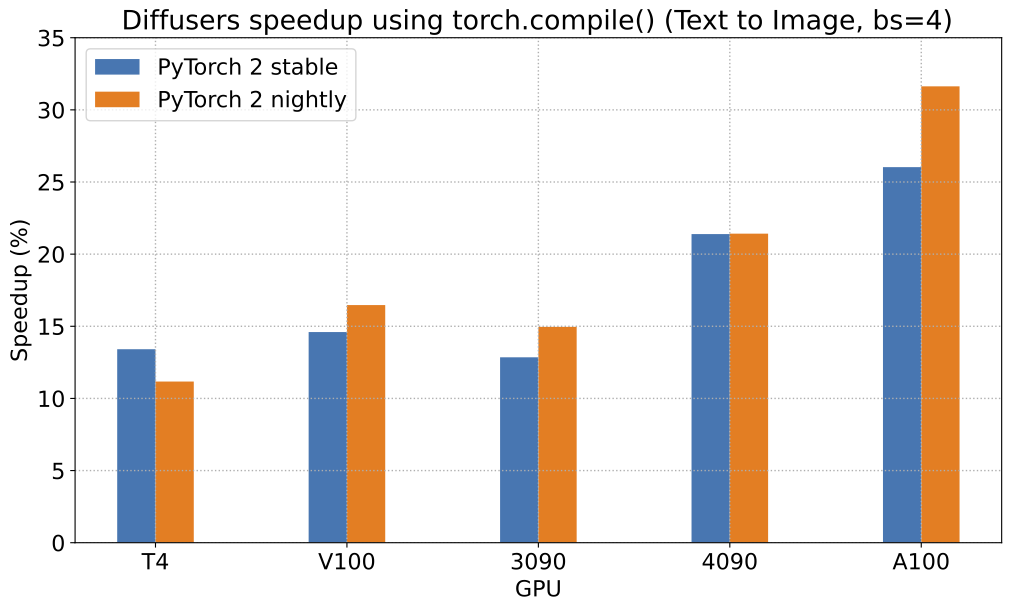
|
||||
|
||||
To give you an even better idea of how this speed-up holds for the other pipelines, consider the following
|
||||
graph for an A100 with PyTorch 2.0 and `torch.compile`:
|
||||
To give you an even better idea of how this speed-up holds for the other pipelines presented above, consider the following
|
||||
plot that shows the benchmarking numbers from an A100 across three different batch sizes
|
||||
(with PyTorch 2.0 nightly and `torch.compile()`):
|
||||
|
||||
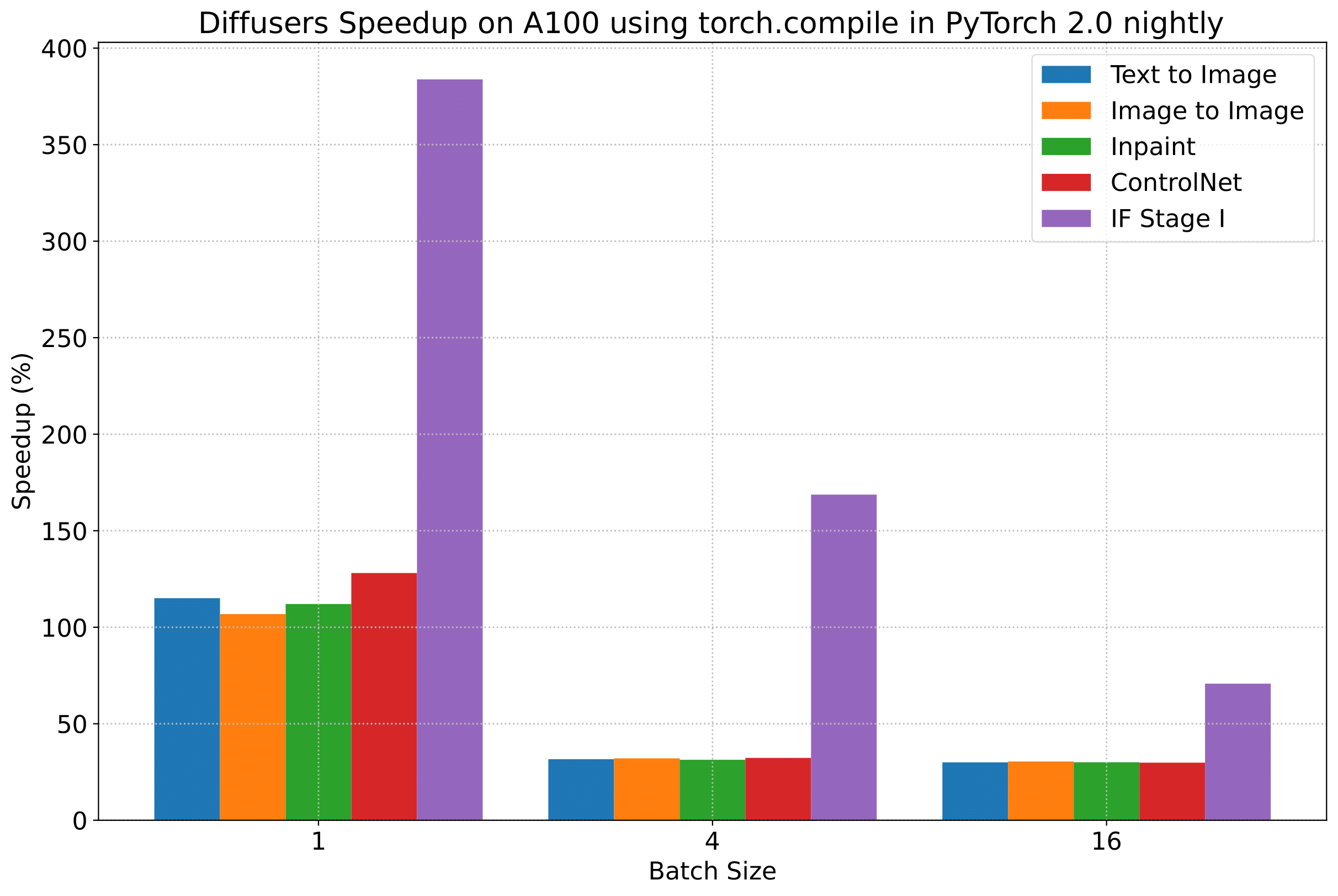
|
||||
|
||||
In the following tables, we report our findings in terms of the *number of iterations/second*.
|
||||
_(Our benchmarking metric for the plots above is **number of iterations/second**)_
|
||||
|
||||
But we reveal all the benchmarking numbers in the interest of transparency!
|
||||
|
||||
In the following tables, we report our findings in terms of the number of **_iterations processed per second_**.
|
||||
|
||||
### A100 (batch size: 1)
|
||||
|
||||
@@ -419,7 +438,7 @@ In the following tables, we report our findings in terms of the *number of itera
|
||||
|
||||
## Notes
|
||||
|
||||
* Follow this [PR](https://github.com/huggingface/diffusers/pull/3313) for more details on the environment used for conducting the benchmarks.
|
||||
* For the DeepFloyd IF pipeline where batch sizes > 1, we only used a batch size of > 1 in the first IF pipeline for text-to-image generation and NOT for upscaling. That means the two upscaling pipelines received a batch size of 1.
|
||||
* Follow [this PR](https://github.com/huggingface/diffusers/pull/3313) for more details on the environment used for conducting the benchmarks.
|
||||
* For the IF pipeline and batch sizes > 1, we only used a batch size of >1 in the first IF pipeline for text-to-image generation and NOT for upscaling. So, that means the two upscaling pipelines received a batch size of 1.
|
||||
|
||||
*Thanks to [Horace He](https://github.com/Chillee) from the PyTorch team for their support in improving our support of `torch.compile()` in Diffusers.*
|
||||
@@ -10,11 +10,11 @@ an "AS IS" BASIS, WITHOUT WARRANTIES OR CONDITIONS OF ANY KIND, either express o
|
||||
specific language governing permissions and limitations under the License.
|
||||
-->
|
||||
|
||||
# xFormers
|
||||
# Installing xFormers
|
||||
|
||||
We recommend [xFormers](https://github.com/facebookresearch/xformers) for both inference and training. In our tests, the optimizations performed in the attention blocks allow for both faster speed and reduced memory consumption.
|
||||
We recommend the use of [xFormers](https://github.com/facebookresearch/xformers) for both inference and training. In our tests, the optimizations performed in the attention blocks allow for both faster speed and reduced memory consumption.
|
||||
|
||||
Install xFormers from `pip`:
|
||||
Starting from version `0.0.16` of xFormers, released on January 2023, installation can be easily performed using pre-built pip wheels:
|
||||
|
||||
```bash
|
||||
pip install xformers
|
||||
@@ -22,14 +22,14 @@ pip install xformers
|
||||
|
||||
<Tip>
|
||||
|
||||
The xFormers `pip` package requires the latest version of PyTorch. If you need to use a previous version of PyTorch, then we recommend [installing xFormers from the source](https://github.com/facebookresearch/xformers#installing-xformers).
|
||||
The xFormers PIP package requires the latest version of PyTorch (1.13.1 as of xFormers 0.0.16). If you need to use a previous version of PyTorch, then we recommend you install xFormers from source using [the project instructions](https://github.com/facebookresearch/xformers#installing-xformers).
|
||||
|
||||
</Tip>
|
||||
|
||||
After xFormers is installed, you can use `enable_xformers_memory_efficient_attention()` for faster inference and reduced memory consumption as shown in this [section](memory#memory-efficient-attention).
|
||||
After xFormers is installed, you can use `enable_xformers_memory_efficient_attention()` for faster inference and reduced memory consumption, as discussed [here](fp16#memory-efficient-attention).
|
||||
|
||||
<Tip warning={true}>
|
||||
|
||||
According to this [issue](https://github.com/huggingface/diffusers/issues/2234#issuecomment-1416931212), xFormers `v0.0.16` cannot be used for training (fine-tune or DreamBooth) in some GPUs. If you observe this problem, please install a development version as indicated in the issue comments.
|
||||
According to [this issue](https://github.com/huggingface/diffusers/issues/2234#issuecomment-1416931212), xFormers `v0.0.16` cannot be used for training (fine-tune or Dreambooth) in some GPUs. If you observe that problem, please install a development version as indicated in that comment.
|
||||
|
||||
</Tip>
|
||||
|
||||
@@ -34,7 +34,7 @@ the attention layers of a language model is sufficient to obtain good downstream
|
||||
|
||||
[cloneofsimo](https://github.com/cloneofsimo) was the first to try out LoRA training for Stable Diffusion in the popular [lora](https://github.com/cloneofsimo/lora) GitHub repository. 🧨 Diffusers now supports finetuning with LoRA for [text-to-image generation](https://github.com/huggingface/diffusers/tree/main/examples/text_to_image#training-with-lora) and [DreamBooth](https://github.com/huggingface/diffusers/tree/main/examples/dreambooth#training-with-low-rank-adaptation-of-large-language-models-lora). This guide will show you how to do both.
|
||||
|
||||
If you'd like to store or share your model with the community, login to your Hugging Face account (create [one](https://hf.co/join) if you don't have one already):
|
||||
If you'd like to store or share your model with the community, login to your Hugging Face account (create [one](hf.co/join) if you don't have one already):
|
||||
|
||||
```bash
|
||||
huggingface-cli login
|
||||
@@ -321,7 +321,7 @@ pipe.fuse_lora()
|
||||
|
||||
generator = torch.manual_seed(0)
|
||||
images_fusion = pipe(
|
||||
"masterpiece, best quality, mountain", generator=generator, num_inference_steps=2
|
||||
"masterpiece, best quality, mountain", output_type="np", generator=generator, num_inference_steps=2
|
||||
).images
|
||||
|
||||
# To work with a different `lora_scale`, first reverse the effects of `fuse_lora()`.
|
||||
@@ -333,101 +333,10 @@ pipe.fuse_lora(lora_scale=0.5)
|
||||
|
||||
generator = torch.manual_seed(0)
|
||||
images_fusion = pipe(
|
||||
"masterpiece, best quality, mountain", generator=generator, num_inference_steps=2
|
||||
"masterpiece, best quality, mountain", output_type="np", generator=generator, num_inference_steps=2
|
||||
).images
|
||||
```
|
||||
|
||||
## Serializing pipelines with fused LoRA parameters
|
||||
|
||||
Let's say you want to load the pipeline above that has its UNet fused with the LoRA parameters. You can easily do so by simply calling the `save_pretrained()` method on `pipe`.
|
||||
|
||||
After loading the LoRA parameters into a pipeline, if you want to serialize the pipeline such that the affected model components are already fused with the LoRA parameters, you should:
|
||||
|
||||
* call `fuse_lora()` on the pipeline with the desired `lora_scale`, given you've already loaded the LoRA parameters into it.
|
||||
* call `save_pretrained()` on the pipeline.
|
||||
|
||||
Here is a complete example:
|
||||
|
||||
```python
|
||||
from diffusers import DiffusionPipeline
|
||||
import torch
|
||||
|
||||
pipe = DiffusionPipeline.from_pretrained("stabilityai/stable-diffusion-xl-base-1.0", torch_dtype=torch.float16).to("cuda")
|
||||
lora_model_id = "hf-internal-testing/sdxl-1.0-lora"
|
||||
lora_filename = "sd_xl_offset_example-lora_1.0.safetensors"
|
||||
pipe.load_lora_weights(lora_model_id, weight_name=lora_filename)
|
||||
|
||||
# First, fuse the LoRA parameters.
|
||||
pipe.fuse_lora()
|
||||
|
||||
# Then save.
|
||||
pipe.save_pretrained("my-pipeline-with-fused-lora")
|
||||
```
|
||||
|
||||
Now, you can load the pipeline and directly perform inference without having to load the LoRA parameters again:
|
||||
|
||||
```python
|
||||
from diffusers import DiffusionPipeline
|
||||
import torch
|
||||
|
||||
pipe = DiffusionPipeline.from_pretrained("my-pipeline-with-fused-lora", torch_dtype=torch.float16).to("cuda")
|
||||
|
||||
generator = torch.manual_seed(0)
|
||||
images_fusion = pipe(
|
||||
"masterpiece, best quality, mountain", generator=generator, num_inference_steps=2
|
||||
).images
|
||||
```
|
||||
|
||||
## Working with multiple LoRA checkpoints
|
||||
|
||||
With the `fuse_lora()` method as described above, it's possible to load multiple LoRA checkpoints. Let's work through a complete example. First we load the base pipeline:
|
||||
|
||||
```python
|
||||
from diffusers import StableDiffusionXLPipeline, AutoencoderKL
|
||||
import torch
|
||||
|
||||
vae = AutoencoderKL.from_pretrained("madebyollin/sdxl-vae-fp16-fix", torch_dtype=torch.float16)
|
||||
pipe = StableDiffusionXLPipeline.from_pretrained(
|
||||
"stabilityai/stable-diffusion-xl-base-1.0",
|
||||
vae=vae,
|
||||
torch_dtype=torch.float16,
|
||||
)
|
||||
pipe.to("cuda")
|
||||
```
|
||||
|
||||
Then let's two LoRA checkpoints and fuse them with specific `lora_scale` values:
|
||||
|
||||
```python
|
||||
# LoRA one.
|
||||
pipe.load_lora_weights("goofyai/cyborg_style_xl")
|
||||
pipe.fuse_lora(lora_scale=0.7)
|
||||
|
||||
# LoRA two.
|
||||
pipe.load_lora_weights("TheLastBen/Pikachu_SDXL")
|
||||
pipe.fuse_lora(lora_scale=0.7)
|
||||
```
|
||||
|
||||
<Tip>
|
||||
|
||||
Play with the `lora_scale` parameter when working with multiple LoRAs to control the amount of their influence on the final outputs.
|
||||
|
||||
</Tip>
|
||||
|
||||
Let's see them in action:
|
||||
|
||||
```python
|
||||
prompt = "cyborg style pikachu"
|
||||
image = pipe(prompt, num_inference_steps=30, guidance_scale=7.5).images[0]
|
||||
```
|
||||
|
||||
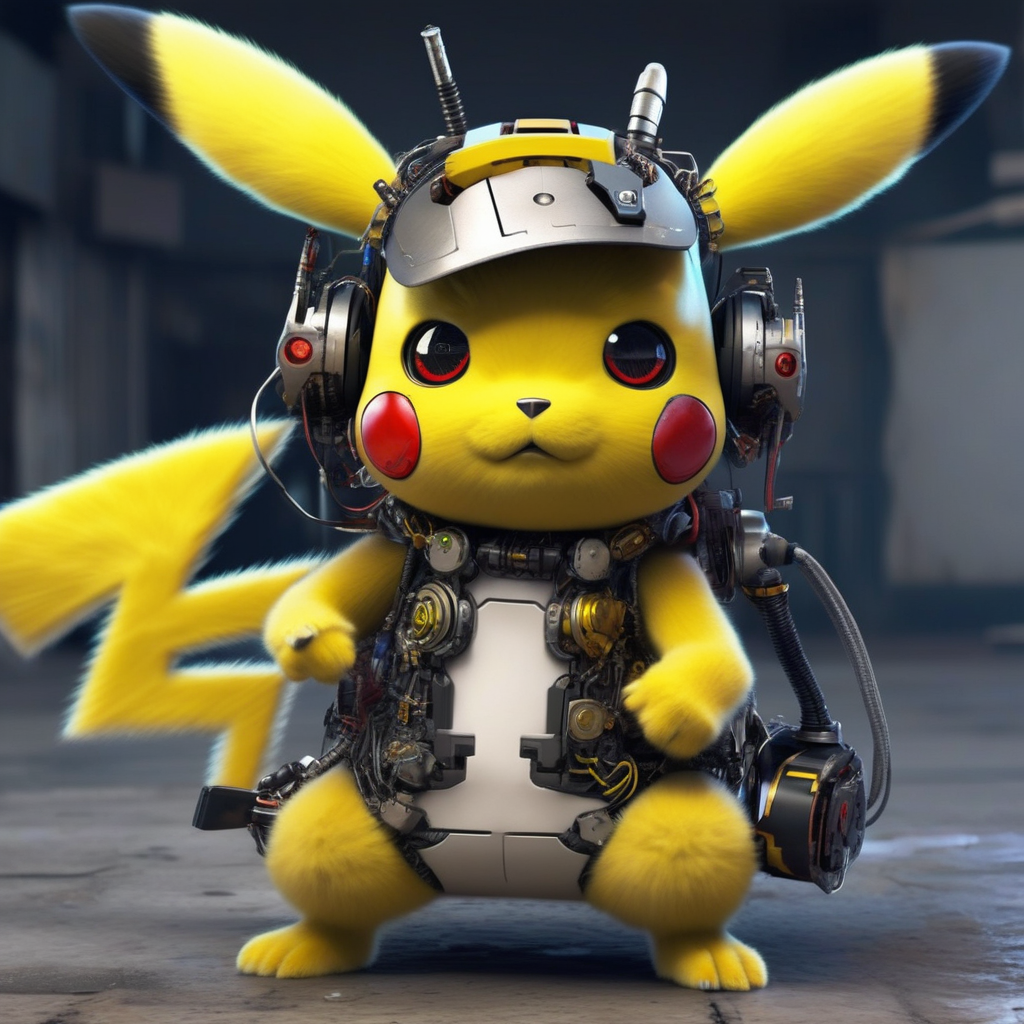
|
||||
|
||||
<Tip warning={true}>
|
||||
|
||||
Currently, unfusing multiple LoRA checkpoints is not possible.
|
||||
|
||||
</Tip>
|
||||
|
||||
## Supporting different LoRA checkpoints from Diffusers
|
||||
|
||||
🤗 Diffusers supports loading checkpoints from popular LoRA trainers such as [Kohya](https://github.com/kohya-ss/sd-scripts/) and [TheLastBen](https://github.com/TheLastBen/fast-stable-diffusion). In this section, we outline the current API's details and limitations.
|
||||
|
||||
@@ -281,8 +281,3 @@ image.save("yoda-pokemon.png")
|
||||
|
||||
* We support fine-tuning the UNet shipped in [Stable Diffusion XL](https://huggingface.co/papers/2307.01952) via the `train_text_to_image_sdxl.py` script. Please refer to the docs [here](https://github.com/huggingface/diffusers/blob/main/examples/text_to_image/README_sdxl.md).
|
||||
* We also support fine-tuning of the UNet and Text Encoder shipped in [Stable Diffusion XL](https://huggingface.co/papers/2307.01952) with LoRA via the `train_text_to_image_lora_sdxl.py` script. Please refer to the docs [here](https://github.com/huggingface/diffusers/blob/main/examples/text_to_image/README_sdxl.md).
|
||||
|
||||
|
||||
## Kandinsky 2.2
|
||||
|
||||
* We support fine-tuning both the decoder and prior in Kandinsky2.2 with the `train_text_to_image_prior.py` and `train_text_to_image_decoder.py` scripts. LoRA support is also included. Please refer to the docs [here](https://github.com/huggingface/diffusers/blob/main/examples/kandinsky2_2/text_to_image/README_sdxl.md).
|
||||
@@ -397,8 +397,6 @@ image = pipeline(prompt=prompt, prompt_2=prompt_2).images[0]
|
||||
<img src="https://huggingface.co/datasets/huggingface/documentation-images/resolve/main/diffusers/sdxl-double-prompt.png" alt="generated image of an astronaut in a jungle in the style of a van gogh painting"/>
|
||||
</div>
|
||||
|
||||
The dual text-encoders also support textual inversion embeddings that need to be loaded separately as explained in the [SDXL textual inversion](textual_inversion_inference#stable-diffusion-xl] section.
|
||||
|
||||
## Optimizations
|
||||
|
||||
SDXL is a large model, and you may need to optimize memory to get it to run on your hardware. Here are some tips to save memory and speed up inference.
|
||||
@@ -428,4 +426,4 @@ SDXL is a large model, and you may need to optimize memory to get it to run on y
|
||||
|
||||
## Other resources
|
||||
|
||||
If you're interested in experimenting with a minimal version of the [`UNet2DConditionModel`] used in SDXL, take a look at the [minSDXL](https://github.com/cloneofsimo/minSDXL) implementation which is written in PyTorch and directly compatible with 🤗 Diffusers.
|
||||
If you're interested in experimenting with a minimal version of the [`UNet2DConditionModel`] used in SDXL, take a look at the [minSDXL](https://github.com/cloneofsimo/minSDXL) implementation which is written in PyTorch and directly compatible with 🤗 Diffusers.
|
||||
@@ -1,41 +1,51 @@
|
||||
# JAX/Flax
|
||||
# 🧨 Stable Diffusion in JAX / Flax !
|
||||
|
||||
[[open-in-colab]]
|
||||
|
||||
🤗 Diffusers supports Flax for super fast inference on Google TPUs, such as those available in Colab, Kaggle or Google Cloud Platform. This guide shows you how to run inference with Stable Diffusion using JAX/Flax.
|
||||
🤗 Hugging Face [Diffusers](https://github.com/huggingface/diffusers) supports Flax since version `0.5.1`! This allows for super fast inference on Google TPUs, such as those available in Colab, Kaggle or Google Cloud Platform.
|
||||
|
||||
Before you begin, make sure you have the necessary libraries installed:
|
||||
This notebook shows how to run inference using JAX / Flax. If you want more details about how Stable Diffusion works or want to run it in GPU, please refer to [this notebook](https://huggingface.co/docs/diffusers/stable_diffusion).
|
||||
|
||||
First, make sure you are using a TPU backend. If you are running this notebook in Colab, select `Runtime` in the menu above, then select the option "Change runtime type" and then select `TPU` under the `Hardware accelerator` setting.
|
||||
|
||||
Note that JAX is not exclusive to TPUs, but it shines on that hardware because each TPU server has 8 TPU accelerators working in parallel.
|
||||
|
||||
## Setup
|
||||
|
||||
First make sure diffusers is installed.
|
||||
|
||||
```py
|
||||
# uncomment to install the necessary libraries in Colab
|
||||
#!pip install -q jax==0.3.25 jaxlib==0.3.25 flax transformers ftfy
|
||||
#!pip install -q diffusers
|
||||
#!pip install jax==0.3.25 jaxlib==0.3.25 flax transformers ftfy
|
||||
#!pip install diffusers
|
||||
```
|
||||
|
||||
You should also make sure you're using a TPU backend. While JAX does not run exclusively on TPUs, you'll get the best performance on a TPU because each server has 8 TPU accelerators working in parallel.
|
||||
```python
|
||||
import jax.tools.colab_tpu
|
||||
|
||||
If you are running this guide in Colab, select *Runtime* in the menu above, select the option *Change runtime type*, and then select *TPU* under the *Hardware accelerator* setting. Import JAX and quickly check whether you're using a TPU:
|
||||
jax.tools.colab_tpu.setup_tpu()
|
||||
import jax
|
||||
```
|
||||
|
||||
```python
|
||||
import jax
|
||||
import jax.tools.colab_tpu
|
||||
jax.tools.colab_tpu.setup_tpu()
|
||||
|
||||
num_devices = jax.device_count()
|
||||
device_type = jax.devices()[0].device_kind
|
||||
|
||||
print(f"Found {num_devices} JAX devices of type {device_type}.")
|
||||
assert (
|
||||
"TPU" in device_type,
|
||||
"Available device is not a TPU, please select TPU from Edit > Notebook settings > Hardware accelerator"
|
||||
)
|
||||
"Found 8 JAX devices of type Cloud TPU."
|
||||
"TPU" in device_type
|
||||
), "Available device is not a TPU, please select TPU from Edit > Notebook settings > Hardware accelerator"
|
||||
```
|
||||
|
||||
Great, now you can import the rest of the dependencies you'll need:
|
||||
```python out
|
||||
Found 8 JAX devices of type Cloud TPU.
|
||||
```
|
||||
|
||||
Then we import all the dependencies.
|
||||
|
||||
```python
|
||||
import numpy as np
|
||||
import jax
|
||||
import jax.numpy as jnp
|
||||
|
||||
from pathlib import Path
|
||||
@@ -48,12 +58,17 @@ from huggingface_hub import notebook_login
|
||||
from diffusers import FlaxStableDiffusionPipeline
|
||||
```
|
||||
|
||||
## Load a model
|
||||
## Model Loading
|
||||
|
||||
Flax is a functional framework, so models are stateless and parameters are stored outside of them. Loading a pretrained Flax pipeline returns *both* the pipeline and the model weights (or parameters). In this guide, you'll use `bfloat16`, a more efficient half-float type that is supported by TPUs (you can also use `float32` for full precision if you want).
|
||||
TPU devices support `bfloat16`, an efficient half-float type. We'll use it for our tests, but you can also use `float32` to use full precision instead.
|
||||
|
||||
```python
|
||||
dtype = jnp.bfloat16
|
||||
```
|
||||
|
||||
Flax is a functional framework, so models are stateless and parameters are stored outside them. Loading the pre-trained Flax pipeline will return both the pipeline itself and the model weights (or parameters). We are using a `bf16` version of the weights, which leads to type warnings that you can safely ignore.
|
||||
|
||||
```python
|
||||
pipeline, params = FlaxStableDiffusionPipeline.from_pretrained(
|
||||
"CompVis/stable-diffusion-v1-4",
|
||||
revision="bf16",
|
||||
@@ -63,87 +78,95 @@ pipeline, params = FlaxStableDiffusionPipeline.from_pretrained(
|
||||
|
||||
## Inference
|
||||
|
||||
TPUs usually have 8 devices working in parallel, so let's use the same prompt for each device. This means you can perform inference on 8 devices at once, with each device generating one image. As a result, you'll get 8 images in the same amount of time it takes for one chip to generate a single image!
|
||||
Since TPUs usually have 8 devices working in parallel, we'll replicate our prompt as many times as devices we have. Then we'll perform inference on the 8 devices at once, each responsible for generating one image. Thus, we'll get 8 images in the same amount of time it takes for one chip to generate a single one.
|
||||
|
||||
<Tip>
|
||||
|
||||
Learn more details in the [How does parallelization work?](#how-does-parallelization-work) section.
|
||||
|
||||
</Tip>
|
||||
|
||||
After replicating the prompt, get the tokenized text ids by calling the `prepare_inputs` function on the pipeline. The length of the tokenized text is set to 77 tokens as required by the configuration of the underlying CLIP text model.
|
||||
After replicating the prompt, we obtain the tokenized text ids by invoking the `prepare_inputs` function of the pipeline. The length of the tokenized text is set to 77 tokens, as required by the configuration of the underlying CLIP Text model.
|
||||
|
||||
```python
|
||||
prompt = "A cinematic film still of Morgan Freeman starring as Jimi Hendrix, portrait, 40mm lens, shallow depth of field, close up, split lighting, cinematic"
|
||||
prompt = [prompt] * jax.device_count()
|
||||
prompt_ids = pipeline.prepare_inputs(prompt)
|
||||
prompt_ids.shape
|
||||
"(8, 77)"
|
||||
```
|
||||
|
||||
Model parameters and inputs have to be replicated across the 8 parallel devices. The parameters dictionary is replicated with [`flax.jax_utils.replicate`](https://flax.readthedocs.io/en/latest/api_reference/flax.jax_utils.html#flax.jax_utils.replicate) which traverses the dictionary and changes the shape of the weights so they are repeated 8 times. Arrays are replicated using `shard`.
|
||||
```python out
|
||||
(8, 77)
|
||||
```
|
||||
|
||||
### Replication and parallelization
|
||||
|
||||
Model parameters and inputs have to be replicated across the 8 parallel devices we have. The parameters dictionary is replicated using `flax.jax_utils.replicate`, which traverses the dictionary and changes the shape of the weights so they are repeated 8 times. Arrays are replicated using `shard`.
|
||||
|
||||
```python
|
||||
# parameters
|
||||
p_params = replicate(params)
|
||||
|
||||
# arrays
|
||||
prompt_ids = shard(prompt_ids)
|
||||
prompt_ids.shape
|
||||
"(8, 1, 77)"
|
||||
```
|
||||
|
||||
This shape means each one of the 8 devices receives as an input a `jnp` array with shape `(1, 77)`, where `1` is the batch size per device. On TPUs with sufficient memory, you could have a batch size larger than `1` if you want to generate multiple images (per chip) at once.
|
||||
```python
|
||||
prompt_ids = shard(prompt_ids)
|
||||
prompt_ids.shape
|
||||
```
|
||||
|
||||
Next, create a random number generator to pass to the generation function. This is standard procedure in Flax, which is very serious and opinionated about random numbers. All functions that deal with random numbers are expected to receive a generator to ensure reproducibility, even when you're training across multiple distributed devices.
|
||||
```python out
|
||||
(8, 1, 77)
|
||||
```
|
||||
|
||||
The helper function below uses a seed to initialize a random number generator. As long as you use the same seed, you'll get the exact same results. Feel free to use different seeds when exploring results later in the guide.
|
||||
That shape means that each one of the `8` devices will receive as an input a `jnp` array with shape `(1, 77)`. `1` is therefore the batch size per device. In TPUs with sufficient memory, it could be larger than `1` if we wanted to generate multiple images (per chip) at once.
|
||||
|
||||
We are almost ready to generate images! We just need to create a random number generator to pass to the generation function. This is the standard procedure in Flax, which is very serious and opinionated about random numbers – all functions that deal with random numbers are expected to receive a generator. This ensures reproducibility, even when we are training across multiple distributed devices.
|
||||
|
||||
The helper function below uses a seed to initialize a random number generator. As long as we use the same seed, we'll get the exact same results. Feel free to use different seeds when exploring results later in the notebook.
|
||||
|
||||
```python
|
||||
def create_key(seed=0):
|
||||
return jax.random.PRNGKey(seed)
|
||||
```
|
||||
|
||||
The helper function, or `rng`, is split 8 times so each device receives a different generator and generates a different image.
|
||||
We obtain a rng and then "split" it 8 times so each device receives a different generator. Therefore, each device will create a different image, and the full process is reproducible.
|
||||
|
||||
```python
|
||||
rng = create_key(0)
|
||||
rng = jax.random.split(rng, jax.device_count())
|
||||
```
|
||||
|
||||
To take advantage of JAX's optimized speed on a TPU, pass `jit=True` to the pipeline to compile the JAX code into an efficient representation and to ensure the model runs in parallel across the 8 devices.
|
||||
JAX code can be compiled to an efficient representation that runs very fast. However, we need to ensure that all inputs have the same shape in subsequent calls; otherwise, JAX will have to recompile the code, and we wouldn't be able to take advantage of the optimized speed.
|
||||
|
||||
<Tip warning={true}>
|
||||
The Flax pipeline can compile the code for us if we pass `jit = True` as an argument. It will also ensure that the model runs in parallel in the 8 available devices.
|
||||
|
||||
You need to ensure all your inputs have the same shape in subsequent calls, other JAX will need to recompile the code which is slower.
|
||||
The first time we run the following cell it will take a long time to compile, but subequent calls (even with different inputs) will be much faster. For example, it took more than a minute to compile in a TPU v2-8 when I tested, but then it takes about **`7s`** for future inference runs.
|
||||
|
||||
</Tip>
|
||||
|
||||
The first inference run takes more time because it needs to compile the code, but subsequent calls (even with different inputs) are much faster. For example, it took more than a minute to compile on a TPU v2-8, but then it takes about **7s** on a future inference run!
|
||||
|
||||
```py
|
||||
```
|
||||
%%time
|
||||
images = pipeline(prompt_ids, p_params, rng, jit=True)[0]
|
||||
|
||||
"CPU times: user 56.2 s, sys: 42.5 s, total: 1min 38s"
|
||||
"Wall time: 1min 29s"
|
||||
```
|
||||
|
||||
The returned array has shape `(8, 1, 512, 512, 3)` which should be reshaped to remove the second dimension and get 8 images of `512 × 512 × 3`. Then you can use the [`~utils.numpy_to_pil`] function to convert the arrays into images.
|
||||
```python out
|
||||
CPU times: user 56.2 s, sys: 42.5 s, total: 1min 38s
|
||||
Wall time: 1min 29s
|
||||
```
|
||||
|
||||
The returned array has shape `(8, 1, 512, 512, 3)`. We reshape it to get rid of the second dimension and obtain 8 images of `512 × 512 × 3` and then convert them to PIL.
|
||||
|
||||
```python
|
||||
images = images.reshape((images.shape[0] * images.shape[1],) + images.shape[-3:])
|
||||
images = pipeline.numpy_to_pil(images)
|
||||
```
|
||||
|
||||
### Visualization
|
||||
|
||||
```python
|
||||
from diffusers import make_image_grid
|
||||
|
||||
images = images.reshape((images.shape[0] * images.shape[1],) + images.shape[-3:])
|
||||
images = pipeline.numpy_to_pil(images)
|
||||
make_image_grid(images, 2, 4)
|
||||
```
|
||||
|
||||
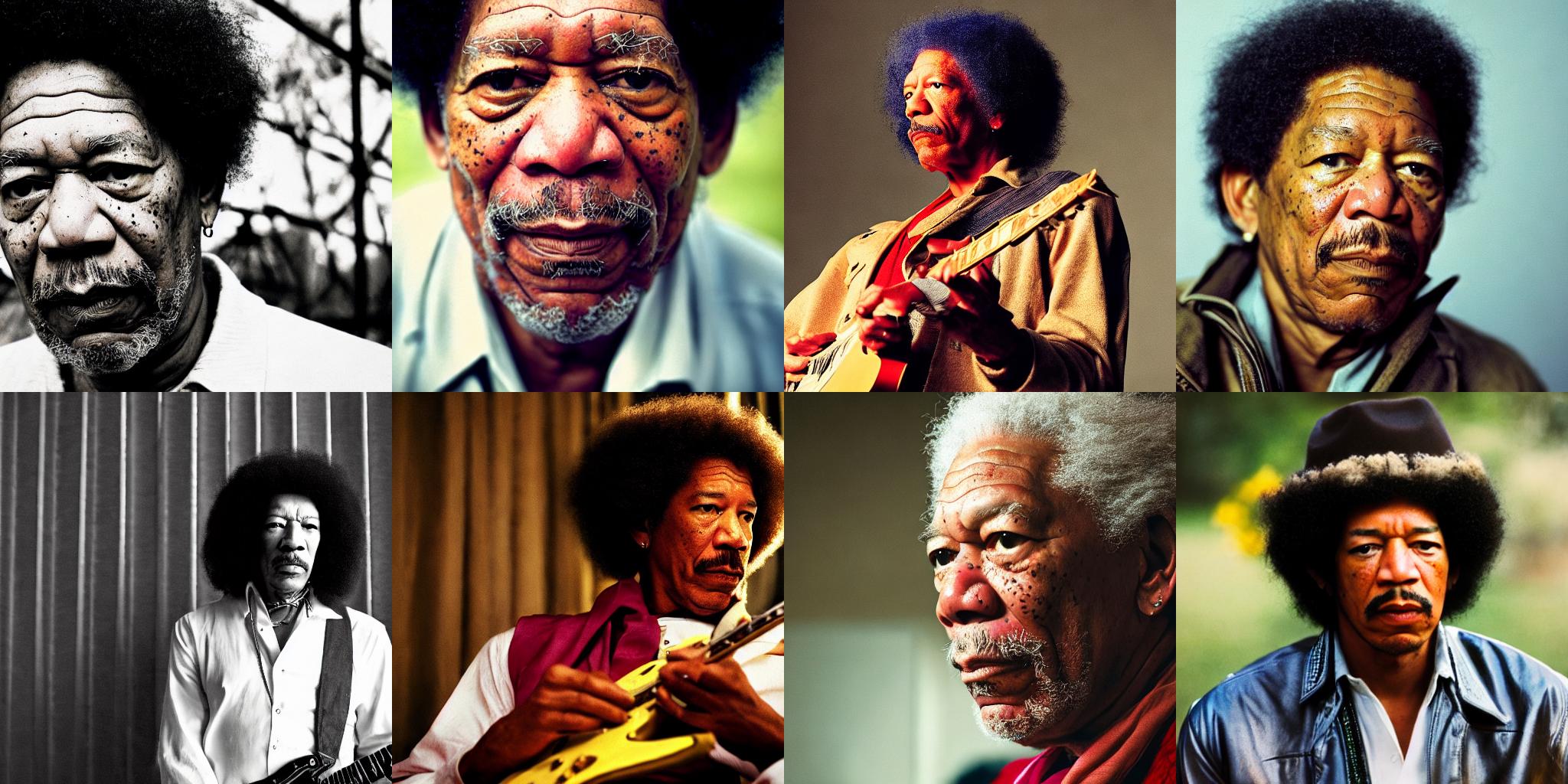
|
||||
|
||||
|
||||
## Using different prompts
|
||||
|
||||
You don't necessarily have to use the same prompt on all devices. For example, to generate 8 different prompts:
|
||||
We don't have to replicate the _same_ prompt in all the devices. We can do whatever we want: generate 2 prompts 4 times each, or even generate 8 different prompts at once. Let's do that!
|
||||
|
||||
First, we'll refactor the input preparation code into a handy function:
|
||||
|
||||
```python
|
||||
prompts = [
|
||||
@@ -156,7 +179,9 @@ prompts = [
|
||||
"Armchair in the shape of an avocado",
|
||||
"Clown astronaut in space, with Earth in the background",
|
||||
]
|
||||
```
|
||||
|
||||
```python
|
||||
prompt_ids = pipeline.prepare_inputs(prompts)
|
||||
prompt_ids = shard(prompt_ids)
|
||||
|
||||
@@ -172,41 +197,46 @@ make_image_grid(images, 2, 4)
|
||||
|
||||
## How does parallelization work?
|
||||
|
||||
The Flax pipeline in 🤗 Diffusers automatically compiles the model and runs it in parallel on all available devices. Let's take a closer look at how that process works.
|
||||
We said before that the `diffusers` Flax pipeline automatically compiles the model and runs it in parallel on all available devices. We'll now briefly look inside that process to show how it works.
|
||||
|
||||
JAX parallelization can be done in multiple ways. The easiest one revolves around using the [`jax.pmap`](https://jax.readthedocs.io/en/latest/_autosummary/jax.pmap.html) function to achieve single-program multiple-data (SPMD) parallelization. It means running several copies of the same code, each on different data inputs. More sophisticated approaches are possible, and you can go over to the JAX [documentation](https://jax.readthedocs.io/en/latest/index.html) to explore this topic in more detail if you are interested!
|
||||
JAX parallelization can be done in multiple ways. The easiest one revolves around using the `jax.pmap` function to achieve single-program, multiple-data (SPMD) parallelization. It means we'll run several copies of the same code, each on different data inputs. More sophisticated approaches are possible, we invite you to go over the [JAX documentation](https://jax.readthedocs.io/en/latest/index.html) and the [`pjit` pages](https://jax.readthedocs.io/en/latest/jax-101/08-pjit.html?highlight=pjit) to explore this topic if you are interested!
|
||||
|
||||
`jax.pmap` does two things:
|
||||
`jax.pmap` does two things for us:
|
||||
- Compiles (or `jit`s) the code, as if we had invoked `jax.jit()`. This does not happen when we call `pmap`, but the first time the pmapped function is invoked.
|
||||
- Ensures the compiled code runs in parallel in all the available devices.
|
||||
|
||||
1. Compiles (or "`jit`s") the code which is similar to `jax.jit()`. This does not happen when you call `pmap`, and only the first time the `pmap`ped function is called.
|
||||
2. Ensures the compiled code runs in parallel on all available devices.
|
||||
|
||||
To demonstrate, call `pmap` on the pipeline's `_generate` method (this is a private method that generates images and may be renamed or removed in future releases of 🤗 Diffusers):
|
||||
To show how it works we `pmap` the `_generate` method of the pipeline, which is the private method that runs generates images. Please, note that this method may be renamed or removed in future releases of `diffusers`.
|
||||
|
||||
```python
|
||||
p_generate = pmap(pipeline._generate)
|
||||
```
|
||||
|
||||
After calling `pmap`, the prepared function `p_generate` will:
|
||||
After we use `pmap`, the prepared function `p_generate` will conceptually do the following:
|
||||
* Invoke a copy of the underlying function `pipeline._generate` in each device.
|
||||
* Send each device a different portion of the input arguments. That's what sharding is used for. In our case, `prompt_ids` has shape `(8, 1, 77, 768)`. This array will be split in `8` and each copy of `_generate` will receive an input with shape `(1, 77, 768)`.
|
||||
|
||||
1. Make a copy of the underlying function, `pipeline._generate`, on each device.
|
||||
2. Send each device a different portion of the input arguments (this is why its necessary to call the *shard* function). In this case, `prompt_ids` has shape `(8, 1, 77, 768)` so the array is split into 8 and each copy of `_generate` receives an input with shape `(1, 77, 768)`.
|
||||
We can code `_generate` completely ignoring the fact that it will be invoked in parallel. We just care about our batch size (`1` in this example) and the dimensions that make sense for our code, and don't have to change anything to make it work in parallel.
|
||||
|
||||
The most important thing to pay attention to here is the batch size (1 in this example), and the input dimensions that make sense for your code. You don't have to change anything else to make the code work in parallel.
|
||||
The same way as when we used the pipeline call, the first time we run the following cell it will take a while, but then it will be much faster.
|
||||
|
||||
The first time you call the pipeline takes more time, but the calls afterward are much faster. The `block_until_ready` function is used to correctly measure inference time because JAX uses asynchronous dispatch and returns control to the Python loop as soon as it can. You don't need to use that in your code; blocking occurs automatically when you want to use the result of a computation that has not yet been materialized.
|
||||
|
||||
```py
|
||||
```
|
||||
%%time
|
||||
images = p_generate(prompt_ids, p_params, rng)
|
||||
images = images.block_until_ready()
|
||||
"CPU times: user 1min 15s, sys: 18.2 s, total: 1min 34s"
|
||||
"Wall time: 1min 15s"
|
||||
images.shape
|
||||
```
|
||||
|
||||
Check your image dimensions to see if they're correct:
|
||||
```python out
|
||||
CPU times: user 1min 15s, sys: 18.2 s, total: 1min 34s
|
||||
Wall time: 1min 15s
|
||||
```
|
||||
|
||||
```python
|
||||
images.shape
|
||||
"(8, 1, 512, 512, 3)"
|
||||
```
|
||||
```
|
||||
|
||||
```python out
|
||||
(8, 1, 512, 512, 3)
|
||||
```
|
||||
|
||||
We use `block_until_ready()` to correctly measure inference time, because JAX uses asynchronous dispatch and returns control to the Python loop as soon as it can. You don't need to use that in your code; blocking will occur automatically when you want to use the result of a computation that has not yet been materialized.
|
||||
@@ -28,8 +28,6 @@ from diffusers.utils import make_image_grid
|
||||
from transformers import CLIPFeatureExtractor, CLIPTextModel, CLIPTokenizer
|
||||
```
|
||||
|
||||
## Stable Diffusion 1 and 2
|
||||
|
||||
Pick a Stable Diffusion checkpoint and a pre-learned concept from the [Stable Diffusion Conceptualizer](https://huggingface.co/spaces/sd-concepts-library/stable-diffusion-conceptualizer):
|
||||
|
||||
```py
|
||||
@@ -71,50 +69,3 @@ grid
|
||||
<div class="flex justify-center">
|
||||
<img src="https://huggingface.co/datasets/huggingface/documentation-images/resolve/main/diffusers/textual_inversion_inference.png">
|
||||
</div>
|
||||
|
||||
|
||||
## Stable Diffusion XL
|
||||
|
||||
Stable Diffusion XL (SDXL) can also use textual inversion vectors for inference. In contrast to Stable Diffusion 1 and 2, SDXL has two text encoders so you'll need two textual inversion embeddings - one for each text encoder model.
|
||||
|
||||
Let's download the SDXL textual inversion embeddings and have a closer look at it's structure:
|
||||
|
||||
```py
|
||||
from huggingface_hub import hf_hub_download
|
||||
from safetensors.torch import load_file
|
||||
|
||||
file = hf_hub_download("dn118/unaestheticXL", filename="unaestheticXLv31.safetensors")
|
||||
state_dict = load_file(file)
|
||||
state_dict
|
||||
```
|
||||
|
||||
```
|
||||
{'clip_g': tensor([[ 0.0077, -0.0112, 0.0065, ..., 0.0195, 0.0159, 0.0275],
|
||||
...,
|
||||
[-0.0170, 0.0213, 0.0143, ..., -0.0302, -0.0240, -0.0362]],
|
||||
'clip_l': tensor([[ 0.0023, 0.0192, 0.0213, ..., -0.0385, 0.0048, -0.0011],
|
||||
...,
|
||||
[ 0.0475, -0.0508, -0.0145, ..., 0.0070, -0.0089, -0.0163]],
|
||||
```
|
||||
|
||||
There are two tensors, `"clip-g"` and `"clip-l"`.
|
||||
`"clip-g"` corresponds to the bigger text encoder in SDXL and refers to
|
||||
`pipe.text_encoder_2` and `"clip-l"` refers to `pipe.text_encoder`.
|
||||
|
||||
Now you can load each tensor separately by passing them along with the correct text encoder and tokenizer
|
||||
to [`~loaders.TextualInversionLoaderMixin.load_textual_inversion`]:
|
||||
|
||||
```py
|
||||
from diffusers import AutoPipelineForText2Image
|
||||
import torch
|
||||
|
||||
pipe = AutoPipelineForText2Image.from_pretrained("stabilityai/stable-diffusion-xl-base-1.0", variant="fp16", torch_dtype=torch.float16)
|
||||
pipe.to("cuda")
|
||||
|
||||
pipe.load_textual_inversion(state_dict["clip_g"], token="unaestheticXLv31", text_encoder=pipe.text_encoder_2, tokenizer=pipe.tokenizer_2)
|
||||
pipe.load_textual_inversion(state_dict["clip_l"], token="unaestheticXLv31", text_encoder=pipe.text_encoder, tokenizer=pipe.tokenizer)
|
||||
|
||||
# the embedding should be used as a negative embedding, so we pass it as a negative prompt
|
||||
generator = torch.Generator().manual_seed(33)
|
||||
image = pipe("a woman standing in front of a mountain", negative_prompt="unaestheticXLv31", generator=generator).images[0]
|
||||
```
|
||||
|
||||
@@ -14,7 +14,7 @@ specific language governing permissions and limitations under the License.
|
||||
|
||||
사용하시는 라이브러리에 맞는 🤗 Diffusers를 설치하세요.
|
||||
|
||||
🤗 Diffusers는 Python 3.8+, PyTorch 1.7.0+ 및 flax에서 테스트되었습니다. 사용중인 딥러닝 라이브러리에 대한 아래의 설치 안내를 따르세요.
|
||||
🤗 Diffusers는 Python 3.7+, PyTorch 1.7.0+ 및 flax에서 테스트되었습니다. 사용중인 딥러닝 라이브러리에 대한 아래의 설치 안내를 따르세요.
|
||||
|
||||
- [PyTorch 설치 안내](https://pytorch.org/get-started/locally/)
|
||||
- [Flax 설치 안내](https://flax.readthedocs.io/en/latest/)
|
||||
@@ -105,7 +105,7 @@ pip install -e ".[flax]"
|
||||
|
||||
이러한 명령어들은 저장소를 복제한 폴더와 Python 라이브러리 경로를 연결합니다.
|
||||
Python은 이제 일반 라이브러리 경로에 더하여 복제한 폴더 내부를 살펴봅니다.
|
||||
예를들어 Python 패키지가 `~/anaconda3/envs/main/lib/python3.8/site-packages/`에 설치되어 있는 경우 Python은 복제한 폴더인 `~/diffusers/`도 검색합니다.
|
||||
예를들어 Python 패키지가 `~/anaconda3/envs/main/lib/python3.7/site-packages/`에 설치되어 있는 경우 Python은 복제한 폴더인 `~/diffusers/`도 검색합니다.
|
||||
|
||||
<Tip warning={true}>
|
||||
|
||||
|
||||
@@ -14,7 +14,7 @@ specific language governing permissions and limitations under the License.
|
||||
|
||||
在你正在使用的任意深度学习框架中安装 🤗 Diffusers 。
|
||||
|
||||
🤗 Diffusers已在Python 3.8+、PyTorch 1.7.0+和Flax上进行了测试。按照下面的安装说明,针对你正在使用的深度学习框架进行安装:
|
||||
🤗 Diffusers已在Python 3.7+、PyTorch 1.7.0+和Flax上进行了测试。按照下面的安装说明,针对你正在使用的深度学习框架进行安装:
|
||||
|
||||
- [PyTorch](https://pytorch.org/get-started/locally/) installation instructions.
|
||||
- [Flax](https://flax.readthedocs.io/en/latest/) installation instructions.
|
||||
@@ -107,7 +107,7 @@ pip install -e ".[flax]"
|
||||
|
||||
这些命令将连接到你克隆的版本库和你的 Python 库路径。
|
||||
现在,不只是在通常的库路径,Python 还会在你克隆的文件夹内寻找包。
|
||||
例如,如果你的 Python 包通常安装在 `~/anaconda3/envs/main/lib/python3.8/Site-packages/`,Python 也会搜索你克隆到的文件夹。`~/diffusers/`。
|
||||
例如,如果你的 Python 包通常安装在 `~/anaconda3/envs/main/lib/python3.7/Site-packages/`,Python 也会搜索你克隆到的文件夹。`~/diffusers/`。
|
||||
|
||||
<Tip warning={true}>
|
||||
|
||||
|
||||
@@ -43,7 +43,6 @@ If a community doesn't work as expected, please open an issue and ping the autho
|
||||
Stable Diffusion XL Long Weighted Prompt Pipeline | A pipeline support unlimited length of prompt and negative prompt, use A1111 style of prompt weighting | [Stable Diffusion XL Long Weighted Prompt Pipeline](#stable-diffusion-xl-long-weighted-prompt-pipeline) | - | [Andrew Zhu](https://xhinker.medium.com/) |
|
||||
FABRIC - Stable Diffusion with feedback Pipeline | pipeline supports feedback from liked and disliked images | [Stable Diffusion Fabric Pipline](#stable-diffusion-fabric-pipeline) | - | [Shauray Singh](https://shauray8.github.io/about_shauray/) |
|
||||
sketch inpaint - Inpainting with non-inpaint Stable Diffusion | sketch inpaint much like in automatic1111 | [Masked Im2Im Stable Diffusion Pipeline](#stable-diffusion-masked-im2im) | - | [Anatoly Belikov](https://github.com/noskill) |
|
||||
prompt-to-prompt | change parts of a prompt and retain image structure (see [paper page](https://prompt-to-prompt.github.io/)) | [Prompt2Prompt Pipeline](#prompt2prompt-pipeline) | - | [Umer H. Adil](https://twitter.com/UmerHAdil) |
|
||||
|
||||
|
||||
To load a custom pipeline you just need to pass the `custom_pipeline` argument to `DiffusionPipeline`, as one of the files in `diffusers/examples/community`. Feel free to send a PR with your own pipelines, we will merge them quickly.
|
||||
@@ -2061,89 +2060,3 @@ result:
|
||||
|
||||
<img src=https://github.com/noskill/diffusers/assets/733626/23a0a71d-51db-471e-926a-107ac62512a8 width="25%" >
|
||||
|
||||
|
||||
### Prompt2Prompt Pipeline
|
||||
|
||||
Prompt2Prompt allows the following edits:
|
||||
- ReplaceEdit (change words in prompt)
|
||||
- ReplaceEdit with local blend (change words in prompt, keep image part unrelated to changes constant)
|
||||
- RefineEdit (add words to prompt)
|
||||
- RefineEdit with local blend (add words to prompt, keep image part unrelated to changes constant)
|
||||
- ReweightEdit (modulate importance of words)
|
||||
|
||||
Here's a full example for `ReplaceEdit``:
|
||||
|
||||
```python
|
||||
import torch
|
||||
import numpy as np
|
||||
import matplotlib.pyplot as plt
|
||||
from diffusers.pipelines import Prompt2PromptPipeline
|
||||
|
||||
pipe = Prompt2PromptPipeline.from_pretrained("CompVis/stable-diffusion-v1-4").to("cuda")
|
||||
|
||||
prompts = ["A turtle playing with a ball",
|
||||
"A monkey playing with a ball"]
|
||||
|
||||
cross_attention_kwargs = {
|
||||
"edit_type": "replace",
|
||||
"cross_replace_steps": 0.4,
|
||||
"self_replace_steps": 0.4
|
||||
}
|
||||
|
||||
outputs = pipe(prompt=prompts, height=512, width=512, num_inference_steps=50, cross_attention_kwargs=cross_attention_kwargs)
|
||||
```
|
||||
|
||||
And abbreviated examples for the other edits:
|
||||
|
||||
`ReplaceEdit with local blend`
|
||||
```python
|
||||
prompts = ["A turtle playing with a ball",
|
||||
"A monkey playing with a ball"]
|
||||
|
||||
cross_attention_kwargs = {
|
||||
"edit_type": "replace",
|
||||
"cross_replace_steps": 0.4,
|
||||
"self_replace_steps": 0.4,
|
||||
"local_blend_words": ["turtle", "monkey"]
|
||||
}
|
||||
```
|
||||
|
||||
`RefineEdit`
|
||||
```python
|
||||
prompts = ["A turtle",
|
||||
"A turtle in a forest"]
|
||||
|
||||
cross_attention_kwargs = {
|
||||
"edit_type": "refine",
|
||||
"cross_replace_steps": 0.4,
|
||||
"self_replace_steps": 0.4,
|
||||
}
|
||||
```
|
||||
|
||||
`RefineEdit with local blend`
|
||||
```python
|
||||
prompts = ["A turtle",
|
||||
"A turtle in a forest"]
|
||||
|
||||
cross_attention_kwargs = {
|
||||
"edit_type": "refine",
|
||||
"cross_replace_steps": 0.4,
|
||||
"self_replace_steps": 0.4,
|
||||
"local_blend_words": ["in", "a" , "forest"]
|
||||
}
|
||||
```
|
||||
|
||||
`ReweightEdit`
|
||||
```python
|
||||
prompts = ["A smiling turtle"] * 2
|
||||
|
||||
edit_kcross_attention_kwargswargs = {
|
||||
"edit_type": "reweight",
|
||||
"cross_replace_steps": 0.4,
|
||||
"self_replace_steps": 0.4,
|
||||
"equalizer_words": ["smiling"],
|
||||
"equalizer_strengths": [5]
|
||||
}
|
||||
```
|
||||
|
||||
Side note: See [this GitHub gist](https://gist.github.com/UmerHA/b65bb5fb9626c9c73f3ade2869e36164) if you want to visualize the attention maps.
|
||||
|
||||
@@ -1022,7 +1022,7 @@ class SDXLLongPromptWeightingPipeline(DiffusionPipeline, FromSingleFileMixin, Lo
|
||||
A kwargs dictionary that if specified is passed along to the `AttentionProcessor` as defined under
|
||||
`self.processor` in
|
||||
[diffusers.models.attention_processor](https://github.com/huggingface/diffusers/blob/main/src/diffusers/models/attention_processor.py).
|
||||
guidance_rescale (`float`, *optional*, defaults to 0.0):
|
||||
guidance_rescale (`float`, *optional*, defaults to 0.7):
|
||||
Guidance rescale factor proposed by [Common Diffusion Noise Schedules and Sample Steps are
|
||||
Flawed](https://arxiv.org/pdf/2305.08891.pdf) `guidance_scale` is defined as `φ` in equation 16. of
|
||||
[Common Diffusion Noise Schedules and Sample Steps are Flawed](https://arxiv.org/pdf/2305.08891.pdf).
|
||||
|
||||
@@ -1,859 +0,0 @@
|
||||
# Copyright 2023 The HuggingFace Team. All rights reserved.
|
||||
#
|
||||
# Licensed under the Apache License, Version 2.0 (the "License");
|
||||
# you may not use this file except in compliance with the License.
|
||||
# You may obtain a copy of the License at
|
||||
#
|
||||
# http://www.apache.org/licenses/LICENSE-2.0
|
||||
#
|
||||
# Unless required by applicable law or agreed to in writing, software
|
||||
# distributed under the License is distributed on an "AS IS" BASIS,
|
||||
# WITHOUT WARRANTIES OR CONDITIONS OF ANY KIND, either express or implied.
|
||||
# See the License for the specific language governing permissions and
|
||||
# limitations under the License.
|
||||
|
||||
from __future__ import annotations
|
||||
|
||||
import abc
|
||||
from typing import Any, Callable, Dict, List, Optional, Tuple, Union
|
||||
|
||||
import numpy as np
|
||||
import torch
|
||||
import torch.nn.functional as F
|
||||
|
||||
from ...src.diffusers.models.attention import Attention
|
||||
from ...src.diffusers.pipelines.stable_diffusion import StableDiffusionPipeline, StableDiffusionPipelineOutput
|
||||
|
||||
|
||||
# Copied from diffusers.pipelines.stable_diffusion.pipeline_stable_diffusion.rescale_noise_cfg
|
||||
def rescale_noise_cfg(noise_cfg, noise_pred_text, guidance_rescale=0.0):
|
||||
"""
|
||||
Rescale `noise_cfg` according to `guidance_rescale`. Based on findings of [Common Diffusion Noise Schedules and
|
||||
Sample Steps are Flawed](https://arxiv.org/pdf/2305.08891.pdf). See Section 3.4
|
||||
"""
|
||||
std_text = noise_pred_text.std(dim=list(range(1, noise_pred_text.ndim)), keepdim=True)
|
||||
std_cfg = noise_cfg.std(dim=list(range(1, noise_cfg.ndim)), keepdim=True)
|
||||
# rescale the results from guidance (fixes overexposure)
|
||||
noise_pred_rescaled = noise_cfg * (std_text / std_cfg)
|
||||
# mix with the original results from guidance by factor guidance_rescale to avoid "plain looking" images
|
||||
noise_cfg = guidance_rescale * noise_pred_rescaled + (1 - guidance_rescale) * noise_cfg
|
||||
return noise_cfg
|
||||
|
||||
|
||||
class Prompt2PromptPipeline(StableDiffusionPipeline):
|
||||
r"""
|
||||
Args:
|
||||
Prompt-to-Prompt-Pipeline for text-to-image generation using Stable Diffusion. This model inherits from
|
||||
[`StableDiffusionPipeline`]. Check the superclass documentation for the generic methods the library implements for
|
||||
all the pipelines (such as downloading or saving, running on a particular device, etc.)
|
||||
vae ([`AutoencoderKL`]):
|
||||
Variational Auto-Encoder (VAE) Model to encode and decode images to and from latent representations.
|
||||
text_encoder ([`CLIPTextModel`]):
|
||||
Frozen text-encoder. Stable Diffusion uses the text portion of
|
||||
[CLIP](https://huggingface.co/docs/transformers/model_doc/clip#transformers.CLIPTextModel), specifically
|
||||
the [clip-vit-large-patch14](https://huggingface.co/openai/clip-vit-large-patch14) variant.
|
||||
tokenizer (`CLIPTokenizer`):
|
||||
Tokenizer of class
|
||||
[CLIPTokenizer](https://huggingface.co/docs/transformers/v4.21.0/en/model_doc/clip#transformers.CLIPTokenizer).
|
||||
unet ([`UNet2DConditionModel`]): Conditional U-Net architecture to denoise the encoded image latents. scheduler
|
||||
([`SchedulerMixin`]):
|
||||
A scheduler to be used in combination with `unet` to denoise the encoded image latents. Can be one of
|
||||
[`DDIMScheduler`], [`LMSDiscreteScheduler`], or [`PNDMScheduler`].
|
||||
safety_checker ([`StableDiffusionSafetyChecker`]):
|
||||
Classification module that estimates whether generated images could be considered offensive or harmful.
|
||||
Please, refer to the [model card](https://huggingface.co/runwayml/stable-diffusion-v1-5) for details.
|
||||
feature_extractor ([`CLIPFeatureExtractor`]):
|
||||
Model that extracts features from generated images to be used as inputs for the `safety_checker`.
|
||||
"""
|
||||
_optional_components = ["safety_checker", "feature_extractor"]
|
||||
|
||||
@torch.no_grad()
|
||||
def __call__(
|
||||
self,
|
||||
prompt: Union[str, List[str]],
|
||||
height: Optional[int] = None,
|
||||
width: Optional[int] = None,
|
||||
num_inference_steps: int = 50,
|
||||
guidance_scale: float = 7.5,
|
||||
negative_prompt: Optional[Union[str, List[str]]] = None,
|
||||
num_images_per_prompt: Optional[int] = 1,
|
||||
eta: float = 0.0,
|
||||
generator: Optional[Union[torch.Generator, List[torch.Generator]]] = None,
|
||||
latents: Optional[torch.FloatTensor] = None,
|
||||
prompt_embeds: Optional[torch.FloatTensor] = None,
|
||||
negative_prompt_embeds: Optional[torch.FloatTensor] = None,
|
||||
output_type: Optional[str] = "pil",
|
||||
return_dict: bool = True,
|
||||
callback: Optional[Callable[[int, int, torch.FloatTensor], None]] = None,
|
||||
callback_steps: Optional[int] = 1,
|
||||
cross_attention_kwargs: Optional[Dict[str, Any]] = None,
|
||||
guidance_rescale: float = 0.0,
|
||||
):
|
||||
r"""
|
||||
Function invoked when calling the pipeline for generation.
|
||||
|
||||
Args:
|
||||
prompt (`str` or `List[str]`):
|
||||
The prompt or prompts to guide the image generation.
|
||||
height (`int`, *optional*, defaults to self.unet.config.sample_size * self.vae_scale_factor):
|
||||
The height in pixels of the generated image.
|
||||
width (`int`, *optional*, defaults to self.unet.config.sample_size * self.vae_scale_factor):
|
||||
The width in pixels of the generated image.
|
||||
num_inference_steps (`int`, *optional*, defaults to 50):
|
||||
The number of denoising steps. More denoising steps usually lead to a higher quality image at the
|
||||
expense of slower inference.
|
||||
guidance_scale (`float`, *optional*, defaults to 7.5):
|
||||
Guidance scale as defined in [Classifier-Free Diffusion Guidance](https://arxiv.org/abs/2207.12598).
|
||||
`guidance_scale` is defined as `w` of equation 2. of [Imagen
|
||||
Paper](https://arxiv.org/pdf/2205.11487.pdf). Guidance scale is enabled by setting `guidance_scale >
|
||||
1`. Higher guidance scale encourages to generate images that are closely linked to the text `prompt`,
|
||||
usually at the expense of lower image quality.
|
||||
negative_prompt (`str` or `List[str]`, *optional*):
|
||||
The prompt or prompts not to guide the image generation. Ignored when not using guidance (i.e., ignored
|
||||
if `guidance_scale` is less than `1`).
|
||||
num_images_per_prompt (`int`, *optional*, defaults to 1):
|
||||
The number of images to generate per prompt.
|
||||
eta (`float`, *optional*, defaults to 0.0):
|
||||
Corresponds to parameter eta (η) in the DDIM paper: https://arxiv.org/abs/2010.02502. Only applies to
|
||||
[`schedulers.DDIMScheduler`], will be ignored for others.
|
||||
generator (`torch.Generator`, *optional*):
|
||||
One or a list of [torch generator(s)](https://pytorch.org/docs/stable/generated/torch.Generator.html)
|
||||
to make generation deterministic.
|
||||
latents (`torch.FloatTensor`, *optional*):
|
||||
Pre-generated noisy latents, sampled from a Gaussian distribution, to be used as inputs for image
|
||||
generation. Can be used to tweak the same generation with different prompts. If not provided, a latents
|
||||
tensor will ge generated by sampling using the supplied random `generator`.
|
||||
output_type (`str`, *optional*, defaults to `"pil"`):
|
||||
The output format of the generate image. Choose between
|
||||
[PIL](https://pillow.readthedocs.io/en/stable/): `PIL.Image.Image` or `np.array`.
|
||||
return_dict (`bool`, *optional*, defaults to `True`):
|
||||
Whether or not to return a [`~pipelines.stable_diffusion.StableDiffusionPipelineOutput`] instead of a
|
||||
plain tuple.
|
||||
callback (`Callable`, *optional*):
|
||||
A function that will be called every `callback_steps` steps during inference. The function will be
|
||||
called with the following arguments: `callback(step: int, timestep: int, latents: torch.FloatTensor)`.
|
||||
callback_steps (`int`, *optional*, defaults to 1):
|
||||
The frequency at which the `callback` function will be called. If not specified, the callback will be
|
||||
called at every step.
|
||||
cross_attention_kwargs (`dict`, *optional*):
|
||||
A kwargs dictionary that if specified is passed along to the [`AttentionProcessor`] as defined in
|
||||
[`self.processor`](https://github.com/huggingface/diffusers/blob/main/src/diffusers/models/attention_processor.py).
|
||||
|
||||
The keyword arguments to configure the edit are:
|
||||
- edit_type (`str`). The edit type to apply. Can be either of `replace`, `refine`, `reweight`.
|
||||
- n_cross_replace (`int`): Number of diffusion steps in which cross attention should be replaced
|
||||
- n_self_replace (`int`): Number of diffusion steps in which self attention should be replaced
|
||||
- local_blend_words(`List[str]`, *optional*, default to `None`): Determines which area should be
|
||||
changed. If None, then the whole image can be changed.
|
||||
- equalizer_words(`List[str]`, *optional*, default to `None`): Required for edit type `reweight`.
|
||||
Determines which words should be enhanced.
|
||||
- equalizer_strengths (`List[float]`, *optional*, default to `None`) Required for edit type `reweight`.
|
||||
Determines which how much the words in `equalizer_words` should be enhanced.
|
||||
|
||||
guidance_rescale (`float`, *optional*, defaults to 0.0):
|
||||
Guidance rescale factor from [Common Diffusion Noise Schedules and Sample Steps are
|
||||
Flawed](https://arxiv.org/pdf/2305.08891.pdf). Guidance rescale factor should fix overexposure when
|
||||
using zero terminal SNR.
|
||||
|
||||
Returns:
|
||||
[`~pipelines.stable_diffusion.StableDiffusionPipelineOutput`] or `tuple`:
|
||||
[`~pipelines.stable_diffusion.StableDiffusionPipelineOutput`] if `return_dict` is True, otherwise a `tuple.
|
||||
When returning a tuple, the first element is a list with the generated images, and the second element is a
|
||||
list of `bool`s denoting whether the corresponding generated image likely represents "not-safe-for-work"
|
||||
(nsfw) content, according to the `safety_checker`.
|
||||
"""
|
||||
|
||||
self.controller = create_controller(
|
||||
prompt, cross_attention_kwargs, num_inference_steps, tokenizer=self.tokenizer, device=self.device
|
||||
)
|
||||
self.register_attention_control(self.controller) # add attention controller
|
||||
|
||||
# 0. Default height and width to unet
|
||||
height = height or self.unet.config.sample_size * self.vae_scale_factor
|
||||
width = width or self.unet.config.sample_size * self.vae_scale_factor
|
||||
|
||||
# 1. Check inputs. Raise error if not correct
|
||||
self.check_inputs(prompt, height, width, callback_steps)
|
||||
|
||||
# 2. Define call parameters
|
||||
if prompt is not None and isinstance(prompt, str):
|
||||
batch_size = 1
|
||||
elif prompt is not None and isinstance(prompt, list):
|
||||
batch_size = len(prompt)
|
||||
else:
|
||||
batch_size = prompt_embeds.shape[0]
|
||||
|
||||
device = self._execution_device
|
||||
# here `guidance_scale` is defined analog to the guidance weight `w` of equation (2)
|
||||
# of the Imagen paper: https://arxiv.org/pdf/2205.11487.pdf . `guidance_scale = 1`
|
||||
# corresponds to doing no classifier free guidance.
|
||||
do_classifier_free_guidance = guidance_scale > 1.0
|
||||
|
||||
# 3. Encode input prompt
|
||||
text_encoder_lora_scale = (
|
||||
cross_attention_kwargs.get("scale", None) if cross_attention_kwargs is not None else None
|
||||
)
|
||||
prompt_embeds = self._encode_prompt(
|
||||
prompt,
|
||||
device,
|
||||
num_images_per_prompt,
|
||||
do_classifier_free_guidance,
|
||||
negative_prompt,
|
||||
prompt_embeds=prompt_embeds,
|
||||
negative_prompt_embeds=negative_prompt_embeds,
|
||||
lora_scale=text_encoder_lora_scale,
|
||||
)
|
||||
|
||||
# 4. Prepare timesteps
|
||||
self.scheduler.set_timesteps(num_inference_steps, device=device)
|
||||
timesteps = self.scheduler.timesteps
|
||||
|
||||
# 5. Prepare latent variables
|
||||
num_channels_latents = self.unet.config.in_channels
|
||||
latents = self.prepare_latents(
|
||||
batch_size * num_images_per_prompt,
|
||||
num_channels_latents,
|
||||
height,
|
||||
width,
|
||||
prompt_embeds.dtype,
|
||||
device,
|
||||
generator,
|
||||
latents,
|
||||
)
|
||||
|
||||
# 6. Prepare extra step kwargs. TODO: Logic should ideally just be moved out of the pipeline
|
||||
extra_step_kwargs = self.prepare_extra_step_kwargs(generator, eta)
|
||||
|
||||
# 7. Denoising loop
|
||||
num_warmup_steps = len(timesteps) - num_inference_steps * self.scheduler.order
|
||||
with self.progress_bar(total=num_inference_steps) as progress_bar:
|
||||
for i, t in enumerate(timesteps):
|
||||
# expand the latents if we are doing classifier free guidance
|
||||
latent_model_input = torch.cat([latents] * 2) if do_classifier_free_guidance else latents
|
||||
latent_model_input = self.scheduler.scale_model_input(latent_model_input, t)
|
||||
|
||||
# predict the noise residual
|
||||
noise_pred = self.unet(latent_model_input, t, encoder_hidden_states=prompt_embeds).sample
|
||||
|
||||
# perform guidance
|
||||
if do_classifier_free_guidance:
|
||||
noise_pred_uncond, noise_pred_text = noise_pred.chunk(2)
|
||||
noise_pred = noise_pred_uncond + guidance_scale * (noise_pred_text - noise_pred_uncond)
|
||||
|
||||
if do_classifier_free_guidance and guidance_rescale > 0.0:
|
||||
# Based on 3.4. in https://arxiv.org/pdf/2305.08891.pdf
|
||||
noise_pred = rescale_noise_cfg(noise_pred, noise_pred_text, guidance_rescale=guidance_rescale)
|
||||
|
||||
# compute the previous noisy sample x_t -> x_t-1
|
||||
latents = self.scheduler.step(noise_pred, t, latents, **extra_step_kwargs).prev_sample
|
||||
|
||||
# step callback
|
||||
latents = self.controller.step_callback(latents)
|
||||
|
||||
# call the callback, if provided
|
||||
if i == len(timesteps) - 1 or ((i + 1) > num_warmup_steps and (i + 1) % self.scheduler.order == 0):
|
||||
progress_bar.update()
|
||||
if callback is not None and i % callback_steps == 0:
|
||||
callback(i, t, latents)
|
||||
|
||||
# 8. Post-processing
|
||||
if not output_type == "latent":
|
||||
image = self.vae.decode(latents / self.vae.config.scaling_factor, return_dict=False)[0]
|
||||
image, has_nsfw_concept = self.run_safety_checker(image, device, prompt_embeds.dtype)
|
||||
else:
|
||||
image = latents
|
||||
has_nsfw_concept = None
|
||||
|
||||
# 9. Run safety checker
|
||||
if has_nsfw_concept is None:
|
||||
do_denormalize = [True] * image.shape[0]
|
||||
else:
|
||||
do_denormalize = [not has_nsfw for has_nsfw in has_nsfw_concept]
|
||||
|
||||
image = self.image_processor.postprocess(image, output_type=output_type, do_denormalize=do_denormalize)
|
||||
|
||||
# Offload last model to CPU
|
||||
if hasattr(self, "final_offload_hook") and self.final_offload_hook is not None:
|
||||
self.final_offload_hook.offload()
|
||||
|
||||
if not return_dict:
|
||||
return (image, has_nsfw_concept)
|
||||
|
||||
return StableDiffusionPipelineOutput(images=image, nsfw_content_detected=has_nsfw_concept)
|
||||
|
||||
def register_attention_control(self, controller):
|
||||
attn_procs = {}
|
||||
cross_att_count = 0
|
||||
for name in self.unet.attn_processors.keys():
|
||||
None if name.endswith("attn1.processor") else self.unet.config.cross_attention_dim
|
||||
if name.startswith("mid_block"):
|
||||
self.unet.config.block_out_channels[-1]
|
||||
place_in_unet = "mid"
|
||||
elif name.startswith("up_blocks"):
|
||||
block_id = int(name[len("up_blocks.")])
|
||||
list(reversed(self.unet.config.block_out_channels))[block_id]
|
||||
place_in_unet = "up"
|
||||
elif name.startswith("down_blocks"):
|
||||
block_id = int(name[len("down_blocks.")])
|
||||
self.unet.config.block_out_channels[block_id]
|
||||
place_in_unet = "down"
|
||||
else:
|
||||
continue
|
||||
cross_att_count += 1
|
||||
attn_procs[name] = P2PCrossAttnProcessor(controller=controller, place_in_unet=place_in_unet)
|
||||
|
||||
self.unet.set_attn_processor(attn_procs)
|
||||
controller.num_att_layers = cross_att_count
|
||||
|
||||
|
||||
class P2PCrossAttnProcessor:
|
||||
def __init__(self, controller, place_in_unet):
|
||||
super().__init__()
|
||||
self.controller = controller
|
||||
self.place_in_unet = place_in_unet
|
||||
|
||||
def __call__(self, attn: Attention, hidden_states, encoder_hidden_states=None, attention_mask=None):
|
||||
batch_size, sequence_length, _ = hidden_states.shape
|
||||
attention_mask = attn.prepare_attention_mask(attention_mask, sequence_length, batch_size)
|
||||
|
||||
query = attn.to_q(hidden_states)
|
||||
|
||||
is_cross = encoder_hidden_states is not None
|
||||
encoder_hidden_states = encoder_hidden_states if encoder_hidden_states is not None else hidden_states
|
||||
key = attn.to_k(encoder_hidden_states)
|
||||
value = attn.to_v(encoder_hidden_states)
|
||||
|
||||
query = attn.head_to_batch_dim(query)
|
||||
key = attn.head_to_batch_dim(key)
|
||||
value = attn.head_to_batch_dim(value)
|
||||
|
||||
attention_probs = attn.get_attention_scores(query, key, attention_mask)
|
||||
|
||||
# one line change
|
||||
self.controller(attention_probs, is_cross, self.place_in_unet)
|
||||
|
||||
hidden_states = torch.bmm(attention_probs, value)
|
||||
hidden_states = attn.batch_to_head_dim(hidden_states)
|
||||
|
||||
# linear proj
|
||||
hidden_states = attn.to_out[0](hidden_states)
|
||||
# dropout
|
||||
hidden_states = attn.to_out[1](hidden_states)
|
||||
|
||||
return hidden_states
|
||||
|
||||
|
||||
def create_controller(
|
||||
prompts: List[str], cross_attention_kwargs: Dict, num_inference_steps: int, tokenizer, device
|
||||
) -> AttentionControl:
|
||||
edit_type = cross_attention_kwargs.get("edit_type", None)
|
||||
local_blend_words = cross_attention_kwargs.get("local_blend_words", None)
|
||||
equalizer_words = cross_attention_kwargs.get("equalizer_words", None)
|
||||
equalizer_strengths = cross_attention_kwargs.get("equalizer_strengths", None)
|
||||
n_cross_replace = cross_attention_kwargs.get("n_cross_replace", 0.4)
|
||||
n_self_replace = cross_attention_kwargs.get("n_self_replace", 0.4)
|
||||
|
||||
# only replace
|
||||
if edit_type == "replace" and local_blend_words is None:
|
||||
return AttentionReplace(
|
||||
prompts, num_inference_steps, n_cross_replace, n_self_replace, tokenizer=tokenizer, device=device
|
||||
)
|
||||
|
||||
# replace + localblend
|
||||
if edit_type == "replace" and local_blend_words is not None:
|
||||
lb = LocalBlend(prompts, local_blend_words, tokenizer=tokenizer, device=device)
|
||||
return AttentionReplace(
|
||||
prompts, num_inference_steps, n_cross_replace, n_self_replace, lb, tokenizer=tokenizer, device=device
|
||||
)
|
||||
|
||||
# only refine
|
||||
if edit_type == "refine" and local_blend_words is None:
|
||||
return AttentionRefine(
|
||||
prompts, num_inference_steps, n_cross_replace, n_self_replace, tokenizer=tokenizer, device=device
|
||||
)
|
||||
|
||||
# refine + localblend
|
||||
if edit_type == "refine" and local_blend_words is not None:
|
||||
lb = LocalBlend(prompts, local_blend_words, tokenizer=tokenizer, device=device)
|
||||
return AttentionRefine(
|
||||
prompts, num_inference_steps, n_cross_replace, n_self_replace, lb, tokenizer=tokenizer, device=device
|
||||
)
|
||||
|
||||
# reweight
|
||||
if edit_type == "reweight":
|
||||
assert (
|
||||
equalizer_words is not None and equalizer_strengths is not None
|
||||
), "To use reweight edit, please specify equalizer_words and equalizer_strengths."
|
||||
assert len(equalizer_words) == len(
|
||||
equalizer_strengths
|
||||
), "equalizer_words and equalizer_strengths must be of same length."
|
||||
equalizer = get_equalizer(prompts[1], equalizer_words, equalizer_strengths, tokenizer=tokenizer)
|
||||
return AttentionReweight(
|
||||
prompts,
|
||||
num_inference_steps,
|
||||
n_cross_replace,
|
||||
n_self_replace,
|
||||
tokenizer=tokenizer,
|
||||
device=device,
|
||||
equalizer=equalizer,
|
||||
)
|
||||
|
||||
raise ValueError(f"Edit type {edit_type} not recognized. Use one of: replace, refine, reweight.")
|
||||
|
||||
|
||||
class AttentionControl(abc.ABC):
|
||||
def step_callback(self, x_t):
|
||||
return x_t
|
||||
|
||||
def between_steps(self):
|
||||
return
|
||||
|
||||
@property
|
||||
def num_uncond_att_layers(self):
|
||||
return 0
|
||||
|
||||
@abc.abstractmethod
|
||||
def forward(self, attn, is_cross: bool, place_in_unet: str):
|
||||
raise NotImplementedError
|
||||
|
||||
def __call__(self, attn, is_cross: bool, place_in_unet: str):
|
||||
if self.cur_att_layer >= self.num_uncond_att_layers:
|
||||
h = attn.shape[0]
|
||||
attn[h // 2 :] = self.forward(attn[h // 2 :], is_cross, place_in_unet)
|
||||
self.cur_att_layer += 1
|
||||
if self.cur_att_layer == self.num_att_layers + self.num_uncond_att_layers:
|
||||
self.cur_att_layer = 0
|
||||
self.cur_step += 1
|
||||
self.between_steps()
|
||||
return attn
|
||||
|
||||
def reset(self):
|
||||
self.cur_step = 0
|
||||
self.cur_att_layer = 0
|
||||
|
||||
def __init__(self):
|
||||
self.cur_step = 0
|
||||
self.num_att_layers = -1
|
||||
self.cur_att_layer = 0
|
||||
|
||||
|
||||
class EmptyControl(AttentionControl):
|
||||
def forward(self, attn, is_cross: bool, place_in_unet: str):
|
||||
return attn
|
||||
|
||||
|
||||
class AttentionStore(AttentionControl):
|
||||
@staticmethod
|
||||
def get_empty_store():
|
||||
return {"down_cross": [], "mid_cross": [], "up_cross": [], "down_self": [], "mid_self": [], "up_self": []}
|
||||
|
||||
def forward(self, attn, is_cross: bool, place_in_unet: str):
|
||||
key = f"{place_in_unet}_{'cross' if is_cross else 'self'}"
|
||||
if attn.shape[1] <= 32**2: # avoid memory overhead
|
||||
self.step_store[key].append(attn)
|
||||
return attn
|
||||
|
||||
def between_steps(self):
|
||||
if len(self.attention_store) == 0:
|
||||
self.attention_store = self.step_store
|
||||
else:
|
||||
for key in self.attention_store:
|
||||
for i in range(len(self.attention_store[key])):
|
||||
self.attention_store[key][i] += self.step_store[key][i]
|
||||
self.step_store = self.get_empty_store()
|
||||
|
||||
def get_average_attention(self):
|
||||
average_attention = {
|
||||
key: [item / self.cur_step for item in self.attention_store[key]] for key in self.attention_store
|
||||
}
|
||||
return average_attention
|
||||
|
||||
def reset(self):
|
||||
super(AttentionStore, self).reset()
|
||||
self.step_store = self.get_empty_store()
|
||||
self.attention_store = {}
|
||||
|
||||
def __init__(self):
|
||||
super(AttentionStore, self).__init__()
|
||||
self.step_store = self.get_empty_store()
|
||||
self.attention_store = {}
|
||||
|
||||
|
||||
class LocalBlend:
|
||||
def __call__(self, x_t, attention_store):
|
||||
k = 1
|
||||
maps = attention_store["down_cross"][2:4] + attention_store["up_cross"][:3]
|
||||
maps = [item.reshape(self.alpha_layers.shape[0], -1, 1, 16, 16, self.max_num_words) for item in maps]
|
||||
maps = torch.cat(maps, dim=1)
|
||||
maps = (maps * self.alpha_layers).sum(-1).mean(1)
|
||||
mask = F.max_pool2d(maps, (k * 2 + 1, k * 2 + 1), (1, 1), padding=(k, k))
|
||||
mask = F.interpolate(mask, size=(x_t.shape[2:]))
|
||||
mask = mask / mask.max(2, keepdims=True)[0].max(3, keepdims=True)[0]
|
||||
mask = mask.gt(self.threshold)
|
||||
mask = (mask[:1] + mask[1:]).float()
|
||||
x_t = x_t[:1] + mask * (x_t - x_t[:1])
|
||||
return x_t
|
||||
|
||||
def __init__(
|
||||
self, prompts: List[str], words: [List[List[str]]], tokenizer, device, threshold=0.3, max_num_words=77
|
||||
):
|
||||
self.max_num_words = 77
|
||||
|
||||
alpha_layers = torch.zeros(len(prompts), 1, 1, 1, 1, self.max_num_words)
|
||||
for i, (prompt, words_) in enumerate(zip(prompts, words)):
|
||||
if isinstance(words_, str):
|
||||
words_ = [words_]
|
||||
for word in words_:
|
||||
ind = get_word_inds(prompt, word, tokenizer)
|
||||
alpha_layers[i, :, :, :, :, ind] = 1
|
||||
self.alpha_layers = alpha_layers.to(device)
|
||||
self.threshold = threshold
|
||||
|
||||
|
||||
class AttentionControlEdit(AttentionStore, abc.ABC):
|
||||
def step_callback(self, x_t):
|
||||
if self.local_blend is not None:
|
||||
x_t = self.local_blend(x_t, self.attention_store)
|
||||
return x_t
|
||||
|
||||
def replace_self_attention(self, attn_base, att_replace):
|
||||
if att_replace.shape[2] <= 16**2:
|
||||
return attn_base.unsqueeze(0).expand(att_replace.shape[0], *attn_base.shape)
|
||||
else:
|
||||
return att_replace
|
||||
|
||||
@abc.abstractmethod
|
||||
def replace_cross_attention(self, attn_base, att_replace):
|
||||
raise NotImplementedError
|
||||
|
||||
def forward(self, attn, is_cross: bool, place_in_unet: str):
|
||||
super(AttentionControlEdit, self).forward(attn, is_cross, place_in_unet)
|
||||
# FIXME not replace correctly
|
||||
if is_cross or (self.num_self_replace[0] <= self.cur_step < self.num_self_replace[1]):
|
||||
h = attn.shape[0] // (self.batch_size)
|
||||
attn = attn.reshape(self.batch_size, h, *attn.shape[1:])
|
||||
attn_base, attn_repalce = attn[0], attn[1:]
|
||||
if is_cross:
|
||||
alpha_words = self.cross_replace_alpha[self.cur_step]
|
||||
attn_repalce_new = (
|
||||
self.replace_cross_attention(attn_base, attn_repalce) * alpha_words
|
||||
+ (1 - alpha_words) * attn_repalce
|
||||
)
|
||||
attn[1:] = attn_repalce_new
|
||||
else:
|
||||
attn[1:] = self.replace_self_attention(attn_base, attn_repalce)
|
||||
attn = attn.reshape(self.batch_size * h, *attn.shape[2:])
|
||||
return attn
|
||||
|
||||
def __init__(
|
||||
self,
|
||||
prompts,
|
||||
num_steps: int,
|
||||
cross_replace_steps: Union[float, Tuple[float, float], Dict[str, Tuple[float, float]]],
|
||||
self_replace_steps: Union[float, Tuple[float, float]],
|
||||
local_blend: Optional[LocalBlend],
|
||||
tokenizer,
|
||||
device,
|
||||
):
|
||||
super(AttentionControlEdit, self).__init__()
|
||||
# add tokenizer and device here
|
||||
|
||||
self.tokenizer = tokenizer
|
||||
self.device = device
|
||||
|
||||
self.batch_size = len(prompts)
|
||||
self.cross_replace_alpha = get_time_words_attention_alpha(
|
||||
prompts, num_steps, cross_replace_steps, self.tokenizer
|
||||
).to(self.device)
|
||||
if isinstance(self_replace_steps, float):
|
||||
self_replace_steps = 0, self_replace_steps
|
||||
self.num_self_replace = int(num_steps * self_replace_steps[0]), int(num_steps * self_replace_steps[1])
|
||||
self.local_blend = local_blend # 在外面定义后传进来
|
||||
|
||||
|
||||
class AttentionReplace(AttentionControlEdit):
|
||||
def replace_cross_attention(self, attn_base, att_replace):
|
||||
return torch.einsum("hpw,bwn->bhpn", attn_base, self.mapper)
|
||||
|
||||
def __init__(
|
||||
self,
|
||||
prompts,
|
||||
num_steps: int,
|
||||
cross_replace_steps: float,
|
||||
self_replace_steps: float,
|
||||
local_blend: Optional[LocalBlend] = None,
|
||||
tokenizer=None,
|
||||
device=None,
|
||||
):
|
||||
super(AttentionReplace, self).__init__(
|
||||
prompts, num_steps, cross_replace_steps, self_replace_steps, local_blend, tokenizer, device
|
||||
)
|
||||
self.mapper = get_replacement_mapper(prompts, self.tokenizer).to(self.device)
|
||||
|
||||
|
||||
class AttentionRefine(AttentionControlEdit):
|
||||
def replace_cross_attention(self, attn_base, att_replace):
|
||||
attn_base_replace = attn_base[:, :, self.mapper].permute(2, 0, 1, 3)
|
||||
attn_replace = attn_base_replace * self.alphas + att_replace * (1 - self.alphas)
|
||||
return attn_replace
|
||||
|
||||
def __init__(
|
||||
self,
|
||||
prompts,
|
||||
num_steps: int,
|
||||
cross_replace_steps: float,
|
||||
self_replace_steps: float,
|
||||
local_blend: Optional[LocalBlend] = None,
|
||||
tokenizer=None,
|
||||
device=None,
|
||||
):
|
||||
super(AttentionRefine, self).__init__(
|
||||
prompts, num_steps, cross_replace_steps, self_replace_steps, local_blend, tokenizer, device
|
||||
)
|
||||
self.mapper, alphas = get_refinement_mapper(prompts, self.tokenizer)
|
||||
self.mapper, alphas = self.mapper.to(self.device), alphas.to(self.device)
|
||||
self.alphas = alphas.reshape(alphas.shape[0], 1, 1, alphas.shape[1])
|
||||
|
||||
|
||||
class AttentionReweight(AttentionControlEdit):
|
||||
def replace_cross_attention(self, attn_base, att_replace):
|
||||
if self.prev_controller is not None:
|
||||
attn_base = self.prev_controller.replace_cross_attention(attn_base, att_replace)
|
||||
attn_replace = attn_base[None, :, :, :] * self.equalizer[:, None, None, :]
|
||||
return attn_replace
|
||||
|
||||
def __init__(
|
||||
self,
|
||||
prompts,
|
||||
num_steps: int,
|
||||
cross_replace_steps: float,
|
||||
self_replace_steps: float,
|
||||
equalizer,
|
||||
local_blend: Optional[LocalBlend] = None,
|
||||
controller: Optional[AttentionControlEdit] = None,
|
||||
tokenizer=None,
|
||||
device=None,
|
||||
):
|
||||
super(AttentionReweight, self).__init__(
|
||||
prompts, num_steps, cross_replace_steps, self_replace_steps, local_blend, tokenizer, device
|
||||
)
|
||||
self.equalizer = equalizer.to(self.device)
|
||||
self.prev_controller = controller
|
||||
|
||||
|
||||
### util functions for all Edits
|
||||
def update_alpha_time_word(
|
||||
alpha, bounds: Union[float, Tuple[float, float]], prompt_ind: int, word_inds: Optional[torch.Tensor] = None
|
||||
):
|
||||
if isinstance(bounds, float):
|
||||
bounds = 0, bounds
|
||||
start, end = int(bounds[0] * alpha.shape[0]), int(bounds[1] * alpha.shape[0])
|
||||
if word_inds is None:
|
||||
word_inds = torch.arange(alpha.shape[2])
|
||||
alpha[:start, prompt_ind, word_inds] = 0
|
||||
alpha[start:end, prompt_ind, word_inds] = 1
|
||||
alpha[end:, prompt_ind, word_inds] = 0
|
||||
return alpha
|
||||
|
||||
|
||||
def get_time_words_attention_alpha(
|
||||
prompts, num_steps, cross_replace_steps: Union[float, Dict[str, Tuple[float, float]]], tokenizer, max_num_words=77
|
||||
):
|
||||
if not isinstance(cross_replace_steps, dict):
|
||||
cross_replace_steps = {"default_": cross_replace_steps}
|
||||
if "default_" not in cross_replace_steps:
|
||||
cross_replace_steps["default_"] = (0.0, 1.0)
|
||||
alpha_time_words = torch.zeros(num_steps + 1, len(prompts) - 1, max_num_words)
|
||||
for i in range(len(prompts) - 1):
|
||||
alpha_time_words = update_alpha_time_word(alpha_time_words, cross_replace_steps["default_"], i)
|
||||
for key, item in cross_replace_steps.items():
|
||||
if key != "default_":
|
||||
inds = [get_word_inds(prompts[i], key, tokenizer) for i in range(1, len(prompts))]
|
||||
for i, ind in enumerate(inds):
|
||||
if len(ind) > 0:
|
||||
alpha_time_words = update_alpha_time_word(alpha_time_words, item, i, ind)
|
||||
alpha_time_words = alpha_time_words.reshape(num_steps + 1, len(prompts) - 1, 1, 1, max_num_words)
|
||||
return alpha_time_words
|
||||
|
||||
|
||||
### util functions for LocalBlend and ReplacementEdit
|
||||
def get_word_inds(text: str, word_place: int, tokenizer):
|
||||
split_text = text.split(" ")
|
||||
if isinstance(word_place, str):
|
||||
word_place = [i for i, word in enumerate(split_text) if word_place == word]
|
||||
elif isinstance(word_place, int):
|
||||
word_place = [word_place]
|
||||
out = []
|
||||
if len(word_place) > 0:
|
||||
words_encode = [tokenizer.decode([item]).strip("#") for item in tokenizer.encode(text)][1:-1]
|
||||
cur_len, ptr = 0, 0
|
||||
|
||||
for i in range(len(words_encode)):
|
||||
cur_len += len(words_encode[i])
|
||||
if ptr in word_place:
|
||||
out.append(i + 1)
|
||||
if cur_len >= len(split_text[ptr]):
|
||||
ptr += 1
|
||||
cur_len = 0
|
||||
return np.array(out)
|
||||
|
||||
|
||||
### util functions for ReplacementEdit
|
||||
def get_replacement_mapper_(x: str, y: str, tokenizer, max_len=77):
|
||||
words_x = x.split(" ")
|
||||
words_y = y.split(" ")
|
||||
if len(words_x) != len(words_y):
|
||||
raise ValueError(
|
||||
f"attention replacement edit can only be applied on prompts with the same length"
|
||||
f" but prompt A has {len(words_x)} words and prompt B has {len(words_y)} words."
|
||||
)
|
||||
inds_replace = [i for i in range(len(words_y)) if words_y[i] != words_x[i]]
|
||||
inds_source = [get_word_inds(x, i, tokenizer) for i in inds_replace]
|
||||
inds_target = [get_word_inds(y, i, tokenizer) for i in inds_replace]
|
||||
mapper = np.zeros((max_len, max_len))
|
||||
i = j = 0
|
||||
cur_inds = 0
|
||||
while i < max_len and j < max_len:
|
||||
if cur_inds < len(inds_source) and inds_source[cur_inds][0] == i:
|
||||
inds_source_, inds_target_ = inds_source[cur_inds], inds_target[cur_inds]
|
||||
if len(inds_source_) == len(inds_target_):
|
||||
mapper[inds_source_, inds_target_] = 1
|
||||
else:
|
||||
ratio = 1 / len(inds_target_)
|
||||
for i_t in inds_target_:
|
||||
mapper[inds_source_, i_t] = ratio
|
||||
cur_inds += 1
|
||||
i += len(inds_source_)
|
||||
j += len(inds_target_)
|
||||
elif cur_inds < len(inds_source):
|
||||
mapper[i, j] = 1
|
||||
i += 1
|
||||
j += 1
|
||||
else:
|
||||
mapper[j, j] = 1
|
||||
i += 1
|
||||
j += 1
|
||||
|
||||
return torch.from_numpy(mapper).float()
|
||||
|
||||
|
||||
def get_replacement_mapper(prompts, tokenizer, max_len=77):
|
||||
x_seq = prompts[0]
|
||||
mappers = []
|
||||
for i in range(1, len(prompts)):
|
||||
mapper = get_replacement_mapper_(x_seq, prompts[i], tokenizer, max_len)
|
||||
mappers.append(mapper)
|
||||
return torch.stack(mappers)
|
||||
|
||||
|
||||
### util functions for ReweightEdit
|
||||
def get_equalizer(
|
||||
text: str, word_select: Union[int, Tuple[int, ...]], values: Union[List[float], Tuple[float, ...]], tokenizer
|
||||
):
|
||||
if isinstance(word_select, (int, str)):
|
||||
word_select = (word_select,)
|
||||
equalizer = torch.ones(len(values), 77)
|
||||
values = torch.tensor(values, dtype=torch.float32)
|
||||
for word in word_select:
|
||||
inds = get_word_inds(text, word, tokenizer)
|
||||
equalizer[:, inds] = values
|
||||
return equalizer
|
||||
|
||||
|
||||
### util functions for RefinementEdit
|
||||
class ScoreParams:
|
||||
def __init__(self, gap, match, mismatch):
|
||||
self.gap = gap
|
||||
self.match = match
|
||||
self.mismatch = mismatch
|
||||
|
||||
def mis_match_char(self, x, y):
|
||||
if x != y:
|
||||
return self.mismatch
|
||||
else:
|
||||
return self.match
|
||||
|
||||
|
||||
def get_matrix(size_x, size_y, gap):
|
||||
matrix = np.zeros((size_x + 1, size_y + 1), dtype=np.int32)
|
||||
matrix[0, 1:] = (np.arange(size_y) + 1) * gap
|
||||
matrix[1:, 0] = (np.arange(size_x) + 1) * gap
|
||||
return matrix
|
||||
|
||||
|
||||
def get_traceback_matrix(size_x, size_y):
|
||||
matrix = np.zeros((size_x + 1, size_y + 1), dtype=np.int32)
|
||||
matrix[0, 1:] = 1
|
||||
matrix[1:, 0] = 2
|
||||
matrix[0, 0] = 4
|
||||
return matrix
|
||||
|
||||
|
||||
def global_align(x, y, score):
|
||||
matrix = get_matrix(len(x), len(y), score.gap)
|
||||
trace_back = get_traceback_matrix(len(x), len(y))
|
||||
for i in range(1, len(x) + 1):
|
||||
for j in range(1, len(y) + 1):
|
||||
left = matrix[i, j - 1] + score.gap
|
||||
up = matrix[i - 1, j] + score.gap
|
||||
diag = matrix[i - 1, j - 1] + score.mis_match_char(x[i - 1], y[j - 1])
|
||||
matrix[i, j] = max(left, up, diag)
|
||||
if matrix[i, j] == left:
|
||||
trace_back[i, j] = 1
|
||||
elif matrix[i, j] == up:
|
||||
trace_back[i, j] = 2
|
||||
else:
|
||||
trace_back[i, j] = 3
|
||||
return matrix, trace_back
|
||||
|
||||
|
||||
def get_aligned_sequences(x, y, trace_back):
|
||||
x_seq = []
|
||||
y_seq = []
|
||||
i = len(x)
|
||||
j = len(y)
|
||||
mapper_y_to_x = []
|
||||
while i > 0 or j > 0:
|
||||
if trace_back[i, j] == 3:
|
||||
x_seq.append(x[i - 1])
|
||||
y_seq.append(y[j - 1])
|
||||
i = i - 1
|
||||
j = j - 1
|
||||
mapper_y_to_x.append((j, i))
|
||||
elif trace_back[i][j] == 1:
|
||||
x_seq.append("-")
|
||||
y_seq.append(y[j - 1])
|
||||
j = j - 1
|
||||
mapper_y_to_x.append((j, -1))
|
||||
elif trace_back[i][j] == 2:
|
||||
x_seq.append(x[i - 1])
|
||||
y_seq.append("-")
|
||||
i = i - 1
|
||||
elif trace_back[i][j] == 4:
|
||||
break
|
||||
mapper_y_to_x.reverse()
|
||||
return x_seq, y_seq, torch.tensor(mapper_y_to_x, dtype=torch.int64)
|
||||
|
||||
|
||||
def get_mapper(x: str, y: str, tokenizer, max_len=77):
|
||||
x_seq = tokenizer.encode(x)
|
||||
y_seq = tokenizer.encode(y)
|
||||
score = ScoreParams(0, 1, -1)
|
||||
matrix, trace_back = global_align(x_seq, y_seq, score)
|
||||
mapper_base = get_aligned_sequences(x_seq, y_seq, trace_back)[-1]
|
||||
alphas = torch.ones(max_len)
|
||||
alphas[: mapper_base.shape[0]] = mapper_base[:, 1].ne(-1).float()
|
||||
mapper = torch.zeros(max_len, dtype=torch.int64)
|
||||
mapper[: mapper_base.shape[0]] = mapper_base[:, 1]
|
||||
mapper[mapper_base.shape[0] :] = len(y_seq) + torch.arange(max_len - len(y_seq))
|
||||
return mapper, alphas
|
||||
|
||||
|
||||
def get_refinement_mapper(prompts, tokenizer, max_len=77):
|
||||
x_seq = prompts[0]
|
||||
mappers, alphas = [], []
|
||||
for i in range(1, len(prompts)):
|
||||
mapper, alpha = get_mapper(x_seq, prompts[i], tokenizer, max_len)
|
||||
mappers.append(mapper)
|
||||
alphas.append(alpha)
|
||||
return torch.stack(mappers), torch.stack(alphas)
|
||||
@@ -8,6 +8,7 @@ from typing import Any, Callable, Dict, List, Optional, Union
|
||||
import numpy as np
|
||||
import PIL.Image
|
||||
import torch
|
||||
from diffuser.utils.torch_utils import randn_tensor
|
||||
from PIL import Image
|
||||
from transformers import CLIPTokenizer
|
||||
|
||||
@@ -21,7 +22,6 @@ from diffusers.utils import (
|
||||
logging,
|
||||
replace_example_docstring,
|
||||
)
|
||||
from diffusers.utils.torch_utils import randn_tensor
|
||||
|
||||
|
||||
logger = logging.get_logger(__name__) # pylint: disable=invalid-name
|
||||
|
||||
@@ -11,6 +11,7 @@ import PIL.Image
|
||||
import pycuda.driver as cuda
|
||||
import tensorrt as trt
|
||||
import torch
|
||||
from diffuser.utils.torch_utils import randn_tensor
|
||||
from PIL import Image
|
||||
from pycuda.tools import make_default_context
|
||||
from transformers import CLIPTokenizer
|
||||
@@ -25,7 +26,6 @@ from diffusers.utils import (
|
||||
logging,
|
||||
replace_example_docstring,
|
||||
)
|
||||
from diffusers.utils.torch_utils import randn_tensor
|
||||
|
||||
|
||||
# Initialize CUDA
|
||||
|
||||
@@ -249,7 +249,7 @@ class StableDiffusionReferencePipeline(StableDiffusionPipeline):
|
||||
A kwargs dictionary that if specified is passed along to the `AttentionProcessor` as defined under
|
||||
`self.processor` in
|
||||
[diffusers.models.attention_processor](https://github.com/huggingface/diffusers/blob/main/src/diffusers/models/attention_processor.py).
|
||||
guidance_rescale (`float`, *optional*, defaults to 0.0):
|
||||
guidance_rescale (`float`, *optional*, defaults to 0.7):
|
||||
Guidance rescale factor proposed by [Common Diffusion Noise Schedules and Sample Steps are
|
||||
Flawed](https://arxiv.org/pdf/2305.08891.pdf) `guidance_scale` is defined as `φ` in equation 16. of
|
||||
[Common Diffusion Noise Schedules and Sample Steps are Flawed](https://arxiv.org/pdf/2305.08891.pdf).
|
||||
|
||||
@@ -56,7 +56,7 @@ if is_wandb_available():
|
||||
import wandb
|
||||
|
||||
# Will error if the minimal version of diffusers is not installed. Remove at your own risks.
|
||||
check_min_version("0.22.0.dev0")
|
||||
check_min_version("0.21.0")
|
||||
|
||||
logger = get_logger(__name__)
|
||||
|
||||
|
||||
@@ -59,7 +59,7 @@ if is_wandb_available():
|
||||
import wandb
|
||||
|
||||
# Will error if the minimal version of diffusers is not installed. Remove at your own risks.
|
||||
check_min_version("0.22.0.dev0")
|
||||
check_min_version("0.21.0")
|
||||
|
||||
logger = logging.getLogger(__name__)
|
||||
|
||||
@@ -908,9 +908,6 @@ def main():
|
||||
if args.snr_gamma is not None:
|
||||
snr = jnp.array(compute_snr(timesteps))
|
||||
snr_loss_weights = jnp.where(snr < args.snr_gamma, snr, jnp.ones_like(snr) * args.snr_gamma) / snr
|
||||
if noise_scheduler.config.prediction_type == "v_prediction":
|
||||
# velocity objective prediction requires SNR weights to be floored to a min value of 1.
|
||||
snr_loss_weights = snr_loss_weights + 1
|
||||
loss = loss * snr_loss_weights
|
||||
|
||||
loss = loss.mean()
|
||||
|
||||
@@ -58,7 +58,7 @@ if is_wandb_available():
|
||||
import wandb
|
||||
|
||||
# Will error if the minimal version of diffusers is not installed. Remove at your own risks.
|
||||
check_min_version("0.22.0.dev0")
|
||||
check_min_version("0.21.0")
|
||||
|
||||
logger = get_logger(__name__)
|
||||
|
||||
|
||||
@@ -51,18 +51,14 @@ from diffusers import (
|
||||
UNet2DConditionModel,
|
||||
)
|
||||
from diffusers.loaders import AttnProcsLayers
|
||||
from diffusers.models.attention_processor import (
|
||||
CustomDiffusionAttnProcessor,
|
||||
CustomDiffusionAttnProcessor2_0,
|
||||
CustomDiffusionXFormersAttnProcessor,
|
||||
)
|
||||
from diffusers.models.attention_processor import CustomDiffusionAttnProcessor, CustomDiffusionXFormersAttnProcessor
|
||||
from diffusers.optimization import get_scheduler
|
||||
from diffusers.utils import check_min_version, is_wandb_available
|
||||
from diffusers.utils.import_utils import is_xformers_available
|
||||
|
||||
|
||||
# Will error if the minimal version of diffusers is not installed. Remove at your own risks.
|
||||
check_min_version("0.22.0.dev0")
|
||||
check_min_version("0.21.0")
|
||||
|
||||
logger = get_logger(__name__)
|
||||
|
||||
@@ -874,9 +870,7 @@ def main(args):
|
||||
unet.to(accelerator.device, dtype=weight_dtype)
|
||||
vae.to(accelerator.device, dtype=weight_dtype)
|
||||
|
||||
attention_class = (
|
||||
CustomDiffusionAttnProcessor2_0 if hasattr(F, "scaled_dot_product_attention") else CustomDiffusionAttnProcessor
|
||||
)
|
||||
attention_class = CustomDiffusionAttnProcessor
|
||||
if args.enable_xformers_memory_efficient_attention:
|
||||
if is_xformers_available():
|
||||
import xformers
|
||||
|
||||
@@ -60,7 +60,7 @@ if is_wandb_available():
|
||||
import wandb
|
||||
|
||||
# Will error if the minimal version of diffusers is not installed. Remove at your own risks.
|
||||
check_min_version("0.22.0.dev0")
|
||||
check_min_version("0.21.0")
|
||||
|
||||
logger = get_logger(__name__)
|
||||
|
||||
@@ -224,30 +224,6 @@ def import_model_class_from_model_name_or_path(pretrained_model_name_or_path: st
|
||||
raise ValueError(f"{model_class} is not supported.")
|
||||
|
||||
|
||||
def compute_snr(timesteps, noise_scheduler):
|
||||
"""
|
||||
Computes SNR as per https://github.com/TiankaiHang/Min-SNR-Diffusion-Training/blob/521b624bd70c67cee4bdf49225915f5945a872e3/guided_diffusion/gaussian_diffusion.py#L847-L849
|
||||
"""
|
||||
alphas_cumprod = noise_scheduler.alphas_cumprod
|
||||
sqrt_alphas_cumprod = alphas_cumprod**0.5
|
||||
sqrt_one_minus_alphas_cumprod = (1.0 - alphas_cumprod) ** 0.5
|
||||
# Expand the tensors.
|
||||
# Adapted from https://github.com/TiankaiHang/Min-SNR-Diffusion-Training/blob/521b624bd70c67cee4bdf49225915f5945a872e3/guided_diffusion/gaussian_diffusion.py#L1026
|
||||
sqrt_alphas_cumprod = sqrt_alphas_cumprod.to(device=timesteps.device)[timesteps].float()
|
||||
while len(sqrt_alphas_cumprod.shape) < len(timesteps.shape):
|
||||
sqrt_alphas_cumprod = sqrt_alphas_cumprod[..., None]
|
||||
alpha = sqrt_alphas_cumprod.expand(timesteps.shape)
|
||||
|
||||
sqrt_one_minus_alphas_cumprod = sqrt_one_minus_alphas_cumprod.to(device=timesteps.device)[timesteps].float()
|
||||
while len(sqrt_one_minus_alphas_cumprod.shape) < len(timesteps.shape):
|
||||
sqrt_one_minus_alphas_cumprod = sqrt_one_minus_alphas_cumprod[..., None]
|
||||
sigma = sqrt_one_minus_alphas_cumprod.expand(timesteps.shape)
|
||||
|
||||
# Compute SNR
|
||||
snr = (alpha / sigma) ** 2
|
||||
return snr
|
||||
|
||||
|
||||
def parse_args(input_args=None):
|
||||
parser = argparse.ArgumentParser(description="Simple example of a training script.")
|
||||
parser.add_argument(
|
||||
@@ -548,13 +524,6 @@ def parse_args(input_args=None):
|
||||
" See: https://www.crosslabs.org//blog/diffusion-with-offset-noise for more information."
|
||||
),
|
||||
)
|
||||
parser.add_argument(
|
||||
"--snr_gamma",
|
||||
type=float,
|
||||
default=None,
|
||||
help="SNR weighting gamma to be used if rebalancing the loss. Recommended value is 5.0. "
|
||||
"More details here: https://arxiv.org/abs/2303.09556.",
|
||||
)
|
||||
parser.add_argument(
|
||||
"--pre_compute_text_embeddings",
|
||||
action="store_true",
|
||||
@@ -1292,34 +1261,17 @@ def main(args):
|
||||
# Chunk the noise and model_pred into two parts and compute the loss on each part separately.
|
||||
model_pred, model_pred_prior = torch.chunk(model_pred, 2, dim=0)
|
||||
target, target_prior = torch.chunk(target, 2, dim=0)
|
||||
|
||||
# Compute instance loss
|
||||
loss = F.mse_loss(model_pred.float(), target.float(), reduction="mean")
|
||||
|
||||
# Compute prior loss
|
||||
prior_loss = F.mse_loss(model_pred_prior.float(), target_prior.float(), reduction="mean")
|
||||
|
||||
# Compute instance loss
|
||||
if args.snr_gamma is None:
|
||||
loss = F.mse_loss(model_pred.float(), target.float(), reduction="mean")
|
||||
else:
|
||||
# Compute loss-weights as per Section 3.4 of https://arxiv.org/abs/2303.09556.
|
||||
# Since we predict the noise instead of x_0, the original formulation is slightly changed.
|
||||
# This is discussed in Section 4.2 of the same paper.
|
||||
snr = compute_snr(timesteps, noise_scheduler)
|
||||
base_weight = (
|
||||
torch.stack([snr, args.snr_gamma * torch.ones_like(timesteps)], dim=1).min(dim=1)[0] / snr
|
||||
)
|
||||
|
||||
if noise_scheduler.config.prediction_type == "v_prediction":
|
||||
# Velocity objective needs to be floored to an SNR weight of one.
|
||||
mse_loss_weights = base_weight + 1
|
||||
else:
|
||||
# Epsilon and sample both use the same loss weights.
|
||||
mse_loss_weights = base_weight
|
||||
loss = F.mse_loss(model_pred.float(), target.float(), reduction="none")
|
||||
loss = loss.mean(dim=list(range(1, len(loss.shape)))) * mse_loss_weights
|
||||
loss = loss.mean()
|
||||
|
||||
if args.with_prior_preservation:
|
||||
# Add the prior loss to the instance loss.
|
||||
loss = loss + args.prior_loss_weight * prior_loss
|
||||
else:
|
||||
loss = F.mse_loss(model_pred.float(), target.float(), reduction="mean")
|
||||
|
||||
accelerator.backward(loss)
|
||||
if accelerator.sync_gradients:
|
||||
|
||||
@@ -36,7 +36,7 @@ from diffusers.utils import check_min_version
|
||||
|
||||
|
||||
# Will error if the minimal version of diffusers is not installed. Remove at your own risks.
|
||||
check_min_version("0.22.0.dev0")
|
||||
check_min_version("0.21.0")
|
||||
|
||||
# Cache compiled models across invocations of this script.
|
||||
cc.initialize_cache(os.path.expanduser("~/.cache/jax/compilation_cache"))
|
||||
|
||||
@@ -70,7 +70,7 @@ from diffusers.utils.import_utils import is_xformers_available
|
||||
|
||||
|
||||
# Will error if the minimal version of diffusers is not installed. Remove at your own risks.
|
||||
check_min_version("0.22.0.dev0")
|
||||
check_min_version("0.21.0")
|
||||
|
||||
logger = get_logger(__name__)
|
||||
|
||||
|
||||
@@ -58,7 +58,7 @@ from diffusers.utils.import_utils import is_xformers_available
|
||||
|
||||
|
||||
# Will error if the minimal version of diffusers is not installed. Remove at your own risks.
|
||||
check_min_version("0.22.0.dev0")
|
||||
check_min_version("0.21.0")
|
||||
|
||||
logger = get_logger(__name__)
|
||||
|
||||
|
||||
@@ -52,7 +52,7 @@ from diffusers.utils.import_utils import is_xformers_available
|
||||
|
||||
|
||||
# Will error if the minimal version of diffusers is not installed. Remove at your own risks.
|
||||
check_min_version("0.22.0.dev0")
|
||||
check_min_version("0.21.0")
|
||||
|
||||
logger = get_logger(__name__, log_level="INFO")
|
||||
|
||||
|
||||
@@ -55,7 +55,7 @@ from diffusers.utils.import_utils import is_xformers_available
|
||||
|
||||
|
||||
# Will error if the minimal version of diffusers is not installed. Remove at your own risks.
|
||||
check_min_version("0.22.0.dev0")
|
||||
check_min_version("0.21.0")
|
||||
|
||||
logger = get_logger(__name__, log_level="INFO")
|
||||
|
||||
@@ -103,7 +103,7 @@ def parse_args():
|
||||
)
|
||||
parser.add_argument(
|
||||
"--vae_precision",
|
||||
type=str,
|
||||
type="choice",
|
||||
choices=["fp32", "fp16", "bf16"],
|
||||
default="fp32",
|
||||
help=(
|
||||
|
||||
@@ -1,317 +0,0 @@
|
||||
# Kandinsky2.2 text-to-image fine-tuning
|
||||
|
||||
Kandinsky 2.2 includes a prior pipeline that generates image embeddings from text prompts, and a decoder pipeline that generates the output image based on the image embeddings. We provide `train_text_to_image_prior.py` and `train_text_to_image_decoder.py` scripts to show you how to fine-tune the Kandinsky prior and decoder models separately based on your own dataset. To achieve the best results, you should fine-tune **_both_** your prior and decoder models.
|
||||
|
||||
___Note___:
|
||||
|
||||
___This script is experimental. The script fine-tunes the whole model and often times the model overfits and runs into issues like catastrophic forgetting. It's recommended to try different hyperparameters to get the best result on your dataset.___
|
||||
|
||||
|
||||
## Running locally with PyTorch
|
||||
|
||||
Before running the scripts, make sure to install the library's training dependencies:
|
||||
|
||||
**Important**
|
||||
|
||||
To make sure you can successfully run the latest versions of the example scripts, we highly recommend **installing from source** and keeping the install up to date as we update the example scripts frequently and install some example-specific requirements. To do this, execute the following steps in a new virtual environment:
|
||||
```bash
|
||||
git clone https://github.com/huggingface/diffusers
|
||||
cd diffusers
|
||||
pip install .
|
||||
```
|
||||
|
||||
Then cd in the example folder and run
|
||||
```bash
|
||||
pip install -r requirements.txt
|
||||
```
|
||||
|
||||
And initialize an [🤗Accelerate](https://github.com/huggingface/accelerate/) environment with:
|
||||
|
||||
```bash
|
||||
accelerate config
|
||||
```
|
||||
For this example we want to directly store the trained LoRA embeddings on the Hub, so we need to be logged in and add the --push_to_hub flag.
|
||||
|
||||
___
|
||||
|
||||
### Pokemon example
|
||||
|
||||
For all our examples, we will directly store the trained weights on the Hub, so we need to be logged in and add the `--push_to_hub` flag. In order to do that, you have to be a registered user on the 🤗 Hugging Face Hub, and you'll also need to use an access token for the code to work. For more information on access tokens, please refer to the [User Access Tokens](https://huggingface.co/docs/hub/security-tokens) guide.
|
||||
|
||||
Run the following command to authenticate your token
|
||||
|
||||
```bash
|
||||
huggingface-cli login
|
||||
```
|
||||
|
||||
We also use [Weights and Biases](https://docs.wandb.ai/quickstart) logging by default, because it is really useful to monitor the training progress by regularly generating sample images during training. To install wandb, run
|
||||
|
||||
```bash
|
||||
pip install wandb
|
||||
```
|
||||
|
||||
To disable wandb logging, remove the `--report_to=="wandb"` and `--validation_prompts="A robot pokemon, 4k photo"` flags from below examples
|
||||
|
||||
#### Fine-tune decoder
|
||||
<br>
|
||||
|
||||
<!-- accelerate_snippet_start -->
|
||||
```bash
|
||||
export DATASET_NAME="lambdalabs/pokemon-blip-captions"
|
||||
|
||||
accelerate launch --mixed_precision="fp16" train_text_to_image_decoder.py \
|
||||
--dataset_name=$DATASET_NAME \
|
||||
--resolution=768 \
|
||||
--train_batch_size=1 \
|
||||
--gradient_accumulation_steps=4 \
|
||||
--gradient_checkpointing \
|
||||
--max_train_steps=15000 \
|
||||
--learning_rate=1e-05 \
|
||||
--max_grad_norm=1 \
|
||||
--checkpoints_total_limit=3 \
|
||||
--lr_scheduler="constant" --lr_warmup_steps=0 \
|
||||
--validation_prompts="A robot pokemon, 4k photo" \
|
||||
--report_to="wandb" \
|
||||
--push_to_hub \
|
||||
--output_dir="kandi2-decoder-pokemon-model"
|
||||
```
|
||||
<!-- accelerate_snippet_end -->
|
||||
|
||||
|
||||
To train on your own training files, prepare the dataset according to the format required by `datasets`. You can find the instructions for how to do that in the [ImageFolder with metadata](https://huggingface.co/docs/datasets/en/image_load#imagefolder-with-metadata) guide.
|
||||
If you wish to use custom loading logic, you should modify the script and we have left pointers for that in the training script.
|
||||
|
||||
```bash
|
||||
export TRAIN_DIR="path_to_your_dataset"
|
||||
|
||||
accelerate launch --mixed_precision="fp16" train_text_to_image_decoder.py \
|
||||
--train_data_dir=$TRAIN_DIR \
|
||||
--resolution=768 \
|
||||
--train_batch_size=1 \
|
||||
--gradient_accumulation_steps=4 \
|
||||
--gradient_checkpointing \
|
||||
--max_train_steps=15000 \
|
||||
--learning_rate=1e-05 \
|
||||
--max_grad_norm=1 \
|
||||
--checkpoints_total_limit=3 \
|
||||
--lr_scheduler="constant" --lr_warmup_steps=0 \
|
||||
--validation_prompts="A robot pokemon, 4k photo" \
|
||||
--report_to="wandb" \
|
||||
--push_to_hub \
|
||||
--output_dir="kandi22-decoder-pokemon-model"
|
||||
```
|
||||
|
||||
|
||||
Once the training is finished the model will be saved in the `output_dir` specified in the command. In this example it's `kandi22-decoder-pokemon-model`. To load the fine-tuned model for inference just pass that path to `AutoPipelineForText2Image`
|
||||
|
||||
```python
|
||||
from diffusers import AutoPipelineForText2Image
|
||||
import torch
|
||||
|
||||
pipe = AutoPipelineForText2Image.from_pretrained(output_dir, torch_dtype=torch.float16)
|
||||
pipe.enable_model_cpu_offload()
|
||||
|
||||
prompt='A robot pokemon, 4k photo'
|
||||
images = pipe(prompt=prompt).images
|
||||
images[0].save("robot-pokemon.png")
|
||||
```
|
||||
|
||||
Checkpoints only save the unet, so to run inference from a checkpoint, just load the unet
|
||||
```python
|
||||
from diffusers import AutoPipelineForText2Image, UNet2DConditionModel
|
||||
|
||||
model_path = "path_to_saved_model"
|
||||
|
||||
unet = UNet2DConditionModel.from_pretrained(model_path + "/checkpoint-<N>/unet")
|
||||
|
||||
pipe = AutoPipelineForText2Image.from_pretrained("kandinsky-community/kandinsky-2-2-decoder", unet=unet, torch_dtype=torch.float16)
|
||||
pipe.enable_model_cpu_offload()
|
||||
|
||||
image = pipe(prompt="A robot pokemon, 4k photo").images[0]
|
||||
image.save("robot-pokemon.png")
|
||||
```
|
||||
|
||||
#### Fine-tune prior
|
||||
|
||||
You can fine-tune the Kandinsky prior model with `train_text_to_image_prior.py` script. Note that we currently do not support `--gradient_checkpointing` for prior model fine-tuning.
|
||||
|
||||
<br>
|
||||
|
||||
<!-- accelerate_snippet_start -->
|
||||
```bash
|
||||
export DATASET_NAME="lambdalabs/pokemon-blip-captions"
|
||||
|
||||
accelerate launch --mixed_precision="fp16" train_text_to_image_prior.py \
|
||||
--dataset_name=$DATASET_NAME \
|
||||
--resolution=768 \
|
||||
--train_batch_size=1 \
|
||||
--gradient_accumulation_steps=4 \
|
||||
--max_train_steps=15000 \
|
||||
--learning_rate=1e-05 \
|
||||
--max_grad_norm=1 \
|
||||
--checkpoints_total_limit=3 \
|
||||
--lr_scheduler="constant" --lr_warmup_steps=0 \
|
||||
--validation_prompts="A robot pokemon, 4k photo" \
|
||||
--report_to="wandb" \
|
||||
--push_to_hub \
|
||||
--output_dir="kandi2-prior-pokemon-model"
|
||||
```
|
||||
<!-- accelerate_snippet_end -->
|
||||
|
||||
|
||||
To perform inference with the fine-tuned prior model, you will need to first create a prior pipeline by passing the `output_dir` to `DiffusionPipeline`. Then create a `KandinskyV22CombinedPipeline` from a pretrained or fine-tuned decoder checkpoint along with all the modules of the prior pipeline you just created.
|
||||
|
||||
```python
|
||||
from diffusers import AutoPipelineForText2Image, DiffusionPipeline
|
||||
import torch
|
||||
|
||||
pipe_prior = DiffusionPipeline.from_pretrained(output_dir, torch_dtype=torch.float16)
|
||||
prior_components = {"prior_" + k: v for k,v in pipe_prior.components.items()}
|
||||
pipe = AutoPipelineForText2Image.from_pretrained("kandinsky-community/kandinsky-2-2-decoder", **prior_components, torch_dtype=torch.float16)
|
||||
|
||||
pipe.enable_model_cpu_offload()
|
||||
prompt='A robot pokemon, 4k photo'
|
||||
images = pipe(prompt=prompt, negative_prompt=negative_prompt).images
|
||||
images[0]
|
||||
```
|
||||
|
||||
If you want to use a fine-tuned decoder checkpoint along with your fine-tuned prior checkpoint, you can simply replace the "kandinsky-community/kandinsky-2-2-decoder" in above code with your custom model repo name. Note that in order to be able to create a `KandinskyV22CombinedPipeline`, your model repository need to have a prior tag. If you have created your model repo using our training script, the prior tag is automatically included.
|
||||
|
||||
#### Training with multiple GPUs
|
||||
|
||||
`accelerate` allows for seamless multi-GPU training. Follow the instructions [here](https://huggingface.co/docs/accelerate/basic_tutorials/launch)
|
||||
for running distributed training with `accelerate`. Here is an example command:
|
||||
|
||||
```bash
|
||||
export DATASET_NAME="lambdalabs/pokemon-blip-captions"
|
||||
|
||||
accelerate launch --mixed_precision="fp16" --multi_gpu train_text_to_image_decoder.py \
|
||||
--dataset_name=$DATASET_NAME \
|
||||
--resolution=768 \
|
||||
--train_batch_size=1 \
|
||||
--gradient_accumulation_steps=4 \
|
||||
--gradient_checkpointing \
|
||||
--max_train_steps=15000 \
|
||||
--learning_rate=1e-05 \
|
||||
--max_grad_norm=1 \
|
||||
--checkpoints_total_limit=3 \
|
||||
--lr_scheduler="constant" --lr_warmup_steps=0 \
|
||||
--validation_prompts="A robot pokemon, 4k photo" \
|
||||
--report_to="wandb" \
|
||||
--push_to_hub \
|
||||
--output_dir="kandi2-decoder-pokemon-model"
|
||||
```
|
||||
|
||||
|
||||
#### Training with Min-SNR weighting
|
||||
|
||||
We support training with the Min-SNR weighting strategy proposed in [Efficient Diffusion Training via Min-SNR Weighting Strategy](https://arxiv.org/abs/2303.09556) which helps achieve faster convergence
|
||||
by rebalancing the loss. Enable the `--snr_gamma` argument and set it to the recommended
|
||||
value of 5.0.
|
||||
|
||||
|
||||
## Training with LoRA
|
||||
|
||||
Low-Rank Adaption of Large Language Models was first introduced by Microsoft in [LoRA: Low-Rank Adaptation of Large Language Models](https://arxiv.org/abs/2106.09685) by *Edward J. Hu, Yelong Shen, Phillip Wallis, Zeyuan Allen-Zhu, Yuanzhi Li, Shean Wang, Lu Wang, Weizhu Chen*.
|
||||
|
||||
In a nutshell, LoRA allows adapting pretrained models by adding pairs of rank-decomposition matrices to existing weights and **only** training those newly added weights. This has a couple of advantages:
|
||||
|
||||
- Previous pretrained weights are kept frozen so that model is not prone to [catastrophic forgetting](https://www.pnas.org/doi/10.1073/pnas.1611835114).
|
||||
- Rank-decomposition matrices have significantly fewer parameters than original model, which means that trained LoRA weights are easily portable.
|
||||
- LoRA attention layers allow to control to which extent the model is adapted toward new training images via a `scale` parameter.
|
||||
|
||||
[cloneofsimo](https://github.com/cloneofsimo) was the first to try out LoRA training for Stable Diffusion in the popular [lora](https://github.com/cloneofsimo/lora) GitHub repository.
|
||||
|
||||
With LoRA, it's possible to fine-tune Kandinsky 2.2 on a custom image-caption pair dataset
|
||||
on consumer GPUs like Tesla T4, Tesla V100.
|
||||
|
||||
### Training
|
||||
|
||||
First, you need to set up your development environment as explained in the [installation](#installing-the-dependencies). Make sure to set the `MODEL_NAME` and `DATASET_NAME` environment variables. Here, we will use [Kandinsky 2.2](https://huggingface.co/kandinsky-community/kandinsky-2-2-decoder) and the [Pokemons dataset](https://huggingface.co/datasets/lambdalabs/pokemon-blip-captions).
|
||||
|
||||
|
||||
#### Train decoder
|
||||
|
||||
```bash
|
||||
export DATASET_NAME="lambdalabs/pokemon-blip-captions"
|
||||
|
||||
accelerate launch --mixed_precision="fp16" train_text_to_image_decoder_lora.py \
|
||||
--dataset_name=$DATASET_NAME --caption_column="text" \
|
||||
--resolution=768 \
|
||||
--train_batch_size=1 \
|
||||
--num_train_epochs=100 --checkpointing_steps=5000 \
|
||||
--learning_rate=1e-04 --lr_scheduler="constant" --lr_warmup_steps=0 \
|
||||
--seed=42 \
|
||||
--rank=4 \
|
||||
--gradient_checkpointing \
|
||||
--output_dir="kandi22-decoder-pokemon-lora" \
|
||||
--validation_prompt="cute dragon creature" --report_to="wandb" \
|
||||
--push_to_hub \
|
||||
```
|
||||
|
||||
#### Train prior
|
||||
|
||||
```bash
|
||||
export DATASET_NAME="lambdalabs/pokemon-blip-captions"
|
||||
|
||||
accelerate launch --mixed_precision="fp16" train_text_to_image_prior_lora.py \
|
||||
--dataset_name=$DATASET_NAME --caption_column="text" \
|
||||
--resolution=768 \
|
||||
--train_batch_size=1 \
|
||||
--num_train_epochs=100 --checkpointing_steps=5000 \
|
||||
--learning_rate=1e-04 --lr_scheduler="constant" --lr_warmup_steps=0 \
|
||||
--seed=42 \
|
||||
--rank=4 \
|
||||
--output_dir="kandi22-prior-pokemon-lora" \
|
||||
--validation_prompt="cute dragon creature" --report_to="wandb" \
|
||||
--push_to_hub \
|
||||
```
|
||||
|
||||
**___Note: When using LoRA we can use a much higher learning rate compared to non-LoRA fine-tuning. Here we use *1e-4* instead of the usual *1e-5*. Also, by using LoRA, it's possible to run above scripts in consumer GPUs like T4 or V100.___**
|
||||
|
||||
|
||||
### Inference
|
||||
|
||||
#### Inference using fine-tuned LoRA checkpoint for decoder
|
||||
|
||||
Once you have trained a Kandinsky decoder model using the above command, inference can be done with the `AutoPipelineForText2Image` after loading the trained LoRA weights. You need to pass the `output_dir` for loading the LoRA weights, which in this case is `kandi22-decoder-pokemon-lora`.
|
||||
|
||||
|
||||
```python
|
||||
from diffusers import AutoPipelineForText2Image
|
||||
import torch
|
||||
|
||||
pipe = AutoPipelineForText2Image.from_pretrained("kandinsky-community/kandinsky-2-2-decoder", torch_dtype=torch.float16)
|
||||
pipe.unet.load_attn_procs(output_dir)
|
||||
pipe.enable_model_cpu_offload()
|
||||
|
||||
prompt='A robot pokemon, 4k photo'
|
||||
image = pipe(prompt=prompt).images[0]
|
||||
image.save("robot_pokemon.png")
|
||||
```
|
||||
|
||||
#### Inference using fine-tuned LoRA checkpoint for prior
|
||||
|
||||
```python
|
||||
from diffusers import AutoPipelineForText2Image
|
||||
import torch
|
||||
|
||||
pipe = AutoPipelineForText2Image.from_pretrained("kandinsky-community/kandinsky-2-2-decoder", torch_dtype=torch.float16)
|
||||
pipe.prior_prior.load_attn_procs(output_dir)
|
||||
pipe.enable_model_cpu_offload()
|
||||
|
||||
prompt='A robot pokemon, 4k photo'
|
||||
image = pipe(prompt=prompt).images[0]
|
||||
image.save("robot_pokemon.png")
|
||||
image
|
||||
```
|
||||
|
||||
### Training with xFormers:
|
||||
|
||||
You can enable memory efficient attention by [installing xFormers](https://huggingface.co/docs/diffusers/main/en/optimization/xformers) and passing the `--enable_xformers_memory_efficient_attention` argument to the script.
|
||||
|
||||
xFormers training is not available for fine-tuning the prior model.
|
||||
|
||||
**Note**:
|
||||
|
||||
According to [this issue](https://github.com/huggingface/diffusers/issues/2234#issuecomment-1416931212), xFormers `v0.0.16` cannot be used for training in some GPUs. If you observe that problem, please install a development version as indicated in that comment.
|
||||
@@ -1,7 +0,0 @@
|
||||
accelerate>=0.16.0
|
||||
torchvision
|
||||
transformers>=4.25.1
|
||||
datasets
|
||||
ftfy
|
||||
tensorboard
|
||||
Jinja2
|
||||
@@ -1,936 +0,0 @@
|
||||
#!/usr/bin/env python
|
||||
# coding=utf-8
|
||||
# Copyright 2023 The HuggingFace Inc. team. All rights reserved.
|
||||
#
|
||||
# Licensed under the Apache License, Version 2.0 (the "License");
|
||||
# you may not use this file except in compliance with the License.
|
||||
# You may obtain a copy of the License at
|
||||
#
|
||||
# http://www.apache.org/licenses/LICENSE-2.0
|
||||
#
|
||||
# Unless required by applicable law or agreed to in writing, software
|
||||
# distributed under the License is distributed on an "AS IS" BASIS,
|
||||
# WITHOUT WARRANTIES OR CONDITIONS OF ANY KIND, either express or implied.
|
||||
# See the License for the specific language governing permissions and
|
||||
|
||||
import argparse
|
||||
import logging
|
||||
import math
|
||||
import os
|
||||
import shutil
|
||||
from pathlib import Path
|
||||
|
||||
import accelerate
|
||||
import datasets
|
||||
import numpy as np
|
||||
import torch
|
||||
import torch.nn.functional as F
|
||||
import torch.utils.checkpoint
|
||||
import transformers
|
||||
from accelerate import Accelerator
|
||||
from accelerate.logging import get_logger
|
||||
from accelerate.state import AcceleratorState
|
||||
from accelerate.utils import ProjectConfiguration, set_seed
|
||||
from datasets import load_dataset
|
||||
from huggingface_hub import create_repo, upload_folder
|
||||
from packaging import version
|
||||
from PIL import Image
|
||||
from tqdm import tqdm
|
||||
from transformers import CLIPImageProcessor, CLIPVisionModelWithProjection
|
||||
from transformers.utils import ContextManagers
|
||||
|
||||
import diffusers
|
||||
from diffusers import AutoPipelineForText2Image, DDPMScheduler, UNet2DConditionModel, VQModel
|
||||
from diffusers.optimization import get_scheduler
|
||||
from diffusers.training_utils import EMAModel
|
||||
from diffusers.utils import check_min_version, is_wandb_available, make_image_grid
|
||||
from diffusers.utils.import_utils import is_xformers_available
|
||||
|
||||
|
||||
if is_wandb_available():
|
||||
import wandb
|
||||
|
||||
|
||||
# Will error if the minimal version of diffusers is not installed. Remove at your own risks.
|
||||
check_min_version("0.21.0.dev0")
|
||||
|
||||
logger = get_logger(__name__, log_level="INFO")
|
||||
|
||||
|
||||
def save_model_card(
|
||||
args,
|
||||
repo_id: str,
|
||||
images=None,
|
||||
repo_folder=None,
|
||||
):
|
||||
img_str = ""
|
||||
if len(images) > 0:
|
||||
image_grid = make_image_grid(images, 1, len(args.validation_prompts))
|
||||
image_grid.save(os.path.join(repo_folder, "val_imgs_grid.png"))
|
||||
img_str += "\n"
|
||||
|
||||
yaml = f"""
|
||||
---
|
||||
license: creativeml-openrail-m
|
||||
base_model: {args.pretrained_decoder_model_name_or_path}
|
||||
datasets:
|
||||
- {args.dataset_name}
|
||||
prior:
|
||||
- {args.pretrained_prior_model_name_or_path}
|
||||
tags:
|
||||
- kandinsky
|
||||
- text-to-image
|
||||
- diffusers
|
||||
inference: true
|
||||
---
|
||||
"""
|
||||
model_card = f"""
|
||||
# Finetuning - {repo_id}
|
||||
|
||||
This pipeline was finetuned from **{args.pretrained_decoder_model_name_or_path}** on the **{args.dataset_name}** dataset. Below are some example images generated with the finetuned pipeline using the following prompts: {args.validation_prompts}: \n
|
||||
{img_str}
|
||||
|
||||
## Pipeline usage
|
||||
|
||||
You can use the pipeline like so:
|
||||
|
||||
```python
|
||||
from diffusers import DiffusionPipeline
|
||||
import torch
|
||||
|
||||
pipeline = AutoPipelineForText2Image.from_pretrained("{repo_id}", torch_dtype=torch.float16)
|
||||
prompt = "{args.validation_prompts[0]}"
|
||||
image = pipeline(prompt).images[0]
|
||||
image.save("my_image.png")
|
||||
```
|
||||
|
||||
## Training info
|
||||
|
||||
These are the key hyperparameters used during training:
|
||||
|
||||
* Epochs: {args.num_train_epochs}
|
||||
* Learning rate: {args.learning_rate}
|
||||
* Batch size: {args.train_batch_size}
|
||||
* Gradient accumulation steps: {args.gradient_accumulation_steps}
|
||||
* Image resolution: {args.resolution}
|
||||
* Mixed-precision: {args.mixed_precision}
|
||||
|
||||
"""
|
||||
wandb_info = ""
|
||||
if is_wandb_available():
|
||||
wandb_run_url = None
|
||||
if wandb.run is not None:
|
||||
wandb_run_url = wandb.run.url
|
||||
|
||||
if wandb_run_url is not None:
|
||||
wandb_info = f"""
|
||||
More information on all the CLI arguments and the environment are available on your [`wandb` run page]({wandb_run_url}).
|
||||
"""
|
||||
|
||||
model_card += wandb_info
|
||||
|
||||
with open(os.path.join(repo_folder, "README.md"), "w") as f:
|
||||
f.write(yaml + model_card)
|
||||
|
||||
|
||||
def log_validation(vae, image_encoder, image_processor, unet, args, accelerator, weight_dtype, epoch):
|
||||
logger.info("Running validation... ")
|
||||
|
||||
pipeline = AutoPipelineForText2Image.from_pretrained(
|
||||
args.pretrained_decoder_model_name_or_path,
|
||||
vae=accelerator.unwrap_model(vae),
|
||||
prior_image_encoder=accelerator.unwrap_model(image_encoder),
|
||||
prior_image_processor=image_processor,
|
||||
unet=accelerator.unwrap_model(unet),
|
||||
torch_dtype=weight_dtype,
|
||||
)
|
||||
pipeline = pipeline.to(accelerator.device)
|
||||
pipeline.set_progress_bar_config(disable=True)
|
||||
|
||||
if args.enable_xformers_memory_efficient_attention:
|
||||
pipeline.enable_xformers_memory_efficient_attention()
|
||||
|
||||
if args.seed is None:
|
||||
generator = None
|
||||
else:
|
||||
generator = torch.Generator(device=accelerator.device).manual_seed(args.seed)
|
||||
|
||||
images = []
|
||||
for i in range(len(args.validation_prompts)):
|
||||
with torch.autocast("cuda"):
|
||||
image = pipeline(args.validation_prompts[i], num_inference_steps=20, generator=generator).images[0]
|
||||
|
||||
images.append(image)
|
||||
|
||||
for tracker in accelerator.trackers:
|
||||
if tracker.name == "tensorboard":
|
||||
np_images = np.stack([np.asarray(img) for img in images])
|
||||
tracker.writer.add_images("validation", np_images, epoch, dataformats="NHWC")
|
||||
elif tracker.name == "wandb":
|
||||
tracker.log(
|
||||
{
|
||||
"validation": [
|
||||
wandb.Image(image, caption=f"{i}: {args.validation_prompts[i]}")
|
||||
for i, image in enumerate(images)
|
||||
]
|
||||
}
|
||||
)
|
||||
else:
|
||||
logger.warn(f"image logging not implemented for {tracker.name}")
|
||||
|
||||
del pipeline
|
||||
torch.cuda.empty_cache()
|
||||
|
||||
return images
|
||||
|
||||
|
||||
def parse_args():
|
||||
parser = argparse.ArgumentParser(description="Simple example of finetuning Kandinsky 2.2.")
|
||||
parser.add_argument(
|
||||
"--pretrained_decoder_model_name_or_path",
|
||||
type=str,
|
||||
default="kandinsky-community/kandinsky-2-2-decoder",
|
||||
required=False,
|
||||
help="Path to pretrained model or model identifier from huggingface.co/models.",
|
||||
)
|
||||
parser.add_argument(
|
||||
"--pretrained_prior_model_name_or_path",
|
||||
type=str,
|
||||
default="kandinsky-community/kandinsky-2-2-prior",
|
||||
required=False,
|
||||
help="Path to pretrained model or model identifier from huggingface.co/models.",
|
||||
)
|
||||
parser.add_argument(
|
||||
"--dataset_name",
|
||||
type=str,
|
||||
default=None,
|
||||
help=(
|
||||
"The name of the Dataset (from the HuggingFace hub) to train on (could be your own, possibly private,"
|
||||
" dataset). It can also be a path pointing to a local copy of a dataset in your filesystem,"
|
||||
" or to a folder containing files that 🤗 Datasets can understand."
|
||||
),
|
||||
)
|
||||
parser.add_argument(
|
||||
"--dataset_config_name",
|
||||
type=str,
|
||||
default=None,
|
||||
help="The config of the Dataset, leave as None if there's only one config.",
|
||||
)
|
||||
parser.add_argument(
|
||||
"--train_data_dir",
|
||||
type=str,
|
||||
default=None,
|
||||
help=(
|
||||
"A folder containing the training data. Folder contents must follow the structure described in"
|
||||
" https://huggingface.co/docs/datasets/image_dataset#imagefolder. In particular, a `metadata.jsonl` file"
|
||||
" must exist to provide the captions for the images. Ignored if `dataset_name` is specified."
|
||||
),
|
||||
)
|
||||
parser.add_argument(
|
||||
"--image_column", type=str, default="image", help="The column of the dataset containing an image."
|
||||
)
|
||||
parser.add_argument(
|
||||
"--max_train_samples",
|
||||
type=int,
|
||||
default=None,
|
||||
help=(
|
||||
"For debugging purposes or quicker training, truncate the number of training examples to this "
|
||||
"value if set."
|
||||
),
|
||||
)
|
||||
parser.add_argument(
|
||||
"--validation_prompts",
|
||||
type=str,
|
||||
default=None,
|
||||
nargs="+",
|
||||
help=("A set of prompts evaluated every `--validation_epochs` and logged to `--report_to`."),
|
||||
)
|
||||
parser.add_argument(
|
||||
"--output_dir",
|
||||
type=str,
|
||||
default="kandi_2_2-model-finetuned",
|
||||
help="The output directory where the model predictions and checkpoints will be written.",
|
||||
)
|
||||
parser.add_argument(
|
||||
"--cache_dir",
|
||||
type=str,
|
||||
default=None,
|
||||
help="The directory where the downloaded models and datasets will be stored.",
|
||||
)
|
||||
parser.add_argument("--seed", type=int, default=None, help="A seed for reproducible training.")
|
||||
parser.add_argument(
|
||||
"--resolution",
|
||||
type=int,
|
||||
default=512,
|
||||
help=(
|
||||
"The resolution for input images, all the images in the train/validation dataset will be resized to this"
|
||||
" resolution"
|
||||
),
|
||||
)
|
||||
parser.add_argument(
|
||||
"--train_batch_size", type=int, default=1, help="Batch size (per device) for the training dataloader."
|
||||
)
|
||||
parser.add_argument("--num_train_epochs", type=int, default=100)
|
||||
parser.add_argument(
|
||||
"--max_train_steps",
|
||||
type=int,
|
||||
default=None,
|
||||
help="Total number of training steps to perform. If provided, overrides num_train_epochs.",
|
||||
)
|
||||
parser.add_argument(
|
||||
"--gradient_accumulation_steps",
|
||||
type=int,
|
||||
default=1,
|
||||
help="Number of updates steps to accumulate before performing a backward/update pass.",
|
||||
)
|
||||
parser.add_argument(
|
||||
"--gradient_checkpointing",
|
||||
action="store_true",
|
||||
help="Whether or not to use gradient checkpointing to save memory at the expense of slower backward pass.",
|
||||
)
|
||||
parser.add_argument(
|
||||
"--learning_rate",
|
||||
type=float,
|
||||
default=1e-4,
|
||||
help="learning rate",
|
||||
)
|
||||
parser.add_argument(
|
||||
"--lr_scheduler",
|
||||
type=str,
|
||||
default="constant",
|
||||
help=(
|
||||
'The scheduler type to use. Choose between ["linear", "cosine", "cosine_with_restarts", "polynomial",'
|
||||
' "constant", "constant_with_warmup"]'
|
||||
),
|
||||
)
|
||||
parser.add_argument(
|
||||
"--lr_warmup_steps", type=int, default=500, help="Number of steps for the warmup in the lr scheduler."
|
||||
)
|
||||
parser.add_argument(
|
||||
"--snr_gamma",
|
||||
type=float,
|
||||
default=None,
|
||||
help="SNR weighting gamma to be used if rebalancing the loss. Recommended value is 5.0. "
|
||||
"More details here: https://arxiv.org/abs/2303.09556.",
|
||||
)
|
||||
parser.add_argument(
|
||||
"--use_8bit_adam", action="store_true", help="Whether or not to use 8-bit Adam from bitsandbytes."
|
||||
)
|
||||
parser.add_argument(
|
||||
"--allow_tf32",
|
||||
action="store_true",
|
||||
help=(
|
||||
"Whether or not to allow TF32 on Ampere GPUs. Can be used to speed up training. For more information, see"
|
||||
" https://pytorch.org/docs/stable/notes/cuda.html#tensorfloat-32-tf32-on-ampere-devices"
|
||||
),
|
||||
)
|
||||
parser.add_argument("--use_ema", action="store_true", help="Whether to use EMA model.")
|
||||
parser.add_argument(
|
||||
"--dataloader_num_workers",
|
||||
type=int,
|
||||
default=0,
|
||||
help=(
|
||||
"Number of subprocesses to use for data loading. 0 means that the data will be loaded in the main process."
|
||||
),
|
||||
)
|
||||
parser.add_argument("--adam_beta1", type=float, default=0.9, help="The beta1 parameter for the Adam optimizer.")
|
||||
parser.add_argument("--adam_beta2", type=float, default=0.999, help="The beta2 parameter for the Adam optimizer.")
|
||||
parser.add_argument(
|
||||
"--adam_weight_decay",
|
||||
type=float,
|
||||
default=0.0,
|
||||
required=False,
|
||||
help="weight decay_to_use",
|
||||
)
|
||||
parser.add_argument("--adam_epsilon", type=float, default=1e-08, help="Epsilon value for the Adam optimizer")
|
||||
parser.add_argument("--max_grad_norm", default=1.0, type=float, help="Max gradient norm.")
|
||||
parser.add_argument("--push_to_hub", action="store_true", help="Whether or not to push the model to the Hub.")
|
||||
parser.add_argument("--hub_token", type=str, default=None, help="The token to use to push to the Model Hub.")
|
||||
parser.add_argument(
|
||||
"--hub_model_id",
|
||||
type=str,
|
||||
default=None,
|
||||
help="The name of the repository to keep in sync with the local `output_dir`.",
|
||||
)
|
||||
parser.add_argument(
|
||||
"--logging_dir",
|
||||
type=str,
|
||||
default="logs",
|
||||
help=(
|
||||
"[TensorBoard](https://www.tensorflow.org/tensorboard) log directory. Will default to"
|
||||
" *output_dir/runs/**CURRENT_DATETIME_HOSTNAME***."
|
||||
),
|
||||
)
|
||||
parser.add_argument(
|
||||
"--mixed_precision",
|
||||
type=str,
|
||||
default=None,
|
||||
choices=["no", "fp16", "bf16"],
|
||||
help=(
|
||||
"Whether to use mixed precision. Choose between fp16 and bf16 (bfloat16). Bf16 requires PyTorch >="
|
||||
" 1.10.and an Nvidia Ampere GPU. Default to the value of accelerate config of the current system or the"
|
||||
" flag passed with the `accelerate.launch` command. Use this argument to override the accelerate config."
|
||||
),
|
||||
)
|
||||
parser.add_argument(
|
||||
"--report_to",
|
||||
type=str,
|
||||
default="tensorboard",
|
||||
help=(
|
||||
'The integration to report the results and logs to. Supported platforms are `"tensorboard"`'
|
||||
' (default), `"wandb"` and `"comet_ml"`. Use `"all"` to report to all integrations.'
|
||||
),
|
||||
)
|
||||
parser.add_argument("--local_rank", type=int, default=-1, help="For distributed training: local_rank")
|
||||
parser.add_argument(
|
||||
"--checkpointing_steps",
|
||||
type=int,
|
||||
default=500,
|
||||
help=(
|
||||
"Save a checkpoint of the training state every X updates. These checkpoints are only suitable for resuming"
|
||||
" training using `--resume_from_checkpoint`."
|
||||
),
|
||||
)
|
||||
parser.add_argument(
|
||||
"--checkpoints_total_limit",
|
||||
type=int,
|
||||
default=None,
|
||||
help=("Max number of checkpoints to store."),
|
||||
)
|
||||
parser.add_argument(
|
||||
"--resume_from_checkpoint",
|
||||
type=str,
|
||||
default=None,
|
||||
help=(
|
||||
"Whether training should be resumed from a previous checkpoint. Use a path saved by"
|
||||
' `--checkpointing_steps`, or `"latest"` to automatically select the last available checkpoint.'
|
||||
),
|
||||
)
|
||||
parser.add_argument(
|
||||
"--enable_xformers_memory_efficient_attention", action="store_true", help="Whether or not to use xformers."
|
||||
)
|
||||
parser.add_argument(
|
||||
"--validation_epochs",
|
||||
type=int,
|
||||
default=5,
|
||||
help="Run validation every X epochs.",
|
||||
)
|
||||
parser.add_argument(
|
||||
"--tracker_project_name",
|
||||
type=str,
|
||||
default="text2image-fine-tune",
|
||||
help=(
|
||||
"The `project_name` argument passed to Accelerator.init_trackers for"
|
||||
" more information see https://huggingface.co/docs/accelerate/v0.17.0/en/package_reference/accelerator#accelerate.Accelerator"
|
||||
),
|
||||
)
|
||||
|
||||
args = parser.parse_args()
|
||||
env_local_rank = int(os.environ.get("LOCAL_RANK", -1))
|
||||
if env_local_rank != -1 and env_local_rank != args.local_rank:
|
||||
args.local_rank = env_local_rank
|
||||
|
||||
# Sanity checks
|
||||
if args.dataset_name is None and args.train_data_dir is None:
|
||||
raise ValueError("Need either a dataset name or a training folder.")
|
||||
|
||||
return args
|
||||
|
||||
|
||||
def main():
|
||||
args = parse_args()
|
||||
logging_dir = os.path.join(args.output_dir, args.logging_dir)
|
||||
accelerator_project_config = ProjectConfiguration(
|
||||
total_limit=args.checkpoints_total_limit, project_dir=args.output_dir, logging_dir=logging_dir
|
||||
)
|
||||
accelerator = Accelerator(
|
||||
gradient_accumulation_steps=args.gradient_accumulation_steps,
|
||||
mixed_precision=args.mixed_precision,
|
||||
log_with=args.report_to,
|
||||
project_config=accelerator_project_config,
|
||||
)
|
||||
|
||||
# Make one log on every process with the configuration for debugging.
|
||||
logging.basicConfig(
|
||||
format="%(asctime)s - %(levelname)s - %(name)s - %(message)s",
|
||||
datefmt="%m/%d/%Y %H:%M:%S",
|
||||
level=logging.INFO,
|
||||
)
|
||||
logger.info(accelerator.state, main_process_only=False)
|
||||
if accelerator.is_local_main_process:
|
||||
datasets.utils.logging.set_verbosity_warning()
|
||||
transformers.utils.logging.set_verbosity_warning()
|
||||
diffusers.utils.logging.set_verbosity_info()
|
||||
else:
|
||||
datasets.utils.logging.set_verbosity_error()
|
||||
transformers.utils.logging.set_verbosity_error()
|
||||
diffusers.utils.logging.set_verbosity_error()
|
||||
|
||||
# If passed along, set the training seed now.
|
||||
if args.seed is not None:
|
||||
set_seed(args.seed)
|
||||
|
||||
# Handle the repository creation
|
||||
if accelerator.is_main_process:
|
||||
if args.output_dir is not None:
|
||||
os.makedirs(args.output_dir, exist_ok=True)
|
||||
|
||||
if args.push_to_hub:
|
||||
repo_id = create_repo(
|
||||
repo_id=args.hub_model_id or Path(args.output_dir).name, exist_ok=True, token=args.hub_token
|
||||
).repo_id
|
||||
noise_scheduler = DDPMScheduler.from_pretrained(args.pretrained_decoder_model_name_or_path, subfolder="scheduler")
|
||||
image_processor = CLIPImageProcessor.from_pretrained(
|
||||
args.pretrained_prior_model_name_or_path, subfolder="image_processor"
|
||||
)
|
||||
|
||||
def deepspeed_zero_init_disabled_context_manager():
|
||||
"""
|
||||
returns either a context list that includes one that will disable zero.Init or an empty context list
|
||||
"""
|
||||
deepspeed_plugin = AcceleratorState().deepspeed_plugin if accelerate.state.is_initialized() else None
|
||||
if deepspeed_plugin is None:
|
||||
return []
|
||||
|
||||
return [deepspeed_plugin.zero3_init_context_manager(enable=False)]
|
||||
|
||||
weight_dtype = torch.float32
|
||||
if accelerator.mixed_precision == "fp16":
|
||||
weight_dtype = torch.float16
|
||||
elif accelerator.mixed_precision == "bf16":
|
||||
weight_dtype = torch.bfloat16
|
||||
with ContextManagers(deepspeed_zero_init_disabled_context_manager()):
|
||||
vae = VQModel.from_pretrained(
|
||||
args.pretrained_decoder_model_name_or_path, subfolder="movq", torch_dtype=weight_dtype
|
||||
).eval()
|
||||
image_encoder = CLIPVisionModelWithProjection.from_pretrained(
|
||||
args.pretrained_prior_model_name_or_path, subfolder="image_encoder", torch_dtype=weight_dtype
|
||||
).eval()
|
||||
unet = UNet2DConditionModel.from_pretrained(args.pretrained_decoder_model_name_or_path, subfolder="unet")
|
||||
|
||||
# Freeze vae and image_encoder
|
||||
vae.requires_grad_(False)
|
||||
image_encoder.requires_grad_(False)
|
||||
|
||||
# Create EMA for the unet.
|
||||
if args.use_ema:
|
||||
ema_unet = UNet2DConditionModel.from_pretrained(args.pretrained_decoder_model_name_or_path, subfolder="unet")
|
||||
ema_unet = EMAModel(ema_unet.parameters(), model_cls=UNet2DConditionModel, model_config=ema_unet.config)
|
||||
ema_unet.to(accelerator.device)
|
||||
if args.enable_xformers_memory_efficient_attention:
|
||||
if is_xformers_available():
|
||||
import xformers
|
||||
|
||||
xformers_version = version.parse(xformers.__version__)
|
||||
if xformers_version == version.parse("0.0.16"):
|
||||
logger.warn(
|
||||
"xFormers 0.0.16 cannot be used for training in some GPUs. If you observe problems during training, please update xFormers to at least 0.0.17. See https://huggingface.co/docs/diffusers/main/en/optimization/xformers for more details."
|
||||
)
|
||||
unet.enable_xformers_memory_efficient_attention()
|
||||
else:
|
||||
raise ValueError("xformers is not available. Make sure it is installed correctly")
|
||||
|
||||
def compute_snr(timesteps):
|
||||
"""
|
||||
Computes SNR as per https://github.com/TiankaiHang/Min-SNR-Diffusion-Training/blob/521b624bd70c67cee4bdf49225915f5945a872e3/guided_diffusion/gaussian_diffusion.py#L847-L849
|
||||
"""
|
||||
alphas_cumprod = noise_scheduler.alphas_cumprod
|
||||
sqrt_alphas_cumprod = alphas_cumprod**0.5
|
||||
sqrt_one_minus_alphas_cumprod = (1.0 - alphas_cumprod) ** 0.5
|
||||
|
||||
# Expand the tensors.
|
||||
# Adapted from https://github.com/TiankaiHang/Min-SNR-Diffusion-Training/blob/521b624bd70c67cee4bdf49225915f5945a872e3/guided_diffusion/gaussian_diffusion.py#L1026
|
||||
sqrt_alphas_cumprod = sqrt_alphas_cumprod.to(device=timesteps.device)[timesteps].float()
|
||||
while len(sqrt_alphas_cumprod.shape) < len(timesteps.shape):
|
||||
sqrt_alphas_cumprod = sqrt_alphas_cumprod[..., None]
|
||||
alpha = sqrt_alphas_cumprod.expand(timesteps.shape)
|
||||
|
||||
sqrt_one_minus_alphas_cumprod = sqrt_one_minus_alphas_cumprod.to(device=timesteps.device)[timesteps].float()
|
||||
while len(sqrt_one_minus_alphas_cumprod.shape) < len(timesteps.shape):
|
||||
sqrt_one_minus_alphas_cumprod = sqrt_one_minus_alphas_cumprod[..., None]
|
||||
sigma = sqrt_one_minus_alphas_cumprod.expand(timesteps.shape)
|
||||
|
||||
# Compute SNR.
|
||||
snr = (alpha / sigma) ** 2
|
||||
return snr
|
||||
|
||||
# `accelerate` 0.16.0 will have better support for customized saving
|
||||
if version.parse(accelerate.__version__) >= version.parse("0.16.0"):
|
||||
# create custom saving & loading hooks so that `accelerator.save_state(...)` serializes in a nice format
|
||||
def save_model_hook(models, weights, output_dir):
|
||||
if args.use_ema:
|
||||
ema_unet.save_pretrained(os.path.join(output_dir, "unet_ema"))
|
||||
|
||||
for i, model in enumerate(models):
|
||||
model.save_pretrained(os.path.join(output_dir, "unet"))
|
||||
|
||||
# make sure to pop weight so that corresponding model is not saved again
|
||||
weights.pop()
|
||||
|
||||
def load_model_hook(models, input_dir):
|
||||
if args.use_ema:
|
||||
load_model = EMAModel.from_pretrained(os.path.join(input_dir, "unet_ema"), UNet2DConditionModel)
|
||||
ema_unet.load_state_dict(load_model.state_dict())
|
||||
ema_unet.to(accelerator.device)
|
||||
del load_model
|
||||
|
||||
for i in range(len(models)):
|
||||
# pop models so that they are not loaded again
|
||||
model = models.pop()
|
||||
|
||||
# load diffusers style into model
|
||||
load_model = UNet2DConditionModel.from_pretrained(input_dir, subfolder="unet")
|
||||
model.register_to_config(**load_model.config)
|
||||
|
||||
model.load_state_dict(load_model.state_dict())
|
||||
del load_model
|
||||
|
||||
accelerator.register_save_state_pre_hook(save_model_hook)
|
||||
accelerator.register_load_state_pre_hook(load_model_hook)
|
||||
|
||||
if args.gradient_checkpointing:
|
||||
unet.enable_gradient_checkpointing()
|
||||
|
||||
# Enable TF32 for faster training on Ampere GPUs,
|
||||
# cf https://pytorch.org/docs/stable/notes/cuda.html#tensorfloat-32-tf32-on-ampere-devices
|
||||
if args.allow_tf32:
|
||||
torch.backends.cuda.matmul.allow_tf32 = True
|
||||
|
||||
if args.use_8bit_adam:
|
||||
try:
|
||||
import bitsandbytes as bnb
|
||||
except ImportError:
|
||||
raise ImportError(
|
||||
"Please install bitsandbytes to use 8-bit Adam. You can do so by running `pip install bitsandbytes`"
|
||||
)
|
||||
|
||||
optimizer_cls = bnb.optim.AdamW8bit
|
||||
else:
|
||||
optimizer_cls = torch.optim.AdamW
|
||||
|
||||
optimizer = optimizer_cls(
|
||||
unet.parameters(),
|
||||
lr=args.learning_rate,
|
||||
betas=(args.adam_beta1, args.adam_beta2),
|
||||
weight_decay=args.adam_weight_decay,
|
||||
eps=args.adam_epsilon,
|
||||
)
|
||||
|
||||
# Get the datasets: you can either provide your own training and evaluation files (see below)
|
||||
# or specify a Dataset from the hub (the dataset will be downloaded automatically from the datasets Hub).
|
||||
|
||||
# In distributed training, the load_dataset function guarantees that only one local process can concurrently
|
||||
# download the dataset.
|
||||
if args.dataset_name is not None:
|
||||
# Downloading and loading a dataset from the hub.
|
||||
dataset = load_dataset(
|
||||
args.dataset_name,
|
||||
args.dataset_config_name,
|
||||
cache_dir=args.cache_dir,
|
||||
)
|
||||
else:
|
||||
data_files = {}
|
||||
if args.train_data_dir is not None:
|
||||
data_files["train"] = os.path.join(args.train_data_dir, "**")
|
||||
dataset = load_dataset(
|
||||
"imagefolder",
|
||||
data_files=data_files,
|
||||
cache_dir=args.cache_dir,
|
||||
)
|
||||
# See more about loading custom images at
|
||||
# https://huggingface.co/docs/datasets/v2.4.0/en/image_load#imagefolder
|
||||
|
||||
# Preprocessing the datasets.
|
||||
# We need to tokenize inputs and targets.
|
||||
column_names = dataset["train"].column_names
|
||||
|
||||
image_column = args.image_column
|
||||
if image_column not in column_names:
|
||||
raise ValueError(f"--image_column' value '{args.image_column}' needs to be one of: {', '.join(column_names)}")
|
||||
|
||||
def center_crop(image):
|
||||
width, height = image.size
|
||||
new_size = min(width, height)
|
||||
left = (width - new_size) / 2
|
||||
top = (height - new_size) / 2
|
||||
right = (width + new_size) / 2
|
||||
bottom = (height + new_size) / 2
|
||||
return image.crop((left, top, right, bottom))
|
||||
|
||||
def train_transforms(img):
|
||||
img = center_crop(img)
|
||||
img = img.resize((args.resolution, args.resolution), resample=Image.BICUBIC, reducing_gap=1)
|
||||
img = np.array(img).astype(np.float32) / 127.5 - 1
|
||||
img = torch.from_numpy(np.transpose(img, [2, 0, 1]))
|
||||
return img
|
||||
|
||||
def preprocess_train(examples):
|
||||
images = [image.convert("RGB") for image in examples[image_column]]
|
||||
examples["pixel_values"] = [train_transforms(image) for image in images]
|
||||
examples["clip_pixel_values"] = image_processor(images, return_tensors="pt").pixel_values
|
||||
return examples
|
||||
|
||||
with accelerator.main_process_first():
|
||||
if args.max_train_samples is not None:
|
||||
dataset["train"] = dataset["train"].shuffle(seed=args.seed).select(range(args.max_train_samples))
|
||||
# Set the training transforms
|
||||
train_dataset = dataset["train"].with_transform(preprocess_train)
|
||||
|
||||
def collate_fn(examples):
|
||||
pixel_values = torch.stack([example["pixel_values"] for example in examples])
|
||||
pixel_values = pixel_values.to(memory_format=torch.contiguous_format).float()
|
||||
clip_pixel_values = torch.stack([example["clip_pixel_values"] for example in examples])
|
||||
clip_pixel_values = clip_pixel_values.to(memory_format=torch.contiguous_format).float()
|
||||
return {"pixel_values": pixel_values, "clip_pixel_values": clip_pixel_values}
|
||||
|
||||
train_dataloader = torch.utils.data.DataLoader(
|
||||
train_dataset,
|
||||
shuffle=True,
|
||||
collate_fn=collate_fn,
|
||||
batch_size=args.train_batch_size,
|
||||
num_workers=args.dataloader_num_workers,
|
||||
)
|
||||
|
||||
# Scheduler and math around the number of training steps.
|
||||
overrode_max_train_steps = False
|
||||
num_update_steps_per_epoch = math.ceil(len(train_dataloader) / args.gradient_accumulation_steps)
|
||||
if args.max_train_steps is None:
|
||||
args.max_train_steps = args.num_train_epochs * num_update_steps_per_epoch
|
||||
overrode_max_train_steps = True
|
||||
|
||||
lr_scheduler = get_scheduler(
|
||||
args.lr_scheduler,
|
||||
optimizer=optimizer,
|
||||
num_warmup_steps=args.lr_warmup_steps * args.gradient_accumulation_steps,
|
||||
num_training_steps=args.max_train_steps * args.gradient_accumulation_steps,
|
||||
)
|
||||
unet, optimizer, train_dataloader, lr_scheduler = accelerator.prepare(
|
||||
unet, optimizer, train_dataloader, lr_scheduler
|
||||
)
|
||||
# Move image_encode and vae to gpu and cast to weight_dtype
|
||||
image_encoder.to(accelerator.device, dtype=weight_dtype)
|
||||
vae.to(accelerator.device, dtype=weight_dtype)
|
||||
# We need to recalculate our total training steps as the size of the training dataloader may have changed.
|
||||
num_update_steps_per_epoch = math.ceil(len(train_dataloader) / args.gradient_accumulation_steps)
|
||||
if overrode_max_train_steps:
|
||||
args.max_train_steps = args.num_train_epochs * num_update_steps_per_epoch
|
||||
# Afterwards we recalculate our number of training epochs
|
||||
args.num_train_epochs = math.ceil(args.max_train_steps / num_update_steps_per_epoch)
|
||||
|
||||
# We need to initialize the trackers we use, and also store our configuration.
|
||||
# The trackers initializes automatically on the main process.
|
||||
if accelerator.is_main_process:
|
||||
tracker_config = dict(vars(args))
|
||||
tracker_config.pop("validation_prompts")
|
||||
accelerator.init_trackers(args.tracker_project_name, tracker_config)
|
||||
|
||||
# Train!
|
||||
total_batch_size = args.train_batch_size * accelerator.num_processes * args.gradient_accumulation_steps
|
||||
|
||||
logger.info("***** Running training *****")
|
||||
logger.info(f" Num examples = {len(train_dataset)}")
|
||||
logger.info(f" Num Epochs = {args.num_train_epochs}")
|
||||
logger.info(f" Instantaneous batch size per device = {args.train_batch_size}")
|
||||
logger.info(f" Total train batch size (w. parallel, distributed & accumulation) = {total_batch_size}")
|
||||
logger.info(f" Gradient Accumulation steps = {args.gradient_accumulation_steps}")
|
||||
logger.info(f" Total optimization steps = {args.max_train_steps}")
|
||||
global_step = 0
|
||||
first_epoch = 0
|
||||
if args.resume_from_checkpoint:
|
||||
if args.resume_from_checkpoint != "latest":
|
||||
path = os.path.basename(args.resume_from_checkpoint)
|
||||
else:
|
||||
# Get the most recent checkpoint
|
||||
dirs = os.listdir(args.output_dir)
|
||||
dirs = [d for d in dirs if d.startswith("checkpoint")]
|
||||
dirs = sorted(dirs, key=lambda x: int(x.split("-")[1]))
|
||||
path = dirs[-1] if len(dirs) > 0 else None
|
||||
|
||||
if path is None:
|
||||
accelerator.print(
|
||||
f"Checkpoint '{args.resume_from_checkpoint}' does not exist. Starting a new training run."
|
||||
)
|
||||
args.resume_from_checkpoint = None
|
||||
else:
|
||||
accelerator.print(f"Resuming from checkpoint {path}")
|
||||
accelerator.load_state(os.path.join(args.output_dir, path))
|
||||
global_step = int(path.split("-")[1])
|
||||
|
||||
resume_global_step = global_step * args.gradient_accumulation_steps
|
||||
first_epoch = global_step // num_update_steps_per_epoch
|
||||
resume_step = resume_global_step % (num_update_steps_per_epoch * args.gradient_accumulation_steps)
|
||||
|
||||
progress_bar = tqdm(range(global_step, args.max_train_steps), disable=not accelerator.is_local_main_process)
|
||||
progress_bar.set_description("Steps")
|
||||
for epoch in range(first_epoch, args.num_train_epochs):
|
||||
unet.train()
|
||||
train_loss = 0.0
|
||||
for step, batch in enumerate(train_dataloader):
|
||||
# Skip steps until we reach the resumed step
|
||||
if args.resume_from_checkpoint and epoch == first_epoch and step < resume_step:
|
||||
if step % args.gradient_accumulation_steps == 0:
|
||||
progress_bar.update(1)
|
||||
continue
|
||||
|
||||
with accelerator.accumulate(unet):
|
||||
# Convert images to latent space
|
||||
images = batch["pixel_values"].to(weight_dtype)
|
||||
clip_images = batch["clip_pixel_values"].to(weight_dtype)
|
||||
latents = vae.encode(images).latents
|
||||
image_embeds = image_encoder(clip_images).image_embeds
|
||||
# Sample noise that we'll add to the latents
|
||||
noise = torch.randn_like(latents)
|
||||
bsz = latents.shape[0]
|
||||
# Sample a random timestep for each image
|
||||
timesteps = torch.randint(0, noise_scheduler.config.num_train_timesteps, (bsz,), device=latents.device)
|
||||
timesteps = timesteps.long()
|
||||
|
||||
noisy_latents = noise_scheduler.add_noise(latents, noise, timesteps)
|
||||
|
||||
target = noise
|
||||
|
||||
# Predict the noise residual and compute loss
|
||||
added_cond_kwargs = {"image_embeds": image_embeds}
|
||||
|
||||
model_pred = unet(noisy_latents, timesteps, None, added_cond_kwargs=added_cond_kwargs).sample[:, :4]
|
||||
|
||||
if args.snr_gamma is None:
|
||||
loss = F.mse_loss(model_pred.float(), target.float(), reduction="mean")
|
||||
else:
|
||||
# Compute loss-weights as per Section 3.4 of https://arxiv.org/abs/2303.09556.
|
||||
# Since we predict the noise instead of x_0, the original formulation is slightly changed.
|
||||
# This is discussed in Section 4.2 of the same paper.
|
||||
snr = compute_snr(timesteps)
|
||||
mse_loss_weights = (
|
||||
torch.stack([snr, args.snr_gamma * torch.ones_like(timesteps)], dim=1).min(dim=1)[0] / snr
|
||||
)
|
||||
# We first calculate the original loss. Then we mean over the non-batch dimensions and
|
||||
# rebalance the sample-wise losses with their respective loss weights.
|
||||
# Finally, we take the mean of the rebalanced loss.
|
||||
loss = F.mse_loss(model_pred.float(), target.float(), reduction="none")
|
||||
loss = loss.mean(dim=list(range(1, len(loss.shape)))) * mse_loss_weights
|
||||
loss = loss.mean()
|
||||
|
||||
# Gather the losses across all processes for logging (if we use distributed training).
|
||||
avg_loss = accelerator.gather(loss.repeat(args.train_batch_size)).mean()
|
||||
train_loss += avg_loss.item() / args.gradient_accumulation_steps
|
||||
|
||||
# Backpropagate
|
||||
accelerator.backward(loss)
|
||||
if accelerator.sync_gradients:
|
||||
accelerator.clip_grad_norm_(unet.parameters(), args.max_grad_norm)
|
||||
optimizer.step()
|
||||
lr_scheduler.step()
|
||||
optimizer.zero_grad()
|
||||
|
||||
# Checks if the accelerator has performed an optimization step behind the scenes
|
||||
if accelerator.sync_gradients:
|
||||
if args.use_ema:
|
||||
ema_unet.step(unet.parameters())
|
||||
progress_bar.update(1)
|
||||
global_step += 1
|
||||
accelerator.log({"train_loss": train_loss}, step=global_step)
|
||||
train_loss = 0.0
|
||||
|
||||
if global_step % args.checkpointing_steps == 0:
|
||||
if accelerator.is_main_process:
|
||||
# _before_ saving state, check if this save would set us over the `checkpoints_total_limit`
|
||||
if args.checkpoints_total_limit is not None:
|
||||
checkpoints = os.listdir(args.output_dir)
|
||||
checkpoints = [d for d in checkpoints if d.startswith("checkpoint")]
|
||||
checkpoints = sorted(checkpoints, key=lambda x: int(x.split("-")[1]))
|
||||
|
||||
# before we save the new checkpoint, we need to have at _most_ `checkpoints_total_limit - 1` checkpoints
|
||||
if len(checkpoints) >= args.checkpoints_total_limit:
|
||||
num_to_remove = len(checkpoints) - args.checkpoints_total_limit + 1
|
||||
removing_checkpoints = checkpoints[0:num_to_remove]
|
||||
|
||||
logger.info(
|
||||
f"{len(checkpoints)} checkpoints already exist, removing {len(removing_checkpoints)} checkpoints"
|
||||
)
|
||||
logger.info(f"removing checkpoints: {', '.join(removing_checkpoints)}")
|
||||
|
||||
for removing_checkpoint in removing_checkpoints:
|
||||
removing_checkpoint = os.path.join(args.output_dir, removing_checkpoint)
|
||||
shutil.rmtree(removing_checkpoint)
|
||||
|
||||
save_path = os.path.join(args.output_dir, f"checkpoint-{global_step}")
|
||||
accelerator.save_state(save_path)
|
||||
logger.info(f"Saved state to {save_path}")
|
||||
|
||||
logs = {"step_loss": loss.detach().item(), "lr": lr_scheduler.get_last_lr()[0]}
|
||||
progress_bar.set_postfix(**logs)
|
||||
|
||||
if global_step >= args.max_train_steps:
|
||||
break
|
||||
|
||||
if accelerator.is_main_process:
|
||||
if args.validation_prompts is not None and epoch % args.validation_epochs == 0:
|
||||
if args.use_ema:
|
||||
# Store the UNet parameters temporarily and load the EMA parameters to perform inference.
|
||||
ema_unet.store(unet.parameters())
|
||||
ema_unet.copy_to(unet.parameters())
|
||||
log_validation(
|
||||
vae,
|
||||
image_encoder,
|
||||
image_processor,
|
||||
unet,
|
||||
args,
|
||||
accelerator,
|
||||
weight_dtype,
|
||||
global_step,
|
||||
)
|
||||
if args.use_ema:
|
||||
# Switch back to the original UNet parameters.
|
||||
ema_unet.restore(unet.parameters())
|
||||
|
||||
# Create the pipeline using the trained modules and save it.
|
||||
accelerator.wait_for_everyone()
|
||||
if accelerator.is_main_process:
|
||||
unet = accelerator.unwrap_model(unet)
|
||||
if args.use_ema:
|
||||
ema_unet.copy_to(unet.parameters())
|
||||
|
||||
pipeline = AutoPipelineForText2Image.from_pretrained(
|
||||
args.pretrained_decoder_model_name_or_path,
|
||||
vae=vae,
|
||||
unet=unet,
|
||||
)
|
||||
pipeline.decoder_pipe.save_pretrained(args.output_dir)
|
||||
|
||||
# Run a final round of inference.
|
||||
images = []
|
||||
if args.validation_prompts is not None:
|
||||
logger.info("Running inference for collecting generated images...")
|
||||
pipeline = pipeline.to(accelerator.device)
|
||||
pipeline.torch_dtype = weight_dtype
|
||||
pipeline.set_progress_bar_config(disable=True)
|
||||
pipeline.enable_model_cpu_offload()
|
||||
|
||||
if args.enable_xformers_memory_efficient_attention:
|
||||
pipeline.enable_xformers_memory_efficient_attention()
|
||||
|
||||
if args.seed is None:
|
||||
generator = None
|
||||
else:
|
||||
generator = torch.Generator(device=accelerator.device).manual_seed(args.seed)
|
||||
|
||||
for i in range(len(args.validation_prompts)):
|
||||
with torch.autocast("cuda"):
|
||||
image = pipeline(args.validation_prompts[i], num_inference_steps=20, generator=generator).images[0]
|
||||
images.append(image)
|
||||
|
||||
if args.push_to_hub:
|
||||
save_model_card(args, repo_id, images, repo_folder=args.output_dir)
|
||||
upload_folder(
|
||||
repo_id=repo_id,
|
||||
folder_path=args.output_dir,
|
||||
commit_message="End of training",
|
||||
ignore_patterns=["step_*", "epoch_*"],
|
||||
)
|
||||
|
||||
accelerator.end_training()
|
||||
|
||||
|
||||
if __name__ == "__main__":
|
||||
main()
|
||||
@@ -1,820 +0,0 @@
|
||||
# coding=utf-8
|
||||
# Copyright 2023 The HuggingFace Inc. team. All rights reserved.
|
||||
#
|
||||
# Licensed under the Apache License, Version 2.0 (the "License");
|
||||
# you may not use this file except in compliance with the License.
|
||||
# You may obtain a copy of the License at
|
||||
#
|
||||
# http://www.apache.org/licenses/LICENSE-2.0
|
||||
#
|
||||
# Unless required by applicable law or agreed to in writing, software
|
||||
# distributed under the License is distributed on an "AS IS" BASIS,
|
||||
# WITHOUT WARRANTIES OR CONDITIONS OF ANY KIND, either express or implied.
|
||||
# See the License for the specific language governing permissions and
|
||||
# limitations under the License.
|
||||
"""Fine-tuning script for Kandinsky with support for LoRA."""
|
||||
|
||||
import argparse
|
||||
import logging
|
||||
import math
|
||||
import os
|
||||
import shutil
|
||||
from pathlib import Path
|
||||
|
||||
import datasets
|
||||
import numpy as np
|
||||
import torch
|
||||
import torch.nn.functional as F
|
||||
import torch.utils.checkpoint
|
||||
import transformers
|
||||
from accelerate import Accelerator
|
||||
from accelerate.logging import get_logger
|
||||
from accelerate.utils import ProjectConfiguration, set_seed
|
||||
from datasets import load_dataset
|
||||
from huggingface_hub import create_repo, upload_folder
|
||||
from PIL import Image
|
||||
from tqdm import tqdm
|
||||
from transformers import CLIPImageProcessor, CLIPVisionModelWithProjection
|
||||
|
||||
import diffusers
|
||||
from diffusers import AutoPipelineForText2Image, DDPMScheduler, UNet2DConditionModel, VQModel
|
||||
from diffusers.loaders import AttnProcsLayers
|
||||
from diffusers.models.attention_processor import LoRAAttnAddedKVProcessor
|
||||
from diffusers.optimization import get_scheduler
|
||||
from diffusers.utils import check_min_version, is_wandb_available
|
||||
|
||||
|
||||
# Will error if the minimal version of diffusers is not installed. Remove at your own risks.
|
||||
check_min_version("0.21.0.dev0")
|
||||
|
||||
logger = get_logger(__name__, log_level="INFO")
|
||||
|
||||
|
||||
def save_model_card(repo_id: str, images=None, base_model=str, dataset_name=str, repo_folder=None):
|
||||
img_str = ""
|
||||
for i, image in enumerate(images):
|
||||
image.save(os.path.join(repo_folder, f"image_{i}.png"))
|
||||
img_str += f"\n"
|
||||
|
||||
yaml = f"""
|
||||
---
|
||||
license: creativeml-openrail-m
|
||||
base_model: {base_model}
|
||||
tags:
|
||||
- kandinsky
|
||||
- text-to-image
|
||||
- diffusers
|
||||
- lora
|
||||
inference: true
|
||||
---
|
||||
"""
|
||||
model_card = f"""
|
||||
# LoRA text2image fine-tuning - {repo_id}
|
||||
These are LoRA adaption weights for {base_model}. The weights were fine-tuned on the {dataset_name} dataset. You can find some example images in the following. \n
|
||||
{img_str}
|
||||
"""
|
||||
with open(os.path.join(repo_folder, "README.md"), "w") as f:
|
||||
f.write(yaml + model_card)
|
||||
|
||||
|
||||
def parse_args():
|
||||
parser = argparse.ArgumentParser(description="Simple example of finetuning Kandinsky 2.2 with LoRA.")
|
||||
parser.add_argument(
|
||||
"--pretrained_decoder_model_name_or_path",
|
||||
type=str,
|
||||
default="kandinsky-community/kandinsky-2-2-decoder",
|
||||
required=False,
|
||||
help="Path to pretrained model or model identifier from huggingface.co/models.",
|
||||
)
|
||||
parser.add_argument(
|
||||
"--pretrained_prior_model_name_or_path",
|
||||
type=str,
|
||||
default="kandinsky-community/kandinsky-2-2-prior",
|
||||
required=False,
|
||||
help="Path to pretrained model or model identifier from huggingface.co/models.",
|
||||
)
|
||||
parser.add_argument(
|
||||
"--dataset_name",
|
||||
type=str,
|
||||
default=None,
|
||||
help=(
|
||||
"The name of the Dataset (from the HuggingFace hub) to train on (could be your own, possibly private,"
|
||||
" dataset). It can also be a path pointing to a local copy of a dataset in your filesystem,"
|
||||
" or to a folder containing files that 🤗 Datasets can understand."
|
||||
),
|
||||
)
|
||||
parser.add_argument(
|
||||
"--dataset_config_name",
|
||||
type=str,
|
||||
default=None,
|
||||
help="The config of the Dataset, leave as None if there's only one config.",
|
||||
)
|
||||
parser.add_argument(
|
||||
"--train_data_dir",
|
||||
type=str,
|
||||
default=None,
|
||||
help=(
|
||||
"A folder containing the training data. Folder contents must follow the structure described in"
|
||||
" https://huggingface.co/docs/datasets/image_dataset#imagefolder. In particular, a `metadata.jsonl` file"
|
||||
" must exist to provide the captions for the images. Ignored if `dataset_name` is specified."
|
||||
),
|
||||
)
|
||||
parser.add_argument(
|
||||
"--image_column", type=str, default="image", help="The column of the dataset containing an image."
|
||||
)
|
||||
parser.add_argument(
|
||||
"--validation_prompt", type=str, default=None, help="A prompt that is sampled during training for inference."
|
||||
)
|
||||
parser.add_argument(
|
||||
"--num_validation_images",
|
||||
type=int,
|
||||
default=4,
|
||||
help="Number of images that should be generated during validation with `validation_prompt`.",
|
||||
)
|
||||
parser.add_argument(
|
||||
"--validation_epochs",
|
||||
type=int,
|
||||
default=1,
|
||||
help=(
|
||||
"Run fine-tuning validation every X epochs. The validation process consists of running the prompt"
|
||||
" `args.validation_prompt` multiple times: `args.num_validation_images`."
|
||||
),
|
||||
)
|
||||
parser.add_argument(
|
||||
"--max_train_samples",
|
||||
type=int,
|
||||
default=None,
|
||||
help=(
|
||||
"For debugging purposes or quicker training, truncate the number of training examples to this "
|
||||
"value if set."
|
||||
),
|
||||
)
|
||||
parser.add_argument(
|
||||
"--output_dir",
|
||||
type=str,
|
||||
default="kandi_2_2-model-finetuned-lora",
|
||||
help="The output directory where the model predictions and checkpoints will be written.",
|
||||
)
|
||||
parser.add_argument(
|
||||
"--cache_dir",
|
||||
type=str,
|
||||
default=None,
|
||||
help="The directory where the downloaded models and datasets will be stored.",
|
||||
)
|
||||
parser.add_argument("--seed", type=int, default=None, help="A seed for reproducible training.")
|
||||
parser.add_argument(
|
||||
"--resolution",
|
||||
type=int,
|
||||
default=512,
|
||||
help=(
|
||||
"The resolution for input images, all the images in the train/validation dataset will be resized to this"
|
||||
" resolution"
|
||||
),
|
||||
)
|
||||
parser.add_argument(
|
||||
"--train_batch_size", type=int, default=1, help="Batch size (per device) for the training dataloader."
|
||||
)
|
||||
parser.add_argument("--num_train_epochs", type=int, default=100)
|
||||
parser.add_argument(
|
||||
"--max_train_steps",
|
||||
type=int,
|
||||
default=None,
|
||||
help="Total number of training steps to perform. If provided, overrides num_train_epochs.",
|
||||
)
|
||||
parser.add_argument(
|
||||
"--gradient_accumulation_steps",
|
||||
type=int,
|
||||
default=1,
|
||||
help="Number of updates steps to accumulate before performing a backward/update pass.",
|
||||
)
|
||||
parser.add_argument(
|
||||
"--gradient_checkpointing",
|
||||
action="store_true",
|
||||
help="Whether or not to use gradient checkpointing to save memory at the expense of slower backward pass.",
|
||||
)
|
||||
parser.add_argument(
|
||||
"--learning_rate",
|
||||
type=float,
|
||||
default=1e-4,
|
||||
help="Initial learning rate (after the potential warmup period) to use.",
|
||||
)
|
||||
parser.add_argument(
|
||||
"--lr_scheduler",
|
||||
type=str,
|
||||
default="constant",
|
||||
help=(
|
||||
'The scheduler type to use. Choose between ["linear", "cosine", "cosine_with_restarts", "polynomial",'
|
||||
' "constant", "constant_with_warmup"]'
|
||||
),
|
||||
)
|
||||
parser.add_argument(
|
||||
"--lr_warmup_steps", type=int, default=500, help="Number of steps for the warmup in the lr scheduler."
|
||||
)
|
||||
parser.add_argument(
|
||||
"--snr_gamma",
|
||||
type=float,
|
||||
default=None,
|
||||
help="SNR weighting gamma to be used if rebalancing the loss. Recommended value is 5.0. "
|
||||
"More details here: https://arxiv.org/abs/2303.09556.",
|
||||
)
|
||||
parser.add_argument(
|
||||
"--use_8bit_adam", action="store_true", help="Whether or not to use 8-bit Adam from bitsandbytes."
|
||||
)
|
||||
parser.add_argument(
|
||||
"--allow_tf32",
|
||||
action="store_true",
|
||||
help=(
|
||||
"Whether or not to allow TF32 on Ampere GPUs. Can be used to speed up training. For more information, see"
|
||||
" https://pytorch.org/docs/stable/notes/cuda.html#tensorfloat-32-tf32-on-ampere-devices"
|
||||
),
|
||||
)
|
||||
parser.add_argument(
|
||||
"--dataloader_num_workers",
|
||||
type=int,
|
||||
default=0,
|
||||
help=(
|
||||
"Number of subprocesses to use for data loading. 0 means that the data will be loaded in the main process."
|
||||
),
|
||||
)
|
||||
parser.add_argument("--adam_beta1", type=float, default=0.9, help="The beta1 parameter for the Adam optimizer.")
|
||||
parser.add_argument("--adam_beta2", type=float, default=0.999, help="The beta2 parameter for the Adam optimizer.")
|
||||
parser.add_argument("--adam_weight_decay", type=float, default=0.0, help="Weight decay to use.")
|
||||
parser.add_argument("--adam_epsilon", type=float, default=1e-08, help="Epsilon value for the Adam optimizer")
|
||||
parser.add_argument("--max_grad_norm", default=1.0, type=float, help="Max gradient norm.")
|
||||
parser.add_argument("--push_to_hub", action="store_true", help="Whether or not to push the model to the Hub.")
|
||||
parser.add_argument("--hub_token", type=str, default=None, help="The token to use to push to the Model Hub.")
|
||||
parser.add_argument(
|
||||
"--hub_model_id",
|
||||
type=str,
|
||||
default=None,
|
||||
help="The name of the repository to keep in sync with the local `output_dir`.",
|
||||
)
|
||||
parser.add_argument(
|
||||
"--logging_dir",
|
||||
type=str,
|
||||
default="logs",
|
||||
help=(
|
||||
"[TensorBoard](https://www.tensorflow.org/tensorboard) log directory. Will default to"
|
||||
" *output_dir/runs/**CURRENT_DATETIME_HOSTNAME***."
|
||||
),
|
||||
)
|
||||
parser.add_argument(
|
||||
"--mixed_precision",
|
||||
type=str,
|
||||
default=None,
|
||||
choices=["no", "fp16", "bf16"],
|
||||
help=(
|
||||
"Whether to use mixed precision. Choose between fp16 and bf16 (bfloat16). Bf16 requires PyTorch >="
|
||||
" 1.10.and an Nvidia Ampere GPU. Default to the value of accelerate config of the current system or the"
|
||||
" flag passed with the `accelerate.launch` command. Use this argument to override the accelerate config."
|
||||
),
|
||||
)
|
||||
parser.add_argument(
|
||||
"--report_to",
|
||||
type=str,
|
||||
default="tensorboard",
|
||||
help=(
|
||||
'The integration to report the results and logs to. Supported platforms are `"tensorboard"`'
|
||||
' (default), `"wandb"` and `"comet_ml"`. Use `"all"` to report to all integrations.'
|
||||
),
|
||||
)
|
||||
parser.add_argument("--local_rank", type=int, default=-1, help="For distributed training: local_rank")
|
||||
parser.add_argument(
|
||||
"--checkpointing_steps",
|
||||
type=int,
|
||||
default=500,
|
||||
help=(
|
||||
"Save a checkpoint of the training state every X updates. These checkpoints are only suitable for resuming"
|
||||
" training using `--resume_from_checkpoint`."
|
||||
),
|
||||
)
|
||||
parser.add_argument(
|
||||
"--checkpoints_total_limit",
|
||||
type=int,
|
||||
default=None,
|
||||
help=("Max number of checkpoints to store."),
|
||||
)
|
||||
parser.add_argument(
|
||||
"--resume_from_checkpoint",
|
||||
type=str,
|
||||
default=None,
|
||||
help=(
|
||||
"Whether training should be resumed from a previous checkpoint. Use a path saved by"
|
||||
' `--checkpointing_steps`, or `"latest"` to automatically select the last available checkpoint.'
|
||||
),
|
||||
)
|
||||
parser.add_argument(
|
||||
"--rank",
|
||||
type=int,
|
||||
default=4,
|
||||
help=("The dimension of the LoRA update matrices."),
|
||||
)
|
||||
|
||||
args = parser.parse_args()
|
||||
env_local_rank = int(os.environ.get("LOCAL_RANK", -1))
|
||||
if env_local_rank != -1 and env_local_rank != args.local_rank:
|
||||
args.local_rank = env_local_rank
|
||||
|
||||
# Sanity checks
|
||||
if args.dataset_name is None and args.train_data_dir is None:
|
||||
raise ValueError("Need either a dataset name or a training folder.")
|
||||
|
||||
return args
|
||||
|
||||
|
||||
def main():
|
||||
args = parse_args()
|
||||
logging_dir = Path(args.output_dir, args.logging_dir)
|
||||
accelerator_project_config = ProjectConfiguration(
|
||||
total_limit=args.checkpoints_total_limit, project_dir=args.output_dir, logging_dir=logging_dir
|
||||
)
|
||||
accelerator = Accelerator(
|
||||
gradient_accumulation_steps=args.gradient_accumulation_steps,
|
||||
mixed_precision=args.mixed_precision,
|
||||
log_with=args.report_to,
|
||||
project_config=accelerator_project_config,
|
||||
)
|
||||
if args.report_to == "wandb":
|
||||
if not is_wandb_available():
|
||||
raise ImportError("Make sure to install wandb if you want to use it for logging during training.")
|
||||
import wandb
|
||||
|
||||
# Make one log on every process with the configuration for debugging.
|
||||
logging.basicConfig(
|
||||
format="%(asctime)s - %(levelname)s - %(name)s - %(message)s",
|
||||
datefmt="%m/%d/%Y %H:%M:%S",
|
||||
level=logging.INFO,
|
||||
)
|
||||
logger.info(accelerator.state, main_process_only=False)
|
||||
if accelerator.is_local_main_process:
|
||||
datasets.utils.logging.set_verbosity_warning()
|
||||
transformers.utils.logging.set_verbosity_warning()
|
||||
diffusers.utils.logging.set_verbosity_info()
|
||||
else:
|
||||
datasets.utils.logging.set_verbosity_error()
|
||||
transformers.utils.logging.set_verbosity_error()
|
||||
diffusers.utils.logging.set_verbosity_error()
|
||||
|
||||
# If passed along, set the training seed now.
|
||||
if args.seed is not None:
|
||||
set_seed(args.seed)
|
||||
|
||||
# Handle the repository creation
|
||||
if accelerator.is_main_process:
|
||||
if args.output_dir is not None:
|
||||
os.makedirs(args.output_dir, exist_ok=True)
|
||||
|
||||
if args.push_to_hub:
|
||||
repo_id = create_repo(
|
||||
repo_id=args.hub_model_id or Path(args.output_dir).name, exist_ok=True, token=args.hub_token
|
||||
).repo_id
|
||||
# Load scheduler, tokenizer and models.
|
||||
noise_scheduler = DDPMScheduler.from_pretrained(args.pretrained_decoder_model_name_or_path, subfolder="scheduler")
|
||||
image_processor = CLIPImageProcessor.from_pretrained(
|
||||
args.pretrained_prior_model_name_or_path, subfolder="image_processor"
|
||||
)
|
||||
image_encoder = CLIPVisionModelWithProjection.from_pretrained(
|
||||
args.pretrained_prior_model_name_or_path, subfolder="image_encoder"
|
||||
)
|
||||
|
||||
vae = VQModel.from_pretrained(args.pretrained_decoder_model_name_or_path, subfolder="movq")
|
||||
|
||||
unet = UNet2DConditionModel.from_pretrained(args.pretrained_decoder_model_name_or_path, subfolder="unet")
|
||||
# freeze parameters of models to save more memory
|
||||
unet.requires_grad_(False)
|
||||
vae.requires_grad_(False)
|
||||
|
||||
image_encoder.requires_grad_(False)
|
||||
|
||||
# For mixed precision training we cast all non-trainable weigths (vae, non-lora text_encoder and non-lora unet) to half-precision
|
||||
# as these weights are only used for inference, keeping weights in full precision is not required.
|
||||
weight_dtype = torch.float32
|
||||
if accelerator.mixed_precision == "fp16":
|
||||
weight_dtype = torch.float16
|
||||
elif accelerator.mixed_precision == "bf16":
|
||||
weight_dtype = torch.bfloat16
|
||||
|
||||
# Move unet, vae and text_encoder to device and cast to weight_dtype
|
||||
unet.to(accelerator.device, dtype=weight_dtype)
|
||||
vae.to(accelerator.device, dtype=weight_dtype)
|
||||
image_encoder.to(accelerator.device, dtype=weight_dtype)
|
||||
|
||||
lora_attn_procs = {}
|
||||
for name in unet.attn_processors.keys():
|
||||
cross_attention_dim = None if name.endswith("attn1.processor") else unet.config.cross_attention_dim
|
||||
if name.startswith("mid_block"):
|
||||
hidden_size = unet.config.block_out_channels[-1]
|
||||
elif name.startswith("up_blocks"):
|
||||
block_id = int(name[len("up_blocks.")])
|
||||
hidden_size = list(reversed(unet.config.block_out_channels))[block_id]
|
||||
elif name.startswith("down_blocks"):
|
||||
block_id = int(name[len("down_blocks.")])
|
||||
hidden_size = unet.config.block_out_channels[block_id]
|
||||
|
||||
lora_attn_procs[name] = LoRAAttnAddedKVProcessor(
|
||||
hidden_size=hidden_size,
|
||||
cross_attention_dim=cross_attention_dim,
|
||||
rank=args.rank,
|
||||
)
|
||||
|
||||
unet.set_attn_processor(lora_attn_procs)
|
||||
|
||||
def compute_snr(timesteps):
|
||||
"""
|
||||
Computes SNR as per https://github.com/TiankaiHang/Min-SNR-Diffusion-Training/blob/521b624bd70c67cee4bdf49225915f5945a872e3/guided_diffusion/gaussian_diffusion.py#L847-L849
|
||||
"""
|
||||
alphas_cumprod = noise_scheduler.alphas_cumprod
|
||||
sqrt_alphas_cumprod = alphas_cumprod**0.5
|
||||
sqrt_one_minus_alphas_cumprod = (1.0 - alphas_cumprod) ** 0.5
|
||||
|
||||
# Expand the tensors.
|
||||
# Adapted from https://github.com/TiankaiHang/Min-SNR-Diffusion-Training/blob/521b624bd70c67cee4bdf49225915f5945a872e3/guided_diffusion/gaussian_diffusion.py#L1026
|
||||
sqrt_alphas_cumprod = sqrt_alphas_cumprod.to(device=timesteps.device)[timesteps].float()
|
||||
while len(sqrt_alphas_cumprod.shape) < len(timesteps.shape):
|
||||
sqrt_alphas_cumprod = sqrt_alphas_cumprod[..., None]
|
||||
alpha = sqrt_alphas_cumprod.expand(timesteps.shape)
|
||||
|
||||
sqrt_one_minus_alphas_cumprod = sqrt_one_minus_alphas_cumprod.to(device=timesteps.device)[timesteps].float()
|
||||
while len(sqrt_one_minus_alphas_cumprod.shape) < len(timesteps.shape):
|
||||
sqrt_one_minus_alphas_cumprod = sqrt_one_minus_alphas_cumprod[..., None]
|
||||
sigma = sqrt_one_minus_alphas_cumprod.expand(timesteps.shape)
|
||||
|
||||
# Compute SNR.
|
||||
snr = (alpha / sigma) ** 2
|
||||
return snr
|
||||
|
||||
lora_layers = AttnProcsLayers(unet.attn_processors)
|
||||
|
||||
if args.allow_tf32:
|
||||
torch.backends.cuda.matmul.allow_tf32 = True
|
||||
|
||||
if args.use_8bit_adam:
|
||||
try:
|
||||
import bitsandbytes as bnb
|
||||
except ImportError:
|
||||
raise ImportError(
|
||||
"Please install bitsandbytes to use 8-bit Adam. You can do so by running `pip install bitsandbytes`"
|
||||
)
|
||||
|
||||
optimizer_cls = bnb.optim.AdamW8bit
|
||||
else:
|
||||
optimizer_cls = torch.optim.AdamW
|
||||
|
||||
optimizer = optimizer_cls(
|
||||
lora_layers.parameters(),
|
||||
lr=args.learning_rate,
|
||||
betas=(args.adam_beta1, args.adam_beta2),
|
||||
weight_decay=args.adam_weight_decay,
|
||||
eps=args.adam_epsilon,
|
||||
)
|
||||
|
||||
# Get the datasets: you can either provide your own training and evaluation files (see below)
|
||||
# or specify a Dataset from the hub (the dataset will be downloaded automatically from the datasets Hub).
|
||||
|
||||
# In distributed training, the load_dataset function guarantees that only one local process can concurrently
|
||||
# download the dataset.
|
||||
if args.dataset_name is not None:
|
||||
# Downloading and loading a dataset from the hub.
|
||||
dataset = load_dataset(
|
||||
args.dataset_name,
|
||||
args.dataset_config_name,
|
||||
cache_dir=args.cache_dir,
|
||||
)
|
||||
else:
|
||||
data_files = {}
|
||||
if args.train_data_dir is not None:
|
||||
data_files["train"] = os.path.join(args.train_data_dir, "**")
|
||||
dataset = load_dataset(
|
||||
"imagefolder",
|
||||
data_files=data_files,
|
||||
cache_dir=args.cache_dir,
|
||||
)
|
||||
# See more about loading custom images at
|
||||
# https://huggingface.co/docs/datasets/v2.4.0/en/image_load#imagefolder
|
||||
|
||||
# Preprocessing the datasets.
|
||||
# We need to tokenize inputs and targets.
|
||||
column_names = dataset["train"].column_names
|
||||
|
||||
image_column = args.image_column
|
||||
if image_column not in column_names:
|
||||
raise ValueError(f"--image_column' value '{args.image_column}' needs to be one of: {', '.join(column_names)}")
|
||||
|
||||
def center_crop(image):
|
||||
width, height = image.size
|
||||
new_size = min(width, height)
|
||||
left = (width - new_size) / 2
|
||||
top = (height - new_size) / 2
|
||||
right = (width + new_size) / 2
|
||||
bottom = (height + new_size) / 2
|
||||
return image.crop((left, top, right, bottom))
|
||||
|
||||
def train_transforms(img):
|
||||
img = center_crop(img)
|
||||
img = img.resize((args.resolution, args.resolution), resample=Image.BICUBIC, reducing_gap=1)
|
||||
img = np.array(img).astype(np.float32) / 127.5 - 1
|
||||
img = torch.from_numpy(np.transpose(img, [2, 0, 1]))
|
||||
return img
|
||||
|
||||
def preprocess_train(examples):
|
||||
images = [image.convert("RGB") for image in examples[image_column]]
|
||||
examples["pixel_values"] = [train_transforms(image) for image in images]
|
||||
examples["clip_pixel_values"] = image_processor(images, return_tensors="pt").pixel_values
|
||||
return examples
|
||||
|
||||
with accelerator.main_process_first():
|
||||
if args.max_train_samples is not None:
|
||||
dataset["train"] = dataset["train"].shuffle(seed=args.seed).select(range(args.max_train_samples))
|
||||
# Set the training transforms
|
||||
train_dataset = dataset["train"].with_transform(preprocess_train)
|
||||
|
||||
def collate_fn(examples):
|
||||
pixel_values = torch.stack([example["pixel_values"] for example in examples])
|
||||
pixel_values = pixel_values.to(memory_format=torch.contiguous_format).float()
|
||||
clip_pixel_values = torch.stack([example["clip_pixel_values"] for example in examples])
|
||||
clip_pixel_values = clip_pixel_values.to(memory_format=torch.contiguous_format).float()
|
||||
return {"pixel_values": pixel_values, "clip_pixel_values": clip_pixel_values}
|
||||
|
||||
train_dataloader = torch.utils.data.DataLoader(
|
||||
train_dataset,
|
||||
shuffle=True,
|
||||
collate_fn=collate_fn,
|
||||
batch_size=args.train_batch_size,
|
||||
num_workers=args.dataloader_num_workers,
|
||||
)
|
||||
|
||||
# Scheduler and math around the number of training steps.
|
||||
overrode_max_train_steps = False
|
||||
num_update_steps_per_epoch = math.ceil(len(train_dataloader) / args.gradient_accumulation_steps)
|
||||
if args.max_train_steps is None:
|
||||
args.max_train_steps = args.num_train_epochs * num_update_steps_per_epoch
|
||||
overrode_max_train_steps = True
|
||||
|
||||
lr_scheduler = get_scheduler(
|
||||
args.lr_scheduler,
|
||||
optimizer=optimizer,
|
||||
num_warmup_steps=args.lr_warmup_steps * args.gradient_accumulation_steps,
|
||||
num_training_steps=args.max_train_steps * args.gradient_accumulation_steps,
|
||||
)
|
||||
# Prepare everything with our `accelerator`.
|
||||
lora_layers, optimizer, train_dataloader, lr_scheduler = accelerator.prepare(
|
||||
lora_layers, optimizer, train_dataloader, lr_scheduler
|
||||
)
|
||||
|
||||
# We need to recalculate our total training steps as the size of the training dataloader may have changed.
|
||||
num_update_steps_per_epoch = math.ceil(len(train_dataloader) / args.gradient_accumulation_steps)
|
||||
if overrode_max_train_steps:
|
||||
args.max_train_steps = args.num_train_epochs * num_update_steps_per_epoch
|
||||
# Afterwards we recalculate our number of training epochs
|
||||
args.num_train_epochs = math.ceil(args.max_train_steps / num_update_steps_per_epoch)
|
||||
|
||||
# We need to initialize the trackers we use, and also store our configuration.
|
||||
# The trackers initializes automatically on the main process.
|
||||
if accelerator.is_main_process:
|
||||
accelerator.init_trackers("text2image-fine-tune", config=vars(args))
|
||||
|
||||
# Train!
|
||||
total_batch_size = args.train_batch_size * accelerator.num_processes * args.gradient_accumulation_steps
|
||||
|
||||
logger.info("***** Running training *****")
|
||||
logger.info(f" Num examples = {len(train_dataset)}")
|
||||
logger.info(f" Num Epochs = {args.num_train_epochs}")
|
||||
logger.info(f" Instantaneous batch size per device = {args.train_batch_size}")
|
||||
logger.info(f" Total train batch size (w. parallel, distributed & accumulation) = {total_batch_size}")
|
||||
logger.info(f" Gradient Accumulation steps = {args.gradient_accumulation_steps}")
|
||||
logger.info(f" Total optimization steps = {args.max_train_steps}")
|
||||
global_step = 0
|
||||
first_epoch = 0
|
||||
|
||||
# Potentially load in the weights and states from a previous save
|
||||
if args.resume_from_checkpoint:
|
||||
if args.resume_from_checkpoint != "latest":
|
||||
path = os.path.basename(args.resume_from_checkpoint)
|
||||
else:
|
||||
# Get the most recent checkpoint
|
||||
dirs = os.listdir(args.output_dir)
|
||||
dirs = [d for d in dirs if d.startswith("checkpoint")]
|
||||
dirs = sorted(dirs, key=lambda x: int(x.split("-")[1]))
|
||||
path = dirs[-1] if len(dirs) > 0 else None
|
||||
|
||||
if path is None:
|
||||
accelerator.print(
|
||||
f"Checkpoint '{args.resume_from_checkpoint}' does not exist. Starting a new training run."
|
||||
)
|
||||
args.resume_from_checkpoint = None
|
||||
else:
|
||||
accelerator.print(f"Resuming from checkpoint {path}")
|
||||
accelerator.load_state(os.path.join(args.output_dir, path))
|
||||
global_step = int(path.split("-")[1])
|
||||
|
||||
resume_global_step = global_step * args.gradient_accumulation_steps
|
||||
first_epoch = global_step // num_update_steps_per_epoch
|
||||
resume_step = resume_global_step % (num_update_steps_per_epoch * args.gradient_accumulation_steps)
|
||||
|
||||
# Only show the progress bar once on each machine.
|
||||
progress_bar = tqdm(range(global_step, args.max_train_steps), disable=not accelerator.is_local_main_process)
|
||||
progress_bar.set_description("Steps")
|
||||
|
||||
for epoch in range(first_epoch, args.num_train_epochs):
|
||||
unet.train()
|
||||
train_loss = 0.0
|
||||
for step, batch in enumerate(train_dataloader):
|
||||
# Skip steps until we reach the resumed step
|
||||
if args.resume_from_checkpoint and epoch == first_epoch and step < resume_step:
|
||||
if step % args.gradient_accumulation_steps == 0:
|
||||
progress_bar.update(1)
|
||||
continue
|
||||
|
||||
with accelerator.accumulate(unet):
|
||||
# Convert images to latent space
|
||||
images = batch["pixel_values"].to(weight_dtype)
|
||||
clip_images = batch["clip_pixel_values"].to(weight_dtype)
|
||||
latents = vae.encode(images).latents
|
||||
image_embeds = image_encoder(clip_images).image_embeds
|
||||
# Sample noise that we'll add to the latents
|
||||
noise = torch.randn_like(latents)
|
||||
bsz = latents.shape[0]
|
||||
# Sample a random timestep for each image
|
||||
timesteps = torch.randint(0, noise_scheduler.config.num_train_timesteps, (bsz,), device=latents.device)
|
||||
timesteps = timesteps.long()
|
||||
|
||||
noisy_latents = noise_scheduler.add_noise(latents, noise, timesteps)
|
||||
|
||||
target = noise
|
||||
|
||||
# Predict the noise residual and compute loss
|
||||
added_cond_kwargs = {"image_embeds": image_embeds}
|
||||
|
||||
model_pred = unet(noisy_latents, timesteps, None, added_cond_kwargs=added_cond_kwargs).sample[:, :4]
|
||||
|
||||
if args.snr_gamma is None:
|
||||
loss = F.mse_loss(model_pred.float(), target.float(), reduction="mean")
|
||||
else:
|
||||
# Compute loss-weights as per Section 3.4 of https://arxiv.org/abs/2303.09556.
|
||||
# Since we predict the noise instead of x_0, the original formulation is slightly changed.
|
||||
# This is discussed in Section 4.2 of the same paper.
|
||||
snr = compute_snr(timesteps)
|
||||
mse_loss_weights = (
|
||||
torch.stack([snr, args.snr_gamma * torch.ones_like(timesteps)], dim=1).min(dim=1)[0] / snr
|
||||
)
|
||||
# We first calculate the original loss. Then we mean over the non-batch dimensions and
|
||||
# rebalance the sample-wise losses with their respective loss weights.
|
||||
# Finally, we take the mean of the rebalanced loss.
|
||||
loss = F.mse_loss(model_pred.float(), target.float(), reduction="none")
|
||||
loss = loss.mean(dim=list(range(1, len(loss.shape)))) * mse_loss_weights
|
||||
loss = loss.mean()
|
||||
|
||||
# Gather the losses across all processes for logging (if we use distributed training).
|
||||
avg_loss = accelerator.gather(loss.repeat(args.train_batch_size)).mean()
|
||||
train_loss += avg_loss.item() / args.gradient_accumulation_steps
|
||||
|
||||
# Backpropagate
|
||||
accelerator.backward(loss)
|
||||
if accelerator.sync_gradients:
|
||||
params_to_clip = lora_layers.parameters()
|
||||
accelerator.clip_grad_norm_(params_to_clip, args.max_grad_norm)
|
||||
optimizer.step()
|
||||
lr_scheduler.step()
|
||||
optimizer.zero_grad()
|
||||
|
||||
# Checks if the accelerator has performed an optimization step behind the scenes
|
||||
if accelerator.sync_gradients:
|
||||
progress_bar.update(1)
|
||||
global_step += 1
|
||||
accelerator.log({"train_loss": train_loss}, step=global_step)
|
||||
train_loss = 0.0
|
||||
|
||||
if global_step % args.checkpointing_steps == 0:
|
||||
if accelerator.is_main_process:
|
||||
# _before_ saving state, check if this save would set us over the `checkpoints_total_limit`
|
||||
if args.checkpoints_total_limit is not None:
|
||||
checkpoints = os.listdir(args.output_dir)
|
||||
checkpoints = [d for d in checkpoints if d.startswith("checkpoint")]
|
||||
checkpoints = sorted(checkpoints, key=lambda x: int(x.split("-")[1]))
|
||||
|
||||
# before we save the new checkpoint, we need to have at _most_ `checkpoints_total_limit - 1` checkpoints
|
||||
if len(checkpoints) >= args.checkpoints_total_limit:
|
||||
num_to_remove = len(checkpoints) - args.checkpoints_total_limit + 1
|
||||
removing_checkpoints = checkpoints[0:num_to_remove]
|
||||
|
||||
logger.info(
|
||||
f"{len(checkpoints)} checkpoints already exist, removing {len(removing_checkpoints)} checkpoints"
|
||||
)
|
||||
logger.info(f"removing checkpoints: {', '.join(removing_checkpoints)}")
|
||||
|
||||
for removing_checkpoint in removing_checkpoints:
|
||||
removing_checkpoint = os.path.join(args.output_dir, removing_checkpoint)
|
||||
shutil.rmtree(removing_checkpoint)
|
||||
|
||||
save_path = os.path.join(args.output_dir, f"checkpoint-{global_step}")
|
||||
accelerator.save_state(save_path)
|
||||
logger.info(f"Saved state to {save_path}")
|
||||
|
||||
logs = {"step_loss": loss.detach().item(), "lr": lr_scheduler.get_last_lr()[0]}
|
||||
progress_bar.set_postfix(**logs)
|
||||
|
||||
if global_step >= args.max_train_steps:
|
||||
break
|
||||
|
||||
if accelerator.is_main_process:
|
||||
if args.validation_prompt is not None and epoch % args.validation_epochs == 0:
|
||||
logger.info(
|
||||
f"Running validation... \n Generating {args.num_validation_images} images with prompt:"
|
||||
f" {args.validation_prompt}."
|
||||
)
|
||||
# create pipeline
|
||||
pipeline = AutoPipelineForText2Image.from_pretrained(
|
||||
args.pretrained_decoder_model_name_or_path,
|
||||
unet=accelerator.unwrap_model(unet),
|
||||
torch_dtype=weight_dtype,
|
||||
)
|
||||
pipeline = pipeline.to(accelerator.device)
|
||||
pipeline.set_progress_bar_config(disable=True)
|
||||
|
||||
# run inference
|
||||
generator = torch.Generator(device=accelerator.device)
|
||||
if args.seed is not None:
|
||||
generator = generator.manual_seed(args.seed)
|
||||
images = []
|
||||
for _ in range(args.num_validation_images):
|
||||
images.append(
|
||||
pipeline(args.validation_prompt, num_inference_steps=30, generator=generator).images[0]
|
||||
)
|
||||
|
||||
for tracker in accelerator.trackers:
|
||||
if tracker.name == "tensorboard":
|
||||
np_images = np.stack([np.asarray(img) for img in images])
|
||||
tracker.writer.add_images("validation", np_images, epoch, dataformats="NHWC")
|
||||
if tracker.name == "wandb":
|
||||
tracker.log(
|
||||
{
|
||||
"validation": [
|
||||
wandb.Image(image, caption=f"{i}: {args.validation_prompt}")
|
||||
for i, image in enumerate(images)
|
||||
]
|
||||
}
|
||||
)
|
||||
|
||||
del pipeline
|
||||
torch.cuda.empty_cache()
|
||||
|
||||
# Save the lora layers
|
||||
accelerator.wait_for_everyone()
|
||||
if accelerator.is_main_process:
|
||||
unet = unet.to(torch.float32)
|
||||
unet.save_attn_procs(args.output_dir)
|
||||
|
||||
if args.push_to_hub:
|
||||
save_model_card(
|
||||
repo_id,
|
||||
images=images,
|
||||
base_model=args.pretrained_decoder_model_name_or_path,
|
||||
dataset_name=args.dataset_name,
|
||||
repo_folder=args.output_dir,
|
||||
)
|
||||
upload_folder(
|
||||
repo_id=repo_id,
|
||||
folder_path=args.output_dir,
|
||||
commit_message="End of training",
|
||||
ignore_patterns=["step_*", "epoch_*"],
|
||||
)
|
||||
|
||||
# Final inference
|
||||
# Load previous pipeline
|
||||
pipeline = AutoPipelineForText2Image.from_pretrained(
|
||||
args.pretrained_decoder_model_name_or_path, torch_dtype=weight_dtype
|
||||
)
|
||||
pipeline = pipeline.to(accelerator.device)
|
||||
|
||||
# load attention processors
|
||||
pipeline.unet.load_attn_procs(args.output_dir)
|
||||
|
||||
# run inference
|
||||
generator = torch.Generator(device=accelerator.device)
|
||||
if args.seed is not None:
|
||||
generator = generator.manual_seed(args.seed)
|
||||
images = []
|
||||
for _ in range(args.num_validation_images):
|
||||
images.append(pipeline(args.validation_prompt, num_inference_steps=30, generator=generator).images[0])
|
||||
|
||||
if accelerator.is_main_process:
|
||||
for tracker in accelerator.trackers:
|
||||
if len(images) != 0:
|
||||
if tracker.name == "tensorboard":
|
||||
np_images = np.stack([np.asarray(img) for img in images])
|
||||
tracker.writer.add_images("test", np_images, epoch, dataformats="NHWC")
|
||||
if tracker.name == "wandb":
|
||||
tracker.log(
|
||||
{
|
||||
"test": [
|
||||
wandb.Image(image, caption=f"{i}: {args.validation_prompt}")
|
||||
for i, image in enumerate(images)
|
||||
]
|
||||
}
|
||||
)
|
||||
|
||||
accelerator.end_training()
|
||||
|
||||
|
||||
if __name__ == "__main__":
|
||||
main()
|
||||
@@ -1,850 +0,0 @@
|
||||
# coding=utf-8
|
||||
# Copyright 2023 The HuggingFace Inc. team. All rights reserved.
|
||||
#
|
||||
# Licensed under the Apache License, Version 2.0 (the "License");
|
||||
# you may not use this file except in compliance with the License.
|
||||
# You may obtain a copy of the License at
|
||||
#
|
||||
# http://www.apache.org/licenses/LICENSE-2.0
|
||||
#
|
||||
# Unless required by applicable law or agreed to in writing, software
|
||||
# distributed under the License is distributed on an "AS IS" BASIS,
|
||||
# WITHOUT WARRANTIES OR CONDITIONS OF ANY KIND, either express or implied.
|
||||
# See the License for the specific language governing permissions and
|
||||
# limitations under the License.
|
||||
"""Fine-tuning script for Stable Diffusion for text2image with support for LoRA."""
|
||||
|
||||
import argparse
|
||||
import logging
|
||||
import math
|
||||
import os
|
||||
import random
|
||||
import shutil
|
||||
from pathlib import Path
|
||||
|
||||
import datasets
|
||||
import numpy as np
|
||||
import torch
|
||||
import torch.nn.functional as F
|
||||
import torch.utils.checkpoint
|
||||
import transformers
|
||||
from accelerate import Accelerator
|
||||
from accelerate.logging import get_logger
|
||||
from accelerate.utils import ProjectConfiguration, set_seed
|
||||
from datasets import load_dataset
|
||||
from huggingface_hub import create_repo, upload_folder
|
||||
from tqdm import tqdm
|
||||
from transformers import CLIPImageProcessor, CLIPTextModelWithProjection, CLIPTokenizer, CLIPVisionModelWithProjection
|
||||
|
||||
import diffusers
|
||||
from diffusers import AutoPipelineForText2Image, DDPMScheduler, PriorTransformer
|
||||
from diffusers.loaders import AttnProcsLayers
|
||||
from diffusers.models.attention_processor import LoRAAttnProcessor
|
||||
from diffusers.optimization import get_scheduler
|
||||
from diffusers.utils import check_min_version, is_wandb_available
|
||||
|
||||
|
||||
# Will error if the minimal version of diffusers is not installed. Remove at your own risks.
|
||||
check_min_version("0.21.0.dev0")
|
||||
|
||||
logger = get_logger(__name__, log_level="INFO")
|
||||
|
||||
|
||||
def save_model_card(repo_id: str, images=None, base_model=str, dataset_name=str, repo_folder=None):
|
||||
img_str = ""
|
||||
for i, image in enumerate(images):
|
||||
image.save(os.path.join(repo_folder, f"image_{i}.png"))
|
||||
img_str += f"\n"
|
||||
|
||||
yaml = f"""
|
||||
---
|
||||
license: creativeml-openrail-m
|
||||
base_model: {base_model}
|
||||
tags:
|
||||
- kandinsky
|
||||
- text-to-image
|
||||
- diffusers
|
||||
- lora
|
||||
inference: true
|
||||
---
|
||||
"""
|
||||
model_card = f"""
|
||||
# LoRA text2image fine-tuning - {repo_id}
|
||||
These are LoRA adaption weights for {base_model}. The weights were fine-tuned on the {dataset_name} dataset. You can find some example images in the following. \n
|
||||
{img_str}
|
||||
"""
|
||||
with open(os.path.join(repo_folder, "README.md"), "w") as f:
|
||||
f.write(yaml + model_card)
|
||||
|
||||
|
||||
def parse_args():
|
||||
parser = argparse.ArgumentParser(description="Simple example of finetuning Kandinsky 2.2.")
|
||||
parser.add_argument(
|
||||
"--pretrained_decoder_model_name_or_path",
|
||||
type=str,
|
||||
default="kandinsky-community/kandinsky-2-2-decoder",
|
||||
required=False,
|
||||
help="Path to pretrained model or model identifier from huggingface.co/models.",
|
||||
)
|
||||
parser.add_argument(
|
||||
"--pretrained_prior_model_name_or_path",
|
||||
type=str,
|
||||
default="kandinsky-community/kandinsky-2-2-prior",
|
||||
required=False,
|
||||
help="Path to pretrained model or model identifier from huggingface.co/models.",
|
||||
)
|
||||
parser.add_argument(
|
||||
"--dataset_name",
|
||||
type=str,
|
||||
default=None,
|
||||
help=(
|
||||
"The name of the Dataset (from the HuggingFace hub) to train on (could be your own, possibly private,"
|
||||
" dataset). It can also be a path pointing to a local copy of a dataset in your filesystem,"
|
||||
" or to a folder containing files that 🤗 Datasets can understand."
|
||||
),
|
||||
)
|
||||
parser.add_argument(
|
||||
"--dataset_config_name",
|
||||
type=str,
|
||||
default=None,
|
||||
help="The config of the Dataset, leave as None if there's only one config.",
|
||||
)
|
||||
parser.add_argument(
|
||||
"--train_data_dir",
|
||||
type=str,
|
||||
default=None,
|
||||
help=(
|
||||
"A folder containing the training data. Folder contents must follow the structure described in"
|
||||
" https://huggingface.co/docs/datasets/image_dataset#imagefolder. In particular, a `metadata.jsonl` file"
|
||||
" must exist to provide the captions for the images. Ignored if `dataset_name` is specified."
|
||||
),
|
||||
)
|
||||
parser.add_argument(
|
||||
"--image_column", type=str, default="image", help="The column of the dataset containing an image."
|
||||
)
|
||||
parser.add_argument(
|
||||
"--caption_column",
|
||||
type=str,
|
||||
default="text",
|
||||
help="The column of the dataset containing a caption or a list of captions.",
|
||||
)
|
||||
parser.add_argument(
|
||||
"--validation_prompt", type=str, default=None, help="A prompt that is sampled during training for inference."
|
||||
)
|
||||
parser.add_argument(
|
||||
"--num_validation_images",
|
||||
type=int,
|
||||
default=4,
|
||||
help="Number of images that should be generated during validation with `validation_prompt`.",
|
||||
)
|
||||
parser.add_argument(
|
||||
"--validation_epochs",
|
||||
type=int,
|
||||
default=1,
|
||||
help=(
|
||||
"Run fine-tuning validation every X epochs. The validation process consists of running the prompt"
|
||||
" `args.validation_prompt` multiple times: `args.num_validation_images`."
|
||||
),
|
||||
)
|
||||
parser.add_argument(
|
||||
"--max_train_samples",
|
||||
type=int,
|
||||
default=None,
|
||||
help=(
|
||||
"For debugging purposes or quicker training, truncate the number of training examples to this "
|
||||
"value if set."
|
||||
),
|
||||
)
|
||||
parser.add_argument(
|
||||
"--output_dir",
|
||||
type=str,
|
||||
default="kandi_2_2-model-finetuned-lora",
|
||||
help="The output directory where the model predictions and checkpoints will be written.",
|
||||
)
|
||||
parser.add_argument(
|
||||
"--cache_dir",
|
||||
type=str,
|
||||
default=None,
|
||||
help="The directory where the downloaded models and datasets will be stored.",
|
||||
)
|
||||
parser.add_argument("--seed", type=int, default=None, help="A seed for reproducible training.")
|
||||
parser.add_argument(
|
||||
"--resolution",
|
||||
type=int,
|
||||
default=512,
|
||||
help=(
|
||||
"The resolution for input images, all the images in the train/validation dataset will be resized to this"
|
||||
" resolution"
|
||||
),
|
||||
)
|
||||
parser.add_argument(
|
||||
"--train_batch_size", type=int, default=1, help="Batch size (per device) for the training dataloader."
|
||||
)
|
||||
parser.add_argument("--num_train_epochs", type=int, default=100)
|
||||
parser.add_argument(
|
||||
"--max_train_steps",
|
||||
type=int,
|
||||
default=None,
|
||||
help="Total number of training steps to perform. If provided, overrides num_train_epochs.",
|
||||
)
|
||||
parser.add_argument(
|
||||
"--gradient_accumulation_steps",
|
||||
type=int,
|
||||
default=1,
|
||||
help="Number of updates steps to accumulate before performing a backward/update pass.",
|
||||
)
|
||||
parser.add_argument(
|
||||
"--learning_rate",
|
||||
type=float,
|
||||
default=1e-4,
|
||||
help="learning rate",
|
||||
)
|
||||
parser.add_argument(
|
||||
"--lr_scheduler",
|
||||
type=str,
|
||||
default="constant",
|
||||
help=(
|
||||
'The scheduler type to use. Choose between ["linear", "cosine", "cosine_with_restarts", "polynomial",'
|
||||
' "constant", "constant_with_warmup"]'
|
||||
),
|
||||
)
|
||||
parser.add_argument(
|
||||
"--lr_warmup_steps", type=int, default=500, help="Number of steps for the warmup in the lr scheduler."
|
||||
)
|
||||
parser.add_argument(
|
||||
"--snr_gamma",
|
||||
type=float,
|
||||
default=None,
|
||||
help="SNR weighting gamma to be used if rebalancing the loss. Recommended value is 5.0. "
|
||||
"More details here: https://arxiv.org/abs/2303.09556.",
|
||||
)
|
||||
parser.add_argument(
|
||||
"--use_8bit_adam", action="store_true", help="Whether or not to use 8-bit Adam from bitsandbytes."
|
||||
)
|
||||
parser.add_argument(
|
||||
"--allow_tf32",
|
||||
action="store_true",
|
||||
help=(
|
||||
"Whether or not to allow TF32 on Ampere GPUs. Can be used to speed up training. For more information, see"
|
||||
" https://pytorch.org/docs/stable/notes/cuda.html#tensorfloat-32-tf32-on-ampere-devices"
|
||||
),
|
||||
)
|
||||
parser.add_argument(
|
||||
"--dataloader_num_workers",
|
||||
type=int,
|
||||
default=0,
|
||||
help=(
|
||||
"Number of subprocesses to use for data loading. 0 means that the data will be loaded in the main process."
|
||||
),
|
||||
)
|
||||
parser.add_argument("--adam_beta1", type=float, default=0.9, help="The beta1 parameter for the Adam optimizer.")
|
||||
parser.add_argument("--adam_beta2", type=float, default=0.999, help="The beta2 parameter for the Adam optimizer.")
|
||||
parser.add_argument(
|
||||
"--adam_weight_decay",
|
||||
type=float,
|
||||
default=0.0,
|
||||
required=False,
|
||||
help="weight decay_to_use",
|
||||
)
|
||||
parser.add_argument("--adam_epsilon", type=float, default=1e-08, help="Epsilon value for the Adam optimizer")
|
||||
parser.add_argument("--max_grad_norm", default=1.0, type=float, help="Max gradient norm.")
|
||||
parser.add_argument("--push_to_hub", action="store_true", help="Whether or not to push the model to the Hub.")
|
||||
parser.add_argument("--hub_token", type=str, default=None, help="The token to use to push to the Model Hub.")
|
||||
parser.add_argument(
|
||||
"--hub_model_id",
|
||||
type=str,
|
||||
default=None,
|
||||
help="The name of the repository to keep in sync with the local `output_dir`.",
|
||||
)
|
||||
parser.add_argument(
|
||||
"--logging_dir",
|
||||
type=str,
|
||||
default="logs",
|
||||
help=(
|
||||
"[TensorBoard](https://www.tensorflow.org/tensorboard) log directory. Will default to"
|
||||
" *output_dir/runs/**CURRENT_DATETIME_HOSTNAME***."
|
||||
),
|
||||
)
|
||||
parser.add_argument(
|
||||
"--mixed_precision",
|
||||
type=str,
|
||||
default=None,
|
||||
choices=["no", "fp16", "bf16"],
|
||||
help=(
|
||||
"Whether to use mixed precision. Choose between fp16 and bf16 (bfloat16). Bf16 requires PyTorch >="
|
||||
" 1.10.and an Nvidia Ampere GPU. Default to the value of accelerate config of the current system or the"
|
||||
" flag passed with the `accelerate.launch` command. Use this argument to override the accelerate config."
|
||||
),
|
||||
)
|
||||
parser.add_argument(
|
||||
"--report_to",
|
||||
type=str,
|
||||
default="tensorboard",
|
||||
help=(
|
||||
'The integration to report the results and logs to. Supported platforms are `"tensorboard"`'
|
||||
' (default), `"wandb"` and `"comet_ml"`. Use `"all"` to report to all integrations.'
|
||||
),
|
||||
)
|
||||
parser.add_argument("--local_rank", type=int, default=-1, help="For distributed training: local_rank")
|
||||
parser.add_argument(
|
||||
"--checkpointing_steps",
|
||||
type=int,
|
||||
default=500,
|
||||
help=(
|
||||
"Save a checkpoint of the training state every X updates. These checkpoints are only suitable for resuming"
|
||||
" training using `--resume_from_checkpoint`."
|
||||
),
|
||||
)
|
||||
parser.add_argument(
|
||||
"--checkpoints_total_limit",
|
||||
type=int,
|
||||
default=None,
|
||||
help=("Max number of checkpoints to store."),
|
||||
)
|
||||
parser.add_argument(
|
||||
"--resume_from_checkpoint",
|
||||
type=str,
|
||||
default=None,
|
||||
help=(
|
||||
"Whether training should be resumed from a previous checkpoint. Use a path saved by"
|
||||
' `--checkpointing_steps`, or `"latest"` to automatically select the last available checkpoint.'
|
||||
),
|
||||
)
|
||||
parser.add_argument(
|
||||
"--rank",
|
||||
type=int,
|
||||
default=4,
|
||||
help=("The dimension of the LoRA update matrices."),
|
||||
)
|
||||
|
||||
args = parser.parse_args()
|
||||
env_local_rank = int(os.environ.get("LOCAL_RANK", -1))
|
||||
if env_local_rank != -1 and env_local_rank != args.local_rank:
|
||||
args.local_rank = env_local_rank
|
||||
|
||||
# Sanity checks
|
||||
if args.dataset_name is None and args.train_data_dir is None:
|
||||
raise ValueError("Need either a dataset name or a training folder.")
|
||||
|
||||
return args
|
||||
|
||||
|
||||
DATASET_NAME_MAPPING = {
|
||||
"lambdalabs/pokemon-blip-captions": ("image", "text"),
|
||||
}
|
||||
|
||||
|
||||
def main():
|
||||
args = parse_args()
|
||||
logging_dir = Path(args.output_dir, args.logging_dir)
|
||||
|
||||
accelerator_project_config = ProjectConfiguration(
|
||||
total_limit=args.checkpoints_total_limit, project_dir=args.output_dir, logging_dir=logging_dir
|
||||
)
|
||||
accelerator = Accelerator(
|
||||
gradient_accumulation_steps=args.gradient_accumulation_steps,
|
||||
mixed_precision=args.mixed_precision,
|
||||
log_with=args.report_to,
|
||||
project_config=accelerator_project_config,
|
||||
)
|
||||
if args.report_to == "wandb":
|
||||
if not is_wandb_available():
|
||||
raise ImportError("Make sure to install wandb if you want to use it for logging during training.")
|
||||
import wandb
|
||||
|
||||
# Make one log on every process with the configuration for debugging.
|
||||
logging.basicConfig(
|
||||
format="%(asctime)s - %(levelname)s - %(name)s - %(message)s",
|
||||
datefmt="%m/%d/%Y %H:%M:%S",
|
||||
level=logging.INFO,
|
||||
)
|
||||
logger.info(accelerator.state, main_process_only=False)
|
||||
if accelerator.is_local_main_process:
|
||||
datasets.utils.logging.set_verbosity_warning()
|
||||
transformers.utils.logging.set_verbosity_warning()
|
||||
diffusers.utils.logging.set_verbosity_info()
|
||||
else:
|
||||
datasets.utils.logging.set_verbosity_error()
|
||||
transformers.utils.logging.set_verbosity_error()
|
||||
diffusers.utils.logging.set_verbosity_error()
|
||||
|
||||
# If passed along, set the training seed now.
|
||||
if args.seed is not None:
|
||||
set_seed(args.seed)
|
||||
|
||||
# Handle the repository creation
|
||||
if accelerator.is_main_process:
|
||||
if args.output_dir is not None:
|
||||
os.makedirs(args.output_dir, exist_ok=True)
|
||||
|
||||
if args.push_to_hub:
|
||||
repo_id = create_repo(
|
||||
repo_id=args.hub_model_id or Path(args.output_dir).name, exist_ok=True, token=args.hub_token
|
||||
).repo_id
|
||||
# Load scheduler, image_processor, tokenizer and models.
|
||||
noise_scheduler = DDPMScheduler(beta_schedule="squaredcos_cap_v2", prediction_type="sample")
|
||||
image_processor = CLIPImageProcessor.from_pretrained(
|
||||
args.pretrained_prior_model_name_or_path, subfolder="image_processor"
|
||||
)
|
||||
tokenizer = CLIPTokenizer.from_pretrained(args.pretrained_prior_model_name_or_path, subfolder="tokenizer")
|
||||
image_encoder = CLIPVisionModelWithProjection.from_pretrained(
|
||||
args.pretrained_prior_model_name_or_path, subfolder="image_encoder"
|
||||
)
|
||||
text_encoder = CLIPTextModelWithProjection.from_pretrained(
|
||||
args.pretrained_prior_model_name_or_path, subfolder="text_encoder"
|
||||
)
|
||||
prior = PriorTransformer.from_pretrained(args.pretrained_prior_model_name_or_path, subfolder="prior")
|
||||
# freeze parameters of models to save more memory
|
||||
image_encoder.requires_grad_(False)
|
||||
prior.requires_grad_(False)
|
||||
text_encoder.requires_grad_(False)
|
||||
weight_dtype = torch.float32
|
||||
if accelerator.mixed_precision == "fp16":
|
||||
weight_dtype = torch.float16
|
||||
elif accelerator.mixed_precision == "bf16":
|
||||
weight_dtype = torch.bfloat16
|
||||
|
||||
# Move image_encoder, text_encoder and prior to device and cast to weight_dtype
|
||||
prior.to(accelerator.device, dtype=weight_dtype)
|
||||
image_encoder.to(accelerator.device, dtype=weight_dtype)
|
||||
text_encoder.to(accelerator.device, dtype=weight_dtype)
|
||||
lora_attn_procs = {}
|
||||
for name in prior.attn_processors.keys():
|
||||
lora_attn_procs[name] = LoRAAttnProcessor(hidden_size=2048, rank=args.rank)
|
||||
|
||||
prior.set_attn_processor(lora_attn_procs)
|
||||
|
||||
def compute_snr(timesteps):
|
||||
"""
|
||||
Computes SNR as per https://github.com/TiankaiHang/Min-SNR-Diffusion-Training/blob/521b624bd70c67cee4bdf49225915f5945a872e3/guided_diffusion/gaussian_diffusion.py#L847-L849
|
||||
"""
|
||||
alphas_cumprod = noise_scheduler.alphas_cumprod
|
||||
sqrt_alphas_cumprod = alphas_cumprod**0.5
|
||||
sqrt_one_minus_alphas_cumprod = (1.0 - alphas_cumprod) ** 0.5
|
||||
|
||||
# Expand the tensors.
|
||||
# Adapted from https://github.com/TiankaiHang/Min-SNR-Diffusion-Training/blob/521b624bd70c67cee4bdf49225915f5945a872e3/guided_diffusion/gaussian_diffusion.py#L1026
|
||||
sqrt_alphas_cumprod = sqrt_alphas_cumprod.to(device=timesteps.device)[timesteps].float()
|
||||
while len(sqrt_alphas_cumprod.shape) < len(timesteps.shape):
|
||||
sqrt_alphas_cumprod = sqrt_alphas_cumprod[..., None]
|
||||
alpha = sqrt_alphas_cumprod.expand(timesteps.shape)
|
||||
|
||||
sqrt_one_minus_alphas_cumprod = sqrt_one_minus_alphas_cumprod.to(device=timesteps.device)[timesteps].float()
|
||||
while len(sqrt_one_minus_alphas_cumprod.shape) < len(timesteps.shape):
|
||||
sqrt_one_minus_alphas_cumprod = sqrt_one_minus_alphas_cumprod[..., None]
|
||||
sigma = sqrt_one_minus_alphas_cumprod.expand(timesteps.shape)
|
||||
|
||||
# Compute SNR.
|
||||
snr = (alpha / sigma) ** 2
|
||||
return snr
|
||||
|
||||
lora_layers = AttnProcsLayers(prior.attn_processors)
|
||||
|
||||
if args.allow_tf32:
|
||||
torch.backends.cuda.matmul.allow_tf32 = True
|
||||
|
||||
if args.use_8bit_adam:
|
||||
try:
|
||||
import bitsandbytes as bnb
|
||||
except ImportError:
|
||||
raise ImportError(
|
||||
"Please install bitsandbytes to use 8-bit Adam. You can do so by running `pip install bitsandbytes`"
|
||||
)
|
||||
|
||||
optimizer_cls = bnb.optim.AdamW8bit
|
||||
else:
|
||||
optimizer_cls = torch.optim.AdamW
|
||||
|
||||
optimizer = optimizer_cls(
|
||||
lora_layers.parameters(),
|
||||
lr=args.learning_rate,
|
||||
betas=(args.adam_beta1, args.adam_beta2),
|
||||
weight_decay=args.adam_weight_decay,
|
||||
eps=args.adam_epsilon,
|
||||
)
|
||||
|
||||
# Get the datasets: you can either provide your own training and evaluation files (see below)
|
||||
# or specify a Dataset from the hub (the dataset will be downloaded automatically from the datasets Hub).
|
||||
|
||||
# In distributed training, the load_dataset function guarantees that only one local process can concurrently
|
||||
# download the dataset.
|
||||
if args.dataset_name is not None:
|
||||
# Downloading and loading a dataset from the hub.
|
||||
dataset = load_dataset(
|
||||
args.dataset_name,
|
||||
args.dataset_config_name,
|
||||
cache_dir=args.cache_dir,
|
||||
)
|
||||
else:
|
||||
data_files = {}
|
||||
if args.train_data_dir is not None:
|
||||
data_files["train"] = os.path.join(args.train_data_dir, "**")
|
||||
dataset = load_dataset(
|
||||
"imagefolder",
|
||||
data_files=data_files,
|
||||
cache_dir=args.cache_dir,
|
||||
)
|
||||
# See more about loading custom images at
|
||||
# https://huggingface.co/docs/datasets/v2.4.0/en/image_load#imagefolder
|
||||
|
||||
# Preprocessing the datasets.
|
||||
# We need to tokenize inputs and targets.
|
||||
column_names = dataset["train"].column_names
|
||||
|
||||
# 6. Get the column names for input/target.
|
||||
dataset_columns = DATASET_NAME_MAPPING.get(args.dataset_name, None)
|
||||
if args.image_column is None:
|
||||
image_column = dataset_columns[0] if dataset_columns is not None else column_names[0]
|
||||
else:
|
||||
image_column = args.image_column
|
||||
if image_column not in column_names:
|
||||
raise ValueError(
|
||||
f"--image_column' value '{args.image_column}' needs to be one of: {', '.join(column_names)}"
|
||||
)
|
||||
if args.caption_column is None:
|
||||
caption_column = dataset_columns[1] if dataset_columns is not None else column_names[1]
|
||||
else:
|
||||
caption_column = args.caption_column
|
||||
if caption_column not in column_names:
|
||||
raise ValueError(
|
||||
f"--caption_column' value '{args.caption_column}' needs to be one of: {', '.join(column_names)}"
|
||||
)
|
||||
|
||||
# Preprocessing the datasets.
|
||||
# We need to tokenize input captions and transform the images.
|
||||
def tokenize_captions(examples, is_train=True):
|
||||
captions = []
|
||||
for caption in examples[caption_column]:
|
||||
if isinstance(caption, str):
|
||||
captions.append(caption)
|
||||
elif isinstance(caption, (list, np.ndarray)):
|
||||
# take a random caption if there are multiple
|
||||
captions.append(random.choice(caption) if is_train else caption[0])
|
||||
else:
|
||||
raise ValueError(
|
||||
f"Caption column `{caption_column}` should contain either strings or lists of strings."
|
||||
)
|
||||
inputs = tokenizer(
|
||||
captions, max_length=tokenizer.model_max_length, padding="max_length", truncation=True, return_tensors="pt"
|
||||
)
|
||||
text_input_ids = inputs.input_ids
|
||||
text_mask = inputs.attention_mask.bool()
|
||||
return text_input_ids, text_mask
|
||||
|
||||
def preprocess_train(examples):
|
||||
images = [image.convert("RGB") for image in examples[image_column]]
|
||||
examples["clip_pixel_values"] = image_processor(images, return_tensors="pt").pixel_values
|
||||
examples["text_input_ids"], examples["text_mask"] = tokenize_captions(examples)
|
||||
return examples
|
||||
|
||||
with accelerator.main_process_first():
|
||||
if args.max_train_samples is not None:
|
||||
dataset["train"] = dataset["train"].shuffle(seed=args.seed).select(range(args.max_train_samples))
|
||||
# Set the training transforms
|
||||
train_dataset = dataset["train"].with_transform(preprocess_train)
|
||||
|
||||
def collate_fn(examples):
|
||||
clip_pixel_values = torch.stack([example["clip_pixel_values"] for example in examples])
|
||||
clip_pixel_values = clip_pixel_values.to(memory_format=torch.contiguous_format).float()
|
||||
text_input_ids = torch.stack([example["text_input_ids"] for example in examples])
|
||||
text_mask = torch.stack([example["text_mask"] for example in examples])
|
||||
return {"clip_pixel_values": clip_pixel_values, "text_input_ids": text_input_ids, "text_mask": text_mask}
|
||||
|
||||
# DataLoaders creation:
|
||||
train_dataloader = torch.utils.data.DataLoader(
|
||||
train_dataset,
|
||||
shuffle=True,
|
||||
collate_fn=collate_fn,
|
||||
batch_size=args.train_batch_size,
|
||||
num_workers=args.dataloader_num_workers,
|
||||
)
|
||||
|
||||
# Scheduler and math around the number of training steps.
|
||||
overrode_max_train_steps = False
|
||||
num_update_steps_per_epoch = math.ceil(len(train_dataloader) / args.gradient_accumulation_steps)
|
||||
if args.max_train_steps is None:
|
||||
args.max_train_steps = args.num_train_epochs * num_update_steps_per_epoch
|
||||
overrode_max_train_steps = True
|
||||
|
||||
lr_scheduler = get_scheduler(
|
||||
args.lr_scheduler,
|
||||
optimizer=optimizer,
|
||||
num_warmup_steps=args.lr_warmup_steps * args.gradient_accumulation_steps,
|
||||
num_training_steps=args.max_train_steps * args.gradient_accumulation_steps,
|
||||
)
|
||||
clip_mean = prior.clip_mean.clone()
|
||||
clip_std = prior.clip_std.clone()
|
||||
lora_layers, optimizer, train_dataloader, lr_scheduler = accelerator.prepare(
|
||||
lora_layers, optimizer, train_dataloader, lr_scheduler
|
||||
)
|
||||
|
||||
# We need to recalculate our total training steps as the size of the training dataloader may have changed.
|
||||
num_update_steps_per_epoch = math.ceil(len(train_dataloader) / args.gradient_accumulation_steps)
|
||||
if overrode_max_train_steps:
|
||||
args.max_train_steps = args.num_train_epochs * num_update_steps_per_epoch
|
||||
# Afterwards we recalculate our number of training epochs
|
||||
args.num_train_epochs = math.ceil(args.max_train_steps / num_update_steps_per_epoch)
|
||||
|
||||
# We need to initialize the trackers we use, and also store our configuration.
|
||||
# The trackers initializes automatically on the main process.
|
||||
if accelerator.is_main_process:
|
||||
accelerator.init_trackers("text2image-fine-tune", config=vars(args))
|
||||
|
||||
# Train!
|
||||
total_batch_size = args.train_batch_size * accelerator.num_processes * args.gradient_accumulation_steps
|
||||
|
||||
logger.info("***** Running training *****")
|
||||
logger.info(f" Num examples = {len(train_dataset)}")
|
||||
logger.info(f" Num Epochs = {args.num_train_epochs}")
|
||||
logger.info(f" Instantaneous batch size per device = {args.train_batch_size}")
|
||||
logger.info(f" Total train batch size (w. parallel, distributed & accumulation) = {total_batch_size}")
|
||||
logger.info(f" Gradient Accumulation steps = {args.gradient_accumulation_steps}")
|
||||
logger.info(f" Total optimization steps = {args.max_train_steps}")
|
||||
global_step = 0
|
||||
first_epoch = 0
|
||||
|
||||
# Potentially load in the weights and states from a previous save
|
||||
if args.resume_from_checkpoint:
|
||||
if args.resume_from_checkpoint != "latest":
|
||||
path = os.path.basename(args.resume_from_checkpoint)
|
||||
else:
|
||||
# Get the most recent checkpoint
|
||||
dirs = os.listdir(args.output_dir)
|
||||
dirs = [d for d in dirs if d.startswith("checkpoint")]
|
||||
dirs = sorted(dirs, key=lambda x: int(x.split("-")[1]))
|
||||
path = dirs[-1] if len(dirs) > 0 else None
|
||||
|
||||
if path is None:
|
||||
accelerator.print(
|
||||
f"Checkpoint '{args.resume_from_checkpoint}' does not exist. Starting a new training run."
|
||||
)
|
||||
args.resume_from_checkpoint = None
|
||||
else:
|
||||
accelerator.print(f"Resuming from checkpoint {path}")
|
||||
accelerator.load_state(os.path.join(args.output_dir, path))
|
||||
global_step = int(path.split("-")[1])
|
||||
|
||||
resume_global_step = global_step * args.gradient_accumulation_steps
|
||||
first_epoch = global_step // num_update_steps_per_epoch
|
||||
resume_step = resume_global_step % (num_update_steps_per_epoch * args.gradient_accumulation_steps)
|
||||
|
||||
# Only show the progress bar once on each machine.
|
||||
progress_bar = tqdm(range(global_step, args.max_train_steps), disable=not accelerator.is_local_main_process)
|
||||
progress_bar.set_description("Steps")
|
||||
clip_mean = clip_mean.to(weight_dtype).to(accelerator.device)
|
||||
clip_std = clip_std.to(weight_dtype).to(accelerator.device)
|
||||
for epoch in range(first_epoch, args.num_train_epochs):
|
||||
prior.train()
|
||||
train_loss = 0.0
|
||||
for step, batch in enumerate(train_dataloader):
|
||||
# Skip steps until we reach the resumed step
|
||||
if args.resume_from_checkpoint and epoch == first_epoch and step < resume_step:
|
||||
if step % args.gradient_accumulation_steps == 0:
|
||||
progress_bar.update(1)
|
||||
continue
|
||||
|
||||
with accelerator.accumulate(prior):
|
||||
# Convert images to latent space
|
||||
text_input_ids, text_mask, clip_images = (
|
||||
batch["text_input_ids"],
|
||||
batch["text_mask"],
|
||||
batch["clip_pixel_values"].to(weight_dtype),
|
||||
)
|
||||
with torch.no_grad():
|
||||
text_encoder_output = text_encoder(text_input_ids)
|
||||
prompt_embeds = text_encoder_output.text_embeds
|
||||
text_encoder_hidden_states = text_encoder_output.last_hidden_state
|
||||
|
||||
image_embeds = image_encoder(clip_images).image_embeds
|
||||
# Sample noise that we'll add to the image_embeds
|
||||
noise = torch.randn_like(image_embeds)
|
||||
bsz = image_embeds.shape[0]
|
||||
# Sample a random timestep for each image
|
||||
timesteps = torch.randint(
|
||||
0, noise_scheduler.config.num_train_timesteps, (bsz,), device=image_embeds.device
|
||||
)
|
||||
timesteps = timesteps.long()
|
||||
image_embeds = (image_embeds - clip_mean) / clip_std
|
||||
noisy_latents = noise_scheduler.add_noise(image_embeds, noise, timesteps)
|
||||
|
||||
target = image_embeds
|
||||
|
||||
# Predict the noise residual and compute loss
|
||||
model_pred = prior(
|
||||
noisy_latents,
|
||||
timestep=timesteps,
|
||||
proj_embedding=prompt_embeds,
|
||||
encoder_hidden_states=text_encoder_hidden_states,
|
||||
attention_mask=text_mask,
|
||||
).predicted_image_embedding
|
||||
|
||||
if args.snr_gamma is None:
|
||||
loss = F.mse_loss(model_pred.float(), target.float(), reduction="mean")
|
||||
else:
|
||||
# Compute loss-weights as per Section 3.4 of https://arxiv.org/abs/2303.09556.
|
||||
# Since we predict the noise instead of x_0, the original formulation is slightly changed.
|
||||
# This is discussed in Section 4.2 of the same paper.
|
||||
snr = compute_snr(timesteps)
|
||||
mse_loss_weights = (
|
||||
torch.stack([snr, args.snr_gamma * torch.ones_like(timesteps)], dim=1).min(dim=1)[0] / snr
|
||||
)
|
||||
# We first calculate the original loss. Then we mean over the non-batch dimensions and
|
||||
# rebalance the sample-wise losses with their respective loss weights.
|
||||
# Finally, we take the mean of the rebalanced loss.
|
||||
loss = F.mse_loss(model_pred.float(), target.float(), reduction="none")
|
||||
loss = loss.mean(dim=list(range(1, len(loss.shape)))) * mse_loss_weights
|
||||
loss = loss.mean()
|
||||
|
||||
# Gather the losses across all processes for logging (if we use distributed training).
|
||||
avg_loss = accelerator.gather(loss.repeat(args.train_batch_size)).mean()
|
||||
train_loss += avg_loss.item() / args.gradient_accumulation_steps
|
||||
|
||||
# Backpropagate
|
||||
accelerator.backward(loss)
|
||||
if accelerator.sync_gradients:
|
||||
accelerator.clip_grad_norm_(prior.parameters(), args.max_grad_norm)
|
||||
optimizer.step()
|
||||
lr_scheduler.step()
|
||||
optimizer.zero_grad()
|
||||
|
||||
# Checks if the accelerator has performed an optimization step behind the scenes
|
||||
if accelerator.sync_gradients:
|
||||
progress_bar.update(1)
|
||||
global_step += 1
|
||||
accelerator.log({"train_loss": train_loss}, step=global_step)
|
||||
train_loss = 0.0
|
||||
|
||||
if global_step % args.checkpointing_steps == 0:
|
||||
if accelerator.is_main_process:
|
||||
# _before_ saving state, check if this save would set us over the `checkpoints_total_limit`
|
||||
if args.checkpoints_total_limit is not None:
|
||||
checkpoints = os.listdir(args.output_dir)
|
||||
checkpoints = [d for d in checkpoints if d.startswith("checkpoint")]
|
||||
checkpoints = sorted(checkpoints, key=lambda x: int(x.split("-")[1]))
|
||||
|
||||
# before we save the new checkpoint, we need to have at _most_ `checkpoints_total_limit - 1` checkpoints
|
||||
if len(checkpoints) >= args.checkpoints_total_limit:
|
||||
num_to_remove = len(checkpoints) - args.checkpoints_total_limit + 1
|
||||
removing_checkpoints = checkpoints[0:num_to_remove]
|
||||
|
||||
logger.info(
|
||||
f"{len(checkpoints)} checkpoints already exist, removing {len(removing_checkpoints)} checkpoints"
|
||||
)
|
||||
logger.info(f"removing checkpoints: {', '.join(removing_checkpoints)}")
|
||||
|
||||
for removing_checkpoint in removing_checkpoints:
|
||||
removing_checkpoint = os.path.join(args.output_dir, removing_checkpoint)
|
||||
shutil.rmtree(removing_checkpoint)
|
||||
|
||||
save_path = os.path.join(args.output_dir, f"checkpoint-{global_step}")
|
||||
accelerator.save_state(save_path)
|
||||
logger.info(f"Saved state to {save_path}")
|
||||
|
||||
logs = {"step_loss": loss.detach().item(), "lr": lr_scheduler.get_last_lr()[0]}
|
||||
progress_bar.set_postfix(**logs)
|
||||
|
||||
if global_step >= args.max_train_steps:
|
||||
break
|
||||
|
||||
if accelerator.is_main_process:
|
||||
if args.validation_prompt is not None and epoch % args.validation_epochs == 0:
|
||||
logger.info(
|
||||
f"Running validation... \n Generating {args.num_validation_images} images with prompt:"
|
||||
f" {args.validation_prompt}."
|
||||
)
|
||||
# create pipeline
|
||||
pipeline = AutoPipelineForText2Image.from_pretrained(
|
||||
args.pretrained_decoder_model_name_or_path,
|
||||
prior_prior=accelerator.unwrap_model(prior),
|
||||
torch_dtype=weight_dtype,
|
||||
)
|
||||
pipeline = pipeline.to(accelerator.device)
|
||||
pipeline.set_progress_bar_config(disable=True)
|
||||
|
||||
# run inference
|
||||
generator = torch.Generator(device=accelerator.device)
|
||||
if args.seed is not None:
|
||||
generator = generator.manual_seed(args.seed)
|
||||
images = []
|
||||
for _ in range(args.num_validation_images):
|
||||
images.append(
|
||||
pipeline(args.validation_prompt, num_inference_steps=30, generator=generator).images[0]
|
||||
)
|
||||
|
||||
for tracker in accelerator.trackers:
|
||||
if tracker.name == "tensorboard":
|
||||
np_images = np.stack([np.asarray(img) for img in images])
|
||||
tracker.writer.add_images("validation", np_images, epoch, dataformats="NHWC")
|
||||
if tracker.name == "wandb":
|
||||
tracker.log(
|
||||
{
|
||||
"validation": [
|
||||
wandb.Image(image, caption=f"{i}: {args.validation_prompt}")
|
||||
for i, image in enumerate(images)
|
||||
]
|
||||
}
|
||||
)
|
||||
|
||||
del pipeline
|
||||
torch.cuda.empty_cache()
|
||||
|
||||
# Save the lora layers
|
||||
accelerator.wait_for_everyone()
|
||||
if accelerator.is_main_process:
|
||||
prior = prior.to(torch.float32)
|
||||
prior.save_attn_procs(args.output_dir)
|
||||
|
||||
if args.push_to_hub:
|
||||
save_model_card(
|
||||
repo_id,
|
||||
images=images,
|
||||
base_model=args.pretrained_prior_model_name_or_path,
|
||||
dataset_name=args.dataset_name,
|
||||
repo_folder=args.output_dir,
|
||||
)
|
||||
upload_folder(
|
||||
repo_id=repo_id,
|
||||
folder_path=args.output_dir,
|
||||
commit_message="End of training",
|
||||
ignore_patterns=["step_*", "epoch_*"],
|
||||
)
|
||||
|
||||
# Final inference
|
||||
# Load previous pipeline
|
||||
pipeline = AutoPipelineForText2Image.from_pretrained(
|
||||
args.pretrained_decoder_model_name_or_path, torch_dtype=weight_dtype
|
||||
)
|
||||
pipeline = pipeline.to(accelerator.device)
|
||||
|
||||
# load attention processors
|
||||
pipeline.prior_prior.load_attn_procs(args.output_dir)
|
||||
|
||||
# run inference
|
||||
generator = torch.Generator(device=accelerator.device)
|
||||
if args.seed is not None:
|
||||
generator = generator.manual_seed(args.seed)
|
||||
images = []
|
||||
for _ in range(args.num_validation_images):
|
||||
images.append(pipeline(args.validation_prompt, num_inference_steps=30, generator=generator).images[0])
|
||||
|
||||
if accelerator.is_main_process:
|
||||
for tracker in accelerator.trackers:
|
||||
if len(images) != 0:
|
||||
if tracker.name == "tensorboard":
|
||||
np_images = np.stack([np.asarray(img) for img in images])
|
||||
tracker.writer.add_images("test", np_images, epoch, dataformats="NHWC")
|
||||
if tracker.name == "wandb":
|
||||
tracker.log(
|
||||
{
|
||||
"test": [
|
||||
wandb.Image(image, caption=f"{i}: {args.validation_prompt}")
|
||||
for i, image in enumerate(images)
|
||||
]
|
||||
}
|
||||
)
|
||||
|
||||
accelerator.end_training()
|
||||
|
||||
|
||||
if __name__ == "__main__":
|
||||
main()
|
||||
@@ -1,966 +0,0 @@
|
||||
#!/usr/bin/env python
|
||||
# coding=utf-8
|
||||
# Copyright 2023 The HuggingFace Inc. team. All rights reserved.
|
||||
#
|
||||
# Licensed under the Apache License, Version 2.0 (the "License");
|
||||
# you may not use this file except in compliance with the License.
|
||||
# You may obtain a copy of the License at
|
||||
#
|
||||
# http://www.apache.org/licenses/LICENSE-2.0
|
||||
#
|
||||
# Unless required by applicable law or agreed to in writing, software
|
||||
# distributed under the License is distributed on an "AS IS" BASIS,
|
||||
# WITHOUT WARRANTIES OR CONDITIONS OF ANY KIND, either express or implied.
|
||||
# See the License for the specific language governing permissions and
|
||||
|
||||
import argparse
|
||||
import logging
|
||||
import math
|
||||
import os
|
||||
import random
|
||||
import shutil
|
||||
from pathlib import Path
|
||||
|
||||
import accelerate
|
||||
import datasets
|
||||
import numpy as np
|
||||
import torch
|
||||
import torch.nn.functional as F
|
||||
import torch.utils.checkpoint
|
||||
import transformers
|
||||
from accelerate import Accelerator
|
||||
from accelerate.logging import get_logger
|
||||
from accelerate.state import AcceleratorState
|
||||
from accelerate.utils import ProjectConfiguration, set_seed
|
||||
from datasets import load_dataset
|
||||
from huggingface_hub import create_repo, upload_folder
|
||||
from packaging import version
|
||||
from tqdm import tqdm
|
||||
from transformers import CLIPImageProcessor, CLIPTextModelWithProjection, CLIPTokenizer, CLIPVisionModelWithProjection
|
||||
from transformers.utils import ContextManagers
|
||||
|
||||
import diffusers
|
||||
from diffusers import AutoPipelineForText2Image, DDPMScheduler, PriorTransformer
|
||||
from diffusers.optimization import get_scheduler
|
||||
from diffusers.training_utils import EMAModel
|
||||
from diffusers.utils import check_min_version, is_wandb_available, make_image_grid
|
||||
|
||||
|
||||
if is_wandb_available():
|
||||
import wandb
|
||||
|
||||
|
||||
# Will error if the minimal version of diffusers is not installed. Remove at your own risks.
|
||||
check_min_version("0.21.0.dev0")
|
||||
|
||||
logger = get_logger(__name__, log_level="INFO")
|
||||
|
||||
DATASET_NAME_MAPPING = {
|
||||
"lambdalabs/pokemon-blip-captions": ("image", "text"),
|
||||
}
|
||||
|
||||
|
||||
def save_model_card(
|
||||
args,
|
||||
repo_id: str,
|
||||
images=None,
|
||||
repo_folder=None,
|
||||
):
|
||||
img_str = ""
|
||||
if len(images) > 0:
|
||||
image_grid = make_image_grid(images, 1, len(args.validation_prompts))
|
||||
image_grid.save(os.path.join(repo_folder, "val_imgs_grid.png"))
|
||||
img_str += "\n"
|
||||
|
||||
yaml = f"""
|
||||
---
|
||||
license: creativeml-openrail-m
|
||||
base_model: {args.pretrained_prior_model_name_or_path}
|
||||
datasets:
|
||||
- {args.dataset_name}
|
||||
tags:
|
||||
- kandinsky
|
||||
- text-to-image
|
||||
- diffusers
|
||||
inference: true
|
||||
---
|
||||
"""
|
||||
model_card = f"""
|
||||
# Finetuning - {repo_id}
|
||||
|
||||
This pipeline was finetuned from **{args.pretrained_prior_model_name_or_path}** on the **{args.dataset_name}** dataset. Below are some example images generated with the finetuned pipeline using the following prompts: {args.validation_prompts}: \n
|
||||
{img_str}
|
||||
|
||||
## Pipeline usage
|
||||
|
||||
You can use the pipeline like so:
|
||||
|
||||
```python
|
||||
from diffusers import DiffusionPipeline
|
||||
import torch
|
||||
|
||||
pipe_prior = DiffusionPipeline.from_pretrained("{repo_id}", torch_dtype=torch.float16)
|
||||
pipe_t2i = DiffusionPipeline.from_pretrained("{args.pretrained_decoder_model_name_or_path}", torch_dtype=torch.float16)
|
||||
prompt = "{args.validation_prompts[0]}"
|
||||
image_embeds, negative_image_embeds = pipe_prior(prompt, guidance_scale=1.0).to_tuple()
|
||||
image = pipe_t2i(image_embeds=image_embeds, negative_image_embeds=negative_image_embeds).images[0]
|
||||
image.save("my_image.png")
|
||||
```
|
||||
|
||||
## Training info
|
||||
|
||||
These are the key hyperparameters used during training:
|
||||
|
||||
* Epochs: {args.num_train_epochs}
|
||||
* Learning rate: {args.learning_rate}
|
||||
* Batch size: {args.train_batch_size}
|
||||
* Gradient accumulation steps: {args.gradient_accumulation_steps}
|
||||
* Image resolution: {args.resolution}
|
||||
* Mixed-precision: {args.mixed_precision}
|
||||
|
||||
"""
|
||||
wandb_info = ""
|
||||
if is_wandb_available():
|
||||
wandb_run_url = None
|
||||
if wandb.run is not None:
|
||||
wandb_run_url = wandb.run.url
|
||||
|
||||
if wandb_run_url is not None:
|
||||
wandb_info = f"""
|
||||
More information on all the CLI arguments and the environment are available on your [`wandb` run page]({wandb_run_url}).
|
||||
"""
|
||||
|
||||
model_card += wandb_info
|
||||
|
||||
with open(os.path.join(repo_folder, "README.md"), "w") as f:
|
||||
f.write(yaml + model_card)
|
||||
|
||||
|
||||
def log_validation(
|
||||
image_encoder, image_processor, text_encoder, tokenizer, prior, args, accelerator, weight_dtype, epoch
|
||||
):
|
||||
logger.info("Running validation... ")
|
||||
|
||||
pipeline = AutoPipelineForText2Image.from_pretrained(
|
||||
args.pretrained_decoder_model_name_or_path,
|
||||
prior_image_encoder=accelerator.unwrap_model(image_encoder),
|
||||
prior_image_processor=image_processor,
|
||||
prior_text_encoder=accelerator.unwrap_model(text_encoder),
|
||||
prior_tokenizer=tokenizer,
|
||||
prior_prior=accelerator.unwrap_model(prior),
|
||||
torch_dtype=weight_dtype,
|
||||
)
|
||||
pipeline = pipeline.to(accelerator.device)
|
||||
pipeline.set_progress_bar_config(disable=True)
|
||||
|
||||
if args.seed is None:
|
||||
generator = None
|
||||
else:
|
||||
generator = torch.Generator(device=accelerator.device).manual_seed(args.seed)
|
||||
|
||||
images = []
|
||||
for i in range(len(args.validation_prompts)):
|
||||
with torch.autocast("cuda"):
|
||||
image = pipeline(args.validation_prompts[i], num_inference_steps=20, generator=generator).images[0]
|
||||
|
||||
images.append(image)
|
||||
|
||||
for tracker in accelerator.trackers:
|
||||
if tracker.name == "tensorboard":
|
||||
np_images = np.stack([np.asarray(img) for img in images])
|
||||
tracker.writer.add_images("validation", np_images, epoch, dataformats="NHWC")
|
||||
elif tracker.name == "wandb":
|
||||
tracker.log(
|
||||
{
|
||||
"validation": [
|
||||
wandb.Image(image, caption=f"{i}: {args.validation_prompts[i]}")
|
||||
for i, image in enumerate(images)
|
||||
]
|
||||
}
|
||||
)
|
||||
else:
|
||||
logger.warn(f"image logging not implemented for {tracker.name}")
|
||||
|
||||
del pipeline
|
||||
torch.cuda.empty_cache()
|
||||
|
||||
return images
|
||||
|
||||
|
||||
def parse_args():
|
||||
parser = argparse.ArgumentParser(description="Simple example of finetuning Kandinsky 2.2.")
|
||||
parser.add_argument(
|
||||
"--pretrained_decoder_model_name_or_path",
|
||||
type=str,
|
||||
default="kandinsky-community/kandinsky-2-2-decoder",
|
||||
required=False,
|
||||
help="Path to pretrained model or model identifier from huggingface.co/models.",
|
||||
)
|
||||
parser.add_argument(
|
||||
"--pretrained_prior_model_name_or_path",
|
||||
type=str,
|
||||
default="kandinsky-community/kandinsky-2-2-prior",
|
||||
required=False,
|
||||
help="Path to pretrained model or model identifier from huggingface.co/models.",
|
||||
)
|
||||
parser.add_argument(
|
||||
"--dataset_name",
|
||||
type=str,
|
||||
default=None,
|
||||
help=(
|
||||
"The name of the Dataset (from the HuggingFace hub) to train on (could be your own, possibly private,"
|
||||
" dataset). It can also be a path pointing to a local copy of a dataset in your filesystem,"
|
||||
" or to a folder containing files that 🤗 Datasets can understand."
|
||||
),
|
||||
)
|
||||
parser.add_argument(
|
||||
"--dataset_config_name",
|
||||
type=str,
|
||||
default=None,
|
||||
help="The config of the Dataset, leave as None if there's only one config.",
|
||||
)
|
||||
parser.add_argument(
|
||||
"--train_data_dir",
|
||||
type=str,
|
||||
default=None,
|
||||
help=(
|
||||
"A folder containing the training data. Folder contents must follow the structure described in"
|
||||
" https://huggingface.co/docs/datasets/image_dataset#imagefolder. In particular, a `metadata.jsonl` file"
|
||||
" must exist to provide the captions for the images. Ignored if `dataset_name` is specified."
|
||||
),
|
||||
)
|
||||
parser.add_argument(
|
||||
"--image_column", type=str, default="image", help="The column of the dataset containing an image."
|
||||
)
|
||||
parser.add_argument(
|
||||
"--caption_column",
|
||||
type=str,
|
||||
default="text",
|
||||
help="The column of the dataset containing a caption or a list of captions.",
|
||||
)
|
||||
parser.add_argument(
|
||||
"--max_train_samples",
|
||||
type=int,
|
||||
default=None,
|
||||
help=(
|
||||
"For debugging purposes or quicker training, truncate the number of training examples to this "
|
||||
"value if set."
|
||||
),
|
||||
)
|
||||
parser.add_argument(
|
||||
"--validation_prompts",
|
||||
type=str,
|
||||
default=None,
|
||||
nargs="+",
|
||||
help=("A set of prompts evaluated every `--validation_epochs` and logged to `--report_to`."),
|
||||
)
|
||||
parser.add_argument(
|
||||
"--output_dir",
|
||||
type=str,
|
||||
default="kandi_2_2-model-finetuned",
|
||||
help="The output directory where the model predictions and checkpoints will be written.",
|
||||
)
|
||||
parser.add_argument(
|
||||
"--cache_dir",
|
||||
type=str,
|
||||
default=None,
|
||||
help="The directory where the downloaded models and datasets will be stored.",
|
||||
)
|
||||
parser.add_argument("--seed", type=int, default=None, help="A seed for reproducible training.")
|
||||
parser.add_argument(
|
||||
"--resolution",
|
||||
type=int,
|
||||
default=512,
|
||||
help=(
|
||||
"The resolution for input images, all the images in the train/validation dataset will be resized to this"
|
||||
" resolution"
|
||||
),
|
||||
)
|
||||
parser.add_argument(
|
||||
"--train_batch_size", type=int, default=1, help="Batch size (per device) for the training dataloader."
|
||||
)
|
||||
parser.add_argument("--num_train_epochs", type=int, default=100)
|
||||
parser.add_argument(
|
||||
"--max_train_steps",
|
||||
type=int,
|
||||
default=None,
|
||||
help="Total number of training steps to perform. If provided, overrides num_train_epochs.",
|
||||
)
|
||||
parser.add_argument(
|
||||
"--gradient_accumulation_steps",
|
||||
type=int,
|
||||
default=1,
|
||||
help="Number of updates steps to accumulate before performing a backward/update pass.",
|
||||
)
|
||||
parser.add_argument(
|
||||
"--learning_rate",
|
||||
type=float,
|
||||
default=1e-4,
|
||||
help="learning rate",
|
||||
)
|
||||
parser.add_argument(
|
||||
"--lr_scheduler",
|
||||
type=str,
|
||||
default="constant",
|
||||
help=(
|
||||
'The scheduler type to use. Choose between ["linear", "cosine", "cosine_with_restarts", "polynomial",'
|
||||
' "constant", "constant_with_warmup"]'
|
||||
),
|
||||
)
|
||||
parser.add_argument(
|
||||
"--lr_warmup_steps", type=int, default=500, help="Number of steps for the warmup in the lr scheduler."
|
||||
)
|
||||
parser.add_argument(
|
||||
"--snr_gamma",
|
||||
type=float,
|
||||
default=None,
|
||||
help="SNR weighting gamma to be used if rebalancing the loss. Recommended value is 5.0. "
|
||||
"More details here: https://arxiv.org/abs/2303.09556.",
|
||||
)
|
||||
parser.add_argument(
|
||||
"--use_8bit_adam", action="store_true", help="Whether or not to use 8-bit Adam from bitsandbytes."
|
||||
)
|
||||
parser.add_argument(
|
||||
"--allow_tf32",
|
||||
action="store_true",
|
||||
help=(
|
||||
"Whether or not to allow TF32 on Ampere GPUs. Can be used to speed up training. For more information, see"
|
||||
" https://pytorch.org/docs/stable/notes/cuda.html#tensorfloat-32-tf32-on-ampere-devices"
|
||||
),
|
||||
)
|
||||
parser.add_argument("--use_ema", action="store_true", help="Whether to use EMA model.")
|
||||
parser.add_argument(
|
||||
"--dataloader_num_workers",
|
||||
type=int,
|
||||
default=0,
|
||||
help=(
|
||||
"Number of subprocesses to use for data loading. 0 means that the data will be loaded in the main process."
|
||||
),
|
||||
)
|
||||
parser.add_argument("--adam_beta1", type=float, default=0.9, help="The beta1 parameter for the Adam optimizer.")
|
||||
parser.add_argument("--adam_beta2", type=float, default=0.999, help="The beta2 parameter for the Adam optimizer.")
|
||||
parser.add_argument(
|
||||
"--adam_weight_decay",
|
||||
type=float,
|
||||
default=0.0,
|
||||
required=False,
|
||||
help="weight decay_to_use",
|
||||
)
|
||||
parser.add_argument("--adam_epsilon", type=float, default=1e-08, help="Epsilon value for the Adam optimizer")
|
||||
parser.add_argument("--max_grad_norm", default=1.0, type=float, help="Max gradient norm.")
|
||||
parser.add_argument("--push_to_hub", action="store_true", help="Whether or not to push the model to the Hub.")
|
||||
parser.add_argument("--hub_token", type=str, default=None, help="The token to use to push to the Model Hub.")
|
||||
parser.add_argument(
|
||||
"--hub_model_id",
|
||||
type=str,
|
||||
default=None,
|
||||
help="The name of the repository to keep in sync with the local `output_dir`.",
|
||||
)
|
||||
parser.add_argument(
|
||||
"--logging_dir",
|
||||
type=str,
|
||||
default="logs",
|
||||
help=(
|
||||
"[TensorBoard](https://www.tensorflow.org/tensorboard) log directory. Will default to"
|
||||
" *output_dir/runs/**CURRENT_DATETIME_HOSTNAME***."
|
||||
),
|
||||
)
|
||||
parser.add_argument(
|
||||
"--mixed_precision",
|
||||
type=str,
|
||||
default=None,
|
||||
choices=["no", "fp16", "bf16"],
|
||||
help=(
|
||||
"Whether to use mixed precision. Choose between fp16 and bf16 (bfloat16). Bf16 requires PyTorch >="
|
||||
" 1.10.and an Nvidia Ampere GPU. Default to the value of accelerate config of the current system or the"
|
||||
" flag passed with the `accelerate.launch` command. Use this argument to override the accelerate config."
|
||||
),
|
||||
)
|
||||
parser.add_argument(
|
||||
"--report_to",
|
||||
type=str,
|
||||
default="tensorboard",
|
||||
help=(
|
||||
'The integration to report the results and logs to. Supported platforms are `"tensorboard"`'
|
||||
' (default), `"wandb"` and `"comet_ml"`. Use `"all"` to report to all integrations.'
|
||||
),
|
||||
)
|
||||
parser.add_argument("--local_rank", type=int, default=-1, help="For distributed training: local_rank")
|
||||
parser.add_argument(
|
||||
"--checkpointing_steps",
|
||||
type=int,
|
||||
default=500,
|
||||
help=(
|
||||
"Save a checkpoint of the training state every X updates. These checkpoints are only suitable for resuming"
|
||||
" training using `--resume_from_checkpoint`."
|
||||
),
|
||||
)
|
||||
parser.add_argument(
|
||||
"--checkpoints_total_limit",
|
||||
type=int,
|
||||
default=None,
|
||||
help=("Max number of checkpoints to store."),
|
||||
)
|
||||
parser.add_argument(
|
||||
"--resume_from_checkpoint",
|
||||
type=str,
|
||||
default=None,
|
||||
help=(
|
||||
"Whether training should be resumed from a previous checkpoint. Use a path saved by"
|
||||
' `--checkpointing_steps`, or `"latest"` to automatically select the last available checkpoint.'
|
||||
),
|
||||
)
|
||||
parser.add_argument(
|
||||
"--validation_epochs",
|
||||
type=int,
|
||||
default=5,
|
||||
help="Run validation every X epochs.",
|
||||
)
|
||||
parser.add_argument(
|
||||
"--tracker_project_name",
|
||||
type=str,
|
||||
default="text2image-fine-tune",
|
||||
help=(
|
||||
"The `project_name` argument passed to Accelerator.init_trackers for"
|
||||
" more information see https://huggingface.co/docs/accelerate/v0.17.0/en/package_reference/accelerator#accelerate.Accelerator"
|
||||
),
|
||||
)
|
||||
|
||||
args = parser.parse_args()
|
||||
env_local_rank = int(os.environ.get("LOCAL_RANK", -1))
|
||||
if env_local_rank != -1 and env_local_rank != args.local_rank:
|
||||
args.local_rank = env_local_rank
|
||||
|
||||
# Sanity checks
|
||||
if args.dataset_name is None and args.train_data_dir is None:
|
||||
raise ValueError("Need either a dataset name or a training folder.")
|
||||
|
||||
return args
|
||||
|
||||
|
||||
def main():
|
||||
args = parse_args()
|
||||
logging_dir = os.path.join(args.output_dir, args.logging_dir)
|
||||
accelerator_project_config = ProjectConfiguration(
|
||||
total_limit=args.checkpoints_total_limit, project_dir=args.output_dir, logging_dir=logging_dir
|
||||
)
|
||||
accelerator = Accelerator(
|
||||
gradient_accumulation_steps=args.gradient_accumulation_steps,
|
||||
mixed_precision=args.mixed_precision,
|
||||
log_with=args.report_to,
|
||||
project_config=accelerator_project_config,
|
||||
)
|
||||
|
||||
# Make one log on every process with the configuration for debugging.
|
||||
logging.basicConfig(
|
||||
format="%(asctime)s - %(levelname)s - %(name)s - %(message)s",
|
||||
datefmt="%m/%d/%Y %H:%M:%S",
|
||||
level=logging.INFO,
|
||||
)
|
||||
logger.info(accelerator.state, main_process_only=False)
|
||||
if accelerator.is_local_main_process:
|
||||
datasets.utils.logging.set_verbosity_warning()
|
||||
transformers.utils.logging.set_verbosity_warning()
|
||||
diffusers.utils.logging.set_verbosity_info()
|
||||
else:
|
||||
datasets.utils.logging.set_verbosity_error()
|
||||
transformers.utils.logging.set_verbosity_error()
|
||||
diffusers.utils.logging.set_verbosity_error()
|
||||
|
||||
# If passed along, set the training seed now.
|
||||
if args.seed is not None:
|
||||
set_seed(args.seed)
|
||||
|
||||
# Handle the repository creation
|
||||
if accelerator.is_main_process:
|
||||
if args.output_dir is not None:
|
||||
os.makedirs(args.output_dir, exist_ok=True)
|
||||
|
||||
if args.push_to_hub:
|
||||
repo_id = create_repo(
|
||||
repo_id=args.hub_model_id or Path(args.output_dir).name, exist_ok=True, token=args.hub_token
|
||||
).repo_id
|
||||
|
||||
# Load scheduler, image_processor, tokenizer and models.
|
||||
noise_scheduler = DDPMScheduler(beta_schedule="squaredcos_cap_v2", prediction_type="sample")
|
||||
image_processor = CLIPImageProcessor.from_pretrained(
|
||||
args.pretrained_prior_model_name_or_path, subfolder="image_processor"
|
||||
)
|
||||
tokenizer = CLIPTokenizer.from_pretrained(args.pretrained_prior_model_name_or_path, subfolder="tokenizer")
|
||||
|
||||
def deepspeed_zero_init_disabled_context_manager():
|
||||
"""
|
||||
returns either a context list that includes one that will disable zero.Init or an empty context list
|
||||
"""
|
||||
deepspeed_plugin = AcceleratorState().deepspeed_plugin if accelerate.state.is_initialized() else None
|
||||
if deepspeed_plugin is None:
|
||||
return []
|
||||
|
||||
return [deepspeed_plugin.zero3_init_context_manager(enable=False)]
|
||||
|
||||
weight_dtype = torch.float32
|
||||
if accelerator.mixed_precision == "fp16":
|
||||
weight_dtype = torch.float16
|
||||
elif accelerator.mixed_precision == "bf16":
|
||||
weight_dtype = torch.bfloat16
|
||||
with ContextManagers(deepspeed_zero_init_disabled_context_manager()):
|
||||
image_encoder = CLIPVisionModelWithProjection.from_pretrained(
|
||||
args.pretrained_prior_model_name_or_path, subfolder="image_encoder", torch_dtype=weight_dtype
|
||||
).eval()
|
||||
text_encoder = CLIPTextModelWithProjection.from_pretrained(
|
||||
args.pretrained_prior_model_name_or_path, subfolder="text_encoder", torch_dtype=weight_dtype
|
||||
).eval()
|
||||
|
||||
prior = PriorTransformer.from_pretrained(args.pretrained_prior_model_name_or_path, subfolder="prior")
|
||||
|
||||
# Freeze text_encoder and image_encoder
|
||||
text_encoder.requires_grad_(False)
|
||||
image_encoder.requires_grad_(False)
|
||||
|
||||
# Create EMA for the prior.
|
||||
if args.use_ema:
|
||||
ema_prior = PriorTransformer.from_pretrained(args.pretrained_prior_model_name_or_path, subfolder="prior")
|
||||
ema_prior = EMAModel(ema_prior.parameters(), model_cls=PriorTransformer, model_config=ema_prior.config)
|
||||
ema_prior.to(accelerator.device)
|
||||
|
||||
def compute_snr(timesteps):
|
||||
"""
|
||||
Computes SNR as per https://github.com/TiankaiHang/Min-SNR-Diffusion-Training/blob/521b624bd70c67cee4bdf49225915f5945a872e3/guided_diffusion/gaussian_diffusion.py#L847-L849
|
||||
"""
|
||||
alphas_cumprod = noise_scheduler.alphas_cumprod
|
||||
sqrt_alphas_cumprod = alphas_cumprod**0.5
|
||||
sqrt_one_minus_alphas_cumprod = (1.0 - alphas_cumprod) ** 0.5
|
||||
|
||||
# Expand the tensors.
|
||||
# Adapted from https://github.com/TiankaiHang/Min-SNR-Diffusion-Training/blob/521b624bd70c67cee4bdf49225915f5945a872e3/guided_diffusion/gaussian_diffusion.py#L1026
|
||||
sqrt_alphas_cumprod = sqrt_alphas_cumprod.to(device=timesteps.device)[timesteps].float()
|
||||
while len(sqrt_alphas_cumprod.shape) < len(timesteps.shape):
|
||||
sqrt_alphas_cumprod = sqrt_alphas_cumprod[..., None]
|
||||
alpha = sqrt_alphas_cumprod.expand(timesteps.shape)
|
||||
|
||||
sqrt_one_minus_alphas_cumprod = sqrt_one_minus_alphas_cumprod.to(device=timesteps.device)[timesteps].float()
|
||||
while len(sqrt_one_minus_alphas_cumprod.shape) < len(timesteps.shape):
|
||||
sqrt_one_minus_alphas_cumprod = sqrt_one_minus_alphas_cumprod[..., None]
|
||||
sigma = sqrt_one_minus_alphas_cumprod.expand(timesteps.shape)
|
||||
|
||||
# Compute SNR.
|
||||
snr = (alpha / sigma) ** 2
|
||||
return snr
|
||||
|
||||
# `accelerate` 0.16.0 will have better support for customized saving
|
||||
if version.parse(accelerate.__version__) >= version.parse("0.16.0"):
|
||||
# create custom saving & loading hooks so that `accelerator.save_state(...)` serializes in a nice format
|
||||
def save_model_hook(models, weights, output_dir):
|
||||
if args.use_ema:
|
||||
ema_prior.save_pretrained(os.path.join(output_dir, "prior_ema"))
|
||||
|
||||
for i, model in enumerate(models):
|
||||
model.save_pretrained(os.path.join(output_dir, "prior"))
|
||||
|
||||
# make sure to pop weight so that corresponding model is not saved again
|
||||
weights.pop()
|
||||
|
||||
def load_model_hook(models, input_dir):
|
||||
if args.use_ema:
|
||||
load_model = EMAModel.from_pretrained(os.path.join(input_dir, "prior_ema"), PriorTransformer)
|
||||
ema_prior.load_state_dict(load_model.state_dict())
|
||||
ema_prior.to(accelerator.device)
|
||||
del load_model
|
||||
|
||||
for i in range(len(models)):
|
||||
# pop models so that they are not loaded again
|
||||
model = models.pop()
|
||||
|
||||
# load diffusers style into model
|
||||
load_model = PriorTransformer.from_pretrained(input_dir, subfolder="prior")
|
||||
model.register_to_config(**load_model.config)
|
||||
|
||||
model.load_state_dict(load_model.state_dict())
|
||||
del load_model
|
||||
|
||||
accelerator.register_save_state_pre_hook(save_model_hook)
|
||||
accelerator.register_load_state_pre_hook(load_model_hook)
|
||||
|
||||
if args.allow_tf32:
|
||||
torch.backends.cuda.matmul.allow_tf32 = True
|
||||
|
||||
if args.use_8bit_adam:
|
||||
try:
|
||||
import bitsandbytes as bnb
|
||||
except ImportError:
|
||||
raise ImportError(
|
||||
"Please install bitsandbytes to use 8-bit Adam. You can do so by running `pip install bitsandbytes`"
|
||||
)
|
||||
|
||||
optimizer_cls = bnb.optim.AdamW8bit
|
||||
else:
|
||||
optimizer_cls = torch.optim.AdamW
|
||||
optimizer = optimizer_cls(
|
||||
prior.parameters(),
|
||||
lr=args.learning_rate,
|
||||
betas=(args.adam_beta1, args.adam_beta2),
|
||||
weight_decay=args.adam_weight_decay,
|
||||
eps=args.adam_epsilon,
|
||||
)
|
||||
|
||||
# Get the datasets: you can either provide your own training and evaluation files (see below)
|
||||
# or specify a Dataset from the hub (the dataset will be downloaded automatically from the datasets Hub).
|
||||
|
||||
# In distributed training, the load_dataset function guarantees that only one local process can concurrently
|
||||
# download the dataset.
|
||||
if args.dataset_name is not None:
|
||||
# Downloading and loading a dataset from the hub.
|
||||
dataset = load_dataset(
|
||||
args.dataset_name,
|
||||
args.dataset_config_name,
|
||||
cache_dir=args.cache_dir,
|
||||
)
|
||||
else:
|
||||
data_files = {}
|
||||
if args.train_data_dir is not None:
|
||||
data_files["train"] = os.path.join(args.train_data_dir, "**")
|
||||
dataset = load_dataset(
|
||||
"imagefolder",
|
||||
data_files=data_files,
|
||||
cache_dir=args.cache_dir,
|
||||
)
|
||||
# See more about loading custom images at
|
||||
# https://huggingface.co/docs/datasets/v2.4.0/en/image_load#imagefolder
|
||||
|
||||
# Preprocessing the datasets.
|
||||
# We need to tokenize inputs and targets.
|
||||
column_names = dataset["train"].column_names
|
||||
|
||||
# 6. Get the column names for input/target.
|
||||
dataset_columns = DATASET_NAME_MAPPING.get(args.dataset_name, None)
|
||||
if args.image_column is None:
|
||||
image_column = dataset_columns[0] if dataset_columns is not None else column_names[0]
|
||||
else:
|
||||
image_column = args.image_column
|
||||
if image_column not in column_names:
|
||||
raise ValueError(
|
||||
f"--image_column' value '{args.image_column}' needs to be one of: {', '.join(column_names)}"
|
||||
)
|
||||
if args.caption_column is None:
|
||||
caption_column = dataset_columns[1] if dataset_columns is not None else column_names[1]
|
||||
else:
|
||||
caption_column = args.caption_column
|
||||
if caption_column not in column_names:
|
||||
raise ValueError(
|
||||
f"--caption_column' value '{args.caption_column}' needs to be one of: {', '.join(column_names)}"
|
||||
)
|
||||
|
||||
# Preprocessing the datasets.
|
||||
# We need to tokenize input captions and transform the images.
|
||||
def tokenize_captions(examples, is_train=True):
|
||||
captions = []
|
||||
for caption in examples[caption_column]:
|
||||
if isinstance(caption, str):
|
||||
captions.append(caption)
|
||||
elif isinstance(caption, (list, np.ndarray)):
|
||||
# take a random caption if there are multiple
|
||||
captions.append(random.choice(caption) if is_train else caption[0])
|
||||
else:
|
||||
raise ValueError(
|
||||
f"Caption column `{caption_column}` should contain either strings or lists of strings."
|
||||
)
|
||||
inputs = tokenizer(
|
||||
captions, max_length=tokenizer.model_max_length, padding="max_length", truncation=True, return_tensors="pt"
|
||||
)
|
||||
text_input_ids = inputs.input_ids
|
||||
text_mask = inputs.attention_mask.bool()
|
||||
return text_input_ids, text_mask
|
||||
|
||||
def preprocess_train(examples):
|
||||
images = [image.convert("RGB") for image in examples[image_column]]
|
||||
examples["clip_pixel_values"] = image_processor(images, return_tensors="pt").pixel_values
|
||||
examples["text_input_ids"], examples["text_mask"] = tokenize_captions(examples)
|
||||
return examples
|
||||
|
||||
with accelerator.main_process_first():
|
||||
if args.max_train_samples is not None:
|
||||
dataset["train"] = dataset["train"].shuffle(seed=args.seed).select(range(args.max_train_samples))
|
||||
# Set the training transforms
|
||||
train_dataset = dataset["train"].with_transform(preprocess_train)
|
||||
|
||||
def collate_fn(examples):
|
||||
clip_pixel_values = torch.stack([example["clip_pixel_values"] for example in examples])
|
||||
clip_pixel_values = clip_pixel_values.to(memory_format=torch.contiguous_format).float()
|
||||
text_input_ids = torch.stack([example["text_input_ids"] for example in examples])
|
||||
text_mask = torch.stack([example["text_mask"] for example in examples])
|
||||
return {"clip_pixel_values": clip_pixel_values, "text_input_ids": text_input_ids, "text_mask": text_mask}
|
||||
|
||||
# DataLoaders creation:
|
||||
train_dataloader = torch.utils.data.DataLoader(
|
||||
train_dataset,
|
||||
shuffle=True,
|
||||
collate_fn=collate_fn,
|
||||
batch_size=args.train_batch_size,
|
||||
num_workers=args.dataloader_num_workers,
|
||||
)
|
||||
|
||||
# Scheduler and math around the number of training steps.
|
||||
overrode_max_train_steps = False
|
||||
num_update_steps_per_epoch = math.ceil(len(train_dataloader) / args.gradient_accumulation_steps)
|
||||
if args.max_train_steps is None:
|
||||
args.max_train_steps = args.num_train_epochs * num_update_steps_per_epoch
|
||||
overrode_max_train_steps = True
|
||||
|
||||
lr_scheduler = get_scheduler(
|
||||
args.lr_scheduler,
|
||||
optimizer=optimizer,
|
||||
num_warmup_steps=args.lr_warmup_steps * args.gradient_accumulation_steps,
|
||||
num_training_steps=args.max_train_steps * args.gradient_accumulation_steps,
|
||||
)
|
||||
|
||||
clip_mean = prior.clip_mean.clone()
|
||||
clip_std = prior.clip_std.clone()
|
||||
|
||||
prior, optimizer, train_dataloader, lr_scheduler = accelerator.prepare(
|
||||
prior, optimizer, train_dataloader, lr_scheduler
|
||||
)
|
||||
|
||||
image_encoder.to(accelerator.device, dtype=weight_dtype)
|
||||
text_encoder.to(accelerator.device, dtype=weight_dtype)
|
||||
# We need to recalculate our total training steps as the size of the training dataloader may have changed.
|
||||
num_update_steps_per_epoch = math.ceil(len(train_dataloader) / args.gradient_accumulation_steps)
|
||||
if overrode_max_train_steps:
|
||||
args.max_train_steps = args.num_train_epochs * num_update_steps_per_epoch
|
||||
# Afterwards we recalculate our number of training epochs
|
||||
args.num_train_epochs = math.ceil(args.max_train_steps / num_update_steps_per_epoch)
|
||||
|
||||
# We need to initialize the trackers we use, and also store our configuration.
|
||||
# The trackers initializes automatically on the main process.
|
||||
if accelerator.is_main_process:
|
||||
tracker_config = dict(vars(args))
|
||||
tracker_config.pop("validation_prompts")
|
||||
accelerator.init_trackers(args.tracker_project_name, tracker_config)
|
||||
|
||||
# Train!
|
||||
total_batch_size = args.train_batch_size * accelerator.num_processes * args.gradient_accumulation_steps
|
||||
|
||||
logger.info("***** Running training *****")
|
||||
logger.info(f" Num examples = {len(train_dataset)}")
|
||||
logger.info(f" Num Epochs = {args.num_train_epochs}")
|
||||
logger.info(f" Instantaneous batch size per device = {args.train_batch_size}")
|
||||
logger.info(f" Total train batch size (w. parallel, distributed & accumulation) = {total_batch_size}")
|
||||
logger.info(f" Gradient Accumulation steps = {args.gradient_accumulation_steps}")
|
||||
logger.info(f" Total optimization steps = {args.max_train_steps}")
|
||||
global_step = 0
|
||||
first_epoch = 0
|
||||
|
||||
# Potentially load in the weights and states from a previous save
|
||||
if args.resume_from_checkpoint:
|
||||
if args.resume_from_checkpoint != "latest":
|
||||
path = os.path.basename(args.resume_from_checkpoint)
|
||||
else:
|
||||
# Get the most recent checkpoint
|
||||
dirs = os.listdir(args.output_dir)
|
||||
dirs = [d for d in dirs if d.startswith("checkpoint")]
|
||||
dirs = sorted(dirs, key=lambda x: int(x.split("-")[1]))
|
||||
path = dirs[-1] if len(dirs) > 0 else None
|
||||
|
||||
if path is None:
|
||||
accelerator.print(
|
||||
f"Checkpoint '{args.resume_from_checkpoint}' does not exist. Starting a new training run."
|
||||
)
|
||||
args.resume_from_checkpoint = None
|
||||
else:
|
||||
accelerator.print(f"Resuming from checkpoint {path}")
|
||||
accelerator.load_state(os.path.join(args.output_dir, path))
|
||||
global_step = int(path.split("-")[1])
|
||||
|
||||
resume_global_step = global_step * args.gradient_accumulation_steps
|
||||
first_epoch = global_step // num_update_steps_per_epoch
|
||||
resume_step = resume_global_step % (num_update_steps_per_epoch * args.gradient_accumulation_steps)
|
||||
|
||||
# Only show the progress bar once on each machine.
|
||||
progress_bar = tqdm(range(global_step, args.max_train_steps), disable=not accelerator.is_local_main_process)
|
||||
progress_bar.set_description("Steps")
|
||||
|
||||
clip_mean = clip_mean.to(weight_dtype).to(accelerator.device)
|
||||
clip_std = clip_std.to(weight_dtype).to(accelerator.device)
|
||||
|
||||
for epoch in range(first_epoch, args.num_train_epochs):
|
||||
prior.train()
|
||||
train_loss = 0.0
|
||||
for step, batch in enumerate(train_dataloader):
|
||||
# Skip steps until we reach the resumed step
|
||||
if args.resume_from_checkpoint and epoch == first_epoch and step < resume_step:
|
||||
if step % args.gradient_accumulation_steps == 0:
|
||||
progress_bar.update(1)
|
||||
continue
|
||||
|
||||
with accelerator.accumulate(prior):
|
||||
# Convert images to latent space
|
||||
text_input_ids, text_mask, clip_images = (
|
||||
batch["text_input_ids"],
|
||||
batch["text_mask"],
|
||||
batch["clip_pixel_values"].to(weight_dtype),
|
||||
)
|
||||
with torch.no_grad():
|
||||
text_encoder_output = text_encoder(text_input_ids)
|
||||
prompt_embeds = text_encoder_output.text_embeds
|
||||
text_encoder_hidden_states = text_encoder_output.last_hidden_state
|
||||
|
||||
image_embeds = image_encoder(clip_images).image_embeds
|
||||
# Sample noise that we'll add to the image_embeds
|
||||
noise = torch.randn_like(image_embeds)
|
||||
bsz = image_embeds.shape[0]
|
||||
# Sample a random timestep for each image
|
||||
timesteps = torch.randint(
|
||||
0, noise_scheduler.config.num_train_timesteps, (bsz,), device=image_embeds.device
|
||||
)
|
||||
timesteps = timesteps.long()
|
||||
image_embeds = (image_embeds - clip_mean) / clip_std
|
||||
noisy_latents = noise_scheduler.add_noise(image_embeds, noise, timesteps)
|
||||
|
||||
target = image_embeds
|
||||
|
||||
# Predict the noise residual and compute loss
|
||||
model_pred = prior(
|
||||
noisy_latents,
|
||||
timestep=timesteps,
|
||||
proj_embedding=prompt_embeds,
|
||||
encoder_hidden_states=text_encoder_hidden_states,
|
||||
attention_mask=text_mask,
|
||||
).predicted_image_embedding
|
||||
|
||||
if args.snr_gamma is None:
|
||||
loss = F.mse_loss(model_pred.float(), target.float(), reduction="mean")
|
||||
else:
|
||||
# Compute loss-weights as per Section 3.4 of https://arxiv.org/abs/2303.09556.
|
||||
# Since we predict the noise instead of x_0, the original formulation is slightly changed.
|
||||
# This is discussed in Section 4.2 of the same paper.
|
||||
snr = compute_snr(timesteps)
|
||||
mse_loss_weights = (
|
||||
torch.stack([snr, args.snr_gamma * torch.ones_like(timesteps)], dim=1).min(dim=1)[0] / snr
|
||||
)
|
||||
# We first calculate the original loss. Then we mean over the non-batch dimensions and
|
||||
# rebalance the sample-wise losses with their respective loss weights.
|
||||
# Finally, we take the mean of the rebalanced loss.
|
||||
loss = F.mse_loss(model_pred.float(), target.float(), reduction="none")
|
||||
loss = loss.mean(dim=list(range(1, len(loss.shape)))) * mse_loss_weights
|
||||
loss = loss.mean()
|
||||
|
||||
# Gather the losses across all processes for logging (if we use distributed training).
|
||||
avg_loss = accelerator.gather(loss.repeat(args.train_batch_size)).mean()
|
||||
train_loss += avg_loss.item() / args.gradient_accumulation_steps
|
||||
|
||||
# Backpropagate
|
||||
accelerator.backward(loss)
|
||||
if accelerator.sync_gradients:
|
||||
accelerator.clip_grad_norm_(prior.parameters(), args.max_grad_norm)
|
||||
optimizer.step()
|
||||
lr_scheduler.step()
|
||||
optimizer.zero_grad()
|
||||
|
||||
# Checks if the accelerator has performed an optimization step behind the scenes
|
||||
if accelerator.sync_gradients:
|
||||
if args.use_ema:
|
||||
ema_prior.step(prior.parameters())
|
||||
progress_bar.update(1)
|
||||
global_step += 1
|
||||
accelerator.log({"train_loss": train_loss}, step=global_step)
|
||||
train_loss = 0.0
|
||||
|
||||
if global_step % args.checkpointing_steps == 0:
|
||||
if accelerator.is_main_process:
|
||||
# _before_ saving state, check if this save would set us over the `checkpoints_total_limit`
|
||||
if args.checkpoints_total_limit is not None:
|
||||
checkpoints = os.listdir(args.output_dir)
|
||||
checkpoints = [d for d in checkpoints if d.startswith("checkpoint")]
|
||||
checkpoints = sorted(checkpoints, key=lambda x: int(x.split("-")[1]))
|
||||
|
||||
# before we save the new checkpoint, we need to have at _most_ `checkpoints_total_limit - 1` checkpoints
|
||||
if len(checkpoints) >= args.checkpoints_total_limit:
|
||||
num_to_remove = len(checkpoints) - args.checkpoints_total_limit + 1
|
||||
removing_checkpoints = checkpoints[0:num_to_remove]
|
||||
|
||||
logger.info(
|
||||
f"{len(checkpoints)} checkpoints already exist, removing {len(removing_checkpoints)} checkpoints"
|
||||
)
|
||||
logger.info(f"removing checkpoints: {', '.join(removing_checkpoints)}")
|
||||
|
||||
for removing_checkpoint in removing_checkpoints:
|
||||
removing_checkpoint = os.path.join(args.output_dir, removing_checkpoint)
|
||||
shutil.rmtree(removing_checkpoint)
|
||||
|
||||
save_path = os.path.join(args.output_dir, f"checkpoint-{global_step}")
|
||||
accelerator.save_state(save_path)
|
||||
logger.info(f"Saved state to {save_path}")
|
||||
|
||||
logs = {"step_loss": loss.detach().item(), "lr": lr_scheduler.get_last_lr()[0]}
|
||||
progress_bar.set_postfix(**logs)
|
||||
|
||||
if global_step >= args.max_train_steps:
|
||||
break
|
||||
|
||||
if accelerator.is_main_process:
|
||||
if args.validation_prompts is not None and epoch % args.validation_epochs == 0:
|
||||
if args.use_ema:
|
||||
# Store the UNet parameters temporarily and load the EMA parameters to perform inference.
|
||||
ema_prior.store(prior.parameters())
|
||||
ema_prior.copy_to(prior.parameters())
|
||||
log_validation(
|
||||
image_encoder,
|
||||
image_processor,
|
||||
text_encoder,
|
||||
tokenizer,
|
||||
prior,
|
||||
args,
|
||||
accelerator,
|
||||
weight_dtype,
|
||||
global_step,
|
||||
)
|
||||
if args.use_ema:
|
||||
# Switch back to the original UNet parameters.
|
||||
ema_prior.restore(prior.parameters())
|
||||
|
||||
# Create the pipeline using the trained modules and save it.
|
||||
accelerator.wait_for_everyone()
|
||||
if accelerator.is_main_process:
|
||||
prior = accelerator.unwrap_model(prior)
|
||||
if args.use_ema:
|
||||
ema_prior.copy_to(prior.parameters())
|
||||
|
||||
pipeline = AutoPipelineForText2Image.from_pretrained(
|
||||
args.pretrained_decoder_model_name_or_path,
|
||||
prior_image_encoder=image_encoder,
|
||||
prior_text_encoder=text_encoder,
|
||||
prior_prior=prior,
|
||||
)
|
||||
pipeline.prior_pipe.save_pretrained(args.output_dir)
|
||||
|
||||
# Run a final round of inference.
|
||||
images = []
|
||||
if args.validation_prompts is not None:
|
||||
logger.info("Running inference for collecting generated images...")
|
||||
pipeline = pipeline.to(accelerator.device)
|
||||
pipeline.torch_dtype = weight_dtype
|
||||
pipeline.set_progress_bar_config(disable=True)
|
||||
|
||||
if args.seed is None:
|
||||
generator = None
|
||||
else:
|
||||
generator = torch.Generator(device=accelerator.device).manual_seed(args.seed)
|
||||
|
||||
for i in range(len(args.validation_prompts)):
|
||||
with torch.autocast("cuda"):
|
||||
image = pipeline(args.validation_prompts[i], num_inference_steps=20, generator=generator).images[0]
|
||||
images.append(image)
|
||||
|
||||
if args.push_to_hub:
|
||||
save_model_card(args, repo_id, images, repo_folder=args.output_dir)
|
||||
upload_folder(
|
||||
repo_id=repo_id,
|
||||
folder_path=args.output_dir,
|
||||
commit_message="End of training",
|
||||
ignore_patterns=["step_*", "epoch_*"],
|
||||
)
|
||||
|
||||
accelerator.end_training()
|
||||
|
||||
|
||||
if __name__ == "__main__":
|
||||
main()
|
||||
@@ -875,9 +875,6 @@ def main():
|
||||
mse_loss_weights = (
|
||||
torch.stack([snr, args.snr_gamma * torch.ones_like(timesteps)], dim=1).min(dim=1)[0] / snr
|
||||
)
|
||||
if noise_scheduler.config.prediction_type == "v_prediction":
|
||||
# velocity objective prediction requires SNR weights to be floored to a min value of 1.
|
||||
mse_loss_weights = mse_loss_weights + 1
|
||||
# We first calculate the original loss. Then we mean over the non-batch dimensions and
|
||||
# rebalance the sample-wise losses with their respective loss weights.
|
||||
# Finally, we take the mean of the rebalanced loss.
|
||||
|
||||
@@ -58,7 +58,7 @@ if is_wandb_available():
|
||||
import wandb
|
||||
|
||||
# Will error if the minimal version of diffusers is not installed. Remove at your own risks.
|
||||
check_min_version("0.22.0.dev0")
|
||||
check_min_version("0.21.0")
|
||||
|
||||
logger = get_logger(__name__)
|
||||
|
||||
@@ -532,7 +532,6 @@ def parse_args(input_args=None):
|
||||
"--validation_image",
|
||||
type=str,
|
||||
default=None,
|
||||
nargs="+",
|
||||
help=(
|
||||
"A set of paths to the t2iadapter conditioning image be evaluated every `--validation_steps`"
|
||||
" and logged to `--report_to`. Provide either a matching number of `--validation_prompt`s, a"
|
||||
|
||||
@@ -53,7 +53,7 @@ if is_wandb_available():
|
||||
|
||||
|
||||
# Will error if the minimal version of diffusers is not installed. Remove at your own risks.
|
||||
check_min_version("0.22.0.dev0")
|
||||
check_min_version("0.21.0")
|
||||
|
||||
logger = get_logger(__name__, log_level="INFO")
|
||||
|
||||
@@ -955,9 +955,6 @@ def main():
|
||||
mse_loss_weights = (
|
||||
torch.stack([snr, args.snr_gamma * torch.ones_like(timesteps)], dim=1).min(dim=1)[0] / snr
|
||||
)
|
||||
if noise_scheduler.config.prediction_type == "v_prediction":
|
||||
# velocity objective prediction requires SNR weights to be floored to a min value of 1.
|
||||
mse_loss_weights = mse_loss_weights + 1
|
||||
# We first calculate the original loss. Then we mean over the non-batch dimensions and
|
||||
# rebalance the sample-wise losses with their respective loss weights.
|
||||
# Finally, we take the mean of the rebalanced loss.
|
||||
|
||||
@@ -33,7 +33,7 @@ from diffusers.utils import check_min_version
|
||||
|
||||
|
||||
# Will error if the minimal version of diffusers is not installed. Remove at your own risks.
|
||||
check_min_version("0.22.0.dev0")
|
||||
check_min_version("0.21.0")
|
||||
|
||||
logger = logging.getLogger(__name__)
|
||||
|
||||
|
||||
@@ -48,7 +48,7 @@ from diffusers.utils.import_utils import is_xformers_available
|
||||
|
||||
|
||||
# Will error if the minimal version of diffusers is not installed. Remove at your own risks.
|
||||
check_min_version("0.22.0.dev0")
|
||||
check_min_version("0.21.0")
|
||||
|
||||
logger = get_logger(__name__, log_level="INFO")
|
||||
|
||||
@@ -786,9 +786,6 @@ def main():
|
||||
mse_loss_weights = (
|
||||
torch.stack([snr, args.snr_gamma * torch.ones_like(timesteps)], dim=1).min(dim=1)[0] / snr
|
||||
)
|
||||
if noise_scheduler.config.prediction_type == "v_prediction":
|
||||
# velocity objective prediction requires SNR weights to be floored to a min value of 1.
|
||||
mse_loss_weights = mse_loss_weights + 1
|
||||
# We first calculate the original loss. Then we mean over the non-batch dimensions and
|
||||
# rebalance the sample-wise losses with their respective loss weights.
|
||||
# Finally, we take the mean of the rebalanced loss.
|
||||
|
||||
@@ -57,7 +57,7 @@ from diffusers.utils.import_utils import is_xformers_available
|
||||
|
||||
|
||||
# Will error if the minimal version of diffusers is not installed. Remove at your own risks.
|
||||
check_min_version("0.22.0.dev0")
|
||||
check_min_version("0.21.0")
|
||||
|
||||
logger = get_logger(__name__)
|
||||
|
||||
@@ -1075,9 +1075,6 @@ def main(args):
|
||||
mse_loss_weights = (
|
||||
torch.stack([snr, args.snr_gamma * torch.ones_like(timesteps)], dim=1).min(dim=1)[0] / snr
|
||||
)
|
||||
if noise_scheduler.config.prediction_type == "v_prediction":
|
||||
# velocity objective prediction requires SNR weights to be floored to a min value of 1.
|
||||
mse_loss_weights = mse_loss_weights + 1
|
||||
# We first calculate the original loss. Then we mean over the non-batch dimensions and
|
||||
# rebalance the sample-wise losses with their respective loss weights.
|
||||
# Finally, we take the mean of the rebalanced loss.
|
||||
|
||||
@@ -57,7 +57,7 @@ from diffusers.utils.import_utils import is_xformers_available
|
||||
|
||||
|
||||
# Will error if the minimal version of diffusers is not installed. Remove at your own risks.
|
||||
check_min_version("0.22.0.dev0")
|
||||
check_min_version("0.21.0")
|
||||
|
||||
logger = get_logger(__name__)
|
||||
|
||||
@@ -332,6 +332,15 @@ def parse_args(input_args=None):
|
||||
help="SNR weighting gamma to be used if rebalancing the loss. Recommended value is 5.0. "
|
||||
"More details here: https://arxiv.org/abs/2303.09556.",
|
||||
)
|
||||
parser.add_argument(
|
||||
"--force_snr_gamma",
|
||||
action="store_true",
|
||||
help=(
|
||||
"When using SNR gamma with rescaled betas for zero terminal SNR, a divide-by-zero error can cause NaN"
|
||||
" condition when computing the SNR with a sigma value of zero. This parameter overrides the check,"
|
||||
" allowing the use of SNR gamma with a terminal SNR model. Use with caution, and closely monitor results."
|
||||
),
|
||||
)
|
||||
parser.add_argument("--use_ema", action="store_true", help="Whether to use EMA model.")
|
||||
parser.add_argument(
|
||||
"--allow_tf32",
|
||||
@@ -545,6 +554,18 @@ def main(args):
|
||||
# Load scheduler and models
|
||||
noise_scheduler = DDPMScheduler.from_pretrained(args.pretrained_model_name_or_path, subfolder="scheduler")
|
||||
# Check for terminal SNR in combination with SNR Gamma
|
||||
if (
|
||||
args.snr_gamma
|
||||
and not args.force_snr_gamma
|
||||
and (
|
||||
hasattr(noise_scheduler.config, "rescale_betas_zero_snr") and noise_scheduler.config.rescale_betas_zero_snr
|
||||
)
|
||||
):
|
||||
raise ValueError(
|
||||
f"The selected noise scheduler for the model {args.pretrained_model_name_or_path} uses rescaled betas for zero SNR.\n"
|
||||
"When this configuration is present, the parameter --snr_gamma may not be used without parameter --force_snr_gamma.\n"
|
||||
"This is due to a mathematical incompatibility between our current SNR gamma implementation, and a sigma value of zero."
|
||||
)
|
||||
text_encoder_one = text_encoder_cls_one.from_pretrained(
|
||||
args.pretrained_model_name_or_path, subfolder="text_encoder", revision=args.revision
|
||||
)
|
||||
@@ -977,11 +998,6 @@ def main(args):
|
||||
target = noise
|
||||
elif noise_scheduler.config.prediction_type == "v_prediction":
|
||||
target = noise_scheduler.get_velocity(model_input, noise, timesteps)
|
||||
elif noise_scheduler.config.prediction_type == "sample":
|
||||
# We set the target to latents here, but the model_pred will return the noise sample prediction.
|
||||
target = model_input
|
||||
# We will have to subtract the noise residual from the prediction to get the target sample.
|
||||
model_pred = model_pred - noise
|
||||
else:
|
||||
raise ValueError(f"Unknown prediction type {noise_scheduler.config.prediction_type}")
|
||||
|
||||
@@ -992,17 +1008,9 @@ def main(args):
|
||||
# Since we predict the noise instead of x_0, the original formulation is slightly changed.
|
||||
# This is discussed in Section 4.2 of the same paper.
|
||||
snr = compute_snr(timesteps)
|
||||
base_weight = (
|
||||
mse_loss_weights = (
|
||||
torch.stack([snr, args.snr_gamma * torch.ones_like(timesteps)], dim=1).min(dim=1)[0] / snr
|
||||
)
|
||||
|
||||
if noise_scheduler.config.prediction_type == "v_prediction":
|
||||
# Velocity objective needs to be floored to an SNR weight of one.
|
||||
mse_loss_weights = base_weight + 1
|
||||
else:
|
||||
# Epsilon and sample both use the same loss weights.
|
||||
mse_loss_weights = base_weight
|
||||
|
||||
# We first calculate the original loss. Then we mean over the non-batch dimensions and
|
||||
# rebalance the sample-wise losses with their respective loss weights.
|
||||
# Finally, we take the mean of the rebalanced loss.
|
||||
|
||||
@@ -79,7 +79,7 @@ else:
|
||||
|
||||
|
||||
# Will error if the minimal version of diffusers is not installed. Remove at your own risks.
|
||||
check_min_version("0.22.0.dev0")
|
||||
check_min_version("0.21.0")
|
||||
|
||||
logger = get_logger(__name__)
|
||||
|
||||
|
||||
@@ -56,7 +56,7 @@ else:
|
||||
# ------------------------------------------------------------------------------
|
||||
|
||||
# Will error if the minimal version of diffusers is not installed. Remove at your own risks.
|
||||
check_min_version("0.22.0.dev0")
|
||||
check_min_version("0.21.0")
|
||||
|
||||
logger = logging.getLogger(__name__)
|
||||
|
||||
|
||||
@@ -30,7 +30,7 @@ from diffusers.utils.import_utils import is_xformers_available
|
||||
|
||||
|
||||
# Will error if the minimal version of diffusers is not installed. Remove at your own risks.
|
||||
check_min_version("0.22.0.dev0")
|
||||
check_min_version("0.21.0")
|
||||
|
||||
logger = get_logger(__name__, log_level="INFO")
|
||||
|
||||
|
||||
@@ -1,343 +0,0 @@
|
||||
"""
|
||||
This script requires you to build `LAVIS` from source, since the pip version doesn't have BLIP Diffusion. Follow instructions here: https://github.com/salesforce/LAVIS/tree/main.
|
||||
"""
|
||||
|
||||
import argparse
|
||||
import os
|
||||
import tempfile
|
||||
|
||||
import torch
|
||||
from lavis.models import load_model_and_preprocess
|
||||
from transformers import CLIPTokenizer
|
||||
from transformers.models.blip_2.configuration_blip_2 import Blip2Config
|
||||
|
||||
from diffusers import (
|
||||
AutoencoderKL,
|
||||
PNDMScheduler,
|
||||
UNet2DConditionModel,
|
||||
)
|
||||
from diffusers.pipelines import BlipDiffusionPipeline
|
||||
from diffusers.pipelines.blip_diffusion.blip_image_processing import BlipImageProcessor
|
||||
from diffusers.pipelines.blip_diffusion.modeling_blip2 import Blip2QFormerModel
|
||||
from diffusers.pipelines.blip_diffusion.modeling_ctx_clip import ContextCLIPTextModel
|
||||
|
||||
|
||||
BLIP2_CONFIG = {
|
||||
"vision_config": {
|
||||
"hidden_size": 1024,
|
||||
"num_hidden_layers": 23,
|
||||
"num_attention_heads": 16,
|
||||
"image_size": 224,
|
||||
"patch_size": 14,
|
||||
"intermediate_size": 4096,
|
||||
"hidden_act": "quick_gelu",
|
||||
},
|
||||
"qformer_config": {
|
||||
"cross_attention_frequency": 1,
|
||||
"encoder_hidden_size": 1024,
|
||||
"vocab_size": 30523,
|
||||
},
|
||||
"num_query_tokens": 16,
|
||||
}
|
||||
blip2config = Blip2Config(**BLIP2_CONFIG)
|
||||
|
||||
|
||||
def qformer_model_from_original_config():
|
||||
qformer = Blip2QFormerModel(blip2config)
|
||||
return qformer
|
||||
|
||||
|
||||
def embeddings_from_original_checkpoint(model, diffuser_embeddings_prefix, original_embeddings_prefix):
|
||||
embeddings = {}
|
||||
embeddings.update(
|
||||
{
|
||||
f"{diffuser_embeddings_prefix}.word_embeddings.weight": model[
|
||||
f"{original_embeddings_prefix}.word_embeddings.weight"
|
||||
]
|
||||
}
|
||||
)
|
||||
embeddings.update(
|
||||
{
|
||||
f"{diffuser_embeddings_prefix}.position_embeddings.weight": model[
|
||||
f"{original_embeddings_prefix}.position_embeddings.weight"
|
||||
]
|
||||
}
|
||||
)
|
||||
embeddings.update(
|
||||
{f"{diffuser_embeddings_prefix}.LayerNorm.weight": model[f"{original_embeddings_prefix}.LayerNorm.weight"]}
|
||||
)
|
||||
embeddings.update(
|
||||
{f"{diffuser_embeddings_prefix}.LayerNorm.bias": model[f"{original_embeddings_prefix}.LayerNorm.bias"]}
|
||||
)
|
||||
return embeddings
|
||||
|
||||
|
||||
def proj_layer_from_original_checkpoint(model, diffuser_proj_prefix, original_proj_prefix):
|
||||
proj_layer = {}
|
||||
proj_layer.update({f"{diffuser_proj_prefix}.dense1.weight": model[f"{original_proj_prefix}.dense1.weight"]})
|
||||
proj_layer.update({f"{diffuser_proj_prefix}.dense1.bias": model[f"{original_proj_prefix}.dense1.bias"]})
|
||||
proj_layer.update({f"{diffuser_proj_prefix}.dense2.weight": model[f"{original_proj_prefix}.dense2.weight"]})
|
||||
proj_layer.update({f"{diffuser_proj_prefix}.dense2.bias": model[f"{original_proj_prefix}.dense2.bias"]})
|
||||
proj_layer.update({f"{diffuser_proj_prefix}.LayerNorm.weight": model[f"{original_proj_prefix}.LayerNorm.weight"]})
|
||||
proj_layer.update({f"{diffuser_proj_prefix}.LayerNorm.bias": model[f"{original_proj_prefix}.LayerNorm.bias"]})
|
||||
return proj_layer
|
||||
|
||||
|
||||
def attention_from_original_checkpoint(model, diffuser_attention_prefix, original_attention_prefix):
|
||||
attention = {}
|
||||
attention.update(
|
||||
{
|
||||
f"{diffuser_attention_prefix}.attention.query.weight": model[
|
||||
f"{original_attention_prefix}.self.query.weight"
|
||||
]
|
||||
}
|
||||
)
|
||||
attention.update(
|
||||
{f"{diffuser_attention_prefix}.attention.query.bias": model[f"{original_attention_prefix}.self.query.bias"]}
|
||||
)
|
||||
attention.update(
|
||||
{f"{diffuser_attention_prefix}.attention.key.weight": model[f"{original_attention_prefix}.self.key.weight"]}
|
||||
)
|
||||
attention.update(
|
||||
{f"{diffuser_attention_prefix}.attention.key.bias": model[f"{original_attention_prefix}.self.key.bias"]}
|
||||
)
|
||||
attention.update(
|
||||
{
|
||||
f"{diffuser_attention_prefix}.attention.value.weight": model[
|
||||
f"{original_attention_prefix}.self.value.weight"
|
||||
]
|
||||
}
|
||||
)
|
||||
attention.update(
|
||||
{f"{diffuser_attention_prefix}.attention.value.bias": model[f"{original_attention_prefix}.self.value.bias"]}
|
||||
)
|
||||
attention.update(
|
||||
{f"{diffuser_attention_prefix}.output.dense.weight": model[f"{original_attention_prefix}.output.dense.weight"]}
|
||||
)
|
||||
attention.update(
|
||||
{f"{diffuser_attention_prefix}.output.dense.bias": model[f"{original_attention_prefix}.output.dense.bias"]}
|
||||
)
|
||||
attention.update(
|
||||
{
|
||||
f"{diffuser_attention_prefix}.output.LayerNorm.weight": model[
|
||||
f"{original_attention_prefix}.output.LayerNorm.weight"
|
||||
]
|
||||
}
|
||||
)
|
||||
attention.update(
|
||||
{
|
||||
f"{diffuser_attention_prefix}.output.LayerNorm.bias": model[
|
||||
f"{original_attention_prefix}.output.LayerNorm.bias"
|
||||
]
|
||||
}
|
||||
)
|
||||
return attention
|
||||
|
||||
|
||||
def output_layers_from_original_checkpoint(model, diffuser_output_prefix, original_output_prefix):
|
||||
output_layers = {}
|
||||
output_layers.update({f"{diffuser_output_prefix}.dense.weight": model[f"{original_output_prefix}.dense.weight"]})
|
||||
output_layers.update({f"{diffuser_output_prefix}.dense.bias": model[f"{original_output_prefix}.dense.bias"]})
|
||||
output_layers.update(
|
||||
{f"{diffuser_output_prefix}.LayerNorm.weight": model[f"{original_output_prefix}.LayerNorm.weight"]}
|
||||
)
|
||||
output_layers.update(
|
||||
{f"{diffuser_output_prefix}.LayerNorm.bias": model[f"{original_output_prefix}.LayerNorm.bias"]}
|
||||
)
|
||||
return output_layers
|
||||
|
||||
|
||||
def encoder_from_original_checkpoint(model, diffuser_encoder_prefix, original_encoder_prefix):
|
||||
encoder = {}
|
||||
for i in range(blip2config.qformer_config.num_hidden_layers):
|
||||
encoder.update(
|
||||
attention_from_original_checkpoint(
|
||||
model, f"{diffuser_encoder_prefix}.{i}.attention", f"{original_encoder_prefix}.{i}.attention"
|
||||
)
|
||||
)
|
||||
encoder.update(
|
||||
attention_from_original_checkpoint(
|
||||
model, f"{diffuser_encoder_prefix}.{i}.crossattention", f"{original_encoder_prefix}.{i}.crossattention"
|
||||
)
|
||||
)
|
||||
|
||||
encoder.update(
|
||||
{
|
||||
f"{diffuser_encoder_prefix}.{i}.intermediate.dense.weight": model[
|
||||
f"{original_encoder_prefix}.{i}.intermediate.dense.weight"
|
||||
]
|
||||
}
|
||||
)
|
||||
encoder.update(
|
||||
{
|
||||
f"{diffuser_encoder_prefix}.{i}.intermediate.dense.bias": model[
|
||||
f"{original_encoder_prefix}.{i}.intermediate.dense.bias"
|
||||
]
|
||||
}
|
||||
)
|
||||
encoder.update(
|
||||
{
|
||||
f"{diffuser_encoder_prefix}.{i}.intermediate_query.dense.weight": model[
|
||||
f"{original_encoder_prefix}.{i}.intermediate_query.dense.weight"
|
||||
]
|
||||
}
|
||||
)
|
||||
encoder.update(
|
||||
{
|
||||
f"{diffuser_encoder_prefix}.{i}.intermediate_query.dense.bias": model[
|
||||
f"{original_encoder_prefix}.{i}.intermediate_query.dense.bias"
|
||||
]
|
||||
}
|
||||
)
|
||||
|
||||
encoder.update(
|
||||
output_layers_from_original_checkpoint(
|
||||
model, f"{diffuser_encoder_prefix}.{i}.output", f"{original_encoder_prefix}.{i}.output"
|
||||
)
|
||||
)
|
||||
encoder.update(
|
||||
output_layers_from_original_checkpoint(
|
||||
model, f"{diffuser_encoder_prefix}.{i}.output_query", f"{original_encoder_prefix}.{i}.output_query"
|
||||
)
|
||||
)
|
||||
return encoder
|
||||
|
||||
|
||||
def visual_encoder_layer_from_original_checkpoint(model, diffuser_prefix, original_prefix):
|
||||
visual_encoder_layer = {}
|
||||
|
||||
visual_encoder_layer.update({f"{diffuser_prefix}.layer_norm1.weight": model[f"{original_prefix}.ln_1.weight"]})
|
||||
visual_encoder_layer.update({f"{diffuser_prefix}.layer_norm1.bias": model[f"{original_prefix}.ln_1.bias"]})
|
||||
visual_encoder_layer.update({f"{diffuser_prefix}.layer_norm2.weight": model[f"{original_prefix}.ln_2.weight"]})
|
||||
visual_encoder_layer.update({f"{diffuser_prefix}.layer_norm2.bias": model[f"{original_prefix}.ln_2.bias"]})
|
||||
visual_encoder_layer.update(
|
||||
{f"{diffuser_prefix}.self_attn.qkv.weight": model[f"{original_prefix}.attn.in_proj_weight"]}
|
||||
)
|
||||
visual_encoder_layer.update(
|
||||
{f"{diffuser_prefix}.self_attn.qkv.bias": model[f"{original_prefix}.attn.in_proj_bias"]}
|
||||
)
|
||||
visual_encoder_layer.update(
|
||||
{f"{diffuser_prefix}.self_attn.projection.weight": model[f"{original_prefix}.attn.out_proj.weight"]}
|
||||
)
|
||||
visual_encoder_layer.update(
|
||||
{f"{diffuser_prefix}.self_attn.projection.bias": model[f"{original_prefix}.attn.out_proj.bias"]}
|
||||
)
|
||||
visual_encoder_layer.update({f"{diffuser_prefix}.mlp.fc1.weight": model[f"{original_prefix}.mlp.c_fc.weight"]})
|
||||
visual_encoder_layer.update({f"{diffuser_prefix}.mlp.fc1.bias": model[f"{original_prefix}.mlp.c_fc.bias"]})
|
||||
visual_encoder_layer.update({f"{diffuser_prefix}.mlp.fc2.weight": model[f"{original_prefix}.mlp.c_proj.weight"]})
|
||||
visual_encoder_layer.update({f"{diffuser_prefix}.mlp.fc2.bias": model[f"{original_prefix}.mlp.c_proj.bias"]})
|
||||
|
||||
return visual_encoder_layer
|
||||
|
||||
|
||||
def visual_encoder_from_original_checkpoint(model, diffuser_prefix, original_prefix):
|
||||
visual_encoder = {}
|
||||
|
||||
visual_encoder.update(
|
||||
{
|
||||
f"{diffuser_prefix}.embeddings.class_embedding": model[f"{original_prefix}.class_embedding"]
|
||||
.unsqueeze(0)
|
||||
.unsqueeze(0)
|
||||
}
|
||||
)
|
||||
visual_encoder.update(
|
||||
{
|
||||
f"{diffuser_prefix}.embeddings.position_embedding": model[
|
||||
f"{original_prefix}.positional_embedding"
|
||||
].unsqueeze(0)
|
||||
}
|
||||
)
|
||||
visual_encoder.update(
|
||||
{f"{diffuser_prefix}.embeddings.patch_embedding.weight": model[f"{original_prefix}.conv1.weight"]}
|
||||
)
|
||||
visual_encoder.update({f"{diffuser_prefix}.pre_layernorm.weight": model[f"{original_prefix}.ln_pre.weight"]})
|
||||
visual_encoder.update({f"{diffuser_prefix}.pre_layernorm.bias": model[f"{original_prefix}.ln_pre.bias"]})
|
||||
|
||||
for i in range(blip2config.vision_config.num_hidden_layers):
|
||||
visual_encoder.update(
|
||||
visual_encoder_layer_from_original_checkpoint(
|
||||
model, f"{diffuser_prefix}.encoder.layers.{i}", f"{original_prefix}.transformer.resblocks.{i}"
|
||||
)
|
||||
)
|
||||
|
||||
visual_encoder.update({f"{diffuser_prefix}.post_layernorm.weight": model["blip.ln_vision.weight"]})
|
||||
visual_encoder.update({f"{diffuser_prefix}.post_layernorm.bias": model["blip.ln_vision.bias"]})
|
||||
|
||||
return visual_encoder
|
||||
|
||||
|
||||
def qformer_original_checkpoint_to_diffusers_checkpoint(model):
|
||||
qformer_checkpoint = {}
|
||||
qformer_checkpoint.update(embeddings_from_original_checkpoint(model, "embeddings", "blip.Qformer.bert.embeddings"))
|
||||
qformer_checkpoint.update({"query_tokens": model["blip.query_tokens"]})
|
||||
qformer_checkpoint.update(proj_layer_from_original_checkpoint(model, "proj_layer", "proj_layer"))
|
||||
qformer_checkpoint.update(
|
||||
encoder_from_original_checkpoint(model, "encoder.layer", "blip.Qformer.bert.encoder.layer")
|
||||
)
|
||||
qformer_checkpoint.update(visual_encoder_from_original_checkpoint(model, "visual_encoder", "blip.visual_encoder"))
|
||||
return qformer_checkpoint
|
||||
|
||||
|
||||
def get_qformer(model):
|
||||
print("loading qformer")
|
||||
|
||||
qformer = qformer_model_from_original_config()
|
||||
qformer_diffusers_checkpoint = qformer_original_checkpoint_to_diffusers_checkpoint(model)
|
||||
|
||||
load_checkpoint_to_model(qformer_diffusers_checkpoint, qformer)
|
||||
|
||||
print("done loading qformer")
|
||||
return qformer
|
||||
|
||||
|
||||
def load_checkpoint_to_model(checkpoint, model):
|
||||
with tempfile.NamedTemporaryFile(delete=False) as file:
|
||||
torch.save(checkpoint, file.name)
|
||||
del checkpoint
|
||||
model.load_state_dict(torch.load(file.name), strict=False)
|
||||
|
||||
os.remove(file.name)
|
||||
|
||||
|
||||
def save_blip_diffusion_model(model, args):
|
||||
qformer = get_qformer(model)
|
||||
qformer.eval()
|
||||
|
||||
text_encoder = ContextCLIPTextModel.from_pretrained("runwayml/stable-diffusion-v1-5", subfolder="text_encoder")
|
||||
vae = AutoencoderKL.from_pretrained("runwayml/stable-diffusion-v1-5", subfolder="vae")
|
||||
|
||||
unet = UNet2DConditionModel.from_pretrained("runwayml/stable-diffusion-v1-5", subfolder="unet")
|
||||
vae.eval()
|
||||
text_encoder.eval()
|
||||
scheduler = PNDMScheduler(
|
||||
beta_start=0.00085,
|
||||
beta_end=0.012,
|
||||
beta_schedule="scaled_linear",
|
||||
set_alpha_to_one=False,
|
||||
skip_prk_steps=True,
|
||||
)
|
||||
tokenizer = CLIPTokenizer.from_pretrained("runwayml/stable-diffusion-v1-5", subfolder="tokenizer")
|
||||
image_processor = BlipImageProcessor()
|
||||
blip_diffusion = BlipDiffusionPipeline(
|
||||
tokenizer=tokenizer,
|
||||
text_encoder=text_encoder,
|
||||
vae=vae,
|
||||
unet=unet,
|
||||
scheduler=scheduler,
|
||||
qformer=qformer,
|
||||
image_processor=image_processor,
|
||||
)
|
||||
blip_diffusion.save_pretrained(args.checkpoint_path)
|
||||
|
||||
|
||||
def main(args):
|
||||
model, _, _ = load_model_and_preprocess("blip_diffusion", "base", device="cpu", is_eval=True)
|
||||
save_blip_diffusion_model(model.state_dict(), args)
|
||||
|
||||
|
||||
if __name__ == "__main__":
|
||||
parser = argparse.ArgumentParser()
|
||||
parser.add_argument("--checkpoint_path", default=None, type=str, required=True, help="Path to the output model.")
|
||||
args = parser.parse_args()
|
||||
|
||||
main(args)
|
||||
@@ -27,7 +27,6 @@ TEST_UNET_CONFIG = {
|
||||
"ResnetUpsampleBlock2D",
|
||||
],
|
||||
"resnet_time_scale_shift": "scale_shift",
|
||||
"attn_norm_num_groups": 32,
|
||||
"upsample_type": "resnet",
|
||||
"downsample_type": "resnet",
|
||||
}
|
||||
@@ -53,7 +52,6 @@ IMAGENET_64_UNET_CONFIG = {
|
||||
"ResnetUpsampleBlock2D",
|
||||
],
|
||||
"resnet_time_scale_shift": "scale_shift",
|
||||
"attn_norm_num_groups": 32,
|
||||
"upsample_type": "resnet",
|
||||
"downsample_type": "resnet",
|
||||
}
|
||||
|
||||
@@ -35,12 +35,6 @@ if __name__ == "__main__":
|
||||
type=str,
|
||||
help="The YAML config file corresponding to the original architecture.",
|
||||
)
|
||||
parser.add_argument(
|
||||
"--config_files",
|
||||
default=None,
|
||||
type=str,
|
||||
help="The YAML config file corresponding to the architecture.",
|
||||
)
|
||||
parser.add_argument(
|
||||
"--num_in_channels",
|
||||
default=None,
|
||||
|
||||
@@ -128,7 +128,6 @@ _deps = [
|
||||
"torchvision",
|
||||
"transformers>=4.25.1",
|
||||
"urllib3<=2.0.0",
|
||||
"peft>=0.5.0"
|
||||
]
|
||||
|
||||
# this is a lookup table with items like:
|
||||
@@ -245,7 +244,7 @@ install_requires = [
|
||||
|
||||
setup(
|
||||
name="diffusers",
|
||||
version="0.22.0.dev0", # expected format is one of x.y.z.dev0, or x.y.z.rc1 or x.y.z (no to dashes, yes to dots)
|
||||
version="0.21.4", # expected format is one of x.y.z.dev0, or x.y.z.rc1 or x.y.z (no to dashes, yes to dots)
|
||||
description="State-of-the-art diffusion in PyTorch and JAX.",
|
||||
long_description=open("README.md", "r", encoding="utf-8").read(),
|
||||
long_description_content_type="text/markdown",
|
||||
@@ -257,7 +256,7 @@ setup(
|
||||
package_dir={"": "src"},
|
||||
packages=find_packages("src"),
|
||||
include_package_data=True,
|
||||
python_requires=">=3.8.0",
|
||||
python_requires=">=3.7.0",
|
||||
install_requires=list(install_requires),
|
||||
extras_require=extras,
|
||||
entry_points={"console_scripts": ["diffusers-cli=diffusers.commands.diffusers_cli:main"]},
|
||||
@@ -269,6 +268,7 @@ setup(
|
||||
"License :: OSI Approved :: Apache Software License",
|
||||
"Operating System :: OS Independent",
|
||||
"Programming Language :: Python :: 3",
|
||||
"Programming Language :: Python :: 3.7",
|
||||
"Programming Language :: Python :: 3.8",
|
||||
"Programming Language :: Python :: 3.9",
|
||||
"Topic :: Scientific/Engineering :: Artificial Intelligence",
|
||||
|
||||
@@ -1,4 +1,4 @@
|
||||
__version__ = "0.22.0.dev0"
|
||||
__version__ = "0.21.4"
|
||||
|
||||
from typing import TYPE_CHECKING
|
||||
|
||||
@@ -197,9 +197,6 @@ else:
|
||||
"AudioLDM2ProjectionModel",
|
||||
"AudioLDM2UNet2DConditionModel",
|
||||
"AudioLDMPipeline",
|
||||
"BlipDiffusionControlNetPipeline",
|
||||
"BlipDiffusionPipeline",
|
||||
"CLIPImageProjection",
|
||||
"CycleDiffusionPipeline",
|
||||
"IFImg2ImgPipeline",
|
||||
"IFImg2ImgSuperResolutionPipeline",
|
||||
@@ -460,8 +457,6 @@ if TYPE_CHECKING:
|
||||
AutoPipelineForImage2Image,
|
||||
AutoPipelineForInpainting,
|
||||
AutoPipelineForText2Image,
|
||||
BlipDiffusionControlNetPipeline,
|
||||
BlipDiffusionPipeline,
|
||||
CLIPImageProjection,
|
||||
ConsistencyModelPipeline,
|
||||
DanceDiffusionPipeline,
|
||||
@@ -535,7 +530,6 @@ if TYPE_CHECKING:
|
||||
AudioLDM2ProjectionModel,
|
||||
AudioLDM2UNet2DConditionModel,
|
||||
AudioLDMPipeline,
|
||||
CLIPImageProjection,
|
||||
CycleDiffusionPipeline,
|
||||
IFImg2ImgPipeline,
|
||||
IFImg2ImgSuperResolutionPipeline,
|
||||
|
||||
@@ -41,5 +41,4 @@ deps = {
|
||||
"torchvision": "torchvision",
|
||||
"transformers": "transformers>=4.25.1",
|
||||
"urllib3": "urllib3<=2.0.0",
|
||||
"peft": "peft>=0.5.0",
|
||||
}
|
||||
|
||||
+119
-284
@@ -11,7 +11,6 @@
|
||||
# WITHOUT WARRANTIES OR CONDITIONS OF ANY KIND, either express or implied.
|
||||
# See the License for the specific language governing permissions and
|
||||
# limitations under the License.
|
||||
import importlib
|
||||
import os
|
||||
import re
|
||||
from collections import defaultdict
|
||||
@@ -24,7 +23,6 @@ import requests
|
||||
import safetensors
|
||||
import torch
|
||||
from huggingface_hub import hf_hub_download, model_info
|
||||
from packaging import version
|
||||
from torch import nn
|
||||
|
||||
from .models.modeling_utils import _LOW_CPU_MEM_USAGE_DEFAULT, load_model_dict_into_meta
|
||||
@@ -32,20 +30,11 @@ from .utils import (
|
||||
DIFFUSERS_CACHE,
|
||||
HF_HUB_OFFLINE,
|
||||
_get_model_file,
|
||||
convert_state_dict_to_diffusers,
|
||||
convert_state_dict_to_peft,
|
||||
deprecate,
|
||||
get_adapter_name,
|
||||
get_rank_and_alpha_pattern,
|
||||
is_accelerate_available,
|
||||
is_omegaconf_available,
|
||||
is_peft_available,
|
||||
is_transformers_available,
|
||||
logging,
|
||||
recurse_remove_peft_layers,
|
||||
scale_lora_layers,
|
||||
set_adapter_layers,
|
||||
set_weights_and_activate_adapters,
|
||||
)
|
||||
from .utils.import_utils import BACKENDS_MAPPING
|
||||
|
||||
@@ -72,21 +61,6 @@ CUSTOM_DIFFUSION_WEIGHT_NAME = "pytorch_custom_diffusion_weights.bin"
|
||||
CUSTOM_DIFFUSION_WEIGHT_NAME_SAFE = "pytorch_custom_diffusion_weights.safetensors"
|
||||
|
||||
|
||||
# Below should be `True` if the current version of `peft` and `transformers` are compatible with
|
||||
# PEFT backend. Will automatically fall back to PEFT backend if the correct versions of the libraries are
|
||||
# available.
|
||||
# For PEFT it is has to be greater than 0.6.0 and for transformers it has to be greater than 4.33.1.
|
||||
_required_peft_version = is_peft_available() and version.parse(
|
||||
version.parse(importlib.metadata.version("peft")).base_version
|
||||
) > version.parse("0.5")
|
||||
_required_transformers_version = version.parse(
|
||||
version.parse(importlib.metadata.version("transformers")).base_version
|
||||
) > version.parse("4.33")
|
||||
|
||||
USE_PEFT_BACKEND = _required_peft_version and _required_transformers_version
|
||||
LORA_DEPRECATION_MESSAGE = "You are using an old version of LoRA backend. This will be deprecated in the next releases in favor of PEFT make sure to install the latest PEFT and transformers packages in the future."
|
||||
|
||||
|
||||
class PatchedLoraProjection(nn.Module):
|
||||
def __init__(self, regular_linear_layer, lora_scale=1, network_alpha=None, rank=4, dtype=None):
|
||||
super().__init__()
|
||||
@@ -612,7 +586,6 @@ class UNet2DConditionLoadersMixin:
|
||||
"""
|
||||
from .models.attention_processor import (
|
||||
CustomDiffusionAttnProcessor,
|
||||
CustomDiffusionAttnProcessor2_0,
|
||||
CustomDiffusionXFormersAttnProcessor,
|
||||
)
|
||||
|
||||
@@ -632,10 +605,7 @@ class UNet2DConditionLoadersMixin:
|
||||
os.makedirs(save_directory, exist_ok=True)
|
||||
|
||||
is_custom_diffusion = any(
|
||||
isinstance(
|
||||
x,
|
||||
(CustomDiffusionAttnProcessor, CustomDiffusionAttnProcessor2_0, CustomDiffusionXFormersAttnProcessor),
|
||||
)
|
||||
isinstance(x, (CustomDiffusionAttnProcessor, CustomDiffusionXFormersAttnProcessor))
|
||||
for (_, x) in self.attn_processors.items()
|
||||
)
|
||||
if is_custom_diffusion:
|
||||
@@ -643,14 +613,7 @@ class UNet2DConditionLoadersMixin:
|
||||
{
|
||||
y: x
|
||||
for (y, x) in self.attn_processors.items()
|
||||
if isinstance(
|
||||
x,
|
||||
(
|
||||
CustomDiffusionAttnProcessor,
|
||||
CustomDiffusionAttnProcessor2_0,
|
||||
CustomDiffusionXFormersAttnProcessor,
|
||||
),
|
||||
)
|
||||
if isinstance(x, (CustomDiffusionAttnProcessor, CustomDiffusionXFormersAttnProcessor))
|
||||
}
|
||||
)
|
||||
state_dict = model_to_save.state_dict()
|
||||
@@ -1103,11 +1066,8 @@ class LoraLoaderMixin:
|
||||
text_encoder_name = TEXT_ENCODER_NAME
|
||||
unet_name = UNET_NAME
|
||||
num_fused_loras = 0
|
||||
use_peft_backend = USE_PEFT_BACKEND
|
||||
|
||||
def load_lora_weights(
|
||||
self, pretrained_model_name_or_path_or_dict: Union[str, Dict[str, torch.Tensor]], adapter_name=None, **kwargs
|
||||
):
|
||||
def load_lora_weights(self, pretrained_model_name_or_path_or_dict: Union[str, Dict[str, torch.Tensor]], **kwargs):
|
||||
"""
|
||||
Load LoRA weights specified in `pretrained_model_name_or_path_or_dict` into `self.unet` and
|
||||
`self.text_encoder`.
|
||||
@@ -1151,7 +1111,6 @@ class LoraLoaderMixin:
|
||||
lora_scale=self.lora_scale,
|
||||
low_cpu_mem_usage=low_cpu_mem_usage,
|
||||
_pipeline=self,
|
||||
adapter_name=adapter_name,
|
||||
)
|
||||
|
||||
@classmethod
|
||||
@@ -1508,7 +1467,6 @@ class LoraLoaderMixin:
|
||||
lora_scale=1.0,
|
||||
low_cpu_mem_usage=None,
|
||||
_pipeline=None,
|
||||
adapter_name=None,
|
||||
):
|
||||
"""
|
||||
This will load the LoRA layers specified in `state_dict` into `text_encoder`
|
||||
@@ -1531,9 +1489,6 @@ class LoraLoaderMixin:
|
||||
tries to not use more than 1x model size in CPU memory (including peak memory) while loading the model.
|
||||
Only supported for PyTorch >= 1.9.0. If you are using an older version of PyTorch, setting this
|
||||
argument to `True` will raise an error.
|
||||
adapter_name (`str`, *optional*):
|
||||
Adapter name to be used for referencing the loaded adapter model. If not specified, it will use
|
||||
`default_{i}` where i is the total number of adapters being loaded
|
||||
"""
|
||||
low_cpu_mem_usage = low_cpu_mem_usage if low_cpu_mem_usage is not None else _LOW_CPU_MEM_USAGE_DEFAULT
|
||||
|
||||
@@ -1554,35 +1509,55 @@ class LoraLoaderMixin:
|
||||
if len(text_encoder_lora_state_dict) > 0:
|
||||
logger.info(f"Loading {prefix}.")
|
||||
rank = {}
|
||||
text_encoder_lora_state_dict = convert_state_dict_to_diffusers(text_encoder_lora_state_dict)
|
||||
|
||||
if cls.use_peft_backend:
|
||||
# convert state dict
|
||||
text_encoder_lora_state_dict = convert_state_dict_to_peft(text_encoder_lora_state_dict)
|
||||
|
||||
if any("to_out_lora" in k for k in text_encoder_lora_state_dict.keys()):
|
||||
# Convert from the old naming convention to the new naming convention.
|
||||
#
|
||||
# Previously, the old LoRA layers were stored on the state dict at the
|
||||
# same level as the attention block i.e.
|
||||
# `text_model.encoder.layers.11.self_attn.to_out_lora.up.weight`.
|
||||
#
|
||||
# This is no actual module at that point, they were monkey patched on to the
|
||||
# existing module. We want to be able to load them via their actual state dict.
|
||||
# They're in `PatchedLoraProjection.lora_linear_layer` now.
|
||||
for name, _ in text_encoder_attn_modules(text_encoder):
|
||||
rank_key = f"{name}.out_proj.lora_B.weight"
|
||||
rank.update({rank_key: text_encoder_lora_state_dict[rank_key].shape[1]})
|
||||
text_encoder_lora_state_dict[
|
||||
f"{name}.q_proj.lora_linear_layer.up.weight"
|
||||
] = text_encoder_lora_state_dict.pop(f"{name}.to_q_lora.up.weight")
|
||||
text_encoder_lora_state_dict[
|
||||
f"{name}.k_proj.lora_linear_layer.up.weight"
|
||||
] = text_encoder_lora_state_dict.pop(f"{name}.to_k_lora.up.weight")
|
||||
text_encoder_lora_state_dict[
|
||||
f"{name}.v_proj.lora_linear_layer.up.weight"
|
||||
] = text_encoder_lora_state_dict.pop(f"{name}.to_v_lora.up.weight")
|
||||
text_encoder_lora_state_dict[
|
||||
f"{name}.out_proj.lora_linear_layer.up.weight"
|
||||
] = text_encoder_lora_state_dict.pop(f"{name}.to_out_lora.up.weight")
|
||||
|
||||
patch_mlp = any(".mlp." in key for key in text_encoder_lora_state_dict.keys())
|
||||
if patch_mlp:
|
||||
for name, _ in text_encoder_mlp_modules(text_encoder):
|
||||
rank_key_fc1 = f"{name}.fc1.lora_B.weight"
|
||||
rank_key_fc2 = f"{name}.fc2.lora_B.weight"
|
||||
rank.update({rank_key_fc1: text_encoder_lora_state_dict[rank_key_fc1].shape[1]})
|
||||
rank.update({rank_key_fc2: text_encoder_lora_state_dict[rank_key_fc2].shape[1]})
|
||||
else:
|
||||
for name, _ in text_encoder_attn_modules(text_encoder):
|
||||
rank_key = f"{name}.out_proj.lora_linear_layer.up.weight"
|
||||
rank.update({rank_key: text_encoder_lora_state_dict[rank_key].shape[1]})
|
||||
text_encoder_lora_state_dict[
|
||||
f"{name}.q_proj.lora_linear_layer.down.weight"
|
||||
] = text_encoder_lora_state_dict.pop(f"{name}.to_q_lora.down.weight")
|
||||
text_encoder_lora_state_dict[
|
||||
f"{name}.k_proj.lora_linear_layer.down.weight"
|
||||
] = text_encoder_lora_state_dict.pop(f"{name}.to_k_lora.down.weight")
|
||||
text_encoder_lora_state_dict[
|
||||
f"{name}.v_proj.lora_linear_layer.down.weight"
|
||||
] = text_encoder_lora_state_dict.pop(f"{name}.to_v_lora.down.weight")
|
||||
text_encoder_lora_state_dict[
|
||||
f"{name}.out_proj.lora_linear_layer.down.weight"
|
||||
] = text_encoder_lora_state_dict.pop(f"{name}.to_out_lora.down.weight")
|
||||
|
||||
patch_mlp = any(".mlp." in key for key in text_encoder_lora_state_dict.keys())
|
||||
if patch_mlp:
|
||||
for name, _ in text_encoder_mlp_modules(text_encoder):
|
||||
rank_key_fc1 = f"{name}.fc1.lora_linear_layer.up.weight"
|
||||
rank_key_fc2 = f"{name}.fc2.lora_linear_layer.up.weight"
|
||||
rank.update({rank_key_fc1: text_encoder_lora_state_dict[rank_key_fc1].shape[1]})
|
||||
rank.update({rank_key_fc2: text_encoder_lora_state_dict[rank_key_fc2].shape[1]})
|
||||
for name, _ in text_encoder_attn_modules(text_encoder):
|
||||
rank_key = f"{name}.out_proj.lora_linear_layer.up.weight"
|
||||
rank.update({rank_key: text_encoder_lora_state_dict[rank_key].shape[1]})
|
||||
|
||||
patch_mlp = any(".mlp." in key for key in text_encoder_lora_state_dict.keys())
|
||||
if patch_mlp:
|
||||
for name, _ in text_encoder_mlp_modules(text_encoder):
|
||||
rank_key_fc1 = f"{name}.fc1.lora_linear_layer.up.weight"
|
||||
rank_key_fc2 = f"{name}.fc2.lora_linear_layer.up.weight"
|
||||
rank.update({rank_key_fc1: text_encoder_lora_state_dict[rank_key_fc1].shape[1]})
|
||||
rank.update({rank_key_fc2: text_encoder_lora_state_dict[rank_key_fc2].shape[1]})
|
||||
|
||||
if network_alphas is not None:
|
||||
alpha_keys = [
|
||||
@@ -1592,90 +1567,56 @@ class LoraLoaderMixin:
|
||||
k.replace(f"{prefix}.", ""): v for k, v in network_alphas.items() if k in alpha_keys
|
||||
}
|
||||
|
||||
if cls.use_peft_backend:
|
||||
from peft import LoraConfig
|
||||
cls._modify_text_encoder(
|
||||
text_encoder,
|
||||
lora_scale,
|
||||
network_alphas,
|
||||
rank=rank,
|
||||
patch_mlp=patch_mlp,
|
||||
low_cpu_mem_usage=low_cpu_mem_usage,
|
||||
)
|
||||
|
||||
r, lora_alpha, rank_pattern, alpha_pattern, target_modules = get_rank_and_alpha_pattern(
|
||||
rank, network_alphas, text_encoder_lora_state_dict
|
||||
is_pipeline_offloaded = _pipeline is not None and any(
|
||||
isinstance(c, torch.nn.Module) and hasattr(c, "_hf_hook") for c in _pipeline.components.values()
|
||||
)
|
||||
if is_pipeline_offloaded and low_cpu_mem_usage:
|
||||
low_cpu_mem_usage = True
|
||||
logger.info(
|
||||
f"Pipeline {_pipeline.__class__} is offloaded. Therefore low cpu mem usage loading is forced."
|
||||
)
|
||||
|
||||
lora_config = LoraConfig(
|
||||
r=r,
|
||||
target_modules=target_modules,
|
||||
lora_alpha=lora_alpha,
|
||||
rank_pattern=rank_pattern,
|
||||
alpha_pattern=alpha_pattern,
|
||||
if low_cpu_mem_usage:
|
||||
device = next(iter(text_encoder_lora_state_dict.values())).device
|
||||
dtype = next(iter(text_encoder_lora_state_dict.values())).dtype
|
||||
unexpected_keys = load_model_dict_into_meta(
|
||||
text_encoder, text_encoder_lora_state_dict, device=device, dtype=dtype
|
||||
)
|
||||
|
||||
# adapter_name
|
||||
if adapter_name is None:
|
||||
adapter_name = get_adapter_name(text_encoder)
|
||||
|
||||
# inject LoRA layers and load the state dict
|
||||
text_encoder.load_adapter(
|
||||
adapter_name=adapter_name,
|
||||
adapter_state_dict=text_encoder_lora_state_dict,
|
||||
peft_config=lora_config,
|
||||
)
|
||||
# scale LoRA layers with `lora_scale`
|
||||
scale_lora_layers(text_encoder, lora_weightage=lora_scale)
|
||||
|
||||
is_model_cpu_offload = False
|
||||
is_sequential_cpu_offload = False
|
||||
else:
|
||||
cls._modify_text_encoder(
|
||||
text_encoder,
|
||||
lora_scale,
|
||||
network_alphas,
|
||||
rank=rank,
|
||||
patch_mlp=patch_mlp,
|
||||
low_cpu_mem_usage=low_cpu_mem_usage,
|
||||
load_state_dict_results = text_encoder.load_state_dict(text_encoder_lora_state_dict, strict=False)
|
||||
unexpected_keys = load_state_dict_results.unexpected_keys
|
||||
|
||||
if len(unexpected_keys) != 0:
|
||||
raise ValueError(
|
||||
f"failed to load text encoder state dict, unexpected keys: {load_state_dict_results.unexpected_keys}"
|
||||
)
|
||||
|
||||
is_pipeline_offloaded = _pipeline is not None and any(
|
||||
isinstance(c, torch.nn.Module) and hasattr(c, "_hf_hook")
|
||||
for c in _pipeline.components.values()
|
||||
)
|
||||
if is_pipeline_offloaded and low_cpu_mem_usage:
|
||||
low_cpu_mem_usage = True
|
||||
logger.info(
|
||||
f"Pipeline {_pipeline.__class__} is offloaded. Therefore low cpu mem usage loading is forced."
|
||||
)
|
||||
|
||||
if low_cpu_mem_usage:
|
||||
device = next(iter(text_encoder_lora_state_dict.values())).device
|
||||
dtype = next(iter(text_encoder_lora_state_dict.values())).dtype
|
||||
unexpected_keys = load_model_dict_into_meta(
|
||||
text_encoder, text_encoder_lora_state_dict, device=device, dtype=dtype
|
||||
)
|
||||
else:
|
||||
load_state_dict_results = text_encoder.load_state_dict(
|
||||
text_encoder_lora_state_dict, strict=False
|
||||
)
|
||||
unexpected_keys = load_state_dict_results.unexpected_keys
|
||||
|
||||
if len(unexpected_keys) != 0:
|
||||
raise ValueError(
|
||||
f"failed to load text encoder state dict, unexpected keys: {load_state_dict_results.unexpected_keys}"
|
||||
)
|
||||
|
||||
# <Unsafe code
|
||||
# We can be sure that the following works as all we do is change the dtype and device of the text encoder
|
||||
# Now we remove any existing hooks to
|
||||
is_model_cpu_offload = False
|
||||
is_sequential_cpu_offload = False
|
||||
if _pipeline is not None:
|
||||
for _, component in _pipeline.components.items():
|
||||
if isinstance(component, torch.nn.Module):
|
||||
if hasattr(component, "_hf_hook"):
|
||||
is_model_cpu_offload = isinstance(getattr(component, "_hf_hook"), CpuOffload)
|
||||
is_sequential_cpu_offload = isinstance(
|
||||
getattr(component, "_hf_hook"), AlignDevicesHook
|
||||
)
|
||||
logger.info(
|
||||
"Accelerate hooks detected. Since you have called `load_lora_weights()`, the previous hooks will be first removed. Then the LoRA parameters will be loaded and the hooks will be applied again."
|
||||
)
|
||||
remove_hook_from_module(component, recurse=is_sequential_cpu_offload)
|
||||
# <Unsafe code
|
||||
# We can be sure that the following works as all we do is change the dtype and device of the text encoder
|
||||
# Now we remove any existing hooks to
|
||||
is_model_cpu_offload = False
|
||||
is_sequential_cpu_offload = False
|
||||
if _pipeline is not None:
|
||||
for _, component in _pipeline.components.items():
|
||||
if isinstance(component, torch.nn.Module):
|
||||
if hasattr(component, "_hf_hook"):
|
||||
is_model_cpu_offload = isinstance(getattr(component, "_hf_hook"), CpuOffload)
|
||||
is_sequential_cpu_offload = isinstance(
|
||||
getattr(component, "_hf_hook"), AlignDevicesHook
|
||||
)
|
||||
logger.info(
|
||||
"Accelerate hooks detected. Since you have called `load_lora_weights()`, the previous hooks will be first removed. Then the LoRA parameters will be loaded and the hooks will be applied again."
|
||||
)
|
||||
remove_hook_from_module(component, recurse=is_sequential_cpu_offload)
|
||||
|
||||
text_encoder.to(device=text_encoder.device, dtype=text_encoder.dtype)
|
||||
|
||||
@@ -1693,20 +1634,10 @@ class LoraLoaderMixin:
|
||||
return self._lora_scale if hasattr(self, "_lora_scale") else 1.0
|
||||
|
||||
def _remove_text_encoder_monkey_patch(self):
|
||||
if self.use_peft_backend:
|
||||
remove_method = recurse_remove_peft_layers
|
||||
else:
|
||||
remove_method = self._remove_text_encoder_monkey_patch_classmethod
|
||||
|
||||
if hasattr(self, "text_encoder"):
|
||||
remove_method(self.text_encoder)
|
||||
if hasattr(self, "text_encoder_2"):
|
||||
remove_method(self.text_encoder_2)
|
||||
self._remove_text_encoder_monkey_patch_classmethod(self.text_encoder)
|
||||
|
||||
@classmethod
|
||||
def _remove_text_encoder_monkey_patch_classmethod(cls, text_encoder):
|
||||
deprecate("_remove_text_encoder_monkey_patch_classmethod", "0.23", LORA_DEPRECATION_MESSAGE)
|
||||
|
||||
for _, attn_module in text_encoder_attn_modules(text_encoder):
|
||||
if isinstance(attn_module.q_proj, PatchedLoraProjection):
|
||||
attn_module.q_proj.lora_linear_layer = None
|
||||
@@ -1733,7 +1664,6 @@ class LoraLoaderMixin:
|
||||
r"""
|
||||
Monkey-patches the forward passes of attention modules of the text encoder.
|
||||
"""
|
||||
deprecate("_modify_text_encoder", "0.23", LORA_DEPRECATION_MESSAGE)
|
||||
|
||||
def create_patched_linear_lora(model, network_alpha, rank, dtype, lora_parameters):
|
||||
linear_layer = model.regular_linear_layer if isinstance(model, PatchedLoraProjection) else model
|
||||
@@ -1937,7 +1867,7 @@ class LoraLoaderMixin:
|
||||
diffusers_name = diffusers_name.replace("emb.layers", "time_emb_proj")
|
||||
|
||||
# SDXL specificity.
|
||||
if "emb" in diffusers_name and "time" not in diffusers_name:
|
||||
if "emb" in diffusers_name:
|
||||
pattern = r"\.\d+(?=\D*$)"
|
||||
diffusers_name = re.sub(pattern, "", diffusers_name, count=1)
|
||||
if ".in." in diffusers_name:
|
||||
@@ -1949,13 +1879,6 @@ class LoraLoaderMixin:
|
||||
if "skip" in diffusers_name:
|
||||
diffusers_name = diffusers_name.replace("skip.connection", "conv_shortcut")
|
||||
|
||||
# LyCORIS specificity.
|
||||
if "time" in diffusers_name:
|
||||
diffusers_name = diffusers_name.replace("time.emb.proj", "time_emb_proj")
|
||||
if "conv.shortcut" in diffusers_name:
|
||||
diffusers_name = diffusers_name.replace("conv.shortcut", "conv_shortcut")
|
||||
|
||||
# General coverage.
|
||||
if "transformer_blocks" in diffusers_name:
|
||||
if "attn1" in diffusers_name or "attn2" in diffusers_name:
|
||||
diffusers_name = diffusers_name.replace("attn1", "attn1.processor")
|
||||
@@ -2108,38 +2031,24 @@ class LoraLoaderMixin:
|
||||
if fuse_unet:
|
||||
self.unet.fuse_lora(lora_scale)
|
||||
|
||||
if self.use_peft_backend:
|
||||
from peft.tuners.tuners_utils import BaseTunerLayer
|
||||
def fuse_text_encoder_lora(text_encoder):
|
||||
for _, attn_module in text_encoder_attn_modules(text_encoder):
|
||||
if isinstance(attn_module.q_proj, PatchedLoraProjection):
|
||||
attn_module.q_proj._fuse_lora(lora_scale)
|
||||
attn_module.k_proj._fuse_lora(lora_scale)
|
||||
attn_module.v_proj._fuse_lora(lora_scale)
|
||||
attn_module.out_proj._fuse_lora(lora_scale)
|
||||
|
||||
def fuse_text_encoder_lora(text_encoder, lora_scale=1.0):
|
||||
for module in text_encoder.modules():
|
||||
if isinstance(module, BaseTunerLayer):
|
||||
if lora_scale != 1.0:
|
||||
module.scale_layer(lora_scale)
|
||||
|
||||
module.merge()
|
||||
|
||||
else:
|
||||
deprecate("fuse_text_encoder_lora", "0.23", LORA_DEPRECATION_MESSAGE)
|
||||
|
||||
def fuse_text_encoder_lora(text_encoder, lora_scale=1.0):
|
||||
for _, attn_module in text_encoder_attn_modules(text_encoder):
|
||||
if isinstance(attn_module.q_proj, PatchedLoraProjection):
|
||||
attn_module.q_proj._fuse_lora(lora_scale)
|
||||
attn_module.k_proj._fuse_lora(lora_scale)
|
||||
attn_module.v_proj._fuse_lora(lora_scale)
|
||||
attn_module.out_proj._fuse_lora(lora_scale)
|
||||
|
||||
for _, mlp_module in text_encoder_mlp_modules(text_encoder):
|
||||
if isinstance(mlp_module.fc1, PatchedLoraProjection):
|
||||
mlp_module.fc1._fuse_lora(lora_scale)
|
||||
mlp_module.fc2._fuse_lora(lora_scale)
|
||||
for _, mlp_module in text_encoder_mlp_modules(text_encoder):
|
||||
if isinstance(mlp_module.fc1, PatchedLoraProjection):
|
||||
mlp_module.fc1._fuse_lora(lora_scale)
|
||||
mlp_module.fc2._fuse_lora(lora_scale)
|
||||
|
||||
if fuse_text_encoder:
|
||||
if hasattr(self, "text_encoder"):
|
||||
fuse_text_encoder_lora(self.text_encoder, lora_scale)
|
||||
fuse_text_encoder_lora(self.text_encoder)
|
||||
if hasattr(self, "text_encoder_2"):
|
||||
fuse_text_encoder_lora(self.text_encoder_2, lora_scale)
|
||||
fuse_text_encoder_lora(self.text_encoder_2)
|
||||
|
||||
def unfuse_lora(self, unfuse_unet: bool = True, unfuse_text_encoder: bool = True):
|
||||
r"""
|
||||
@@ -2161,29 +2070,18 @@ class LoraLoaderMixin:
|
||||
if unfuse_unet:
|
||||
self.unet.unfuse_lora()
|
||||
|
||||
if self.use_peft_backend:
|
||||
from peft.tuners.tuner_utils import BaseTunerLayer
|
||||
def unfuse_text_encoder_lora(text_encoder):
|
||||
for _, attn_module in text_encoder_attn_modules(text_encoder):
|
||||
if isinstance(attn_module.q_proj, PatchedLoraProjection):
|
||||
attn_module.q_proj._unfuse_lora()
|
||||
attn_module.k_proj._unfuse_lora()
|
||||
attn_module.v_proj._unfuse_lora()
|
||||
attn_module.out_proj._unfuse_lora()
|
||||
|
||||
def unfuse_text_encoder_lora(text_encoder):
|
||||
for module in text_encoder.modules():
|
||||
if isinstance(module, BaseTunerLayer):
|
||||
module.unmerge()
|
||||
|
||||
else:
|
||||
deprecate("unfuse_text_encoder_lora", "0.23", LORA_DEPRECATION_MESSAGE)
|
||||
|
||||
def unfuse_text_encoder_lora(text_encoder):
|
||||
for _, attn_module in text_encoder_attn_modules(text_encoder):
|
||||
if isinstance(attn_module.q_proj, PatchedLoraProjection):
|
||||
attn_module.q_proj._unfuse_lora()
|
||||
attn_module.k_proj._unfuse_lora()
|
||||
attn_module.v_proj._unfuse_lora()
|
||||
attn_module.out_proj._unfuse_lora()
|
||||
|
||||
for _, mlp_module in text_encoder_mlp_modules(text_encoder):
|
||||
if isinstance(mlp_module.fc1, PatchedLoraProjection):
|
||||
mlp_module.fc1._unfuse_lora()
|
||||
mlp_module.fc2._unfuse_lora()
|
||||
for _, mlp_module in text_encoder_mlp_modules(text_encoder):
|
||||
if isinstance(mlp_module.fc1, PatchedLoraProjection):
|
||||
mlp_module.fc1._unfuse_lora()
|
||||
mlp_module.fc2._unfuse_lora()
|
||||
|
||||
if unfuse_text_encoder:
|
||||
if hasattr(self, "text_encoder"):
|
||||
@@ -2193,65 +2091,6 @@ class LoraLoaderMixin:
|
||||
|
||||
self.num_fused_loras -= 1
|
||||
|
||||
def set_adapter(
|
||||
self,
|
||||
adapter_names: Union[List[str], str],
|
||||
unet_weights: List[float] = None,
|
||||
te_weights: List[float] = None,
|
||||
te2_weights: List[float] = None,
|
||||
):
|
||||
if not self.use_peft_backend:
|
||||
raise ValueError("PEFT backend is required for this method.")
|
||||
|
||||
def process_weights(adapter_names, weights):
|
||||
if weights is None:
|
||||
weights = [1.0] * len(adapter_names)
|
||||
elif isinstance(weights, float):
|
||||
weights = [weights]
|
||||
|
||||
if len(adapter_names) != len(weights):
|
||||
raise ValueError(
|
||||
f"Length of adapter names {len(adapter_names)} is not equal to the length of the weights {len(weights)}"
|
||||
)
|
||||
return weights
|
||||
|
||||
adapter_names = [adapter_names] if isinstance(adapter_names, str) else adapter_names
|
||||
|
||||
# To Do
|
||||
# Handle the UNET
|
||||
|
||||
# Handle the Text Encoder
|
||||
te_weights = process_weights(adapter_names, te_weights)
|
||||
if hasattr(self, "text_encoder"):
|
||||
set_weights_and_activate_adapters(self.text_encoder, adapter_names, te_weights)
|
||||
te2_weights = process_weights(adapter_names, te2_weights)
|
||||
if hasattr(self, "text_encoder_2"):
|
||||
set_weights_and_activate_adapters(self.text_encoder_2, adapter_names, te2_weights)
|
||||
|
||||
def disable_lora(self):
|
||||
if not self.use_peft_backend:
|
||||
raise ValueError("PEFT backend is required for this method.")
|
||||
# To Do
|
||||
# Disbale unet adapters
|
||||
|
||||
# Disbale text encoder adapters
|
||||
if hasattr(self, "text_encoder"):
|
||||
set_adapter_layers(self.text_encoder, enabled=False)
|
||||
if hasattr(self, "text_encoder_2"):
|
||||
set_adapter_layers(self.text_encoder_2, enabled=False)
|
||||
|
||||
def enable_lora(self):
|
||||
if not self.use_peft_backend:
|
||||
raise ValueError("PEFT backend is required for this method.")
|
||||
# To Do
|
||||
# Enable unet adapters
|
||||
|
||||
# Enable text encoder adapters
|
||||
if hasattr(self, "text_encoder"):
|
||||
set_adapter_layers(self.text_encoder, enabled=True)
|
||||
if hasattr(self, "text_encoder_2"):
|
||||
set_adapter_layers(self.text_encoder_2, enabled=True)
|
||||
|
||||
|
||||
class FromSingleFileMixin:
|
||||
"""
|
||||
@@ -2953,9 +2792,5 @@ class StableDiffusionXLLoraLoaderMixin(LoraLoaderMixin):
|
||||
)
|
||||
|
||||
def _remove_text_encoder_monkey_patch(self):
|
||||
if self.use_peft_backend:
|
||||
recurse_remove_peft_layers(self.text_encoder)
|
||||
recurse_remove_peft_layers(self.text_encoder_2)
|
||||
else:
|
||||
self._remove_text_encoder_monkey_patch_classmethod(self.text_encoder)
|
||||
self._remove_text_encoder_monkey_patch_classmethod(self.text_encoder_2)
|
||||
self._remove_text_encoder_monkey_patch_classmethod(self.text_encoder)
|
||||
self._remove_text_encoder_monkey_patch_classmethod(self.text_encoder_2)
|
||||
|
||||
@@ -173,8 +173,7 @@ class Attention(nn.Module):
|
||||
LORA_ATTENTION_PROCESSORS,
|
||||
)
|
||||
is_custom_diffusion = hasattr(self, "processor") and isinstance(
|
||||
self.processor,
|
||||
(CustomDiffusionAttnProcessor, CustomDiffusionXFormersAttnProcessor, CustomDiffusionAttnProcessor2_0),
|
||||
self.processor, (CustomDiffusionAttnProcessor, CustomDiffusionXFormersAttnProcessor)
|
||||
)
|
||||
is_added_kv_processor = hasattr(self, "processor") and isinstance(
|
||||
self.processor,
|
||||
@@ -262,12 +261,7 @@ class Attention(nn.Module):
|
||||
processor.load_state_dict(self.processor.state_dict())
|
||||
processor.to(self.processor.to_q_lora.up.weight.device)
|
||||
elif is_custom_diffusion:
|
||||
attn_processor_class = (
|
||||
CustomDiffusionAttnProcessor2_0
|
||||
if hasattr(F, "scaled_dot_product_attention")
|
||||
else CustomDiffusionAttnProcessor
|
||||
)
|
||||
processor = attn_processor_class(
|
||||
processor = CustomDiffusionAttnProcessor(
|
||||
train_kv=self.processor.train_kv,
|
||||
train_q_out=self.processor.train_q_out,
|
||||
hidden_size=self.processor.hidden_size,
|
||||
@@ -310,19 +304,16 @@ class Attention(nn.Module):
|
||||
|
||||
self.set_processor(processor)
|
||||
|
||||
def set_processor(self, processor: "AttnProcessor"):
|
||||
if (
|
||||
hasattr(self, "processor")
|
||||
and not isinstance(processor, LORA_ATTENTION_PROCESSORS)
|
||||
and self.to_q.lora_layer is not None
|
||||
):
|
||||
def set_processor(self, processor: "AttnProcessor", _remove_lora=False):
|
||||
if hasattr(self, "processor") and _remove_lora and self.to_q.lora_layer is not None:
|
||||
deprecate(
|
||||
"set_processor to offload LoRA",
|
||||
"0.26.0",
|
||||
"In detail, removing LoRA layers via calling `set_processor` or `set_default_attn_processor` is deprecated. Please make sure to call `pipe.unload_lora_weights()` instead.",
|
||||
"In detail, removing LoRA layers via calling `set_default_attn_processor` is deprecated. Please make sure to call `pipe.unload_lora_weights()` instead.",
|
||||
)
|
||||
# TODO(Patrick, Sayak) - this can be deprecated once PEFT LoRA integration is complete
|
||||
# We need to remove all LoRA layers
|
||||
# Don't forget to remove ALL `_remove_lora` from the codebase
|
||||
for module in self.modules():
|
||||
if hasattr(module, "set_lora_layer"):
|
||||
module.set_lora_layer(None)
|
||||
@@ -388,7 +379,7 @@ class Attention(nn.Module):
|
||||
}
|
||||
|
||||
if hasattr(self.processor, "attention_op"):
|
||||
kwargs["attention_op"] = self.processor.attention_op
|
||||
kwargs["attention_op"] = self.prcoessor.attention_op
|
||||
|
||||
lora_processor = lora_processor_cls(hidden_size, **kwargs)
|
||||
lora_processor.to_q_lora.load_state_dict(self.to_q.lora_layer.state_dict())
|
||||
@@ -483,7 +474,19 @@ class Attention(nn.Module):
|
||||
|
||||
return attention_probs
|
||||
|
||||
def prepare_attention_mask(self, attention_mask, target_length, batch_size, out_dim=3):
|
||||
def prepare_attention_mask(self, attention_mask, target_length, batch_size=None, out_dim=3):
|
||||
if batch_size is None:
|
||||
deprecate(
|
||||
"batch_size=None",
|
||||
"0.22.0",
|
||||
(
|
||||
"Not passing the `batch_size` parameter to `prepare_attention_mask` can lead to incorrect"
|
||||
" attention mask preparation and is deprecated behavior. Please make sure to pass `batch_size` to"
|
||||
" `prepare_attention_mask` when preparing the attention_mask."
|
||||
),
|
||||
)
|
||||
batch_size = 1
|
||||
|
||||
head_size = self.heads
|
||||
if attention_mask is None:
|
||||
return attention_mask
|
||||
@@ -1162,111 +1165,6 @@ class CustomDiffusionXFormersAttnProcessor(nn.Module):
|
||||
return hidden_states
|
||||
|
||||
|
||||
class CustomDiffusionAttnProcessor2_0(nn.Module):
|
||||
r"""
|
||||
Processor for implementing attention for the Custom Diffusion method using PyTorch 2.0’s memory-efficient scaled
|
||||
dot-product attention.
|
||||
|
||||
Args:
|
||||
train_kv (`bool`, defaults to `True`):
|
||||
Whether to newly train the key and value matrices corresponding to the text features.
|
||||
train_q_out (`bool`, defaults to `True`):
|
||||
Whether to newly train query matrices corresponding to the latent image features.
|
||||
hidden_size (`int`, *optional*, defaults to `None`):
|
||||
The hidden size of the attention layer.
|
||||
cross_attention_dim (`int`, *optional*, defaults to `None`):
|
||||
The number of channels in the `encoder_hidden_states`.
|
||||
out_bias (`bool`, defaults to `True`):
|
||||
Whether to include the bias parameter in `train_q_out`.
|
||||
dropout (`float`, *optional*, defaults to 0.0):
|
||||
The dropout probability to use.
|
||||
"""
|
||||
|
||||
def __init__(
|
||||
self,
|
||||
train_kv=True,
|
||||
train_q_out=True,
|
||||
hidden_size=None,
|
||||
cross_attention_dim=None,
|
||||
out_bias=True,
|
||||
dropout=0.0,
|
||||
):
|
||||
super().__init__()
|
||||
self.train_kv = train_kv
|
||||
self.train_q_out = train_q_out
|
||||
|
||||
self.hidden_size = hidden_size
|
||||
self.cross_attention_dim = cross_attention_dim
|
||||
|
||||
# `_custom_diffusion` id for easy serialization and loading.
|
||||
if self.train_kv:
|
||||
self.to_k_custom_diffusion = nn.Linear(cross_attention_dim or hidden_size, hidden_size, bias=False)
|
||||
self.to_v_custom_diffusion = nn.Linear(cross_attention_dim or hidden_size, hidden_size, bias=False)
|
||||
if self.train_q_out:
|
||||
self.to_q_custom_diffusion = nn.Linear(hidden_size, hidden_size, bias=False)
|
||||
self.to_out_custom_diffusion = nn.ModuleList([])
|
||||
self.to_out_custom_diffusion.append(nn.Linear(hidden_size, hidden_size, bias=out_bias))
|
||||
self.to_out_custom_diffusion.append(nn.Dropout(dropout))
|
||||
|
||||
def __call__(self, attn: Attention, hidden_states, encoder_hidden_states=None, attention_mask=None):
|
||||
batch_size, sequence_length, _ = hidden_states.shape
|
||||
attention_mask = attn.prepare_attention_mask(attention_mask, sequence_length, batch_size)
|
||||
if self.train_q_out:
|
||||
query = self.to_q_custom_diffusion(hidden_states)
|
||||
else:
|
||||
query = attn.to_q(hidden_states)
|
||||
|
||||
if encoder_hidden_states is None:
|
||||
crossattn = False
|
||||
encoder_hidden_states = hidden_states
|
||||
else:
|
||||
crossattn = True
|
||||
if attn.norm_cross:
|
||||
encoder_hidden_states = attn.norm_encoder_hidden_states(encoder_hidden_states)
|
||||
|
||||
if self.train_kv:
|
||||
key = self.to_k_custom_diffusion(encoder_hidden_states)
|
||||
value = self.to_v_custom_diffusion(encoder_hidden_states)
|
||||
else:
|
||||
key = attn.to_k(encoder_hidden_states)
|
||||
value = attn.to_v(encoder_hidden_states)
|
||||
|
||||
if crossattn:
|
||||
detach = torch.ones_like(key)
|
||||
detach[:, :1, :] = detach[:, :1, :] * 0.0
|
||||
key = detach * key + (1 - detach) * key.detach()
|
||||
value = detach * value + (1 - detach) * value.detach()
|
||||
|
||||
inner_dim = hidden_states.shape[-1]
|
||||
|
||||
head_dim = inner_dim // attn.heads
|
||||
query = query.view(batch_size, -1, attn.heads, head_dim).transpose(1, 2)
|
||||
key = key.view(batch_size, -1, attn.heads, head_dim).transpose(1, 2)
|
||||
value = value.view(batch_size, -1, attn.heads, head_dim).transpose(1, 2)
|
||||
|
||||
# the output of sdp = (batch, num_heads, seq_len, head_dim)
|
||||
# TODO: add support for attn.scale when we move to Torch 2.1
|
||||
hidden_states = F.scaled_dot_product_attention(
|
||||
query, key, value, attn_mask=attention_mask, dropout_p=0.0, is_causal=False
|
||||
)
|
||||
|
||||
hidden_states = hidden_states.transpose(1, 2).reshape(batch_size, -1, attn.heads * head_dim)
|
||||
hidden_states = hidden_states.to(query.dtype)
|
||||
|
||||
if self.train_q_out:
|
||||
# linear proj
|
||||
hidden_states = self.to_out_custom_diffusion[0](hidden_states)
|
||||
# dropout
|
||||
hidden_states = self.to_out_custom_diffusion[1](hidden_states)
|
||||
else:
|
||||
# linear proj
|
||||
hidden_states = attn.to_out[0](hidden_states)
|
||||
# dropout
|
||||
hidden_states = attn.to_out[1](hidden_states)
|
||||
|
||||
return hidden_states
|
||||
|
||||
|
||||
class SlicedAttnProcessor:
|
||||
r"""
|
||||
Processor for implementing sliced attention.
|
||||
@@ -1750,7 +1648,6 @@ AttentionProcessor = Union[
|
||||
XFormersAttnAddedKVProcessor,
|
||||
CustomDiffusionAttnProcessor,
|
||||
CustomDiffusionXFormersAttnProcessor,
|
||||
CustomDiffusionAttnProcessor2_0,
|
||||
# depraceted
|
||||
LoRAAttnProcessor,
|
||||
LoRAAttnProcessor2_0,
|
||||
|
||||
@@ -196,7 +196,9 @@ class AutoencoderKL(ModelMixin, ConfigMixin, FromOriginalVAEMixin):
|
||||
return processors
|
||||
|
||||
# Copied from diffusers.models.unet_2d_condition.UNet2DConditionModel.set_attn_processor
|
||||
def set_attn_processor(self, processor: Union[AttentionProcessor, Dict[str, AttentionProcessor]]):
|
||||
def set_attn_processor(
|
||||
self, processor: Union[AttentionProcessor, Dict[str, AttentionProcessor]], _remove_lora=False
|
||||
):
|
||||
r"""
|
||||
Sets the attention processor to use to compute attention.
|
||||
|
||||
@@ -220,9 +222,9 @@ class AutoencoderKL(ModelMixin, ConfigMixin, FromOriginalVAEMixin):
|
||||
def fn_recursive_attn_processor(name: str, module: torch.nn.Module, processor):
|
||||
if hasattr(module, "set_processor"):
|
||||
if not isinstance(processor, dict):
|
||||
module.set_processor(processor)
|
||||
module.set_processor(processor, _remove_lora=_remove_lora)
|
||||
else:
|
||||
module.set_processor(processor.pop(f"{name}.processor"))
|
||||
module.set_processor(processor.pop(f"{name}.processor"), _remove_lora=_remove_lora)
|
||||
|
||||
for sub_name, child in module.named_children():
|
||||
fn_recursive_attn_processor(f"{name}.{sub_name}", child, processor)
|
||||
@@ -244,7 +246,7 @@ class AutoencoderKL(ModelMixin, ConfigMixin, FromOriginalVAEMixin):
|
||||
f"Cannot call `set_default_attn_processor` when attention processors are of type {next(iter(self.attn_processors.values()))}"
|
||||
)
|
||||
|
||||
self.set_attn_processor(processor)
|
||||
self.set_attn_processor(processor, _remove_lora=True)
|
||||
|
||||
@apply_forward_hook
|
||||
def encode(self, x: torch.FloatTensor, return_dict: bool = True) -> AutoencoderKLOutput:
|
||||
|
||||
@@ -517,7 +517,9 @@ class ControlNetModel(ModelMixin, ConfigMixin, FromOriginalControlnetMixin):
|
||||
return processors
|
||||
|
||||
# Copied from diffusers.models.unet_2d_condition.UNet2DConditionModel.set_attn_processor
|
||||
def set_attn_processor(self, processor: Union[AttentionProcessor, Dict[str, AttentionProcessor]]):
|
||||
def set_attn_processor(
|
||||
self, processor: Union[AttentionProcessor, Dict[str, AttentionProcessor]], _remove_lora=False
|
||||
):
|
||||
r"""
|
||||
Sets the attention processor to use to compute attention.
|
||||
|
||||
@@ -541,9 +543,9 @@ class ControlNetModel(ModelMixin, ConfigMixin, FromOriginalControlnetMixin):
|
||||
def fn_recursive_attn_processor(name: str, module: torch.nn.Module, processor):
|
||||
if hasattr(module, "set_processor"):
|
||||
if not isinstance(processor, dict):
|
||||
module.set_processor(processor)
|
||||
module.set_processor(processor, _remove_lora=_remove_lora)
|
||||
else:
|
||||
module.set_processor(processor.pop(f"{name}.processor"))
|
||||
module.set_processor(processor.pop(f"{name}.processor"), _remove_lora=_remove_lora)
|
||||
|
||||
for sub_name, child in module.named_children():
|
||||
fn_recursive_attn_processor(f"{name}.{sub_name}", child, processor)
|
||||
@@ -565,7 +567,7 @@ class ControlNetModel(ModelMixin, ConfigMixin, FromOriginalControlnetMixin):
|
||||
f"Cannot call `set_default_attn_processor` when attention processors are of type {next(iter(self.attn_processors.values()))}"
|
||||
)
|
||||
|
||||
self.set_attn_processor(processor)
|
||||
self.set_attn_processor(processor, _remove_lora=True)
|
||||
|
||||
# Copied from diffusers.models.unet_2d_condition.UNet2DConditionModel.set_attention_slice
|
||||
def set_attention_slice(self, slice_size):
|
||||
|
||||
@@ -19,7 +19,6 @@ import torch
|
||||
from torch import nn
|
||||
|
||||
from .activations import get_activation
|
||||
from .lora import LoRACompatibleLinear
|
||||
|
||||
|
||||
def get_timestep_embedding(
|
||||
@@ -167,7 +166,7 @@ class TimestepEmbedding(nn.Module):
|
||||
):
|
||||
super().__init__()
|
||||
|
||||
self.linear_1 = LoRACompatibleLinear(in_channels, time_embed_dim)
|
||||
self.linear_1 = nn.Linear(in_channels, time_embed_dim)
|
||||
|
||||
if cond_proj_dim is not None:
|
||||
self.cond_proj = nn.Linear(cond_proj_dim, in_channels, bias=False)
|
||||
@@ -180,7 +179,7 @@ class TimestepEmbedding(nn.Module):
|
||||
time_embed_dim_out = out_dim
|
||||
else:
|
||||
time_embed_dim_out = time_embed_dim
|
||||
self.linear_2 = LoRACompatibleLinear(time_embed_dim, time_embed_dim_out)
|
||||
self.linear_2 = nn.Linear(time_embed_dim, time_embed_dim_out)
|
||||
|
||||
if post_act_fn is None:
|
||||
self.post_act = None
|
||||
|
||||
@@ -19,27 +19,24 @@ import torch.nn.functional as F
|
||||
from torch import nn
|
||||
|
||||
from ..loaders import PatchedLoraProjection, text_encoder_attn_modules, text_encoder_mlp_modules
|
||||
from ..utils import logging, scale_lora_layers
|
||||
from ..utils import logging
|
||||
|
||||
|
||||
logger = logging.get_logger(__name__) # pylint: disable=invalid-name
|
||||
|
||||
|
||||
def adjust_lora_scale_text_encoder(text_encoder, lora_scale: float = 1.0, use_peft_backend: bool = False):
|
||||
if use_peft_backend:
|
||||
scale_lora_layers(text_encoder, lora_weightage=lora_scale)
|
||||
else:
|
||||
for _, attn_module in text_encoder_attn_modules(text_encoder):
|
||||
if isinstance(attn_module.q_proj, PatchedLoraProjection):
|
||||
attn_module.q_proj.lora_scale = lora_scale
|
||||
attn_module.k_proj.lora_scale = lora_scale
|
||||
attn_module.v_proj.lora_scale = lora_scale
|
||||
attn_module.out_proj.lora_scale = lora_scale
|
||||
def adjust_lora_scale_text_encoder(text_encoder, lora_scale: float = 1.0):
|
||||
for _, attn_module in text_encoder_attn_modules(text_encoder):
|
||||
if isinstance(attn_module.q_proj, PatchedLoraProjection):
|
||||
attn_module.q_proj.lora_scale = lora_scale
|
||||
attn_module.k_proj.lora_scale = lora_scale
|
||||
attn_module.v_proj.lora_scale = lora_scale
|
||||
attn_module.out_proj.lora_scale = lora_scale
|
||||
|
||||
for _, mlp_module in text_encoder_mlp_modules(text_encoder):
|
||||
if isinstance(mlp_module.fc1, PatchedLoraProjection):
|
||||
mlp_module.fc1.lora_scale = lora_scale
|
||||
mlp_module.fc2.lora_scale = lora_scale
|
||||
for _, mlp_module in text_encoder_mlp_modules(text_encoder):
|
||||
if isinstance(mlp_module.fc1, PatchedLoraProjection):
|
||||
mlp_module.fc1.lora_scale = lora_scale
|
||||
mlp_module.fc2.lora_scale = lora_scale
|
||||
|
||||
|
||||
class LoRALinearLayer(nn.Module):
|
||||
|
||||
@@ -6,7 +6,6 @@ import torch.nn.functional as F
|
||||
from torch import nn
|
||||
|
||||
from ..configuration_utils import ConfigMixin, register_to_config
|
||||
from ..loaders import UNet2DConditionLoadersMixin
|
||||
from ..utils import BaseOutput
|
||||
from .attention import BasicTransformerBlock
|
||||
from .attention_processor import (
|
||||
@@ -33,7 +32,7 @@ class PriorTransformerOutput(BaseOutput):
|
||||
predicted_image_embedding: torch.FloatTensor
|
||||
|
||||
|
||||
class PriorTransformer(ModelMixin, ConfigMixin, UNet2DConditionLoadersMixin):
|
||||
class PriorTransformer(ModelMixin, ConfigMixin):
|
||||
"""
|
||||
A Prior Transformer model.
|
||||
|
||||
@@ -192,7 +191,9 @@ class PriorTransformer(ModelMixin, ConfigMixin, UNet2DConditionLoadersMixin):
|
||||
return processors
|
||||
|
||||
# Copied from diffusers.models.unet_2d_condition.UNet2DConditionModel.set_attn_processor
|
||||
def set_attn_processor(self, processor: Union[AttentionProcessor, Dict[str, AttentionProcessor]]):
|
||||
def set_attn_processor(
|
||||
self, processor: Union[AttentionProcessor, Dict[str, AttentionProcessor]], _remove_lora=False
|
||||
):
|
||||
r"""
|
||||
Sets the attention processor to use to compute attention.
|
||||
|
||||
@@ -216,9 +217,9 @@ class PriorTransformer(ModelMixin, ConfigMixin, UNet2DConditionLoadersMixin):
|
||||
def fn_recursive_attn_processor(name: str, module: torch.nn.Module, processor):
|
||||
if hasattr(module, "set_processor"):
|
||||
if not isinstance(processor, dict):
|
||||
module.set_processor(processor)
|
||||
module.set_processor(processor, _remove_lora=_remove_lora)
|
||||
else:
|
||||
module.set_processor(processor.pop(f"{name}.processor"))
|
||||
module.set_processor(processor.pop(f"{name}.processor"), _remove_lora=_remove_lora)
|
||||
|
||||
for sub_name, child in module.named_children():
|
||||
fn_recursive_attn_processor(f"{name}.{sub_name}", child, processor)
|
||||
@@ -240,7 +241,7 @@ class PriorTransformer(ModelMixin, ConfigMixin, UNet2DConditionLoadersMixin):
|
||||
f"Cannot call `set_default_attn_processor` when attention processors are of type {next(iter(self.attn_processors.values()))}"
|
||||
)
|
||||
|
||||
self.set_attn_processor(processor)
|
||||
self.set_attn_processor(processor, _remove_lora=True)
|
||||
|
||||
def forward(
|
||||
self,
|
||||
|
||||
@@ -284,7 +284,7 @@ class Transformer2DModel(ModelMixin, ConfigMixin):
|
||||
|
||||
hidden_states = self.norm(hidden_states)
|
||||
if not self.use_linear_projection:
|
||||
hidden_states = self.proj_in(hidden_states, scale=lora_scale)
|
||||
hidden_states = self.proj_in(hidden_states, lora_scale)
|
||||
inner_dim = hidden_states.shape[1]
|
||||
hidden_states = hidden_states.permute(0, 2, 3, 1).reshape(batch, height * width, inner_dim)
|
||||
else:
|
||||
|
||||
@@ -74,10 +74,6 @@ class UNet2DModel(ModelMixin, ConfigMixin):
|
||||
act_fn (`str`, *optional*, defaults to `"silu"`): The activation function to use.
|
||||
attention_head_dim (`int`, *optional*, defaults to `8`): The attention head dimension.
|
||||
norm_num_groups (`int`, *optional*, defaults to `32`): The number of groups for normalization.
|
||||
attn_norm_num_groups (`int`, *optional*, defaults to `None`):
|
||||
If set to an integer, a group norm layer will be created in the mid block's [`Attention`] layer with the
|
||||
given number of groups. If left as `None`, the group norm layer will only be created if
|
||||
`resnet_time_scale_shift` is set to `default`, and if created will have `norm_num_groups` groups.
|
||||
norm_eps (`float`, *optional*, defaults to `1e-5`): The epsilon for normalization.
|
||||
resnet_time_scale_shift (`str`, *optional*, defaults to `"default"`): Time scale shift config
|
||||
for ResNet blocks (see [`~models.resnet.ResnetBlock2D`]). Choose from `default` or `scale_shift`.
|
||||
@@ -111,7 +107,6 @@ class UNet2DModel(ModelMixin, ConfigMixin):
|
||||
act_fn: str = "silu",
|
||||
attention_head_dim: Optional[int] = 8,
|
||||
norm_num_groups: int = 32,
|
||||
attn_norm_num_groups: Optional[int] = None,
|
||||
norm_eps: float = 1e-5,
|
||||
resnet_time_scale_shift: str = "default",
|
||||
add_attention: bool = True,
|
||||
@@ -197,7 +192,6 @@ class UNet2DModel(ModelMixin, ConfigMixin):
|
||||
resnet_time_scale_shift=resnet_time_scale_shift,
|
||||
attention_head_dim=attention_head_dim if attention_head_dim is not None else block_out_channels[-1],
|
||||
resnet_groups=norm_num_groups,
|
||||
attn_groups=attn_norm_num_groups,
|
||||
add_attention=add_attention,
|
||||
)
|
||||
|
||||
|
||||
@@ -485,7 +485,6 @@ class UNetMidBlock2D(nn.Module):
|
||||
resnet_time_scale_shift: str = "default", # default, spatial
|
||||
resnet_act_fn: str = "swish",
|
||||
resnet_groups: int = 32,
|
||||
attn_groups: Optional[int] = None,
|
||||
resnet_pre_norm: bool = True,
|
||||
add_attention: bool = True,
|
||||
attention_head_dim=1,
|
||||
@@ -495,9 +494,6 @@ class UNetMidBlock2D(nn.Module):
|
||||
resnet_groups = resnet_groups if resnet_groups is not None else min(in_channels // 4, 32)
|
||||
self.add_attention = add_attention
|
||||
|
||||
if attn_groups is None:
|
||||
attn_groups = resnet_groups if resnet_time_scale_shift == "default" else None
|
||||
|
||||
# there is always at least one resnet
|
||||
resnets = [
|
||||
ResnetBlock2D(
|
||||
@@ -530,7 +526,7 @@ class UNetMidBlock2D(nn.Module):
|
||||
dim_head=attention_head_dim,
|
||||
rescale_output_factor=output_scale_factor,
|
||||
eps=resnet_eps,
|
||||
norm_num_groups=attn_groups,
|
||||
norm_num_groups=resnet_groups if resnet_time_scale_shift == "default" else None,
|
||||
spatial_norm_dim=temb_channels if resnet_time_scale_shift == "spatial" else None,
|
||||
residual_connection=True,
|
||||
bias=True,
|
||||
|
||||
@@ -613,7 +613,9 @@ class UNet2DConditionModel(ModelMixin, ConfigMixin, UNet2DConditionLoadersMixin)
|
||||
|
||||
return processors
|
||||
|
||||
def set_attn_processor(self, processor: Union[AttentionProcessor, Dict[str, AttentionProcessor]]):
|
||||
def set_attn_processor(
|
||||
self, processor: Union[AttentionProcessor, Dict[str, AttentionProcessor]], _remove_lora=False
|
||||
):
|
||||
r"""
|
||||
Sets the attention processor to use to compute attention.
|
||||
|
||||
@@ -637,9 +639,9 @@ class UNet2DConditionModel(ModelMixin, ConfigMixin, UNet2DConditionLoadersMixin)
|
||||
def fn_recursive_attn_processor(name: str, module: torch.nn.Module, processor):
|
||||
if hasattr(module, "set_processor"):
|
||||
if not isinstance(processor, dict):
|
||||
module.set_processor(processor)
|
||||
module.set_processor(processor, _remove_lora=_remove_lora)
|
||||
else:
|
||||
module.set_processor(processor.pop(f"{name}.processor"))
|
||||
module.set_processor(processor.pop(f"{name}.processor"), _remove_lora=_remove_lora)
|
||||
|
||||
for sub_name, child in module.named_children():
|
||||
fn_recursive_attn_processor(f"{name}.{sub_name}", child, processor)
|
||||
@@ -660,7 +662,7 @@ class UNet2DConditionModel(ModelMixin, ConfigMixin, UNet2DConditionLoadersMixin)
|
||||
f"Cannot call `set_default_attn_processor` when attention processors are of type {next(iter(self.attn_processors.values()))}"
|
||||
)
|
||||
|
||||
self.set_attn_processor(processor)
|
||||
self.set_attn_processor(processor, _remove_lora=True)
|
||||
|
||||
def set_attention_slice(self, slice_size):
|
||||
r"""
|
||||
@@ -784,7 +786,7 @@ class UNet2DConditionModel(ModelMixin, ConfigMixin, UNet2DConditionLoadersMixin)
|
||||
upsample_size = None
|
||||
|
||||
if any(s % default_overall_up_factor != 0 for s in sample.shape[-2:]):
|
||||
# Forward upsample size to force interpolation output size.
|
||||
logger.info("Forward upsample size to force interpolation output size.")
|
||||
forward_upsample_size = True
|
||||
|
||||
# ensure attention_mask is a bias, and give it a singleton query_tokens dimension
|
||||
|
||||
@@ -366,7 +366,9 @@ class UNet3DConditionModel(ModelMixin, ConfigMixin, UNet2DConditionLoadersMixin)
|
||||
fn_recursive_set_attention_slice(module, reversed_slice_size)
|
||||
|
||||
# Copied from diffusers.models.unet_2d_condition.UNet2DConditionModel.set_attn_processor
|
||||
def set_attn_processor(self, processor: Union[AttentionProcessor, Dict[str, AttentionProcessor]]):
|
||||
def set_attn_processor(
|
||||
self, processor: Union[AttentionProcessor, Dict[str, AttentionProcessor]], _remove_lora=False
|
||||
):
|
||||
r"""
|
||||
Sets the attention processor to use to compute attention.
|
||||
|
||||
@@ -390,9 +392,9 @@ class UNet3DConditionModel(ModelMixin, ConfigMixin, UNet2DConditionLoadersMixin)
|
||||
def fn_recursive_attn_processor(name: str, module: torch.nn.Module, processor):
|
||||
if hasattr(module, "set_processor"):
|
||||
if not isinstance(processor, dict):
|
||||
module.set_processor(processor)
|
||||
module.set_processor(processor, _remove_lora=_remove_lora)
|
||||
else:
|
||||
module.set_processor(processor.pop(f"{name}.processor"))
|
||||
module.set_processor(processor.pop(f"{name}.processor"), _remove_lora=_remove_lora)
|
||||
|
||||
for sub_name, child in module.named_children():
|
||||
fn_recursive_attn_processor(f"{name}.{sub_name}", child, processor)
|
||||
@@ -454,7 +456,7 @@ class UNet3DConditionModel(ModelMixin, ConfigMixin, UNet2DConditionLoadersMixin)
|
||||
f"Cannot call `set_default_attn_processor` when attention processors are of type {next(iter(self.attn_processors.values()))}"
|
||||
)
|
||||
|
||||
self.set_attn_processor(processor)
|
||||
self.set_attn_processor(processor, _remove_lora=True)
|
||||
|
||||
def _set_gradient_checkpointing(self, module, value=False):
|
||||
if isinstance(module, (CrossAttnDownBlock3D, DownBlock3D, CrossAttnUpBlock3D, UpBlock3D)):
|
||||
|
||||
@@ -0,0 +1,29 @@
|
||||
# Copyright 2023 The HuggingFace Team. All rights reserved.
|
||||
#
|
||||
# Licensed under the Apache License, Version 2.0 (the "License");
|
||||
# you may not use this file except in compliance with the License.
|
||||
# You may obtain a copy of the License at
|
||||
#
|
||||
# http://www.apache.org/licenses/LICENSE-2.0
|
||||
#
|
||||
# Unless required by applicable law or agreed to in writing, software
|
||||
# distributed under the License is distributed on an "AS IS" BASIS,
|
||||
# WITHOUT WARRANTIES OR CONDITIONS OF ANY KIND, either express or implied.
|
||||
# See the License for the specific language governing permissions and
|
||||
|
||||
# limitations under the License.
|
||||
|
||||
# NOTE: This file is deprecated and will be removed in a future version.
|
||||
# It only exists so that temporarely `from diffusers.pipelines import DiffusionPipeline` works
|
||||
|
||||
from .pipelines import DiffusionPipeline, ImagePipelineOutput # noqa: F401
|
||||
from .utils import deprecate
|
||||
|
||||
|
||||
deprecate(
|
||||
"pipelines_utils",
|
||||
"0.22.0",
|
||||
"Importing `DiffusionPipeline` or `ImagePipelineOutput` from diffusers.pipeline_utils is deprecated. Please import from diffusers.pipelines.pipeline_utils instead.",
|
||||
standard_warn=False,
|
||||
stacklevel=3,
|
||||
)
|
||||
+454
-460
@@ -1,460 +1,454 @@
|
||||
from typing import TYPE_CHECKING
|
||||
|
||||
from ..utils import (
|
||||
OptionalDependencyNotAvailable,
|
||||
_LazyModule,
|
||||
get_objects_from_module,
|
||||
is_flax_available,
|
||||
is_k_diffusion_available,
|
||||
is_librosa_available,
|
||||
is_note_seq_available,
|
||||
is_onnx_available,
|
||||
is_torch_available,
|
||||
is_transformers_available,
|
||||
)
|
||||
|
||||
|
||||
# These modules contain pipelines from multiple libraries/frameworks
|
||||
_dummy_objects = {}
|
||||
_import_structure = {"stable_diffusion": [], "latent_diffusion": [], "controlnet": []}
|
||||
|
||||
try:
|
||||
if not is_torch_available():
|
||||
raise OptionalDependencyNotAvailable()
|
||||
except OptionalDependencyNotAvailable:
|
||||
from ..utils import dummy_pt_objects # noqa F403
|
||||
|
||||
_dummy_objects.update(get_objects_from_module(dummy_pt_objects))
|
||||
else:
|
||||
_import_structure["auto_pipeline"] = [
|
||||
"AutoPipelineForImage2Image",
|
||||
"AutoPipelineForInpainting",
|
||||
"AutoPipelineForText2Image",
|
||||
]
|
||||
_import_structure["consistency_models"] = ["ConsistencyModelPipeline"]
|
||||
_import_structure["dance_diffusion"] = ["DanceDiffusionPipeline"]
|
||||
_import_structure["ddim"] = ["DDIMPipeline"]
|
||||
_import_structure["ddpm"] = ["DDPMPipeline"]
|
||||
_import_structure["dit"] = ["DiTPipeline"]
|
||||
_import_structure["latent_diffusion"].extend(["LDMSuperResolutionPipeline"])
|
||||
_import_structure["latent_diffusion_uncond"] = ["LDMPipeline"]
|
||||
_import_structure["pipeline_utils"] = ["AudioPipelineOutput", "DiffusionPipeline", "ImagePipelineOutput"]
|
||||
_import_structure["pndm"] = ["PNDMPipeline"]
|
||||
_import_structure["repaint"] = ["RePaintPipeline"]
|
||||
_import_structure["score_sde_ve"] = ["ScoreSdeVePipeline"]
|
||||
_import_structure["stochastic_karras_ve"] = ["KarrasVePipeline"]
|
||||
try:
|
||||
if not (is_torch_available() and is_librosa_available()):
|
||||
raise OptionalDependencyNotAvailable()
|
||||
except OptionalDependencyNotAvailable:
|
||||
from ..utils import dummy_torch_and_librosa_objects # noqa F403
|
||||
|
||||
_dummy_objects.update(get_objects_from_module(dummy_torch_and_librosa_objects))
|
||||
else:
|
||||
_import_structure["audio_diffusion"] = ["AudioDiffusionPipeline", "Mel"]
|
||||
try:
|
||||
if not (is_torch_available() and is_transformers_available()):
|
||||
raise OptionalDependencyNotAvailable()
|
||||
except OptionalDependencyNotAvailable:
|
||||
from ..utils import dummy_torch_and_transformers_objects # noqa F403
|
||||
|
||||
_dummy_objects.update(get_objects_from_module(dummy_torch_and_transformers_objects))
|
||||
else:
|
||||
_import_structure["alt_diffusion"] = ["AltDiffusionImg2ImgPipeline", "AltDiffusionPipeline"]
|
||||
_import_structure["audioldm"] = ["AudioLDMPipeline"]
|
||||
_import_structure["audioldm2"] = [
|
||||
"AudioLDM2Pipeline",
|
||||
"AudioLDM2ProjectionModel",
|
||||
"AudioLDM2UNet2DConditionModel",
|
||||
]
|
||||
_import_structure["blip_diffusion"] = ["BlipDiffusionPipeline"]
|
||||
_import_structure["controlnet"].extend(
|
||||
[
|
||||
"BlipDiffusionControlNetPipeline",
|
||||
"StableDiffusionControlNetImg2ImgPipeline",
|
||||
"StableDiffusionControlNetInpaintPipeline",
|
||||
"StableDiffusionControlNetPipeline",
|
||||
"StableDiffusionXLControlNetImg2ImgPipeline",
|
||||
"StableDiffusionXLControlNetInpaintPipeline",
|
||||
"StableDiffusionXLControlNetPipeline",
|
||||
]
|
||||
)
|
||||
_import_structure["deepfloyd_if"] = [
|
||||
"IFImg2ImgPipeline",
|
||||
"IFImg2ImgSuperResolutionPipeline",
|
||||
"IFInpaintingPipeline",
|
||||
"IFInpaintingSuperResolutionPipeline",
|
||||
"IFPipeline",
|
||||
"IFSuperResolutionPipeline",
|
||||
]
|
||||
_import_structure["kandinsky"] = [
|
||||
"KandinskyCombinedPipeline",
|
||||
"KandinskyImg2ImgCombinedPipeline",
|
||||
"KandinskyImg2ImgPipeline",
|
||||
"KandinskyInpaintCombinedPipeline",
|
||||
"KandinskyInpaintPipeline",
|
||||
"KandinskyPipeline",
|
||||
"KandinskyPriorPipeline",
|
||||
]
|
||||
_import_structure["kandinsky2_2"] = [
|
||||
"KandinskyV22CombinedPipeline",
|
||||
"KandinskyV22ControlnetImg2ImgPipeline",
|
||||
"KandinskyV22ControlnetPipeline",
|
||||
"KandinskyV22Img2ImgCombinedPipeline",
|
||||
"KandinskyV22Img2ImgPipeline",
|
||||
"KandinskyV22InpaintCombinedPipeline",
|
||||
"KandinskyV22InpaintPipeline",
|
||||
"KandinskyV22Pipeline",
|
||||
"KandinskyV22PriorEmb2EmbPipeline",
|
||||
"KandinskyV22PriorPipeline",
|
||||
]
|
||||
_import_structure["latent_diffusion"].extend(["LDMTextToImagePipeline"])
|
||||
_import_structure["musicldm"] = ["MusicLDMPipeline"]
|
||||
_import_structure["paint_by_example"] = ["PaintByExamplePipeline"]
|
||||
_import_structure["semantic_stable_diffusion"] = ["SemanticStableDiffusionPipeline"]
|
||||
_import_structure["shap_e"] = ["ShapEImg2ImgPipeline", "ShapEPipeline"]
|
||||
_import_structure["stable_diffusion"].extend(
|
||||
[
|
||||
"CLIPImageProjection",
|
||||
"CycleDiffusionPipeline",
|
||||
"StableDiffusionAttendAndExcitePipeline",
|
||||
"StableDiffusionDepth2ImgPipeline",
|
||||
"StableDiffusionDiffEditPipeline",
|
||||
"StableDiffusionGLIGENPipeline",
|
||||
"StableDiffusionGLIGENPipeline",
|
||||
"StableDiffusionGLIGENTextImagePipeline",
|
||||
"StableDiffusionImageVariationPipeline",
|
||||
"StableDiffusionImg2ImgPipeline",
|
||||
"StableDiffusionInpaintPipeline",
|
||||
"StableDiffusionInpaintPipelineLegacy",
|
||||
"StableDiffusionInstructPix2PixPipeline",
|
||||
"StableDiffusionLatentUpscalePipeline",
|
||||
"StableDiffusionLDM3DPipeline",
|
||||
"StableDiffusionModelEditingPipeline",
|
||||
"StableDiffusionPanoramaPipeline",
|
||||
"StableDiffusionParadigmsPipeline",
|
||||
"StableDiffusionPipeline",
|
||||
"StableDiffusionPix2PixZeroPipeline",
|
||||
"StableDiffusionSAGPipeline",
|
||||
"StableDiffusionUpscalePipeline",
|
||||
"StableUnCLIPImg2ImgPipeline",
|
||||
"StableUnCLIPPipeline",
|
||||
]
|
||||
)
|
||||
_import_structure["stable_diffusion_safe"] = ["StableDiffusionPipelineSafe"]
|
||||
_import_structure["stable_diffusion_xl"] = [
|
||||
"StableDiffusionXLImg2ImgPipeline",
|
||||
"StableDiffusionXLInpaintPipeline",
|
||||
"StableDiffusionXLInstructPix2PixPipeline",
|
||||
"StableDiffusionXLPipeline",
|
||||
]
|
||||
_import_structure["t2i_adapter"] = ["StableDiffusionAdapterPipeline", "StableDiffusionXLAdapterPipeline"]
|
||||
_import_structure["text_to_video_synthesis"] = [
|
||||
"TextToVideoSDPipeline",
|
||||
"TextToVideoZeroPipeline",
|
||||
"VideoToVideoSDPipeline",
|
||||
]
|
||||
_import_structure["unclip"] = ["UnCLIPImageVariationPipeline", "UnCLIPPipeline"]
|
||||
_import_structure["unidiffuser"] = [
|
||||
"ImageTextPipelineOutput",
|
||||
"UniDiffuserModel",
|
||||
"UniDiffuserPipeline",
|
||||
"UniDiffuserTextDecoder",
|
||||
]
|
||||
_import_structure["versatile_diffusion"] = [
|
||||
"VersatileDiffusionDualGuidedPipeline",
|
||||
"VersatileDiffusionImageVariationPipeline",
|
||||
"VersatileDiffusionPipeline",
|
||||
"VersatileDiffusionTextToImagePipeline",
|
||||
]
|
||||
_import_structure["vq_diffusion"] = ["VQDiffusionPipeline"]
|
||||
_import_structure["wuerstchen"] = [
|
||||
"WuerstchenCombinedPipeline",
|
||||
"WuerstchenDecoderPipeline",
|
||||
"WuerstchenPriorPipeline",
|
||||
]
|
||||
try:
|
||||
if not is_onnx_available():
|
||||
raise OptionalDependencyNotAvailable()
|
||||
except OptionalDependencyNotAvailable:
|
||||
from ..utils import dummy_onnx_objects # noqa F403
|
||||
|
||||
_dummy_objects.update(get_objects_from_module(dummy_onnx_objects))
|
||||
else:
|
||||
_import_structure["onnx_utils"] = ["OnnxRuntimeModel"]
|
||||
try:
|
||||
if not (is_torch_available() and is_transformers_available() and is_onnx_available()):
|
||||
raise OptionalDependencyNotAvailable()
|
||||
except OptionalDependencyNotAvailable:
|
||||
from ..utils import dummy_torch_and_transformers_and_onnx_objects # noqa F403
|
||||
|
||||
_dummy_objects.update(get_objects_from_module(dummy_torch_and_transformers_and_onnx_objects))
|
||||
else:
|
||||
_import_structure["stable_diffusion"].extend(
|
||||
[
|
||||
"OnnxStableDiffusionImg2ImgPipeline",
|
||||
"OnnxStableDiffusionInpaintPipeline",
|
||||
"OnnxStableDiffusionInpaintPipelineLegacy",
|
||||
"OnnxStableDiffusionPipeline",
|
||||
"OnnxStableDiffusionUpscalePipeline",
|
||||
"StableDiffusionOnnxPipeline",
|
||||
]
|
||||
)
|
||||
try:
|
||||
if not (is_torch_available() and is_transformers_available() and is_k_diffusion_available()):
|
||||
raise OptionalDependencyNotAvailable()
|
||||
except OptionalDependencyNotAvailable:
|
||||
from ..utils import dummy_torch_and_transformers_and_k_diffusion_objects # noqa F403
|
||||
|
||||
_dummy_objects.update(get_objects_from_module(dummy_torch_and_transformers_and_k_diffusion_objects))
|
||||
else:
|
||||
_import_structure["stable_diffusion"].extend(["StableDiffusionKDiffusionPipeline"])
|
||||
try:
|
||||
if not is_flax_available():
|
||||
raise OptionalDependencyNotAvailable()
|
||||
except OptionalDependencyNotAvailable:
|
||||
from ..utils import dummy_flax_objects # noqa F403
|
||||
|
||||
_dummy_objects.update(get_objects_from_module(dummy_flax_objects))
|
||||
else:
|
||||
_import_structure["pipeline_flax_utils"] = ["FlaxDiffusionPipeline"]
|
||||
try:
|
||||
if not (is_flax_available() and is_transformers_available()):
|
||||
raise OptionalDependencyNotAvailable()
|
||||
except OptionalDependencyNotAvailable:
|
||||
from ..utils import dummy_flax_and_transformers_objects # noqa F403
|
||||
|
||||
_dummy_objects.update(get_objects_from_module(dummy_flax_and_transformers_objects))
|
||||
else:
|
||||
_import_structure["controlnet"].extend(["FlaxStableDiffusionControlNetPipeline"])
|
||||
_import_structure["stable_diffusion"].extend(
|
||||
[
|
||||
"FlaxStableDiffusionImg2ImgPipeline",
|
||||
"FlaxStableDiffusionInpaintPipeline",
|
||||
"FlaxStableDiffusionPipeline",
|
||||
]
|
||||
)
|
||||
try:
|
||||
if not (is_transformers_available() and is_torch_available() and is_note_seq_available()):
|
||||
raise OptionalDependencyNotAvailable()
|
||||
except OptionalDependencyNotAvailable:
|
||||
from ..utils import dummy_transformers_and_torch_and_note_seq_objects # noqa F403
|
||||
|
||||
_dummy_objects.update(get_objects_from_module(dummy_transformers_and_torch_and_note_seq_objects))
|
||||
else:
|
||||
_import_structure["spectrogram_diffusion"] = ["MidiProcessor", "SpectrogramDiffusionPipeline"]
|
||||
|
||||
if TYPE_CHECKING:
|
||||
try:
|
||||
if not is_torch_available():
|
||||
raise OptionalDependencyNotAvailable()
|
||||
except OptionalDependencyNotAvailable:
|
||||
from ..utils.dummy_pt_objects import * # noqa F403
|
||||
|
||||
else:
|
||||
from .auto_pipeline import AutoPipelineForImage2Image, AutoPipelineForInpainting, AutoPipelineForText2Image
|
||||
from .consistency_models import ConsistencyModelPipeline
|
||||
from .dance_diffusion import DanceDiffusionPipeline
|
||||
from .ddim import DDIMPipeline
|
||||
from .ddpm import DDPMPipeline
|
||||
from .dit import DiTPipeline
|
||||
from .latent_diffusion import LDMSuperResolutionPipeline
|
||||
from .latent_diffusion_uncond import LDMPipeline
|
||||
from .pipeline_utils import AudioPipelineOutput, DiffusionPipeline, ImagePipelineOutput
|
||||
from .pndm import PNDMPipeline
|
||||
from .repaint import RePaintPipeline
|
||||
from .score_sde_ve import ScoreSdeVePipeline
|
||||
from .stochastic_karras_ve import KarrasVePipeline
|
||||
|
||||
try:
|
||||
if not (is_torch_available() and is_librosa_available()):
|
||||
raise OptionalDependencyNotAvailable()
|
||||
except OptionalDependencyNotAvailable:
|
||||
from ..utils.dummy_torch_and_librosa_objects import *
|
||||
else:
|
||||
from .audio_diffusion import AudioDiffusionPipeline, Mel
|
||||
|
||||
try:
|
||||
if not (is_torch_available() and is_transformers_available()):
|
||||
raise OptionalDependencyNotAvailable()
|
||||
except OptionalDependencyNotAvailable:
|
||||
from ..utils.dummy_torch_and_transformers_objects import *
|
||||
else:
|
||||
from .alt_diffusion import AltDiffusionImg2ImgPipeline, AltDiffusionPipeline
|
||||
from .audioldm import AudioLDMPipeline
|
||||
from .audioldm2 import AudioLDM2Pipeline, AudioLDM2ProjectionModel, AudioLDM2UNet2DConditionModel
|
||||
from .blip_diffusion import BlipDiffusionPipeline
|
||||
from .controlnet import (
|
||||
BlipDiffusionControlNetPipeline,
|
||||
StableDiffusionControlNetImg2ImgPipeline,
|
||||
StableDiffusionControlNetInpaintPipeline,
|
||||
StableDiffusionControlNetPipeline,
|
||||
StableDiffusionXLControlNetImg2ImgPipeline,
|
||||
StableDiffusionXLControlNetInpaintPipeline,
|
||||
StableDiffusionXLControlNetPipeline,
|
||||
)
|
||||
from .deepfloyd_if import (
|
||||
IFImg2ImgPipeline,
|
||||
IFImg2ImgSuperResolutionPipeline,
|
||||
IFInpaintingPipeline,
|
||||
IFInpaintingSuperResolutionPipeline,
|
||||
IFPipeline,
|
||||
IFSuperResolutionPipeline,
|
||||
)
|
||||
from .kandinsky import (
|
||||
KandinskyCombinedPipeline,
|
||||
KandinskyImg2ImgCombinedPipeline,
|
||||
KandinskyImg2ImgPipeline,
|
||||
KandinskyInpaintCombinedPipeline,
|
||||
KandinskyInpaintPipeline,
|
||||
KandinskyPipeline,
|
||||
KandinskyPriorPipeline,
|
||||
)
|
||||
from .kandinsky2_2 import (
|
||||
KandinskyV22CombinedPipeline,
|
||||
KandinskyV22ControlnetImg2ImgPipeline,
|
||||
KandinskyV22ControlnetPipeline,
|
||||
KandinskyV22Img2ImgCombinedPipeline,
|
||||
KandinskyV22Img2ImgPipeline,
|
||||
KandinskyV22InpaintCombinedPipeline,
|
||||
KandinskyV22InpaintPipeline,
|
||||
KandinskyV22Pipeline,
|
||||
KandinskyV22PriorEmb2EmbPipeline,
|
||||
KandinskyV22PriorPipeline,
|
||||
)
|
||||
from .latent_diffusion import LDMTextToImagePipeline
|
||||
from .musicldm import MusicLDMPipeline
|
||||
from .paint_by_example import PaintByExamplePipeline
|
||||
from .semantic_stable_diffusion import SemanticStableDiffusionPipeline
|
||||
from .shap_e import ShapEImg2ImgPipeline, ShapEPipeline
|
||||
from .stable_diffusion import (
|
||||
CLIPImageProjection,
|
||||
CycleDiffusionPipeline,
|
||||
StableDiffusionAttendAndExcitePipeline,
|
||||
StableDiffusionDepth2ImgPipeline,
|
||||
StableDiffusionDiffEditPipeline,
|
||||
StableDiffusionGLIGENPipeline,
|
||||
StableDiffusionGLIGENTextImagePipeline,
|
||||
StableDiffusionImageVariationPipeline,
|
||||
StableDiffusionImg2ImgPipeline,
|
||||
StableDiffusionInpaintPipeline,
|
||||
StableDiffusionInpaintPipelineLegacy,
|
||||
StableDiffusionInstructPix2PixPipeline,
|
||||
StableDiffusionLatentUpscalePipeline,
|
||||
StableDiffusionLDM3DPipeline,
|
||||
StableDiffusionModelEditingPipeline,
|
||||
StableDiffusionPanoramaPipeline,
|
||||
StableDiffusionParadigmsPipeline,
|
||||
StableDiffusionPipeline,
|
||||
StableDiffusionPix2PixZeroPipeline,
|
||||
StableDiffusionSAGPipeline,
|
||||
StableDiffusionUpscalePipeline,
|
||||
StableUnCLIPImg2ImgPipeline,
|
||||
StableUnCLIPPipeline,
|
||||
)
|
||||
from .stable_diffusion_safe import StableDiffusionPipelineSafe
|
||||
from .stable_diffusion_xl import (
|
||||
StableDiffusionXLImg2ImgPipeline,
|
||||
StableDiffusionXLInpaintPipeline,
|
||||
StableDiffusionXLInstructPix2PixPipeline,
|
||||
StableDiffusionXLPipeline,
|
||||
)
|
||||
from .t2i_adapter import StableDiffusionAdapterPipeline, StableDiffusionXLAdapterPipeline
|
||||
from .text_to_video_synthesis import (
|
||||
TextToVideoSDPipeline,
|
||||
TextToVideoZeroPipeline,
|
||||
VideoToVideoSDPipeline,
|
||||
)
|
||||
from .unclip import UnCLIPImageVariationPipeline, UnCLIPPipeline
|
||||
from .unidiffuser import (
|
||||
ImageTextPipelineOutput,
|
||||
UniDiffuserModel,
|
||||
UniDiffuserPipeline,
|
||||
UniDiffuserTextDecoder,
|
||||
)
|
||||
from .versatile_diffusion import (
|
||||
VersatileDiffusionDualGuidedPipeline,
|
||||
VersatileDiffusionImageVariationPipeline,
|
||||
VersatileDiffusionPipeline,
|
||||
VersatileDiffusionTextToImagePipeline,
|
||||
)
|
||||
from .vq_diffusion import VQDiffusionPipeline
|
||||
from .wuerstchen import (
|
||||
WuerstchenCombinedPipeline,
|
||||
WuerstchenDecoderPipeline,
|
||||
WuerstchenPriorPipeline,
|
||||
)
|
||||
|
||||
try:
|
||||
if not is_onnx_available():
|
||||
raise OptionalDependencyNotAvailable()
|
||||
except OptionalDependencyNotAvailable:
|
||||
from ..utils.dummy_onnx_objects import * # noqa F403
|
||||
|
||||
else:
|
||||
from .onnx_utils import OnnxRuntimeModel
|
||||
|
||||
try:
|
||||
if not (is_torch_available() and is_transformers_available() and is_onnx_available()):
|
||||
raise OptionalDependencyNotAvailable()
|
||||
except OptionalDependencyNotAvailable:
|
||||
from ..utils.dummy_torch_and_transformers_and_onnx_objects import *
|
||||
else:
|
||||
from .stable_diffusion import (
|
||||
OnnxStableDiffusionImg2ImgPipeline,
|
||||
OnnxStableDiffusionInpaintPipeline,
|
||||
OnnxStableDiffusionInpaintPipelineLegacy,
|
||||
OnnxStableDiffusionPipeline,
|
||||
OnnxStableDiffusionUpscalePipeline,
|
||||
StableDiffusionOnnxPipeline,
|
||||
)
|
||||
|
||||
try:
|
||||
if not (is_torch_available() and is_transformers_available() and is_k_diffusion_available()):
|
||||
raise OptionalDependencyNotAvailable()
|
||||
except OptionalDependencyNotAvailable:
|
||||
from ..utils.dummy_torch_and_transformers_and_k_diffusion_objects import *
|
||||
else:
|
||||
from .stable_diffusion import StableDiffusionKDiffusionPipeline
|
||||
|
||||
try:
|
||||
if not is_flax_available():
|
||||
raise OptionalDependencyNotAvailable()
|
||||
except OptionalDependencyNotAvailable:
|
||||
from ..utils.dummy_flax_objects import * # noqa F403
|
||||
else:
|
||||
from .pipeline_flax_utils import FlaxDiffusionPipeline
|
||||
|
||||
try:
|
||||
if not (is_flax_available() and is_transformers_available()):
|
||||
raise OptionalDependencyNotAvailable()
|
||||
except OptionalDependencyNotAvailable:
|
||||
from ..utils.dummy_flax_and_transformers_objects import *
|
||||
else:
|
||||
from .controlnet import FlaxStableDiffusionControlNetPipeline
|
||||
from .stable_diffusion import (
|
||||
FlaxStableDiffusionImg2ImgPipeline,
|
||||
FlaxStableDiffusionInpaintPipeline,
|
||||
FlaxStableDiffusionPipeline,
|
||||
)
|
||||
|
||||
try:
|
||||
if not (is_transformers_available() and is_torch_available() and is_note_seq_available()):
|
||||
raise OptionalDependencyNotAvailable()
|
||||
except OptionalDependencyNotAvailable:
|
||||
from ..utils.dummy_transformers_and_torch_and_note_seq_objects import * # noqa F403
|
||||
|
||||
else:
|
||||
from .spectrogram_diffusion import MidiProcessor, SpectrogramDiffusionPipeline
|
||||
|
||||
else:
|
||||
import sys
|
||||
|
||||
sys.modules[__name__] = _LazyModule(
|
||||
__name__,
|
||||
globals()["__file__"],
|
||||
_import_structure,
|
||||
module_spec=__spec__,
|
||||
)
|
||||
for name, value in _dummy_objects.items():
|
||||
setattr(sys.modules[__name__], name, value)
|
||||
from typing import TYPE_CHECKING
|
||||
|
||||
from ..utils import (
|
||||
OptionalDependencyNotAvailable,
|
||||
_LazyModule,
|
||||
get_objects_from_module,
|
||||
is_flax_available,
|
||||
is_k_diffusion_available,
|
||||
is_librosa_available,
|
||||
is_note_seq_available,
|
||||
is_onnx_available,
|
||||
is_torch_available,
|
||||
is_transformers_available,
|
||||
)
|
||||
|
||||
|
||||
# These modules contain pipelines from multiple libraries/frameworks
|
||||
_dummy_objects = {}
|
||||
_import_structure = {"stable_diffusion": [], "latent_diffusion": [], "controlnet": []}
|
||||
|
||||
try:
|
||||
if not is_torch_available():
|
||||
raise OptionalDependencyNotAvailable()
|
||||
except OptionalDependencyNotAvailable:
|
||||
from ..utils import dummy_pt_objects # noqa F403
|
||||
|
||||
_dummy_objects.update(get_objects_from_module(dummy_pt_objects))
|
||||
else:
|
||||
_import_structure["auto_pipeline"] = [
|
||||
"AutoPipelineForImage2Image",
|
||||
"AutoPipelineForInpainting",
|
||||
"AutoPipelineForText2Image",
|
||||
]
|
||||
_import_structure["consistency_models"] = ["ConsistencyModelPipeline"]
|
||||
_import_structure["dance_diffusion"] = ["DanceDiffusionPipeline"]
|
||||
_import_structure["ddim"] = ["DDIMPipeline"]
|
||||
_import_structure["ddpm"] = ["DDPMPipeline"]
|
||||
_import_structure["dit"] = ["DiTPipeline"]
|
||||
_import_structure["latent_diffusion"].extend(["LDMSuperResolutionPipeline"])
|
||||
_import_structure["latent_diffusion_uncond"] = ["LDMPipeline"]
|
||||
_import_structure["pipeline_utils"] = ["AudioPipelineOutput", "DiffusionPipeline", "ImagePipelineOutput"]
|
||||
_import_structure["pndm"] = ["PNDMPipeline"]
|
||||
_import_structure["repaint"] = ["RePaintPipeline"]
|
||||
_import_structure["score_sde_ve"] = ["ScoreSdeVePipeline"]
|
||||
_import_structure["stochastic_karras_ve"] = ["KarrasVePipeline"]
|
||||
try:
|
||||
if not (is_torch_available() and is_librosa_available()):
|
||||
raise OptionalDependencyNotAvailable()
|
||||
except OptionalDependencyNotAvailable:
|
||||
from ..utils import dummy_torch_and_librosa_objects # noqa F403
|
||||
|
||||
_dummy_objects.update(get_objects_from_module(dummy_torch_and_librosa_objects))
|
||||
else:
|
||||
_import_structure["audio_diffusion"] = ["AudioDiffusionPipeline", "Mel"]
|
||||
try:
|
||||
if not (is_torch_available() and is_transformers_available()):
|
||||
raise OptionalDependencyNotAvailable()
|
||||
except OptionalDependencyNotAvailable:
|
||||
from ..utils import dummy_torch_and_transformers_objects # noqa F403
|
||||
|
||||
_dummy_objects.update(get_objects_from_module(dummy_torch_and_transformers_objects))
|
||||
else:
|
||||
_import_structure["alt_diffusion"] = ["AltDiffusionImg2ImgPipeline", "AltDiffusionPipeline"]
|
||||
_import_structure["audioldm"] = ["AudioLDMPipeline"]
|
||||
_import_structure["audioldm2"] = [
|
||||
"AudioLDM2Pipeline",
|
||||
"AudioLDM2ProjectionModel",
|
||||
"AudioLDM2UNet2DConditionModel",
|
||||
]
|
||||
_import_structure["controlnet"].extend(
|
||||
[
|
||||
"StableDiffusionControlNetImg2ImgPipeline",
|
||||
"StableDiffusionControlNetInpaintPipeline",
|
||||
"StableDiffusionControlNetPipeline",
|
||||
"StableDiffusionXLControlNetImg2ImgPipeline",
|
||||
"StableDiffusionXLControlNetInpaintPipeline",
|
||||
"StableDiffusionXLControlNetPipeline",
|
||||
]
|
||||
)
|
||||
_import_structure["deepfloyd_if"] = [
|
||||
"IFImg2ImgPipeline",
|
||||
"IFImg2ImgSuperResolutionPipeline",
|
||||
"IFInpaintingPipeline",
|
||||
"IFInpaintingSuperResolutionPipeline",
|
||||
"IFPipeline",
|
||||
"IFSuperResolutionPipeline",
|
||||
]
|
||||
_import_structure["kandinsky"] = [
|
||||
"KandinskyCombinedPipeline",
|
||||
"KandinskyImg2ImgCombinedPipeline",
|
||||
"KandinskyImg2ImgPipeline",
|
||||
"KandinskyInpaintCombinedPipeline",
|
||||
"KandinskyInpaintPipeline",
|
||||
"KandinskyPipeline",
|
||||
"KandinskyPriorPipeline",
|
||||
]
|
||||
_import_structure["kandinsky2_2"] = [
|
||||
"KandinskyV22CombinedPipeline",
|
||||
"KandinskyV22ControlnetImg2ImgPipeline",
|
||||
"KandinskyV22ControlnetPipeline",
|
||||
"KandinskyV22Img2ImgCombinedPipeline",
|
||||
"KandinskyV22Img2ImgPipeline",
|
||||
"KandinskyV22InpaintCombinedPipeline",
|
||||
"KandinskyV22InpaintPipeline",
|
||||
"KandinskyV22Pipeline",
|
||||
"KandinskyV22PriorEmb2EmbPipeline",
|
||||
"KandinskyV22PriorPipeline",
|
||||
]
|
||||
_import_structure["latent_diffusion"].extend(["LDMTextToImagePipeline"])
|
||||
_import_structure["musicldm"] = ["MusicLDMPipeline"]
|
||||
_import_structure["paint_by_example"] = ["PaintByExamplePipeline"]
|
||||
_import_structure["semantic_stable_diffusion"] = ["SemanticStableDiffusionPipeline"]
|
||||
_import_structure["shap_e"] = ["ShapEImg2ImgPipeline", "ShapEPipeline"]
|
||||
_import_structure["stable_diffusion"].extend(
|
||||
[
|
||||
"CycleDiffusionPipeline",
|
||||
"StableDiffusionAttendAndExcitePipeline",
|
||||
"StableDiffusionDepth2ImgPipeline",
|
||||
"StableDiffusionDiffEditPipeline",
|
||||
"StableDiffusionGLIGENPipeline",
|
||||
"StableDiffusionGLIGENPipeline",
|
||||
"StableDiffusionGLIGENTextImagePipeline",
|
||||
"StableDiffusionImageVariationPipeline",
|
||||
"StableDiffusionImg2ImgPipeline",
|
||||
"StableDiffusionInpaintPipeline",
|
||||
"StableDiffusionInpaintPipelineLegacy",
|
||||
"StableDiffusionInstructPix2PixPipeline",
|
||||
"StableDiffusionLatentUpscalePipeline",
|
||||
"StableDiffusionLDM3DPipeline",
|
||||
"StableDiffusionModelEditingPipeline",
|
||||
"StableDiffusionPanoramaPipeline",
|
||||
"StableDiffusionParadigmsPipeline",
|
||||
"StableDiffusionPipeline",
|
||||
"StableDiffusionPix2PixZeroPipeline",
|
||||
"StableDiffusionSAGPipeline",
|
||||
"StableDiffusionUpscalePipeline",
|
||||
"StableUnCLIPImg2ImgPipeline",
|
||||
"StableUnCLIPPipeline",
|
||||
]
|
||||
)
|
||||
_import_structure["stable_diffusion_safe"] = ["StableDiffusionPipelineSafe"]
|
||||
_import_structure["stable_diffusion_xl"] = [
|
||||
"StableDiffusionXLImg2ImgPipeline",
|
||||
"StableDiffusionXLInpaintPipeline",
|
||||
"StableDiffusionXLInstructPix2PixPipeline",
|
||||
"StableDiffusionXLPipeline",
|
||||
]
|
||||
_import_structure["t2i_adapter"] = ["StableDiffusionAdapterPipeline", "StableDiffusionXLAdapterPipeline"]
|
||||
_import_structure["text_to_video_synthesis"] = [
|
||||
"TextToVideoSDPipeline",
|
||||
"TextToVideoZeroPipeline",
|
||||
"VideoToVideoSDPipeline",
|
||||
]
|
||||
_import_structure["unclip"] = ["UnCLIPImageVariationPipeline", "UnCLIPPipeline"]
|
||||
_import_structure["unidiffuser"] = [
|
||||
"ImageTextPipelineOutput",
|
||||
"UniDiffuserModel",
|
||||
"UniDiffuserPipeline",
|
||||
"UniDiffuserTextDecoder",
|
||||
]
|
||||
_import_structure["versatile_diffusion"] = [
|
||||
"VersatileDiffusionDualGuidedPipeline",
|
||||
"VersatileDiffusionImageVariationPipeline",
|
||||
"VersatileDiffusionPipeline",
|
||||
"VersatileDiffusionTextToImagePipeline",
|
||||
]
|
||||
_import_structure["vq_diffusion"] = ["VQDiffusionPipeline"]
|
||||
_import_structure["wuerstchen"] = [
|
||||
"WuerstchenCombinedPipeline",
|
||||
"WuerstchenDecoderPipeline",
|
||||
"WuerstchenPriorPipeline",
|
||||
]
|
||||
try:
|
||||
if not is_onnx_available():
|
||||
raise OptionalDependencyNotAvailable()
|
||||
except OptionalDependencyNotAvailable:
|
||||
from ..utils import dummy_onnx_objects # noqa F403
|
||||
|
||||
_dummy_objects.update(get_objects_from_module(dummy_onnx_objects))
|
||||
else:
|
||||
_import_structure["onnx_utils"] = ["OnnxRuntimeModel"]
|
||||
try:
|
||||
if not (is_torch_available() and is_transformers_available() and is_onnx_available()):
|
||||
raise OptionalDependencyNotAvailable()
|
||||
except OptionalDependencyNotAvailable:
|
||||
from ..utils import dummy_torch_and_transformers_and_onnx_objects # noqa F403
|
||||
|
||||
_dummy_objects.update(get_objects_from_module(dummy_torch_and_transformers_and_onnx_objects))
|
||||
else:
|
||||
_import_structure["stable_diffusion"].extend(
|
||||
[
|
||||
"OnnxStableDiffusionImg2ImgPipeline",
|
||||
"OnnxStableDiffusionInpaintPipeline",
|
||||
"OnnxStableDiffusionInpaintPipelineLegacy",
|
||||
"OnnxStableDiffusionPipeline",
|
||||
"OnnxStableDiffusionUpscalePipeline",
|
||||
"StableDiffusionOnnxPipeline",
|
||||
]
|
||||
)
|
||||
try:
|
||||
if not (is_torch_available() and is_transformers_available() and is_k_diffusion_available()):
|
||||
raise OptionalDependencyNotAvailable()
|
||||
except OptionalDependencyNotAvailable:
|
||||
from ..utils import dummy_torch_and_transformers_and_k_diffusion_objects # noqa F403
|
||||
|
||||
_dummy_objects.update(get_objects_from_module(dummy_torch_and_transformers_and_k_diffusion_objects))
|
||||
else:
|
||||
_import_structure["stable_diffusion"].extend(["StableDiffusionKDiffusionPipeline"])
|
||||
try:
|
||||
if not is_flax_available():
|
||||
raise OptionalDependencyNotAvailable()
|
||||
except OptionalDependencyNotAvailable:
|
||||
from ..utils import dummy_flax_objects # noqa F403
|
||||
|
||||
_dummy_objects.update(get_objects_from_module(dummy_flax_objects))
|
||||
else:
|
||||
_import_structure["pipeline_flax_utils"] = ["FlaxDiffusionPipeline"]
|
||||
try:
|
||||
if not (is_flax_available() and is_transformers_available()):
|
||||
raise OptionalDependencyNotAvailable()
|
||||
except OptionalDependencyNotAvailable:
|
||||
from ..utils import dummy_flax_and_transformers_objects # noqa F403
|
||||
|
||||
_dummy_objects.update(get_objects_from_module(dummy_flax_and_transformers_objects))
|
||||
else:
|
||||
_import_structure["controlnet"].extend(["FlaxStableDiffusionControlNetPipeline"])
|
||||
_import_structure["stable_diffusion"].extend(
|
||||
[
|
||||
"FlaxStableDiffusionImg2ImgPipeline",
|
||||
"FlaxStableDiffusionInpaintPipeline",
|
||||
"FlaxStableDiffusionPipeline",
|
||||
]
|
||||
)
|
||||
try:
|
||||
if not (is_transformers_available() and is_torch_available() and is_note_seq_available()):
|
||||
raise OptionalDependencyNotAvailable()
|
||||
except OptionalDependencyNotAvailable:
|
||||
from ..utils import dummy_transformers_and_torch_and_note_seq_objects # noqa F403
|
||||
|
||||
_dummy_objects.update(get_objects_from_module(dummy_transformers_and_torch_and_note_seq_objects))
|
||||
else:
|
||||
_import_structure["spectrogram_diffusion"] = ["MidiProcessor", "SpectrogramDiffusionPipeline"]
|
||||
|
||||
if TYPE_CHECKING:
|
||||
try:
|
||||
if not is_torch_available():
|
||||
raise OptionalDependencyNotAvailable()
|
||||
except OptionalDependencyNotAvailable:
|
||||
from ..utils.dummy_pt_objects import * # noqa F403
|
||||
|
||||
else:
|
||||
from .auto_pipeline import AutoPipelineForImage2Image, AutoPipelineForInpainting, AutoPipelineForText2Image
|
||||
from .consistency_models import ConsistencyModelPipeline
|
||||
from .dance_diffusion import DanceDiffusionPipeline
|
||||
from .ddim import DDIMPipeline
|
||||
from .ddpm import DDPMPipeline
|
||||
from .dit import DiTPipeline
|
||||
from .latent_diffusion import LDMSuperResolutionPipeline
|
||||
from .latent_diffusion_uncond import LDMPipeline
|
||||
from .pipeline_utils import AudioPipelineOutput, DiffusionPipeline, ImagePipelineOutput
|
||||
from .pndm import PNDMPipeline
|
||||
from .repaint import RePaintPipeline
|
||||
from .score_sde_ve import ScoreSdeVePipeline
|
||||
from .stochastic_karras_ve import KarrasVePipeline
|
||||
|
||||
try:
|
||||
if not (is_torch_available() and is_librosa_available()):
|
||||
raise OptionalDependencyNotAvailable()
|
||||
except OptionalDependencyNotAvailable:
|
||||
from ..utils.dummy_torch_and_librosa_objects import *
|
||||
else:
|
||||
from .audio_diffusion import AudioDiffusionPipeline, Mel
|
||||
|
||||
try:
|
||||
if not (is_torch_available() and is_transformers_available()):
|
||||
raise OptionalDependencyNotAvailable()
|
||||
except OptionalDependencyNotAvailable:
|
||||
from ..utils.dummy_torch_and_transformers_objects import *
|
||||
else:
|
||||
from .alt_diffusion import AltDiffusionImg2ImgPipeline, AltDiffusionPipeline
|
||||
from .audioldm import AudioLDMPipeline
|
||||
from .audioldm2 import AudioLDM2Pipeline, AudioLDM2ProjectionModel, AudioLDM2UNet2DConditionModel
|
||||
from .controlnet import (
|
||||
StableDiffusionControlNetImg2ImgPipeline,
|
||||
StableDiffusionControlNetInpaintPipeline,
|
||||
StableDiffusionControlNetPipeline,
|
||||
StableDiffusionXLControlNetImg2ImgPipeline,
|
||||
StableDiffusionXLControlNetInpaintPipeline,
|
||||
StableDiffusionXLControlNetPipeline,
|
||||
)
|
||||
from .deepfloyd_if import (
|
||||
IFImg2ImgPipeline,
|
||||
IFImg2ImgSuperResolutionPipeline,
|
||||
IFInpaintingPipeline,
|
||||
IFInpaintingSuperResolutionPipeline,
|
||||
IFPipeline,
|
||||
IFSuperResolutionPipeline,
|
||||
)
|
||||
from .kandinsky import (
|
||||
KandinskyCombinedPipeline,
|
||||
KandinskyImg2ImgCombinedPipeline,
|
||||
KandinskyImg2ImgPipeline,
|
||||
KandinskyInpaintCombinedPipeline,
|
||||
KandinskyInpaintPipeline,
|
||||
KandinskyPipeline,
|
||||
KandinskyPriorPipeline,
|
||||
)
|
||||
from .kandinsky2_2 import (
|
||||
KandinskyV22CombinedPipeline,
|
||||
KandinskyV22ControlnetImg2ImgPipeline,
|
||||
KandinskyV22ControlnetPipeline,
|
||||
KandinskyV22Img2ImgCombinedPipeline,
|
||||
KandinskyV22Img2ImgPipeline,
|
||||
KandinskyV22InpaintCombinedPipeline,
|
||||
KandinskyV22InpaintPipeline,
|
||||
KandinskyV22Pipeline,
|
||||
KandinskyV22PriorEmb2EmbPipeline,
|
||||
KandinskyV22PriorPipeline,
|
||||
)
|
||||
from .latent_diffusion import LDMTextToImagePipeline
|
||||
from .musicldm import MusicLDMPipeline
|
||||
from .paint_by_example import PaintByExamplePipeline
|
||||
from .semantic_stable_diffusion import SemanticStableDiffusionPipeline
|
||||
from .shap_e import ShapEImg2ImgPipeline, ShapEPipeline
|
||||
from .stable_diffusion import (
|
||||
CycleDiffusionPipeline,
|
||||
StableDiffusionAttendAndExcitePipeline,
|
||||
StableDiffusionDepth2ImgPipeline,
|
||||
StableDiffusionDiffEditPipeline,
|
||||
StableDiffusionGLIGENPipeline,
|
||||
StableDiffusionGLIGENTextImagePipeline,
|
||||
StableDiffusionImageVariationPipeline,
|
||||
StableDiffusionImg2ImgPipeline,
|
||||
StableDiffusionInpaintPipeline,
|
||||
StableDiffusionInpaintPipelineLegacy,
|
||||
StableDiffusionInstructPix2PixPipeline,
|
||||
StableDiffusionLatentUpscalePipeline,
|
||||
StableDiffusionLDM3DPipeline,
|
||||
StableDiffusionModelEditingPipeline,
|
||||
StableDiffusionPanoramaPipeline,
|
||||
StableDiffusionParadigmsPipeline,
|
||||
StableDiffusionPipeline,
|
||||
StableDiffusionPix2PixZeroPipeline,
|
||||
StableDiffusionSAGPipeline,
|
||||
StableDiffusionUpscalePipeline,
|
||||
StableUnCLIPImg2ImgPipeline,
|
||||
StableUnCLIPPipeline,
|
||||
)
|
||||
from .stable_diffusion_safe import StableDiffusionPipelineSafe
|
||||
from .stable_diffusion_xl import (
|
||||
StableDiffusionXLImg2ImgPipeline,
|
||||
StableDiffusionXLInpaintPipeline,
|
||||
StableDiffusionXLInstructPix2PixPipeline,
|
||||
StableDiffusionXLPipeline,
|
||||
)
|
||||
from .t2i_adapter import StableDiffusionAdapterPipeline, StableDiffusionXLAdapterPipeline
|
||||
from .text_to_video_synthesis import (
|
||||
TextToVideoSDPipeline,
|
||||
TextToVideoZeroPipeline,
|
||||
VideoToVideoSDPipeline,
|
||||
)
|
||||
from .unclip import UnCLIPImageVariationPipeline, UnCLIPPipeline
|
||||
from .unidiffuser import (
|
||||
ImageTextPipelineOutput,
|
||||
UniDiffuserModel,
|
||||
UniDiffuserPipeline,
|
||||
UniDiffuserTextDecoder,
|
||||
)
|
||||
from .versatile_diffusion import (
|
||||
VersatileDiffusionDualGuidedPipeline,
|
||||
VersatileDiffusionImageVariationPipeline,
|
||||
VersatileDiffusionPipeline,
|
||||
VersatileDiffusionTextToImagePipeline,
|
||||
)
|
||||
from .vq_diffusion import VQDiffusionPipeline
|
||||
from .wuerstchen import (
|
||||
WuerstchenCombinedPipeline,
|
||||
WuerstchenDecoderPipeline,
|
||||
WuerstchenPriorPipeline,
|
||||
)
|
||||
|
||||
try:
|
||||
if not is_onnx_available():
|
||||
raise OptionalDependencyNotAvailable()
|
||||
except OptionalDependencyNotAvailable:
|
||||
from ..utils.dummy_onnx_objects import * # noqa F403
|
||||
|
||||
else:
|
||||
from .onnx_utils import OnnxRuntimeModel
|
||||
|
||||
try:
|
||||
if not (is_torch_available() and is_transformers_available() and is_onnx_available()):
|
||||
raise OptionalDependencyNotAvailable()
|
||||
except OptionalDependencyNotAvailable:
|
||||
from ..utils.dummy_torch_and_transformers_and_onnx_objects import *
|
||||
else:
|
||||
from .stable_diffusion import (
|
||||
OnnxStableDiffusionImg2ImgPipeline,
|
||||
OnnxStableDiffusionInpaintPipeline,
|
||||
OnnxStableDiffusionInpaintPipelineLegacy,
|
||||
OnnxStableDiffusionPipeline,
|
||||
OnnxStableDiffusionUpscalePipeline,
|
||||
StableDiffusionOnnxPipeline,
|
||||
)
|
||||
|
||||
try:
|
||||
if not (is_torch_available() and is_transformers_available() and is_k_diffusion_available()):
|
||||
raise OptionalDependencyNotAvailable()
|
||||
except OptionalDependencyNotAvailable:
|
||||
from ..utils.dummy_torch_and_transformers_and_k_diffusion_objects import *
|
||||
else:
|
||||
from .stable_diffusion import StableDiffusionKDiffusionPipeline
|
||||
|
||||
try:
|
||||
if not is_flax_available():
|
||||
raise OptionalDependencyNotAvailable()
|
||||
except OptionalDependencyNotAvailable:
|
||||
from ..utils.dummy_flax_objects import * # noqa F403
|
||||
else:
|
||||
from .pipeline_flax_utils import FlaxDiffusionPipeline
|
||||
|
||||
try:
|
||||
if not (is_flax_available() and is_transformers_available()):
|
||||
raise OptionalDependencyNotAvailable()
|
||||
except OptionalDependencyNotAvailable:
|
||||
from ..utils.dummy_flax_and_transformers_objects import *
|
||||
else:
|
||||
from .controlnet import FlaxStableDiffusionControlNetPipeline
|
||||
from .stable_diffusion import (
|
||||
FlaxStableDiffusionImg2ImgPipeline,
|
||||
FlaxStableDiffusionInpaintPipeline,
|
||||
FlaxStableDiffusionPipeline,
|
||||
)
|
||||
|
||||
try:
|
||||
if not (is_transformers_available() and is_torch_available() and is_note_seq_available()):
|
||||
raise OptionalDependencyNotAvailable()
|
||||
except OptionalDependencyNotAvailable:
|
||||
from ..utils.dummy_transformers_and_torch_and_note_seq_objects import * # noqa F403
|
||||
|
||||
else:
|
||||
from .spectrogram_diffusion import MidiProcessor, SpectrogramDiffusionPipeline
|
||||
|
||||
else:
|
||||
import sys
|
||||
|
||||
sys.modules[__name__] = _LazyModule(
|
||||
__name__,
|
||||
globals()["__file__"],
|
||||
_import_structure,
|
||||
module_spec=__spec__,
|
||||
)
|
||||
for name, value in _dummy_objects.items():
|
||||
setattr(sys.modules[__name__], name, value)
|
||||
|
||||
@@ -231,7 +231,6 @@ class AltDiffusionPipeline(DiffusionPipeline, TextualInversionLoaderMixin, LoraL
|
||||
prompt_embeds: Optional[torch.FloatTensor] = None,
|
||||
negative_prompt_embeds: Optional[torch.FloatTensor] = None,
|
||||
lora_scale: Optional[float] = None,
|
||||
**kwargs,
|
||||
):
|
||||
deprecation_message = (
|
||||
"`_encode_prompt()` is deprecated and it will be removed in a future version. Use `encode_prompt()`"
|
||||
@@ -248,7 +247,6 @@ class AltDiffusionPipeline(DiffusionPipeline, TextualInversionLoaderMixin, LoraL
|
||||
prompt_embeds=prompt_embeds,
|
||||
negative_prompt_embeds=negative_prompt_embeds,
|
||||
lora_scale=lora_scale,
|
||||
**kwargs,
|
||||
)
|
||||
|
||||
# concatenate for backwards comp
|
||||
@@ -266,7 +264,6 @@ class AltDiffusionPipeline(DiffusionPipeline, TextualInversionLoaderMixin, LoraL
|
||||
prompt_embeds: Optional[torch.FloatTensor] = None,
|
||||
negative_prompt_embeds: Optional[torch.FloatTensor] = None,
|
||||
lora_scale: Optional[float] = None,
|
||||
clip_skip: Optional[int] = None,
|
||||
):
|
||||
r"""
|
||||
Encodes the prompt into text encoder hidden states.
|
||||
@@ -292,10 +289,7 @@ class AltDiffusionPipeline(DiffusionPipeline, TextualInversionLoaderMixin, LoraL
|
||||
weighting. If not provided, negative_prompt_embeds will be generated from `negative_prompt` input
|
||||
argument.
|
||||
lora_scale (`float`, *optional*):
|
||||
A LoRA scale that will be applied to all LoRA layers of the text encoder if LoRA layers are loaded.
|
||||
clip_skip (`int`, *optional*):
|
||||
Number of layers to be skipped from CLIP while computing the prompt embeddings. A value of 1 means that
|
||||
the output of the pre-final layer will be used for computing the prompt embeddings.
|
||||
A lora scale that will be applied to all LoRA layers of the text encoder if LoRA layers are loaded.
|
||||
"""
|
||||
# set lora scale so that monkey patched LoRA
|
||||
# function of text encoder can correctly access it
|
||||
@@ -303,7 +297,7 @@ class AltDiffusionPipeline(DiffusionPipeline, TextualInversionLoaderMixin, LoraL
|
||||
self._lora_scale = lora_scale
|
||||
|
||||
# dynamically adjust the LoRA scale
|
||||
adjust_lora_scale_text_encoder(self.text_encoder, lora_scale, self.use_peft_backend)
|
||||
adjust_lora_scale_text_encoder(self.text_encoder, lora_scale)
|
||||
|
||||
if prompt is not None and isinstance(prompt, str):
|
||||
batch_size = 1
|
||||
@@ -343,22 +337,11 @@ class AltDiffusionPipeline(DiffusionPipeline, TextualInversionLoaderMixin, LoraL
|
||||
else:
|
||||
attention_mask = None
|
||||
|
||||
if clip_skip is None:
|
||||
prompt_embeds = self.text_encoder(text_input_ids.to(device), attention_mask=attention_mask)
|
||||
prompt_embeds = prompt_embeds[0]
|
||||
else:
|
||||
prompt_embeds = self.text_encoder(
|
||||
text_input_ids.to(device), attention_mask=attention_mask, output_hidden_states=True
|
||||
)
|
||||
# Access the `hidden_states` first, that contains a tuple of
|
||||
# all the hidden states from the encoder layers. Then index into
|
||||
# the tuple to access the hidden states from the desired layer.
|
||||
prompt_embeds = prompt_embeds[-1][-(clip_skip + 1)]
|
||||
# We also need to apply the final LayerNorm here to not mess with the
|
||||
# representations. The `last_hidden_states` that we typically use for
|
||||
# obtaining the final prompt representations passes through the LayerNorm
|
||||
# layer.
|
||||
prompt_embeds = self.text_encoder.text_model.final_layer_norm(prompt_embeds)
|
||||
prompt_embeds = self.text_encoder(
|
||||
text_input_ids.to(device),
|
||||
attention_mask=attention_mask,
|
||||
)
|
||||
prompt_embeds = prompt_embeds[0]
|
||||
|
||||
if self.text_encoder is not None:
|
||||
prompt_embeds_dtype = self.text_encoder.dtype
|
||||
@@ -561,7 +544,6 @@ class AltDiffusionPipeline(DiffusionPipeline, TextualInversionLoaderMixin, LoraL
|
||||
callback_steps: int = 1,
|
||||
cross_attention_kwargs: Optional[Dict[str, Any]] = None,
|
||||
guidance_rescale: float = 0.0,
|
||||
clip_skip: Optional[int] = None,
|
||||
):
|
||||
r"""
|
||||
The call function to the pipeline for generation.
|
||||
@@ -614,13 +596,10 @@ class AltDiffusionPipeline(DiffusionPipeline, TextualInversionLoaderMixin, LoraL
|
||||
cross_attention_kwargs (`dict`, *optional*):
|
||||
A kwargs dictionary that if specified is passed along to the [`AttentionProcessor`] as defined in
|
||||
[`self.processor`](https://github.com/huggingface/diffusers/blob/main/src/diffusers/models/attention_processor.py).
|
||||
guidance_rescale (`float`, *optional*, defaults to 0.0):
|
||||
guidance_rescale (`float`, *optional*, defaults to 0.7):
|
||||
Guidance rescale factor from [Common Diffusion Noise Schedules and Sample Steps are
|
||||
Flawed](https://arxiv.org/pdf/2305.08891.pdf). Guidance rescale factor should fix overexposure when
|
||||
using zero terminal SNR.
|
||||
clip_skip (`int`, *optional*):
|
||||
Number of layers to be skipped from CLIP while computing the prompt embeddings. A value of 1 means that
|
||||
the output of the pre-final layer will be used for computing the prompt embeddings.
|
||||
|
||||
Examples:
|
||||
|
||||
@@ -667,7 +646,6 @@ class AltDiffusionPipeline(DiffusionPipeline, TextualInversionLoaderMixin, LoraL
|
||||
prompt_embeds=prompt_embeds,
|
||||
negative_prompt_embeds=negative_prompt_embeds,
|
||||
lora_scale=text_encoder_lora_scale,
|
||||
clip_skip=clip_skip,
|
||||
)
|
||||
# For classifier free guidance, we need to do two forward passes.
|
||||
# Here we concatenate the unconditional and text embeddings into a single batch
|
||||
|
||||
@@ -229,7 +229,6 @@ class AltDiffusionImg2ImgPipeline(
|
||||
prompt_embeds: Optional[torch.FloatTensor] = None,
|
||||
negative_prompt_embeds: Optional[torch.FloatTensor] = None,
|
||||
lora_scale: Optional[float] = None,
|
||||
**kwargs,
|
||||
):
|
||||
deprecation_message = (
|
||||
"`_encode_prompt()` is deprecated and it will be removed in a future version. Use `encode_prompt()`"
|
||||
@@ -246,7 +245,6 @@ class AltDiffusionImg2ImgPipeline(
|
||||
prompt_embeds=prompt_embeds,
|
||||
negative_prompt_embeds=negative_prompt_embeds,
|
||||
lora_scale=lora_scale,
|
||||
**kwargs,
|
||||
)
|
||||
|
||||
# concatenate for backwards comp
|
||||
@@ -264,7 +262,6 @@ class AltDiffusionImg2ImgPipeline(
|
||||
prompt_embeds: Optional[torch.FloatTensor] = None,
|
||||
negative_prompt_embeds: Optional[torch.FloatTensor] = None,
|
||||
lora_scale: Optional[float] = None,
|
||||
clip_skip: Optional[int] = None,
|
||||
):
|
||||
r"""
|
||||
Encodes the prompt into text encoder hidden states.
|
||||
@@ -290,10 +287,7 @@ class AltDiffusionImg2ImgPipeline(
|
||||
weighting. If not provided, negative_prompt_embeds will be generated from `negative_prompt` input
|
||||
argument.
|
||||
lora_scale (`float`, *optional*):
|
||||
A LoRA scale that will be applied to all LoRA layers of the text encoder if LoRA layers are loaded.
|
||||
clip_skip (`int`, *optional*):
|
||||
Number of layers to be skipped from CLIP while computing the prompt embeddings. A value of 1 means that
|
||||
the output of the pre-final layer will be used for computing the prompt embeddings.
|
||||
A lora scale that will be applied to all LoRA layers of the text encoder if LoRA layers are loaded.
|
||||
"""
|
||||
# set lora scale so that monkey patched LoRA
|
||||
# function of text encoder can correctly access it
|
||||
@@ -301,7 +295,7 @@ class AltDiffusionImg2ImgPipeline(
|
||||
self._lora_scale = lora_scale
|
||||
|
||||
# dynamically adjust the LoRA scale
|
||||
adjust_lora_scale_text_encoder(self.text_encoder, lora_scale, self.use_peft_backend)
|
||||
adjust_lora_scale_text_encoder(self.text_encoder, lora_scale)
|
||||
|
||||
if prompt is not None and isinstance(prompt, str):
|
||||
batch_size = 1
|
||||
@@ -341,22 +335,11 @@ class AltDiffusionImg2ImgPipeline(
|
||||
else:
|
||||
attention_mask = None
|
||||
|
||||
if clip_skip is None:
|
||||
prompt_embeds = self.text_encoder(text_input_ids.to(device), attention_mask=attention_mask)
|
||||
prompt_embeds = prompt_embeds[0]
|
||||
else:
|
||||
prompt_embeds = self.text_encoder(
|
||||
text_input_ids.to(device), attention_mask=attention_mask, output_hidden_states=True
|
||||
)
|
||||
# Access the `hidden_states` first, that contains a tuple of
|
||||
# all the hidden states from the encoder layers. Then index into
|
||||
# the tuple to access the hidden states from the desired layer.
|
||||
prompt_embeds = prompt_embeds[-1][-(clip_skip + 1)]
|
||||
# We also need to apply the final LayerNorm here to not mess with the
|
||||
# representations. The `last_hidden_states` that we typically use for
|
||||
# obtaining the final prompt representations passes through the LayerNorm
|
||||
# layer.
|
||||
prompt_embeds = self.text_encoder.text_model.final_layer_norm(prompt_embeds)
|
||||
prompt_embeds = self.text_encoder(
|
||||
text_input_ids.to(device),
|
||||
attention_mask=attention_mask,
|
||||
)
|
||||
prompt_embeds = prompt_embeds[0]
|
||||
|
||||
if self.text_encoder is not None:
|
||||
prompt_embeds_dtype = self.text_encoder.dtype
|
||||
@@ -599,7 +582,6 @@ class AltDiffusionImg2ImgPipeline(
|
||||
callback: Optional[Callable[[int, int, torch.FloatTensor], None]] = None,
|
||||
callback_steps: int = 1,
|
||||
cross_attention_kwargs: Optional[Dict[str, Any]] = None,
|
||||
clip_skip: int = None,
|
||||
):
|
||||
r"""
|
||||
The call function to the pipeline for generation.
|
||||
@@ -656,9 +638,7 @@ class AltDiffusionImg2ImgPipeline(
|
||||
cross_attention_kwargs (`dict`, *optional*):
|
||||
A kwargs dictionary that if specified is passed along to the [`AttentionProcessor`] as defined in
|
||||
[`self.processor`](https://github.com/huggingface/diffusers/blob/main/src/diffusers/models/attention_processor.py).
|
||||
clip_skip (`int`, *optional*):
|
||||
Number of layers to be skipped from CLIP while computing the prompt embeddings. A value of 1 means that
|
||||
the output of the pre-final layer will be used for computing the prompt embeddings.
|
||||
|
||||
Examples:
|
||||
|
||||
Returns:
|
||||
@@ -697,7 +677,6 @@ class AltDiffusionImg2ImgPipeline(
|
||||
prompt_embeds=prompt_embeds,
|
||||
negative_prompt_embeds=negative_prompt_embeds,
|
||||
lora_scale=text_encoder_lora_scale,
|
||||
clip_skip=clip_skip,
|
||||
)
|
||||
# For classifier free guidance, we need to do two forward passes.
|
||||
# Here we concatenate the unconditional and text embeddings into a single batch
|
||||
|
||||
@@ -538,7 +538,9 @@ class AudioLDM2UNet2DConditionModel(ModelMixin, ConfigMixin, UNet2DConditionLoad
|
||||
return processors
|
||||
|
||||
# Copied from diffusers.models.unet_2d_condition.UNet2DConditionModel.set_attn_processor
|
||||
def set_attn_processor(self, processor: Union[AttentionProcessor, Dict[str, AttentionProcessor]]):
|
||||
def set_attn_processor(
|
||||
self, processor: Union[AttentionProcessor, Dict[str, AttentionProcessor]], _remove_lora=False
|
||||
):
|
||||
r"""
|
||||
Sets the attention processor to use to compute attention.
|
||||
|
||||
@@ -562,9 +564,9 @@ class AudioLDM2UNet2DConditionModel(ModelMixin, ConfigMixin, UNet2DConditionLoad
|
||||
def fn_recursive_attn_processor(name: str, module: torch.nn.Module, processor):
|
||||
if hasattr(module, "set_processor"):
|
||||
if not isinstance(processor, dict):
|
||||
module.set_processor(processor)
|
||||
module.set_processor(processor, _remove_lora=_remove_lora)
|
||||
else:
|
||||
module.set_processor(processor.pop(f"{name}.processor"))
|
||||
module.set_processor(processor.pop(f"{name}.processor"), _remove_lora=_remove_lora)
|
||||
|
||||
for sub_name, child in module.named_children():
|
||||
fn_recursive_attn_processor(f"{name}.{sub_name}", child, processor)
|
||||
@@ -586,7 +588,7 @@ class AudioLDM2UNet2DConditionModel(ModelMixin, ConfigMixin, UNet2DConditionLoad
|
||||
f"Cannot call `set_default_attn_processor` when attention processors are of type {next(iter(self.attn_processors.values()))}"
|
||||
)
|
||||
|
||||
self.set_attn_processor(processor)
|
||||
self.set_attn_processor(processor, _remove_lora=True)
|
||||
|
||||
# Copied from diffusers.models.unet_2d_condition.UNet2DConditionModel.set_attention_slice
|
||||
def set_attention_slice(self, slice_size):
|
||||
|
||||
@@ -1,20 +0,0 @@
|
||||
from dataclasses import dataclass
|
||||
from typing import List, Optional, Union
|
||||
|
||||
import numpy as np
|
||||
import PIL
|
||||
from PIL import Image
|
||||
|
||||
from ...utils import OptionalDependencyNotAvailable, is_torch_available, is_transformers_available
|
||||
|
||||
|
||||
try:
|
||||
if not (is_transformers_available() and is_torch_available()):
|
||||
raise OptionalDependencyNotAvailable()
|
||||
except OptionalDependencyNotAvailable:
|
||||
from ...utils.dummy_torch_and_transformers_objects import ShapEPipeline
|
||||
else:
|
||||
from .blip_image_processing import BlipImageProcessor
|
||||
from .modeling_blip2 import Blip2QFormerModel
|
||||
from .modeling_ctx_clip import ContextCLIPTextModel
|
||||
from .pipeline_blip_diffusion import BlipDiffusionPipeline
|
||||
@@ -1,318 +0,0 @@
|
||||
# coding=utf-8
|
||||
# Copyright 2023 The HuggingFace Inc. team. All rights reserved.
|
||||
#
|
||||
# Licensed under the Apache License, Version 2.0 (the "License");
|
||||
# you may not use this file except in compliance with the License.
|
||||
# You may obtain a copy of the License at
|
||||
#
|
||||
# http://www.apache.org/licenses/LICENSE-2.0
|
||||
#
|
||||
# Unless required by applicable law or agreed to in writing, software
|
||||
# distributed under the License is distributed on an "AS IS" BASIS,
|
||||
# WITHOUT WARRANTIES OR CONDITIONS OF ANY KIND, either express or implied.
|
||||
# See the License for the specific language governing permissions and
|
||||
# limitations under the License.
|
||||
"""Image processor class for BLIP."""
|
||||
|
||||
from typing import Dict, List, Optional, Union
|
||||
|
||||
import numpy as np
|
||||
import torch
|
||||
from transformers.image_processing_utils import BaseImageProcessor, BatchFeature, get_size_dict
|
||||
from transformers.image_transforms import convert_to_rgb, resize, to_channel_dimension_format
|
||||
from transformers.image_utils import (
|
||||
OPENAI_CLIP_MEAN,
|
||||
OPENAI_CLIP_STD,
|
||||
ChannelDimension,
|
||||
ImageInput,
|
||||
PILImageResampling,
|
||||
infer_channel_dimension_format,
|
||||
is_scaled_image,
|
||||
make_list_of_images,
|
||||
to_numpy_array,
|
||||
valid_images,
|
||||
)
|
||||
from transformers.utils import TensorType, is_vision_available, logging
|
||||
|
||||
from diffusers.utils import numpy_to_pil
|
||||
|
||||
|
||||
if is_vision_available():
|
||||
import PIL
|
||||
|
||||
|
||||
logger = logging.get_logger(__name__)
|
||||
|
||||
|
||||
# We needed some extra functions on top of the ones in transformers.image_processing_utils.BaseImageProcessor, namely center crop
|
||||
# Copy-pasted from transformers.models.blip.image_processing_blip.BlipImageProcessor
|
||||
class BlipImageProcessor(BaseImageProcessor):
|
||||
r"""
|
||||
Constructs a BLIP image processor.
|
||||
|
||||
Args:
|
||||
do_resize (`bool`, *optional*, defaults to `True`):
|
||||
Whether to resize the image's (height, width) dimensions to the specified `size`. Can be overridden by the
|
||||
`do_resize` parameter in the `preprocess` method.
|
||||
size (`dict`, *optional*, defaults to `{"height": 384, "width": 384}`):
|
||||
Size of the output image after resizing. Can be overridden by the `size` parameter in the `preprocess`
|
||||
method.
|
||||
resample (`PILImageResampling`, *optional*, defaults to `PILImageResampling.BICUBIC`):
|
||||
Resampling filter to use if resizing the image. Only has an effect if `do_resize` is set to `True`. Can be
|
||||
overridden by the `resample` parameter in the `preprocess` method.
|
||||
do_rescale (`bool`, *optional*, defaults to `True`):
|
||||
Wwhether to rescale the image by the specified scale `rescale_factor`. Can be overridden by the
|
||||
`do_rescale` parameter in the `preprocess` method.
|
||||
rescale_factor (`int` or `float`, *optional*, defaults to `1/255`):
|
||||
Scale factor to use if rescaling the image. Only has an effect if `do_rescale` is set to `True`. Can be
|
||||
overridden by the `rescale_factor` parameter in the `preprocess` method.
|
||||
do_normalize (`bool`, *optional*, defaults to `True`):
|
||||
Whether to normalize the image. Can be overridden by the `do_normalize` parameter in the `preprocess`
|
||||
method. Can be overridden by the `do_normalize` parameter in the `preprocess` method.
|
||||
image_mean (`float` or `List[float]`, *optional*, defaults to `IMAGENET_STANDARD_MEAN`):
|
||||
Mean to use if normalizing the image. This is a float or list of floats the length of the number of
|
||||
channels in the image. Can be overridden by the `image_mean` parameter in the `preprocess` method. Can be
|
||||
overridden by the `image_mean` parameter in the `preprocess` method.
|
||||
image_std (`float` or `List[float]`, *optional*, defaults to `IMAGENET_STANDARD_STD`):
|
||||
Standard deviation to use if normalizing the image. This is a float or list of floats the length of the
|
||||
number of channels in the image. Can be overridden by the `image_std` parameter in the `preprocess` method.
|
||||
Can be overridden by the `image_std` parameter in the `preprocess` method.
|
||||
do_convert_rgb (`bool`, *optional*, defaults to `True`):
|
||||
Whether to convert the image to RGB.
|
||||
"""
|
||||
|
||||
model_input_names = ["pixel_values"]
|
||||
|
||||
def __init__(
|
||||
self,
|
||||
do_resize: bool = True,
|
||||
size: Dict[str, int] = None,
|
||||
resample: PILImageResampling = PILImageResampling.BICUBIC,
|
||||
do_rescale: bool = True,
|
||||
rescale_factor: Union[int, float] = 1 / 255,
|
||||
do_normalize: bool = True,
|
||||
image_mean: Optional[Union[float, List[float]]] = None,
|
||||
image_std: Optional[Union[float, List[float]]] = None,
|
||||
do_convert_rgb: bool = True,
|
||||
do_center_crop: bool = True,
|
||||
**kwargs,
|
||||
) -> None:
|
||||
super().__init__(**kwargs)
|
||||
size = size if size is not None else {"height": 224, "width": 224}
|
||||
size = get_size_dict(size, default_to_square=True)
|
||||
|
||||
self.do_resize = do_resize
|
||||
self.size = size
|
||||
self.resample = resample
|
||||
self.do_rescale = do_rescale
|
||||
self.rescale_factor = rescale_factor
|
||||
self.do_normalize = do_normalize
|
||||
self.image_mean = image_mean if image_mean is not None else OPENAI_CLIP_MEAN
|
||||
self.image_std = image_std if image_std is not None else OPENAI_CLIP_STD
|
||||
self.do_convert_rgb = do_convert_rgb
|
||||
self.do_center_crop = do_center_crop
|
||||
|
||||
# Copy-pasted from transformers.models.vit.image_processing_vit.ViTImageProcessor.resize with PILImageResampling.BILINEAR->PILImageResampling.BICUBIC
|
||||
def resize(
|
||||
self,
|
||||
image: np.ndarray,
|
||||
size: Dict[str, int],
|
||||
resample: PILImageResampling = PILImageResampling.BICUBIC,
|
||||
data_format: Optional[Union[str, ChannelDimension]] = None,
|
||||
input_data_format: Optional[Union[str, ChannelDimension]] = None,
|
||||
**kwargs,
|
||||
) -> np.ndarray:
|
||||
"""
|
||||
Resize an image to `(size["height"], size["width"])`.
|
||||
|
||||
Args:
|
||||
image (`np.ndarray`):
|
||||
Image to resize.
|
||||
size (`Dict[str, int]`):
|
||||
Dictionary in the format `{"height": int, "width": int}` specifying the size of the output image.
|
||||
resample (`PILImageResampling`, *optional*, defaults to `PILImageResampling.BICUBIC`):
|
||||
`PILImageResampling` filter to use when resizing the image e.g. `PILImageResampling.BICUBIC`.
|
||||
data_format (`ChannelDimension` or `str`, *optional*):
|
||||
The channel dimension format for the output image. If unset, the channel dimension format of the input
|
||||
image is used. Can be one of:
|
||||
- `"channels_first"` or `ChannelDimension.FIRST`: image in (num_channels, height, width) format.
|
||||
- `"channels_last"` or `ChannelDimension.LAST`: image in (height, width, num_channels) format.
|
||||
- `"none"` or `ChannelDimension.NONE`: image in (height, width) format.
|
||||
input_data_format (`ChannelDimension` or `str`, *optional*):
|
||||
The channel dimension format for the input image. If unset, the channel dimension format is inferred
|
||||
from the input image. Can be one of:
|
||||
- `"channels_first"` or `ChannelDimension.FIRST`: image in (num_channels, height, width) format.
|
||||
- `"channels_last"` or `ChannelDimension.LAST`: image in (height, width, num_channels) format.
|
||||
- `"none"` or `ChannelDimension.NONE`: image in (height, width) format.
|
||||
|
||||
Returns:
|
||||
`np.ndarray`: The resized image.
|
||||
"""
|
||||
size = get_size_dict(size)
|
||||
if "height" not in size or "width" not in size:
|
||||
raise ValueError(f"The `size` dictionary must contain the keys `height` and `width`. Got {size.keys()}")
|
||||
output_size = (size["height"], size["width"])
|
||||
return resize(
|
||||
image,
|
||||
size=output_size,
|
||||
resample=resample,
|
||||
data_format=data_format,
|
||||
input_data_format=input_data_format,
|
||||
**kwargs,
|
||||
)
|
||||
|
||||
def preprocess(
|
||||
self,
|
||||
images: ImageInput,
|
||||
do_resize: Optional[bool] = None,
|
||||
size: Optional[Dict[str, int]] = None,
|
||||
resample: PILImageResampling = None,
|
||||
do_rescale: Optional[bool] = None,
|
||||
do_center_crop: Optional[bool] = None,
|
||||
rescale_factor: Optional[float] = None,
|
||||
do_normalize: Optional[bool] = None,
|
||||
image_mean: Optional[Union[float, List[float]]] = None,
|
||||
image_std: Optional[Union[float, List[float]]] = None,
|
||||
return_tensors: Optional[Union[str, TensorType]] = None,
|
||||
do_convert_rgb: bool = None,
|
||||
data_format: ChannelDimension = ChannelDimension.FIRST,
|
||||
input_data_format: Optional[Union[str, ChannelDimension]] = None,
|
||||
**kwargs,
|
||||
) -> PIL.Image.Image:
|
||||
"""
|
||||
Preprocess an image or batch of images.
|
||||
|
||||
Args:
|
||||
images (`ImageInput`):
|
||||
Image to preprocess. Expects a single or batch of images with pixel values ranging from 0 to 255. If
|
||||
passing in images with pixel values between 0 and 1, set `do_rescale=False`.
|
||||
do_resize (`bool`, *optional*, defaults to `self.do_resize`):
|
||||
Whether to resize the image.
|
||||
size (`Dict[str, int]`, *optional*, defaults to `self.size`):
|
||||
Controls the size of the image after `resize`. The shortest edge of the image is resized to
|
||||
`size["shortest_edge"]` whilst preserving the aspect ratio. If the longest edge of this resized image
|
||||
is > `int(size["shortest_edge"] * (1333 / 800))`, then the image is resized again to make the longest
|
||||
edge equal to `int(size["shortest_edge"] * (1333 / 800))`.
|
||||
resample (`PILImageResampling`, *optional*, defaults to `self.resample`):
|
||||
Resampling filter to use if resizing the image. Only has an effect if `do_resize` is set to `True`.
|
||||
do_rescale (`bool`, *optional*, defaults to `self.do_rescale`):
|
||||
Whether to rescale the image values between [0 - 1].
|
||||
rescale_factor (`float`, *optional*, defaults to `self.rescale_factor`):
|
||||
Rescale factor to rescale the image by if `do_rescale` is set to `True`.
|
||||
do_normalize (`bool`, *optional*, defaults to `self.do_normalize`):
|
||||
Whether to normalize the image.
|
||||
image_mean (`float` or `List[float]`, *optional*, defaults to `self.image_mean`):
|
||||
Image mean to normalize the image by if `do_normalize` is set to `True`.
|
||||
image_std (`float` or `List[float]`, *optional*, defaults to `self.image_std`):
|
||||
Image standard deviation to normalize the image by if `do_normalize` is set to `True`.
|
||||
do_convert_rgb (`bool`, *optional*, defaults to `self.do_convert_rgb`):
|
||||
Whether to convert the image to RGB.
|
||||
return_tensors (`str` or `TensorType`, *optional*):
|
||||
The type of tensors to return. Can be one of:
|
||||
- Unset: Return a list of `np.ndarray`.
|
||||
- `TensorType.TENSORFLOW` or `'tf'`: Return a batch of type `tf.Tensor`.
|
||||
- `TensorType.PYTORCH` or `'pt'`: Return a batch of type `torch.Tensor`.
|
||||
- `TensorType.NUMPY` or `'np'`: Return a batch of type `np.ndarray`.
|
||||
- `TensorType.JAX` or `'jax'`: Return a batch of type `jax.numpy.ndarray`.
|
||||
data_format (`ChannelDimension` or `str`, *optional*, defaults to `ChannelDimension.FIRST`):
|
||||
The channel dimension format for the output image. Can be one of:
|
||||
- `"channels_first"` or `ChannelDimension.FIRST`: image in (num_channels, height, width) format.
|
||||
- `"channels_last"` or `ChannelDimension.LAST`: image in (height, width, num_channels) format.
|
||||
- Unset: Use the channel dimension format of the input image.
|
||||
input_data_format (`ChannelDimension` or `str`, *optional*):
|
||||
The channel dimension format for the input image. If unset, the channel dimension format is inferred
|
||||
from the input image. Can be one of:
|
||||
- `"channels_first"` or `ChannelDimension.FIRST`: image in (num_channels, height, width) format.
|
||||
- `"channels_last"` or `ChannelDimension.LAST`: image in (height, width, num_channels) format.
|
||||
- `"none"` or `ChannelDimension.NONE`: image in (height, width) format.
|
||||
"""
|
||||
do_resize = do_resize if do_resize is not None else self.do_resize
|
||||
resample = resample if resample is not None else self.resample
|
||||
do_rescale = do_rescale if do_rescale is not None else self.do_rescale
|
||||
rescale_factor = rescale_factor if rescale_factor is not None else self.rescale_factor
|
||||
do_normalize = do_normalize if do_normalize is not None else self.do_normalize
|
||||
image_mean = image_mean if image_mean is not None else self.image_mean
|
||||
image_std = image_std if image_std is not None else self.image_std
|
||||
do_convert_rgb = do_convert_rgb if do_convert_rgb is not None else self.do_convert_rgb
|
||||
do_center_crop = do_center_crop if do_center_crop is not None else self.do_center_crop
|
||||
|
||||
size = size if size is not None else self.size
|
||||
size = get_size_dict(size, default_to_square=False)
|
||||
images = make_list_of_images(images)
|
||||
|
||||
if not valid_images(images):
|
||||
raise ValueError(
|
||||
"Invalid image type. Must be of type PIL.Image.Image, numpy.ndarray, "
|
||||
"torch.Tensor, tf.Tensor or jax.ndarray."
|
||||
)
|
||||
|
||||
if do_resize and size is None or resample is None:
|
||||
raise ValueError("Size and resample must be specified if do_resize is True.")
|
||||
|
||||
if do_rescale and rescale_factor is None:
|
||||
raise ValueError("Rescale factor must be specified if do_rescale is True.")
|
||||
|
||||
if do_normalize and (image_mean is None or image_std is None):
|
||||
raise ValueError("Image mean and std must be specified if do_normalize is True.")
|
||||
|
||||
# PIL RGBA images are converted to RGB
|
||||
if do_convert_rgb:
|
||||
images = [convert_to_rgb(image) for image in images]
|
||||
|
||||
# All transformations expect numpy arrays.
|
||||
images = [to_numpy_array(image) for image in images]
|
||||
|
||||
if is_scaled_image(images[0]) and do_rescale:
|
||||
logger.warning_once(
|
||||
"It looks like you are trying to rescale already rescaled images. If the input"
|
||||
" images have pixel values between 0 and 1, set `do_rescale=False` to avoid rescaling them again."
|
||||
)
|
||||
if input_data_format is None:
|
||||
# We assume that all images have the same channel dimension format.
|
||||
input_data_format = infer_channel_dimension_format(images[0])
|
||||
|
||||
if do_resize:
|
||||
images = [
|
||||
self.resize(image=image, size=size, resample=resample, input_data_format=input_data_format)
|
||||
for image in images
|
||||
]
|
||||
|
||||
if do_rescale:
|
||||
images = [
|
||||
self.rescale(image=image, scale=rescale_factor, input_data_format=input_data_format)
|
||||
for image in images
|
||||
]
|
||||
if do_normalize:
|
||||
images = [
|
||||
self.normalize(image=image, mean=image_mean, std=image_std, input_data_format=input_data_format)
|
||||
for image in images
|
||||
]
|
||||
if do_center_crop:
|
||||
images = [self.center_crop(image, size, input_data_format=input_data_format) for image in images]
|
||||
|
||||
images = [
|
||||
to_channel_dimension_format(image, data_format, input_channel_dim=input_data_format) for image in images
|
||||
]
|
||||
|
||||
encoded_outputs = BatchFeature(data={"pixel_values": images}, tensor_type=return_tensors)
|
||||
return encoded_outputs
|
||||
|
||||
# Follows diffusers.VaeImageProcessor.postprocess
|
||||
def postprocess(self, sample: torch.FloatTensor, output_type: str = "pil"):
|
||||
if output_type not in ["pt", "np", "pil"]:
|
||||
raise ValueError(
|
||||
f"output_type={output_type} is not supported. Make sure to choose one of ['pt', 'np', or 'pil']"
|
||||
)
|
||||
|
||||
# Equivalent to diffusers.VaeImageProcessor.denormalize
|
||||
sample = (sample / 2 + 0.5).clamp(0, 1)
|
||||
if output_type == "pt":
|
||||
return sample
|
||||
|
||||
# Equivalent to diffusers.VaeImageProcessor.pt_to_numpy
|
||||
sample = sample.cpu().permute(0, 2, 3, 1).numpy()
|
||||
if output_type == "np":
|
||||
return sample
|
||||
# Output_type must be 'pil'
|
||||
sample = numpy_to_pil(sample)
|
||||
return sample
|
||||
@@ -1,642 +0,0 @@
|
||||
# Copyright 2023 The HuggingFace Team. All rights reserved.
|
||||
#
|
||||
# Licensed under the Apache License, Version 2.0 (the "License");
|
||||
# you may not use this file except in compliance with the License.
|
||||
# You may obtain a copy of the License at
|
||||
#
|
||||
# http://www.apache.org/licenses/LICENSE-2.0
|
||||
#
|
||||
# Unless required by applicable law or agreed to in writing, software
|
||||
# distributed under the License is distributed on an "AS IS" BASIS,
|
||||
# WITHOUT WARRANTIES OR CONDITIONS OF ANY KIND, either express or implied.
|
||||
# See the License for the specific language governing permissions and
|
||||
# limitations under the License.
|
||||
from typing import Optional, Tuple, Union
|
||||
|
||||
import torch
|
||||
import torch.utils.checkpoint
|
||||
from torch import nn
|
||||
from transformers import BertTokenizer
|
||||
from transformers.activations import QuickGELUActivation as QuickGELU
|
||||
from transformers.modeling_outputs import (
|
||||
BaseModelOutputWithPastAndCrossAttentions,
|
||||
BaseModelOutputWithPooling,
|
||||
BaseModelOutputWithPoolingAndCrossAttentions,
|
||||
)
|
||||
from transformers.models.blip_2.configuration_blip_2 import Blip2Config, Blip2VisionConfig
|
||||
from transformers.models.blip_2.modeling_blip_2 import (
|
||||
Blip2Encoder,
|
||||
Blip2PreTrainedModel,
|
||||
Blip2QFormerAttention,
|
||||
Blip2QFormerIntermediate,
|
||||
Blip2QFormerOutput,
|
||||
)
|
||||
from transformers.pytorch_utils import apply_chunking_to_forward
|
||||
from transformers.utils import (
|
||||
logging,
|
||||
replace_return_docstrings,
|
||||
)
|
||||
|
||||
|
||||
logger = logging.get_logger(__name__)
|
||||
|
||||
|
||||
# There is an implementation of Blip2 in `transformers` : https://github.com/huggingface/transformers/blob/main/src/transformers/models/blip_2/modeling_blip_2.py.
|
||||
# But it doesn't support getting multimodal embeddings. So, this module can be
|
||||
# replaced with a future `transformers` version supports that.
|
||||
class Blip2TextEmbeddings(nn.Module):
|
||||
"""Construct the embeddings from word and position embeddings."""
|
||||
|
||||
def __init__(self, config):
|
||||
super().__init__()
|
||||
self.word_embeddings = nn.Embedding(config.vocab_size, config.hidden_size, padding_idx=config.pad_token_id)
|
||||
self.position_embeddings = nn.Embedding(config.max_position_embeddings, config.hidden_size)
|
||||
|
||||
# self.LayerNorm is not snake-cased to stick with TensorFlow model variable name and be able to load
|
||||
# any TensorFlow checkpoint file
|
||||
self.LayerNorm = nn.LayerNorm(config.hidden_size, eps=config.layer_norm_eps)
|
||||
self.dropout = nn.Dropout(config.hidden_dropout_prob)
|
||||
|
||||
# position_ids (1, len position emb) is contiguous in memory and exported when serialized
|
||||
self.register_buffer("position_ids", torch.arange(config.max_position_embeddings).expand((1, -1)))
|
||||
self.position_embedding_type = getattr(config, "position_embedding_type", "absolute")
|
||||
|
||||
self.config = config
|
||||
|
||||
def forward(
|
||||
self,
|
||||
input_ids=None,
|
||||
position_ids=None,
|
||||
query_embeds=None,
|
||||
past_key_values_length=0,
|
||||
):
|
||||
if input_ids is not None:
|
||||
seq_length = input_ids.size()[1]
|
||||
else:
|
||||
seq_length = 0
|
||||
|
||||
if position_ids is None:
|
||||
position_ids = self.position_ids[:, past_key_values_length : seq_length + past_key_values_length].clone()
|
||||
|
||||
if input_ids is not None:
|
||||
embeddings = self.word_embeddings(input_ids)
|
||||
if self.position_embedding_type == "absolute":
|
||||
position_embeddings = self.position_embeddings(position_ids)
|
||||
embeddings = embeddings + position_embeddings
|
||||
|
||||
if query_embeds is not None:
|
||||
batch_size = embeddings.shape[0]
|
||||
# repeat the query embeddings for batch size
|
||||
query_embeds = query_embeds.repeat(batch_size, 1, 1)
|
||||
embeddings = torch.cat((query_embeds, embeddings), dim=1)
|
||||
else:
|
||||
embeddings = query_embeds
|
||||
embeddings = embeddings.to(query_embeds.dtype)
|
||||
embeddings = self.LayerNorm(embeddings)
|
||||
embeddings = self.dropout(embeddings)
|
||||
return embeddings
|
||||
|
||||
|
||||
# Copy-pasted from transformers.models.blip.modeling_blip.BlipVisionEmbeddings with Blip->Blip2
|
||||
class Blip2VisionEmbeddings(nn.Module):
|
||||
def __init__(self, config: Blip2VisionConfig):
|
||||
super().__init__()
|
||||
self.config = config
|
||||
self.embed_dim = config.hidden_size
|
||||
self.image_size = config.image_size
|
||||
self.patch_size = config.patch_size
|
||||
|
||||
self.class_embedding = nn.Parameter(torch.randn(1, 1, self.embed_dim))
|
||||
|
||||
self.patch_embedding = nn.Conv2d(
|
||||
in_channels=3, out_channels=self.embed_dim, kernel_size=self.patch_size, stride=self.patch_size, bias=False
|
||||
)
|
||||
|
||||
self.num_patches = (self.image_size // self.patch_size) ** 2
|
||||
self.num_positions = self.num_patches + 1
|
||||
|
||||
self.position_embedding = nn.Parameter(torch.randn(1, self.num_positions, self.embed_dim))
|
||||
|
||||
def forward(self, pixel_values: torch.FloatTensor) -> torch.Tensor:
|
||||
batch_size = pixel_values.shape[0]
|
||||
target_dtype = self.patch_embedding.weight.dtype
|
||||
patch_embeds = self.patch_embedding(pixel_values.to(dtype=target_dtype)) # shape = [*, width, grid, grid]
|
||||
patch_embeds = patch_embeds.flatten(2).transpose(1, 2)
|
||||
|
||||
class_embeds = self.class_embedding.expand(batch_size, 1, -1).to(target_dtype)
|
||||
embeddings = torch.cat([class_embeds, patch_embeds], dim=1)
|
||||
embeddings = embeddings + self.position_embedding[:, : embeddings.size(1), :].to(target_dtype)
|
||||
return embeddings
|
||||
|
||||
|
||||
# The Qformer encoder, which takes the visual embeddings, and the text input, to get multimodal embeddings
|
||||
class Blip2QFormerEncoder(nn.Module):
|
||||
def __init__(self, config):
|
||||
super().__init__()
|
||||
self.config = config
|
||||
self.layer = nn.ModuleList(
|
||||
[Blip2QFormerLayer(config, layer_idx) for layer_idx in range(config.num_hidden_layers)]
|
||||
)
|
||||
self.gradient_checkpointing = False
|
||||
|
||||
def forward(
|
||||
self,
|
||||
hidden_states,
|
||||
attention_mask=None,
|
||||
head_mask=None,
|
||||
encoder_hidden_states=None,
|
||||
encoder_attention_mask=None,
|
||||
past_key_values=None,
|
||||
use_cache=None,
|
||||
output_attentions=False,
|
||||
output_hidden_states=False,
|
||||
return_dict=True,
|
||||
query_length=0,
|
||||
):
|
||||
all_hidden_states = () if output_hidden_states else None
|
||||
all_self_attentions = () if output_attentions else None
|
||||
all_cross_attentions = () if output_attentions else None
|
||||
|
||||
next_decoder_cache = () if use_cache else None
|
||||
|
||||
for i in range(self.config.num_hidden_layers):
|
||||
layer_module = self.layer[i]
|
||||
if output_hidden_states:
|
||||
all_hidden_states = all_hidden_states + (hidden_states,)
|
||||
|
||||
layer_head_mask = head_mask[i] if head_mask is not None else None
|
||||
past_key_value = past_key_values[i] if past_key_values is not None else None
|
||||
|
||||
if getattr(self.config, "gradient_checkpointing", False) and self.training:
|
||||
if use_cache:
|
||||
logger.warning(
|
||||
"`use_cache=True` is incompatible with gradient checkpointing. Setting `use_cache=False`..."
|
||||
)
|
||||
use_cache = False
|
||||
|
||||
def create_custom_forward(module):
|
||||
def custom_forward(*inputs):
|
||||
return module(*inputs, past_key_value, output_attentions, query_length)
|
||||
|
||||
return custom_forward
|
||||
|
||||
layer_outputs = torch.utils.checkpoint.checkpoint(
|
||||
create_custom_forward(layer_module),
|
||||
hidden_states,
|
||||
attention_mask,
|
||||
layer_head_mask,
|
||||
encoder_hidden_states,
|
||||
encoder_attention_mask,
|
||||
)
|
||||
else:
|
||||
layer_outputs = layer_module(
|
||||
hidden_states,
|
||||
attention_mask,
|
||||
layer_head_mask,
|
||||
encoder_hidden_states,
|
||||
encoder_attention_mask,
|
||||
past_key_value,
|
||||
output_attentions,
|
||||
query_length,
|
||||
)
|
||||
|
||||
hidden_states = layer_outputs[0]
|
||||
if use_cache:
|
||||
next_decoder_cache += (layer_outputs[-1],)
|
||||
if output_attentions:
|
||||
all_self_attentions = all_self_attentions + (layer_outputs[1],)
|
||||
if layer_module.has_cross_attention:
|
||||
all_cross_attentions = all_cross_attentions + (layer_outputs[2],)
|
||||
|
||||
if output_hidden_states:
|
||||
all_hidden_states = all_hidden_states + (hidden_states,)
|
||||
|
||||
if not return_dict:
|
||||
return tuple(
|
||||
v
|
||||
for v in [
|
||||
hidden_states,
|
||||
next_decoder_cache,
|
||||
all_hidden_states,
|
||||
all_self_attentions,
|
||||
all_cross_attentions,
|
||||
]
|
||||
if v is not None
|
||||
)
|
||||
return BaseModelOutputWithPastAndCrossAttentions(
|
||||
last_hidden_state=hidden_states,
|
||||
past_key_values=next_decoder_cache,
|
||||
hidden_states=all_hidden_states,
|
||||
attentions=all_self_attentions,
|
||||
cross_attentions=all_cross_attentions,
|
||||
)
|
||||
|
||||
|
||||
# The layers making up the Qformer encoder
|
||||
class Blip2QFormerLayer(nn.Module):
|
||||
def __init__(self, config, layer_idx):
|
||||
super().__init__()
|
||||
self.chunk_size_feed_forward = config.chunk_size_feed_forward
|
||||
self.seq_len_dim = 1
|
||||
self.attention = Blip2QFormerAttention(config)
|
||||
|
||||
self.layer_idx = layer_idx
|
||||
|
||||
if layer_idx % config.cross_attention_frequency == 0:
|
||||
self.crossattention = Blip2QFormerAttention(config, is_cross_attention=True)
|
||||
self.has_cross_attention = True
|
||||
else:
|
||||
self.has_cross_attention = False
|
||||
|
||||
self.intermediate = Blip2QFormerIntermediate(config)
|
||||
self.intermediate_query = Blip2QFormerIntermediate(config)
|
||||
self.output_query = Blip2QFormerOutput(config)
|
||||
self.output = Blip2QFormerOutput(config)
|
||||
|
||||
def forward(
|
||||
self,
|
||||
hidden_states,
|
||||
attention_mask=None,
|
||||
head_mask=None,
|
||||
encoder_hidden_states=None,
|
||||
encoder_attention_mask=None,
|
||||
past_key_value=None,
|
||||
output_attentions=False,
|
||||
query_length=0,
|
||||
):
|
||||
# decoder uni-directional self-attention cached key/values tuple is at positions 1,2
|
||||
self_attn_past_key_value = past_key_value[:2] if past_key_value is not None else None
|
||||
self_attention_outputs = self.attention(
|
||||
hidden_states,
|
||||
attention_mask,
|
||||
head_mask,
|
||||
output_attentions=output_attentions,
|
||||
past_key_value=self_attn_past_key_value,
|
||||
)
|
||||
attention_output = self_attention_outputs[0]
|
||||
outputs = self_attention_outputs[1:-1]
|
||||
|
||||
present_key_value = self_attention_outputs[-1]
|
||||
|
||||
if query_length > 0:
|
||||
query_attention_output = attention_output[:, :query_length, :]
|
||||
|
||||
if self.has_cross_attention:
|
||||
if encoder_hidden_states is None:
|
||||
raise ValueError("encoder_hidden_states must be given for cross-attention layers")
|
||||
cross_attention_outputs = self.crossattention(
|
||||
query_attention_output,
|
||||
attention_mask,
|
||||
head_mask,
|
||||
encoder_hidden_states,
|
||||
encoder_attention_mask,
|
||||
output_attentions=output_attentions,
|
||||
)
|
||||
query_attention_output = cross_attention_outputs[0]
|
||||
# add cross attentions if we output attention weights
|
||||
outputs = outputs + cross_attention_outputs[1:-1]
|
||||
|
||||
layer_output = apply_chunking_to_forward(
|
||||
self.feed_forward_chunk_query,
|
||||
self.chunk_size_feed_forward,
|
||||
self.seq_len_dim,
|
||||
query_attention_output,
|
||||
)
|
||||
|
||||
if attention_output.shape[1] > query_length:
|
||||
layer_output_text = apply_chunking_to_forward(
|
||||
self.feed_forward_chunk,
|
||||
self.chunk_size_feed_forward,
|
||||
self.seq_len_dim,
|
||||
attention_output[:, query_length:, :],
|
||||
)
|
||||
layer_output = torch.cat([layer_output, layer_output_text], dim=1)
|
||||
else:
|
||||
layer_output = apply_chunking_to_forward(
|
||||
self.feed_forward_chunk,
|
||||
self.chunk_size_feed_forward,
|
||||
self.seq_len_dim,
|
||||
attention_output,
|
||||
)
|
||||
outputs = (layer_output,) + outputs
|
||||
|
||||
outputs = outputs + (present_key_value,)
|
||||
|
||||
return outputs
|
||||
|
||||
def feed_forward_chunk(self, attention_output):
|
||||
intermediate_output = self.intermediate(attention_output)
|
||||
layer_output = self.output(intermediate_output, attention_output)
|
||||
return layer_output
|
||||
|
||||
def feed_forward_chunk_query(self, attention_output):
|
||||
intermediate_output = self.intermediate_query(attention_output)
|
||||
layer_output = self.output_query(intermediate_output, attention_output)
|
||||
return layer_output
|
||||
|
||||
|
||||
# ProjLayer used to project the multimodal Blip2 embeddings to be used in the text encoder
|
||||
class ProjLayer(nn.Module):
|
||||
def __init__(self, in_dim, out_dim, hidden_dim, drop_p=0.1, eps=1e-12):
|
||||
super().__init__()
|
||||
|
||||
# Dense1 -> Act -> Dense2 -> Drop -> Res -> Norm
|
||||
self.dense1 = nn.Linear(in_dim, hidden_dim)
|
||||
self.act_fn = QuickGELU()
|
||||
self.dense2 = nn.Linear(hidden_dim, out_dim)
|
||||
self.dropout = nn.Dropout(drop_p)
|
||||
|
||||
self.LayerNorm = nn.LayerNorm(out_dim, eps=eps)
|
||||
|
||||
def forward(self, x):
|
||||
x_in = x
|
||||
|
||||
x = self.LayerNorm(x)
|
||||
x = self.dropout(self.dense2(self.act_fn(self.dense1(x)))) + x_in
|
||||
|
||||
return x
|
||||
|
||||
|
||||
# Copy-pasted from transformers.models.blip.modeling_blip.BlipVisionModel with Blip->Blip2, BLIP->BLIP_2
|
||||
class Blip2VisionModel(Blip2PreTrainedModel):
|
||||
main_input_name = "pixel_values"
|
||||
config_class = Blip2VisionConfig
|
||||
|
||||
def __init__(self, config: Blip2VisionConfig):
|
||||
super().__init__(config)
|
||||
self.config = config
|
||||
embed_dim = config.hidden_size
|
||||
self.embeddings = Blip2VisionEmbeddings(config)
|
||||
self.pre_layernorm = nn.LayerNorm(embed_dim, eps=config.layer_norm_eps)
|
||||
self.encoder = Blip2Encoder(config)
|
||||
self.post_layernorm = nn.LayerNorm(embed_dim, eps=config.layer_norm_eps)
|
||||
|
||||
self.post_init()
|
||||
|
||||
@replace_return_docstrings(output_type=BaseModelOutputWithPooling, config_class=Blip2VisionConfig)
|
||||
def forward(
|
||||
self,
|
||||
pixel_values: Optional[torch.FloatTensor] = None,
|
||||
output_attentions: Optional[bool] = None,
|
||||
output_hidden_states: Optional[bool] = None,
|
||||
return_dict: Optional[bool] = None,
|
||||
) -> Union[Tuple, BaseModelOutputWithPooling]:
|
||||
r"""
|
||||
Returns:
|
||||
|
||||
"""
|
||||
output_attentions = output_attentions if output_attentions is not None else self.config.output_attentions
|
||||
output_hidden_states = (
|
||||
output_hidden_states if output_hidden_states is not None else self.config.output_hidden_states
|
||||
)
|
||||
return_dict = return_dict if return_dict is not None else self.config.use_return_dict
|
||||
|
||||
if pixel_values is None:
|
||||
raise ValueError("You have to specify pixel_values")
|
||||
|
||||
hidden_states = self.embeddings(pixel_values)
|
||||
hidden_states = self.pre_layernorm(hidden_states)
|
||||
encoder_outputs = self.encoder(
|
||||
inputs_embeds=hidden_states,
|
||||
output_attentions=output_attentions,
|
||||
output_hidden_states=output_hidden_states,
|
||||
return_dict=return_dict,
|
||||
)
|
||||
last_hidden_state = encoder_outputs[0]
|
||||
last_hidden_state = self.post_layernorm(last_hidden_state)
|
||||
|
||||
pooled_output = last_hidden_state[:, 0, :]
|
||||
pooled_output = self.post_layernorm(pooled_output)
|
||||
|
||||
if not return_dict:
|
||||
return (last_hidden_state, pooled_output) + encoder_outputs[1:]
|
||||
|
||||
return BaseModelOutputWithPooling(
|
||||
last_hidden_state=last_hidden_state,
|
||||
pooler_output=pooled_output,
|
||||
hidden_states=encoder_outputs.hidden_states,
|
||||
attentions=encoder_outputs.attentions,
|
||||
)
|
||||
|
||||
def get_input_embeddings(self):
|
||||
return self.embeddings
|
||||
|
||||
|
||||
# Qformer model, used to get multimodal embeddings from the text and image inputs
|
||||
class Blip2QFormerModel(Blip2PreTrainedModel):
|
||||
"""
|
||||
Querying Transformer (Q-Former), used in BLIP-2.
|
||||
"""
|
||||
|
||||
def __init__(self, config: Blip2Config):
|
||||
super().__init__(config)
|
||||
self.config = config
|
||||
self.embeddings = Blip2TextEmbeddings(config.qformer_config)
|
||||
self.visual_encoder = Blip2VisionModel(config.vision_config)
|
||||
self.query_tokens = nn.Parameter(torch.zeros(1, config.num_query_tokens, config.qformer_config.hidden_size))
|
||||
if not hasattr(config, "tokenizer") or config.tokenizer is None:
|
||||
self.tokenizer = BertTokenizer.from_pretrained("bert-base-uncased", truncation_side="right")
|
||||
else:
|
||||
self.tokenizer = BertTokenizer.from_pretrained(config.tokenizer, truncation_side="right")
|
||||
self.tokenizer.add_special_tokens({"bos_token": "[DEC]"})
|
||||
self.proj_layer = ProjLayer(
|
||||
in_dim=config.qformer_config.hidden_size,
|
||||
out_dim=config.qformer_config.hidden_size,
|
||||
hidden_dim=config.qformer_config.hidden_size * 4,
|
||||
drop_p=0.1,
|
||||
eps=1e-12,
|
||||
)
|
||||
|
||||
self.encoder = Blip2QFormerEncoder(config.qformer_config)
|
||||
|
||||
self.post_init()
|
||||
|
||||
def get_input_embeddings(self):
|
||||
return self.embeddings.word_embeddings
|
||||
|
||||
def set_input_embeddings(self, value):
|
||||
self.embeddings.word_embeddings = value
|
||||
|
||||
def _prune_heads(self, heads_to_prune):
|
||||
"""
|
||||
Prunes heads of the model. heads_to_prune: dict of {layer_num: list of heads to prune in this layer} See base
|
||||
class PreTrainedModel
|
||||
"""
|
||||
for layer, heads in heads_to_prune.items():
|
||||
self.encoder.layer[layer].attention.prune_heads(heads)
|
||||
|
||||
def get_extended_attention_mask(
|
||||
self,
|
||||
attention_mask: torch.Tensor,
|
||||
input_shape: Tuple[int],
|
||||
device: torch.device,
|
||||
has_query: bool = False,
|
||||
) -> torch.Tensor:
|
||||
"""
|
||||
Makes broadcastable attention and causal masks so that future and masked tokens are ignored.
|
||||
|
||||
Arguments:
|
||||
attention_mask (`torch.Tensor`):
|
||||
Mask with ones indicating tokens to attend to, zeros for tokens to ignore.
|
||||
input_shape (`Tuple[int]`):
|
||||
The shape of the input to the model.
|
||||
device (`torch.device`):
|
||||
The device of the input to the model.
|
||||
|
||||
Returns:
|
||||
`torch.Tensor` The extended attention mask, with a the same dtype as `attention_mask.dtype`.
|
||||
"""
|
||||
# We can provide a self-attention mask of dimensions [batch_size, from_seq_length, to_seq_length]
|
||||
# ourselves in which case we just need to make it broadcastable to all heads.
|
||||
if attention_mask.dim() == 3:
|
||||
extended_attention_mask = attention_mask[:, None, :, :]
|
||||
elif attention_mask.dim() == 2:
|
||||
# Provided a padding mask of dimensions [batch_size, seq_length]
|
||||
# - the model is an encoder, so make the mask broadcastable to [batch_size, num_heads, seq_length, seq_length]
|
||||
extended_attention_mask = attention_mask[:, None, None, :]
|
||||
else:
|
||||
raise ValueError(
|
||||
"Wrong shape for input_ids (shape {}) or attention_mask (shape {})".format(
|
||||
input_shape, attention_mask.shape
|
||||
)
|
||||
)
|
||||
|
||||
# Since attention_mask is 1.0 for positions we want to attend and 0.0 for
|
||||
# masked positions, this operation will create a tensor which is 0.0 for
|
||||
# positions we want to attend and -10000.0 for masked positions.
|
||||
# Since we are adding it to the raw scores before the softmax, this is
|
||||
# effectively the same as removing these entirely.
|
||||
extended_attention_mask = extended_attention_mask.to(dtype=self.dtype) # fp16 compatibility
|
||||
extended_attention_mask = (1.0 - extended_attention_mask) * -10000.0
|
||||
return extended_attention_mask
|
||||
|
||||
def forward(
|
||||
self,
|
||||
text_input=None,
|
||||
image_input=None,
|
||||
head_mask=None,
|
||||
encoder_hidden_states=None,
|
||||
encoder_attention_mask=None,
|
||||
past_key_values=None,
|
||||
use_cache=None,
|
||||
output_attentions=None,
|
||||
output_hidden_states=None,
|
||||
return_dict=None,
|
||||
):
|
||||
r"""
|
||||
encoder_hidden_states (`torch.FloatTensor` of shape `(batch_size, sequence_length, hidden_size)`, `optional`):
|
||||
Sequence of hidden-states at the output of the last layer of the encoder. Used in the cross-attention if
|
||||
the model is configured as a decoder.
|
||||
encoder_attention_mask (`torch.FloatTensor` of shape `(batch_size, sequence_length)`, `optional`):
|
||||
Mask to avoid performing attention on the padding token indices of the encoder input. This mask is used in
|
||||
the cross-attention if the model is configured as a decoder. Mask values selected in `[0, 1]`:
|
||||
- 1 for tokens that are **not masked**,
|
||||
- 0 for tokens that are **masked**.
|
||||
past_key_values (`tuple(tuple(torch.FloatTensor))` of length `config.n_layers` with each tuple having 4 tensors of:
|
||||
shape `(batch_size, num_heads, sequence_length - 1, embed_size_per_head)`): Contains precomputed key and
|
||||
value hidden states of the attention blocks. Can be used to speed up decoding. If `past_key_values` are
|
||||
used, the user can optionally input only the last `decoder_input_ids` (those that don't have their past key
|
||||
value states given to this model) of shape `(batch_size, 1)` instead of all `decoder_input_ids` of shape
|
||||
`(batch_size, sequence_length)`.
|
||||
use_cache (`bool`, `optional`):
|
||||
If set to `True`, `past_key_values` key value states are returned and can be used to speed up decoding (see
|
||||
`past_key_values`).
|
||||
"""
|
||||
|
||||
text = self.tokenizer(text_input, return_tensors="pt", padding=True)
|
||||
text = text.to(self.device)
|
||||
input_ids = text.input_ids
|
||||
batch_size = input_ids.shape[0]
|
||||
query_atts = torch.ones((batch_size, self.query_tokens.size()[1]), dtype=torch.long).to(self.device)
|
||||
attention_mask = torch.cat([query_atts, text.attention_mask], dim=1)
|
||||
|
||||
output_attentions = output_attentions if output_attentions is not None else self.config.output_attentions
|
||||
output_hidden_states = (
|
||||
output_hidden_states if output_hidden_states is not None else self.config.output_hidden_states
|
||||
)
|
||||
return_dict = return_dict if return_dict is not None else self.config.use_return_dict
|
||||
|
||||
# past_key_values_length
|
||||
past_key_values_length = (
|
||||
past_key_values[0][0].shape[2] - self.config.query_length if past_key_values is not None else 0
|
||||
)
|
||||
|
||||
query_length = self.query_tokens.shape[1]
|
||||
|
||||
embedding_output = self.embeddings(
|
||||
input_ids=input_ids,
|
||||
query_embeds=self.query_tokens,
|
||||
past_key_values_length=past_key_values_length,
|
||||
)
|
||||
|
||||
# embedding_output = self.layernorm(query_embeds)
|
||||
# embedding_output = self.dropout(embedding_output)
|
||||
|
||||
input_shape = embedding_output.size()[:-1]
|
||||
batch_size, seq_length = input_shape
|
||||
device = embedding_output.device
|
||||
|
||||
image_embeds_frozen = self.visual_encoder(image_input).last_hidden_state
|
||||
# image_embeds_frozen = torch.ones_like(image_embeds_frozen)
|
||||
encoder_hidden_states = image_embeds_frozen
|
||||
|
||||
if attention_mask is None:
|
||||
attention_mask = torch.ones(((batch_size, seq_length + past_key_values_length)), device=device)
|
||||
|
||||
# We can provide a self-attention mask of dimensions [batch_size, from_seq_length, to_seq_length]
|
||||
# ourselves in which case we just need to make it broadcastable to all heads.
|
||||
extended_attention_mask = self.get_extended_attention_mask(attention_mask, input_shape, device)
|
||||
|
||||
# If a 2D or 3D attention mask is provided for the cross-attention
|
||||
# we need to make broadcastable to [batch_size, num_heads, seq_length, seq_length]
|
||||
if encoder_hidden_states is not None:
|
||||
if isinstance(encoder_hidden_states, list):
|
||||
encoder_batch_size, encoder_sequence_length, _ = encoder_hidden_states[0].size()
|
||||
else:
|
||||
encoder_batch_size, encoder_sequence_length, _ = encoder_hidden_states.size()
|
||||
encoder_hidden_shape = (encoder_batch_size, encoder_sequence_length)
|
||||
|
||||
if isinstance(encoder_attention_mask, list):
|
||||
encoder_extended_attention_mask = [self.invert_attention_mask(mask) for mask in encoder_attention_mask]
|
||||
elif encoder_attention_mask is None:
|
||||
encoder_attention_mask = torch.ones(encoder_hidden_shape, device=device)
|
||||
encoder_extended_attention_mask = self.invert_attention_mask(encoder_attention_mask)
|
||||
else:
|
||||
encoder_extended_attention_mask = self.invert_attention_mask(encoder_attention_mask)
|
||||
else:
|
||||
encoder_extended_attention_mask = None
|
||||
|
||||
# Prepare head mask if needed
|
||||
# 1.0 in head_mask indicate we keep the head
|
||||
# attention_probs has shape bsz x n_heads x N x N
|
||||
# input head_mask has shape [num_heads] or [num_hidden_layers x num_heads]
|
||||
# and head_mask is converted to shape [num_hidden_layers x batch x num_heads x seq_length x seq_length]
|
||||
head_mask = self.get_head_mask(head_mask, self.config.qformer_config.num_hidden_layers)
|
||||
|
||||
encoder_outputs = self.encoder(
|
||||
embedding_output,
|
||||
attention_mask=extended_attention_mask,
|
||||
head_mask=head_mask,
|
||||
encoder_hidden_states=encoder_hidden_states,
|
||||
encoder_attention_mask=encoder_extended_attention_mask,
|
||||
past_key_values=past_key_values,
|
||||
use_cache=use_cache,
|
||||
output_attentions=output_attentions,
|
||||
output_hidden_states=output_hidden_states,
|
||||
return_dict=return_dict,
|
||||
query_length=query_length,
|
||||
)
|
||||
sequence_output = encoder_outputs[0]
|
||||
pooled_output = sequence_output[:, 0, :]
|
||||
|
||||
if not return_dict:
|
||||
return self.proj_layer(sequence_output[:, :query_length, :])
|
||||
|
||||
return BaseModelOutputWithPoolingAndCrossAttentions(
|
||||
last_hidden_state=sequence_output,
|
||||
pooler_output=pooled_output,
|
||||
past_key_values=encoder_outputs.past_key_values,
|
||||
hidden_states=encoder_outputs.hidden_states,
|
||||
attentions=encoder_outputs.attentions,
|
||||
cross_attentions=encoder_outputs.cross_attentions,
|
||||
)
|
||||
@@ -1,212 +0,0 @@
|
||||
# Copyright 2023 Salesforce.com, inc.
|
||||
# Copyright 2023 The HuggingFace Team. All rights reserved.
|
||||
#
|
||||
# Licensed under the Apache License, Version 2.0 (the "License");
|
||||
# you may not use this file except in compliance with the License.
|
||||
# You may obtain a copy of the License at
|
||||
#
|
||||
# http://www.apache.org/licenses/LICENSE-2.0
|
||||
#
|
||||
# Unless required by applicable law or agreed to in writing, software
|
||||
# distributed under the License is distributed on an "AS IS" BASIS,
|
||||
# WITHOUT WARRANTIES OR CONDITIONS OF ANY KIND, either express or implied.
|
||||
# See the License for the specific language governing permissions and
|
||||
# limitations under the License.
|
||||
from typing import Optional, Tuple, Union
|
||||
|
||||
import torch
|
||||
from torch import nn
|
||||
from transformers import CLIPPreTrainedModel
|
||||
from transformers.modeling_outputs import BaseModelOutputWithPooling
|
||||
from transformers.models.clip.configuration_clip import CLIPTextConfig
|
||||
from transformers.models.clip.modeling_clip import (
|
||||
CLIPEncoder,
|
||||
_expand_mask,
|
||||
)
|
||||
|
||||
|
||||
# This is a modified version of the CLIPTextModel from transformers.models.clip.modeling_clip
|
||||
# Which allows for an extra input of "context embeddings", which are the query embeddings used in Qformer
|
||||
# They pass through the clip model, along with the text embeddings, and interact with them using self attention
|
||||
class ContextCLIPTextModel(CLIPPreTrainedModel):
|
||||
config_class = CLIPTextConfig
|
||||
|
||||
_no_split_modules = ["CLIPEncoderLayer"]
|
||||
|
||||
def __init__(self, config: CLIPTextConfig):
|
||||
super().__init__(config)
|
||||
self.text_model = ContextCLIPTextTransformer(config)
|
||||
# Initialize weights and apply final processing
|
||||
self.post_init()
|
||||
|
||||
def forward(
|
||||
self,
|
||||
ctx_embeddings: torch.Tensor = None,
|
||||
ctx_begin_pos: list = None,
|
||||
input_ids: Optional[torch.Tensor] = None,
|
||||
attention_mask: Optional[torch.Tensor] = None,
|
||||
position_ids: Optional[torch.Tensor] = None,
|
||||
output_attentions: Optional[bool] = None,
|
||||
output_hidden_states: Optional[bool] = None,
|
||||
return_dict: Optional[bool] = None,
|
||||
) -> Union[Tuple, BaseModelOutputWithPooling]:
|
||||
return self.text_model(
|
||||
ctx_embeddings=ctx_embeddings,
|
||||
ctx_begin_pos=ctx_begin_pos,
|
||||
input_ids=input_ids,
|
||||
attention_mask=attention_mask,
|
||||
position_ids=position_ids,
|
||||
output_attentions=output_attentions,
|
||||
output_hidden_states=output_hidden_states,
|
||||
return_dict=return_dict,
|
||||
)
|
||||
|
||||
|
||||
class ContextCLIPTextTransformer(nn.Module):
|
||||
def __init__(self, config: CLIPTextConfig):
|
||||
super().__init__()
|
||||
self.config = config
|
||||
embed_dim = config.hidden_size
|
||||
self.embeddings = ContextCLIPTextEmbeddings(config)
|
||||
self.encoder = CLIPEncoder(config)
|
||||
self.final_layer_norm = nn.LayerNorm(embed_dim)
|
||||
|
||||
def forward(
|
||||
self,
|
||||
ctx_embeddings: torch.Tensor,
|
||||
ctx_begin_pos: list,
|
||||
input_ids: Optional[torch.Tensor] = None,
|
||||
attention_mask: Optional[torch.Tensor] = None,
|
||||
position_ids: Optional[torch.Tensor] = None,
|
||||
output_attentions: Optional[bool] = None,
|
||||
output_hidden_states: Optional[bool] = None,
|
||||
return_dict: Optional[bool] = None,
|
||||
) -> Union[Tuple, BaseModelOutputWithPooling]:
|
||||
r"""
|
||||
Returns:
|
||||
|
||||
"""
|
||||
output_attentions = output_attentions if output_attentions is not None else self.config.output_attentions
|
||||
output_hidden_states = (
|
||||
output_hidden_states if output_hidden_states is not None else self.config.output_hidden_states
|
||||
)
|
||||
return_dict = return_dict if return_dict is not None else self.config.use_return_dict
|
||||
|
||||
if input_ids is None:
|
||||
raise ValueError("You have to specify either input_ids")
|
||||
|
||||
input_shape = input_ids.size()
|
||||
input_ids = input_ids.view(-1, input_shape[-1])
|
||||
|
||||
hidden_states = self.embeddings(
|
||||
input_ids=input_ids,
|
||||
position_ids=position_ids,
|
||||
ctx_embeddings=ctx_embeddings,
|
||||
ctx_begin_pos=ctx_begin_pos,
|
||||
)
|
||||
|
||||
bsz, seq_len = input_shape
|
||||
if ctx_embeddings is not None:
|
||||
seq_len += ctx_embeddings.size(1)
|
||||
# CLIP's text model uses causal mask, prepare it here.
|
||||
# https://github.com/openai/CLIP/blob/cfcffb90e69f37bf2ff1e988237a0fbe41f33c04/clip/model.py#L324
|
||||
causal_attention_mask = self._build_causal_attention_mask(bsz, seq_len, hidden_states.dtype).to(
|
||||
hidden_states.device
|
||||
)
|
||||
# expand attention_mask
|
||||
if attention_mask is not None:
|
||||
# [bsz, seq_len] -> [bsz, 1, tgt_seq_len, src_seq_len]
|
||||
attention_mask = _expand_mask(attention_mask, hidden_states.dtype)
|
||||
|
||||
encoder_outputs = self.encoder(
|
||||
inputs_embeds=hidden_states,
|
||||
attention_mask=attention_mask,
|
||||
causal_attention_mask=causal_attention_mask,
|
||||
output_attentions=output_attentions,
|
||||
output_hidden_states=output_hidden_states,
|
||||
return_dict=return_dict,
|
||||
)
|
||||
|
||||
last_hidden_state = encoder_outputs[0]
|
||||
last_hidden_state = self.final_layer_norm(last_hidden_state)
|
||||
|
||||
# text_embeds.shape = [batch_size, sequence_length, transformer.width]
|
||||
# take features from the eot embedding (eot_token is the highest number in each sequence)
|
||||
# casting to torch.int for onnx compatibility: argmax doesn't support int64 inputs with opset 14
|
||||
pooled_output = last_hidden_state[
|
||||
torch.arange(last_hidden_state.shape[0], device=input_ids.device),
|
||||
input_ids.to(torch.int).argmax(dim=-1),
|
||||
]
|
||||
|
||||
if not return_dict:
|
||||
return (last_hidden_state, pooled_output) + encoder_outputs[1:]
|
||||
|
||||
return BaseModelOutputWithPooling(
|
||||
last_hidden_state=last_hidden_state,
|
||||
pooler_output=pooled_output,
|
||||
hidden_states=encoder_outputs.hidden_states,
|
||||
attentions=encoder_outputs.attentions,
|
||||
)
|
||||
|
||||
def _build_causal_attention_mask(self, bsz, seq_len, dtype):
|
||||
# lazily create causal attention mask, with full attention between the vision tokens
|
||||
# pytorch uses additive attention mask; fill with -inf
|
||||
mask = torch.empty(bsz, seq_len, seq_len, dtype=dtype)
|
||||
mask.fill_(torch.tensor(torch.finfo(dtype).min))
|
||||
mask.triu_(1) # zero out the lower diagonal
|
||||
mask = mask.unsqueeze(1) # expand mask
|
||||
return mask
|
||||
|
||||
|
||||
class ContextCLIPTextEmbeddings(nn.Module):
|
||||
def __init__(self, config: CLIPTextConfig):
|
||||
super().__init__()
|
||||
embed_dim = config.hidden_size
|
||||
|
||||
self.token_embedding = nn.Embedding(config.vocab_size, embed_dim)
|
||||
self.position_embedding = nn.Embedding(config.max_position_embeddings, embed_dim)
|
||||
|
||||
# position_ids (1, len position emb) is contiguous in memory and exported when serialized
|
||||
self.register_buffer("position_ids", torch.arange(config.max_position_embeddings).expand((1, -1)))
|
||||
|
||||
def forward(
|
||||
self,
|
||||
ctx_embeddings: torch.Tensor,
|
||||
ctx_begin_pos: list,
|
||||
input_ids: Optional[torch.LongTensor] = None,
|
||||
position_ids: Optional[torch.LongTensor] = None,
|
||||
inputs_embeds: Optional[torch.FloatTensor] = None,
|
||||
) -> torch.Tensor:
|
||||
if ctx_embeddings is None:
|
||||
ctx_len = 0
|
||||
else:
|
||||
ctx_len = ctx_embeddings.shape[1]
|
||||
|
||||
seq_length = (input_ids.shape[-1] if input_ids is not None else inputs_embeds.shape[-2]) + ctx_len
|
||||
|
||||
if position_ids is None:
|
||||
position_ids = self.position_ids[:, :seq_length]
|
||||
|
||||
if inputs_embeds is None:
|
||||
inputs_embeds = self.token_embedding(input_ids)
|
||||
|
||||
# for each input embeddings, add the ctx embeddings at the correct position
|
||||
input_embeds_ctx = []
|
||||
bsz = inputs_embeds.shape[0]
|
||||
|
||||
if ctx_embeddings is not None:
|
||||
for i in range(bsz):
|
||||
cbp = ctx_begin_pos[i]
|
||||
|
||||
prefix = inputs_embeds[i, :cbp]
|
||||
# remove the special token embedding
|
||||
suffix = inputs_embeds[i, cbp:]
|
||||
|
||||
input_embeds_ctx.append(torch.cat([prefix, ctx_embeddings[i], suffix], dim=0))
|
||||
|
||||
inputs_embeds = torch.stack(input_embeds_ctx, dim=0)
|
||||
|
||||
position_embeddings = self.position_embedding(position_ids)
|
||||
embeddings = inputs_embeds + position_embeddings
|
||||
|
||||
return embeddings
|
||||
@@ -1,339 +0,0 @@
|
||||
# Copyright 2023 Salesforce.com, inc.
|
||||
# Copyright 2023 The HuggingFace Team. All rights reserved.#
|
||||
# Licensed under the Apache License, Version 2.0 (the "License");
|
||||
# you may not use this file except in compliance with the License.
|
||||
# You may obtain a copy of the License at
|
||||
#
|
||||
# http://www.apache.org/licenses/LICENSE-2.0
|
||||
#
|
||||
# Unless required by applicable law or agreed to in writing, software
|
||||
# distributed under the License is distributed on an "AS IS" BASIS,
|
||||
# WITHOUT WARRANTIES OR CONDITIONS OF ANY KIND, either express or implied.
|
||||
# See the License for the specific language governing permissions and
|
||||
# limitations under the License.
|
||||
from typing import List, Optional, Union
|
||||
|
||||
import PIL
|
||||
import torch
|
||||
from transformers import CLIPTokenizer
|
||||
|
||||
from ...models import AutoencoderKL, UNet2DConditionModel
|
||||
from ...schedulers import PNDMScheduler
|
||||
from ...utils import (
|
||||
logging,
|
||||
replace_example_docstring,
|
||||
)
|
||||
from ...utils.torch_utils import randn_tensor
|
||||
from ..pipeline_utils import DiffusionPipeline, ImagePipelineOutput
|
||||
from .blip_image_processing import BlipImageProcessor
|
||||
from .modeling_blip2 import Blip2QFormerModel
|
||||
from .modeling_ctx_clip import ContextCLIPTextModel
|
||||
|
||||
|
||||
logger = logging.get_logger(__name__) # pylint: disable=invalid-name
|
||||
|
||||
EXAMPLE_DOC_STRING = """
|
||||
Examples:
|
||||
```py
|
||||
>>> from diffusers.pipelines import BlipDiffusionPipeline
|
||||
>>> from diffusers.utils import load_image
|
||||
>>> import torch
|
||||
|
||||
>>> blip_diffusion_pipe = BlipDiffusionPipeline.from_pretrained(
|
||||
... "Salesforce/blipdiffusion", torch_dtype=torch.float16
|
||||
... ).to("cuda")
|
||||
|
||||
|
||||
>>> cond_subject = "dog"
|
||||
>>> tgt_subject = "dog"
|
||||
>>> text_prompt_input = "swimming underwater"
|
||||
|
||||
>>> cond_image = load_image(
|
||||
... "https://huggingface.co/datasets/ayushtues/blipdiffusion_images/resolve/main/dog.jpg"
|
||||
... )
|
||||
>>> guidance_scale = 7.5
|
||||
>>> num_inference_steps = 25
|
||||
>>> negative_prompt = "over-exposure, under-exposure, saturated, duplicate, out of frame, lowres, cropped, worst quality, low quality, jpeg artifacts, morbid, mutilated, out of frame, ugly, bad anatomy, bad proportions, deformed, blurry, duplicate"
|
||||
|
||||
|
||||
>>> output = blip_diffusion_pipe(
|
||||
... text_prompt_input,
|
||||
... cond_image,
|
||||
... cond_subject,
|
||||
... tgt_subject,
|
||||
... guidance_scale=guidance_scale,
|
||||
... num_inference_steps=num_inference_steps,
|
||||
... neg_prompt=negative_prompt,
|
||||
... height=512,
|
||||
... width=512,
|
||||
... ).images
|
||||
>>> output[0].save("image.png")
|
||||
```
|
||||
"""
|
||||
|
||||
|
||||
class BlipDiffusionPipeline(DiffusionPipeline):
|
||||
"""
|
||||
Pipeline for Zero-Shot Subject Driven Generation using Blip Diffusion.
|
||||
|
||||
This model inherits from [`DiffusionPipeline`]. Check the superclass documentation for the generic methods the
|
||||
library implements for all the pipelines (such as downloading or saving, running on a particular device, etc.)
|
||||
|
||||
Args:
|
||||
tokenizer ([`CLIPTokenizer`]):
|
||||
Tokenizer for the text encoder
|
||||
text_encoder ([`ContextCLIPTextModel`]):
|
||||
Text encoder to encode the text prompt
|
||||
vae ([`AutoencoderKL`]):
|
||||
VAE model to map the latents to the image
|
||||
unet ([`UNet2DConditionModel`]):
|
||||
Conditional U-Net architecture to denoise the image embedding.
|
||||
scheduler ([`PNDMScheduler`]):
|
||||
A scheduler to be used in combination with `unet` to generate image latents.
|
||||
qformer ([`Blip2QFormerModel`]):
|
||||
QFormer model to get multi-modal embeddings from the text and image.
|
||||
image_processor ([`BlipImageProcessor`]):
|
||||
Image Processor to preprocess and postprocess the image.
|
||||
ctx_begin_pos (int, `optional`, defaults to 2):
|
||||
Position of the context token in the text encoder.
|
||||
"""
|
||||
|
||||
def __init__(
|
||||
self,
|
||||
tokenizer: CLIPTokenizer,
|
||||
text_encoder: ContextCLIPTextModel,
|
||||
vae: AutoencoderKL,
|
||||
unet: UNet2DConditionModel,
|
||||
scheduler: PNDMScheduler,
|
||||
qformer: Blip2QFormerModel,
|
||||
image_processor: BlipImageProcessor,
|
||||
ctx_begin_pos: int = 2,
|
||||
mean: List[float] = None,
|
||||
std: List[float] = None,
|
||||
):
|
||||
super().__init__()
|
||||
|
||||
self.register_modules(
|
||||
tokenizer=tokenizer,
|
||||
text_encoder=text_encoder,
|
||||
vae=vae,
|
||||
unet=unet,
|
||||
scheduler=scheduler,
|
||||
qformer=qformer,
|
||||
image_processor=image_processor,
|
||||
)
|
||||
self.register_to_config(ctx_begin_pos=ctx_begin_pos, mean=mean, std=std)
|
||||
|
||||
def get_query_embeddings(self, input_image, src_subject):
|
||||
return self.qformer(image_input=input_image, text_input=src_subject, return_dict=False)
|
||||
|
||||
# from the original Blip Diffusion code, speciefies the target subject and augments the prompt by repeating it
|
||||
def _build_prompt(self, prompts, tgt_subjects, prompt_strength=1.0, prompt_reps=20):
|
||||
rv = []
|
||||
for prompt, tgt_subject in zip(prompts, tgt_subjects):
|
||||
prompt = f"a {tgt_subject} {prompt.strip()}"
|
||||
# a trick to amplify the prompt
|
||||
rv.append(", ".join([prompt] * int(prompt_strength * prompt_reps)))
|
||||
|
||||
return rv
|
||||
|
||||
# Copied from diffusers.pipelines.consistency_models.pipeline_consistency_models.ConsistencyModelPipeline.prepare_latents
|
||||
def prepare_latents(self, batch_size, num_channels, height, width, dtype, device, generator, latents=None):
|
||||
shape = (batch_size, num_channels, height, width)
|
||||
if isinstance(generator, list) and len(generator) != batch_size:
|
||||
raise ValueError(
|
||||
f"You have passed a list of generators of length {len(generator)}, but requested an effective batch"
|
||||
f" size of {batch_size}. Make sure the batch size matches the length of the generators."
|
||||
)
|
||||
|
||||
if latents is None:
|
||||
latents = randn_tensor(shape, generator=generator, device=device, dtype=dtype)
|
||||
else:
|
||||
latents = latents.to(device=device, dtype=dtype)
|
||||
|
||||
# scale the initial noise by the standard deviation required by the scheduler
|
||||
latents = latents * self.scheduler.init_noise_sigma
|
||||
return latents
|
||||
|
||||
def encode_prompt(self, query_embeds, prompt):
|
||||
# embeddings for prompt, with query_embeds as context
|
||||
max_len = self.text_encoder.text_model.config.max_position_embeddings
|
||||
max_len -= self.qformer.config.num_query_tokens
|
||||
|
||||
tokenized_prompt = self.tokenizer(
|
||||
prompt,
|
||||
padding="max_length",
|
||||
truncation=True,
|
||||
max_length=max_len,
|
||||
return_tensors="pt",
|
||||
).to(self.device)
|
||||
|
||||
batch_size = query_embeds.shape[0]
|
||||
ctx_begin_pos = [self.config.ctx_begin_pos] * batch_size
|
||||
|
||||
text_embeddings = self.text_encoder(
|
||||
input_ids=tokenized_prompt.input_ids,
|
||||
ctx_embeddings=query_embeds,
|
||||
ctx_begin_pos=ctx_begin_pos,
|
||||
)[0]
|
||||
|
||||
return text_embeddings
|
||||
|
||||
@torch.no_grad()
|
||||
@replace_example_docstring(EXAMPLE_DOC_STRING)
|
||||
def __call__(
|
||||
self,
|
||||
prompt: List[str],
|
||||
reference_image: PIL.Image.Image,
|
||||
source_subject_category: List[str],
|
||||
target_subject_category: List[str],
|
||||
latents: Optional[torch.FloatTensor] = None,
|
||||
guidance_scale: float = 7.5,
|
||||
height: int = 512,
|
||||
width: int = 512,
|
||||
num_inference_steps: int = 50,
|
||||
generator: Optional[Union[torch.Generator, List[torch.Generator]]] = None,
|
||||
neg_prompt: Optional[str] = "",
|
||||
prompt_strength: float = 1.0,
|
||||
prompt_reps: int = 20,
|
||||
output_type: Optional[str] = "pil",
|
||||
return_dict: bool = True,
|
||||
):
|
||||
"""
|
||||
Function invoked when calling the pipeline for generation.
|
||||
|
||||
Args:
|
||||
prompt (`List[str]`):
|
||||
The prompt or prompts to guide the image generation.
|
||||
reference_image (`PIL.Image.Image`):
|
||||
The reference image to condition the generation on.
|
||||
source_subject_category (`List[str]`):
|
||||
The source subject category.
|
||||
target_subject_category (`List[str]`):
|
||||
The target subject category.
|
||||
latents (`torch.FloatTensor`, *optional*):
|
||||
Pre-generated noisy latents, sampled from a Gaussian distribution, to be used as inputs for image
|
||||
generation. Can be used to tweak the same generation with different prompts. If not provided, a latents
|
||||
tensor will ge generated by random sampling.
|
||||
guidance_scale (`float`, *optional*, defaults to 7.5):
|
||||
Guidance scale as defined in [Classifier-Free Diffusion Guidance](https://arxiv.org/abs/2207.12598).
|
||||
`guidance_scale` is defined as `w` of equation 2. of [Imagen
|
||||
Paper](https://arxiv.org/pdf/2205.11487.pdf). Guidance scale is enabled by setting `guidance_scale >
|
||||
1`. Higher guidance scale encourages to generate images that are closely linked to the text `prompt`,
|
||||
usually at the expense of lower image quality.
|
||||
height (`int`, *optional*, defaults to 512):
|
||||
The height of the generated image.
|
||||
width (`int`, *optional*, defaults to 512):
|
||||
The width of the generated image.
|
||||
num_inference_steps (`int`, *optional*, defaults to 50):
|
||||
The number of denoising steps. More denoising steps usually lead to a higher quality image at the
|
||||
expense of slower inference.
|
||||
generator (`torch.Generator` or `List[torch.Generator]`, *optional*):
|
||||
One or a list of [torch generator(s)](https://pytorch.org/docs/stable/generated/torch.Generator.html)
|
||||
to make generation deterministic.
|
||||
neg_prompt (`str`, *optional*, defaults to ""):
|
||||
The prompt or prompts not to guide the image generation. Ignored when not using guidance (i.e., ignored
|
||||
if `guidance_scale` is less than `1`).
|
||||
prompt_strength (`float`, *optional*, defaults to 1.0):
|
||||
The strength of the prompt. Specifies the number of times the prompt is repeated along with prompt_reps
|
||||
to amplify the prompt.
|
||||
prompt_reps (`int`, *optional*, defaults to 20):
|
||||
The number of times the prompt is repeated along with prompt_strength to amplify the prompt.
|
||||
output_type (`str`, *optional*, defaults to `"pil"`):
|
||||
The output format of the generate image. Choose between: `"pil"` (`PIL.Image.Image`), `"np"`
|
||||
(`np.array`) or `"pt"` (`torch.Tensor`).
|
||||
return_dict (`bool`, *optional*, defaults to `True`):
|
||||
Whether or not to return a [`~pipelines.ImagePipelineOutput`] instead of a plain tuple.
|
||||
Examples:
|
||||
|
||||
Returns:
|
||||
[`~pipelines.ImagePipelineOutput`] or `tuple`
|
||||
"""
|
||||
|
||||
reference_image = self.image_processor.preprocess(
|
||||
reference_image, image_mean=self.config.mean, image_std=self.config.std, return_tensors="pt"
|
||||
)["pixel_values"]
|
||||
reference_image = reference_image.to(self.device)
|
||||
|
||||
if isinstance(prompt, str):
|
||||
prompt = [prompt]
|
||||
if isinstance(source_subject_category, str):
|
||||
source_subject_category = [source_subject_category]
|
||||
if isinstance(target_subject_category, str):
|
||||
target_subject_category = [target_subject_category]
|
||||
|
||||
batch_size = len(prompt)
|
||||
|
||||
prompt = self._build_prompt(
|
||||
prompts=prompt,
|
||||
tgt_subjects=target_subject_category,
|
||||
prompt_strength=prompt_strength,
|
||||
prompt_reps=prompt_reps,
|
||||
)
|
||||
query_embeds = self.get_query_embeddings(reference_image, source_subject_category)
|
||||
text_embeddings = self.encode_prompt(query_embeds, prompt)
|
||||
do_classifier_free_guidance = guidance_scale > 1.0
|
||||
if do_classifier_free_guidance:
|
||||
max_length = self.text_encoder.text_model.config.max_position_embeddings
|
||||
|
||||
uncond_input = self.tokenizer(
|
||||
[neg_prompt] * batch_size,
|
||||
padding="max_length",
|
||||
max_length=max_length,
|
||||
return_tensors="pt",
|
||||
)
|
||||
uncond_embeddings = self.text_encoder(
|
||||
input_ids=uncond_input.input_ids.to(self.device),
|
||||
ctx_embeddings=None,
|
||||
)[0]
|
||||
# For classifier free guidance, we need to do two forward passes.
|
||||
# Here we concatenate the unconditional and text embeddings into a single batch
|
||||
# to avoid doing two forward passes
|
||||
text_embeddings = torch.cat([uncond_embeddings, text_embeddings])
|
||||
|
||||
scale_down_factor = 2 ** (len(self.unet.config.block_out_channels) - 1)
|
||||
latents = self.prepare_latents(
|
||||
batch_size=batch_size,
|
||||
num_channels=self.unet.config.in_channels,
|
||||
height=height // scale_down_factor,
|
||||
width=width // scale_down_factor,
|
||||
generator=generator,
|
||||
latents=latents,
|
||||
dtype=self.unet.dtype,
|
||||
device=self.device,
|
||||
)
|
||||
# set timesteps
|
||||
extra_set_kwargs = {}
|
||||
self.scheduler.set_timesteps(num_inference_steps, **extra_set_kwargs)
|
||||
|
||||
for i, t in enumerate(self.progress_bar(self.scheduler.timesteps)):
|
||||
# expand the latents if we are doing classifier free guidance
|
||||
do_classifier_free_guidance = guidance_scale > 1.0
|
||||
|
||||
latent_model_input = torch.cat([latents] * 2) if do_classifier_free_guidance else latents
|
||||
|
||||
noise_pred = self.unet(
|
||||
latent_model_input,
|
||||
timestep=t,
|
||||
encoder_hidden_states=text_embeddings,
|
||||
down_block_additional_residuals=None,
|
||||
mid_block_additional_residual=None,
|
||||
)["sample"]
|
||||
|
||||
# perform guidance
|
||||
if do_classifier_free_guidance:
|
||||
noise_pred_uncond, noise_pred_text = noise_pred.chunk(2)
|
||||
noise_pred = noise_pred_uncond + guidance_scale * (noise_pred_text - noise_pred_uncond)
|
||||
|
||||
latents = self.scheduler.step(
|
||||
noise_pred,
|
||||
t,
|
||||
latents,
|
||||
)["prev_sample"]
|
||||
image = self.vae.decode(latents / self.vae.config.scaling_factor, return_dict=False)[0]
|
||||
image = self.image_processor.postprocess(image, output_type=output_type)
|
||||
|
||||
if not return_dict:
|
||||
return (image,)
|
||||
|
||||
return ImagePipelineOutput(images=image)
|
||||
@@ -1,79 +1,77 @@
|
||||
from typing import TYPE_CHECKING
|
||||
|
||||
from ...utils import (
|
||||
OptionalDependencyNotAvailable,
|
||||
_LazyModule,
|
||||
get_objects_from_module,
|
||||
is_flax_available,
|
||||
is_torch_available,
|
||||
is_transformers_available,
|
||||
)
|
||||
|
||||
|
||||
_dummy_objects = {}
|
||||
_import_structure = {}
|
||||
|
||||
try:
|
||||
if not (is_transformers_available() and is_torch_available()):
|
||||
raise OptionalDependencyNotAvailable()
|
||||
except OptionalDependencyNotAvailable:
|
||||
from ...utils import dummy_torch_and_transformers_objects # noqa F403
|
||||
|
||||
_dummy_objects.update(get_objects_from_module(dummy_torch_and_transformers_objects))
|
||||
else:
|
||||
_import_structure["multicontrolnet"] = ["MultiControlNetModel"]
|
||||
_import_structure["pipeline_controlnet"] = ["StableDiffusionControlNetPipeline"]
|
||||
_import_structure["pipeline_controlnet_blip_diffusion"] = ["BlipDiffusionControlNetPipeline"]
|
||||
_import_structure["pipeline_controlnet_img2img"] = ["StableDiffusionControlNetImg2ImgPipeline"]
|
||||
_import_structure["pipeline_controlnet_inpaint"] = ["StableDiffusionControlNetInpaintPipeline"]
|
||||
_import_structure["pipeline_controlnet_inpaint_sd_xl"] = ["StableDiffusionXLControlNetInpaintPipeline"]
|
||||
_import_structure["pipeline_controlnet_sd_xl"] = ["StableDiffusionXLControlNetPipeline"]
|
||||
_import_structure["pipeline_controlnet_sd_xl_img2img"] = ["StableDiffusionXLControlNetImg2ImgPipeline"]
|
||||
try:
|
||||
if not (is_transformers_available() and is_flax_available()):
|
||||
raise OptionalDependencyNotAvailable()
|
||||
except OptionalDependencyNotAvailable:
|
||||
from ...utils import dummy_flax_and_transformers_objects # noqa F403
|
||||
|
||||
_dummy_objects.update(get_objects_from_module(dummy_flax_and_transformers_objects))
|
||||
else:
|
||||
_import_structure["pipeline_flax_controlnet"] = ["FlaxStableDiffusionControlNetPipeline"]
|
||||
|
||||
|
||||
if TYPE_CHECKING:
|
||||
try:
|
||||
if not (is_transformers_available() and is_torch_available()):
|
||||
raise OptionalDependencyNotAvailable()
|
||||
|
||||
except OptionalDependencyNotAvailable:
|
||||
from ...utils.dummy_torch_and_transformers_objects import *
|
||||
else:
|
||||
from .multicontrolnet import MultiControlNetModel
|
||||
from .pipeline_controlnet import StableDiffusionControlNetPipeline
|
||||
from .pipeline_controlnet_blip_diffusion import BlipDiffusionControlNetPipeline
|
||||
from .pipeline_controlnet_img2img import StableDiffusionControlNetImg2ImgPipeline
|
||||
from .pipeline_controlnet_inpaint import StableDiffusionControlNetInpaintPipeline
|
||||
from .pipeline_controlnet_inpaint_sd_xl import StableDiffusionXLControlNetInpaintPipeline
|
||||
from .pipeline_controlnet_sd_xl import StableDiffusionXLControlNetPipeline
|
||||
from .pipeline_controlnet_sd_xl_img2img import StableDiffusionXLControlNetImg2ImgPipeline
|
||||
|
||||
try:
|
||||
if not (is_transformers_available() and is_flax_available()):
|
||||
raise OptionalDependencyNotAvailable()
|
||||
except OptionalDependencyNotAvailable:
|
||||
from ...utils.dummy_flax_and_transformers_objects import * # noqa F403
|
||||
else:
|
||||
from .pipeline_flax_controlnet import FlaxStableDiffusionControlNetPipeline
|
||||
|
||||
|
||||
else:
|
||||
import sys
|
||||
|
||||
sys.modules[__name__] = _LazyModule(
|
||||
__name__,
|
||||
globals()["__file__"],
|
||||
_import_structure,
|
||||
module_spec=__spec__,
|
||||
)
|
||||
for name, value in _dummy_objects.items():
|
||||
setattr(sys.modules[__name__], name, value)
|
||||
from typing import TYPE_CHECKING
|
||||
|
||||
from ...utils import (
|
||||
OptionalDependencyNotAvailable,
|
||||
_LazyModule,
|
||||
get_objects_from_module,
|
||||
is_flax_available,
|
||||
is_torch_available,
|
||||
is_transformers_available,
|
||||
)
|
||||
|
||||
|
||||
_dummy_objects = {}
|
||||
_import_structure = {}
|
||||
|
||||
try:
|
||||
if not (is_transformers_available() and is_torch_available()):
|
||||
raise OptionalDependencyNotAvailable()
|
||||
except OptionalDependencyNotAvailable:
|
||||
from ...utils import dummy_torch_and_transformers_objects # noqa F403
|
||||
|
||||
_dummy_objects.update(get_objects_from_module(dummy_torch_and_transformers_objects))
|
||||
else:
|
||||
_import_structure["multicontrolnet"] = ["MultiControlNetModel"]
|
||||
_import_structure["pipeline_controlnet"] = ["StableDiffusionControlNetPipeline"]
|
||||
_import_structure["pipeline_controlnet_img2img"] = ["StableDiffusionControlNetImg2ImgPipeline"]
|
||||
_import_structure["pipeline_controlnet_inpaint"] = ["StableDiffusionControlNetInpaintPipeline"]
|
||||
_import_structure["pipeline_controlnet_inpaint_sd_xl"] = ["StableDiffusionXLControlNetInpaintPipeline"]
|
||||
_import_structure["pipeline_controlnet_sd_xl"] = ["StableDiffusionXLControlNetPipeline"]
|
||||
_import_structure["pipeline_controlnet_sd_xl_img2img"] = ["StableDiffusionXLControlNetImg2ImgPipeline"]
|
||||
try:
|
||||
if not (is_transformers_available() and is_flax_available()):
|
||||
raise OptionalDependencyNotAvailable()
|
||||
except OptionalDependencyNotAvailable:
|
||||
from ...utils import dummy_flax_and_transformers_objects # noqa F403
|
||||
|
||||
_dummy_objects.update(get_objects_from_module(dummy_flax_and_transformers_objects))
|
||||
else:
|
||||
_import_structure["pipeline_flax_controlnet"] = ["FlaxStableDiffusionControlNetPipeline"]
|
||||
|
||||
|
||||
if TYPE_CHECKING:
|
||||
try:
|
||||
if not (is_transformers_available() and is_torch_available()):
|
||||
raise OptionalDependencyNotAvailable()
|
||||
|
||||
except OptionalDependencyNotAvailable:
|
||||
from ...utils.dummy_torch_and_transformers_objects import *
|
||||
else:
|
||||
from .multicontrolnet import MultiControlNetModel
|
||||
from .pipeline_controlnet import StableDiffusionControlNetPipeline
|
||||
from .pipeline_controlnet_img2img import StableDiffusionControlNetImg2ImgPipeline
|
||||
from .pipeline_controlnet_inpaint import StableDiffusionControlNetInpaintPipeline
|
||||
from .pipeline_controlnet_inpaint_sd_xl import StableDiffusionXLControlNetInpaintPipeline
|
||||
from .pipeline_controlnet_sd_xl import StableDiffusionXLControlNetPipeline
|
||||
from .pipeline_controlnet_sd_xl_img2img import StableDiffusionXLControlNetImg2ImgPipeline
|
||||
|
||||
try:
|
||||
if not (is_transformers_available() and is_flax_available()):
|
||||
raise OptionalDependencyNotAvailable()
|
||||
except OptionalDependencyNotAvailable:
|
||||
from ...utils.dummy_flax_and_transformers_objects import * # noqa F403
|
||||
else:
|
||||
from .pipeline_flax_controlnet import FlaxStableDiffusionControlNetPipeline
|
||||
|
||||
|
||||
else:
|
||||
import sys
|
||||
|
||||
sys.modules[__name__] = _LazyModule(
|
||||
__name__,
|
||||
globals()["__file__"],
|
||||
_import_structure,
|
||||
module_spec=__spec__,
|
||||
)
|
||||
for name, value in _dummy_objects.items():
|
||||
setattr(sys.modules[__name__], name, value)
|
||||
|
||||
@@ -221,7 +221,6 @@ class StableDiffusionControlNetPipeline(
|
||||
prompt_embeds: Optional[torch.FloatTensor] = None,
|
||||
negative_prompt_embeds: Optional[torch.FloatTensor] = None,
|
||||
lora_scale: Optional[float] = None,
|
||||
**kwargs,
|
||||
):
|
||||
deprecation_message = "`_encode_prompt()` is deprecated and it will be removed in a future version. Use `encode_prompt()` instead. Also, be aware that the output format changed from a concatenated tensor to a tuple."
|
||||
deprecate("_encode_prompt()", "1.0.0", deprecation_message, standard_warn=False)
|
||||
@@ -235,7 +234,6 @@ class StableDiffusionControlNetPipeline(
|
||||
prompt_embeds=prompt_embeds,
|
||||
negative_prompt_embeds=negative_prompt_embeds,
|
||||
lora_scale=lora_scale,
|
||||
**kwargs,
|
||||
)
|
||||
|
||||
# concatenate for backwards comp
|
||||
@@ -254,7 +252,6 @@ class StableDiffusionControlNetPipeline(
|
||||
prompt_embeds: Optional[torch.FloatTensor] = None,
|
||||
negative_prompt_embeds: Optional[torch.FloatTensor] = None,
|
||||
lora_scale: Optional[float] = None,
|
||||
clip_skip: Optional[int] = None,
|
||||
):
|
||||
r"""
|
||||
Encodes the prompt into text encoder hidden states.
|
||||
@@ -280,10 +277,7 @@ class StableDiffusionControlNetPipeline(
|
||||
weighting. If not provided, negative_prompt_embeds will be generated from `negative_prompt` input
|
||||
argument.
|
||||
lora_scale (`float`, *optional*):
|
||||
A LoRA scale that will be applied to all LoRA layers of the text encoder if LoRA layers are loaded.
|
||||
clip_skip (`int`, *optional*):
|
||||
Number of layers to be skipped from CLIP while computing the prompt embeddings. A value of 1 means that
|
||||
the output of the pre-final layer will be used for computing the prompt embeddings.
|
||||
A lora scale that will be applied to all LoRA layers of the text encoder if LoRA layers are loaded.
|
||||
"""
|
||||
# set lora scale so that monkey patched LoRA
|
||||
# function of text encoder can correctly access it
|
||||
@@ -291,7 +285,7 @@ class StableDiffusionControlNetPipeline(
|
||||
self._lora_scale = lora_scale
|
||||
|
||||
# dynamically adjust the LoRA scale
|
||||
adjust_lora_scale_text_encoder(self.text_encoder, lora_scale, self.use_peft_backend)
|
||||
adjust_lora_scale_text_encoder(self.text_encoder, lora_scale)
|
||||
|
||||
if prompt is not None and isinstance(prompt, str):
|
||||
batch_size = 1
|
||||
@@ -331,22 +325,11 @@ class StableDiffusionControlNetPipeline(
|
||||
else:
|
||||
attention_mask = None
|
||||
|
||||
if clip_skip is None:
|
||||
prompt_embeds = self.text_encoder(text_input_ids.to(device), attention_mask=attention_mask)
|
||||
prompt_embeds = prompt_embeds[0]
|
||||
else:
|
||||
prompt_embeds = self.text_encoder(
|
||||
text_input_ids.to(device), attention_mask=attention_mask, output_hidden_states=True
|
||||
)
|
||||
# Access the `hidden_states` first, that contains a tuple of
|
||||
# all the hidden states from the encoder layers. Then index into
|
||||
# the tuple to access the hidden states from the desired layer.
|
||||
prompt_embeds = prompt_embeds[-1][-(clip_skip + 1)]
|
||||
# We also need to apply the final LayerNorm here to not mess with the
|
||||
# representations. The `last_hidden_states` that we typically use for
|
||||
# obtaining the final prompt representations passes through the LayerNorm
|
||||
# layer.
|
||||
prompt_embeds = self.text_encoder.text_model.final_layer_norm(prompt_embeds)
|
||||
prompt_embeds = self.text_encoder(
|
||||
text_input_ids.to(device),
|
||||
attention_mask=attention_mask,
|
||||
)
|
||||
prompt_embeds = prompt_embeds[0]
|
||||
|
||||
if self.text_encoder is not None:
|
||||
prompt_embeds_dtype = self.text_encoder.dtype
|
||||
@@ -714,7 +697,6 @@ class StableDiffusionControlNetPipeline(
|
||||
guess_mode: bool = False,
|
||||
control_guidance_start: Union[float, List[float]] = 0.0,
|
||||
control_guidance_end: Union[float, List[float]] = 1.0,
|
||||
clip_skip: Optional[int] = None,
|
||||
):
|
||||
r"""
|
||||
The call function to the pipeline for generation.
|
||||
@@ -786,9 +768,6 @@ class StableDiffusionControlNetPipeline(
|
||||
The percentage of total steps at which the ControlNet starts applying.
|
||||
control_guidance_end (`float` or `List[float]`, *optional*, defaults to 1.0):
|
||||
The percentage of total steps at which the ControlNet stops applying.
|
||||
clip_skip (`int`, *optional*):
|
||||
Number of layers to be skipped from CLIP while computing the prompt embeddings. A value of 1 means that
|
||||
the output of the pre-final layer will be used for computing the prompt embeddings.
|
||||
|
||||
Examples:
|
||||
|
||||
@@ -862,7 +841,6 @@ class StableDiffusionControlNetPipeline(
|
||||
prompt_embeds=prompt_embeds,
|
||||
negative_prompt_embeds=negative_prompt_embeds,
|
||||
lora_scale=text_encoder_lora_scale,
|
||||
clip_skip=clip_skip,
|
||||
)
|
||||
# For classifier free guidance, we need to do two forward passes.
|
||||
# Here we concatenate the unconditional and text embeddings into a single batch
|
||||
|
||||
@@ -1,405 +0,0 @@
|
||||
# Copyright 2023 Salesforce.com, inc.
|
||||
# Copyright 2023 The HuggingFace Team. All rights reserved.
|
||||
#
|
||||
# Licensed under the Apache License, Version 2.0 (the "License");
|
||||
# you may not use this file except in compliance with the License.
|
||||
# You may obtain a copy of the License at
|
||||
#
|
||||
# http://www.apache.org/licenses/LICENSE-2.0
|
||||
#
|
||||
# Unless required by applicable law or agreed to in writing, software
|
||||
# distributed under the License is distributed on an "AS IS" BASIS,
|
||||
# WITHOUT WARRANTIES OR CONDITIONS OF ANY KIND, either express or implied.
|
||||
# See the License for the specific language governing permissions and
|
||||
# limitations under the License.
|
||||
from typing import List, Optional, Union
|
||||
|
||||
import PIL
|
||||
import torch
|
||||
from transformers import CLIPTokenizer
|
||||
|
||||
from ...models import AutoencoderKL, ControlNetModel, UNet2DConditionModel
|
||||
from ...schedulers import PNDMScheduler
|
||||
from ...utils import (
|
||||
logging,
|
||||
replace_example_docstring,
|
||||
)
|
||||
from ...utils.torch_utils import randn_tensor
|
||||
from ..blip_diffusion.blip_image_processing import BlipImageProcessor
|
||||
from ..blip_diffusion.modeling_blip2 import Blip2QFormerModel
|
||||
from ..blip_diffusion.modeling_ctx_clip import ContextCLIPTextModel
|
||||
from ..pipeline_utils import DiffusionPipeline, ImagePipelineOutput
|
||||
|
||||
|
||||
logger = logging.get_logger(__name__) # pylint: disable=invalid-name
|
||||
|
||||
EXAMPLE_DOC_STRING = """
|
||||
Examples:
|
||||
```py
|
||||
>>> from diffusers.pipelines import BlipDiffusionControlNetPipeline
|
||||
>>> from diffusers.utils import load_image
|
||||
>>> from controlnet_aux import CannyDetector
|
||||
>>> import torch
|
||||
|
||||
>>> blip_diffusion_pipe = BlipDiffusionControlNetPipeline.from_pretrained(
|
||||
... "Salesforce/blipdiffusion-controlnet", torch_dtype=torch.float16
|
||||
... ).to("cuda")
|
||||
|
||||
>>> style_subject = "flower"
|
||||
>>> tgt_subject = "teapot"
|
||||
>>> text_prompt = "on a marble table"
|
||||
|
||||
>>> cldm_cond_image = load_image(
|
||||
... "https://huggingface.co/datasets/ayushtues/blipdiffusion_images/resolve/main/kettle.jpg"
|
||||
... ).resize(512, 512)
|
||||
>>> canny = CannyDetector()
|
||||
>>> cldm_cond_image = canny(cldm_cond_image, 30, 70, output_type="pil")
|
||||
>>> style_image = load_image(
|
||||
... "https://huggingface.co/datasets/ayushtues/blipdiffusion_images/resolve/main/flower.jpg"
|
||||
... )
|
||||
>>> guidance_scale = 7.5
|
||||
>>> num_inference_steps = 50
|
||||
>>> negative_prompt = "over-exposure, under-exposure, saturated, duplicate, out of frame, lowres, cropped, worst quality, low quality, jpeg artifacts, morbid, mutilated, out of frame, ugly, bad anatomy, bad proportions, deformed, blurry, duplicate"
|
||||
|
||||
|
||||
>>> output = blip_diffusion_pipe(
|
||||
... text_prompt,
|
||||
... style_image,
|
||||
... cldm_cond_image,
|
||||
... style_subject,
|
||||
... tgt_subject,
|
||||
... guidance_scale=guidance_scale,
|
||||
... num_inference_steps=num_inference_steps,
|
||||
... neg_prompt=negative_prompt,
|
||||
... height=512,
|
||||
... width=512,
|
||||
... ).images
|
||||
>>> output[0].save("image.png")
|
||||
```
|
||||
"""
|
||||
|
||||
|
||||
class BlipDiffusionControlNetPipeline(DiffusionPipeline):
|
||||
"""
|
||||
Pipeline for Canny Edge based Controlled subject-driven generation using Blip Diffusion.
|
||||
|
||||
This model inherits from [`DiffusionPipeline`]. Check the superclass documentation for the generic methods the
|
||||
library implements for all the pipelines (such as downloading or saving, running on a particular device, etc.)
|
||||
|
||||
Args:
|
||||
tokenizer ([`CLIPTokenizer`]):
|
||||
Tokenizer for the text encoder
|
||||
text_encoder ([`ContextCLIPTextModel`]):
|
||||
Text encoder to encode the text prompt
|
||||
vae ([`AutoencoderKL`]):
|
||||
VAE model to map the latents to the image
|
||||
unet ([`UNet2DConditionModel`]):
|
||||
Conditional U-Net architecture to denoise the image embedding.
|
||||
scheduler ([`PNDMScheduler`]):
|
||||
A scheduler to be used in combination with `unet` to generate image latents.
|
||||
qformer ([`Blip2QFormerModel`]):
|
||||
QFormer model to get multi-modal embeddings from the text and image.
|
||||
controlnet ([`ControlNetModel`]):
|
||||
ControlNet model to get the conditioning image embedding.
|
||||
image_processor ([`BlipImageProcessor`]):
|
||||
Image Processor to preprocess and postprocess the image.
|
||||
ctx_begin_pos (int, `optional`, defaults to 2):
|
||||
Position of the context token in the text encoder.
|
||||
"""
|
||||
|
||||
def __init__(
|
||||
self,
|
||||
tokenizer: CLIPTokenizer,
|
||||
text_encoder: ContextCLIPTextModel,
|
||||
vae: AutoencoderKL,
|
||||
unet: UNet2DConditionModel,
|
||||
scheduler: PNDMScheduler,
|
||||
qformer: Blip2QFormerModel,
|
||||
controlnet: ControlNetModel,
|
||||
image_processor: BlipImageProcessor,
|
||||
ctx_begin_pos: int = 2,
|
||||
mean: List[float] = None,
|
||||
std: List[float] = None,
|
||||
):
|
||||
super().__init__()
|
||||
|
||||
self.register_modules(
|
||||
tokenizer=tokenizer,
|
||||
text_encoder=text_encoder,
|
||||
vae=vae,
|
||||
unet=unet,
|
||||
scheduler=scheduler,
|
||||
qformer=qformer,
|
||||
controlnet=controlnet,
|
||||
image_processor=image_processor,
|
||||
)
|
||||
self.register_to_config(ctx_begin_pos=ctx_begin_pos, mean=mean, std=std)
|
||||
|
||||
def get_query_embeddings(self, input_image, src_subject):
|
||||
return self.qformer(image_input=input_image, text_input=src_subject, return_dict=False)
|
||||
|
||||
# from the original Blip Diffusion code, speciefies the target subject and augments the prompt by repeating it
|
||||
def _build_prompt(self, prompts, tgt_subjects, prompt_strength=1.0, prompt_reps=20):
|
||||
rv = []
|
||||
for prompt, tgt_subject in zip(prompts, tgt_subjects):
|
||||
prompt = f"a {tgt_subject} {prompt.strip()}"
|
||||
# a trick to amplify the prompt
|
||||
rv.append(", ".join([prompt] * int(prompt_strength * prompt_reps)))
|
||||
|
||||
return rv
|
||||
|
||||
# Copied from diffusers.pipelines.consistency_models.pipeline_consistency_models.ConsistencyModelPipeline.prepare_latents
|
||||
def prepare_latents(self, batch_size, num_channels, height, width, dtype, device, generator, latents=None):
|
||||
shape = (batch_size, num_channels, height, width)
|
||||
if isinstance(generator, list) and len(generator) != batch_size:
|
||||
raise ValueError(
|
||||
f"You have passed a list of generators of length {len(generator)}, but requested an effective batch"
|
||||
f" size of {batch_size}. Make sure the batch size matches the length of the generators."
|
||||
)
|
||||
|
||||
if latents is None:
|
||||
latents = randn_tensor(shape, generator=generator, device=device, dtype=dtype)
|
||||
else:
|
||||
latents = latents.to(device=device, dtype=dtype)
|
||||
|
||||
# scale the initial noise by the standard deviation required by the scheduler
|
||||
latents = latents * self.scheduler.init_noise_sigma
|
||||
return latents
|
||||
|
||||
def encode_prompt(self, query_embeds, prompt):
|
||||
# embeddings for prompt, with query_embeds as context
|
||||
max_len = self.text_encoder.text_model.config.max_position_embeddings
|
||||
max_len -= self.qformer.config.num_query_tokens
|
||||
|
||||
tokenized_prompt = self.tokenizer(
|
||||
prompt,
|
||||
padding="max_length",
|
||||
truncation=True,
|
||||
max_length=max_len,
|
||||
return_tensors="pt",
|
||||
).to(self.device)
|
||||
|
||||
batch_size = query_embeds.shape[0]
|
||||
ctx_begin_pos = [self.config.ctx_begin_pos] * batch_size
|
||||
|
||||
text_embeddings = self.text_encoder(
|
||||
input_ids=tokenized_prompt.input_ids,
|
||||
ctx_embeddings=query_embeds,
|
||||
ctx_begin_pos=ctx_begin_pos,
|
||||
)[0]
|
||||
|
||||
return text_embeddings
|
||||
|
||||
# Adapted from diffusers.pipelines.controlnet.pipeline_controlnet.StableDiffusionControlNetPipeline.prepare_image
|
||||
def prepare_control_image(
|
||||
self,
|
||||
image,
|
||||
width,
|
||||
height,
|
||||
batch_size,
|
||||
num_images_per_prompt,
|
||||
device,
|
||||
dtype,
|
||||
do_classifier_free_guidance=False,
|
||||
):
|
||||
image = self.image_processor.preprocess(
|
||||
image,
|
||||
size={"width": width, "height": height},
|
||||
do_rescale=True,
|
||||
do_center_crop=False,
|
||||
do_normalize=False,
|
||||
return_tensors="pt",
|
||||
)["pixel_values"].to(self.device)
|
||||
image_batch_size = image.shape[0]
|
||||
|
||||
if image_batch_size == 1:
|
||||
repeat_by = batch_size
|
||||
else:
|
||||
# image batch size is the same as prompt batch size
|
||||
repeat_by = num_images_per_prompt
|
||||
|
||||
image = image.repeat_interleave(repeat_by, dim=0)
|
||||
|
||||
image = image.to(device=device, dtype=dtype)
|
||||
|
||||
if do_classifier_free_guidance:
|
||||
image = torch.cat([image] * 2)
|
||||
|
||||
return image
|
||||
|
||||
@torch.no_grad()
|
||||
@replace_example_docstring(EXAMPLE_DOC_STRING)
|
||||
def __call__(
|
||||
self,
|
||||
prompt: List[str],
|
||||
reference_image: PIL.Image.Image,
|
||||
condtioning_image: PIL.Image.Image,
|
||||
source_subject_category: List[str],
|
||||
target_subject_category: List[str],
|
||||
latents: Optional[torch.FloatTensor] = None,
|
||||
guidance_scale: float = 7.5,
|
||||
height: int = 512,
|
||||
width: int = 512,
|
||||
num_inference_steps: int = 50,
|
||||
generator: Optional[Union[torch.Generator, List[torch.Generator]]] = None,
|
||||
neg_prompt: Optional[str] = "",
|
||||
prompt_strength: float = 1.0,
|
||||
prompt_reps: int = 20,
|
||||
output_type: Optional[str] = "pil",
|
||||
return_dict: bool = True,
|
||||
):
|
||||
"""
|
||||
Function invoked when calling the pipeline for generation.
|
||||
|
||||
Args:
|
||||
prompt (`List[str]`):
|
||||
The prompt or prompts to guide the image generation.
|
||||
reference_image (`PIL.Image.Image`):
|
||||
The reference image to condition the generation on.
|
||||
condtioning_image (`PIL.Image.Image`):
|
||||
The conditioning canny edge image to condition the generation on.
|
||||
source_subject_category (`List[str]`):
|
||||
The source subject category.
|
||||
target_subject_category (`List[str]`):
|
||||
The target subject category.
|
||||
latents (`torch.FloatTensor`, *optional*):
|
||||
Pre-generated noisy latents, sampled from a Gaussian distribution, to be used as inputs for image
|
||||
generation. Can be used to tweak the same generation with different prompts. If not provided, a latents
|
||||
tensor will ge generated by random sampling.
|
||||
guidance_scale (`float`, *optional*, defaults to 7.5):
|
||||
Guidance scale as defined in [Classifier-Free Diffusion Guidance](https://arxiv.org/abs/2207.12598).
|
||||
`guidance_scale` is defined as `w` of equation 2. of [Imagen
|
||||
Paper](https://arxiv.org/pdf/2205.11487.pdf). Guidance scale is enabled by setting `guidance_scale >
|
||||
1`. Higher guidance scale encourages to generate images that are closely linked to the text `prompt`,
|
||||
usually at the expense of lower image quality.
|
||||
height (`int`, *optional*, defaults to 512):
|
||||
The height of the generated image.
|
||||
width (`int`, *optional*, defaults to 512):
|
||||
The width of the generated image.
|
||||
seed (`int`, *optional*, defaults to 42):
|
||||
The seed to use for random generation.
|
||||
num_inference_steps (`int`, *optional*, defaults to 50):
|
||||
The number of denoising steps. More denoising steps usually lead to a higher quality image at the
|
||||
expense of slower inference.
|
||||
generator (`torch.Generator` or `List[torch.Generator]`, *optional*):
|
||||
One or a list of [torch generator(s)](https://pytorch.org/docs/stable/generated/torch.Generator.html)
|
||||
to make generation deterministic.
|
||||
neg_prompt (`str`, *optional*, defaults to ""):
|
||||
The prompt or prompts not to guide the image generation. Ignored when not using guidance (i.e., ignored
|
||||
if `guidance_scale` is less than `1`).
|
||||
prompt_strength (`float`, *optional*, defaults to 1.0):
|
||||
The strength of the prompt. Specifies the number of times the prompt is repeated along with prompt_reps
|
||||
to amplify the prompt.
|
||||
prompt_reps (`int`, *optional*, defaults to 20):
|
||||
The number of times the prompt is repeated along with prompt_strength to amplify the prompt.
|
||||
Examples:
|
||||
|
||||
Returns:
|
||||
[`~pipelines.ImagePipelineOutput`] or `tuple`
|
||||
"""
|
||||
|
||||
reference_image = self.image_processor.preprocess(
|
||||
reference_image, image_mean=self.config.mean, image_std=self.config.std, return_tensors="pt"
|
||||
)["pixel_values"]
|
||||
reference_image = reference_image.to(self.device)
|
||||
|
||||
if isinstance(prompt, str):
|
||||
prompt = [prompt]
|
||||
if isinstance(source_subject_category, str):
|
||||
source_subject_category = [source_subject_category]
|
||||
if isinstance(target_subject_category, str):
|
||||
target_subject_category = [target_subject_category]
|
||||
|
||||
batch_size = len(prompt)
|
||||
|
||||
prompt = self._build_prompt(
|
||||
prompts=prompt,
|
||||
tgt_subjects=target_subject_category,
|
||||
prompt_strength=prompt_strength,
|
||||
prompt_reps=prompt_reps,
|
||||
)
|
||||
query_embeds = self.get_query_embeddings(reference_image, source_subject_category)
|
||||
text_embeddings = self.encode_prompt(query_embeds, prompt)
|
||||
# 3. unconditional embedding
|
||||
do_classifier_free_guidance = guidance_scale > 1.0
|
||||
if do_classifier_free_guidance:
|
||||
max_length = self.text_encoder.text_model.config.max_position_embeddings
|
||||
|
||||
uncond_input = self.tokenizer(
|
||||
[neg_prompt] * batch_size,
|
||||
padding="max_length",
|
||||
max_length=max_length,
|
||||
return_tensors="pt",
|
||||
)
|
||||
uncond_embeddings = self.text_encoder(
|
||||
input_ids=uncond_input.input_ids.to(self.device),
|
||||
ctx_embeddings=None,
|
||||
)[0]
|
||||
# For classifier free guidance, we need to do two forward passes.
|
||||
# Here we concatenate the unconditional and text embeddings into a single batch
|
||||
# to avoid doing two forward passes
|
||||
text_embeddings = torch.cat([uncond_embeddings, text_embeddings])
|
||||
scale_down_factor = 2 ** (len(self.unet.config.block_out_channels) - 1)
|
||||
latents = self.prepare_latents(
|
||||
batch_size=batch_size,
|
||||
num_channels=self.unet.config.in_channels,
|
||||
height=height // scale_down_factor,
|
||||
width=width // scale_down_factor,
|
||||
generator=generator,
|
||||
latents=latents,
|
||||
dtype=self.unet.dtype,
|
||||
device=self.device,
|
||||
)
|
||||
# set timesteps
|
||||
extra_set_kwargs = {}
|
||||
self.scheduler.set_timesteps(num_inference_steps, **extra_set_kwargs)
|
||||
|
||||
cond_image = self.prepare_control_image(
|
||||
image=condtioning_image,
|
||||
width=width,
|
||||
height=height,
|
||||
batch_size=batch_size,
|
||||
num_images_per_prompt=1,
|
||||
device=self.device,
|
||||
dtype=self.controlnet.dtype,
|
||||
do_classifier_free_guidance=do_classifier_free_guidance,
|
||||
)
|
||||
|
||||
for i, t in enumerate(self.progress_bar(self.scheduler.timesteps)):
|
||||
# expand the latents if we are doing classifier free guidance
|
||||
do_classifier_free_guidance = guidance_scale > 1.0
|
||||
|
||||
latent_model_input = torch.cat([latents] * 2) if do_classifier_free_guidance else latents
|
||||
down_block_res_samples, mid_block_res_sample = self.controlnet(
|
||||
latent_model_input,
|
||||
t,
|
||||
encoder_hidden_states=text_embeddings,
|
||||
controlnet_cond=cond_image,
|
||||
return_dict=False,
|
||||
)
|
||||
|
||||
noise_pred = self.unet(
|
||||
latent_model_input,
|
||||
timestep=t,
|
||||
encoder_hidden_states=text_embeddings,
|
||||
down_block_additional_residuals=down_block_res_samples,
|
||||
mid_block_additional_residual=mid_block_res_sample,
|
||||
)["sample"]
|
||||
|
||||
# perform guidance
|
||||
if do_classifier_free_guidance:
|
||||
noise_pred_uncond, noise_pred_text = noise_pred.chunk(2)
|
||||
noise_pred = noise_pred_uncond + guidance_scale * (noise_pred_text - noise_pred_uncond)
|
||||
|
||||
latents = self.scheduler.step(
|
||||
noise_pred,
|
||||
t,
|
||||
latents,
|
||||
)["prev_sample"]
|
||||
image = self.vae.decode(latents / self.vae.config.scaling_factor, return_dict=False)[0]
|
||||
image = self.image_processor.postprocess(image, output_type=output_type)
|
||||
|
||||
if not return_dict:
|
||||
return (image,)
|
||||
|
||||
return ImagePipelineOutput(images=image)
|
||||
@@ -245,7 +245,6 @@ class StableDiffusionControlNetImg2ImgPipeline(
|
||||
prompt_embeds: Optional[torch.FloatTensor] = None,
|
||||
negative_prompt_embeds: Optional[torch.FloatTensor] = None,
|
||||
lora_scale: Optional[float] = None,
|
||||
**kwargs,
|
||||
):
|
||||
deprecation_message = "`_encode_prompt()` is deprecated and it will be removed in a future version. Use `encode_prompt()` instead. Also, be aware that the output format changed from a concatenated tensor to a tuple."
|
||||
deprecate("_encode_prompt()", "1.0.0", deprecation_message, standard_warn=False)
|
||||
@@ -259,7 +258,6 @@ class StableDiffusionControlNetImg2ImgPipeline(
|
||||
prompt_embeds=prompt_embeds,
|
||||
negative_prompt_embeds=negative_prompt_embeds,
|
||||
lora_scale=lora_scale,
|
||||
**kwargs,
|
||||
)
|
||||
|
||||
# concatenate for backwards comp
|
||||
@@ -278,7 +276,6 @@ class StableDiffusionControlNetImg2ImgPipeline(
|
||||
prompt_embeds: Optional[torch.FloatTensor] = None,
|
||||
negative_prompt_embeds: Optional[torch.FloatTensor] = None,
|
||||
lora_scale: Optional[float] = None,
|
||||
clip_skip: Optional[int] = None,
|
||||
):
|
||||
r"""
|
||||
Encodes the prompt into text encoder hidden states.
|
||||
@@ -304,10 +301,7 @@ class StableDiffusionControlNetImg2ImgPipeline(
|
||||
weighting. If not provided, negative_prompt_embeds will be generated from `negative_prompt` input
|
||||
argument.
|
||||
lora_scale (`float`, *optional*):
|
||||
A LoRA scale that will be applied to all LoRA layers of the text encoder if LoRA layers are loaded.
|
||||
clip_skip (`int`, *optional*):
|
||||
Number of layers to be skipped from CLIP while computing the prompt embeddings. A value of 1 means that
|
||||
the output of the pre-final layer will be used for computing the prompt embeddings.
|
||||
A lora scale that will be applied to all LoRA layers of the text encoder if LoRA layers are loaded.
|
||||
"""
|
||||
# set lora scale so that monkey patched LoRA
|
||||
# function of text encoder can correctly access it
|
||||
@@ -315,7 +309,7 @@ class StableDiffusionControlNetImg2ImgPipeline(
|
||||
self._lora_scale = lora_scale
|
||||
|
||||
# dynamically adjust the LoRA scale
|
||||
adjust_lora_scale_text_encoder(self.text_encoder, lora_scale, self.use_peft_backend)
|
||||
adjust_lora_scale_text_encoder(self.text_encoder, lora_scale)
|
||||
|
||||
if prompt is not None and isinstance(prompt, str):
|
||||
batch_size = 1
|
||||
@@ -355,22 +349,11 @@ class StableDiffusionControlNetImg2ImgPipeline(
|
||||
else:
|
||||
attention_mask = None
|
||||
|
||||
if clip_skip is None:
|
||||
prompt_embeds = self.text_encoder(text_input_ids.to(device), attention_mask=attention_mask)
|
||||
prompt_embeds = prompt_embeds[0]
|
||||
else:
|
||||
prompt_embeds = self.text_encoder(
|
||||
text_input_ids.to(device), attention_mask=attention_mask, output_hidden_states=True
|
||||
)
|
||||
# Access the `hidden_states` first, that contains a tuple of
|
||||
# all the hidden states from the encoder layers. Then index into
|
||||
# the tuple to access the hidden states from the desired layer.
|
||||
prompt_embeds = prompt_embeds[-1][-(clip_skip + 1)]
|
||||
# We also need to apply the final LayerNorm here to not mess with the
|
||||
# representations. The `last_hidden_states` that we typically use for
|
||||
# obtaining the final prompt representations passes through the LayerNorm
|
||||
# layer.
|
||||
prompt_embeds = self.text_encoder.text_model.final_layer_norm(prompt_embeds)
|
||||
prompt_embeds = self.text_encoder(
|
||||
text_input_ids.to(device),
|
||||
attention_mask=attention_mask,
|
||||
)
|
||||
prompt_embeds = prompt_embeds[0]
|
||||
|
||||
if self.text_encoder is not None:
|
||||
prompt_embeds_dtype = self.text_encoder.dtype
|
||||
@@ -786,7 +769,6 @@ class StableDiffusionControlNetImg2ImgPipeline(
|
||||
guess_mode: bool = False,
|
||||
control_guidance_start: Union[float, List[float]] = 0.0,
|
||||
control_guidance_end: Union[float, List[float]] = 1.0,
|
||||
clip_skip: Optional[int] = None,
|
||||
):
|
||||
r"""
|
||||
The call function to the pipeline for generation.
|
||||
@@ -862,9 +844,6 @@ class StableDiffusionControlNetImg2ImgPipeline(
|
||||
The percentage of total steps at which the ControlNet starts applying.
|
||||
control_guidance_end (`float` or `List[float]`, *optional*, defaults to 1.0):
|
||||
The percentage of total steps at which the ControlNet stops applying.
|
||||
clip_skip (`int`, *optional*):
|
||||
Number of layers to be skipped from CLIP while computing the prompt embeddings. A value of 1 means that
|
||||
the output of the pre-final layer will be used for computing the prompt embeddings.
|
||||
|
||||
Examples:
|
||||
|
||||
@@ -938,7 +917,6 @@ class StableDiffusionControlNetImg2ImgPipeline(
|
||||
prompt_embeds=prompt_embeds,
|
||||
negative_prompt_embeds=negative_prompt_embeds,
|
||||
lora_scale=text_encoder_lora_scale,
|
||||
clip_skip=clip_skip,
|
||||
)
|
||||
# For classifier free guidance, we need to do two forward passes.
|
||||
# Here we concatenate the unconditional and text embeddings into a single batch
|
||||
|
||||
@@ -372,7 +372,6 @@ class StableDiffusionControlNetInpaintPipeline(
|
||||
prompt_embeds: Optional[torch.FloatTensor] = None,
|
||||
negative_prompt_embeds: Optional[torch.FloatTensor] = None,
|
||||
lora_scale: Optional[float] = None,
|
||||
**kwargs,
|
||||
):
|
||||
deprecation_message = "`_encode_prompt()` is deprecated and it will be removed in a future version. Use `encode_prompt()` instead. Also, be aware that the output format changed from a concatenated tensor to a tuple."
|
||||
deprecate("_encode_prompt()", "1.0.0", deprecation_message, standard_warn=False)
|
||||
@@ -386,7 +385,6 @@ class StableDiffusionControlNetInpaintPipeline(
|
||||
prompt_embeds=prompt_embeds,
|
||||
negative_prompt_embeds=negative_prompt_embeds,
|
||||
lora_scale=lora_scale,
|
||||
**kwargs,
|
||||
)
|
||||
|
||||
# concatenate for backwards comp
|
||||
@@ -405,7 +403,6 @@ class StableDiffusionControlNetInpaintPipeline(
|
||||
prompt_embeds: Optional[torch.FloatTensor] = None,
|
||||
negative_prompt_embeds: Optional[torch.FloatTensor] = None,
|
||||
lora_scale: Optional[float] = None,
|
||||
clip_skip: Optional[int] = None,
|
||||
):
|
||||
r"""
|
||||
Encodes the prompt into text encoder hidden states.
|
||||
@@ -431,10 +428,7 @@ class StableDiffusionControlNetInpaintPipeline(
|
||||
weighting. If not provided, negative_prompt_embeds will be generated from `negative_prompt` input
|
||||
argument.
|
||||
lora_scale (`float`, *optional*):
|
||||
A LoRA scale that will be applied to all LoRA layers of the text encoder if LoRA layers are loaded.
|
||||
clip_skip (`int`, *optional*):
|
||||
Number of layers to be skipped from CLIP while computing the prompt embeddings. A value of 1 means that
|
||||
the output of the pre-final layer will be used for computing the prompt embeddings.
|
||||
A lora scale that will be applied to all LoRA layers of the text encoder if LoRA layers are loaded.
|
||||
"""
|
||||
# set lora scale so that monkey patched LoRA
|
||||
# function of text encoder can correctly access it
|
||||
@@ -442,7 +436,7 @@ class StableDiffusionControlNetInpaintPipeline(
|
||||
self._lora_scale = lora_scale
|
||||
|
||||
# dynamically adjust the LoRA scale
|
||||
adjust_lora_scale_text_encoder(self.text_encoder, lora_scale, self.use_peft_backend)
|
||||
adjust_lora_scale_text_encoder(self.text_encoder, lora_scale)
|
||||
|
||||
if prompt is not None and isinstance(prompt, str):
|
||||
batch_size = 1
|
||||
@@ -482,22 +476,11 @@ class StableDiffusionControlNetInpaintPipeline(
|
||||
else:
|
||||
attention_mask = None
|
||||
|
||||
if clip_skip is None:
|
||||
prompt_embeds = self.text_encoder(text_input_ids.to(device), attention_mask=attention_mask)
|
||||
prompt_embeds = prompt_embeds[0]
|
||||
else:
|
||||
prompt_embeds = self.text_encoder(
|
||||
text_input_ids.to(device), attention_mask=attention_mask, output_hidden_states=True
|
||||
)
|
||||
# Access the `hidden_states` first, that contains a tuple of
|
||||
# all the hidden states from the encoder layers. Then index into
|
||||
# the tuple to access the hidden states from the desired layer.
|
||||
prompt_embeds = prompt_embeds[-1][-(clip_skip + 1)]
|
||||
# We also need to apply the final LayerNorm here to not mess with the
|
||||
# representations. The `last_hidden_states` that we typically use for
|
||||
# obtaining the final prompt representations passes through the LayerNorm
|
||||
# layer.
|
||||
prompt_embeds = self.text_encoder.text_model.final_layer_norm(prompt_embeds)
|
||||
prompt_embeds = self.text_encoder(
|
||||
text_input_ids.to(device),
|
||||
attention_mask=attention_mask,
|
||||
)
|
||||
prompt_embeds = prompt_embeds[0]
|
||||
|
||||
if self.text_encoder is not None:
|
||||
prompt_embeds_dtype = self.text_encoder.dtype
|
||||
@@ -869,7 +852,6 @@ class StableDiffusionControlNetInpaintPipeline(
|
||||
image_latents = image
|
||||
else:
|
||||
image_latents = self._encode_vae_image(image=image, generator=generator)
|
||||
image_latents = image_latents.repeat(batch_size // image_latents.shape[0], 1, 1, 1)
|
||||
|
||||
if latents is None:
|
||||
noise = randn_tensor(shape, generator=generator, device=device, dtype=dtype)
|
||||
@@ -981,7 +963,6 @@ class StableDiffusionControlNetInpaintPipeline(
|
||||
guess_mode: bool = False,
|
||||
control_guidance_start: Union[float, List[float]] = 0.0,
|
||||
control_guidance_end: Union[float, List[float]] = 1.0,
|
||||
clip_skip: Optional[int] = None,
|
||||
):
|
||||
r"""
|
||||
The call function to the pipeline for generation.
|
||||
@@ -1074,9 +1055,6 @@ class StableDiffusionControlNetInpaintPipeline(
|
||||
The percentage of total steps at which the ControlNet starts applying.
|
||||
control_guidance_end (`float` or `List[float]`, *optional*, defaults to 1.0):
|
||||
The percentage of total steps at which the ControlNet stops applying.
|
||||
clip_skip (`int`, *optional*):
|
||||
Number of layers to be skipped from CLIP while computing the prompt embeddings. A value of 1 means that
|
||||
the output of the pre-final layer will be used for computing the prompt embeddings.
|
||||
|
||||
Examples:
|
||||
|
||||
@@ -1152,7 +1130,6 @@ class StableDiffusionControlNetInpaintPipeline(
|
||||
prompt_embeds=prompt_embeds,
|
||||
negative_prompt_embeds=negative_prompt_embeds,
|
||||
lora_scale=text_encoder_lora_scale,
|
||||
clip_skip=clip_skip,
|
||||
)
|
||||
# For classifier free guidance, we need to do two forward passes.
|
||||
# Here we concatenate the unconditional and text embeddings into a single batch
|
||||
@@ -1330,11 +1307,8 @@ class StableDiffusionControlNetInpaintPipeline(
|
||||
latents = self.scheduler.step(noise_pred, t, latents, **extra_step_kwargs, return_dict=False)[0]
|
||||
|
||||
if num_channels_unet == 4:
|
||||
init_latents_proper = image_latents
|
||||
if do_classifier_free_guidance:
|
||||
init_mask, _ = mask.chunk(2)
|
||||
else:
|
||||
init_mask = mask
|
||||
init_latents_proper = image_latents[:1]
|
||||
init_mask = mask[:1]
|
||||
|
||||
if i < len(timesteps) - 1:
|
||||
noise_timestep = timesteps[i + 1]
|
||||
|
||||
@@ -13,6 +13,7 @@
|
||||
# limitations under the License.
|
||||
|
||||
import inspect
|
||||
import os
|
||||
from typing import Any, Callable, Dict, List, Optional, Tuple, Union
|
||||
|
||||
import numpy as np
|
||||
@@ -24,7 +25,7 @@ from transformers import CLIPTextModel, CLIPTextModelWithProjection, CLIPTokeniz
|
||||
from diffusers.pipelines.stable_diffusion_xl import StableDiffusionXLPipelineOutput
|
||||
|
||||
from ...image_processor import PipelineImageInput, VaeImageProcessor
|
||||
from ...loaders import FromSingleFileMixin, StableDiffusionXLLoraLoaderMixin, TextualInversionLoaderMixin
|
||||
from ...loaders import FromSingleFileMixin, LoraLoaderMixin, TextualInversionLoaderMixin
|
||||
from ...models import AutoencoderKL, ControlNetModel, UNet2DConditionModel
|
||||
from ...models.attention_processor import (
|
||||
AttnProcessor2_0,
|
||||
@@ -35,6 +36,8 @@ from ...models.attention_processor import (
|
||||
from ...models.lora import adjust_lora_scale_text_encoder
|
||||
from ...schedulers import KarrasDiffusionSchedulers
|
||||
from ...utils import (
|
||||
is_accelerate_available,
|
||||
is_accelerate_version,
|
||||
is_invisible_watermark_available,
|
||||
logging,
|
||||
replace_example_docstring,
|
||||
@@ -125,9 +128,7 @@ def rescale_noise_cfg(noise_cfg, noise_pred_text, guidance_rescale=0.0):
|
||||
return noise_cfg
|
||||
|
||||
|
||||
class StableDiffusionXLControlNetInpaintPipeline(
|
||||
DiffusionPipeline, StableDiffusionXLLoraLoaderMixin, FromSingleFileMixin
|
||||
):
|
||||
class StableDiffusionXLControlNetInpaintPipeline(DiffusionPipeline, LoraLoaderMixin, FromSingleFileMixin):
|
||||
r"""
|
||||
Pipeline for text-to-image generation using Stable Diffusion XL.
|
||||
|
||||
@@ -135,11 +136,11 @@ class StableDiffusionXLControlNetInpaintPipeline(
|
||||
library implements for all the pipelines (such as downloading or saving, running on a particular device, etc.)
|
||||
|
||||
In addition the pipeline inherits the following loading methods:
|
||||
- *LoRA*: [`loaders.StableDiffusionXLLoraLoaderMixin.load_lora_weights`]
|
||||
- *LoRA*: [`loaders.LoraLoaderMixin.load_lora_weights`]
|
||||
- *Ckpt*: [`loaders.FromSingleFileMixin.from_single_file`]
|
||||
|
||||
as well as the following saving methods:
|
||||
- *LoRA*: [`loaders.StableDiffusionXLLoraLoaderMixin.save_lora_weights`]
|
||||
- *LoRA*: [`loaders.LoraLoaderMixin.save_lora_weights`]
|
||||
|
||||
Args:
|
||||
vae ([`AutoencoderKL`]):
|
||||
@@ -263,7 +264,6 @@ class StableDiffusionXLControlNetInpaintPipeline(
|
||||
pooled_prompt_embeds: Optional[torch.FloatTensor] = None,
|
||||
negative_pooled_prompt_embeds: Optional[torch.FloatTensor] = None,
|
||||
lora_scale: Optional[float] = None,
|
||||
clip_skip: Optional[int] = None,
|
||||
):
|
||||
r"""
|
||||
Encodes the prompt into text encoder hidden states.
|
||||
@@ -303,24 +303,21 @@ class StableDiffusionXLControlNetInpaintPipeline(
|
||||
input argument.
|
||||
lora_scale (`float`, *optional*):
|
||||
A lora scale that will be applied to all LoRA layers of the text encoder if LoRA layers are loaded.
|
||||
clip_skip (`int`, *optional*):
|
||||
Number of layers to be skipped from CLIP while computing the prompt embeddings. A value of 1 means that
|
||||
the output of the pre-final layer will be used for computing the prompt embeddings.
|
||||
"""
|
||||
device = device or self._execution_device
|
||||
|
||||
# set lora scale so that monkey patched LoRA
|
||||
# function of text encoder can correctly access it
|
||||
if lora_scale is not None and isinstance(self, StableDiffusionXLLoraLoaderMixin):
|
||||
if lora_scale is not None and isinstance(self, LoraLoaderMixin):
|
||||
self._lora_scale = lora_scale
|
||||
|
||||
# dynamically adjust the LoRA scale
|
||||
adjust_lora_scale_text_encoder(self.text_encoder, lora_scale, self.use_peft_backend)
|
||||
adjust_lora_scale_text_encoder(self.text_encoder, lora_scale)
|
||||
adjust_lora_scale_text_encoder(self.text_encoder_2, lora_scale)
|
||||
|
||||
prompt = [prompt] if isinstance(prompt, str) else prompt
|
||||
|
||||
if prompt is not None:
|
||||
if prompt is not None and isinstance(prompt, str):
|
||||
batch_size = 1
|
||||
elif prompt is not None and isinstance(prompt, list):
|
||||
batch_size = len(prompt)
|
||||
else:
|
||||
batch_size = prompt_embeds.shape[0]
|
||||
@@ -333,8 +330,6 @@ class StableDiffusionXLControlNetInpaintPipeline(
|
||||
|
||||
if prompt_embeds is None:
|
||||
prompt_2 = prompt_2 or prompt
|
||||
prompt_2 = [prompt_2] if isinstance(prompt_2, str) else prompt_2
|
||||
|
||||
# textual inversion: procecss multi-vector tokens if necessary
|
||||
prompt_embeds_list = []
|
||||
prompts = [prompt, prompt_2]
|
||||
@@ -362,15 +357,14 @@ class StableDiffusionXLControlNetInpaintPipeline(
|
||||
f" {tokenizer.model_max_length} tokens: {removed_text}"
|
||||
)
|
||||
|
||||
prompt_embeds = text_encoder(text_input_ids.to(device), output_hidden_states=True)
|
||||
prompt_embeds = text_encoder(
|
||||
text_input_ids.to(device),
|
||||
output_hidden_states=True,
|
||||
)
|
||||
|
||||
# We are only ALWAYS interested in the pooled output of the final text encoder
|
||||
pooled_prompt_embeds = prompt_embeds[0]
|
||||
if clip_skip is None:
|
||||
prompt_embeds = prompt_embeds.hidden_states[-2]
|
||||
else:
|
||||
# "2" because SDXL always indexes from the penultimate layer.
|
||||
prompt_embeds = prompt_embeds.hidden_states[-(clip_skip + 2)]
|
||||
prompt_embeds = prompt_embeds.hidden_states[-2]
|
||||
|
||||
prompt_embeds_list.append(prompt_embeds)
|
||||
|
||||
@@ -385,18 +379,14 @@ class StableDiffusionXLControlNetInpaintPipeline(
|
||||
negative_prompt = negative_prompt or ""
|
||||
negative_prompt_2 = negative_prompt_2 or negative_prompt
|
||||
|
||||
# normalize str to list
|
||||
negative_prompt = batch_size * [negative_prompt] if isinstance(negative_prompt, str) else negative_prompt
|
||||
negative_prompt_2 = (
|
||||
batch_size * [negative_prompt_2] if isinstance(negative_prompt_2, str) else negative_prompt_2
|
||||
)
|
||||
|
||||
uncond_tokens: List[str]
|
||||
if prompt is not None and type(prompt) is not type(negative_prompt):
|
||||
raise TypeError(
|
||||
f"`negative_prompt` should be the same type to `prompt`, but got {type(negative_prompt)} !="
|
||||
f" {type(prompt)}."
|
||||
)
|
||||
elif isinstance(negative_prompt, str):
|
||||
uncond_tokens = [negative_prompt, negative_prompt_2]
|
||||
elif batch_size != len(negative_prompt):
|
||||
raise ValueError(
|
||||
f"`negative_prompt`: {negative_prompt} has batch size {len(negative_prompt)}, but `prompt`:"
|
||||
@@ -753,8 +743,6 @@ class StableDiffusionXLControlNetInpaintPipeline(
|
||||
image = image.to(device=device, dtype=dtype)
|
||||
image_latents = self._encode_vae_image(image=image, generator=generator)
|
||||
|
||||
image_latents = image_latents.repeat(batch_size // image_latents.shape[0], 1, 1, 1)
|
||||
|
||||
if latents is None and add_noise:
|
||||
noise = randn_tensor(shape, generator=generator, device=device, dtype=dtype)
|
||||
# if strength is 1. then initialise the latents to noise, else initial to image + noise
|
||||
@@ -976,7 +964,6 @@ class StableDiffusionXLControlNetInpaintPipeline(
|
||||
target_size: Tuple[int, int] = None,
|
||||
aesthetic_score: float = 6.0,
|
||||
negative_aesthetic_score: float = 2.5,
|
||||
clip_skip: Optional[int] = None,
|
||||
):
|
||||
r"""
|
||||
Function invoked when calling the pipeline for generation.
|
||||
@@ -1103,9 +1090,6 @@ class StableDiffusionXLControlNetInpaintPipeline(
|
||||
Part of SDXL's micro-conditioning as explained in section 2.2 of
|
||||
[https://huggingface.co/papers/2307.01952](https://huggingface.co/papers/2307.01952). Can be used to
|
||||
simulate an aesthetic score of the generated image by influencing the negative text condition.
|
||||
clip_skip (`int`, *optional*):
|
||||
Number of layers to be skipped from CLIP while computing the prompt embeddings. A value of 1 means that
|
||||
the output of the pre-final layer will be used for computing the prompt embeddings.
|
||||
|
||||
Examples:
|
||||
|
||||
@@ -1201,7 +1185,6 @@ class StableDiffusionXLControlNetInpaintPipeline(
|
||||
pooled_prompt_embeds=pooled_prompt_embeds,
|
||||
negative_pooled_prompt_embeds=negative_pooled_prompt_embeds,
|
||||
lora_scale=text_encoder_lora_scale,
|
||||
clip_skip=clip_skip,
|
||||
)
|
||||
|
||||
# 4. set timesteps
|
||||
@@ -1479,11 +1462,8 @@ class StableDiffusionXLControlNetInpaintPipeline(
|
||||
latents = self.scheduler.step(noise_pred, t, latents, **extra_step_kwargs, return_dict=False)[0]
|
||||
|
||||
if num_channels_unet == 4:
|
||||
init_latents_proper = image_latents
|
||||
if do_classifier_free_guidance:
|
||||
init_mask, _ = mask.chunk(2)
|
||||
else:
|
||||
init_mask = mask
|
||||
init_latents_proper = image_latents[:1]
|
||||
init_mask = mask[:1]
|
||||
|
||||
if i < len(timesteps) - 1:
|
||||
noise_timestep = timesteps[i + 1]
|
||||
@@ -1530,3 +1510,108 @@ class StableDiffusionXLControlNetInpaintPipeline(
|
||||
return (image,)
|
||||
|
||||
return StableDiffusionXLPipelineOutput(images=image)
|
||||
|
||||
# Overrride to properly handle the loading and unloading of the additional text encoder.
|
||||
# Copied from diffusers.pipelines.stable_diffusion_xl.pipeline_stable_diffusion_xl.StableDiffusionXLPipeline.load_lora_weights
|
||||
def load_lora_weights(self, pretrained_model_name_or_path_or_dict: Union[str, Dict[str, torch.Tensor]], **kwargs):
|
||||
# We could have accessed the unet config from `lora_state_dict()` too. We pass
|
||||
# it here explicitly to be able to tell that it's coming from an SDXL
|
||||
# pipeline.
|
||||
|
||||
# Remove any existing hooks.
|
||||
if is_accelerate_available() and is_accelerate_version(">=", "0.17.0.dev0"):
|
||||
from accelerate.hooks import AlignDevicesHook, CpuOffload, remove_hook_from_module
|
||||
else:
|
||||
raise ImportError("Offloading requires `accelerate v0.17.0` or higher.")
|
||||
|
||||
is_model_cpu_offload = False
|
||||
is_sequential_cpu_offload = False
|
||||
recursive = False
|
||||
for _, component in self.components.items():
|
||||
if isinstance(component, torch.nn.Module):
|
||||
if hasattr(component, "_hf_hook"):
|
||||
is_model_cpu_offload = isinstance(getattr(component, "_hf_hook"), CpuOffload)
|
||||
is_sequential_cpu_offload = isinstance(getattr(component, "_hf_hook"), AlignDevicesHook)
|
||||
logger.info(
|
||||
"Accelerate hooks detected. Since you have called `load_lora_weights()`, the previous hooks will be first removed. Then the LoRA parameters will be loaded and the hooks will be applied again."
|
||||
)
|
||||
recursive = is_sequential_cpu_offload
|
||||
remove_hook_from_module(component, recurse=recursive)
|
||||
state_dict, network_alphas = self.lora_state_dict(
|
||||
pretrained_model_name_or_path_or_dict,
|
||||
unet_config=self.unet.config,
|
||||
**kwargs,
|
||||
)
|
||||
self.load_lora_into_unet(state_dict, network_alphas=network_alphas, unet=self.unet)
|
||||
|
||||
text_encoder_state_dict = {k: v for k, v in state_dict.items() if "text_encoder." in k}
|
||||
if len(text_encoder_state_dict) > 0:
|
||||
self.load_lora_into_text_encoder(
|
||||
text_encoder_state_dict,
|
||||
network_alphas=network_alphas,
|
||||
text_encoder=self.text_encoder,
|
||||
prefix="text_encoder",
|
||||
lora_scale=self.lora_scale,
|
||||
)
|
||||
|
||||
text_encoder_2_state_dict = {k: v for k, v in state_dict.items() if "text_encoder_2." in k}
|
||||
if len(text_encoder_2_state_dict) > 0:
|
||||
self.load_lora_into_text_encoder(
|
||||
text_encoder_2_state_dict,
|
||||
network_alphas=network_alphas,
|
||||
text_encoder=self.text_encoder_2,
|
||||
prefix="text_encoder_2",
|
||||
lora_scale=self.lora_scale,
|
||||
)
|
||||
|
||||
# Offload back.
|
||||
if is_model_cpu_offload:
|
||||
self.enable_model_cpu_offload()
|
||||
elif is_sequential_cpu_offload:
|
||||
self.enable_sequential_cpu_offload()
|
||||
|
||||
@classmethod
|
||||
# Copied from diffusers.pipelines.stable_diffusion_xl.pipeline_stable_diffusion_xl.StableDiffusionXLPipeline.save_lora_weights
|
||||
def save_lora_weights(
|
||||
self,
|
||||
save_directory: Union[str, os.PathLike],
|
||||
unet_lora_layers: Dict[str, Union[torch.nn.Module, torch.Tensor]] = None,
|
||||
text_encoder_lora_layers: Dict[str, Union[torch.nn.Module, torch.Tensor]] = None,
|
||||
text_encoder_2_lora_layers: Dict[str, Union[torch.nn.Module, torch.Tensor]] = None,
|
||||
is_main_process: bool = True,
|
||||
weight_name: str = None,
|
||||
save_function: Callable = None,
|
||||
safe_serialization: bool = True,
|
||||
):
|
||||
state_dict = {}
|
||||
|
||||
def pack_weights(layers, prefix):
|
||||
layers_weights = layers.state_dict() if isinstance(layers, torch.nn.Module) else layers
|
||||
layers_state_dict = {f"{prefix}.{module_name}": param for module_name, param in layers_weights.items()}
|
||||
return layers_state_dict
|
||||
|
||||
if not (unet_lora_layers or text_encoder_lora_layers or text_encoder_2_lora_layers):
|
||||
raise ValueError(
|
||||
"You must pass at least one of `unet_lora_layers`, `text_encoder_lora_layers` or `text_encoder_2_lora_layers`."
|
||||
)
|
||||
|
||||
if unet_lora_layers:
|
||||
state_dict.update(pack_weights(unet_lora_layers, "unet"))
|
||||
|
||||
if text_encoder_lora_layers and text_encoder_2_lora_layers:
|
||||
state_dict.update(pack_weights(text_encoder_lora_layers, "text_encoder"))
|
||||
state_dict.update(pack_weights(text_encoder_2_lora_layers, "text_encoder_2"))
|
||||
|
||||
self.write_lora_layers(
|
||||
state_dict=state_dict,
|
||||
save_directory=save_directory,
|
||||
is_main_process=is_main_process,
|
||||
weight_name=weight_name,
|
||||
save_function=save_function,
|
||||
safe_serialization=safe_serialization,
|
||||
)
|
||||
|
||||
# Copied from diffusers.pipelines.stable_diffusion_xl.pipeline_stable_diffusion_xl.StableDiffusionXLPipeline._remove_text_encoder_monkey_patch
|
||||
def _remove_text_encoder_monkey_patch(self):
|
||||
self._remove_text_encoder_monkey_patch_classmethod(self.text_encoder)
|
||||
self._remove_text_encoder_monkey_patch_classmethod(self.text_encoder_2)
|
||||
|
||||
@@ -14,6 +14,7 @@
|
||||
|
||||
|
||||
import inspect
|
||||
import os
|
||||
from typing import Any, Callable, Dict, List, Optional, Tuple, Union
|
||||
|
||||
import numpy as np
|
||||
@@ -25,7 +26,7 @@ from transformers import CLIPTextModel, CLIPTextModelWithProjection, CLIPTokeniz
|
||||
from diffusers.utils.import_utils import is_invisible_watermark_available
|
||||
|
||||
from ...image_processor import PipelineImageInput, VaeImageProcessor
|
||||
from ...loaders import FromSingleFileMixin, StableDiffusionXLLoraLoaderMixin, TextualInversionLoaderMixin
|
||||
from ...loaders import FromSingleFileMixin, LoraLoaderMixin, TextualInversionLoaderMixin
|
||||
from ...models import AutoencoderKL, ControlNetModel, UNet2DConditionModel
|
||||
from ...models.attention_processor import (
|
||||
AttnProcessor2_0,
|
||||
@@ -36,6 +37,8 @@ from ...models.attention_processor import (
|
||||
from ...models.lora import adjust_lora_scale_text_encoder
|
||||
from ...schedulers import KarrasDiffusionSchedulers
|
||||
from ...utils import (
|
||||
is_accelerate_available,
|
||||
is_accelerate_version,
|
||||
logging,
|
||||
replace_example_docstring,
|
||||
)
|
||||
@@ -100,7 +103,7 @@ EXAMPLE_DOC_STRING = """
|
||||
|
||||
|
||||
class StableDiffusionXLControlNetPipeline(
|
||||
DiffusionPipeline, TextualInversionLoaderMixin, StableDiffusionXLLoraLoaderMixin, FromSingleFileMixin
|
||||
DiffusionPipeline, TextualInversionLoaderMixin, LoraLoaderMixin, FromSingleFileMixin
|
||||
):
|
||||
r"""
|
||||
Pipeline for text-to-image generation using Stable Diffusion XL with ControlNet guidance.
|
||||
@@ -110,7 +113,7 @@ class StableDiffusionXLControlNetPipeline(
|
||||
|
||||
The pipeline also inherits the following loading methods:
|
||||
- [`~loaders.TextualInversionLoaderMixin.load_textual_inversion`] for loading textual inversion embeddings
|
||||
- [`loaders.StableDiffusionXLLoraLoaderMixin.load_lora_weights`] for loading LoRA weights
|
||||
- [`loaders.LoraLoaderMixin.load_lora_weights`] for loading LoRA weights
|
||||
- [`loaders.FromSingleFileMixin.from_single_file`] for loading `.ckpt` files
|
||||
|
||||
Args:
|
||||
@@ -236,7 +239,6 @@ class StableDiffusionXLControlNetPipeline(
|
||||
pooled_prompt_embeds: Optional[torch.FloatTensor] = None,
|
||||
negative_pooled_prompt_embeds: Optional[torch.FloatTensor] = None,
|
||||
lora_scale: Optional[float] = None,
|
||||
clip_skip: Optional[int] = None,
|
||||
):
|
||||
r"""
|
||||
Encodes the prompt into text encoder hidden states.
|
||||
@@ -276,24 +278,21 @@ class StableDiffusionXLControlNetPipeline(
|
||||
input argument.
|
||||
lora_scale (`float`, *optional*):
|
||||
A lora scale that will be applied to all LoRA layers of the text encoder if LoRA layers are loaded.
|
||||
clip_skip (`int`, *optional*):
|
||||
Number of layers to be skipped from CLIP while computing the prompt embeddings. A value of 1 means that
|
||||
the output of the pre-final layer will be used for computing the prompt embeddings.
|
||||
"""
|
||||
device = device or self._execution_device
|
||||
|
||||
# set lora scale so that monkey patched LoRA
|
||||
# function of text encoder can correctly access it
|
||||
if lora_scale is not None and isinstance(self, StableDiffusionXLLoraLoaderMixin):
|
||||
if lora_scale is not None and isinstance(self, LoraLoaderMixin):
|
||||
self._lora_scale = lora_scale
|
||||
|
||||
# dynamically adjust the LoRA scale
|
||||
adjust_lora_scale_text_encoder(self.text_encoder, lora_scale, self.use_peft_backend)
|
||||
adjust_lora_scale_text_encoder(self.text_encoder, lora_scale)
|
||||
adjust_lora_scale_text_encoder(self.text_encoder_2, lora_scale)
|
||||
|
||||
prompt = [prompt] if isinstance(prompt, str) else prompt
|
||||
|
||||
if prompt is not None:
|
||||
if prompt is not None and isinstance(prompt, str):
|
||||
batch_size = 1
|
||||
elif prompt is not None and isinstance(prompt, list):
|
||||
batch_size = len(prompt)
|
||||
else:
|
||||
batch_size = prompt_embeds.shape[0]
|
||||
@@ -306,8 +305,6 @@ class StableDiffusionXLControlNetPipeline(
|
||||
|
||||
if prompt_embeds is None:
|
||||
prompt_2 = prompt_2 or prompt
|
||||
prompt_2 = [prompt_2] if isinstance(prompt_2, str) else prompt_2
|
||||
|
||||
# textual inversion: procecss multi-vector tokens if necessary
|
||||
prompt_embeds_list = []
|
||||
prompts = [prompt, prompt_2]
|
||||
@@ -335,15 +332,14 @@ class StableDiffusionXLControlNetPipeline(
|
||||
f" {tokenizer.model_max_length} tokens: {removed_text}"
|
||||
)
|
||||
|
||||
prompt_embeds = text_encoder(text_input_ids.to(device), output_hidden_states=True)
|
||||
prompt_embeds = text_encoder(
|
||||
text_input_ids.to(device),
|
||||
output_hidden_states=True,
|
||||
)
|
||||
|
||||
# We are only ALWAYS interested in the pooled output of the final text encoder
|
||||
pooled_prompt_embeds = prompt_embeds[0]
|
||||
if clip_skip is None:
|
||||
prompt_embeds = prompt_embeds.hidden_states[-2]
|
||||
else:
|
||||
# "2" because SDXL always indexes from the penultimate layer.
|
||||
prompt_embeds = prompt_embeds.hidden_states[-(clip_skip + 2)]
|
||||
prompt_embeds = prompt_embeds.hidden_states[-2]
|
||||
|
||||
prompt_embeds_list.append(prompt_embeds)
|
||||
|
||||
@@ -358,18 +354,14 @@ class StableDiffusionXLControlNetPipeline(
|
||||
negative_prompt = negative_prompt or ""
|
||||
negative_prompt_2 = negative_prompt_2 or negative_prompt
|
||||
|
||||
# normalize str to list
|
||||
negative_prompt = batch_size * [negative_prompt] if isinstance(negative_prompt, str) else negative_prompt
|
||||
negative_prompt_2 = (
|
||||
batch_size * [negative_prompt_2] if isinstance(negative_prompt_2, str) else negative_prompt_2
|
||||
)
|
||||
|
||||
uncond_tokens: List[str]
|
||||
if prompt is not None and type(prompt) is not type(negative_prompt):
|
||||
raise TypeError(
|
||||
f"`negative_prompt` should be the same type to `prompt`, but got {type(negative_prompt)} !="
|
||||
f" {type(prompt)}."
|
||||
)
|
||||
elif isinstance(negative_prompt, str):
|
||||
uncond_tokens = [negative_prompt, negative_prompt_2]
|
||||
elif batch_size != len(negative_prompt):
|
||||
raise ValueError(
|
||||
f"`negative_prompt`: {negative_prompt} has batch size {len(negative_prompt)}, but `prompt`:"
|
||||
@@ -772,7 +764,6 @@ class StableDiffusionXLControlNetPipeline(
|
||||
negative_original_size: Optional[Tuple[int, int]] = None,
|
||||
negative_crops_coords_top_left: Tuple[int, int] = (0, 0),
|
||||
negative_target_size: Optional[Tuple[int, int]] = None,
|
||||
clip_skip: Optional[int] = None,
|
||||
):
|
||||
r"""
|
||||
The call function to the pipeline for generation.
|
||||
@@ -890,9 +881,6 @@ class StableDiffusionXLControlNetPipeline(
|
||||
as the `target_size` for most cases. Part of SDXL's micro-conditioning as explained in section 2.2 of
|
||||
[https://huggingface.co/papers/2307.01952](https://huggingface.co/papers/2307.01952). For more
|
||||
information, refer to this issue thread: https://github.com/huggingface/diffusers/issues/4208.
|
||||
clip_skip (`int`, *optional*):
|
||||
Number of layers to be skipped from CLIP while computing the prompt embeddings. A value of 1 means that
|
||||
the output of the pre-final layer will be used for computing the prompt embeddings.
|
||||
|
||||
Examples:
|
||||
|
||||
@@ -977,7 +965,6 @@ class StableDiffusionXLControlNetPipeline(
|
||||
pooled_prompt_embeds=pooled_prompt_embeds,
|
||||
negative_pooled_prompt_embeds=negative_pooled_prompt_embeds,
|
||||
lora_scale=text_encoder_lora_scale,
|
||||
clip_skip=clip_skip,
|
||||
)
|
||||
|
||||
# 4. Prepare image
|
||||
@@ -1189,3 +1176,108 @@ class StableDiffusionXLControlNetPipeline(
|
||||
return (image,)
|
||||
|
||||
return StableDiffusionXLPipelineOutput(images=image)
|
||||
|
||||
# Overrride to properly handle the loading and unloading of the additional text encoder.
|
||||
# Copied from diffusers.pipelines.stable_diffusion_xl.pipeline_stable_diffusion_xl.StableDiffusionXLPipeline.load_lora_weights
|
||||
def load_lora_weights(self, pretrained_model_name_or_path_or_dict: Union[str, Dict[str, torch.Tensor]], **kwargs):
|
||||
# We could have accessed the unet config from `lora_state_dict()` too. We pass
|
||||
# it here explicitly to be able to tell that it's coming from an SDXL
|
||||
# pipeline.
|
||||
|
||||
# Remove any existing hooks.
|
||||
if is_accelerate_available() and is_accelerate_version(">=", "0.17.0.dev0"):
|
||||
from accelerate.hooks import AlignDevicesHook, CpuOffload, remove_hook_from_module
|
||||
else:
|
||||
raise ImportError("Offloading requires `accelerate v0.17.0` or higher.")
|
||||
|
||||
is_model_cpu_offload = False
|
||||
is_sequential_cpu_offload = False
|
||||
recursive = False
|
||||
for _, component in self.components.items():
|
||||
if isinstance(component, torch.nn.Module):
|
||||
if hasattr(component, "_hf_hook"):
|
||||
is_model_cpu_offload = isinstance(getattr(component, "_hf_hook"), CpuOffload)
|
||||
is_sequential_cpu_offload = isinstance(getattr(component, "_hf_hook"), AlignDevicesHook)
|
||||
logger.info(
|
||||
"Accelerate hooks detected. Since you have called `load_lora_weights()`, the previous hooks will be first removed. Then the LoRA parameters will be loaded and the hooks will be applied again."
|
||||
)
|
||||
recursive = is_sequential_cpu_offload
|
||||
remove_hook_from_module(component, recurse=recursive)
|
||||
state_dict, network_alphas = self.lora_state_dict(
|
||||
pretrained_model_name_or_path_or_dict,
|
||||
unet_config=self.unet.config,
|
||||
**kwargs,
|
||||
)
|
||||
self.load_lora_into_unet(state_dict, network_alphas=network_alphas, unet=self.unet)
|
||||
|
||||
text_encoder_state_dict = {k: v for k, v in state_dict.items() if "text_encoder." in k}
|
||||
if len(text_encoder_state_dict) > 0:
|
||||
self.load_lora_into_text_encoder(
|
||||
text_encoder_state_dict,
|
||||
network_alphas=network_alphas,
|
||||
text_encoder=self.text_encoder,
|
||||
prefix="text_encoder",
|
||||
lora_scale=self.lora_scale,
|
||||
)
|
||||
|
||||
text_encoder_2_state_dict = {k: v for k, v in state_dict.items() if "text_encoder_2." in k}
|
||||
if len(text_encoder_2_state_dict) > 0:
|
||||
self.load_lora_into_text_encoder(
|
||||
text_encoder_2_state_dict,
|
||||
network_alphas=network_alphas,
|
||||
text_encoder=self.text_encoder_2,
|
||||
prefix="text_encoder_2",
|
||||
lora_scale=self.lora_scale,
|
||||
)
|
||||
|
||||
# Offload back.
|
||||
if is_model_cpu_offload:
|
||||
self.enable_model_cpu_offload()
|
||||
elif is_sequential_cpu_offload:
|
||||
self.enable_sequential_cpu_offload()
|
||||
|
||||
@classmethod
|
||||
# Copied from diffusers.pipelines.stable_diffusion_xl.pipeline_stable_diffusion_xl.StableDiffusionXLPipeline.save_lora_weights
|
||||
def save_lora_weights(
|
||||
self,
|
||||
save_directory: Union[str, os.PathLike],
|
||||
unet_lora_layers: Dict[str, Union[torch.nn.Module, torch.Tensor]] = None,
|
||||
text_encoder_lora_layers: Dict[str, Union[torch.nn.Module, torch.Tensor]] = None,
|
||||
text_encoder_2_lora_layers: Dict[str, Union[torch.nn.Module, torch.Tensor]] = None,
|
||||
is_main_process: bool = True,
|
||||
weight_name: str = None,
|
||||
save_function: Callable = None,
|
||||
safe_serialization: bool = True,
|
||||
):
|
||||
state_dict = {}
|
||||
|
||||
def pack_weights(layers, prefix):
|
||||
layers_weights = layers.state_dict() if isinstance(layers, torch.nn.Module) else layers
|
||||
layers_state_dict = {f"{prefix}.{module_name}": param for module_name, param in layers_weights.items()}
|
||||
return layers_state_dict
|
||||
|
||||
if not (unet_lora_layers or text_encoder_lora_layers or text_encoder_2_lora_layers):
|
||||
raise ValueError(
|
||||
"You must pass at least one of `unet_lora_layers`, `text_encoder_lora_layers` or `text_encoder_2_lora_layers`."
|
||||
)
|
||||
|
||||
if unet_lora_layers:
|
||||
state_dict.update(pack_weights(unet_lora_layers, "unet"))
|
||||
|
||||
if text_encoder_lora_layers and text_encoder_2_lora_layers:
|
||||
state_dict.update(pack_weights(text_encoder_lora_layers, "text_encoder"))
|
||||
state_dict.update(pack_weights(text_encoder_2_lora_layers, "text_encoder_2"))
|
||||
|
||||
self.write_lora_layers(
|
||||
state_dict=state_dict,
|
||||
save_directory=save_directory,
|
||||
is_main_process=is_main_process,
|
||||
weight_name=weight_name,
|
||||
save_function=save_function,
|
||||
safe_serialization=safe_serialization,
|
||||
)
|
||||
|
||||
# Copied from diffusers.pipelines.stable_diffusion_xl.pipeline_stable_diffusion_xl.StableDiffusionXLPipeline._remove_text_encoder_monkey_patch
|
||||
def _remove_text_encoder_monkey_patch(self):
|
||||
self._remove_text_encoder_monkey_patch_classmethod(self.text_encoder)
|
||||
self._remove_text_encoder_monkey_patch_classmethod(self.text_encoder_2)
|
||||
|
||||
@@ -25,7 +25,7 @@ from transformers import CLIPTextModel, CLIPTextModelWithProjection, CLIPTokeniz
|
||||
from diffusers.utils.import_utils import is_invisible_watermark_available
|
||||
|
||||
from ...image_processor import PipelineImageInput, VaeImageProcessor
|
||||
from ...loaders import StableDiffusionXLLoraLoaderMixin, TextualInversionLoaderMixin
|
||||
from ...loaders import LoraLoaderMixin, TextualInversionLoaderMixin
|
||||
from ...models import AutoencoderKL, ControlNetModel, UNet2DConditionModel
|
||||
from ...models.attention_processor import (
|
||||
AttnProcessor2_0,
|
||||
@@ -128,9 +128,7 @@ EXAMPLE_DOC_STRING = """
|
||||
"""
|
||||
|
||||
|
||||
class StableDiffusionXLControlNetImg2ImgPipeline(
|
||||
DiffusionPipeline, TextualInversionLoaderMixin, StableDiffusionXLLoraLoaderMixin
|
||||
):
|
||||
class StableDiffusionXLControlNetImg2ImgPipeline(DiffusionPipeline, TextualInversionLoaderMixin, LoraLoaderMixin):
|
||||
r"""
|
||||
Pipeline for image-to-image generation using Stable Diffusion XL with ControlNet guidance.
|
||||
|
||||
@@ -139,7 +137,7 @@ class StableDiffusionXLControlNetImg2ImgPipeline(
|
||||
|
||||
In addition the pipeline inherits the following loading methods:
|
||||
- *Textual-Inversion*: [`loaders.TextualInversionLoaderMixin.load_textual_inversion`]
|
||||
- *LoRA*: [`loaders.StableDiffusionXLLoraLoaderMixin.load_lora_weights`]
|
||||
- *LoRA*: [`loaders.LoraLoaderMixin.load_lora_weights`]
|
||||
|
||||
Args:
|
||||
vae ([`AutoencoderKL`]):
|
||||
@@ -274,7 +272,6 @@ class StableDiffusionXLControlNetImg2ImgPipeline(
|
||||
pooled_prompt_embeds: Optional[torch.FloatTensor] = None,
|
||||
negative_pooled_prompt_embeds: Optional[torch.FloatTensor] = None,
|
||||
lora_scale: Optional[float] = None,
|
||||
clip_skip: Optional[int] = None,
|
||||
):
|
||||
r"""
|
||||
Encodes the prompt into text encoder hidden states.
|
||||
@@ -314,24 +311,21 @@ class StableDiffusionXLControlNetImg2ImgPipeline(
|
||||
input argument.
|
||||
lora_scale (`float`, *optional*):
|
||||
A lora scale that will be applied to all LoRA layers of the text encoder if LoRA layers are loaded.
|
||||
clip_skip (`int`, *optional*):
|
||||
Number of layers to be skipped from CLIP while computing the prompt embeddings. A value of 1 means that
|
||||
the output of the pre-final layer will be used for computing the prompt embeddings.
|
||||
"""
|
||||
device = device or self._execution_device
|
||||
|
||||
# set lora scale so that monkey patched LoRA
|
||||
# function of text encoder can correctly access it
|
||||
if lora_scale is not None and isinstance(self, StableDiffusionXLLoraLoaderMixin):
|
||||
if lora_scale is not None and isinstance(self, LoraLoaderMixin):
|
||||
self._lora_scale = lora_scale
|
||||
|
||||
# dynamically adjust the LoRA scale
|
||||
adjust_lora_scale_text_encoder(self.text_encoder, lora_scale, self.use_peft_backend)
|
||||
adjust_lora_scale_text_encoder(self.text_encoder, lora_scale)
|
||||
adjust_lora_scale_text_encoder(self.text_encoder_2, lora_scale)
|
||||
|
||||
prompt = [prompt] if isinstance(prompt, str) else prompt
|
||||
|
||||
if prompt is not None:
|
||||
if prompt is not None and isinstance(prompt, str):
|
||||
batch_size = 1
|
||||
elif prompt is not None and isinstance(prompt, list):
|
||||
batch_size = len(prompt)
|
||||
else:
|
||||
batch_size = prompt_embeds.shape[0]
|
||||
@@ -344,8 +338,6 @@ class StableDiffusionXLControlNetImg2ImgPipeline(
|
||||
|
||||
if prompt_embeds is None:
|
||||
prompt_2 = prompt_2 or prompt
|
||||
prompt_2 = [prompt_2] if isinstance(prompt_2, str) else prompt_2
|
||||
|
||||
# textual inversion: procecss multi-vector tokens if necessary
|
||||
prompt_embeds_list = []
|
||||
prompts = [prompt, prompt_2]
|
||||
@@ -373,15 +365,14 @@ class StableDiffusionXLControlNetImg2ImgPipeline(
|
||||
f" {tokenizer.model_max_length} tokens: {removed_text}"
|
||||
)
|
||||
|
||||
prompt_embeds = text_encoder(text_input_ids.to(device), output_hidden_states=True)
|
||||
prompt_embeds = text_encoder(
|
||||
text_input_ids.to(device),
|
||||
output_hidden_states=True,
|
||||
)
|
||||
|
||||
# We are only ALWAYS interested in the pooled output of the final text encoder
|
||||
pooled_prompt_embeds = prompt_embeds[0]
|
||||
if clip_skip is None:
|
||||
prompt_embeds = prompt_embeds.hidden_states[-2]
|
||||
else:
|
||||
# "2" because SDXL always indexes from the penultimate layer.
|
||||
prompt_embeds = prompt_embeds.hidden_states[-(clip_skip + 2)]
|
||||
prompt_embeds = prompt_embeds.hidden_states[-2]
|
||||
|
||||
prompt_embeds_list.append(prompt_embeds)
|
||||
|
||||
@@ -396,18 +387,14 @@ class StableDiffusionXLControlNetImg2ImgPipeline(
|
||||
negative_prompt = negative_prompt or ""
|
||||
negative_prompt_2 = negative_prompt_2 or negative_prompt
|
||||
|
||||
# normalize str to list
|
||||
negative_prompt = batch_size * [negative_prompt] if isinstance(negative_prompt, str) else negative_prompt
|
||||
negative_prompt_2 = (
|
||||
batch_size * [negative_prompt_2] if isinstance(negative_prompt_2, str) else negative_prompt_2
|
||||
)
|
||||
|
||||
uncond_tokens: List[str]
|
||||
if prompt is not None and type(prompt) is not type(negative_prompt):
|
||||
raise TypeError(
|
||||
f"`negative_prompt` should be the same type to `prompt`, but got {type(negative_prompt)} !="
|
||||
f" {type(prompt)}."
|
||||
)
|
||||
elif isinstance(negative_prompt, str):
|
||||
uncond_tokens = [negative_prompt, negative_prompt_2]
|
||||
elif batch_size != len(negative_prompt):
|
||||
raise ValueError(
|
||||
f"`negative_prompt`: {negative_prompt} has batch size {len(negative_prompt)}, but `prompt`:"
|
||||
@@ -919,7 +906,6 @@ class StableDiffusionXLControlNetImg2ImgPipeline(
|
||||
negative_target_size: Optional[Tuple[int, int]] = None,
|
||||
aesthetic_score: float = 6.0,
|
||||
negative_aesthetic_score: float = 2.5,
|
||||
clip_skip: Optional[int] = None,
|
||||
):
|
||||
r"""
|
||||
Function invoked when calling the pipeline for generation.
|
||||
@@ -1063,9 +1049,6 @@ class StableDiffusionXLControlNetImg2ImgPipeline(
|
||||
Part of SDXL's micro-conditioning as explained in section 2.2 of
|
||||
[https://huggingface.co/papers/2307.01952](https://huggingface.co/papers/2307.01952). Can be used to
|
||||
simulate an aesthetic score of the generated image by influencing the negative text condition.
|
||||
clip_skip (`int`, *optional*):
|
||||
Number of layers to be skipped from CLIP while computing the prompt embeddings. A value of 1 means that
|
||||
the output of the pre-final layer will be used for computing the prompt embeddings.
|
||||
|
||||
Examples:
|
||||
|
||||
@@ -1152,7 +1135,6 @@ class StableDiffusionXLControlNetImg2ImgPipeline(
|
||||
pooled_prompt_embeds=pooled_prompt_embeds,
|
||||
negative_pooled_prompt_embeds=negative_pooled_prompt_embeds,
|
||||
lora_scale=text_encoder_lora_scale,
|
||||
clip_skip=clip_skip,
|
||||
)
|
||||
|
||||
# 4. Prepare image and controlnet_conditioning_image
|
||||
|
||||
@@ -479,7 +479,7 @@ class KandinskyInpaintPipeline(DiffusionPipeline):
|
||||
[`~pipelines.ImagePipelineOutput`] or `tuple`
|
||||
"""
|
||||
if not self._warn_has_been_called and version.parse(version.parse(__version__).base_version) < version.parse(
|
||||
"0.23.0.dev0"
|
||||
"0.22.0.dev0"
|
||||
):
|
||||
logger.warn(
|
||||
"Please note that the expected format of `mask_image` has recently been changed. "
|
||||
@@ -487,7 +487,7 @@ class KandinskyInpaintPipeline(DiffusionPipeline):
|
||||
"As of diffusers==0.19.0 this behavior has been inverted. Now white pixels are repainted and black pixels are preserved. "
|
||||
"This way, Kandinsky's masking behavior is aligned with Stable Diffusion. "
|
||||
"THIS means that you HAVE to invert the input mask to have the same behavior as before as explained in https://github.com/huggingface/diffusers/pull/4207. "
|
||||
"This warning will be surpressed after the first inference call and will be removed in diffusers>0.23.0"
|
||||
"This warning will be surpressed after the first inference call and will be removed in diffusers>0.22.0"
|
||||
)
|
||||
self._warn_has_been_called = True
|
||||
|
||||
|
||||
@@ -355,7 +355,7 @@ class KandinskyV22InpaintPipeline(DiffusionPipeline):
|
||||
[`~pipelines.ImagePipelineOutput`] or `tuple`
|
||||
"""
|
||||
if not self._warn_has_been_called and version.parse(version.parse(__version__).base_version) < version.parse(
|
||||
"0.23.0.dev0"
|
||||
"0.22.0.dev0"
|
||||
):
|
||||
logger.warn(
|
||||
"Please note that the expected format of `mask_image` has recently been changed. "
|
||||
@@ -363,7 +363,7 @@ class KandinskyV22InpaintPipeline(DiffusionPipeline):
|
||||
"As of diffusers==0.19.0 this behavior has been inverted. Now white pixels are repainted and black pixels are preserved. "
|
||||
"This way, Kandinsky's masking behavior is aligned with Stable Diffusion. "
|
||||
"THIS means that you HAVE to invert the input mask to have the same behavior as before as explained in https://github.com/huggingface/diffusers/pull/4207. "
|
||||
"This warning will be surpressed after the first inference call and will be removed in diffusers>0.23.0"
|
||||
"This warning will be surpressed after the first inference call and will be removed in diffusers>0.22.0"
|
||||
)
|
||||
self._warn_has_been_called = True
|
||||
|
||||
|
||||
@@ -343,7 +343,9 @@ def _get_pipeline_class(
|
||||
|
||||
diffusers_module = importlib.import_module(class_obj.__module__.split(".")[0])
|
||||
class_name = config["_class_name"]
|
||||
class_name = class_name[4:] if class_name.startswith("Flax") else class_name
|
||||
|
||||
if class_name.startswith("Flax"):
|
||||
class_name = class_name[4:]
|
||||
|
||||
pipeline_cls = getattr(diffusers_module, class_name)
|
||||
|
||||
@@ -1079,9 +1081,10 @@ class DiffusionPipeline(ConfigMixin, PushToHubMixin):
|
||||
from diffusers import pipelines
|
||||
|
||||
# 6. Load each module in the pipeline
|
||||
for name, (library_name, class_name) in logging.tqdm(init_dict.items(), desc="Loading pipeline components..."):
|
||||
for name, (library_name, class_name) in tqdm(init_dict.items(), desc="Loading pipeline components..."):
|
||||
# 6.1 - now that JAX/Flax is an official framework of the library, we might load from Flax names
|
||||
class_name = class_name[4:] if class_name.startswith("Flax") else class_name
|
||||
if class_name.startswith("Flax"):
|
||||
class_name = class_name[4:]
|
||||
|
||||
# 6.2 Define all importable classes
|
||||
is_pipeline_module = hasattr(pipelines, library_name)
|
||||
@@ -1471,10 +1474,10 @@ class DiffusionPipeline(ConfigMixin, PushToHubMixin):
|
||||
deprecation_message = (
|
||||
f"You are trying to load the model files of the `variant={variant}`, but no such modeling files are available."
|
||||
f"The default model files: {model_filenames} will be loaded instead. Make sure to not load from `variant={variant}`"
|
||||
"if such variant modeling files are not available. Doing so will lead to an error in v0.24.0 as defaulting to non-variant"
|
||||
"if such variant modeling files are not available. Doing so will lead to an error in v0.22.0 as defaulting to non-variant"
|
||||
"modeling files is deprecated."
|
||||
)
|
||||
deprecate("no variant default", "0.24.0", deprecation_message, standard_warn=False)
|
||||
deprecate("no variant default", "0.22.0", deprecation_message, standard_warn=False)
|
||||
|
||||
# remove ignored filenames
|
||||
model_filenames = set(model_filenames) - set(ignore_filenames)
|
||||
@@ -1608,8 +1611,6 @@ class DiffusionPipeline(ConfigMixin, PushToHubMixin):
|
||||
|
||||
# retrieve pipeline class from local file
|
||||
cls_name = cls.load_config(os.path.join(cached_folder, "model_index.json")).get("_class_name", None)
|
||||
cls_name = cls_name[4:] if cls_name.startswith("Flax") else cls_name
|
||||
|
||||
pipeline_class = getattr(diffusers, cls_name, None)
|
||||
|
||||
if pipeline_class is not None and pipeline_class._load_connected_pipes:
|
||||
|
||||
@@ -238,7 +238,6 @@ class CycleDiffusionPipeline(DiffusionPipeline, TextualInversionLoaderMixin, Lor
|
||||
prompt_embeds: Optional[torch.FloatTensor] = None,
|
||||
negative_prompt_embeds: Optional[torch.FloatTensor] = None,
|
||||
lora_scale: Optional[float] = None,
|
||||
**kwargs,
|
||||
):
|
||||
deprecation_message = "`_encode_prompt()` is deprecated and it will be removed in a future version. Use `encode_prompt()` instead. Also, be aware that the output format changed from a concatenated tensor to a tuple."
|
||||
deprecate("_encode_prompt()", "1.0.0", deprecation_message, standard_warn=False)
|
||||
@@ -252,7 +251,6 @@ class CycleDiffusionPipeline(DiffusionPipeline, TextualInversionLoaderMixin, Lor
|
||||
prompt_embeds=prompt_embeds,
|
||||
negative_prompt_embeds=negative_prompt_embeds,
|
||||
lora_scale=lora_scale,
|
||||
**kwargs,
|
||||
)
|
||||
|
||||
# concatenate for backwards comp
|
||||
@@ -271,7 +269,6 @@ class CycleDiffusionPipeline(DiffusionPipeline, TextualInversionLoaderMixin, Lor
|
||||
prompt_embeds: Optional[torch.FloatTensor] = None,
|
||||
negative_prompt_embeds: Optional[torch.FloatTensor] = None,
|
||||
lora_scale: Optional[float] = None,
|
||||
clip_skip: Optional[int] = None,
|
||||
):
|
||||
r"""
|
||||
Encodes the prompt into text encoder hidden states.
|
||||
@@ -297,10 +294,7 @@ class CycleDiffusionPipeline(DiffusionPipeline, TextualInversionLoaderMixin, Lor
|
||||
weighting. If not provided, negative_prompt_embeds will be generated from `negative_prompt` input
|
||||
argument.
|
||||
lora_scale (`float`, *optional*):
|
||||
A LoRA scale that will be applied to all LoRA layers of the text encoder if LoRA layers are loaded.
|
||||
clip_skip (`int`, *optional*):
|
||||
Number of layers to be skipped from CLIP while computing the prompt embeddings. A value of 1 means that
|
||||
the output of the pre-final layer will be used for computing the prompt embeddings.
|
||||
A lora scale that will be applied to all LoRA layers of the text encoder if LoRA layers are loaded.
|
||||
"""
|
||||
# set lora scale so that monkey patched LoRA
|
||||
# function of text encoder can correctly access it
|
||||
@@ -308,7 +302,7 @@ class CycleDiffusionPipeline(DiffusionPipeline, TextualInversionLoaderMixin, Lor
|
||||
self._lora_scale = lora_scale
|
||||
|
||||
# dynamically adjust the LoRA scale
|
||||
adjust_lora_scale_text_encoder(self.text_encoder, lora_scale, self.use_peft_backend)
|
||||
adjust_lora_scale_text_encoder(self.text_encoder, lora_scale)
|
||||
|
||||
if prompt is not None and isinstance(prompt, str):
|
||||
batch_size = 1
|
||||
@@ -348,22 +342,11 @@ class CycleDiffusionPipeline(DiffusionPipeline, TextualInversionLoaderMixin, Lor
|
||||
else:
|
||||
attention_mask = None
|
||||
|
||||
if clip_skip is None:
|
||||
prompt_embeds = self.text_encoder(text_input_ids.to(device), attention_mask=attention_mask)
|
||||
prompt_embeds = prompt_embeds[0]
|
||||
else:
|
||||
prompt_embeds = self.text_encoder(
|
||||
text_input_ids.to(device), attention_mask=attention_mask, output_hidden_states=True
|
||||
)
|
||||
# Access the `hidden_states` first, that contains a tuple of
|
||||
# all the hidden states from the encoder layers. Then index into
|
||||
# the tuple to access the hidden states from the desired layer.
|
||||
prompt_embeds = prompt_embeds[-1][-(clip_skip + 1)]
|
||||
# We also need to apply the final LayerNorm here to not mess with the
|
||||
# representations. The `last_hidden_states` that we typically use for
|
||||
# obtaining the final prompt representations passes through the LayerNorm
|
||||
# layer.
|
||||
prompt_embeds = self.text_encoder.text_model.final_layer_norm(prompt_embeds)
|
||||
prompt_embeds = self.text_encoder(
|
||||
text_input_ids.to(device),
|
||||
attention_mask=attention_mask,
|
||||
)
|
||||
prompt_embeds = prompt_embeds[0]
|
||||
|
||||
if self.text_encoder is not None:
|
||||
prompt_embeds_dtype = self.text_encoder.dtype
|
||||
@@ -604,7 +587,6 @@ class CycleDiffusionPipeline(DiffusionPipeline, TextualInversionLoaderMixin, Lor
|
||||
callback: Optional[Callable[[int, int, torch.FloatTensor], None]] = None,
|
||||
callback_steps: int = 1,
|
||||
cross_attention_kwargs: Optional[Dict[str, Any]] = None,
|
||||
clip_skip: Optional[int] = None,
|
||||
):
|
||||
r"""
|
||||
The call function to the pipeline for generation.
|
||||
@@ -658,9 +640,7 @@ class CycleDiffusionPipeline(DiffusionPipeline, TextualInversionLoaderMixin, Lor
|
||||
cross_attention_kwargs (`dict`, *optional*):
|
||||
A kwargs dictionary that if specified is passed along to the [`AttentionProcessor`] as defined in
|
||||
[`self.processor`](https://github.com/huggingface/diffusers/blob/main/src/diffusers/models/attention_processor.py).
|
||||
clip_skip (`int`, *optional*):
|
||||
Number of layers to be skipped from CLIP while computing the prompt embeddings. A value of 1 means that
|
||||
the output of the pre-final layer will be used for computing the prompt embeddings.
|
||||
|
||||
Example:
|
||||
|
||||
```py
|
||||
@@ -760,10 +740,9 @@ class CycleDiffusionPipeline(DiffusionPipeline, TextualInversionLoaderMixin, Lor
|
||||
do_classifier_free_guidance,
|
||||
prompt_embeds=prompt_embeds,
|
||||
lora_scale=text_encoder_lora_scale,
|
||||
clip_skip=clip_skip,
|
||||
)
|
||||
source_prompt_embeds_tuple = self.encode_prompt(
|
||||
source_prompt, device, num_images_per_prompt, do_classifier_free_guidance, None, clip_skip=clip_skip
|
||||
source_prompt, device, num_images_per_prompt, do_classifier_free_guidance, None
|
||||
)
|
||||
if prompt_embeds_tuple[1] is not None:
|
||||
prompt_embeds = torch.cat([prompt_embeds_tuple[1], prompt_embeds_tuple[0]])
|
||||
|
||||
Some files were not shown because too many files have changed in this diff Show More
Reference in New Issue
Block a user