Compare commits
8 Commits
| Author | SHA1 | Date | |
|---|---|---|---|
 Dhruv Nair Dhruv Nair
|
16fe810b3e | ||
|
Dhruv Nair
|
79e7fb3a16 | ||
|
Dhruv Nair
|
c15d9936c1 | ||
|
Beinsezii
|
9bafef34bd | ||
|
Sayak Paul
|
64603389da | ||
|
Patrick von Platen
|
f05d75c076 | ||
|
Sayak Paul
|
aec3de8bdb | ||
|
Sayak Paul
|
d61889fc17 |
@@ -28,5 +28,6 @@ jobs:
|
||||
pip install pytest
|
||||
- name: Check for soft dependencies
|
||||
run: |
|
||||
python utils/print_env.py
|
||||
python -c "from diffusers import UNet2DConditionModel; print(type(UNet2DConditionModel))"
|
||||
pytest tests/others/test_dependencies.py
|
||||
|
||||
@@ -19,8 +19,6 @@
|
||||
title: Train a diffusion model
|
||||
- local: tutorials/using_peft_for_inference
|
||||
title: Inference with PEFT
|
||||
- local: tutorials/workflows
|
||||
title: Working with workflows
|
||||
title: Tutorials
|
||||
- sections:
|
||||
- sections:
|
||||
@@ -180,8 +178,6 @@
|
||||
title: Logging
|
||||
- local: api/outputs
|
||||
title: Outputs
|
||||
- local: api/workflows
|
||||
title: Shareable workflows
|
||||
title: Main Classes
|
||||
- sections:
|
||||
- local: api/models/overview
|
||||
@@ -272,6 +268,8 @@
|
||||
title: Parallel Sampling of Diffusion Models
|
||||
- local: api/pipelines/pix2pix_zero
|
||||
title: Pix2Pix Zero
|
||||
- local: api/pipelines/pixart
|
||||
title: PixArt
|
||||
- local: api/pipelines/pndm
|
||||
title: PNDM
|
||||
- local: api/pipelines/repaint
|
||||
|
||||
@@ -0,0 +1,36 @@
|
||||
<!--Copyright 2023 The HuggingFace Team. All rights reserved.
|
||||
|
||||
Licensed under the Apache License, Version 2.0 (the "License"); you may not use this file except in compliance with
|
||||
the License. You may obtain a copy of the License at
|
||||
|
||||
http://www.apache.org/licenses/LICENSE-2.0
|
||||
|
||||
Unless required by applicable law or agreed to in writing, software distributed under the License is distributed on
|
||||
an "AS IS" BASIS, WITHOUT WARRANTIES OR CONDITIONS OF ANY KIND, either express or implied. See the License for the
|
||||
specific language governing permissions and limitations under the License.
|
||||
-->
|
||||
|
||||
# PixArt
|
||||
|
||||
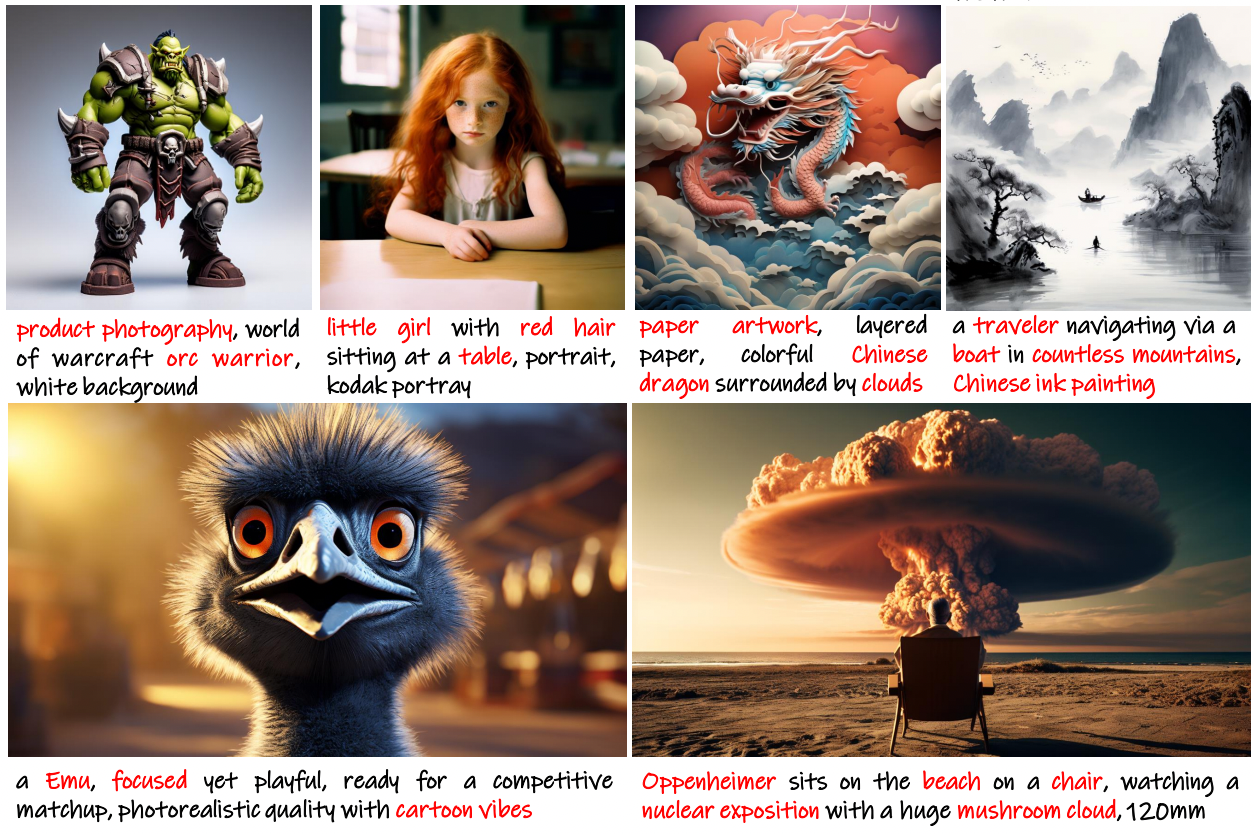
|
||||
|
||||
[PixArt-α: Fast Training of Diffusion Transformer for Photorealistic Text-to-Image Synthesis](https://huggingface.co/papers/2310.00426) is Junsong Chen, Jincheng Yu, Chongjian Ge, Lewei Yao, Enze Xie, Yue Wu, Zhongdao Wang, James Kwok, Ping Luo, Huchuan Lu, and Zhenguo Li.
|
||||
|
||||
The abstract from the paper is:
|
||||
|
||||
*The most advanced text-to-image (T2I) models require significant training costs (e.g., millions of GPU hours), seriously hindering the fundamental innovation for the AIGC community while increasing CO2 emissions. This paper introduces PIXART-α, a Transformer-based T2I diffusion model whose image generation quality is competitive with state-of-the-art image generators (e.g., Imagen, SDXL, and even Midjourney), reaching near-commercial application standards. Additionally, it supports high-resolution image synthesis up to 1024px resolution with low training cost, as shown in Figure 1 and 2. To achieve this goal, three core designs are proposed: (1) Training strategy decomposition: We devise three distinct training steps that separately optimize pixel dependency, text-image alignment, and image aesthetic quality; (2) Efficient T2I Transformer: We incorporate cross-attention modules into Diffusion Transformer (DiT) to inject text conditions and streamline the computation-intensive class-condition branch; (3) High-informative data: We emphasize the significance of concept density in text-image pairs and leverage a large Vision-Language model to auto-label dense pseudo-captions to assist text-image alignment learning. As a result, PIXART-α's training speed markedly surpasses existing large-scale T2I models, e.g., PIXART-α only takes 10.8% of Stable Diffusion v1.5's training time (675 vs. 6,250 A100 GPU days), saving nearly $300,000 ($26,000 vs. $320,000) and reducing 90% CO2 emissions. Moreover, compared with a larger SOTA model, RAPHAEL, our training cost is merely 1%. Extensive experiments demonstrate that PIXART-α excels in image quality, artistry, and semantic control. We hope PIXART-α will provide new insights to the AIGC community and startups to accelerate building their own high-quality yet low-cost generative models from scratch.*
|
||||
|
||||
You can find the original codebase at [PixArt-alpha/PixArt-alpha](https://github.com/PixArt-alpha/PixArt-alpha) and all the available checkpoints at [PixArt-alpha](https://huggingface.co/PixArt-alpha).
|
||||
|
||||
Some notes about this pipeline:
|
||||
|
||||
* It uses a Transformer backbone (instead of a UNet) for denoising. As such it has a similar architecture as [DiT](./dit.md).
|
||||
* It was trained using text conditions computed from T5. This aspect makes the pipeline better at following complex text prompts with intricate details.
|
||||
* It is good at producing high-resolution images at different aspect ratios. To get the best results, the authors recommend some size brackets which can be found [here](https://github.com/PixArt-alpha/PixArt-alpha/blob/08fbbd281ec96866109bdd2cdb75f2f58fb17610/diffusion/data/datasets/utils.py).
|
||||
* It rivals the quality of state-of-the-art text-to-image generation systems (as of this writing) such as Stable Diffusion XL, Imagen, and DALL-E 2, while being more efficient than them.
|
||||
|
||||
## PixArtAlphaPipeline
|
||||
|
||||
[[autodoc]] PixArtAlphaPipeline
|
||||
- all
|
||||
- __call__
|
||||
@@ -1,7 +0,0 @@
|
||||
# Shareable workflows
|
||||
|
||||
Workflows provide a simple mechanism to share your 🤗 Diffusers pipeline call arguments and scheduler configuration, making it easier to reproduce results.
|
||||
|
||||
## Workflow
|
||||
|
||||
[[autodoc]] workflow_utils.Workflow
|
||||
@@ -1,333 +0,0 @@
|
||||
<!--Copyright 2023 The HuggingFace Team. All rights reserved.
|
||||
|
||||
Licensed under the Apache License, Version 2.0 (the "License"); you may not use this file except in compliance with
|
||||
the License. You may obtain a copy of the License at
|
||||
|
||||
http://www.apache.org/licenses/LICENSE-2.0
|
||||
|
||||
Unless required by applicable law or agreed to in writing, software distributed under the License is distributed on
|
||||
an "AS IS" BASIS, WITHOUT WARRANTIES OR CONDITIONS OF ANY KIND, either express or implied. See the License for the
|
||||
specific language governing permissions and limitations under the License.
|
||||
-->
|
||||
|
||||
# Working with workflows
|
||||
|
||||
<Tip warning={true}>
|
||||
|
||||
🧪 Workflow is experimental and its APIs can change in the future.
|
||||
|
||||
</Tip>
|
||||
|
||||
Workflows provide a simple mechanism to share your pipeline call arguments and scheduler configuration, making it easier to reproduce results.
|
||||
|
||||
## Serializing a workflow
|
||||
|
||||
A [`Workflow`] object provides all the argument values in the `__call__()` of a pipeline. Add `return_workflow=True` to return a `Workflow` object.
|
||||
|
||||
```python
|
||||
from diffusers import DiffusionPipeline
|
||||
import torch
|
||||
|
||||
pipeline = DiffusionPipeline.from_pretrained(
|
||||
"runwayml/stable-diffusion-v1-5", torch_dtype=torch.float16, safety_checker=None
|
||||
).to("cuda")
|
||||
|
||||
outputs = pipeline(
|
||||
"A painting of a horse",
|
||||
num_inference_steps=15,
|
||||
generator=torch.manual_seed(0),
|
||||
return_workflow=True
|
||||
)
|
||||
workflow = outputs.workflow
|
||||
```
|
||||
|
||||
<Tip warning={true}>
|
||||
|
||||
It's mandatory to specify the `generator` when `return_workflow` is set to True.
|
||||
|
||||
</Tip>
|
||||
|
||||
If you look at this specific workflow, you'll see values like the number of inference steps, guidance scale, and height and width as well as the scheduler details:
|
||||
|
||||
```bash
|
||||
{'prompt': 'A painting of a horse',
|
||||
'height': None,
|
||||
'width': None,
|
||||
'num_inference_steps': 15,
|
||||
'guidance_scale': 7.5,
|
||||
'negative_prompt': None,
|
||||
'eta': 0.0,
|
||||
'latents': None,
|
||||
'prompt_embeds': None,
|
||||
'negative_prompt_embeds': None,
|
||||
'output_type': 'pil',
|
||||
'return_dict': True,
|
||||
'callback': None,
|
||||
'callback_steps': 1,
|
||||
'cross_attention_kwargs': None,
|
||||
'guidance_rescale': 0.0,
|
||||
'clip_skip': None,
|
||||
'generator_seed': 0,
|
||||
'generator_device': device(type='cpu'),
|
||||
'_name_or_path': 'runwayml/stable-diffusion-v1-5',
|
||||
'scheduler_config': FrozenDict([('num_train_timesteps', 1000),
|
||||
('beta_start', 0.00085),
|
||||
('beta_end', 0.012),
|
||||
('beta_schedule', 'scaled_linear'),
|
||||
('trained_betas', None),
|
||||
('skip_prk_steps', True),
|
||||
('set_alpha_to_one', False),
|
||||
('prediction_type', 'epsilon'),
|
||||
('timestep_spacing', 'leading'),
|
||||
('steps_offset', 1),
|
||||
('_use_default_values', ['prediction_type', 'timestep_spacing']),
|
||||
('_class_name', 'PNDMScheduler'),
|
||||
('_diffusers_version', '0.6.0'),
|
||||
('clip_sample', False)])}
|
||||
```
|
||||
|
||||
Once you have generated a workflow object, you can serialize it with [`~Workflow.save_workflow`]:
|
||||
|
||||
```python
|
||||
outputs.workflow.save_workflow("my-simple-workflow-sd")
|
||||
```
|
||||
|
||||
By default, your workflows are saved as `diffusion_workflow.json`, but you can give them a specific name with the `filename` argument:
|
||||
|
||||
```python
|
||||
outputs.workflow.save_workflow("my-simple-workflow-sd", filename="my_workflow.json")
|
||||
```
|
||||
|
||||
You can also set `push_to_hub=True` in [`~Workflow.save_workflow`] to directly push the workflow object to the Hub.
|
||||
|
||||
## Loading a workflow
|
||||
|
||||
You can load a workflow in a pipeline with [`~DiffusionPipeline.load_workflow`]:
|
||||
|
||||
```python
|
||||
from diffusers import DiffusionPipeline
|
||||
import torch
|
||||
|
||||
pipeline = DiffusionPipeline.from_pretrained(
|
||||
"runwayml/stable-diffusion-v1-5", torch_dtype=torch.float16
|
||||
).to("cuda")
|
||||
|
||||
pipeline.load_workflow("sayakpaul/my-simple-workflow-sd")
|
||||
```
|
||||
|
||||
Once the pipeline is loaded with the desired workflow, it's ready to be called:
|
||||
|
||||
```python
|
||||
image = pipeline().images[0]
|
||||
```
|
||||
|
||||
By default, while loading a workflow, the scheduler of the underlying pipeline from the workflow isn't modified but you can change it by adding `load_scheduler=True`:
|
||||
|
||||
```
|
||||
pipeline.load_workflow("sayakpaul/my-simple-workflow-sd", load_scheduler=True)
|
||||
```
|
||||
|
||||
This is particularly useful if you have changed the scheduler after loading a pipeline.
|
||||
|
||||
You can also override the pipeline call arguments. For example, to add a `negative_prompt`:
|
||||
|
||||
```python
|
||||
image = pipeline(negative_prompt="bad quality").images[0]
|
||||
```
|
||||
|
||||
Loading from a workflow is possible by specifying the `filename` argument inside the [`DiffusionPipeline.load_workflow`] method.
|
||||
|
||||
A workflow doesn't necessarily have to be used with the same pipeline that generated it. You can use it with a different pipeline too:
|
||||
|
||||
```python
|
||||
from diffusers import DiffusionPipeline
|
||||
import torch
|
||||
|
||||
pipeline = DiffusionPipeline.from_pretrained(
|
||||
"stabilityai/stable-diffusion-xl-base-1.0", torch_dtype=torch.float16
|
||||
).to("cuda")
|
||||
|
||||
pipeline.load_workflow("sayakpaul/my-simple-workflow-sd")
|
||||
image = pipeline().images[0]
|
||||
```
|
||||
|
||||
However, make sure to thoroughly inspect the values you are calling the pipeline with, in this case.
|
||||
|
||||
Loading from a local workflow is also possible:
|
||||
|
||||
```python
|
||||
from diffusers import DiffusionPipeline
|
||||
import torch
|
||||
|
||||
pipeline = DiffusionPipeline.from_pretrained(
|
||||
"stabilityai/stable-diffusion-xl-base-1.0", torch_dtype=torch.float16
|
||||
).to("cuda")
|
||||
|
||||
pipeline.load_workflow("path_to_local_dir")
|
||||
image = pipeline().images[0]
|
||||
```
|
||||
|
||||
Alternatively, if you want to load a workflow file and populate the pipeline arguments manually:
|
||||
|
||||
```python
|
||||
from diffusers import DiffusionPipeline
|
||||
import json
|
||||
import torch
|
||||
|
||||
pipeline = DiffusionPipeline.from_pretrained(
|
||||
"stabilityai/stable-diffusion-xl-base-1.0", torch_dtype=torch.float16
|
||||
).to("cuda")
|
||||
|
||||
with open("path_to_workflow_file.json") as f:
|
||||
workflow = json.load(f)
|
||||
|
||||
pipeline.load_workflow(workflow)
|
||||
images = pipeline().images[0]
|
||||
```
|
||||
|
||||
## Unsupported serialization types
|
||||
|
||||
Image-to-image pipelines like [`StableDiffusionControlNetPipeline`] accept one or more images in their `call` method. Currently, workflows don't support serializing `call` arguments that are of type `PIL.Image.Image` or `List[PIL.Image.Image]`. To make those pipelines work with workflows, you need to pass the images manually.
|
||||
|
||||
Let's say you generated the workflow below:
|
||||
|
||||
```python
|
||||
from diffusers import StableDiffusionControlNetPipeline, ControlNetModel, UniPCMultistepScheduler
|
||||
from diffusers.utils import load_image
|
||||
import numpy as np
|
||||
import torch
|
||||
|
||||
import cv2
|
||||
from PIL import Image
|
||||
|
||||
# download an image
|
||||
image = load_image(
|
||||
"https://hf.co/datasets/huggingface/documentation-images/resolve/main/diffusers/input_image_vermeer.png"
|
||||
)
|
||||
image = np.array(image)
|
||||
|
||||
# get canny image
|
||||
image = cv2.Canny(image, 100, 200)
|
||||
image = image[:, :, None]
|
||||
image = np.concatenate([image, image, image], axis=2)
|
||||
canny_image = Image.fromarray(image)
|
||||
|
||||
# load control net and stable diffusion v1-5
|
||||
controlnet = ControlNetModel.from_pretrained("lllyasviel/sd-controlnet-canny", torch_dtype=torch.float16)
|
||||
pipe = StableDiffusionControlNetPipeline.from_pretrained(
|
||||
"runwayml/stable-diffusion-v1-5", controlnet=controlnet, torch_dtype=torch.float16
|
||||
)
|
||||
pipe.enable_model_cpu_offload()
|
||||
|
||||
# generate image
|
||||
generator = torch.manual_seed(0)
|
||||
outputs = pipe(
|
||||
prompt="futuristic-looking office",
|
||||
image=canny_image,
|
||||
num_inference_steps=20,
|
||||
generator=generator,
|
||||
return_workflow=True
|
||||
)
|
||||
workflow = outputs.workflow
|
||||
```
|
||||
|
||||
If you look at the workflow, you'll see the image that was passed to the pipeline isn't included:
|
||||
|
||||
```bash
|
||||
{'prompt': 'futuristic-looking office',
|
||||
'height': None,
|
||||
'width': None,
|
||||
'num_inference_steps': 20,
|
||||
'guidance_scale': 7.5,
|
||||
'negative_prompt': None,
|
||||
'eta': 0.0,
|
||||
'latents': None,
|
||||
'prompt_embeds': None,
|
||||
'negative_prompt_embeds': None,
|
||||
'output_type': 'pil',
|
||||
'return_dict': True,
|
||||
'callback': None,
|
||||
'callback_steps': 1,
|
||||
'cross_attention_kwargs': None,
|
||||
'controlnet_conditioning_scale': 1.0,
|
||||
'guess_mode': False,
|
||||
'control_guidance_start': 0.0,
|
||||
'control_guidance_end': 1.0,
|
||||
'clip_skip': None,
|
||||
'generator_seed': 0,
|
||||
'generator_device': 'cpu',
|
||||
'_name_or_path': 'runwayml/stable-diffusion-v1-5',
|
||||
'scheduler_config': FrozenDict([('num_train_timesteps', 1000),
|
||||
('beta_start', 0.00085),
|
||||
('beta_end', 0.012),
|
||||
('beta_schedule', 'scaled_linear'),
|
||||
('trained_betas', None),
|
||||
('solver_order', 2),
|
||||
('prediction_type', 'epsilon'),
|
||||
('thresholding', False),
|
||||
('dynamic_thresholding_ratio', 0.995),
|
||||
('sample_max_value', 1.0),
|
||||
('predict_x0', True),
|
||||
('solver_type', 'bh2'),
|
||||
('lower_order_final', True),
|
||||
('disable_corrector', []),
|
||||
('solver_p', None),
|
||||
('use_karras_sigmas', False),
|
||||
('timestep_spacing', 'linspace'),
|
||||
('steps_offset', 1),
|
||||
('_use_default_values',
|
||||
['lower_order_final',
|
||||
'sample_max_value',
|
||||
'solver_p',
|
||||
'dynamic_thresholding_ratio',
|
||||
'thresholding',
|
||||
'solver_type',
|
||||
'prediction_type',
|
||||
'predict_x0',
|
||||
'use_karras_sigmas',
|
||||
'disable_corrector',
|
||||
'timestep_spacing',
|
||||
'solver_order']),
|
||||
('skip_prk_steps', True),
|
||||
('set_alpha_to_one', False),
|
||||
('_class_name', 'PNDMScheduler'),
|
||||
('_diffusers_version', '0.6.0'),
|
||||
('clip_sample', False)])}
|
||||
```
|
||||
|
||||
|
||||
Let's serialize the workflow and reload the pipeline to see what happens when you try to use it.
|
||||
|
||||
```python
|
||||
workflow.save_workflow("my-simple-workflow-sd", filename="controlnet_simple.json", push_to_hub=True)
|
||||
```
|
||||
|
||||
Then load the workflow into [`StableDiffusionControlNetPipeline`]:
|
||||
|
||||
```python
|
||||
# load control net and stable diffusion v1-5
|
||||
controlnet = ControlNetModel.from_pretrained("lllyasviel/sd-controlnet-canny", torch_dtype=torch.float16)
|
||||
pipe = StableDiffusionControlNetPipeline.from_pretrained(
|
||||
"runwayml/stable-diffusion-v1-5", controlnet=controlnet, torch_dtype=torch.float16
|
||||
)
|
||||
pipe.enable_model_cpu_offload()
|
||||
|
||||
pipe.load_workflow("sayakpaul/my-simple-workflow-sd", filename="controlnet_simple.json")
|
||||
```
|
||||
|
||||
If you try to generate an image now, it'll return the following error:
|
||||
|
||||
```bash
|
||||
TypeError: image must be passed and be one of PIL image, numpy array, torch tensor, list of PIL images, list of numpy arrays or list of torch tensors, but is <class 'NoneType'>
|
||||
```
|
||||
|
||||
To resolve the error, manually pass the conditioning image `canny_image`:
|
||||
|
||||
```python
|
||||
image = pipe(image=canny_image).images[0]
|
||||
```
|
||||
|
||||
Other unsupported serialization types include:
|
||||
|
||||
* LoRA checkpoints: any information from LoRA checkpoints that might be loaded into a pipeline isn't serialized. Workflows generated from pipelines loaded with a LoRA checkpoint should be handled cautiously! You should ensure the LoRA checkpoint is loaded into the pipeline first before loading the corresponding workflow.
|
||||
* Call arguments including the following types: `torch.Tensor`, `np.ndarray`, `Callable`, `PIL.Image.Image`, and `List[PIL.Image.Image]`.
|
||||
@@ -56,7 +56,7 @@ if is_wandb_available():
|
||||
import wandb
|
||||
|
||||
# Will error if the minimal version of diffusers is not installed. Remove at your own risks.
|
||||
check_min_version("0.22.0.dev0")
|
||||
check_min_version("0.23.0.dev0")
|
||||
|
||||
logger = get_logger(__name__)
|
||||
|
||||
|
||||
@@ -59,7 +59,7 @@ if is_wandb_available():
|
||||
import wandb
|
||||
|
||||
# Will error if the minimal version of diffusers is not installed. Remove at your own risks.
|
||||
check_min_version("0.22.0.dev0")
|
||||
check_min_version("0.23.0.dev0")
|
||||
|
||||
logger = logging.getLogger(__name__)
|
||||
|
||||
|
||||
@@ -58,7 +58,7 @@ if is_wandb_available():
|
||||
import wandb
|
||||
|
||||
# Will error if the minimal version of diffusers is not installed. Remove at your own risks.
|
||||
check_min_version("0.22.0.dev0")
|
||||
check_min_version("0.23.0.dev0")
|
||||
|
||||
logger = get_logger(__name__)
|
||||
|
||||
|
||||
@@ -62,7 +62,7 @@ from diffusers.utils.import_utils import is_xformers_available
|
||||
|
||||
|
||||
# Will error if the minimal version of diffusers is not installed. Remove at your own risks.
|
||||
check_min_version("0.22.0.dev0")
|
||||
check_min_version("0.23.0.dev0")
|
||||
|
||||
logger = get_logger(__name__)
|
||||
|
||||
|
||||
@@ -61,7 +61,7 @@ if is_wandb_available():
|
||||
import wandb
|
||||
|
||||
# Will error if the minimal version of diffusers is not installed. Remove at your own risks.
|
||||
check_min_version("0.22.0.dev0")
|
||||
check_min_version("0.23.0.dev0")
|
||||
|
||||
logger = get_logger(__name__)
|
||||
|
||||
|
||||
@@ -35,7 +35,7 @@ from diffusers.utils import check_min_version
|
||||
|
||||
|
||||
# Will error if the minimal version of diffusers is not installed. Remove at your own risks.
|
||||
check_min_version("0.22.0.dev0")
|
||||
check_min_version("0.23.0.dev0")
|
||||
|
||||
# Cache compiled models across invocations of this script.
|
||||
cc.initialize_cache(os.path.expanduser("~/.cache/jax/compilation_cache"))
|
||||
|
||||
@@ -68,7 +68,7 @@ from diffusers.utils.import_utils import is_xformers_available
|
||||
|
||||
|
||||
# Will error if the minimal version of diffusers is not installed. Remove at your own risks.
|
||||
check_min_version("0.22.0.dev0")
|
||||
check_min_version("0.23.0.dev0")
|
||||
|
||||
logger = get_logger(__name__)
|
||||
|
||||
|
||||
@@ -58,7 +58,7 @@ from diffusers.utils.import_utils import is_xformers_available
|
||||
|
||||
|
||||
# Will error if the minimal version of diffusers is not installed. Remove at your own risks.
|
||||
check_min_version("0.22.0.dev0")
|
||||
check_min_version("0.23.0.dev0")
|
||||
|
||||
logger = get_logger(__name__)
|
||||
|
||||
|
||||
@@ -52,7 +52,7 @@ from diffusers.utils.import_utils import is_xformers_available
|
||||
|
||||
|
||||
# Will error if the minimal version of diffusers is not installed. Remove at your own risks.
|
||||
check_min_version("0.22.0.dev0")
|
||||
check_min_version("0.23.0.dev0")
|
||||
|
||||
logger = get_logger(__name__, log_level="INFO")
|
||||
|
||||
|
||||
@@ -55,7 +55,7 @@ from diffusers.utils.import_utils import is_xformers_available
|
||||
|
||||
|
||||
# Will error if the minimal version of diffusers is not installed. Remove at your own risks.
|
||||
check_min_version("0.22.0.dev0")
|
||||
check_min_version("0.23.0.dev0")
|
||||
|
||||
logger = get_logger(__name__, log_level="INFO")
|
||||
|
||||
|
||||
@@ -52,7 +52,7 @@ if is_wandb_available():
|
||||
|
||||
|
||||
# Will error if the minimal version of diffusers is not installed. Remove at your own risks.
|
||||
check_min_version("0.21.0.dev0")
|
||||
check_min_version("0.23.0.dev0")
|
||||
|
||||
logger = get_logger(__name__, log_level="INFO")
|
||||
|
||||
|
||||
@@ -46,7 +46,7 @@ from diffusers.utils import check_min_version, is_wandb_available
|
||||
|
||||
|
||||
# Will error if the minimal version of diffusers is not installed. Remove at your own risks.
|
||||
check_min_version("0.21.0.dev0")
|
||||
check_min_version("0.23.0.dev0")
|
||||
|
||||
logger = get_logger(__name__, log_level="INFO")
|
||||
|
||||
|
||||
@@ -46,7 +46,7 @@ from diffusers.utils import check_min_version, is_wandb_available
|
||||
|
||||
|
||||
# Will error if the minimal version of diffusers is not installed. Remove at your own risks.
|
||||
check_min_version("0.21.0.dev0")
|
||||
check_min_version("0.23.0.dev0")
|
||||
|
||||
logger = get_logger(__name__, log_level="INFO")
|
||||
|
||||
|
||||
@@ -51,7 +51,7 @@ if is_wandb_available():
|
||||
|
||||
|
||||
# Will error if the minimal version of diffusers is not installed. Remove at your own risks.
|
||||
check_min_version("0.21.0.dev0")
|
||||
check_min_version("0.23.0.dev0")
|
||||
|
||||
logger = get_logger(__name__, log_level="INFO")
|
||||
|
||||
|
||||
@@ -58,7 +58,7 @@ if is_wandb_available():
|
||||
import wandb
|
||||
|
||||
# Will error if the minimal version of diffusers is not installed. Remove at your own risks.
|
||||
check_min_version("0.22.0.dev0")
|
||||
check_min_version("0.23.0.dev0")
|
||||
|
||||
logger = get_logger(__name__)
|
||||
|
||||
|
||||
@@ -53,7 +53,7 @@ if is_wandb_available():
|
||||
|
||||
|
||||
# Will error if the minimal version of diffusers is not installed. Remove at your own risks.
|
||||
check_min_version("0.22.0.dev0")
|
||||
check_min_version("0.23.0.dev0")
|
||||
|
||||
logger = get_logger(__name__, log_level="INFO")
|
||||
|
||||
|
||||
@@ -33,7 +33,7 @@ from diffusers.utils import check_min_version
|
||||
|
||||
|
||||
# Will error if the minimal version of diffusers is not installed. Remove at your own risks.
|
||||
check_min_version("0.22.0.dev0")
|
||||
check_min_version("0.23.0.dev0")
|
||||
|
||||
logger = logging.getLogger(__name__)
|
||||
|
||||
|
||||
@@ -49,7 +49,7 @@ from diffusers.utils.import_utils import is_xformers_available
|
||||
|
||||
|
||||
# Will error if the minimal version of diffusers is not installed. Remove at your own risks.
|
||||
check_min_version("0.22.0.dev0")
|
||||
check_min_version("0.23.0.dev0")
|
||||
|
||||
logger = get_logger(__name__, log_level="INFO")
|
||||
|
||||
|
||||
@@ -58,7 +58,7 @@ from diffusers.utils.import_utils import is_xformers_available
|
||||
|
||||
|
||||
# Will error if the minimal version of diffusers is not installed. Remove at your own risks.
|
||||
check_min_version("0.22.0.dev0")
|
||||
check_min_version("0.23.0.dev0")
|
||||
|
||||
logger = get_logger(__name__)
|
||||
|
||||
|
||||
@@ -57,7 +57,7 @@ from diffusers.utils.import_utils import is_xformers_available
|
||||
|
||||
|
||||
# Will error if the minimal version of diffusers is not installed. Remove at your own risks.
|
||||
check_min_version("0.22.0.dev0")
|
||||
check_min_version("0.23.0.dev0")
|
||||
|
||||
logger = get_logger(__name__)
|
||||
|
||||
|
||||
@@ -79,7 +79,7 @@ else:
|
||||
|
||||
|
||||
# Will error if the minimal version of diffusers is not installed. Remove at your own risks.
|
||||
check_min_version("0.22.0.dev0")
|
||||
check_min_version("0.23.0.dev0")
|
||||
|
||||
logger = get_logger(__name__)
|
||||
|
||||
|
||||
@@ -56,7 +56,7 @@ else:
|
||||
# ------------------------------------------------------------------------------
|
||||
|
||||
# Will error if the minimal version of diffusers is not installed. Remove at your own risks.
|
||||
check_min_version("0.22.0.dev0")
|
||||
check_min_version("0.23.0.dev0")
|
||||
|
||||
logger = logging.getLogger(__name__)
|
||||
|
||||
|
||||
@@ -29,7 +29,7 @@ from diffusers.utils.import_utils import is_xformers_available
|
||||
|
||||
|
||||
# Will error if the minimal version of diffusers is not installed. Remove at your own risks.
|
||||
check_min_version("0.22.0.dev0")
|
||||
check_min_version("0.23.0.dev0")
|
||||
|
||||
logger = get_logger(__name__, log_level="INFO")
|
||||
|
||||
|
||||
@@ -50,7 +50,7 @@ if is_wandb_available():
|
||||
|
||||
|
||||
# Will error if the minimal version of diffusers is not installed. Remove at your own risks.
|
||||
check_min_version("0.22.0")
|
||||
check_min_version("0.23.0.dev0")
|
||||
|
||||
logger = get_logger(__name__, log_level="INFO")
|
||||
|
||||
|
||||
@@ -51,7 +51,7 @@ if is_wandb_available():
|
||||
|
||||
|
||||
# Will error if the minimal version of diffusers is not installed. Remove at your own risks.
|
||||
check_min_version("0.22.0")
|
||||
check_min_version("0.23.0.dev0")
|
||||
|
||||
logger = get_logger(__name__, log_level="INFO")
|
||||
|
||||
|
||||
@@ -0,0 +1,198 @@
|
||||
import argparse
|
||||
import os
|
||||
|
||||
import torch
|
||||
from transformers import T5EncoderModel, T5Tokenizer
|
||||
|
||||
from diffusers import AutoencoderKL, DPMSolverMultistepScheduler, PixArtAlphaPipeline, Transformer2DModel
|
||||
|
||||
|
||||
ckpt_id = "PixArt-alpha/PixArt-alpha"
|
||||
# https://github.com/PixArt-alpha/PixArt-alpha/blob/0f55e922376d8b797edd44d25d0e7464b260dcab/scripts/inference.py#L125
|
||||
interpolation_scale = {512: 1, 1024: 2}
|
||||
|
||||
|
||||
def main(args):
|
||||
all_state_dict = torch.load(args.orig_ckpt_path)
|
||||
state_dict = all_state_dict.pop("state_dict")
|
||||
converted_state_dict = {}
|
||||
|
||||
# Patch embeddings.
|
||||
converted_state_dict["pos_embed.proj.weight"] = state_dict.pop("x_embedder.proj.weight")
|
||||
converted_state_dict["pos_embed.proj.bias"] = state_dict.pop("x_embedder.proj.bias")
|
||||
|
||||
# Caption projection.
|
||||
converted_state_dict["caption_projection.y_embedding"] = state_dict.pop("y_embedder.y_embedding")
|
||||
converted_state_dict["caption_projection.linear_1.weight"] = state_dict.pop("y_embedder.y_proj.fc1.weight")
|
||||
converted_state_dict["caption_projection.linear_1.bias"] = state_dict.pop("y_embedder.y_proj.fc1.bias")
|
||||
converted_state_dict["caption_projection.linear_2.weight"] = state_dict.pop("y_embedder.y_proj.fc2.weight")
|
||||
converted_state_dict["caption_projection.linear_2.bias"] = state_dict.pop("y_embedder.y_proj.fc2.bias")
|
||||
|
||||
# AdaLN-single LN
|
||||
converted_state_dict["adaln_single.emb.timestep_embedder.linear_1.weight"] = state_dict.pop(
|
||||
"t_embedder.mlp.0.weight"
|
||||
)
|
||||
converted_state_dict["adaln_single.emb.timestep_embedder.linear_1.bias"] = state_dict.pop("t_embedder.mlp.0.bias")
|
||||
converted_state_dict["adaln_single.emb.timestep_embedder.linear_2.weight"] = state_dict.pop(
|
||||
"t_embedder.mlp.2.weight"
|
||||
)
|
||||
converted_state_dict["adaln_single.emb.timestep_embedder.linear_2.bias"] = state_dict.pop("t_embedder.mlp.2.bias")
|
||||
|
||||
if args.image_size == 1024:
|
||||
# Resolution.
|
||||
converted_state_dict["adaln_single.emb.resolution_embedder.linear_1.weight"] = state_dict.pop(
|
||||
"csize_embedder.mlp.0.weight"
|
||||
)
|
||||
converted_state_dict["adaln_single.emb.resolution_embedder.linear_1.bias"] = state_dict.pop(
|
||||
"csize_embedder.mlp.0.bias"
|
||||
)
|
||||
converted_state_dict["adaln_single.emb.resolution_embedder.linear_2.weight"] = state_dict.pop(
|
||||
"csize_embedder.mlp.2.weight"
|
||||
)
|
||||
converted_state_dict["adaln_single.emb.resolution_embedder.linear_2.bias"] = state_dict.pop(
|
||||
"csize_embedder.mlp.2.bias"
|
||||
)
|
||||
# Aspect ratio.
|
||||
converted_state_dict["adaln_single.emb.aspect_ratio_embedder.linear_1.weight"] = state_dict.pop(
|
||||
"ar_embedder.mlp.0.weight"
|
||||
)
|
||||
converted_state_dict["adaln_single.emb.aspect_ratio_embedder.linear_1.bias"] = state_dict.pop(
|
||||
"ar_embedder.mlp.0.bias"
|
||||
)
|
||||
converted_state_dict["adaln_single.emb.aspect_ratio_embedder.linear_2.weight"] = state_dict.pop(
|
||||
"ar_embedder.mlp.2.weight"
|
||||
)
|
||||
converted_state_dict["adaln_single.emb.aspect_ratio_embedder.linear_2.bias"] = state_dict.pop(
|
||||
"ar_embedder.mlp.2.bias"
|
||||
)
|
||||
# Shared norm.
|
||||
converted_state_dict["adaln_single.linear.weight"] = state_dict.pop("t_block.1.weight")
|
||||
converted_state_dict["adaln_single.linear.bias"] = state_dict.pop("t_block.1.bias")
|
||||
|
||||
for depth in range(28):
|
||||
# Transformer blocks.
|
||||
converted_state_dict[f"transformer_blocks.{depth}.scale_shift_table"] = state_dict.pop(
|
||||
f"blocks.{depth}.scale_shift_table"
|
||||
)
|
||||
|
||||
# Attention is all you need 🤘
|
||||
|
||||
# Self attention.
|
||||
q, k, v = torch.chunk(state_dict.pop(f"blocks.{depth}.attn.qkv.weight"), 3, dim=0)
|
||||
q_bias, k_bias, v_bias = torch.chunk(state_dict.pop(f"blocks.{depth}.attn.qkv.bias"), 3, dim=0)
|
||||
converted_state_dict[f"transformer_blocks.{depth}.attn1.to_q.weight"] = q
|
||||
converted_state_dict[f"transformer_blocks.{depth}.attn1.to_q.bias"] = q_bias
|
||||
converted_state_dict[f"transformer_blocks.{depth}.attn1.to_k.weight"] = k
|
||||
converted_state_dict[f"transformer_blocks.{depth}.attn1.to_k.bias"] = k_bias
|
||||
converted_state_dict[f"transformer_blocks.{depth}.attn1.to_v.weight"] = v
|
||||
converted_state_dict[f"transformer_blocks.{depth}.attn1.to_v.bias"] = v_bias
|
||||
# Projection.
|
||||
converted_state_dict[f"transformer_blocks.{depth}.attn1.to_out.0.weight"] = state_dict.pop(
|
||||
f"blocks.{depth}.attn.proj.weight"
|
||||
)
|
||||
converted_state_dict[f"transformer_blocks.{depth}.attn1.to_out.0.bias"] = state_dict.pop(
|
||||
f"blocks.{depth}.attn.proj.bias"
|
||||
)
|
||||
|
||||
# Feed-forward.
|
||||
converted_state_dict[f"transformer_blocks.{depth}.ff.net.0.proj.weight"] = state_dict.pop(
|
||||
f"blocks.{depth}.mlp.fc1.weight"
|
||||
)
|
||||
converted_state_dict[f"transformer_blocks.{depth}.ff.net.0.proj.bias"] = state_dict.pop(
|
||||
f"blocks.{depth}.mlp.fc1.bias"
|
||||
)
|
||||
converted_state_dict[f"transformer_blocks.{depth}.ff.net.2.weight"] = state_dict.pop(
|
||||
f"blocks.{depth}.mlp.fc2.weight"
|
||||
)
|
||||
converted_state_dict[f"transformer_blocks.{depth}.ff.net.2.bias"] = state_dict.pop(
|
||||
f"blocks.{depth}.mlp.fc2.bias"
|
||||
)
|
||||
|
||||
# Cross-attention.
|
||||
q = state_dict.pop(f"blocks.{depth}.cross_attn.q_linear.weight")
|
||||
q_bias = state_dict.pop(f"blocks.{depth}.cross_attn.q_linear.bias")
|
||||
k, v = torch.chunk(state_dict.pop(f"blocks.{depth}.cross_attn.kv_linear.weight"), 2, dim=0)
|
||||
k_bias, v_bias = torch.chunk(state_dict.pop(f"blocks.{depth}.cross_attn.kv_linear.bias"), 2, dim=0)
|
||||
|
||||
converted_state_dict[f"transformer_blocks.{depth}.attn2.to_q.weight"] = q
|
||||
converted_state_dict[f"transformer_blocks.{depth}.attn2.to_q.bias"] = q_bias
|
||||
converted_state_dict[f"transformer_blocks.{depth}.attn2.to_k.weight"] = k
|
||||
converted_state_dict[f"transformer_blocks.{depth}.attn2.to_k.bias"] = k_bias
|
||||
converted_state_dict[f"transformer_blocks.{depth}.attn2.to_v.weight"] = v
|
||||
converted_state_dict[f"transformer_blocks.{depth}.attn2.to_v.bias"] = v_bias
|
||||
|
||||
converted_state_dict[f"transformer_blocks.{depth}.attn2.to_out.0.weight"] = state_dict.pop(
|
||||
f"blocks.{depth}.cross_attn.proj.weight"
|
||||
)
|
||||
converted_state_dict[f"transformer_blocks.{depth}.attn2.to_out.0.bias"] = state_dict.pop(
|
||||
f"blocks.{depth}.cross_attn.proj.bias"
|
||||
)
|
||||
|
||||
# Final block.
|
||||
converted_state_dict["proj_out.weight"] = state_dict.pop("final_layer.linear.weight")
|
||||
converted_state_dict["proj_out.bias"] = state_dict.pop("final_layer.linear.bias")
|
||||
converted_state_dict["scale_shift_table"] = state_dict.pop("final_layer.scale_shift_table")
|
||||
|
||||
# DiT XL/2
|
||||
transformer = Transformer2DModel(
|
||||
sample_size=args.image_size // 8,
|
||||
num_layers=28,
|
||||
attention_head_dim=72,
|
||||
in_channels=4,
|
||||
out_channels=8,
|
||||
patch_size=2,
|
||||
attention_bias=True,
|
||||
num_attention_heads=16,
|
||||
cross_attention_dim=1152,
|
||||
activation_fn="gelu-approximate",
|
||||
num_embeds_ada_norm=1000,
|
||||
norm_type="ada_norm_single",
|
||||
norm_elementwise_affine=False,
|
||||
norm_eps=1e-6,
|
||||
caption_channels=4096,
|
||||
)
|
||||
transformer.load_state_dict(converted_state_dict, strict=True)
|
||||
|
||||
assert transformer.pos_embed.pos_embed is not None
|
||||
state_dict.pop("pos_embed")
|
||||
assert len(state_dict) == 0, f"State dict is not empty, {state_dict.keys()}"
|
||||
|
||||
num_model_params = sum(p.numel() for p in transformer.parameters())
|
||||
print(f"Total number of transformer parameters: {num_model_params}")
|
||||
|
||||
if args.only_transformer:
|
||||
transformer.save_pretrained(os.path.join(args.dump_path, "transformer"))
|
||||
else:
|
||||
scheduler = DPMSolverMultistepScheduler()
|
||||
|
||||
vae = AutoencoderKL.from_pretrained(ckpt_id, subfolder="sd-vae-ft-ema")
|
||||
|
||||
tokenizer = T5Tokenizer.from_pretrained(ckpt_id, subfolder="t5-v1_1-xxl")
|
||||
text_encoder = T5EncoderModel.from_pretrained(ckpt_id, subfolder="t5-v1_1-xxl")
|
||||
|
||||
pipeline = PixArtAlphaPipeline(
|
||||
tokenizer=tokenizer, text_encoder=text_encoder, transformer=transformer, vae=vae, scheduler=scheduler
|
||||
)
|
||||
|
||||
pipeline.save_pretrained(args.dump_path)
|
||||
|
||||
|
||||
if __name__ == "__main__":
|
||||
parser = argparse.ArgumentParser()
|
||||
|
||||
parser.add_argument(
|
||||
"--orig_ckpt_path", default=None, type=str, required=False, help="Path to the checkpoint to convert."
|
||||
)
|
||||
parser.add_argument(
|
||||
"--image_size",
|
||||
default=1024,
|
||||
type=int,
|
||||
choices=[512, 1024],
|
||||
required=False,
|
||||
help="Image size of pretrained model, either 512 or 1024.",
|
||||
)
|
||||
parser.add_argument("--dump_path", default=None, type=str, required=True, help="Path to the output pipeline.")
|
||||
parser.add_argument("--only_transformer", default=True, type=bool, required=True)
|
||||
|
||||
args = parser.parse_args()
|
||||
main(args)
|
||||
@@ -244,7 +244,7 @@ install_requires = [
|
||||
|
||||
setup(
|
||||
name="diffusers",
|
||||
version="0.22.0.dev0", # expected format is one of x.y.z.dev0, or x.y.z.rc1 or x.y.z (no to dashes, yes to dots)
|
||||
version="0.23.0.dev0", # expected format is one of x.y.z.dev0, or x.y.z.rc1 or x.y.z (no to dashes, yes to dots)
|
||||
description="State-of-the-art diffusion in PyTorch and JAX.",
|
||||
long_description=open("README.md", "r", encoding="utf-8").read(),
|
||||
long_description_content_type="text/markdown",
|
||||
|
||||
@@ -1,4 +1,4 @@
|
||||
__version__ = "0.22.0.dev0"
|
||||
__version__ = "0.23.0.dev0"
|
||||
|
||||
from typing import TYPE_CHECKING
|
||||
|
||||
@@ -235,6 +235,7 @@ else:
|
||||
"LDMTextToImagePipeline",
|
||||
"MusicLDMPipeline",
|
||||
"PaintByExamplePipeline",
|
||||
"PixArtAlphaPipeline",
|
||||
"SemanticStableDiffusionPipeline",
|
||||
"ShapEImg2ImgPipeline",
|
||||
"ShapEPipeline",
|
||||
@@ -579,6 +580,7 @@ if TYPE_CHECKING or DIFFUSERS_SLOW_IMPORT:
|
||||
LDMTextToImagePipeline,
|
||||
MusicLDMPipeline,
|
||||
PaintByExamplePipeline,
|
||||
PixArtAlphaPipeline,
|
||||
SemanticStableDiffusionPipeline,
|
||||
ShapEImg2ImgPipeline,
|
||||
ShapEPipeline,
|
||||
|
||||
@@ -117,7 +117,8 @@ class BasicTransformerBlock(nn.Module):
|
||||
double_self_attention: bool = False,
|
||||
upcast_attention: bool = False,
|
||||
norm_elementwise_affine: bool = True,
|
||||
norm_type: str = "layer_norm",
|
||||
norm_type: str = "layer_norm", # 'layer_norm', 'ada_norm', 'ada_norm_zero', 'ada_norm_single'
|
||||
norm_eps: float = 1e-5,
|
||||
final_dropout: bool = False,
|
||||
attention_type: str = "default",
|
||||
positional_embeddings: Optional[str] = None,
|
||||
@@ -128,6 +129,8 @@ class BasicTransformerBlock(nn.Module):
|
||||
|
||||
self.use_ada_layer_norm_zero = (num_embeds_ada_norm is not None) and norm_type == "ada_norm_zero"
|
||||
self.use_ada_layer_norm = (num_embeds_ada_norm is not None) and norm_type == "ada_norm"
|
||||
self.use_ada_layer_norm_single = norm_type == "ada_norm_single"
|
||||
self.use_layer_norm = norm_type == "layer_norm"
|
||||
|
||||
if norm_type in ("ada_norm", "ada_norm_zero") and num_embeds_ada_norm is None:
|
||||
raise ValueError(
|
||||
@@ -152,7 +155,8 @@ class BasicTransformerBlock(nn.Module):
|
||||
elif self.use_ada_layer_norm_zero:
|
||||
self.norm1 = AdaLayerNormZero(dim, num_embeds_ada_norm)
|
||||
else:
|
||||
self.norm1 = nn.LayerNorm(dim, elementwise_affine=norm_elementwise_affine)
|
||||
self.norm1 = nn.LayerNorm(dim, elementwise_affine=norm_elementwise_affine, eps=norm_eps)
|
||||
|
||||
self.attn1 = Attention(
|
||||
query_dim=dim,
|
||||
heads=num_attention_heads,
|
||||
@@ -171,7 +175,7 @@ class BasicTransformerBlock(nn.Module):
|
||||
self.norm2 = (
|
||||
AdaLayerNorm(dim, num_embeds_ada_norm)
|
||||
if self.use_ada_layer_norm
|
||||
else nn.LayerNorm(dim, elementwise_affine=norm_elementwise_affine)
|
||||
else nn.LayerNorm(dim, elementwise_affine=norm_elementwise_affine, eps=norm_eps)
|
||||
)
|
||||
self.attn2 = Attention(
|
||||
query_dim=dim,
|
||||
@@ -187,13 +191,19 @@ class BasicTransformerBlock(nn.Module):
|
||||
self.attn2 = None
|
||||
|
||||
# 3. Feed-forward
|
||||
self.norm3 = nn.LayerNorm(dim, elementwise_affine=norm_elementwise_affine)
|
||||
if not self.use_ada_layer_norm_single:
|
||||
self.norm3 = nn.LayerNorm(dim, elementwise_affine=norm_elementwise_affine, eps=norm_eps)
|
||||
|
||||
self.ff = FeedForward(dim, dropout=dropout, activation_fn=activation_fn, final_dropout=final_dropout)
|
||||
|
||||
# 4. Fuser
|
||||
if attention_type == "gated" or attention_type == "gated-text-image":
|
||||
self.fuser = GatedSelfAttentionDense(dim, cross_attention_dim, num_attention_heads, attention_head_dim)
|
||||
|
||||
# 5. Scale-shift for PixArt-Alpha.
|
||||
if self.use_ada_layer_norm_single:
|
||||
self.scale_shift_table = nn.Parameter(torch.randn(6, dim) / dim**0.5)
|
||||
|
||||
# let chunk size default to None
|
||||
self._chunk_size = None
|
||||
self._chunk_dim = 0
|
||||
@@ -215,14 +225,25 @@ class BasicTransformerBlock(nn.Module):
|
||||
) -> torch.FloatTensor:
|
||||
# Notice that normalization is always applied before the real computation in the following blocks.
|
||||
# 0. Self-Attention
|
||||
batch_size = hidden_states.shape[0]
|
||||
|
||||
if self.use_ada_layer_norm:
|
||||
norm_hidden_states = self.norm1(hidden_states, timestep)
|
||||
elif self.use_ada_layer_norm_zero:
|
||||
norm_hidden_states, gate_msa, shift_mlp, scale_mlp, gate_mlp = self.norm1(
|
||||
hidden_states, timestep, class_labels, hidden_dtype=hidden_states.dtype
|
||||
)
|
||||
else:
|
||||
elif self.use_layer_norm:
|
||||
norm_hidden_states = self.norm1(hidden_states)
|
||||
elif self.use_ada_layer_norm_single:
|
||||
shift_msa, scale_msa, gate_msa, shift_mlp, scale_mlp, gate_mlp = (
|
||||
self.scale_shift_table[None] + timestep.reshape(batch_size, 6, -1)
|
||||
).chunk(6, dim=1)
|
||||
norm_hidden_states = self.norm1(hidden_states)
|
||||
norm_hidden_states = norm_hidden_states * (1 + scale_msa) + shift_msa
|
||||
norm_hidden_states = norm_hidden_states.squeeze(1)
|
||||
else:
|
||||
raise ValueError("Incorrect norm used")
|
||||
|
||||
if self.pos_embed is not None:
|
||||
norm_hidden_states = self.pos_embed(norm_hidden_states)
|
||||
@@ -242,19 +263,31 @@ class BasicTransformerBlock(nn.Module):
|
||||
)
|
||||
if self.use_ada_layer_norm_zero:
|
||||
attn_output = gate_msa.unsqueeze(1) * attn_output
|
||||
elif self.use_ada_layer_norm_single:
|
||||
attn_output = gate_msa * attn_output
|
||||
|
||||
hidden_states = attn_output + hidden_states
|
||||
if hidden_states.ndim == 4:
|
||||
hidden_states = hidden_states.squeeze(1)
|
||||
|
||||
# 2.5 GLIGEN Control
|
||||
if gligen_kwargs is not None:
|
||||
hidden_states = self.fuser(hidden_states, gligen_kwargs["objs"])
|
||||
# 2.5 ends
|
||||
|
||||
# 3. Cross-Attention
|
||||
if self.attn2 is not None:
|
||||
norm_hidden_states = (
|
||||
self.norm2(hidden_states, timestep) if self.use_ada_layer_norm else self.norm2(hidden_states)
|
||||
)
|
||||
if self.pos_embed is not None:
|
||||
if self.use_ada_layer_norm:
|
||||
norm_hidden_states = self.norm2(hidden_states, timestep)
|
||||
elif self.use_ada_layer_norm_zero or self.use_layer_norm:
|
||||
norm_hidden_states = self.norm2(hidden_states)
|
||||
elif self.use_ada_layer_norm_single:
|
||||
# For PixArt norm2 isn't applied here:
|
||||
# https://github.com/PixArt-alpha/PixArt-alpha/blob/0f55e922376d8b797edd44d25d0e7464b260dcab/diffusion/model/nets/PixArtMS.py#L70C1-L76C103
|
||||
norm_hidden_states = hidden_states
|
||||
else:
|
||||
raise ValueError("Incorrect norm")
|
||||
|
||||
if self.pos_embed is not None and self.use_ada_layer_norm_single is None:
|
||||
norm_hidden_states = self.pos_embed(norm_hidden_states)
|
||||
|
||||
attn_output = self.attn2(
|
||||
@@ -266,11 +299,16 @@ class BasicTransformerBlock(nn.Module):
|
||||
hidden_states = attn_output + hidden_states
|
||||
|
||||
# 4. Feed-forward
|
||||
norm_hidden_states = self.norm3(hidden_states)
|
||||
if not self.use_ada_layer_norm_single:
|
||||
norm_hidden_states = self.norm3(hidden_states)
|
||||
|
||||
if self.use_ada_layer_norm_zero:
|
||||
norm_hidden_states = norm_hidden_states * (1 + scale_mlp[:, None]) + shift_mlp[:, None]
|
||||
|
||||
if self.use_ada_layer_norm_single:
|
||||
norm_hidden_states = self.norm2(hidden_states)
|
||||
norm_hidden_states = norm_hidden_states * (1 + scale_mlp) + shift_mlp
|
||||
|
||||
if self._chunk_size is not None:
|
||||
# "feed_forward_chunk_size" can be used to save memory
|
||||
if norm_hidden_states.shape[self._chunk_dim] % self._chunk_size != 0:
|
||||
@@ -291,8 +329,12 @@ class BasicTransformerBlock(nn.Module):
|
||||
|
||||
if self.use_ada_layer_norm_zero:
|
||||
ff_output = gate_mlp.unsqueeze(1) * ff_output
|
||||
elif self.use_ada_layer_norm_single:
|
||||
ff_output = gate_mlp * ff_output
|
||||
|
||||
hidden_states = ff_output + hidden_states
|
||||
if hidden_states.ndim == 4:
|
||||
hidden_states = hidden_states.squeeze(1)
|
||||
|
||||
return hidden_states
|
||||
|
||||
|
||||
@@ -66,17 +66,22 @@ def get_timestep_embedding(
|
||||
return emb
|
||||
|
||||
|
||||
def get_2d_sincos_pos_embed(embed_dim, grid_size, cls_token=False, extra_tokens=0):
|
||||
def get_2d_sincos_pos_embed(
|
||||
embed_dim, grid_size, cls_token=False, extra_tokens=0, interpolation_scale=1.0, base_size=16
|
||||
):
|
||||
"""
|
||||
grid_size: int of the grid height and width return: pos_embed: [grid_size*grid_size, embed_dim] or
|
||||
[1+grid_size*grid_size, embed_dim] (w/ or w/o cls_token)
|
||||
"""
|
||||
grid_h = np.arange(grid_size, dtype=np.float32)
|
||||
grid_w = np.arange(grid_size, dtype=np.float32)
|
||||
if isinstance(grid_size, int):
|
||||
grid_size = (grid_size, grid_size)
|
||||
|
||||
grid_h = np.arange(grid_size[0], dtype=np.float32) / (grid_size[0] / base_size) / interpolation_scale
|
||||
grid_w = np.arange(grid_size[1], dtype=np.float32) / (grid_size[1] / base_size) / interpolation_scale
|
||||
grid = np.meshgrid(grid_w, grid_h) # here w goes first
|
||||
grid = np.stack(grid, axis=0)
|
||||
|
||||
grid = grid.reshape([2, 1, grid_size, grid_size])
|
||||
grid = grid.reshape([2, 1, grid_size[1], grid_size[0]])
|
||||
pos_embed = get_2d_sincos_pos_embed_from_grid(embed_dim, grid)
|
||||
if cls_token and extra_tokens > 0:
|
||||
pos_embed = np.concatenate([np.zeros([extra_tokens, embed_dim]), pos_embed], axis=0)
|
||||
@@ -129,6 +134,7 @@ class PatchEmbed(nn.Module):
|
||||
layer_norm=False,
|
||||
flatten=True,
|
||||
bias=True,
|
||||
interpolation_scale=1,
|
||||
):
|
||||
super().__init__()
|
||||
|
||||
@@ -144,16 +150,41 @@ class PatchEmbed(nn.Module):
|
||||
else:
|
||||
self.norm = None
|
||||
|
||||
pos_embed = get_2d_sincos_pos_embed(embed_dim, int(num_patches**0.5))
|
||||
self.patch_size = patch_size
|
||||
# See:
|
||||
# https://github.com/PixArt-alpha/PixArt-alpha/blob/0f55e922376d8b797edd44d25d0e7464b260dcab/diffusion/model/nets/PixArtMS.py#L161
|
||||
self.height, self.width = height // patch_size, width // patch_size
|
||||
self.base_size = height // patch_size
|
||||
self.interpolation_scale = interpolation_scale
|
||||
pos_embed = get_2d_sincos_pos_embed(
|
||||
embed_dim, int(num_patches**0.5), base_size=self.base_size, interpolation_scale=self.interpolation_scale
|
||||
)
|
||||
self.register_buffer("pos_embed", torch.from_numpy(pos_embed).float().unsqueeze(0), persistent=False)
|
||||
|
||||
def forward(self, latent):
|
||||
height, width = latent.shape[-2] // self.patch_size, latent.shape[-1] // self.patch_size
|
||||
|
||||
latent = self.proj(latent)
|
||||
if self.flatten:
|
||||
latent = latent.flatten(2).transpose(1, 2) # BCHW -> BNC
|
||||
if self.layer_norm:
|
||||
latent = self.norm(latent)
|
||||
return latent + self.pos_embed
|
||||
|
||||
# Interpolate positional embeddings if needed.
|
||||
# (For PixArt-Alpha: https://github.com/PixArt-alpha/PixArt-alpha/blob/0f55e922376d8b797edd44d25d0e7464b260dcab/diffusion/model/nets/PixArtMS.py#L162C151-L162C160)
|
||||
if self.height != height or self.width != width:
|
||||
pos_embed = get_2d_sincos_pos_embed(
|
||||
embed_dim=self.pos_embed.shape[-1],
|
||||
grid_size=(height, width),
|
||||
base_size=self.base_size,
|
||||
interpolation_scale=self.interpolation_scale,
|
||||
)
|
||||
pos_embed = torch.from_numpy(pos_embed)
|
||||
pos_embed = pos_embed.float().unsqueeze(0).to(latent.device)
|
||||
else:
|
||||
pos_embed = self.pos_embed
|
||||
|
||||
return (latent + pos_embed).to(latent.dtype)
|
||||
|
||||
|
||||
class TimestepEmbedding(nn.Module):
|
||||
@@ -683,3 +714,79 @@ class PositionNet(nn.Module):
|
||||
objs = torch.cat([objs_text, objs_image], dim=1)
|
||||
|
||||
return objs
|
||||
|
||||
|
||||
class CombinedTimestepSizeEmbeddings(nn.Module):
|
||||
"""
|
||||
For PixArt-Alpha.
|
||||
|
||||
Reference:
|
||||
https://github.com/PixArt-alpha/PixArt-alpha/blob/0f55e922376d8b797edd44d25d0e7464b260dcab/diffusion/model/nets/PixArtMS.py#L164C9-L168C29
|
||||
"""
|
||||
|
||||
def __init__(self, embedding_dim, size_emb_dim, use_additional_conditions: bool = False):
|
||||
super().__init__()
|
||||
|
||||
self.outdim = size_emb_dim
|
||||
self.time_proj = Timesteps(num_channels=256, flip_sin_to_cos=True, downscale_freq_shift=0)
|
||||
self.timestep_embedder = TimestepEmbedding(in_channels=256, time_embed_dim=embedding_dim)
|
||||
|
||||
self.use_additional_conditions = use_additional_conditions
|
||||
if use_additional_conditions:
|
||||
self.use_additional_conditions = True
|
||||
self.additional_condition_proj = Timesteps(num_channels=256, flip_sin_to_cos=True, downscale_freq_shift=0)
|
||||
self.resolution_embedder = TimestepEmbedding(in_channels=256, time_embed_dim=size_emb_dim)
|
||||
self.aspect_ratio_embedder = TimestepEmbedding(in_channels=256, time_embed_dim=size_emb_dim)
|
||||
|
||||
def apply_condition(self, size: torch.Tensor, batch_size: int, embedder: nn.Module):
|
||||
if size.ndim == 1:
|
||||
size = size[:, None]
|
||||
|
||||
if size.shape[0] != batch_size:
|
||||
size = size.repeat(batch_size // size.shape[0], 1)
|
||||
if size.shape[0] != batch_size:
|
||||
raise ValueError(f"`batch_size` should be {size.shape[0]} but found {batch_size}.")
|
||||
|
||||
current_batch_size, dims = size.shape[0], size.shape[1]
|
||||
size = size.reshape(-1)
|
||||
size_freq = self.additional_condition_proj(size).to(size.dtype)
|
||||
|
||||
size_emb = embedder(size_freq)
|
||||
size_emb = size_emb.reshape(current_batch_size, dims * self.outdim)
|
||||
return size_emb
|
||||
|
||||
def forward(self, timestep, resolution, aspect_ratio, batch_size, hidden_dtype):
|
||||
timesteps_proj = self.time_proj(timestep)
|
||||
timesteps_emb = self.timestep_embedder(timesteps_proj.to(dtype=hidden_dtype)) # (N, D)
|
||||
|
||||
if self.use_additional_conditions:
|
||||
resolution = self.apply_condition(resolution, batch_size=batch_size, embedder=self.resolution_embedder)
|
||||
aspect_ratio = self.apply_condition(
|
||||
aspect_ratio, batch_size=batch_size, embedder=self.aspect_ratio_embedder
|
||||
)
|
||||
conditioning = timesteps_emb + torch.cat([resolution, aspect_ratio], dim=1)
|
||||
else:
|
||||
conditioning = timesteps_emb
|
||||
|
||||
return conditioning
|
||||
|
||||
|
||||
class CaptionProjection(nn.Module):
|
||||
"""
|
||||
Projects caption embeddings. Also handles dropout for classifier-free guidance.
|
||||
|
||||
Adapted from https://github.com/PixArt-alpha/PixArt-alpha/blob/master/diffusion/model/nets/PixArt_blocks.py
|
||||
"""
|
||||
|
||||
def __init__(self, in_features, hidden_size, num_tokens=120):
|
||||
super().__init__()
|
||||
self.linear_1 = nn.Linear(in_features=in_features, out_features=hidden_size, bias=True)
|
||||
self.act_1 = nn.GELU(approximate="tanh")
|
||||
self.linear_2 = nn.Linear(in_features=hidden_size, out_features=hidden_size, bias=True)
|
||||
self.register_buffer("y_embedding", nn.Parameter(torch.randn(num_tokens, in_features) / in_features**0.5))
|
||||
|
||||
def forward(self, caption, force_drop_ids=None):
|
||||
hidden_states = self.linear_1(caption)
|
||||
hidden_states = self.act_1(hidden_states)
|
||||
hidden_states = self.linear_2(hidden_states)
|
||||
return hidden_states
|
||||
|
||||
@@ -13,14 +13,14 @@
|
||||
# See the License for the specific language governing permissions and
|
||||
# limitations under the License.
|
||||
|
||||
from typing import Optional, Tuple
|
||||
from typing import Dict, Optional, Tuple
|
||||
|
||||
import torch
|
||||
import torch.nn as nn
|
||||
import torch.nn.functional as F
|
||||
|
||||
from .activations import get_activation
|
||||
from .embeddings import CombinedTimestepLabelEmbeddings
|
||||
from .embeddings import CombinedTimestepLabelEmbeddings, CombinedTimestepSizeEmbeddings
|
||||
|
||||
|
||||
class AdaLayerNorm(nn.Module):
|
||||
@@ -77,6 +77,39 @@ class AdaLayerNormZero(nn.Module):
|
||||
return x, gate_msa, shift_mlp, scale_mlp, gate_mlp
|
||||
|
||||
|
||||
class AdaLayerNormSingle(nn.Module):
|
||||
r"""
|
||||
Norm layer adaptive layer norm single (adaLN-single).
|
||||
|
||||
As proposed in PixArt-Alpha (see: https://arxiv.org/abs/2310.00426; Section 2.3).
|
||||
|
||||
Parameters:
|
||||
embedding_dim (`int`): The size of each embedding vector.
|
||||
use_additional_conditions (`bool`): To use additional conditions for normalization or not.
|
||||
"""
|
||||
|
||||
def __init__(self, embedding_dim: int, use_additional_conditions: bool = False):
|
||||
super().__init__()
|
||||
|
||||
self.emb = CombinedTimestepSizeEmbeddings(
|
||||
embedding_dim, size_emb_dim=embedding_dim // 3, use_additional_conditions=use_additional_conditions
|
||||
)
|
||||
|
||||
self.silu = nn.SiLU()
|
||||
self.linear = nn.Linear(embedding_dim, 6 * embedding_dim, bias=True)
|
||||
|
||||
def forward(
|
||||
self,
|
||||
timestep: torch.Tensor,
|
||||
added_cond_kwargs: Dict[str, torch.Tensor] = None,
|
||||
batch_size: int = None,
|
||||
hidden_dtype: Optional[torch.dtype] = None,
|
||||
) -> Tuple[torch.Tensor, torch.Tensor, torch.Tensor, torch.Tensor, torch.Tensor]:
|
||||
# No modulation happening here.
|
||||
embedded_timestep = self.emb(timestep, **added_cond_kwargs, batch_size=batch_size, hidden_dtype=hidden_dtype)
|
||||
return self.linear(self.silu(embedded_timestep)), embedded_timestep
|
||||
|
||||
|
||||
class AdaGroupNorm(nn.Module):
|
||||
r"""
|
||||
GroupNorm layer modified to incorporate timestep embeddings.
|
||||
|
||||
@@ -22,9 +22,10 @@ from ..configuration_utils import ConfigMixin, register_to_config
|
||||
from ..models.embeddings import ImagePositionalEmbeddings
|
||||
from ..utils import USE_PEFT_BACKEND, BaseOutput, deprecate
|
||||
from .attention import BasicTransformerBlock
|
||||
from .embeddings import PatchEmbed
|
||||
from .embeddings import CaptionProjection, PatchEmbed
|
||||
from .lora import LoRACompatibleConv, LoRACompatibleLinear
|
||||
from .modeling_utils import ModelMixin
|
||||
from .normalization import AdaLayerNormSingle
|
||||
|
||||
|
||||
@dataclass
|
||||
@@ -92,7 +93,9 @@ class Transformer2DModel(ModelMixin, ConfigMixin):
|
||||
upcast_attention: bool = False,
|
||||
norm_type: str = "layer_norm",
|
||||
norm_elementwise_affine: bool = True,
|
||||
norm_eps: float = 1e-5,
|
||||
attention_type: str = "default",
|
||||
caption_channels: int = None,
|
||||
):
|
||||
super().__init__()
|
||||
self.use_linear_projection = use_linear_projection
|
||||
@@ -164,12 +167,15 @@ class Transformer2DModel(ModelMixin, ConfigMixin):
|
||||
self.width = sample_size
|
||||
|
||||
self.patch_size = patch_size
|
||||
interpolation_scale = self.config.sample_size // 64 # => 64 (= 512 pixart) has interpolation scale 1
|
||||
interpolation_scale = max(interpolation_scale, 1)
|
||||
self.pos_embed = PatchEmbed(
|
||||
height=sample_size,
|
||||
width=sample_size,
|
||||
patch_size=patch_size,
|
||||
in_channels=in_channels,
|
||||
embed_dim=inner_dim,
|
||||
interpolation_scale=interpolation_scale,
|
||||
)
|
||||
|
||||
# 3. Define transformers blocks
|
||||
@@ -189,6 +195,7 @@ class Transformer2DModel(ModelMixin, ConfigMixin):
|
||||
upcast_attention=upcast_attention,
|
||||
norm_type=norm_type,
|
||||
norm_elementwise_affine=norm_elementwise_affine,
|
||||
norm_eps=norm_eps,
|
||||
attention_type=attention_type,
|
||||
)
|
||||
for d in range(num_layers)
|
||||
@@ -206,10 +213,27 @@ class Transformer2DModel(ModelMixin, ConfigMixin):
|
||||
elif self.is_input_vectorized:
|
||||
self.norm_out = nn.LayerNorm(inner_dim)
|
||||
self.out = nn.Linear(inner_dim, self.num_vector_embeds - 1)
|
||||
elif self.is_input_patches:
|
||||
elif self.is_input_patches and norm_type != "ada_norm_single":
|
||||
self.norm_out = nn.LayerNorm(inner_dim, elementwise_affine=False, eps=1e-6)
|
||||
self.proj_out_1 = nn.Linear(inner_dim, 2 * inner_dim)
|
||||
self.proj_out_2 = nn.Linear(inner_dim, patch_size * patch_size * self.out_channels)
|
||||
elif self.is_input_patches and norm_type == "ada_norm_single":
|
||||
self.norm_out = nn.LayerNorm(inner_dim, elementwise_affine=False, eps=1e-6)
|
||||
self.scale_shift_table = nn.Parameter(torch.randn(2, inner_dim) / inner_dim**0.5)
|
||||
self.proj_out = nn.Linear(inner_dim, patch_size * patch_size * self.out_channels)
|
||||
|
||||
# 5. PixArt-Alpha blocks.
|
||||
self.adaln_single = None
|
||||
self.use_additional_conditions = False
|
||||
if norm_type == "ada_norm_single":
|
||||
self.use_additional_conditions = self.config.sample_size == 128
|
||||
# TODO(Sayak, PVP) clean this, for now we use sample size to determine whether to use
|
||||
# additional conditions until we find better name
|
||||
self.adaln_single = AdaLayerNormSingle(inner_dim, use_additional_conditions=self.use_additional_conditions)
|
||||
|
||||
self.caption_projection = None
|
||||
if caption_channels is not None:
|
||||
self.caption_projection = CaptionProjection(in_features=caption_channels, hidden_size=inner_dim)
|
||||
|
||||
self.gradient_checkpointing = False
|
||||
|
||||
@@ -218,6 +242,7 @@ class Transformer2DModel(ModelMixin, ConfigMixin):
|
||||
hidden_states: torch.Tensor,
|
||||
encoder_hidden_states: Optional[torch.Tensor] = None,
|
||||
timestep: Optional[torch.LongTensor] = None,
|
||||
added_cond_kwargs: Dict[str, torch.Tensor] = None,
|
||||
class_labels: Optional[torch.LongTensor] = None,
|
||||
cross_attention_kwargs: Dict[str, Any] = None,
|
||||
attention_mask: Optional[torch.Tensor] = None,
|
||||
@@ -316,7 +341,22 @@ class Transformer2DModel(ModelMixin, ConfigMixin):
|
||||
elif self.is_input_patches:
|
||||
hidden_states = self.pos_embed(hidden_states)
|
||||
|
||||
if self.adaln_single is not None:
|
||||
if self.use_additional_conditions and added_cond_kwargs is None:
|
||||
raise ValueError(
|
||||
"`added_cond_kwargs` cannot be None when using additional conditions for `adaln_single`."
|
||||
)
|
||||
batch_size = hidden_states.shape[0]
|
||||
timestep, embedded_timestep = self.adaln_single(
|
||||
timestep, added_cond_kwargs, batch_size=batch_size, hidden_dtype=hidden_states.dtype
|
||||
)
|
||||
|
||||
# 2. Blocks
|
||||
if self.caption_projection is not None:
|
||||
batch_size = hidden_states.shape[0]
|
||||
encoder_hidden_states = self.caption_projection(encoder_hidden_states)
|
||||
encoder_hidden_states = encoder_hidden_states.view(batch_size, -1, hidden_states.shape[-1])
|
||||
|
||||
for block in self.transformer_blocks:
|
||||
if self.training and self.gradient_checkpointing:
|
||||
hidden_states = torch.utils.checkpoint.checkpoint(
|
||||
@@ -367,14 +407,22 @@ class Transformer2DModel(ModelMixin, ConfigMixin):
|
||||
|
||||
# log(p(x_0))
|
||||
output = F.log_softmax(logits.double(), dim=1).float()
|
||||
elif self.is_input_patches:
|
||||
# TODO: cleanup!
|
||||
conditioning = self.transformer_blocks[0].norm1.emb(
|
||||
timestep, class_labels, hidden_dtype=hidden_states.dtype
|
||||
)
|
||||
shift, scale = self.proj_out_1(F.silu(conditioning)).chunk(2, dim=1)
|
||||
hidden_states = self.norm_out(hidden_states) * (1 + scale[:, None]) + shift[:, None]
|
||||
hidden_states = self.proj_out_2(hidden_states)
|
||||
|
||||
if self.is_input_patches:
|
||||
if self.config.norm_type != "ada_norm_single":
|
||||
conditioning = self.transformer_blocks[0].norm1.emb(
|
||||
timestep, class_labels, hidden_dtype=hidden_states.dtype
|
||||
)
|
||||
shift, scale = self.proj_out_1(F.silu(conditioning)).chunk(2, dim=1)
|
||||
hidden_states = self.norm_out(hidden_states) * (1 + scale[:, None]) + shift[:, None]
|
||||
hidden_states = self.proj_out_2(hidden_states)
|
||||
elif self.config.norm_type == "ada_norm_single":
|
||||
shift, scale = (self.scale_shift_table[None] + embedded_timestep[:, None]).chunk(2, dim=1)
|
||||
hidden_states = self.norm_out(hidden_states)
|
||||
# Modulation
|
||||
hidden_states = hidden_states * (1 + scale) + shift
|
||||
hidden_states = self.proj_out(hidden_states)
|
||||
hidden_states = hidden_states.squeeze(1)
|
||||
|
||||
# unpatchify
|
||||
height = width = int(hidden_states.shape[1] ** 0.5)
|
||||
|
||||
@@ -117,6 +117,7 @@ else:
|
||||
_import_structure["latent_diffusion"].extend(["LDMTextToImagePipeline"])
|
||||
_import_structure["musicldm"] = ["MusicLDMPipeline"]
|
||||
_import_structure["paint_by_example"] = ["PaintByExamplePipeline"]
|
||||
_import_structure["pixart_alpha"] = ["PixArtAlphaPipeline"]
|
||||
_import_structure["semantic_stable_diffusion"] = ["SemanticStableDiffusionPipeline"]
|
||||
_import_structure["shap_e"] = ["ShapEImg2ImgPipeline", "ShapEPipeline"]
|
||||
_import_structure["stable_diffusion"].extend(
|
||||
@@ -341,6 +342,7 @@ if TYPE_CHECKING or DIFFUSERS_SLOW_IMPORT:
|
||||
from .latent_diffusion import LDMTextToImagePipeline
|
||||
from .musicldm import MusicLDMPipeline
|
||||
from .paint_by_example import PaintByExamplePipeline
|
||||
from .pixart_alpha import PixArtAlphaPipeline
|
||||
from .semantic_stable_diffusion import SemanticStableDiffusionPipeline
|
||||
from .shap_e import ShapEImg2ImgPipeline, ShapEPipeline
|
||||
from .stable_diffusion import (
|
||||
|
||||
@@ -43,6 +43,7 @@ from .kandinsky2_2 import (
|
||||
KandinskyV22Pipeline,
|
||||
)
|
||||
from .latent_consistency_models import LatentConsistencyModelImg2ImgPipeline, LatentConsistencyModelPipeline
|
||||
from .pixart_alpha import PixArtAlphaPipeline
|
||||
from .stable_diffusion import (
|
||||
StableDiffusionImg2ImgPipeline,
|
||||
StableDiffusionInpaintPipeline,
|
||||
@@ -67,6 +68,7 @@ AUTO_TEXT2IMAGE_PIPELINES_MAPPING = OrderedDict(
|
||||
("stable-diffusion-xl-controlnet", StableDiffusionXLControlNetPipeline),
|
||||
("wuerstchen", WuerstchenCombinedPipeline),
|
||||
("lcm", LatentConsistencyModelPipeline),
|
||||
("pixart", PixArtAlphaPipeline),
|
||||
]
|
||||
)
|
||||
|
||||
|
||||
@@ -752,7 +752,6 @@ class StableDiffusionControlNetPipeline(
|
||||
guess_mode: bool = False,
|
||||
control_guidance_start: Union[float, List[float]] = 0.0,
|
||||
control_guidance_end: Union[float, List[float]] = 1.0,
|
||||
return_workflow: bool = False,
|
||||
clip_skip: Optional[int] = None,
|
||||
):
|
||||
r"""
|
||||
@@ -825,8 +824,6 @@ class StableDiffusionControlNetPipeline(
|
||||
The percentage of total steps at which the ControlNet starts applying.
|
||||
control_guidance_end (`float` or `List[float]`, *optional*, defaults to 1.0):
|
||||
The percentage of total steps at which the ControlNet stops applying.
|
||||
return_workflow (`bool`, *optional*, defaults to `False`):
|
||||
Whether to return used pipeline call arguments.
|
||||
clip_skip (`int`, *optional*):
|
||||
Number of layers to be skipped from CLIP while computing the prompt embeddings. A value of 1 means that
|
||||
the output of the pre-final layer will be used for computing the prompt embeddings.
|
||||
@@ -840,14 +837,6 @@ class StableDiffusionControlNetPipeline(
|
||||
second element is a list of `bool`s indicating whether the corresponding generated image contains
|
||||
"not-safe-for-work" (nsfw) content.
|
||||
"""
|
||||
# We do this first to capture the "True" call values. If we do this at a later point in time,
|
||||
# we cannot ensure that the call values weren't changed during the process.
|
||||
workflow = None
|
||||
if return_workflow:
|
||||
if generator is None:
|
||||
raise ValueError(f"`generator` cannot be None when `return_workflow` is {return_workflow}.")
|
||||
workflow = self.populate_workflow_from_pipeline()
|
||||
|
||||
controlnet = self.controlnet._orig_mod if is_compiled_module(self.controlnet) else self.controlnet
|
||||
|
||||
# align format for control guidance
|
||||
@@ -1086,11 +1075,6 @@ class StableDiffusionControlNetPipeline(
|
||||
self.maybe_free_model_hooks()
|
||||
|
||||
if not return_dict:
|
||||
outputs = (image, has_nsfw_concept)
|
||||
return (image, has_nsfw_concept)
|
||||
|
||||
if return_workflow:
|
||||
outputs += (workflow,)
|
||||
|
||||
return outputs
|
||||
|
||||
return StableDiffusionPipelineOutput(images=image, nsfw_content_detected=has_nsfw_concept, workflow=workflow)
|
||||
return StableDiffusionPipelineOutput(images=image, nsfw_content_detected=has_nsfw_concept)
|
||||
|
||||
@@ -166,7 +166,6 @@ class DiTPipeline(DiffusionPipeline):
|
||||
|
||||
# set step values
|
||||
self.scheduler.set_timesteps(num_inference_steps)
|
||||
|
||||
for t in self.progress_bar(self.scheduler.timesteps):
|
||||
if guidance_scale > 1:
|
||||
half = latent_model_input[: len(latent_model_input) // 2]
|
||||
|
||||
@@ -22,7 +22,6 @@ import re
|
||||
import sys
|
||||
import warnings
|
||||
from dataclasses import dataclass
|
||||
from functools import partial
|
||||
from pathlib import Path
|
||||
from typing import Any, Callable, Dict, List, Optional, Union
|
||||
|
||||
@@ -55,9 +54,7 @@ from ..utils import (
|
||||
logging,
|
||||
numpy_to_pil,
|
||||
)
|
||||
from ..utils.constants import WORKFLOW_NAME
|
||||
from ..utils.torch_utils import is_compiled_module
|
||||
from ..workflow_utils import _NON_CALL_ARGUMENTS, Workflow
|
||||
|
||||
|
||||
if is_transformers_available():
|
||||
@@ -67,7 +64,6 @@ if is_transformers_available():
|
||||
from transformers.utils import SAFE_WEIGHTS_NAME as TRANSFORMERS_SAFE_WEIGHTS_NAME
|
||||
from transformers.utils import WEIGHTS_NAME as TRANSFORMERS_WEIGHTS_NAME
|
||||
|
||||
|
||||
from ..utils import FLAX_WEIGHTS_NAME, ONNX_EXTERNAL_WEIGHTS_NAME, ONNX_WEIGHTS_NAME, PushToHubMixin
|
||||
|
||||
|
||||
@@ -357,13 +353,18 @@ def _get_pipeline_class(
|
||||
else:
|
||||
file_name = CUSTOM_PIPELINE_FILE_NAME
|
||||
|
||||
if repo_id is not None and hub_revision is not None:
|
||||
# if we load the pipeline code from the Hub
|
||||
# make sure to overwrite the `revison`
|
||||
revision = hub_revision
|
||||
|
||||
return get_class_from_dynamic_module(
|
||||
custom_pipeline,
|
||||
module_file=file_name,
|
||||
class_name=class_name,
|
||||
repo_id=repo_id,
|
||||
cache_dir=cache_dir,
|
||||
revision=revision if hub_revision is None else hub_revision,
|
||||
revision=revision,
|
||||
)
|
||||
|
||||
if class_obj != DiffusionPipeline:
|
||||
@@ -2079,117 +2080,3 @@ class DiffusionPipeline(ConfigMixin, PushToHubMixin):
|
||||
|
||||
for module in modules:
|
||||
module.set_attention_slice(slice_size)
|
||||
|
||||
def populate_workflow_from_pipeline(self) -> Dict:
|
||||
r"""Populates the call arguments in a dictionary.
|
||||
|
||||
Returns:
|
||||
[`Workflow`]: A dictionary containing the details of the pipeline call arguments and (optionally) LoRA
|
||||
checkpoint details.
|
||||
"""
|
||||
# A `Workflow` object is an extended Python dictionary. So, all regular dictionary methods
|
||||
# apply to it.
|
||||
workflow = Workflow()
|
||||
|
||||
signature = inspect.signature(self.__call__)
|
||||
argument_names = [param.name for param in signature.parameters.values()]
|
||||
call_arg_values = inspect.getargvalues(inspect.currentframe().f_back).locals
|
||||
|
||||
# Populate call arguments.
|
||||
call_arguments = {
|
||||
arg: call_arg_values[arg]
|
||||
for arg in argument_names
|
||||
if arg != "return_workflow"
|
||||
and "image" not in arg
|
||||
and not isinstance(call_arg_values[arg], (torch.Tensor, np.ndarray, Callable))
|
||||
}
|
||||
workflow.update(call_arguments)
|
||||
|
||||
# Handle generator device and seed.
|
||||
generator = workflow["generator"]
|
||||
if isinstance(generator, list):
|
||||
for g in generator:
|
||||
if "generator_seed" not in workflow:
|
||||
workflow.update({"generator_seed": [g.initial_seed()]})
|
||||
workflow.update({"generator_device": [str(g.device)]})
|
||||
workflow.update({"generator_state": g.get_state().numpy().tolist()})
|
||||
else:
|
||||
workflow["generator_seed"].append(g.initial_seed())
|
||||
workflow["generator_device"].append(g.device)
|
||||
workflow["generator_state"].append(g.get_state().numpy().tolist())
|
||||
else:
|
||||
workflow.update({"generator_seed": generator.initial_seed()})
|
||||
workflow.update({"generator_device": str(generator.device)})
|
||||
workflow.update({"generator_state": generator.get_state().numpy().tolist()})
|
||||
|
||||
workflow.pop("generator")
|
||||
|
||||
# Handle pipeline-level things.
|
||||
if hasattr(self, "config") and hasattr(self.config, "_name_or_path"):
|
||||
pipeline_config_name_or_path = self.config._name_or_path
|
||||
else:
|
||||
pipeline_config_name_or_path = None
|
||||
workflow["_name_or_path"] = pipeline_config_name_or_path
|
||||
workflow["scheduler_config"] = self.scheduler.config
|
||||
|
||||
return workflow
|
||||
|
||||
def load_workflow(
|
||||
self,
|
||||
workflow_id_or_path: Union[str, dict],
|
||||
filename: Optional[str] = None,
|
||||
):
|
||||
r"""Loads a workflow from the Hub or from a local path. Also patches the pipeline call arguments with values from the
|
||||
workflow.
|
||||
|
||||
Args:
|
||||
workflow_id_or_path (`str` or `dict`):
|
||||
Can be either:
|
||||
|
||||
- A string, the workflow id (for example `sayakpaul/sdxl-workflow`) of a workflow hosted on the
|
||||
Hub.
|
||||
- A path to a directory (for example `./my_workflow_directory`) containing the workflow file with
|
||||
[`Workflow.save_workflow`] or [`Workflow.push_to_hub`].
|
||||
- A Python dictionary.
|
||||
|
||||
filename (`str`, *optional*):
|
||||
Optional name of the workflow file to load. Especially useful when working with multiple workflow
|
||||
files.
|
||||
"""
|
||||
filename = filename or WORKFLOW_NAME
|
||||
|
||||
# Load workflow.
|
||||
if not isinstance(workflow_id_or_path, dict):
|
||||
if os.path.isdir(workflow_id_or_path):
|
||||
workflow_filepath = os.path.join(workflow_id_or_path, filename)
|
||||
elif os.path.isfile(workflow_id_or_path):
|
||||
workflow_filepath = workflow_id_or_path
|
||||
else:
|
||||
workflow_filepath = hf_hub_download(repo_id=workflow_id_or_path, filename=filename)
|
||||
workflow = self._dict_from_json_file(workflow_filepath)
|
||||
else:
|
||||
workflow = workflow_id_or_path
|
||||
|
||||
# We make a copy of the original workflow and operate on it.
|
||||
workflow_copy = dict(workflow.items())
|
||||
|
||||
# Handle generator.
|
||||
seed = workflow_copy.pop("generator_seed")
|
||||
device = workflow_copy.pop("generator_device", "cpu")
|
||||
last_known_state = workflow_copy.pop("generator_state")
|
||||
if isinstance(seed, list):
|
||||
generator = [
|
||||
torch.Generator(device=d).manual_seed(s).set_state(torch.from_numpy(np.array(lst)).byte())
|
||||
for s, d, lst in zip(seed, device, last_known_state)
|
||||
]
|
||||
else:
|
||||
last_known_state = torch.from_numpy(np.array(last_known_state)).byte()
|
||||
generator = torch.Generator(device=device).manual_seed(seed).set_state(last_known_state)
|
||||
workflow_copy.update({"generator": generator})
|
||||
|
||||
# Handle non-call arguments.
|
||||
final_call_args = {k: v for k, v in workflow_copy.items() if k not in _NON_CALL_ARGUMENTS}
|
||||
|
||||
# Handle the call here.
|
||||
partial_call = partial(self.__call__, **final_call_args)
|
||||
setattr(self.__class__, "__call__", partial_call)
|
||||
|
||||
@@ -0,0 +1 @@
|
||||
from .pipeline_pixart_alpha import PixArtAlphaPipeline
|
||||
@@ -0,0 +1,722 @@
|
||||
# Copyright 2023 PixArt-Alpha Authors and The HuggingFace Team. All rights reserved.
|
||||
#
|
||||
# Licensed under the Apache License, Version 2.0 (the "License");
|
||||
# you may not use this file except in compliance with the License.
|
||||
# You may obtain a copy of the License at
|
||||
#
|
||||
# http://www.apache.org/licenses/LICENSE-2.0
|
||||
#
|
||||
# Unless required by applicable law or agreed to in writing, software
|
||||
# distributed under the License is distributed on an "AS IS" BASIS,
|
||||
# WITHOUT WARRANTIES OR CONDITIONS OF ANY KIND, either express or implied.
|
||||
# See the License for the specific language governing permissions and
|
||||
# limitations under the License.
|
||||
|
||||
import html
|
||||
import inspect
|
||||
import re
|
||||
import urllib.parse as ul
|
||||
from typing import Callable, List, Optional, Tuple, Union
|
||||
|
||||
import torch
|
||||
from transformers import T5EncoderModel, T5Tokenizer
|
||||
|
||||
from ...image_processor import VaeImageProcessor
|
||||
from ...models import AutoencoderKL, Transformer2DModel
|
||||
from ...schedulers import DPMSolverMultistepScheduler
|
||||
from ...utils import (
|
||||
BACKENDS_MAPPING,
|
||||
is_bs4_available,
|
||||
is_ftfy_available,
|
||||
logging,
|
||||
replace_example_docstring,
|
||||
)
|
||||
from ...utils.torch_utils import randn_tensor
|
||||
from ..pipeline_utils import DiffusionPipeline, ImagePipelineOutput
|
||||
|
||||
|
||||
logger = logging.get_logger(__name__) # pylint: disable=invalid-name
|
||||
|
||||
if is_bs4_available():
|
||||
from bs4 import BeautifulSoup
|
||||
|
||||
if is_ftfy_available():
|
||||
import ftfy
|
||||
|
||||
|
||||
EXAMPLE_DOC_STRING = """
|
||||
Examples:
|
||||
```py
|
||||
>>> import torch
|
||||
>>> from diffusers import PixArtAlphaPipeline
|
||||
|
||||
>>> # You can replace the checkpoint id with "PixArt-alpha/PixArt-XL-2-512x512" too.
|
||||
>>> pipe = PixArtAlphaPipeline.from_pretrained("PixArt-alpha/PixArt-XL-2-1024-MS", torch_dtype=torch.float16)
|
||||
>>> # Enable memory optimizations.
|
||||
>>> pipe.enable_model_cpu_offload()
|
||||
|
||||
>>> prompt = "A small cactus with a happy face in the Sahara desert."
|
||||
>>> image = pipe(prompt).images[0]
|
||||
```
|
||||
"""
|
||||
|
||||
|
||||
class PixArtAlphaPipeline(DiffusionPipeline):
|
||||
r"""
|
||||
Pipeline for text-to-image generation using PixArt-Alpha.
|
||||
|
||||
This model inherits from [`DiffusionPipeline`]. Check the superclass documentation for the generic methods the
|
||||
library implements for all the pipelines (such as downloading or saving, running on a particular device, etc.)
|
||||
|
||||
Args:
|
||||
vae ([`AutoencoderKL`]):
|
||||
Variational Auto-Encoder (VAE) Model to encode and decode images to and from latent representations.
|
||||
text_encoder ([`T5EncoderModel`]):
|
||||
Frozen text-encoder. PixArt-Alpha uses
|
||||
[T5](https://huggingface.co/docs/transformers/model_doc/t5#transformers.T5EncoderModel), specifically the
|
||||
[t5-v1_1-xxl](https://huggingface.co/PixArt-alpha/PixArt-alpha/tree/main/t5-v1_1-xxl) variant.
|
||||
tokenizer (`T5Tokenizer`):
|
||||
Tokenizer of class
|
||||
[T5Tokenizer](https://huggingface.co/docs/transformers/model_doc/t5#transformers.T5Tokenizer).
|
||||
transformer ([`Transformer2DModel`]):
|
||||
A text conditioned `Transformer2DModel` to denoise the encoded image latents.
|
||||
scheduler ([`SchedulerMixin`]):
|
||||
A scheduler to be used in combination with `transformer` to denoise the encoded image latents.
|
||||
"""
|
||||
bad_punct_regex = re.compile(
|
||||
r"[" + "#®•©™&@·º½¾¿¡§~" + "\)" + "\(" + "\]" + "\[" + "\}" + "\{" + "\|" + "\\" + "\/" + "\*" + r"]{1,}"
|
||||
) # noqa
|
||||
|
||||
_optional_components = ["tokenizer", "text_encoder"]
|
||||
model_cpu_offload_seq = "text_encoder->transformer->vae"
|
||||
|
||||
def __init__(
|
||||
self,
|
||||
tokenizer: T5Tokenizer,
|
||||
text_encoder: T5EncoderModel,
|
||||
vae: AutoencoderKL,
|
||||
transformer: Transformer2DModel,
|
||||
scheduler: DPMSolverMultistepScheduler,
|
||||
):
|
||||
super().__init__()
|
||||
|
||||
self.register_modules(
|
||||
tokenizer=tokenizer, text_encoder=text_encoder, vae=vae, transformer=transformer, scheduler=scheduler
|
||||
)
|
||||
|
||||
self.vae_scale_factor = 2 ** (len(self.vae.config.block_out_channels) - 1)
|
||||
self.image_processor = VaeImageProcessor(vae_scale_factor=self.vae_scale_factor)
|
||||
|
||||
# Adapted from https://github.com/PixArt-alpha/PixArt-alpha/blob/master/diffusion/model/utils.py
|
||||
def mask_text_embeddings(self, emb, mask):
|
||||
if emb.shape[0] == 1:
|
||||
keep_index = mask.sum().item()
|
||||
return emb[:, :, :keep_index, :], keep_index
|
||||
else:
|
||||
masked_feature = emb * mask[:, None, :, None]
|
||||
return masked_feature, emb.shape[2]
|
||||
|
||||
# Adapted from diffusers.pipelines.deepfloyd_if.pipeline_if.encode_prompt
|
||||
def encode_prompt(
|
||||
self,
|
||||
prompt: Union[str, List[str]],
|
||||
do_classifier_free_guidance: bool = True,
|
||||
negative_prompt: str = "",
|
||||
num_images_per_prompt: int = 1,
|
||||
device: Optional[torch.device] = None,
|
||||
prompt_embeds: Optional[torch.FloatTensor] = None,
|
||||
negative_prompt_embeds: Optional[torch.FloatTensor] = None,
|
||||
clean_caption: bool = False,
|
||||
mask_feature: bool = True,
|
||||
):
|
||||
r"""
|
||||
Encodes the prompt into text encoder hidden states.
|
||||
|
||||
Args:
|
||||
prompt (`str` or `List[str]`, *optional*):
|
||||
prompt to be encoded
|
||||
negative_prompt (`str` or `List[str]`, *optional*):
|
||||
The prompt not to guide the image generation. If not defined, one has to pass `negative_prompt_embeds`
|
||||
instead. Ignored when not using guidance (i.e., ignored if `guidance_scale` is less than `1`). For
|
||||
PixArt-Alpha, this should be "".
|
||||
do_classifier_free_guidance (`bool`, *optional*, defaults to `True`):
|
||||
whether to use classifier free guidance or not
|
||||
num_images_per_prompt (`int`, *optional*, defaults to 1):
|
||||
number of images that should be generated per prompt
|
||||
device: (`torch.device`, *optional*):
|
||||
torch device to place the resulting embeddings on
|
||||
prompt_embeds (`torch.FloatTensor`, *optional*):
|
||||
Pre-generated text embeddings. Can be used to easily tweak text inputs, *e.g.* prompt weighting. If not
|
||||
provided, text embeddings will be generated from `prompt` input argument.
|
||||
negative_prompt_embeds (`torch.FloatTensor`, *optional*):
|
||||
Pre-generated negative text embeddings. For PixArt-Alpha, it's should be the embeddings of the ""
|
||||
string.
|
||||
clean_caption (bool, defaults to `False`):
|
||||
If `True`, the function will preprocess and clean the provided caption before encoding.
|
||||
mask_feature: (bool, defaults to `True`):
|
||||
If `True`, the function will mask the text embeddings.
|
||||
"""
|
||||
if device is None:
|
||||
device = self._execution_device
|
||||
|
||||
if prompt is not None and isinstance(prompt, str):
|
||||
batch_size = 1
|
||||
elif prompt is not None and isinstance(prompt, list):
|
||||
batch_size = len(prompt)
|
||||
else:
|
||||
batch_size = prompt_embeds.shape[0]
|
||||
|
||||
# See Section 3.1. of the paper.
|
||||
max_length = 120
|
||||
|
||||
if prompt_embeds is None:
|
||||
prompt = self._text_preprocessing(prompt, clean_caption=clean_caption)
|
||||
text_inputs = self.tokenizer(
|
||||
prompt,
|
||||
padding="max_length",
|
||||
max_length=max_length,
|
||||
truncation=True,
|
||||
add_special_tokens=True,
|
||||
return_tensors="pt",
|
||||
)
|
||||
text_input_ids = text_inputs.input_ids
|
||||
untruncated_ids = self.tokenizer(prompt, padding="longest", return_tensors="pt").input_ids
|
||||
|
||||
if untruncated_ids.shape[-1] >= text_input_ids.shape[-1] and not torch.equal(
|
||||
text_input_ids, untruncated_ids
|
||||
):
|
||||
removed_text = self.tokenizer.batch_decode(untruncated_ids[:, max_length - 1 : -1])
|
||||
logger.warning(
|
||||
"The following part of your input was truncated because CLIP can only handle sequences up to"
|
||||
f" {max_length} tokens: {removed_text}"
|
||||
)
|
||||
|
||||
attention_mask = text_inputs.attention_mask.to(device)
|
||||
prompt_embeds_attention_mask = attention_mask
|
||||
|
||||
prompt_embeds = self.text_encoder(text_input_ids.to(device), attention_mask=attention_mask)
|
||||
prompt_embeds = prompt_embeds[0]
|
||||
else:
|
||||
prompt_embeds_attention_mask = torch.ones_like(prompt_embeds)
|
||||
|
||||
if self.text_encoder is not None:
|
||||
dtype = self.text_encoder.dtype
|
||||
elif self.transformer is not None:
|
||||
dtype = self.transformer.dtype
|
||||
else:
|
||||
dtype = None
|
||||
|
||||
prompt_embeds = prompt_embeds.to(dtype=dtype, device=device)
|
||||
|
||||
bs_embed, seq_len, _ = prompt_embeds.shape
|
||||
# duplicate text embeddings and attention mask for each generation per prompt, using mps friendly method
|
||||
prompt_embeds = prompt_embeds.repeat(1, num_images_per_prompt, 1)
|
||||
prompt_embeds = prompt_embeds.view(bs_embed * num_images_per_prompt, seq_len, -1)
|
||||
prompt_embeds_attention_mask = prompt_embeds_attention_mask.view(bs_embed, -1)
|
||||
prompt_embeds_attention_mask = prompt_embeds_attention_mask.repeat(num_images_per_prompt, 1)
|
||||
|
||||
# get unconditional embeddings for classifier free guidance
|
||||
if do_classifier_free_guidance and negative_prompt_embeds is None:
|
||||
uncond_tokens = [negative_prompt] * batch_size
|
||||
uncond_tokens = self._text_preprocessing(uncond_tokens, clean_caption=clean_caption)
|
||||
max_length = prompt_embeds.shape[1]
|
||||
uncond_input = self.tokenizer(
|
||||
uncond_tokens,
|
||||
padding="max_length",
|
||||
max_length=max_length,
|
||||
truncation=True,
|
||||
return_attention_mask=True,
|
||||
add_special_tokens=True,
|
||||
return_tensors="pt",
|
||||
)
|
||||
attention_mask = uncond_input.attention_mask.to(device)
|
||||
|
||||
negative_prompt_embeds = self.text_encoder(
|
||||
uncond_input.input_ids.to(device),
|
||||
attention_mask=attention_mask,
|
||||
)
|
||||
negative_prompt_embeds = negative_prompt_embeds[0]
|
||||
|
||||
if do_classifier_free_guidance:
|
||||
# duplicate unconditional embeddings for each generation per prompt, using mps friendly method
|
||||
seq_len = negative_prompt_embeds.shape[1]
|
||||
|
||||
negative_prompt_embeds = negative_prompt_embeds.to(dtype=dtype, device=device)
|
||||
|
||||
negative_prompt_embeds = negative_prompt_embeds.repeat(1, num_images_per_prompt, 1)
|
||||
negative_prompt_embeds = negative_prompt_embeds.view(batch_size * num_images_per_prompt, seq_len, -1)
|
||||
|
||||
# For classifier free guidance, we need to do two forward passes.
|
||||
# Here we concatenate the unconditional and text embeddings into a single batch
|
||||
# to avoid doing two forward passes
|
||||
else:
|
||||
negative_prompt_embeds = None
|
||||
|
||||
# Perform additional masking.
|
||||
if mask_feature:
|
||||
prompt_embeds = prompt_embeds.unsqueeze(1)
|
||||
masked_prompt_embeds, keep_indices = self.mask_text_embeddings(prompt_embeds, prompt_embeds_attention_mask)
|
||||
masked_prompt_embeds = masked_prompt_embeds.squeeze(1)
|
||||
masked_negative_prompt_embeds = (
|
||||
negative_prompt_embeds[:, :keep_indices, :] if negative_prompt_embeds is not None else None
|
||||
)
|
||||
return masked_prompt_embeds, masked_negative_prompt_embeds
|
||||
|
||||
return prompt_embeds, negative_prompt_embeds
|
||||
|
||||
# Copied from diffusers.pipelines.stable_diffusion.pipeline_stable_diffusion.StableDiffusionPipeline.prepare_extra_step_kwargs
|
||||
def prepare_extra_step_kwargs(self, generator, eta):
|
||||
# prepare extra kwargs for the scheduler step, since not all schedulers have the same signature
|
||||
# eta (η) is only used with the DDIMScheduler, it will be ignored for other schedulers.
|
||||
# eta corresponds to η in DDIM paper: https://arxiv.org/abs/2010.02502
|
||||
# and should be between [0, 1]
|
||||
|
||||
accepts_eta = "eta" in set(inspect.signature(self.scheduler.step).parameters.keys())
|
||||
extra_step_kwargs = {}
|
||||
if accepts_eta:
|
||||
extra_step_kwargs["eta"] = eta
|
||||
|
||||
# check if the scheduler accepts generator
|
||||
accepts_generator = "generator" in set(inspect.signature(self.scheduler.step).parameters.keys())
|
||||
if accepts_generator:
|
||||
extra_step_kwargs["generator"] = generator
|
||||
return extra_step_kwargs
|
||||
|
||||
def check_inputs(
|
||||
self,
|
||||
prompt,
|
||||
height,
|
||||
width,
|
||||
negative_prompt,
|
||||
callback_steps,
|
||||
prompt_embeds=None,
|
||||
negative_prompt_embeds=None,
|
||||
):
|
||||
if height % 8 != 0 or width % 8 != 0:
|
||||
raise ValueError(f"`height` and `width` have to be divisible by 8 but are {height} and {width}.")
|
||||
|
||||
if (callback_steps is None) or (
|
||||
callback_steps is not None and (not isinstance(callback_steps, int) or callback_steps <= 0)
|
||||
):
|
||||
raise ValueError(
|
||||
f"`callback_steps` has to be a positive integer but is {callback_steps} of type"
|
||||
f" {type(callback_steps)}."
|
||||
)
|
||||
|
||||
if prompt is not None and prompt_embeds is not None:
|
||||
raise ValueError(
|
||||
f"Cannot forward both `prompt`: {prompt} and `prompt_embeds`: {prompt_embeds}. Please make sure to"
|
||||
" only forward one of the two."
|
||||
)
|
||||
elif prompt is None and prompt_embeds is None:
|
||||
raise ValueError(
|
||||
"Provide either `prompt` or `prompt_embeds`. Cannot leave both `prompt` and `prompt_embeds` undefined."
|
||||
)
|
||||
elif prompt is not None and (not isinstance(prompt, str) and not isinstance(prompt, list)):
|
||||
raise ValueError(f"`prompt` has to be of type `str` or `list` but is {type(prompt)}")
|
||||
|
||||
if prompt is not None and negative_prompt_embeds is not None:
|
||||
raise ValueError(
|
||||
f"Cannot forward both `prompt`: {prompt} and `negative_prompt_embeds`:"
|
||||
f" {negative_prompt_embeds}. Please make sure to only forward one of the two."
|
||||
)
|
||||
|
||||
if negative_prompt is not None and negative_prompt_embeds is not None:
|
||||
raise ValueError(
|
||||
f"Cannot forward both `negative_prompt`: {negative_prompt} and `negative_prompt_embeds`:"
|
||||
f" {negative_prompt_embeds}. Please make sure to only forward one of the two."
|
||||
)
|
||||
|
||||
if prompt_embeds is not None and negative_prompt_embeds is not None:
|
||||
if prompt_embeds.shape != negative_prompt_embeds.shape:
|
||||
raise ValueError(
|
||||
"`prompt_embeds` and `negative_prompt_embeds` must have the same shape when passed directly, but"
|
||||
f" got: `prompt_embeds` {prompt_embeds.shape} != `negative_prompt_embeds`"
|
||||
f" {negative_prompt_embeds.shape}."
|
||||
)
|
||||
|
||||
# Copied from diffusers.pipelines.deepfloyd_if.pipeline_if.IFPipeline._text_preprocessing
|
||||
def _text_preprocessing(self, text, clean_caption=False):
|
||||
if clean_caption and not is_bs4_available():
|
||||
logger.warn(BACKENDS_MAPPING["bs4"][-1].format("Setting `clean_caption=True`"))
|
||||
logger.warn("Setting `clean_caption` to False...")
|
||||
clean_caption = False
|
||||
|
||||
if clean_caption and not is_ftfy_available():
|
||||
logger.warn(BACKENDS_MAPPING["ftfy"][-1].format("Setting `clean_caption=True`"))
|
||||
logger.warn("Setting `clean_caption` to False...")
|
||||
clean_caption = False
|
||||
|
||||
if not isinstance(text, (tuple, list)):
|
||||
text = [text]
|
||||
|
||||
def process(text: str):
|
||||
if clean_caption:
|
||||
text = self._clean_caption(text)
|
||||
text = self._clean_caption(text)
|
||||
else:
|
||||
text = text.lower().strip()
|
||||
return text
|
||||
|
||||
return [process(t) for t in text]
|
||||
|
||||
# Copied from diffusers.pipelines.deepfloyd_if.pipeline_if.IFPipeline._clean_caption
|
||||
def _clean_caption(self, caption):
|
||||
caption = str(caption)
|
||||
caption = ul.unquote_plus(caption)
|
||||
caption = caption.strip().lower()
|
||||
caption = re.sub("<person>", "person", caption)
|
||||
# urls:
|
||||
caption = re.sub(
|
||||
r"\b((?:https?:(?:\/{1,3}|[a-zA-Z0-9%])|[a-zA-Z0-9.\-]+[.](?:com|co|ru|net|org|edu|gov|it)[\w/-]*\b\/?(?!@)))", # noqa
|
||||
"",
|
||||
caption,
|
||||
) # regex for urls
|
||||
caption = re.sub(
|
||||
r"\b((?:www:(?:\/{1,3}|[a-zA-Z0-9%])|[a-zA-Z0-9.\-]+[.](?:com|co|ru|net|org|edu|gov|it)[\w/-]*\b\/?(?!@)))", # noqa
|
||||
"",
|
||||
caption,
|
||||
) # regex for urls
|
||||
# html:
|
||||
caption = BeautifulSoup(caption, features="html.parser").text
|
||||
|
||||
# @<nickname>
|
||||
caption = re.sub(r"@[\w\d]+\b", "", caption)
|
||||
|
||||
# 31C0—31EF CJK Strokes
|
||||
# 31F0—31FF Katakana Phonetic Extensions
|
||||
# 3200—32FF Enclosed CJK Letters and Months
|
||||
# 3300—33FF CJK Compatibility
|
||||
# 3400—4DBF CJK Unified Ideographs Extension A
|
||||
# 4DC0—4DFF Yijing Hexagram Symbols
|
||||
# 4E00—9FFF CJK Unified Ideographs
|
||||
caption = re.sub(r"[\u31c0-\u31ef]+", "", caption)
|
||||
caption = re.sub(r"[\u31f0-\u31ff]+", "", caption)
|
||||
caption = re.sub(r"[\u3200-\u32ff]+", "", caption)
|
||||
caption = re.sub(r"[\u3300-\u33ff]+", "", caption)
|
||||
caption = re.sub(r"[\u3400-\u4dbf]+", "", caption)
|
||||
caption = re.sub(r"[\u4dc0-\u4dff]+", "", caption)
|
||||
caption = re.sub(r"[\u4e00-\u9fff]+", "", caption)
|
||||
#######################################################
|
||||
|
||||
# все виды тире / all types of dash --> "-"
|
||||
caption = re.sub(
|
||||
r"[\u002D\u058A\u05BE\u1400\u1806\u2010-\u2015\u2E17\u2E1A\u2E3A\u2E3B\u2E40\u301C\u3030\u30A0\uFE31\uFE32\uFE58\uFE63\uFF0D]+", # noqa
|
||||
"-",
|
||||
caption,
|
||||
)
|
||||
|
||||
# кавычки к одному стандарту
|
||||
caption = re.sub(r"[`´«»“”¨]", '"', caption)
|
||||
caption = re.sub(r"[‘’]", "'", caption)
|
||||
|
||||
# "
|
||||
caption = re.sub(r""?", "", caption)
|
||||
# &
|
||||
caption = re.sub(r"&", "", caption)
|
||||
|
||||
# ip adresses:
|
||||
caption = re.sub(r"\d{1,3}\.\d{1,3}\.\d{1,3}\.\d{1,3}", " ", caption)
|
||||
|
||||
# article ids:
|
||||
caption = re.sub(r"\d:\d\d\s+$", "", caption)
|
||||
|
||||
# \n
|
||||
caption = re.sub(r"\\n", " ", caption)
|
||||
|
||||
# "#123"
|
||||
caption = re.sub(r"#\d{1,3}\b", "", caption)
|
||||
# "#12345.."
|
||||
caption = re.sub(r"#\d{5,}\b", "", caption)
|
||||
# "123456.."
|
||||
caption = re.sub(r"\b\d{6,}\b", "", caption)
|
||||
# filenames:
|
||||
caption = re.sub(r"[\S]+\.(?:png|jpg|jpeg|bmp|webp|eps|pdf|apk|mp4)", "", caption)
|
||||
|
||||
#
|
||||
caption = re.sub(r"[\"\']{2,}", r'"', caption) # """AUSVERKAUFT"""
|
||||
caption = re.sub(r"[\.]{2,}", r" ", caption) # """AUSVERKAUFT"""
|
||||
|
||||
caption = re.sub(self.bad_punct_regex, r" ", caption) # ***AUSVERKAUFT***, #AUSVERKAUFT
|
||||
caption = re.sub(r"\s+\.\s+", r" ", caption) # " . "
|
||||
|
||||
# this-is-my-cute-cat / this_is_my_cute_cat
|
||||
regex2 = re.compile(r"(?:\-|\_)")
|
||||
if len(re.findall(regex2, caption)) > 3:
|
||||
caption = re.sub(regex2, " ", caption)
|
||||
|
||||
caption = ftfy.fix_text(caption)
|
||||
caption = html.unescape(html.unescape(caption))
|
||||
|
||||
caption = re.sub(r"\b[a-zA-Z]{1,3}\d{3,15}\b", "", caption) # jc6640
|
||||
caption = re.sub(r"\b[a-zA-Z]+\d+[a-zA-Z]+\b", "", caption) # jc6640vc
|
||||
caption = re.sub(r"\b\d+[a-zA-Z]+\d+\b", "", caption) # 6640vc231
|
||||
|
||||
caption = re.sub(r"(worldwide\s+)?(free\s+)?shipping", "", caption)
|
||||
caption = re.sub(r"(free\s)?download(\sfree)?", "", caption)
|
||||
caption = re.sub(r"\bclick\b\s(?:for|on)\s\w+", "", caption)
|
||||
caption = re.sub(r"\b(?:png|jpg|jpeg|bmp|webp|eps|pdf|apk|mp4)(\simage[s]?)?", "", caption)
|
||||
caption = re.sub(r"\bpage\s+\d+\b", "", caption)
|
||||
|
||||
caption = re.sub(r"\b\d*[a-zA-Z]+\d+[a-zA-Z]+\d+[a-zA-Z\d]*\b", r" ", caption) # j2d1a2a...
|
||||
|
||||
caption = re.sub(r"\b\d+\.?\d*[xх×]\d+\.?\d*\b", "", caption)
|
||||
|
||||
caption = re.sub(r"\b\s+\:\s+", r": ", caption)
|
||||
caption = re.sub(r"(\D[,\./])\b", r"\1 ", caption)
|
||||
caption = re.sub(r"\s+", " ", caption)
|
||||
|
||||
caption.strip()
|
||||
|
||||
caption = re.sub(r"^[\"\']([\w\W]+)[\"\']$", r"\1", caption)
|
||||
caption = re.sub(r"^[\'\_,\-\:;]", r"", caption)
|
||||
caption = re.sub(r"[\'\_,\-\:\-\+]$", r"", caption)
|
||||
caption = re.sub(r"^\.\S+$", "", caption)
|
||||
|
||||
return caption.strip()
|
||||
|
||||
# Copied from diffusers.pipelines.stable_diffusion.pipeline_stable_diffusion.StableDiffusionPipeline.prepare_latents
|
||||
def prepare_latents(self, batch_size, num_channels_latents, height, width, dtype, device, generator, latents=None):
|
||||
shape = (batch_size, num_channels_latents, height // self.vae_scale_factor, width // self.vae_scale_factor)
|
||||
if isinstance(generator, list) and len(generator) != batch_size:
|
||||
raise ValueError(
|
||||
f"You have passed a list of generators of length {len(generator)}, but requested an effective batch"
|
||||
f" size of {batch_size}. Make sure the batch size matches the length of the generators."
|
||||
)
|
||||
|
||||
if latents is None:
|
||||
latents = randn_tensor(shape, generator=generator, device=device, dtype=dtype)
|
||||
else:
|
||||
latents = latents.to(device)
|
||||
|
||||
# scale the initial noise by the standard deviation required by the scheduler
|
||||
latents = latents * self.scheduler.init_noise_sigma
|
||||
return latents
|
||||
|
||||
@torch.no_grad()
|
||||
@replace_example_docstring(EXAMPLE_DOC_STRING)
|
||||
def __call__(
|
||||
self,
|
||||
prompt: Union[str, List[str]] = None,
|
||||
negative_prompt: str = "",
|
||||
num_inference_steps: int = 20,
|
||||
timesteps: List[int] = None,
|
||||
guidance_scale: float = 4.5,
|
||||
num_images_per_prompt: Optional[int] = 1,
|
||||
height: Optional[int] = None,
|
||||
width: Optional[int] = None,
|
||||
eta: float = 0.0,
|
||||
generator: Optional[Union[torch.Generator, List[torch.Generator]]] = None,
|
||||
latents: Optional[torch.FloatTensor] = None,
|
||||
prompt_embeds: Optional[torch.FloatTensor] = None,
|
||||
negative_prompt_embeds: Optional[torch.FloatTensor] = None,
|
||||
output_type: Optional[str] = "pil",
|
||||
return_dict: bool = True,
|
||||
callback: Optional[Callable[[int, int, torch.FloatTensor], None]] = None,
|
||||
callback_steps: int = 1,
|
||||
clean_caption: bool = True,
|
||||
mask_feature: bool = True,
|
||||
) -> Union[ImagePipelineOutput, Tuple]:
|
||||
"""
|
||||
Function invoked when calling the pipeline for generation.
|
||||
|
||||
Args:
|
||||
prompt (`str` or `List[str]`, *optional*):
|
||||
The prompt or prompts to guide the image generation. If not defined, one has to pass `prompt_embeds`.
|
||||
instead.
|
||||
negative_prompt (`str` or `List[str]`, *optional*):
|
||||
The prompt or prompts not to guide the image generation. If not defined, one has to pass
|
||||
`negative_prompt_embeds` instead. Ignored when not using guidance (i.e., ignored if `guidance_scale` is
|
||||
less than `1`).
|
||||
num_inference_steps (`int`, *optional*, defaults to 100):
|
||||
The number of denoising steps. More denoising steps usually lead to a higher quality image at the
|
||||
expense of slower inference.
|
||||
timesteps (`List[int]`, *optional*):
|
||||
Custom timesteps to use for the denoising process. If not defined, equal spaced `num_inference_steps`
|
||||
timesteps are used. Must be in descending order.
|
||||
guidance_scale (`float`, *optional*, defaults to 7.0):
|
||||
Guidance scale as defined in [Classifier-Free Diffusion Guidance](https://arxiv.org/abs/2207.12598).
|
||||
`guidance_scale` is defined as `w` of equation 2. of [Imagen
|
||||
Paper](https://arxiv.org/pdf/2205.11487.pdf). Guidance scale is enabled by setting `guidance_scale >
|
||||
1`. Higher guidance scale encourages to generate images that are closely linked to the text `prompt`,
|
||||
usually at the expense of lower image quality.
|
||||
num_images_per_prompt (`int`, *optional*, defaults to 1):
|
||||
The number of images to generate per prompt.
|
||||
height (`int`, *optional*, defaults to self.unet.config.sample_size):
|
||||
The height in pixels of the generated image.
|
||||
width (`int`, *optional*, defaults to self.unet.config.sample_size):
|
||||
The width in pixels of the generated image.
|
||||
eta (`float`, *optional*, defaults to 0.0):
|
||||
Corresponds to parameter eta (η) in the DDIM paper: https://arxiv.org/abs/2010.02502. Only applies to
|
||||
[`schedulers.DDIMScheduler`], will be ignored for others.
|
||||
generator (`torch.Generator` or `List[torch.Generator]`, *optional*):
|
||||
One or a list of [torch generator(s)](https://pytorch.org/docs/stable/generated/torch.Generator.html)
|
||||
to make generation deterministic.
|
||||
latents (`torch.FloatTensor`, *optional*):
|
||||
Pre-generated noisy latents, sampled from a Gaussian distribution, to be used as inputs for image
|
||||
generation. Can be used to tweak the same generation with different prompts. If not provided, a latents
|
||||
tensor will ge generated by sampling using the supplied random `generator`.
|
||||
prompt_embeds (`torch.FloatTensor`, *optional*):
|
||||
Pre-generated text embeddings. Can be used to easily tweak text inputs, *e.g.* prompt weighting. If not
|
||||
provided, text embeddings will be generated from `prompt` input argument.
|
||||
negative_prompt_embeds (`torch.FloatTensor`, *optional*):
|
||||
Pre-generated negative text embeddings. For PixArt-Alpha this negative prompt should be "". If not
|
||||
provided, negative_prompt_embeds will be generated from `negative_prompt` input argument.
|
||||
output_type (`str`, *optional*, defaults to `"pil"`):
|
||||
The output format of the generate image. Choose between
|
||||
[PIL](https://pillow.readthedocs.io/en/stable/): `PIL.Image.Image` or `np.array`.
|
||||
return_dict (`bool`, *optional*, defaults to `True`):
|
||||
Whether or not to return a [`~pipelines.stable_diffusion.IFPipelineOutput`] instead of a plain tuple.
|
||||
callback (`Callable`, *optional*):
|
||||
A function that will be called every `callback_steps` steps during inference. The function will be
|
||||
called with the following arguments: `callback(step: int, timestep: int, latents: torch.FloatTensor)`.
|
||||
callback_steps (`int`, *optional*, defaults to 1):
|
||||
The frequency at which the `callback` function will be called. If not specified, the callback will be
|
||||
called at every step.
|
||||
clean_caption (`bool`, *optional*, defaults to `True`):
|
||||
Whether or not to clean the caption before creating embeddings. Requires `beautifulsoup4` and `ftfy` to
|
||||
be installed. If the dependencies are not installed, the embeddings will be created from the raw
|
||||
prompt.
|
||||
mask_feature (`bool` defaults to `True`): If set to `True`, the text embeddings will be masked.
|
||||
|
||||
Examples:
|
||||
|
||||
Returns:
|
||||
[`~pipelines.ImagePipelineOutput`] or `tuple`:
|
||||
If `return_dict` is `True`, [`~pipelines.ImagePipelineOutput`] is returned, otherwise a `tuple` is
|
||||
returned where the first element is a list with the generated images
|
||||
"""
|
||||
# 1. Check inputs. Raise error if not correct
|
||||
height = height or self.transformer.config.sample_size * self.vae_scale_factor
|
||||
width = width or self.transformer.config.sample_size * self.vae_scale_factor
|
||||
self.check_inputs(
|
||||
prompt, height, width, negative_prompt, callback_steps, prompt_embeds, negative_prompt_embeds
|
||||
)
|
||||
|
||||
# 2. Default height and width to transformer
|
||||
if prompt is not None and isinstance(prompt, str):
|
||||
batch_size = 1
|
||||
elif prompt is not None and isinstance(prompt, list):
|
||||
batch_size = len(prompt)
|
||||
else:
|
||||
batch_size = prompt_embeds.shape[0]
|
||||
|
||||
device = self._execution_device
|
||||
|
||||
# here `guidance_scale` is defined analog to the guidance weight `w` of equation (2)
|
||||
# of the Imagen paper: https://arxiv.org/pdf/2205.11487.pdf . `guidance_scale = 1`
|
||||
# corresponds to doing no classifier free guidance.
|
||||
do_classifier_free_guidance = guidance_scale > 1.0
|
||||
|
||||
# 3. Encode input prompt
|
||||
prompt_embeds, negative_prompt_embeds = self.encode_prompt(
|
||||
prompt,
|
||||
do_classifier_free_guidance,
|
||||
negative_prompt=negative_prompt,
|
||||
num_images_per_prompt=num_images_per_prompt,
|
||||
device=device,
|
||||
prompt_embeds=prompt_embeds,
|
||||
negative_prompt_embeds=negative_prompt_embeds,
|
||||
clean_caption=clean_caption,
|
||||
mask_feature=mask_feature,
|
||||
)
|
||||
if do_classifier_free_guidance:
|
||||
prompt_embeds = torch.cat([negative_prompt_embeds, prompt_embeds], dim=0)
|
||||
|
||||
# 4. Prepare timesteps
|
||||
self.scheduler.set_timesteps(num_inference_steps, device=device)
|
||||
timesteps = self.scheduler.timesteps
|
||||
|
||||
# 5. Prepare latents.
|
||||
latent_channels = self.transformer.config.in_channels
|
||||
latents = self.prepare_latents(
|
||||
batch_size * num_images_per_prompt,
|
||||
latent_channels,
|
||||
height,
|
||||
width,
|
||||
prompt_embeds.dtype,
|
||||
device,
|
||||
generator,
|
||||
latents,
|
||||
)
|
||||
|
||||
# 6. Prepare extra step kwargs. TODO: Logic should ideally just be moved out of the pipeline
|
||||
extra_step_kwargs = self.prepare_extra_step_kwargs(generator, eta)
|
||||
|
||||
# 6.1 Prepare micro-conditions.
|
||||
added_cond_kwargs = {"resolution": None, "aspect_ratio": None}
|
||||
if self.transformer.config.sample_size == 128:
|
||||
resolution = torch.tensor([height, width]).repeat(batch_size * num_images_per_prompt, 1)
|
||||
aspect_ratio = torch.tensor([float(height / width)]).repeat(batch_size * num_images_per_prompt, 1)
|
||||
resolution = resolution.to(dtype=prompt_embeds.dtype, device=device)
|
||||
aspect_ratio = aspect_ratio.to(dtype=prompt_embeds.dtype, device=device)
|
||||
added_cond_kwargs = {"resolution": resolution, "aspect_ratio": aspect_ratio}
|
||||
|
||||
# 7. Denoising loop
|
||||
num_warmup_steps = max(len(timesteps) - num_inference_steps * self.scheduler.order, 0)
|
||||
|
||||
with self.progress_bar(total=num_inference_steps) as progress_bar:
|
||||
for i, t in enumerate(timesteps):
|
||||
latent_model_input = torch.cat([latents] * 2) if do_classifier_free_guidance else latents
|
||||
latent_model_input = self.scheduler.scale_model_input(latent_model_input, t)
|
||||
|
||||
current_timestep = t
|
||||
if not torch.is_tensor(current_timestep):
|
||||
# TODO: this requires sync between CPU and GPU. So try to pass timesteps as tensors if you can
|
||||
# This would be a good case for the `match` statement (Python 3.10+)
|
||||
is_mps = latent_model_input.device.type == "mps"
|
||||
if isinstance(current_timestep, float):
|
||||
dtype = torch.float32 if is_mps else torch.float64
|
||||
else:
|
||||
dtype = torch.int32 if is_mps else torch.int64
|
||||
current_timestep = torch.tensor([current_timestep], dtype=dtype, device=latent_model_input.device)
|
||||
elif len(current_timestep.shape) == 0:
|
||||
current_timestep = current_timestep[None].to(latent_model_input.device)
|
||||
# broadcast to batch dimension in a way that's compatible with ONNX/Core ML
|
||||
current_timestep = current_timestep.expand(latent_model_input.shape[0])
|
||||
|
||||
# predict noise model_output
|
||||
noise_pred = self.transformer(
|
||||
latent_model_input,
|
||||
encoder_hidden_states=prompt_embeds,
|
||||
timestep=current_timestep,
|
||||
added_cond_kwargs=added_cond_kwargs,
|
||||
return_dict=False,
|
||||
)[0]
|
||||
|
||||
# perform guidance
|
||||
if do_classifier_free_guidance:
|
||||
noise_pred_uncond, noise_pred_text = noise_pred.chunk(2)
|
||||
noise_pred = noise_pred_uncond + guidance_scale * (noise_pred_text - noise_pred_uncond)
|
||||
|
||||
# learned sigma
|
||||
if self.transformer.config.out_channels // 2 == latent_channels:
|
||||
noise_pred = noise_pred.chunk(2, dim=1)[0]
|
||||
else:
|
||||
noise_pred = noise_pred
|
||||
|
||||
# compute previous image: x_t -> x_t-1
|
||||
latents = self.scheduler.step(noise_pred, t, latents, **extra_step_kwargs, return_dict=False)[0]
|
||||
|
||||
# call the callback, if provided
|
||||
if i == len(timesteps) - 1 or ((i + 1) > num_warmup_steps and (i + 1) % self.scheduler.order == 0):
|
||||
progress_bar.update()
|
||||
if callback is not None and i % callback_steps == 0:
|
||||
step_idx = i // getattr(self.scheduler, "order", 1)
|
||||
callback(step_idx, t, latents)
|
||||
|
||||
if not output_type == "latent":
|
||||
image = self.vae.decode(latents / self.vae.config.scaling_factor, return_dict=False)[0]
|
||||
else:
|
||||
image = latents
|
||||
|
||||
if not output_type == "latent":
|
||||
image = self.image_processor.postprocess(image, output_type=output_type)
|
||||
|
||||
# Offload all models
|
||||
self.maybe_free_model_hooks()
|
||||
|
||||
if not return_dict:
|
||||
return (image,)
|
||||
|
||||
return ImagePipelineOutput(images=image)
|
||||
@@ -19,13 +19,10 @@ class StableDiffusionPipelineOutput(BaseOutput):
|
||||
nsfw_content_detected (`List[bool]`)
|
||||
List indicating whether the corresponding generated image contains "not-safe-for-work" (nsfw) content or
|
||||
`None` if safety checking could not be performed.
|
||||
workflow (`dict`):
|
||||
Dictionary containing pipeline component configurations and call arguments
|
||||
"""
|
||||
|
||||
images: Union[List[PIL.Image.Image], np.ndarray]
|
||||
nsfw_content_detected: Optional[List[bool]]
|
||||
workflow: Optional[dict] = None
|
||||
|
||||
|
||||
if is_flax_available():
|
||||
|
||||
@@ -623,7 +623,6 @@ class StableDiffusionPipeline(DiffusionPipeline, TextualInversionLoaderMixin, Lo
|
||||
return_dict: bool = True,
|
||||
cross_attention_kwargs: Optional[Dict[str, Any]] = None,
|
||||
guidance_rescale: float = 0.0,
|
||||
return_workflow: bool = False,
|
||||
clip_skip: Optional[int] = None,
|
||||
callback_on_step_end: Optional[Callable[[int, int, Dict], None]] = None,
|
||||
callback_on_step_end_tensor_inputs: List[str] = ["latents"],
|
||||
@@ -678,8 +677,6 @@ class StableDiffusionPipeline(DiffusionPipeline, TextualInversionLoaderMixin, Lo
|
||||
Guidance rescale factor from [Common Diffusion Noise Schedules and Sample Steps are
|
||||
Flawed](https://arxiv.org/pdf/2305.08891.pdf). Guidance rescale factor should fix overexposure when
|
||||
using zero terminal SNR.
|
||||
return_workflow (`bool`, *optional*, defaults to `False`):
|
||||
Whether to return used pipeline call arguments.
|
||||
clip_skip (`int`, *optional*):
|
||||
Number of layers to be skipped from CLIP while computing the prompt embeddings. A value of 1 means that
|
||||
the output of the pre-final layer will be used for computing the prompt embeddings.
|
||||
@@ -702,13 +699,6 @@ class StableDiffusionPipeline(DiffusionPipeline, TextualInversionLoaderMixin, Lo
|
||||
second element is a list of `bool`s indicating whether the corresponding generated image contains
|
||||
"not-safe-for-work" (nsfw) content.
|
||||
"""
|
||||
# We do this first to capture the "True" call values. If we do this at a later point in time,
|
||||
# we cannot ensure that the call values weren't changed during the process.
|
||||
workflow = None
|
||||
if return_workflow:
|
||||
if generator is None:
|
||||
raise ValueError(f"`generator` cannot be None when `return_workflow` is {return_workflow}.")
|
||||
workflow = self.populate_workflow_from_pipeline()
|
||||
|
||||
callback = kwargs.pop("callback", None)
|
||||
callback_steps = kwargs.pop("callback_steps", None)
|
||||
@@ -865,11 +855,6 @@ class StableDiffusionPipeline(DiffusionPipeline, TextualInversionLoaderMixin, Lo
|
||||
self.maybe_free_model_hooks()
|
||||
|
||||
if not return_dict:
|
||||
outputs = (image, has_nsfw_concept)
|
||||
return (image, has_nsfw_concept)
|
||||
|
||||
if return_workflow:
|
||||
outputs += (workflow,)
|
||||
|
||||
return outputs
|
||||
|
||||
return StableDiffusionPipelineOutput(images=image, nsfw_content_detected=has_nsfw_concept, workflow=workflow)
|
||||
return StableDiffusionPipelineOutput(images=image, nsfw_content_detected=has_nsfw_concept)
|
||||
|
||||
@@ -14,7 +14,6 @@
|
||||
import importlib
|
||||
import os
|
||||
|
||||
import numpy as np
|
||||
from huggingface_hub.constants import HUGGINGFACE_HUB_CACHE, hf_cache_home
|
||||
from packaging import version
|
||||
|
||||
@@ -33,13 +32,11 @@ FLAX_WEIGHTS_NAME = "diffusion_flax_model.msgpack"
|
||||
ONNX_WEIGHTS_NAME = "model.onnx"
|
||||
SAFETENSORS_WEIGHTS_NAME = "diffusion_pytorch_model.safetensors"
|
||||
ONNX_EXTERNAL_WEIGHTS_NAME = "weights.pb"
|
||||
WORKFLOW_NAME = "diffusion_workflow.json"
|
||||
HUGGINGFACE_CO_RESOLVE_ENDPOINT = os.environ.get("HF_ENDPOINT", "https://huggingface.co")
|
||||
DIFFUSERS_CACHE = default_cache_path
|
||||
DIFFUSERS_DYNAMIC_MODULE_NAME = "diffusers_modules"
|
||||
HF_MODULES_CACHE = os.getenv("HF_MODULES_CACHE", os.path.join(hf_cache_home, "modules"))
|
||||
DEPRECATED_REVISION_ARGS = ["fp16", "non-ema"]
|
||||
MAX_SEED = np.iinfo(np.int32).max
|
||||
|
||||
# Below should be `True` if the current version of `peft` and `transformers` are compatible with
|
||||
# PEFT backend. Will automatically fall back to PEFT backend if the correct versions of the libraries are
|
||||
|
||||
@@ -572,6 +572,21 @@ class PaintByExamplePipeline(metaclass=DummyObject):
|
||||
requires_backends(cls, ["torch", "transformers"])
|
||||
|
||||
|
||||
class PixArtAlphaPipeline(metaclass=DummyObject):
|
||||
_backends = ["torch", "transformers"]
|
||||
|
||||
def __init__(self, *args, **kwargs):
|
||||
requires_backends(self, ["torch", "transformers"])
|
||||
|
||||
@classmethod
|
||||
def from_config(cls, *args, **kwargs):
|
||||
requires_backends(cls, ["torch", "transformers"])
|
||||
|
||||
@classmethod
|
||||
def from_pretrained(cls, *args, **kwargs):
|
||||
requires_backends(cls, ["torch", "transformers"])
|
||||
|
||||
|
||||
class SemanticStableDiffusionPipeline(metaclass=DummyObject):
|
||||
_backends = ["torch", "transformers"]
|
||||
|
||||
|
||||
@@ -1,161 +0,0 @@
|
||||
# coding=utf-8
|
||||
# Copyright 2023 The HuggingFace Inc. team. All rights reserved.
|
||||
#
|
||||
# Licensed under the Apache License, Version 2.0 (the "License");
|
||||
# you may not use this file except in compliance with the License.
|
||||
# You may obtain a copy of the License at
|
||||
#
|
||||
# http://www.apache.org/licenses/LICENSE-2.0
|
||||
#
|
||||
# Unless required by applicable law or agreed to in writing, software
|
||||
# distributed under the License is distributed on an "AS IS" BASIS,
|
||||
# WITHOUT WARRANTIES OR CONDITIONS OF ANY KIND, either express or implied.
|
||||
# See the License for the specific language governing permissions and
|
||||
# limitations under the License.
|
||||
"""Module for managing workflows."""
|
||||
import json
|
||||
import os
|
||||
from pathlib import PosixPath
|
||||
from typing import Union
|
||||
|
||||
import numpy as np
|
||||
from huggingface_hub import create_repo
|
||||
|
||||
from . import __version__
|
||||
from .utils import PushToHubMixin, logging
|
||||
from .utils.constants import WORKFLOW_NAME
|
||||
|
||||
|
||||
logger = logging.get_logger(__name__) # pylint: disable=invalid-name
|
||||
|
||||
_NON_CALL_ARGUMENTS = {"_name_or_path", "scheduler_config", "_class_name", "_diffusers_version"}
|
||||
|
||||
|
||||
class Workflow(dict, PushToHubMixin):
|
||||
"""Class sub-classing from native Python dict to have support for interacting with the Hub."""
|
||||
|
||||
config_name = None
|
||||
|
||||
def __init__(self, **kwargs):
|
||||
super().__init__(**kwargs)
|
||||
self.config_name = WORKFLOW_NAME
|
||||
self._internal_dict = {}
|
||||
|
||||
def __setitem__(self, __key, __value):
|
||||
self._internal_dict[__key] = __value
|
||||
return super().__setitem__(__key, __value)
|
||||
|
||||
def update(self, __m, **kwargs):
|
||||
self._internal_dict.update(__m, **kwargs)
|
||||
super().update(__m, **kwargs)
|
||||
|
||||
def pop(self, key, *args):
|
||||
self._internal_dict.pop(key, *args)
|
||||
return super().pop(key, *args)
|
||||
|
||||
# Copied from diffusers.configuration_utils.ConfigMixin.to_json_string
|
||||
def to_json_string(self) -> str:
|
||||
"""
|
||||
Serializes the configuration instance to a JSON string.
|
||||
|
||||
Returns:
|
||||
`str`:
|
||||
String containing all the attributes that make up the configuration instance in JSON format.
|
||||
"""
|
||||
config_dict = self._internal_dict if hasattr(self, "_internal_dict") else {}
|
||||
config_dict["_class_name"] = self.__class__.__name__
|
||||
config_dict["_diffusers_version"] = __version__
|
||||
|
||||
def to_json_saveable(value):
|
||||
if isinstance(value, np.ndarray):
|
||||
value = value.tolist()
|
||||
elif isinstance(value, PosixPath):
|
||||
value = str(value)
|
||||
return value
|
||||
|
||||
config_dict = {k: to_json_saveable(v) for k, v in config_dict.items()}
|
||||
# Don't save "_ignore_files" or "_use_default_values"
|
||||
config_dict.pop("_ignore_files", None)
|
||||
config_dict.pop("_use_default_values", None)
|
||||
|
||||
return json.dumps(config_dict, indent=2, sort_keys=True) + "\n"
|
||||
|
||||
def save_workflow(
|
||||
self,
|
||||
save_directory: Union[str, os.PathLike],
|
||||
push_to_hub: bool = False,
|
||||
filename: str = WORKFLOW_NAME,
|
||||
**kwargs,
|
||||
):
|
||||
"""
|
||||
Saves a workflow to a directory.
|
||||
|
||||
Args:
|
||||
save_directory (`str` or `os.PathLike`):
|
||||
Directory where the workflow JSON file will be saved (will be created if it does not exist).
|
||||
push_to_hub (`bool`, *optional*, defaults to `False`):
|
||||
Whether or not to push your model to the Hugging Face Hub after saving it. You can specify the
|
||||
repository you want to push to with `repo_id` (will default to the name of `save_directory` in your
|
||||
namespace).
|
||||
filename (`str`, *optional*, defaults to `workflow.json`):
|
||||
Optional filename to use to serialize the workflow JSON.
|
||||
kwargs (`Dict[str, Any]`, *optional*):
|
||||
Additional keyword arguments passed along to the [`~utils.PushToHubMixin.push_to_hub`] method.
|
||||
"""
|
||||
self.config_name = filename
|
||||
|
||||
if os.path.isfile(save_directory):
|
||||
raise AssertionError(f"Provided path ({save_directory}) should be a directory, not a file")
|
||||
|
||||
os.makedirs(save_directory, exist_ok=True)
|
||||
|
||||
output_config_file = os.path.join(save_directory, self.config_name)
|
||||
with open(output_config_file, "w", encoding="utf-8") as writer:
|
||||
writer.write(self.to_json_string())
|
||||
logger.info(f"Configuration saved in {output_config_file}")
|
||||
|
||||
if push_to_hub:
|
||||
commit_message = kwargs.pop("commit_message", None)
|
||||
private = kwargs.pop("private", False)
|
||||
create_pr = kwargs.pop("create_pr", False)
|
||||
token = kwargs.pop("token", None)
|
||||
repo_id = kwargs.pop("repo_id", save_directory.split(os.path.sep)[-1])
|
||||
repo_id = create_repo(repo_id, exist_ok=True, private=private, token=token).repo_id
|
||||
|
||||
self._upload_folder(
|
||||
save_directory,
|
||||
repo_id,
|
||||
token=token,
|
||||
commit_message=commit_message,
|
||||
create_pr=create_pr,
|
||||
)
|
||||
|
||||
def save_pretrained(
|
||||
self,
|
||||
save_directory: Union[str, os.PathLike],
|
||||
push_to_hub: bool = False,
|
||||
filename: str = WORKFLOW_NAME,
|
||||
**kwargs,
|
||||
):
|
||||
"""
|
||||
Saves a workflow to a directory. This internally calls [`Workflow.save_workflow`], This method exists to have
|
||||
feature parity with [`PushToHubMixin.push_to_hub`].
|
||||
|
||||
Args:
|
||||
save_directory (`str` or `os.PathLike`):
|
||||
Directory where the workflow JSON file will be saved (will be created if it does not exist).
|
||||
push_to_hub (`bool`, *optional*, defaults to `False`):
|
||||
Whether or not to push your model to the Hugging Face Hub after saving it. You can specify the
|
||||
repository you want to push to with `repo_id` (will default to the name of `save_directory` in your
|
||||
namespace).
|
||||
filename (`str`, *optional*, defaults to `workflow.json`):
|
||||
Optional filename to use to serialize the workflow JSON.
|
||||
kwargs (`Dict[str, Any]`, *optional*):
|
||||
Additional keyword arguments passed along to the [`~utils.PushToHubMixin.push_to_hub`] method.
|
||||
"""
|
||||
self.save_workflow(
|
||||
save_directory=save_directory,
|
||||
push_to_hub=push_to_hub,
|
||||
filename=filename,
|
||||
**kwargs,
|
||||
)
|
||||
@@ -1,171 +0,0 @@
|
||||
# coding=utf-8
|
||||
# Copyright 2023 HuggingFace Inc.
|
||||
#
|
||||
# Licensed under the Apache License, Version 2.0 (the "License");
|
||||
# you may not use this file except in compliance with the License.
|
||||
# You may obtain a copy of the License at
|
||||
#
|
||||
# http://www.apache.org/licenses/LICENSE-2.0
|
||||
#
|
||||
# Unless required by applicable law or agreed to in writing, software
|
||||
# distributed under the License is distributed on an "AS IS" BASIS,
|
||||
# WITHOUT WARRANTIES OR CONDITIONS OF ANY KIND, either express or implied.
|
||||
# See the License for the specific language governing permissions and
|
||||
# limitations under the License.
|
||||
|
||||
|
||||
import json
|
||||
import tempfile
|
||||
import unittest
|
||||
import uuid
|
||||
|
||||
import numpy as np
|
||||
import torch
|
||||
from huggingface_hub import delete_repo, hf_hub_download
|
||||
from test_utils import TOKEN, USER, is_staging_test
|
||||
from transformers import CLIPTextConfig, CLIPTextModel, CLIPTokenizer
|
||||
|
||||
from diffusers import (
|
||||
AutoencoderKL,
|
||||
DDIMScheduler,
|
||||
StableDiffusionPipeline,
|
||||
UNet2DConditionModel,
|
||||
)
|
||||
from diffusers.utils.constants import WORKFLOW_NAME
|
||||
from diffusers.utils.testing_utils import torch_device
|
||||
from diffusers.workflow_utils import Workflow
|
||||
|
||||
|
||||
class WorkflowFastTests(unittest.TestCase):
|
||||
def get_dummy_components(self):
|
||||
torch.manual_seed(0)
|
||||
unet = UNet2DConditionModel(
|
||||
block_out_channels=(4, 8),
|
||||
layers_per_block=1,
|
||||
sample_size=32,
|
||||
in_channels=4,
|
||||
out_channels=4,
|
||||
down_block_types=("DownBlock2D", "CrossAttnDownBlock2D"),
|
||||
up_block_types=("CrossAttnUpBlock2D", "UpBlock2D"),
|
||||
cross_attention_dim=32,
|
||||
norm_num_groups=2,
|
||||
)
|
||||
scheduler = DDIMScheduler(
|
||||
beta_start=0.00085,
|
||||
beta_end=0.012,
|
||||
beta_schedule="scaled_linear",
|
||||
clip_sample=False,
|
||||
set_alpha_to_one=False,
|
||||
)
|
||||
torch.manual_seed(0)
|
||||
vae = AutoencoderKL(
|
||||
block_out_channels=[4, 8],
|
||||
in_channels=3,
|
||||
out_channels=3,
|
||||
down_block_types=["DownEncoderBlock2D", "DownEncoderBlock2D"],
|
||||
up_block_types=["UpDecoderBlock2D", "UpDecoderBlock2D"],
|
||||
latent_channels=4,
|
||||
norm_num_groups=2,
|
||||
)
|
||||
torch.manual_seed(0)
|
||||
text_encoder_config = CLIPTextConfig(
|
||||
bos_token_id=0,
|
||||
eos_token_id=2,
|
||||
hidden_size=32,
|
||||
intermediate_size=64,
|
||||
layer_norm_eps=1e-05,
|
||||
num_attention_heads=8,
|
||||
num_hidden_layers=3,
|
||||
pad_token_id=1,
|
||||
vocab_size=1000,
|
||||
)
|
||||
text_encoder = CLIPTextModel(text_encoder_config)
|
||||
tokenizer = CLIPTokenizer.from_pretrained("hf-internal-testing/tiny-random-clip")
|
||||
|
||||
components = {
|
||||
"unet": unet,
|
||||
"scheduler": scheduler,
|
||||
"vae": vae,
|
||||
"text_encoder": text_encoder,
|
||||
"tokenizer": tokenizer,
|
||||
"safety_checker": None,
|
||||
"feature_extractor": None,
|
||||
}
|
||||
return components
|
||||
|
||||
def get_dummy_inputs(self, device, seed=0):
|
||||
if str(device).startswith("mps"):
|
||||
generator = torch.manual_seed(seed)
|
||||
else:
|
||||
generator = torch.Generator(device=device).manual_seed(seed)
|
||||
inputs = {
|
||||
"prompt": "A painting of a squirrel eating a burger",
|
||||
"generator": generator,
|
||||
"num_inference_steps": 2,
|
||||
"guidance_scale": 6.0,
|
||||
"output_type": "np",
|
||||
}
|
||||
return inputs
|
||||
|
||||
def test_workflow_with_stable_diffusion(self):
|
||||
device = "cpu" # ensure determinism for the device-dependent torch.Generator
|
||||
|
||||
components = self.get_dummy_components()
|
||||
sd_pipe = StableDiffusionPipeline(**components)
|
||||
sd_pipe = sd_pipe.to(torch_device)
|
||||
sd_pipe.set_progress_bar_config(disable=None)
|
||||
|
||||
inputs = self.get_dummy_inputs(device)
|
||||
output = sd_pipe(**inputs, return_workflow=True)
|
||||
image = output.images
|
||||
image_slice = image[0, -3:, -3:, -1]
|
||||
|
||||
with tempfile.TemporaryDirectory() as tmpdirname:
|
||||
output.workflow.save_pretrained(tmpdirname)
|
||||
|
||||
components = self.get_dummy_components()
|
||||
sd_pipe = StableDiffusionPipeline(**components)
|
||||
sd_pipe = sd_pipe.to(torch_device)
|
||||
sd_pipe.set_progress_bar_config(disable=None)
|
||||
sd_pipe.load_workflow(tmpdirname)
|
||||
|
||||
inputs = self.get_dummy_inputs(device)
|
||||
output = sd_pipe(**inputs)
|
||||
image = output.images
|
||||
workflow_image_slice = image[0, -3:, -3:, -1]
|
||||
|
||||
self.assertTrue(np.allclose(image_slice, workflow_image_slice))
|
||||
|
||||
|
||||
@is_staging_test
|
||||
class WorkflowPushToHubTester(unittest.TestCase):
|
||||
identifier = uuid.uuid4()
|
||||
repo_id = f"test-workflow-{identifier}"
|
||||
org_repo_id = f"valid_org/{repo_id}-org"
|
||||
|
||||
def compare_workflow_values(self, repo_id: str, actual_workflow: dict):
|
||||
local_path = hf_hub_download(repo_id=repo_id, filename=WORKFLOW_NAME, token=TOKEN)
|
||||
with open(local_path) as f:
|
||||
locally_loaded_workflow = json.load(f)
|
||||
for k in actual_workflow:
|
||||
assert actual_workflow[k] == locally_loaded_workflow[k]
|
||||
|
||||
def test_push_to_hub(self):
|
||||
workflow = Workflow()
|
||||
workflow.update({"prompt": "hey", "num_inference_steps": 25})
|
||||
|
||||
workflow.push_to_hub(self.repo_id, token=TOKEN)
|
||||
self.compare_workflow_values(repo_id=f"{USER}/{self.repo_id}", actual_workflow=workflow)
|
||||
|
||||
# Reset repo
|
||||
delete_repo(token=TOKEN, repo_id=self.repo_id)
|
||||
|
||||
def test_push_to_hub_in_organization(self):
|
||||
workflow = Workflow()
|
||||
workflow.update({"prompt": "hey", "num_inference_steps": 25})
|
||||
|
||||
workflow.push_to_hub(self.org_repo_id, token=TOKEN)
|
||||
self.compare_workflow_values(repo_id=self.org_repo_id, actual_workflow=workflow)
|
||||
|
||||
# Reset repo
|
||||
delete_repo(token=TOKEN, repo_id=self.org_repo_id)
|
||||
@@ -0,0 +1,262 @@
|
||||
# coding=utf-8
|
||||
# Copyright 2023 HuggingFace Inc.
|
||||
#
|
||||
# Licensed under the Apache License, Version 2.0 (the "License");
|
||||
# you may not use this file except in compliance with the License.
|
||||
# You may obtain a copy of the License at
|
||||
#
|
||||
# http://www.apache.org/licenses/LICENSE-2.0
|
||||
#
|
||||
# Unless required by applicable law or agreed to in writing, software
|
||||
# distributed under the License is distributed on an "AS IS" BASIS,
|
||||
# WITHOUT WARRANTIES OR CONDITIONS OF ANY KIND, either express or implied.
|
||||
# See the License for the specific language governing permissions and
|
||||
# limitations under the License.
|
||||
|
||||
import gc
|
||||
import tempfile
|
||||
import unittest
|
||||
|
||||
import numpy as np
|
||||
import torch
|
||||
from transformers import AutoTokenizer, T5EncoderModel
|
||||
|
||||
from diffusers import (
|
||||
AutoencoderKL,
|
||||
DDIMScheduler,
|
||||
PixArtAlphaPipeline,
|
||||
Transformer2DModel,
|
||||
)
|
||||
from diffusers.utils.testing_utils import enable_full_determinism, require_torch_gpu, slow, torch_device
|
||||
|
||||
from ..pipeline_params import TEXT_TO_IMAGE_BATCH_PARAMS, TEXT_TO_IMAGE_IMAGE_PARAMS, TEXT_TO_IMAGE_PARAMS
|
||||
from ..test_pipelines_common import PipelineTesterMixin, to_np
|
||||
|
||||
|
||||
enable_full_determinism()
|
||||
|
||||
|
||||
class PixArtAlphaPipelineFastTests(PipelineTesterMixin, unittest.TestCase):
|
||||
pipeline_class = PixArtAlphaPipeline
|
||||
params = TEXT_TO_IMAGE_PARAMS - {"cross_attention_kwargs"}
|
||||
batch_params = TEXT_TO_IMAGE_BATCH_PARAMS
|
||||
image_params = TEXT_TO_IMAGE_IMAGE_PARAMS
|
||||
image_latents_params = TEXT_TO_IMAGE_IMAGE_PARAMS
|
||||
|
||||
required_optional_params = PipelineTesterMixin.required_optional_params
|
||||
|
||||
def get_dummy_components(self):
|
||||
torch.manual_seed(0)
|
||||
transformer = Transformer2DModel(
|
||||
sample_size=8,
|
||||
num_layers=2,
|
||||
patch_size=2,
|
||||
attention_head_dim=8,
|
||||
num_attention_heads=3,
|
||||
caption_channels=32,
|
||||
in_channels=4,
|
||||
cross_attention_dim=24,
|
||||
out_channels=8,
|
||||
attention_bias=True,
|
||||
activation_fn="gelu-approximate",
|
||||
num_embeds_ada_norm=1000,
|
||||
norm_type="ada_norm_single",
|
||||
norm_elementwise_affine=False,
|
||||
norm_eps=1e-6,
|
||||
)
|
||||
vae = AutoencoderKL()
|
||||
scheduler = DDIMScheduler()
|
||||
text_encoder = T5EncoderModel.from_pretrained("hf-internal-testing/tiny-random-t5")
|
||||
|
||||
tokenizer = AutoTokenizer.from_pretrained("hf-internal-testing/tiny-random-t5")
|
||||
|
||||
components = {
|
||||
"transformer": transformer.eval(),
|
||||
"vae": vae.eval(),
|
||||
"scheduler": scheduler,
|
||||
"text_encoder": text_encoder,
|
||||
"tokenizer": tokenizer,
|
||||
}
|
||||
return components
|
||||
|
||||
def get_dummy_inputs(self, device, seed=0):
|
||||
if str(device).startswith("mps"):
|
||||
generator = torch.manual_seed(seed)
|
||||
else:
|
||||
generator = torch.Generator(device=device).manual_seed(seed)
|
||||
inputs = {
|
||||
"prompt": "A painting of a squirrel eating a burger",
|
||||
"generator": generator,
|
||||
"num_inference_steps": 2,
|
||||
"guidance_scale": 5.0,
|
||||
"output_type": "numpy",
|
||||
}
|
||||
return inputs
|
||||
|
||||
def test_sequential_cpu_offload_forward_pass(self):
|
||||
# TODO(PVP, Sayak) need to fix later
|
||||
return
|
||||
|
||||
def test_save_load_optional_components(self):
|
||||
components = self.get_dummy_components()
|
||||
pipe = self.pipeline_class(**components)
|
||||
pipe.to(torch_device)
|
||||
pipe.set_progress_bar_config(disable=None)
|
||||
|
||||
inputs = self.get_dummy_inputs(torch_device)
|
||||
|
||||
prompt = inputs["prompt"]
|
||||
generator = inputs["generator"]
|
||||
num_inference_steps = inputs["num_inference_steps"]
|
||||
output_type = inputs["output_type"]
|
||||
|
||||
prompt_embeds, negative_prompt_embeds = pipe.encode_prompt(prompt, mask_feature=False)
|
||||
|
||||
# inputs with prompt converted to embeddings
|
||||
inputs = {
|
||||
"prompt_embeds": prompt_embeds,
|
||||
"negative_prompt": None,
|
||||
"negative_prompt_embeds": negative_prompt_embeds,
|
||||
"generator": generator,
|
||||
"num_inference_steps": num_inference_steps,
|
||||
"output_type": output_type,
|
||||
"mask_feature": False,
|
||||
}
|
||||
|
||||
# set all optional components to None
|
||||
for optional_component in pipe._optional_components:
|
||||
setattr(pipe, optional_component, None)
|
||||
|
||||
output = pipe(**inputs)[0]
|
||||
|
||||
with tempfile.TemporaryDirectory() as tmpdir:
|
||||
pipe.save_pretrained(tmpdir)
|
||||
pipe_loaded = self.pipeline_class.from_pretrained(tmpdir)
|
||||
pipe_loaded.to(torch_device)
|
||||
pipe_loaded.set_progress_bar_config(disable=None)
|
||||
|
||||
for optional_component in pipe._optional_components:
|
||||
self.assertTrue(
|
||||
getattr(pipe_loaded, optional_component) is None,
|
||||
f"`{optional_component}` did not stay set to None after loading.",
|
||||
)
|
||||
|
||||
inputs = self.get_dummy_inputs(torch_device)
|
||||
|
||||
generator = inputs["generator"]
|
||||
num_inference_steps = inputs["num_inference_steps"]
|
||||
output_type = inputs["output_type"]
|
||||
|
||||
# inputs with prompt converted to embeddings
|
||||
inputs = {
|
||||
"prompt_embeds": prompt_embeds,
|
||||
"negative_prompt": None,
|
||||
"negative_prompt_embeds": negative_prompt_embeds,
|
||||
"generator": generator,
|
||||
"num_inference_steps": num_inference_steps,
|
||||
"output_type": output_type,
|
||||
"mask_feature": False,
|
||||
}
|
||||
|
||||
output_loaded = pipe_loaded(**inputs)[0]
|
||||
|
||||
max_diff = np.abs(to_np(output) - to_np(output_loaded)).max()
|
||||
self.assertLess(max_diff, 1e-4)
|
||||
|
||||
def test_inference(self):
|
||||
device = "cpu"
|
||||
|
||||
components = self.get_dummy_components()
|
||||
pipe = self.pipeline_class(**components)
|
||||
pipe.to(device)
|
||||
pipe.set_progress_bar_config(disable=None)
|
||||
|
||||
inputs = self.get_dummy_inputs(device)
|
||||
image = pipe(**inputs).images
|
||||
image_slice = image[0, -3:, -3:, -1]
|
||||
print(torch.from_numpy(image_slice.flatten()))
|
||||
|
||||
self.assertEqual(image.shape, (1, 8, 8, 3))
|
||||
expected_slice = np.array([0.5303, 0.2658, 0.7979, 0.1182, 0.3304, 0.4608, 0.5195, 0.4261, 0.4675])
|
||||
max_diff = np.abs(image_slice.flatten() - expected_slice).max()
|
||||
self.assertLessEqual(max_diff, 1e-3)
|
||||
|
||||
def test_inference_batch_single_identical(self):
|
||||
self._test_inference_batch_single_identical(expected_max_diff=1e-3)
|
||||
|
||||
|
||||
# TODO: needs to be updated.
|
||||
@slow
|
||||
@require_torch_gpu
|
||||
class PixArtAlphaPipelineIntegrationTests(unittest.TestCase):
|
||||
def tearDown(self):
|
||||
super().tearDown()
|
||||
gc.collect()
|
||||
torch.cuda.empty_cache()
|
||||
|
||||
def test_pixart_1024_fast(self):
|
||||
generator = torch.manual_seed(0)
|
||||
|
||||
pipe = PixArtAlphaPipeline.from_pretrained("PixArt-alpha/PixArt-XL-2-1024-MS", torch_dtype=torch.float16)
|
||||
pipe.enable_model_cpu_offload()
|
||||
|
||||
prompt = "A small cactus with a happy face in the Sahara desert."
|
||||
|
||||
image = pipe(prompt, generator=generator, num_inference_steps=2, output_type="np").images
|
||||
|
||||
image_slice = image[0, -3:, -3:, -1]
|
||||
|
||||
expected_slice = np.array([0.0, 0.0, 0.0, 0.0, 0.0, 0.0, 0.0, 0.0, 0.1323])
|
||||
|
||||
max_diff = np.abs(image_slice.flatten() - expected_slice).max()
|
||||
self.assertLessEqual(max_diff, 1e-3)
|
||||
|
||||
def test_pixart_512_fast(self):
|
||||
generator = torch.manual_seed(0)
|
||||
|
||||
pipe = PixArtAlphaPipeline.from_pretrained("PixArt-alpha/PixArt-XL-2-512x512", torch_dtype=torch.float16)
|
||||
pipe.enable_model_cpu_offload()
|
||||
|
||||
prompt = "A small cactus with a happy face in the Sahara desert."
|
||||
|
||||
image = pipe(prompt, generator=generator, num_inference_steps=2, output_type="np").images
|
||||
|
||||
image_slice = image[0, -3:, -3:, -1]
|
||||
|
||||
expected_slice = np.array([0.0, 0.0, 0.0, 0.0, 0.0, 0.0, 0.0, 0.0, 0.0266])
|
||||
|
||||
max_diff = np.abs(image_slice.flatten() - expected_slice).max()
|
||||
self.assertLessEqual(max_diff, 1e-3)
|
||||
|
||||
def test_pixart_1024(self):
|
||||
generator = torch.manual_seed(0)
|
||||
|
||||
pipe = PixArtAlphaPipeline.from_pretrained("PixArt-alpha/PixArt-XL-2-1024-MS", torch_dtype=torch.float16)
|
||||
pipe.enable_model_cpu_offload()
|
||||
prompt = "A small cactus with a happy face in the Sahara desert."
|
||||
|
||||
image = pipe(prompt, generator=generator, output_type="np").images
|
||||
|
||||
image_slice = image[0, -3:, -3:, -1]
|
||||
|
||||
expected_slice = np.array([0.1501, 0.1755, 0.1877, 0.1445, 0.1665, 0.1763, 0.1389, 0.176, 0.2031])
|
||||
|
||||
max_diff = np.abs(image_slice.flatten() - expected_slice).max()
|
||||
self.assertLessEqual(max_diff, 1e-3)
|
||||
|
||||
def test_pixart_512(self):
|
||||
generator = torch.manual_seed(0)
|
||||
|
||||
pipe = PixArtAlphaPipeline.from_pretrained("PixArt-alpha/PixArt-XL-2-512x512", torch_dtype=torch.float16)
|
||||
pipe.enable_model_cpu_offload()
|
||||
|
||||
prompt = "A small cactus with a happy face in the Sahara desert."
|
||||
|
||||
image = pipe(prompt, generator=generator, output_type="np").images
|
||||
|
||||
image_slice = image[0, -3:, -3:, -1]
|
||||
|
||||
expected_slice = np.array([0.2515, 0.2593, 0.2593, 0.2544, 0.2759, 0.2788, 0.2812, 0.3169, 0.332])
|
||||
|
||||
max_diff = np.abs(image_slice.flatten() - expected_slice).max()
|
||||
self.assertLessEqual(max_diff, 1e-3)
|
||||
Reference in New Issue
Block a user