Compare commits
1 Commits
| Author | SHA1 | Date | |
|---|---|---|---|
 Pedro Cuenca Pedro Cuenca
|
41ba3224fe |
@@ -13,7 +13,6 @@ jobs:
|
||||
with:
|
||||
commit_sha: ${{ github.sha }}
|
||||
package: diffusers
|
||||
notebook_folder: diffusers_doc
|
||||
languages: en ko
|
||||
secrets:
|
||||
token: ${{ secrets.HUGGINGFACE_PUSH }}
|
||||
|
||||
@@ -47,4 +47,3 @@ jobs:
|
||||
run: |
|
||||
python utils/check_copies.py
|
||||
python utils/check_dummies.py
|
||||
make deps_table_check_updated
|
||||
|
||||
@@ -31,11 +31,6 @@ jobs:
|
||||
runner: docker-cpu
|
||||
image: diffusers/diffusers-flax-cpu
|
||||
report: flax_cpu
|
||||
- name: Fast ONNXRuntime CPU tests on Ubuntu
|
||||
framework: onnxruntime
|
||||
runner: docker-cpu
|
||||
image: diffusers/diffusers-onnxruntime-cpu
|
||||
report: onnx_cpu
|
||||
- name: PyTorch Example CPU tests on Ubuntu
|
||||
framework: pytorch_examples
|
||||
runner: docker-cpu
|
||||
|
||||
@@ -29,11 +29,6 @@ jobs:
|
||||
runner: docker-tpu
|
||||
image: diffusers/diffusers-flax-tpu
|
||||
report: flax_tpu
|
||||
- name: Slow ONNXRuntime CUDA tests on Ubuntu
|
||||
framework: onnxruntime
|
||||
runner: docker-gpu
|
||||
image: diffusers/diffusers-onnxruntime-cuda
|
||||
report: onnx_cuda
|
||||
|
||||
name: ${{ matrix.config.name }}
|
||||
|
||||
|
||||
@@ -29,11 +29,6 @@ jobs:
|
||||
runner: docker-cpu
|
||||
image: diffusers/diffusers-flax-cpu
|
||||
report: flax_cpu
|
||||
- name: Fast ONNXRuntime CPU tests on Ubuntu
|
||||
framework: onnxruntime
|
||||
runner: docker-cpu
|
||||
image: diffusers/diffusers-onnxruntime-cpu
|
||||
report: onnx_cpu
|
||||
- name: PyTorch Example CPU tests on Ubuntu
|
||||
framework: pytorch_examples
|
||||
runner: docker-cpu
|
||||
|
||||
@@ -172,5 +172,3 @@ tags
|
||||
|
||||
# ruff
|
||||
.ruff_cache
|
||||
|
||||
wandb
|
||||
@@ -15,138 +15,528 @@
|
||||
</a>
|
||||
</p>
|
||||
|
||||
🤗 Diffusers is the go-to library for state-of-the-art pretrained diffusion models for generating images, audio, and even 3D structures of molecules. Whether you're looking for a simple inference solution or training your own diffusion models, 🤗 Diffusers is a modular toolbox that supports both. Our library is designed with a focus on [usability over performance](https://huggingface.co/docs/diffusers/conceptual/philosophy#usability-over-performance), [simple over easy](https://huggingface.co/docs/diffusers/conceptual/philosophy#simple-over-easy), and [customizability over abstractions](https://huggingface.co/docs/diffusers/conceptual/philosophy#tweakable-contributorfriendly-over-abstraction).
|
||||
🤗 Diffusers provides pretrained diffusion models across multiple modalities, such as vision and audio, and serves
|
||||
as a modular toolbox for inference and training of diffusion models.
|
||||
|
||||
🤗 Diffusers offers three core components:
|
||||
More precisely, 🤗 Diffusers offers:
|
||||
|
||||
- State-of-the-art [diffusion pipelines](https://huggingface.co/docs/diffusers/api/pipelines/overview) that can be run in inference with just a few lines of code.
|
||||
- Interchangeable noise [schedulers](https://huggingface.co/docs/diffusers/api/schedulers/overview) for different diffusion speeds and output quality.
|
||||
- Pretrained [models](https://huggingface.co/docs/diffusers/api/models) that can be used as building blocks, and combined with schedulers, for creating your own end-to-end diffusion systems.
|
||||
- State-of-the-art diffusion pipelines that can be run in inference with just a couple of lines of code (see [src/diffusers/pipelines](https://github.com/huggingface/diffusers/tree/main/src/diffusers/pipelines)). Check [this overview](https://github.com/huggingface/diffusers/tree/main/src/diffusers/pipelines/README.md#pipelines-summary) to see all supported pipelines and their corresponding official papers.
|
||||
- Various noise schedulers that can be used interchangeably for the preferred speed vs. quality trade-off in inference (see [src/diffusers/schedulers](https://github.com/huggingface/diffusers/tree/main/src/diffusers/schedulers)).
|
||||
- Multiple types of models, such as UNet, can be used as building blocks in an end-to-end diffusion system (see [src/diffusers/models](https://github.com/huggingface/diffusers/tree/main/src/diffusers/models)).
|
||||
- Training examples to show how to train the most popular diffusion model tasks (see [examples](https://github.com/huggingface/diffusers/tree/main/examples), *e.g.* [unconditional-image-generation](https://github.com/huggingface/diffusers/tree/main/examples/unconditional_image_generation)).
|
||||
|
||||
## Installation
|
||||
|
||||
We recommend installing 🤗 Diffusers in a virtual environment from PyPi or Conda. For more details about installing [PyTorch](https://pytorch.org/get-started/locally/) and [Flax](https://flax.readthedocs.io/en/latest/installation.html), please refer to their official documentation.
|
||||
### For PyTorch
|
||||
|
||||
### PyTorch
|
||||
|
||||
With `pip` (official package):
|
||||
**With `pip`** (official package)
|
||||
|
||||
```bash
|
||||
pip install --upgrade diffusers[torch]
|
||||
```
|
||||
|
||||
With `conda` (maintained by the community):
|
||||
**With `conda`** (maintained by the community)
|
||||
|
||||
```sh
|
||||
conda install -c conda-forge diffusers
|
||||
```
|
||||
|
||||
### Flax
|
||||
### For Flax
|
||||
|
||||
With `pip` (official package):
|
||||
**With `pip`**
|
||||
|
||||
```bash
|
||||
pip install --upgrade diffusers[flax]
|
||||
```
|
||||
|
||||
### Apple Silicon (M1/M2) support
|
||||
**Apple Silicon (M1/M2) support**
|
||||
|
||||
Please refer to the [How to use Stable Diffusion in Apple Silicon](https://huggingface.co/docs/diffusers/optimization/mps) guide.
|
||||
Please, refer to [the documentation](https://huggingface.co/docs/diffusers/optimization/mps).
|
||||
|
||||
## Contributing
|
||||
|
||||
We ❤️ contributions from the open-source community!
|
||||
If you want to contribute to this library, please check out our [Contribution guide](https://github.com/huggingface/diffusers/blob/main/CONTRIBUTING.md).
|
||||
You can look out for [issues](https://github.com/huggingface/diffusers/issues) you'd like to tackle to contribute to the library.
|
||||
- See [Good first issues](https://github.com/huggingface/diffusers/issues?q=is%3Aopen+is%3Aissue+label%3A%22good+first+issue%22) for general opportunities to contribute
|
||||
- See [New model/pipeline](https://github.com/huggingface/diffusers/issues?q=is%3Aopen+is%3Aissue+label%3A%22New+pipeline%2Fmodel%22) to contribute exciting new diffusion models / diffusion pipelines
|
||||
- See [New scheduler](https://github.com/huggingface/diffusers/issues?q=is%3Aopen+is%3Aissue+label%3A%22New+scheduler%22)
|
||||
|
||||
Also, say 👋 in our public Discord channel <a href="https://discord.gg/G7tWnz98XR"><img alt="Join us on Discord" src="https://img.shields.io/discord/823813159592001537?color=5865F2&logo=discord&logoColor=white"></a>. We discuss the hottest trends about diffusion models, help each other with contributions, personal projects or
|
||||
just hang out ☕.
|
||||
|
||||
## Quickstart
|
||||
|
||||
Generating outputs is super easy with 🤗 Diffusers. To generate an image from text, use the `from_pretrained` method to load any pretrained diffusion model (browse the [Hub](https://huggingface.co/models?library=diffusers&sort=downloads) for 4000+ checkpoints):
|
||||
In order to get started, we recommend taking a look at two notebooks:
|
||||
|
||||
- The [Getting started with Diffusers](https://colab.research.google.com/github/huggingface/notebooks/blob/main/diffusers/diffusers_intro.ipynb) [](https://colab.research.google.com/github/huggingface/notebooks/blob/main/diffusers/diffusers_intro.ipynb) notebook, which showcases an end-to-end example of usage for diffusion models, schedulers and pipelines.
|
||||
Take a look at this notebook to learn how to use the pipeline abstraction, which takes care of everything (model, scheduler, noise handling) for you, and also to understand each independent building block in the library.
|
||||
- The [Training a diffusers model](https://colab.research.google.com/github/huggingface/notebooks/blob/main/diffusers/training_example.ipynb) [](https://colab.research.google.com/github/huggingface/notebooks/blob/main/diffusers/training_example.ipynb) notebook summarizes diffusion models training methods. This notebook takes a step-by-step approach to training your
|
||||
diffusion models on an image dataset, with explanatory graphics.
|
||||
|
||||
## Stable Diffusion is fully compatible with `diffusers`!
|
||||
|
||||
Stable Diffusion is a text-to-image latent diffusion model created by the researchers and engineers from [CompVis](https://github.com/CompVis), [Stability AI](https://stability.ai/), [LAION](https://laion.ai/) and [RunwayML](https://runwayml.com/). It's trained on 512x512 images from a subset of the [LAION-5B](https://laion.ai/blog/laion-5b/) database. This model uses a frozen CLIP ViT-L/14 text encoder to condition the model on text prompts. With its 860M UNet and 123M text encoder, the model is relatively lightweight and runs on a GPU with at least 4GB VRAM.
|
||||
See the [model card](https://huggingface.co/CompVis/stable-diffusion) for more information.
|
||||
|
||||
|
||||
### Text-to-Image generation with Stable Diffusion
|
||||
|
||||
First let's install
|
||||
|
||||
```bash
|
||||
pip install --upgrade diffusers transformers accelerate
|
||||
```
|
||||
|
||||
We recommend using the model in [half-precision (`fp16`)](https://pytorch.org/blog/accelerating-training-on-nvidia-gpus-with-pytorch-automatic-mixed-precision/) as it gives almost always the same results as full
|
||||
precision while being roughly twice as fast and requiring half the amount of GPU RAM.
|
||||
|
||||
```python
|
||||
import torch
|
||||
from diffusers import StableDiffusionPipeline
|
||||
|
||||
pipe = StableDiffusionPipeline.from_pretrained("runwayml/stable-diffusion-v1-5", torch_dtype=torch.float16)
|
||||
pipe = pipe.to("cuda")
|
||||
|
||||
prompt = "a photo of an astronaut riding a horse on mars"
|
||||
image = pipe(prompt).images[0]
|
||||
```
|
||||
|
||||
#### Running the model locally
|
||||
|
||||
You can also simply download the model folder and pass the path to the local folder to the `StableDiffusionPipeline`.
|
||||
|
||||
```
|
||||
git lfs install
|
||||
git clone https://huggingface.co/runwayml/stable-diffusion-v1-5
|
||||
```
|
||||
|
||||
Assuming the folder is stored locally under `./stable-diffusion-v1-5`, you can run stable diffusion
|
||||
as follows:
|
||||
|
||||
```python
|
||||
pipe = StableDiffusionPipeline.from_pretrained("./stable-diffusion-v1-5")
|
||||
pipe = pipe.to("cuda")
|
||||
|
||||
prompt = "a photo of an astronaut riding a horse on mars"
|
||||
image = pipe(prompt).images[0]
|
||||
```
|
||||
|
||||
If you are limited by GPU memory, you might want to consider chunking the attention computation in addition
|
||||
to using `fp16`.
|
||||
The following snippet should result in less than 4GB VRAM.
|
||||
|
||||
```python
|
||||
pipe = StableDiffusionPipeline.from_pretrained("runwayml/stable-diffusion-v1-5", torch_dtype=torch.float16)
|
||||
pipe = pipe.to("cuda")
|
||||
|
||||
prompt = "a photo of an astronaut riding a horse on mars"
|
||||
pipe.enable_attention_slicing()
|
||||
image = pipe(prompt).images[0]
|
||||
```
|
||||
|
||||
If you wish to use a different scheduler (e.g.: DDIM, LMS, PNDM/PLMS), you can instantiate
|
||||
it before the pipeline and pass it to `from_pretrained`.
|
||||
|
||||
```python
|
||||
from diffusers import LMSDiscreteScheduler
|
||||
|
||||
pipe.scheduler = LMSDiscreteScheduler.from_config(pipe.scheduler.config)
|
||||
|
||||
prompt = "a photo of an astronaut riding a horse on mars"
|
||||
image = pipe(prompt).images[0]
|
||||
|
||||
image.save("astronaut_rides_horse.png")
|
||||
```
|
||||
|
||||
If you want to run Stable Diffusion on CPU or you want to have maximum precision on GPU,
|
||||
please run the model in the default *full-precision* setting:
|
||||
|
||||
```python
|
||||
from diffusers import StableDiffusionPipeline
|
||||
|
||||
pipe = StableDiffusionPipeline.from_pretrained("runwayml/stable-diffusion-v1-5")
|
||||
|
||||
# disable the following line if you run on CPU
|
||||
pipe = pipe.to("cuda")
|
||||
|
||||
prompt = "a photo of an astronaut riding a horse on mars"
|
||||
image = pipe(prompt).images[0]
|
||||
|
||||
image.save("astronaut_rides_horse.png")
|
||||
```
|
||||
|
||||
### JAX/Flax
|
||||
|
||||
Diffusers offers a JAX / Flax implementation of Stable Diffusion for very fast inference. JAX shines specially on TPU hardware because each TPU server has 8 accelerators working in parallel, but it runs great on GPUs too.
|
||||
|
||||
Running the pipeline with the default PNDMScheduler:
|
||||
|
||||
```python
|
||||
import jax
|
||||
import numpy as np
|
||||
from flax.jax_utils import replicate
|
||||
from flax.training.common_utils import shard
|
||||
|
||||
from diffusers import FlaxStableDiffusionPipeline
|
||||
|
||||
pipeline, params = FlaxStableDiffusionPipeline.from_pretrained(
|
||||
"runwayml/stable-diffusion-v1-5", revision="flax", dtype=jax.numpy.bfloat16
|
||||
)
|
||||
|
||||
prompt = "a photo of an astronaut riding a horse on mars"
|
||||
|
||||
prng_seed = jax.random.PRNGKey(0)
|
||||
num_inference_steps = 50
|
||||
|
||||
num_samples = jax.device_count()
|
||||
prompt = num_samples * [prompt]
|
||||
prompt_ids = pipeline.prepare_inputs(prompt)
|
||||
|
||||
# shard inputs and rng
|
||||
params = replicate(params)
|
||||
prng_seed = jax.random.split(prng_seed, jax.device_count())
|
||||
prompt_ids = shard(prompt_ids)
|
||||
|
||||
images = pipeline(prompt_ids, params, prng_seed, num_inference_steps, jit=True).images
|
||||
images = pipeline.numpy_to_pil(np.asarray(images.reshape((num_samples,) + images.shape[-3:])))
|
||||
```
|
||||
|
||||
**Note**:
|
||||
If you are limited by TPU memory, please make sure to load the `FlaxStableDiffusionPipeline` in `bfloat16` precision instead of the default `float32` precision as done above. You can do so by telling diffusers to load the weights from "bf16" branch.
|
||||
|
||||
```python
|
||||
import jax
|
||||
import numpy as np
|
||||
from flax.jax_utils import replicate
|
||||
from flax.training.common_utils import shard
|
||||
|
||||
from diffusers import FlaxStableDiffusionPipeline
|
||||
|
||||
pipeline, params = FlaxStableDiffusionPipeline.from_pretrained(
|
||||
"runwayml/stable-diffusion-v1-5", revision="bf16", dtype=jax.numpy.bfloat16
|
||||
)
|
||||
|
||||
prompt = "a photo of an astronaut riding a horse on mars"
|
||||
|
||||
prng_seed = jax.random.PRNGKey(0)
|
||||
num_inference_steps = 50
|
||||
|
||||
num_samples = jax.device_count()
|
||||
prompt = num_samples * [prompt]
|
||||
prompt_ids = pipeline.prepare_inputs(prompt)
|
||||
|
||||
# shard inputs and rng
|
||||
params = replicate(params)
|
||||
prng_seed = jax.random.split(prng_seed, jax.device_count())
|
||||
prompt_ids = shard(prompt_ids)
|
||||
|
||||
images = pipeline(prompt_ids, params, prng_seed, num_inference_steps, jit=True).images
|
||||
images = pipeline.numpy_to_pil(np.asarray(images.reshape((num_samples,) + images.shape[-3:])))
|
||||
```
|
||||
|
||||
Diffusers also has a Image-to-Image generation pipeline with Flax/Jax
|
||||
```python
|
||||
import jax
|
||||
import numpy as np
|
||||
import jax.numpy as jnp
|
||||
from flax.jax_utils import replicate
|
||||
from flax.training.common_utils import shard
|
||||
import requests
|
||||
from io import BytesIO
|
||||
from PIL import Image
|
||||
from diffusers import FlaxStableDiffusionImg2ImgPipeline
|
||||
|
||||
def create_key(seed=0):
|
||||
return jax.random.PRNGKey(seed)
|
||||
rng = create_key(0)
|
||||
|
||||
url = "https://raw.githubusercontent.com/CompVis/stable-diffusion/main/assets/stable-samples/img2img/sketch-mountains-input.jpg"
|
||||
response = requests.get(url)
|
||||
init_img = Image.open(BytesIO(response.content)).convert("RGB")
|
||||
init_img = init_img.resize((768, 512))
|
||||
|
||||
prompts = "A fantasy landscape, trending on artstation"
|
||||
|
||||
pipeline, params = FlaxStableDiffusionImg2ImgPipeline.from_pretrained(
|
||||
"CompVis/stable-diffusion-v1-4", revision="flax",
|
||||
dtype=jnp.bfloat16,
|
||||
)
|
||||
|
||||
num_samples = jax.device_count()
|
||||
rng = jax.random.split(rng, jax.device_count())
|
||||
prompt_ids, processed_image = pipeline.prepare_inputs(prompt=[prompts]*num_samples, image = [init_img]*num_samples)
|
||||
p_params = replicate(params)
|
||||
prompt_ids = shard(prompt_ids)
|
||||
processed_image = shard(processed_image)
|
||||
|
||||
output = pipeline(
|
||||
prompt_ids=prompt_ids,
|
||||
image=processed_image,
|
||||
params=p_params,
|
||||
prng_seed=rng,
|
||||
strength=0.75,
|
||||
num_inference_steps=50,
|
||||
jit=True,
|
||||
height=512,
|
||||
width=768).images
|
||||
|
||||
output_images = pipeline.numpy_to_pil(np.asarray(output.reshape((num_samples,) + output.shape[-3:])))
|
||||
```
|
||||
|
||||
Diffusers also has a Text-guided inpainting pipeline with Flax/Jax
|
||||
|
||||
```python
|
||||
import jax
|
||||
import numpy as np
|
||||
from flax.jax_utils import replicate
|
||||
from flax.training.common_utils import shard
|
||||
import PIL
|
||||
import requests
|
||||
from io import BytesIO
|
||||
|
||||
|
||||
from diffusers import FlaxStableDiffusionInpaintPipeline
|
||||
|
||||
def download_image(url):
|
||||
response = requests.get(url)
|
||||
return PIL.Image.open(BytesIO(response.content)).convert("RGB")
|
||||
img_url = "https://raw.githubusercontent.com/CompVis/latent-diffusion/main/data/inpainting_examples/overture-creations-5sI6fQgYIuo.png"
|
||||
mask_url = "https://raw.githubusercontent.com/CompVis/latent-diffusion/main/data/inpainting_examples/overture-creations-5sI6fQgYIuo_mask.png"
|
||||
|
||||
init_image = download_image(img_url).resize((512, 512))
|
||||
mask_image = download_image(mask_url).resize((512, 512))
|
||||
|
||||
pipeline, params = FlaxStableDiffusionInpaintPipeline.from_pretrained("xvjiarui/stable-diffusion-2-inpainting")
|
||||
|
||||
prompt = "Face of a yellow cat, high resolution, sitting on a park bench"
|
||||
prng_seed = jax.random.PRNGKey(0)
|
||||
num_inference_steps = 50
|
||||
|
||||
num_samples = jax.device_count()
|
||||
prompt = num_samples * [prompt]
|
||||
init_image = num_samples * [init_image]
|
||||
mask_image = num_samples * [mask_image]
|
||||
prompt_ids, processed_masked_images, processed_masks = pipeline.prepare_inputs(prompt, init_image, mask_image)
|
||||
|
||||
|
||||
# shard inputs and rng
|
||||
params = replicate(params)
|
||||
prng_seed = jax.random.split(prng_seed, jax.device_count())
|
||||
prompt_ids = shard(prompt_ids)
|
||||
processed_masked_images = shard(processed_masked_images)
|
||||
processed_masks = shard(processed_masks)
|
||||
|
||||
images = pipeline(prompt_ids, processed_masks, processed_masked_images, params, prng_seed, num_inference_steps, jit=True).images
|
||||
images = pipeline.numpy_to_pil(np.asarray(images.reshape((num_samples,) + images.shape[-3:])))
|
||||
```
|
||||
|
||||
### Image-to-Image text-guided generation with Stable Diffusion
|
||||
|
||||
The `StableDiffusionImg2ImgPipeline` lets you pass a text prompt and an initial image to condition the generation of new images.
|
||||
|
||||
```python
|
||||
import requests
|
||||
import torch
|
||||
from PIL import Image
|
||||
from io import BytesIO
|
||||
|
||||
from diffusers import StableDiffusionImg2ImgPipeline
|
||||
|
||||
# load the pipeline
|
||||
device = "cuda"
|
||||
model_id_or_path = "runwayml/stable-diffusion-v1-5"
|
||||
pipe = StableDiffusionImg2ImgPipeline.from_pretrained(model_id_or_path, torch_dtype=torch.float16)
|
||||
|
||||
# or download via git clone https://huggingface.co/runwayml/stable-diffusion-v1-5
|
||||
# and pass `model_id_or_path="./stable-diffusion-v1-5"`.
|
||||
pipe = pipe.to(device)
|
||||
|
||||
# let's download an initial image
|
||||
url = "https://raw.githubusercontent.com/CompVis/stable-diffusion/main/assets/stable-samples/img2img/sketch-mountains-input.jpg"
|
||||
|
||||
response = requests.get(url)
|
||||
init_image = Image.open(BytesIO(response.content)).convert("RGB")
|
||||
init_image = init_image.resize((768, 512))
|
||||
|
||||
prompt = "A fantasy landscape, trending on artstation"
|
||||
|
||||
images = pipe(prompt=prompt, image=init_image, strength=0.75, guidance_scale=7.5).images
|
||||
|
||||
images[0].save("fantasy_landscape.png")
|
||||
```
|
||||
You can also run this example on colab [](https://colab.research.google.com/github/huggingface/notebooks/blob/main/diffusers/image_2_image_using_diffusers.ipynb)
|
||||
|
||||
### In-painting using Stable Diffusion
|
||||
|
||||
The `StableDiffusionInpaintPipeline` lets you edit specific parts of an image by providing a mask and a text prompt.
|
||||
|
||||
```python
|
||||
import PIL
|
||||
import requests
|
||||
import torch
|
||||
from io import BytesIO
|
||||
|
||||
from diffusers import StableDiffusionInpaintPipeline
|
||||
|
||||
def download_image(url):
|
||||
response = requests.get(url)
|
||||
return PIL.Image.open(BytesIO(response.content)).convert("RGB")
|
||||
|
||||
img_url = "https://raw.githubusercontent.com/CompVis/latent-diffusion/main/data/inpainting_examples/overture-creations-5sI6fQgYIuo.png"
|
||||
mask_url = "https://raw.githubusercontent.com/CompVis/latent-diffusion/main/data/inpainting_examples/overture-creations-5sI6fQgYIuo_mask.png"
|
||||
|
||||
init_image = download_image(img_url).resize((512, 512))
|
||||
mask_image = download_image(mask_url).resize((512, 512))
|
||||
|
||||
pipe = StableDiffusionInpaintPipeline.from_pretrained("runwayml/stable-diffusion-inpainting", torch_dtype=torch.float16)
|
||||
pipe = pipe.to("cuda")
|
||||
|
||||
prompt = "Face of a yellow cat, high resolution, sitting on a park bench"
|
||||
image = pipe(prompt=prompt, image=init_image, mask_image=mask_image).images[0]
|
||||
```
|
||||
|
||||
### Tweak prompts reusing seeds and latents
|
||||
|
||||
You can generate your own latents to reproduce results, or tweak your prompt on a specific result you liked.
|
||||
Please have a look at [Reusing seeds for deterministic generation](https://huggingface.co/docs/diffusers/main/en/using-diffusers/reusing_seeds).
|
||||
|
||||
## Fine-Tuning Stable Diffusion
|
||||
|
||||
Fine-tuning techniques make it possible to adapt Stable Diffusion to your own dataset, or add new subjects to it. These are some of the techniques supported in `diffusers`:
|
||||
|
||||
Textual Inversion is a technique for capturing novel concepts from a small number of example images in a way that can later be used to control text-to-image pipelines. It does so by learning new 'words' in the embedding space of the pipeline's text encoder. These special words can then be used within text prompts to achieve very fine-grained control of the resulting images.
|
||||
|
||||
- Textual Inversion. Capture novel concepts from a small set of sample images, and associate them with new "words" in the embedding space of the text encoder. Please, refer to [our training examples](https://github.com/huggingface/diffusers/tree/main/examples/textual_inversion) or [documentation](https://huggingface.co/docs/diffusers/training/text_inversion) to try for yourself.
|
||||
|
||||
- Dreambooth. Another technique to capture new concepts in Stable Diffusion. This method fine-tunes the UNet (and, optionally, also the text encoder) of the pipeline to achieve impressive results. Please, refer to [our training example](https://github.com/huggingface/diffusers/tree/main/examples/dreambooth) and [training report](https://huggingface.co/blog/dreambooth) for additional details and training recommendations.
|
||||
|
||||
- Full Stable Diffusion fine-tuning. If you have a more sizable dataset with a specific look or style, you can fine-tune Stable Diffusion so that it outputs images following those examples. This was the approach taken to create [a Pokémon Stable Diffusion model](https://huggingface.co/justinpinkney/pokemon-stable-diffusion) (by Justing Pinkney / Lambda Labs), [a Japanese specific version of Stable Diffusion](https://huggingface.co/spaces/rinna/japanese-stable-diffusion) (by [Rinna Co.](https://github.com/rinnakk/japanese-stable-diffusion/) and others. You can start at [our text-to-image fine-tuning example](https://github.com/huggingface/diffusers/tree/main/examples/text_to_image) and go from there.
|
||||
|
||||
|
||||
## Stable Diffusion Community Pipelines
|
||||
|
||||
The release of Stable Diffusion as an open source model has fostered a lot of interesting ideas and experimentation.
|
||||
Our [Community Examples folder](https://github.com/huggingface/diffusers/tree/main/examples/community) contains many ideas worth exploring, like interpolating to create animated videos, using CLIP Guidance for additional prompt fidelity, term weighting, and much more! [Take a look](https://huggingface.co/docs/diffusers/using-diffusers/custom_pipeline_overview) and [contribute your own](https://huggingface.co/docs/diffusers/using-diffusers/contribute_pipeline).
|
||||
|
||||
## Other Examples
|
||||
|
||||
There are many ways to try running Diffusers! Here we outline code-focused tools (primarily using `DiffusionPipeline`s and Google Colab) and interactive web-tools.
|
||||
|
||||
### Running Code
|
||||
|
||||
If you want to run the code yourself 💻, you can try out:
|
||||
- [Text-to-Image Latent Diffusion](https://huggingface.co/CompVis/ldm-text2im-large-256)
|
||||
```python
|
||||
# !pip install diffusers["torch"] transformers
|
||||
from diffusers import DiffusionPipeline
|
||||
|
||||
pipeline = DiffusionPipeline.from_pretrained("runwayml/stable-diffusion-v1-5")
|
||||
pipeline.to("cuda")
|
||||
pipeline("An image of a squirrel in Picasso style").images[0]
|
||||
device = "cuda"
|
||||
model_id = "CompVis/ldm-text2im-large-256"
|
||||
|
||||
# load model and scheduler
|
||||
ldm = DiffusionPipeline.from_pretrained(model_id)
|
||||
ldm = ldm.to(device)
|
||||
|
||||
# run pipeline in inference (sample random noise and denoise)
|
||||
prompt = "A painting of a squirrel eating a burger"
|
||||
image = ldm([prompt], num_inference_steps=50, eta=0.3, guidance_scale=6).images[0]
|
||||
|
||||
# save image
|
||||
image.save("squirrel.png")
|
||||
```
|
||||
|
||||
You can also dig into the models and schedulers toolbox to build your own diffusion system:
|
||||
|
||||
- [Unconditional Diffusion with discrete scheduler](https://huggingface.co/google/ddpm-celebahq-256)
|
||||
```python
|
||||
from diffusers import DDPMScheduler, UNet2DModel
|
||||
from PIL import Image
|
||||
import torch
|
||||
import numpy as np
|
||||
# !pip install diffusers["torch"]
|
||||
from diffusers import DDPMPipeline, DDIMPipeline, PNDMPipeline
|
||||
|
||||
scheduler = DDPMScheduler.from_pretrained("google/ddpm-cat-256")
|
||||
model = UNet2DModel.from_pretrained("google/ddpm-cat-256").to("cuda")
|
||||
scheduler.set_timesteps(50)
|
||||
model_id = "google/ddpm-celebahq-256"
|
||||
device = "cuda"
|
||||
|
||||
sample_size = model.config.sample_size
|
||||
noise = torch.randn((1, 3, sample_size, sample_size)).to("cuda")
|
||||
input = noise
|
||||
# load model and scheduler
|
||||
ddpm = DDPMPipeline.from_pretrained(model_id) # you can replace DDPMPipeline with DDIMPipeline or PNDMPipeline for faster inference
|
||||
ddpm.to(device)
|
||||
|
||||
for t in scheduler.timesteps:
|
||||
with torch.no_grad():
|
||||
noisy_residual = model(input, t).sample
|
||||
prev_noisy_sample = scheduler.step(noisy_residual, t, input).prev_sample
|
||||
input = prev_noisy_sample
|
||||
# run pipeline in inference (sample random noise and denoise)
|
||||
image = ddpm().images[0]
|
||||
|
||||
image = (input / 2 + 0.5).clamp(0, 1)
|
||||
image = image.cpu().permute(0, 2, 3, 1).numpy()[0]
|
||||
image = Image.fromarray((image * 255).round().astype("uint8"))
|
||||
image
|
||||
# save image
|
||||
image.save("ddpm_generated_image.png")
|
||||
```
|
||||
- [Unconditional Latent Diffusion](https://huggingface.co/CompVis/ldm-celebahq-256)
|
||||
- [Unconditional Diffusion with continuous scheduler](https://huggingface.co/google/ncsnpp-ffhq-1024)
|
||||
|
||||
Check out the [Quickstart](https://huggingface.co/docs/diffusers/quicktour) to launch your diffusion journey today!
|
||||
**Other Image Notebooks**:
|
||||
* [image-to-image generation with Stable Diffusion](https://colab.research.google.com/github/huggingface/notebooks/blob/main/diffusers/image_2_image_using_diffusers.ipynb) ,
|
||||
* [tweak images via repeated Stable Diffusion seeds](https://colab.research.google.com/github/pcuenca/diffusers-examples/blob/main/notebooks/stable-diffusion-seeds.ipynb) ,
|
||||
|
||||
## How to navigate the documentation
|
||||
**Diffusers for Other Modalities**:
|
||||
* [Molecule conformation generation](https://colab.research.google.com/github/huggingface/notebooks/blob/main/diffusers/geodiff_molecule_conformation.ipynb) ,
|
||||
* [Model-based reinforcement learning](https://colab.research.google.com/github/huggingface/notebooks/blob/main/diffusers/reinforcement_learning_with_diffusers.ipynb) ,
|
||||
|
||||
| **Documentation** | **What can I learn?** |
|
||||
|---------------------------------------------------------------------|-------------------------------------------------------------------------------------------------------------------------------------------------------------------------------------------------|
|
||||
| Tutorial | A basic crash course for learning how to use the library's most important features like using models and schedulers to build your own diffusion system, and training your own diffusion model. |
|
||||
| Loading | Guides for how to load and configure all the components (pipelines, models, and schedulers) of the library, as well as how to use different schedulers. |
|
||||
| Pipelines for inference | Guides for how to use pipelines for different inference tasks, batched generation, controlling generated outputs and randomness, and how to contribute a pipeline to the library. |
|
||||
| Optimization | Guides for how to optimize your diffusion model to run faster and consume less memory. |
|
||||
| [Training](https://huggingface.co/docs/diffusers/training/overview) | Guides for how to train a diffusion model for different tasks with different training techniques. |
|
||||
### Web Demos
|
||||
If you just want to play around with some web demos, you can try out the following 🚀 Spaces:
|
||||
| Model | Hugging Face Spaces |
|
||||
|-------------------------------- |------------------------------------------------------------------------------------------------------------------------------------------------------------------- |
|
||||
| Text-to-Image Latent Diffusion | [](https://huggingface.co/spaces/CompVis/text2img-latent-diffusion) |
|
||||
| Faces generator | [](https://huggingface.co/spaces/CompVis/celeba-latent-diffusion) |
|
||||
| DDPM with different schedulers | [](https://huggingface.co/spaces/fusing/celeba-diffusion) |
|
||||
| Conditional generation from sketch | [](https://huggingface.co/spaces/huggingface/diffuse-the-rest) |
|
||||
| Composable diffusion | [](https://huggingface.co/spaces/Shuang59/Composable-Diffusion) |
|
||||
|
||||
## Supported pipelines
|
||||
## Definitions
|
||||
|
||||
| Pipeline | Paper | Tasks |
|
||||
|---|---|:---:|
|
||||
| [alt_diffusion](./api/pipelines/alt_diffusion) | [**AltDiffusion**](https://arxiv.org/abs/2211.06679) | Image-to-Image Text-Guided Generation |
|
||||
| [audio_diffusion](./api/pipelines/audio_diffusion) | [**Audio Diffusion**](https://github.com/teticio/audio-diffusion.git) | Unconditional Audio Generation |
|
||||
| [controlnet](./api/pipelines/stable_diffusion/controlnet) | [**ControlNet with Stable Diffusion**](https://arxiv.org/abs/2302.05543) | Image-to-Image Text-Guided Generation |
|
||||
| [cycle_diffusion](./api/pipelines/cycle_diffusion) | [**Cycle Diffusion**](https://arxiv.org/abs/2210.05559) | Image-to-Image Text-Guided Generation |
|
||||
| [dance_diffusion](./api/pipelines/dance_diffusion) | [**Dance Diffusion**](https://github.com/williamberman/diffusers.git) | Unconditional Audio Generation |
|
||||
| [ddpm](./api/pipelines/ddpm) | [**Denoising Diffusion Probabilistic Models**](https://arxiv.org/abs/2006.11239) | Unconditional Image Generation |
|
||||
| [ddim](./api/pipelines/ddim) | [**Denoising Diffusion Implicit Models**](https://arxiv.org/abs/2010.02502) | Unconditional Image Generation |
|
||||
| [latent_diffusion](./api/pipelines/latent_diffusion) | [**High-Resolution Image Synthesis with Latent Diffusion Models**](https://arxiv.org/abs/2112.10752)| Text-to-Image Generation |
|
||||
| [latent_diffusion](./api/pipelines/latent_diffusion) | [**High-Resolution Image Synthesis with Latent Diffusion Models**](https://arxiv.org/abs/2112.10752)| Super Resolution Image-to-Image |
|
||||
| [latent_diffusion_uncond](./api/pipelines/latent_diffusion_uncond) | [**High-Resolution Image Synthesis with Latent Diffusion Models**](https://arxiv.org/abs/2112.10752) | Unconditional Image Generation |
|
||||
| [paint_by_example](./api/pipelines/paint_by_example) | [**Paint by Example: Exemplar-based Image Editing with Diffusion Models**](https://arxiv.org/abs/2211.13227) | Image-Guided Image Inpainting |
|
||||
| [pndm](./api/pipelines/pndm) | [**Pseudo Numerical Methods for Diffusion Models on Manifolds**](https://arxiv.org/abs/2202.09778) | Unconditional Image Generation |
|
||||
| [score_sde_ve](./api/pipelines/score_sde_ve) | [**Score-Based Generative Modeling through Stochastic Differential Equations**](https://openreview.net/forum?id=PxTIG12RRHS) | Unconditional Image Generation |
|
||||
| [score_sde_vp](./api/pipelines/score_sde_vp) | [**Score-Based Generative Modeling through Stochastic Differential Equations**](https://openreview.net/forum?id=PxTIG12RRHS) | Unconditional Image Generation |
|
||||
| [semantic_stable_diffusion](./api/pipelines/semantic_stable_diffusion) | [**Semantic Guidance**](https://arxiv.org/abs/2301.12247) | Text-Guided Generation |
|
||||
| [stable_diffusion_text2img](./api/pipelines/stable_diffusion/text2img) | [**Stable Diffusion**](https://stability.ai/blog/stable-diffusion-public-release) | Text-to-Image Generation |
|
||||
| [stable_diffusion_img2img](./api/pipelines/stable_diffusion/img2img) | [**Stable Diffusion**](https://stability.ai/blog/stable-diffusion-public-release) | Image-to-Image Text-Guided Generation |
|
||||
| [stable_diffusion_inpaint](./api/pipelines/stable_diffusion/inpaint) | [**Stable Diffusion**](https://stability.ai/blog/stable-diffusion-public-release) | Text-Guided Image Inpainting |
|
||||
| [stable_diffusion_panorama](./api/pipelines/stable_diffusion/panorama) | [**MultiDiffusion**](https://multidiffusion.github.io/) | Text-to-Panorama Generation |
|
||||
| [stable_diffusion_pix2pix](./api/pipelines/stable_diffusion/pix2pix) | [**InstructPix2Pix**](https://github.com/timothybrooks/instruct-pix2pix) | Text-Guided Image Editing|
|
||||
| [stable_diffusion_pix2pix_zero](./api/pipelines/stable_diffusion/pix2pix_zero) | [**Zero-shot Image-to-Image Translation**](https://pix2pixzero.github.io/) | Text-Guided Image Editing |
|
||||
| [stable_diffusion_attend_and_excite](./api/pipelines/stable_diffusion/attend_and_excite) | [**Attend and Excite for Stable Diffusion**](https://attendandexcite.github.io/Attend-and-Excite/) | Text-to-Image Generation |
|
||||
| [stable_diffusion_self_attention_guidance](./api/pipelines/stable_diffusion/self_attention_guidance) | [**Self-Attention Guidance**](https://ku-cvlab.github.io/Self-Attention-Guidance) | Text-to-Image Generation |
|
||||
| [stable_diffusion_image_variation](./stable_diffusion/image_variation) | [**Stable Diffusion Image Variations**](https://github.com/LambdaLabsML/lambda-diffusers#stable-diffusion-image-variations) | Image-to-Image Generation |
|
||||
| [stable_diffusion_latent_upscale](./stable_diffusion/latent_upscale) | [**Stable Diffusion Latent Upscaler**](https://twitter.com/StabilityAI/status/1590531958815064065) | Text-Guided Super Resolution Image-to-Image |
|
||||
| [stable_diffusion_2](./api/pipelines/stable_diffusion_2) | [**Stable Diffusion 2**](https://stability.ai/blog/stable-diffusion-v2-release) | Text-to-Image Generation |
|
||||
| [stable_diffusion_2](./api/pipelines/stable_diffusion_2) | [**Stable Diffusion 2**](https://stability.ai/blog/stable-diffusion-v2-release) | Text-Guided Image Inpainting |
|
||||
| [stable_diffusion_2](./api/pipelines/stable_diffusion_2) | [**Depth-Conditional Stable Diffusion**](https://github.com/Stability-AI/stablediffusion#depth-conditional-stable-diffusion) | Depth-to-Image Generation |
|
||||
| [stable_diffusion_2](./api/pipelines/stable_diffusion_2) | [**Stable Diffusion 2**](https://stability.ai/blog/stable-diffusion-v2-release) | Text-Guided Super Resolution Image-to-Image |
|
||||
| [stable_diffusion_safe](./api/pipelines/stable_diffusion_safe) | [**Safe Stable Diffusion**](https://arxiv.org/abs/2211.05105) | Text-Guided Generation |
|
||||
| [stable_unclip](./stable_unclip) | **Stable unCLIP** | Text-to-Image Generation |
|
||||
| [stable_unclip](./stable_unclip) | **Stable unCLIP** | Image-to-Image Text-Guided Generation |
|
||||
| [stochastic_karras_ve](./api/pipelines/stochastic_karras_ve) | [**Elucidating the Design Space of Diffusion-Based Generative Models**](https://arxiv.org/abs/2206.00364) | Unconditional Image Generation |
|
||||
| [unclip](./api/pipelines/unclip) | [Hierarchical Text-Conditional Image Generation with CLIP Latents](https://arxiv.org/abs/2204.06125) | Text-to-Image Generation |
|
||||
| [versatile_diffusion](./api/pipelines/versatile_diffusion) | [Versatile Diffusion: Text, Images and Variations All in One Diffusion Model](https://arxiv.org/abs/2211.08332) | Text-to-Image Generation |
|
||||
| [versatile_diffusion](./api/pipelines/versatile_diffusion) | [Versatile Diffusion: Text, Images and Variations All in One Diffusion Model](https://arxiv.org/abs/2211.08332) | Image Variations Generation |
|
||||
| [versatile_diffusion](./api/pipelines/versatile_diffusion) | [Versatile Diffusion: Text, Images and Variations All in One Diffusion Model](https://arxiv.org/abs/2211.08332) | Dual Image and Text Guided Generation |
|
||||
| [vq_diffusion](./api/pipelines/vq_diffusion) | [Vector Quantized Diffusion Model for Text-to-Image Synthesis](https://arxiv.org/abs/2111.14822) | Text-to-Image Generation |
|
||||
**Models**: Neural network that models $p_\theta(\mathbf{x}_{t-1}|\mathbf{x}_t)$ (see image below) and is trained end-to-end to *denoise* a noisy input to an image.
|
||||
*Examples*: UNet, Conditioned UNet, 3D UNet, Transformer UNet
|
||||
|
||||
<p align="center">
|
||||
<img src="https://user-images.githubusercontent.com/10695622/174349667-04e9e485-793b-429a-affe-096e8199ad5b.png" width="800"/>
|
||||
<br>
|
||||
<em> Figure from DDPM paper (https://arxiv.org/abs/2006.11239). </em>
|
||||
<p>
|
||||
|
||||
**Schedulers**: Algorithm class for both **inference** and **training**.
|
||||
The class provides functionality to compute previous image according to alpha, beta schedule as well as predict noise for training. Also known as **Samplers**.
|
||||
*Examples*: [DDPM](https://arxiv.org/abs/2006.11239), [DDIM](https://arxiv.org/abs/2010.02502), [PNDM](https://arxiv.org/abs/2202.09778), [DEIS](https://arxiv.org/abs/2204.13902)
|
||||
|
||||
<p align="center">
|
||||
<img src="https://user-images.githubusercontent.com/10695622/174349706-53d58acc-a4d1-4cda-b3e8-432d9dc7ad38.png" width="800"/>
|
||||
<br>
|
||||
<em> Sampling and training algorithms. Figure from DDPM paper (https://arxiv.org/abs/2006.11239). </em>
|
||||
<p>
|
||||
|
||||
|
||||
**Diffusion Pipeline**: End-to-end pipeline that includes multiple diffusion models, possible text encoders, ...
|
||||
*Examples*: Glide, Latent-Diffusion, Imagen, DALL-E 2
|
||||
|
||||
<p align="center">
|
||||
<img src="https://user-images.githubusercontent.com/10695622/174348898-481bd7c2-5457-4830-89bc-f0907756f64c.jpeg" width="550"/>
|
||||
<br>
|
||||
<em> Figure from ImageGen (https://imagen.research.google/). </em>
|
||||
<p>
|
||||
|
||||
## Philosophy
|
||||
|
||||
- Readability and clarity is preferred over highly optimized code. A strong importance is put on providing readable, intuitive and elementary code design. *E.g.*, the provided [schedulers](https://github.com/huggingface/diffusers/tree/main/src/diffusers/schedulers) are separated from the provided [models](https://github.com/huggingface/diffusers/tree/main/src/diffusers/models) and provide well-commented code that can be read alongside the original paper.
|
||||
- Diffusers is **modality independent** and focuses on providing pretrained models and tools to build systems that generate **continuous outputs**, *e.g.* vision and audio.
|
||||
- Diffusion models and schedulers are provided as concise, elementary building blocks. In contrast, diffusion pipelines are a collection of end-to-end diffusion systems that can be used out-of-the-box, should stay as close as possible to their original implementation and can include components of another library, such as text-encoders. Examples for diffusion pipelines are [Glide](https://github.com/openai/glide-text2im) and [Latent Diffusion](https://github.com/CompVis/latent-diffusion).
|
||||
|
||||
## In the works
|
||||
|
||||
For the first release, 🤗 Diffusers focuses on text-to-image diffusion techniques. However, diffusers can be used for much more than that! Over the upcoming releases, we'll be focusing on:
|
||||
|
||||
- Diffusers for audio
|
||||
- Diffusers for reinforcement learning (initial work happening in https://github.com/huggingface/diffusers/pull/105).
|
||||
- Diffusers for video generation
|
||||
- Diffusers for molecule generation (initial work happening in https://github.com/huggingface/diffusers/pull/54)
|
||||
|
||||
A few pipeline components are already being worked on, namely:
|
||||
|
||||
- BDDMPipeline for spectrogram-to-sound vocoding
|
||||
- GLIDEPipeline to support OpenAI's GLIDE model
|
||||
- Grad-TTS for text to audio generation / conditional audio generation
|
||||
|
||||
We want diffusers to be a toolbox useful for diffusers models in general; if you find yourself limited in any way by the current API, or would like to see additional models, schedulers, or techniques, please open a [GitHub issue](https://github.com/huggingface/diffusers/issues) mentioning what you would like to see.
|
||||
|
||||
## Credits
|
||||
|
||||
@@ -154,7 +544,7 @@ This library concretizes previous work by many different authors and would not h
|
||||
|
||||
- @CompVis' latent diffusion models library, available [here](https://github.com/CompVis/latent-diffusion)
|
||||
- @hojonathanho original DDPM implementation, available [here](https://github.com/hojonathanho/diffusion) as well as the extremely useful translation into PyTorch by @pesser, available [here](https://github.com/pesser/pytorch_diffusion)
|
||||
- @ermongroup's DDIM implementation, available [here](https://github.com/ermongroup/ddim)
|
||||
- @ermongroup's DDIM implementation, available [here](https://github.com/ermongroup/ddim).
|
||||
- @yang-song's Score-VE and Score-VP implementations, available [here](https://github.com/yang-song/score_sde_pytorch)
|
||||
|
||||
We also want to thank @heejkoo for the very helpful overview of papers, code and resources on diffusion models, available [here](https://github.com/heejkoo/Awesome-Diffusion-Models) as well as @crowsonkb and @rromb for useful discussions and insights.
|
||||
|
||||
@@ -27,6 +27,7 @@ RUN python3 -m pip install --no-cache-dir --upgrade pip && \
|
||||
torch \
|
||||
torchvision \
|
||||
torchaudio \
|
||||
--extra-index-url https://download.pytorch.org/whl/cu117 && \
|
||||
python3 -m pip install --no-cache-dir \
|
||||
accelerate \
|
||||
datasets \
|
||||
@@ -39,4 +40,4 @@ RUN python3 -m pip install --no-cache-dir --upgrade pip && \
|
||||
tensorboard \
|
||||
transformers
|
||||
|
||||
CMD ["/bin/bash"]
|
||||
CMD ["/bin/bash"]
|
||||
@@ -1,9 +0,0 @@
|
||||
# docstyle-ignore
|
||||
INSTALL_CONTENT = """
|
||||
# Diffusers installation
|
||||
! pip install diffusers transformers datasets accelerate
|
||||
# To install from source instead of the last release, comment the command above and uncomment the following one.
|
||||
# ! pip install git+https://github.com/huggingface/diffusers.git
|
||||
"""
|
||||
|
||||
notebook_first_cells = [{"type": "code", "content": INSTALL_CONTENT}]
|
||||
+22
-38
@@ -8,30 +8,20 @@
|
||||
- local: installation
|
||||
title: Installation
|
||||
title: Get started
|
||||
- sections:
|
||||
- local: tutorials/tutorial_overview
|
||||
title: Overview
|
||||
- local: using-diffusers/write_own_pipeline
|
||||
title: Understanding models and schedulers
|
||||
- local: tutorials/basic_training
|
||||
title: Train a diffusion model
|
||||
title: Tutorials
|
||||
- sections:
|
||||
- sections:
|
||||
- local: using-diffusers/loading_overview
|
||||
title: Overview
|
||||
- local: using-diffusers/loading
|
||||
title: Load pipelines, models, and schedulers
|
||||
title: Loading Pipelines, Models, and Schedulers
|
||||
- local: using-diffusers/schedulers
|
||||
title: Load and compare different schedulers
|
||||
title: Using different Schedulers
|
||||
- local: using-diffusers/configuration
|
||||
title: Configuring Pipelines, Models, and Schedulers
|
||||
- local: using-diffusers/custom_pipeline_overview
|
||||
title: Load and add custom pipelines
|
||||
title: Loading and Adding Custom Pipelines
|
||||
- local: using-diffusers/kerascv
|
||||
title: Load KerasCV Stable Diffusion checkpoints
|
||||
title: Using KerasCV Stable Diffusion Checkpoints in Diffusers
|
||||
title: Loading & Hub
|
||||
- sections:
|
||||
- local: using-diffusers/pipeline_overview
|
||||
title: Overview
|
||||
- local: using-diffusers/unconditional_image_generation
|
||||
title: Unconditional Image Generation
|
||||
- local: using-diffusers/conditional_image_generation
|
||||
@@ -42,6 +32,8 @@
|
||||
title: Text-Guided Image-Inpainting
|
||||
- local: using-diffusers/depth2img
|
||||
title: Text-Guided Depth-to-Image
|
||||
- local: using-diffusers/controlling_generation
|
||||
title: Controlling generation
|
||||
- local: using-diffusers/reusing_seeds
|
||||
title: Reusing seeds for deterministic generation
|
||||
- local: using-diffusers/reproducibility
|
||||
@@ -52,23 +44,7 @@
|
||||
title: How to contribute a Pipeline
|
||||
- local: using-diffusers/using_safetensors
|
||||
title: Using safetensors
|
||||
- local: using-diffusers/weighted_prompts
|
||||
title: Weighting Prompts
|
||||
title: Pipelines for Inference
|
||||
- sections:
|
||||
- local: training/overview
|
||||
title: Overview
|
||||
- local: training/unconditional_training
|
||||
title: Unconditional image generation
|
||||
- local: training/text_inversion
|
||||
title: Textual Inversion
|
||||
- local: training/dreambooth
|
||||
title: DreamBooth
|
||||
- local: training/text2image
|
||||
title: Text-to-image
|
||||
- local: training/lora
|
||||
title: Low-Rank Adaptation of Large Language Models (LoRA)
|
||||
title: Training
|
||||
- sections:
|
||||
- local: using-diffusers/rl
|
||||
title: Reinforcement Learning
|
||||
@@ -79,8 +55,6 @@
|
||||
title: Taking Diffusers Beyond Images
|
||||
title: Using Diffusers
|
||||
- sections:
|
||||
- local: optimization/opt_overview
|
||||
title: Overview
|
||||
- local: optimization/fp16
|
||||
title: Memory and Speed
|
||||
- local: optimization/torch2.0
|
||||
@@ -96,17 +70,27 @@
|
||||
- local: optimization/habana
|
||||
title: Habana Gaudi
|
||||
title: Optimization/Special Hardware
|
||||
- sections:
|
||||
- local: training/overview
|
||||
title: Overview
|
||||
- local: training/unconditional_training
|
||||
title: Unconditional Image Generation
|
||||
- local: training/text_inversion
|
||||
title: Textual Inversion
|
||||
- local: training/dreambooth
|
||||
title: Dreambooth
|
||||
- local: training/text2image
|
||||
title: Text-to-image fine-tuning
|
||||
- local: training/lora
|
||||
title: LoRA Support in Diffusers
|
||||
title: Training
|
||||
- sections:
|
||||
- local: conceptual/philosophy
|
||||
title: Philosophy
|
||||
- local: using-diffusers/controlling_generation
|
||||
title: Controlled generation
|
||||
- local: conceptual/contribution
|
||||
title: How to contribute?
|
||||
- local: conceptual/ethical_guidelines
|
||||
title: Diffusers' Ethical Guidelines
|
||||
- local: conceptual/evaluation
|
||||
title: Evaluating Diffusion Models
|
||||
title: Conceptual Guides
|
||||
- sections:
|
||||
- sections:
|
||||
|
||||
@@ -12,8 +12,8 @@ specific language governing permissions and limitations under the License.
|
||||
|
||||
# Configuration
|
||||
|
||||
Schedulers from [`~schedulers.scheduling_utils.SchedulerMixin`] and models from [`ModelMixin`] inherit from [`ConfigMixin`] which conveniently takes care of storing all the parameters that are
|
||||
passed to their respective `__init__` methods in a JSON-configuration file.
|
||||
In Diffusers, schedulers of type [`schedulers.scheduling_utils.SchedulerMixin`], and models of type [`ModelMixin`] inherit from [`ConfigMixin`] which conveniently takes care of storing all parameters that are
|
||||
passed to the respective `__init__` methods in a JSON-configuration file.
|
||||
|
||||
## ConfigMixin
|
||||
|
||||
@@ -21,5 +21,3 @@ passed to their respective `__init__` methods in a JSON-configuration file.
|
||||
- load_config
|
||||
- from_config
|
||||
- save_config
|
||||
- to_json_file
|
||||
- to_json_string
|
||||
|
||||
@@ -46,7 +46,7 @@ available a colab notebook to directly try them out.
|
||||
|---|---|:---:|:---:|
|
||||
| [alt_diffusion](./alt_diffusion) | [**AltDiffusion**](https://arxiv.org/abs/2211.06679) | Image-to-Image Text-Guided Generation | -
|
||||
| [audio_diffusion](./audio_diffusion) | [**Audio Diffusion**](https://github.com/teticio/audio_diffusion.git) | Unconditional Audio Generation |
|
||||
| [controlnet](./api/pipelines/stable_diffusion/controlnet) | [**ControlNet with Stable Diffusion**](https://arxiv.org/abs/2302.05543) | Image-to-Image Text-Guided Generation | [](https://colab.research.google.com/github/huggingface/notebooks/blob/main/diffusers/controlnet.ipynb)
|
||||
| [controlnet](./api/pipelines/stable_diffusion/controlnet) | [**ControlNet with Stable Diffusion**](https://arxiv.org/abs/2302.05543) | Image-to-Image Text-Guided Generation | [](https://colab.research.google.com/drive/1AiR7Q-sBqO88NCyswpfiuwXZc7DfMyKA?usp=sharing)
|
||||
| [cycle_diffusion](./cycle_diffusion) | [**Cycle Diffusion**](https://arxiv.org/abs/2210.05559) | Image-to-Image Text-Guided Generation |
|
||||
| [dance_diffusion](./dance_diffusion) | [**Dance Diffusion**](https://github.com/williamberman/diffusers.git) | Unconditional Audio Generation |
|
||||
| [ddpm](./ddpm) | [**Denoising Diffusion Probabilistic Models**](https://arxiv.org/abs/2006.11239) | Unconditional Image Generation |
|
||||
|
||||
@@ -33,7 +33,7 @@ Resources:
|
||||
|
||||
| Pipeline | Tasks | Demo
|
||||
|---|---|:---:|
|
||||
| [StableDiffusionControlNetPipeline](https://github.com/huggingface/diffusers/blob/main/src/diffusers/pipelines/stable_diffusion/pipeline_stable_diffusion_controlnet.py) | *Text-to-Image Generation with ControlNet Conditioning* | [Colab Example](https://colab.research.google.com/github/huggingface/notebooks/blob/main/diffusers/controlnet.ipynb)
|
||||
| [StableDiffusionControlNetPipeline](https://github.com/huggingface/diffusers/blob/main/src/diffusers/pipelines/stable_diffusion/pipeline_stable_diffusion_controlnet.py) | *Text-to-Image Generation with ControlNet Conditioning* | [Colab Example](https://colab.research.google.com/drive/1AiR7Q-sBqO88NCyswpfiuwXZc7DfMyKA?usp=sharing) |
|
||||
|
||||
## Usage example
|
||||
|
||||
@@ -65,12 +65,6 @@ First, we need to install opencv:
|
||||
pip install opencv-contrib-python
|
||||
```
|
||||
|
||||
Next, let's also install all required Hugging Face libraries:
|
||||
|
||||
```
|
||||
pip install diffusers transformers git+https://github.com/huggingface/accelerate.git
|
||||
```
|
||||
|
||||
Then we can retrieve the canny edges of the image.
|
||||
|
||||
```python
|
||||
@@ -151,11 +145,10 @@ All checkpoints can be found under the authors' namespace [lllyasviel](https://h
|
||||
|[lllyasviel/sd-controlnet-hed](https://huggingface.co/lllyasviel/sd-controlnet-hed)<br/> *Trained with HED edge detection (soft edge)* |A monochrome image with white soft edges on a black background.|<a href="https://huggingface.co/takuma104/controlnet_dev/blob/main/gen_compare/control_images/converted/control_bird_hed.png"><img width="64" src="https://huggingface.co/takuma104/controlnet_dev/resolve/main/gen_compare/control_images/converted/control_bird_hed.png"/></a>|<a href="https://huggingface.co/takuma104/controlnet_dev/resolve/main/gen_compare/output_images/diffusers/output_bird_hed_1.png"><img width="64" src="https://huggingface.co/takuma104/controlnet_dev/resolve/main/gen_compare/output_images/diffusers/output_bird_hed_1.png"/></a> |
|
||||
|[lllyasviel/sd-controlnet-mlsd](https://huggingface.co/lllyasviel/sd-controlnet-mlsd)<br/> *Trained with M-LSD line detection* |A monochrome image composed only of white straight lines on a black background.|<a href="https://huggingface.co/takuma104/controlnet_dev/blob/main/gen_compare/control_images/converted/control_room_mlsd.png"><img width="64" src="https://huggingface.co/takuma104/controlnet_dev/resolve/main/gen_compare/control_images/converted/control_room_mlsd.png"/></a>|<a href="https://huggingface.co/takuma104/controlnet_dev/resolve/main/gen_compare/output_images/diffusers/output_room_mlsd_0.png"><img width="64" src="https://huggingface.co/takuma104/controlnet_dev/resolve/main/gen_compare/output_images/diffusers/output_room_mlsd_0.png"/></a>|
|
||||
|[lllyasviel/sd-controlnet-normal](https://huggingface.co/lllyasviel/sd-controlnet-normal)<br/> *Trained with normal map* |A [normal mapped](https://en.wikipedia.org/wiki/Normal_mapping) image.|<a href="https://huggingface.co/takuma104/controlnet_dev/blob/main/gen_compare/control_images/converted/control_human_normal.png"><img width="64" src="https://huggingface.co/takuma104/controlnet_dev/resolve/main/gen_compare/control_images/converted/control_human_normal.png"/></a>|<a href="https://huggingface.co/takuma104/controlnet_dev/resolve/main/gen_compare/output_images/diffusers/output_human_normal_1.png"><img width="64" src="https://huggingface.co/takuma104/controlnet_dev/resolve/main/gen_compare/output_images/diffusers/output_human_normal_1.png"/></a>|
|
||||
|[lllyasviel/sd-controlnet-openpose](https://huggingface.co/lllyasviel/sd-controlnet_openpose)<br/> *Trained with OpenPose bone image* |A [OpenPose bone](https://github.com/CMU-Perceptual-Computing-Lab/openpose) image.|<a href="https://huggingface.co/takuma104/controlnet_dev/blob/main/gen_compare/control_images/converted/control_human_openpose.png"><img width="64" src="https://huggingface.co/takuma104/controlnet_dev/resolve/main/gen_compare/control_images/converted/control_human_openpose.png"/></a>|<a href="https://huggingface.co/takuma104/controlnet_dev/resolve/main/gen_compare/output_images/diffusers/output_human_openpose_0.png"><img width="64" src="https://huggingface.co/takuma104/controlnet_dev/resolve/main/gen_compare/output_images/diffusers/output_human_openpose_0.png"/></a>|
|
||||
|[lllyasviel/sd-controlnet-scribble](https://huggingface.co/lllyasviel/sd-controlnet_scribble)<br/> *Trained with human scribbles* |A hand-drawn monochrome image with white outlines on a black background.|<a href="https://huggingface.co/takuma104/controlnet_dev/blob/main/gen_compare/control_images/converted/control_vermeer_scribble.png"><img width="64" src="https://huggingface.co/takuma104/controlnet_dev/resolve/main/gen_compare/control_images/converted/control_vermeer_scribble.png"/></a>|<a href="https://huggingface.co/takuma104/controlnet_dev/resolve/main/gen_compare/output_images/diffusers/output_vermeer_scribble_0.png"><img width="64" src="https://huggingface.co/takuma104/controlnet_dev/resolve/main/gen_compare/output_images/diffusers/output_vermeer_scribble_0.png"/></a> |
|
||||
|[lllyasviel/sd-controlnet-seg](https://huggingface.co/lllyasviel/sd-controlnet_seg)<br/>*Trained with semantic segmentation* |An [ADE20K](https://groups.csail.mit.edu/vision/datasets/ADE20K/)'s segmentation protocol image.|<a href="https://huggingface.co/takuma104/controlnet_dev/blob/main/gen_compare/control_images/converted/control_room_seg.png"><img width="64" src="https://huggingface.co/takuma104/controlnet_dev/resolve/main/gen_compare/control_images/converted/control_room_seg.png"/></a>|<a href="https://huggingface.co/takuma104/controlnet_dev/resolve/main/gen_compare/output_images/diffusers/output_room_seg_1.png"><img width="64" src="https://huggingface.co/takuma104/controlnet_dev/resolve/main/gen_compare/output_images/diffusers/output_room_seg_1.png"/></a> |
|
||||
|[lllyasviel/sd-controlnet_openpose](https://huggingface.co/lllyasviel/sd-controlnet_openpose)<br/> *Trained with OpenPose bone image* |A [OpenPose bone](https://github.com/CMU-Perceptual-Computing-Lab/openpose) image.|<a href="https://huggingface.co/takuma104/controlnet_dev/blob/main/gen_compare/control_images/converted/control_human_openpose.png"><img width="64" src="https://huggingface.co/takuma104/controlnet_dev/resolve/main/gen_compare/control_images/converted/control_human_openpose.png"/></a>|<a href="https://huggingface.co/takuma104/controlnet_dev/resolve/main/gen_compare/output_images/diffusers/output_human_openpose_0.png"><img width="64" src="https://huggingface.co/takuma104/controlnet_dev/resolve/main/gen_compare/output_images/diffusers/output_human_openpose_0.png"/></a>|
|
||||
|[lllyasviel/sd-controlnet_scribble](https://huggingface.co/lllyasviel/sd-controlnet_scribble)<br/> *Trained with human scribbles* |A hand-drawn monochrome image with white outlines on a black background.|<a href="https://huggingface.co/takuma104/controlnet_dev/blob/main/gen_compare/control_images/converted/control_vermeer_scribble.png"><img width="64" src="https://huggingface.co/takuma104/controlnet_dev/resolve/main/gen_compare/control_images/converted/control_vermeer_scribble.png"/></a>|<a href="https://huggingface.co/takuma104/controlnet_dev/resolve/main/gen_compare/output_images/diffusers/output_vermeer_scribble_0.png"><img width="64" src="https://huggingface.co/takuma104/controlnet_dev/resolve/main/gen_compare/output_images/diffusers/output_vermeer_scribble_0.png"/></a> |
|
||||
|[lllyasviel/sd-controlnet_seg](https://huggingface.co/lllyasviel/sd-controlnet_seg)<br/>*Trained with semantic segmentation* |An [ADE20K](https://groups.csail.mit.edu/vision/datasets/ADE20K/)'s segmentation protocol image.|<a href="https://huggingface.co/takuma104/controlnet_dev/blob/main/gen_compare/control_images/converted/control_room_seg.png"><img width="64" src="https://huggingface.co/takuma104/controlnet_dev/resolve/main/gen_compare/control_images/converted/control_room_seg.png"/></a>|<a href="https://huggingface.co/takuma104/controlnet_dev/resolve/main/gen_compare/output_images/diffusers/output_room_seg_1.png"><img width="64" src="https://huggingface.co/takuma104/controlnet_dev/resolve/main/gen_compare/output_images/diffusers/output_room_seg_1.png"/></a> |
|
||||
|
||||
## StableDiffusionControlNetPipeline
|
||||
[[autodoc]] StableDiffusionControlNetPipeline
|
||||
- all
|
||||
- __call__
|
||||
|
||||
@@ -29,8 +29,4 @@ proposed by Chenlin Meng, Yutong He, Yang Song, Jiaming Song, Jiajun Wu, Jun-Yan
|
||||
- enable_attention_slicing
|
||||
- disable_attention_slicing
|
||||
- enable_xformers_memory_efficient_attention
|
||||
- disable_xformers_memory_efficient_attention
|
||||
|
||||
[[autodoc]] FlaxStableDiffusionImg2ImgPipeline
|
||||
- all
|
||||
- __call__
|
||||
- disable_xformers_memory_efficient_attention
|
||||
@@ -30,8 +30,4 @@ Available checkpoints are:
|
||||
- enable_attention_slicing
|
||||
- disable_attention_slicing
|
||||
- enable_xformers_memory_efficient_attention
|
||||
- disable_xformers_memory_efficient_attention
|
||||
|
||||
[[autodoc]] FlaxStableDiffusionInpaintPipeline
|
||||
- all
|
||||
- __call__
|
||||
- disable_xformers_memory_efficient_attention
|
||||
@@ -39,7 +39,3 @@ Available Checkpoints are:
|
||||
- disable_xformers_memory_efficient_attention
|
||||
- enable_vae_tiling
|
||||
- disable_vae_tiling
|
||||
|
||||
[[autodoc]] FlaxStableDiffusionPipeline
|
||||
- all
|
||||
- __call__
|
||||
|
||||
@@ -1,565 +0,0 @@
|
||||
<!--Copyright 2023 The HuggingFace Team. All rights reserved.
|
||||
|
||||
Licensed under the Apache License, Version 2.0 (the "License"); you may not use this file except in compliance with
|
||||
the License. You may obtain a copy of the License at
|
||||
|
||||
http://www.apache.org/licenses/LICENSE-2.0
|
||||
|
||||
Unless required by applicable law or agreed to in writing, software distributed under the License is distributed on
|
||||
an "AS IS" BASIS, WITHOUT WARRANTIES OR CONDITIONS OF ANY KIND, either express or implied. See the License for the
|
||||
specific language governing permissions and limitations under the License.
|
||||
-->
|
||||
|
||||
# Evaluating Diffusion Models
|
||||
|
||||
<a target="_blank" href="https://colab.research.google.com/github/huggingface/notebooks/blob/main/diffusers/evaluation.ipynb">
|
||||
<img src="https://colab.research.google.com/assets/colab-badge.svg" alt="Open In Colab"/>
|
||||
</a>
|
||||
|
||||
Evaluation of generative models like [Stable Diffusion](https://huggingface.co/docs/diffusers/stable_diffusion) is subjective in nature. But as practitioners and researchers, we often have to make careful choices amongst many different possibilities. So, when working with different generative models (like GANs, Diffusion, etc.), how do we choose one over the other?
|
||||
|
||||
Qualitative evaluation of such models can be error-prone and might incorrectly influence a decision.
|
||||
However, quantitative metrics don't necessarily correspond to image quality. So, usually, a combination
|
||||
of both qualitative and quantitative evaluations provides a stronger signal when choosing one model
|
||||
over the other.
|
||||
|
||||
In this document, we provide a non-exhaustive overview of qualitative and quantitative methods to evaluate Diffusion models. For quantitative methods, we specifically focus on how to implement them alongside `diffusers`.
|
||||
|
||||
The methods shown in this document can also be used to evaluate different [noise schedulers](https://huggingface.co/docs/diffusers/main/en/api/schedulers/overview) keeping the underlying generation model fixed.
|
||||
|
||||
## Scenarios
|
||||
|
||||
We cover Diffusion models with the following pipelines:
|
||||
|
||||
- Text-guided image generation (such as the [`StableDiffusionPipeline`](https://huggingface.co/docs/diffusers/main/en/api/pipelines/stable_diffusion/text2img)).
|
||||
- Text-guided image generation, additionally conditioned on an input image (such as the [`StableDiffusionImg2ImgPipeline`](https://huggingface.co/docs/diffusers/main/en/api/pipelines/stable_diffusion/img2img), and [`StableDiffusionInstructPix2PixPipeline`](https://huggingface.co/docs/diffusers/main/en/api/pipelines/stable_diffusion/pix2pix)).
|
||||
- Class-conditioned image generation models (such as the [`DiTPipeline`](https://huggingface.co/docs/diffusers/main/en/api/pipelines/dit)).
|
||||
|
||||
## Qualitative Evaluation
|
||||
|
||||
Qualitative evaluation typically involves human assessment of generated images. Quality is measured across aspects such as compositionality, image-text alignment, and spatial relations. Common prompts provide a degree of uniformity for subjective metrics. DrawBench and PartiPrompts are prompt datasets used for qualitative benchmarking. DrawBench and PartiPrompts were introduced by [Imagen](https://imagen.research.google/) and [Parti](https://parti.research.google/) respectively.
|
||||
|
||||
From the [official Parti website](https://parti.research.google/):
|
||||
|
||||
> PartiPrompts (P2) is a rich set of over 1600 prompts in English that we release as part of this work. P2 can be used to measure model capabilities across various categories and challenge aspects.
|
||||
|
||||
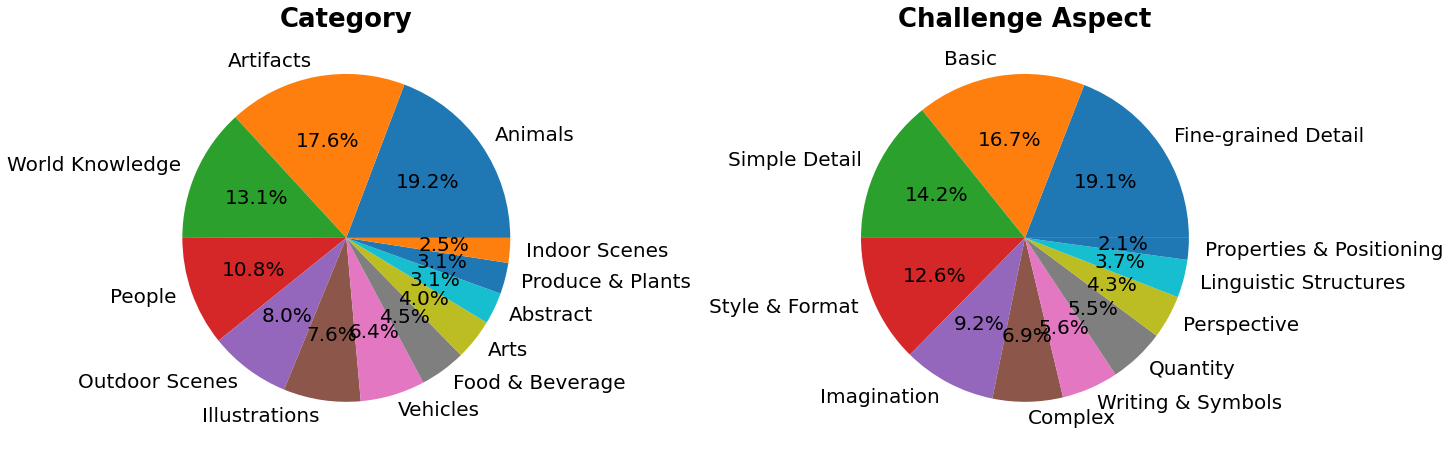
|
||||
|
||||
PartiPrompts has the following columns:
|
||||
|
||||
- Prompt
|
||||
- Category of the prompt (such as “Abstract”, “World Knowledge”, etc.)
|
||||
- Challenge reflecting the difficulty (such as “Basic”, “Complex”, “Writing & Symbols”, etc.)
|
||||
|
||||
These benchmarks allow for side-by-side human evaluation of different image generation models. Let’s see how we can use `diffusers` on a couple of PartiPrompts.
|
||||
|
||||
Below we show some prompts sampled across different challenges: Basic, Complex, Linguistic Structures, Imagination, and Writing & Symbols. Here we are using PartiPrompts as a [dataset](https://huggingface.co/datasets/nateraw/parti-prompts).
|
||||
|
||||
```python
|
||||
from datasets import load_dataset
|
||||
|
||||
# prompts = load_dataset("nateraw/parti-prompts", split="train")
|
||||
# prompts = prompts.shuffle()
|
||||
# sample_prompts = [prompts[i]["Prompt"] for i in range(5)]
|
||||
|
||||
# Fixing these sample prompts in the interest of reproducibility.
|
||||
sample_prompts = [
|
||||
"a corgi",
|
||||
"a hot air balloon with a yin-yang symbol, with the moon visible in the daytime sky",
|
||||
"a car with no windows",
|
||||
"a cube made of porcupine",
|
||||
'The saying "BE EXCELLENT TO EACH OTHER" written on a red brick wall with a graffiti image of a green alien wearing a tuxedo. A yellow fire hydrant is on a sidewalk in the foreground.',
|
||||
]
|
||||
```
|
||||
|
||||
Now we can use these prompts to generate some images using Stable Diffusion ([v1-4 checkpoint](https://huggingface.co/CompVis/stable-diffusion-v1-4)):
|
||||
|
||||
```python
|
||||
import torch
|
||||
|
||||
seed = 0
|
||||
generator = torch.manual_seed(seed)
|
||||
|
||||
images = sd_pipeline(sample_prompts, num_images_per_prompt=1, generator=generator, output_type="numpy").images
|
||||
```
|
||||
|
||||

|
||||
|
||||
We can also set `num_images_per_prompt` accordingly to compare different images for the same prompt. Running the same pipeline but with a different checkpoint ([v1-5](https://huggingface.co/runwayml/stable-diffusion-v1-5)), yields:
|
||||
|
||||

|
||||
|
||||
Once several images are generated from all the prompts using multiple models (under evaluation), these results are presented to human evaluators for scoring. For
|
||||
more details on the DrawBench and PartiPrompts benchmarks, refer to their respective papers.
|
||||
|
||||
<Tip>
|
||||
|
||||
It is useful to look at some inference samples while a model is training to measure the
|
||||
training progress. In our [training scripts](https://github.com/huggingface/diffusers/tree/main/examples/), we support this utility with additional support for
|
||||
logging to TensorBoard and Weights & Biases.
|
||||
|
||||
</Tip>
|
||||
|
||||
## Quantitative Evaluation
|
||||
|
||||
In this section, we will walk you through how to evaluate three different diffusion pipelines using:
|
||||
|
||||
- CLIP score
|
||||
- CLIP directional similarity
|
||||
- FID
|
||||
|
||||
### Text-guided image generation
|
||||
|
||||
[CLIP score](https://arxiv.org/abs/2104.08718) measures the compatibility of image-caption pairs. Higher CLIP scores imply higher compatibility 🔼. The CLIP score is a quantitative measurement of the qualitative concept "compatibility". Image-caption pair compatibility can also be thought of as the semantic similarity between the image and the caption. CLIP score was found to have high correlation with human judgement.
|
||||
|
||||
Let's first load a [`StableDiffusionPipeline`]:
|
||||
|
||||
```python
|
||||
from diffusers import StableDiffusionPipeline
|
||||
import torch
|
||||
|
||||
model_ckpt = "CompVis/stable-diffusion-v1-4"
|
||||
sd_pipeline = StableDiffusionPipeline.from_pretrained(model_ckpt, torch_dtype=torch.float16).to("cuda")
|
||||
```
|
||||
|
||||
Generate some images with multiple prompts:
|
||||
|
||||
```python
|
||||
prompts = [
|
||||
"a photo of an astronaut riding a horse on mars",
|
||||
"A high tech solarpunk utopia in the Amazon rainforest",
|
||||
"A pikachu fine dining with a view to the Eiffel Tower",
|
||||
"A mecha robot in a favela in expressionist style",
|
||||
"an insect robot preparing a delicious meal",
|
||||
"A small cabin on top of a snowy mountain in the style of Disney, artstation",
|
||||
]
|
||||
|
||||
images = sd_pipeline(prompts, num_images_per_prompt=1, output_type="numpy").images
|
||||
|
||||
print(images.shape)
|
||||
# (6, 512, 512, 3)
|
||||
```
|
||||
|
||||
And then, we calculate the CLIP score.
|
||||
|
||||
```python
|
||||
from torchmetrics.functional.multimodal import clip_score
|
||||
from functools import partial
|
||||
|
||||
clip_score_fn = partial(clip_score, model_name_or_path="openai/clip-vit-base-patch16")
|
||||
|
||||
|
||||
def calculate_clip_score(images, prompts):
|
||||
images_int = (images * 255).astype("uint8")
|
||||
clip_score = clip_score_fn(torch.from_numpy(images_int).permute(0, 3, 1, 2), prompts).detach()
|
||||
return round(float(clip_score), 4)
|
||||
|
||||
|
||||
sd_clip_score = calculate_clip_score(images, prompts)
|
||||
print(f"CLIP score: {sd_clip_score}")
|
||||
# CLIP score: 35.7038
|
||||
```
|
||||
|
||||
In the above example, we generated one image per prompt. If we generated multiple images per prompt, we would have to take the average score from the generated images per prompt.
|
||||
|
||||
Now, if we wanted to compare two checkpoints compatible with the [`StableDiffusionPipeline`] we should pass a generator while calling the pipeline. First, we generate images with a
|
||||
fixed seed with the [v1-4 Stable Diffusion checkpoint](https://huggingface.co/CompVis/stable-diffusion-v1-4):
|
||||
|
||||
```python
|
||||
seed = 0
|
||||
generator = torch.manual_seed(seed)
|
||||
|
||||
images = sd_pipeline(prompts, num_images_per_prompt=1, generator=generator, output_type="numpy").images
|
||||
```
|
||||
|
||||
Then we load the [v1-5 checkpoint](https://huggingface.co/runwayml/stable-diffusion-v1-5) to generate images:
|
||||
|
||||
```python
|
||||
model_ckpt_1_5 = "runwayml/stable-diffusion-v1-5"
|
||||
sd_pipeline_1_5 = StableDiffusionPipeline.from_pretrained(model_ckpt_1_5, torch_dtype=weight_dtype).to(device)
|
||||
|
||||
images_1_5 = sd_pipeline_1_5(prompts, num_images_per_prompt=1, generator=generator, output_type="numpy").images
|
||||
```
|
||||
|
||||
And finally, we compare their CLIP scores:
|
||||
|
||||
```python
|
||||
sd_clip_score_1_4 = calculate_clip_score(images, prompts)
|
||||
print(f"CLIP Score with v-1-4: {sd_clip_score_1_4}")
|
||||
# CLIP Score with v-1-4: 34.9102
|
||||
|
||||
sd_clip_score_1_5 = calculate_clip_score(images_1_5, prompts)
|
||||
print(f"CLIP Score with v-1-5: {sd_clip_score_1_5}")
|
||||
# CLIP Score with v-1-5: 36.2137
|
||||
```
|
||||
|
||||
It seems like the [v1-5](https://huggingface.co/runwayml/stable-diffusion-v1-5) checkpoint performs better than its predecessor. Note, however, that the number of prompts we used to compute the CLIP scores is quite low. For a more practical evaluation, this number should be way higher, and the prompts should be diverse.
|
||||
|
||||
<Tip warning={true}>
|
||||
|
||||
By construction, there are some limitations in this score. The captions in the training dataset
|
||||
were crawled from the web and extracted from `alt` and similar tags associated an image on the internet.
|
||||
They are not necessarily representative of what a human being would use to describe an image. Hence we
|
||||
had to "engineer" some prompts here.
|
||||
|
||||
</Tip>
|
||||
|
||||
### Image-conditioned text-to-image generation
|
||||
|
||||
In this case, we condition the generation pipeline with an input image as well as a text prompt. Let's take the [`StableDiffusionInstructPix2PixPipeline`], as an example. It takes an edit instruction as an input prompt and an input image to be edited.
|
||||
|
||||
Here is one example:
|
||||
|
||||
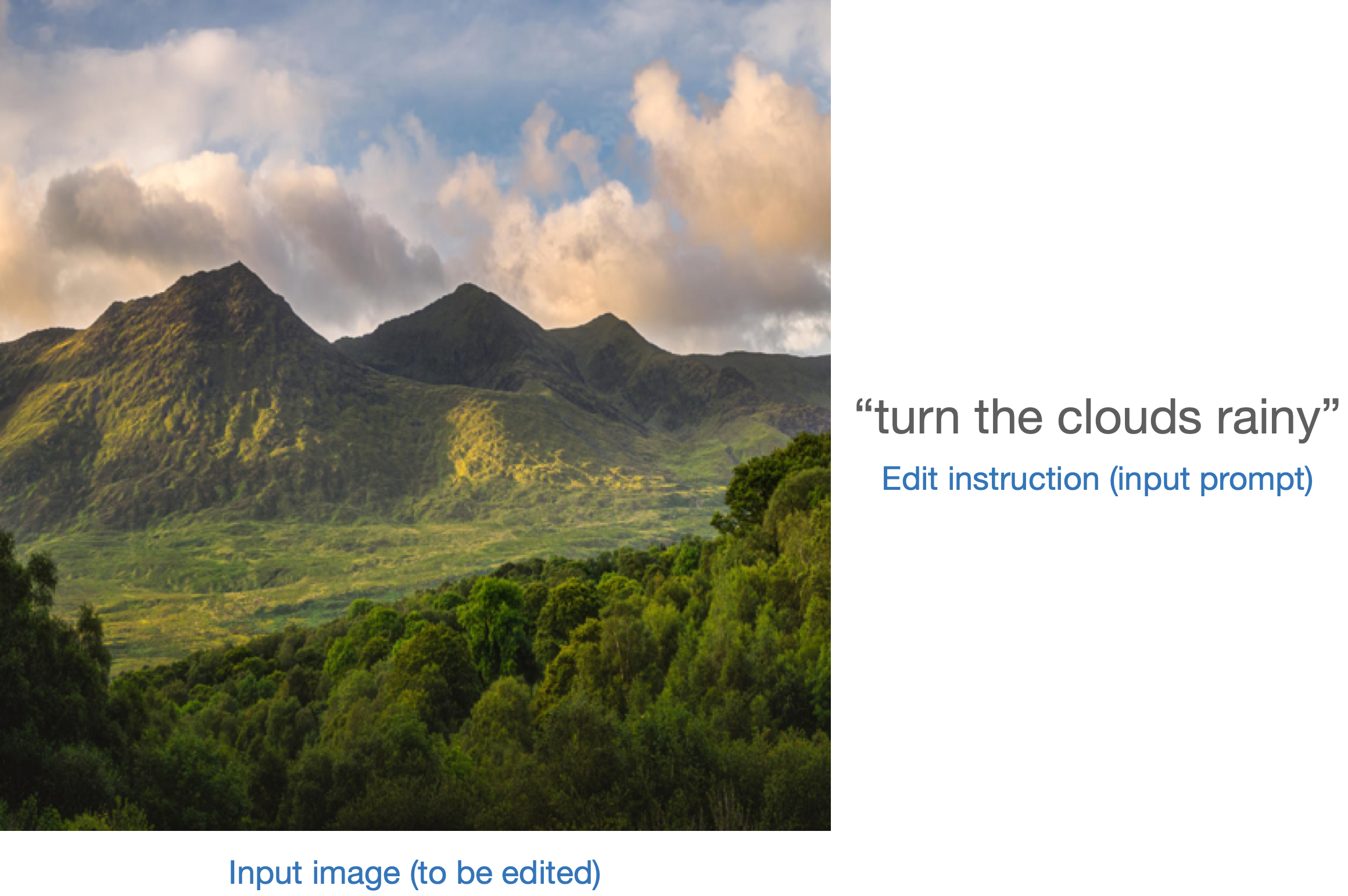
|
||||
|
||||
One strategy to evaluate such a model is to measure the consistency of the change between the two images (in [CLIP](https://huggingface.co/docs/transformers/model_doc/clip) space) with the change between the two image captions (as shown in [CLIP-Guided Domain Adaptation of Image Generators](https://arxiv.org/abs/2108.00946)). This is referred to as the "**CLIP directional similarity**".
|
||||
|
||||
- Caption 1 corresponds to the input image (image 1) that is to be edited.
|
||||
- Caption 2 corresponds to the edited image (image 2). It should reflect the edit instruction.
|
||||
|
||||
Following is a pictorial overview:
|
||||
|
||||
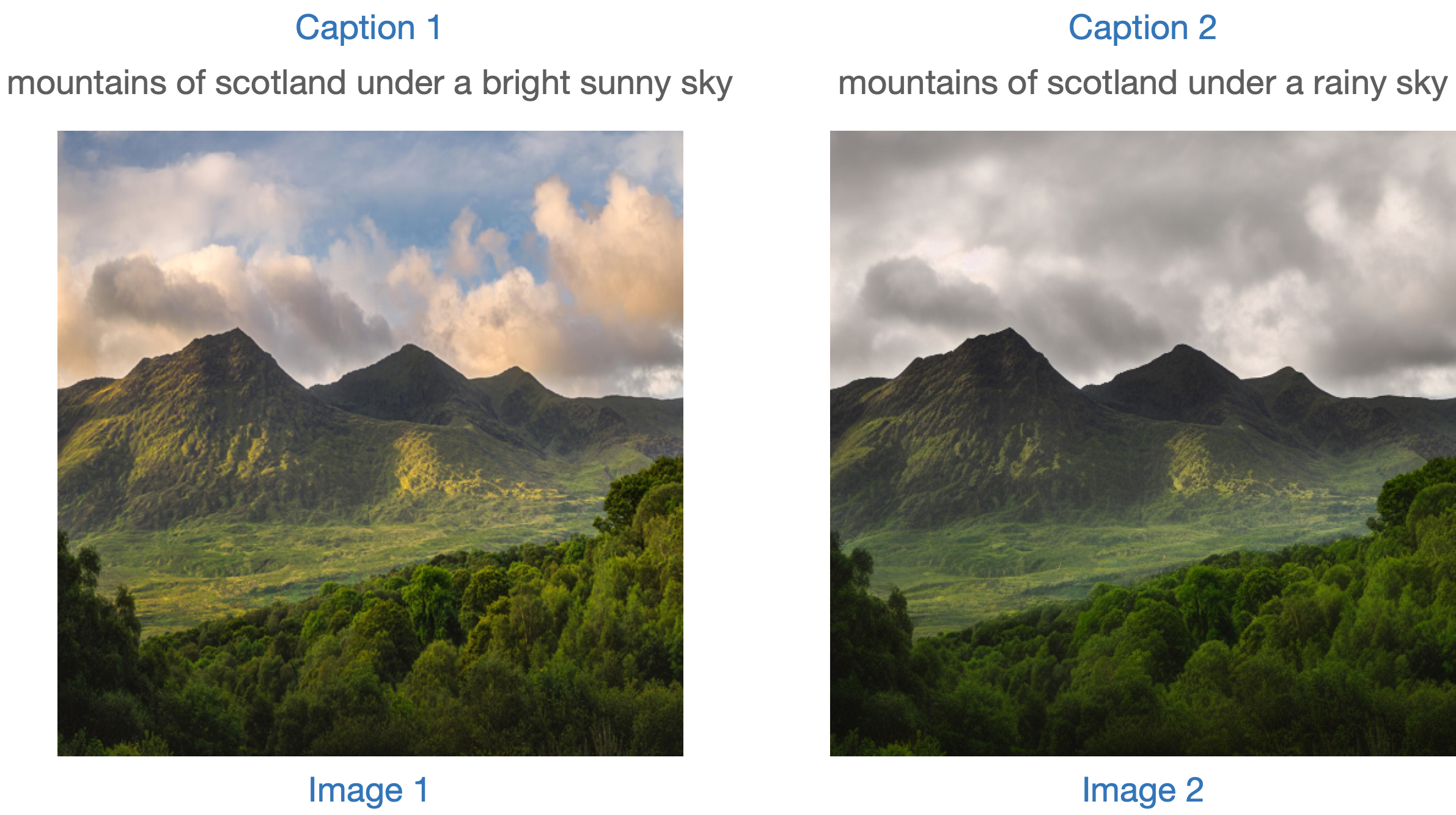
|
||||
|
||||
We have prepared a mini dataset to implement this metric. Let's first load the dataset.
|
||||
|
||||
```python
|
||||
from datasets import load_dataset
|
||||
|
||||
dataset = load_dataset("sayakpaul/instructpix2pix-demo", split="train")
|
||||
dataset.features
|
||||
```
|
||||
|
||||
```bash
|
||||
{'input': Value(dtype='string', id=None),
|
||||
'edit': Value(dtype='string', id=None),
|
||||
'output': Value(dtype='string', id=None),
|
||||
'image': Image(decode=True, id=None)}
|
||||
```
|
||||
|
||||
Here we have:
|
||||
|
||||
- `input` is a caption corresponding to the `image`.
|
||||
- `edit` denotes the edit instruction.
|
||||
- `output` denotes the modified caption reflecting the `edit` instruction.
|
||||
|
||||
Let's take a look at a sample.
|
||||
|
||||
```python
|
||||
idx = 0
|
||||
print(f"Original caption: {dataset[idx]['input']}")
|
||||
print(f"Edit instruction: {dataset[idx]['edit']}")
|
||||
print(f"Modified caption: {dataset[idx]['output']}")
|
||||
```
|
||||
|
||||
```bash
|
||||
Original caption: 2. FAROE ISLANDS: An archipelago of 18 mountainous isles in the North Atlantic Ocean between Norway and Iceland, the Faroe Islands has 'everything you could hope for', according to Big 7 Travel. It boasts 'crystal clear waterfalls, rocky cliffs that seem to jut out of nowhere and velvety green hills'
|
||||
Edit instruction: make the isles all white marble
|
||||
Modified caption: 2. WHITE MARBLE ISLANDS: An archipelago of 18 mountainous white marble isles in the North Atlantic Ocean between Norway and Iceland, the White Marble Islands has 'everything you could hope for', according to Big 7 Travel. It boasts 'crystal clear waterfalls, rocky cliffs that seem to jut out of nowhere and velvety green hills'
|
||||
```
|
||||
|
||||
And here is the image:
|
||||
|
||||
```python
|
||||
dataset[idx]["image"]
|
||||
```
|
||||
|
||||
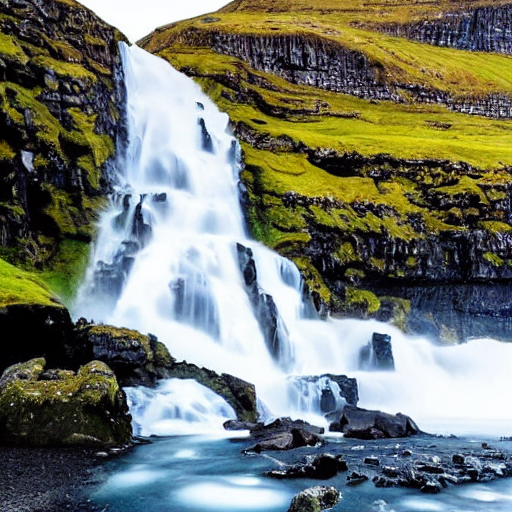
|
||||
|
||||
We will first edit the images of our dataset with the edit instruction and compute the directional similarity.
|
||||
|
||||
Let's first load the [`StableDiffusionInstructPix2PixPipeline`]:
|
||||
|
||||
```python
|
||||
from diffusers import StableDiffusionInstructPix2PixPipeline
|
||||
|
||||
instruct_pix2pix_pipeline = StableDiffusionInstructPix2PixPipeline.from_pretrained(
|
||||
"timbrooks/instruct-pix2pix", torch_dtype=torch.float16
|
||||
).to(device)
|
||||
```
|
||||
|
||||
Now, we perform the edits:
|
||||
|
||||
```python
|
||||
import numpy as np
|
||||
|
||||
|
||||
def edit_image(input_image, instruction):
|
||||
image = instruct_pix2pix_pipeline(
|
||||
instruction,
|
||||
image=input_image,
|
||||
output_type="numpy",
|
||||
generator=generator,
|
||||
).images[0]
|
||||
return image
|
||||
|
||||
|
||||
input_images = []
|
||||
original_captions = []
|
||||
modified_captions = []
|
||||
edited_images = []
|
||||
|
||||
for idx in range(len(dataset)):
|
||||
input_image = dataset[idx]["image"]
|
||||
edit_instruction = dataset[idx]["edit"]
|
||||
edited_image = edit_image(input_image, edit_instruction)
|
||||
|
||||
input_images.append(np.array(input_image))
|
||||
original_captions.append(dataset[idx]["input"])
|
||||
modified_captions.append(dataset[idx]["output"])
|
||||
edited_images.append(edited_image)
|
||||
```
|
||||
|
||||
To measure the directional similarity, we first load CLIP's image and text encoders.
|
||||
|
||||
```python
|
||||
from transformers import (
|
||||
CLIPTokenizer,
|
||||
CLIPTextModelWithProjection,
|
||||
CLIPVisionModelWithProjection,
|
||||
CLIPImageProcessor,
|
||||
)
|
||||
|
||||
clip_id = "openai/clip-vit-large-patch14"
|
||||
tokenizer = CLIPTokenizer.from_pretrained(clip_id)
|
||||
text_encoder = CLIPTextModelWithProjection.from_pretrained(clip_id).to(device)
|
||||
image_processor = CLIPImageProcessor.from_pretrained(clip_id)
|
||||
image_encoder = CLIPVisionModelWithProjection.from_pretrained(clip_id).to(device)
|
||||
```
|
||||
|
||||
Notice that we are using a particular CLIP checkpoint, i.e., `openai/clip-vit-large-patch14`. This is because the Stable Diffusion pre-training was performed with this CLIP variant. For more details, refer to the [documentation](https://huggingface.co/docs/diffusers/main/en/api/pipelines/stable_diffusion/pix2pix#diffusers.StableDiffusionInstructPix2PixPipeline.text_encoder).
|
||||
|
||||
Next, we prepare a PyTorch `nn.module` to compute directional similarity:
|
||||
|
||||
```python
|
||||
import torch.nn as nn
|
||||
import torch.nn.functional as F
|
||||
|
||||
|
||||
class DirectionalSimilarity(nn.Module):
|
||||
def __init__(self, tokenizer, text_encoder, image_processor, image_encoder):
|
||||
super().__init__()
|
||||
self.tokenizer = tokenizer
|
||||
self.text_encoder = text_encoder
|
||||
self.image_processor = image_processor
|
||||
self.image_encoder = image_encoder
|
||||
|
||||
def preprocess_image(self, image):
|
||||
image = self.image_processor(image, return_tensors="pt")["pixel_values"]
|
||||
return {"pixel_values": image.to(device)}
|
||||
|
||||
def tokenize_text(self, text):
|
||||
inputs = self.tokenizer(
|
||||
text,
|
||||
max_length=self.tokenizer.model_max_length,
|
||||
padding="max_length",
|
||||
truncation=True,
|
||||
return_tensors="pt",
|
||||
)
|
||||
return {"input_ids": inputs.input_ids.to(device)}
|
||||
|
||||
def encode_image(self, image):
|
||||
preprocessed_image = self.preprocess_image(image)
|
||||
image_features = self.image_encoder(**preprocessed_image).image_embeds
|
||||
image_features = image_features / image_features.norm(dim=1, keepdim=True)
|
||||
return image_features
|
||||
|
||||
def encode_text(self, text):
|
||||
tokenized_text = self.tokenize_text(text)
|
||||
text_features = self.text_encoder(**tokenized_text).text_embeds
|
||||
text_features = text_features / text_features.norm(dim=1, keepdim=True)
|
||||
return text_features
|
||||
|
||||
def compute_directional_similarity(self, img_feat_one, img_feat_two, text_feat_one, text_feat_two):
|
||||
sim_direction = F.cosine_similarity(img_feat_two - img_feat_one, text_feat_two - text_feat_one)
|
||||
return sim_direction
|
||||
|
||||
def forward(self, image_one, image_two, caption_one, caption_two):
|
||||
img_feat_one = self.encode_image(image_one)
|
||||
img_feat_two = self.encode_image(image_two)
|
||||
text_feat_one = self.encode_text(caption_one)
|
||||
text_feat_two = self.encode_text(caption_two)
|
||||
directional_similarity = self.compute_directional_similarity(
|
||||
img_feat_one, img_feat_two, text_feat_one, text_feat_two
|
||||
)
|
||||
return directional_similarity
|
||||
```
|
||||
|
||||
Let's put `DirectionalSimilarity` to use now.
|
||||
|
||||
```python
|
||||
dir_similarity = DirectionalSimilarity(tokenizer, text_encoder, image_processor, image_encoder)
|
||||
scores = []
|
||||
|
||||
for i in range(len(input_images)):
|
||||
original_image = input_images[i]
|
||||
original_caption = original_captions[i]
|
||||
edited_image = edited_images[i]
|
||||
modified_caption = modified_captions[i]
|
||||
|
||||
similarity_score = dir_similarity(original_image, edited_image, original_caption, modified_caption)
|
||||
scores.append(float(similarity_score.detach().cpu()))
|
||||
|
||||
print(f"CLIP directional similarity: {np.mean(scores)}")
|
||||
# CLIP directional similarity: 0.0797976553440094
|
||||
```
|
||||
|
||||
Like the CLIP Score, the higher the CLIP directional similarity, the better it is.
|
||||
|
||||
It should be noted that the `StableDiffusionInstructPix2PixPipeline` exposes two arguments, namely, `image_guidance_scale` and `guidance_scale` that let you control the quality of the final edited image. We encourage you to experiment with these two arguments and see the impact of that on the directional similarity.
|
||||
|
||||
We can extend the idea of this metric to measure how similar the original image and edited version are. To do that, we can just do `F.cosine_similarity(img_feat_two, img_feat_one)`. For these kinds of edits, we would still want the primary semantics of the images to be preserved as much as possible, i.e., a high similarity score.
|
||||
|
||||
We can use these metrics for similar pipelines such as the[`StableDiffusionPix2PixZeroPipeline`](https://huggingface.co/docs/diffusers/main/en/api/pipelines/stable_diffusion/pix2pix_zero#diffusers.StableDiffusionPix2PixZeroPipeline)`.
|
||||
|
||||
<Tip>
|
||||
|
||||
Both CLIP score and CLIP direction similarity rely on the CLIP model, which can make the evaluations biased.
|
||||
|
||||
</Tip>
|
||||
|
||||
***Extending metrics like IS, FID (discussed later), or KID can be difficult*** when the model under evaluation was pre-trained on a large image-captioning dataset (such as the [LAION-5B dataset](https://laion.ai/blog/laion-5b/)). This is because underlying these metrics is an InceptionNet (pre-trained on the ImageNet-1k dataset) used for extracting intermediate image features. The pre-training dataset of Stable Diffusion may have limited overlap with the pre-training dataset of InceptionNet, so it is not a good candidate here for feature extraction.
|
||||
|
||||
***Using the above metrics helps evaluate models that are class-conditioned. For example, [DiT](https://huggingface.co/docs/diffusers/main/en/api/pipelines/stable_diffusion/overview). It was pre-trained being conditioned on the ImageNet-1k classes.***
|
||||
|
||||
### Class-conditioned image generation
|
||||
|
||||
Class-conditioned generative models are usually pre-trained on a class-labeled dataset such as [ImageNet-1k](https://huggingface.co/datasets/imagenet-1k). Popular metrics for evaluating these models include Fréchet Inception Distance (FID), Kernel Inception Distance (KID), and Inception Score (IS). In this document, we focus on FID ([Heusel et al.](https://arxiv.org/abs/1706.08500)). We show how to compute it with the [`DiTPipeline`](https://huggingface.co/docs/diffusers/api/pipelines/dit), which uses the [DiT model](https://arxiv.org/abs/2212.09748) under the hood.
|
||||
|
||||
FID aims to measure how similar are two datasets of images. As per [this resource](https://mmgeneration.readthedocs.io/en/latest/quick_run.html#fid):
|
||||
|
||||
> Fréchet Inception Distance is a measure of similarity between two datasets of images. It was shown to correlate well with the human judgment of visual quality and is most often used to evaluate the quality of samples of Generative Adversarial Networks. FID is calculated by computing the Fréchet distance between two Gaussians fitted to feature representations of the Inception network.
|
||||
|
||||
These two datasets are essentially the dataset of real images and the dataset of fake images (generated images in our case). FID is usually calculated with two large datasets. However, for this document, we will work with two mini datasets.
|
||||
|
||||
Let's first download a few images from the ImageNet-1k training set:
|
||||
|
||||
```python
|
||||
from zipfile import ZipFile
|
||||
import requests
|
||||
|
||||
|
||||
def download(url, local_filepath):
|
||||
r = requests.get(url)
|
||||
with open(local_filepath, "wb") as f:
|
||||
f.write(r.content)
|
||||
return local_filepath
|
||||
|
||||
|
||||
dummy_dataset_url = "https://hf.co/datasets/sayakpaul/sample-datasets/resolve/main/sample-imagenet-images.zip"
|
||||
local_filepath = download(dummy_dataset_url, dummy_dataset_url.split("/")[-1])
|
||||
|
||||
with ZipFile(local_filepath, "r") as zipper:
|
||||
zipper.extractall(".")
|
||||
```
|
||||
|
||||
```python
|
||||
from PIL import Image
|
||||
import os
|
||||
|
||||
dataset_path = "sample-imagenet-images"
|
||||
image_paths = sorted([os.path.join(dataset_path, x) for x in os.listdir(dataset_path)])
|
||||
|
||||
real_images = [np.array(Image.open(path).convert("RGB")) for path in image_paths]
|
||||
```
|
||||
|
||||
These are 10 images from the following Imagenet-1k classes: "cassette_player", "chain_saw" (x2), "church", "gas_pump" (x3), "parachute" (x2), and "tench".
|
||||
|
||||
<p align="center">
|
||||
<img src="https://huggingface.co/datasets/diffusers/docs-images/resolve/main/evaluation_diffusion_models/real-images.png" alt="real-images"><br>
|
||||
<em>Real images.</em>
|
||||
</p>
|
||||
|
||||
Now that the images are loaded, let's apply some lightweight pre-processing on them to use them for FID calculation.
|
||||
|
||||
```python
|
||||
from torchvision.transforms import functional as F
|
||||
|
||||
|
||||
def preprocess_image(image):
|
||||
image = torch.tensor(image).unsqueeze(0)
|
||||
image = image.permute(0, 3, 1, 2) / 255.0
|
||||
return F.center_crop(image, (256, 256))
|
||||
|
||||
|
||||
real_images = torch.cat([preprocess_image(image) for image in real_images])
|
||||
print(real_images.shape)
|
||||
# torch.Size([10, 3, 256, 256])
|
||||
```
|
||||
|
||||
We now load the [`DiTPipeline`](https://huggingface.co/docs/diffusers/api/pipelines/dit) to generate images conditioned on the above-mentioned classes.
|
||||
|
||||
```python
|
||||
from diffusers import DiTPipeline, DPMSolverMultistepScheduler
|
||||
|
||||
dit_pipeline = DiTPipeline.from_pretrained("facebook/DiT-XL-2-256", torch_dtype=torch.float16)
|
||||
dit_pipeline.scheduler = DPMSolverMultistepScheduler.from_config(dit_pipeline.scheduler.config)
|
||||
dit_pipeline = dit_pipeline.to("cuda")
|
||||
|
||||
words = [
|
||||
"cassette player",
|
||||
"chainsaw",
|
||||
"chainsaw",
|
||||
"church",
|
||||
"gas pump",
|
||||
"gas pump",
|
||||
"gas pump",
|
||||
"parachute",
|
||||
"parachute",
|
||||
"tench",
|
||||
]
|
||||
|
||||
class_ids = dit_pipeline.get_label_ids(words)
|
||||
output = dit_pipeline(class_labels=class_ids, generator=generator, output_type="numpy")
|
||||
|
||||
fake_images = output.images
|
||||
fake_images = torch.tensor(fake_images)
|
||||
fake_images = fake_images.permute(0, 3, 1, 2)
|
||||
print(fake_images.shape)
|
||||
# torch.Size([10, 3, 256, 256])
|
||||
```
|
||||
|
||||
Now, we can compute the FID using [`torchmetrics`](https://torchmetrics.readthedocs.io/).
|
||||
|
||||
```python
|
||||
from torchmetrics.image.fid import FrechetInceptionDistance
|
||||
|
||||
fid = FrechetInceptionDistance(normalize=True)
|
||||
fid.update(real_images, real=True)
|
||||
fid.update(fake_images, real=False)
|
||||
|
||||
print(f"FID: {float(fid.compute())}")
|
||||
# FID: 177.7147216796875
|
||||
```
|
||||
|
||||
The lower the FID, the better it is. Several things can influence FID here:
|
||||
|
||||
- Number of images (both real and fake)
|
||||
- Randomness induced in the diffusion process
|
||||
- Number of inference steps in the diffusion process
|
||||
- The scheduler being used in the diffusion process
|
||||
|
||||
For the last two points, it is, therefore, a good practice to run the evaluation across different seeds and inference steps, and then report an average result.
|
||||
|
||||
<Tip warning={true}>
|
||||
|
||||
FID results tend to be fragile as they depend on a lot of factors:
|
||||
|
||||
* The specific Inception model used during computation.
|
||||
* The implementation accuracy of the computation.
|
||||
* The image format (not the same if we start from PNGs vs JPGs).
|
||||
|
||||
Keeping that in mind, FID is often most useful when comparing similar runs, but it is
|
||||
hard to to reproduce paper results unless the authors carefully disclose the FID
|
||||
measurement code.
|
||||
|
||||
These points apply to other related metrics too, such as KID and IS.
|
||||
|
||||
</Tip>
|
||||
|
||||
As a final step, let's visually inspect the `fake_images`.
|
||||
|
||||
<p align="center">
|
||||
<img src="https://huggingface.co/datasets/diffusers/docs-images/resolve/main/evaluation_diffusion_models/fake-images.png" alt="fake-images"><br>
|
||||
<em>Fake images.</em>
|
||||
</p>
|
||||
+52
-67
@@ -16,76 +16,61 @@ specific language governing permissions and limitations under the License.
|
||||
<br>
|
||||
</p>
|
||||
|
||||
# Diffusers
|
||||
# 🧨 Diffusers
|
||||
|
||||
🤗 Diffusers is the go-to library for state-of-the-art pretrained diffusion models for generating images, audio, and even 3D structures of molecules. Whether you're looking for a simple inference solution or want to train your own diffusion model, 🤗 Diffusers is a modular toolbox that supports both. Our library is designed with a focus on [usability over performance](conceptual/philosophy#usability-over-performance), [simple over easy](conceptual/philosophy#simple-over-easy), and [customizability over abstractions](conceptual/philosophy#tweakable-contributorfriendly-over-abstraction).
|
||||
🤗 Diffusers provides pretrained vision and audio diffusion models, and serves as a modular toolbox for inference and training.
|
||||
|
||||
The library has three main components:
|
||||
More precisely, 🤗 Diffusers offers:
|
||||
|
||||
- State-of-the-art [diffusion pipelines](api/pipelines/overview) for inference with just a few lines of code.
|
||||
- Interchangeable [noise schedulers](api/schedulers/overview) for balancing trade-offs between generation speed and quality.
|
||||
- Pretrained [models](api/models) that can be used as building blocks, and combined with schedulers, for creating your own end-to-end diffusion systems.
|
||||
- State-of-the-art diffusion pipelines that can be run in inference with just a couple of lines of code (see [**Using Diffusers**](./using-diffusers/conditional_image_generation)) or have a look at [**Pipelines**](#pipelines) to get an overview of all supported pipelines and their corresponding papers.
|
||||
- Various noise schedulers that can be used interchangeably for the preferred speed vs. quality trade-off in inference. For more information see [**Schedulers**](./api/schedulers/overview).
|
||||
- Multiple types of models, such as UNet, can be used as building blocks in an end-to-end diffusion system. See [**Models**](./api/models) for more details
|
||||
- Training examples to show how to train the most popular diffusion model tasks. For more information see [**Training**](./training/overview).
|
||||
|
||||
<div class="mt-10">
|
||||
<div class="w-full flex flex-col space-y-4 md:space-y-0 md:grid md:grid-cols-2 md:gap-y-4 md:gap-x-5">
|
||||
<a class="!no-underline border dark:border-gray-700 p-5 rounded-lg shadow hover:shadow-lg" href="./tutorials/tutorial_overview"
|
||||
><div class="w-full text-center bg-gradient-to-br from-blue-400 to-blue-500 rounded-lg py-1.5 font-semibold mb-5 text-white text-lg leading-relaxed">Tutorials</div>
|
||||
<p class="text-gray-700">Learn the fundamental skills you need to start generating outputs, build your own diffusion system, and train a diffusion model. We recommend starting here if you're using 🤗 Diffusers for the first time!</p>
|
||||
</a>
|
||||
<a class="!no-underline border dark:border-gray-700 p-5 rounded-lg shadow hover:shadow-lg" href="./using-diffusers/loading_overview"
|
||||
><div class="w-full text-center bg-gradient-to-br from-indigo-400 to-indigo-500 rounded-lg py-1.5 font-semibold mb-5 text-white text-lg leading-relaxed">How-to guides</div>
|
||||
<p class="text-gray-700">Practical guides for helping you load pipelines, models, and schedulers. You'll also learn how to use pipelines for specific tasks, control how outputs are generated, optimize for inference speed, and different training techniques.</p>
|
||||
</a>
|
||||
<a class="!no-underline border dark:border-gray-700 p-5 rounded-lg shadow hover:shadow-lg" href="./conceptual/philosophy"
|
||||
><div class="w-full text-center bg-gradient-to-br from-pink-400 to-pink-500 rounded-lg py-1.5 font-semibold mb-5 text-white text-lg leading-relaxed">Conceptual guides</div>
|
||||
<p class="text-gray-700">Understand why the library was designed the way it was, and learn more about the ethical guidelines and safety implementations for using the library.</p>
|
||||
</a>
|
||||
<a class="!no-underline border dark:border-gray-700 p-5 rounded-lg shadow hover:shadow-lg" href="./api/models"
|
||||
><div class="w-full text-center bg-gradient-to-br from-purple-400 to-purple-500 rounded-lg py-1.5 font-semibold mb-5 text-white text-lg leading-relaxed">Reference</div>
|
||||
<p class="text-gray-700">Technical descriptions of how 🤗 Diffusers classes and methods work.</p>
|
||||
</a>
|
||||
</div>
|
||||
</div>
|
||||
## 🧨 Diffusers Pipelines
|
||||
|
||||
## Supported pipelines
|
||||
The following table summarizes all officially supported pipelines, their corresponding paper, and if
|
||||
available a colab notebook to directly try them out.
|
||||
|
||||
| Pipeline | Paper/Repository | Tasks |
|
||||
|---|---|:---:|
|
||||
| [alt_diffusion](./api/pipelines/alt_diffusion) | [AltCLIP: Altering the Language Encoder in CLIP for Extended Language Capabilities](https://arxiv.org/abs/2211.06679) | Image-to-Image Text-Guided Generation |
|
||||
| [audio_diffusion](./api/pipelines/audio_diffusion) | [Audio Diffusion](https://github.com/teticio/audio-diffusion.git) | Unconditional Audio Generation |
|
||||
| [controlnet](./api/pipelines/stable_diffusion/controlnet) | [Adding Conditional Control to Text-to-Image Diffusion Models](https://arxiv.org/abs/2302.05543) | Image-to-Image Text-Guided Generation |
|
||||
| [cycle_diffusion](./api/pipelines/cycle_diffusion) | [Unifying Diffusion Models' Latent Space, with Applications to CycleDiffusion and Guidance](https://arxiv.org/abs/2210.05559) | Image-to-Image Text-Guided Generation |
|
||||
| [dance_diffusion](./api/pipelines/dance_diffusion) | [Dance Diffusion](https://github.com/williamberman/diffusers.git) | Unconditional Audio Generation |
|
||||
| [ddpm](./api/pipelines/ddpm) | [Denoising Diffusion Probabilistic Models](https://arxiv.org/abs/2006.11239) | Unconditional Image Generation |
|
||||
| [ddim](./api/pipelines/ddim) | [Denoising Diffusion Implicit Models](https://arxiv.org/abs/2010.02502) | Unconditional Image Generation |
|
||||
| [latent_diffusion](./api/pipelines/latent_diffusion) | [High-Resolution Image Synthesis with Latent Diffusion Models](https://arxiv.org/abs/2112.10752)| Text-to-Image Generation |
|
||||
| [latent_diffusion](./api/pipelines/latent_diffusion) | [High-Resolution Image Synthesis with Latent Diffusion Models](https://arxiv.org/abs/2112.10752)| Super Resolution Image-to-Image |
|
||||
| [latent_diffusion_uncond](./api/pipelines/latent_diffusion_uncond) | [High-Resolution Image Synthesis with Latent Diffusion Models](https://arxiv.org/abs/2112.10752) | Unconditional Image Generation |
|
||||
| [paint_by_example](./api/pipelines/paint_by_example) | [Paint by Example: Exemplar-based Image Editing with Diffusion Models](https://arxiv.org/abs/2211.13227) | Image-Guided Image Inpainting |
|
||||
| [pndm](./api/pipelines/pndm) | [Pseudo Numerical Methods for Diffusion Models on Manifolds](https://arxiv.org/abs/2202.09778) | Unconditional Image Generation |
|
||||
| [score_sde_ve](./api/pipelines/score_sde_ve) | [Score-Based Generative Modeling through Stochastic Differential Equations](https://openreview.net/forum?id=PxTIG12RRHS) | Unconditional Image Generation |
|
||||
| [score_sde_vp](./api/pipelines/score_sde_vp) | [Score-Based Generative Modeling through Stochastic Differential Equations](https://openreview.net/forum?id=PxTIG12RRHS) | Unconditional Image Generation |
|
||||
| [semantic_stable_diffusion](./api/pipelines/semantic_stable_diffusion) | [Semantic Guidance](https://arxiv.org/abs/2301.12247) | Text-Guided Generation |
|
||||
| [stable_diffusion_text2img](./api/pipelines/stable_diffusion/text2img) | [Stable Diffusion](https://stability.ai/blog/stable-diffusion-public-release) | Text-to-Image Generation |
|
||||
| [stable_diffusion_img2img](./api/pipelines/stable_diffusion/img2img) | [Stable Diffusion](https://stability.ai/blog/stable-diffusion-public-release) | Image-to-Image Text-Guided Generation |
|
||||
| [stable_diffusion_inpaint](./api/pipelines/stable_diffusion/inpaint) | [Stable Diffusion](https://stability.ai/blog/stable-diffusion-public-release) | Text-Guided Image Inpainting |
|
||||
| [stable_diffusion_panorama](./api/pipelines/stable_diffusion/panorama) | [MultiDiffusion](https://multidiffusion.github.io/) | Text-to-Panorama Generation |
|
||||
| [stable_diffusion_pix2pix](./api/pipelines/stable_diffusion/pix2pix) | [InstructPix2Pix: Learning to Follow Image Editing Instructions](https://arxiv.org/abs/2211.09800) | Text-Guided Image Editing|
|
||||
| [stable_diffusion_pix2pix_zero](./api/pipelines/stable_diffusion/pix2pix_zero) | [Zero-shot Image-to-Image Translation](https://pix2pixzero.github.io/) | Text-Guided Image Editing |
|
||||
| [stable_diffusion_attend_and_excite](./api/pipelines/stable_diffusion/attend_and_excite) | [Attend-and-Excite: Attention-Based Semantic Guidance for Text-to-Image Diffusion Models](https://arxiv.org/abs/2301.13826) | Text-to-Image Generation |
|
||||
| [stable_diffusion_self_attention_guidance](./api/pipelines/stable_diffusion/self_attention_guidance) | [Improving Sample Quality of Diffusion Models Using Self-Attention Guidance](https://arxiv.org/abs/2210.00939) | Text-to-Image Generation |
|
||||
| [stable_diffusion_image_variation](./stable_diffusion/image_variation) | [Stable Diffusion Image Variations](https://github.com/LambdaLabsML/lambda-diffusers#stable-diffusion-image-variations) | Image-to-Image Generation |
|
||||
| [stable_diffusion_latent_upscale](./stable_diffusion/latent_upscale) | [Stable Diffusion Latent Upscaler](https://twitter.com/StabilityAI/status/1590531958815064065) | Text-Guided Super Resolution Image-to-Image |
|
||||
| [stable_diffusion_2](./api/pipelines/stable_diffusion_2) | [Stable Diffusion 2](https://stability.ai/blog/stable-diffusion-v2-release) | Text-to-Image Generation |
|
||||
| [stable_diffusion_2](./api/pipelines/stable_diffusion_2) | [Stable Diffusion 2](https://stability.ai/blog/stable-diffusion-v2-release) | Text-Guided Image Inpainting |
|
||||
| [stable_diffusion_2](./api/pipelines/stable_diffusion_2) | [Depth-Conditional Stable Diffusion](https://github.com/Stability-AI/stablediffusion#depth-conditional-stable-diffusion) | Depth-to-Image Generation |
|
||||
| [stable_diffusion_2](./api/pipelines/stable_diffusion_2) | [Stable Diffusion 2](https://stability.ai/blog/stable-diffusion-v2-release) | Text-Guided Super Resolution Image-to-Image |
|
||||
| [stable_diffusion_safe](./api/pipelines/stable_diffusion_safe) | [Safe Stable Diffusion](https://arxiv.org/abs/2211.05105) | Text-Guided Generation |
|
||||
| [stable_unclip](./stable_unclip) | Stable unCLIP | Text-to-Image Generation |
|
||||
| [stable_unclip](./stable_unclip) | Stable unCLIP | Image-to-Image Text-Guided Generation |
|
||||
| [stochastic_karras_ve](./api/pipelines/stochastic_karras_ve) | [Elucidating the Design Space of Diffusion-Based Generative Models](https://arxiv.org/abs/2206.00364) | Unconditional Image Generation |
|
||||
| [unclip](./api/pipelines/unclip) | [Hierarchical Text-Conditional Image Generation with CLIP Latents](https://arxiv.org/abs/2204.06125)(implementation by [kakaobrain](https://github.com/kakaobrain/karlo)) | Text-to-Image Generation |
|
||||
| [versatile_diffusion](./api/pipelines/versatile_diffusion) | [Versatile Diffusion: Text, Images and Variations All in One Diffusion Model](https://arxiv.org/abs/2211.08332) | Text-to-Image Generation |
|
||||
| [versatile_diffusion](./api/pipelines/versatile_diffusion) | [Versatile Diffusion: Text, Images and Variations All in One Diffusion Model](https://arxiv.org/abs/2211.08332) | Image Variations Generation |
|
||||
| [versatile_diffusion](./api/pipelines/versatile_diffusion) | [Versatile Diffusion: Text, Images and Variations All in One Diffusion Model](https://arxiv.org/abs/2211.08332) | Dual Image and Text Guided Generation |
|
||||
| [vq_diffusion](./api/pipelines/vq_diffusion) | [Vector Quantized Diffusion Model for Text-to-Image Synthesis](https://arxiv.org/abs/2111.14822) | Text-to-Image Generation |
|
||||
| Pipeline | Paper | Tasks | Colab
|
||||
|---|---|:---:|:---:|
|
||||
| [alt_diffusion](./api/pipelines/alt_diffusion) | [**AltDiffusion**](https://arxiv.org/abs/2211.06679) | Image-to-Image Text-Guided Generation |
|
||||
| [audio_diffusion](./api/pipelines/audio_diffusion) | [**Audio Diffusion**](https://github.com/teticio/audio-diffusion.git) | Unconditional Audio Generation | [](https://colab.research.google.com/github/teticio/audio-diffusion/blob/master/notebooks/audio_diffusion_pipeline.ipynb)
|
||||
| [controlnet](./api/pipelines/stable_diffusion/controlnet) | [**ControlNet with Stable Diffusion**](https://arxiv.org/abs/2302.05543) | Image-to-Image Text-Guided Generation | [](https://colab.research.google.com/drive/1AiR7Q-sBqO88NCyswpfiuwXZc7DfMyKA?usp=sharing)
|
||||
| [cycle_diffusion](./api/pipelines/cycle_diffusion) | [**Cycle Diffusion**](https://arxiv.org/abs/2210.05559) | Image-to-Image Text-Guided Generation |
|
||||
| [dance_diffusion](./api/pipelines/dance_diffusion) | [**Dance Diffusion**](https://github.com/williamberman/diffusers.git) | Unconditional Audio Generation |
|
||||
| [ddpm](./api/pipelines/ddpm) | [**Denoising Diffusion Probabilistic Models**](https://arxiv.org/abs/2006.11239) | Unconditional Image Generation |
|
||||
| [ddim](./api/pipelines/ddim) | [**Denoising Diffusion Implicit Models**](https://arxiv.org/abs/2010.02502) | Unconditional Image Generation |
|
||||
| [latent_diffusion](./api/pipelines/latent_diffusion) | [**High-Resolution Image Synthesis with Latent Diffusion Models**](https://arxiv.org/abs/2112.10752)| Text-to-Image Generation |
|
||||
| [latent_diffusion](./api/pipelines/latent_diffusion) | [**High-Resolution Image Synthesis with Latent Diffusion Models**](https://arxiv.org/abs/2112.10752)| Super Resolution Image-to-Image |
|
||||
| [latent_diffusion_uncond](./api/pipelines/latent_diffusion_uncond) | [**High-Resolution Image Synthesis with Latent Diffusion Models**](https://arxiv.org/abs/2112.10752) | Unconditional Image Generation |
|
||||
| [paint_by_example](./api/pipelines/paint_by_example) | [**Paint by Example: Exemplar-based Image Editing with Diffusion Models**](https://arxiv.org/abs/2211.13227) | Image-Guided Image Inpainting |
|
||||
| [pndm](./api/pipelines/pndm) | [**Pseudo Numerical Methods for Diffusion Models on Manifolds**](https://arxiv.org/abs/2202.09778) | Unconditional Image Generation |
|
||||
| [score_sde_ve](./api/pipelines/score_sde_ve) | [**Score-Based Generative Modeling through Stochastic Differential Equations**](https://openreview.net/forum?id=PxTIG12RRHS) | Unconditional Image Generation |
|
||||
| [score_sde_vp](./api/pipelines/score_sde_vp) | [**Score-Based Generative Modeling through Stochastic Differential Equations**](https://openreview.net/forum?id=PxTIG12RRHS) | Unconditional Image Generation |
|
||||
| [semantic_stable_diffusion](./api/pipelines/semantic_stable_diffusion) | [**Semantic Guidance**](https://arxiv.org/abs/2301.12247) | Text-Guided Generation | [](https://colab.research.google.com/github/ml-research/semantic-image-editing/blob/main/examples/SemanticGuidance.ipynb)
|
||||
| [stable_diffusion_text2img](./api/pipelines/stable_diffusion/text2img) | [**Stable Diffusion**](https://stability.ai/blog/stable-diffusion-public-release) | Text-to-Image Generation | [](https://colab.research.google.com/github/huggingface/notebooks/blob/main/diffusers/training_example.ipynb)
|
||||
| [stable_diffusion_img2img](./api/pipelines/stable_diffusion/img2img) | [**Stable Diffusion**](https://stability.ai/blog/stable-diffusion-public-release) | Image-to-Image Text-Guided Generation | [](https://colab.research.google.com/github/huggingface/notebooks/blob/main/diffusers/image_2_image_using_diffusers.ipynb)
|
||||
| [stable_diffusion_inpaint](./api/pipelines/stable_diffusion/inpaint) | [**Stable Diffusion**](https://stability.ai/blog/stable-diffusion-public-release) | Text-Guided Image Inpainting | [](https://colab.research.google.com/github/huggingface/notebooks/blob/main/diffusers/in_painting_with_stable_diffusion_using_diffusers.ipynb)
|
||||
| [stable_diffusion_panorama](./api/pipelines/stable_diffusion/panorama) | [**MultiDiffusion**](https://multidiffusion.github.io/) | Text-to-Panorama Generation |
|
||||
| [stable_diffusion_pix2pix](./api/pipelines/stable_diffusion/pix2pix) | [**InstructPix2Pix**](https://github.com/timothybrooks/instruct-pix2pix) | Text-Guided Image Editing|
|
||||
| [stable_diffusion_pix2pix_zero](./api/pipelines/stable_diffusion/pix2pix_zero) | [**Zero-shot Image-to-Image Translation**](https://pix2pixzero.github.io/) | Text-Guided Image Editing |
|
||||
| [stable_diffusion_attend_and_excite](./api/pipelines/stable_diffusion/attend_and_excite) | [**Attend and Excite for Stable Diffusion**](https://attendandexcite.github.io/Attend-and-Excite/) | Text-to-Image Generation |
|
||||
| [stable_diffusion_self_attention_guidance](./api/pipelines/stable_diffusion/self_attention_guidance) | [**Self-Attention Guidance**](https://ku-cvlab.github.io/Self-Attention-Guidance) | Text-to-Image Generation |
|
||||
| [stable_diffusion_image_variation](./stable_diffusion/image_variation) | [**Stable Diffusion Image Variations**](https://github.com/LambdaLabsML/lambda-diffusers#stable-diffusion-image-variations) | Image-to-Image Generation |
|
||||
| [stable_diffusion_latent_upscale](./stable_diffusion/latent_upscale) | [**Stable Diffusion Latent Upscaler**](https://twitter.com/StabilityAI/status/1590531958815064065) | Text-Guided Super Resolution Image-to-Image |
|
||||
| [stable_diffusion_2](./api/pipelines/stable_diffusion_2) | [**Stable Diffusion 2**](https://stability.ai/blog/stable-diffusion-v2-release) | Text-to-Image Generation |
|
||||
| [stable_diffusion_2](./api/pipelines/stable_diffusion_2) | [**Stable Diffusion 2**](https://stability.ai/blog/stable-diffusion-v2-release) | Text-Guided Image Inpainting |
|
||||
| [stable_diffusion_2](./api/pipelines/stable_diffusion_2) | [**Depth-Conditional Stable Diffusion**](https://github.com/Stability-AI/stablediffusion#depth-conditional-stable-diffusion) | Depth-to-Image Generation |
|
||||
| [stable_diffusion_2](./api/pipelines/stable_diffusion_2) | [**Stable Diffusion 2**](https://stability.ai/blog/stable-diffusion-v2-release) | Text-Guided Super Resolution Image-to-Image |
|
||||
| [stable_diffusion_safe](./api/pipelines/stable_diffusion_safe) | [**Safe Stable Diffusion**](https://arxiv.org/abs/2211.05105) | Text-Guided Generation | [](https://colab.research.google.com/github/ml-research/safe-latent-diffusion/blob/main/examples/Safe%20Latent%20Diffusion.ipynb)
|
||||
| [stable_unclip](./stable_unclip) | **Stable unCLIP** | Text-to-Image Generation |
|
||||
| [stable_unclip](./stable_unclip) | **Stable unCLIP** | Image-to-Image Text-Guided Generation |
|
||||
| [stochastic_karras_ve](./api/pipelines/stochastic_karras_ve) | [**Elucidating the Design Space of Diffusion-Based Generative Models**](https://arxiv.org/abs/2206.00364) | Unconditional Image Generation |
|
||||
| [unclip](./api/pipelines/unclip) | [Hierarchical Text-Conditional Image Generation with CLIP Latents](https://arxiv.org/abs/2204.06125) | Text-to-Image Generation |
|
||||
| [versatile_diffusion](./api/pipelines/versatile_diffusion) | [Versatile Diffusion: Text, Images and Variations All in One Diffusion Model](https://arxiv.org/abs/2211.08332) | Text-to-Image Generation |
|
||||
| [versatile_diffusion](./api/pipelines/versatile_diffusion) | [Versatile Diffusion: Text, Images and Variations All in One Diffusion Model](https://arxiv.org/abs/2211.08332) | Image Variations Generation |
|
||||
| [versatile_diffusion](./api/pipelines/versatile_diffusion) | [Versatile Diffusion: Text, Images and Variations All in One Diffusion Model](https://arxiv.org/abs/2211.08332) | Dual Image and Text Guided Generation |
|
||||
| [vq_diffusion](./api/pipelines/vq_diffusion) | [Vector Quantized Diffusion Model for Text-to-Image Synthesis](https://arxiv.org/abs/2111.14822) | Text-to-Image Generation |
|
||||
|
||||
**Note**: Pipelines are simple examples of how to play around with the diffusion systems as described in the corresponding papers.
|
||||
|
||||
@@ -21,13 +21,13 @@ specific language governing permissions and limitations under the License.
|
||||
|
||||
## Stable Diffusion Inference
|
||||
|
||||
The snippet below demonstrates how to use the ONNX runtime. You need to use `OnnxStableDiffusionPipeline` instead of `StableDiffusionPipeline`. You also need to download the weights from the `onnx` branch of the repository, and indicate the runtime provider you want to use.
|
||||
The snippet below demonstrates how to use the ONNX runtime. You need to use `StableDiffusionOnnxPipeline` instead of `StableDiffusionPipeline`. You also need to download the weights from the `onnx` branch of the repository, and indicate the runtime provider you want to use.
|
||||
|
||||
```python
|
||||
# make sure you're logged in with `huggingface-cli login`
|
||||
from diffusers import OnnxStableDiffusionPipeline
|
||||
from diffusers import StableDiffusionOnnxPipeline
|
||||
|
||||
pipe = OnnxStableDiffusionPipeline.from_pretrained(
|
||||
pipe = StableDiffusionOnnxPipeline.from_pretrained(
|
||||
"runwayml/stable-diffusion-v1-5",
|
||||
revision="onnx",
|
||||
provider="CUDAExecutionProvider",
|
||||
@@ -37,37 +37,6 @@ prompt = "a photo of an astronaut riding a horse on mars"
|
||||
image = pipe(prompt).images[0]
|
||||
```
|
||||
|
||||
The snippet below demonstrates how to use the ONNX runtime with the Stable Diffusion upscaling pipeline.
|
||||
|
||||
```python
|
||||
from diffusers import OnnxStableDiffusionPipeline, OnnxStableDiffusionUpscalePipeline
|
||||
|
||||
prompt = "a photo of an astronaut riding a horse on mars"
|
||||
steps = 50
|
||||
|
||||
txt2img = OnnxStableDiffusionPipeline.from_pretrained(
|
||||
"runwayml/stable-diffusion-v1-5",
|
||||
revision="onnx",
|
||||
provider="CUDAExecutionProvider",
|
||||
)
|
||||
small_image = txt2img(
|
||||
prompt,
|
||||
num_inference_steps=steps,
|
||||
).images[0]
|
||||
|
||||
generator = torch.manual_seed(0)
|
||||
upscale = OnnxStableDiffusionUpscalePipeline.from_pretrained(
|
||||
"ssube/stable-diffusion-x4-upscaler-onnx",
|
||||
provider="CUDAExecutionProvider",
|
||||
)
|
||||
large_image = upscale(
|
||||
prompt,
|
||||
small_image,
|
||||
generator=generator,
|
||||
num_inference_steps=steps,
|
||||
).images[0]
|
||||
```
|
||||
|
||||
## Known Issues
|
||||
|
||||
- Generating multiple prompts in a batch seems to take too much memory. While we look into it, you may need to iterate instead of batching.
|
||||
|
||||
@@ -10,30 +10,6 @@ an "AS IS" BASIS, WITHOUT WARRANTIES OR CONDITIONS OF ANY KIND, either express o
|
||||
specific language governing permissions and limitations under the License.
|
||||
-->
|
||||
|
||||
# OpenVINO
|
||||
|
||||
# How to use OpenVINO for inference
|
||||
|
||||
🤗 [Optimum](https://github.com/huggingface/optimum-intel) provides a Stable Diffusion pipeline compatible with OpenVINO. You can now easily perform inference with OpenVINO Runtime on a variety of Intel processors ([see](https://docs.openvino.ai/latest/openvino_docs_OV_UG_supported_plugins_Supported_Devices.html) the full list of supported devices).
|
||||
|
||||
## Installation
|
||||
|
||||
Install 🤗 Optimum Intel with the following command:
|
||||
|
||||
```
|
||||
pip install optimum["openvino"]
|
||||
```
|
||||
|
||||
## Stable Diffusion Inference
|
||||
|
||||
To load an OpenVINO model and run inference with OpenVINO Runtime, you need to replace `StableDiffusionPipeline` with `OVStableDiffusionPipeline`. In case you want to load a PyTorch model and convert it to the OpenVINO format on-the-fly, you can set `export=True`.
|
||||
|
||||
```python
|
||||
from optimum.intel.openvino import OVStableDiffusionPipeline
|
||||
|
||||
model_id = "runwayml/stable-diffusion-v1-5"
|
||||
pipe = OVStableDiffusionPipeline.from_pretrained(model_id, export=True)
|
||||
prompt = "a photo of an astronaut riding a horse on mars"
|
||||
images = pipe(prompt).images[0]
|
||||
```
|
||||
|
||||
You can find more examples in [optimum documentation](https://huggingface.co/docs/optimum/intel/inference#export-and-inference-of-stable-diffusion-models).
|
||||
Under construction 🚧
|
||||
|
||||
@@ -1,17 +0,0 @@
|
||||
<!--Copyright 2023 The HuggingFace Team. All rights reserved.
|
||||
|
||||
Licensed under the Apache License, Version 2.0 (the "License"); you may not use this file except in compliance with
|
||||
the License. You may obtain a copy of the License at
|
||||
|
||||
http://www.apache.org/licenses/LICENSE-2.0
|
||||
|
||||
Unless required by applicable law or agreed to in writing, software distributed under the License is distributed on
|
||||
an "AS IS" BASIS, WITHOUT WARRANTIES OR CONDITIONS OF ANY KIND, either express or implied. See the License for the
|
||||
specific language governing permissions and limitations under the License.
|
||||
-->
|
||||
|
||||
# Overview
|
||||
|
||||
Generating high-quality outputs is computationally intensive, especially during each iterative step where you go from a noisy output to a less noisy output. One of 🧨 Diffuser's goal is to make this technology widely accessible to everyone, which includes enabling fast inference on consumer and specialized hardware.
|
||||
|
||||
This section will cover tips and tricks - like half-precision weights and sliced attention - for optimizing inference speed and reducing memory-consumption. You can also learn how to speed up your PyTorch code with [`torch.compile`](https://pytorch.org/tutorials/intermediate/torch_compile_tutorial.html) or [ONNX Runtime](https://onnxruntime.ai/docs/), and enable memory-efficient attention with [xFormers](https://facebookresearch.github.io/xformers/). There are also guides for running inference on specific hardware like Apple Silicon, and Intel or Habana processors.
|
||||
@@ -50,7 +50,7 @@ pip install --pre torch torchvision --index-url https://download.pytorch.org/whl
|
||||
```Python
|
||||
import torch
|
||||
from diffusers import StableDiffusionPipeline
|
||||
from diffusers.models.attention_processor import AttnProcessor2_0
|
||||
from diffusers.models.cross_attention import AttnProcessor2_0
|
||||
|
||||
pipe = StableDiffusionPipeline.from_pretrained("runwayml/stable-diffusion-v1-5", torch_dtype=torch.float16).to("cuda")
|
||||
pipe.unet.set_attn_processor(AttnProcessor2_0())
|
||||
|
||||
+47
-230
@@ -10,25 +10,10 @@ an "AS IS" BASIS, WITHOUT WARRANTIES OR CONDITIONS OF ANY KIND, either express o
|
||||
specific language governing permissions and limitations under the License.
|
||||
-->
|
||||
|
||||
[[open-in-colab]]
|
||||
|
||||
# Quicktour
|
||||
|
||||
Diffusion models are trained to denoise random Gaussian noise step-by-step to generate a sample of interest, such as an image or audio. This has sparked a tremendous amount of interest in generative AI, and you have probably seen examples of diffusion generated images on the internet. 🧨 Diffusers is a library aimed at making diffusion models widely accessible to everyone.
|
||||
|
||||
Whether you're a developer or an everyday user, this quicktour will introduce you to 🧨 Diffusers and help you get up and generating quickly! There are three main components of the library to know about:
|
||||
|
||||
* The [`DiffusionPipeline`] is a high-level end-to-end class designed to rapidly generate samples from pretrained diffusion models for inference.
|
||||
* Popular pretrained [model](./api/models) architectures and modules that can be used as building blocks for creating diffusion systems.
|
||||
* Many different [schedulers](./api/schedulers/overview) - algorithms that control how noise is added for training, and how to generate denoised images during inference.
|
||||
|
||||
The quicktour will show you how to use the [`DiffusionPipeline`] for inference, and then walk you through how to combine a model and scheduler to replicate what's happening inside the [`DiffusionPipeline`].
|
||||
|
||||
<Tip>
|
||||
|
||||
The quicktour is a simplified version of the introductory 🧨 Diffusers [notebook](https://colab.research.google.com/github/huggingface/notebooks/blob/main/diffusers/diffusers_intro.ipynb) to help you get started quickly. If you want to learn more about 🧨 Diffusers goal, design philosophy, and additional details about it's core API, check out the notebook!
|
||||
|
||||
</Tip>
|
||||
Get up and running with 🧨 Diffusers quickly!
|
||||
Whether you're a developer or an everyday user, this quick tour will help you get started and show you how to use [`DiffusionPipeline`] for inference.
|
||||
|
||||
Before you begin, make sure you have all the necessary libraries installed:
|
||||
|
||||
@@ -36,32 +21,32 @@ Before you begin, make sure you have all the necessary libraries installed:
|
||||
pip install --upgrade diffusers accelerate transformers
|
||||
```
|
||||
|
||||
- [🤗 Accelerate](https://huggingface.co/docs/accelerate/index) speeds up model loading for inference and training.
|
||||
- [🤗 Transformers](https://huggingface.co/docs/transformers/index) is required to run the most popular diffusion models, such as [Stable Diffusion](https://huggingface.co/docs/diffusers/api/pipelines/stable_diffusion/overview).
|
||||
- [`accelerate`](https://huggingface.co/docs/accelerate/index) speeds up model loading for inference and training
|
||||
- [`transformers`](https://huggingface.co/docs/transformers/index) is required to run the most popular diffusion models, such as [Stable Diffusion](https://huggingface.co/docs/diffusers/api/pipelines/stable_diffusion/overview)
|
||||
|
||||
## DiffusionPipeline
|
||||
|
||||
The [`DiffusionPipeline`] is the easiest way to use a pretrained diffusion system for inference. It is an end-to-end system containing the model and the scheduler. You can use the [`DiffusionPipeline`] out-of-the-box for many tasks. Take a look at the table below for some supported tasks, and for a complete list of supported tasks, check out the [🧨 Diffusers Summary](./api/pipelines/overview#diffusers-summary) table.
|
||||
The [`DiffusionPipeline`] is the easiest way to use a pre-trained diffusion system for inference. You can use the [`DiffusionPipeline`] out-of-the-box for many tasks across different modalities. Take a look at the table below for some supported tasks:
|
||||
|
||||
| **Task** | **Description** | **Pipeline**
|
||||
|------------------------------|--------------------------------------------------------------------------------------------------------------|-----------------|
|
||||
| Unconditional Image Generation | generate an image from Gaussian noise | [unconditional_image_generation](./using-diffusers/unconditional_image_generation) |
|
||||
| Unconditional Image Generation | generate an image from gaussian noise | [unconditional_image_generation](./using-diffusers/unconditional_image_generation) |
|
||||
| Text-Guided Image Generation | generate an image given a text prompt | [conditional_image_generation](./using-diffusers/conditional_image_generation) |
|
||||
| Text-Guided Image-to-Image Translation | adapt an image guided by a text prompt | [img2img](./using-diffusers/img2img) |
|
||||
| Text-Guided Image-Inpainting | fill the masked part of an image given the image, the mask and a text prompt | [inpaint](./using-diffusers/inpaint) |
|
||||
| Text-Guided Depth-to-Image Translation | adapt parts of an image guided by a text prompt while preserving structure via depth estimation | [depth2img](./using-diffusers/depth2img) |
|
||||
|
||||
Start by creating an instance of a [`DiffusionPipeline`] and specify which pipeline checkpoint you would like to download.
|
||||
You can use the [`DiffusionPipeline`] for any [checkpoint](https://huggingface.co/models?library=diffusers&sort=downloads) stored on the Hugging Face Hub.
|
||||
In this quicktour, you'll load the [`stable-diffusion-v1-5`](https://huggingface.co/runwayml/stable-diffusion-v1-5) checkpoint for text-to-image generation.
|
||||
For more in-detail information on how diffusion pipelines function for the different tasks, please have a look at the [**Using Diffusers**](./using-diffusers/overview) section.
|
||||
|
||||
<Tip warning={true}>
|
||||
As an example, start by creating an instance of [`DiffusionPipeline`] and specify which pipeline checkpoint you would like to download.
|
||||
You can use the [`DiffusionPipeline`] for any [Diffusers' checkpoint](https://huggingface.co/models?library=diffusers&sort=downloads).
|
||||
In this guide though, you'll use [`DiffusionPipeline`] for text-to-image generation with [Stable Diffusion](https://huggingface.co/CompVis/stable-diffusion).
|
||||
|
||||
For [Stable Diffusion](https://huggingface.co/CompVis/stable-diffusion) models, please carefully read the [license](https://huggingface.co/spaces/CompVis/stable-diffusion-license) first before running the model. 🧨 Diffusers implements a [`safety_checker`](https://github.com/huggingface/diffusers/blob/main/src/diffusers/pipelines/stable_diffusion/safety_checker.py) to prevent offensive or harmful content, but the model's improved image generation capabilities can still produce potentially harmful content.
|
||||
For [Stable Diffusion](https://huggingface.co/CompVis/stable-diffusion), please carefully read its [license](https://huggingface.co/spaces/CompVis/stable-diffusion-license) before running the model.
|
||||
This is due to the improved image generation capabilities of the model and the potentially harmful content that could be produced with it.
|
||||
Please, head over to your stable diffusion model of choice, *e.g.* [`runwayml/stable-diffusion-v1-5`](https://huggingface.co/runwayml/stable-diffusion-v1-5), and read the license.
|
||||
|
||||
</Tip>
|
||||
|
||||
Load the model with the [`~DiffusionPipeline.from_pretrained`] method:
|
||||
You can load the model as follows:
|
||||
|
||||
```python
|
||||
>>> from diffusers import DiffusionPipeline
|
||||
@@ -69,245 +54,77 @@ Load the model with the [`~DiffusionPipeline.from_pretrained`] method:
|
||||
>>> pipeline = DiffusionPipeline.from_pretrained("runwayml/stable-diffusion-v1-5")
|
||||
```
|
||||
|
||||
The [`DiffusionPipeline`] downloads and caches all modeling, tokenization, and scheduling components. You'll see that the Stable Diffusion pipeline is composed of the [`UNet2DConditionModel`] and [`PNDMScheduler`] among other things:
|
||||
|
||||
```py
|
||||
>>> pipeline
|
||||
StableDiffusionPipeline {
|
||||
"_class_name": "StableDiffusionPipeline",
|
||||
"_diffusers_version": "0.13.1",
|
||||
...,
|
||||
"scheduler": [
|
||||
"diffusers",
|
||||
"PNDMScheduler"
|
||||
],
|
||||
...,
|
||||
"unet": [
|
||||
"diffusers",
|
||||
"UNet2DConditionModel"
|
||||
],
|
||||
"vae": [
|
||||
"diffusers",
|
||||
"AutoencoderKL"
|
||||
]
|
||||
}
|
||||
```
|
||||
|
||||
We strongly recommend running the pipeline on a GPU because the model consists of roughly 1.4 billion parameters.
|
||||
You can move the generator object to a GPU, just like you would in PyTorch:
|
||||
The [`DiffusionPipeline`] downloads and caches all modeling, tokenization, and scheduling components.
|
||||
Because the model consists of roughly 1.4 billion parameters, we strongly recommend running it on GPU.
|
||||
You can move the generator object to GPU, just like you would in PyTorch.
|
||||
|
||||
```python
|
||||
>>> pipeline.to("cuda")
|
||||
```
|
||||
|
||||
Now you can pass a text prompt to the `pipeline` to generate an image, and then access the denoised image. By default, the image output is wrapped in a [`PIL.Image`](https://pillow.readthedocs.io/en/stable/reference/Image.html?highlight=image#the-image-class) object.
|
||||
Now you can use the `pipeline` on your text prompt:
|
||||
|
||||
```python
|
||||
>>> image = pipeline("An image of a squirrel in Picasso style").images[0]
|
||||
>>> image
|
||||
```
|
||||
|
||||
<div class="flex justify-center">
|
||||
<img src="https://huggingface.co/datasets/huggingface/documentation-images/resolve/main/image_of_squirrel_painting.png"/>
|
||||
</div>
|
||||
The output is by default wrapped into a [PIL Image object](https://pillow.readthedocs.io/en/stable/reference/Image.html?highlight=image#the-image-class).
|
||||
|
||||
Save the image by calling `save`:
|
||||
You can save the image by simply calling:
|
||||
|
||||
```python
|
||||
>>> image.save("image_of_squirrel_painting.png")
|
||||
```
|
||||
|
||||
### Local pipeline
|
||||
|
||||
You can also use the pipeline locally. The only difference is you need to download the weights first:
|
||||
**Note**: You can also use the pipeline locally by downloading the weights via:
|
||||
|
||||
```
|
||||
git lfs install
|
||||
git clone https://huggingface.co/runwayml/stable-diffusion-v1-5
|
||||
```
|
||||
|
||||
Then load the saved weights into the pipeline:
|
||||
and then loading the saved weights into the pipeline.
|
||||
|
||||
```python
|
||||
>>> pipeline = DiffusionPipeline.from_pretrained("./stable-diffusion-v1-5")
|
||||
```
|
||||
|
||||
Now you can run the pipeline as you would in the section above.
|
||||
Running the pipeline is then identical to the code above as it's the same model architecture.
|
||||
|
||||
### Swapping schedulers
|
||||
```python
|
||||
>>> generator.to("cuda")
|
||||
>>> image = generator("An image of a squirrel in Picasso style").images[0]
|
||||
>>> image.save("image_of_squirrel_painting.png")
|
||||
```
|
||||
|
||||
Different schedulers come with different denoising speeds and quality trade-offs. The best way to find out which one works best for you is to try them out! One of the main features of 🧨 Diffusers is to allow you to easily switch between schedulers. For example, to replace the default [`PNDMScheduler`] with the [`EulerDiscreteScheduler`], load it with the [`~diffusers.ConfigMixin.from_config`] method:
|
||||
Diffusion systems can be used with multiple different [schedulers](./api/schedulers/overview) each with their
|
||||
pros and cons. By default, Stable Diffusion runs with [`PNDMScheduler`], but it's very simple to
|
||||
use a different scheduler. *E.g.* if you would instead like to use the [`EulerDiscreteScheduler`] scheduler,
|
||||
you could use it as follows:
|
||||
|
||||
```py
|
||||
```python
|
||||
>>> from diffusers import EulerDiscreteScheduler
|
||||
|
||||
>>> pipeline = StableDiffusionPipeline.from_pretrained("runwayml/stable-diffusion-v1-5")
|
||||
|
||||
>>> # change scheduler to Euler
|
||||
>>> pipeline.scheduler = EulerDiscreteScheduler.from_config(pipeline.scheduler.config)
|
||||
```
|
||||
|
||||
Try generating an image with the new scheduler and see if you notice a difference!
|
||||
For more in-detail information on how to change between schedulers, please refer to the [Using Schedulers](./using-diffusers/schedulers) guide.
|
||||
|
||||
In the next section, you'll take a closer look at the components - the model and scheduler - that make up the [`DiffusionPipeline`] and learn how to use these components to generate an image of a cat.
|
||||
[Stability AI's](https://stability.ai/) Stable Diffusion model is an impressive image generation model
|
||||
and can do much more than just generating images from text. We have dedicated a whole documentation page,
|
||||
just for Stable Diffusion [here](./conceptual/stable_diffusion).
|
||||
|
||||
## Models
|
||||
If you want to know how to optimize Stable Diffusion to run on less memory, higher inference speeds, on specific hardware, such as Mac, or with [ONNX Runtime](https://onnxruntime.ai/), please have a look at our
|
||||
optimization pages:
|
||||
|
||||
Most models take a noisy sample, and at each timestep it predicts the *noise residual* (other models learn to predict the previous sample directly or the velocity or [`v-prediction`](https://github.com/huggingface/diffusers/blob/5e5ce13e2f89ac45a0066cb3f369462a3cf1d9ef/src/diffusers/schedulers/scheduling_ddim.py#L110)), the difference between a less noisy image and the input image. You can mix and match models to create other diffusion systems.
|
||||
- [Optimized PyTorch on GPU](./optimization/fp16)
|
||||
- [Mac OS with PyTorch](./optimization/mps)
|
||||
- [ONNX](./optimization/onnx)
|
||||
- [OpenVINO](./optimization/open_vino)
|
||||
|
||||
Models are initiated with the [`~ModelMixin.from_pretrained`] method which also locally caches the model weights so it is faster the next time you load the model. For the quicktour, you'll load the [`UNet2DModel`], a basic unconditional image generation model with a checkpoint trained on cat images:
|
||||
If you want to fine-tune or train your diffusion model, please have a look at the [**training section**](./training/overview)
|
||||
|
||||
```py
|
||||
>>> from diffusers import UNet2DModel
|
||||
|
||||
>>> repo_id = "google/ddpm-cat-256"
|
||||
>>> model = UNet2DModel.from_pretrained(repo_id)
|
||||
```
|
||||
|
||||
To access the model parameters, call `model.config`:
|
||||
|
||||
```py
|
||||
>>> model.config
|
||||
```
|
||||
|
||||
The model configuration is a 🧊 frozen 🧊 dictionary, which means those parameters can't be changed after the model is created. This is intentional and ensures that the parameters used to define the model architecture at the start remain the same, while other parameters can still be adjusted during inference.
|
||||
|
||||
Some of the most important parameters are:
|
||||
|
||||
* `sample_size`: the height and width dimension of the input sample.
|
||||
* `in_channels`: the number of input channels of the input sample.
|
||||
* `down_block_types` and `up_block_types`: the type of down- and upsampling blocks used to create the UNet architecture.
|
||||
* `block_out_channels`: the number of output channels of the downsampling blocks; also used in reverse order for the number of input channels of the upsampling blocks.
|
||||
* `layers_per_block`: the number of ResNet blocks present in each UNet block.
|
||||
|
||||
To use the model for inference, create the image shape with random Gaussian noise. It should have a `batch` axis because the model can receive multiple random noises, a `channel` axis corresponding to the number of input channels, and a `sample_size` axis for the height and width of the image:
|
||||
|
||||
```py
|
||||
>>> import torch
|
||||
|
||||
>>> torch.manual_seed(0)
|
||||
|
||||
>>> noisy_sample = torch.randn(1, model.config.in_channels, model.config.sample_size, model.config.sample_size)
|
||||
>>> noisy_sample.shape
|
||||
torch.Size([1, 3, 256, 256])
|
||||
```
|
||||
|
||||
For inference, pass the noisy image to the model and a `timestep`. The `timestep` indicates how noisy the input image is, with more noise at the beginning and less at the end. This helps the model determine its position in the diffusion process, whether it is closer to the start or the end. Use the `sample` method to get the model output:
|
||||
|
||||
```py
|
||||
>>> with torch.no_grad():
|
||||
... noisy_residual = model(sample=noisy_sample, timestep=2).sample
|
||||
```
|
||||
|
||||
To generate actual examples though, you'll need a scheduler to guide the denoising process. In the next section, you'll learn how to couple a model with a scheduler.
|
||||
|
||||
## Schedulers
|
||||
|
||||
Schedulers manage going from a noisy sample to a less noisy sample given the model output - in this case, it is the `noisy_residual`.
|
||||
|
||||
<Tip>
|
||||
|
||||
🧨 Diffusers is a toolbox for building diffusion systems. While the [`DiffusionPipeline`] is a convenient way to get started with a pre-built diffusion system, you can also choose your own model and scheduler components separately to build a custom diffusion system.
|
||||
|
||||
</Tip>
|
||||
|
||||
For the quicktour, you'll instantiate the [`DDPMScheduler`] with it's [`~diffusers.ConfigMixin.from_config`] method:
|
||||
|
||||
```py
|
||||
>>> from diffusers import DDPMScheduler
|
||||
|
||||
>>> scheduler = DDPMScheduler.from_config(repo_id)
|
||||
>>> scheduler
|
||||
DDPMScheduler {
|
||||
"_class_name": "DDPMScheduler",
|
||||
"_diffusers_version": "0.13.1",
|
||||
"beta_end": 0.02,
|
||||
"beta_schedule": "linear",
|
||||
"beta_start": 0.0001,
|
||||
"clip_sample": true,
|
||||
"clip_sample_range": 1.0,
|
||||
"num_train_timesteps": 1000,
|
||||
"prediction_type": "epsilon",
|
||||
"trained_betas": null,
|
||||
"variance_type": "fixed_small"
|
||||
}
|
||||
```
|
||||
|
||||
<Tip>
|
||||
|
||||
💡 Notice how the scheduler is instantiated from a configuration. Unlike a model, a scheduler does not have trainable weights and is parameter-free!
|
||||
|
||||
</Tip>
|
||||
|
||||
Some of the most important parameters are:
|
||||
|
||||
* `num_train_timesteps`: the length of the denoising process or in other words, the number of timesteps required to process random Gaussian noise into a data sample.
|
||||
* `beta_schedule`: the type of noise schedule to use for inference and training.
|
||||
* `beta_start` and `beta_end`: the start and end noise values for the noise schedule.
|
||||
|
||||
To predict a slightly less noisy image, pass the following to the scheduler's [`~diffusers.DDPMScheduler.step`] method: model output, `timestep`, and current `sample`.
|
||||
|
||||
```py
|
||||
>>> less_noisy_sample = scheduler.step(model_output=noisy_residual, timestep=2, sample=noisy_sample).prev_sample
|
||||
>>> less_noisy_sample.shape
|
||||
```
|
||||
|
||||
The `less_noisy_sample` can be passed to the next `timestep` where it'll get even less noisier! Let's bring it all together now and visualize the entire denoising process.
|
||||
|
||||
First, create a function that postprocesses and displays the denoised image as a `PIL.Image`:
|
||||
|
||||
```py
|
||||
>>> import PIL.Image
|
||||
>>> import numpy as np
|
||||
|
||||
|
||||
>>> def display_sample(sample, i):
|
||||
... image_processed = sample.cpu().permute(0, 2, 3, 1)
|
||||
... image_processed = (image_processed + 1.0) * 127.5
|
||||
... image_processed = image_processed.numpy().astype(np.uint8)
|
||||
|
||||
... image_pil = PIL.Image.fromarray(image_processed[0])
|
||||
... display(f"Image at step {i}")
|
||||
... display(image_pil)
|
||||
```
|
||||
|
||||
To speed up the denoising process, move the input and model to a GPU:
|
||||
|
||||
```py
|
||||
>>> model.to("cuda")
|
||||
>>> noisy_sample = noisy_sample.to("cuda")
|
||||
```
|
||||
|
||||
Now create a denoising loop that predicts the residual of the less noisy sample, and computes the less noisy sample with the scheduler:
|
||||
|
||||
```py
|
||||
>>> import tqdm
|
||||
|
||||
>>> sample = noisy_sample
|
||||
|
||||
>>> for i, t in enumerate(tqdm.tqdm(scheduler.timesteps)):
|
||||
... # 1. predict noise residual
|
||||
... with torch.no_grad():
|
||||
... residual = model(sample, t).sample
|
||||
|
||||
... # 2. compute less noisy image and set x_t -> x_t-1
|
||||
... sample = scheduler.step(residual, t, sample).prev_sample
|
||||
|
||||
... # 3. optionally look at image
|
||||
... if (i + 1) % 50 == 0:
|
||||
... display_sample(sample, i + 1)
|
||||
```
|
||||
|
||||
Sit back and watch as a cat is generated from nothing but noise! 😻
|
||||
|
||||
<div class="flex justify-center">
|
||||
<img src="https://huggingface.co/datasets/huggingface/documentation-images/resolve/main/diffusers/diffusion-quicktour.png"/>
|
||||
</div>
|
||||
|
||||
## Next steps
|
||||
|
||||
Hopefully you generated some cool images with 🧨 Diffusers in this quicktour! For your next steps, you can:
|
||||
|
||||
* Train or finetune a model to generate your own images in the [training](./tutorials/basic_training) tutorial.
|
||||
* See example official and community [training or finetuning scripts](https://github.com/huggingface/diffusers/tree/main/examples#-diffusers-examples) for a variety of use cases.
|
||||
* Learn more about loading, accessing, changing and comparing schedulers in the [Using different Schedulers](./using-diffusers/schedulers) guide.
|
||||
* Explore prompt engineering, speed and memory optimizations, and tips and tricks for generating higher quality images with the [Stable Diffusion](./stable_diffusion) guide.
|
||||
* Dive deeper into speeding up 🧨 Diffusers with guides on [optimized PyTorch on a GPU](./optimization/fp16), and inference guides for running [Stable Diffusion on Apple Silicon (M1/M2)](./optimization/mps) and [ONNX Runtime](./optimization/onnx).
|
||||
Finally, please be considerate when distributing generated images publicly 🤗.
|
||||
|
||||
@@ -10,67 +10,55 @@ an "AS IS" BASIS, WITHOUT WARRANTIES OR CONDITIONS OF ANY KIND, either express o
|
||||
specific language governing permissions and limitations under the License.
|
||||
-->
|
||||
|
||||
# DreamBooth
|
||||
# DreamBooth fine-tuning example
|
||||
|
||||
[[open-in-colab]]
|
||||
|
||||
[DreamBooth](https://arxiv.org/abs/2208.12242) is a method to personalize text-to-image models like Stable Diffusion given just a few (3-5) images of a subject. It allows the model to generate contextualized images of the subject in different scenes, poses, and views.
|
||||
[DreamBooth](https://arxiv.org/abs/2208.12242) is a method to personalize text-to-image models like stable diffusion given just a few (3~5) images of a subject.
|
||||
|
||||
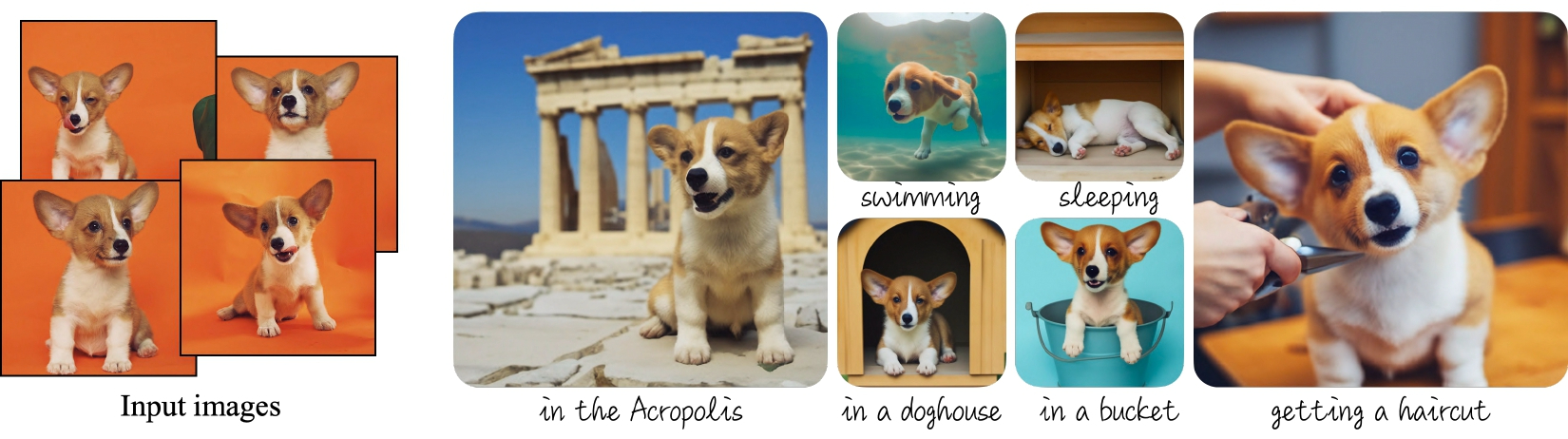
|
||||
<small>Dreambooth examples from the <a href="https://dreambooth.github.io">project's blog.</a></small>
|
||||
_Dreambooth examples from the [project's blog](https://dreambooth.github.io)._
|
||||
|
||||
This guide will show you how to finetune DreamBooth with the [`CompVis/stable-diffusion-v1-4`](https://huggingface.co/CompVis/stable-diffusion-v1-4) model for various GPU sizes, and with Flax. All the training scripts for DreamBooth used in this guide can be found [here](https://github.com/huggingface/diffusers/tree/main/examples/dreambooth) if you're interested in digging deeper and seeing how things work.
|
||||
The [Dreambooth training script](https://github.com/huggingface/diffusers/tree/main/examples/dreambooth) shows how to implement this training procedure on a pre-trained Stable Diffusion model.
|
||||
|
||||
Before running the scripts, make sure you install the library's training dependencies. We also recommend installing 🧨 Diffusers from the `main` GitHub branch:
|
||||
<Tip warning={true}>
|
||||
|
||||
Dreambooth fine-tuning is very sensitive to hyperparameters and easy to overfit. We recommend you take a look at our [in-depth analysis](https://huggingface.co/blog/dreambooth) with recommended settings for different subjects, and go from there.
|
||||
|
||||
</Tip>
|
||||
|
||||
## Training locally
|
||||
|
||||
### Installing the dependencies
|
||||
|
||||
Before running the scripts, make sure to install the library's training dependencies. We also recommend to install `diffusers` from the `main` github branch.
|
||||
|
||||
```bash
|
||||
pip install git+https://github.com/huggingface/diffusers
|
||||
pip install -U -r diffusers/examples/dreambooth/requirements.txt
|
||||
```
|
||||
|
||||
xFormers is not part of the training requirements, but we recommend you [install](../optimization/xformers) it if you can because it could make your training faster and less memory intensive.
|
||||
xFormers is not part of the training requirements, but [we recommend you install it if you can](../optimization/xformers). It could make your training faster and less memory intensive.
|
||||
|
||||
After all the dependencies have been set up, initialize a [🤗 Accelerate](https://github.com/huggingface/accelerate/) environment with:
|
||||
After all dependencies have been set up you can configure a [🤗 Accelerate](https://github.com/huggingface/accelerate/) environment with:
|
||||
|
||||
```bash
|
||||
accelerate config
|
||||
```
|
||||
|
||||
To setup a default 🤗 Accelerate environment without choosing any configurations:
|
||||
In this example we'll use model version `v1-4`, so please visit [its card](https://huggingface.co/CompVis/stable-diffusion-v1-4) and carefully read the license before proceeding.
|
||||
|
||||
```bash
|
||||
accelerate config default
|
||||
```
|
||||
The command below will download and cache the model weights from the Hub because we use the model's Hub id `CompVis/stable-diffusion-v1-4`. You may also clone the repo locally and use the local path in your system where the checkout was saved.
|
||||
|
||||
Or if your environment doesn't support an interactive shell like a notebook, you can use:
|
||||
### Dog toy example
|
||||
|
||||
```py
|
||||
from accelerate.utils import write_basic_config
|
||||
In this example we'll use [these images](https://drive.google.com/drive/folders/1BO_dyz-p65qhBRRMRA4TbZ8qW4rB99JZ) to add a new concept to Stable Diffusion using the Dreambooth process. They will be our training data. Please, download them and place them somewhere in your system.
|
||||
|
||||
write_basic_config()
|
||||
```
|
||||
|
||||
## Finetuning
|
||||
|
||||
<Tip warning={true}>
|
||||
|
||||
DreamBooth finetuning is very sensitive to hyperparameters and easy to overfit. We recommend you take a look at our [in-depth analysis](https://huggingface.co/blog/dreambooth) with recommended settings for different subjects to help you choose the appropriate hyperparameters.
|
||||
|
||||
</Tip>
|
||||
|
||||
<frameworkcontent>
|
||||
<pt>
|
||||
Let's try DreamBooth with a [few images of a dog](https://drive.google.com/drive/folders/1BO_dyz-p65qhBRRMRA4TbZ8qW4rB99JZ); download and save them to a directory and then set the `INSTANCE_DIR` environment variable to that path:
|
||||
Then you can launch the training script using:
|
||||
|
||||
```bash
|
||||
export MODEL_NAME="CompVis/stable-diffusion-v1-4"
|
||||
export INSTANCE_DIR="path_to_training_images"
|
||||
export OUTPUT_DIR="path_to_saved_model"
|
||||
```
|
||||
|
||||
Then you can launch the training script (you can find the full training script [here](https://github.com/huggingface/diffusers/blob/main/examples/dreambooth/train_dreambooth.py)) with the following command:
|
||||
|
||||
```bash
|
||||
accelerate launch train_dreambooth.py \
|
||||
--pretrained_model_name_or_path=$MODEL_NAME \
|
||||
--instance_data_dir=$INSTANCE_DIR \
|
||||
@@ -84,44 +72,13 @@ accelerate launch train_dreambooth.py \
|
||||
--lr_warmup_steps=0 \
|
||||
--max_train_steps=400
|
||||
```
|
||||
</pt>
|
||||
<jax>
|
||||
If you have access to TPUs or want to train even faster, you can try out the [Flax training script](https://github.com/huggingface/diffusers/blob/main/examples/dreambooth/train_dreambooth_flax.py). The Flax training script doesn't support gradient checkpointing or gradient accumulation, so you'll need a GPU with at least 30GB of memory.
|
||||
|
||||
Before running the script, make sure you have the requirements installed:
|
||||
### Training with a prior-preserving loss
|
||||
|
||||
```bash
|
||||
pip install -U -r requirements.txt
|
||||
```
|
||||
Prior preservation is used to avoid overfitting and language-drift. Please, refer to the paper to learn more about it if you are interested. For prior preservation, we use other images of the same class as part of the training process. The nice thing is that we can generate those images using the Stable Diffusion model itself! The training script will save the generated images to a local path we specify.
|
||||
|
||||
Now you can launch the training script with the following command:
|
||||
According to the paper, it's recommended to generate `num_epochs * num_samples` images for prior preservation. 200-300 works well for most cases.
|
||||
|
||||
```bash
|
||||
export MODEL_NAME="duongna/stable-diffusion-v1-4-flax"
|
||||
export INSTANCE_DIR="path-to-instance-images"
|
||||
export OUTPUT_DIR="path-to-save-model"
|
||||
|
||||
python train_dreambooth_flax.py \
|
||||
--pretrained_model_name_or_path=$MODEL_NAME \
|
||||
--instance_data_dir=$INSTANCE_DIR \
|
||||
--output_dir=$OUTPUT_DIR \
|
||||
--instance_prompt="a photo of sks dog" \
|
||||
--resolution=512 \
|
||||
--train_batch_size=1 \
|
||||
--learning_rate=5e-6 \
|
||||
--max_train_steps=400
|
||||
```
|
||||
</jax>
|
||||
</frameworkcontent>
|
||||
|
||||
## Finetuning with prior-preserving loss
|
||||
|
||||
Prior preservation is used to avoid overfitting and language-drift (check out the [paper](https://arxiv.org/abs/2208.12242) to learn more if you're interested). For prior preservation, you use other images of the same class as part of the training process. The nice thing is that you can generate those images using the Stable Diffusion model itself! The training script will save the generated images to a local path you specify.
|
||||
|
||||
The author's recommend generating `num_epochs * num_samples` images for prior preservation. In most cases, 200-300 images work well.
|
||||
|
||||
<frameworkcontent>
|
||||
<pt>
|
||||
```bash
|
||||
export MODEL_NAME="CompVis/stable-diffusion-v1-4"
|
||||
export INSTANCE_DIR="path_to_training_images"
|
||||
@@ -145,125 +102,32 @@ accelerate launch train_dreambooth.py \
|
||||
--num_class_images=200 \
|
||||
--max_train_steps=800
|
||||
```
|
||||
</pt>
|
||||
<jax>
|
||||
```bash
|
||||
export MODEL_NAME="duongna/stable-diffusion-v1-4-flax"
|
||||
export INSTANCE_DIR="path-to-instance-images"
|
||||
export CLASS_DIR="path-to-class-images"
|
||||
export OUTPUT_DIR="path-to-save-model"
|
||||
|
||||
python train_dreambooth_flax.py \
|
||||
--pretrained_model_name_or_path=$MODEL_NAME \
|
||||
--instance_data_dir=$INSTANCE_DIR \
|
||||
--class_data_dir=$CLASS_DIR \
|
||||
--output_dir=$OUTPUT_DIR \
|
||||
--with_prior_preservation --prior_loss_weight=1.0 \
|
||||
--instance_prompt="a photo of sks dog" \
|
||||
--class_prompt="a photo of dog" \
|
||||
--resolution=512 \
|
||||
--train_batch_size=1 \
|
||||
--learning_rate=5e-6 \
|
||||
--num_class_images=200 \
|
||||
--max_train_steps=800
|
||||
```
|
||||
</jax>
|
||||
</frameworkcontent>
|
||||
### Saving checkpoints while training
|
||||
|
||||
## Finetuning the text encoder and UNet
|
||||
|
||||
The script also allows you to finetune the `text_encoder` along with the `unet`. In our experiments (check out the [Training Stable Diffusion with DreamBooth using 🧨 Diffusers](https://huggingface.co/blog/dreambooth) post for more details), this yields much better results, especially when generating images of faces.
|
||||
|
||||
<Tip warning={true}>
|
||||
|
||||
Training the text encoder requires additional memory and it won't fit on a 16GB GPU. You'll need at least 24GB VRAM to use this option.
|
||||
|
||||
</Tip>
|
||||
|
||||
Pass the `--train_text_encoder` argument to the training script to enable finetuning the `text_encoder` and `unet`:
|
||||
|
||||
<frameworkcontent>
|
||||
<pt>
|
||||
```bash
|
||||
export MODEL_NAME="CompVis/stable-diffusion-v1-4"
|
||||
export INSTANCE_DIR="path_to_training_images"
|
||||
export CLASS_DIR="path_to_class_images"
|
||||
export OUTPUT_DIR="path_to_saved_model"
|
||||
|
||||
accelerate launch train_dreambooth.py \
|
||||
--pretrained_model_name_or_path=$MODEL_NAME \
|
||||
--train_text_encoder \
|
||||
--instance_data_dir=$INSTANCE_DIR \
|
||||
--class_data_dir=$CLASS_DIR \
|
||||
--output_dir=$OUTPUT_DIR \
|
||||
--with_prior_preservation --prior_loss_weight=1.0 \
|
||||
--instance_prompt="a photo of sks dog" \
|
||||
--class_prompt="a photo of dog" \
|
||||
--resolution=512 \
|
||||
--train_batch_size=1 \
|
||||
--use_8bit_adam
|
||||
--gradient_checkpointing \
|
||||
--learning_rate=2e-6 \
|
||||
--lr_scheduler="constant" \
|
||||
--lr_warmup_steps=0 \
|
||||
--num_class_images=200 \
|
||||
--max_train_steps=800
|
||||
```
|
||||
</pt>
|
||||
<jax>
|
||||
```bash
|
||||
export MODEL_NAME="duongna/stable-diffusion-v1-4-flax"
|
||||
export INSTANCE_DIR="path-to-instance-images"
|
||||
export CLASS_DIR="path-to-class-images"
|
||||
export OUTPUT_DIR="path-to-save-model"
|
||||
|
||||
python train_dreambooth_flax.py \
|
||||
--pretrained_model_name_or_path=$MODEL_NAME \
|
||||
--train_text_encoder \
|
||||
--instance_data_dir=$INSTANCE_DIR \
|
||||
--class_data_dir=$CLASS_DIR \
|
||||
--output_dir=$OUTPUT_DIR \
|
||||
--with_prior_preservation --prior_loss_weight=1.0 \
|
||||
--instance_prompt="a photo of sks dog" \
|
||||
--class_prompt="a photo of dog" \
|
||||
--resolution=512 \
|
||||
--train_batch_size=1 \
|
||||
--learning_rate=2e-6 \
|
||||
--num_class_images=200 \
|
||||
--max_train_steps=800
|
||||
```
|
||||
</jax>
|
||||
</frameworkcontent>
|
||||
|
||||
## Finetuning with LoRA
|
||||
|
||||
You can also use Low-Rank Adaptation of Large Language Models (LoRA), a fine-tuning technique for accelerating training large models, on DreamBooth. For more details, take a look at the [LoRA training](training/lora#dreambooth) guide.
|
||||
|
||||
## Saving checkpoints while training
|
||||
|
||||
It's easy to overfit while training with Dreambooth, so sometimes it's useful to save regular checkpoints during the training process. One of the intermediate checkpoints might actually work better than the final model! Pass the following argument to the training script to enable saving checkpoints:
|
||||
It's easy to overfit while training with Dreambooth, so sometimes it's useful to save regular checkpoints during the process. One of the intermediate checkpoints might work better than the final model! To use this feature you need to pass the following argument to the training script:
|
||||
|
||||
```bash
|
||||
--checkpointing_steps=500
|
||||
```
|
||||
|
||||
This saves the full training state in subfolders of your `output_dir`. Subfolder names begin with the prefix `checkpoint-`, followed by the number of steps performed so far; for example, `checkpoint-1500` would be a checkpoint saved after 1500 training steps.
|
||||
This will save the full training state in subfolders of your `output_dir`. Subfolder names begin with the prefix `checkpoint-`, and then the number of steps performed so far; for example: `checkpoint-1500` would be a checkpoint saved after 1500 training steps.
|
||||
|
||||
### Resume training from a saved checkpoint
|
||||
#### Resuming training from a saved checkpoint
|
||||
|
||||
If you want to resume training from any of the saved checkpoints, you can pass the argument `--resume_from_checkpoint` to the script and specify the name of the checkpoint you want to use. You can also use the special string `"latest"` to resume from the last saved checkpoint (the one with the largest number of steps). For example, the following would resume training from the checkpoint saved after 1500 steps:
|
||||
If you want to resume training from any of the saved checkpoints, you can pass the argument `--resume_from_checkpoint` and then indicate the name of the checkpoint you want to use. You can also use the special string `"latest"` to resume from the last checkpoint saved (i.e., the one with the largest number of steps). For example, the following would resume training from the checkpoint saved after 1500 steps:
|
||||
|
||||
```bash
|
||||
--resume_from_checkpoint="checkpoint-1500"
|
||||
```
|
||||
|
||||
This is a good opportunity to tweak some of your hyperparameters if you wish.
|
||||
This would be a good opportunity to tweak some of your hyperparameters if you wish.
|
||||
|
||||
### Inference from a saved checkpoint
|
||||
#### Performing inference using a saved checkpoint
|
||||
|
||||
Saved checkpoints are stored in a format suitable for resuming training. They not only include the model weights, but also the state of the optimizer, data loaders, and learning rate.
|
||||
Saved checkpoints are stored in a format suitable for resuming training. They not only include the model weights, but also the state of the optimizer, data loaders and learning rate.
|
||||
|
||||
If you have **`"accelerate>=0.16.0"`** installed, use the following code to run
|
||||
**Note**: If you have installed `"accelerate>=0.16.0"` you can use the following code to run
|
||||
inference from an intermediate checkpoint.
|
||||
|
||||
```python
|
||||
@@ -286,7 +150,7 @@ pipeline.to("cuda")
|
||||
pipeline.save_pretrained("dreambooth-pipeline")
|
||||
```
|
||||
|
||||
If you have **`"accelerate<0.16.0"`** installed, you need to convert it to an inference pipeline first:
|
||||
If you have installed `"accelerate<0.16.0"` you need to first convert it to an inference pipeline. This is how you could do it:
|
||||
|
||||
```python
|
||||
from accelerate import Accelerator
|
||||
@@ -315,37 +179,15 @@ pipeline = DiffusionPipeline.from_pretrained(
|
||||
pipeline.save_pretrained("dreambooth-pipeline")
|
||||
```
|
||||
|
||||
## Optimizations for different GPU sizes
|
||||
### Training on a 16GB GPU
|
||||
|
||||
Depending on your hardware, there are a few different ways to optimize DreamBooth on GPUs from 16GB to just 8GB!
|
||||
|
||||
### xFormers
|
||||
|
||||
[xFormers](https://github.com/facebookresearch/xformers) is a toolbox for optimizing Transformers, and it include a [memory-efficient attention](https://facebookresearch.github.io/xformers/components/ops.html#module-xformers.ops) mechanism that is used in 🧨 Diffusers. You'll need to [install xFormers](./optimization/xformers) and then add the following argument to your training script:
|
||||
|
||||
```bash
|
||||
--enable_xformers_memory_efficient_attention
|
||||
```
|
||||
|
||||
xFormers is not available in Flax.
|
||||
|
||||
### Set gradients to none
|
||||
|
||||
Another way you can lower your memory footprint is to [set the gradients](https://pytorch.org/docs/stable/generated/torch.optim.Optimizer.zero_grad.html) to `None` instead of zero. However, this may change certain behaviors, so if you run into any issues, try removing this argument. Add the following argument to your training script to set the gradients to `None`:
|
||||
|
||||
```bash
|
||||
--set_grads_to_none
|
||||
```
|
||||
|
||||
### 16GB GPU
|
||||
|
||||
With the help of gradient checkpointing and [bitsandbytes](https://github.com/TimDettmers/bitsandbytes) 8-bit optimizer, it's possible to train DreamBooth on a 16GB GPU. Make sure you have bitsandbytes installed:
|
||||
With the help of gradient checkpointing and the 8-bit optimizer from [bitsandbytes](https://github.com/TimDettmers/bitsandbytes), it's possible to train dreambooth on a 16GB GPU.
|
||||
|
||||
```bash
|
||||
pip install bitsandbytes
|
||||
```
|
||||
|
||||
Then pass the `--use_8bit_adam` option to the training script:
|
||||
Then pass the `--use_8bit_adam` option to the training script.
|
||||
|
||||
```bash
|
||||
export MODEL_NAME="CompVis/stable-diffusion-v1-4"
|
||||
@@ -372,18 +214,25 @@ accelerate launch train_dreambooth.py \
|
||||
--max_train_steps=800
|
||||
```
|
||||
|
||||
### 12GB GPU
|
||||
### Fine-tune the text encoder in addition to the UNet
|
||||
|
||||
To run DreamBooth on a 12GB GPU, you'll need to enable gradient checkpointing, the 8-bit optimizer, xFormers, and set the gradients to `None`:
|
||||
The script also allows to fine-tune the `text_encoder` along with the `unet`. It has been observed experimentally that this gives much better results, especially on faces. Please, refer to [our blog](https://huggingface.co/blog/dreambooth) for more details.
|
||||
|
||||
To enable this option, pass the `--train_text_encoder` argument to the training script.
|
||||
|
||||
<Tip>
|
||||
Training the text encoder requires additional memory, so training won't fit on a 16GB GPU. You'll need at least 24GB VRAM to use this option.
|
||||
</Tip>
|
||||
|
||||
```bash
|
||||
export MODEL_NAME="CompVis/stable-diffusion-v1-4"
|
||||
export INSTANCE_DIR="path-to-instance-images"
|
||||
export CLASS_DIR="path-to-class-images"
|
||||
export OUTPUT_DIR="path-to-save-model"
|
||||
export INSTANCE_DIR="path_to_training_images"
|
||||
export CLASS_DIR="path_to_class_images"
|
||||
export OUTPUT_DIR="path_to_saved_model"
|
||||
|
||||
accelerate launch train_dreambooth.py \
|
||||
--pretrained_model_name_or_path=$MODEL_NAME \
|
||||
--train_text_encoder \
|
||||
--instance_data_dir=$INSTANCE_DIR \
|
||||
--class_data_dir=$CLASS_DIR \
|
||||
--output_dir=$OUTPUT_DIR \
|
||||
@@ -392,10 +241,8 @@ accelerate launch train_dreambooth.py \
|
||||
--class_prompt="a photo of dog" \
|
||||
--resolution=512 \
|
||||
--train_batch_size=1 \
|
||||
--gradient_accumulation_steps=1 --gradient_checkpointing \
|
||||
--use_8bit_adam \
|
||||
--enable_xformers_memory_efficient_attention \
|
||||
--set_grads_to_none \
|
||||
--use_8bit_adam
|
||||
--gradient_checkpointing \
|
||||
--learning_rate=2e-6 \
|
||||
--lr_scheduler="constant" \
|
||||
--lr_warmup_steps=0 \
|
||||
@@ -403,25 +250,19 @@ accelerate launch train_dreambooth.py \
|
||||
--max_train_steps=800
|
||||
```
|
||||
|
||||
### 8 GB GPU
|
||||
### Training on a 8 GB GPU:
|
||||
|
||||
For 8GB GPUs, you'll need the help of [DeepSpeed](https://www.deepspeed.ai/) to offload some
|
||||
tensors from the VRAM to either the CPU or NVME, enabling training with less GPU memory.
|
||||
Using [DeepSpeed](https://www.deepspeed.ai/) it's even possible to offload some
|
||||
tensors from VRAM to either CPU or NVME, allowing training to proceed with less GPU memory.
|
||||
|
||||
Run the following command to configure your 🤗 Accelerate environment:
|
||||
DeepSpeed needs to be enabled with `accelerate config`. During configuration,
|
||||
answer yes to "Do you want to use DeepSpeed?". Combining DeepSpeed stage 2, fp16
|
||||
mixed precision, and offloading both the model parameters and the optimizer state to CPU, it's
|
||||
possible to train on under 8 GB VRAM. The drawback is that this requires more system RAM (about 25 GB). See [the DeepSpeed documentation](https://huggingface.co/docs/accelerate/usage_guides/deepspeed) for more configuration options.
|
||||
|
||||
```bash
|
||||
accelerate config
|
||||
```
|
||||
|
||||
During configuration, confirm that you want to use DeepSpeed. Now it's possible to train on under 8GB VRAM by combining DeepSpeed stage 2, fp16 mixed precision, and offloading the model parameters and the optimizer state to the CPU. The drawback is that this requires more system RAM, about 25 GB. See [the DeepSpeed documentation](https://huggingface.co/docs/accelerate/usage_guides/deepspeed) for more configuration options.
|
||||
|
||||
You should also change the default Adam optimizer to DeepSpeed's optimized version of Adam
|
||||
[`deepspeed.ops.adam.DeepSpeedCPUAdam`](https://deepspeed.readthedocs.io/en/latest/optimizers.html#adam-cpu) for a substantial speedup. Enabling `DeepSpeedCPUAdam` requires your system's CUDA toolchain version to be the same as the one installed with PyTorch.
|
||||
|
||||
8-bit optimizers don't seem to be compatible with DeepSpeed at the moment.
|
||||
|
||||
Launch training with the following command:
|
||||
Changing the default Adam optimizer to DeepSpeed's special version of Adam
|
||||
`deepspeed.ops.adam.DeepSpeedCPUAdam` gives a substantial speedup, but enabling
|
||||
it requires the system's CUDA toolchain version to be the same as the one installed with PyTorch. 8-bit optimizers don't seem to be compatible with DeepSpeed at the moment.
|
||||
|
||||
```bash
|
||||
export MODEL_NAME="CompVis/stable-diffusion-v1-4"
|
||||
@@ -451,10 +292,11 @@ accelerate launch train_dreambooth.py \
|
||||
|
||||
## Inference
|
||||
|
||||
Once you have trained a model, specify the path to where the model is saved, and use it for inference in the [`StableDiffusionPipeline`]. Make sure your prompts include the special `identifier` used during training (`sks` in the previous examples).
|
||||
Once you have trained a model, inference can be done using the `StableDiffusionPipeline`, by simply indicating the path where the model was saved. Make sure that your prompts include the special `identifier` used during training (`sks` in the previous examples).
|
||||
|
||||
**Note**: If you have installed `"accelerate>=0.16.0"` you can use the following code to run
|
||||
inference from an intermediate checkpoint.
|
||||
|
||||
If you have **`"accelerate>=0.16.0"`** installed, you can use the following code to run
|
||||
inference from an intermediate checkpoint:
|
||||
|
||||
```python
|
||||
from diffusers import StableDiffusionPipeline
|
||||
@@ -469,4 +311,4 @@ image = pipe(prompt, num_inference_steps=50, guidance_scale=7.5).images[0]
|
||||
image.save("dog-bucket.png")
|
||||
```
|
||||
|
||||
You may also run inference from any of the [saved training checkpoints](#inference-from-a-saved-checkpoint).
|
||||
You may also run inference from [any of the saved training checkpoints](#performing-inference-using-a-saved-checkpoint).
|
||||
|
||||
+114
-150
@@ -10,151 +10,54 @@ an "AS IS" BASIS, WITHOUT WARRANTIES OR CONDITIONS OF ANY KIND, either express o
|
||||
specific language governing permissions and limitations under the License.
|
||||
-->
|
||||
|
||||
# Low-Rank Adaptation of Large Language Models (LoRA)
|
||||
# LoRA Support in Diffusers
|
||||
|
||||
[[open-in-colab]]
|
||||
Diffusers supports LoRA for faster fine-tuning of Stable Diffusion, allowing greater memory efficiency and easier portability.
|
||||
|
||||
<Tip warning={true}>
|
||||
Low-Rank Adaption of Large Language Models was first introduced by Microsoft in
|
||||
[LoRA: Low-Rank Adaptation of Large Language Models](https://arxiv.org/abs/2106.09685) by *Edward J. Hu, Yelong Shen, Phillip Wallis, Zeyuan Allen-Zhu, Yuanzhi Li, Shean Wang, Lu Wang, Weizhu Chen*.
|
||||
|
||||
Currently, LoRA is only supported for the attention layers of the [`UNet2DConditionalModel`].
|
||||
In a nutshell, LoRA allows adapting pretrained models by adding pairs of rank-decomposition weight matrices (called **update matrices**)
|
||||
to existing weights and **only** training those newly added weights. This has a couple of advantages:
|
||||
|
||||
</Tip>
|
||||
|
||||
[Low-Rank Adaptation of Large Language Models (LoRA)](https://arxiv.org/abs/2106.09685) is a training method that accelerates the training of large models while consuming less memory. It adds pairs of rank-decomposition weight matrices (called **update matrices**) to existing weights, and **only** trains those newly added weights. This has a couple of advantages:
|
||||
|
||||
- Previous pretrained weights are kept frozen so the model is not as prone to [catastrophic forgetting](https://www.pnas.org/doi/10.1073/pnas.1611835114).
|
||||
- Previous pretrained weights are kept frozen so that the model is not so prone to [catastrophic forgetting](https://www.pnas.org/doi/10.1073/pnas.1611835114).
|
||||
- Rank-decomposition matrices have significantly fewer parameters than the original model, which means that trained LoRA weights are easily portable.
|
||||
- LoRA matrices are generally added to the attention layers of the original model. 🧨 Diffusers provides the [`~diffusers.loaders.UNet2DConditionLoadersMixin.load_attn_procs`] method to load the LoRA weights into a model's attention layers. You can control the extent to which the model is adapted toward new training images via a `scale` parameter.
|
||||
- The greater memory-efficiency allows you to run fine-tuning on consumer GPUs like the Tesla T4, RTX 3080 or even the RTX 2080 Ti! GPUs like the T4 are free and readily accessible in Kaggle or Google Colab notebooks.
|
||||
- LoRA matrices are generally added to the attention layers of the original model and they control to which extent the model is adapted toward new training images via a `scale` parameter.
|
||||
|
||||
**__Note that the usage of LoRA is not just limited to attention layers. In the original LoRA work, the authors found out that just amending
|
||||
the attention layers of a language model is sufficient to obtain good downstream performance with great efficiency. This is why, it's common
|
||||
to just add the LoRA weights to the attention layers of a model.__**
|
||||
|
||||
[cloneofsimo](https://github.com/cloneofsimo) was the first to try out LoRA training for Stable Diffusion in the popular [lora](https://github.com/cloneofsimo/lora) GitHub repository.
|
||||
|
||||
<Tip>
|
||||
|
||||
💡 LoRA is not only limited to attention layers. The authors found that amending
|
||||
the attention layers of a language model is sufficient to obtain good downstream performance with great efficiency. This is why it's common to just add the LoRA weights to the attention layers of a model. Check out the [Using LoRA for efficient Stable Diffusion fine-tuning](https://huggingface.co/blog/lora) blog for more information about how LoRA works!
|
||||
LoRA allows us to achieve greater memory efficiency since the pretrained weights are kept frozen and only the LoRA weights are trained, thereby
|
||||
allowing us to run fine-tuning on consumer GPUs like Tesla T4, RTX 3080 or even RTX 2080 Ti! One can get access to GPUs like T4 in the free
|
||||
tiers of Kaggle Kernels and Google Colab Notebooks.
|
||||
|
||||
</Tip>
|
||||
|
||||
[cloneofsimo](https://github.com/cloneofsimo) was the first to try out LoRA training for Stable Diffusion in the popular [lora](https://github.com/cloneofsimo/lora) GitHub repository. 🧨 Diffusers now supports finetuning with LoRA for [text-to-image generation](https://github.com/huggingface/diffusers/tree/main/examples/text_to_image#training-with-lora) and [DreamBooth](https://github.com/huggingface/diffusers/tree/main/examples/dreambooth#training-with-low-rank-adaptation-of-large-language-models-lora). This guide will show you how to do both.
|
||||
## Getting started with LoRA for fine-tuning
|
||||
|
||||
If you'd like to store or share your model with the community, login to your Hugging Face account (create [one](hf.co/join) if you don't have one already):
|
||||
Stable Diffusion can be fine-tuned in different ways:
|
||||
|
||||
```bash
|
||||
huggingface-cli login
|
||||
```
|
||||
* [Textual inversion](https://huggingface.co/docs/diffusers/main/en/training/text_inversion)
|
||||
* [DreamBooth](https://huggingface.co/docs/diffusers/main/en/training/dreambooth)
|
||||
* [Text2Image fine-tuning](https://huggingface.co/docs/diffusers/main/en/training/text2image)
|
||||
|
||||
## Text-to-image
|
||||
We provide two end-to-end examples that show how to run fine-tuning with LoRA:
|
||||
|
||||
Finetuning a model like Stable Diffusion, which has billions of parameters, can be slow and difficult. With LoRA, it is much easier and faster to finetune a diffusion model. It can run on hardware with as little as 11GB of GPU RAM without resorting to tricks such as 8-bit optimizers.
|
||||
* [DreamBooth](https://github.com/huggingface/diffusers/tree/main/examples/dreambooth#training-with-low-rank-adaptation-of-large-language-models-lora)
|
||||
* [Text2Image](https://github.com/huggingface/diffusers/tree/main/examples/text_to_image#training-with-lora)
|
||||
|
||||
### Training[[text-to-image-training]]
|
||||
|
||||
Let's finetune [`stable-diffusion-v1-5`](https://huggingface.co/runwayml/stable-diffusion-v1-5) on the [Pokémon BLIP captions](https://huggingface.co/datasets/lambdalabs/pokemon-blip-captions) dataset to generate your own Pokémon.
|
||||
|
||||
To start, make sure you have the `MODEL_NAME` and `DATASET_NAME` environment variables set. The `OUTPUT_DIR` and `HUB_MODEL_ID` variables are optional and specify where to save the model to on the Hub:
|
||||
|
||||
```bash
|
||||
export MODEL_NAME="runwayml/stable-diffusion-v1-5"
|
||||
export OUTPUT_DIR="/sddata/finetune/lora/pokemon"
|
||||
export HUB_MODEL_ID="pokemon-lora"
|
||||
export DATASET_NAME="lambdalabs/pokemon-blip-captions"
|
||||
```
|
||||
|
||||
There are some flags to be aware of before you start training:
|
||||
|
||||
* `--push_to_hub` stores the trained LoRA embeddings on the Hub.
|
||||
* `--report_to=wandb` reports and logs the training results to your Weights & Biases dashboard (as an example, take a look at this [report](https://wandb.ai/pcuenq/text2image-fine-tune/runs/b4k1w0tn?workspace=user-pcuenq)).
|
||||
* `--learning_rate=1e-04`, you can afford to use a higher learning rate than you normally would with LoRA.
|
||||
|
||||
Now you're ready to launch the training (you can find the full training script [here](https://github.com/huggingface/diffusers/blob/main/examples/text_to_image/train_text_to_image_lora.py)):
|
||||
|
||||
```bash
|
||||
accelerate launch --mixed_precision="fp16" train_text_to_image_lora.py \
|
||||
--pretrained_model_name_or_path=$MODEL_NAME \
|
||||
--dataset_name=$DATASET_NAME \
|
||||
--dataloader_num_workers=8 \
|
||||
--resolution=512 --center_crop --random_flip \
|
||||
--train_batch_size=1 \
|
||||
--gradient_accumulation_steps=4 \
|
||||
--max_train_steps=15000 \
|
||||
--learning_rate=1e-04 \
|
||||
--max_grad_norm=1 \
|
||||
--lr_scheduler="cosine" --lr_warmup_steps=0 \
|
||||
--output_dir=${OUTPUT_DIR} \
|
||||
--push_to_hub \
|
||||
--hub_model_id=${HUB_MODEL_ID} \
|
||||
--report_to=wandb \
|
||||
--checkpointing_steps=500 \
|
||||
--validation_prompt="A pokemon with blue eyes." \
|
||||
--seed=1337
|
||||
```
|
||||
|
||||
### Inference[[text-to-image-inference]]
|
||||
|
||||
Now you can use the model for inference by loading the base model in the [`StableDiffusionPipeline`] and then the [`DPMSolverMultistepScheduler`]:
|
||||
|
||||
```py
|
||||
>>> import torch
|
||||
>>> from diffusers import StableDiffusionPipeline, DPMSolverMultistepScheduler
|
||||
|
||||
>>> model_base = "runwayml/stable-diffusion-v1-5"
|
||||
|
||||
>>> pipe = StableDiffusionPipeline.from_pretrained(model_base, torch_dtype=torch.float16)
|
||||
>>> pipe.scheduler = DPMSolverMultistepScheduler.from_config(pipe.scheduler.config)
|
||||
```
|
||||
|
||||
Load the LoRA weights from your finetuned model *on top of the base model weights*, and then move the pipeline to a GPU for faster inference. When you merge the LoRA weights with the frozen pretrained model weights, you can optionally adjust how much of the weights to merge with the `scale` parameter:
|
||||
|
||||
<Tip>
|
||||
|
||||
💡 A `scale` value of `0` is the same as not using your LoRA weights and you're only using the base model weights, and a `scale` value of `1` means you're only using the fully finetuned LoRA weights. Values between `0` and `1` interpolates between the two weights.
|
||||
|
||||
</Tip>
|
||||
|
||||
```py
|
||||
>>> pipe.unet.load_attn_procs(model_path)
|
||||
>>> pipe.to("cuda")
|
||||
# use half the weights from the LoRA finetuned model and half the weights from the base model
|
||||
|
||||
>>> image = pipe(
|
||||
... "A pokemon with blue eyes.", num_inference_steps=25, guidance_scale=7.5, cross_attention_kwargs={"scale": 0.5}
|
||||
... ).images[0]
|
||||
# use the weights from the fully finetuned LoRA model
|
||||
|
||||
>>> image = pipe("A pokemon with blue eyes.", num_inference_steps=25, guidance_scale=7.5).images[0]
|
||||
>>> image.save("blue_pokemon.png")
|
||||
```
|
||||
|
||||
## DreamBooth
|
||||
|
||||
[DreamBooth](https://arxiv.org/abs/2208.12242) is a finetuning technique for personalizing a text-to-image model like Stable Diffusion to generate photorealistic images of a subject in different contexts, given a few images of the subject. However, DreamBooth is very sensitive to hyperparameters and it is easy to overfit. Some important hyperparameters to consider include those that affect the training time (learning rate, number of training steps), and inference time (number of steps, scheduler type).
|
||||
|
||||
<Tip>
|
||||
|
||||
💡 Take a look at the [Training Stable Diffusion with DreamBooth using 🧨 Diffusers](https://huggingface.co/blog/dreambooth) blog for an in-depth analysis of DreamBooth experiments and recommended settings.
|
||||
|
||||
</Tip>
|
||||
|
||||
### Training[[dreambooth-training]]
|
||||
|
||||
Let's finetune [`stable-diffusion-v1-5`](https://huggingface.co/runwayml/stable-diffusion-v1-5) with DreamBooth and LoRA with some 🐶 [dog images](https://drive.google.com/drive/folders/1BO_dyz-p65qhBRRMRA4TbZ8qW4rB99JZ). Download and save these images to a directory.
|
||||
|
||||
To start, make sure you have the `MODEL_NAME` and `INSTANCE_DIR` (path to directory containing images) environment variables set. The `OUTPUT_DIR` variables is optional and specifies where to save the model to on the Hub:
|
||||
If you want to perform DreamBooth training with LoRA, for instance, you would run:
|
||||
|
||||
```bash
|
||||
export MODEL_NAME="runwayml/stable-diffusion-v1-5"
|
||||
export INSTANCE_DIR="path-to-instance-images"
|
||||
export OUTPUT_DIR="path-to-save-model"
|
||||
```
|
||||
|
||||
There are some flags to be aware of before you start training:
|
||||
|
||||
* `--push_to_hub` stores the trained LoRA embeddings on the Hub.
|
||||
* `--report_to=wandb` reports and logs the training results to your Weights & Biases dashboard (as an example, take a look at this [report](https://wandb.ai/pcuenq/text2image-fine-tune/runs/b4k1w0tn?workspace=user-pcuenq)).
|
||||
* `--learning_rate=1e-04`, you can afford to use a higher learning rate than you normally would with LoRA.
|
||||
|
||||
Now you're ready to launch the training (you can find the full training script [here](https://github.com/huggingface/diffusers/blob/main/examples/dreambooth/train_dreambooth_lora.py)):
|
||||
|
||||
```bash
|
||||
accelerate launch train_dreambooth_lora.py \
|
||||
--pretrained_model_name_or_path=$MODEL_NAME \
|
||||
--instance_data_dir=$INSTANCE_DIR \
|
||||
@@ -175,40 +78,101 @@ accelerate launch train_dreambooth_lora.py \
|
||||
--push_to_hub
|
||||
```
|
||||
|
||||
### Inference[[dreambooth-inference]]
|
||||
A similar process can be followed to fully fine-tune Stable Diffusion on a custom dataset using the
|
||||
`examples/text_to_image/train_text_to_image_lora.py` script.
|
||||
|
||||
Now you can use the model for inference by loading the base model in the [`StableDiffusionPipeline`]:
|
||||
|
||||
```py
|
||||
>>> import torch
|
||||
>>> from diffusers import StableDiffusionPipeline
|
||||
|
||||
>>> model_base = "runwayml/stable-diffusion-v1-5"
|
||||
|
||||
>>> pipe = StableDiffusionPipeline.from_pretrained(model_base, torch_dtype=torch.float16)
|
||||
```
|
||||
|
||||
Load the LoRA weights from your finetuned DreamBooth model *on top of the base model weights*, and then move the pipeline to a GPU for faster inference. When you merge the LoRA weights with the frozen pretrained model weights, you can optionally adjust how much of the weights to merge with the `scale` parameter:
|
||||
Refer to the respective examples linked above to learn more.
|
||||
|
||||
<Tip>
|
||||
|
||||
💡 A `scale` value of `0` is the same as not using your LoRA weights and you're only using the base model weights, and a `scale` value of `1` means you're only using the fully finetuned LoRA weights. Values between `0` and `1` interpolates between the two weights.
|
||||
When using LoRA we can use a much higher learning rate (typically 1e-4 as opposed to ~1e-6) compared to non-LoRA Dreambooth fine-tuning.
|
||||
|
||||
</Tip>
|
||||
|
||||
But there is no free lunch. For the given dataset and expected generation quality, you'd still need to experiment with
|
||||
different hyperparameters. Here are some important ones:
|
||||
|
||||
* Training time
|
||||
* Learning rate
|
||||
* Number of training steps
|
||||
* Inference time
|
||||
* Number of steps
|
||||
* Scheduler type
|
||||
|
||||
Additionally, you can follow [this blog](https://huggingface.co/blog/dreambooth) that documents some of our experimental
|
||||
findings for performing DreamBooth training of Stable Diffusion.
|
||||
|
||||
When fine-tuning, the LoRA update matrices are only added to the attention layers. To enable this, we added new weight
|
||||
loading functionalities. Their details are available [here](https://huggingface.co/docs/diffusers/main/en/api/loaders).
|
||||
|
||||
## Inference
|
||||
|
||||
Assuming you used the `examples/text_to_image/train_text_to_image_lora.py` to fine-tune Stable Diffusion on the [Pokemon
|
||||
dataset](https://huggingface.co/datasets/lambdalabs/pokemon-blip-captions), you can perform inference like so:
|
||||
|
||||
```py
|
||||
from diffusers import StableDiffusionPipeline
|
||||
import torch
|
||||
|
||||
model_path = "sayakpaul/sd-model-finetuned-lora-t4"
|
||||
pipe = StableDiffusionPipeline.from_pretrained("CompVis/stable-diffusion-v1-4", torch_dtype=torch.float16)
|
||||
pipe.unet.load_attn_procs(model_path)
|
||||
pipe.to("cuda")
|
||||
|
||||
prompt = "A pokemon with blue eyes."
|
||||
image = pipe(prompt, num_inference_steps=30, guidance_scale=7.5).images[0]
|
||||
image.save("pokemon.png")
|
||||
```
|
||||
|
||||
Here are some example images you can expect:
|
||||
|
||||
<img src="https://huggingface.co/datasets/huggingface/documentation-images/resolve/main/pokemon-collage.png"/>
|
||||
|
||||
[`sayakpaul/sd-model-finetuned-lora-t4`](https://huggingface.co/sayakpaul/sd-model-finetuned-lora-t4) contains [LoRA fine-tuned update matrices](https://huggingface.co/sayakpaul/sd-model-finetuned-lora-t4/blob/main/pytorch_lora_weights.bin)
|
||||
which is only 3 MBs in size. During inference, the pre-trained Stable Diffusion checkpoints are loaded alongside these update
|
||||
matrices and then they are combined to run inference.
|
||||
|
||||
You can use the [`huggingface_hub`](https://github.com/huggingface/huggingface_hub) library to retrieve the base model
|
||||
from [`sayakpaul/sd-model-finetuned-lora-t4`](https://huggingface.co/sayakpaul/sd-model-finetuned-lora-t4) like so:
|
||||
|
||||
```py
|
||||
>>> pipe.unet.load_attn_procs(model_path)
|
||||
>>> pipe.to("cuda")
|
||||
# use half the weights from the LoRA finetuned model and half the weights from the base model
|
||||
from huggingface_hub.repocard import RepoCard
|
||||
|
||||
>>> image = pipe(
|
||||
... "A picture of a sks dog in a bucket.",
|
||||
... num_inference_steps=25,
|
||||
... guidance_scale=7.5,
|
||||
... cross_attention_kwargs={"scale": 0.5},
|
||||
... ).images[0]
|
||||
# use the weights from the fully finetuned LoRA model
|
||||
card = RepoCard.load("sayakpaul/sd-model-finetuned-lora-t4")
|
||||
base_model = card.data.to_dict()["base_model"]
|
||||
# 'CompVis/stable-diffusion-v1-4'
|
||||
```
|
||||
|
||||
>>> image = pipe("A picture of a sks dog in a bucket.", num_inference_steps=25, guidance_scale=7.5).images[0]
|
||||
>>> image.save("bucket-dog.png")
|
||||
```
|
||||
And then you can use `pipe = StableDiffusionPipeline.from_pretrained(base_model, torch_dtype=torch.float16)`.
|
||||
|
||||
This is especially useful when you don't want to hardcode the base model identifier during initializing the `StableDiffusionPipeline`.
|
||||
|
||||
Inference for DreamBooth training remains the same. Check
|
||||
[this section](https://github.com/huggingface/diffusers/tree/main/examples/dreambooth#inference-1) for more details.
|
||||
|
||||
### Merging LoRA with original model
|
||||
|
||||
When performing inference, you can merge the trained LoRA weights with the frozen pre-trained model weights, to interpolate between the original model's inference result (as if no fine-tuning had occurred) and the fully fine-tuned version.
|
||||
|
||||
You can adjust the merging ratio with a parameter called α (alpha) in the paper, or `scale` in our implementation. You can tweak it with the following code, that passes `scale` as `cross_attention_kwargs` in the pipeline call:
|
||||
|
||||
```py
|
||||
from diffusers import StableDiffusionPipeline
|
||||
import torch
|
||||
|
||||
model_path = "sayakpaul/sd-model-finetuned-lora-t4"
|
||||
pipe = StableDiffusionPipeline.from_pretrained("CompVis/stable-diffusion-v1-4", torch_dtype=torch.float16)
|
||||
pipe.unet.load_attn_procs(model_path)
|
||||
pipe.to("cuda")
|
||||
|
||||
prompt = "A pokemon with blue eyes."
|
||||
image = pipe(prompt, num_inference_steps=30, guidance_scale=7.5, cross_attention_kwargs={"scale": 0.5}).images[0]
|
||||
image.save("pokemon.png")
|
||||
```
|
||||
|
||||
A value of `0` is the same as _not_ using the LoRA weights, whereas `1` means only the LoRA fine-tuned weights will be used. Values between 0 and 1 will interpolate between the two versions.
|
||||
|
||||
|
||||
## Known limitations
|
||||
|
||||
* Currently, we only support LoRA for the attention layers of [`UNet2DConditionModel`](https://huggingface.co/docs/diffusers/main/en/api/models#diffusers.UNet2DConditionModel).
|
||||
|
||||
@@ -11,15 +11,20 @@ specific language governing permissions and limitations under the License.
|
||||
-->
|
||||
|
||||
|
||||
# Text-to-image
|
||||
# Stable Diffusion text-to-image fine-tuning
|
||||
|
||||
The [`train_text_to_image.py`](https://github.com/huggingface/diffusers/tree/main/examples/text_to_image) script shows how to fine-tune the stable diffusion model on your own dataset.
|
||||
|
||||
<Tip warning={true}>
|
||||
|
||||
The text-to-image fine-tuning script is experimental. It's easy to overfit and run into issues like catastrophic forgetting. We recommend you explore different hyperparameters to get the best results on your dataset.
|
||||
The text-to-image fine-tuning script is experimental. It's easy to overfit and run into issues like catastrophic forgetting. We recommend to explore different hyperparameters to get the best results on your dataset.
|
||||
|
||||
</Tip>
|
||||
|
||||
Text-to-image models like Stable Diffusion generate an image from a text prompt. This guide will show you how to finetune the [`CompVis/stable-diffusion-v1-4`](https://huggingface.co/CompVis/stable-diffusion-v1-4) model on your own dataset with PyTorch and Flax. All the training scripts for text-to-image finetuning used in this guide can be found in this [repository](https://github.com/huggingface/diffusers/tree/main/examples/text_to_image) if you're interested in taking a closer look.
|
||||
|
||||
## Running locally
|
||||
|
||||
### Installing the dependencies
|
||||
|
||||
Before running the scripts, make sure to install the library's training dependencies:
|
||||
|
||||
@@ -28,51 +33,32 @@ pip install git+https://github.com/huggingface/diffusers.git
|
||||
pip install -U -r requirements.txt
|
||||
```
|
||||
|
||||
And initialize an [🤗 Accelerate](https://github.com/huggingface/accelerate/) environment with:
|
||||
And initialize an [🤗Accelerate](https://github.com/huggingface/accelerate/) environment with:
|
||||
|
||||
```bash
|
||||
accelerate config
|
||||
```
|
||||
|
||||
You need to accept the model license before downloading or using the weights. In this example we'll use model version `v1-4`, so you'll need to visit [its card](https://huggingface.co/CompVis/stable-diffusion-v1-4), read the license and tick the checkbox if you agree.
|
||||
|
||||
You have to be a registered user in 🤗 Hugging Face Hub, and you'll also need to use an access token for the code to work. For more information on access tokens, please refer to [this section of the documentation](https://huggingface.co/docs/hub/security-tokens).
|
||||
|
||||
Run the following command to authenticate your token
|
||||
|
||||
```bash
|
||||
huggingface-cli login
|
||||
```
|
||||
|
||||
If you have already cloned the repo, then you won't need to go through these steps. Instead, you can pass the path to your local checkout to the training script and it will be loaded from there.
|
||||
|
||||
## Hardware requirements
|
||||
### Hardware Requirements for Fine-tuning
|
||||
|
||||
Using `gradient_checkpointing` and `mixed_precision`, it should be possible to finetune the model on a single 24GB GPU. For higher `batch_size`'s and faster training, it's better to use GPUs with more than 30GB of GPU memory. You can also use JAX/Flax for fine-tuning on TPUs or GPUs, which will be covered [below](#flax-jax-finetuning).
|
||||
Using `gradient_checkpointing` and `mixed_precision` it should be possible to fine tune the model on a single 24GB GPU. For higher `batch_size` and faster training it's better to use GPUs with more than 30GB of GPU memory. You can also use JAX / Flax for fine-tuning on TPUs or GPUs, see [below](#flax-jax-finetuning) for details.
|
||||
|
||||
You can reduce your memory footprint even more by enabling memory efficient attention with xFormers. Make sure you have [xFormers installed](./optimization/xformers) and pass the `--enable_xformers_memory_efficient_attention` flag to the training script.
|
||||
### Fine-tuning Example
|
||||
|
||||
xFormers is not available for Flax.
|
||||
The following script will launch a fine-tuning run using [Justin Pinkneys' captioned Pokemon dataset](https://huggingface.co/datasets/lambdalabs/pokemon-blip-captions), available in Hugging Face Hub.
|
||||
|
||||
## Upload model to Hub
|
||||
|
||||
Store your model on the Hub by adding the following argument to the training script:
|
||||
|
||||
```bash
|
||||
--push_to_hub
|
||||
```
|
||||
|
||||
## Save and load checkpoints
|
||||
|
||||
It is a good idea to regularly save checkpoints in case anything happens during training. To save a checkpoint, pass the following argument to the training script:
|
||||
|
||||
```bash
|
||||
--checkpointing_steps=500
|
||||
```
|
||||
|
||||
Every 500 steps, the full training state is saved in a subfolder in the `output_dir`. The checkpoint has the format `checkpoint-` followed by the number of steps trained so far. For example, `checkpoint-1500` is a checkpoint saved after 1500 training steps.
|
||||
|
||||
To load a checkpoint to resume training, pass the argument `--resume_from_checkpoint` to the training script and specify the checkpoint you want to resume from. For example, the following argument resumes training from the checkpoint saved after 1500 training steps:
|
||||
|
||||
```bash
|
||||
--resume_from_checkpoint="checkpoint-1500"
|
||||
```
|
||||
|
||||
## Fine-tuning
|
||||
|
||||
<frameworkcontent>
|
||||
<pt>
|
||||
Launch the [PyTorch training script](https://github.com/huggingface/diffusers/blob/main/examples/text_to_image/train_text_to_image.py) for a fine-tuning run on the [Pokémon BLIP captions](https://huggingface.co/datasets/lambdalabs/pokemon-blip-captions) dataset like this:
|
||||
|
||||
```bash
|
||||
export MODEL_NAME="CompVis/stable-diffusion-v1-4"
|
||||
@@ -94,9 +80,9 @@ accelerate launch train_text_to_image.py \
|
||||
--output_dir="sd-pokemon-model"
|
||||
```
|
||||
|
||||
To finetune on your own dataset, prepare the dataset according to the format required by 🤗 [Datasets](https://huggingface.co/docs/datasets/index). You can [upload your dataset to the Hub](https://huggingface.co/docs/datasets/image_dataset#upload-dataset-to-the-hub), or you can [prepare a local folder with your files](https://huggingface.co/docs/datasets/image_dataset#imagefolder).
|
||||
To run on your own training files you need to prepare the dataset according to the format required by `datasets`. You can upload your dataset to the Hub, or you can prepare a local folder with your files. [This documentation](https://huggingface.co/docs/datasets/v2.4.0/en/image_load#imagefolder-with-metadata) explains how to do it.
|
||||
|
||||
Modify the script if you want to use custom loading logic. We left pointers in the code in the appropriate places to help you. 🤗 The example script below shows how to finetune on a local dataset in `TRAIN_DIR` and where to save the model to in `OUTPUT_DIR`:
|
||||
You should modify the script if you wish to use custom loading logic. We have left pointers in the code in the appropriate places :)
|
||||
|
||||
```bash
|
||||
export MODEL_NAME="CompVis/stable-diffusion-v1-4"
|
||||
@@ -118,19 +104,25 @@ accelerate launch train_text_to_image.py \
|
||||
--lr_scheduler="constant" --lr_warmup_steps=0 \
|
||||
--output_dir=${OUTPUT_DIR}
|
||||
```
|
||||
</pt>
|
||||
<jax>
|
||||
With Flax, it's possible to train a Stable Diffusion model faster on TPUs and GPUs thanks to [@duongna211](https://github.com/duongna21). This is very efficient on TPU hardware but works great on GPUs too. The Flax training script doesn't support features like gradient checkpointing or gradient accumulation yet, so you'll need a GPU with at least 30GB of memory or a TPU v3.
|
||||
|
||||
Before running the script, make sure you have the requirements installed:
|
||||
Once training is finished the model will be saved to the `OUTPUT_DIR` specified in the command. To load the fine-tuned model for inference, just pass that path to `StableDiffusionPipeline`:
|
||||
|
||||
```bash
|
||||
pip install -U -r requirements_flax.txt
|
||||
```python
|
||||
from diffusers import StableDiffusionPipeline
|
||||
|
||||
model_path = "path_to_saved_model"
|
||||
pipe = StableDiffusionPipeline.from_pretrained(model_path, torch_dtype=torch.float16)
|
||||
pipe.to("cuda")
|
||||
|
||||
image = pipe(prompt="yoda").images[0]
|
||||
image.save("yoda-pokemon.png")
|
||||
```
|
||||
|
||||
Now you can launch the [Flax training script](https://github.com/huggingface/diffusers/blob/main/examples/text_to_image/train_text_to_image_flax.py) like this:
|
||||
### Flax / JAX fine-tuning
|
||||
|
||||
```bash
|
||||
Thanks to [@duongna211](https://github.com/duongna21) it's possible to fine-tune Stable Diffusion using Flax! This is very efficient on TPU hardware but works great on GPUs too. You can use the [Flax training script](https://github.com/huggingface/diffusers/blob/main/examples/text_to_image/train_text_to_image_flax.py) like this:
|
||||
|
||||
```Python
|
||||
export MODEL_NAME="runwayml/stable-diffusion-v1-5"
|
||||
export dataset_name="lambdalabs/pokemon-blip-captions"
|
||||
|
||||
@@ -144,77 +136,3 @@ python train_text_to_image_flax.py \
|
||||
--max_grad_norm=1 \
|
||||
--output_dir="sd-pokemon-model"
|
||||
```
|
||||
|
||||
To finetune on your own dataset, prepare the dataset according to the format required by 🤗 [Datasets](https://huggingface.co/docs/datasets/index). You can [upload your dataset to the Hub](https://huggingface.co/docs/datasets/image_dataset#upload-dataset-to-the-hub), or you can [prepare a local folder with your files](https://huggingface.co/docs/datasets/image_dataset#imagefolder).
|
||||
|
||||
Modify the script if you want to use custom loading logic. We left pointers in the code in the appropriate places to help you. 🤗 The example script below shows how to finetune on a local dataset in `TRAIN_DIR`:
|
||||
|
||||
```bash
|
||||
export MODEL_NAME="duongna/stable-diffusion-v1-4-flax"
|
||||
export TRAIN_DIR="path_to_your_dataset"
|
||||
|
||||
python train_text_to_image_flax.py \
|
||||
--pretrained_model_name_or_path=$MODEL_NAME \
|
||||
--train_data_dir=$TRAIN_DIR \
|
||||
--resolution=512 --center_crop --random_flip \
|
||||
--train_batch_size=1 \
|
||||
--mixed_precision="fp16" \
|
||||
--max_train_steps=15000 \
|
||||
--learning_rate=1e-05 \
|
||||
--max_grad_norm=1 \
|
||||
--output_dir="sd-pokemon-model"
|
||||
```
|
||||
</jax>
|
||||
</frameworkcontent>
|
||||
|
||||
## LoRA
|
||||
|
||||
You can also use Low-Rank Adaptation of Large Language Models (LoRA), a fine-tuning technique for accelerating training large models, for fine-tuning text-to-image models. For more details, take a look at the [LoRA training](lora#text-to-image) guide.
|
||||
|
||||
## Inference
|
||||
|
||||
Now you can load the fine-tuned model for inference by passing the model path or model name on the Hub to the [`StableDiffusionPipeline`]:
|
||||
|
||||
<frameworkcontent>
|
||||
<pt>
|
||||
```python
|
||||
from diffusers import StableDiffusionPipeline
|
||||
|
||||
model_path = "path_to_saved_model"
|
||||
pipe = StableDiffusionPipeline.from_pretrained(model_path, torch_dtype=torch.float16)
|
||||
pipe.to("cuda")
|
||||
|
||||
image = pipe(prompt="yoda").images[0]
|
||||
image.save("yoda-pokemon.png")
|
||||
```
|
||||
</pt>
|
||||
<jax>
|
||||
```python
|
||||
import jax
|
||||
import numpy as np
|
||||
from flax.jax_utils import replicate
|
||||
from flax.training.common_utils import shard
|
||||
from diffusers import FlaxStableDiffusionPipeline
|
||||
|
||||
model_path = "path_to_saved_model"
|
||||
pipe, params = FlaxStableDiffusionPipeline.from_pretrained(model_path, dtype=jax.numpy.bfloat16)
|
||||
|
||||
prompt = "yoda pokemon"
|
||||
prng_seed = jax.random.PRNGKey(0)
|
||||
num_inference_steps = 50
|
||||
|
||||
num_samples = jax.device_count()
|
||||
prompt = num_samples * [prompt]
|
||||
prompt_ids = pipeline.prepare_inputs(prompt)
|
||||
|
||||
# shard inputs and rng
|
||||
params = replicate(params)
|
||||
prng_seed = jax.random.split(prng_seed, jax.device_count())
|
||||
prompt_ids = shard(prompt_ids)
|
||||
|
||||
images = pipeline(prompt_ids, params, prng_seed, num_inference_steps, jit=True).images
|
||||
images = pipeline.numpy_to_pil(np.asarray(images.reshape((num_samples,) + images.shape[-3:])))
|
||||
image.save("yoda-pokemon.png")
|
||||
```
|
||||
</jax>
|
||||
</frameworkcontent>
|
||||
|
||||
@@ -14,85 +14,74 @@ specific language governing permissions and limitations under the License.
|
||||
|
||||
# Textual Inversion
|
||||
|
||||
[[open-in-colab]]
|
||||
|
||||
[Textual Inversion](https://arxiv.org/abs/2208.01618) is a technique for capturing novel concepts from a small number of example images. While the technique was originally demonstrated with a [latent diffusion model](https://github.com/CompVis/latent-diffusion), it has since been applied to other model variants like [Stable Diffusion](https://huggingface.co/docs/diffusers/main/en/conceptual/stable_diffusion). The learned concepts can be used to better control the images generated from text-to-image pipelines. It learns new "words" in the text encoder's embedding space, which are used within text prompts for personalized image generation.
|
||||
Textual Inversion is a technique for capturing novel concepts from a small number of example images in a way that can later be used to control text-to-image pipelines. It does so by learning new 'words' in the embedding space of the pipeline's text encoder. These special words can then be used within text prompts to achieve very fine-grained control of the resulting images.
|
||||
|
||||
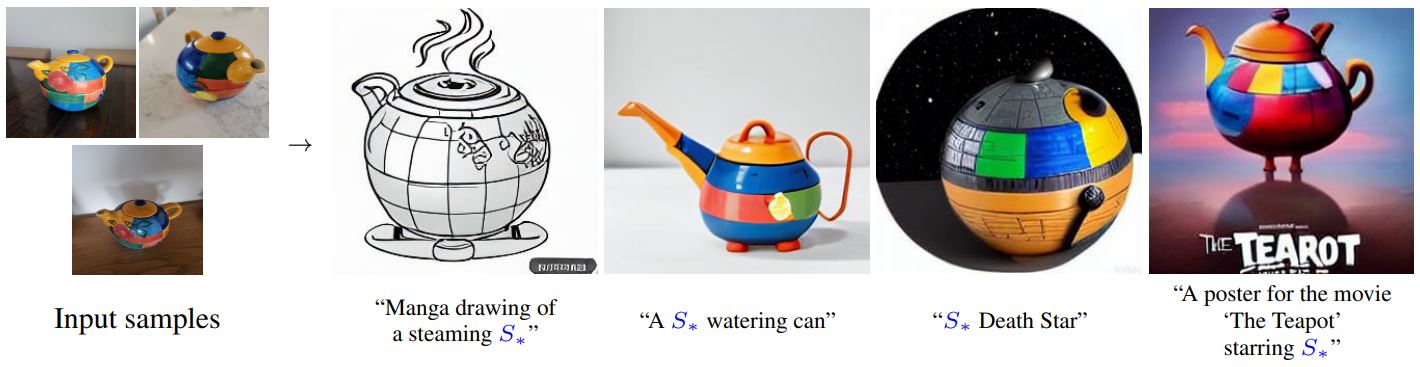
|
||||
<small>By using just 3-5 images you can teach new concepts to a model such as Stable Diffusion for personalized image generation <a href="https://github.com/rinongal/textual_inversion">(image source)</a></small>
|
||||
_By using just 3-5 images you can teach new concepts to a model such as Stable Diffusion for personalized image generation ([image source](https://github.com/rinongal/textual_inversion))._
|
||||
|
||||
This guide will show you how to train a [`runwayml/stable-diffusion-v1-5`](https://huggingface.co/runwayml/stable-diffusion-v1-5) model with Textual Inversion. All the training scripts for Textual Inversion used in this guide can be found [here](https://github.com/huggingface/diffusers/tree/main/examples/textual_inversion) if you're interested in taking a closer look at how things work under the hood.
|
||||
This technique was introduced in [An Image is Worth One Word: Personalizing Text-to-Image Generation using Textual Inversion](https://arxiv.org/abs/2208.01618). The paper demonstrated the concept using a [latent diffusion model](https://github.com/CompVis/latent-diffusion) but the idea has since been applied to other variants such as [Stable Diffusion](https://huggingface.co/docs/diffusers/main/en/conceptual/stable_diffusion).
|
||||
|
||||
<Tip>
|
||||
|
||||
There is a community-created collection of trained Textual Inversion models in the [Stable Diffusion Textual Inversion Concepts Library](https://huggingface.co/sd-concepts-library) which are readily available for inference. Over time, this'll hopefully grow into a useful resource as more concepts are added!
|
||||
## How It Works
|
||||
|
||||
</Tip>
|
||||
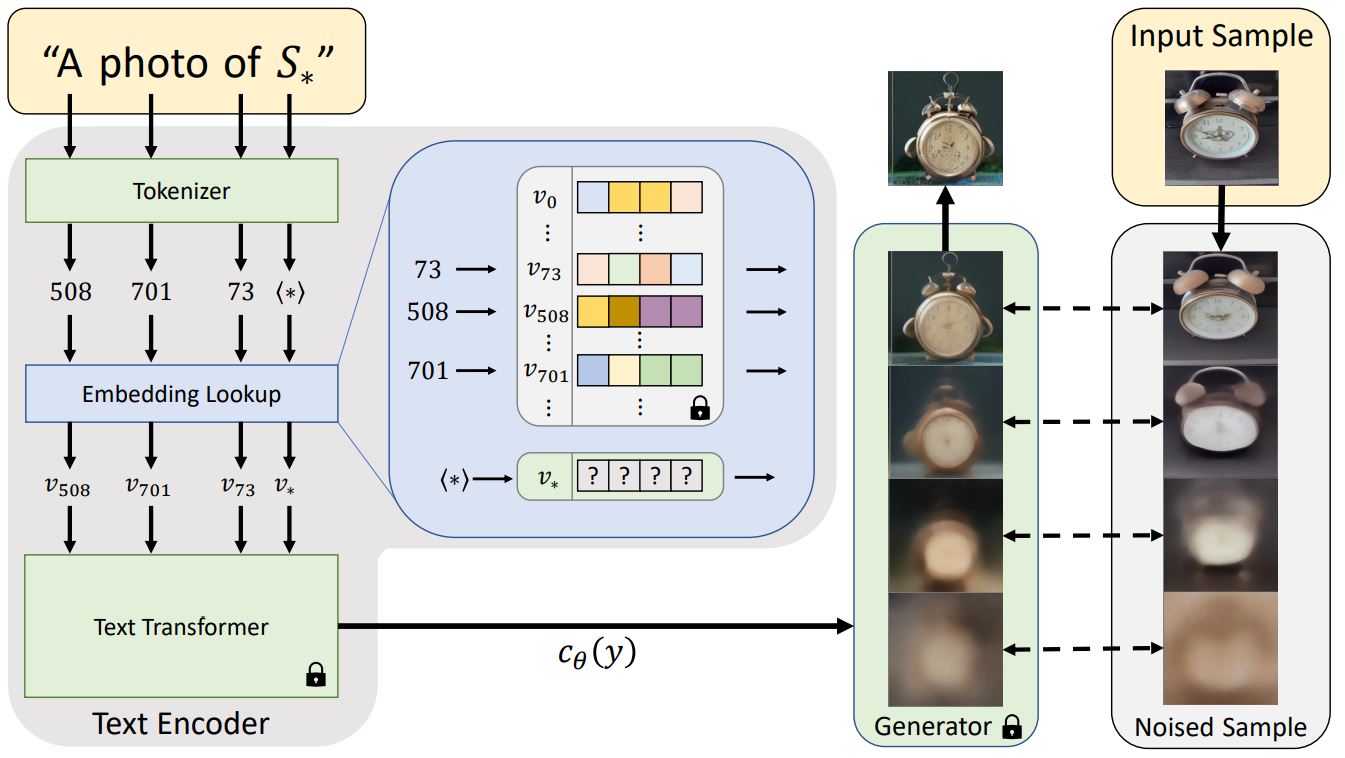
|
||||
_Architecture Overview from the [textual inversion blog post](https://textual-inversion.github.io/)_
|
||||
|
||||
Before you begin, make sure you install the library's training dependencies:
|
||||
Before a text prompt can be used in a diffusion model, it must first be processed into a numerical representation. This typically involves tokenizing the text, converting each token to an embedding and then feeding those embeddings through a model (typically a transformer) whose output will be used as the conditioning for the diffusion model.
|
||||
|
||||
Textual inversion learns a new token embedding (v* in the diagram above). A prompt (that includes a token which will be mapped to this new embedding) is used in conjunction with a noised version of one or more training images as inputs to the generator model, which attempts to predict the denoised version of the image. The embedding is optimized based on how well the model does at this task - an embedding that better captures the object or style shown by the training images will give more useful information to the diffusion model and thus result in a lower denoising loss. After many steps (typically several thousand) with a variety of prompt and image variants the learned embedding should hopefully capture the essence of the new concept being taught.
|
||||
|
||||
## Usage
|
||||
|
||||
To train your own textual inversions, see the [example script here](https://github.com/huggingface/diffusers/tree/main/examples/textual_inversion).
|
||||
|
||||
There is also a notebook for training:
|
||||
[](https://colab.research.google.com/github/huggingface/notebooks/blob/main/diffusers/sd_textual_inversion_training.ipynb)
|
||||
|
||||
And one for inference:
|
||||
[](https://colab.research.google.com/github/huggingface/notebooks/blob/main/diffusers/stable_conceptualizer_inference.ipynb)
|
||||
|
||||
In addition to using concepts you have trained yourself, there is a community-created collection of trained textual inversions in the new [Stable Diffusion public concepts library](https://huggingface.co/sd-concepts-library) which you can also use from the inference notebook above. Over time this will hopefully grow into a useful resource as more examples are added.
|
||||
|
||||
## Example: Running locally
|
||||
|
||||
The `textual_inversion.py` script [here](https://github.com/huggingface/diffusers/blob/main/examples/textual_inversion) shows how to implement the training procedure and adapt it for stable diffusion.
|
||||
|
||||
### Installing the dependencies
|
||||
|
||||
Before running the scripts, make sure to install the library's training dependencies.
|
||||
|
||||
```bash
|
||||
pip install diffusers accelerate transformers
|
||||
pip install diffusers[training] accelerate transformers
|
||||
```
|
||||
|
||||
After all the dependencies have been set up, initialize a [🤗Accelerate](https://github.com/huggingface/accelerate/) environment with:
|
||||
And initialize an [🤗Accelerate](https://github.com/huggingface/accelerate/) environment with:
|
||||
|
||||
```bash
|
||||
accelerate config
|
||||
```
|
||||
|
||||
To setup a default 🤗 Accelerate environment without choosing any configurations:
|
||||
|
||||
### Cat toy example
|
||||
|
||||
You need to accept the model license before downloading or using the weights. In this example we'll use model version `v1-4`, so you'll need to visit [its card](https://huggingface.co/CompVis/stable-diffusion-v1-4), read the license and tick the checkbox if you agree.
|
||||
|
||||
You have to be a registered user in 🤗 Hugging Face Hub, and you'll also need to use an access token for the code to work. For more information on access tokens, please refer to [this section of the documentation](https://huggingface.co/docs/hub/security-tokens).
|
||||
|
||||
Run the following command to authenticate your token
|
||||
|
||||
```bash
|
||||
accelerate config default
|
||||
huggingface-cli login
|
||||
```
|
||||
|
||||
Or if your environment doesn't support an interactive shell like a notebook, you can use:
|
||||
If you have already cloned the repo, then you won't need to go through these steps.
|
||||
|
||||
```bash
|
||||
from accelerate.utils import write_basic_config
|
||||
<br>
|
||||
|
||||
write_basic_config()
|
||||
```
|
||||
Now let's get our dataset.Download 3-4 images from [here](https://drive.google.com/drive/folders/1fmJMs25nxS_rSNqS5hTcRdLem_YQXbq5) and save them in a directory. This will be our training data.
|
||||
|
||||
Finally, you try and [install xFormers](https://huggingface.co/docs/diffusers/main/en/training/optimization/xformers) to reduce your memory footprint with xFormers memory-efficient attention. Once you have xFormers installed, add the `--enable_xformers_memory_efficient_attention` argument to the training script. xFormers is not supported for Flax.
|
||||
And launch the training using
|
||||
|
||||
## Upload model to Hub
|
||||
|
||||
If you want to store your model on the Hub, add the following argument to the training script:
|
||||
|
||||
```bash
|
||||
--push_to_hub
|
||||
```
|
||||
|
||||
## Save and load checkpoints
|
||||
|
||||
It is often a good idea to regularly save checkpoints of your model during training. This way, you can resume training from a saved checkpoint if your training is interrupted for any reason. To save a checkpoint, pass the following argument to the training script to save the full training state in a subfolder in `output_dir` every 500 steps:
|
||||
|
||||
```bash
|
||||
--checkpointing_steps=500
|
||||
```
|
||||
|
||||
To resume training from a saved checkpoint, pass the following argument to the training script and the specific checkpoint you'd like to resume from:
|
||||
|
||||
```bash
|
||||
--resume_from_checkpoint="checkpoint-1500"
|
||||
```
|
||||
|
||||
## Finetuning
|
||||
|
||||
For your training dataset, download these [images of a cat statue](https://drive.google.com/drive/folders/1fmJMs25nxS_rSNqS5hTcRdLem_YQXbq5) and store them in a directory.
|
||||
|
||||
Set the `MODEL_NAME` environment variable to the model repository id, and the `DATA_DIR` environment variable to the path of the directory containing the images. Now you can launch the [training script](https://github.com/huggingface/diffusers/blob/main/examples/textual_inversion/textual_inversion.py):
|
||||
|
||||
<Tip>
|
||||
|
||||
💡 A full training run takes ~1 hour on one V100 GPU. While you're waiting for the training to complete, feel free to check out [how Textual Inversion works](#how-it-works) in the section below if you're curious!
|
||||
|
||||
</Tip>
|
||||
|
||||
<frameworkcontent>
|
||||
<pt>
|
||||
```bash
|
||||
export MODEL_NAME="runwayml/stable-diffusion-v1-5"
|
||||
export DATA_DIR="path-to-dir-containing-images"
|
||||
@@ -111,56 +100,14 @@ accelerate launch textual_inversion.py \
|
||||
--lr_warmup_steps=0 \
|
||||
--output_dir="textual_inversion_cat"
|
||||
```
|
||||
</pt>
|
||||
<jax>
|
||||
If you have access to TPUs, try out the [Flax training script](https://github.com/huggingface/diffusers/blob/main/examples/textual_inversion/textual_inversion_flax.py) to train even faster (this'll also work for GPUs). With the same configuration settings, the Flax training script should be at least 70% faster than the PyTorch training script! ⚡️
|
||||
|
||||
Before you begin, make sure you install the Flax specific dependencies:
|
||||
A full training run takes ~1 hour on one V100 GPU.
|
||||
|
||||
```bash
|
||||
pip install -U -r requirements_flax.txt
|
||||
```
|
||||
|
||||
Then you can launch the [training script](https://github.com/huggingface/diffusers/blob/main/examples/textual_inversion/textual_inversion_flax.py):
|
||||
### Inference
|
||||
|
||||
```bash
|
||||
export MODEL_NAME="duongna/stable-diffusion-v1-4-flax"
|
||||
export DATA_DIR="path-to-dir-containing-images"
|
||||
Once you have trained a model using above command, the inference can be done simply using the `StableDiffusionPipeline`. Make sure to include the `placeholder_token` in your prompt.
|
||||
|
||||
python textual_inversion_flax.py \
|
||||
--pretrained_model_name_or_path=$MODEL_NAME \
|
||||
--train_data_dir=$DATA_DIR \
|
||||
--learnable_property="object" \
|
||||
--placeholder_token="<cat-toy>" --initializer_token="toy" \
|
||||
--resolution=512 \
|
||||
--train_batch_size=1 \
|
||||
--max_train_steps=3000 \
|
||||
--learning_rate=5.0e-04 --scale_lr \
|
||||
--output_dir="textual_inversion_cat"
|
||||
```
|
||||
</jax>
|
||||
</frameworkcontent>
|
||||
|
||||
### Intermediate logging
|
||||
|
||||
If you're interested in following along with your model training progress, you can save the generated images from the training process. Add the following arguments to the training script to enable intermediate logging:
|
||||
|
||||
- `validation_prompt`, the prompt used to generate samples (this is set to `None` by default and intermediate logging is disabled)
|
||||
- `num_validation_images`, the number of sample images to generate
|
||||
- `validation_steps`, the number of steps before generating `num_validation_images` from the `validation_prompt`
|
||||
|
||||
```bash
|
||||
--validation_prompt="A <cat-toy> backpack"
|
||||
--num_validation_images=4
|
||||
--validation_steps=100
|
||||
```
|
||||
|
||||
## Inference
|
||||
|
||||
Once you have trained a model, you can use it for inference with the [`StableDiffusionPipeline]. Make sure you include the `placeholder_token` in your prompt, in this case, it is `<cat-toy>`.
|
||||
|
||||
<frameworkcontent>
|
||||
<pt>
|
||||
```python
|
||||
from diffusers import StableDiffusionPipeline
|
||||
|
||||
@@ -173,43 +120,3 @@ image = pipe(prompt, num_inference_steps=50, guidance_scale=7.5).images[0]
|
||||
|
||||
image.save("cat-backpack.png")
|
||||
```
|
||||
</pt>
|
||||
<jax>
|
||||
```python
|
||||
import jax
|
||||
import numpy as np
|
||||
from flax.jax_utils import replicate
|
||||
from flax.training.common_utils import shard
|
||||
from diffusers import FlaxStableDiffusionPipeline
|
||||
|
||||
model_path = "path-to-your-trained-model"
|
||||
pipe, params = FlaxStableDiffusionPipeline.from_pretrained(model_path, dtype=jax.numpy.bfloat16)
|
||||
|
||||
prompt = "A <cat-toy> backpack"
|
||||
prng_seed = jax.random.PRNGKey(0)
|
||||
num_inference_steps = 50
|
||||
|
||||
num_samples = jax.device_count()
|
||||
prompt = num_samples * [prompt]
|
||||
prompt_ids = pipeline.prepare_inputs(prompt)
|
||||
|
||||
# shard inputs and rng
|
||||
params = replicate(params)
|
||||
prng_seed = jax.random.split(prng_seed, jax.device_count())
|
||||
prompt_ids = shard(prompt_ids)
|
||||
|
||||
images = pipeline(prompt_ids, params, prng_seed, num_inference_steps, jit=True).images
|
||||
images = pipeline.numpy_to_pil(np.asarray(images.reshape((num_samples,) + images.shape[-3:])))
|
||||
image.save("cat-backpack.png")
|
||||
```
|
||||
</jax>
|
||||
</frameworkcontent>
|
||||
|
||||
## How it works
|
||||
|
||||

|
||||
<small>Architecture overview from the Textual Inversion <a href="https://textual-inversion.github.io/">blog post.</a></small>
|
||||
|
||||
Usually, text prompts are tokenized into an embedding before being passed to a model, which is often a transformer. Textual Inversion does something similar, but it learns a new token embedding, `v*`, from a special token `S*` in the diagram above. The model output is used to condition the diffusion model, which helps the diffusion model understand the prompt and new concepts from just a few example images.
|
||||
|
||||
To do this, Textual Inversion uses a generator model and noisy versions of the training images. The generator tries to predict less noisy versions of the images, and the token embedding `v*` is optimized based on how well the generator does. If the token embedding successfully captures the new concept, it gives more useful information to the diffusion model and helps create clearer images with less noise. This optimization process typically occurs after several thousand steps of exposure to a variety of prompt and image variants.
|
||||
@@ -10,79 +10,29 @@ an "AS IS" BASIS, WITHOUT WARRANTIES OR CONDITIONS OF ANY KIND, either express o
|
||||
specific language governing permissions and limitations under the License.
|
||||
-->
|
||||
|
||||
# Unconditional image generation
|
||||
# Unconditional Image-Generation
|
||||
|
||||
Unconditional image generation is not conditioned on any text or images, unlike text- or image-to-image models. It only generates images that resemble its training data distribution.
|
||||
In this section, we explain how one can train an unconditional image generation diffusion
|
||||
model. "Unconditional" because the model is not conditioned on any context to generate an image - once trained the model will simply generate images that resemble its training data
|
||||
distribution.
|
||||
|
||||
<iframe
|
||||
src="https://stevhliu-ddpm-butterflies-128.hf.space"
|
||||
frameborder="0"
|
||||
width="850"
|
||||
height="550"
|
||||
></iframe>
|
||||
## Installing the dependencies
|
||||
|
||||
|
||||
This guide will show you how to train an unconditional image generation model on existing datasets as well as your own custom dataset. All the training scripts for unconditional image generation can be found [here](https://github.com/huggingface/diffusers/tree/main/examples/unconditional_image_generation) if you're interested in learning more about the training details.
|
||||
|
||||
Before running the script, make sure you install the library's training dependencies:
|
||||
Before running the scripts, make sure to install the library's training dependencies:
|
||||
|
||||
```bash
|
||||
pip install diffusers[training] accelerate datasets
|
||||
```
|
||||
|
||||
Next, initialize an 🤗 [Accelerate](https://github.com/huggingface/accelerate/) environment with:
|
||||
And initialize an [🤗Accelerate](https://github.com/huggingface/accelerate/) environment with:
|
||||
|
||||
```bash
|
||||
accelerate config
|
||||
```
|
||||
|
||||
To setup a default 🤗 Accelerate environment without choosing any configurations:
|
||||
## Unconditional Flowers
|
||||
|
||||
```bash
|
||||
accelerate config default
|
||||
```
|
||||
|
||||
Or if your environment doesn't support an interactive shell like a notebook, you can use:
|
||||
|
||||
```bash
|
||||
from accelerate.utils import write_basic_config
|
||||
|
||||
write_basic_config()
|
||||
```
|
||||
|
||||
## Upload model to Hub
|
||||
|
||||
You can upload your model on the Hub by adding the following argument to the training script:
|
||||
|
||||
```bash
|
||||
--push_to_hub
|
||||
```
|
||||
|
||||
## Save and load checkpoints
|
||||
|
||||
It is a good idea to regularly save checkpoints in case anything happens during training. To save a checkpoint, pass the following argument to the training script:
|
||||
|
||||
```bash
|
||||
--checkpointing_steps=500
|
||||
```
|
||||
|
||||
The full training state is saved in a subfolder in the `output_dir` every 500 steps, which allows you to load a checkpoint and resume training if you pass the `--resume_from_checkpoint` argument to the training script:
|
||||
|
||||
```bash
|
||||
--resume_from_checkpoint="checkpoint-1500"
|
||||
```
|
||||
|
||||
## Finetuning
|
||||
|
||||
You're ready to launch the [training script](https://github.com/huggingface/diffusers/blob/main/examples/unconditional_image_generation/train_unconditional.py) now! Specify the dataset name to finetune on with the `--dataset_name` argument and then save it to the path in `--output_dir`.
|
||||
|
||||
<Tip>
|
||||
|
||||
💡 A full training run takes 2 hours on 4xV100 GPUs.
|
||||
|
||||
</Tip>
|
||||
|
||||
For example, to finetune on the [Oxford Flowers](https://huggingface.co/datasets/huggan/flowers-102-categories) dataset:
|
||||
The command to train a DDPM UNet model on the Oxford Flowers dataset:
|
||||
|
||||
```bash
|
||||
accelerate launch train_unconditional.py \
|
||||
@@ -97,12 +47,15 @@ accelerate launch train_unconditional.py \
|
||||
--mixed_precision=no \
|
||||
--push_to_hub
|
||||
```
|
||||
An example trained model: https://huggingface.co/anton-l/ddpm-ema-flowers-64
|
||||
|
||||
<div class="flex justify-center">
|
||||
<img src="https://user-images.githubusercontent.com/26864830/180248660-a0b143d0-b89a-42c5-8656-2ebf6ece7e52.png"/>
|
||||
</div>
|
||||
A full training run takes 2 hours on 4xV100 GPUs.
|
||||
|
||||
Or if you want to train your model on the [Pokemon](https://huggingface.co/datasets/huggan/pokemon) dataset:
|
||||
<img src="https://user-images.githubusercontent.com/26864830/180248660-a0b143d0-b89a-42c5-8656-2ebf6ece7e52.png" width="700" />
|
||||
|
||||
## Unconditional Pokemon
|
||||
|
||||
The command to train a DDPM UNet model on the Pokemon dataset:
|
||||
|
||||
```bash
|
||||
accelerate launch train_unconditional.py \
|
||||
@@ -117,29 +70,26 @@ accelerate launch train_unconditional.py \
|
||||
--mixed_precision=no \
|
||||
--push_to_hub
|
||||
```
|
||||
An example trained model: https://huggingface.co/anton-l/ddpm-ema-pokemon-64
|
||||
|
||||
<div class="flex justify-center">
|
||||
<img src="https://user-images.githubusercontent.com/26864830/180248200-928953b4-db38-48db-b0c6-8b740fe6786f.png"/>
|
||||
</div>
|
||||
A full training run takes 2 hours on 4xV100 GPUs.
|
||||
|
||||
## Finetuning with your own data
|
||||
<img src="https://user-images.githubusercontent.com/26864830/180248200-928953b4-db38-48db-b0c6-8b740fe6786f.png" width="700" />
|
||||
|
||||
There are two ways to finetune a model on your own dataset:
|
||||
|
||||
- provide your own folder of images to the `--train_data_dir` argument
|
||||
- upload your dataset to the Hub and pass the dataset repository id to the `--dataset_name` argument.
|
||||
## Using your own data
|
||||
|
||||
<Tip>
|
||||
To use your own dataset, there are 2 ways:
|
||||
- you can either provide your own folder as `--train_data_dir`
|
||||
- or you can upload your dataset to the hub (possibly as a private repo, if you prefer so), and simply pass the `--dataset_name` argument.
|
||||
|
||||
💡 Learn more about how to create an image dataset for training in the [Create an image dataset](https://huggingface.co/docs/datasets/image_dataset) guide.
|
||||
|
||||
</Tip>
|
||||
**Note**: If you want to create your own training dataset please have a look at [this document](https://huggingface.co/docs/datasets/image_process#image-datasets).
|
||||
|
||||
Below, we explain both in more detail.
|
||||
|
||||
### Provide the dataset as a folder
|
||||
|
||||
If you provide your own dataset as a folder, the script expects the following directory structure:
|
||||
If you provide your own folders with images, the script expects the following directory structure:
|
||||
|
||||
```bash
|
||||
data_dir/xxx.png
|
||||
@@ -147,7 +97,7 @@ data_dir/xxy.png
|
||||
data_dir/[...]/xxz.png
|
||||
```
|
||||
|
||||
Pass the path to the folder containing the images to the `--train_data_dir` argument and launch the training:
|
||||
In other words, the script will take care of gathering all images inside the folder. You can then run the script like this:
|
||||
|
||||
```bash
|
||||
accelerate launch train_unconditional.py \
|
||||
@@ -155,17 +105,11 @@ accelerate launch train_unconditional.py \
|
||||
<other-arguments>
|
||||
```
|
||||
|
||||
Internally, the script uses the [`ImageFolder`](https://huggingface.co/docs/datasets/image_load#imagefolder) to automatically build a dataset from the folder.
|
||||
Internally, the script will use the [`ImageFolder`](https://huggingface.co/docs/datasets/v2.0.0/en/image_process#imagefolder) feature which will automatically turn the folders into 🤗 Dataset objects.
|
||||
|
||||
### Upload your data to the Hub
|
||||
### Upload your data to the hub, as a (possibly private) repo
|
||||
|
||||
<Tip>
|
||||
|
||||
💡 For more details and context about creating and uploading a dataset to the Hub, take a look at the [Image search with 🤗 Datasets](https://huggingface.co/blog/image-search-datasets) post.
|
||||
|
||||
</Tip>
|
||||
|
||||
To upload your dataset to the Hub, you can start by creating one with the [`ImageFolder`](https://huggingface.co/docs/datasets/image_load#imagefolder) feature, which creates an `image` column containing the PIL-encoded images, from 🤗 Datasets:
|
||||
It's very easy (and convenient) to upload your image dataset to the hub using the [`ImageFolder`](https://huggingface.co/docs/datasets/v2.0.0/en/image_process#imagefolder) feature available in 🤗 Datasets. Simply do the following:
|
||||
|
||||
```python
|
||||
from datasets import load_dataset
|
||||
@@ -188,7 +132,9 @@ dataset = load_dataset(
|
||||
)
|
||||
```
|
||||
|
||||
Then you can use the [`~datasets.Dataset.push_to_hub`] method to upload it to the Hub:
|
||||
`ImageFolder` will create an `image` column containing the PIL-encoded images.
|
||||
|
||||
Next, push it to the hub!
|
||||
|
||||
```python
|
||||
# assuming you have ran the huggingface-cli login command in a terminal
|
||||
@@ -198,4 +144,6 @@ dataset.push_to_hub("name_of_your_dataset")
|
||||
dataset.push_to_hub("name_of_your_dataset", private=True)
|
||||
```
|
||||
|
||||
Now train your model by simply setting the `--dataset_name` argument to the name of your dataset on the Hub.
|
||||
and that's it! You can now train your model by simply setting the `--dataset_name` argument to the name of your dataset on the hub.
|
||||
|
||||
More on this can also be found in [this blog post](https://huggingface.co/blog/image-search-datasets).
|
||||
|
||||
@@ -1,415 +0,0 @@
|
||||
<!--Copyright 2023 The HuggingFace Team. All rights reserved.
|
||||
|
||||
Licensed under the Apache License, Version 2.0 (the "License"); you may not use this file except in compliance with
|
||||
the License. You may obtain a copy of the License at
|
||||
|
||||
http://www.apache.org/licenses/LICENSE-2.0
|
||||
|
||||
Unless required by applicable law or agreed to in writing, software distributed under the License is distributed on
|
||||
an "AS IS" BASIS, WITHOUT WARRANTIES OR CONDITIONS OF ANY KIND, either express or implied. See the License for the
|
||||
specific language governing permissions and limitations under the License.
|
||||
-->
|
||||
|
||||
[[open-in-colab]]
|
||||
|
||||
# Train a diffusion model
|
||||
|
||||
Unconditional image generation is a popular application of diffusion models that generates images that look like those in the dataset used for training. Typically, the best results are obtained from finetuning a pretrained model on a specific dataset. You can find many of these checkpoints on the [Hub](https://huggingface.co/search/full-text?q=unconditional-image-generation&type=model), but if you can't find one you like, you can always train your own!
|
||||
|
||||
This tutorial will teach you how to train a [`UNet2DModel`] from scratch on a subset of the [Smithsonian Butterflies](https://huggingface.co/datasets/huggan/smithsonian_butterflies_subset) dataset to generate your own 🦋 butterflies 🦋.
|
||||
|
||||
<Tip>
|
||||
|
||||
💡 This training tutorial is based on the [Training with 🧨 Diffusers](https://colab.research.google.com/github/huggingface/notebooks/blob/main/diffusers/training_example.ipynb) notebook. For additional details and context about diffusion models like how they work, check out the notebook!
|
||||
|
||||
</Tip>
|
||||
|
||||
Before you begin, make sure you have 🤗 Datasets installed to load and preprocess image datasets, and 🤗 Accelerate, to simplify training on any number of GPUs. The following command will also install [TensorBoard](https://www.tensorflow.org/tensorboard) to visualize training metrics (you can also use [Weights & Biases](https://docs.wandb.ai/) to track your training).
|
||||
|
||||
```bash
|
||||
!pip install diffusers[training]
|
||||
```
|
||||
|
||||
We encourage you to share your model with the community, and in order to do that, you'll need to login to your Hugging Face account (create one [here](https://hf.co/join) if you don't already have one!). You can login from a notebook and enter your token when prompted:
|
||||
|
||||
```py
|
||||
>>> from huggingface_hub import notebook_login
|
||||
|
||||
>>> notebook_login()
|
||||
```
|
||||
|
||||
Or login in from the terminal:
|
||||
|
||||
```bash
|
||||
huggingface-cli login
|
||||
```
|
||||
|
||||
Since the model checkpoints are quite large, install [Git-LFS](https://git-lfs.com/) to version these large files:
|
||||
|
||||
```bash
|
||||
!sudo apt -qq install git-lfs
|
||||
!git config --global credential.helper store
|
||||
```
|
||||
|
||||
## Training configuration
|
||||
|
||||
For convenience, create a `TrainingConfig` class containing the training hyperparameters (feel free to adjust them):
|
||||
|
||||
```py
|
||||
>>> from dataclasses import dataclass
|
||||
|
||||
|
||||
>>> @dataclass
|
||||
... class TrainingConfig:
|
||||
... image_size = 128 # the generated image resolution
|
||||
... train_batch_size = 16
|
||||
... eval_batch_size = 16 # how many images to sample during evaluation
|
||||
... num_epochs = 50
|
||||
... gradient_accumulation_steps = 1
|
||||
... learning_rate = 1e-4
|
||||
... lr_warmup_steps = 500
|
||||
... save_image_epochs = 10
|
||||
... save_model_epochs = 30
|
||||
... mixed_precision = "fp16" # `no` for float32, `fp16` for automatic mixed precision
|
||||
... output_dir = "ddpm-butterflies-128" # the model name locally and on the HF Hub
|
||||
|
||||
... push_to_hub = True # whether to upload the saved model to the HF Hub
|
||||
... hub_private_repo = False
|
||||
... overwrite_output_dir = True # overwrite the old model when re-running the notebook
|
||||
... seed = 0
|
||||
|
||||
|
||||
>>> config = TrainingConfig()
|
||||
```
|
||||
|
||||
## Load the dataset
|
||||
|
||||
You can easily load the [Smithsonian Butterflies](https://huggingface.co/datasets/huggan/smithsonian_butterflies_subset) dataset with the 🤗 Datasets library:
|
||||
|
||||
```py
|
||||
>>> from datasets import load_dataset
|
||||
|
||||
>>> config.dataset_name = "huggan/smithsonian_butterflies_subset"
|
||||
>>> dataset = load_dataset(config.dataset_name, split="train")
|
||||
```
|
||||
|
||||
<Tip>
|
||||
|
||||
💡 You can find additional datasets from the [HugGan Community Event](https://huggingface.co/huggan) or you can use your own dataset by creating a local [`ImageFolder`](https://huggingface.co/docs/datasets/image_dataset#imagefolder). Set `config.dataset_name` to the repository id of the dataset if it is from the HugGan Community Event, or `imagefolder` if you're using your own images.
|
||||
|
||||
</Tip>
|
||||
|
||||
🤗 Datasets uses the [`~datasets.Image`] feature to automatically decode the image data and load it as a [`PIL.Image`](https://pillow.readthedocs.io/en/stable/reference/Image.html) which we can visualize:
|
||||
|
||||
```py
|
||||
>>> import matplotlib.pyplot as plt
|
||||
|
||||
>>> fig, axs = plt.subplots(1, 4, figsize=(16, 4))
|
||||
>>> for i, image in enumerate(dataset[:4]["image"]):
|
||||
... axs[i].imshow(image)
|
||||
... axs[i].set_axis_off()
|
||||
>>> fig.show()
|
||||
```
|
||||
|
||||
<div class="flex justify-center">
|
||||
<img src="https://huggingface.co/datasets/huggingface/documentation-images/resolve/main/diffusers/butterflies_ds.png"/>
|
||||
</div>
|
||||
|
||||
The images are all different sizes though, so you'll need to preprocess them first:
|
||||
|
||||
* `Resize` changes the image size to the one defined in `config.image_size`.
|
||||
* `RandomHorizontalFlip` augments the dataset by randomly mirroring the images.
|
||||
* `Normalize` is important to rescale the pixel values into a [-1, 1] range, which is what the model expects.
|
||||
|
||||
```py
|
||||
>>> from torchvision import transforms
|
||||
|
||||
>>> preprocess = transforms.Compose(
|
||||
... [
|
||||
... transforms.Resize((config.image_size, config.image_size)),
|
||||
... transforms.RandomHorizontalFlip(),
|
||||
... transforms.ToTensor(),
|
||||
... transforms.Normalize([0.5], [0.5]),
|
||||
... ]
|
||||
... )
|
||||
```
|
||||
|
||||
Use 🤗 Datasets' [`~datasets.Dataset.set_transform`] method to apply the `preprocess` function on the fly during training:
|
||||
|
||||
```py
|
||||
>>> def transform(examples):
|
||||
... images = [preprocess(image.convert("RGB")) for image in examples["image"]]
|
||||
... return {"images": images}
|
||||
|
||||
|
||||
>>> dataset.set_transform(transform)
|
||||
```
|
||||
|
||||
Feel free to visualize the images again to confirm that they've been resized. Now you're ready to wrap the dataset in a [DataLoader](https://pytorch.org/docs/stable/data#torch.utils.data.DataLoader) for training!
|
||||
|
||||
```py
|
||||
>>> import torch
|
||||
|
||||
>>> train_dataloader = torch.utils.data.DataLoader(dataset, batch_size=config.train_batch_size, shuffle=True)
|
||||
```
|
||||
|
||||
## Create a UNet2DModel
|
||||
|
||||
Pretrained models in 🧨 Diffusers are easily created from their model class with the parameters you want. For example, to create a [`UNet2DModel`]:
|
||||
|
||||
```py
|
||||
>>> from diffusers import UNet2DModel
|
||||
|
||||
>>> model = UNet2DModel(
|
||||
... sample_size=config.image_size, # the target image resolution
|
||||
... in_channels=3, # the number of input channels, 3 for RGB images
|
||||
... out_channels=3, # the number of output channels
|
||||
... layers_per_block=2, # how many ResNet layers to use per UNet block
|
||||
... block_out_channels=(128, 128, 256, 256, 512, 512), # the number of output channels for each UNet block
|
||||
... down_block_types=(
|
||||
... "DownBlock2D", # a regular ResNet downsampling block
|
||||
... "DownBlock2D",
|
||||
... "DownBlock2D",
|
||||
... "DownBlock2D",
|
||||
... "AttnDownBlock2D", # a ResNet downsampling block with spatial self-attention
|
||||
... "DownBlock2D",
|
||||
... ),
|
||||
... up_block_types=(
|
||||
... "UpBlock2D", # a regular ResNet upsampling block
|
||||
... "AttnUpBlock2D", # a ResNet upsampling block with spatial self-attention
|
||||
... "UpBlock2D",
|
||||
... "UpBlock2D",
|
||||
... "UpBlock2D",
|
||||
... "UpBlock2D",
|
||||
... ),
|
||||
... )
|
||||
```
|
||||
|
||||
It is often a good idea to quickly check the sample image shape matches the model output shape:
|
||||
|
||||
```py
|
||||
>>> sample_image = dataset[0]["images"].unsqueeze(0)
|
||||
>>> print("Input shape:", sample_image.shape)
|
||||
Input shape: torch.Size([1, 3, 128, 128])
|
||||
|
||||
>>> print("Output shape:", model(sample_image, timestep=0).sample.shape)
|
||||
Output shape: torch.Size([1, 3, 128, 128])
|
||||
```
|
||||
|
||||
Great! Next, you'll need a scheduler to add some noise to the image.
|
||||
|
||||
## Create a scheduler
|
||||
|
||||
The scheduler behaves differently depending on whether you're using the model for training or inference. During inference, the scheduler generates image from the noise. During training, the scheduler takes a model output - or a sample - from a specific point in the diffusion process and applies noise to the image according to a *noise schedule* and an *update rule*.
|
||||
|
||||
Let's take a look at the [`DDPMScheduler`] and use the `add_noise` method to add some random noise to the `sample_image` from before:
|
||||
|
||||
```py
|
||||
>>> import torch
|
||||
>>> from PIL import Image
|
||||
>>> from diffusers import DDPMScheduler
|
||||
|
||||
>>> noise_scheduler = DDPMScheduler(num_train_timesteps=1000)
|
||||
>>> noise = torch.randn(sample_image.shape)
|
||||
>>> timesteps = torch.LongTensor([50])
|
||||
>>> noisy_image = noise_scheduler.add_noise(sample_image, noise, timesteps)
|
||||
|
||||
>>> Image.fromarray(((noisy_image.permute(0, 2, 3, 1) + 1.0) * 127.5).type(torch.uint8).numpy()[0])
|
||||
```
|
||||
|
||||
<div class="flex justify-center">
|
||||
<img src="https://huggingface.co/datasets/huggingface/documentation-images/resolve/main/diffusers/noisy_butterfly.png"/>
|
||||
</div>
|
||||
|
||||
The training objective of the model is to predict the noise added to the image. The loss at this step can be calculated by:
|
||||
|
||||
```py
|
||||
>>> import torch.nn.functional as F
|
||||
|
||||
>>> noise_pred = model(noisy_image, timesteps).sample
|
||||
>>> loss = F.mse_loss(noise_pred, noise)
|
||||
```
|
||||
|
||||
## Train the model
|
||||
|
||||
By now, you have most of the pieces to start training the model and all that's left is putting everything together.
|
||||
|
||||
First, you'll need an optimizer and a learning rate scheduler:
|
||||
|
||||
```py
|
||||
>>> from diffusers.optimization import get_cosine_schedule_with_warmup
|
||||
|
||||
>>> optimizer = torch.optim.AdamW(model.parameters(), lr=config.learning_rate)
|
||||
>>> lr_scheduler = get_cosine_schedule_with_warmup(
|
||||
... optimizer=optimizer,
|
||||
... num_warmup_steps=config.lr_warmup_steps,
|
||||
... num_training_steps=(len(train_dataloader) * config.num_epochs),
|
||||
... )
|
||||
```
|
||||
|
||||
Then, you'll need a way to evaluate the model. For evaluation, you can use the [`DDPMPipeline`] to generate a batch of sample images and save it as a grid:
|
||||
|
||||
```py
|
||||
>>> from diffusers import DDPMPipeline
|
||||
>>> import math
|
||||
>>> import os
|
||||
|
||||
|
||||
>>> def make_grid(images, rows, cols):
|
||||
... w, h = images[0].size
|
||||
... grid = Image.new("RGB", size=(cols * w, rows * h))
|
||||
... for i, image in enumerate(images):
|
||||
... grid.paste(image, box=(i % cols * w, i // cols * h))
|
||||
... return grid
|
||||
|
||||
|
||||
>>> def evaluate(config, epoch, pipeline):
|
||||
... # Sample some images from random noise (this is the backward diffusion process).
|
||||
... # The default pipeline output type is `List[PIL.Image]`
|
||||
... images = pipeline(
|
||||
... batch_size=config.eval_batch_size,
|
||||
... generator=torch.manual_seed(config.seed),
|
||||
... ).images
|
||||
|
||||
... # Make a grid out of the images
|
||||
... image_grid = make_grid(images, rows=4, cols=4)
|
||||
|
||||
... # Save the images
|
||||
... test_dir = os.path.join(config.output_dir, "samples")
|
||||
... os.makedirs(test_dir, exist_ok=True)
|
||||
... image_grid.save(f"{test_dir}/{epoch:04d}.png")
|
||||
```
|
||||
|
||||
Now you can wrap all these components together in a training loop with 🤗 Accelerate for easy TensorBoard logging, gradient accumulation, and mixed precision training. To upload the model to the Hub, write a function to get your repository name and information and then push it to the Hub.
|
||||
|
||||
<Tip>
|
||||
|
||||
💡 The training loop below may look intimidating and long, but it'll be worth it later when you launch your training in just one line of code! If you can't wait and want to start generating images, feel free to copy and run the code below. You can always come back and examine the training loop more closely later, like when you're waiting for your model to finish training. 🤗
|
||||
|
||||
</Tip>
|
||||
|
||||
```py
|
||||
>>> from accelerate import Accelerator
|
||||
>>> from huggingface_hub import HfFolder, Repository, whoami
|
||||
>>> from tqdm.auto import tqdm
|
||||
>>> from pathlib import Path
|
||||
>>> import os
|
||||
|
||||
|
||||
>>> def get_full_repo_name(model_id: str, organization: str = None, token: str = None):
|
||||
... if token is None:
|
||||
... token = HfFolder.get_token()
|
||||
... if organization is None:
|
||||
... username = whoami(token)["name"]
|
||||
... return f"{username}/{model_id}"
|
||||
... else:
|
||||
... return f"{organization}/{model_id}"
|
||||
|
||||
|
||||
>>> def train_loop(config, model, noise_scheduler, optimizer, train_dataloader, lr_scheduler):
|
||||
... # Initialize accelerator and tensorboard logging
|
||||
... accelerator = Accelerator(
|
||||
... mixed_precision=config.mixed_precision,
|
||||
... gradient_accumulation_steps=config.gradient_accumulation_steps,
|
||||
... log_with="tensorboard",
|
||||
... logging_dir=os.path.join(config.output_dir, "logs"),
|
||||
... )
|
||||
... if accelerator.is_main_process:
|
||||
... if config.push_to_hub:
|
||||
... repo_name = get_full_repo_name(Path(config.output_dir).name)
|
||||
... repo = Repository(config.output_dir, clone_from=repo_name)
|
||||
... elif config.output_dir is not None:
|
||||
... os.makedirs(config.output_dir, exist_ok=True)
|
||||
... accelerator.init_trackers("train_example")
|
||||
|
||||
... # Prepare everything
|
||||
... # There is no specific order to remember, you just need to unpack the
|
||||
... # objects in the same order you gave them to the prepare method.
|
||||
... model, optimizer, train_dataloader, lr_scheduler = accelerator.prepare(
|
||||
... model, optimizer, train_dataloader, lr_scheduler
|
||||
... )
|
||||
|
||||
... global_step = 0
|
||||
|
||||
... # Now you train the model
|
||||
... for epoch in range(config.num_epochs):
|
||||
... progress_bar = tqdm(total=len(train_dataloader), disable=not accelerator.is_local_main_process)
|
||||
... progress_bar.set_description(f"Epoch {epoch}")
|
||||
|
||||
... for step, batch in enumerate(train_dataloader):
|
||||
... clean_images = batch["images"]
|
||||
... # Sample noise to add to the images
|
||||
... noise = torch.randn(clean_images.shape).to(clean_images.device)
|
||||
... bs = clean_images.shape[0]
|
||||
|
||||
... # Sample a random timestep for each image
|
||||
... timesteps = torch.randint(
|
||||
... 0, noise_scheduler.num_train_timesteps, (bs,), device=clean_images.device
|
||||
... ).long()
|
||||
|
||||
... # Add noise to the clean images according to the noise magnitude at each timestep
|
||||
... # (this is the forward diffusion process)
|
||||
... noisy_images = noise_scheduler.add_noise(clean_images, noise, timesteps)
|
||||
|
||||
... with accelerator.accumulate(model):
|
||||
... # Predict the noise residual
|
||||
... noise_pred = model(noisy_images, timesteps, return_dict=False)[0]
|
||||
... loss = F.mse_loss(noise_pred, noise)
|
||||
... accelerator.backward(loss)
|
||||
|
||||
... accelerator.clip_grad_norm_(model.parameters(), 1.0)
|
||||
... optimizer.step()
|
||||
... lr_scheduler.step()
|
||||
... optimizer.zero_grad()
|
||||
|
||||
... progress_bar.update(1)
|
||||
... logs = {"loss": loss.detach().item(), "lr": lr_scheduler.get_last_lr()[0], "step": global_step}
|
||||
... progress_bar.set_postfix(**logs)
|
||||
... accelerator.log(logs, step=global_step)
|
||||
... global_step += 1
|
||||
|
||||
... # After each epoch you optionally sample some demo images with evaluate() and save the model
|
||||
... if accelerator.is_main_process:
|
||||
... pipeline = DDPMPipeline(unet=accelerator.unwrap_model(model), scheduler=noise_scheduler)
|
||||
|
||||
... if (epoch + 1) % config.save_image_epochs == 0 or epoch == config.num_epochs - 1:
|
||||
... evaluate(config, epoch, pipeline)
|
||||
|
||||
... if (epoch + 1) % config.save_model_epochs == 0 or epoch == config.num_epochs - 1:
|
||||
... if config.push_to_hub:
|
||||
... repo.push_to_hub(commit_message=f"Epoch {epoch}", blocking=True)
|
||||
... else:
|
||||
... pipeline.save_pretrained(config.output_dir)
|
||||
```
|
||||
|
||||
Phew, that was quite a bit of code! But you're finally ready to launch the training with 🤗 Accelerate's [`~accelerate.notebook_launcher`] function. Pass the function the training loop, all the training arguments, and the number of processes (you can change this value to the number of GPUs available to you) to use for training:
|
||||
|
||||
```py
|
||||
>>> from accelerate import notebook_launcher
|
||||
|
||||
>>> args = (config, model, noise_scheduler, optimizer, train_dataloader, lr_scheduler)
|
||||
|
||||
>>> notebook_launcher(train_loop, args, num_processes=1)
|
||||
```
|
||||
|
||||
Once training is complete, take a look at the final 🦋 images 🦋 generated by your diffusion model!
|
||||
|
||||
```py
|
||||
>>> import glob
|
||||
|
||||
>>> sample_images = sorted(glob.glob(f"{config.output_dir}/samples/*.png"))
|
||||
>>> Image.open(sample_images[-1])
|
||||
```
|
||||
|
||||
<div class="flex justify-center">
|
||||
<img src="https://huggingface.co/datasets/huggingface/documentation-images/resolve/main/diffusers/butterflies_final.png"/>
|
||||
</div>
|
||||
|
||||
## Next steps
|
||||
|
||||
Unconditional image generation is one example of a task that can be trained. You can explore other tasks and training techniques by visiting the [🧨 Diffusers Training Examples](./training/overview) page. Here are some examples of what you can learn:
|
||||
|
||||
* [Textual Inversion](./training/text_inversion), an algorithm that teaches a model a specific visual concept and integrates it into the generated image.
|
||||
* [DreamBooth](./training/dreambooth), a technique for generating personalized images of a subject given several input images of the subject.
|
||||
* [Guide](./training/text2image) to finetuning a Stable Diffusion model on your own dataset.
|
||||
* [Guide](./training/lora) to using LoRA, a memory-efficient technique for finetuning really large models faster.
|
||||
@@ -1,23 +0,0 @@
|
||||
<!--Copyright 2023 The HuggingFace Team. All rights reserved.
|
||||
|
||||
Licensed under the Apache License, Version 2.0 (the "License"); you may not use this file except in compliance with
|
||||
the License. You may obtain a copy of the License at
|
||||
|
||||
http://www.apache.org/licenses/LICENSE-2.0
|
||||
|
||||
Unless required by applicable law or agreed to in writing, software distributed under the License is distributed on
|
||||
an "AS IS" BASIS, WITHOUT WARRANTIES OR CONDITIONS OF ANY KIND, either express or implied. See the License for the
|
||||
specific language governing permissions and limitations under the License.
|
||||
-->
|
||||
|
||||
# Overview
|
||||
|
||||
Welcome to 🧨 Diffusers! If you're new to diffusion models and generative AI, and want to learn more, then you've come to the right place. These beginner-friendly tutorials are designed to provide a gentle introduction to diffusion models and help you understand the library fundamentals - the core components and how 🧨 Diffusers is meant to be used.
|
||||
|
||||
You'll learn how to use a pipeline for inference to rapidly generate things, and then deconstruct that pipeline to really understand how to use the library as a modular toolbox for building your own diffusion systems. In the next lesson, you'll learn how to train your own diffusion model to generate what you want.
|
||||
|
||||
After completing the tutorials, you'll have gained the necessary skills to start exploring the library on your own and see how to use it for your own projects and applications.
|
||||
|
||||
Feel free to join our community on [Discord](https://discord.com/invite/JfAtkvEtRb) or the [forums](https://discuss.huggingface.co/c/discussion-related-to-httpsgithubcomhuggingfacediffusers/63) to connect and collaborate with other users and developers!
|
||||
|
||||
Let's start diffusing! 🧨
|
||||
@@ -12,7 +12,7 @@ specific language governing permissions and limitations under the License.
|
||||
|
||||
# Conditional Image Generation
|
||||
|
||||
The [`DiffusionPipeline`] is the easiest way to use a pre-trained diffusion system for inference.
|
||||
The [`DiffusionPipeline`] is the easiest way to use a pre-trained diffusion system for inference
|
||||
|
||||
Start by creating an instance of [`DiffusionPipeline`] and specify which pipeline checkpoint you would like to download.
|
||||
You can use the [`DiffusionPipeline`] for any [Diffusers' checkpoint](https://huggingface.co/models?library=diffusers&sort=downloads).
|
||||
|
||||
@@ -0,0 +1,21 @@
|
||||
<!--Copyright 2023 The HuggingFace Team. All rights reserved.
|
||||
|
||||
Licensed under the Apache License, Version 2.0 (the "License"); you may not use this file except in compliance with
|
||||
the License. You may obtain a copy of the License at
|
||||
|
||||
http://www.apache.org/licenses/LICENSE-2.0
|
||||
|
||||
Unless required by applicable law or agreed to in writing, software distributed under the License is distributed on
|
||||
an "AS IS" BASIS, WITHOUT WARRANTIES OR CONDITIONS OF ANY KIND, either express or implied. See the License for the
|
||||
specific language governing permissions and limitations under the License.
|
||||
-->
|
||||
|
||||
|
||||
|
||||
# Configuration
|
||||
|
||||
The handling of configurations in Diffusers is with the `ConfigMixin` class.
|
||||
|
||||
[[autodoc]] ConfigMixin
|
||||
|
||||
Under further construction 🚧, open a [PR](https://github.com/huggingface/diffusers/compare) if you want to contribute!
|
||||
@@ -10,7 +10,7 @@ an "AS IS" BASIS, WITHOUT WARRANTIES OR CONDITIONS OF ANY KIND, either express o
|
||||
specific language governing permissions and limitations under the License.
|
||||
-->
|
||||
|
||||
# Controlled generation
|
||||
# Controlling generation of diffusion models
|
||||
|
||||
Controlling outputs generated by diffusion models has been long pursued by the community and is now an active research topic. In many popular diffusion models, subtle changes in inputs, both images and text prompts, can drastically change outputs. In an ideal world we want to be able to control how semantics are preserved and changed.
|
||||
|
||||
@@ -36,7 +36,6 @@ Unless otherwise mentioned, these are techniques that work with existing models
|
||||
8. [DreamBooth](#dreambooth)
|
||||
9. [Textual Inversion](#textual-inversion)
|
||||
10. [ControlNet](#controlnet)
|
||||
11. [Prompt Weighting](#prompt-weighting)
|
||||
|
||||
## Instruct Pix2Pix
|
||||
|
||||
@@ -63,7 +62,7 @@ Next, we generate image captions for the concept that shall be edited and for th
|
||||
<Tip>
|
||||
|
||||
Pix2Pix Zero is the first model that allows "zero-shot" image editing. This means that the model
|
||||
can edit an image in less than a minute on a consumer GPU as shown [here](../api/pipelines/stable_diffusion/pix2pix_zero#usage-example).
|
||||
can edit an image in less than a minute on a consumer GPU as shown [here](../api/pipelines/stable_diffusion/pix2pix_zero#usage-example)
|
||||
|
||||
</Tip>
|
||||
|
||||
@@ -159,9 +158,3 @@ depth maps, and semantic segmentations.
|
||||
|
||||
See [here](../api/pipelines/stable_diffusion/controlnet) for more information on how to use it.
|
||||
|
||||
## Prompt Weighting
|
||||
|
||||
Prompt weighting is a simple technique that puts more attention weight on certain parts of the text
|
||||
input.
|
||||
|
||||
For a more in-detail explanation and examples, see [here](../using-diffusers/weighted_prompts).
|
||||
|
||||
@@ -41,7 +41,7 @@ is safe 🔒. Make sure to check out the code online before loading & running it
|
||||
|
||||
## Loading official community pipelines
|
||||
|
||||
Community pipelines are summarized in the [community examples folder](https://github.com/huggingface/diffusers/tree/main/examples/community).
|
||||
Community pipelines are summarized in the [community examples folder](https://github.com/huggingface/diffusers/tree/main/examples/community)
|
||||
|
||||
Similarly, you need to pass both the *repo id* from where you wish to load the weights as well as the `custom_pipeline` argument. Here the `custom_pipeline` argument should consist simply of the filename of the community pipeline excluding the `.py` suffix, *e.g.* `clip_guided_stable_diffusion`.
|
||||
|
||||
|
||||
@@ -12,17 +12,7 @@ specific language governing permissions and limitations under the License.
|
||||
|
||||
# Text-Guided Image-to-Image Generation
|
||||
|
||||
[[open-in-colab]]
|
||||
|
||||
The [`StableDiffusionImg2ImgPipeline`] lets you pass a text prompt and an initial image to condition the generation of new images. This tutorial shows how to use it for text-guided image-to-image generation with Stable Diffusion model.
|
||||
|
||||
Before you begin, make sure you have all the necessary libraries installed:
|
||||
|
||||
```bash
|
||||
!pip install diffusers transformers ftfy accelerate
|
||||
```
|
||||
|
||||
Get started by creating a [`StableDiffusionImg2ImgPipeline`] with a pretrained Stable Diffusion model.
|
||||
The [`StableDiffusionImg2ImgPipeline`] lets you pass a text prompt and an initial image to condition the generation of new images.
|
||||
|
||||
```python
|
||||
import torch
|
||||
@@ -31,83 +21,25 @@ from PIL import Image
|
||||
from io import BytesIO
|
||||
|
||||
from diffusers import StableDiffusionImg2ImgPipeline
|
||||
```
|
||||
|
||||
Load the pipeline:
|
||||
|
||||
```python
|
||||
# load the pipeline
|
||||
device = "cuda"
|
||||
pipe = StableDiffusionImg2ImgPipeline.from_pretrained("runwayml/stable-diffusion-v1-5", torch_dtype=torch.float16).to(
|
||||
device
|
||||
)
|
||||
```
|
||||
|
||||
Download an initial image and preprocess it so we can pass it to the pipeline:
|
||||
|
||||
```python
|
||||
# let's download an initial image
|
||||
url = "https://raw.githubusercontent.com/CompVis/stable-diffusion/main/assets/stable-samples/img2img/sketch-mountains-input.jpg"
|
||||
|
||||
response = requests.get(url)
|
||||
init_image = Image.open(BytesIO(response.content)).convert("RGB")
|
||||
init_image.thumbnail((768, 768))
|
||||
init_image
|
||||
```
|
||||
|
||||
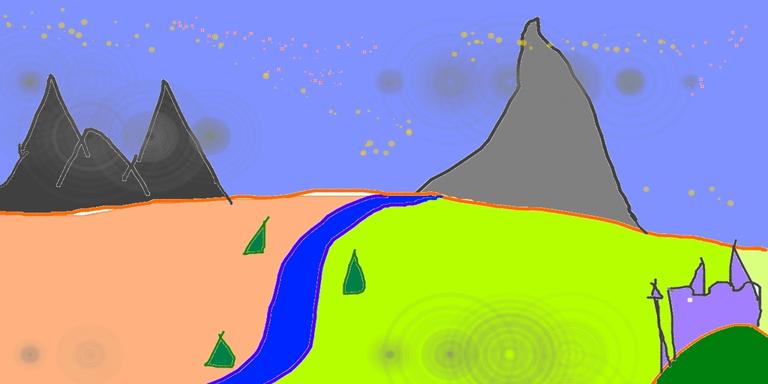
|
||||
|
||||
Define the prompt and run the pipeline:
|
||||
|
||||
```python
|
||||
prompt = "A fantasy landscape, trending on artstation"
|
||||
|
||||
images = pipe(prompt=prompt, image=init_image, strength=0.75, guidance_scale=7.5).images
|
||||
|
||||
images[0].save("fantasy_landscape.png")
|
||||
```
|
||||
|
||||
<Tip>
|
||||
|
||||
`strength` is a value between 0.0 and 1.0, that controls the amount of noise that is added to the input image. Values that approach 1.0 allow for lots of variations but will also produce images that are not semantically consistent with the input.
|
||||
|
||||
</Tip>
|
||||
|
||||
Let's generate two images with same pipeline and seed, but with different values for `strength`:
|
||||
|
||||
```python
|
||||
generator = torch.Generator(device=device).manual_seed(1024)
|
||||
image = pipe(prompt=prompt, image=init_image, strength=0.75, guidance_scale=7.5, generator=generator).images[0]
|
||||
```
|
||||
|
||||
```python
|
||||
image
|
||||
```
|
||||
|
||||

|
||||
|
||||
|
||||
```python
|
||||
image = pipe(prompt=prompt, image=init_image, strength=0.5, guidance_scale=7.5, generator=generator).images[0]
|
||||
image
|
||||
```
|
||||
|
||||

|
||||
|
||||
|
||||
As you can see, when using a lower value for `strength`, the generated image is more closer to the original `image`.
|
||||
|
||||
Now let's use a different scheduler - [LMSDiscreteScheduler](https://huggingface.co/docs/diffusers/api/schedulers#diffusers.LMSDiscreteScheduler):
|
||||
|
||||
```python
|
||||
from diffusers import LMSDiscreteScheduler
|
||||
|
||||
lms = LMSDiscreteScheduler.from_config(pipe.scheduler.config)
|
||||
pipe.scheduler = lms
|
||||
```
|
||||
|
||||
```python
|
||||
generator = torch.Generator(device=device).manual_seed(1024)
|
||||
image = pipe(prompt=prompt, image=init_image, strength=0.75, guidance_scale=7.5, generator=generator).images[0]
|
||||
```
|
||||
|
||||
```python
|
||||
image
|
||||
```
|
||||
|
||||

|
||||
You can also run this example on colab [](https://colab.research.google.com/github/huggingface/notebooks/blob/main/diffusers/image_2_image_using_diffusers.ipynb)
|
||||
|
||||
|
||||
@@ -97,7 +97,7 @@ Note that we're not specifying the UNet weights here since the UNet is not fine-
|
||||
|
||||
</Tip>
|
||||
|
||||
And that's it! You now have your fine-tuned KerasCV Stable Diffusion model in Diffusers 🧨.
|
||||
And that's it! You now have your fine-tuned KerasCV Stable Diffusion model in Diffusers 🧨
|
||||
|
||||
## Using the Converted Model in Diffusers
|
||||
|
||||
@@ -176,4 +176,4 @@ more details. For inference-specific optimizations, refer [here](https://hugging
|
||||
|
||||
## Known Limitations
|
||||
|
||||
* Only Stable Diffusion v1 checkpoints are supported for conversion in this tool.
|
||||
* Only Stable Diffusion v1 checkpoints are supported for conversion in this tool.
|
||||
@@ -213,7 +213,7 @@ identical to the weights of the "main" checkpoint, just loaded in a different fr
|
||||
|
||||
Also variants do not correspond to different model structures, *e.g.* [stable-diffusion-v1-5](https://huggingface.co/runwayml/stable-diffusion-v1-5) is not a variant of [stable-diffusion-2-0](https://huggingface.co/stabilityai/stable-diffusion-2) since the model structure is different (Stable Diffusion 1-5 uses a different `CLIPTextModel` compared to Stable Diffusion 2.0).
|
||||
|
||||
Pipeline checkpoints that are identical in model structure, but have been trained on different datasets, trained with vastly different training setups and thus correspond to different official releases (such as [Stable Diffusion v1-4](https://huggingface.co/CompVis/stable-diffusion-v1-4) and [Stable Diffusion v1-5](https://huggingface.co/runwayml/stable-diffusion-v1-5)) should probably be stored in individual repositories instead of as variations of each other.
|
||||
Pipeline checkpoints that are identical in model structure, but have been trained on different datasets, trained with vastly different training setups and thus correspond to different official releases (such as [Stable Diffusion v1-4](https://huggingface.co/CompVis/stable-diffusion-v1-4) and [Stable Diffusion v1-5](https://huggingface.co/runwayml/stable-diffusion-v1-5)) should probably be stored in individual repositories instead of as variations of eachother.
|
||||
|
||||
#### So what are checkpoint variants then?
|
||||
|
||||
@@ -345,7 +345,7 @@ and
|
||||
pipe = DiffusionPipeline.from_pretrained("diffusers/stable-diffusion-variants", variant="fp16")
|
||||
```
|
||||
|
||||
work.
|
||||
works.
|
||||
|
||||
<Tip>
|
||||
|
||||
@@ -399,7 +399,7 @@ As a class method, [`DiffusionPipeline.from_pretrained`] is responsible for two
|
||||
- Download the latest version of the folder structure required to run the `repo_id` with `diffusers` and cache them. If the latest folder structure is available in the local cache, [`DiffusionPipeline.from_pretrained`] will simply reuse the cache and **not** re-download the files.
|
||||
- Load the cached weights into the _correct_ pipeline class – one of the [officially supported pipeline classes](./api/overview#diffusers-summary) - and return an instance of the class. The _correct_ pipeline class is thereby retrieved from the `model_index.json` file.
|
||||
|
||||
The underlying folder structure of diffusion pipelines corresponds 1-to-1 to their corresponding class instances, *e.g.* [`StableDiffusionPipeline`] for [`runwayml/stable-diffusion-v1-5`](https://huggingface.co/runwayml/stable-diffusion-v1-5).
|
||||
The underlying folder structure of diffusion pipelines correspond 1-to-1 to their corresponding class instances, *e.g.* [`StableDiffusionPipeline`] for [`runwayml/stable-diffusion-v1-5`](https://huggingface.co/runwayml/stable-diffusion-v1-5)
|
||||
This can be better understood by looking at an example. Let's load a pipeline class instance `pipe` and print it:
|
||||
|
||||
```python
|
||||
@@ -531,7 +531,7 @@ In the case of `runwayml/stable-diffusion-v1-5` the `model_index.json` is theref
|
||||
"class"
|
||||
]
|
||||
```
|
||||
- The `"name"` field corresponds both to the name of the subfolder in which the configuration and weights are stored as well as the attribute name of the pipeline class (as can be seen [here](https://huggingface.co/runwayml/stable-diffusion-v1-5/tree/main/bert) and [here](https://github.com/huggingface/diffusers/blob/cd502b25cf0debac6f98d27a6638ef95208d1ea2/src/diffusers/pipelines/latent_diffusion/pipeline_latent_diffusion.py#L42))
|
||||
- The `"name"` field corresponds both to the name of the subfolder in which the configuration and weights are stored as well as the attribute name of the pipeline class (as can be seen [here](https://huggingface.co/runwayml/stable-diffusion-v1-5/tree/main/bert) and [here](https://github.com/huggingface/diffusers/blob/cd502b25cf0debac6f98d27a6638ef95208d1ea2/src/diffusers/pipelines/latent_diffusion/pipeline_latent_diffusion.py#L42)
|
||||
- The `"library"` field corresponds to the name of the library, *e.g.* `diffusers` or `transformers` from which the `"class"` should be loaded
|
||||
- The `"class"` field corresponds to the name of the class, *e.g.* [`CLIPTokenizer`](https://huggingface.co/docs/transformers/main/en/model_doc/clip#transformers.CLIPTokenizer) or [`UNet2DConditionModel`]
|
||||
|
||||
@@ -652,6 +652,6 @@ euler_anc = EulerAncestralDiscreteScheduler.from_pretrained(repo_id, subfolder="
|
||||
euler = EulerDiscreteScheduler.from_pretrained(repo_id, subfolder="scheduler")
|
||||
dpm = DPMSolverMultistepScheduler.from_pretrained(repo_id, subfolder="scheduler")
|
||||
|
||||
# replace `dpm` with any of `ddpm`, `ddim`, `pndm`, `lms`, `euler_anc`, `euler`
|
||||
# replace `dpm` with any of `ddpm`, `ddim`, `pndm`, `lms`, `euler`, `euler_anc`
|
||||
pipeline = StableDiffusionPipeline.from_pretrained(repo_id, scheduler=dpm)
|
||||
```
|
||||
|
||||
@@ -1,17 +0,0 @@
|
||||
<!--Copyright 2023 The HuggingFace Team. All rights reserved.
|
||||
|
||||
Licensed under the Apache License, Version 2.0 (the "License"); you may not use this file except in compliance with
|
||||
the License. You may obtain a copy of the License at
|
||||
|
||||
http://www.apache.org/licenses/LICENSE-2.0
|
||||
|
||||
Unless required by applicable law or agreed to in writing, software distributed under the License is distributed on
|
||||
an "AS IS" BASIS, WITHOUT WARRANTIES OR CONDITIONS OF ANY KIND, either express or implied. See the License for the
|
||||
specific language governing permissions and limitations under the License.
|
||||
-->
|
||||
|
||||
# Overview
|
||||
|
||||
🧨 Diffusers offers many pipelines, models, and schedulers for generative tasks. To make loading these components as simple as possible, we provide a single and unified method - `from_pretrained()` - that loads any of these components from either the Hugging Face [Hub](https://huggingface.co/models?library=diffusers&sort=downloads) or your local machine. Whenever you load a pipeline or model, the latest files are automatically downloaded and cached so you can quickly reuse them next time without redownloading the files.
|
||||
|
||||
This section will show you everything you need to know about loading pipelines, how to load different components in a pipeline, how to load checkpoint variants, and how to load community pipelines. You'll also learn how to load schedulers and compare the speed and quality trade-offs of using different schedulers. Finally, you'll see how to convert and load KerasCV checkpoints so you can use them in PyTorch with 🧨 Diffusers.
|
||||
@@ -1,17 +0,0 @@
|
||||
<!--Copyright 2023 The HuggingFace Team. All rights reserved.
|
||||
|
||||
Licensed under the Apache License, Version 2.0 (the "License"); you may not use this file except in compliance with
|
||||
the License. You may obtain a copy of the License at
|
||||
|
||||
http://www.apache.org/licenses/LICENSE-2.0
|
||||
|
||||
Unless required by applicable law or agreed to in writing, software distributed under the License is distributed on
|
||||
an "AS IS" BASIS, WITHOUT WARRANTIES OR CONDITIONS OF ANY KIND, either express or implied. See the License for the
|
||||
specific language governing permissions and limitations under the License.
|
||||
-->
|
||||
|
||||
# Overview
|
||||
|
||||
A pipeline is an end-to-end class that provides a quick and easy way to use a diffusion system for inference by bundling independently trained models and schedulers together. Certain combinations of models and schedulers define specific pipeline types, like [`StableDiffusionPipeline`] or [`StableDiffusionControlNetPipeline`], with specific capabilities. All pipeline types inherit from the base [`DiffusionPipeline`] class; pass it any checkpoint, and it'll automatically detect the pipeline type and load the necessary components.
|
||||
|
||||
This section introduces you to some of the tasks supported by our pipelines such as unconditional image generation and different techniques and variations of text-to-image generation. You'll also learn how to gain more control over the generation process by setting a seed for reproducibility and weighting prompts to adjust the influence certain words in the prompt has over the output. Finally, you'll see how you can create a community pipeline for a custom task like generating images from speech.
|
||||
@@ -13,7 +13,7 @@ specific language governing permissions and limitations under the License.
|
||||
# Schedulers
|
||||
|
||||
Diffusion pipelines are inherently a collection of diffusion models and schedulers that are partly independent from each other. This means that one is able to switch out parts of the pipeline to better customize
|
||||
a pipeline to one's use case. The best example of this is the [Schedulers](../api/schedulers/overview.mdx).
|
||||
a pipeline to one's use case. The best example of this are the [Schedulers](../api/schedulers/overview.mdx).
|
||||
|
||||
Whereas diffusion models usually simply define the forward pass from noise to a less noisy sample,
|
||||
schedulers define the whole denoising process, *i.e.*:
|
||||
@@ -24,7 +24,7 @@ schedulers define the whole denoising process, *i.e.*:
|
||||
They can be quite complex and often define a trade-off between **denoising speed** and **denoising quality**.
|
||||
It is extremely difficult to measure quantitatively which scheduler works best for a given diffusion pipeline, so it is often recommended to simply try out which works best.
|
||||
|
||||
The following paragraphs show how to do so with the 🧨 Diffusers library.
|
||||
The following paragraphs shows how to do so with the 🧨 Diffusers library.
|
||||
|
||||
## Load pipeline
|
||||
|
||||
|
||||
@@ -14,7 +14,7 @@ specific language governing permissions and limitations under the License.
|
||||
|
||||
# Unconditional Image Generation
|
||||
|
||||
The [`DiffusionPipeline`] is the easiest way to use a pre-trained diffusion system for inference.
|
||||
The [`DiffusionPipeline`] is the easiest way to use a pre-trained diffusion system for inference
|
||||
|
||||
Start by creating an instance of [`DiffusionPipeline`] and specify which pipeline checkpoint you would like to download.
|
||||
You can use the [`DiffusionPipeline`] for any [Diffusers' checkpoint](https://huggingface.co/models?library=diffusers&sort=downloads).
|
||||
|
||||
@@ -1,98 +0,0 @@
|
||||
<!--Copyright 2023 The HuggingFace Team. All rights reserved.
|
||||
|
||||
Licensed under the Apache License, Version 2.0 (the "License"); you may not use this file except in compliance with
|
||||
the License. You may obtain a copy of the License at
|
||||
|
||||
http://www.apache.org/licenses/LICENSE-2.0
|
||||
|
||||
Unless required by applicable law or agreed to in writing, software distributed under the License is distributed on
|
||||
an "AS IS" BASIS, WITHOUT WARRANTIES OR CONDITIONS OF ANY KIND, either express or implied. See the License for the
|
||||
specific language governing permissions and limitations under the License.
|
||||
-->
|
||||
|
||||
# Weighting prompts
|
||||
|
||||
Text-guided diffusion models generate images based on a given text prompt. The text prompt
|
||||
can include multiple concepts that the model should generate and it's often desirable to weight
|
||||
certain parts of the prompt more or less.
|
||||
|
||||
Diffusion models work by conditioning the cross attention layers of the diffusion model with contextualized text embeddings (see the [Stable Diffusion Guide for more information](../stable-diffusion)).
|
||||
Thus a simple way to emphasize (or de-emphasize) certain parts of the prompt is by increasing or reducing the scale of the text embedding vector that corresponds to the relevant part of the prompt.
|
||||
This is called "prompt-weighting" and has been a highly demanded feature by the community (see issue [here](https://github.com/huggingface/diffusers/issues/2431)).
|
||||
|
||||
## How to do prompt-weighting in Diffusers
|
||||
|
||||
We believe the role of `diffusers` is to be a toolbox that provides essential features that enable other projects, such as [InvokeAI](https://github.com/invoke-ai/InvokeAI) or [diffuzers](https://github.com/abhishekkrthakur/diffuzers), to build powerful UIs. In order to support arbitrary methods to manipulate prompts, `diffusers` exposes a [`prompt_embeds`](https://huggingface.co/docs/diffusers/v0.14.0/en/api/pipelines/stable_diffusion/text2img#diffusers.StableDiffusionPipeline.__call__.prompt_embeds) function argument to many pipelines such as [`StableDiffusionPipeline`], allowing to directly pass the "prompt-weighted"/scaled text embeddings to the pipeline.
|
||||
|
||||
The [compel library](https://github.com/damian0815/compel) provides an easy way to emphasize or de-emphasize portions of the prompt for you. We strongly recommend it instead of preparing the embeddings yourself.
|
||||
|
||||
Let's look at a simple example. Imagine you want to generate an image of `"a red cat playing with a ball"` as
|
||||
follows:
|
||||
|
||||
```py
|
||||
from diffusers import StableDiffusionPipeline, UniPCMultistepScheduler
|
||||
|
||||
pipe = StableDiffusionPipeline.from_pretrained("CompVis/stable-diffusion-v1-4")
|
||||
pipe.scheduler = UniPCMultistepScheduler.from_config(pipe.scheduler.config)
|
||||
|
||||
prompt = "a red cat playing with a ball"
|
||||
|
||||
generator = torch.Generator(device="cpu").manual_seed(33)
|
||||
|
||||
image = pipe(prompt, generator=generator, num_inference_steps=20).images[0]
|
||||
image
|
||||
```
|
||||
|
||||
This gives you:
|
||||
|
||||

|
||||
|
||||
As you can see, there is no "ball" in the image. Let's emphasize this part!
|
||||
|
||||
For this we should install the `compel` library:
|
||||
|
||||
```
|
||||
pip install compel
|
||||
```
|
||||
|
||||
and then create a `Compel` object:
|
||||
|
||||
```py
|
||||
from compel import Compel
|
||||
|
||||
compel_proc = Compel(tokenizer=pipe.tokenizer, text_encoder=pipe.text_encoder)
|
||||
```
|
||||
|
||||
Now we emphasize the part "ball" with the `"++"` syntax:
|
||||
|
||||
```py
|
||||
prompt = "a red cat playing with a ball++"
|
||||
```
|
||||
|
||||
and instead of passing this to the pipeline directly, we have to process it using `compel_proc`:
|
||||
|
||||
```py
|
||||
prompt_embeds = compel_proc(prompt)
|
||||
```
|
||||
|
||||
Now we can pass `prompt_embeds` directly to the pipeline:
|
||||
|
||||
```py
|
||||
generator = torch.Generator(device="cpu").manual_seed(33)
|
||||
|
||||
images = pipe(prompt_embeds=prompt_embeds, generator=generator, num_inference_steps=20).images[0]
|
||||
image
|
||||
```
|
||||
|
||||
We now get the following image which has a "ball"!
|
||||
|
||||

|
||||
|
||||
Similarly, we de-emphasize parts of the sentence by using the `--` suffix for words, feel free to give it
|
||||
a try!
|
||||
|
||||
If your favorite pipeline does not have a `prompt_embeds` input, please make sure to open an issue, the
|
||||
diffusers team tries to be as responsive as possible.
|
||||
|
||||
Also, please check out the documentation of the [compel](https://github.com/damian0815/compel) library for
|
||||
more information.
|
||||
@@ -1,290 +0,0 @@
|
||||
<!--Copyright 2023 The HuggingFace Team. All rights reserved.
|
||||
|
||||
Licensed under the Apache License, Version 2.0 (the "License"); you may not use this file except in compliance with
|
||||
the License. You may obtain a copy of the License at
|
||||
|
||||
http://www.apache.org/licenses/LICENSE-2.0
|
||||
|
||||
Unless required by applicable law or agreed to in writing, software distributed under the License is distributed on
|
||||
an "AS IS" BASIS, WITHOUT WARRANTIES OR CONDITIONS OF ANY KIND, either express or implied. See the License for the
|
||||
specific language governing permissions and limitations under the License.
|
||||
-->
|
||||
|
||||
# Understanding pipelines, models and schedulers
|
||||
|
||||
[[open-in-colab]]
|
||||
|
||||
🧨 Diffusers is designed to be a user-friendly and flexible toolbox for building diffusion systems tailored to your use-case. At the core of the toolbox are models and schedulers. While the [`DiffusionPipeline`] bundles these components together for convenience, you can also unbundle the pipeline and use the models and schedulers separately to create new diffusion systems.
|
||||
|
||||
In this tutorial, you'll learn how to use models and schedulers to assemble a diffusion system for inference, starting with a basic pipeline and then progressing to the Stable Diffusion pipeline.
|
||||
|
||||
## Deconstruct a basic pipeline
|
||||
|
||||
A pipeline is a quick and easy way to run a model for inference, requiring no more than four lines of code to generate an image:
|
||||
|
||||
```py
|
||||
>>> from diffusers import DDPMPipeline
|
||||
|
||||
>>> ddpm = DDPMPipeline.from_pretrained("google/ddpm-cat-256").to("cuda")
|
||||
>>> image = ddpm(num_inference_steps=25).images[0]
|
||||
>>> image
|
||||
```
|
||||
|
||||
<div class="flex justify-center">
|
||||
<img src="https://huggingface.co/datasets/huggingface/documentation-images/resolve/main/diffusers/ddpm-cat.png" alt="Image of cat created from DDPMPipeline"/>
|
||||
</div>
|
||||
|
||||
That was super easy, but how did the pipeline do that? Let's breakdown the pipeline and take a look at what's happening under the hood.
|
||||
|
||||
In the example above, the pipeline contains a UNet model and a DDPM scheduler. The pipeline denoises an image by taking random noise the size of the desired output and passing it through the model several times. At each timestep, the model predicts the *noise residual* and the scheduler uses it to predict a less noisy image. The pipeline repeats this process until it reaches the end of the specified number of inference steps.
|
||||
|
||||
To recreate the pipeline with the model and scheduler separately, let's write our own denoising process.
|
||||
|
||||
1. Load the model and scheduler:
|
||||
|
||||
```py
|
||||
>>> from diffusers import DDPMScheduler, UNet2DModel
|
||||
|
||||
>>> scheduler = DDPMScheduler.from_pretrained("google/ddpm-cat-256")
|
||||
>>> model = UNet2DModel.from_pretrained("google/ddpm-cat-256").to("cuda")
|
||||
```
|
||||
|
||||
2. Set the number of timesteps to run the denoising process for:
|
||||
|
||||
```py
|
||||
>>> scheduler.set_timesteps(50)
|
||||
```
|
||||
|
||||
3. Setting the scheduler timesteps creates a tensor with evenly spaced elements in it, 50 in this example. Each element corresponds to a timestep at which the model denoises an image. When you create the denoising loop later, you'll iterate over this tensor to denoise an image:
|
||||
|
||||
```py
|
||||
>>> scheduler.timesteps
|
||||
tensor([980, 960, 940, 920, 900, 880, 860, 840, 820, 800, 780, 760, 740, 720,
|
||||
700, 680, 660, 640, 620, 600, 580, 560, 540, 520, 500, 480, 460, 440,
|
||||
420, 400, 380, 360, 340, 320, 300, 280, 260, 240, 220, 200, 180, 160,
|
||||
140, 120, 100, 80, 60, 40, 20, 0])
|
||||
```
|
||||
|
||||
4. Create some random noise with the same shape as the desired output:
|
||||
|
||||
```py
|
||||
>>> import torch
|
||||
|
||||
>>> sample_size = model.config.sample_size
|
||||
>>> noise = torch.randn((1, 3, sample_size, sample_size)).to("cuda")
|
||||
```
|
||||
|
||||
4. Now write a loop to iterate over the timesteps. At each timestep, the model does a [`UNet2DModel.forward`] pass and returns the noisy residual. The scheduler's [`~DDPMScheduler.step`] method takes the noisy residual, timestep, and input and it predicts the image at the previous timestep. This output becomes the next input to the model in the denoising loop, and it'll repeat until it reaches the end of the `timesteps` array.
|
||||
|
||||
```py
|
||||
>>> input = noise
|
||||
|
||||
>>> for t in scheduler.timesteps:
|
||||
... with torch.no_grad():
|
||||
... noisy_residual = model(input, t).sample
|
||||
>>> previous_noisy_sample = scheduler.step(noisy_residual, t, input).prev_sample
|
||||
>>> input = previous_noisy_sample
|
||||
```
|
||||
|
||||
This is the entire denoising process, and you can use this same pattern to write any diffusion system.
|
||||
|
||||
5. The last step is to convert the denoised output into an image:
|
||||
|
||||
```py
|
||||
>>> from PIL import Image
|
||||
>>> import numpy as np
|
||||
|
||||
>>> image = (input / 2 + 0.5).clamp(0, 1)
|
||||
>>> image = image.cpu().permute(0, 2, 3, 1).numpy()[0]
|
||||
>>> image = Image.fromarray((image * 255)).round().astype("uint8")
|
||||
>>> image
|
||||
```
|
||||
|
||||
In the next section, you'll put your skills to the test and breakdown the more complex Stable Diffusion pipeline. The steps are more or less the same. You'll initialize the necessary components, and set the number of timesteps to create a `timestep` array. The `timestep` array is used in the denoising loop, and for each element in this array, the model predicts a less noisy image. The denoising loop iterates over the `timestep`'s, and at each timestep, it outputs a noisy residual and the scheduler uses it to predict a less noisy image at the previous timestep. This process is repeated until you reach the end of the `timestep` array.
|
||||
|
||||
Let's try it out!
|
||||
|
||||
## Deconstruct the Stable Diffusion pipeline
|
||||
|
||||
Stable Diffusion is a text-to-image *latent diffusion* model. It is called a latent diffusion model because it works with a lower-dimensional representation of the image instead of the actual pixel space, which makes it more memory efficient. The encoder compresses the image into a smaller representation, and a decoder to convert the compressed representation back into an image. For text-to-image models, you'll need a tokenizer and an encoder to generate text embeddings. From the previous example, you already know you need a UNet model and a scheduler.
|
||||
|
||||
As you can see, this is already more complex than the DDPM pipeline which only contains a UNet model. The Stable Diffusion model has three separate pretrained models.
|
||||
|
||||
<Tip>
|
||||
|
||||
💡 Read the [How does Stable Diffusion work?](https://huggingface.co/blog/stable_diffusion#how-does-stable-diffusion-work) blog for more details about how the VAE, UNet, and text encoder models.
|
||||
|
||||
</Tip>
|
||||
|
||||
Now that you know what you need for the Stable Diffusion pipeline, load all these components with the [`~ModelMixin.from_pretrained`] method. You can find them in the pretrained [`runwayml/stable-diffusion-v1-5`](https://huggingface.co/runwayml/stable-diffusion-v1-5) checkpoint, and each component is stored in a separate subfolder:
|
||||
|
||||
```py
|
||||
>>> from PIL import Image
|
||||
>>> import torch
|
||||
>>> from transformers import CLIPTextModel, CLIPTokenizer
|
||||
>>> from diffusers import AutoencoderKL, UNet2DConditionModel, PNDMScheduler
|
||||
|
||||
>>> vae = AutoencoderKL.from_pretrained("CompVis/stable-diffusion-v1-4", subfolder="vae")
|
||||
>>> tokenizer = CLIPTokenizer.from_pretrained("CompVis/stable-diffusion-v1-4", subfolder="tokenizer")
|
||||
>>> text_encoder = CLIPTextModel.from_pretrained("CompVis/stable-diffusion-v1-4", subfolder="text_encoder")
|
||||
>>> unet = UNet2DConditionModel.from_pretrained("CompVis/stable-diffusion-v1-4", subfolder="unet")
|
||||
```
|
||||
|
||||
Instead of the default [`PNDMScheduler`], exchange it for the [`UniPCMultistepScheduler`] to see how easy it is to plug a different scheduler in:
|
||||
|
||||
```py
|
||||
>>> from diffusers import UniPCMultistepScheduler
|
||||
|
||||
>>> scheduler = UniPCMultistepScheduler.from_pretrained("CompVis/stable-diffusion-v1-4", subfolder="scheduler")
|
||||
```
|
||||
|
||||
To speed up inference, move the models to a GPU since, unlike the scheduler, they have trainable weights:
|
||||
|
||||
```py
|
||||
>>> torch_device = "cuda"
|
||||
>>> vae.to(torch_device)
|
||||
>>> text_encoder.to(torch_device)
|
||||
>>> unet.to(torch_device)
|
||||
```
|
||||
|
||||
### Create text embeddings
|
||||
|
||||
The next step is to tokenize the text to generate embeddings. The text is used to condition the UNet model and steer the diffusion process towards something that resembles the input prompt.
|
||||
|
||||
<Tip>
|
||||
|
||||
💡 The `guidance_scale` parameter determines how much weight should be given to the prompt when generating an image.
|
||||
|
||||
</Tip>
|
||||
|
||||
Feel free to choose any prompt you like if you want to generate something else!
|
||||
|
||||
```py
|
||||
>>> prompt = ["a photograph of an astronaut riding a horse"]
|
||||
>>> height = 512 # default height of Stable Diffusion
|
||||
>>> width = 512 # default width of Stable Diffusion
|
||||
>>> num_inference_steps = 25 # Number of denoising steps
|
||||
>>> guidance_scale = 7.5 # Scale for classifier-free guidance
|
||||
>>> generator = torch.manual_seed(0) # Seed generator to create the inital latent noise
|
||||
>>> batch_size = len(prompt)
|
||||
```
|
||||
|
||||
Tokenize the text and generate the embeddings from the prompt:
|
||||
|
||||
```py
|
||||
>>> text_input = tokenizer(
|
||||
... prompt, padding="max_length", max_length=tokenizer.model_max_length, truncation=True, return_tensors="pt"
|
||||
... )
|
||||
|
||||
>>> with torch.no_grad():
|
||||
... text_embeddings = text_encoder(text_input.input_ids.to(torch_device))[0]
|
||||
```
|
||||
|
||||
You'll also need to generate the *unconditional text embeddings* which are the embeddings for the padding token. These need to have the same shape (`batch_size` and `seq_length`) as the conditional `text_embeddings`:
|
||||
|
||||
```py
|
||||
>>> max_length = text_input.input_ids.shape[-1]
|
||||
>>> uncond_input = tokenizer([""] * batch_size, padding="max_length", max_length=max_length, return_tensors="pt")
|
||||
>>> uncond_embeddings = text_encoder(uncond_input.input_ids.to(torch_device))[0]
|
||||
```
|
||||
|
||||
Let's concatenate the conditional and unconditional embeddings into a batch to avoid doing two forward passes:
|
||||
|
||||
```py
|
||||
>>> text_embeddings = torch.cat([uncond_embeddings, text_embeddings])
|
||||
```
|
||||
|
||||
### Create random noise
|
||||
|
||||
Next, generate some initial random noise as a starting point for the diffusion process. This is the latent representation of the image, and it'll be gradually denoised. At this point, the `latent` image is smaller than the final image size but that's okay though because the model will transform it into the final 512x512 image dimensions later.
|
||||
|
||||
<Tip>
|
||||
|
||||
💡 The height and width are divided by 8 because the `vae` model has 3 down-sampling layers. You can check by running the following:
|
||||
|
||||
```py
|
||||
2 ** (len(vae.config.block_out_channels) - 1) == 8
|
||||
```
|
||||
|
||||
</Tip>
|
||||
|
||||
```py
|
||||
>>> latents = torch.randn(
|
||||
... (batch_size, unet.in_channels, height // 8, width // 8),
|
||||
... generator=generator,
|
||||
... )
|
||||
>>> latents = latents.to(torch_device)
|
||||
```
|
||||
|
||||
### Denoise the image
|
||||
|
||||
Start by scaling the input with the initial noise distribution, *sigma*, the noise scale value, which is required for improved schedulers like [`UniPCMultistepScheduler`]:
|
||||
|
||||
```py
|
||||
>>> latents = latents * scheduler.init_noise_sigma
|
||||
```
|
||||
|
||||
The last step is to create the denoising loop that'll progressively transform the pure noise in `latents` to an image described by your prompt. Remember, the denoising loop needs to do three things:
|
||||
|
||||
1. Set the scheduler's timesteps to use during denoising.
|
||||
2. Iterate over the timesteps.
|
||||
3. At each timestep, call the UNet model to predict the noise residual and pass it to the scheduler to compute the previous noisy sample.
|
||||
|
||||
```py
|
||||
>>> from tqdm.auto import tqdm
|
||||
|
||||
>>> scheduler.set_timesteps(num_inference_steps)
|
||||
|
||||
>>> for t in tqdm(scheduler.timesteps):
|
||||
... # expand the latents if we are doing classifier-free guidance to avoid doing two forward passes.
|
||||
... latent_model_input = torch.cat([latents] * 2)
|
||||
|
||||
... latent_model_input = scheduler.scale_model_input(latent_model_input, timestep=t)
|
||||
|
||||
... # predict the noise residual
|
||||
... with torch.no_grad():
|
||||
... noise_pred = unet(latent_model_input, t, encoder_hidden_states=text_embeddings).sample
|
||||
|
||||
... # perform guidance
|
||||
... noise_pred_uncond, noise_pred_text = noise_pred.chunk(2)
|
||||
... noise_pred = noise_pred_uncond + guidance_scale * (noise_pred_text - noise_pred_uncond)
|
||||
|
||||
... # compute the previous noisy sample x_t -> x_t-1
|
||||
... latents = scheduler.step(noise_pred, t, latents).prev_sample
|
||||
```
|
||||
|
||||
### Decode the image
|
||||
|
||||
The final step is to use the `vae` to decode the latent representation into an image and get the decoded output with `sample`:
|
||||
|
||||
```py
|
||||
# scale and decode the image latents with vae
|
||||
latents = 1 / 0.18215 * latents
|
||||
with torch.no_grad():
|
||||
image = vae.decode(latents).sample
|
||||
```
|
||||
|
||||
Lastly, convert the image to a `PIL.Image` to see your generated image!
|
||||
|
||||
```py
|
||||
>>> image = (image / 2 + 0.5).clamp(0, 1)
|
||||
>>> image = image.detach().cpu().permute(0, 2, 3, 1).numpy()
|
||||
>>> images = (image * 255).round().astype("uint8")
|
||||
>>> pil_images = [Image.fromarray(image) for image in images]
|
||||
>>> pil_images[0]
|
||||
```
|
||||
|
||||
<div class="flex justify-center">
|
||||
<img src="https://huggingface.co/blog/assets/98_stable_diffusion/stable_diffusion_k_lms.png"/>
|
||||
</div>
|
||||
|
||||
## Next steps
|
||||
|
||||
From basic to complex pipelines, you've seen that all you really need to write your own diffusion system is a denoising loop. The loop should set the scheduler's timesteps, iterate over them, and alternate between calling the UNet model to predict the noise residual and passing it to the scheduler to compute the previous noisy sample.
|
||||
|
||||
This is really what 🧨 Diffusers is designed for: to make it intuitive and easy to write your own diffusion system using models and schedulers.
|
||||
|
||||
For your next steps, feel free to:
|
||||
|
||||
* Learn how to [build and contribute a pipeline](using-diffusers/#contribute_pipeline) to 🧨 Diffusers. We can't wait and see what you'll come up with!
|
||||
* Explore [existing pipelines](./api/pipelines/overview) in the library, and see if you can deconstruct and build a pipeline from scratch using the models and schedulers separately.
|
||||
@@ -1,238 +0,0 @@
|
||||
- sections:
|
||||
- local: index
|
||||
title: 🧨 Diffusers
|
||||
- local: quicktour
|
||||
title: 快速入门
|
||||
- local: stable_diffusion
|
||||
title: Stable Diffusion
|
||||
- local: installation
|
||||
title: 安装
|
||||
title: 开始
|
||||
- sections:
|
||||
- local: tutorials/basic_training
|
||||
title: Train a diffusion model
|
||||
title: Tutorials
|
||||
- sections:
|
||||
- sections:
|
||||
- local: using-diffusers/loading
|
||||
title: Loading Pipelines, Models, and Schedulers
|
||||
- local: using-diffusers/schedulers
|
||||
title: Using different Schedulers
|
||||
- local: using-diffusers/configuration
|
||||
title: Configuring Pipelines, Models, and Schedulers
|
||||
- local: using-diffusers/custom_pipeline_overview
|
||||
title: Loading and Adding Custom Pipelines
|
||||
- local: using-diffusers/kerascv
|
||||
title: Using KerasCV Stable Diffusion Checkpoints in Diffusers
|
||||
title: Loading & Hub
|
||||
- sections:
|
||||
- local: using-diffusers/unconditional_image_generation
|
||||
title: Unconditional Image Generation
|
||||
- local: using-diffusers/conditional_image_generation
|
||||
title: Text-to-Image Generation
|
||||
- local: using-diffusers/img2img
|
||||
title: Text-Guided Image-to-Image
|
||||
- local: using-diffusers/inpaint
|
||||
title: Text-Guided Image-Inpainting
|
||||
- local: using-diffusers/depth2img
|
||||
title: Text-Guided Depth-to-Image
|
||||
- local: using-diffusers/controlling_generation
|
||||
title: Controlling generation
|
||||
- local: using-diffusers/reusing_seeds
|
||||
title: Reusing seeds for deterministic generation
|
||||
- local: using-diffusers/reproducibility
|
||||
title: Reproducibility
|
||||
- local: using-diffusers/custom_pipeline_examples
|
||||
title: Community Pipelines
|
||||
- local: using-diffusers/contribute_pipeline
|
||||
title: How to contribute a Pipeline
|
||||
- local: using-diffusers/using_safetensors
|
||||
title: Using safetensors
|
||||
title: Pipelines for Inference
|
||||
- sections:
|
||||
- local: using-diffusers/rl
|
||||
title: Reinforcement Learning
|
||||
- local: using-diffusers/audio
|
||||
title: Audio
|
||||
- local: using-diffusers/other-modalities
|
||||
title: Other Modalities
|
||||
title: Taking Diffusers Beyond Images
|
||||
title: Using Diffusers
|
||||
- sections:
|
||||
- local: optimization/fp16
|
||||
title: Memory and Speed
|
||||
- local: optimization/torch2.0
|
||||
title: Torch2.0 support
|
||||
- local: optimization/xformers
|
||||
title: xFormers
|
||||
- local: optimization/onnx
|
||||
title: ONNX
|
||||
- local: optimization/open_vino
|
||||
title: OpenVINO
|
||||
- local: optimization/mps
|
||||
title: MPS
|
||||
- local: optimization/habana
|
||||
title: Habana Gaudi
|
||||
title: Optimization/Special Hardware
|
||||
- sections:
|
||||
- local: training/overview
|
||||
title: Overview
|
||||
- local: training/unconditional_training
|
||||
title: Unconditional Image Generation
|
||||
- local: training/text_inversion
|
||||
title: Textual Inversion
|
||||
- local: training/dreambooth
|
||||
title: DreamBooth
|
||||
- local: training/text2image
|
||||
title: Text-to-image
|
||||
- local: training/lora
|
||||
title: Low-Rank Adaptation of Large Language Models (LoRA)
|
||||
title: Training
|
||||
- sections:
|
||||
- local: conceptual/philosophy
|
||||
title: Philosophy
|
||||
- local: conceptual/contribution
|
||||
title: How to contribute?
|
||||
- local: conceptual/ethical_guidelines
|
||||
title: Diffusers' Ethical Guidelines
|
||||
title: Conceptual Guides
|
||||
- sections:
|
||||
- sections:
|
||||
- local: api/models
|
||||
title: Models
|
||||
- local: api/diffusion_pipeline
|
||||
title: Diffusion Pipeline
|
||||
- local: api/logging
|
||||
title: Logging
|
||||
- local: api/configuration
|
||||
title: Configuration
|
||||
- local: api/outputs
|
||||
title: Outputs
|
||||
- local: api/loaders
|
||||
title: Loaders
|
||||
title: Main Classes
|
||||
- sections:
|
||||
- local: api/pipelines/overview
|
||||
title: Overview
|
||||
- local: api/pipelines/alt_diffusion
|
||||
title: AltDiffusion
|
||||
- local: api/pipelines/audio_diffusion
|
||||
title: Audio Diffusion
|
||||
- local: api/pipelines/cycle_diffusion
|
||||
title: Cycle Diffusion
|
||||
- local: api/pipelines/dance_diffusion
|
||||
title: Dance Diffusion
|
||||
- local: api/pipelines/ddim
|
||||
title: DDIM
|
||||
- local: api/pipelines/ddpm
|
||||
title: DDPM
|
||||
- local: api/pipelines/dit
|
||||
title: DiT
|
||||
- local: api/pipelines/latent_diffusion
|
||||
title: Latent Diffusion
|
||||
- local: api/pipelines/paint_by_example
|
||||
title: PaintByExample
|
||||
- local: api/pipelines/pndm
|
||||
title: PNDM
|
||||
- local: api/pipelines/repaint
|
||||
title: RePaint
|
||||
- local: api/pipelines/stable_diffusion_safe
|
||||
title: Safe Stable Diffusion
|
||||
- local: api/pipelines/score_sde_ve
|
||||
title: Score SDE VE
|
||||
- local: api/pipelines/semantic_stable_diffusion
|
||||
title: Semantic Guidance
|
||||
- sections:
|
||||
- local: api/pipelines/stable_diffusion/overview
|
||||
title: Overview
|
||||
- local: api/pipelines/stable_diffusion/text2img
|
||||
title: Text-to-Image
|
||||
- local: api/pipelines/stable_diffusion/img2img
|
||||
title: Image-to-Image
|
||||
- local: api/pipelines/stable_diffusion/inpaint
|
||||
title: Inpaint
|
||||
- local: api/pipelines/stable_diffusion/depth2img
|
||||
title: Depth-to-Image
|
||||
- local: api/pipelines/stable_diffusion/image_variation
|
||||
title: Image-Variation
|
||||
- local: api/pipelines/stable_diffusion/upscale
|
||||
title: Super-Resolution
|
||||
- local: api/pipelines/stable_diffusion/latent_upscale
|
||||
title: Stable-Diffusion-Latent-Upscaler
|
||||
- local: api/pipelines/stable_diffusion/pix2pix
|
||||
title: InstructPix2Pix
|
||||
- local: api/pipelines/stable_diffusion/attend_and_excite
|
||||
title: Attend and Excite
|
||||
- local: api/pipelines/stable_diffusion/pix2pix_zero
|
||||
title: Pix2Pix Zero
|
||||
- local: api/pipelines/stable_diffusion/self_attention_guidance
|
||||
title: Self-Attention Guidance
|
||||
- local: api/pipelines/stable_diffusion/panorama
|
||||
title: MultiDiffusion Panorama
|
||||
- local: api/pipelines/stable_diffusion/controlnet
|
||||
title: Text-to-Image Generation with ControlNet Conditioning
|
||||
title: Stable Diffusion
|
||||
- local: api/pipelines/stable_diffusion_2
|
||||
title: Stable Diffusion 2
|
||||
- local: api/pipelines/stable_unclip
|
||||
title: Stable unCLIP
|
||||
- local: api/pipelines/stochastic_karras_ve
|
||||
title: Stochastic Karras VE
|
||||
- local: api/pipelines/unclip
|
||||
title: UnCLIP
|
||||
- local: api/pipelines/latent_diffusion_uncond
|
||||
title: Unconditional Latent Diffusion
|
||||
- local: api/pipelines/versatile_diffusion
|
||||
title: Versatile Diffusion
|
||||
- local: api/pipelines/vq_diffusion
|
||||
title: VQ Diffusion
|
||||
title: Pipelines
|
||||
- sections:
|
||||
- local: api/schedulers/overview
|
||||
title: Overview
|
||||
- local: api/schedulers/ddim
|
||||
title: DDIM
|
||||
- local: api/schedulers/ddim_inverse
|
||||
title: DDIMInverse
|
||||
- local: api/schedulers/ddpm
|
||||
title: DDPM
|
||||
- local: api/schedulers/deis
|
||||
title: DEIS
|
||||
- local: api/schedulers/dpm_discrete
|
||||
title: DPM Discrete Scheduler
|
||||
- local: api/schedulers/dpm_discrete_ancestral
|
||||
title: DPM Discrete Scheduler with ancestral sampling
|
||||
- local: api/schedulers/euler_ancestral
|
||||
title: Euler Ancestral Scheduler
|
||||
- local: api/schedulers/euler
|
||||
title: Euler scheduler
|
||||
- local: api/schedulers/heun
|
||||
title: Heun Scheduler
|
||||
- local: api/schedulers/ipndm
|
||||
title: IPNDM
|
||||
- local: api/schedulers/lms_discrete
|
||||
title: Linear Multistep
|
||||
- local: api/schedulers/multistep_dpm_solver
|
||||
title: Multistep DPM-Solver
|
||||
- local: api/schedulers/pndm
|
||||
title: PNDM
|
||||
- local: api/schedulers/repaint
|
||||
title: RePaint Scheduler
|
||||
- local: api/schedulers/singlestep_dpm_solver
|
||||
title: Singlestep DPM-Solver
|
||||
- local: api/schedulers/stochastic_karras_ve
|
||||
title: Stochastic Kerras VE
|
||||
- local: api/schedulers/unipc
|
||||
title: UniPCMultistepScheduler
|
||||
- local: api/schedulers/score_sde_ve
|
||||
title: VE-SDE
|
||||
- local: api/schedulers/score_sde_vp
|
||||
title: VP-SDE
|
||||
- local: api/schedulers/vq_diffusion
|
||||
title: VQDiffusionScheduler
|
||||
title: Schedulers
|
||||
- sections:
|
||||
- local: api/experimental/rl
|
||||
title: RL Planning
|
||||
title: Experimental Features
|
||||
title: API
|
||||
@@ -1,78 +0,0 @@
|
||||
<!--Copyright 2023 The HuggingFace Team. All rights reserved.
|
||||
|
||||
Licensed under the Apache License, Version 2.0 (the "License"); you may not use this file except in compliance with
|
||||
the License. You may obtain a copy of the License at
|
||||
|
||||
http://www.apache.org/licenses/LICENSE-2.0
|
||||
|
||||
Unless required by applicable law or agreed to in writing, software distributed under the License is distributed on
|
||||
an "AS IS" BASIS, WITHOUT WARRANTIES OR CONDITIONS OF ANY KIND, either express or implied. See the License for the
|
||||
specific language governing permissions and limitations under the License.
|
||||
-->
|
||||
|
||||
<p align="center">
|
||||
<br>
|
||||
<img src="https://raw.githubusercontent.com/huggingface/diffusers/77aadfee6a891ab9fcfb780f87c693f7a5beeb8e/docs/source/imgs/diffusers_library.jpg" width="400"/>
|
||||
<br>
|
||||
</p>
|
||||
|
||||
# 🧨 Diffusers
|
||||
|
||||
🤗Diffusers提供了预训练好的视觉和音频扩散模型,并可以作为推理和训练的模块化工具箱。
|
||||
|
||||
更准确地说,🤗Diffusers提供了:
|
||||
|
||||
- 最先进的扩散管道,可以在推理中仅用几行代码运行(详情看[**Using Diffusers**](./using-diffusers/conditional_image_generation))或看[**管道**](#pipelines) 以获取所有支持的管道及其对应的论文的概述。
|
||||
- 可以在推理中交替使用的各种噪声调度程序,以便在推理过程中权衡如何选择速度和质量。有关更多信息,可以看[**Schedulers**](./api/schedulers/overview)。
|
||||
- 多种类型的模型,如U-Net,可用作端到端扩散系统中的构建模块。有关更多详细信息,可以看 [**Models**](./api/models) 。
|
||||
- 训练示例,展示如何训练最流行的扩散模型任务。更多相关信息,可以看[**Training**](./training/overview)。
|
||||
|
||||
|
||||
## 🧨 Diffusers pipelines
|
||||
|
||||
下表总结了所有官方支持的pipelines及其对应的论文,部分提供了colab,可以直接尝试一下。
|
||||
|
||||
|
||||
| 管道 | 论文 | 任务 | Colab
|
||||
|---|---|:---:|:---:|
|
||||
| [alt_diffusion](./api/pipelines/alt_diffusion) | [**AltDiffusion**](https://arxiv.org/abs/2211.06679) | Image-to-Image Text-Guided Generation |
|
||||
| [audio_diffusion](./api/pipelines/audio_diffusion) | [**Audio Diffusion**](https://github.com/teticio/audio-diffusion.git) | Unconditional Audio Generation | [](https://colab.research.google.com/github/teticio/audio-diffusion/blob/master/notebooks/audio_diffusion_pipeline.ipynb)
|
||||
| [controlnet](./api/pipelines/stable_diffusion/controlnet) | [**ControlNet with Stable Diffusion**](https://arxiv.org/abs/2302.05543) | Image-to-Image Text-Guided Generation | [](https://colab.research.google.com/github/huggingface/notebooks/blob/main/diffusers/controlnet.ipynb)
|
||||
| [cycle_diffusion](./api/pipelines/cycle_diffusion) | [**Cycle Diffusion**](https://arxiv.org/abs/2210.05559) | Image-to-Image Text-Guided Generation |
|
||||
| [dance_diffusion](./api/pipelines/dance_diffusion) | [**Dance Diffusion**](https://github.com/williamberman/diffusers.git) | Unconditional Audio Generation |
|
||||
| [ddpm](./api/pipelines/ddpm) | [**Denoising Diffusion Probabilistic Models**](https://arxiv.org/abs/2006.11239) | Unconditional Image Generation |
|
||||
| [ddim](./api/pipelines/ddim) | [**Denoising Diffusion Implicit Models**](https://arxiv.org/abs/2010.02502) | Unconditional Image Generation |
|
||||
| [latent_diffusion](./api/pipelines/latent_diffusion) | [**High-Resolution Image Synthesis with Latent Diffusion Models**](https://arxiv.org/abs/2112.10752)| Text-to-Image Generation |
|
||||
| [latent_diffusion](./api/pipelines/latent_diffusion) | [**High-Resolution Image Synthesis with Latent Diffusion Models**](https://arxiv.org/abs/2112.10752)| Super Resolution Image-to-Image |
|
||||
| [latent_diffusion_uncond](./api/pipelines/latent_diffusion_uncond) | [**High-Resolution Image Synthesis with Latent Diffusion Models**](https://arxiv.org/abs/2112.10752) | Unconditional Image Generation |
|
||||
| [paint_by_example](./api/pipelines/paint_by_example) | [**Paint by Example: Exemplar-based Image Editing with Diffusion Models**](https://arxiv.org/abs/2211.13227) | Image-Guided Image Inpainting |
|
||||
| [pndm](./api/pipelines/pndm) | [**Pseudo Numerical Methods for Diffusion Models on Manifolds**](https://arxiv.org/abs/2202.09778) | Unconditional Image Generation |
|
||||
| [score_sde_ve](./api/pipelines/score_sde_ve) | [**Score-Based Generative Modeling through Stochastic Differential Equations**](https://openreview.net/forum?id=PxTIG12RRHS) | Unconditional Image Generation |
|
||||
| [score_sde_vp](./api/pipelines/score_sde_vp) | [**Score-Based Generative Modeling through Stochastic Differential Equations**](https://openreview.net/forum?id=PxTIG12RRHS) | Unconditional Image Generation |
|
||||
| [semantic_stable_diffusion](./api/pipelines/semantic_stable_diffusion) | [**Semantic Guidance**](https://arxiv.org/abs/2301.12247) | Text-Guided Generation | [](https://colab.research.google.com/github/ml-research/semantic-image-editing/blob/main/examples/SemanticGuidance.ipynb)
|
||||
| [stable_diffusion_text2img](./api/pipelines/stable_diffusion/text2img) | [**Stable Diffusion**](https://stability.ai/blog/stable-diffusion-public-release) | Text-to-Image Generation | [](https://colab.research.google.com/github/huggingface/notebooks/blob/main/diffusers/training_example.ipynb)
|
||||
| [stable_diffusion_img2img](./api/pipelines/stable_diffusion/img2img) | [**Stable Diffusion**](https://stability.ai/blog/stable-diffusion-public-release) | Image-to-Image Text-Guided Generation | [](https://colab.research.google.com/github/huggingface/notebooks/blob/main/diffusers/image_2_image_using_diffusers.ipynb)
|
||||
| [stable_diffusion_inpaint](./api/pipelines/stable_diffusion/inpaint) | [**Stable Diffusion**](https://stability.ai/blog/stable-diffusion-public-release) | Text-Guided Image Inpainting | [](https://colab.research.google.com/github/huggingface/notebooks/blob/main/diffusers/in_painting_with_stable_diffusion_using_diffusers.ipynb)
|
||||
| [stable_diffusion_panorama](./api/pipelines/stable_diffusion/panorama) | [**MultiDiffusion**](https://multidiffusion.github.io/) | Text-to-Panorama Generation |
|
||||
| [stable_diffusion_pix2pix](./api/pipelines/stable_diffusion/pix2pix) | [**InstructPix2Pix**](https://github.com/timothybrooks/instruct-pix2pix) | Text-Guided Image Editing|
|
||||
| [stable_diffusion_pix2pix_zero](./api/pipelines/stable_diffusion/pix2pix_zero) | [**Zero-shot Image-to-Image Translation**](https://pix2pixzero.github.io/) | Text-Guided Image Editing |
|
||||
| [stable_diffusion_attend_and_excite](./api/pipelines/stable_diffusion/attend_and_excite) | [**Attend and Excite for Stable Diffusion**](https://attendandexcite.github.io/Attend-and-Excite/) | Text-to-Image Generation |
|
||||
| [stable_diffusion_self_attention_guidance](./api/pipelines/stable_diffusion/self_attention_guidance) | [**Self-Attention Guidance**](https://ku-cvlab.github.io/Self-Attention-Guidance) | Text-to-Image Generation |
|
||||
| [stable_diffusion_image_variation](./stable_diffusion/image_variation) | [**Stable Diffusion Image Variations**](https://github.com/LambdaLabsML/lambda-diffusers#stable-diffusion-image-variations) | Image-to-Image Generation |
|
||||
| [stable_diffusion_latent_upscale](./stable_diffusion/latent_upscale) | [**Stable Diffusion Latent Upscaler**](https://twitter.com/StabilityAI/status/1590531958815064065) | Text-Guided Super Resolution Image-to-Image |
|
||||
| [stable_diffusion_2](./api/pipelines/stable_diffusion_2) | [**Stable Diffusion 2**](https://stability.ai/blog/stable-diffusion-v2-release) | Text-to-Image Generation |
|
||||
| [stable_diffusion_2](./api/pipelines/stable_diffusion_2) | [**Stable Diffusion 2**](https://stability.ai/blog/stable-diffusion-v2-release) | Text-Guided Image Inpainting |
|
||||
| [stable_diffusion_2](./api/pipelines/stable_diffusion_2) | [**Depth-Conditional Stable Diffusion**](https://github.com/Stability-AI/stablediffusion#depth-conditional-stable-diffusion) | Depth-to-Image Generation |
|
||||
| [stable_diffusion_2](./api/pipelines/stable_diffusion_2) | [**Stable Diffusion 2**](https://stability.ai/blog/stable-diffusion-v2-release) | Text-Guided Super Resolution Image-to-Image |
|
||||
| [stable_diffusion_safe](./api/pipelines/stable_diffusion_safe) | [**Safe Stable Diffusion**](https://arxiv.org/abs/2211.05105) | Text-Guided Generation | [](https://colab.research.google.com/github/ml-research/safe-latent-diffusion/blob/main/examples/Safe%20Latent%20Diffusion.ipynb)
|
||||
| [stable_unclip](./stable_unclip) | **Stable unCLIP** | Text-to-Image Generation |
|
||||
| [stable_unclip](./stable_unclip) | **Stable unCLIP** | Image-to-Image Text-Guided Generation |
|
||||
| [stochastic_karras_ve](./api/pipelines/stochastic_karras_ve) | [**Elucidating the Design Space of Diffusion-Based Generative Models**](https://arxiv.org/abs/2206.00364) | Unconditional Image Generation |
|
||||
| [unclip](./api/pipelines/unclip) | [Hierarchical Text-Conditional Image Generation with CLIP Latents](https://arxiv.org/abs/2204.06125) | Text-to-Image Generation |
|
||||
| [versatile_diffusion](./api/pipelines/versatile_diffusion) | [Versatile Diffusion: Text, Images and Variations All in One Diffusion Model](https://arxiv.org/abs/2211.08332) | Text-to-Image Generation |
|
||||
| [versatile_diffusion](./api/pipelines/versatile_diffusion) | [Versatile Diffusion: Text, Images and Variations All in One Diffusion Model](https://arxiv.org/abs/2211.08332) | Image Variations Generation |
|
||||
| [versatile_diffusion](./api/pipelines/versatile_diffusion) | [Versatile Diffusion: Text, Images and Variations All in One Diffusion Model](https://arxiv.org/abs/2211.08332) | Dual Image and Text Guided Generation |
|
||||
| [vq_diffusion](./api/pipelines/vq_diffusion) | [Vector Quantized Diffusion Model for Text-to-Image Synthesis](https://arxiv.org/abs/2111.14822) | Text-to-Image Generation |
|
||||
|
||||
|
||||
**注意**: 管道是如何使用相应论文中提出的扩散模型的简单示例。
|
||||
@@ -1,147 +0,0 @@
|
||||
<!--Copyright 2023 The HuggingFace Team. All rights reserved.
|
||||
|
||||
Licensed under the Apache License, Version 2.0 (the "License"); you may not use this file except in compliance with
|
||||
the License. You may obtain a copy of the License at
|
||||
|
||||
http://www.apache.org/licenses/LICENSE-2.0
|
||||
|
||||
Unless required by applicable law or agreed to in writing, software distributed under the License is distributed on
|
||||
an "AS IS" BASIS, WITHOUT WARRANTIES OR CONDITIONS OF ANY KIND, either express or implied. See the License for the
|
||||
specific language governing permissions and limitations under the License.
|
||||
-->
|
||||
|
||||
# 安装
|
||||
|
||||
安装🤗 Diffusers 到你正在使用的任何深度学习框架中。
|
||||
|
||||
🤗 Diffusers已在Python 3.7+、PyTorch 1.7.0+和Flax上进行了测试。按照下面的安装说明,针对你正在使用的深度学习框架进行安装:
|
||||
|
||||
- [PyTorch](https://pytorch.org/get-started/locally/) installation instructions.
|
||||
- [Flax](https://flax.readthedocs.io/en/latest/) installation instructions.
|
||||
|
||||
## 使用pip安装
|
||||
|
||||
你需要在[虚拟环境](https://docs.python.org/3/library/venv.html)中安装🤗 Diffusers 。
|
||||
|
||||
如果你对 Python 虚拟环境不熟悉,可以看看这个[教程](https://packaging.python.org/guides/installing-using-pip-and-virtual-environments/).
|
||||
|
||||
使用虚拟环境你可以轻松管理不同的项目,避免了依赖项之间的兼容性问题。
|
||||
|
||||
首先,在你的项目目录下创建一个虚拟环境:
|
||||
|
||||
```bash
|
||||
python -m venv .env
|
||||
```
|
||||
|
||||
激活虚拟环境:
|
||||
|
||||
```bash
|
||||
source .env/bin/activate
|
||||
```
|
||||
|
||||
现在你就可以安装 🤗 Diffusers了!使用下边这个命令:
|
||||
|
||||
**PyTorch**
|
||||
|
||||
```bash
|
||||
pip install diffusers["torch"]
|
||||
```
|
||||
|
||||
**Flax**
|
||||
|
||||
```bash
|
||||
pip install diffusers["flax"]
|
||||
```
|
||||
|
||||
## 从源代码安装
|
||||
|
||||
在从源代码安装 `diffusers` 之前,你先确定你已经安装了 `torch` 和 `accelerate`。
|
||||
|
||||
`torch`的安装教程可以看 `torch` [文档](https://pytorch.org/get-started/locally/#start-locally).
|
||||
|
||||
安装 `accelerate`
|
||||
|
||||
```bash
|
||||
pip install accelerate
|
||||
```
|
||||
|
||||
从源码安装 🤗 Diffusers 使用以下命令:
|
||||
|
||||
```bash
|
||||
pip install git+https://github.com/huggingface/diffusers
|
||||
```
|
||||
|
||||
这个命令安装的是最新的 `main`版本,而不是最近的`stable`版。
|
||||
`main`是一直和最新进展保持一致的。比如,上次正式版发布了,有bug,新的正式版还没推出,但是`main`中可以看到这个bug被修复了。
|
||||
但是这也意味着 `main`版本并不总是稳定的。
|
||||
|
||||
我们努力保持`main`版本正常运行,大多数问题都能在几个小时或一天之内解决
|
||||
|
||||
如果你遇到了问题,可以提 [Issue](https://github.com/huggingface/transformers/issues),这样我们就能更快修复问题了。
|
||||
|
||||
## 可修改安装
|
||||
|
||||
如果你想做以下两件事,那你可能需要一个可修改代码的安装方式:
|
||||
|
||||
* 使用 `main`版本的源代码。
|
||||
* 为 🤗 Diffusers 贡献,需要测试代码中的变化。
|
||||
|
||||
使用以下命令克隆并安装 🤗 Diffusers:
|
||||
|
||||
```bash
|
||||
git clone https://github.com/huggingface/diffusers.git
|
||||
cd diffusers
|
||||
```
|
||||
|
||||
**PyTorch**
|
||||
|
||||
```
|
||||
pip install -e ".[torch]"
|
||||
```
|
||||
|
||||
**Flax**
|
||||
|
||||
```
|
||||
pip install -e ".[flax]"
|
||||
```
|
||||
|
||||
这些命令将连接你克隆的版本库和你的 Python 库路径。
|
||||
现在,除了正常的库路径外,Python 还会在你克隆的文件夹内寻找。
|
||||
例如,如果你的 Python 包通常安装在 `~/anaconda3/envs/main/lib/python3.7/Site-packages/`,Python 也会搜索你克隆到的文件夹。`~/diffusers/`。
|
||||
|
||||
<Tip warning={true}>
|
||||
|
||||
如果你想继续使用这个库,你必须保留 `diffusers` 文件夹。
|
||||
|
||||
</Tip>
|
||||
|
||||
|
||||
现在你可以用下面的命令轻松地将你克隆的🤗Diffusers仓库更新到最新版本。
|
||||
|
||||
```bash
|
||||
cd ~/diffusers/
|
||||
git pull
|
||||
```
|
||||
|
||||
你的Python环境将在下次运行时找到`main`版本的🤗 Diffusers。
|
||||
|
||||
## 注意遥测日志
|
||||
|
||||
我们的库会在使用`from_pretrained()`请求期间收集信息。这些数据包括Diffusers和PyTorch/Flax的版本,请求的模型或管道,以及预训练检查点的路径(如果它被托管在Hub上)。
|
||||
|
||||
这些使用数据有助于我们调试问题并优先考虑新功能。
|
||||
当从HuggingFace Hub加载模型和管道时才会发送遥测数据,并且在本地使用时不会收集数据。
|
||||
|
||||
我们知道并不是每个人都想分享这些的信息,我们尊重您的隐私,
|
||||
因此您可以通过在终端中设置“DISABLE_TELEMETRY”环境变量来禁用遥测数据的收集:
|
||||
|
||||
|
||||
在Linux/MacOS中:
|
||||
```bash
|
||||
export DISABLE_TELEMETRY=YES
|
||||
```
|
||||
|
||||
在Windows中:
|
||||
```bash
|
||||
set DISABLE_TELEMETRY=YES
|
||||
```
|
||||
@@ -1,331 +0,0 @@
|
||||
<!--Copyright 2023 The HuggingFace Team. All rights reserved.
|
||||
|
||||
Licensed under the Apache License, Version 2.0 (the "License"); you may not use this file except in compliance with
|
||||
the License. You may obtain a copy of the License at
|
||||
|
||||
http://www.apache.org/licenses/LICENSE-2.0
|
||||
|
||||
Unless required by applicable law or agreed to in writing, software distributed under the License is distributed on
|
||||
an "AS IS" BASIS, WITHOUT WARRANTIES OR CONDITIONS OF ANY KIND, either express or implied. See the License for the
|
||||
specific language governing permissions and limitations under the License.
|
||||
-->
|
||||
|
||||
[[open-in-colab]]
|
||||
|
||||
# 快速上手
|
||||
|
||||
训练扩散模型,是为了对随机高斯噪声进行逐步去噪,以生成令人感兴趣的样本,比如图像或者语音。
|
||||
|
||||
扩散模型的发展引起了人们对生成式人工智能的极大兴趣,你可能已经在网上见过扩散生成的图像了。🧨 Diffusers库的目的是让大家更易上手扩散模型。
|
||||
|
||||
无论你是开发人员还是普通用户,本文将向你介绍🧨 Diffusers 并帮助你快速开始生成内容!
|
||||
|
||||
🧨 Diffusers 库的三个主要组件:
|
||||
|
||||
|
||||
无论你是开发者还是普通用户,这个快速指南将向你介绍🧨 Diffusers,并帮助你快速使用和生成!该库三个主要部分如下:
|
||||
|
||||
* [`DiffusionPipeline`]是一个高级的端到端类,旨在通过预训练的扩散模型快速生成样本进行推理。
|
||||
* 作为创建扩散系统做组件的流行的预训练[模型](./api/models)框架和模块。
|
||||
* 许多不同的[调度器](./api/schedulers/overview):控制如何在训练过程中添加噪声的算法,以及如何在推理过程中生成去噪图像的算法。
|
||||
|
||||
快速入门将告诉你如何使用[`DiffusionPipeline`]进行推理,然后指导你如何结合模型和调度器以复现[`DiffusionPipeline`]内部发生的事情。
|
||||
|
||||
<Tip>
|
||||
|
||||
快速入门是🧨[Diffusers入门](https://colab.research.google.com/github/huggingface/notebooks/blob/main/diffusers/diffusers_intro.ipynb)的简化版,可以帮助你快速上手。如果你想了解更多关于🧨 Diffusers的目标、设计理念以及关于它的核心API的更多细节,可以点击🧨[Diffusers入门](https://colab.research.google.com/github/huggingface/notebooks/blob/main/diffusers/diffusers_intro.ipynb)查看。
|
||||
|
||||
</Tip>
|
||||
|
||||
在开始之前,确认一下你已经安装好了所需要的库:
|
||||
|
||||
```bash
|
||||
pip install --upgrade diffusers accelerate transformers
|
||||
```
|
||||
|
||||
- [🤗 Accelerate](https://huggingface.co/docs/accelerate/index) 在推理和训练过程中加速模型加载。
|
||||
- [🤗 Transformers](https://huggingface.co/docs/transformers/index) 是运行最流行的扩散模型所必须的库,比如[Stable Diffusion](https://huggingface.co/docs/diffusers/api/pipelines/stable_diffusion/overview).
|
||||
|
||||
## 扩散模型管道
|
||||
|
||||
[`DiffusionPipeline`]是用预训练的扩散系统进行推理的最简单方法。它是一个包含模型和调度器的端到端系统。你可以直接使用[`DiffusionPipeline`]完成许多任务。请查看下面的表格以了解一些支持的任务,要获取完整的支持任务列表,请查看[🧨 Diffusers 总结](./api/pipelines/overview#diffusers-summary) 。
|
||||
|
||||
| **任务** | **描述** | **管道**
|
||||
|------------------------------|--------------------------------------------------------------------------------------------------------------|-----------------|
|
||||
| Unconditional Image Generation | 从高斯噪声中生成图片 | [unconditional_image_generation](./using-diffusers/unconditional_image_generation) |
|
||||
| Text-Guided Image Generation | 给定文本提示生成图像 | [conditional_image_generation](./using-diffusers/conditional_image_generation) |
|
||||
| Text-Guided Image-to-Image Translation | 在文本提示的指导下调整图像 | [img2img](./using-diffusers/img2img) |
|
||||
| Text-Guided Image-Inpainting | 给出图像、遮罩和文本提示,填充图像的遮罩部分 | [inpaint](./using-diffusers/inpaint) |
|
||||
| Text-Guided Depth-to-Image Translation | 在文本提示的指导下调整图像的部分内容,同时通过深度估计保留其结构 | [depth2img](./using-diffusers/depth2img) |
|
||||
|
||||
首先创建一个[`DiffusionPipeline`]的实例,并指定要下载的pipeline检查点。
|
||||
你可以使用存储在Hugging Face Hub上的任何[`DiffusionPipeline`][检查点](https://huggingface.co/models?library=diffusers&sort=downloads)。
|
||||
在教程中,你将加载[`stable-diffusion-v1-5`](https://huggingface.co/runwayml/stable-diffusion-v1-5)检查点,用于文本到图像的生成。
|
||||
|
||||
首先创建一个[DiffusionPipeline]实例,并指定要下载的管道检查点。
|
||||
您可以在Hugging Face Hub上使用[DiffusionPipeline]的任何检查点。
|
||||
在本快速入门中,您将加载stable-diffusion-v1-5检查点,用于文本到图像生成。
|
||||
|
||||
<Tip warning={true}>。
|
||||
|
||||
对于[Stable Diffusion](https://huggingface.co/CompVis/stable-diffusion)模型,在运行该模型之前,请先仔细阅读[许可证](https://huggingface.co/spaces/CompVis/stable-diffusion-license)。🧨 Diffusers实现了一个[`safety_checker`](https://github.com/huggingface/diffusers/blob/main/src/diffusers/pipelines/stable_diffusion/safety_checker.py),以防止有攻击性的或有害的内容,但Stable Diffusion模型改进图像的生成能力仍有可能产生潜在的有害内容。
|
||||
|
||||
</Tip>
|
||||
|
||||
用[`~DiffusionPipeline.from_pretrained`]方法加载模型。
|
||||
|
||||
```python
|
||||
>>> from diffusers import DiffusionPipeline
|
||||
|
||||
>>> pipeline = DiffusionPipeline.from_pretrained("runwayml/stable-diffusion-v1-5")
|
||||
```
|
||||
[`DiffusionPipeline`]会下载并缓存所有的建模、标记化和调度组件。你可以看到Stable Diffusion的pipeline是由[`UNet2DConditionModel`]和[`PNDMScheduler`]等组件组成的:
|
||||
|
||||
```py
|
||||
>>> pipeline
|
||||
StableDiffusionPipeline {
|
||||
"_class_name": "StableDiffusionPipeline",
|
||||
"_diffusers_version": "0.13.1",
|
||||
...,
|
||||
"scheduler": [
|
||||
"diffusers",
|
||||
"PNDMScheduler"
|
||||
],
|
||||
...,
|
||||
"unet": [
|
||||
"diffusers",
|
||||
"UNet2DConditionModel"
|
||||
],
|
||||
"vae": [
|
||||
"diffusers",
|
||||
"AutoencoderKL"
|
||||
]
|
||||
}
|
||||
```
|
||||
|
||||
我们强烈建议你在GPU上运行这个pipeline,因为该模型由大约14亿个参数组成。
|
||||
|
||||
你可以像在Pytorch里那样把生成器对象移到GPU上:
|
||||
|
||||
```python
|
||||
>>> pipeline.to("cuda")
|
||||
```
|
||||
|
||||
现在你可以向`pipeline`传递一个文本提示来生成图像,然后获得去噪的图像。默认情况下,图像输出被放在一个[`PIL.Image`](https://pillow.readthedocs.io/en/stable/reference/Image.html?highlight=image#the-image-class)对象中。
|
||||
|
||||
```python
|
||||
>>> image = pipeline("An image of a squirrel in Picasso style").images[0]
|
||||
>>> image
|
||||
```
|
||||
|
||||
<div class="flex justify-center">
|
||||
<img src="https://huggingface.co/datasets/huggingface/documentation-images/resolve/main/image_of_squirrel_painting.png"/>
|
||||
</div>
|
||||
|
||||
|
||||
调用`save`保存图像:
|
||||
|
||||
```python
|
||||
>>> image.save("image_of_squirrel_painting.png")
|
||||
```
|
||||
|
||||
### 本地管道
|
||||
|
||||
你也可以在本地使用管道。唯一的区别是你需提前下载权重:
|
||||
|
||||
```
|
||||
git lfs install
|
||||
git clone https://huggingface.co/runwayml/stable-diffusion-v1-5
|
||||
```
|
||||
|
||||
将下载好的权重加载到管道中:
|
||||
|
||||
```python
|
||||
>>> pipeline = DiffusionPipeline.from_pretrained("./stable-diffusion-v1-5")
|
||||
```
|
||||
|
||||
现在你可以像上一节中那样运行管道了。
|
||||
|
||||
### 更换调度器
|
||||
|
||||
不同的调度器对去噪速度和质量的权衡是不同的。要想知道哪种调度器最适合你,最好的办法就是试用一下。🧨 Diffusers的主要特点之一是允许你轻松切换不同的调度器。例如,要用[`EulerDiscreteScheduler`]替换默认的[`PNDMScheduler`],用[`~diffusers.ConfigMixin.from_config`]方法加载即可:
|
||||
|
||||
```py
|
||||
>>> from diffusers import EulerDiscreteScheduler
|
||||
|
||||
>>> pipeline = StableDiffusionPipeline.from_pretrained("runwayml/stable-diffusion-v1-5")
|
||||
>>> pipeline.scheduler = EulerDiscreteScheduler.from_config(pipeline.scheduler.config)
|
||||
```
|
||||
|
||||
|
||||
试着用新的调度器生成一个图像,看看你能否发现不同之处。
|
||||
|
||||
在下一节中,你将仔细观察组成[`DiffusionPipeline`]的组件——模型和调度器,并学习如何使用这些组件来生成猫咪的图像。
|
||||
|
||||
## 模型
|
||||
|
||||
大多数模型取一个噪声样本,在每个时间点预测*噪声残差*(其他模型则直接学习预测前一个样本或速度或[`v-prediction`](https://github.com/huggingface/diffusers/blob/5e5ce13e2f89ac45a0066cb3f369462a3cf1d9ef/src/diffusers/schedulers/scheduling_ddim.py#L110)),即噪声较小的图像与输入图像的差异。你可以混搭模型创建其他扩散系统。
|
||||
|
||||
模型是用[`~ModelMixin.from_pretrained`]方法启动的,该方法还在本地缓存了模型权重,所以下次加载模型时更快。对于快速入门,你默认加载的是[`UNet2DModel`],这是一个基础的无条件图像生成模型,该模型有一个在猫咪图像上训练的检查点:
|
||||
|
||||
|
||||
```py
|
||||
>>> from diffusers import UNet2DModel
|
||||
|
||||
>>> repo_id = "google/ddpm-cat-256"
|
||||
>>> model = UNet2DModel.from_pretrained(repo_id)
|
||||
```
|
||||
|
||||
想知道模型的参数,调用 `model.config`:
|
||||
|
||||
```py
|
||||
>>> model.config
|
||||
```
|
||||
|
||||
模型配置是一个🧊冻结的🧊字典,意思是这些参数在模型创建后就不变了。这是特意设置的,确保在开始时用于定义模型架构的参数保持不变,其他参数仍然可以在推理过程中进行调整。
|
||||
|
||||
一些最重要的参数:
|
||||
|
||||
* `sample_size`:输入样本的高度和宽度尺寸。
|
||||
* `in_channels`:输入样本的输入通道数。
|
||||
* `down_block_types`和`up_block_types`:用于创建U-Net架构的下采样和上采样块的类型。
|
||||
* `block_out_channels`:下采样块的输出通道数;也以相反的顺序用于上采样块的输入通道数。
|
||||
* `layers_per_block`:每个U-Net块中存在的ResNet块的数量。
|
||||
|
||||
为了使用该模型进行推理,用随机高斯噪声生成图像形状。它应该有一个`batch`轴,因为模型可以接收多个随机噪声,一个`channel`轴,对应于输入通道的数量,以及一个`sample_size`轴,对应图像的高度和宽度。
|
||||
|
||||
|
||||
```py
|
||||
>>> import torch
|
||||
|
||||
>>> torch.manual_seed(0)
|
||||
|
||||
>>> noisy_sample = torch.randn(1, model.config.in_channels, model.config.sample_size, model.config.sample_size)
|
||||
>>> noisy_sample.shape
|
||||
torch.Size([1, 3, 256, 256])
|
||||
```
|
||||
|
||||
对于推理,将噪声图像和一个`timestep`传递给模型。`timestep` 表示输入图像的噪声程度,开始时噪声更多,结束时噪声更少。这有助于模型确定其在扩散过程中的位置,是更接近开始还是结束。使用 `sample` 获得模型输出:
|
||||
|
||||
|
||||
```py
|
||||
>>> with torch.no_grad():
|
||||
... noisy_residual = model(sample=noisy_sample, timestep=2).sample
|
||||
```
|
||||
|
||||
想生成实际的样本,你需要一个调度器指导去噪过程。在下一节中,你将学习如何把模型与调度器结合起来。
|
||||
|
||||
## 调度器
|
||||
|
||||
调度器管理一个噪声样本到一个噪声较小的样本的处理过程,给出模型输出 —— 在这种情况下,它是`noisy_residual`。
|
||||
|
||||
|
||||
|
||||
<Tip>
|
||||
|
||||
🧨 Diffusers是一个用于构建扩散系统的工具箱。预定义好的扩散系统[`DiffusionPipeline`]能方便你快速试用,你也可以单独选择自己的模型和调度器组件来建立一个自定义的扩散系统。
|
||||
|
||||
</Tip>
|
||||
|
||||
在快速入门教程中,你将用它的[`~diffusers.ConfigMixin.from_config`]方法实例化[`DDPMScheduler`]:
|
||||
|
||||
```py
|
||||
>>> from diffusers import DDPMScheduler
|
||||
|
||||
>>> scheduler = DDPMScheduler.from_config(repo_id)
|
||||
>>> scheduler
|
||||
DDPMScheduler {
|
||||
"_class_name": "DDPMScheduler",
|
||||
"_diffusers_version": "0.13.1",
|
||||
"beta_end": 0.02,
|
||||
"beta_schedule": "linear",
|
||||
"beta_start": 0.0001,
|
||||
"clip_sample": true,
|
||||
"clip_sample_range": 1.0,
|
||||
"num_train_timesteps": 1000,
|
||||
"prediction_type": "epsilon",
|
||||
"trained_betas": null,
|
||||
"variance_type": "fixed_small"
|
||||
}
|
||||
```
|
||||
|
||||
<Tip>
|
||||
|
||||
|
||||
💡 注意调度器是如何从配置中实例化的。与模型不同,调度器没有可训练的权重,而且是无参数的。
|
||||
|
||||
</Tip>
|
||||
|
||||
* `num_train_timesteps`:去噪过程的长度,或者换句话说,将随机高斯噪声处理成数据样本所需的时间步数。
|
||||
* `beta_schedule`:用于推理和训练的噪声表。
|
||||
* `beta_start`和`beta_end`:噪声表的开始和结束噪声值。
|
||||
|
||||
要预测一个噪音稍小的图像,请将 模型输出、`timestep`和当前`sample` 传递给调度器的[`~diffusers.DDPMScheduler.step`]方法:
|
||||
|
||||
|
||||
```py
|
||||
>>> less_noisy_sample = scheduler.step(model_output=noisy_residual, timestep=2, sample=noisy_sample).prev_sample
|
||||
>>> less_noisy_sample.shape
|
||||
```
|
||||
|
||||
这个 `less_noisy_sample` 去噪样本 可以被传递到下一个`timestep` ,处理后会将变得噪声更小。现在让我们把所有步骤合起来,可视化整个去噪过程。
|
||||
|
||||
首先,创建一个函数,对去噪后的图像进行后处理并显示为`PIL.Image`:
|
||||
|
||||
```py
|
||||
>>> import PIL.Image
|
||||
>>> import numpy as np
|
||||
|
||||
|
||||
>>> def display_sample(sample, i):
|
||||
... image_processed = sample.cpu().permute(0, 2, 3, 1)
|
||||
... image_processed = (image_processed + 1.0) * 127.5
|
||||
... image_processed = image_processed.numpy().astype(np.uint8)
|
||||
|
||||
... image_pil = PIL.Image.fromarray(image_processed[0])
|
||||
... display(f"Image at step {i}")
|
||||
... display(image_pil)
|
||||
```
|
||||
|
||||
将输入和模型移到GPU上加速去噪过程:
|
||||
|
||||
```py
|
||||
>>> model.to("cuda")
|
||||
>>> noisy_sample = noisy_sample.to("cuda")
|
||||
```
|
||||
|
||||
现在创建一个去噪循环,该循环预测噪声较少样本的残差,并使用调度程序计算噪声较少的样本:
|
||||
|
||||
```py
|
||||
>>> import tqdm
|
||||
|
||||
>>> sample = noisy_sample
|
||||
|
||||
>>> for i, t in enumerate(tqdm.tqdm(scheduler.timesteps)):
|
||||
... # 1. predict noise residual
|
||||
... with torch.no_grad():
|
||||
... residual = model(sample, t).sample
|
||||
|
||||
... # 2. compute less noisy image and set x_t -> x_t-1
|
||||
... sample = scheduler.step(residual, t, sample).prev_sample
|
||||
|
||||
... # 3. optionally look at image
|
||||
... if (i + 1) % 50 == 0:
|
||||
... display_sample(sample, i + 1)
|
||||
```
|
||||
|
||||
看!这样就从噪声中生成出一只猫了!😻
|
||||
|
||||
<div class="flex justify-center">
|
||||
<img src="https://huggingface.co/datasets/huggingface/documentation-images/resolve/main/diffusers/diffusion-quicktour.png"/>
|
||||
</div>
|
||||
|
||||
## 下一步
|
||||
|
||||
希望你在这次快速入门教程中用🧨Diffuser 生成了一些很酷的图像! 下一步你可以:
|
||||
|
||||
* 在[训练](./tutorials/basic_training)教程中训练或微调一个模型来生成你自己的图像。
|
||||
* 查看官方和社区的[训练或微调脚本](https://github.com/huggingface/diffusers/tree/main/examples#-diffusers-examples)的例子,了解更多使用情况。
|
||||
* 在[使用不同的调度器](./using-diffusers/schedulers)指南中了解更多关于加载、访问、更改和比较调度器的信息。
|
||||
* 在[Stable Diffusion](./stable_diffusion)教程中探索提示工程、速度和内存优化,以及生成更高质量图像的技巧。
|
||||
* 通过[在GPU上优化PyTorch](./optimization/fp16)指南,以及运行[Apple (M1/M2)上的Stable Diffusion](./optimization/mps)和[ONNX Runtime](./optimization/onnx)的教程,更深入地了解如何加速🧨Diffuser。
|
||||
@@ -28,8 +28,7 @@ Stable Diffusion v1.1-1.4 Comparison | Run all 4 model checkpoints for Stable Di
|
||||
MagicMix | Diffusion Pipeline for semantic mixing of an image and a text prompt | [MagicMix](#magic-mix) | - | [Partho Das](https://github.com/daspartho) |
|
||||
| Stable UnCLIP | Diffusion Pipeline for combining prior model (generate clip image embedding from text, UnCLIPPipeline `"kakaobrain/karlo-v1-alpha"`) and decoder pipeline (decode clip image embedding to image, StableDiffusionImageVariationPipeline `"lambdalabs/sd-image-variations-diffusers"` ). | [Stable UnCLIP](#stable-unclip) | - |[Ray Wang](https://wrong.wang) |
|
||||
| UnCLIP Text Interpolation Pipeline | Diffusion Pipeline that allows passing two prompts and produces images while interpolating between the text-embeddings of the two prompts | [UnCLIP Text Interpolation Pipeline](#unclip-text-interpolation-pipeline) | - | [Naga Sai Abhinay Devarinti](https://github.com/Abhinay1997/) |
|
||||
| UnCLIP Image Interpolation Pipeline | Diffusion Pipeline that allows passing two images/image_embeddings and produces images while interpolating between their image-embeddings | [UnCLIP Image Interpolation Pipeline](#unclip-image-interpolation-pipeline) | - | [Naga Sai Abhinay Devarinti](https://github.com/Abhinay1997/) |
|
||||
| DDIM Noise Comparative Analysis Pipeline | Investigating how the diffusion models learn visual concepts from each noise level (which is a contribution of [P2 weighting (CVPR 2022)](https://arxiv.org/abs/2204.00227)) | [DDIM Noise Comparative Analysis Pipeline](#ddim-noise-comparative-analysis-pipeline) | - |[Aengus (Duc-Anh)](https://github.com/aengusng8) |
|
||||
|
||||
|
||||
|
||||
|
||||
@@ -990,87 +989,3 @@ The resulting images in order:-
|
||||

|
||||

|
||||

|
||||
|
||||
### UnCLIP Image Interpolation Pipeline
|
||||
|
||||
This Diffusion Pipeline takes two images or an image_embeddings tensor of size 2 and interpolates between their embeddings using spherical interpolation ( slerp ). The input images/image_embeddings are converted to image embeddings by the pipeline's image_encoder and the interpolation is done on the resulting image_embeddings over the number of steps specified. Defaults to 5 steps.
|
||||
|
||||
```python
|
||||
import torch
|
||||
from diffusers import DiffusionPipeline
|
||||
from PIL import Image
|
||||
|
||||
device = torch.device("cpu" if not torch.cuda.is_available() else "cuda")
|
||||
dtype = torch.float16 if torch.cuda.is_available() else torch.bfloat16
|
||||
|
||||
pipe = DiffusionPipeline.from_pretrained(
|
||||
"kakaobrain/karlo-v1-alpha-image-variations",
|
||||
torch_dtype=dtype,
|
||||
custom_pipeline="unclip_image_interpolation"
|
||||
)
|
||||
pipe.to(device)
|
||||
|
||||
images = [Image.open('./starry_night.jpg'), Image.open('./flowers.jpg')]
|
||||
#For best results keep the prompts close in length to each other. Of course, feel free to try out with differing lengths.
|
||||
generator = torch.Generator(device=device).manual_seed(42)
|
||||
|
||||
output = pipe(image = images ,steps = 6, generator = generator)
|
||||
|
||||
for i,image in enumerate(output.images):
|
||||
image.save('starry_to_flowers_%s.jpg' % i)
|
||||
```
|
||||
The original images:-
|
||||
|
||||

|
||||

|
||||
|
||||
The resulting images in order:-
|
||||
|
||||
|
||||

|
||||

|
||||

|
||||

|
||||
|
||||
|
||||
### DDIM Noise Comparative Analysis Pipeline
|
||||
#### **Research question: What visual concepts do the diffusion models learn from each noise level during training?**
|
||||
The [P2 weighting (CVPR 2022)](https://arxiv.org/abs/2204.00227) paper proposed an approach to answer the above question, which is their second contribution.
|
||||
The approach consists of the following steps:
|
||||
|
||||
1. The input is an image x0.
|
||||
2. Perturb it to xt using a diffusion process q(xt|x0).
|
||||
- `strength` is a value between 0.0 and 1.0, that controls the amount of noise that is added to the input image. Values that approach 1.0 allow for lots of variations but will also produce images that are not semantically consistent with the input.
|
||||
3. Reconstruct the image with the learned denoising process pθ(ˆx0|xt).
|
||||
4. Compare x0 and ˆx0 among various t to show how each step contributes to the sample.
|
||||
The authors used [openai/guided-diffusion](https://github.com/openai/guided-diffusion) model to denoise images in FFHQ dataset. This pipeline extends their second contribution by investigating DDIM on any input image.
|
||||
|
||||
```python
|
||||
import torch
|
||||
from PIL import Image
|
||||
import numpy as np
|
||||
|
||||
image_path = "path/to/your/image" # images from CelebA-HQ might be better
|
||||
image_pil = Image.open(image_path)
|
||||
image_name = image_path.split("/")[-1].split(".")[0]
|
||||
|
||||
device = torch.device("cpu" if not torch.cuda.is_available() else "cuda")
|
||||
pipe = DiffusionPipeline.from_pretrained(
|
||||
"google/ddpm-ema-celebahq-256",
|
||||
custom_pipeline="ddim_noise_comparative_analysis",
|
||||
)
|
||||
pipe = pipe.to(device)
|
||||
|
||||
for strength in np.linspace(0.1, 1, 25):
|
||||
denoised_image, latent_timestep = pipe(
|
||||
image_pil, strength=strength, return_dict=False
|
||||
)
|
||||
denoised_image = denoised_image[0]
|
||||
denoised_image.save(
|
||||
f"noise_comparative_analysis_{image_name}_{latent_timestep}.png"
|
||||
)
|
||||
```
|
||||
|
||||
Here is the result of this pipeline (which is DDIM) on CelebA-HQ dataset.
|
||||
|
||||
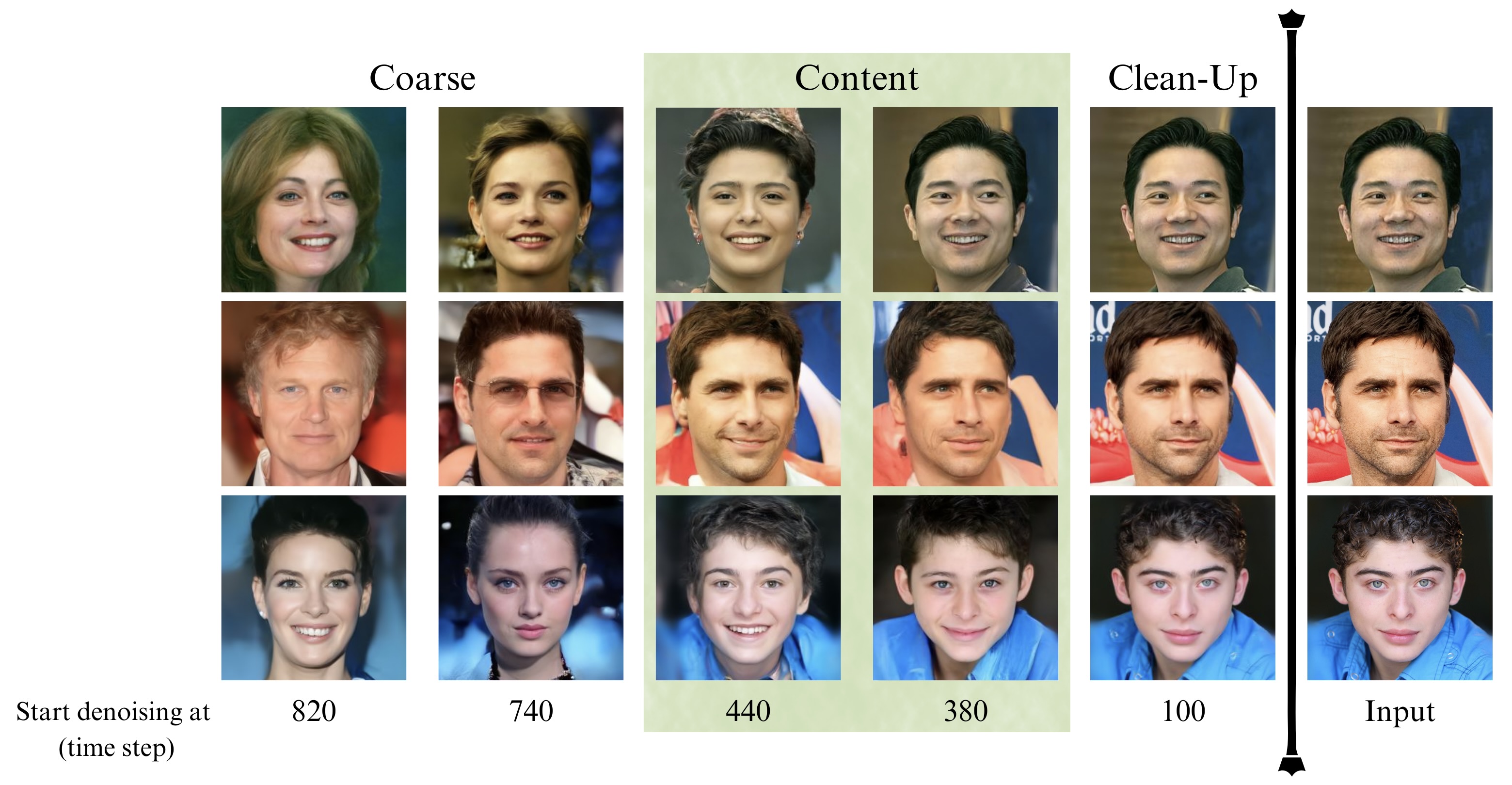
|
||||
|
||||
@@ -1,190 +0,0 @@
|
||||
# Copyright 2022 The HuggingFace Team. All rights reserved.
|
||||
#
|
||||
# Licensed under the Apache License, Version 2.0 (the "License");
|
||||
# you may not use this file except in compliance with the License.
|
||||
# You may obtain a copy of the License at
|
||||
#
|
||||
# http://www.apache.org/licenses/LICENSE-2.0
|
||||
#
|
||||
# Unless required by applicable law or agreed to in writing, software
|
||||
# distributed under the License is distributed on an "AS IS" BASIS,
|
||||
# WITHOUT WARRANTIES OR CONDITIONS OF ANY KIND, either express or implied.
|
||||
# See the License for the specific language governing permissions and
|
||||
# limitations under the License.
|
||||
|
||||
from typing import List, Optional, Tuple, Union
|
||||
|
||||
import PIL
|
||||
import torch
|
||||
from torchvision import transforms
|
||||
|
||||
from diffusers.pipeline_utils import DiffusionPipeline, ImagePipelineOutput
|
||||
from diffusers.schedulers import DDIMScheduler
|
||||
from diffusers.utils import randn_tensor
|
||||
|
||||
|
||||
trans = transforms.Compose(
|
||||
[
|
||||
transforms.Resize((256, 256)),
|
||||
transforms.ToTensor(),
|
||||
transforms.Normalize([0.5], [0.5]),
|
||||
]
|
||||
)
|
||||
|
||||
|
||||
def preprocess(image):
|
||||
if isinstance(image, torch.Tensor):
|
||||
return image
|
||||
elif isinstance(image, PIL.Image.Image):
|
||||
image = [image]
|
||||
|
||||
image = [trans(img.convert("RGB")) for img in image]
|
||||
image = torch.stack(image)
|
||||
return image
|
||||
|
||||
|
||||
class DDIMNoiseComparativeAnalysisPipeline(DiffusionPipeline):
|
||||
r"""
|
||||
This model inherits from [`DiffusionPipeline`]. Check the superclass documentation for the generic methods the
|
||||
library implements for all the pipelines (such as downloading or saving, running on a particular device, etc.)
|
||||
|
||||
Parameters:
|
||||
unet ([`UNet2DModel`]): U-Net architecture to denoise the encoded image.
|
||||
scheduler ([`SchedulerMixin`]):
|
||||
A scheduler to be used in combination with `unet` to denoise the encoded image. Can be one of
|
||||
[`DDPMScheduler`], or [`DDIMScheduler`].
|
||||
"""
|
||||
|
||||
def __init__(self, unet, scheduler):
|
||||
super().__init__()
|
||||
|
||||
# make sure scheduler can always be converted to DDIM
|
||||
scheduler = DDIMScheduler.from_config(scheduler.config)
|
||||
|
||||
self.register_modules(unet=unet, scheduler=scheduler)
|
||||
|
||||
def check_inputs(self, strength):
|
||||
if strength < 0 or strength > 1:
|
||||
raise ValueError(f"The value of strength should in [0.0, 1.0] but is {strength}")
|
||||
|
||||
def get_timesteps(self, num_inference_steps, strength, device):
|
||||
# get the original timestep using init_timestep
|
||||
init_timestep = min(int(num_inference_steps * strength), num_inference_steps)
|
||||
|
||||
t_start = max(num_inference_steps - init_timestep, 0)
|
||||
timesteps = self.scheduler.timesteps[t_start:]
|
||||
|
||||
return timesteps, num_inference_steps - t_start
|
||||
|
||||
def prepare_latents(self, image, timestep, batch_size, dtype, device, generator=None):
|
||||
if not isinstance(image, (torch.Tensor, PIL.Image.Image, list)):
|
||||
raise ValueError(
|
||||
f"`image` has to be of type `torch.Tensor`, `PIL.Image.Image` or list but is {type(image)}"
|
||||
)
|
||||
|
||||
init_latents = image.to(device=device, dtype=dtype)
|
||||
|
||||
if isinstance(generator, list) and len(generator) != batch_size:
|
||||
raise ValueError(
|
||||
f"You have passed a list of generators of length {len(generator)}, but requested an effective batch"
|
||||
f" size of {batch_size}. Make sure the batch size matches the length of the generators."
|
||||
)
|
||||
|
||||
shape = init_latents.shape
|
||||
noise = randn_tensor(shape, generator=generator, device=device, dtype=dtype)
|
||||
|
||||
# get latents
|
||||
print("add noise to latents at timestep", timestep)
|
||||
init_latents = self.scheduler.add_noise(init_latents, noise, timestep)
|
||||
latents = init_latents
|
||||
|
||||
return latents
|
||||
|
||||
@torch.no_grad()
|
||||
def __call__(
|
||||
self,
|
||||
image: Union[torch.FloatTensor, PIL.Image.Image] = None,
|
||||
strength: float = 0.8,
|
||||
batch_size: int = 1,
|
||||
generator: Optional[Union[torch.Generator, List[torch.Generator]]] = None,
|
||||
eta: float = 0.0,
|
||||
num_inference_steps: int = 50,
|
||||
use_clipped_model_output: Optional[bool] = None,
|
||||
output_type: Optional[str] = "pil",
|
||||
return_dict: bool = True,
|
||||
) -> Union[ImagePipelineOutput, Tuple]:
|
||||
r"""
|
||||
Args:
|
||||
image (`torch.FloatTensor` or `PIL.Image.Image`):
|
||||
`Image`, or tensor representing an image batch, that will be used as the starting point for the
|
||||
process.
|
||||
strength (`float`, *optional*, defaults to 0.8):
|
||||
Conceptually, indicates how much to transform the reference `image`. Must be between 0 and 1. `image`
|
||||
will be used as a starting point, adding more noise to it the larger the `strength`. The number of
|
||||
denoising steps depends on the amount of noise initially added. When `strength` is 1, added noise will
|
||||
be maximum and the denoising process will run for the full number of iterations specified in
|
||||
`num_inference_steps`. A value of 1, therefore, essentially ignores `image`.
|
||||
batch_size (`int`, *optional*, defaults to 1):
|
||||
The number of images to generate.
|
||||
generator (`torch.Generator`, *optional*):
|
||||
One or a list of [torch generator(s)](https://pytorch.org/docs/stable/generated/torch.Generator.html)
|
||||
to make generation deterministic.
|
||||
eta (`float`, *optional*, defaults to 0.0):
|
||||
The eta parameter which controls the scale of the variance (0 is DDIM and 1 is one type of DDPM).
|
||||
num_inference_steps (`int`, *optional*, defaults to 50):
|
||||
The number of denoising steps. More denoising steps usually lead to a higher quality image at the
|
||||
expense of slower inference.
|
||||
use_clipped_model_output (`bool`, *optional*, defaults to `None`):
|
||||
if `True` or `False`, see documentation for `DDIMScheduler.step`. If `None`, nothing is passed
|
||||
downstream to the scheduler. So use `None` for schedulers which don't support this argument.
|
||||
output_type (`str`, *optional*, defaults to `"pil"`):
|
||||
The output format of the generate image. Choose between
|
||||
[PIL](https://pillow.readthedocs.io/en/stable/): `PIL.Image.Image` or `np.array`.
|
||||
return_dict (`bool`, *optional*, defaults to `True`):
|
||||
Whether or not to return a [`~pipelines.ImagePipelineOutput`] instead of a plain tuple.
|
||||
|
||||
Returns:
|
||||
[`~pipelines.ImagePipelineOutput`] or `tuple`: [`~pipelines.utils.ImagePipelineOutput`] if `return_dict` is
|
||||
True, otherwise a `tuple. When returning a tuple, the first element is a list with the generated images.
|
||||
"""
|
||||
# 1. Check inputs. Raise error if not correct
|
||||
self.check_inputs(strength)
|
||||
|
||||
# 2. Preprocess image
|
||||
image = preprocess(image)
|
||||
|
||||
# 3. set timesteps
|
||||
self.scheduler.set_timesteps(num_inference_steps, device=self.device)
|
||||
timesteps, num_inference_steps = self.get_timesteps(num_inference_steps, strength, self.device)
|
||||
latent_timestep = timesteps[:1].repeat(batch_size)
|
||||
|
||||
# 4. Prepare latent variables
|
||||
latents = self.prepare_latents(image, latent_timestep, batch_size, self.unet.dtype, self.device, generator)
|
||||
image = latents
|
||||
|
||||
# 5. Denoising loop
|
||||
for t in self.progress_bar(timesteps):
|
||||
# 1. predict noise model_output
|
||||
model_output = self.unet(image, t).sample
|
||||
|
||||
# 2. predict previous mean of image x_t-1 and add variance depending on eta
|
||||
# eta corresponds to η in paper and should be between [0, 1]
|
||||
# do x_t -> x_t-1
|
||||
image = self.scheduler.step(
|
||||
model_output,
|
||||
t,
|
||||
image,
|
||||
eta=eta,
|
||||
use_clipped_model_output=use_clipped_model_output,
|
||||
generator=generator,
|
||||
).prev_sample
|
||||
|
||||
image = (image / 2 + 0.5).clamp(0, 1)
|
||||
image = image.cpu().permute(0, 2, 3, 1).numpy()
|
||||
if output_type == "pil":
|
||||
image = self.numpy_to_pil(image)
|
||||
|
||||
if not return_dict:
|
||||
return (image, latent_timestep.item())
|
||||
|
||||
return ImagePipelineOutput(images=image)
|
||||
@@ -1,894 +0,0 @@
|
||||
# Inspired by: https://github.com/haofanwang/ControlNet-for-Diffusers/
|
||||
|
||||
import inspect
|
||||
from typing import Any, Callable, Dict, List, Optional, Union
|
||||
|
||||
import numpy as np
|
||||
import PIL.Image
|
||||
import torch
|
||||
from transformers import CLIPFeatureExtractor, CLIPTextModel, CLIPTokenizer
|
||||
|
||||
from diffusers import AutoencoderKL, ControlNetModel, DiffusionPipeline, UNet2DConditionModel, logging
|
||||
from diffusers.pipelines.stable_diffusion import StableDiffusionPipelineOutput, StableDiffusionSafetyChecker
|
||||
from diffusers.schedulers import KarrasDiffusionSchedulers
|
||||
from diffusers.utils import (
|
||||
PIL_INTERPOLATION,
|
||||
is_accelerate_available,
|
||||
is_accelerate_version,
|
||||
randn_tensor,
|
||||
replace_example_docstring,
|
||||
)
|
||||
|
||||
|
||||
logger = logging.get_logger(__name__) # pylint: disable=invalid-name
|
||||
|
||||
EXAMPLE_DOC_STRING = """
|
||||
Examples:
|
||||
```py
|
||||
>>> import numpy as np
|
||||
>>> import torch
|
||||
>>> from PIL import Image
|
||||
>>> from diffusers import ControlNetModel, UniPCMultistepScheduler
|
||||
>>> from diffusers.utils import load_image
|
||||
|
||||
>>> input_image = load_image("https://hf.co/datasets/huggingface/documentation-images/resolve/main/diffusers/input_image_vermeer.png")
|
||||
|
||||
>>> controlnet = ControlNetModel.from_pretrained("lllyasviel/sd-controlnet-canny", torch_dtype=torch.float16)
|
||||
|
||||
>>> pipe_controlnet = StableDiffusionControlNetImg2ImgPipeline.from_pretrained(
|
||||
"runwayml/stable-diffusion-v1-5",
|
||||
controlnet=controlnet,
|
||||
safety_checker=None,
|
||||
torch_dtype=torch.float16
|
||||
)
|
||||
|
||||
>>> pipe_controlnet.scheduler = UniPCMultistepScheduler.from_config(pipe_controlnet.scheduler.config)
|
||||
>>> pipe_controlnet.enable_xformers_memory_efficient_attention()
|
||||
>>> pipe_controlnet.enable_model_cpu_offload()
|
||||
|
||||
# using image with edges for our canny controlnet
|
||||
>>> control_image = load_image(
|
||||
"https://hf.co/datasets/huggingface/documentation-images/resolve/main/diffusers/vermeer_canny_edged.png")
|
||||
|
||||
|
||||
>>> result_img = pipe_controlnet(controlnet_conditioning_image=control_image,
|
||||
image=input_image,
|
||||
prompt="an android robot, cyberpank, digitl art masterpiece",
|
||||
num_inference_steps=20).images[0]
|
||||
|
||||
>>> result_img.show()
|
||||
```
|
||||
"""
|
||||
|
||||
|
||||
def prepare_image(image):
|
||||
if isinstance(image, torch.Tensor):
|
||||
# Batch single image
|
||||
if image.ndim == 3:
|
||||
image = image.unsqueeze(0)
|
||||
|
||||
image = image.to(dtype=torch.float32)
|
||||
else:
|
||||
# preprocess image
|
||||
if isinstance(image, (PIL.Image.Image, np.ndarray)):
|
||||
image = [image]
|
||||
|
||||
if isinstance(image, list) and isinstance(image[0], PIL.Image.Image):
|
||||
image = [np.array(i.convert("RGB"))[None, :] for i in image]
|
||||
image = np.concatenate(image, axis=0)
|
||||
elif isinstance(image, list) and isinstance(image[0], np.ndarray):
|
||||
image = np.concatenate([i[None, :] for i in image], axis=0)
|
||||
|
||||
image = image.transpose(0, 3, 1, 2)
|
||||
image = torch.from_numpy(image).to(dtype=torch.float32) / 127.5 - 1.0
|
||||
|
||||
return image
|
||||
|
||||
|
||||
def prepare_controlnet_conditioning_image(
|
||||
controlnet_conditioning_image, width, height, batch_size, num_images_per_prompt, device, dtype
|
||||
):
|
||||
if not isinstance(controlnet_conditioning_image, torch.Tensor):
|
||||
if isinstance(controlnet_conditioning_image, PIL.Image.Image):
|
||||
controlnet_conditioning_image = [controlnet_conditioning_image]
|
||||
|
||||
if isinstance(controlnet_conditioning_image[0], PIL.Image.Image):
|
||||
controlnet_conditioning_image = [
|
||||
np.array(i.resize((width, height), resample=PIL_INTERPOLATION["lanczos"]))[None, :]
|
||||
for i in controlnet_conditioning_image
|
||||
]
|
||||
controlnet_conditioning_image = np.concatenate(controlnet_conditioning_image, axis=0)
|
||||
controlnet_conditioning_image = np.array(controlnet_conditioning_image).astype(np.float32) / 255.0
|
||||
controlnet_conditioning_image = controlnet_conditioning_image.transpose(0, 3, 1, 2)
|
||||
controlnet_conditioning_image = torch.from_numpy(controlnet_conditioning_image)
|
||||
elif isinstance(controlnet_conditioning_image[0], torch.Tensor):
|
||||
controlnet_conditioning_image = torch.cat(controlnet_conditioning_image, dim=0)
|
||||
|
||||
image_batch_size = controlnet_conditioning_image.shape[0]
|
||||
|
||||
if image_batch_size == 1:
|
||||
repeat_by = batch_size
|
||||
else:
|
||||
# image batch size is the same as prompt batch size
|
||||
repeat_by = num_images_per_prompt
|
||||
|
||||
controlnet_conditioning_image = controlnet_conditioning_image.repeat_interleave(repeat_by, dim=0)
|
||||
|
||||
controlnet_conditioning_image = controlnet_conditioning_image.to(device=device, dtype=dtype)
|
||||
|
||||
return controlnet_conditioning_image
|
||||
|
||||
|
||||
class StableDiffusionControlNetImg2ImgPipeline(DiffusionPipeline):
|
||||
"""
|
||||
Inspired by: https://github.com/haofanwang/ControlNet-for-Diffusers/
|
||||
"""
|
||||
|
||||
_optional_components = ["safety_checker", "feature_extractor"]
|
||||
|
||||
def __init__(
|
||||
self,
|
||||
vae: AutoencoderKL,
|
||||
text_encoder: CLIPTextModel,
|
||||
tokenizer: CLIPTokenizer,
|
||||
unet: UNet2DConditionModel,
|
||||
controlnet: ControlNetModel,
|
||||
scheduler: KarrasDiffusionSchedulers,
|
||||
safety_checker: StableDiffusionSafetyChecker,
|
||||
feature_extractor: CLIPFeatureExtractor,
|
||||
requires_safety_checker: bool = True,
|
||||
):
|
||||
super().__init__()
|
||||
|
||||
if safety_checker is None and requires_safety_checker:
|
||||
logger.warning(
|
||||
f"You have disabled the safety checker for {self.__class__} by passing `safety_checker=None`. Ensure"
|
||||
" that you abide to the conditions of the Stable Diffusion license and do not expose unfiltered"
|
||||
" results in services or applications open to the public. Both the diffusers team and Hugging Face"
|
||||
" strongly recommend to keep the safety filter enabled in all public facing circumstances, disabling"
|
||||
" it only for use-cases that involve analyzing network behavior or auditing its results. For more"
|
||||
" information, please have a look at https://github.com/huggingface/diffusers/pull/254 ."
|
||||
)
|
||||
|
||||
if safety_checker is not None and feature_extractor is None:
|
||||
raise ValueError(
|
||||
"Make sure to define a feature extractor when loading {self.__class__} if you want to use the safety"
|
||||
" checker. If you do not want to use the safety checker, you can pass `'safety_checker=None'` instead."
|
||||
)
|
||||
|
||||
self.register_modules(
|
||||
vae=vae,
|
||||
text_encoder=text_encoder,
|
||||
tokenizer=tokenizer,
|
||||
unet=unet,
|
||||
controlnet=controlnet,
|
||||
scheduler=scheduler,
|
||||
safety_checker=safety_checker,
|
||||
feature_extractor=feature_extractor,
|
||||
)
|
||||
self.vae_scale_factor = 2 ** (len(self.vae.config.block_out_channels) - 1)
|
||||
self.register_to_config(requires_safety_checker=requires_safety_checker)
|
||||
|
||||
def enable_vae_slicing(self):
|
||||
r"""
|
||||
Enable sliced VAE decoding.
|
||||
|
||||
When this option is enabled, the VAE will split the input tensor in slices to compute decoding in several
|
||||
steps. This is useful to save some memory and allow larger batch sizes.
|
||||
"""
|
||||
self.vae.enable_slicing()
|
||||
|
||||
def disable_vae_slicing(self):
|
||||
r"""
|
||||
Disable sliced VAE decoding. If `enable_vae_slicing` was previously invoked, this method will go back to
|
||||
computing decoding in one step.
|
||||
"""
|
||||
self.vae.disable_slicing()
|
||||
|
||||
def enable_sequential_cpu_offload(self, gpu_id=0):
|
||||
r"""
|
||||
Offloads all models to CPU using accelerate, significantly reducing memory usage. When called, unet,
|
||||
text_encoder, vae, controlnet, and safety checker have their state dicts saved to CPU and then are moved to a
|
||||
`torch.device('meta') and loaded to GPU only when their specific submodule has its `forward` method called.
|
||||
Note that offloading happens on a submodule basis. Memory savings are higher than with
|
||||
`enable_model_cpu_offload`, but performance is lower.
|
||||
"""
|
||||
if is_accelerate_available():
|
||||
from accelerate import cpu_offload
|
||||
else:
|
||||
raise ImportError("Please install accelerate via `pip install accelerate`")
|
||||
|
||||
device = torch.device(f"cuda:{gpu_id}")
|
||||
|
||||
for cpu_offloaded_model in [self.unet, self.text_encoder, self.vae, self.controlnet]:
|
||||
cpu_offload(cpu_offloaded_model, device)
|
||||
|
||||
if self.safety_checker is not None:
|
||||
cpu_offload(self.safety_checker, execution_device=device, offload_buffers=True)
|
||||
|
||||
def enable_model_cpu_offload(self, gpu_id=0):
|
||||
r"""
|
||||
Offloads all models to CPU using accelerate, reducing memory usage with a low impact on performance. Compared
|
||||
to `enable_sequential_cpu_offload`, this method moves one whole model at a time to the GPU when its `forward`
|
||||
method is called, and the model remains in GPU until the next model runs. Memory savings are lower than with
|
||||
`enable_sequential_cpu_offload`, but performance is much better due to the iterative execution of the `unet`.
|
||||
"""
|
||||
if is_accelerate_available() and is_accelerate_version(">=", "0.17.0.dev0"):
|
||||
from accelerate import cpu_offload_with_hook
|
||||
else:
|
||||
raise ImportError("`enable_model_offload` requires `accelerate v0.17.0` or higher.")
|
||||
|
||||
device = torch.device(f"cuda:{gpu_id}")
|
||||
|
||||
hook = None
|
||||
for cpu_offloaded_model in [self.text_encoder, self.unet, self.vae]:
|
||||
_, hook = cpu_offload_with_hook(cpu_offloaded_model, device, prev_module_hook=hook)
|
||||
|
||||
if self.safety_checker is not None:
|
||||
# the safety checker can offload the vae again
|
||||
_, hook = cpu_offload_with_hook(self.safety_checker, device, prev_module_hook=hook)
|
||||
|
||||
# control net hook has be manually offloaded as it alternates with unet
|
||||
cpu_offload_with_hook(self.controlnet, device)
|
||||
|
||||
# We'll offload the last model manually.
|
||||
self.final_offload_hook = hook
|
||||
|
||||
@property
|
||||
def _execution_device(self):
|
||||
r"""
|
||||
Returns the device on which the pipeline's models will be executed. After calling
|
||||
`pipeline.enable_sequential_cpu_offload()` the execution device can only be inferred from Accelerate's module
|
||||
hooks.
|
||||
"""
|
||||
if not hasattr(self.unet, "_hf_hook"):
|
||||
return self.device
|
||||
for module in self.unet.modules():
|
||||
if (
|
||||
hasattr(module, "_hf_hook")
|
||||
and hasattr(module._hf_hook, "execution_device")
|
||||
and module._hf_hook.execution_device is not None
|
||||
):
|
||||
return torch.device(module._hf_hook.execution_device)
|
||||
return self.device
|
||||
|
||||
def _encode_prompt(
|
||||
self,
|
||||
prompt,
|
||||
device,
|
||||
num_images_per_prompt,
|
||||
do_classifier_free_guidance,
|
||||
negative_prompt=None,
|
||||
prompt_embeds: Optional[torch.FloatTensor] = None,
|
||||
negative_prompt_embeds: Optional[torch.FloatTensor] = None,
|
||||
):
|
||||
r"""
|
||||
Encodes the prompt into text encoder hidden states.
|
||||
|
||||
Args:
|
||||
prompt (`str` or `List[str]`, *optional*):
|
||||
prompt to be encoded
|
||||
device: (`torch.device`):
|
||||
torch device
|
||||
num_images_per_prompt (`int`):
|
||||
number of images that should be generated per prompt
|
||||
do_classifier_free_guidance (`bool`):
|
||||
whether to use classifier free guidance or not
|
||||
negative_prompt (`str` or `List[str]`, *optional*):
|
||||
The prompt or prompts not to guide the image generation. If not defined, one has to pass
|
||||
`negative_prompt_embeds`. instead. If not defined, one has to pass `negative_prompt_embeds`. instead.
|
||||
Ignored when not using guidance (i.e., ignored if `guidance_scale` is less than `1`).
|
||||
prompt_embeds (`torch.FloatTensor`, *optional*):
|
||||
Pre-generated text embeddings. Can be used to easily tweak text inputs, *e.g.* prompt weighting. If not
|
||||
provided, text embeddings will be generated from `prompt` input argument.
|
||||
negative_prompt_embeds (`torch.FloatTensor`, *optional*):
|
||||
Pre-generated negative text embeddings. Can be used to easily tweak text inputs, *e.g.* prompt
|
||||
weighting. If not provided, negative_prompt_embeds will be generated from `negative_prompt` input
|
||||
argument.
|
||||
"""
|
||||
if prompt is not None and isinstance(prompt, str):
|
||||
batch_size = 1
|
||||
elif prompt is not None and isinstance(prompt, list):
|
||||
batch_size = len(prompt)
|
||||
else:
|
||||
batch_size = prompt_embeds.shape[0]
|
||||
|
||||
if prompt_embeds is None:
|
||||
text_inputs = self.tokenizer(
|
||||
prompt,
|
||||
padding="max_length",
|
||||
max_length=self.tokenizer.model_max_length,
|
||||
truncation=True,
|
||||
return_tensors="pt",
|
||||
)
|
||||
text_input_ids = text_inputs.input_ids
|
||||
untruncated_ids = self.tokenizer(prompt, padding="longest", return_tensors="pt").input_ids
|
||||
|
||||
if untruncated_ids.shape[-1] >= text_input_ids.shape[-1] and not torch.equal(
|
||||
text_input_ids, untruncated_ids
|
||||
):
|
||||
removed_text = self.tokenizer.batch_decode(
|
||||
untruncated_ids[:, self.tokenizer.model_max_length - 1 : -1]
|
||||
)
|
||||
logger.warning(
|
||||
"The following part of your input was truncated because CLIP can only handle sequences up to"
|
||||
f" {self.tokenizer.model_max_length} tokens: {removed_text}"
|
||||
)
|
||||
|
||||
if hasattr(self.text_encoder.config, "use_attention_mask") and self.text_encoder.config.use_attention_mask:
|
||||
attention_mask = text_inputs.attention_mask.to(device)
|
||||
else:
|
||||
attention_mask = None
|
||||
|
||||
prompt_embeds = self.text_encoder(
|
||||
text_input_ids.to(device),
|
||||
attention_mask=attention_mask,
|
||||
)
|
||||
prompt_embeds = prompt_embeds[0]
|
||||
|
||||
prompt_embeds = prompt_embeds.to(dtype=self.text_encoder.dtype, device=device)
|
||||
|
||||
bs_embed, seq_len, _ = prompt_embeds.shape
|
||||
# duplicate text embeddings for each generation per prompt, using mps friendly method
|
||||
prompt_embeds = prompt_embeds.repeat(1, num_images_per_prompt, 1)
|
||||
prompt_embeds = prompt_embeds.view(bs_embed * num_images_per_prompt, seq_len, -1)
|
||||
|
||||
# get unconditional embeddings for classifier free guidance
|
||||
if do_classifier_free_guidance and negative_prompt_embeds is None:
|
||||
uncond_tokens: List[str]
|
||||
if negative_prompt is None:
|
||||
uncond_tokens = [""] * batch_size
|
||||
elif type(prompt) is not type(negative_prompt):
|
||||
raise TypeError(
|
||||
f"`negative_prompt` should be the same type to `prompt`, but got {type(negative_prompt)} !="
|
||||
f" {type(prompt)}."
|
||||
)
|
||||
elif isinstance(negative_prompt, str):
|
||||
uncond_tokens = [negative_prompt]
|
||||
elif batch_size != len(negative_prompt):
|
||||
raise ValueError(
|
||||
f"`negative_prompt`: {negative_prompt} has batch size {len(negative_prompt)}, but `prompt`:"
|
||||
f" {prompt} has batch size {batch_size}. Please make sure that passed `negative_prompt` matches"
|
||||
" the batch size of `prompt`."
|
||||
)
|
||||
else:
|
||||
uncond_tokens = negative_prompt
|
||||
|
||||
max_length = prompt_embeds.shape[1]
|
||||
uncond_input = self.tokenizer(
|
||||
uncond_tokens,
|
||||
padding="max_length",
|
||||
max_length=max_length,
|
||||
truncation=True,
|
||||
return_tensors="pt",
|
||||
)
|
||||
|
||||
if hasattr(self.text_encoder.config, "use_attention_mask") and self.text_encoder.config.use_attention_mask:
|
||||
attention_mask = uncond_input.attention_mask.to(device)
|
||||
else:
|
||||
attention_mask = None
|
||||
|
||||
negative_prompt_embeds = self.text_encoder(
|
||||
uncond_input.input_ids.to(device),
|
||||
attention_mask=attention_mask,
|
||||
)
|
||||
negative_prompt_embeds = negative_prompt_embeds[0]
|
||||
|
||||
if do_classifier_free_guidance:
|
||||
# duplicate unconditional embeddings for each generation per prompt, using mps friendly method
|
||||
seq_len = negative_prompt_embeds.shape[1]
|
||||
|
||||
negative_prompt_embeds = negative_prompt_embeds.to(dtype=self.text_encoder.dtype, device=device)
|
||||
|
||||
negative_prompt_embeds = negative_prompt_embeds.repeat(1, num_images_per_prompt, 1)
|
||||
negative_prompt_embeds = negative_prompt_embeds.view(batch_size * num_images_per_prompt, seq_len, -1)
|
||||
|
||||
# For classifier free guidance, we need to do two forward passes.
|
||||
# Here we concatenate the unconditional and text embeddings into a single batch
|
||||
# to avoid doing two forward passes
|
||||
prompt_embeds = torch.cat([negative_prompt_embeds, prompt_embeds])
|
||||
|
||||
return prompt_embeds
|
||||
|
||||
def run_safety_checker(self, image, device, dtype):
|
||||
if self.safety_checker is not None:
|
||||
safety_checker_input = self.feature_extractor(self.numpy_to_pil(image), return_tensors="pt").to(device)
|
||||
image, has_nsfw_concept = self.safety_checker(
|
||||
images=image, clip_input=safety_checker_input.pixel_values.to(dtype)
|
||||
)
|
||||
else:
|
||||
has_nsfw_concept = None
|
||||
return image, has_nsfw_concept
|
||||
|
||||
def decode_latents(self, latents):
|
||||
latents = 1 / self.vae.config.scaling_factor * latents
|
||||
image = self.vae.decode(latents).sample
|
||||
image = (image / 2 + 0.5).clamp(0, 1)
|
||||
# we always cast to float32 as this does not cause significant overhead and is compatible with bfloat16
|
||||
image = image.cpu().permute(0, 2, 3, 1).float().numpy()
|
||||
return image
|
||||
|
||||
def prepare_extra_step_kwargs(self, generator, eta):
|
||||
# prepare extra kwargs for the scheduler step, since not all schedulers have the same signature
|
||||
# eta (η) is only used with the DDIMScheduler, it will be ignored for other schedulers.
|
||||
# eta corresponds to η in DDIM paper: https://arxiv.org/abs/2010.02502
|
||||
# and should be between [0, 1]
|
||||
|
||||
accepts_eta = "eta" in set(inspect.signature(self.scheduler.step).parameters.keys())
|
||||
extra_step_kwargs = {}
|
||||
if accepts_eta:
|
||||
extra_step_kwargs["eta"] = eta
|
||||
|
||||
# check if the scheduler accepts generator
|
||||
accepts_generator = "generator" in set(inspect.signature(self.scheduler.step).parameters.keys())
|
||||
if accepts_generator:
|
||||
extra_step_kwargs["generator"] = generator
|
||||
return extra_step_kwargs
|
||||
|
||||
def check_inputs(
|
||||
self,
|
||||
prompt,
|
||||
image,
|
||||
controlnet_conditioning_image,
|
||||
height,
|
||||
width,
|
||||
callback_steps,
|
||||
negative_prompt=None,
|
||||
prompt_embeds=None,
|
||||
negative_prompt_embeds=None,
|
||||
strength=None,
|
||||
):
|
||||
if height % 8 != 0 or width % 8 != 0:
|
||||
raise ValueError(f"`height` and `width` have to be divisible by 8 but are {height} and {width}.")
|
||||
|
||||
if (callback_steps is None) or (
|
||||
callback_steps is not None and (not isinstance(callback_steps, int) or callback_steps <= 0)
|
||||
):
|
||||
raise ValueError(
|
||||
f"`callback_steps` has to be a positive integer but is {callback_steps} of type"
|
||||
f" {type(callback_steps)}."
|
||||
)
|
||||
|
||||
if prompt is not None and prompt_embeds is not None:
|
||||
raise ValueError(
|
||||
f"Cannot forward both `prompt`: {prompt} and `prompt_embeds`: {prompt_embeds}. Please make sure to"
|
||||
" only forward one of the two."
|
||||
)
|
||||
elif prompt is None and prompt_embeds is None:
|
||||
raise ValueError(
|
||||
"Provide either `prompt` or `prompt_embeds`. Cannot leave both `prompt` and `prompt_embeds` undefined."
|
||||
)
|
||||
elif prompt is not None and (not isinstance(prompt, str) and not isinstance(prompt, list)):
|
||||
raise ValueError(f"`prompt` has to be of type `str` or `list` but is {type(prompt)}")
|
||||
|
||||
if negative_prompt is not None and negative_prompt_embeds is not None:
|
||||
raise ValueError(
|
||||
f"Cannot forward both `negative_prompt`: {negative_prompt} and `negative_prompt_embeds`:"
|
||||
f" {negative_prompt_embeds}. Please make sure to only forward one of the two."
|
||||
)
|
||||
|
||||
if prompt_embeds is not None and negative_prompt_embeds is not None:
|
||||
if prompt_embeds.shape != negative_prompt_embeds.shape:
|
||||
raise ValueError(
|
||||
"`prompt_embeds` and `negative_prompt_embeds` must have the same shape when passed directly, but"
|
||||
f" got: `prompt_embeds` {prompt_embeds.shape} != `negative_prompt_embeds`"
|
||||
f" {negative_prompt_embeds.shape}."
|
||||
)
|
||||
|
||||
controlnet_cond_image_is_pil = isinstance(controlnet_conditioning_image, PIL.Image.Image)
|
||||
controlnet_cond_image_is_tensor = isinstance(controlnet_conditioning_image, torch.Tensor)
|
||||
controlnet_cond_image_is_pil_list = isinstance(controlnet_conditioning_image, list) and isinstance(
|
||||
controlnet_conditioning_image[0], PIL.Image.Image
|
||||
)
|
||||
controlnet_cond_image_is_tensor_list = isinstance(controlnet_conditioning_image, list) and isinstance(
|
||||
controlnet_conditioning_image[0], torch.Tensor
|
||||
)
|
||||
|
||||
if (
|
||||
not controlnet_cond_image_is_pil
|
||||
and not controlnet_cond_image_is_tensor
|
||||
and not controlnet_cond_image_is_pil_list
|
||||
and not controlnet_cond_image_is_tensor_list
|
||||
):
|
||||
raise TypeError(
|
||||
"image must be passed and be one of PIL image, torch tensor, list of PIL images, or list of torch tensors"
|
||||
)
|
||||
|
||||
if controlnet_cond_image_is_pil:
|
||||
controlnet_cond_image_batch_size = 1
|
||||
elif controlnet_cond_image_is_tensor:
|
||||
controlnet_cond_image_batch_size = controlnet_conditioning_image.shape[0]
|
||||
elif controlnet_cond_image_is_pil_list:
|
||||
controlnet_cond_image_batch_size = len(controlnet_conditioning_image)
|
||||
elif controlnet_cond_image_is_tensor_list:
|
||||
controlnet_cond_image_batch_size = len(controlnet_conditioning_image)
|
||||
|
||||
if prompt is not None and isinstance(prompt, str):
|
||||
prompt_batch_size = 1
|
||||
elif prompt is not None and isinstance(prompt, list):
|
||||
prompt_batch_size = len(prompt)
|
||||
elif prompt_embeds is not None:
|
||||
prompt_batch_size = prompt_embeds.shape[0]
|
||||
|
||||
if controlnet_cond_image_batch_size != 1 and controlnet_cond_image_batch_size != prompt_batch_size:
|
||||
raise ValueError(
|
||||
f"If image batch size is not 1, image batch size must be same as prompt batch size. image batch size: {controlnet_cond_image_batch_size}, prompt batch size: {prompt_batch_size}"
|
||||
)
|
||||
|
||||
if isinstance(image, torch.Tensor):
|
||||
if image.ndim != 3 and image.ndim != 4:
|
||||
raise ValueError("`image` must have 3 or 4 dimensions")
|
||||
|
||||
# if mask_image.ndim != 2 and mask_image.ndim != 3 and mask_image.ndim != 4:
|
||||
# raise ValueError("`mask_image` must have 2, 3, or 4 dimensions")
|
||||
|
||||
if image.ndim == 3:
|
||||
image_batch_size = 1
|
||||
image_channels, image_height, image_width = image.shape
|
||||
elif image.ndim == 4:
|
||||
image_batch_size, image_channels, image_height, image_width = image.shape
|
||||
|
||||
if image_channels != 3:
|
||||
raise ValueError("`image` must have 3 channels")
|
||||
|
||||
if image.min() < -1 or image.max() > 1:
|
||||
raise ValueError("`image` should be in range [-1, 1]")
|
||||
|
||||
if self.vae.config.latent_channels != self.unet.config.in_channels:
|
||||
raise ValueError(
|
||||
f"The config of `pipeline.unet` expects {self.unet.config.in_channels} but received"
|
||||
f" latent channels: {self.vae.config.latent_channels},"
|
||||
f" Please verify the config of `pipeline.unet` and the `pipeline.vae`"
|
||||
)
|
||||
|
||||
if strength < 0 or strength > 1:
|
||||
raise ValueError(f"The value of strength should in [0.0, 1.0] but is {strength}")
|
||||
|
||||
def get_timesteps(self, num_inference_steps, strength, device):
|
||||
# get the original timestep using init_timestep
|
||||
init_timestep = min(int(num_inference_steps * strength), num_inference_steps)
|
||||
|
||||
t_start = max(num_inference_steps - init_timestep, 0)
|
||||
timesteps = self.scheduler.timesteps[t_start:]
|
||||
|
||||
return timesteps, num_inference_steps - t_start
|
||||
|
||||
def prepare_latents(self, image, timestep, batch_size, num_images_per_prompt, dtype, device, generator=None):
|
||||
if not isinstance(image, (torch.Tensor, PIL.Image.Image, list)):
|
||||
raise ValueError(
|
||||
f"`image` has to be of type `torch.Tensor`, `PIL.Image.Image` or list but is {type(image)}"
|
||||
)
|
||||
|
||||
image = image.to(device=device, dtype=dtype)
|
||||
|
||||
batch_size = batch_size * num_images_per_prompt
|
||||
if isinstance(generator, list) and len(generator) != batch_size:
|
||||
raise ValueError(
|
||||
f"You have passed a list of generators of length {len(generator)}, but requested an effective batch"
|
||||
f" size of {batch_size}. Make sure the batch size matches the length of the generators."
|
||||
)
|
||||
|
||||
if isinstance(generator, list):
|
||||
init_latents = [
|
||||
self.vae.encode(image[i : i + 1]).latent_dist.sample(generator[i]) for i in range(batch_size)
|
||||
]
|
||||
init_latents = torch.cat(init_latents, dim=0)
|
||||
else:
|
||||
init_latents = self.vae.encode(image).latent_dist.sample(generator)
|
||||
|
||||
init_latents = self.vae.config.scaling_factor * init_latents
|
||||
|
||||
if batch_size > init_latents.shape[0] and batch_size % init_latents.shape[0] == 0:
|
||||
raise ValueError(
|
||||
f"Cannot duplicate `image` of batch size {init_latents.shape[0]} to {batch_size} text prompts."
|
||||
)
|
||||
else:
|
||||
init_latents = torch.cat([init_latents], dim=0)
|
||||
|
||||
shape = init_latents.shape
|
||||
noise = randn_tensor(shape, generator=generator, device=device, dtype=dtype)
|
||||
|
||||
# get latents
|
||||
init_latents = self.scheduler.add_noise(init_latents, noise, timestep)
|
||||
latents = init_latents
|
||||
|
||||
return latents
|
||||
|
||||
def _default_height_width(self, height, width, image):
|
||||
if isinstance(image, list):
|
||||
image = image[0]
|
||||
|
||||
if height is None:
|
||||
if isinstance(image, PIL.Image.Image):
|
||||
height = image.height
|
||||
elif isinstance(image, torch.Tensor):
|
||||
height = image.shape[3]
|
||||
|
||||
height = (height // 8) * 8 # round down to nearest multiple of 8
|
||||
|
||||
if width is None:
|
||||
if isinstance(image, PIL.Image.Image):
|
||||
width = image.width
|
||||
elif isinstance(image, torch.Tensor):
|
||||
width = image.shape[2]
|
||||
|
||||
width = (width // 8) * 8 # round down to nearest multiple of 8
|
||||
|
||||
return height, width
|
||||
|
||||
@torch.no_grad()
|
||||
@replace_example_docstring(EXAMPLE_DOC_STRING)
|
||||
def __call__(
|
||||
self,
|
||||
prompt: Union[str, List[str]] = None,
|
||||
image: Union[torch.Tensor, PIL.Image.Image] = None,
|
||||
controlnet_conditioning_image: Union[
|
||||
torch.FloatTensor, PIL.Image.Image, List[torch.FloatTensor], List[PIL.Image.Image]
|
||||
] = None,
|
||||
strength: float = 0.8,
|
||||
height: Optional[int] = None,
|
||||
width: Optional[int] = None,
|
||||
num_inference_steps: int = 50,
|
||||
guidance_scale: float = 7.5,
|
||||
negative_prompt: Optional[Union[str, List[str]]] = None,
|
||||
num_images_per_prompt: Optional[int] = 1,
|
||||
eta: float = 0.0,
|
||||
generator: Optional[Union[torch.Generator, List[torch.Generator]]] = None,
|
||||
latents: Optional[torch.FloatTensor] = None,
|
||||
prompt_embeds: Optional[torch.FloatTensor] = None,
|
||||
negative_prompt_embeds: Optional[torch.FloatTensor] = None,
|
||||
output_type: Optional[str] = "pil",
|
||||
return_dict: bool = True,
|
||||
callback: Optional[Callable[[int, int, torch.FloatTensor], None]] = None,
|
||||
callback_steps: int = 1,
|
||||
cross_attention_kwargs: Optional[Dict[str, Any]] = None,
|
||||
controlnet_conditioning_scale: float = 1.0,
|
||||
):
|
||||
r"""
|
||||
Function invoked when calling the pipeline for generation.
|
||||
|
||||
Args:
|
||||
prompt (`str` or `List[str]`, *optional*):
|
||||
The prompt or prompts to guide the image generation. If not defined, one has to pass `prompt_embeds`.
|
||||
instead.
|
||||
image (`torch.Tensor` or `PIL.Image.Image`):
|
||||
`Image`, or tensor representing an image batch which will be inpainted, *i.e.* parts of the image will
|
||||
be masked out with `mask_image` and repainted according to `prompt`.
|
||||
controlnet_conditioning_image (`torch.FloatTensor`, `PIL.Image.Image`, `List[torch.FloatTensor]` or `List[PIL.Image.Image]`):
|
||||
The ControlNet input condition. ControlNet uses this input condition to generate guidance to Unet. If
|
||||
the type is specified as `Torch.FloatTensor`, it is passed to ControlNet as is. PIL.Image.Image` can
|
||||
also be accepted as an image. The control image is automatically resized to fit the output image.
|
||||
strength (`float`, *optional*):
|
||||
Conceptually, indicates how much to transform the reference `image`. Must be between 0 and 1. `image`
|
||||
will be used as a starting point, adding more noise to it the larger the `strength`. The number of
|
||||
denoising steps depends on the amount of noise initially added. When `strength` is 1, added noise will
|
||||
be maximum and the denoising process will run for the full number of iterations specified in
|
||||
`num_inference_steps`. A value of 1, therefore, essentially ignores `image`.
|
||||
height (`int`, *optional*, defaults to self.unet.config.sample_size * self.vae_scale_factor):
|
||||
The height in pixels of the generated image.
|
||||
width (`int`, *optional*, defaults to self.unet.config.sample_size * self.vae_scale_factor):
|
||||
The width in pixels of the generated image.
|
||||
num_inference_steps (`int`, *optional*, defaults to 50):
|
||||
The number of denoising steps. More denoising steps usually lead to a higher quality image at the
|
||||
expense of slower inference.
|
||||
guidance_scale (`float`, *optional*, defaults to 7.5):
|
||||
Guidance scale as defined in [Classifier-Free Diffusion Guidance](https://arxiv.org/abs/2207.12598).
|
||||
`guidance_scale` is defined as `w` of equation 2. of [Imagen
|
||||
Paper](https://arxiv.org/pdf/2205.11487.pdf). Guidance scale is enabled by setting `guidance_scale >
|
||||
1`. Higher guidance scale encourages to generate images that are closely linked to the text `prompt`,
|
||||
usually at the expense of lower image quality.
|
||||
negative_prompt (`str` or `List[str]`, *optional*):
|
||||
The prompt or prompts not to guide the image generation. If not defined, one has to pass
|
||||
`negative_prompt_embeds`. instead. If not defined, one has to pass `negative_prompt_embeds`. instead.
|
||||
Ignored when not using guidance (i.e., ignored if `guidance_scale` is less than `1`).
|
||||
num_images_per_prompt (`int`, *optional*, defaults to 1):
|
||||
The number of images to generate per prompt.
|
||||
eta (`float`, *optional*, defaults to 0.0):
|
||||
Corresponds to parameter eta (η) in the DDIM paper: https://arxiv.org/abs/2010.02502. Only applies to
|
||||
[`schedulers.DDIMScheduler`], will be ignored for others.
|
||||
generator (`torch.Generator` or `List[torch.Generator]`, *optional*):
|
||||
One or a list of [torch generator(s)](https://pytorch.org/docs/stable/generated/torch.Generator.html)
|
||||
to make generation deterministic.
|
||||
latents (`torch.FloatTensor`, *optional*):
|
||||
Pre-generated noisy latents, sampled from a Gaussian distribution, to be used as inputs for image
|
||||
generation. Can be used to tweak the same generation with different prompts. If not provided, a latents
|
||||
tensor will ge generated by sampling using the supplied random `generator`.
|
||||
prompt_embeds (`torch.FloatTensor`, *optional*):
|
||||
Pre-generated text embeddings. Can be used to easily tweak text inputs, *e.g.* prompt weighting. If not
|
||||
provided, text embeddings will be generated from `prompt` input argument.
|
||||
negative_prompt_embeds (`torch.FloatTensor`, *optional*):
|
||||
Pre-generated negative text embeddings. Can be used to easily tweak text inputs, *e.g.* prompt
|
||||
weighting. If not provided, negative_prompt_embeds will be generated from `negative_prompt` input
|
||||
argument.
|
||||
output_type (`str`, *optional*, defaults to `"pil"`):
|
||||
The output format of the generate image. Choose between
|
||||
[PIL](https://pillow.readthedocs.io/en/stable/): `PIL.Image.Image` or `np.array`.
|
||||
return_dict (`bool`, *optional*, defaults to `True`):
|
||||
Whether or not to return a [`~pipelines.stable_diffusion.StableDiffusionPipelineOutput`] instead of a
|
||||
plain tuple.
|
||||
callback (`Callable`, *optional*):
|
||||
A function that will be called every `callback_steps` steps during inference. The function will be
|
||||
called with the following arguments: `callback(step: int, timestep: int, latents: torch.FloatTensor)`.
|
||||
callback_steps (`int`, *optional*, defaults to 1):
|
||||
The frequency at which the `callback` function will be called. If not specified, the callback will be
|
||||
called at every step.
|
||||
cross_attention_kwargs (`dict`, *optional*):
|
||||
A kwargs dictionary that if specified is passed along to the `AttentionProcessor` as defined under
|
||||
`self.processor` in
|
||||
[diffusers.cross_attention](https://github.com/huggingface/diffusers/blob/main/src/diffusers/models/cross_attention.py).
|
||||
controlnet_conditioning_scale (`float`, *optional*, defaults to 1.0):
|
||||
The outputs of the controlnet are multiplied by `controlnet_conditioning_scale` before they are added
|
||||
to the residual in the original unet.
|
||||
|
||||
Examples:
|
||||
|
||||
Returns:
|
||||
[`~pipelines.stable_diffusion.StableDiffusionPipelineOutput`] or `tuple`:
|
||||
[`~pipelines.stable_diffusion.StableDiffusionPipelineOutput`] if `return_dict` is True, otherwise a `tuple.
|
||||
When returning a tuple, the first element is a list with the generated images, and the second element is a
|
||||
list of `bool`s denoting whether the corresponding generated image likely represents "not-safe-for-work"
|
||||
(nsfw) content, according to the `safety_checker`.
|
||||
"""
|
||||
# 0. Default height and width to unet
|
||||
height, width = self._default_height_width(height, width, controlnet_conditioning_image)
|
||||
|
||||
# 1. Check inputs. Raise error if not correct
|
||||
self.check_inputs(
|
||||
prompt,
|
||||
image,
|
||||
# mask_image,
|
||||
controlnet_conditioning_image,
|
||||
height,
|
||||
width,
|
||||
callback_steps,
|
||||
negative_prompt,
|
||||
prompt_embeds,
|
||||
negative_prompt_embeds,
|
||||
strength,
|
||||
)
|
||||
|
||||
# 2. Define call parameters
|
||||
if prompt is not None and isinstance(prompt, str):
|
||||
batch_size = 1
|
||||
elif prompt is not None and isinstance(prompt, list):
|
||||
batch_size = len(prompt)
|
||||
else:
|
||||
batch_size = prompt_embeds.shape[0]
|
||||
|
||||
device = self._execution_device
|
||||
# here `guidance_scale` is defined analog to the guidance weight `w` of equation (2)
|
||||
# of the Imagen paper: https://arxiv.org/pdf/2205.11487.pdf . `guidance_scale = 1`
|
||||
# corresponds to doing no classifier free guidance.
|
||||
do_classifier_free_guidance = guidance_scale > 1.0
|
||||
|
||||
# 3. Encode input prompt
|
||||
prompt_embeds = self._encode_prompt(
|
||||
prompt,
|
||||
device,
|
||||
num_images_per_prompt,
|
||||
do_classifier_free_guidance,
|
||||
negative_prompt,
|
||||
prompt_embeds=prompt_embeds,
|
||||
negative_prompt_embeds=negative_prompt_embeds,
|
||||
)
|
||||
|
||||
# 4. Prepare mask, image, and controlnet_conditioning_image
|
||||
image = prepare_image(image)
|
||||
|
||||
# mask_image = prepare_mask_image(mask_image)
|
||||
|
||||
controlnet_conditioning_image = prepare_controlnet_conditioning_image(
|
||||
controlnet_conditioning_image,
|
||||
width,
|
||||
height,
|
||||
batch_size * num_images_per_prompt,
|
||||
num_images_per_prompt,
|
||||
device,
|
||||
self.controlnet.dtype,
|
||||
)
|
||||
|
||||
# masked_image = image * (mask_image < 0.5)
|
||||
|
||||
# 5. Prepare timesteps
|
||||
self.scheduler.set_timesteps(num_inference_steps, device=device)
|
||||
timesteps, num_inference_steps = self.get_timesteps(num_inference_steps, strength, device)
|
||||
latent_timestep = timesteps[:1].repeat(batch_size * num_images_per_prompt)
|
||||
|
||||
# 6. Prepare latent variables
|
||||
latents = self.prepare_latents(
|
||||
image,
|
||||
latent_timestep,
|
||||
batch_size,
|
||||
num_images_per_prompt,
|
||||
prompt_embeds.dtype,
|
||||
device,
|
||||
generator,
|
||||
)
|
||||
|
||||
if do_classifier_free_guidance:
|
||||
controlnet_conditioning_image = torch.cat([controlnet_conditioning_image] * 2)
|
||||
|
||||
# 7. Prepare extra step kwargs. TODO: Logic should ideally just be moved out of the pipeline
|
||||
extra_step_kwargs = self.prepare_extra_step_kwargs(generator, eta)
|
||||
|
||||
# 8. Denoising loop
|
||||
num_warmup_steps = len(timesteps) - num_inference_steps * self.scheduler.order
|
||||
with self.progress_bar(total=num_inference_steps) as progress_bar:
|
||||
for i, t in enumerate(timesteps):
|
||||
# expand the latents if we are doing classifier free guidance
|
||||
latent_model_input = torch.cat([latents] * 2) if do_classifier_free_guidance else latents
|
||||
|
||||
latent_model_input = self.scheduler.scale_model_input(latent_model_input, t)
|
||||
|
||||
down_block_res_samples, mid_block_res_sample = self.controlnet(
|
||||
latent_model_input,
|
||||
t,
|
||||
encoder_hidden_states=prompt_embeds,
|
||||
controlnet_cond=controlnet_conditioning_image,
|
||||
return_dict=False,
|
||||
)
|
||||
|
||||
down_block_res_samples = [
|
||||
down_block_res_sample * controlnet_conditioning_scale
|
||||
for down_block_res_sample in down_block_res_samples
|
||||
]
|
||||
mid_block_res_sample *= controlnet_conditioning_scale
|
||||
|
||||
# predict the noise residual
|
||||
noise_pred = self.unet(
|
||||
latent_model_input,
|
||||
t,
|
||||
encoder_hidden_states=prompt_embeds,
|
||||
cross_attention_kwargs=cross_attention_kwargs,
|
||||
down_block_additional_residuals=down_block_res_samples,
|
||||
mid_block_additional_residual=mid_block_res_sample,
|
||||
).sample
|
||||
|
||||
# perform guidance
|
||||
if do_classifier_free_guidance:
|
||||
noise_pred_uncond, noise_pred_text = noise_pred.chunk(2)
|
||||
noise_pred = noise_pred_uncond + guidance_scale * (noise_pred_text - noise_pred_uncond)
|
||||
|
||||
# compute the previous noisy sample x_t -> x_t-1
|
||||
latents = self.scheduler.step(noise_pred, t, latents, **extra_step_kwargs).prev_sample
|
||||
|
||||
# call the callback, if provided
|
||||
if i == len(timesteps) - 1 or ((i + 1) > num_warmup_steps and (i + 1) % self.scheduler.order == 0):
|
||||
progress_bar.update()
|
||||
if callback is not None and i % callback_steps == 0:
|
||||
callback(i, t, latents)
|
||||
|
||||
# If we do sequential model offloading, let's offload unet and controlnet
|
||||
# manually for max memory savings
|
||||
if hasattr(self, "final_offload_hook") and self.final_offload_hook is not None:
|
||||
self.unet.to("cpu")
|
||||
self.controlnet.to("cpu")
|
||||
torch.cuda.empty_cache()
|
||||
|
||||
if output_type == "latent":
|
||||
image = latents
|
||||
has_nsfw_concept = None
|
||||
elif output_type == "pil":
|
||||
# 8. Post-processing
|
||||
image = self.decode_latents(latents)
|
||||
|
||||
# 9. Run safety checker
|
||||
image, has_nsfw_concept = self.run_safety_checker(image, device, prompt_embeds.dtype)
|
||||
|
||||
# 10. Convert to PIL
|
||||
image = self.numpy_to_pil(image)
|
||||
else:
|
||||
# 8. Post-processing
|
||||
image = self.decode_latents(latents)
|
||||
|
||||
# 9. Run safety checker
|
||||
image, has_nsfw_concept = self.run_safety_checker(image, device, prompt_embeds.dtype)
|
||||
|
||||
# Offload last model to CPU
|
||||
if hasattr(self, "final_offload_hook") and self.final_offload_hook is not None:
|
||||
self.final_offload_hook.offload()
|
||||
|
||||
if not return_dict:
|
||||
return (image, has_nsfw_concept)
|
||||
|
||||
return StableDiffusionPipelineOutput(images=image, nsfw_content_detected=has_nsfw_concept)
|
||||
File diff suppressed because it is too large
Load Diff
File diff suppressed because it is too large
Load Diff
@@ -1,493 +0,0 @@
|
||||
import inspect
|
||||
from typing import List, Optional, Union
|
||||
|
||||
import PIL
|
||||
import torch
|
||||
from torch.nn import functional as F
|
||||
from transformers import (
|
||||
CLIPFeatureExtractor,
|
||||
CLIPTextModelWithProjection,
|
||||
CLIPTokenizer,
|
||||
CLIPVisionModelWithProjection,
|
||||
)
|
||||
|
||||
from diffusers import (
|
||||
DiffusionPipeline,
|
||||
ImagePipelineOutput,
|
||||
UnCLIPScheduler,
|
||||
UNet2DConditionModel,
|
||||
UNet2DModel,
|
||||
)
|
||||
from diffusers.pipelines.unclip import UnCLIPTextProjModel
|
||||
from diffusers.utils import is_accelerate_available, logging, randn_tensor
|
||||
|
||||
|
||||
logger = logging.get_logger(__name__) # pylint: disable=invalid-name
|
||||
|
||||
|
||||
def slerp(val, low, high):
|
||||
"""
|
||||
Find the interpolation point between the 'low' and 'high' values for the given 'val'. See https://en.wikipedia.org/wiki/Slerp for more details on the topic.
|
||||
"""
|
||||
low_norm = low / torch.norm(low)
|
||||
high_norm = high / torch.norm(high)
|
||||
omega = torch.acos((low_norm * high_norm))
|
||||
so = torch.sin(omega)
|
||||
res = (torch.sin((1.0 - val) * omega) / so) * low + (torch.sin(val * omega) / so) * high
|
||||
return res
|
||||
|
||||
|
||||
class UnCLIPImageInterpolationPipeline(DiffusionPipeline):
|
||||
"""
|
||||
Pipeline to generate variations from an input image using unCLIP
|
||||
|
||||
This model inherits from [`DiffusionPipeline`]. Check the superclass documentation for the generic methods the
|
||||
library implements for all the pipelines (such as downloading or saving, running on a particular device, etc.)
|
||||
|
||||
Args:
|
||||
text_encoder ([`CLIPTextModelWithProjection`]):
|
||||
Frozen text-encoder.
|
||||
tokenizer (`CLIPTokenizer`):
|
||||
Tokenizer of class
|
||||
[CLIPTokenizer](https://huggingface.co/docs/transformers/v4.21.0/en/model_doc/clip#transformers.CLIPTokenizer).
|
||||
feature_extractor ([`CLIPFeatureExtractor`]):
|
||||
Model that extracts features from generated images to be used as inputs for the `image_encoder`.
|
||||
image_encoder ([`CLIPVisionModelWithProjection`]):
|
||||
Frozen CLIP image-encoder. unCLIP Image Variation uses the vision portion of
|
||||
[CLIP](https://huggingface.co/docs/transformers/model_doc/clip#transformers.CLIPVisionModelWithProjection),
|
||||
specifically the [clip-vit-large-patch14](https://huggingface.co/openai/clip-vit-large-patch14) variant.
|
||||
text_proj ([`UnCLIPTextProjModel`]):
|
||||
Utility class to prepare and combine the embeddings before they are passed to the decoder.
|
||||
decoder ([`UNet2DConditionModel`]):
|
||||
The decoder to invert the image embedding into an image.
|
||||
super_res_first ([`UNet2DModel`]):
|
||||
Super resolution unet. Used in all but the last step of the super resolution diffusion process.
|
||||
super_res_last ([`UNet2DModel`]):
|
||||
Super resolution unet. Used in the last step of the super resolution diffusion process.
|
||||
decoder_scheduler ([`UnCLIPScheduler`]):
|
||||
Scheduler used in the decoder denoising process. Just a modified DDPMScheduler.
|
||||
super_res_scheduler ([`UnCLIPScheduler`]):
|
||||
Scheduler used in the super resolution denoising process. Just a modified DDPMScheduler.
|
||||
|
||||
"""
|
||||
|
||||
decoder: UNet2DConditionModel
|
||||
text_proj: UnCLIPTextProjModel
|
||||
text_encoder: CLIPTextModelWithProjection
|
||||
tokenizer: CLIPTokenizer
|
||||
feature_extractor: CLIPFeatureExtractor
|
||||
image_encoder: CLIPVisionModelWithProjection
|
||||
super_res_first: UNet2DModel
|
||||
super_res_last: UNet2DModel
|
||||
|
||||
decoder_scheduler: UnCLIPScheduler
|
||||
super_res_scheduler: UnCLIPScheduler
|
||||
|
||||
# Copied from diffusers.pipelines.unclip.pipeline_unclip_image_variation.UnCLIPImageVariationPipeline.__init__
|
||||
def __init__(
|
||||
self,
|
||||
decoder: UNet2DConditionModel,
|
||||
text_encoder: CLIPTextModelWithProjection,
|
||||
tokenizer: CLIPTokenizer,
|
||||
text_proj: UnCLIPTextProjModel,
|
||||
feature_extractor: CLIPFeatureExtractor,
|
||||
image_encoder: CLIPVisionModelWithProjection,
|
||||
super_res_first: UNet2DModel,
|
||||
super_res_last: UNet2DModel,
|
||||
decoder_scheduler: UnCLIPScheduler,
|
||||
super_res_scheduler: UnCLIPScheduler,
|
||||
):
|
||||
super().__init__()
|
||||
|
||||
self.register_modules(
|
||||
decoder=decoder,
|
||||
text_encoder=text_encoder,
|
||||
tokenizer=tokenizer,
|
||||
text_proj=text_proj,
|
||||
feature_extractor=feature_extractor,
|
||||
image_encoder=image_encoder,
|
||||
super_res_first=super_res_first,
|
||||
super_res_last=super_res_last,
|
||||
decoder_scheduler=decoder_scheduler,
|
||||
super_res_scheduler=super_res_scheduler,
|
||||
)
|
||||
|
||||
# Copied from diffusers.pipelines.unclip.pipeline_unclip.UnCLIPPipeline.prepare_latents
|
||||
def prepare_latents(self, shape, dtype, device, generator, latents, scheduler):
|
||||
if latents is None:
|
||||
latents = randn_tensor(shape, generator=generator, device=device, dtype=dtype)
|
||||
else:
|
||||
if latents.shape != shape:
|
||||
raise ValueError(f"Unexpected latents shape, got {latents.shape}, expected {shape}")
|
||||
latents = latents.to(device)
|
||||
|
||||
latents = latents * scheduler.init_noise_sigma
|
||||
return latents
|
||||
|
||||
# Copied from diffusers.pipelines.unclip.pipeline_unclip_image_variation.UnCLIPImageVariationPipeline._encode_prompt
|
||||
def _encode_prompt(self, prompt, device, num_images_per_prompt, do_classifier_free_guidance):
|
||||
batch_size = len(prompt) if isinstance(prompt, list) else 1
|
||||
|
||||
# get prompt text embeddings
|
||||
text_inputs = self.tokenizer(
|
||||
prompt,
|
||||
padding="max_length",
|
||||
max_length=self.tokenizer.model_max_length,
|
||||
return_tensors="pt",
|
||||
)
|
||||
text_input_ids = text_inputs.input_ids
|
||||
text_mask = text_inputs.attention_mask.bool().to(device)
|
||||
text_encoder_output = self.text_encoder(text_input_ids.to(device))
|
||||
|
||||
prompt_embeds = text_encoder_output.text_embeds
|
||||
text_encoder_hidden_states = text_encoder_output.last_hidden_state
|
||||
|
||||
prompt_embeds = prompt_embeds.repeat_interleave(num_images_per_prompt, dim=0)
|
||||
text_encoder_hidden_states = text_encoder_hidden_states.repeat_interleave(num_images_per_prompt, dim=0)
|
||||
text_mask = text_mask.repeat_interleave(num_images_per_prompt, dim=0)
|
||||
|
||||
if do_classifier_free_guidance:
|
||||
uncond_tokens = [""] * batch_size
|
||||
|
||||
max_length = text_input_ids.shape[-1]
|
||||
uncond_input = self.tokenizer(
|
||||
uncond_tokens,
|
||||
padding="max_length",
|
||||
max_length=max_length,
|
||||
truncation=True,
|
||||
return_tensors="pt",
|
||||
)
|
||||
uncond_text_mask = uncond_input.attention_mask.bool().to(device)
|
||||
negative_prompt_embeds_text_encoder_output = self.text_encoder(uncond_input.input_ids.to(device))
|
||||
|
||||
negative_prompt_embeds = negative_prompt_embeds_text_encoder_output.text_embeds
|
||||
uncond_text_encoder_hidden_states = negative_prompt_embeds_text_encoder_output.last_hidden_state
|
||||
|
||||
# duplicate unconditional embeddings for each generation per prompt, using mps friendly method
|
||||
|
||||
seq_len = negative_prompt_embeds.shape[1]
|
||||
negative_prompt_embeds = negative_prompt_embeds.repeat(1, num_images_per_prompt)
|
||||
negative_prompt_embeds = negative_prompt_embeds.view(batch_size * num_images_per_prompt, seq_len)
|
||||
|
||||
seq_len = uncond_text_encoder_hidden_states.shape[1]
|
||||
uncond_text_encoder_hidden_states = uncond_text_encoder_hidden_states.repeat(1, num_images_per_prompt, 1)
|
||||
uncond_text_encoder_hidden_states = uncond_text_encoder_hidden_states.view(
|
||||
batch_size * num_images_per_prompt, seq_len, -1
|
||||
)
|
||||
uncond_text_mask = uncond_text_mask.repeat_interleave(num_images_per_prompt, dim=0)
|
||||
|
||||
# done duplicates
|
||||
|
||||
# For classifier free guidance, we need to do two forward passes.
|
||||
# Here we concatenate the unconditional and text embeddings into a single batch
|
||||
# to avoid doing two forward passes
|
||||
prompt_embeds = torch.cat([negative_prompt_embeds, prompt_embeds])
|
||||
text_encoder_hidden_states = torch.cat([uncond_text_encoder_hidden_states, text_encoder_hidden_states])
|
||||
|
||||
text_mask = torch.cat([uncond_text_mask, text_mask])
|
||||
|
||||
return prompt_embeds, text_encoder_hidden_states, text_mask
|
||||
|
||||
# Copied from diffusers.pipelines.unclip.pipeline_unclip_image_variation.UnCLIPImageVariationPipeline._encode_image
|
||||
def _encode_image(self, image, device, num_images_per_prompt, image_embeddings: Optional[torch.Tensor] = None):
|
||||
dtype = next(self.image_encoder.parameters()).dtype
|
||||
|
||||
if image_embeddings is None:
|
||||
if not isinstance(image, torch.Tensor):
|
||||
image = self.feature_extractor(images=image, return_tensors="pt").pixel_values
|
||||
|
||||
image = image.to(device=device, dtype=dtype)
|
||||
image_embeddings = self.image_encoder(image).image_embeds
|
||||
|
||||
image_embeddings = image_embeddings.repeat_interleave(num_images_per_prompt, dim=0)
|
||||
|
||||
return image_embeddings
|
||||
|
||||
# Copied from diffusers.pipelines.unclip.pipeline_unclip_image_variation.UnCLIPImageVariationPipeline.enable_sequential_cpu_offload
|
||||
def enable_sequential_cpu_offload(self, gpu_id=0):
|
||||
r"""
|
||||
Offloads all models to CPU using accelerate, significantly reducing memory usage. When called, the pipeline's
|
||||
models have their state dicts saved to CPU and then are moved to a `torch.device('meta') and loaded to GPU only
|
||||
when their specific submodule has its `forward` method called.
|
||||
"""
|
||||
if is_accelerate_available():
|
||||
from accelerate import cpu_offload
|
||||
else:
|
||||
raise ImportError("Please install accelerate via `pip install accelerate`")
|
||||
|
||||
device = torch.device(f"cuda:{gpu_id}")
|
||||
|
||||
models = [
|
||||
self.decoder,
|
||||
self.text_proj,
|
||||
self.text_encoder,
|
||||
self.super_res_first,
|
||||
self.super_res_last,
|
||||
]
|
||||
for cpu_offloaded_model in models:
|
||||
if cpu_offloaded_model is not None:
|
||||
cpu_offload(cpu_offloaded_model, device)
|
||||
|
||||
@property
|
||||
# Copied from diffusers.pipelines.unclip.pipeline_unclip.UnCLIPPipeline._execution_device
|
||||
def _execution_device(self):
|
||||
r"""
|
||||
Returns the device on which the pipeline's models will be executed. After calling
|
||||
`pipeline.enable_sequential_cpu_offload()` the execution device can only be inferred from Accelerate's module
|
||||
hooks.
|
||||
"""
|
||||
if self.device != torch.device("meta") or not hasattr(self.decoder, "_hf_hook"):
|
||||
return self.device
|
||||
for module in self.decoder.modules():
|
||||
if (
|
||||
hasattr(module, "_hf_hook")
|
||||
and hasattr(module._hf_hook, "execution_device")
|
||||
and module._hf_hook.execution_device is not None
|
||||
):
|
||||
return torch.device(module._hf_hook.execution_device)
|
||||
return self.device
|
||||
|
||||
@torch.no_grad()
|
||||
def __call__(
|
||||
self,
|
||||
image: Optional[Union[List[PIL.Image.Image], torch.FloatTensor]] = None,
|
||||
steps: int = 5,
|
||||
decoder_num_inference_steps: int = 25,
|
||||
super_res_num_inference_steps: int = 7,
|
||||
generator: Optional[Union[torch.Generator, List[torch.Generator]]] = None,
|
||||
image_embeddings: Optional[torch.Tensor] = None,
|
||||
decoder_latents: Optional[torch.FloatTensor] = None,
|
||||
super_res_latents: Optional[torch.FloatTensor] = None,
|
||||
decoder_guidance_scale: float = 8.0,
|
||||
output_type: Optional[str] = "pil",
|
||||
return_dict: bool = True,
|
||||
):
|
||||
"""
|
||||
Function invoked when calling the pipeline for generation.
|
||||
|
||||
Args:
|
||||
image (`List[PIL.Image.Image]` or `torch.FloatTensor`):
|
||||
The images to use for the image interpolation. Only accepts a list of two PIL Images or If you provide a tensor, it needs to comply with the
|
||||
configuration of
|
||||
[this](https://huggingface.co/fusing/karlo-image-variations-diffusers/blob/main/feature_extractor/preprocessor_config.json)
|
||||
`CLIPFeatureExtractor` while still having a shape of two in the 0th dimension. Can be left to `None` only when `image_embeddings` are passed.
|
||||
steps (`int`, *optional*, defaults to 5):
|
||||
The number of interpolation images to generate.
|
||||
decoder_num_inference_steps (`int`, *optional*, defaults to 25):
|
||||
The number of denoising steps for the decoder. More denoising steps usually lead to a higher quality
|
||||
image at the expense of slower inference.
|
||||
super_res_num_inference_steps (`int`, *optional*, defaults to 7):
|
||||
The number of denoising steps for super resolution. More denoising steps usually lead to a higher
|
||||
quality image at the expense of slower inference.
|
||||
generator (`torch.Generator` or `List[torch.Generator]`, *optional*):
|
||||
One or a list of [torch generator(s)](https://pytorch.org/docs/stable/generated/torch.Generator.html)
|
||||
to make generation deterministic.
|
||||
image_embeddings (`torch.Tensor`, *optional*):
|
||||
Pre-defined image embeddings that can be derived from the image encoder. Pre-defined image embeddings
|
||||
can be passed for tasks like image interpolations. `image` can the be left to `None`.
|
||||
decoder_latents (`torch.FloatTensor` of shape (batch size, channels, height, width), *optional*):
|
||||
Pre-generated noisy latents to be used as inputs for the decoder.
|
||||
super_res_latents (`torch.FloatTensor` of shape (batch size, channels, super res height, super res width), *optional*):
|
||||
Pre-generated noisy latents to be used as inputs for the decoder.
|
||||
decoder_guidance_scale (`float`, *optional*, defaults to 4.0):
|
||||
Guidance scale as defined in [Classifier-Free Diffusion Guidance](https://arxiv.org/abs/2207.12598).
|
||||
`guidance_scale` is defined as `w` of equation 2. of [Imagen
|
||||
Paper](https://arxiv.org/pdf/2205.11487.pdf). Guidance scale is enabled by setting `guidance_scale >
|
||||
1`. Higher guidance scale encourages to generate images that are closely linked to the text `prompt`,
|
||||
usually at the expense of lower image quality.
|
||||
output_type (`str`, *optional*, defaults to `"pil"`):
|
||||
The output format of the generated image. Choose between
|
||||
[PIL](https://pillow.readthedocs.io/en/stable/): `PIL.Image.Image` or `np.array`.
|
||||
return_dict (`bool`, *optional*, defaults to `True`):
|
||||
Whether or not to return a [`~pipelines.ImagePipelineOutput`] instead of a plain tuple.
|
||||
"""
|
||||
|
||||
batch_size = steps
|
||||
|
||||
device = self._execution_device
|
||||
|
||||
if isinstance(image, List):
|
||||
if len(image) != 2:
|
||||
raise AssertionError(
|
||||
f"Expected 'image' List to be of size 2, but passed 'image' length is {len(image)}"
|
||||
)
|
||||
elif not (isinstance(image[0], PIL.Image.Image) and isinstance(image[0], PIL.Image.Image)):
|
||||
raise AssertionError(
|
||||
f"Expected 'image' List to contain PIL.Image.Image, but passed 'image' contents are {type(image[0])} and {type(image[1])}"
|
||||
)
|
||||
elif isinstance(image, torch.FloatTensor):
|
||||
if image.shape[0] != 2:
|
||||
raise AssertionError(
|
||||
f"Expected 'image' to be torch.FloatTensor of shape 2 in 0th dimension, but passed 'image' size is {image.shape[0]}"
|
||||
)
|
||||
elif isinstance(image_embeddings, torch.Tensor):
|
||||
if image_embeddings.shape[0] != 2:
|
||||
raise AssertionError(
|
||||
f"Expected 'image_embeddings' to be torch.FloatTensor of shape 2 in 0th dimension, but passed 'image_embeddings' shape is {image_embeddings.shape[0]}"
|
||||
)
|
||||
else:
|
||||
raise AssertionError(
|
||||
f"Expected 'image' or 'image_embeddings' to be not None with types List[PIL.Image] or Torch.FloatTensor respectively. Received {type(image)} and {type(image_embeddings)} repsectively"
|
||||
)
|
||||
|
||||
original_image_embeddings = self._encode_image(
|
||||
image=image, device=device, num_images_per_prompt=1, image_embeddings=image_embeddings
|
||||
)
|
||||
|
||||
image_embeddings = []
|
||||
|
||||
for interp_step in torch.linspace(0, 1, steps):
|
||||
temp_image_embeddings = slerp(
|
||||
interp_step, original_image_embeddings[0], original_image_embeddings[1]
|
||||
).unsqueeze(0)
|
||||
image_embeddings.append(temp_image_embeddings)
|
||||
|
||||
image_embeddings = torch.cat(image_embeddings).to(device)
|
||||
|
||||
do_classifier_free_guidance = decoder_guidance_scale > 1.0
|
||||
|
||||
prompt_embeds, text_encoder_hidden_states, text_mask = self._encode_prompt(
|
||||
prompt=["" for i in range(steps)],
|
||||
device=device,
|
||||
num_images_per_prompt=1,
|
||||
do_classifier_free_guidance=do_classifier_free_guidance,
|
||||
)
|
||||
|
||||
text_encoder_hidden_states, additive_clip_time_embeddings = self.text_proj(
|
||||
image_embeddings=image_embeddings,
|
||||
prompt_embeds=prompt_embeds,
|
||||
text_encoder_hidden_states=text_encoder_hidden_states,
|
||||
do_classifier_free_guidance=do_classifier_free_guidance,
|
||||
)
|
||||
|
||||
if device.type == "mps":
|
||||
# HACK: MPS: There is a panic when padding bool tensors,
|
||||
# so cast to int tensor for the pad and back to bool afterwards
|
||||
text_mask = text_mask.type(torch.int)
|
||||
decoder_text_mask = F.pad(text_mask, (self.text_proj.clip_extra_context_tokens, 0), value=1)
|
||||
decoder_text_mask = decoder_text_mask.type(torch.bool)
|
||||
else:
|
||||
decoder_text_mask = F.pad(text_mask, (self.text_proj.clip_extra_context_tokens, 0), value=True)
|
||||
|
||||
self.decoder_scheduler.set_timesteps(decoder_num_inference_steps, device=device)
|
||||
decoder_timesteps_tensor = self.decoder_scheduler.timesteps
|
||||
|
||||
num_channels_latents = self.decoder.in_channels
|
||||
height = self.decoder.sample_size
|
||||
width = self.decoder.sample_size
|
||||
|
||||
decoder_latents = self.prepare_latents(
|
||||
(batch_size, num_channels_latents, height, width),
|
||||
text_encoder_hidden_states.dtype,
|
||||
device,
|
||||
generator,
|
||||
decoder_latents,
|
||||
self.decoder_scheduler,
|
||||
)
|
||||
|
||||
for i, t in enumerate(self.progress_bar(decoder_timesteps_tensor)):
|
||||
# expand the latents if we are doing classifier free guidance
|
||||
latent_model_input = torch.cat([decoder_latents] * 2) if do_classifier_free_guidance else decoder_latents
|
||||
|
||||
noise_pred = self.decoder(
|
||||
sample=latent_model_input,
|
||||
timestep=t,
|
||||
encoder_hidden_states=text_encoder_hidden_states,
|
||||
class_labels=additive_clip_time_embeddings,
|
||||
attention_mask=decoder_text_mask,
|
||||
).sample
|
||||
|
||||
if do_classifier_free_guidance:
|
||||
noise_pred_uncond, noise_pred_text = noise_pred.chunk(2)
|
||||
noise_pred_uncond, _ = noise_pred_uncond.split(latent_model_input.shape[1], dim=1)
|
||||
noise_pred_text, predicted_variance = noise_pred_text.split(latent_model_input.shape[1], dim=1)
|
||||
noise_pred = noise_pred_uncond + decoder_guidance_scale * (noise_pred_text - noise_pred_uncond)
|
||||
noise_pred = torch.cat([noise_pred, predicted_variance], dim=1)
|
||||
|
||||
if i + 1 == decoder_timesteps_tensor.shape[0]:
|
||||
prev_timestep = None
|
||||
else:
|
||||
prev_timestep = decoder_timesteps_tensor[i + 1]
|
||||
|
||||
# compute the previous noisy sample x_t -> x_t-1
|
||||
decoder_latents = self.decoder_scheduler.step(
|
||||
noise_pred, t, decoder_latents, prev_timestep=prev_timestep, generator=generator
|
||||
).prev_sample
|
||||
|
||||
decoder_latents = decoder_latents.clamp(-1, 1)
|
||||
|
||||
image_small = decoder_latents
|
||||
|
||||
# done decoder
|
||||
|
||||
# super res
|
||||
|
||||
self.super_res_scheduler.set_timesteps(super_res_num_inference_steps, device=device)
|
||||
super_res_timesteps_tensor = self.super_res_scheduler.timesteps
|
||||
|
||||
channels = self.super_res_first.in_channels // 2
|
||||
height = self.super_res_first.sample_size
|
||||
width = self.super_res_first.sample_size
|
||||
|
||||
super_res_latents = self.prepare_latents(
|
||||
(batch_size, channels, height, width),
|
||||
image_small.dtype,
|
||||
device,
|
||||
generator,
|
||||
super_res_latents,
|
||||
self.super_res_scheduler,
|
||||
)
|
||||
|
||||
if device.type == "mps":
|
||||
# MPS does not support many interpolations
|
||||
image_upscaled = F.interpolate(image_small, size=[height, width])
|
||||
else:
|
||||
interpolate_antialias = {}
|
||||
if "antialias" in inspect.signature(F.interpolate).parameters:
|
||||
interpolate_antialias["antialias"] = True
|
||||
|
||||
image_upscaled = F.interpolate(
|
||||
image_small, size=[height, width], mode="bicubic", align_corners=False, **interpolate_antialias
|
||||
)
|
||||
|
||||
for i, t in enumerate(self.progress_bar(super_res_timesteps_tensor)):
|
||||
# no classifier free guidance
|
||||
|
||||
if i == super_res_timesteps_tensor.shape[0] - 1:
|
||||
unet = self.super_res_last
|
||||
else:
|
||||
unet = self.super_res_first
|
||||
|
||||
latent_model_input = torch.cat([super_res_latents, image_upscaled], dim=1)
|
||||
|
||||
noise_pred = unet(
|
||||
sample=latent_model_input,
|
||||
timestep=t,
|
||||
).sample
|
||||
|
||||
if i + 1 == super_res_timesteps_tensor.shape[0]:
|
||||
prev_timestep = None
|
||||
else:
|
||||
prev_timestep = super_res_timesteps_tensor[i + 1]
|
||||
|
||||
# compute the previous noisy sample x_t -> x_t-1
|
||||
super_res_latents = self.super_res_scheduler.step(
|
||||
noise_pred, t, super_res_latents, prev_timestep=prev_timestep, generator=generator
|
||||
).prev_sample
|
||||
|
||||
image = super_res_latents
|
||||
# done super res
|
||||
|
||||
# post processing
|
||||
|
||||
image = image * 0.5 + 0.5
|
||||
image = image.clamp(0, 1)
|
||||
image = image.cpu().permute(0, 2, 3, 1).float().numpy()
|
||||
|
||||
if output_type == "pil":
|
||||
image = self.numpy_to_pil(image)
|
||||
|
||||
if not return_dict:
|
||||
return (image,)
|
||||
|
||||
return ImagePipelineOutput(images=image)
|
||||
@@ -1,269 +0,0 @@
|
||||
# ControlNet training example
|
||||
|
||||
[Adding Conditional Control to Text-to-Image Diffusion Models](https://arxiv.org/abs/2302.05543) by Lvmin Zhang and Maneesh Agrawala.
|
||||
|
||||
This example is based on the [training example in the original ControlNet repository](https://github.com/lllyasviel/ControlNet/blob/main/docs/train.md). It trains a ControlNet to fill circles using a [small synthetic dataset](https://huggingface.co/datasets/fusing/fill50k).
|
||||
|
||||
## Installing the dependencies
|
||||
|
||||
Before running the scripts, make sure to install the library's training dependencies:
|
||||
|
||||
**Important**
|
||||
|
||||
To make sure you can successfully run the latest versions of the example scripts, we highly recommend **installing from source** and keeping the install up to date as we update the example scripts frequently and install some example-specific requirements. To do this, execute the following steps in a new virtual environment:
|
||||
```bash
|
||||
git clone https://github.com/huggingface/diffusers
|
||||
cd diffusers
|
||||
pip install -e .
|
||||
```
|
||||
|
||||
Then cd in the example folder and run
|
||||
```bash
|
||||
pip install -r requirements.txt
|
||||
```
|
||||
|
||||
And initialize an [🤗Accelerate](https://github.com/huggingface/accelerate/) environment with:
|
||||
|
||||
```bash
|
||||
accelerate config
|
||||
```
|
||||
|
||||
Or for a default accelerate configuration without answering questions about your environment
|
||||
|
||||
```bash
|
||||
accelerate config default
|
||||
```
|
||||
|
||||
Or if your environment doesn't support an interactive shell e.g. a notebook
|
||||
|
||||
```python
|
||||
from accelerate.utils import write_basic_config
|
||||
write_basic_config()
|
||||
```
|
||||
|
||||
## Circle filling dataset
|
||||
|
||||
The original dataset is hosted in the [ControlNet repo](https://huggingface.co/lllyasviel/ControlNet/blob/main/training/fill50k.zip). We re-uploaded it to be compatible with `datasets` [here](https://huggingface.co/datasets/fusing/fill50k). Note that `datasets` handles dataloading within the training script.
|
||||
|
||||
Our training examples use [Stable Diffusion 1.5](https://huggingface.co/runwayml/stable-diffusion-v1-5) as the original set of ControlNet models were trained from it. However, ControlNet can be trained to augment any Stable Diffusion compatible model (such as [CompVis/stable-diffusion-v1-4](https://huggingface.co/CompVis/stable-diffusion-v1-4)) or [stabilityai/stable-diffusion-2-1](https://huggingface.co/stabilityai/stable-diffusion-2-1).
|
||||
|
||||
## Training
|
||||
|
||||
Our training examples use two test conditioning images. They can be downloaded by running
|
||||
|
||||
```sh
|
||||
wget https://huggingface.co/datasets/huggingface/documentation-images/resolve/main/diffusers/controlnet_training/conditioning_image_1.png
|
||||
|
||||
wget https://huggingface.co/datasets/huggingface/documentation-images/resolve/main/diffusers/controlnet_training/conditioning_image_2.png
|
||||
```
|
||||
|
||||
|
||||
```bash
|
||||
export MODEL_DIR="runwayml/stable-diffusion-v1-5"
|
||||
export OUTPUT_DIR="path to save model"
|
||||
|
||||
accelerate launch train_controlnet.py \
|
||||
--pretrained_model_name_or_path=$MODEL_DIR \
|
||||
--output_dir=$OUTPUT_DIR \
|
||||
--dataset_name=fusing/fill50k \
|
||||
--resolution=512 \
|
||||
--learning_rate=1e-5 \
|
||||
--validation_image "./conditioning_image_1.png" "./conditioning_image_2.png" \
|
||||
--validation_prompt "red circle with blue background" "cyan circle with brown floral background" \
|
||||
--train_batch_size=4
|
||||
```
|
||||
|
||||
This default configuration requires ~38GB VRAM.
|
||||
|
||||
By default, the training script logs outputs to tensorboard. Pass `--report_to wandb` to use weights and
|
||||
biases.
|
||||
|
||||
Gradient accumulation with a smaller batch size can be used to reduce training requirements to ~20 GB VRAM.
|
||||
|
||||
```bash
|
||||
export MODEL_DIR="runwayml/stable-diffusion-v1-5"
|
||||
export OUTPUT_DIR="path to save model"
|
||||
|
||||
accelerate launch train_controlnet.py \
|
||||
--pretrained_model_name_or_path=$MODEL_DIR \
|
||||
--output_dir=$OUTPUT_DIR \
|
||||
--dataset_name=fusing/fill50k \
|
||||
--resolution=512 \
|
||||
--learning_rate=1e-5 \
|
||||
--validation_image "./conditioning_image_1.png" "./conditioning_image_2.png" \
|
||||
--validation_prompt "red circle with blue background" "cyan circle with brown floral background" \
|
||||
--train_batch_size=1 \
|
||||
--gradient_accumulation_steps=4
|
||||
```
|
||||
|
||||
## Example results
|
||||
|
||||
#### After 300 steps with batch size 8
|
||||
|
||||
| | |
|
||||
|-------------------|:-------------------------:|
|
||||
| | red circle with blue background |
|
||||
 |  |
|
||||
| | cyan circle with brown floral background |
|
||||
 |  |
|
||||
|
||||
|
||||
#### After 6000 steps with batch size 8:
|
||||
|
||||
| | |
|
||||
|-------------------|:-------------------------:|
|
||||
| | red circle with blue background |
|
||||
 |  |
|
||||
| | cyan circle with brown floral background |
|
||||
 |  |
|
||||
|
||||
## Training on a 16 GB GPU
|
||||
|
||||
Optimizations:
|
||||
- Gradient checkpointing
|
||||
- bitsandbyte's 8-bit optimizer
|
||||
|
||||
[bitandbytes install instructions](https://github.com/TimDettmers/bitsandbytes#requirements--installation).
|
||||
|
||||
```bash
|
||||
export MODEL_DIR="runwayml/stable-diffusion-v1-5"
|
||||
export OUTPUT_DIR="path to save model"
|
||||
|
||||
accelerate launch train_controlnet.py \
|
||||
--pretrained_model_name_or_path=$MODEL_DIR \
|
||||
--output_dir=$OUTPUT_DIR \
|
||||
--dataset_name=fusing/fill50k \
|
||||
--resolution=512 \
|
||||
--learning_rate=1e-5 \
|
||||
--validation_image "./conditioning_image_1.png" "./conditioning_image_2.png" \
|
||||
--validation_prompt "red circle with blue background" "cyan circle with brown floral background" \
|
||||
--train_batch_size=1 \
|
||||
--gradient_accumulation_steps=4 \
|
||||
--gradient_checkpointing \
|
||||
--use_8bit_adam
|
||||
```
|
||||
|
||||
## Training on a 12 GB GPU
|
||||
|
||||
Optimizations:
|
||||
- Gradient checkpointing
|
||||
- bitsandbyte's 8-bit optimizer
|
||||
- xformers
|
||||
- set grads to none
|
||||
|
||||
```bash
|
||||
export MODEL_DIR="runwayml/stable-diffusion-v1-5"
|
||||
export OUTPUT_DIR="path to save model"
|
||||
|
||||
accelerate launch train_controlnet.py \
|
||||
--pretrained_model_name_or_path=$MODEL_DIR \
|
||||
--output_dir=$OUTPUT_DIR \
|
||||
--dataset_name=fusing/fill50k \
|
||||
--resolution=512 \
|
||||
--learning_rate=1e-5 \
|
||||
--validation_image "./conditioning_image_1.png" "./conditioning_image_2.png" \
|
||||
--validation_prompt "red circle with blue background" "cyan circle with brown floral background" \
|
||||
--train_batch_size=1 \
|
||||
--gradient_accumulation_steps=4 \
|
||||
--gradient_checkpointing \
|
||||
--use_8bit_adam \
|
||||
--enable_xformers_memory_efficient_attention \
|
||||
--set_grads_to_none
|
||||
```
|
||||
|
||||
When using `enable_xformers_memory_efficient_attention`, please make sure to install `xformers` by `pip install xformers`.
|
||||
|
||||
## Training on an 8 GB GPU
|
||||
|
||||
We have not exhaustively tested DeepSpeed support for ControlNet. While the configuration does
|
||||
save memory, we have not confirmed the configuration to train successfully. You will very likely
|
||||
have to make changes to the config to have a successful training run.
|
||||
|
||||
Optimizations:
|
||||
- Gradient checkpointing
|
||||
- xformers
|
||||
- set grads to none
|
||||
- DeepSpeed stage 2 with parameter and optimizer offloading
|
||||
- fp16 mixed precision
|
||||
|
||||
[DeepSpeed](https://www.deepspeed.ai/) can offload tensors from VRAM to either
|
||||
CPU or NVME. This requires significantly more RAM (about 25 GB).
|
||||
|
||||
Use `accelerate config` to enable DeepSpeed stage 2.
|
||||
|
||||
The relevant parts of the resulting accelerate config file are
|
||||
|
||||
```yaml
|
||||
compute_environment: LOCAL_MACHINE
|
||||
deepspeed_config:
|
||||
gradient_accumulation_steps: 4
|
||||
offload_optimizer_device: cpu
|
||||
offload_param_device: cpu
|
||||
zero3_init_flag: false
|
||||
zero_stage: 2
|
||||
distributed_type: DEEPSPEED
|
||||
```
|
||||
|
||||
See [documentation](https://huggingface.co/docs/accelerate/usage_guides/deepspeed) for more DeepSpeed configuration options.
|
||||
|
||||
Changing the default Adam optimizer to DeepSpeed's Adam
|
||||
`deepspeed.ops.adam.DeepSpeedCPUAdam` gives a substantial speedup but
|
||||
it requires CUDA toolchain with the same version as pytorch. 8-bit optimizer
|
||||
does not seem to be compatible with DeepSpeed at the moment.
|
||||
|
||||
```bash
|
||||
export MODEL_DIR="runwayml/stable-diffusion-v1-5"
|
||||
export OUTPUT_DIR="path to save model"
|
||||
|
||||
accelerate launch train_controlnet.py \
|
||||
--pretrained_model_name_or_path=$MODEL_DIR \
|
||||
--output_dir=$OUTPUT_DIR \
|
||||
--dataset_name=fusing/fill50k \
|
||||
--resolution=512 \
|
||||
--validation_image "./conditioning_image_1.png" "./conditioning_image_2.png" \
|
||||
--validation_prompt "red circle with blue background" "cyan circle with brown floral background" \
|
||||
--train_batch_size=1 \
|
||||
--gradient_accumulation_steps=4 \
|
||||
--gradient_checkpointing \
|
||||
--enable_xformers_memory_efficient_attention \
|
||||
--set_grads_to_none \
|
||||
--mixed_precision fp16
|
||||
```
|
||||
|
||||
## Performing inference with the trained ControlNet
|
||||
|
||||
The trained model can be run the same as the original ControlNet pipeline with the newly trained ControlNet.
|
||||
Set `base_model_path` and `controlnet_path` to the values `--pretrained_model_name_or_path` and
|
||||
`--output_dir` were respectively set to in the training script.
|
||||
|
||||
```py
|
||||
from diffusers import StableDiffusionControlNetPipeline, ControlNetModel, UniPCMultistepScheduler
|
||||
from diffusers.utils import load_image
|
||||
import torch
|
||||
|
||||
base_model_path = "path to model"
|
||||
controlnet_path = "path to controlnet"
|
||||
|
||||
controlnet = ControlNetModel.from_pretrained(controlnet_path, torch_dtype=torch.float16)
|
||||
pipe = StableDiffusionControlNetPipeline.from_pretrained(
|
||||
base_model_path, controlnet=controlnet, torch_dtype=torch.float16
|
||||
)
|
||||
|
||||
# speed up diffusion process with faster scheduler and memory optimization
|
||||
pipe.scheduler = UniPCMultistepScheduler.from_config(pipe.scheduler.config)
|
||||
# remove following line if xformers is not installed
|
||||
pipe.enable_xformers_memory_efficient_attention()
|
||||
|
||||
pipe.enable_model_cpu_offload()
|
||||
|
||||
control_image = load_image("./conditioning_image_1.png")
|
||||
prompt = "pale golden rod circle with old lace background"
|
||||
|
||||
# generate image
|
||||
generator = torch.manual_seed(0)
|
||||
image = pipe(
|
||||
prompt, num_inference_steps=20, generator=generator, image=control_image
|
||||
).images[0]
|
||||
|
||||
image.save("./output.png")
|
||||
```
|
||||
@@ -1,6 +0,0 @@
|
||||
accelerate
|
||||
torchvision
|
||||
transformers>=4.25.1
|
||||
ftfy
|
||||
tensorboard
|
||||
datasets
|
||||
File diff suppressed because it is too large
Load Diff
@@ -24,7 +24,6 @@ from pathlib import Path
|
||||
from typing import Optional
|
||||
|
||||
import accelerate
|
||||
import numpy as np
|
||||
import torch
|
||||
import torch.nn.functional as F
|
||||
import torch.utils.checkpoint
|
||||
@@ -41,71 +40,18 @@ from tqdm.auto import tqdm
|
||||
from transformers import AutoTokenizer, PretrainedConfig
|
||||
|
||||
import diffusers
|
||||
from diffusers import (
|
||||
AutoencoderKL,
|
||||
DDPMScheduler,
|
||||
DiffusionPipeline,
|
||||
DPMSolverMultistepScheduler,
|
||||
UNet2DConditionModel,
|
||||
)
|
||||
from diffusers import AutoencoderKL, DDPMScheduler, DiffusionPipeline, UNet2DConditionModel
|
||||
from diffusers.optimization import get_scheduler
|
||||
from diffusers.utils import check_min_version, is_wandb_available
|
||||
from diffusers.utils import check_min_version
|
||||
from diffusers.utils.import_utils import is_xformers_available
|
||||
|
||||
|
||||
if is_wandb_available():
|
||||
import wandb
|
||||
|
||||
# Will error if the minimal version of diffusers is not installed. Remove at your own risks.
|
||||
check_min_version("0.15.0.dev0")
|
||||
check_min_version("0.14.0.dev0")
|
||||
|
||||
logger = get_logger(__name__)
|
||||
|
||||
|
||||
def log_validation(text_encoder, tokenizer, unet, vae, args, accelerator, weight_dtype, epoch):
|
||||
logger.info(
|
||||
f"Running validation... \n Generating {args.num_validation_images} images with prompt:"
|
||||
f" {args.validation_prompt}."
|
||||
)
|
||||
# create pipeline (note: unet and vae are loaded again in float32)
|
||||
pipeline = DiffusionPipeline.from_pretrained(
|
||||
args.pretrained_model_name_or_path,
|
||||
text_encoder=accelerator.unwrap_model(text_encoder),
|
||||
tokenizer=tokenizer,
|
||||
unet=accelerator.unwrap_model(unet),
|
||||
vae=vae,
|
||||
revision=args.revision,
|
||||
torch_dtype=weight_dtype,
|
||||
)
|
||||
pipeline.scheduler = DPMSolverMultistepScheduler.from_config(pipeline.scheduler.config)
|
||||
pipeline = pipeline.to(accelerator.device)
|
||||
pipeline.set_progress_bar_config(disable=True)
|
||||
|
||||
# run inference
|
||||
generator = None if args.seed is None else torch.Generator(device=accelerator.device).manual_seed(args.seed)
|
||||
images = []
|
||||
for _ in range(args.num_validation_images):
|
||||
with torch.autocast("cuda"):
|
||||
image = pipeline(args.validation_prompt, num_inference_steps=25, generator=generator).images[0]
|
||||
images.append(image)
|
||||
|
||||
for tracker in accelerator.trackers:
|
||||
if tracker.name == "tensorboard":
|
||||
np_images = np.stack([np.asarray(img) for img in images])
|
||||
tracker.writer.add_images("validation", np_images, epoch, dataformats="NHWC")
|
||||
if tracker.name == "wandb":
|
||||
tracker.log(
|
||||
{
|
||||
"validation": [
|
||||
wandb.Image(image, caption=f"{i}: {args.validation_prompt}") for i, image in enumerate(images)
|
||||
]
|
||||
}
|
||||
)
|
||||
|
||||
del pipeline
|
||||
torch.cuda.empty_cache()
|
||||
|
||||
|
||||
def import_model_class_from_model_name_or_path(pretrained_model_name_or_path: str, revision: str):
|
||||
text_encoder_config = PretrainedConfig.from_pretrained(
|
||||
pretrained_model_name_or_path,
|
||||
@@ -360,28 +306,6 @@ def parse_args(input_args=None):
|
||||
' (default), `"wandb"` and `"comet_ml"`. Use `"all"` to report to all integrations.'
|
||||
),
|
||||
)
|
||||
parser.add_argument(
|
||||
"--validation_prompt",
|
||||
type=str,
|
||||
default=None,
|
||||
help="A prompt that is used during validation to verify that the model is learning.",
|
||||
)
|
||||
parser.add_argument(
|
||||
"--num_validation_images",
|
||||
type=int,
|
||||
default=4,
|
||||
help="Number of images that should be generated during validation with `validation_prompt`.",
|
||||
)
|
||||
parser.add_argument(
|
||||
"--validation_steps",
|
||||
type=int,
|
||||
default=100,
|
||||
help=(
|
||||
"Run validation every X steps. Validation consists of running the prompt"
|
||||
" `args.validation_prompt` multiple times: `args.num_validation_images`"
|
||||
" and logging the images."
|
||||
),
|
||||
)
|
||||
parser.add_argument(
|
||||
"--mixed_precision",
|
||||
type=str,
|
||||
@@ -454,7 +378,6 @@ class DreamBoothDataset(Dataset):
|
||||
tokenizer,
|
||||
class_data_root=None,
|
||||
class_prompt=None,
|
||||
class_num=None,
|
||||
size=512,
|
||||
center_crop=False,
|
||||
):
|
||||
@@ -475,10 +398,7 @@ class DreamBoothDataset(Dataset):
|
||||
self.class_data_root = Path(class_data_root)
|
||||
self.class_data_root.mkdir(parents=True, exist_ok=True)
|
||||
self.class_images_path = list(self.class_data_root.iterdir())
|
||||
if class_num is not None:
|
||||
self.num_class_images = min(len(self.class_images_path), class_num)
|
||||
else:
|
||||
self.num_class_images = len(self.class_images_path)
|
||||
self.num_class_images = len(self.class_images_path)
|
||||
self._length = max(self.num_class_images, self.num_instance_images)
|
||||
self.class_prompt = class_prompt
|
||||
else:
|
||||
@@ -588,10 +508,6 @@ def main(args):
|
||||
project_config=accelerator_project_config,
|
||||
)
|
||||
|
||||
if args.report_to == "wandb":
|
||||
if not is_wandb_available():
|
||||
raise ImportError("Make sure to install wandb if you want to use it for logging during training.")
|
||||
|
||||
# Currently, it's not possible to do gradient accumulation when training two models with accelerate.accumulate
|
||||
# This will be enabled soon in accelerate. For now, we don't allow gradient accumulation when training two models.
|
||||
# TODO (patil-suraj): Remove this check when gradient accumulation with two models is enabled in accelerate.
|
||||
@@ -818,7 +734,6 @@ def main(args):
|
||||
instance_prompt=args.instance_prompt,
|
||||
class_data_root=args.class_data_dir if args.with_prior_preservation else None,
|
||||
class_prompt=args.class_prompt,
|
||||
class_num=args.num_class_images,
|
||||
tokenizer=tokenizer,
|
||||
size=args.resolution,
|
||||
center_crop=args.center_crop,
|
||||
@@ -1000,15 +915,12 @@ def main(args):
|
||||
progress_bar.update(1)
|
||||
global_step += 1
|
||||
|
||||
if accelerator.is_main_process:
|
||||
if global_step % args.checkpointing_steps == 0:
|
||||
if global_step % args.checkpointing_steps == 0:
|
||||
if accelerator.is_main_process:
|
||||
save_path = os.path.join(args.output_dir, f"checkpoint-{global_step}")
|
||||
accelerator.save_state(save_path)
|
||||
logger.info(f"Saved state to {save_path}")
|
||||
|
||||
if args.validation_prompt is not None and global_step % args.validation_steps == 0:
|
||||
log_validation(text_encoder, tokenizer, unet, vae, args, accelerator, weight_dtype, epoch)
|
||||
|
||||
logs = {"loss": loss.detach().item(), "lr": lr_scheduler.get_last_lr()[0]}
|
||||
progress_bar.set_postfix(**logs)
|
||||
accelerator.log(logs, step=global_step)
|
||||
|
||||
@@ -36,7 +36,7 @@ from diffusers.utils import check_min_version
|
||||
|
||||
|
||||
# Will error if the minimal version of diffusers is not installed. Remove at your own risks.
|
||||
check_min_version("0.15.0.dev0")
|
||||
check_min_version("0.14.0.dev0")
|
||||
|
||||
# Cache compiled models across invocations of this script.
|
||||
cc.initialize_cache(os.path.expanduser("~/.cache/jax/compilation_cache"))
|
||||
@@ -231,7 +231,6 @@ class DreamBoothDataset(Dataset):
|
||||
tokenizer,
|
||||
class_data_root=None,
|
||||
class_prompt=None,
|
||||
class_num=None,
|
||||
size=512,
|
||||
center_crop=False,
|
||||
):
|
||||
@@ -252,10 +251,7 @@ class DreamBoothDataset(Dataset):
|
||||
self.class_data_root = Path(class_data_root)
|
||||
self.class_data_root.mkdir(parents=True, exist_ok=True)
|
||||
self.class_images_path = list(self.class_data_root.iterdir())
|
||||
if class_num is not None:
|
||||
self.num_class_images = min(len(self.class_images_path), class_num)
|
||||
else:
|
||||
self.num_class_images = len(self.class_images_path)
|
||||
self.num_class_images = len(self.class_images_path)
|
||||
self._length = max(self.num_class_images, self.num_instance_images)
|
||||
self.class_prompt = class_prompt
|
||||
else:
|
||||
@@ -423,7 +419,6 @@ def main():
|
||||
instance_prompt=args.instance_prompt,
|
||||
class_data_root=args.class_data_dir if args.with_prior_preservation else None,
|
||||
class_prompt=args.class_prompt,
|
||||
class_num=args.num_class_images,
|
||||
tokenizer=tokenizer,
|
||||
size=args.resolution,
|
||||
center_crop=args.center_crop,
|
||||
|
||||
@@ -47,14 +47,14 @@ from diffusers import (
|
||||
UNet2DConditionModel,
|
||||
)
|
||||
from diffusers.loaders import AttnProcsLayers
|
||||
from diffusers.models.attention_processor import LoRAAttnProcessor
|
||||
from diffusers.models.cross_attention import LoRACrossAttnProcessor
|
||||
from diffusers.optimization import get_scheduler
|
||||
from diffusers.utils import check_min_version, is_wandb_available
|
||||
from diffusers.utils.import_utils import is_xformers_available
|
||||
|
||||
|
||||
# Will error if the minimal version of diffusers is not installed. Remove at your own risks.
|
||||
check_min_version("0.15.0.dev0")
|
||||
check_min_version("0.14.0.dev0")
|
||||
|
||||
logger = get_logger(__name__)
|
||||
|
||||
@@ -417,7 +417,6 @@ class DreamBoothDataset(Dataset):
|
||||
tokenizer,
|
||||
class_data_root=None,
|
||||
class_prompt=None,
|
||||
class_num=None,
|
||||
size=512,
|
||||
center_crop=False,
|
||||
):
|
||||
@@ -438,10 +437,7 @@ class DreamBoothDataset(Dataset):
|
||||
self.class_data_root = Path(class_data_root)
|
||||
self.class_data_root.mkdir(parents=True, exist_ok=True)
|
||||
self.class_images_path = list(self.class_data_root.iterdir())
|
||||
if class_num is not None:
|
||||
self.num_class_images = min(len(self.class_images_path), class_num)
|
||||
else:
|
||||
self.num_class_images = len(self.class_images_path)
|
||||
self.num_class_images = len(self.class_images_path)
|
||||
self._length = max(self.num_class_images, self.num_instance_images)
|
||||
self.class_prompt = class_prompt
|
||||
else:
|
||||
@@ -723,7 +719,9 @@ def main(args):
|
||||
block_id = int(name[len("down_blocks.")])
|
||||
hidden_size = unet.config.block_out_channels[block_id]
|
||||
|
||||
lora_attn_procs[name] = LoRAAttnProcessor(hidden_size=hidden_size, cross_attention_dim=cross_attention_dim)
|
||||
lora_attn_procs[name] = LoRACrossAttnProcessor(
|
||||
hidden_size=hidden_size, cross_attention_dim=cross_attention_dim
|
||||
)
|
||||
|
||||
unet.set_attn_processor(lora_attn_procs)
|
||||
lora_layers = AttnProcsLayers(unet.attn_processors)
|
||||
@@ -773,7 +771,6 @@ def main(args):
|
||||
instance_prompt=args.instance_prompt,
|
||||
class_data_root=args.class_data_dir if args.with_prior_preservation else None,
|
||||
class_prompt=args.class_prompt,
|
||||
class_num=args.num_class_images,
|
||||
tokenizer=tokenizer,
|
||||
size=args.resolution,
|
||||
center_crop=args.center_crop,
|
||||
|
||||
@@ -22,7 +22,7 @@ from transformers import CLIPTextModel, CLIPTokenizer
|
||||
|
||||
from diffusers import AutoencoderKL, DDPMScheduler, StableDiffusionInpaintPipeline, UNet2DConditionModel
|
||||
from diffusers.loaders import AttnProcsLayers
|
||||
from diffusers.models.attention_processor import LoRAAttnProcessor
|
||||
from diffusers.models.cross_attention import LoRACrossAttnProcessor
|
||||
from diffusers.optimization import get_scheduler
|
||||
from diffusers.utils import check_min_version
|
||||
from diffusers.utils.import_utils import is_xformers_available
|
||||
@@ -561,7 +561,9 @@ def main():
|
||||
block_id = int(name[len("down_blocks.")])
|
||||
hidden_size = unet.config.block_out_channels[block_id]
|
||||
|
||||
lora_attn_procs[name] = LoRAAttnProcessor(hidden_size=hidden_size, cross_attention_dim=cross_attention_dim)
|
||||
lora_attn_procs[name] = LoRACrossAttnProcessor(
|
||||
hidden_size=hidden_size, cross_attention_dim=cross_attention_dim
|
||||
)
|
||||
|
||||
unet.set_attn_processor(lora_attn_procs)
|
||||
lora_layers = AttnProcsLayers(unet.attn_processors)
|
||||
|
||||
@@ -1,83 +0,0 @@
|
||||
# Stable Diffusion text-to-image fine-tuning
|
||||
This extended LoRA training script was authored by [haofanwang](https://github.com/haofanwang).
|
||||
This is an experimental LoRA extension of [this example](https://github.com/huggingface/diffusers/blob/main/examples/text_to_image/train_text_to_image_lora.py). We further support add LoRA layers for text encoder.
|
||||
|
||||
## Training with LoRA
|
||||
|
||||
Low-Rank Adaption of Large Language Models was first introduced by Microsoft in [LoRA: Low-Rank Adaptation of Large Language Models](https://arxiv.org/abs/2106.09685) by *Edward J. Hu, Yelong Shen, Phillip Wallis, Zeyuan Allen-Zhu, Yuanzhi Li, Shean Wang, Lu Wang, Weizhu Chen*.
|
||||
|
||||
In a nutshell, LoRA allows adapting pretrained models by adding pairs of rank-decomposition matrices to existing weights and **only** training those newly added weights. This has a couple of advantages:
|
||||
|
||||
- Previous pretrained weights are kept frozen so that model is not prone to [catastrophic forgetting](https://www.pnas.org/doi/10.1073/pnas.1611835114).
|
||||
- Rank-decomposition matrices have significantly fewer parameters than original model, which means that trained LoRA weights are easily portable.
|
||||
- LoRA attention layers allow to control to which extent the model is adapted toward new training images via a `scale` parameter.
|
||||
|
||||
[cloneofsimo](https://github.com/cloneofsimo) was the first to try out LoRA training for Stable Diffusion in the popular [lora](https://github.com/cloneofsimo/lora) GitHub repository.
|
||||
|
||||
With LoRA, it's possible to fine-tune Stable Diffusion on a custom image-caption pair dataset
|
||||
on consumer GPUs like Tesla T4, Tesla V100.
|
||||
|
||||
### Training
|
||||
|
||||
First, you need to set up your development environment as is explained in the [installation section](#installing-the-dependencies). Make sure to set the `MODEL_NAME` and `DATASET_NAME` environment variables. Here, we will use [Stable Diffusion v1-4](https://hf.co/CompVis/stable-diffusion-v1-4) and the [Pokemons dataset](https://huggingface.co/datasets/lambdalabs/pokemon-blip-captions).
|
||||
|
||||
**___Note: Change the `resolution` to 768 if you are using the [stable-diffusion-2](https://huggingface.co/stabilityai/stable-diffusion-2) 768x768 model.___**
|
||||
|
||||
**___Note: It is quite useful to monitor the training progress by regularly generating sample images during training. [Weights and Biases](https://docs.wandb.ai/quickstart) is a nice solution to easily see generating images during training. All you need to do is to run `pip install wandb` before training to automatically log images.___**
|
||||
|
||||
```bash
|
||||
export MODEL_NAME="CompVis/stable-diffusion-v1-4"
|
||||
export DATASET_NAME="lambdalabs/pokemon-blip-captions"
|
||||
```
|
||||
|
||||
For this example we want to directly store the trained LoRA embeddings on the Hub, so
|
||||
we need to be logged in and add the `--push_to_hub` flag.
|
||||
|
||||
```bash
|
||||
huggingface-cli login
|
||||
```
|
||||
|
||||
Now we can start training!
|
||||
|
||||
```bash
|
||||
accelerate launch --mixed_precision="fp16" train_text_to_image_lora.py \
|
||||
--pretrained_model_name_or_path=$MODEL_NAME \
|
||||
--dataset_name=$DATASET_NAME --caption_column="text" \
|
||||
--resolution=512 --random_flip \
|
||||
--train_batch_size=1 \
|
||||
--num_train_epochs=100 --checkpointing_steps=5000 \
|
||||
--learning_rate=1e-04 --lr_scheduler="constant" --lr_warmup_steps=0 \
|
||||
--seed=42 \
|
||||
--output_dir="sd-pokemon-model-lora" \
|
||||
--validation_prompt="cute dragon creature" --report_to="wandb"
|
||||
--use_peft \
|
||||
--lora_r=4 --lora_alpha=32 \
|
||||
--lora_text_encoder_r=4 --lora_text_encoder_alpha=32
|
||||
```
|
||||
|
||||
The above command will also run inference as fine-tuning progresses and log the results to Weights and Biases.
|
||||
|
||||
**___Note: When using LoRA we can use a much higher learning rate compared to non-LoRA fine-tuning. Here we use *1e-4* instead of the usual *1e-5*. Also, by using LoRA, it's possible to run `train_text_to_image_lora.py` in consumer GPUs like T4 or V100.___**
|
||||
|
||||
The final LoRA embedding weights have been uploaded to [sayakpaul/sd-model-finetuned-lora-t4](https://huggingface.co/sayakpaul/sd-model-finetuned-lora-t4). **___Note: [The final weights](https://huggingface.co/sayakpaul/sd-model-finetuned-lora-t4/blob/main/pytorch_lora_weights.bin) are only 3 MB in size, which is orders of magnitudes smaller than the original model.___**
|
||||
|
||||
You can check some inference samples that were logged during the course of the fine-tuning process [here](https://wandb.ai/sayakpaul/text2image-fine-tune/runs/q4lc0xsw).
|
||||
|
||||
### Inference
|
||||
|
||||
Once you have trained a model using above command, the inference can be done simply using the `StableDiffusionPipeline` after loading the trained LoRA weights. You
|
||||
need to pass the `output_dir` for loading the LoRA weights which, in this case, is `sd-pokemon-model-lora`.
|
||||
|
||||
```python
|
||||
from diffusers import StableDiffusionPipeline
|
||||
import torch
|
||||
|
||||
model_path = "sayakpaul/sd-model-finetuned-lora-t4"
|
||||
pipe = StableDiffusionPipeline.from_pretrained("CompVis/stable-diffusion-v1-4", torch_dtype=torch.float16)
|
||||
pipe.unet.load_attn_procs(model_path)
|
||||
pipe.to("cuda")
|
||||
|
||||
prompt = "A pokemon with green eyes and red legs."
|
||||
image = pipe(prompt, num_inference_steps=30, guidance_scale=7.5).images[0]
|
||||
image.save("pokemon.png")
|
||||
```
|
||||
@@ -1,8 +0,0 @@
|
||||
accelerate
|
||||
torchvision
|
||||
transformers>=4.25.1
|
||||
datasets
|
||||
ftfy
|
||||
tensorboard
|
||||
Jinja2
|
||||
git+https://github.com/huggingface/peft.git
|
||||
File diff suppressed because it is too large
Load Diff
@@ -1,140 +0,0 @@
|
||||
## Multi Token Textual Inversion
|
||||
The author of this project is [Isamu Isozaki](https://github.com/isamu-isozaki) - please make sure to tag the author for issue and PRs as well as @patrickvonplaten.
|
||||
|
||||
We add multi token support to textual inversion. I added
|
||||
1. num_vec_per_token for the number of used to reference that token
|
||||
2. progressive_tokens for progressively training the token from 1 token to 2 token etc
|
||||
3. progressive_tokens_max_steps for the max number of steps until we start full training
|
||||
4. vector_shuffle to shuffle vectors
|
||||
|
||||
Feel free to add these options to your training! In practice num_vec_per_token around 10+vector shuffle works great!
|
||||
|
||||
## Textual Inversion fine-tuning example
|
||||
|
||||
[Textual inversion](https://arxiv.org/abs/2208.01618) is a method to personalize text2image models like stable diffusion on your own images using just 3-5 examples.
|
||||
The `textual_inversion.py` script shows how to implement the training procedure and adapt it for stable diffusion.
|
||||
|
||||
## Running on Colab
|
||||
|
||||
Colab for training
|
||||
[](https://colab.research.google.com/github/huggingface/notebooks/blob/main/diffusers/sd_textual_inversion_training.ipynb)
|
||||
|
||||
Colab for inference
|
||||
[](https://colab.research.google.com/github/huggingface/notebooks/blob/main/diffusers/stable_conceptualizer_inference.ipynb)
|
||||
|
||||
## Running locally with PyTorch
|
||||
### Installing the dependencies
|
||||
|
||||
Before running the scripts, make sure to install the library's training dependencies:
|
||||
|
||||
**Important**
|
||||
|
||||
To make sure you can successfully run the latest versions of the example scripts, we highly recommend **installing from source** and keeping the install up to date as we update the example scripts frequently and install some example-specific requirements. To do this, execute the following steps in a new virtual environment:
|
||||
```bash
|
||||
git clone https://github.com/huggingface/diffusers
|
||||
cd diffusers
|
||||
pip install .
|
||||
```
|
||||
|
||||
Then cd in the example folder and run
|
||||
```bash
|
||||
pip install -r requirements.txt
|
||||
```
|
||||
|
||||
And initialize an [🤗Accelerate](https://github.com/huggingface/accelerate/) environment with:
|
||||
|
||||
```bash
|
||||
accelerate config
|
||||
```
|
||||
|
||||
|
||||
### Cat toy example
|
||||
|
||||
You need to accept the model license before downloading or using the weights. In this example we'll use model version `v1-5`, so you'll need to visit [its card](https://huggingface.co/runwayml/stable-diffusion-v1-5), read the license and tick the checkbox if you agree.
|
||||
|
||||
You have to be a registered user in 🤗 Hugging Face Hub, and you'll also need to use an access token for the code to work. For more information on access tokens, please refer to [this section of the documentation](https://huggingface.co/docs/hub/security-tokens).
|
||||
|
||||
Run the following command to authenticate your token
|
||||
|
||||
```bash
|
||||
huggingface-cli login
|
||||
```
|
||||
|
||||
If you have already cloned the repo, then you won't need to go through these steps.
|
||||
|
||||
<br>
|
||||
|
||||
Now let's get our dataset.Download 3-4 images from [here](https://drive.google.com/drive/folders/1fmJMs25nxS_rSNqS5hTcRdLem_YQXbq5) and save them in a directory. This will be our training data.
|
||||
|
||||
And launch the training using
|
||||
|
||||
**___Note: Change the `resolution` to 768 if you are using the [stable-diffusion-2](https://huggingface.co/stabilityai/stable-diffusion-2) 768x768 model.___**
|
||||
|
||||
```bash
|
||||
export MODEL_NAME="runwayml/stable-diffusion-v1-5"
|
||||
export DATA_DIR="path-to-dir-containing-images"
|
||||
|
||||
accelerate launch textual_inversion.py \
|
||||
--pretrained_model_name_or_path=$MODEL_NAME \
|
||||
--train_data_dir=$DATA_DIR \
|
||||
--learnable_property="object" \
|
||||
--placeholder_token="<cat-toy>" --initializer_token="toy" \
|
||||
--resolution=512 \
|
||||
--train_batch_size=1 \
|
||||
--gradient_accumulation_steps=4 \
|
||||
--max_train_steps=3000 \
|
||||
--learning_rate=5.0e-04 --scale_lr \
|
||||
--lr_scheduler="constant" \
|
||||
--lr_warmup_steps=0 \
|
||||
--output_dir="textual_inversion_cat"
|
||||
```
|
||||
|
||||
A full training run takes ~1 hour on one V100 GPU.
|
||||
|
||||
### Inference
|
||||
|
||||
Once you have trained a model using above command, the inference can be done simply using the `StableDiffusionPipeline`. Make sure to include the `placeholder_token` in your prompt.
|
||||
|
||||
```python
|
||||
from diffusers import StableDiffusionPipeline
|
||||
|
||||
model_id = "path-to-your-trained-model"
|
||||
pipe = StableDiffusionPipeline.from_pretrained(model_id,torch_dtype=torch.float16).to("cuda")
|
||||
|
||||
prompt = "A <cat-toy> backpack"
|
||||
|
||||
image = pipe(prompt, num_inference_steps=50, guidance_scale=7.5).images[0]
|
||||
|
||||
image.save("cat-backpack.png")
|
||||
```
|
||||
|
||||
|
||||
## Training with Flax/JAX
|
||||
|
||||
For faster training on TPUs and GPUs you can leverage the flax training example. Follow the instructions above to get the model and dataset before running the script.
|
||||
|
||||
Before running the scripts, make sure to install the library's training dependencies:
|
||||
|
||||
```bash
|
||||
pip install -U -r requirements_flax.txt
|
||||
```
|
||||
|
||||
```bash
|
||||
export MODEL_NAME="duongna/stable-diffusion-v1-4-flax"
|
||||
export DATA_DIR="path-to-dir-containing-images"
|
||||
|
||||
python textual_inversion_flax.py \
|
||||
--pretrained_model_name_or_path=$MODEL_NAME \
|
||||
--train_data_dir=$DATA_DIR \
|
||||
--learnable_property="object" \
|
||||
--placeholder_token="<cat-toy>" --initializer_token="toy" \
|
||||
--resolution=512 \
|
||||
--train_batch_size=1 \
|
||||
--max_train_steps=3000 \
|
||||
--learning_rate=5.0e-04 --scale_lr \
|
||||
--output_dir="textual_inversion_cat"
|
||||
```
|
||||
It should be at least 70% faster than the PyTorch script with the same configuration.
|
||||
|
||||
### Training with xformers:
|
||||
You can enable memory efficient attention by [installing xFormers](https://github.com/facebookresearch/xformers#installing-xformers) and padding the `--enable_xformers_memory_efficient_attention` argument to the script. This is not available with the Flax/JAX implementation.
|
||||
@@ -1,103 +0,0 @@
|
||||
"""
|
||||
The main idea for this code is to provide a way for users to not need to bother with the hassle of multiple tokens for a concept by typing
|
||||
a photo of <concept>_0 <concept>_1 ... and so on
|
||||
and instead just do
|
||||
a photo of <concept>
|
||||
which gets translated to the above. This needs to work for both inference and training.
|
||||
For inference,
|
||||
the tokenizer encodes the text. So, we would want logic for our tokenizer to replace the placeholder token with
|
||||
it's underlying vectors
|
||||
For training,
|
||||
we would want to abstract away some logic like
|
||||
1. Adding tokens
|
||||
2. Updating gradient mask
|
||||
3. Saving embeddings
|
||||
to our Util class here.
|
||||
so
|
||||
TODO:
|
||||
1. have tokenizer keep track of concept, multiconcept pairs and replace during encode call x
|
||||
2. have mechanism for adding tokens x
|
||||
3. have mech for saving emebeddings x
|
||||
4. get mask to update x
|
||||
5. Loading tokens from embedding x
|
||||
6. Integrate to training x
|
||||
7. Test
|
||||
"""
|
||||
import copy
|
||||
import random
|
||||
|
||||
from transformers import CLIPTokenizer
|
||||
|
||||
|
||||
class MultiTokenCLIPTokenizer(CLIPTokenizer):
|
||||
def __init__(self, *args, **kwargs):
|
||||
super().__init__(*args, **kwargs)
|
||||
self.token_map = {}
|
||||
|
||||
def try_adding_tokens(self, placeholder_token, *args, **kwargs):
|
||||
num_added_tokens = super().add_tokens(placeholder_token, *args, **kwargs)
|
||||
if num_added_tokens == 0:
|
||||
raise ValueError(
|
||||
f"The tokenizer already contains the token {placeholder_token}. Please pass a different"
|
||||
" `placeholder_token` that is not already in the tokenizer."
|
||||
)
|
||||
|
||||
def add_placeholder_tokens(self, placeholder_token, *args, num_vec_per_token=1, **kwargs):
|
||||
output = []
|
||||
if num_vec_per_token == 1:
|
||||
self.try_adding_tokens(placeholder_token, *args, **kwargs)
|
||||
output.append(placeholder_token)
|
||||
else:
|
||||
output = []
|
||||
for i in range(num_vec_per_token):
|
||||
ith_token = placeholder_token + f"_{i}"
|
||||
self.try_adding_tokens(ith_token, *args, **kwargs)
|
||||
output.append(ith_token)
|
||||
# handle cases where there is a new placeholder token that contains the current placeholder token but is larger
|
||||
for token in self.token_map:
|
||||
if token in placeholder_token:
|
||||
raise ValueError(
|
||||
f"The tokenizer already has placeholder token {token} that can get confused with"
|
||||
f" {placeholder_token}keep placeholder tokens independent"
|
||||
)
|
||||
self.token_map[placeholder_token] = output
|
||||
|
||||
def replace_placeholder_tokens_in_text(self, text, vector_shuffle=False, prop_tokens_to_load=1.0):
|
||||
"""
|
||||
Here, we replace the placeholder tokens in text recorded in token_map so that the text_encoder
|
||||
can encode them
|
||||
vector_shuffle was inspired by https://github.com/rinongal/textual_inversion/pull/119
|
||||
where shuffling tokens were found to force the model to learn the concepts more descriptively.
|
||||
"""
|
||||
if isinstance(text, list):
|
||||
output = []
|
||||
for i in range(len(text)):
|
||||
output.append(self.replace_placeholder_tokens_in_text(text[i], vector_shuffle=vector_shuffle))
|
||||
return output
|
||||
for placeholder_token in self.token_map:
|
||||
if placeholder_token in text:
|
||||
tokens = self.token_map[placeholder_token]
|
||||
tokens = tokens[: 1 + int(len(tokens) * prop_tokens_to_load)]
|
||||
if vector_shuffle:
|
||||
tokens = copy.copy(tokens)
|
||||
random.shuffle(tokens)
|
||||
text = text.replace(placeholder_token, " ".join(tokens))
|
||||
return text
|
||||
|
||||
def __call__(self, text, *args, vector_shuffle=False, prop_tokens_to_load=1.0, **kwargs):
|
||||
return super().__call__(
|
||||
self.replace_placeholder_tokens_in_text(
|
||||
text, vector_shuffle=vector_shuffle, prop_tokens_to_load=prop_tokens_to_load
|
||||
),
|
||||
*args,
|
||||
**kwargs,
|
||||
)
|
||||
|
||||
def encode(self, text, *args, vector_shuffle=False, prop_tokens_to_load=1.0, **kwargs):
|
||||
return super().encode(
|
||||
self.replace_placeholder_tokens_in_text(
|
||||
text, vector_shuffle=vector_shuffle, prop_tokens_to_load=prop_tokens_to_load
|
||||
),
|
||||
*args,
|
||||
**kwargs,
|
||||
)
|
||||
@@ -1,6 +0,0 @@
|
||||
accelerate
|
||||
torchvision
|
||||
transformers>=4.25.1
|
||||
ftfy
|
||||
tensorboard
|
||||
Jinja2
|
||||
@@ -1,8 +0,0 @@
|
||||
transformers>=4.25.1
|
||||
flax
|
||||
optax
|
||||
torch
|
||||
torchvision
|
||||
ftfy
|
||||
tensorboard
|
||||
Jinja2
|
||||
@@ -1,941 +0,0 @@
|
||||
#!/usr/bin/env python
|
||||
# coding=utf-8
|
||||
# Copyright 2023 The HuggingFace Inc. team. All rights reserved.
|
||||
#
|
||||
# Licensed under the Apache License, Version 2.0 (the "License");
|
||||
# you may not use this file except in compliance with the License.
|
||||
# You may obtain a copy of the License at
|
||||
#
|
||||
# http://www.apache.org/licenses/LICENSE-2.0
|
||||
#
|
||||
# Unless required by applicable law or agreed to in writing, software
|
||||
# distributed under the License is distributed on an "AS IS" BASIS,
|
||||
# WITHOUT WARRANTIES OR CONDITIONS OF ANY KIND, either express or implied.
|
||||
# See the License for the specific language governing permissions and
|
||||
|
||||
import argparse
|
||||
import logging
|
||||
import math
|
||||
import os
|
||||
import random
|
||||
from pathlib import Path
|
||||
from typing import Optional
|
||||
|
||||
import numpy as np
|
||||
import PIL
|
||||
import torch
|
||||
import torch.nn.functional as F
|
||||
import torch.utils.checkpoint
|
||||
import transformers
|
||||
from accelerate import Accelerator
|
||||
from accelerate.logging import get_logger
|
||||
from accelerate.utils import ProjectConfiguration, set_seed
|
||||
from huggingface_hub import HfFolder, Repository, create_repo, whoami
|
||||
from multi_token_clip import MultiTokenCLIPTokenizer
|
||||
|
||||
# TODO: remove and import from diffusers.utils when the new version of diffusers is released
|
||||
from packaging import version
|
||||
from PIL import Image
|
||||
from torch.utils.data import Dataset
|
||||
from torchvision import transforms
|
||||
from tqdm.auto import tqdm
|
||||
from transformers import CLIPTextModel
|
||||
|
||||
import diffusers
|
||||
from diffusers import (
|
||||
AutoencoderKL,
|
||||
DDPMScheduler,
|
||||
DiffusionPipeline,
|
||||
DPMSolverMultistepScheduler,
|
||||
StableDiffusionPipeline,
|
||||
UNet2DConditionModel,
|
||||
)
|
||||
from diffusers.optimization import get_scheduler
|
||||
from diffusers.utils import check_min_version, is_wandb_available
|
||||
from diffusers.utils.import_utils import is_xformers_available
|
||||
|
||||
|
||||
if version.parse(version.parse(PIL.__version__).base_version) >= version.parse("9.1.0"):
|
||||
PIL_INTERPOLATION = {
|
||||
"linear": PIL.Image.Resampling.BILINEAR,
|
||||
"bilinear": PIL.Image.Resampling.BILINEAR,
|
||||
"bicubic": PIL.Image.Resampling.BICUBIC,
|
||||
"lanczos": PIL.Image.Resampling.LANCZOS,
|
||||
"nearest": PIL.Image.Resampling.NEAREST,
|
||||
}
|
||||
else:
|
||||
PIL_INTERPOLATION = {
|
||||
"linear": PIL.Image.LINEAR,
|
||||
"bilinear": PIL.Image.BILINEAR,
|
||||
"bicubic": PIL.Image.BICUBIC,
|
||||
"lanczos": PIL.Image.LANCZOS,
|
||||
"nearest": PIL.Image.NEAREST,
|
||||
}
|
||||
# ------------------------------------------------------------------------------
|
||||
|
||||
|
||||
# Will error if the minimal version of diffusers is not installed. Remove at your own risks.
|
||||
check_min_version("0.14.0.dev0")
|
||||
|
||||
logger = get_logger(__name__)
|
||||
|
||||
|
||||
def add_tokens(tokenizer, text_encoder, placeholder_token, num_vec_per_token=1, initializer_token=None):
|
||||
"""
|
||||
Add tokens to the tokenizer and set the initial value of token embeddings
|
||||
"""
|
||||
tokenizer.add_placeholder_tokens(placeholder_token, num_vec_per_token=num_vec_per_token)
|
||||
text_encoder.resize_token_embeddings(len(tokenizer))
|
||||
token_embeds = text_encoder.get_input_embeddings().weight.data
|
||||
placeholder_token_ids = tokenizer.encode(placeholder_token, add_special_tokens=False)
|
||||
if initializer_token:
|
||||
token_ids = tokenizer.encode(initializer_token, add_special_tokens=False)
|
||||
for i, placeholder_token_id in enumerate(placeholder_token_ids):
|
||||
token_embeds[placeholder_token_id] = token_embeds[token_ids[i * len(token_ids) // num_vec_per_token]]
|
||||
else:
|
||||
for i, placeholder_token_id in enumerate(placeholder_token_ids):
|
||||
token_embeds[placeholder_token_id] = torch.randn_like(token_embeds[placeholder_token_id])
|
||||
return placeholder_token
|
||||
|
||||
|
||||
def save_progress(tokenizer, text_encoder, accelerator, save_path):
|
||||
for placeholder_token in tokenizer.token_map:
|
||||
placeholder_token_ids = tokenizer.encode(placeholder_token, add_special_tokens=False)
|
||||
learned_embeds = accelerator.unwrap_model(text_encoder).get_input_embeddings().weight[placeholder_token_ids]
|
||||
if len(placeholder_token_ids) == 1:
|
||||
learned_embeds = learned_embeds[None]
|
||||
learned_embeds_dict = {placeholder_token: learned_embeds.detach().cpu()}
|
||||
torch.save(learned_embeds_dict, save_path)
|
||||
|
||||
|
||||
def load_multitoken_tokenizer(tokenizer, text_encoder, learned_embeds_dict):
|
||||
for placeholder_token in learned_embeds_dict:
|
||||
placeholder_embeds = learned_embeds_dict[placeholder_token]
|
||||
num_vec_per_token = placeholder_embeds.shape[0]
|
||||
placeholder_embeds = placeholder_embeds.to(dtype=text_encoder.dtype)
|
||||
add_tokens(tokenizer, text_encoder, placeholder_token, num_vec_per_token=num_vec_per_token)
|
||||
placeholder_token_ids = tokenizer.encode(placeholder_token, add_special_tokens=False)
|
||||
token_embeds = text_encoder.get_input_embeddings().weight.data
|
||||
for i, placeholder_token_id in enumerate(placeholder_token_ids):
|
||||
token_embeds[placeholder_token_id] = placeholder_embeds[i]
|
||||
|
||||
|
||||
def load_multitoken_tokenizer_from_automatic(tokenizer, text_encoder, automatic_dict, placeholder_token):
|
||||
"""
|
||||
Automatic1111's tokens have format
|
||||
{'string_to_token': {'*': 265}, 'string_to_param': {'*': tensor([[ 0.0833, 0.0030, 0.0057, ..., -0.0264, -0.0616, -0.0529],
|
||||
[ 0.0058, -0.0190, -0.0584, ..., -0.0025, -0.0945, -0.0490],
|
||||
[ 0.0916, 0.0025, 0.0365, ..., -0.0685, -0.0124, 0.0728],
|
||||
[ 0.0812, -0.0199, -0.0100, ..., -0.0581, -0.0780, 0.0254]],
|
||||
requires_grad=True)}, 'name': 'FloralMarble-400', 'step': 399, 'sd_checkpoint': '4bdfc29c', 'sd_checkpoint_name': 'SD2.1-768'}
|
||||
"""
|
||||
learned_embeds_dict = {}
|
||||
learned_embeds_dict[placeholder_token] = automatic_dict["string_to_param"]["*"]
|
||||
load_multitoken_tokenizer(tokenizer, text_encoder, learned_embeds_dict)
|
||||
|
||||
|
||||
def get_mask(tokenizer, accelerator):
|
||||
# Get the mask of the weights that won't change
|
||||
mask = torch.ones(len(tokenizer)).to(accelerator.device, dtype=torch.bool)
|
||||
for placeholder_token in tokenizer.token_map:
|
||||
placeholder_token_ids = tokenizer.encode(placeholder_token, add_special_tokens=False)
|
||||
for i in range(len(placeholder_token_ids)):
|
||||
mask = mask & (torch.arange(len(tokenizer)) != placeholder_token_ids[i]).to(accelerator.device)
|
||||
return mask
|
||||
|
||||
|
||||
def parse_args():
|
||||
parser = argparse.ArgumentParser(description="Simple example of a training script.")
|
||||
parser.add_argument(
|
||||
"--progressive_tokens_max_steps",
|
||||
type=int,
|
||||
default=2000,
|
||||
help="The number of steps until all tokens will be used.",
|
||||
)
|
||||
parser.add_argument(
|
||||
"--progressive_tokens",
|
||||
action="store_true",
|
||||
help="Progressively train the tokens. For example, first train for 1 token, then 2 tokens and so on.",
|
||||
)
|
||||
parser.add_argument("--vector_shuffle", action="store_true", help="Shuffling tokens durint training")
|
||||
parser.add_argument(
|
||||
"--num_vec_per_token",
|
||||
type=int,
|
||||
default=1,
|
||||
help=(
|
||||
"The number of vectors used to represent the placeholder token. The higher the number, the better the"
|
||||
" result at the cost of editability. This can be fixed by prompt editing."
|
||||
),
|
||||
)
|
||||
parser.add_argument(
|
||||
"--save_steps",
|
||||
type=int,
|
||||
default=500,
|
||||
help="Save learned_embeds.bin every X updates steps.",
|
||||
)
|
||||
parser.add_argument(
|
||||
"--only_save_embeds",
|
||||
action="store_true",
|
||||
default=False,
|
||||
help="Save only the embeddings for the new concept.",
|
||||
)
|
||||
parser.add_argument(
|
||||
"--pretrained_model_name_or_path",
|
||||
type=str,
|
||||
default=None,
|
||||
required=True,
|
||||
help="Path to pretrained model or model identifier from huggingface.co/models.",
|
||||
)
|
||||
parser.add_argument(
|
||||
"--revision",
|
||||
type=str,
|
||||
default=None,
|
||||
required=False,
|
||||
help="Revision of pretrained model identifier from huggingface.co/models.",
|
||||
)
|
||||
parser.add_argument(
|
||||
"--tokenizer_name",
|
||||
type=str,
|
||||
default=None,
|
||||
help="Pretrained tokenizer name or path if not the same as model_name",
|
||||
)
|
||||
parser.add_argument(
|
||||
"--train_data_dir", type=str, default=None, required=True, help="A folder containing the training data."
|
||||
)
|
||||
parser.add_argument(
|
||||
"--placeholder_token",
|
||||
type=str,
|
||||
default=None,
|
||||
required=True,
|
||||
help="A token to use as a placeholder for the concept.",
|
||||
)
|
||||
parser.add_argument(
|
||||
"--initializer_token", type=str, default=None, required=True, help="A token to use as initializer word."
|
||||
)
|
||||
parser.add_argument("--learnable_property", type=str, default="object", help="Choose between 'object' and 'style'")
|
||||
parser.add_argument("--repeats", type=int, default=100, help="How many times to repeat the training data.")
|
||||
parser.add_argument(
|
||||
"--output_dir",
|
||||
type=str,
|
||||
default="text-inversion-model",
|
||||
help="The output directory where the model predictions and checkpoints will be written.",
|
||||
)
|
||||
parser.add_argument("--seed", type=int, default=None, help="A seed for reproducible training.")
|
||||
parser.add_argument(
|
||||
"--resolution",
|
||||
type=int,
|
||||
default=512,
|
||||
help=(
|
||||
"The resolution for input images, all the images in the train/validation dataset will be resized to this"
|
||||
" resolution"
|
||||
),
|
||||
)
|
||||
parser.add_argument(
|
||||
"--center_crop", action="store_true", help="Whether to center crop images before resizing to resolution."
|
||||
)
|
||||
parser.add_argument(
|
||||
"--train_batch_size", type=int, default=16, help="Batch size (per device) for the training dataloader."
|
||||
)
|
||||
parser.add_argument("--num_train_epochs", type=int, default=100)
|
||||
parser.add_argument(
|
||||
"--max_train_steps",
|
||||
type=int,
|
||||
default=5000,
|
||||
help="Total number of training steps to perform. If provided, overrides num_train_epochs.",
|
||||
)
|
||||
parser.add_argument(
|
||||
"--gradient_accumulation_steps",
|
||||
type=int,
|
||||
default=1,
|
||||
help="Number of updates steps to accumulate before performing a backward/update pass.",
|
||||
)
|
||||
parser.add_argument(
|
||||
"--gradient_checkpointing",
|
||||
action="store_true",
|
||||
help="Whether or not to use gradient checkpointing to save memory at the expense of slower backward pass.",
|
||||
)
|
||||
parser.add_argument(
|
||||
"--learning_rate",
|
||||
type=float,
|
||||
default=1e-4,
|
||||
help="Initial learning rate (after the potential warmup period) to use.",
|
||||
)
|
||||
parser.add_argument(
|
||||
"--scale_lr",
|
||||
action="store_true",
|
||||
default=False,
|
||||
help="Scale the learning rate by the number of GPUs, gradient accumulation steps, and batch size.",
|
||||
)
|
||||
parser.add_argument(
|
||||
"--lr_scheduler",
|
||||
type=str,
|
||||
default="constant",
|
||||
help=(
|
||||
'The scheduler type to use. Choose between ["linear", "cosine", "cosine_with_restarts", "polynomial",'
|
||||
' "constant", "constant_with_warmup"]'
|
||||
),
|
||||
)
|
||||
parser.add_argument(
|
||||
"--lr_warmup_steps", type=int, default=500, help="Number of steps for the warmup in the lr scheduler."
|
||||
)
|
||||
parser.add_argument(
|
||||
"--dataloader_num_workers",
|
||||
type=int,
|
||||
default=0,
|
||||
help=(
|
||||
"Number of subprocesses to use for data loading. 0 means that the data will be loaded in the main process."
|
||||
),
|
||||
)
|
||||
parser.add_argument("--adam_beta1", type=float, default=0.9, help="The beta1 parameter for the Adam optimizer.")
|
||||
parser.add_argument("--adam_beta2", type=float, default=0.999, help="The beta2 parameter for the Adam optimizer.")
|
||||
parser.add_argument("--adam_weight_decay", type=float, default=1e-2, help="Weight decay to use.")
|
||||
parser.add_argument("--adam_epsilon", type=float, default=1e-08, help="Epsilon value for the Adam optimizer")
|
||||
parser.add_argument("--push_to_hub", action="store_true", help="Whether or not to push the model to the Hub.")
|
||||
parser.add_argument("--hub_token", type=str, default=None, help="The token to use to push to the Model Hub.")
|
||||
parser.add_argument(
|
||||
"--hub_model_id",
|
||||
type=str,
|
||||
default=None,
|
||||
help="The name of the repository to keep in sync with the local `output_dir`.",
|
||||
)
|
||||
parser.add_argument(
|
||||
"--logging_dir",
|
||||
type=str,
|
||||
default="logs",
|
||||
help=(
|
||||
"[TensorBoard](https://www.tensorflow.org/tensorboard) log directory. Will default to"
|
||||
" *output_dir/runs/**CURRENT_DATETIME_HOSTNAME***."
|
||||
),
|
||||
)
|
||||
parser.add_argument(
|
||||
"--mixed_precision",
|
||||
type=str,
|
||||
default="no",
|
||||
choices=["no", "fp16", "bf16"],
|
||||
help=(
|
||||
"Whether to use mixed precision. Choose"
|
||||
"between fp16 and bf16 (bfloat16). Bf16 requires PyTorch >= 1.10."
|
||||
"and an Nvidia Ampere GPU."
|
||||
),
|
||||
)
|
||||
parser.add_argument(
|
||||
"--allow_tf32",
|
||||
action="store_true",
|
||||
help=(
|
||||
"Whether or not to allow TF32 on Ampere GPUs. Can be used to speed up training. For more information, see"
|
||||
" https://pytorch.org/docs/stable/notes/cuda.html#tensorfloat-32-tf32-on-ampere-devices"
|
||||
),
|
||||
)
|
||||
parser.add_argument(
|
||||
"--report_to",
|
||||
type=str,
|
||||
default="tensorboard",
|
||||
help=(
|
||||
'The integration to report the results and logs to. Supported platforms are `"tensorboard"`'
|
||||
' (default), `"wandb"` and `"comet_ml"`. Use `"all"` to report to all integrations.'
|
||||
),
|
||||
)
|
||||
parser.add_argument(
|
||||
"--validation_prompt",
|
||||
type=str,
|
||||
default=None,
|
||||
help="A prompt that is used during validation to verify that the model is learning.",
|
||||
)
|
||||
parser.add_argument(
|
||||
"--num_validation_images",
|
||||
type=int,
|
||||
default=4,
|
||||
help="Number of images that should be generated during validation with `validation_prompt`.",
|
||||
)
|
||||
parser.add_argument(
|
||||
"--validation_epochs",
|
||||
type=int,
|
||||
default=50,
|
||||
help=(
|
||||
"Run validation every X epochs. Validation consists of running the prompt"
|
||||
" `args.validation_prompt` multiple times: `args.num_validation_images`"
|
||||
" and logging the images."
|
||||
),
|
||||
)
|
||||
parser.add_argument("--local_rank", type=int, default=-1, help="For distributed training: local_rank")
|
||||
parser.add_argument(
|
||||
"--checkpointing_steps",
|
||||
type=int,
|
||||
default=500,
|
||||
help=(
|
||||
"Save a checkpoint of the training state every X updates. These checkpoints are only suitable for resuming"
|
||||
" training using `--resume_from_checkpoint`."
|
||||
),
|
||||
)
|
||||
parser.add_argument(
|
||||
"--checkpoints_total_limit",
|
||||
type=int,
|
||||
default=None,
|
||||
help=(
|
||||
"Max number of checkpoints to store. Passed as `total_limit` to the `Accelerator` `ProjectConfiguration`."
|
||||
" See Accelerator::save_state https://huggingface.co/docs/accelerate/package_reference/accelerator#accelerate.Accelerator.save_state"
|
||||
" for more docs"
|
||||
),
|
||||
)
|
||||
parser.add_argument(
|
||||
"--resume_from_checkpoint",
|
||||
type=str,
|
||||
default=None,
|
||||
help=(
|
||||
"Whether training should be resumed from a previous checkpoint. Use a path saved by"
|
||||
' `--checkpointing_steps`, or `"latest"` to automatically select the last available checkpoint.'
|
||||
),
|
||||
)
|
||||
parser.add_argument(
|
||||
"--enable_xformers_memory_efficient_attention", action="store_true", help="Whether or not to use xformers."
|
||||
)
|
||||
|
||||
args = parser.parse_args()
|
||||
env_local_rank = int(os.environ.get("LOCAL_RANK", -1))
|
||||
if env_local_rank != -1 and env_local_rank != args.local_rank:
|
||||
args.local_rank = env_local_rank
|
||||
|
||||
if args.train_data_dir is None:
|
||||
raise ValueError("You must specify a train data directory.")
|
||||
|
||||
return args
|
||||
|
||||
|
||||
imagenet_templates_small = [
|
||||
"a photo of a {}",
|
||||
"a rendering of a {}",
|
||||
"a cropped photo of the {}",
|
||||
"the photo of a {}",
|
||||
"a photo of a clean {}",
|
||||
"a photo of a dirty {}",
|
||||
"a dark photo of the {}",
|
||||
"a photo of my {}",
|
||||
"a photo of the cool {}",
|
||||
"a close-up photo of a {}",
|
||||
"a bright photo of the {}",
|
||||
"a cropped photo of a {}",
|
||||
"a photo of the {}",
|
||||
"a good photo of the {}",
|
||||
"a photo of one {}",
|
||||
"a close-up photo of the {}",
|
||||
"a rendition of the {}",
|
||||
"a photo of the clean {}",
|
||||
"a rendition of a {}",
|
||||
"a photo of a nice {}",
|
||||
"a good photo of a {}",
|
||||
"a photo of the nice {}",
|
||||
"a photo of the small {}",
|
||||
"a photo of the weird {}",
|
||||
"a photo of the large {}",
|
||||
"a photo of a cool {}",
|
||||
"a photo of a small {}",
|
||||
]
|
||||
|
||||
imagenet_style_templates_small = [
|
||||
"a painting in the style of {}",
|
||||
"a rendering in the style of {}",
|
||||
"a cropped painting in the style of {}",
|
||||
"the painting in the style of {}",
|
||||
"a clean painting in the style of {}",
|
||||
"a dirty painting in the style of {}",
|
||||
"a dark painting in the style of {}",
|
||||
"a picture in the style of {}",
|
||||
"a cool painting in the style of {}",
|
||||
"a close-up painting in the style of {}",
|
||||
"a bright painting in the style of {}",
|
||||
"a cropped painting in the style of {}",
|
||||
"a good painting in the style of {}",
|
||||
"a close-up painting in the style of {}",
|
||||
"a rendition in the style of {}",
|
||||
"a nice painting in the style of {}",
|
||||
"a small painting in the style of {}",
|
||||
"a weird painting in the style of {}",
|
||||
"a large painting in the style of {}",
|
||||
]
|
||||
|
||||
|
||||
class TextualInversionDataset(Dataset):
|
||||
def __init__(
|
||||
self,
|
||||
data_root,
|
||||
tokenizer,
|
||||
learnable_property="object", # [object, style]
|
||||
size=512,
|
||||
repeats=100,
|
||||
interpolation="bicubic",
|
||||
flip_p=0.5,
|
||||
set="train",
|
||||
placeholder_token="*",
|
||||
center_crop=False,
|
||||
vector_shuffle=False,
|
||||
progressive_tokens=False,
|
||||
):
|
||||
self.data_root = data_root
|
||||
self.tokenizer = tokenizer
|
||||
self.learnable_property = learnable_property
|
||||
self.size = size
|
||||
self.placeholder_token = placeholder_token
|
||||
self.center_crop = center_crop
|
||||
self.flip_p = flip_p
|
||||
self.vector_shuffle = vector_shuffle
|
||||
self.progressive_tokens = progressive_tokens
|
||||
self.prop_tokens_to_load = 0
|
||||
|
||||
self.image_paths = [os.path.join(self.data_root, file_path) for file_path in os.listdir(self.data_root)]
|
||||
|
||||
self.num_images = len(self.image_paths)
|
||||
self._length = self.num_images
|
||||
|
||||
if set == "train":
|
||||
self._length = self.num_images * repeats
|
||||
|
||||
self.interpolation = {
|
||||
"linear": PIL_INTERPOLATION["linear"],
|
||||
"bilinear": PIL_INTERPOLATION["bilinear"],
|
||||
"bicubic": PIL_INTERPOLATION["bicubic"],
|
||||
"lanczos": PIL_INTERPOLATION["lanczos"],
|
||||
}[interpolation]
|
||||
|
||||
self.templates = imagenet_style_templates_small if learnable_property == "style" else imagenet_templates_small
|
||||
self.flip_transform = transforms.RandomHorizontalFlip(p=self.flip_p)
|
||||
|
||||
def __len__(self):
|
||||
return self._length
|
||||
|
||||
def __getitem__(self, i):
|
||||
example = {}
|
||||
image = Image.open(self.image_paths[i % self.num_images])
|
||||
|
||||
if not image.mode == "RGB":
|
||||
image = image.convert("RGB")
|
||||
|
||||
placeholder_string = self.placeholder_token
|
||||
text = random.choice(self.templates).format(placeholder_string)
|
||||
|
||||
example["input_ids"] = self.tokenizer.encode(
|
||||
text,
|
||||
padding="max_length",
|
||||
truncation=True,
|
||||
max_length=self.tokenizer.model_max_length,
|
||||
return_tensors="pt",
|
||||
vector_shuffle=self.vector_shuffle,
|
||||
prop_tokens_to_load=self.prop_tokens_to_load if self.progressive_tokens else 1.0,
|
||||
)[0]
|
||||
|
||||
# default to score-sde preprocessing
|
||||
img = np.array(image).astype(np.uint8)
|
||||
|
||||
if self.center_crop:
|
||||
crop = min(img.shape[0], img.shape[1])
|
||||
(
|
||||
h,
|
||||
w,
|
||||
) = (
|
||||
img.shape[0],
|
||||
img.shape[1],
|
||||
)
|
||||
img = img[(h - crop) // 2 : (h + crop) // 2, (w - crop) // 2 : (w + crop) // 2]
|
||||
|
||||
image = Image.fromarray(img)
|
||||
image = image.resize((self.size, self.size), resample=self.interpolation)
|
||||
|
||||
image = self.flip_transform(image)
|
||||
image = np.array(image).astype(np.uint8)
|
||||
image = (image / 127.5 - 1.0).astype(np.float32)
|
||||
|
||||
example["pixel_values"] = torch.from_numpy(image).permute(2, 0, 1)
|
||||
return example
|
||||
|
||||
|
||||
def get_full_repo_name(model_id: str, organization: Optional[str] = None, token: Optional[str] = None):
|
||||
if token is None:
|
||||
token = HfFolder.get_token()
|
||||
if organization is None:
|
||||
username = whoami(token)["name"]
|
||||
return f"{username}/{model_id}"
|
||||
else:
|
||||
return f"{organization}/{model_id}"
|
||||
|
||||
|
||||
def main():
|
||||
args = parse_args()
|
||||
logging_dir = os.path.join(args.output_dir, args.logging_dir)
|
||||
|
||||
accelerator_project_config = ProjectConfiguration(total_limit=args.checkpoints_total_limit)
|
||||
|
||||
accelerator = Accelerator(
|
||||
gradient_accumulation_steps=args.gradient_accumulation_steps,
|
||||
mixed_precision=args.mixed_precision,
|
||||
log_with=args.report_to,
|
||||
logging_dir=logging_dir,
|
||||
project_config=accelerator_project_config,
|
||||
)
|
||||
|
||||
if args.report_to == "wandb":
|
||||
if not is_wandb_available():
|
||||
raise ImportError("Make sure to install wandb if you want to use it for logging during training.")
|
||||
import wandb
|
||||
|
||||
# Make one log on every process with the configuration for debugging.
|
||||
logging.basicConfig(
|
||||
format="%(asctime)s - %(levelname)s - %(name)s - %(message)s",
|
||||
datefmt="%m/%d/%Y %H:%M:%S",
|
||||
level=logging.INFO,
|
||||
)
|
||||
logger.info(accelerator.state, main_process_only=False)
|
||||
if accelerator.is_local_main_process:
|
||||
transformers.utils.logging.set_verbosity_warning()
|
||||
diffusers.utils.logging.set_verbosity_info()
|
||||
else:
|
||||
transformers.utils.logging.set_verbosity_error()
|
||||
diffusers.utils.logging.set_verbosity_error()
|
||||
|
||||
# If passed along, set the training seed now.
|
||||
if args.seed is not None:
|
||||
set_seed(args.seed)
|
||||
|
||||
# Handle the repository creation
|
||||
if accelerator.is_main_process:
|
||||
if args.push_to_hub:
|
||||
if args.hub_model_id is None:
|
||||
repo_name = get_full_repo_name(Path(args.output_dir).name, token=args.hub_token)
|
||||
else:
|
||||
repo_name = args.hub_model_id
|
||||
create_repo(repo_name, exist_ok=True, token=args.hub_token)
|
||||
repo = Repository(args.output_dir, clone_from=repo_name, token=args.hub_token)
|
||||
|
||||
with open(os.path.join(args.output_dir, ".gitignore"), "w+") as gitignore:
|
||||
if "step_*" not in gitignore:
|
||||
gitignore.write("step_*\n")
|
||||
if "epoch_*" not in gitignore:
|
||||
gitignore.write("epoch_*\n")
|
||||
elif args.output_dir is not None:
|
||||
os.makedirs(args.output_dir, exist_ok=True)
|
||||
|
||||
# Load tokenizer
|
||||
if args.tokenizer_name:
|
||||
tokenizer = MultiTokenCLIPTokenizer.from_pretrained(args.tokenizer_name)
|
||||
elif args.pretrained_model_name_or_path:
|
||||
tokenizer = MultiTokenCLIPTokenizer.from_pretrained(args.pretrained_model_name_or_path, subfolder="tokenizer")
|
||||
|
||||
# Load scheduler and models
|
||||
noise_scheduler = DDPMScheduler.from_pretrained(args.pretrained_model_name_or_path, subfolder="scheduler")
|
||||
text_encoder = CLIPTextModel.from_pretrained(
|
||||
args.pretrained_model_name_or_path, subfolder="text_encoder", revision=args.revision
|
||||
)
|
||||
vae = AutoencoderKL.from_pretrained(args.pretrained_model_name_or_path, subfolder="vae", revision=args.revision)
|
||||
unet = UNet2DConditionModel.from_pretrained(
|
||||
args.pretrained_model_name_or_path, subfolder="unet", revision=args.revision
|
||||
)
|
||||
if is_xformers_available():
|
||||
try:
|
||||
unet.enable_xformers_memory_efficient_attention()
|
||||
except Exception as e:
|
||||
logger.warning(
|
||||
"Could not enable memory efficient attention. Make sure xformers is installed"
|
||||
f" correctly and a GPU is available: {e}"
|
||||
)
|
||||
add_tokens(tokenizer, text_encoder, args.placeholder_token, args.num_vec_per_token, args.initializer_token)
|
||||
|
||||
# Freeze vae and unet
|
||||
vae.requires_grad_(False)
|
||||
unet.requires_grad_(False)
|
||||
# Freeze all parameters except for the token embeddings in text encoder
|
||||
text_encoder.text_model.encoder.requires_grad_(False)
|
||||
text_encoder.text_model.final_layer_norm.requires_grad_(False)
|
||||
text_encoder.text_model.embeddings.position_embedding.requires_grad_(False)
|
||||
|
||||
if args.gradient_checkpointing:
|
||||
# Keep unet in train mode if we are using gradient checkpointing to save memory.
|
||||
# The dropout cannot be != 0 so it doesn't matter if we are in eval or train mode.
|
||||
unet.train()
|
||||
text_encoder.gradient_checkpointing_enable()
|
||||
unet.enable_gradient_checkpointing()
|
||||
|
||||
if args.enable_xformers_memory_efficient_attention:
|
||||
if is_xformers_available():
|
||||
import xformers
|
||||
|
||||
xformers_version = version.parse(xformers.__version__)
|
||||
if xformers_version == version.parse("0.0.16"):
|
||||
logger.warn(
|
||||
"xFormers 0.0.16 cannot be used for training in some GPUs. If you observe problems during training, please update xFormers to at least 0.0.17. See https://huggingface.co/docs/diffusers/main/en/optimization/xformers for more details."
|
||||
)
|
||||
unet.enable_xformers_memory_efficient_attention()
|
||||
else:
|
||||
raise ValueError("xformers is not available. Make sure it is installed correctly")
|
||||
|
||||
# Enable TF32 for faster training on Ampere GPUs,
|
||||
# cf https://pytorch.org/docs/stable/notes/cuda.html#tensorfloat-32-tf32-on-ampere-devices
|
||||
if args.allow_tf32:
|
||||
torch.backends.cuda.matmul.allow_tf32 = True
|
||||
|
||||
if args.scale_lr:
|
||||
args.learning_rate = (
|
||||
args.learning_rate * args.gradient_accumulation_steps * args.train_batch_size * accelerator.num_processes
|
||||
)
|
||||
|
||||
# Initialize the optimizer
|
||||
optimizer = torch.optim.AdamW(
|
||||
text_encoder.get_input_embeddings().parameters(), # only optimize the embeddings
|
||||
lr=args.learning_rate,
|
||||
betas=(args.adam_beta1, args.adam_beta2),
|
||||
weight_decay=args.adam_weight_decay,
|
||||
eps=args.adam_epsilon,
|
||||
)
|
||||
|
||||
# Dataset and DataLoaders creation:
|
||||
train_dataset = TextualInversionDataset(
|
||||
data_root=args.train_data_dir,
|
||||
tokenizer=tokenizer,
|
||||
size=args.resolution,
|
||||
placeholder_token=args.placeholder_token,
|
||||
repeats=args.repeats,
|
||||
learnable_property=args.learnable_property,
|
||||
center_crop=args.center_crop,
|
||||
set="train",
|
||||
)
|
||||
train_dataloader = torch.utils.data.DataLoader(
|
||||
train_dataset, batch_size=args.train_batch_size, shuffle=True, num_workers=args.dataloader_num_workers
|
||||
)
|
||||
|
||||
# Scheduler and math around the number of training steps.
|
||||
overrode_max_train_steps = False
|
||||
num_update_steps_per_epoch = math.ceil(len(train_dataloader) / args.gradient_accumulation_steps)
|
||||
if args.max_train_steps is None:
|
||||
args.max_train_steps = args.num_train_epochs * num_update_steps_per_epoch
|
||||
overrode_max_train_steps = True
|
||||
|
||||
lr_scheduler = get_scheduler(
|
||||
args.lr_scheduler,
|
||||
optimizer=optimizer,
|
||||
num_warmup_steps=args.lr_warmup_steps * args.gradient_accumulation_steps,
|
||||
num_training_steps=args.max_train_steps * args.gradient_accumulation_steps,
|
||||
)
|
||||
|
||||
# Prepare everything with our `accelerator`.
|
||||
text_encoder, optimizer, train_dataloader, lr_scheduler = accelerator.prepare(
|
||||
text_encoder, optimizer, train_dataloader, lr_scheduler
|
||||
)
|
||||
|
||||
# For mixed precision training we cast the unet and vae weights to half-precision
|
||||
# as these models are only used for inference, keeping weights in full precision is not required.
|
||||
weight_dtype = torch.float32
|
||||
if accelerator.mixed_precision == "fp16":
|
||||
weight_dtype = torch.float16
|
||||
elif accelerator.mixed_precision == "bf16":
|
||||
weight_dtype = torch.bfloat16
|
||||
|
||||
# Move vae and unet to device and cast to weight_dtype
|
||||
unet.to(accelerator.device, dtype=weight_dtype)
|
||||
vae.to(accelerator.device, dtype=weight_dtype)
|
||||
|
||||
# We need to recalculate our total training steps as the size of the training dataloader may have changed.
|
||||
num_update_steps_per_epoch = math.ceil(len(train_dataloader) / args.gradient_accumulation_steps)
|
||||
if overrode_max_train_steps:
|
||||
args.max_train_steps = args.num_train_epochs * num_update_steps_per_epoch
|
||||
# Afterwards we recalculate our number of training epochs
|
||||
args.num_train_epochs = math.ceil(args.max_train_steps / num_update_steps_per_epoch)
|
||||
|
||||
# We need to initialize the trackers we use, and also store our configuration.
|
||||
# The trackers initializes automatically on the main process.
|
||||
if accelerator.is_main_process:
|
||||
accelerator.init_trackers("textual_inversion", config=vars(args))
|
||||
|
||||
# Train!
|
||||
total_batch_size = args.train_batch_size * accelerator.num_processes * args.gradient_accumulation_steps
|
||||
|
||||
logger.info("***** Running training *****")
|
||||
logger.info(f" Num examples = {len(train_dataset)}")
|
||||
logger.info(f" Num Epochs = {args.num_train_epochs}")
|
||||
logger.info(f" Instantaneous batch size per device = {args.train_batch_size}")
|
||||
logger.info(f" Total train batch size (w. parallel, distributed & accumulation) = {total_batch_size}")
|
||||
logger.info(f" Gradient Accumulation steps = {args.gradient_accumulation_steps}")
|
||||
logger.info(f" Total optimization steps = {args.max_train_steps}")
|
||||
global_step = 0
|
||||
first_epoch = 0
|
||||
|
||||
# Potentially load in the weights and states from a previous save
|
||||
if args.resume_from_checkpoint:
|
||||
if args.resume_from_checkpoint != "latest":
|
||||
path = os.path.basename(args.resume_from_checkpoint)
|
||||
else:
|
||||
# Get the most recent checkpoint
|
||||
dirs = os.listdir(args.output_dir)
|
||||
dirs = [d for d in dirs if d.startswith("checkpoint")]
|
||||
dirs = sorted(dirs, key=lambda x: int(x.split("-")[1]))
|
||||
path = dirs[-1] if len(dirs) > 0 else None
|
||||
|
||||
if path is None:
|
||||
accelerator.print(
|
||||
f"Checkpoint '{args.resume_from_checkpoint}' does not exist. Starting a new training run."
|
||||
)
|
||||
args.resume_from_checkpoint = None
|
||||
else:
|
||||
accelerator.print(f"Resuming from checkpoint {path}")
|
||||
accelerator.load_state(os.path.join(args.output_dir, path))
|
||||
global_step = int(path.split("-")[1])
|
||||
|
||||
resume_global_step = global_step * args.gradient_accumulation_steps
|
||||
first_epoch = global_step // num_update_steps_per_epoch
|
||||
resume_step = resume_global_step % (num_update_steps_per_epoch * args.gradient_accumulation_steps)
|
||||
|
||||
# Only show the progress bar once on each machine.
|
||||
progress_bar = tqdm(range(global_step, args.max_train_steps), disable=not accelerator.is_local_main_process)
|
||||
progress_bar.set_description("Steps")
|
||||
|
||||
# keep original embeddings as reference
|
||||
orig_embeds_params = accelerator.unwrap_model(text_encoder).get_input_embeddings().weight.data.clone()
|
||||
|
||||
for epoch in range(first_epoch, args.num_train_epochs):
|
||||
text_encoder.train()
|
||||
for step, batch in enumerate(train_dataloader):
|
||||
# Skip steps until we reach the resumed step
|
||||
if args.resume_from_checkpoint and epoch == first_epoch and step < resume_step:
|
||||
if step % args.gradient_accumulation_steps == 0:
|
||||
progress_bar.update(1)
|
||||
continue
|
||||
if args.progressive_tokens:
|
||||
train_dataset.prop_tokens_to_load = float(global_step) / args.progressive_tokens_max_steps
|
||||
|
||||
with accelerator.accumulate(text_encoder):
|
||||
# Convert images to latent space
|
||||
latents = vae.encode(batch["pixel_values"].to(dtype=weight_dtype)).latent_dist.sample().detach()
|
||||
latents = latents * vae.config.scaling_factor
|
||||
|
||||
# Sample noise that we'll add to the latents
|
||||
noise = torch.randn_like(latents)
|
||||
bsz = latents.shape[0]
|
||||
# Sample a random timestep for each image
|
||||
timesteps = torch.randint(0, noise_scheduler.config.num_train_timesteps, (bsz,), device=latents.device)
|
||||
timesteps = timesteps.long()
|
||||
|
||||
# Add noise to the latents according to the noise magnitude at each timestep
|
||||
# (this is the forward diffusion process)
|
||||
noisy_latents = noise_scheduler.add_noise(latents, noise, timesteps)
|
||||
|
||||
# Get the text embedding for conditioning
|
||||
encoder_hidden_states = text_encoder(batch["input_ids"])[0].to(dtype=weight_dtype)
|
||||
|
||||
# Predict the noise residual
|
||||
model_pred = unet(noisy_latents, timesteps, encoder_hidden_states).sample
|
||||
|
||||
# Get the target for loss depending on the prediction type
|
||||
if noise_scheduler.config.prediction_type == "epsilon":
|
||||
target = noise
|
||||
elif noise_scheduler.config.prediction_type == "v_prediction":
|
||||
target = noise_scheduler.get_velocity(latents, noise, timesteps)
|
||||
else:
|
||||
raise ValueError(f"Unknown prediction type {noise_scheduler.config.prediction_type}")
|
||||
|
||||
loss = F.mse_loss(model_pred.float(), target.float(), reduction="mean")
|
||||
|
||||
accelerator.backward(loss)
|
||||
|
||||
optimizer.step()
|
||||
lr_scheduler.step()
|
||||
optimizer.zero_grad()
|
||||
|
||||
# Let's make sure we don't update any embedding weights besides the newly added token
|
||||
index_no_updates = get_mask(tokenizer, accelerator)
|
||||
with torch.no_grad():
|
||||
accelerator.unwrap_model(text_encoder).get_input_embeddings().weight[
|
||||
index_no_updates
|
||||
] = orig_embeds_params[index_no_updates]
|
||||
|
||||
# Checks if the accelerator has performed an optimization step behind the scenes
|
||||
if accelerator.sync_gradients:
|
||||
progress_bar.update(1)
|
||||
global_step += 1
|
||||
if global_step % args.save_steps == 0:
|
||||
save_path = os.path.join(args.output_dir, f"learned_embeds-steps-{global_step}.bin")
|
||||
save_progress(tokenizer, text_encoder, accelerator, save_path)
|
||||
|
||||
if global_step % args.checkpointing_steps == 0:
|
||||
if accelerator.is_main_process:
|
||||
save_path = os.path.join(args.output_dir, f"checkpoint-{global_step}")
|
||||
accelerator.save_state(save_path)
|
||||
logger.info(f"Saved state to {save_path}")
|
||||
|
||||
logs = {"loss": loss.detach().item(), "lr": lr_scheduler.get_last_lr()[0]}
|
||||
progress_bar.set_postfix(**logs)
|
||||
accelerator.log(logs, step=global_step)
|
||||
|
||||
if global_step >= args.max_train_steps:
|
||||
break
|
||||
|
||||
if accelerator.is_main_process and args.validation_prompt is not None and epoch % args.validation_epochs == 0:
|
||||
logger.info(
|
||||
f"Running validation... \n Generating {args.num_validation_images} images with prompt:"
|
||||
f" {args.validation_prompt}."
|
||||
)
|
||||
# create pipeline (note: unet and vae are loaded again in float32)
|
||||
pipeline = DiffusionPipeline.from_pretrained(
|
||||
args.pretrained_model_name_or_path,
|
||||
text_encoder=accelerator.unwrap_model(text_encoder),
|
||||
tokenizer=tokenizer,
|
||||
unet=unet,
|
||||
vae=vae,
|
||||
revision=args.revision,
|
||||
torch_dtype=weight_dtype,
|
||||
)
|
||||
pipeline.scheduler = DPMSolverMultistepScheduler.from_config(pipeline.scheduler.config)
|
||||
pipeline = pipeline.to(accelerator.device)
|
||||
pipeline.set_progress_bar_config(disable=True)
|
||||
|
||||
# run inference
|
||||
generator = (
|
||||
None if args.seed is None else torch.Generator(device=accelerator.device).manual_seed(args.seed)
|
||||
)
|
||||
images = []
|
||||
for _ in range(args.num_validation_images):
|
||||
with torch.autocast("cuda"):
|
||||
image = pipeline(args.validation_prompt, num_inference_steps=25, generator=generator).images[0]
|
||||
images.append(image)
|
||||
|
||||
for tracker in accelerator.trackers:
|
||||
if tracker.name == "tensorboard":
|
||||
np_images = np.stack([np.asarray(img) for img in images])
|
||||
tracker.writer.add_images("validation", np_images, epoch, dataformats="NHWC")
|
||||
if tracker.name == "wandb":
|
||||
tracker.log(
|
||||
{
|
||||
"validation": [
|
||||
wandb.Image(image, caption=f"{i}: {args.validation_prompt}")
|
||||
for i, image in enumerate(images)
|
||||
]
|
||||
}
|
||||
)
|
||||
|
||||
del pipeline
|
||||
torch.cuda.empty_cache()
|
||||
|
||||
# Create the pipeline using using the trained modules and save it.
|
||||
accelerator.wait_for_everyone()
|
||||
if accelerator.is_main_process:
|
||||
if args.push_to_hub and args.only_save_embeds:
|
||||
logger.warn("Enabling full model saving because --push_to_hub=True was specified.")
|
||||
save_full_model = True
|
||||
else:
|
||||
save_full_model = not args.only_save_embeds
|
||||
if save_full_model:
|
||||
pipeline = StableDiffusionPipeline.from_pretrained(
|
||||
args.pretrained_model_name_or_path,
|
||||
text_encoder=accelerator.unwrap_model(text_encoder),
|
||||
vae=vae,
|
||||
unet=unet,
|
||||
tokenizer=tokenizer,
|
||||
)
|
||||
pipeline.save_pretrained(args.output_dir)
|
||||
# Save the newly trained embeddings
|
||||
save_path = os.path.join(args.output_dir, "learned_embeds.bin")
|
||||
save_progress(tokenizer, text_encoder, accelerator, save_path)
|
||||
|
||||
if args.push_to_hub:
|
||||
repo.push_to_hub(commit_message="End of training", blocking=False, auto_lfs_prune=True)
|
||||
|
||||
accelerator.end_training()
|
||||
|
||||
|
||||
if __name__ == "__main__":
|
||||
main()
|
||||
@@ -1,668 +0,0 @@
|
||||
import argparse
|
||||
import logging
|
||||
import math
|
||||
import os
|
||||
import random
|
||||
from pathlib import Path
|
||||
from typing import Optional
|
||||
|
||||
import jax
|
||||
import jax.numpy as jnp
|
||||
import numpy as np
|
||||
import optax
|
||||
import PIL
|
||||
import torch
|
||||
import torch.utils.checkpoint
|
||||
import transformers
|
||||
from flax import jax_utils
|
||||
from flax.training import train_state
|
||||
from flax.training.common_utils import shard
|
||||
from huggingface_hub import HfFolder, Repository, create_repo, whoami
|
||||
|
||||
# TODO: remove and import from diffusers.utils when the new version of diffusers is released
|
||||
from packaging import version
|
||||
from PIL import Image
|
||||
from torch.utils.data import Dataset
|
||||
from torchvision import transforms
|
||||
from tqdm.auto import tqdm
|
||||
from transformers import CLIPFeatureExtractor, CLIPTokenizer, FlaxCLIPTextModel, set_seed
|
||||
|
||||
from diffusers import (
|
||||
FlaxAutoencoderKL,
|
||||
FlaxDDPMScheduler,
|
||||
FlaxPNDMScheduler,
|
||||
FlaxStableDiffusionPipeline,
|
||||
FlaxUNet2DConditionModel,
|
||||
)
|
||||
from diffusers.pipelines.stable_diffusion import FlaxStableDiffusionSafetyChecker
|
||||
from diffusers.utils import check_min_version
|
||||
|
||||
|
||||
if version.parse(version.parse(PIL.__version__).base_version) >= version.parse("9.1.0"):
|
||||
PIL_INTERPOLATION = {
|
||||
"linear": PIL.Image.Resampling.BILINEAR,
|
||||
"bilinear": PIL.Image.Resampling.BILINEAR,
|
||||
"bicubic": PIL.Image.Resampling.BICUBIC,
|
||||
"lanczos": PIL.Image.Resampling.LANCZOS,
|
||||
"nearest": PIL.Image.Resampling.NEAREST,
|
||||
}
|
||||
else:
|
||||
PIL_INTERPOLATION = {
|
||||
"linear": PIL.Image.LINEAR,
|
||||
"bilinear": PIL.Image.BILINEAR,
|
||||
"bicubic": PIL.Image.BICUBIC,
|
||||
"lanczos": PIL.Image.LANCZOS,
|
||||
"nearest": PIL.Image.NEAREST,
|
||||
}
|
||||
# ------------------------------------------------------------------------------
|
||||
|
||||
# Will error if the minimal version of diffusers is not installed. Remove at your own risks.
|
||||
check_min_version("0.14.0.dev0")
|
||||
|
||||
logger = logging.getLogger(__name__)
|
||||
|
||||
|
||||
def parse_args():
|
||||
parser = argparse.ArgumentParser(description="Simple example of a training script.")
|
||||
parser.add_argument(
|
||||
"--pretrained_model_name_or_path",
|
||||
type=str,
|
||||
default=None,
|
||||
required=True,
|
||||
help="Path to pretrained model or model identifier from huggingface.co/models.",
|
||||
)
|
||||
parser.add_argument(
|
||||
"--tokenizer_name",
|
||||
type=str,
|
||||
default=None,
|
||||
help="Pretrained tokenizer name or path if not the same as model_name",
|
||||
)
|
||||
parser.add_argument(
|
||||
"--train_data_dir", type=str, default=None, required=True, help="A folder containing the training data."
|
||||
)
|
||||
parser.add_argument(
|
||||
"--placeholder_token",
|
||||
type=str,
|
||||
default=None,
|
||||
required=True,
|
||||
help="A token to use as a placeholder for the concept.",
|
||||
)
|
||||
parser.add_argument(
|
||||
"--initializer_token", type=str, default=None, required=True, help="A token to use as initializer word."
|
||||
)
|
||||
parser.add_argument("--learnable_property", type=str, default="object", help="Choose between 'object' and 'style'")
|
||||
parser.add_argument("--repeats", type=int, default=100, help="How many times to repeat the training data.")
|
||||
parser.add_argument(
|
||||
"--output_dir",
|
||||
type=str,
|
||||
default="text-inversion-model",
|
||||
help="The output directory where the model predictions and checkpoints will be written.",
|
||||
)
|
||||
parser.add_argument("--seed", type=int, default=42, help="A seed for reproducible training.")
|
||||
parser.add_argument(
|
||||
"--resolution",
|
||||
type=int,
|
||||
default=512,
|
||||
help=(
|
||||
"The resolution for input images, all the images in the train/validation dataset will be resized to this"
|
||||
" resolution"
|
||||
),
|
||||
)
|
||||
parser.add_argument(
|
||||
"--center_crop", action="store_true", help="Whether to center crop images before resizing to resolution."
|
||||
)
|
||||
parser.add_argument(
|
||||
"--train_batch_size", type=int, default=16, help="Batch size (per device) for the training dataloader."
|
||||
)
|
||||
parser.add_argument("--num_train_epochs", type=int, default=100)
|
||||
parser.add_argument(
|
||||
"--max_train_steps",
|
||||
type=int,
|
||||
default=5000,
|
||||
help="Total number of training steps to perform. If provided, overrides num_train_epochs.",
|
||||
)
|
||||
parser.add_argument(
|
||||
"--learning_rate",
|
||||
type=float,
|
||||
default=1e-4,
|
||||
help="Initial learning rate (after the potential warmup period) to use.",
|
||||
)
|
||||
parser.add_argument(
|
||||
"--scale_lr",
|
||||
action="store_true",
|
||||
default=True,
|
||||
help="Scale the learning rate by the number of GPUs, gradient accumulation steps, and batch size.",
|
||||
)
|
||||
parser.add_argument(
|
||||
"--lr_warmup_steps", type=int, default=500, help="Number of steps for the warmup in the lr scheduler."
|
||||
)
|
||||
parser.add_argument(
|
||||
"--lr_scheduler",
|
||||
type=str,
|
||||
default="constant",
|
||||
help=(
|
||||
'The scheduler type to use. Choose between ["linear", "cosine", "cosine_with_restarts", "polynomial",'
|
||||
' "constant", "constant_with_warmup"]'
|
||||
),
|
||||
)
|
||||
parser.add_argument("--adam_beta1", type=float, default=0.9, help="The beta1 parameter for the Adam optimizer.")
|
||||
parser.add_argument("--adam_beta2", type=float, default=0.999, help="The beta2 parameter for the Adam optimizer.")
|
||||
parser.add_argument("--adam_weight_decay", type=float, default=1e-2, help="Weight decay to use.")
|
||||
parser.add_argument("--adam_epsilon", type=float, default=1e-08, help="Epsilon value for the Adam optimizer")
|
||||
parser.add_argument("--push_to_hub", action="store_true", help="Whether or not to push the model to the Hub.")
|
||||
parser.add_argument(
|
||||
"--use_auth_token",
|
||||
action="store_true",
|
||||
help=(
|
||||
"Will use the token generated when running `huggingface-cli login` (necessary to use this script with"
|
||||
" private models)."
|
||||
),
|
||||
)
|
||||
parser.add_argument("--hub_token", type=str, default=None, help="The token to use to push to the Model Hub.")
|
||||
parser.add_argument(
|
||||
"--hub_model_id",
|
||||
type=str,
|
||||
default=None,
|
||||
help="The name of the repository to keep in sync with the local `output_dir`.",
|
||||
)
|
||||
parser.add_argument(
|
||||
"--logging_dir",
|
||||
type=str,
|
||||
default="logs",
|
||||
help=(
|
||||
"[TensorBoard](https://www.tensorflow.org/tensorboard) log directory. Will default to"
|
||||
" *output_dir/runs/**CURRENT_DATETIME_HOSTNAME***."
|
||||
),
|
||||
)
|
||||
parser.add_argument("--local_rank", type=int, default=-1, help="For distributed training: local_rank")
|
||||
|
||||
args = parser.parse_args()
|
||||
env_local_rank = int(os.environ.get("LOCAL_RANK", -1))
|
||||
if env_local_rank != -1 and env_local_rank != args.local_rank:
|
||||
args.local_rank = env_local_rank
|
||||
|
||||
if args.train_data_dir is None:
|
||||
raise ValueError("You must specify a train data directory.")
|
||||
|
||||
return args
|
||||
|
||||
|
||||
imagenet_templates_small = [
|
||||
"a photo of a {}",
|
||||
"a rendering of a {}",
|
||||
"a cropped photo of the {}",
|
||||
"the photo of a {}",
|
||||
"a photo of a clean {}",
|
||||
"a photo of a dirty {}",
|
||||
"a dark photo of the {}",
|
||||
"a photo of my {}",
|
||||
"a photo of the cool {}",
|
||||
"a close-up photo of a {}",
|
||||
"a bright photo of the {}",
|
||||
"a cropped photo of a {}",
|
||||
"a photo of the {}",
|
||||
"a good photo of the {}",
|
||||
"a photo of one {}",
|
||||
"a close-up photo of the {}",
|
||||
"a rendition of the {}",
|
||||
"a photo of the clean {}",
|
||||
"a rendition of a {}",
|
||||
"a photo of a nice {}",
|
||||
"a good photo of a {}",
|
||||
"a photo of the nice {}",
|
||||
"a photo of the small {}",
|
||||
"a photo of the weird {}",
|
||||
"a photo of the large {}",
|
||||
"a photo of a cool {}",
|
||||
"a photo of a small {}",
|
||||
]
|
||||
|
||||
imagenet_style_templates_small = [
|
||||
"a painting in the style of {}",
|
||||
"a rendering in the style of {}",
|
||||
"a cropped painting in the style of {}",
|
||||
"the painting in the style of {}",
|
||||
"a clean painting in the style of {}",
|
||||
"a dirty painting in the style of {}",
|
||||
"a dark painting in the style of {}",
|
||||
"a picture in the style of {}",
|
||||
"a cool painting in the style of {}",
|
||||
"a close-up painting in the style of {}",
|
||||
"a bright painting in the style of {}",
|
||||
"a cropped painting in the style of {}",
|
||||
"a good painting in the style of {}",
|
||||
"a close-up painting in the style of {}",
|
||||
"a rendition in the style of {}",
|
||||
"a nice painting in the style of {}",
|
||||
"a small painting in the style of {}",
|
||||
"a weird painting in the style of {}",
|
||||
"a large painting in the style of {}",
|
||||
]
|
||||
|
||||
|
||||
class TextualInversionDataset(Dataset):
|
||||
def __init__(
|
||||
self,
|
||||
data_root,
|
||||
tokenizer,
|
||||
learnable_property="object", # [object, style]
|
||||
size=512,
|
||||
repeats=100,
|
||||
interpolation="bicubic",
|
||||
flip_p=0.5,
|
||||
set="train",
|
||||
placeholder_token="*",
|
||||
center_crop=False,
|
||||
):
|
||||
self.data_root = data_root
|
||||
self.tokenizer = tokenizer
|
||||
self.learnable_property = learnable_property
|
||||
self.size = size
|
||||
self.placeholder_token = placeholder_token
|
||||
self.center_crop = center_crop
|
||||
self.flip_p = flip_p
|
||||
|
||||
self.image_paths = [os.path.join(self.data_root, file_path) for file_path in os.listdir(self.data_root)]
|
||||
|
||||
self.num_images = len(self.image_paths)
|
||||
self._length = self.num_images
|
||||
|
||||
if set == "train":
|
||||
self._length = self.num_images * repeats
|
||||
|
||||
self.interpolation = {
|
||||
"linear": PIL_INTERPOLATION["linear"],
|
||||
"bilinear": PIL_INTERPOLATION["bilinear"],
|
||||
"bicubic": PIL_INTERPOLATION["bicubic"],
|
||||
"lanczos": PIL_INTERPOLATION["lanczos"],
|
||||
}[interpolation]
|
||||
|
||||
self.templates = imagenet_style_templates_small if learnable_property == "style" else imagenet_templates_small
|
||||
self.flip_transform = transforms.RandomHorizontalFlip(p=self.flip_p)
|
||||
|
||||
def __len__(self):
|
||||
return self._length
|
||||
|
||||
def __getitem__(self, i):
|
||||
example = {}
|
||||
image = Image.open(self.image_paths[i % self.num_images])
|
||||
|
||||
if not image.mode == "RGB":
|
||||
image = image.convert("RGB")
|
||||
|
||||
placeholder_string = self.placeholder_token
|
||||
text = random.choice(self.templates).format(placeholder_string)
|
||||
|
||||
example["input_ids"] = self.tokenizer(
|
||||
text,
|
||||
padding="max_length",
|
||||
truncation=True,
|
||||
max_length=self.tokenizer.model_max_length,
|
||||
return_tensors="pt",
|
||||
).input_ids[0]
|
||||
|
||||
# default to score-sde preprocessing
|
||||
img = np.array(image).astype(np.uint8)
|
||||
|
||||
if self.center_crop:
|
||||
crop = min(img.shape[0], img.shape[1])
|
||||
(
|
||||
h,
|
||||
w,
|
||||
) = (
|
||||
img.shape[0],
|
||||
img.shape[1],
|
||||
)
|
||||
img = img[(h - crop) // 2 : (h + crop) // 2, (w - crop) // 2 : (w + crop) // 2]
|
||||
|
||||
image = Image.fromarray(img)
|
||||
image = image.resize((self.size, self.size), resample=self.interpolation)
|
||||
|
||||
image = self.flip_transform(image)
|
||||
image = np.array(image).astype(np.uint8)
|
||||
image = (image / 127.5 - 1.0).astype(np.float32)
|
||||
|
||||
example["pixel_values"] = torch.from_numpy(image).permute(2, 0, 1)
|
||||
return example
|
||||
|
||||
|
||||
def get_full_repo_name(model_id: str, organization: Optional[str] = None, token: Optional[str] = None):
|
||||
if token is None:
|
||||
token = HfFolder.get_token()
|
||||
if organization is None:
|
||||
username = whoami(token)["name"]
|
||||
return f"{username}/{model_id}"
|
||||
else:
|
||||
return f"{organization}/{model_id}"
|
||||
|
||||
|
||||
def resize_token_embeddings(model, new_num_tokens, initializer_token_id, placeholder_token_id, rng):
|
||||
if model.config.vocab_size == new_num_tokens or new_num_tokens is None:
|
||||
return
|
||||
model.config.vocab_size = new_num_tokens
|
||||
|
||||
params = model.params
|
||||
old_embeddings = params["text_model"]["embeddings"]["token_embedding"]["embedding"]
|
||||
old_num_tokens, emb_dim = old_embeddings.shape
|
||||
|
||||
initializer = jax.nn.initializers.normal()
|
||||
|
||||
new_embeddings = initializer(rng, (new_num_tokens, emb_dim))
|
||||
new_embeddings = new_embeddings.at[:old_num_tokens].set(old_embeddings)
|
||||
new_embeddings = new_embeddings.at[placeholder_token_id].set(new_embeddings[initializer_token_id])
|
||||
params["text_model"]["embeddings"]["token_embedding"]["embedding"] = new_embeddings
|
||||
|
||||
model.params = params
|
||||
return model
|
||||
|
||||
|
||||
def get_params_to_save(params):
|
||||
return jax.device_get(jax.tree_util.tree_map(lambda x: x[0], params))
|
||||
|
||||
|
||||
def main():
|
||||
args = parse_args()
|
||||
|
||||
if args.seed is not None:
|
||||
set_seed(args.seed)
|
||||
|
||||
if jax.process_index() == 0:
|
||||
if args.push_to_hub:
|
||||
if args.hub_model_id is None:
|
||||
repo_name = get_full_repo_name(Path(args.output_dir).name, token=args.hub_token)
|
||||
else:
|
||||
repo_name = args.hub_model_id
|
||||
create_repo(repo_name, exist_ok=True, token=args.hub_token)
|
||||
repo = Repository(args.output_dir, clone_from=repo_name, token=args.hub_token)
|
||||
|
||||
with open(os.path.join(args.output_dir, ".gitignore"), "w+") as gitignore:
|
||||
if "step_*" not in gitignore:
|
||||
gitignore.write("step_*\n")
|
||||
if "epoch_*" not in gitignore:
|
||||
gitignore.write("epoch_*\n")
|
||||
elif args.output_dir is not None:
|
||||
os.makedirs(args.output_dir, exist_ok=True)
|
||||
|
||||
# Make one log on every process with the configuration for debugging.
|
||||
logging.basicConfig(
|
||||
format="%(asctime)s - %(levelname)s - %(name)s - %(message)s",
|
||||
datefmt="%m/%d/%Y %H:%M:%S",
|
||||
level=logging.INFO,
|
||||
)
|
||||
# Setup logging, we only want one process per machine to log things on the screen.
|
||||
logger.setLevel(logging.INFO if jax.process_index() == 0 else logging.ERROR)
|
||||
if jax.process_index() == 0:
|
||||
transformers.utils.logging.set_verbosity_info()
|
||||
else:
|
||||
transformers.utils.logging.set_verbosity_error()
|
||||
|
||||
# Load the tokenizer and add the placeholder token as a additional special token
|
||||
if args.tokenizer_name:
|
||||
tokenizer = CLIPTokenizer.from_pretrained(args.tokenizer_name)
|
||||
elif args.pretrained_model_name_or_path:
|
||||
tokenizer = CLIPTokenizer.from_pretrained(args.pretrained_model_name_or_path, subfolder="tokenizer")
|
||||
|
||||
# Add the placeholder token in tokenizer
|
||||
num_added_tokens = tokenizer.add_tokens(args.placeholder_token)
|
||||
if num_added_tokens == 0:
|
||||
raise ValueError(
|
||||
f"The tokenizer already contains the token {args.placeholder_token}. Please pass a different"
|
||||
" `placeholder_token` that is not already in the tokenizer."
|
||||
)
|
||||
|
||||
# Convert the initializer_token, placeholder_token to ids
|
||||
token_ids = tokenizer.encode(args.initializer_token, add_special_tokens=False)
|
||||
# Check if initializer_token is a single token or a sequence of tokens
|
||||
if len(token_ids) > 1:
|
||||
raise ValueError("The initializer token must be a single token.")
|
||||
|
||||
initializer_token_id = token_ids[0]
|
||||
placeholder_token_id = tokenizer.convert_tokens_to_ids(args.placeholder_token)
|
||||
|
||||
# Load models and create wrapper for stable diffusion
|
||||
text_encoder = FlaxCLIPTextModel.from_pretrained(args.pretrained_model_name_or_path, subfolder="text_encoder")
|
||||
vae, vae_params = FlaxAutoencoderKL.from_pretrained(args.pretrained_model_name_or_path, subfolder="vae")
|
||||
unet, unet_params = FlaxUNet2DConditionModel.from_pretrained(args.pretrained_model_name_or_path, subfolder="unet")
|
||||
|
||||
# Create sampling rng
|
||||
rng = jax.random.PRNGKey(args.seed)
|
||||
rng, _ = jax.random.split(rng)
|
||||
# Resize the token embeddings as we are adding new special tokens to the tokenizer
|
||||
text_encoder = resize_token_embeddings(
|
||||
text_encoder, len(tokenizer), initializer_token_id, placeholder_token_id, rng
|
||||
)
|
||||
original_token_embeds = text_encoder.params["text_model"]["embeddings"]["token_embedding"]["embedding"]
|
||||
|
||||
train_dataset = TextualInversionDataset(
|
||||
data_root=args.train_data_dir,
|
||||
tokenizer=tokenizer,
|
||||
size=args.resolution,
|
||||
placeholder_token=args.placeholder_token,
|
||||
repeats=args.repeats,
|
||||
learnable_property=args.learnable_property,
|
||||
center_crop=args.center_crop,
|
||||
set="train",
|
||||
)
|
||||
|
||||
def collate_fn(examples):
|
||||
pixel_values = torch.stack([example["pixel_values"] for example in examples])
|
||||
input_ids = torch.stack([example["input_ids"] for example in examples])
|
||||
|
||||
batch = {"pixel_values": pixel_values, "input_ids": input_ids}
|
||||
batch = {k: v.numpy() for k, v in batch.items()}
|
||||
|
||||
return batch
|
||||
|
||||
total_train_batch_size = args.train_batch_size * jax.local_device_count()
|
||||
train_dataloader = torch.utils.data.DataLoader(
|
||||
train_dataset, batch_size=total_train_batch_size, shuffle=True, drop_last=True, collate_fn=collate_fn
|
||||
)
|
||||
|
||||
# Optimization
|
||||
if args.scale_lr:
|
||||
args.learning_rate = args.learning_rate * total_train_batch_size
|
||||
|
||||
constant_scheduler = optax.constant_schedule(args.learning_rate)
|
||||
|
||||
optimizer = optax.adamw(
|
||||
learning_rate=constant_scheduler,
|
||||
b1=args.adam_beta1,
|
||||
b2=args.adam_beta2,
|
||||
eps=args.adam_epsilon,
|
||||
weight_decay=args.adam_weight_decay,
|
||||
)
|
||||
|
||||
def create_mask(params, label_fn):
|
||||
def _map(params, mask, label_fn):
|
||||
for k in params:
|
||||
if label_fn(k):
|
||||
mask[k] = "token_embedding"
|
||||
else:
|
||||
if isinstance(params[k], dict):
|
||||
mask[k] = {}
|
||||
_map(params[k], mask[k], label_fn)
|
||||
else:
|
||||
mask[k] = "zero"
|
||||
|
||||
mask = {}
|
||||
_map(params, mask, label_fn)
|
||||
return mask
|
||||
|
||||
def zero_grads():
|
||||
# from https://github.com/deepmind/optax/issues/159#issuecomment-896459491
|
||||
def init_fn(_):
|
||||
return ()
|
||||
|
||||
def update_fn(updates, state, params=None):
|
||||
return jax.tree_util.tree_map(jnp.zeros_like, updates), ()
|
||||
|
||||
return optax.GradientTransformation(init_fn, update_fn)
|
||||
|
||||
# Zero out gradients of layers other than the token embedding layer
|
||||
tx = optax.multi_transform(
|
||||
{"token_embedding": optimizer, "zero": zero_grads()},
|
||||
create_mask(text_encoder.params, lambda s: s == "token_embedding"),
|
||||
)
|
||||
|
||||
state = train_state.TrainState.create(apply_fn=text_encoder.__call__, params=text_encoder.params, tx=tx)
|
||||
|
||||
noise_scheduler = FlaxDDPMScheduler(
|
||||
beta_start=0.00085, beta_end=0.012, beta_schedule="scaled_linear", num_train_timesteps=1000
|
||||
)
|
||||
noise_scheduler_state = noise_scheduler.create_state()
|
||||
|
||||
# Initialize our training
|
||||
train_rngs = jax.random.split(rng, jax.local_device_count())
|
||||
|
||||
# Define gradient train step fn
|
||||
def train_step(state, vae_params, unet_params, batch, train_rng):
|
||||
dropout_rng, sample_rng, new_train_rng = jax.random.split(train_rng, 3)
|
||||
|
||||
def compute_loss(params):
|
||||
vae_outputs = vae.apply(
|
||||
{"params": vae_params}, batch["pixel_values"], deterministic=True, method=vae.encode
|
||||
)
|
||||
latents = vae_outputs.latent_dist.sample(sample_rng)
|
||||
# (NHWC) -> (NCHW)
|
||||
latents = jnp.transpose(latents, (0, 3, 1, 2))
|
||||
latents = latents * vae.config.scaling_factor
|
||||
|
||||
noise_rng, timestep_rng = jax.random.split(sample_rng)
|
||||
noise = jax.random.normal(noise_rng, latents.shape)
|
||||
bsz = latents.shape[0]
|
||||
timesteps = jax.random.randint(
|
||||
timestep_rng,
|
||||
(bsz,),
|
||||
0,
|
||||
noise_scheduler.config.num_train_timesteps,
|
||||
)
|
||||
noisy_latents = noise_scheduler.add_noise(noise_scheduler_state, latents, noise, timesteps)
|
||||
encoder_hidden_states = state.apply_fn(
|
||||
batch["input_ids"], params=params, dropout_rng=dropout_rng, train=True
|
||||
)[0]
|
||||
# Predict the noise residual and compute loss
|
||||
model_pred = unet.apply(
|
||||
{"params": unet_params}, noisy_latents, timesteps, encoder_hidden_states, train=False
|
||||
).sample
|
||||
|
||||
# Get the target for loss depending on the prediction type
|
||||
if noise_scheduler.config.prediction_type == "epsilon":
|
||||
target = noise
|
||||
elif noise_scheduler.config.prediction_type == "v_prediction":
|
||||
target = noise_scheduler.get_velocity(noise_scheduler_state, latents, noise, timesteps)
|
||||
else:
|
||||
raise ValueError(f"Unknown prediction type {noise_scheduler.config.prediction_type}")
|
||||
|
||||
loss = (target - model_pred) ** 2
|
||||
loss = loss.mean()
|
||||
|
||||
return loss
|
||||
|
||||
grad_fn = jax.value_and_grad(compute_loss)
|
||||
loss, grad = grad_fn(state.params)
|
||||
grad = jax.lax.pmean(grad, "batch")
|
||||
new_state = state.apply_gradients(grads=grad)
|
||||
|
||||
# Keep the token embeddings fixed except the newly added embeddings for the concept,
|
||||
# as we only want to optimize the concept embeddings
|
||||
token_embeds = original_token_embeds.at[placeholder_token_id].set(
|
||||
new_state.params["text_model"]["embeddings"]["token_embedding"]["embedding"][placeholder_token_id]
|
||||
)
|
||||
new_state.params["text_model"]["embeddings"]["token_embedding"]["embedding"] = token_embeds
|
||||
|
||||
metrics = {"loss": loss}
|
||||
metrics = jax.lax.pmean(metrics, axis_name="batch")
|
||||
return new_state, metrics, new_train_rng
|
||||
|
||||
# Create parallel version of the train and eval step
|
||||
p_train_step = jax.pmap(train_step, "batch", donate_argnums=(0,))
|
||||
|
||||
# Replicate the train state on each device
|
||||
state = jax_utils.replicate(state)
|
||||
vae_params = jax_utils.replicate(vae_params)
|
||||
unet_params = jax_utils.replicate(unet_params)
|
||||
|
||||
# Train!
|
||||
num_update_steps_per_epoch = math.ceil(len(train_dataloader))
|
||||
|
||||
# Scheduler and math around the number of training steps.
|
||||
if args.max_train_steps is None:
|
||||
args.max_train_steps = args.num_train_epochs * num_update_steps_per_epoch
|
||||
|
||||
args.num_train_epochs = math.ceil(args.max_train_steps / num_update_steps_per_epoch)
|
||||
|
||||
logger.info("***** Running training *****")
|
||||
logger.info(f" Num examples = {len(train_dataset)}")
|
||||
logger.info(f" Num Epochs = {args.num_train_epochs}")
|
||||
logger.info(f" Instantaneous batch size per device = {args.train_batch_size}")
|
||||
logger.info(f" Total train batch size (w. parallel & distributed) = {total_train_batch_size}")
|
||||
logger.info(f" Total optimization steps = {args.max_train_steps}")
|
||||
|
||||
global_step = 0
|
||||
|
||||
epochs = tqdm(range(args.num_train_epochs), desc=f"Epoch ... (1/{args.num_train_epochs})", position=0)
|
||||
for epoch in epochs:
|
||||
# ======================== Training ================================
|
||||
|
||||
train_metrics = []
|
||||
|
||||
steps_per_epoch = len(train_dataset) // total_train_batch_size
|
||||
train_step_progress_bar = tqdm(total=steps_per_epoch, desc="Training...", position=1, leave=False)
|
||||
# train
|
||||
for batch in train_dataloader:
|
||||
batch = shard(batch)
|
||||
state, train_metric, train_rngs = p_train_step(state, vae_params, unet_params, batch, train_rngs)
|
||||
train_metrics.append(train_metric)
|
||||
|
||||
train_step_progress_bar.update(1)
|
||||
global_step += 1
|
||||
|
||||
if global_step >= args.max_train_steps:
|
||||
break
|
||||
|
||||
train_metric = jax_utils.unreplicate(train_metric)
|
||||
|
||||
train_step_progress_bar.close()
|
||||
epochs.write(f"Epoch... ({epoch + 1}/{args.num_train_epochs} | Loss: {train_metric['loss']})")
|
||||
|
||||
# Create the pipeline using using the trained modules and save it.
|
||||
if jax.process_index() == 0:
|
||||
scheduler = FlaxPNDMScheduler(
|
||||
beta_start=0.00085, beta_end=0.012, beta_schedule="scaled_linear", skip_prk_steps=True
|
||||
)
|
||||
safety_checker = FlaxStableDiffusionSafetyChecker.from_pretrained(
|
||||
"CompVis/stable-diffusion-safety-checker", from_pt=True
|
||||
)
|
||||
pipeline = FlaxStableDiffusionPipeline(
|
||||
text_encoder=text_encoder,
|
||||
vae=vae,
|
||||
unet=unet,
|
||||
tokenizer=tokenizer,
|
||||
scheduler=scheduler,
|
||||
safety_checker=safety_checker,
|
||||
feature_extractor=CLIPFeatureExtractor.from_pretrained("openai/clip-vit-base-patch32"),
|
||||
)
|
||||
|
||||
pipeline.save_pretrained(
|
||||
args.output_dir,
|
||||
params={
|
||||
"text_encoder": get_params_to_save(state.params),
|
||||
"vae": get_params_to_save(vae_params),
|
||||
"unet": get_params_to_save(unet_params),
|
||||
"safety_checker": safety_checker.params,
|
||||
},
|
||||
)
|
||||
|
||||
# Also save the newly trained embeddings
|
||||
learned_embeds = get_params_to_save(state.params)["text_model"]["embeddings"]["token_embedding"]["embedding"][
|
||||
placeholder_token_id
|
||||
]
|
||||
learned_embeds_dict = {args.placeholder_token: learned_embeds}
|
||||
jnp.save(os.path.join(args.output_dir, "learned_embeds.npy"), learned_embeds_dict)
|
||||
|
||||
if args.push_to_hub:
|
||||
repo.push_to_hub(commit_message="End of training", blocking=False, auto_lfs_prune=True)
|
||||
|
||||
|
||||
if __name__ == "__main__":
|
||||
main()
|
||||
@@ -790,7 +790,7 @@ def main():
|
||||
if global_step >= args.max_train_steps:
|
||||
break
|
||||
|
||||
if accelerator.is_main_process and args.validation_prompt is not None and epoch % args.validation_epochs == 0:
|
||||
if args.validation_prompt is not None and epoch % args.validation_epochs == 0:
|
||||
logger.info(
|
||||
f"Running validation... \n Generating {args.num_validation_images} images with prompt:"
|
||||
f" {args.validation_prompt}."
|
||||
|
||||
@@ -127,7 +127,7 @@ on consumer GPUs like Tesla T4, Tesla V100.
|
||||
|
||||
### Training
|
||||
|
||||
First, you need to set up your development environment as is explained in the [installation section](#installing-the-dependencies). Make sure to set the `MODEL_NAME` and `DATASET_NAME` environment variables. Here, we will use [Stable Diffusion v1-4](https://hf.co/CompVis/stable-diffusion-v1-4) and the [Pokemons dataset](https://huggingface.co/datasets/lambdalabs/pokemon-blip-captions).
|
||||
First, you need to set up your development environment as is explained in the [installation section](#installing-the-dependencies). Make sure to set the `MODEL_NAME` and `DATASET_NAME` environment variables. Here, we will use [Stable Diffusion v1-4](https://hf.co/CompVis/stable-diffusion-v1-4) and the [Pokemons dataset](https://hf.colambdalabs/pokemon-blip-captions).
|
||||
|
||||
**___Note: Change the `resolution` to 768 if you are using the [stable-diffusion-2](https://huggingface.co/stabilityai/stable-diffusion-2) 768x768 model.___**
|
||||
|
||||
|
||||
@@ -47,7 +47,7 @@ from diffusers.utils.import_utils import is_xformers_available
|
||||
|
||||
|
||||
# Will error if the minimal version of diffusers is not installed. Remove at your own risks.
|
||||
check_min_version("0.15.0.dev0")
|
||||
check_min_version("0.14.0.dev0")
|
||||
|
||||
logger = get_logger(__name__, log_level="INFO")
|
||||
|
||||
|
||||
@@ -34,7 +34,7 @@ from diffusers.utils import check_min_version
|
||||
|
||||
|
||||
# Will error if the minimal version of diffusers is not installed. Remove at your own risks.
|
||||
check_min_version("0.15.0.dev0")
|
||||
check_min_version("0.14.0.dev0")
|
||||
|
||||
logger = logging.getLogger(__name__)
|
||||
|
||||
@@ -48,13 +48,6 @@ def parse_args():
|
||||
required=True,
|
||||
help="Path to pretrained model or model identifier from huggingface.co/models.",
|
||||
)
|
||||
parser.add_argument(
|
||||
"--revision",
|
||||
type=str,
|
||||
default=None,
|
||||
required=False,
|
||||
help="Revision of pretrained model identifier from huggingface.co/models.",
|
||||
)
|
||||
parser.add_argument(
|
||||
"--dataset_name",
|
||||
type=str,
|
||||
@@ -393,17 +386,15 @@ def main():
|
||||
weight_dtype = jnp.bfloat16
|
||||
|
||||
# Load models and create wrapper for stable diffusion
|
||||
tokenizer = CLIPTokenizer.from_pretrained(
|
||||
args.pretrained_model_name_or_path, revision=args.revision, subfolder="tokenizer"
|
||||
)
|
||||
tokenizer = CLIPTokenizer.from_pretrained(args.pretrained_model_name_or_path, subfolder="tokenizer")
|
||||
text_encoder = FlaxCLIPTextModel.from_pretrained(
|
||||
args.pretrained_model_name_or_path, revision=args.revision, subfolder="text_encoder", dtype=weight_dtype
|
||||
args.pretrained_model_name_or_path, subfolder="text_encoder", dtype=weight_dtype
|
||||
)
|
||||
vae, vae_params = FlaxAutoencoderKL.from_pretrained(
|
||||
args.pretrained_model_name_or_path, revision=args.revision, subfolder="vae", dtype=weight_dtype
|
||||
args.pretrained_model_name_or_path, subfolder="vae", dtype=weight_dtype
|
||||
)
|
||||
unet, unet_params = FlaxUNet2DConditionModel.from_pretrained(
|
||||
args.pretrained_model_name_or_path, revision=args.revision, subfolder="unet", dtype=weight_dtype
|
||||
args.pretrained_model_name_or_path, subfolder="unet", dtype=weight_dtype
|
||||
)
|
||||
|
||||
# Optimization
|
||||
|
||||
@@ -41,14 +41,14 @@ from transformers import CLIPTextModel, CLIPTokenizer
|
||||
import diffusers
|
||||
from diffusers import AutoencoderKL, DDPMScheduler, DiffusionPipeline, UNet2DConditionModel
|
||||
from diffusers.loaders import AttnProcsLayers
|
||||
from diffusers.models.attention_processor import LoRAAttnProcessor
|
||||
from diffusers.models.cross_attention import LoRACrossAttnProcessor
|
||||
from diffusers.optimization import get_scheduler
|
||||
from diffusers.utils import check_min_version, is_wandb_available
|
||||
from diffusers.utils.import_utils import is_xformers_available
|
||||
|
||||
|
||||
# Will error if the minimal version of diffusers is not installed. Remove at your own risks.
|
||||
check_min_version("0.15.0.dev0")
|
||||
check_min_version("0.14.0.dev0")
|
||||
|
||||
logger = get_logger(__name__, log_level="INFO")
|
||||
|
||||
@@ -474,7 +474,9 @@ def main():
|
||||
block_id = int(name[len("down_blocks.")])
|
||||
hidden_size = unet.config.block_out_channels[block_id]
|
||||
|
||||
lora_attn_procs[name] = LoRAAttnProcessor(hidden_size=hidden_size, cross_attention_dim=cross_attention_dim)
|
||||
lora_attn_procs[name] = LoRACrossAttnProcessor(
|
||||
hidden_size=hidden_size, cross_attention_dim=cross_attention_dim
|
||||
)
|
||||
|
||||
unet.set_attn_processor(lora_attn_procs)
|
||||
|
||||
@@ -798,19 +800,20 @@ def main():
|
||||
pipeline(args.validation_prompt, num_inference_steps=30, generator=generator).images[0]
|
||||
)
|
||||
|
||||
for tracker in accelerator.trackers:
|
||||
if tracker.name == "tensorboard":
|
||||
np_images = np.stack([np.asarray(img) for img in images])
|
||||
tracker.writer.add_images("validation", np_images, epoch, dataformats="NHWC")
|
||||
if tracker.name == "wandb":
|
||||
tracker.log(
|
||||
{
|
||||
"validation": [
|
||||
wandb.Image(image, caption=f"{i}: {args.validation_prompt}")
|
||||
for i, image in enumerate(images)
|
||||
]
|
||||
}
|
||||
)
|
||||
if accelerator.is_main_process:
|
||||
for tracker in accelerator.trackers:
|
||||
if tracker.name == "tensorboard":
|
||||
np_images = np.stack([np.asarray(img) for img in images])
|
||||
tracker.writer.add_images("validation", np_images, epoch, dataformats="NHWC")
|
||||
if tracker.name == "wandb":
|
||||
tracker.log(
|
||||
{
|
||||
"validation": [
|
||||
wandb.Image(image, caption=f"{i}: {args.validation_prompt}")
|
||||
for i, image in enumerate(images)
|
||||
]
|
||||
}
|
||||
)
|
||||
|
||||
del pipeline
|
||||
torch.cuda.empty_cache()
|
||||
|
||||
@@ -78,7 +78,7 @@ else:
|
||||
|
||||
|
||||
# Will error if the minimal version of diffusers is not installed. Remove at your own risks.
|
||||
check_min_version("0.15.0.dev0")
|
||||
check_min_version("0.14.0.dev0")
|
||||
|
||||
logger = get_logger(__name__)
|
||||
|
||||
@@ -843,14 +843,13 @@ def main():
|
||||
save_path = os.path.join(args.output_dir, f"learned_embeds-steps-{global_step}.bin")
|
||||
save_progress(text_encoder, placeholder_token_id, accelerator, args, save_path)
|
||||
|
||||
if accelerator.is_main_process:
|
||||
if global_step % args.checkpointing_steps == 0:
|
||||
if global_step % args.checkpointing_steps == 0:
|
||||
if accelerator.is_main_process:
|
||||
save_path = os.path.join(args.output_dir, f"checkpoint-{global_step}")
|
||||
accelerator.save_state(save_path)
|
||||
logger.info(f"Saved state to {save_path}")
|
||||
|
||||
if args.validation_prompt is not None and global_step % args.validation_steps == 0:
|
||||
log_validation(text_encoder, tokenizer, unet, vae, args, accelerator, weight_dtype, epoch)
|
||||
if args.validation_prompt is not None and global_step % args.validation_steps == 0:
|
||||
log_validation(text_encoder, tokenizer, unet, vae, args, accelerator, weight_dtype, epoch)
|
||||
|
||||
logs = {"loss": loss.detach().item(), "lr": lr_scheduler.get_last_lr()[0]}
|
||||
progress_bar.set_postfix(**logs)
|
||||
|
||||
@@ -57,7 +57,7 @@ else:
|
||||
# ------------------------------------------------------------------------------
|
||||
|
||||
# Will error if the minimal version of diffusers is not installed. Remove at your own risks.
|
||||
check_min_version("0.15.0.dev0")
|
||||
check_min_version("0.14.0.dev0")
|
||||
|
||||
logger = logging.getLogger(__name__)
|
||||
|
||||
@@ -121,12 +121,6 @@ def parse_args():
|
||||
default=5000,
|
||||
help="Total number of training steps to perform. If provided, overrides num_train_epochs.",
|
||||
)
|
||||
parser.add_argument(
|
||||
"--save_steps",
|
||||
type=int,
|
||||
default=500,
|
||||
help="Save learned_embeds.bin every X updates steps.",
|
||||
)
|
||||
parser.add_argument(
|
||||
"--learning_rate",
|
||||
type=float,
|
||||
@@ -142,13 +136,6 @@ def parse_args():
|
||||
parser.add_argument(
|
||||
"--lr_warmup_steps", type=int, default=500, help="Number of steps for the warmup in the lr scheduler."
|
||||
)
|
||||
parser.add_argument(
|
||||
"--revision",
|
||||
type=str,
|
||||
default=None,
|
||||
required=False,
|
||||
help="Revision of pretrained model identifier from huggingface.co/models.",
|
||||
)
|
||||
parser.add_argument(
|
||||
"--lr_scheduler",
|
||||
type=str,
|
||||
@@ -433,15 +420,9 @@ def main():
|
||||
placeholder_token_id = tokenizer.convert_tokens_to_ids(args.placeholder_token)
|
||||
|
||||
# Load models and create wrapper for stable diffusion
|
||||
text_encoder = FlaxCLIPTextModel.from_pretrained(
|
||||
args.pretrained_model_name_or_path, subfolder="text_encoder", revision=args.revision
|
||||
)
|
||||
vae, vae_params = FlaxAutoencoderKL.from_pretrained(
|
||||
args.pretrained_model_name_or_path, subfolder="vae", revision=args.revision
|
||||
)
|
||||
unet, unet_params = FlaxUNet2DConditionModel.from_pretrained(
|
||||
args.pretrained_model_name_or_path, subfolder="unet", revision=args.revision
|
||||
)
|
||||
text_encoder = FlaxCLIPTextModel.from_pretrained(args.pretrained_model_name_or_path, subfolder="text_encoder")
|
||||
vae, vae_params = FlaxAutoencoderKL.from_pretrained(args.pretrained_model_name_or_path, subfolder="vae")
|
||||
unet, unet_params = FlaxUNet2DConditionModel.from_pretrained(args.pretrained_model_name_or_path, subfolder="unet")
|
||||
|
||||
# Create sampling rng
|
||||
rng = jax.random.PRNGKey(args.seed)
|
||||
@@ -638,14 +619,6 @@ def main():
|
||||
|
||||
if global_step >= args.max_train_steps:
|
||||
break
|
||||
if global_step % args.save_steps == 0:
|
||||
learned_embeds = get_params_to_save(state.params)["text_model"]["embeddings"]["token_embedding"][
|
||||
"embedding"
|
||||
][placeholder_token_id]
|
||||
learned_embeds_dict = {args.placeholder_token: learned_embeds}
|
||||
jnp.save(
|
||||
os.path.join(args.output_dir, "learned_embeds-" + str(global_step) + ".npy"), learned_embeds_dict
|
||||
)
|
||||
|
||||
train_metric = jax_utils.unreplicate(train_metric)
|
||||
|
||||
|
||||
@@ -24,11 +24,10 @@ from diffusers import DDPMPipeline, DDPMScheduler, UNet2DModel
|
||||
from diffusers.optimization import get_scheduler
|
||||
from diffusers.training_utils import EMAModel
|
||||
from diffusers.utils import check_min_version, is_accelerate_version, is_tensorboard_available, is_wandb_available
|
||||
from diffusers.utils.import_utils import is_xformers_available
|
||||
|
||||
|
||||
# Will error if the minimal version of diffusers is not installed. Remove at your own risks.
|
||||
check_min_version("0.15.0.dev0")
|
||||
check_min_version("0.14.0.dev0")
|
||||
|
||||
logger = get_logger(__name__, log_level="INFO")
|
||||
|
||||
@@ -260,9 +259,6 @@ def parse_args():
|
||||
' `--checkpointing_steps`, or `"latest"` to automatically select the last available checkpoint.'
|
||||
),
|
||||
)
|
||||
parser.add_argument(
|
||||
"--enable_xformers_memory_efficient_attention", action="store_true", help="Whether or not to use xformers."
|
||||
)
|
||||
|
||||
args = parser.parse_args()
|
||||
env_local_rank = int(os.environ.get("LOCAL_RANK", -1))
|
||||
@@ -414,19 +410,6 @@ def main(args):
|
||||
model_config=model.config,
|
||||
)
|
||||
|
||||
if args.enable_xformers_memory_efficient_attention:
|
||||
if is_xformers_available():
|
||||
import xformers
|
||||
|
||||
xformers_version = version.parse(xformers.__version__)
|
||||
if xformers_version == version.parse("0.0.16"):
|
||||
logger.warn(
|
||||
"xFormers 0.0.16 cannot be used for training in some GPUs. If you observe problems during training, please update xFormers to at least 0.0.17. See https://huggingface.co/docs/diffusers/main/en/optimization/xformers for more details."
|
||||
)
|
||||
model.enable_xformers_memory_efficient_attention()
|
||||
else:
|
||||
raise ValueError("xformers is not available. Make sure it is installed correctly")
|
||||
|
||||
# Initialize the scheduler
|
||||
accepts_prediction_type = "prediction_type" in set(inspect.signature(DDPMScheduler.__init__).parameters.keys())
|
||||
if accepts_prediction_type:
|
||||
|
||||
@@ -1,128 +0,0 @@
|
||||
# coding=utf-8
|
||||
# Copyright 2023, Haofan Wang, Qixun Wang, All rights reserved.
|
||||
#
|
||||
# Licensed under the Apache License, Version 2.0 (the "License");
|
||||
# you may not use this file except in compliance with the License.
|
||||
# You may obtain a copy of the License at
|
||||
#
|
||||
# http://www.apache.org/licenses/LICENSE-2.0
|
||||
#
|
||||
# Unless required by applicable law or agreed to in writing, software
|
||||
# distributed under the License is distributed on an "AS IS" BASIS,
|
||||
# WITHOUT WARRANTIES OR CONDITIONS OF ANY KIND, either express or implied.
|
||||
# See the License for the specific language governing permissions and
|
||||
# limitations under the License.
|
||||
|
||||
""" Conversion script for the LoRA's safetensors checkpoints. """
|
||||
|
||||
import argparse
|
||||
|
||||
import torch
|
||||
from safetensors.torch import load_file
|
||||
|
||||
from diffusers import StableDiffusionPipeline
|
||||
|
||||
|
||||
def convert(base_model_path, checkpoint_path, LORA_PREFIX_UNET, LORA_PREFIX_TEXT_ENCODER, alpha):
|
||||
# load base model
|
||||
pipeline = StableDiffusionPipeline.from_pretrained(base_model_path, torch_dtype=torch.float32)
|
||||
|
||||
# load LoRA weight from .safetensors
|
||||
state_dict = load_file(checkpoint_path)
|
||||
|
||||
visited = []
|
||||
|
||||
# directly update weight in diffusers model
|
||||
for key in state_dict:
|
||||
# it is suggested to print out the key, it usually will be something like below
|
||||
# "lora_te_text_model_encoder_layers_0_self_attn_k_proj.lora_down.weight"
|
||||
|
||||
# as we have set the alpha beforehand, so just skip
|
||||
if ".alpha" in key or key in visited:
|
||||
continue
|
||||
|
||||
if "text" in key:
|
||||
layer_infos = key.split(".")[0].split(LORA_PREFIX_TEXT_ENCODER + "_")[-1].split("_")
|
||||
curr_layer = pipeline.text_encoder
|
||||
else:
|
||||
layer_infos = key.split(".")[0].split(LORA_PREFIX_UNET + "_")[-1].split("_")
|
||||
curr_layer = pipeline.unet
|
||||
|
||||
# find the target layer
|
||||
temp_name = layer_infos.pop(0)
|
||||
while len(layer_infos) > -1:
|
||||
try:
|
||||
curr_layer = curr_layer.__getattr__(temp_name)
|
||||
if len(layer_infos) > 0:
|
||||
temp_name = layer_infos.pop(0)
|
||||
elif len(layer_infos) == 0:
|
||||
break
|
||||
except Exception:
|
||||
if len(temp_name) > 0:
|
||||
temp_name += "_" + layer_infos.pop(0)
|
||||
else:
|
||||
temp_name = layer_infos.pop(0)
|
||||
|
||||
pair_keys = []
|
||||
if "lora_down" in key:
|
||||
pair_keys.append(key.replace("lora_down", "lora_up"))
|
||||
pair_keys.append(key)
|
||||
else:
|
||||
pair_keys.append(key)
|
||||
pair_keys.append(key.replace("lora_up", "lora_down"))
|
||||
|
||||
# update weight
|
||||
if len(state_dict[pair_keys[0]].shape) == 4:
|
||||
weight_up = state_dict[pair_keys[0]].squeeze(3).squeeze(2).to(torch.float32)
|
||||
weight_down = state_dict[pair_keys[1]].squeeze(3).squeeze(2).to(torch.float32)
|
||||
curr_layer.weight.data += alpha * torch.mm(weight_up, weight_down).unsqueeze(2).unsqueeze(3)
|
||||
else:
|
||||
weight_up = state_dict[pair_keys[0]].to(torch.float32)
|
||||
weight_down = state_dict[pair_keys[1]].to(torch.float32)
|
||||
curr_layer.weight.data += alpha * torch.mm(weight_up, weight_down)
|
||||
|
||||
# update visited list
|
||||
for item in pair_keys:
|
||||
visited.append(item)
|
||||
|
||||
return pipeline
|
||||
|
||||
|
||||
if __name__ == "__main__":
|
||||
parser = argparse.ArgumentParser()
|
||||
|
||||
parser.add_argument(
|
||||
"--base_model_path", default=None, type=str, required=True, help="Path to the base model in diffusers format."
|
||||
)
|
||||
parser.add_argument(
|
||||
"--checkpoint_path", default=None, type=str, required=True, help="Path to the checkpoint to convert."
|
||||
)
|
||||
parser.add_argument("--dump_path", default=None, type=str, required=True, help="Path to the output model.")
|
||||
parser.add_argument(
|
||||
"--lora_prefix_unet", default="lora_unet", type=str, help="The prefix of UNet weight in safetensors"
|
||||
)
|
||||
parser.add_argument(
|
||||
"--lora_prefix_text_encoder",
|
||||
default="lora_te",
|
||||
type=str,
|
||||
help="The prefix of text encoder weight in safetensors",
|
||||
)
|
||||
parser.add_argument("--alpha", default=0.75, type=float, help="The merging ratio in W = W0 + alpha * deltaW")
|
||||
parser.add_argument(
|
||||
"--to_safetensors", action="store_true", help="Whether to store pipeline in safetensors format or not."
|
||||
)
|
||||
parser.add_argument("--device", type=str, help="Device to use (e.g. cpu, cuda:0, cuda:1, etc.)")
|
||||
|
||||
args = parser.parse_args()
|
||||
|
||||
base_model_path = args.base_model_path
|
||||
checkpoint_path = args.checkpoint_path
|
||||
dump_path = args.dump_path
|
||||
lora_prefix_unet = args.lora_prefix_unet
|
||||
lora_prefix_text_encoder = args.lora_prefix_text_encoder
|
||||
alpha = args.alpha
|
||||
|
||||
pipe = convert(base_model_path, checkpoint_path, lora_prefix_unet, lora_prefix_text_encoder, alpha)
|
||||
|
||||
pipe = pipe.to(args.device)
|
||||
pipe.save_pretrained(args.dump_path, safe_serialization=args.to_safetensors)
|
||||
@@ -1,91 +0,0 @@
|
||||
# coding=utf-8
|
||||
# Copyright 2023 The HuggingFace Inc. team.
|
||||
#
|
||||
# Licensed under the Apache License, Version 2.0 (the "License");
|
||||
# you may not use this file except in compliance with the License.
|
||||
# You may obtain a copy of the License at
|
||||
#
|
||||
# http://www.apache.org/licenses/LICENSE-2.0
|
||||
#
|
||||
# Unless required by applicable law or agreed to in writing, software
|
||||
# distributed under the License is distributed on an "AS IS" BASIS,
|
||||
# WITHOUT WARRANTIES OR CONDITIONS OF ANY KIND, either express or implied.
|
||||
# See the License for the specific language governing permissions and
|
||||
# limitations under the License.
|
||||
""" Conversion script for stable diffusion checkpoints which _only_ contain a contrlnet. """
|
||||
|
||||
import argparse
|
||||
|
||||
from diffusers.pipelines.stable_diffusion.convert_from_ckpt import download_controlnet_from_original_ckpt
|
||||
|
||||
|
||||
if __name__ == "__main__":
|
||||
parser = argparse.ArgumentParser()
|
||||
|
||||
parser.add_argument(
|
||||
"--checkpoint_path", default=None, type=str, required=True, help="Path to the checkpoint to convert."
|
||||
)
|
||||
parser.add_argument(
|
||||
"--original_config_file",
|
||||
type=str,
|
||||
required=True,
|
||||
help="The YAML config file corresponding to the original architecture.",
|
||||
)
|
||||
parser.add_argument(
|
||||
"--num_in_channels",
|
||||
default=None,
|
||||
type=int,
|
||||
help="The number of input channels. If `None` number of input channels will be automatically inferred.",
|
||||
)
|
||||
parser.add_argument(
|
||||
"--image_size",
|
||||
default=512,
|
||||
type=int,
|
||||
help=(
|
||||
"The image size that the model was trained on. Use 512 for Stable Diffusion v1.X and Stable Siffusion v2"
|
||||
" Base. Use 768 for Stable Diffusion v2."
|
||||
),
|
||||
)
|
||||
parser.add_argument(
|
||||
"--extract_ema",
|
||||
action="store_true",
|
||||
help=(
|
||||
"Only relevant for checkpoints that have both EMA and non-EMA weights. Whether to extract the EMA weights"
|
||||
" or not. Defaults to `False`. Add `--extract_ema` to extract the EMA weights. EMA weights usually yield"
|
||||
" higher quality images for inference. Non-EMA weights are usually better to continue fine-tuning."
|
||||
),
|
||||
)
|
||||
parser.add_argument(
|
||||
"--upcast_attention",
|
||||
action="store_true",
|
||||
help=(
|
||||
"Whether the attention computation should always be upcasted. This is necessary when running stable"
|
||||
" diffusion 2.1."
|
||||
),
|
||||
)
|
||||
parser.add_argument(
|
||||
"--from_safetensors",
|
||||
action="store_true",
|
||||
help="If `--checkpoint_path` is in `safetensors` format, load checkpoint with safetensors instead of PyTorch.",
|
||||
)
|
||||
parser.add_argument(
|
||||
"--to_safetensors",
|
||||
action="store_true",
|
||||
help="Whether to store pipeline in safetensors format or not.",
|
||||
)
|
||||
parser.add_argument("--dump_path", default=None, type=str, required=True, help="Path to the output model.")
|
||||
parser.add_argument("--device", type=str, help="Device to use (e.g. cpu, cuda:0, cuda:1, etc.)")
|
||||
args = parser.parse_args()
|
||||
|
||||
controlnet = download_controlnet_from_original_ckpt(
|
||||
checkpoint_path=args.checkpoint_path,
|
||||
original_config_file=args.original_config_file,
|
||||
image_size=args.image_size,
|
||||
extract_ema=args.extract_ema,
|
||||
num_in_channels=args.num_in_channels,
|
||||
upcast_attention=args.upcast_attention,
|
||||
from_safetensors=args.from_safetensors,
|
||||
device=args.device,
|
||||
)
|
||||
|
||||
controlnet.save_pretrained(args.dump_path, safe_serialization=args.to_safetensors)
|
||||
@@ -16,7 +16,7 @@
|
||||
|
||||
import argparse
|
||||
|
||||
from diffusers.pipelines.stable_diffusion.convert_from_ckpt import download_from_original_stable_diffusion_ckpt
|
||||
from diffusers.pipelines.stable_diffusion.convert_from_ckpt import load_pipeline_from_original_stable_diffusion_ckpt
|
||||
|
||||
|
||||
if __name__ == "__main__":
|
||||
@@ -125,7 +125,7 @@ if __name__ == "__main__":
|
||||
)
|
||||
args = parser.parse_args()
|
||||
|
||||
pipe = download_from_original_stable_diffusion_ckpt(
|
||||
pipe = load_pipeline_from_original_stable_diffusion_ckpt(
|
||||
checkpoint_path=args.checkpoint_path,
|
||||
original_config_file=args.original_config_file,
|
||||
image_size=args.image_size,
|
||||
|
||||
@@ -1,122 +0,0 @@
|
||||
# Copyright 2022 The HuggingFace Team. All rights reserved.
|
||||
#
|
||||
# Licensed under the Apache License, Version 2.0 (the "License");
|
||||
# you may not use this file except in compliance with the License.
|
||||
# You may obtain a copy of the License at
|
||||
#
|
||||
# http://www.apache.org/licenses/LICENSE-2.0
|
||||
#
|
||||
# Unless required by applicable law or agreed to in writing, software
|
||||
# distributed under the License is distributed on an "AS IS" BASIS,
|
||||
# WITHOUT WARRANTIES OR CONDITIONS OF ANY KIND, either express or implied.
|
||||
# See the License for the specific language governing permissions and
|
||||
# limitations under the License.
|
||||
|
||||
import argparse
|
||||
from pathlib import Path
|
||||
|
||||
import torch
|
||||
from packaging import version
|
||||
from torch.onnx import export
|
||||
|
||||
from diffusers import AutoencoderKL
|
||||
|
||||
|
||||
is_torch_less_than_1_11 = version.parse(version.parse(torch.__version__).base_version) < version.parse("1.11")
|
||||
|
||||
|
||||
def onnx_export(
|
||||
model,
|
||||
model_args: tuple,
|
||||
output_path: Path,
|
||||
ordered_input_names,
|
||||
output_names,
|
||||
dynamic_axes,
|
||||
opset,
|
||||
use_external_data_format=False,
|
||||
):
|
||||
output_path.parent.mkdir(parents=True, exist_ok=True)
|
||||
# PyTorch deprecated the `enable_onnx_checker` and `use_external_data_format` arguments in v1.11,
|
||||
# so we check the torch version for backwards compatibility
|
||||
if is_torch_less_than_1_11:
|
||||
export(
|
||||
model,
|
||||
model_args,
|
||||
f=output_path.as_posix(),
|
||||
input_names=ordered_input_names,
|
||||
output_names=output_names,
|
||||
dynamic_axes=dynamic_axes,
|
||||
do_constant_folding=True,
|
||||
use_external_data_format=use_external_data_format,
|
||||
enable_onnx_checker=True,
|
||||
opset_version=opset,
|
||||
)
|
||||
else:
|
||||
export(
|
||||
model,
|
||||
model_args,
|
||||
f=output_path.as_posix(),
|
||||
input_names=ordered_input_names,
|
||||
output_names=output_names,
|
||||
dynamic_axes=dynamic_axes,
|
||||
do_constant_folding=True,
|
||||
opset_version=opset,
|
||||
)
|
||||
|
||||
|
||||
@torch.no_grad()
|
||||
def convert_models(model_path: str, output_path: str, opset: int, fp16: bool = False):
|
||||
dtype = torch.float16 if fp16 else torch.float32
|
||||
if fp16 and torch.cuda.is_available():
|
||||
device = "cuda"
|
||||
elif fp16 and not torch.cuda.is_available():
|
||||
raise ValueError("`float16` model export is only supported on GPUs with CUDA")
|
||||
else:
|
||||
device = "cpu"
|
||||
output_path = Path(output_path)
|
||||
|
||||
# VAE DECODER
|
||||
vae_decoder = AutoencoderKL.from_pretrained(model_path + "/vae")
|
||||
vae_latent_channels = vae_decoder.config.latent_channels
|
||||
# forward only through the decoder part
|
||||
vae_decoder.forward = vae_decoder.decode
|
||||
onnx_export(
|
||||
vae_decoder,
|
||||
model_args=(
|
||||
torch.randn(1, vae_latent_channels, 25, 25).to(device=device, dtype=dtype),
|
||||
False,
|
||||
),
|
||||
output_path=output_path / "vae_decoder" / "model.onnx",
|
||||
ordered_input_names=["latent_sample", "return_dict"],
|
||||
output_names=["sample"],
|
||||
dynamic_axes={
|
||||
"latent_sample": {0: "batch", 1: "channels", 2: "height", 3: "width"},
|
||||
},
|
||||
opset=opset,
|
||||
)
|
||||
del vae_decoder
|
||||
|
||||
|
||||
if __name__ == "__main__":
|
||||
parser = argparse.ArgumentParser()
|
||||
|
||||
parser.add_argument(
|
||||
"--model_path",
|
||||
type=str,
|
||||
required=True,
|
||||
help="Path to the `diffusers` checkpoint to convert (either a local directory or on the Hub).",
|
||||
)
|
||||
|
||||
parser.add_argument("--output_path", type=str, required=True, help="Path to the output model.")
|
||||
parser.add_argument(
|
||||
"--opset",
|
||||
default=14,
|
||||
type=int,
|
||||
help="The version of the ONNX operator set to use.",
|
||||
)
|
||||
parser.add_argument("--fp16", action="store_true", default=False, help="Export the models in `float16` mode")
|
||||
|
||||
args = parser.parse_args()
|
||||
print(args.output_path)
|
||||
convert_models(args.model_path, args.output_path, args.opset, args.fp16)
|
||||
print("SD: Done: ONNX")
|
||||
@@ -80,14 +80,12 @@ from setuptools import find_packages, setup
|
||||
_deps = [
|
||||
"Pillow", # keep the PIL.Image.Resampling deprecation away
|
||||
"accelerate>=0.11.0",
|
||||
"compel==0.1.8",
|
||||
"black~=23.1",
|
||||
"datasets",
|
||||
"filelock",
|
||||
"flax>=0.4.1",
|
||||
"hf-doc-builder>=0.3.0",
|
||||
"huggingface-hub>=0.13.2",
|
||||
"requests-mock==1.10.0",
|
||||
"huggingface-hub>=0.10.0",
|
||||
"importlib_metadata",
|
||||
"isort>=5.5.4",
|
||||
"jax>=0.2.8,!=0.3.2",
|
||||
@@ -184,7 +182,6 @@ extras["quality"] = deps_list("black", "isort", "ruff", "hf-doc-builder")
|
||||
extras["docs"] = deps_list("hf-doc-builder")
|
||||
extras["training"] = deps_list("accelerate", "datasets", "tensorboard", "Jinja2")
|
||||
extras["test"] = deps_list(
|
||||
"compel",
|
||||
"datasets",
|
||||
"Jinja2",
|
||||
"k-diffusion",
|
||||
@@ -193,7 +190,6 @@ extras["test"] = deps_list(
|
||||
"pytest",
|
||||
"pytest-timeout",
|
||||
"pytest-xdist",
|
||||
"requests-mock",
|
||||
"safetensors",
|
||||
"sentencepiece",
|
||||
"scipy",
|
||||
@@ -223,7 +219,7 @@ install_requires = [
|
||||
|
||||
setup(
|
||||
name="diffusers",
|
||||
version="0.15.0.dev0", # expected format is one of x.y.z.dev0, or x.y.z.rc1 or x.y.z (no to dashes, yes to dots)
|
||||
version="0.14.0.dev0", # expected format is one of x.y.z.dev0, or x.y.z.rc1 or x.y.z (no to dashes, yes to dots)
|
||||
description="Diffusers",
|
||||
long_description=open("README.md", "r", encoding="utf-8").read(),
|
||||
long_description_content_type="text/markdown",
|
||||
|
||||
@@ -1,4 +1,4 @@
|
||||
__version__ = "0.15.0.dev0"
|
||||
__version__ = "0.14.0.dev0"
|
||||
|
||||
from .configuration_utils import ConfigMixin
|
||||
from .utils import (
|
||||
@@ -158,7 +158,6 @@ else:
|
||||
OnnxStableDiffusionInpaintPipeline,
|
||||
OnnxStableDiffusionInpaintPipelineLegacy,
|
||||
OnnxStableDiffusionPipeline,
|
||||
OnnxStableDiffusionUpscalePipeline,
|
||||
StableDiffusionOnnxPipeline,
|
||||
)
|
||||
|
||||
|
||||
@@ -31,15 +31,7 @@ from huggingface_hub.utils import EntryNotFoundError, RepositoryNotFoundError, R
|
||||
from requests import HTTPError
|
||||
|
||||
from . import __version__
|
||||
from .utils import (
|
||||
DIFFUSERS_CACHE,
|
||||
HUGGINGFACE_CO_RESOLVE_ENDPOINT,
|
||||
DummyObject,
|
||||
deprecate,
|
||||
extract_commit_hash,
|
||||
http_user_agent,
|
||||
logging,
|
||||
)
|
||||
from .utils import DIFFUSERS_CACHE, HUGGINGFACE_CO_RESOLVE_ENDPOINT, DummyObject, deprecate, logging
|
||||
|
||||
|
||||
logger = logging.get_logger(__name__)
|
||||
@@ -239,11 +231,7 @@ class ConfigMixin:
|
||||
|
||||
@classmethod
|
||||
def load_config(
|
||||
cls,
|
||||
pretrained_model_name_or_path: Union[str, os.PathLike],
|
||||
return_unused_kwargs=False,
|
||||
return_commit_hash=False,
|
||||
**kwargs,
|
||||
cls, pretrained_model_name_or_path: Union[str, os.PathLike], return_unused_kwargs=False, **kwargs
|
||||
) -> Tuple[Dict[str, Any], Dict[str, Any]]:
|
||||
r"""
|
||||
Instantiate a Python class from a config dictionary
|
||||
@@ -283,10 +271,6 @@ class ConfigMixin:
|
||||
subfolder (`str`, *optional*, defaults to `""`):
|
||||
In case the relevant files are located inside a subfolder of the model repo (either remote in
|
||||
huggingface.co or downloaded locally), you can specify the folder name here.
|
||||
return_unused_kwargs (`bool`, *optional*, defaults to `False):
|
||||
Whether unused keyword arguments of the config shall be returned.
|
||||
return_commit_hash (`bool`, *optional*, defaults to `False):
|
||||
Whether the commit_hash of the loaded configuration shall be returned.
|
||||
|
||||
<Tip>
|
||||
|
||||
@@ -311,10 +295,8 @@ class ConfigMixin:
|
||||
revision = kwargs.pop("revision", None)
|
||||
_ = kwargs.pop("mirror", None)
|
||||
subfolder = kwargs.pop("subfolder", None)
|
||||
user_agent = kwargs.pop("user_agent", {})
|
||||
|
||||
user_agent = {**user_agent, "file_type": "config"}
|
||||
user_agent = http_user_agent(user_agent)
|
||||
user_agent = {"file_type": "config"}
|
||||
|
||||
pretrained_model_name_or_path = str(pretrained_model_name_or_path)
|
||||
|
||||
@@ -354,6 +336,7 @@ class ConfigMixin:
|
||||
subfolder=subfolder,
|
||||
revision=revision,
|
||||
)
|
||||
|
||||
except RepositoryNotFoundError:
|
||||
raise EnvironmentError(
|
||||
f"{pretrained_model_name_or_path} is not a local folder and is not a valid model identifier"
|
||||
@@ -395,23 +378,13 @@ class ConfigMixin:
|
||||
try:
|
||||
# Load config dict
|
||||
config_dict = cls._dict_from_json_file(config_file)
|
||||
|
||||
commit_hash = extract_commit_hash(config_file)
|
||||
except (json.JSONDecodeError, UnicodeDecodeError):
|
||||
raise EnvironmentError(f"It looks like the config file at '{config_file}' is not a valid JSON file.")
|
||||
|
||||
if not (return_unused_kwargs or return_commit_hash):
|
||||
return config_dict
|
||||
|
||||
outputs = (config_dict,)
|
||||
|
||||
if return_unused_kwargs:
|
||||
outputs += (kwargs,)
|
||||
return config_dict, kwargs
|
||||
|
||||
if return_commit_hash:
|
||||
outputs += (commit_hash,)
|
||||
|
||||
return outputs
|
||||
return config_dict
|
||||
|
||||
@staticmethod
|
||||
def _get_init_keys(cls):
|
||||
|
||||
@@ -4,14 +4,12 @@
|
||||
deps = {
|
||||
"Pillow": "Pillow",
|
||||
"accelerate": "accelerate>=0.11.0",
|
||||
"compel": "compel==0.1.8",
|
||||
"black": "black~=23.1",
|
||||
"datasets": "datasets",
|
||||
"filelock": "filelock",
|
||||
"flax": "flax>=0.4.1",
|
||||
"hf-doc-builder": "hf-doc-builder>=0.3.0",
|
||||
"huggingface-hub": "huggingface-hub>=0.13.2",
|
||||
"requests-mock": "requests-mock==1.10.0",
|
||||
"huggingface-hub": "huggingface-hub>=0.10.0",
|
||||
"importlib_metadata": "importlib_metadata",
|
||||
"isort": "isort>=5.5.4",
|
||||
"jax": "jax>=0.2.8,!=0.3.2",
|
||||
|
||||
@@ -1,177 +0,0 @@
|
||||
# Copyright 2023 The HuggingFace Team. All rights reserved.
|
||||
#
|
||||
# Licensed under the Apache License, Version 2.0 (the "License");
|
||||
# you may not use this file except in compliance with the License.
|
||||
# You may obtain a copy of the License at
|
||||
#
|
||||
# http://www.apache.org/licenses/LICENSE-2.0
|
||||
#
|
||||
# Unless required by applicable law or agreed to in writing, software
|
||||
# distributed under the License is distributed on an "AS IS" BASIS,
|
||||
# WITHOUT WARRANTIES OR CONDITIONS OF ANY KIND, either express or implied.
|
||||
# See the License for the specific language governing permissions and
|
||||
# limitations under the License.
|
||||
|
||||
import warnings
|
||||
from typing import Union
|
||||
|
||||
import numpy as np
|
||||
import PIL
|
||||
import torch
|
||||
from PIL import Image
|
||||
|
||||
from .configuration_utils import ConfigMixin, register_to_config
|
||||
from .utils import CONFIG_NAME, PIL_INTERPOLATION
|
||||
|
||||
|
||||
class VaeImageProcessor(ConfigMixin):
|
||||
"""
|
||||
Image Processor for VAE
|
||||
|
||||
Args:
|
||||
do_resize (`bool`, *optional*, defaults to `True`):
|
||||
Whether to downscale the image's (height, width) dimensions to multiples of `vae_scale_factor`.
|
||||
vae_scale_factor (`int`, *optional*, defaults to `8`):
|
||||
VAE scale factor. If `do_resize` is True, the image will be automatically resized to multiples of this
|
||||
factor.
|
||||
resample (`str`, *optional*, defaults to `lanczos`):
|
||||
Resampling filter to use when resizing the image.
|
||||
do_normalize (`bool`, *optional*, defaults to `True`):
|
||||
Whether to normalize the image to [-1,1]
|
||||
"""
|
||||
|
||||
config_name = CONFIG_NAME
|
||||
|
||||
@register_to_config
|
||||
def __init__(
|
||||
self,
|
||||
do_resize: bool = True,
|
||||
vae_scale_factor: int = 8,
|
||||
resample: str = "lanczos",
|
||||
do_normalize: bool = True,
|
||||
):
|
||||
super().__init__()
|
||||
|
||||
@staticmethod
|
||||
def numpy_to_pil(images):
|
||||
"""
|
||||
Convert a numpy image or a batch of images to a PIL image.
|
||||
"""
|
||||
if images.ndim == 3:
|
||||
images = images[None, ...]
|
||||
images = (images * 255).round().astype("uint8")
|
||||
if images.shape[-1] == 1:
|
||||
# special case for grayscale (single channel) images
|
||||
pil_images = [Image.fromarray(image.squeeze(), mode="L") for image in images]
|
||||
else:
|
||||
pil_images = [Image.fromarray(image) for image in images]
|
||||
|
||||
return pil_images
|
||||
|
||||
@staticmethod
|
||||
def numpy_to_pt(images):
|
||||
"""
|
||||
Convert a numpy image to a pytorch tensor
|
||||
"""
|
||||
if images.ndim == 3:
|
||||
images = images[..., None]
|
||||
|
||||
images = torch.from_numpy(images.transpose(0, 3, 1, 2))
|
||||
return images
|
||||
|
||||
@staticmethod
|
||||
def pt_to_numpy(images):
|
||||
"""
|
||||
Convert a numpy image to a pytorch tensor
|
||||
"""
|
||||
images = images.cpu().permute(0, 2, 3, 1).float().numpy()
|
||||
return images
|
||||
|
||||
@staticmethod
|
||||
def normalize(images):
|
||||
"""
|
||||
Normalize an image array to [-1,1]
|
||||
"""
|
||||
return 2.0 * images - 1.0
|
||||
|
||||
def resize(self, images: PIL.Image.Image) -> PIL.Image.Image:
|
||||
"""
|
||||
Resize a PIL image. Both height and width will be downscaled to the next integer multiple of `vae_scale_factor`
|
||||
"""
|
||||
w, h = images.size
|
||||
w, h = map(lambda x: x - x % self.vae_scale_factor, (w, h)) # resize to integer multiple of vae_scale_factor
|
||||
images = images.resize((w, h), resample=PIL_INTERPOLATION[self.resample])
|
||||
return images
|
||||
|
||||
def preprocess(
|
||||
self,
|
||||
image: Union[torch.FloatTensor, PIL.Image.Image, np.ndarray],
|
||||
) -> torch.Tensor:
|
||||
"""
|
||||
Preprocess the image input, accepted formats are PIL images, numpy arrays or pytorch tensors"
|
||||
"""
|
||||
supported_formats = (PIL.Image.Image, np.ndarray, torch.Tensor)
|
||||
if isinstance(image, supported_formats):
|
||||
image = [image]
|
||||
elif not (isinstance(image, list) and all(isinstance(i, supported_formats) for i in image)):
|
||||
raise ValueError(
|
||||
f"Input is in incorrect format: {[type(i) for i in image]}. Currently, we only support {', '.join(supported_formats)}"
|
||||
)
|
||||
|
||||
if isinstance(image[0], PIL.Image.Image):
|
||||
if self.do_resize:
|
||||
image = [self.resize(i) for i in image]
|
||||
image = [np.array(i).astype(np.float32) / 255.0 for i in image]
|
||||
image = np.stack(image, axis=0) # to np
|
||||
image = self.numpy_to_pt(image) # to pt
|
||||
|
||||
elif isinstance(image[0], np.ndarray):
|
||||
image = np.concatenate(image, axis=0) if image[0].ndim == 4 else np.stack(image, axis=0)
|
||||
image = self.numpy_to_pt(image)
|
||||
_, _, height, width = image.shape
|
||||
if self.do_resize and (height % self.vae_scale_factor != 0 or width % self.vae_scale_factor != 0):
|
||||
raise ValueError(
|
||||
f"Currently we only support resizing for PIL image - please resize your numpy array to be divisible by {self.vae_scale_factor}"
|
||||
f"currently the sizes are {height} and {width}. You can also pass a PIL image instead to use resize option in VAEImageProcessor"
|
||||
)
|
||||
|
||||
elif isinstance(image[0], torch.Tensor):
|
||||
image = torch.cat(image, axis=0) if image[0].ndim == 4 else torch.stack(image, axis=0)
|
||||
_, _, height, width = image.shape
|
||||
if self.do_resize and (height % self.vae_scale_factor != 0 or width % self.vae_scale_factor != 0):
|
||||
raise ValueError(
|
||||
f"Currently we only support resizing for PIL image - please resize your pytorch tensor to be divisible by {self.vae_scale_factor}"
|
||||
f"currently the sizes are {height} and {width}. You can also pass a PIL image instead to use resize option in VAEImageProcessor"
|
||||
)
|
||||
|
||||
# expected range [0,1], normalize to [-1,1]
|
||||
do_normalize = self.do_normalize
|
||||
if image.min() < 0:
|
||||
warnings.warn(
|
||||
"Passing `image` as torch tensor with value range in [-1,1] is deprecated. The expected value range for image tensor is [0,1] "
|
||||
f"when passing as pytorch tensor or numpy Array. You passed `image` with value range [{image.min()},{image.max()}]",
|
||||
FutureWarning,
|
||||
)
|
||||
do_normalize = False
|
||||
|
||||
if do_normalize:
|
||||
image = self.normalize(image)
|
||||
|
||||
return image
|
||||
|
||||
def postprocess(
|
||||
self,
|
||||
image,
|
||||
output_type: str = "pil",
|
||||
):
|
||||
if isinstance(image, torch.Tensor) and output_type == "pt":
|
||||
return image
|
||||
|
||||
image = self.pt_to_numpy(image)
|
||||
|
||||
if output_type == "np":
|
||||
return image
|
||||
elif output_type == "pil":
|
||||
return self.numpy_to_pil(image)
|
||||
else:
|
||||
raise ValueError(f"Unsupported output_type {output_type}.")
|
||||
+30
-83
@@ -17,20 +17,15 @@ from typing import Callable, Dict, Union
|
||||
|
||||
import torch
|
||||
|
||||
from .models.attention_processor import LoRAAttnProcessor
|
||||
from .models.cross_attention import LoRACrossAttnProcessor
|
||||
from .models.modeling_utils import _get_model_file
|
||||
from .utils import DIFFUSERS_CACHE, HF_HUB_OFFLINE, deprecate, is_safetensors_available, logging
|
||||
|
||||
|
||||
if is_safetensors_available():
|
||||
import safetensors
|
||||
from .utils import DIFFUSERS_CACHE, HF_HUB_OFFLINE, logging
|
||||
|
||||
|
||||
logger = logging.get_logger(__name__)
|
||||
|
||||
|
||||
LORA_WEIGHT_NAME = "pytorch_lora_weights.bin"
|
||||
LORA_WEIGHT_NAME_SAFE = "pytorch_lora_weights.safetensors"
|
||||
|
||||
|
||||
class AttnProcsLayers(torch.nn.Module):
|
||||
@@ -141,65 +136,28 @@ class UNet2DConditionLoadersMixin:
|
||||
use_auth_token = kwargs.pop("use_auth_token", None)
|
||||
revision = kwargs.pop("revision", None)
|
||||
subfolder = kwargs.pop("subfolder", None)
|
||||
weight_name = kwargs.pop("weight_name", None)
|
||||
use_safetensors = kwargs.pop("use_safetensors", None)
|
||||
|
||||
if use_safetensors and not is_safetensors_available():
|
||||
raise ValueError(
|
||||
"`use_safetensors`=True but safetensors is not installed. Please install safetensors with `pip install safetenstors"
|
||||
)
|
||||
|
||||
allow_pickle = False
|
||||
if use_safetensors is None:
|
||||
use_safetensors = is_safetensors_available()
|
||||
allow_pickle = True
|
||||
weight_name = kwargs.pop("weight_name", LORA_WEIGHT_NAME)
|
||||
|
||||
user_agent = {
|
||||
"file_type": "attn_procs_weights",
|
||||
"framework": "pytorch",
|
||||
}
|
||||
|
||||
model_file = None
|
||||
if not isinstance(pretrained_model_name_or_path_or_dict, dict):
|
||||
# Let's first try to load .safetensors weights
|
||||
if (use_safetensors and weight_name is None) or (
|
||||
weight_name is not None and weight_name.endswith(".safetensors")
|
||||
):
|
||||
try:
|
||||
model_file = _get_model_file(
|
||||
pretrained_model_name_or_path_or_dict,
|
||||
weights_name=weight_name or LORA_WEIGHT_NAME_SAFE,
|
||||
cache_dir=cache_dir,
|
||||
force_download=force_download,
|
||||
resume_download=resume_download,
|
||||
proxies=proxies,
|
||||
local_files_only=local_files_only,
|
||||
use_auth_token=use_auth_token,
|
||||
revision=revision,
|
||||
subfolder=subfolder,
|
||||
user_agent=user_agent,
|
||||
)
|
||||
state_dict = safetensors.torch.load_file(model_file, device="cpu")
|
||||
except IOError as e:
|
||||
if not allow_pickle:
|
||||
raise e
|
||||
# try loading non-safetensors weights
|
||||
pass
|
||||
if model_file is None:
|
||||
model_file = _get_model_file(
|
||||
pretrained_model_name_or_path_or_dict,
|
||||
weights_name=weight_name or LORA_WEIGHT_NAME,
|
||||
cache_dir=cache_dir,
|
||||
force_download=force_download,
|
||||
resume_download=resume_download,
|
||||
proxies=proxies,
|
||||
local_files_only=local_files_only,
|
||||
use_auth_token=use_auth_token,
|
||||
revision=revision,
|
||||
subfolder=subfolder,
|
||||
user_agent=user_agent,
|
||||
)
|
||||
state_dict = torch.load(model_file, map_location="cpu")
|
||||
model_file = _get_model_file(
|
||||
pretrained_model_name_or_path_or_dict,
|
||||
weights_name=weight_name,
|
||||
cache_dir=cache_dir,
|
||||
force_download=force_download,
|
||||
resume_download=resume_download,
|
||||
proxies=proxies,
|
||||
local_files_only=local_files_only,
|
||||
use_auth_token=use_auth_token,
|
||||
revision=revision,
|
||||
subfolder=subfolder,
|
||||
user_agent=user_agent,
|
||||
)
|
||||
state_dict = torch.load(model_file, map_location="cpu")
|
||||
else:
|
||||
state_dict = pretrained_model_name_or_path_or_dict
|
||||
|
||||
@@ -219,7 +177,7 @@ class UNet2DConditionLoadersMixin:
|
||||
cross_attention_dim = value_dict["to_k_lora.down.weight"].shape[1]
|
||||
hidden_size = value_dict["to_k_lora.up.weight"].shape[0]
|
||||
|
||||
attn_processors[key] = LoRAAttnProcessor(
|
||||
attn_processors[key] = LoRACrossAttnProcessor(
|
||||
hidden_size=hidden_size, cross_attention_dim=cross_attention_dim, rank=rank
|
||||
)
|
||||
attn_processors[key].load_state_dict(value_dict)
|
||||
@@ -237,10 +195,8 @@ class UNet2DConditionLoadersMixin:
|
||||
self,
|
||||
save_directory: Union[str, os.PathLike],
|
||||
is_main_process: bool = True,
|
||||
weight_name: str = None,
|
||||
weights_name: str = LORA_WEIGHT_NAME,
|
||||
save_function: Callable = None,
|
||||
safe_serialization: bool = False,
|
||||
**kwargs,
|
||||
):
|
||||
r"""
|
||||
Save an attention processor to a directory, so that it can be re-loaded using the
|
||||
@@ -258,24 +214,12 @@ class UNet2DConditionLoadersMixin:
|
||||
need to replace `torch.save` by another method. Can be configured with the environment variable
|
||||
`DIFFUSERS_SAVE_MODE`.
|
||||
"""
|
||||
weight_name = weight_name or deprecate(
|
||||
"weights_name",
|
||||
"0.18.0",
|
||||
"`weights_name` is deprecated, please use `weight_name` instead.",
|
||||
take_from=kwargs,
|
||||
)
|
||||
if os.path.isfile(save_directory):
|
||||
logger.error(f"Provided path ({save_directory}) should be a directory, not a file")
|
||||
return
|
||||
|
||||
if save_function is None:
|
||||
if safe_serialization:
|
||||
|
||||
def save_function(weights, filename):
|
||||
return safetensors.torch.save_file(weights, filename, metadata={"format": "pt"})
|
||||
|
||||
else:
|
||||
save_function = torch.save
|
||||
save_function = torch.save
|
||||
|
||||
os.makedirs(save_directory, exist_ok=True)
|
||||
|
||||
@@ -284,13 +228,16 @@ class UNet2DConditionLoadersMixin:
|
||||
# Save the model
|
||||
state_dict = model_to_save.state_dict()
|
||||
|
||||
if weight_name is None:
|
||||
if safe_serialization:
|
||||
weight_name = LORA_WEIGHT_NAME_SAFE
|
||||
else:
|
||||
weight_name = LORA_WEIGHT_NAME
|
||||
# Clean the folder from a previous save
|
||||
for filename in os.listdir(save_directory):
|
||||
full_filename = os.path.join(save_directory, filename)
|
||||
# If we have a shard file that is not going to be replaced, we delete it, but only from the main process
|
||||
# in distributed settings to avoid race conditions.
|
||||
weights_no_suffix = weights_name.replace(".bin", "")
|
||||
if filename.startswith(weights_no_suffix) and os.path.isfile(full_filename) and is_main_process:
|
||||
os.remove(full_filename)
|
||||
|
||||
# Save the model
|
||||
save_function(state_dict, os.path.join(save_directory, weight_name))
|
||||
save_function(state_dict, os.path.join(save_directory, weights_name))
|
||||
|
||||
logger.info(f"Model weights saved in {os.path.join(save_directory, weight_name)}")
|
||||
logger.info(f"Model weights saved in {os.path.join(save_directory, weights_name)}")
|
||||
|
||||
@@ -19,7 +19,7 @@ import torch.nn.functional as F
|
||||
from torch import nn
|
||||
|
||||
from ..utils.import_utils import is_xformers_available
|
||||
from .attention_processor import Attention
|
||||
from .cross_attention import CrossAttention
|
||||
from .embeddings import CombinedTimestepLabelEmbeddings
|
||||
|
||||
|
||||
@@ -220,7 +220,7 @@ class BasicTransformerBlock(nn.Module):
|
||||
)
|
||||
|
||||
# 1. Self-Attn
|
||||
self.attn1 = Attention(
|
||||
self.attn1 = CrossAttention(
|
||||
query_dim=dim,
|
||||
heads=num_attention_heads,
|
||||
dim_head=attention_head_dim,
|
||||
@@ -234,7 +234,7 @@ class BasicTransformerBlock(nn.Module):
|
||||
|
||||
# 2. Cross-Attn
|
||||
if cross_attention_dim is not None:
|
||||
self.attn2 = Attention(
|
||||
self.attn2 = CrossAttention(
|
||||
query_dim=dim,
|
||||
cross_attention_dim=cross_attention_dim,
|
||||
heads=num_attention_heads,
|
||||
@@ -271,10 +271,9 @@ class BasicTransformerBlock(nn.Module):
|
||||
def forward(
|
||||
self,
|
||||
hidden_states,
|
||||
attention_mask=None,
|
||||
encoder_hidden_states=None,
|
||||
encoder_attention_mask=None,
|
||||
timestep=None,
|
||||
attention_mask=None,
|
||||
cross_attention_kwargs=None,
|
||||
class_labels=None,
|
||||
):
|
||||
@@ -303,14 +302,12 @@ class BasicTransformerBlock(nn.Module):
|
||||
norm_hidden_states = (
|
||||
self.norm2(hidden_states, timestep) if self.use_ada_layer_norm else self.norm2(hidden_states)
|
||||
)
|
||||
# TODO (Birch-San): Here we should prepare the encoder_attention mask correctly
|
||||
# prepare attention mask here
|
||||
|
||||
# 2. Cross-Attention
|
||||
attn_output = self.attn2(
|
||||
norm_hidden_states,
|
||||
encoder_hidden_states=encoder_hidden_states,
|
||||
attention_mask=encoder_attention_mask,
|
||||
attention_mask=attention_mask,
|
||||
**cross_attention_kwargs,
|
||||
)
|
||||
hidden_states = attn_output + hidden_states
|
||||
|
||||
@@ -16,7 +16,7 @@ import flax.linen as nn
|
||||
import jax.numpy as jnp
|
||||
|
||||
|
||||
class FlaxAttention(nn.Module):
|
||||
class FlaxCrossAttention(nn.Module):
|
||||
r"""
|
||||
A Flax multi-head attention module as described in: https://arxiv.org/abs/1706.03762
|
||||
|
||||
@@ -118,9 +118,9 @@ class FlaxBasicTransformerBlock(nn.Module):
|
||||
|
||||
def setup(self):
|
||||
# self attention (or cross_attention if only_cross_attention is True)
|
||||
self.attn1 = FlaxAttention(self.dim, self.n_heads, self.d_head, self.dropout, dtype=self.dtype)
|
||||
self.attn1 = FlaxCrossAttention(self.dim, self.n_heads, self.d_head, self.dropout, dtype=self.dtype)
|
||||
# cross attention
|
||||
self.attn2 = FlaxAttention(self.dim, self.n_heads, self.d_head, self.dropout, dtype=self.dtype)
|
||||
self.attn2 = FlaxCrossAttention(self.dim, self.n_heads, self.d_head, self.dropout, dtype=self.dtype)
|
||||
self.ff = FlaxFeedForward(dim=self.dim, dropout=self.dropout, dtype=self.dtype)
|
||||
self.norm1 = nn.LayerNorm(epsilon=1e-5, dtype=self.dtype)
|
||||
self.norm2 = nn.LayerNorm(epsilon=1e-5, dtype=self.dtype)
|
||||
|
||||
@@ -1,695 +0,0 @@
|
||||
# Copyright 2023 The HuggingFace Team. All rights reserved.
|
||||
#
|
||||
# Licensed under the Apache License, Version 2.0 (the "License");
|
||||
# you may not use this file except in compliance with the License.
|
||||
# You may obtain a copy of the License at
|
||||
#
|
||||
# http://www.apache.org/licenses/LICENSE-2.0
|
||||
#
|
||||
# Unless required by applicable law or agreed to in writing, software
|
||||
# distributed under the License is distributed on an "AS IS" BASIS,
|
||||
# WITHOUT WARRANTIES OR CONDITIONS OF ANY KIND, either express or implied.
|
||||
# See the License for the specific language governing permissions and
|
||||
# limitations under the License.
|
||||
from typing import Callable, Optional, Union
|
||||
|
||||
import torch
|
||||
import torch.nn.functional as F
|
||||
from torch import nn
|
||||
|
||||
from ..utils import deprecate, logging
|
||||
from ..utils.import_utils import is_xformers_available
|
||||
|
||||
|
||||
logger = logging.get_logger(__name__) # pylint: disable=invalid-name
|
||||
|
||||
|
||||
if is_xformers_available():
|
||||
import xformers
|
||||
import xformers.ops
|
||||
else:
|
||||
xformers = None
|
||||
|
||||
|
||||
class Attention(nn.Module):
|
||||
r"""
|
||||
A cross attention layer.
|
||||
|
||||
Parameters:
|
||||
query_dim (`int`): The number of channels in the query.
|
||||
cross_attention_dim (`int`, *optional*):
|
||||
The number of channels in the encoder_hidden_states. If not given, defaults to `query_dim`.
|
||||
heads (`int`, *optional*, defaults to 8): The number of heads to use for multi-head attention.
|
||||
dim_head (`int`, *optional*, defaults to 64): The number of channels in each head.
|
||||
dropout (`float`, *optional*, defaults to 0.0): The dropout probability to use.
|
||||
bias (`bool`, *optional*, defaults to False):
|
||||
Set to `True` for the query, key, and value linear layers to contain a bias parameter.
|
||||
"""
|
||||
|
||||
def __init__(
|
||||
self,
|
||||
query_dim: int,
|
||||
cross_attention_dim: Optional[int] = None,
|
||||
heads: int = 8,
|
||||
dim_head: int = 64,
|
||||
dropout: float = 0.0,
|
||||
bias=False,
|
||||
upcast_attention: bool = False,
|
||||
upcast_softmax: bool = False,
|
||||
cross_attention_norm: bool = False,
|
||||
added_kv_proj_dim: Optional[int] = None,
|
||||
norm_num_groups: Optional[int] = None,
|
||||
out_bias: bool = True,
|
||||
scale_qk: bool = True,
|
||||
processor: Optional["AttnProcessor"] = None,
|
||||
):
|
||||
super().__init__()
|
||||
inner_dim = dim_head * heads
|
||||
cross_attention_dim = cross_attention_dim if cross_attention_dim is not None else query_dim
|
||||
self.upcast_attention = upcast_attention
|
||||
self.upcast_softmax = upcast_softmax
|
||||
self.cross_attention_norm = cross_attention_norm
|
||||
|
||||
self.scale = dim_head**-0.5 if scale_qk else 1.0
|
||||
|
||||
self.heads = heads
|
||||
# for slice_size > 0 the attention score computation
|
||||
# is split across the batch axis to save memory
|
||||
# You can set slice_size with `set_attention_slice`
|
||||
self.sliceable_head_dim = heads
|
||||
|
||||
self.added_kv_proj_dim = added_kv_proj_dim
|
||||
|
||||
if norm_num_groups is not None:
|
||||
self.group_norm = nn.GroupNorm(num_channels=inner_dim, num_groups=norm_num_groups, eps=1e-5, affine=True)
|
||||
else:
|
||||
self.group_norm = None
|
||||
|
||||
if cross_attention_norm:
|
||||
self.norm_cross = nn.LayerNorm(cross_attention_dim)
|
||||
|
||||
self.to_q = nn.Linear(query_dim, inner_dim, bias=bias)
|
||||
self.to_k = nn.Linear(cross_attention_dim, inner_dim, bias=bias)
|
||||
self.to_v = nn.Linear(cross_attention_dim, inner_dim, bias=bias)
|
||||
|
||||
if self.added_kv_proj_dim is not None:
|
||||
self.add_k_proj = nn.Linear(added_kv_proj_dim, cross_attention_dim)
|
||||
self.add_v_proj = nn.Linear(added_kv_proj_dim, cross_attention_dim)
|
||||
|
||||
self.to_out = nn.ModuleList([])
|
||||
self.to_out.append(nn.Linear(inner_dim, query_dim, bias=out_bias))
|
||||
self.to_out.append(nn.Dropout(dropout))
|
||||
|
||||
# set attention processor
|
||||
# We use the AttnProcessor2_0 by default when torch 2.x is used which uses
|
||||
# torch.nn.functional.scaled_dot_product_attention for native Flash/memory_efficient_attention
|
||||
# but only if it has the default `scale` argument. TODO remove scale_qk check when we move to torch 2.1
|
||||
if processor is None:
|
||||
processor = (
|
||||
AttnProcessor2_0() if hasattr(F, "scaled_dot_product_attention") and scale_qk else AttnProcessor()
|
||||
)
|
||||
self.set_processor(processor)
|
||||
|
||||
def set_use_memory_efficient_attention_xformers(
|
||||
self, use_memory_efficient_attention_xformers: bool, attention_op: Optional[Callable] = None
|
||||
):
|
||||
is_lora = hasattr(self, "processor") and isinstance(
|
||||
self.processor, (LoRAAttnProcessor, LoRAXFormersAttnProcessor)
|
||||
)
|
||||
|
||||
if use_memory_efficient_attention_xformers:
|
||||
if self.added_kv_proj_dim is not None:
|
||||
# TODO(Anton, Patrick, Suraj, William) - currently xformers doesn't work for UnCLIP
|
||||
# which uses this type of cross attention ONLY because the attention mask of format
|
||||
# [0, ..., -10.000, ..., 0, ...,] is not supported
|
||||
raise NotImplementedError(
|
||||
"Memory efficient attention with `xformers` is currently not supported when"
|
||||
" `self.added_kv_proj_dim` is defined."
|
||||
)
|
||||
elif not is_xformers_available():
|
||||
raise ModuleNotFoundError(
|
||||
(
|
||||
"Refer to https://github.com/facebookresearch/xformers for more information on how to install"
|
||||
" xformers"
|
||||
),
|
||||
name="xformers",
|
||||
)
|
||||
elif not torch.cuda.is_available():
|
||||
raise ValueError(
|
||||
"torch.cuda.is_available() should be True but is False. xformers' memory efficient attention is"
|
||||
" only available for GPU "
|
||||
)
|
||||
else:
|
||||
try:
|
||||
# Make sure we can run the memory efficient attention
|
||||
_ = xformers.ops.memory_efficient_attention(
|
||||
torch.randn((1, 2, 40), device="cuda"),
|
||||
torch.randn((1, 2, 40), device="cuda"),
|
||||
torch.randn((1, 2, 40), device="cuda"),
|
||||
)
|
||||
except Exception as e:
|
||||
raise e
|
||||
|
||||
if is_lora:
|
||||
processor = LoRAXFormersAttnProcessor(
|
||||
hidden_size=self.processor.hidden_size,
|
||||
cross_attention_dim=self.processor.cross_attention_dim,
|
||||
rank=self.processor.rank,
|
||||
attention_op=attention_op,
|
||||
)
|
||||
processor.load_state_dict(self.processor.state_dict())
|
||||
processor.to(self.processor.to_q_lora.up.weight.device)
|
||||
else:
|
||||
processor = XFormersAttnProcessor(attention_op=attention_op)
|
||||
else:
|
||||
if is_lora:
|
||||
processor = LoRAAttnProcessor(
|
||||
hidden_size=self.processor.hidden_size,
|
||||
cross_attention_dim=self.processor.cross_attention_dim,
|
||||
rank=self.processor.rank,
|
||||
)
|
||||
processor.load_state_dict(self.processor.state_dict())
|
||||
processor.to(self.processor.to_q_lora.up.weight.device)
|
||||
else:
|
||||
processor = AttnProcessor()
|
||||
|
||||
self.set_processor(processor)
|
||||
|
||||
def set_attention_slice(self, slice_size):
|
||||
if slice_size is not None and slice_size > self.sliceable_head_dim:
|
||||
raise ValueError(f"slice_size {slice_size} has to be smaller or equal to {self.sliceable_head_dim}.")
|
||||
|
||||
if slice_size is not None and self.added_kv_proj_dim is not None:
|
||||
processor = SlicedAttnAddedKVProcessor(slice_size)
|
||||
elif slice_size is not None:
|
||||
processor = SlicedAttnProcessor(slice_size)
|
||||
elif self.added_kv_proj_dim is not None:
|
||||
processor = AttnAddedKVProcessor()
|
||||
else:
|
||||
processor = AttnProcessor()
|
||||
|
||||
self.set_processor(processor)
|
||||
|
||||
def set_processor(self, processor: "AttnProcessor"):
|
||||
# if current processor is in `self._modules` and if passed `processor` is not, we need to
|
||||
# pop `processor` from `self._modules`
|
||||
if (
|
||||
hasattr(self, "processor")
|
||||
and isinstance(self.processor, torch.nn.Module)
|
||||
and not isinstance(processor, torch.nn.Module)
|
||||
):
|
||||
logger.info(f"You are removing possibly trained weights of {self.processor} with {processor}")
|
||||
self._modules.pop("processor")
|
||||
|
||||
self.processor = processor
|
||||
|
||||
def forward(self, hidden_states, encoder_hidden_states=None, attention_mask=None, **cross_attention_kwargs):
|
||||
# The `Attention` class can call different attention processors / attention functions
|
||||
# here we simply pass along all tensors to the selected processor class
|
||||
# For standard processors that are defined here, `**cross_attention_kwargs` is empty
|
||||
return self.processor(
|
||||
self,
|
||||
hidden_states,
|
||||
encoder_hidden_states=encoder_hidden_states,
|
||||
attention_mask=attention_mask,
|
||||
**cross_attention_kwargs,
|
||||
)
|
||||
|
||||
def batch_to_head_dim(self, tensor):
|
||||
head_size = self.heads
|
||||
batch_size, seq_len, dim = tensor.shape
|
||||
tensor = tensor.reshape(batch_size // head_size, head_size, seq_len, dim)
|
||||
tensor = tensor.permute(0, 2, 1, 3).reshape(batch_size // head_size, seq_len, dim * head_size)
|
||||
return tensor
|
||||
|
||||
def head_to_batch_dim(self, tensor):
|
||||
head_size = self.heads
|
||||
batch_size, seq_len, dim = tensor.shape
|
||||
tensor = tensor.reshape(batch_size, seq_len, head_size, dim // head_size)
|
||||
tensor = tensor.permute(0, 2, 1, 3).reshape(batch_size * head_size, seq_len, dim // head_size)
|
||||
return tensor
|
||||
|
||||
def get_attention_scores(self, query, key, attention_mask=None):
|
||||
dtype = query.dtype
|
||||
if self.upcast_attention:
|
||||
query = query.float()
|
||||
key = key.float()
|
||||
|
||||
if attention_mask is None:
|
||||
baddbmm_input = torch.empty(
|
||||
query.shape[0], query.shape[1], key.shape[1], dtype=query.dtype, device=query.device
|
||||
)
|
||||
beta = 0
|
||||
else:
|
||||
baddbmm_input = attention_mask
|
||||
beta = 1
|
||||
|
||||
attention_scores = torch.baddbmm(
|
||||
baddbmm_input,
|
||||
query,
|
||||
key.transpose(-1, -2),
|
||||
beta=beta,
|
||||
alpha=self.scale,
|
||||
)
|
||||
|
||||
if self.upcast_softmax:
|
||||
attention_scores = attention_scores.float()
|
||||
|
||||
attention_probs = attention_scores.softmax(dim=-1)
|
||||
attention_probs = attention_probs.to(dtype)
|
||||
|
||||
return attention_probs
|
||||
|
||||
def prepare_attention_mask(self, attention_mask, target_length, batch_size=None):
|
||||
if batch_size is None:
|
||||
deprecate(
|
||||
"batch_size=None",
|
||||
"0.0.15",
|
||||
(
|
||||
"Not passing the `batch_size` parameter to `prepare_attention_mask` can lead to incorrect"
|
||||
" attention mask preparation and is deprecated behavior. Please make sure to pass `batch_size` to"
|
||||
" `prepare_attention_mask` when preparing the attention_mask."
|
||||
),
|
||||
)
|
||||
batch_size = 1
|
||||
|
||||
head_size = self.heads
|
||||
if attention_mask is None:
|
||||
return attention_mask
|
||||
|
||||
if attention_mask.shape[-1] != target_length:
|
||||
if attention_mask.device.type == "mps":
|
||||
# HACK: MPS: Does not support padding by greater than dimension of input tensor.
|
||||
# Instead, we can manually construct the padding tensor.
|
||||
padding_shape = (attention_mask.shape[0], attention_mask.shape[1], target_length)
|
||||
padding = torch.zeros(padding_shape, dtype=attention_mask.dtype, device=attention_mask.device)
|
||||
attention_mask = torch.cat([attention_mask, padding], dim=2)
|
||||
else:
|
||||
attention_mask = F.pad(attention_mask, (0, target_length), value=0.0)
|
||||
|
||||
if attention_mask.shape[0] < batch_size * head_size:
|
||||
attention_mask = attention_mask.repeat_interleave(head_size, dim=0)
|
||||
return attention_mask
|
||||
|
||||
|
||||
class AttnProcessor:
|
||||
def __call__(
|
||||
self,
|
||||
attn: Attention,
|
||||
hidden_states,
|
||||
encoder_hidden_states=None,
|
||||
attention_mask=None,
|
||||
):
|
||||
batch_size, sequence_length, _ = (
|
||||
hidden_states.shape if encoder_hidden_states is None else encoder_hidden_states.shape
|
||||
)
|
||||
attention_mask = attn.prepare_attention_mask(attention_mask, sequence_length, batch_size)
|
||||
query = attn.to_q(hidden_states)
|
||||
|
||||
if encoder_hidden_states is None:
|
||||
encoder_hidden_states = hidden_states
|
||||
elif attn.cross_attention_norm:
|
||||
encoder_hidden_states = attn.norm_cross(encoder_hidden_states)
|
||||
|
||||
key = attn.to_k(encoder_hidden_states)
|
||||
value = attn.to_v(encoder_hidden_states)
|
||||
|
||||
query = attn.head_to_batch_dim(query)
|
||||
key = attn.head_to_batch_dim(key)
|
||||
value = attn.head_to_batch_dim(value)
|
||||
|
||||
attention_probs = attn.get_attention_scores(query, key, attention_mask)
|
||||
hidden_states = torch.bmm(attention_probs, value)
|
||||
hidden_states = attn.batch_to_head_dim(hidden_states)
|
||||
|
||||
# linear proj
|
||||
hidden_states = attn.to_out[0](hidden_states)
|
||||
# dropout
|
||||
hidden_states = attn.to_out[1](hidden_states)
|
||||
|
||||
return hidden_states
|
||||
|
||||
|
||||
class LoRALinearLayer(nn.Module):
|
||||
def __init__(self, in_features, out_features, rank=4):
|
||||
super().__init__()
|
||||
|
||||
if rank > min(in_features, out_features):
|
||||
raise ValueError(f"LoRA rank {rank} must be less or equal than {min(in_features, out_features)}")
|
||||
|
||||
self.down = nn.Linear(in_features, rank, bias=False)
|
||||
self.up = nn.Linear(rank, out_features, bias=False)
|
||||
|
||||
nn.init.normal_(self.down.weight, std=1 / rank)
|
||||
nn.init.zeros_(self.up.weight)
|
||||
|
||||
def forward(self, hidden_states):
|
||||
orig_dtype = hidden_states.dtype
|
||||
dtype = self.down.weight.dtype
|
||||
|
||||
down_hidden_states = self.down(hidden_states.to(dtype))
|
||||
up_hidden_states = self.up(down_hidden_states)
|
||||
|
||||
return up_hidden_states.to(orig_dtype)
|
||||
|
||||
|
||||
class LoRAAttnProcessor(nn.Module):
|
||||
def __init__(self, hidden_size, cross_attention_dim=None, rank=4):
|
||||
super().__init__()
|
||||
|
||||
self.hidden_size = hidden_size
|
||||
self.cross_attention_dim = cross_attention_dim
|
||||
self.rank = rank
|
||||
|
||||
self.to_q_lora = LoRALinearLayer(hidden_size, hidden_size, rank)
|
||||
self.to_k_lora = LoRALinearLayer(cross_attention_dim or hidden_size, hidden_size, rank)
|
||||
self.to_v_lora = LoRALinearLayer(cross_attention_dim or hidden_size, hidden_size, rank)
|
||||
self.to_out_lora = LoRALinearLayer(hidden_size, hidden_size, rank)
|
||||
|
||||
def __call__(self, attn: Attention, hidden_states, encoder_hidden_states=None, attention_mask=None, scale=1.0):
|
||||
batch_size, sequence_length, _ = (
|
||||
hidden_states.shape if encoder_hidden_states is None else encoder_hidden_states.shape
|
||||
)
|
||||
attention_mask = attn.prepare_attention_mask(attention_mask, sequence_length, batch_size)
|
||||
|
||||
query = attn.to_q(hidden_states) + scale * self.to_q_lora(hidden_states)
|
||||
query = attn.head_to_batch_dim(query)
|
||||
|
||||
encoder_hidden_states = encoder_hidden_states if encoder_hidden_states is not None else hidden_states
|
||||
|
||||
key = attn.to_k(encoder_hidden_states) + scale * self.to_k_lora(encoder_hidden_states)
|
||||
value = attn.to_v(encoder_hidden_states) + scale * self.to_v_lora(encoder_hidden_states)
|
||||
|
||||
key = attn.head_to_batch_dim(key)
|
||||
value = attn.head_to_batch_dim(value)
|
||||
|
||||
attention_probs = attn.get_attention_scores(query, key, attention_mask)
|
||||
hidden_states = torch.bmm(attention_probs, value)
|
||||
hidden_states = attn.batch_to_head_dim(hidden_states)
|
||||
|
||||
# linear proj
|
||||
hidden_states = attn.to_out[0](hidden_states) + scale * self.to_out_lora(hidden_states)
|
||||
# dropout
|
||||
hidden_states = attn.to_out[1](hidden_states)
|
||||
|
||||
return hidden_states
|
||||
|
||||
|
||||
class AttnAddedKVProcessor:
|
||||
def __call__(self, attn: Attention, hidden_states, encoder_hidden_states=None, attention_mask=None):
|
||||
residual = hidden_states
|
||||
hidden_states = hidden_states.view(hidden_states.shape[0], hidden_states.shape[1], -1).transpose(1, 2)
|
||||
batch_size, sequence_length, _ = hidden_states.shape
|
||||
encoder_hidden_states = encoder_hidden_states.transpose(1, 2)
|
||||
|
||||
attention_mask = attn.prepare_attention_mask(attention_mask, sequence_length, batch_size)
|
||||
|
||||
hidden_states = attn.group_norm(hidden_states.transpose(1, 2)).transpose(1, 2)
|
||||
|
||||
query = attn.to_q(hidden_states)
|
||||
query = attn.head_to_batch_dim(query)
|
||||
|
||||
key = attn.to_k(hidden_states)
|
||||
value = attn.to_v(hidden_states)
|
||||
key = attn.head_to_batch_dim(key)
|
||||
value = attn.head_to_batch_dim(value)
|
||||
|
||||
encoder_hidden_states_key_proj = attn.add_k_proj(encoder_hidden_states)
|
||||
encoder_hidden_states_value_proj = attn.add_v_proj(encoder_hidden_states)
|
||||
encoder_hidden_states_key_proj = attn.head_to_batch_dim(encoder_hidden_states_key_proj)
|
||||
encoder_hidden_states_value_proj = attn.head_to_batch_dim(encoder_hidden_states_value_proj)
|
||||
|
||||
key = torch.cat([encoder_hidden_states_key_proj, key], dim=1)
|
||||
value = torch.cat([encoder_hidden_states_value_proj, value], dim=1)
|
||||
|
||||
attention_probs = attn.get_attention_scores(query, key, attention_mask)
|
||||
hidden_states = torch.bmm(attention_probs, value)
|
||||
hidden_states = attn.batch_to_head_dim(hidden_states)
|
||||
|
||||
# linear proj
|
||||
hidden_states = attn.to_out[0](hidden_states)
|
||||
# dropout
|
||||
hidden_states = attn.to_out[1](hidden_states)
|
||||
|
||||
hidden_states = hidden_states.transpose(-1, -2).reshape(residual.shape)
|
||||
hidden_states = hidden_states + residual
|
||||
|
||||
return hidden_states
|
||||
|
||||
|
||||
class XFormersAttnProcessor:
|
||||
def __init__(self, attention_op: Optional[Callable] = None):
|
||||
self.attention_op = attention_op
|
||||
|
||||
def __call__(self, attn: Attention, hidden_states, encoder_hidden_states=None, attention_mask=None):
|
||||
batch_size, sequence_length, _ = (
|
||||
hidden_states.shape if encoder_hidden_states is None else encoder_hidden_states.shape
|
||||
)
|
||||
|
||||
attention_mask = attn.prepare_attention_mask(attention_mask, sequence_length, batch_size)
|
||||
|
||||
query = attn.to_q(hidden_states)
|
||||
|
||||
if encoder_hidden_states is None:
|
||||
encoder_hidden_states = hidden_states
|
||||
elif attn.cross_attention_norm:
|
||||
encoder_hidden_states = attn.norm_cross(encoder_hidden_states)
|
||||
|
||||
key = attn.to_k(encoder_hidden_states)
|
||||
value = attn.to_v(encoder_hidden_states)
|
||||
|
||||
query = attn.head_to_batch_dim(query).contiguous()
|
||||
key = attn.head_to_batch_dim(key).contiguous()
|
||||
value = attn.head_to_batch_dim(value).contiguous()
|
||||
|
||||
hidden_states = xformers.ops.memory_efficient_attention(
|
||||
query, key, value, attn_bias=attention_mask, op=self.attention_op, scale=attn.scale
|
||||
)
|
||||
hidden_states = hidden_states.to(query.dtype)
|
||||
hidden_states = attn.batch_to_head_dim(hidden_states)
|
||||
|
||||
# linear proj
|
||||
hidden_states = attn.to_out[0](hidden_states)
|
||||
# dropout
|
||||
hidden_states = attn.to_out[1](hidden_states)
|
||||
return hidden_states
|
||||
|
||||
|
||||
class AttnProcessor2_0:
|
||||
def __init__(self):
|
||||
if not hasattr(F, "scaled_dot_product_attention"):
|
||||
raise ImportError("AttnProcessor2_0 requires PyTorch 2.0, to use it, please upgrade PyTorch to 2.0.")
|
||||
|
||||
def __call__(self, attn: Attention, hidden_states, encoder_hidden_states=None, attention_mask=None):
|
||||
batch_size, sequence_length, _ = (
|
||||
hidden_states.shape if encoder_hidden_states is None else encoder_hidden_states.shape
|
||||
)
|
||||
inner_dim = hidden_states.shape[-1]
|
||||
|
||||
if attention_mask is not None:
|
||||
attention_mask = attn.prepare_attention_mask(attention_mask, sequence_length, batch_size)
|
||||
# scaled_dot_product_attention expects attention_mask shape to be
|
||||
# (batch, heads, source_length, target_length)
|
||||
attention_mask = attention_mask.view(batch_size, attn.heads, -1, attention_mask.shape[-1])
|
||||
|
||||
query = attn.to_q(hidden_states)
|
||||
|
||||
if encoder_hidden_states is None:
|
||||
encoder_hidden_states = hidden_states
|
||||
elif attn.cross_attention_norm:
|
||||
encoder_hidden_states = attn.norm_cross(encoder_hidden_states)
|
||||
|
||||
key = attn.to_k(encoder_hidden_states)
|
||||
value = attn.to_v(encoder_hidden_states)
|
||||
|
||||
head_dim = inner_dim // attn.heads
|
||||
query = query.view(batch_size, -1, attn.heads, head_dim).transpose(1, 2)
|
||||
key = key.view(batch_size, -1, attn.heads, head_dim).transpose(1, 2)
|
||||
value = value.view(batch_size, -1, attn.heads, head_dim).transpose(1, 2)
|
||||
|
||||
# the output of sdp = (batch, num_heads, seq_len, head_dim)
|
||||
# TODO: add support for attn.scale when we move to Torch 2.1
|
||||
hidden_states = F.scaled_dot_product_attention(
|
||||
query, key, value, attn_mask=attention_mask, dropout_p=0.0, is_causal=False
|
||||
)
|
||||
|
||||
hidden_states = hidden_states.transpose(1, 2).reshape(batch_size, -1, attn.heads * head_dim)
|
||||
hidden_states = hidden_states.to(query.dtype)
|
||||
|
||||
# linear proj
|
||||
hidden_states = attn.to_out[0](hidden_states)
|
||||
# dropout
|
||||
hidden_states = attn.to_out[1](hidden_states)
|
||||
return hidden_states
|
||||
|
||||
|
||||
class LoRAXFormersAttnProcessor(nn.Module):
|
||||
def __init__(self, hidden_size, cross_attention_dim, rank=4, attention_op: Optional[Callable] = None):
|
||||
super().__init__()
|
||||
|
||||
self.hidden_size = hidden_size
|
||||
self.cross_attention_dim = cross_attention_dim
|
||||
self.rank = rank
|
||||
self.attention_op = attention_op
|
||||
|
||||
self.to_q_lora = LoRALinearLayer(hidden_size, hidden_size, rank)
|
||||
self.to_k_lora = LoRALinearLayer(cross_attention_dim or hidden_size, hidden_size, rank)
|
||||
self.to_v_lora = LoRALinearLayer(cross_attention_dim or hidden_size, hidden_size, rank)
|
||||
self.to_out_lora = LoRALinearLayer(hidden_size, hidden_size, rank)
|
||||
|
||||
def __call__(self, attn: Attention, hidden_states, encoder_hidden_states=None, attention_mask=None, scale=1.0):
|
||||
batch_size, sequence_length, _ = (
|
||||
hidden_states.shape if encoder_hidden_states is None else encoder_hidden_states.shape
|
||||
)
|
||||
attention_mask = attn.prepare_attention_mask(attention_mask, sequence_length, batch_size)
|
||||
|
||||
query = attn.to_q(hidden_states) + scale * self.to_q_lora(hidden_states)
|
||||
query = attn.head_to_batch_dim(query).contiguous()
|
||||
|
||||
encoder_hidden_states = encoder_hidden_states if encoder_hidden_states is not None else hidden_states
|
||||
|
||||
key = attn.to_k(encoder_hidden_states) + scale * self.to_k_lora(encoder_hidden_states)
|
||||
value = attn.to_v(encoder_hidden_states) + scale * self.to_v_lora(encoder_hidden_states)
|
||||
|
||||
key = attn.head_to_batch_dim(key).contiguous()
|
||||
value = attn.head_to_batch_dim(value).contiguous()
|
||||
|
||||
hidden_states = xformers.ops.memory_efficient_attention(
|
||||
query, key, value, attn_bias=attention_mask, op=self.attention_op, scale=attn.scale
|
||||
)
|
||||
hidden_states = attn.batch_to_head_dim(hidden_states)
|
||||
|
||||
# linear proj
|
||||
hidden_states = attn.to_out[0](hidden_states) + scale * self.to_out_lora(hidden_states)
|
||||
# dropout
|
||||
hidden_states = attn.to_out[1](hidden_states)
|
||||
|
||||
return hidden_states
|
||||
|
||||
|
||||
class SlicedAttnProcessor:
|
||||
def __init__(self, slice_size):
|
||||
self.slice_size = slice_size
|
||||
|
||||
def __call__(self, attn: Attention, hidden_states, encoder_hidden_states=None, attention_mask=None):
|
||||
batch_size, sequence_length, _ = (
|
||||
hidden_states.shape if encoder_hidden_states is None else encoder_hidden_states.shape
|
||||
)
|
||||
attention_mask = attn.prepare_attention_mask(attention_mask, sequence_length, batch_size)
|
||||
|
||||
query = attn.to_q(hidden_states)
|
||||
dim = query.shape[-1]
|
||||
query = attn.head_to_batch_dim(query)
|
||||
|
||||
if encoder_hidden_states is None:
|
||||
encoder_hidden_states = hidden_states
|
||||
elif attn.cross_attention_norm:
|
||||
encoder_hidden_states = attn.norm_cross(encoder_hidden_states)
|
||||
|
||||
key = attn.to_k(encoder_hidden_states)
|
||||
value = attn.to_v(encoder_hidden_states)
|
||||
key = attn.head_to_batch_dim(key)
|
||||
value = attn.head_to_batch_dim(value)
|
||||
|
||||
batch_size_attention, query_tokens, _ = query.shape
|
||||
hidden_states = torch.zeros(
|
||||
(batch_size_attention, query_tokens, dim // attn.heads), device=query.device, dtype=query.dtype
|
||||
)
|
||||
|
||||
for i in range(batch_size_attention // self.slice_size):
|
||||
start_idx = i * self.slice_size
|
||||
end_idx = (i + 1) * self.slice_size
|
||||
|
||||
query_slice = query[start_idx:end_idx]
|
||||
key_slice = key[start_idx:end_idx]
|
||||
attn_mask_slice = attention_mask[start_idx:end_idx] if attention_mask is not None else None
|
||||
|
||||
attn_slice = attn.get_attention_scores(query_slice, key_slice, attn_mask_slice)
|
||||
|
||||
attn_slice = torch.bmm(attn_slice, value[start_idx:end_idx])
|
||||
|
||||
hidden_states[start_idx:end_idx] = attn_slice
|
||||
|
||||
hidden_states = attn.batch_to_head_dim(hidden_states)
|
||||
|
||||
# linear proj
|
||||
hidden_states = attn.to_out[0](hidden_states)
|
||||
# dropout
|
||||
hidden_states = attn.to_out[1](hidden_states)
|
||||
|
||||
return hidden_states
|
||||
|
||||
|
||||
class SlicedAttnAddedKVProcessor:
|
||||
def __init__(self, slice_size):
|
||||
self.slice_size = slice_size
|
||||
|
||||
def __call__(self, attn: "Attention", hidden_states, encoder_hidden_states=None, attention_mask=None):
|
||||
residual = hidden_states
|
||||
hidden_states = hidden_states.view(hidden_states.shape[0], hidden_states.shape[1], -1).transpose(1, 2)
|
||||
encoder_hidden_states = encoder_hidden_states.transpose(1, 2)
|
||||
|
||||
batch_size, sequence_length, _ = hidden_states.shape
|
||||
|
||||
attention_mask = attn.prepare_attention_mask(attention_mask, sequence_length, batch_size)
|
||||
|
||||
hidden_states = attn.group_norm(hidden_states.transpose(1, 2)).transpose(1, 2)
|
||||
|
||||
query = attn.to_q(hidden_states)
|
||||
dim = query.shape[-1]
|
||||
query = attn.head_to_batch_dim(query)
|
||||
|
||||
key = attn.to_k(hidden_states)
|
||||
value = attn.to_v(hidden_states)
|
||||
encoder_hidden_states_key_proj = attn.add_k_proj(encoder_hidden_states)
|
||||
encoder_hidden_states_value_proj = attn.add_v_proj(encoder_hidden_states)
|
||||
|
||||
key = attn.head_to_batch_dim(key)
|
||||
value = attn.head_to_batch_dim(value)
|
||||
encoder_hidden_states_key_proj = attn.head_to_batch_dim(encoder_hidden_states_key_proj)
|
||||
encoder_hidden_states_value_proj = attn.head_to_batch_dim(encoder_hidden_states_value_proj)
|
||||
|
||||
key = torch.cat([encoder_hidden_states_key_proj, key], dim=1)
|
||||
value = torch.cat([encoder_hidden_states_value_proj, value], dim=1)
|
||||
|
||||
batch_size_attention, query_tokens, _ = query.shape
|
||||
hidden_states = torch.zeros(
|
||||
(batch_size_attention, query_tokens, dim // attn.heads), device=query.device, dtype=query.dtype
|
||||
)
|
||||
|
||||
for i in range(batch_size_attention // self.slice_size):
|
||||
start_idx = i * self.slice_size
|
||||
end_idx = (i + 1) * self.slice_size
|
||||
|
||||
query_slice = query[start_idx:end_idx]
|
||||
key_slice = key[start_idx:end_idx]
|
||||
attn_mask_slice = attention_mask[start_idx:end_idx] if attention_mask is not None else None
|
||||
|
||||
attn_slice = attn.get_attention_scores(query_slice, key_slice, attn_mask_slice)
|
||||
|
||||
attn_slice = torch.bmm(attn_slice, value[start_idx:end_idx])
|
||||
|
||||
hidden_states[start_idx:end_idx] = attn_slice
|
||||
|
||||
hidden_states = attn.batch_to_head_dim(hidden_states)
|
||||
|
||||
# linear proj
|
||||
hidden_states = attn.to_out[0](hidden_states)
|
||||
# dropout
|
||||
hidden_states = attn.to_out[1](hidden_states)
|
||||
|
||||
hidden_states = hidden_states.transpose(-1, -2).reshape(residual.shape)
|
||||
hidden_states = hidden_states + residual
|
||||
|
||||
return hidden_states
|
||||
|
||||
|
||||
AttentionProcessor = Union[
|
||||
AttnProcessor,
|
||||
XFormersAttnProcessor,
|
||||
SlicedAttnProcessor,
|
||||
AttnAddedKVProcessor,
|
||||
SlicedAttnAddedKVProcessor,
|
||||
LoRAAttnProcessor,
|
||||
LoRAXFormersAttnProcessor,
|
||||
]
|
||||
@@ -190,12 +190,12 @@ class AutoencoderKL(ModelMixin, ConfigMixin):
|
||||
return DecoderOutput(sample=decoded)
|
||||
|
||||
def blend_v(self, a, b, blend_extent):
|
||||
for y in range(min(a.shape[2], b.shape[2], blend_extent)):
|
||||
for y in range(blend_extent):
|
||||
b[:, :, y, :] = a[:, :, -blend_extent + y, :] * (1 - y / blend_extent) + b[:, :, y, :] * (y / blend_extent)
|
||||
return b
|
||||
|
||||
def blend_h(self, a, b, blend_extent):
|
||||
for x in range(min(a.shape[3], b.shape[3], blend_extent)):
|
||||
for x in range(blend_extent):
|
||||
b[:, :, :, x] = a[:, :, :, -blend_extent + x] * (1 - x / blend_extent) + b[:, :, :, x] * (x / blend_extent)
|
||||
return b
|
||||
|
||||
|
||||
@@ -20,7 +20,7 @@ from torch.nn import functional as F
|
||||
|
||||
from ..configuration_utils import ConfigMixin, register_to_config
|
||||
from ..utils import BaseOutput, logging
|
||||
from .attention_processor import AttentionProcessor
|
||||
from .cross_attention import AttnProcessor
|
||||
from .embeddings import TimestepEmbedding, Timesteps
|
||||
from .modeling_utils import ModelMixin
|
||||
from .unet_2d_blocks import (
|
||||
@@ -29,7 +29,6 @@ from .unet_2d_blocks import (
|
||||
UNetMidBlock2DCrossAttn,
|
||||
get_down_block,
|
||||
)
|
||||
from .unet_2d_condition import UNet2DConditionModel
|
||||
|
||||
|
||||
logger = logging.get_logger(__name__) # pylint: disable=invalid-name
|
||||
@@ -258,63 +257,9 @@ class ControlNetModel(ModelMixin, ConfigMixin):
|
||||
upcast_attention=upcast_attention,
|
||||
)
|
||||
|
||||
@classmethod
|
||||
def from_unet(
|
||||
cls,
|
||||
unet: UNet2DConditionModel,
|
||||
controlnet_conditioning_channel_order: str = "rgb",
|
||||
conditioning_embedding_out_channels: Optional[Tuple[int]] = (16, 32, 96, 256),
|
||||
load_weights_from_unet: bool = True,
|
||||
):
|
||||
r"""
|
||||
Instantiate Controlnet class from UNet2DConditionModel.
|
||||
|
||||
Parameters:
|
||||
unet (`UNet2DConditionModel`):
|
||||
UNet model which weights are copied to the ControlNet. Note that all configuration options are also
|
||||
copied where applicable.
|
||||
"""
|
||||
controlnet = cls(
|
||||
in_channels=unet.config.in_channels,
|
||||
flip_sin_to_cos=unet.config.flip_sin_to_cos,
|
||||
freq_shift=unet.config.freq_shift,
|
||||
down_block_types=unet.config.down_block_types,
|
||||
only_cross_attention=unet.config.only_cross_attention,
|
||||
block_out_channels=unet.config.block_out_channels,
|
||||
layers_per_block=unet.config.layers_per_block,
|
||||
downsample_padding=unet.config.downsample_padding,
|
||||
mid_block_scale_factor=unet.config.mid_block_scale_factor,
|
||||
act_fn=unet.config.act_fn,
|
||||
norm_num_groups=unet.config.norm_num_groups,
|
||||
norm_eps=unet.config.norm_eps,
|
||||
cross_attention_dim=unet.config.cross_attention_dim,
|
||||
attention_head_dim=unet.config.attention_head_dim,
|
||||
use_linear_projection=unet.config.use_linear_projection,
|
||||
class_embed_type=unet.config.class_embed_type,
|
||||
num_class_embeds=unet.config.num_class_embeds,
|
||||
upcast_attention=unet.config.upcast_attention,
|
||||
resnet_time_scale_shift=unet.config.resnet_time_scale_shift,
|
||||
projection_class_embeddings_input_dim=unet.config.projection_class_embeddings_input_dim,
|
||||
controlnet_conditioning_channel_order=controlnet_conditioning_channel_order,
|
||||
conditioning_embedding_out_channels=conditioning_embedding_out_channels,
|
||||
)
|
||||
|
||||
if load_weights_from_unet:
|
||||
controlnet.conv_in.load_state_dict(unet.conv_in.state_dict())
|
||||
controlnet.time_proj.load_state_dict(unet.time_proj.state_dict())
|
||||
controlnet.time_embedding.load_state_dict(unet.time_embedding.state_dict())
|
||||
|
||||
if controlnet.class_embedding:
|
||||
controlnet.class_embedding.load_state_dict(unet.class_embedding.state_dict())
|
||||
|
||||
controlnet.down_blocks.load_state_dict(unet.down_blocks.state_dict())
|
||||
controlnet.mid_block.load_state_dict(unet.mid_block.state_dict())
|
||||
|
||||
return controlnet
|
||||
|
||||
@property
|
||||
# Copied from diffusers.models.unet_2d_condition.UNet2DConditionModel.attn_processors
|
||||
def attn_processors(self) -> Dict[str, AttentionProcessor]:
|
||||
def attn_processors(self) -> Dict[str, AttnProcessor]:
|
||||
r"""
|
||||
Returns:
|
||||
`dict` of attention processors: A dictionary containing all attention processors used in the model with
|
||||
@@ -323,7 +268,7 @@ class ControlNetModel(ModelMixin, ConfigMixin):
|
||||
# set recursively
|
||||
processors = {}
|
||||
|
||||
def fn_recursive_add_processors(name: str, module: torch.nn.Module, processors: Dict[str, AttentionProcessor]):
|
||||
def fn_recursive_add_processors(name: str, module: torch.nn.Module, processors: Dict[str, AttnProcessor]):
|
||||
if hasattr(module, "set_processor"):
|
||||
processors[f"{name}.processor"] = module.processor
|
||||
|
||||
@@ -338,12 +283,12 @@ class ControlNetModel(ModelMixin, ConfigMixin):
|
||||
return processors
|
||||
|
||||
# Copied from diffusers.models.unet_2d_condition.UNet2DConditionModel.set_attn_processor
|
||||
def set_attn_processor(self, processor: Union[AttentionProcessor, Dict[str, AttentionProcessor]]):
|
||||
def set_attn_processor(self, processor: Union[AttnProcessor, Dict[str, AttnProcessor]]):
|
||||
r"""
|
||||
Parameters:
|
||||
`processor (`dict` of `AttentionProcessor` or `AttentionProcessor`):
|
||||
`processor (`dict` of `AttnProcessor` or `AttnProcessor`):
|
||||
The instantiated processor class or a dictionary of processor classes that will be set as the processor
|
||||
of **all** `Attention` layers.
|
||||
of **all** `CrossAttention` layers.
|
||||
In case `processor` is a dict, the key needs to define the path to the corresponding cross attention processor. This is strongly recommended when setting trainablae attention processors.:
|
||||
|
||||
"""
|
||||
@@ -444,7 +389,6 @@ class ControlNetModel(ModelMixin, ConfigMixin):
|
||||
timestep: Union[torch.Tensor, float, int],
|
||||
encoder_hidden_states: torch.Tensor,
|
||||
controlnet_cond: torch.FloatTensor,
|
||||
conditioning_scale: float = 1.0,
|
||||
class_labels: Optional[torch.Tensor] = None,
|
||||
timestep_cond: Optional[torch.Tensor] = None,
|
||||
attention_mask: Optional[torch.Tensor] = None,
|
||||
@@ -548,10 +492,6 @@ class ControlNetModel(ModelMixin, ConfigMixin):
|
||||
|
||||
mid_block_res_sample = self.controlnet_mid_block(sample)
|
||||
|
||||
# 6. scaling
|
||||
down_block_res_samples = [sample * conditioning_scale for sample in down_block_res_samples]
|
||||
mid_block_res_sample *= conditioning_scale
|
||||
|
||||
if not return_dict:
|
||||
return (down_block_res_samples, mid_block_res_sample)
|
||||
|
||||
|
||||
@@ -11,86 +11,671 @@
|
||||
# WITHOUT WARRANTIES OR CONDITIONS OF ANY KIND, either express or implied.
|
||||
# See the License for the specific language governing permissions and
|
||||
# limitations under the License.
|
||||
from ..utils import deprecate
|
||||
from .attention_processor import ( # noqa: F401
|
||||
Attention,
|
||||
AttentionProcessor,
|
||||
AttnAddedKVProcessor,
|
||||
AttnProcessor2_0,
|
||||
LoRAAttnProcessor,
|
||||
LoRALinearLayer,
|
||||
LoRAXFormersAttnProcessor,
|
||||
SlicedAttnAddedKVProcessor,
|
||||
from typing import Callable, Optional, Union
|
||||
|
||||
import torch
|
||||
import torch.nn.functional as F
|
||||
from torch import nn
|
||||
|
||||
from ..utils import deprecate, logging
|
||||
from ..utils.import_utils import is_xformers_available
|
||||
|
||||
|
||||
logger = logging.get_logger(__name__) # pylint: disable=invalid-name
|
||||
|
||||
|
||||
if is_xformers_available():
|
||||
import xformers
|
||||
import xformers.ops
|
||||
else:
|
||||
xformers = None
|
||||
|
||||
|
||||
class CrossAttention(nn.Module):
|
||||
r"""
|
||||
A cross attention layer.
|
||||
|
||||
Parameters:
|
||||
query_dim (`int`): The number of channels in the query.
|
||||
cross_attention_dim (`int`, *optional*):
|
||||
The number of channels in the encoder_hidden_states. If not given, defaults to `query_dim`.
|
||||
heads (`int`, *optional*, defaults to 8): The number of heads to use for multi-head attention.
|
||||
dim_head (`int`, *optional*, defaults to 64): The number of channels in each head.
|
||||
dropout (`float`, *optional*, defaults to 0.0): The dropout probability to use.
|
||||
bias (`bool`, *optional*, defaults to False):
|
||||
Set to `True` for the query, key, and value linear layers to contain a bias parameter.
|
||||
"""
|
||||
|
||||
def __init__(
|
||||
self,
|
||||
query_dim: int,
|
||||
cross_attention_dim: Optional[int] = None,
|
||||
heads: int = 8,
|
||||
dim_head: int = 64,
|
||||
dropout: float = 0.0,
|
||||
bias=False,
|
||||
upcast_attention: bool = False,
|
||||
upcast_softmax: bool = False,
|
||||
cross_attention_norm: bool = False,
|
||||
added_kv_proj_dim: Optional[int] = None,
|
||||
norm_num_groups: Optional[int] = None,
|
||||
processor: Optional["AttnProcessor"] = None,
|
||||
):
|
||||
super().__init__()
|
||||
inner_dim = dim_head * heads
|
||||
cross_attention_dim = cross_attention_dim if cross_attention_dim is not None else query_dim
|
||||
self.upcast_attention = upcast_attention
|
||||
self.upcast_softmax = upcast_softmax
|
||||
self.cross_attention_norm = cross_attention_norm
|
||||
|
||||
self.scale = dim_head**-0.5
|
||||
|
||||
self.heads = heads
|
||||
# for slice_size > 0 the attention score computation
|
||||
# is split across the batch axis to save memory
|
||||
# You can set slice_size with `set_attention_slice`
|
||||
self.sliceable_head_dim = heads
|
||||
|
||||
self.added_kv_proj_dim = added_kv_proj_dim
|
||||
|
||||
if norm_num_groups is not None:
|
||||
self.group_norm = nn.GroupNorm(num_channels=inner_dim, num_groups=norm_num_groups, eps=1e-5, affine=True)
|
||||
else:
|
||||
self.group_norm = None
|
||||
|
||||
if cross_attention_norm:
|
||||
self.norm_cross = nn.LayerNorm(cross_attention_dim)
|
||||
|
||||
self.to_q = nn.Linear(query_dim, inner_dim, bias=bias)
|
||||
self.to_k = nn.Linear(cross_attention_dim, inner_dim, bias=bias)
|
||||
self.to_v = nn.Linear(cross_attention_dim, inner_dim, bias=bias)
|
||||
|
||||
if self.added_kv_proj_dim is not None:
|
||||
self.add_k_proj = nn.Linear(added_kv_proj_dim, cross_attention_dim)
|
||||
self.add_v_proj = nn.Linear(added_kv_proj_dim, cross_attention_dim)
|
||||
|
||||
self.to_out = nn.ModuleList([])
|
||||
self.to_out.append(nn.Linear(inner_dim, query_dim))
|
||||
self.to_out.append(nn.Dropout(dropout))
|
||||
|
||||
# set attention processor
|
||||
# We use the AttnProcessor2_0 by default when torch2.x is used which uses
|
||||
# torch.nn.functional.scaled_dot_product_attention for native Flash/memory_efficient_attention
|
||||
if processor is None:
|
||||
processor = AttnProcessor2_0() if hasattr(F, "scaled_dot_product_attention") else CrossAttnProcessor()
|
||||
self.set_processor(processor)
|
||||
|
||||
def set_use_memory_efficient_attention_xformers(
|
||||
self, use_memory_efficient_attention_xformers: bool, attention_op: Optional[Callable] = None
|
||||
):
|
||||
is_lora = hasattr(self, "processor") and isinstance(
|
||||
self.processor, (LoRACrossAttnProcessor, LoRAXFormersCrossAttnProcessor)
|
||||
)
|
||||
|
||||
if use_memory_efficient_attention_xformers:
|
||||
if self.added_kv_proj_dim is not None:
|
||||
# TODO(Anton, Patrick, Suraj, William) - currently xformers doesn't work for UnCLIP
|
||||
# which uses this type of cross attention ONLY because the attention mask of format
|
||||
# [0, ..., -10.000, ..., 0, ...,] is not supported
|
||||
raise NotImplementedError(
|
||||
"Memory efficient attention with `xformers` is currently not supported when"
|
||||
" `self.added_kv_proj_dim` is defined."
|
||||
)
|
||||
elif not is_xformers_available():
|
||||
raise ModuleNotFoundError(
|
||||
(
|
||||
"Refer to https://github.com/facebookresearch/xformers for more information on how to install"
|
||||
" xformers"
|
||||
),
|
||||
name="xformers",
|
||||
)
|
||||
elif not torch.cuda.is_available():
|
||||
raise ValueError(
|
||||
"torch.cuda.is_available() should be True but is False. xformers' memory efficient attention is"
|
||||
" only available for GPU "
|
||||
)
|
||||
else:
|
||||
try:
|
||||
# Make sure we can run the memory efficient attention
|
||||
_ = xformers.ops.memory_efficient_attention(
|
||||
torch.randn((1, 2, 40), device="cuda"),
|
||||
torch.randn((1, 2, 40), device="cuda"),
|
||||
torch.randn((1, 2, 40), device="cuda"),
|
||||
)
|
||||
except Exception as e:
|
||||
raise e
|
||||
|
||||
if is_lora:
|
||||
processor = LoRAXFormersCrossAttnProcessor(
|
||||
hidden_size=self.processor.hidden_size,
|
||||
cross_attention_dim=self.processor.cross_attention_dim,
|
||||
rank=self.processor.rank,
|
||||
attention_op=attention_op,
|
||||
)
|
||||
processor.load_state_dict(self.processor.state_dict())
|
||||
processor.to(self.processor.to_q_lora.up.weight.device)
|
||||
else:
|
||||
processor = XFormersCrossAttnProcessor(attention_op=attention_op)
|
||||
else:
|
||||
if is_lora:
|
||||
processor = LoRACrossAttnProcessor(
|
||||
hidden_size=self.processor.hidden_size,
|
||||
cross_attention_dim=self.processor.cross_attention_dim,
|
||||
rank=self.processor.rank,
|
||||
)
|
||||
processor.load_state_dict(self.processor.state_dict())
|
||||
processor.to(self.processor.to_q_lora.up.weight.device)
|
||||
else:
|
||||
processor = CrossAttnProcessor()
|
||||
|
||||
self.set_processor(processor)
|
||||
|
||||
def set_attention_slice(self, slice_size):
|
||||
if slice_size is not None and slice_size > self.sliceable_head_dim:
|
||||
raise ValueError(f"slice_size {slice_size} has to be smaller or equal to {self.sliceable_head_dim}.")
|
||||
|
||||
if slice_size is not None and self.added_kv_proj_dim is not None:
|
||||
processor = SlicedAttnAddedKVProcessor(slice_size)
|
||||
elif slice_size is not None:
|
||||
processor = SlicedAttnProcessor(slice_size)
|
||||
elif self.added_kv_proj_dim is not None:
|
||||
processor = CrossAttnAddedKVProcessor()
|
||||
else:
|
||||
processor = CrossAttnProcessor()
|
||||
|
||||
self.set_processor(processor)
|
||||
|
||||
def set_processor(self, processor: "AttnProcessor"):
|
||||
# if current processor is in `self._modules` and if passed `processor` is not, we need to
|
||||
# pop `processor` from `self._modules`
|
||||
if (
|
||||
hasattr(self, "processor")
|
||||
and isinstance(self.processor, torch.nn.Module)
|
||||
and not isinstance(processor, torch.nn.Module)
|
||||
):
|
||||
logger.info(f"You are removing possibly trained weights of {self.processor} with {processor}")
|
||||
self._modules.pop("processor")
|
||||
|
||||
self.processor = processor
|
||||
|
||||
def forward(self, hidden_states, encoder_hidden_states=None, attention_mask=None, **cross_attention_kwargs):
|
||||
# The `CrossAttention` class can call different attention processors / attention functions
|
||||
# here we simply pass along all tensors to the selected processor class
|
||||
# For standard processors that are defined here, `**cross_attention_kwargs` is empty
|
||||
return self.processor(
|
||||
self,
|
||||
hidden_states,
|
||||
encoder_hidden_states=encoder_hidden_states,
|
||||
attention_mask=attention_mask,
|
||||
**cross_attention_kwargs,
|
||||
)
|
||||
|
||||
def batch_to_head_dim(self, tensor):
|
||||
head_size = self.heads
|
||||
batch_size, seq_len, dim = tensor.shape
|
||||
tensor = tensor.reshape(batch_size // head_size, head_size, seq_len, dim)
|
||||
tensor = tensor.permute(0, 2, 1, 3).reshape(batch_size // head_size, seq_len, dim * head_size)
|
||||
return tensor
|
||||
|
||||
def head_to_batch_dim(self, tensor):
|
||||
head_size = self.heads
|
||||
batch_size, seq_len, dim = tensor.shape
|
||||
tensor = tensor.reshape(batch_size, seq_len, head_size, dim // head_size)
|
||||
tensor = tensor.permute(0, 2, 1, 3).reshape(batch_size * head_size, seq_len, dim // head_size)
|
||||
return tensor
|
||||
|
||||
def get_attention_scores(self, query, key, attention_mask=None):
|
||||
dtype = query.dtype
|
||||
if self.upcast_attention:
|
||||
query = query.float()
|
||||
key = key.float()
|
||||
|
||||
if attention_mask is None:
|
||||
baddbmm_input = torch.empty(
|
||||
query.shape[0], query.shape[1], key.shape[1], dtype=query.dtype, device=query.device
|
||||
)
|
||||
beta = 0
|
||||
else:
|
||||
baddbmm_input = attention_mask
|
||||
beta = 1
|
||||
|
||||
attention_scores = torch.baddbmm(
|
||||
baddbmm_input,
|
||||
query,
|
||||
key.transpose(-1, -2),
|
||||
beta=beta,
|
||||
alpha=self.scale,
|
||||
)
|
||||
|
||||
if self.upcast_softmax:
|
||||
attention_scores = attention_scores.float()
|
||||
|
||||
attention_probs = attention_scores.softmax(dim=-1)
|
||||
attention_probs = attention_probs.to(dtype)
|
||||
|
||||
return attention_probs
|
||||
|
||||
def prepare_attention_mask(self, attention_mask, target_length, batch_size=None):
|
||||
if batch_size is None:
|
||||
deprecate(
|
||||
"batch_size=None",
|
||||
"0.0.15",
|
||||
message=(
|
||||
"Not passing the `batch_size` parameter to `prepare_attention_mask` can lead to incorrect"
|
||||
" attention mask preparation and is deprecated behavior. Please make sure to pass `batch_size` to"
|
||||
" `prepare_attention_mask` when preparing the attention_mask."
|
||||
),
|
||||
)
|
||||
batch_size = 1
|
||||
|
||||
head_size = self.heads
|
||||
if attention_mask is None:
|
||||
return attention_mask
|
||||
|
||||
if attention_mask.shape[-1] != target_length:
|
||||
if attention_mask.device.type == "mps":
|
||||
# HACK: MPS: Does not support padding by greater than dimension of input tensor.
|
||||
# Instead, we can manually construct the padding tensor.
|
||||
padding_shape = (attention_mask.shape[0], attention_mask.shape[1], target_length)
|
||||
padding = torch.zeros(padding_shape, dtype=attention_mask.dtype, device=attention_mask.device)
|
||||
attention_mask = torch.cat([attention_mask, padding], dim=2)
|
||||
else:
|
||||
attention_mask = F.pad(attention_mask, (0, target_length), value=0.0)
|
||||
|
||||
if attention_mask.shape[0] < batch_size * head_size:
|
||||
attention_mask = attention_mask.repeat_interleave(head_size, dim=0)
|
||||
return attention_mask
|
||||
|
||||
|
||||
class CrossAttnProcessor:
|
||||
def __call__(
|
||||
self,
|
||||
attn: CrossAttention,
|
||||
hidden_states,
|
||||
encoder_hidden_states=None,
|
||||
attention_mask=None,
|
||||
):
|
||||
batch_size, sequence_length, _ = hidden_states.shape
|
||||
attention_mask = attn.prepare_attention_mask(attention_mask, sequence_length, batch_size)
|
||||
query = attn.to_q(hidden_states)
|
||||
|
||||
if encoder_hidden_states is None:
|
||||
encoder_hidden_states = hidden_states
|
||||
elif attn.cross_attention_norm:
|
||||
encoder_hidden_states = attn.norm_cross(encoder_hidden_states)
|
||||
|
||||
key = attn.to_k(encoder_hidden_states)
|
||||
value = attn.to_v(encoder_hidden_states)
|
||||
|
||||
query = attn.head_to_batch_dim(query)
|
||||
key = attn.head_to_batch_dim(key)
|
||||
value = attn.head_to_batch_dim(value)
|
||||
|
||||
attention_probs = attn.get_attention_scores(query, key, attention_mask)
|
||||
hidden_states = torch.bmm(attention_probs, value)
|
||||
hidden_states = attn.batch_to_head_dim(hidden_states)
|
||||
|
||||
# linear proj
|
||||
hidden_states = attn.to_out[0](hidden_states)
|
||||
# dropout
|
||||
hidden_states = attn.to_out[1](hidden_states)
|
||||
|
||||
return hidden_states
|
||||
|
||||
|
||||
class LoRALinearLayer(nn.Module):
|
||||
def __init__(self, in_features, out_features, rank=4):
|
||||
super().__init__()
|
||||
|
||||
if rank > min(in_features, out_features):
|
||||
raise ValueError(f"LoRA rank {rank} must be less or equal than {min(in_features, out_features)}")
|
||||
|
||||
self.down = nn.Linear(in_features, rank, bias=False)
|
||||
self.up = nn.Linear(rank, out_features, bias=False)
|
||||
|
||||
nn.init.normal_(self.down.weight, std=1 / rank)
|
||||
nn.init.zeros_(self.up.weight)
|
||||
|
||||
def forward(self, hidden_states):
|
||||
orig_dtype = hidden_states.dtype
|
||||
dtype = self.down.weight.dtype
|
||||
|
||||
down_hidden_states = self.down(hidden_states.to(dtype))
|
||||
up_hidden_states = self.up(down_hidden_states)
|
||||
|
||||
return up_hidden_states.to(orig_dtype)
|
||||
|
||||
|
||||
class LoRACrossAttnProcessor(nn.Module):
|
||||
def __init__(self, hidden_size, cross_attention_dim=None, rank=4):
|
||||
super().__init__()
|
||||
|
||||
self.hidden_size = hidden_size
|
||||
self.cross_attention_dim = cross_attention_dim
|
||||
self.rank = rank
|
||||
|
||||
self.to_q_lora = LoRALinearLayer(hidden_size, hidden_size, rank)
|
||||
self.to_k_lora = LoRALinearLayer(cross_attention_dim or hidden_size, hidden_size, rank)
|
||||
self.to_v_lora = LoRALinearLayer(cross_attention_dim or hidden_size, hidden_size, rank)
|
||||
self.to_out_lora = LoRALinearLayer(hidden_size, hidden_size, rank)
|
||||
|
||||
def __call__(
|
||||
self, attn: CrossAttention, hidden_states, encoder_hidden_states=None, attention_mask=None, scale=1.0
|
||||
):
|
||||
batch_size, sequence_length, _ = hidden_states.shape
|
||||
attention_mask = attn.prepare_attention_mask(attention_mask, sequence_length, batch_size)
|
||||
|
||||
query = attn.to_q(hidden_states) + scale * self.to_q_lora(hidden_states)
|
||||
query = attn.head_to_batch_dim(query)
|
||||
|
||||
encoder_hidden_states = encoder_hidden_states if encoder_hidden_states is not None else hidden_states
|
||||
|
||||
key = attn.to_k(encoder_hidden_states) + scale * self.to_k_lora(encoder_hidden_states)
|
||||
value = attn.to_v(encoder_hidden_states) + scale * self.to_v_lora(encoder_hidden_states)
|
||||
|
||||
key = attn.head_to_batch_dim(key)
|
||||
value = attn.head_to_batch_dim(value)
|
||||
|
||||
attention_probs = attn.get_attention_scores(query, key, attention_mask)
|
||||
hidden_states = torch.bmm(attention_probs, value)
|
||||
hidden_states = attn.batch_to_head_dim(hidden_states)
|
||||
|
||||
# linear proj
|
||||
hidden_states = attn.to_out[0](hidden_states) + scale * self.to_out_lora(hidden_states)
|
||||
# dropout
|
||||
hidden_states = attn.to_out[1](hidden_states)
|
||||
|
||||
return hidden_states
|
||||
|
||||
|
||||
class CrossAttnAddedKVProcessor:
|
||||
def __call__(self, attn: CrossAttention, hidden_states, encoder_hidden_states=None, attention_mask=None):
|
||||
residual = hidden_states
|
||||
hidden_states = hidden_states.view(hidden_states.shape[0], hidden_states.shape[1], -1).transpose(1, 2)
|
||||
batch_size, sequence_length, _ = hidden_states.shape
|
||||
encoder_hidden_states = encoder_hidden_states.transpose(1, 2)
|
||||
|
||||
attention_mask = attn.prepare_attention_mask(attention_mask, sequence_length, batch_size)
|
||||
|
||||
hidden_states = attn.group_norm(hidden_states.transpose(1, 2)).transpose(1, 2)
|
||||
|
||||
query = attn.to_q(hidden_states)
|
||||
query = attn.head_to_batch_dim(query)
|
||||
|
||||
key = attn.to_k(hidden_states)
|
||||
value = attn.to_v(hidden_states)
|
||||
key = attn.head_to_batch_dim(key)
|
||||
value = attn.head_to_batch_dim(value)
|
||||
|
||||
encoder_hidden_states_key_proj = attn.add_k_proj(encoder_hidden_states)
|
||||
encoder_hidden_states_value_proj = attn.add_v_proj(encoder_hidden_states)
|
||||
encoder_hidden_states_key_proj = attn.head_to_batch_dim(encoder_hidden_states_key_proj)
|
||||
encoder_hidden_states_value_proj = attn.head_to_batch_dim(encoder_hidden_states_value_proj)
|
||||
|
||||
key = torch.cat([encoder_hidden_states_key_proj, key], dim=1)
|
||||
value = torch.cat([encoder_hidden_states_value_proj, value], dim=1)
|
||||
|
||||
attention_probs = attn.get_attention_scores(query, key, attention_mask)
|
||||
hidden_states = torch.bmm(attention_probs, value)
|
||||
hidden_states = attn.batch_to_head_dim(hidden_states)
|
||||
|
||||
# linear proj
|
||||
hidden_states = attn.to_out[0](hidden_states)
|
||||
# dropout
|
||||
hidden_states = attn.to_out[1](hidden_states)
|
||||
|
||||
hidden_states = hidden_states.transpose(-1, -2).reshape(residual.shape)
|
||||
hidden_states = hidden_states + residual
|
||||
|
||||
return hidden_states
|
||||
|
||||
|
||||
class XFormersCrossAttnProcessor:
|
||||
def __init__(self, attention_op: Optional[Callable] = None):
|
||||
self.attention_op = attention_op
|
||||
|
||||
def __call__(self, attn: CrossAttention, hidden_states, encoder_hidden_states=None, attention_mask=None):
|
||||
batch_size, sequence_length, _ = hidden_states.shape
|
||||
|
||||
attention_mask = attn.prepare_attention_mask(attention_mask, sequence_length, batch_size)
|
||||
|
||||
query = attn.to_q(hidden_states)
|
||||
|
||||
if encoder_hidden_states is None:
|
||||
encoder_hidden_states = hidden_states
|
||||
elif attn.cross_attention_norm:
|
||||
encoder_hidden_states = attn.norm_cross(encoder_hidden_states)
|
||||
|
||||
key = attn.to_k(encoder_hidden_states)
|
||||
value = attn.to_v(encoder_hidden_states)
|
||||
|
||||
query = attn.head_to_batch_dim(query).contiguous()
|
||||
key = attn.head_to_batch_dim(key).contiguous()
|
||||
value = attn.head_to_batch_dim(value).contiguous()
|
||||
|
||||
hidden_states = xformers.ops.memory_efficient_attention(
|
||||
query, key, value, attn_bias=attention_mask, op=self.attention_op
|
||||
)
|
||||
hidden_states = hidden_states.to(query.dtype)
|
||||
hidden_states = attn.batch_to_head_dim(hidden_states)
|
||||
|
||||
# linear proj
|
||||
hidden_states = attn.to_out[0](hidden_states)
|
||||
# dropout
|
||||
hidden_states = attn.to_out[1](hidden_states)
|
||||
return hidden_states
|
||||
|
||||
|
||||
class AttnProcessor2_0:
|
||||
def __init__(self):
|
||||
if not hasattr(F, "scaled_dot_product_attention"):
|
||||
raise ImportError("AttnProcessor2_0 requires PyTorch 2.0, to use it, please upgrade PyTorch to 2.0.")
|
||||
|
||||
def __call__(self, attn: CrossAttention, hidden_states, encoder_hidden_states=None, attention_mask=None):
|
||||
batch_size, sequence_length, inner_dim = hidden_states.shape
|
||||
|
||||
if attention_mask is not None:
|
||||
attention_mask = attn.prepare_attention_mask(attention_mask, sequence_length, batch_size)
|
||||
# scaled_dot_product_attention expects attention_mask shape to be
|
||||
# (batch, heads, source_length, target_length)
|
||||
attention_mask = attention_mask.view(batch_size, attn.heads, -1, attention_mask.shape[-1])
|
||||
|
||||
query = attn.to_q(hidden_states)
|
||||
|
||||
if encoder_hidden_states is None:
|
||||
encoder_hidden_states = hidden_states
|
||||
elif attn.cross_attention_norm:
|
||||
encoder_hidden_states = attn.norm_cross(encoder_hidden_states)
|
||||
|
||||
key = attn.to_k(encoder_hidden_states)
|
||||
value = attn.to_v(encoder_hidden_states)
|
||||
|
||||
head_dim = inner_dim // attn.heads
|
||||
query = query.view(batch_size, -1, attn.heads, head_dim).transpose(1, 2)
|
||||
key = key.view(batch_size, -1, attn.heads, head_dim).transpose(1, 2)
|
||||
value = value.view(batch_size, -1, attn.heads, head_dim).transpose(1, 2)
|
||||
|
||||
# the output of sdp = (batch, num_heads, seq_len, head_dim)
|
||||
hidden_states = F.scaled_dot_product_attention(
|
||||
query, key, value, attn_mask=attention_mask, dropout_p=0.0, is_causal=False
|
||||
)
|
||||
|
||||
hidden_states = hidden_states.transpose(1, 2).reshape(batch_size, -1, attn.heads * head_dim)
|
||||
hidden_states = hidden_states.to(query.dtype)
|
||||
|
||||
# linear proj
|
||||
hidden_states = attn.to_out[0](hidden_states)
|
||||
# dropout
|
||||
hidden_states = attn.to_out[1](hidden_states)
|
||||
return hidden_states
|
||||
|
||||
|
||||
class LoRAXFormersCrossAttnProcessor(nn.Module):
|
||||
def __init__(self, hidden_size, cross_attention_dim, rank=4, attention_op: Optional[Callable] = None):
|
||||
super().__init__()
|
||||
|
||||
self.hidden_size = hidden_size
|
||||
self.cross_attention_dim = cross_attention_dim
|
||||
self.rank = rank
|
||||
self.attention_op = attention_op
|
||||
|
||||
self.to_q_lora = LoRALinearLayer(hidden_size, hidden_size, rank)
|
||||
self.to_k_lora = LoRALinearLayer(cross_attention_dim or hidden_size, hidden_size, rank)
|
||||
self.to_v_lora = LoRALinearLayer(cross_attention_dim or hidden_size, hidden_size, rank)
|
||||
self.to_out_lora = LoRALinearLayer(hidden_size, hidden_size, rank)
|
||||
|
||||
def __call__(
|
||||
self, attn: CrossAttention, hidden_states, encoder_hidden_states=None, attention_mask=None, scale=1.0
|
||||
):
|
||||
batch_size, sequence_length, _ = hidden_states.shape
|
||||
attention_mask = attn.prepare_attention_mask(attention_mask, sequence_length, batch_size)
|
||||
|
||||
query = attn.to_q(hidden_states) + scale * self.to_q_lora(hidden_states)
|
||||
query = attn.head_to_batch_dim(query).contiguous()
|
||||
|
||||
encoder_hidden_states = encoder_hidden_states if encoder_hidden_states is not None else hidden_states
|
||||
|
||||
key = attn.to_k(encoder_hidden_states) + scale * self.to_k_lora(encoder_hidden_states)
|
||||
value = attn.to_v(encoder_hidden_states) + scale * self.to_v_lora(encoder_hidden_states)
|
||||
|
||||
key = attn.head_to_batch_dim(key).contiguous()
|
||||
value = attn.head_to_batch_dim(value).contiguous()
|
||||
|
||||
hidden_states = xformers.ops.memory_efficient_attention(
|
||||
query, key, value, attn_bias=attention_mask, op=self.attention_op
|
||||
)
|
||||
hidden_states = attn.batch_to_head_dim(hidden_states)
|
||||
|
||||
# linear proj
|
||||
hidden_states = attn.to_out[0](hidden_states) + scale * self.to_out_lora(hidden_states)
|
||||
# dropout
|
||||
hidden_states = attn.to_out[1](hidden_states)
|
||||
|
||||
return hidden_states
|
||||
|
||||
|
||||
class SlicedAttnProcessor:
|
||||
def __init__(self, slice_size):
|
||||
self.slice_size = slice_size
|
||||
|
||||
def __call__(self, attn: CrossAttention, hidden_states, encoder_hidden_states=None, attention_mask=None):
|
||||
batch_size, sequence_length, _ = hidden_states.shape
|
||||
|
||||
attention_mask = attn.prepare_attention_mask(attention_mask, sequence_length, batch_size)
|
||||
|
||||
query = attn.to_q(hidden_states)
|
||||
dim = query.shape[-1]
|
||||
query = attn.head_to_batch_dim(query)
|
||||
|
||||
if encoder_hidden_states is None:
|
||||
encoder_hidden_states = hidden_states
|
||||
elif attn.cross_attention_norm:
|
||||
encoder_hidden_states = attn.norm_cross(encoder_hidden_states)
|
||||
|
||||
key = attn.to_k(encoder_hidden_states)
|
||||
value = attn.to_v(encoder_hidden_states)
|
||||
key = attn.head_to_batch_dim(key)
|
||||
value = attn.head_to_batch_dim(value)
|
||||
|
||||
batch_size_attention = query.shape[0]
|
||||
hidden_states = torch.zeros(
|
||||
(batch_size_attention, sequence_length, dim // attn.heads), device=query.device, dtype=query.dtype
|
||||
)
|
||||
|
||||
for i in range(hidden_states.shape[0] // self.slice_size):
|
||||
start_idx = i * self.slice_size
|
||||
end_idx = (i + 1) * self.slice_size
|
||||
|
||||
query_slice = query[start_idx:end_idx]
|
||||
key_slice = key[start_idx:end_idx]
|
||||
attn_mask_slice = attention_mask[start_idx:end_idx] if attention_mask is not None else None
|
||||
|
||||
attn_slice = attn.get_attention_scores(query_slice, key_slice, attn_mask_slice)
|
||||
|
||||
attn_slice = torch.bmm(attn_slice, value[start_idx:end_idx])
|
||||
|
||||
hidden_states[start_idx:end_idx] = attn_slice
|
||||
|
||||
hidden_states = attn.batch_to_head_dim(hidden_states)
|
||||
|
||||
# linear proj
|
||||
hidden_states = attn.to_out[0](hidden_states)
|
||||
# dropout
|
||||
hidden_states = attn.to_out[1](hidden_states)
|
||||
|
||||
return hidden_states
|
||||
|
||||
|
||||
class SlicedAttnAddedKVProcessor:
|
||||
def __init__(self, slice_size):
|
||||
self.slice_size = slice_size
|
||||
|
||||
def __call__(self, attn: "CrossAttention", hidden_states, encoder_hidden_states=None, attention_mask=None):
|
||||
residual = hidden_states
|
||||
hidden_states = hidden_states.view(hidden_states.shape[0], hidden_states.shape[1], -1).transpose(1, 2)
|
||||
encoder_hidden_states = encoder_hidden_states.transpose(1, 2)
|
||||
|
||||
batch_size, sequence_length, _ = hidden_states.shape
|
||||
|
||||
attention_mask = attn.prepare_attention_mask(attention_mask, sequence_length, batch_size)
|
||||
|
||||
hidden_states = attn.group_norm(hidden_states.transpose(1, 2)).transpose(1, 2)
|
||||
|
||||
query = attn.to_q(hidden_states)
|
||||
dim = query.shape[-1]
|
||||
query = attn.head_to_batch_dim(query)
|
||||
|
||||
key = attn.to_k(hidden_states)
|
||||
value = attn.to_v(hidden_states)
|
||||
encoder_hidden_states_key_proj = attn.add_k_proj(encoder_hidden_states)
|
||||
encoder_hidden_states_value_proj = attn.add_v_proj(encoder_hidden_states)
|
||||
|
||||
key = attn.head_to_batch_dim(key)
|
||||
value = attn.head_to_batch_dim(value)
|
||||
encoder_hidden_states_key_proj = attn.head_to_batch_dim(encoder_hidden_states_key_proj)
|
||||
encoder_hidden_states_value_proj = attn.head_to_batch_dim(encoder_hidden_states_value_proj)
|
||||
|
||||
key = torch.cat([encoder_hidden_states_key_proj, key], dim=1)
|
||||
value = torch.cat([encoder_hidden_states_value_proj, value], dim=1)
|
||||
|
||||
batch_size_attention = query.shape[0]
|
||||
hidden_states = torch.zeros(
|
||||
(batch_size_attention, sequence_length, dim // attn.heads), device=query.device, dtype=query.dtype
|
||||
)
|
||||
|
||||
for i in range(hidden_states.shape[0] // self.slice_size):
|
||||
start_idx = i * self.slice_size
|
||||
end_idx = (i + 1) * self.slice_size
|
||||
|
||||
query_slice = query[start_idx:end_idx]
|
||||
key_slice = key[start_idx:end_idx]
|
||||
attn_mask_slice = attention_mask[start_idx:end_idx] if attention_mask is not None else None
|
||||
|
||||
attn_slice = attn.get_attention_scores(query_slice, key_slice, attn_mask_slice)
|
||||
|
||||
attn_slice = torch.bmm(attn_slice, value[start_idx:end_idx])
|
||||
|
||||
hidden_states[start_idx:end_idx] = attn_slice
|
||||
|
||||
hidden_states = attn.batch_to_head_dim(hidden_states)
|
||||
|
||||
# linear proj
|
||||
hidden_states = attn.to_out[0](hidden_states)
|
||||
# dropout
|
||||
hidden_states = attn.to_out[1](hidden_states)
|
||||
|
||||
hidden_states = hidden_states.transpose(-1, -2).reshape(residual.shape)
|
||||
hidden_states = hidden_states + residual
|
||||
|
||||
return hidden_states
|
||||
|
||||
|
||||
AttnProcessor = Union[
|
||||
CrossAttnProcessor,
|
||||
XFormersCrossAttnProcessor,
|
||||
SlicedAttnProcessor,
|
||||
XFormersAttnProcessor,
|
||||
)
|
||||
from .attention_processor import ( # noqa: F401
|
||||
AttnProcessor as AttnProcessorRename,
|
||||
)
|
||||
|
||||
|
||||
deprecate(
|
||||
"cross_attention",
|
||||
"0.18.0",
|
||||
"Importing from cross_attention is deprecated. Please import from attention_processor instead.",
|
||||
standard_warn=False,
|
||||
)
|
||||
|
||||
|
||||
AttnProcessor = AttentionProcessor
|
||||
|
||||
|
||||
class CrossAttention(Attention):
|
||||
def __init__(self, *args, **kwargs):
|
||||
deprecation_message = f"{self.__class__.__name__} is deprecated and will be removed in `0.18.0`. Please use `from diffusers.models.attention_processor import {''.join(self.__class__.__name__.split('Cross'))} instead."
|
||||
deprecate("cross_attention", "0.18.0", deprecation_message, standard_warn=False)
|
||||
super().__init__(*args, **kwargs)
|
||||
|
||||
|
||||
class CrossAttnProcessor(AttnProcessorRename):
|
||||
def __init__(self, *args, **kwargs):
|
||||
deprecation_message = f"{self.__class__.__name__} is deprecated and will be removed in `0.18.0`. Please use `from diffusers.models.attention_processor import {''.join(self.__class__.__name__.split('Cross'))} instead."
|
||||
deprecate("cross_attention", "0.18.0", deprecation_message, standard_warn=False)
|
||||
super().__init__(*args, **kwargs)
|
||||
|
||||
|
||||
class LoRACrossAttnProcessor(LoRAAttnProcessor):
|
||||
def __init__(self, *args, **kwargs):
|
||||
deprecation_message = f"{self.__class__.__name__} is deprecated and will be removed in `0.18.0`. Please use `from diffusers.models.attention_processor import {''.join(self.__class__.__name__.split('Cross'))} instead."
|
||||
deprecate("cross_attention", "0.18.0", deprecation_message, standard_warn=False)
|
||||
super().__init__(*args, **kwargs)
|
||||
|
||||
|
||||
class CrossAttnAddedKVProcessor(AttnAddedKVProcessor):
|
||||
def __init__(self, *args, **kwargs):
|
||||
deprecation_message = f"{self.__class__.__name__} is deprecated and will be removed in `0.18.0`. Please use `from diffusers.models.attention_processor import {''.join(self.__class__.__name__.split('Cross'))} instead."
|
||||
deprecate("cross_attention", "0.18.0", deprecation_message, standard_warn=False)
|
||||
super().__init__(*args, **kwargs)
|
||||
|
||||
|
||||
class XFormersCrossAttnProcessor(XFormersAttnProcessor):
|
||||
def __init__(self, *args, **kwargs):
|
||||
deprecation_message = f"{self.__class__.__name__} is deprecated and will be removed in `0.18.0`. Please use `from diffusers.models.attention_processor import {''.join(self.__class__.__name__.split('Cross'))} instead."
|
||||
deprecate("cross_attention", "0.18.0", deprecation_message, standard_warn=False)
|
||||
super().__init__(*args, **kwargs)
|
||||
|
||||
|
||||
class LoRAXFormersCrossAttnProcessor(LoRAXFormersAttnProcessor):
|
||||
def __init__(self, *args, **kwargs):
|
||||
deprecation_message = f"{self.__class__.__name__} is deprecated and will be removed in `0.18.0`. Please use `from diffusers.models.attention_processor import {''.join(self.__class__.__name__.split('Cross'))} instead."
|
||||
deprecate("cross_attention", "0.18.0", deprecation_message, standard_warn=False)
|
||||
super().__init__(*args, **kwargs)
|
||||
|
||||
|
||||
class SlicedCrossAttnProcessor(SlicedAttnProcessor):
|
||||
def __init__(self, *args, **kwargs):
|
||||
deprecation_message = f"{self.__class__.__name__} is deprecated and will be removed in `0.18.0`. Please use `from diffusers.models.attention_processor import {''.join(self.__class__.__name__.split('Cross'))} instead."
|
||||
deprecate("cross_attention", "0.18.0", deprecation_message, standard_warn=False)
|
||||
super().__init__(*args, **kwargs)
|
||||
|
||||
|
||||
class SlicedCrossAttnAddedKVProcessor(SlicedAttnAddedKVProcessor):
|
||||
def __init__(self, *args, **kwargs):
|
||||
deprecation_message = f"{self.__class__.__name__} is deprecated and will be removed in `0.18.0`. Please use `from diffusers.models.attention_processor import {''.join(self.__class__.__name__.split('Cross'))} instead."
|
||||
deprecate("cross_attention", "0.18.0", deprecation_message, standard_warn=False)
|
||||
super().__init__(*args, **kwargs)
|
||||
CrossAttnAddedKVProcessor,
|
||||
SlicedAttnAddedKVProcessor,
|
||||
LoRACrossAttnProcessor,
|
||||
LoRAXFormersCrossAttnProcessor,
|
||||
]
|
||||
|
||||
@@ -114,7 +114,7 @@ class DualTransformer2DModel(nn.Module):
|
||||
timestep ( `torch.long`, *optional*):
|
||||
Optional timestep to be applied as an embedding in AdaLayerNorm's. Used to indicate denoising step.
|
||||
attention_mask (`torch.FloatTensor`, *optional*):
|
||||
Optional attention mask to be applied in Attention
|
||||
Optional attention mask to be applied in CrossAttention
|
||||
return_dict (`bool`, *optional*, defaults to `True`):
|
||||
Whether or not to return a [`models.unet_2d_condition.UNet2DConditionOutput`] instead of a plain tuple.
|
||||
|
||||
|
||||
@@ -392,10 +392,6 @@ class ModelMixin(torch.nn.Module):
|
||||
variant (`str`, *optional*):
|
||||
If specified load weights from `variant` filename, *e.g.* pytorch_model.<variant>.bin. `variant` is
|
||||
ignored when using `from_flax`.
|
||||
use_safetensors (`bool`, *optional* ):
|
||||
If set to `True`, the pipeline will forcibly load the models from `safetensors` weights. If set to
|
||||
`None` (the default). The pipeline will load using `safetensors` if safetensors weights are available
|
||||
*and* if `safetensors` is installed. If the to `False` the pipeline will *not* use `safetensors`.
|
||||
|
||||
<Tip>
|
||||
|
||||
@@ -427,17 +423,6 @@ class ModelMixin(torch.nn.Module):
|
||||
device_map = kwargs.pop("device_map", None)
|
||||
low_cpu_mem_usage = kwargs.pop("low_cpu_mem_usage", _LOW_CPU_MEM_USAGE_DEFAULT)
|
||||
variant = kwargs.pop("variant", None)
|
||||
use_safetensors = kwargs.pop("use_safetensors", None)
|
||||
|
||||
if use_safetensors and not is_safetensors_available():
|
||||
raise ValueError(
|
||||
"`use_safetensors`=True but safetensors is not installed. Please install safetensors with `pip install safetenstors"
|
||||
)
|
||||
|
||||
allow_pickle = False
|
||||
if use_safetensors is None:
|
||||
use_safetensors = is_safetensors_available()
|
||||
allow_pickle = True
|
||||
|
||||
if low_cpu_mem_usage and not is_accelerate_available():
|
||||
low_cpu_mem_usage = False
|
||||
@@ -473,34 +458,18 @@ class ModelMixin(torch.nn.Module):
|
||||
" dispatching. Please make sure to set `low_cpu_mem_usage=True`."
|
||||
)
|
||||
|
||||
# Load config if we don't provide a configuration
|
||||
config_path = pretrained_model_name_or_path
|
||||
|
||||
user_agent = {
|
||||
"diffusers": __version__,
|
||||
"file_type": "model",
|
||||
"framework": "pytorch",
|
||||
}
|
||||
|
||||
# load config
|
||||
config, unused_kwargs, commit_hash = cls.load_config(
|
||||
config_path,
|
||||
cache_dir=cache_dir,
|
||||
return_unused_kwargs=True,
|
||||
return_commit_hash=True,
|
||||
force_download=force_download,
|
||||
resume_download=resume_download,
|
||||
proxies=proxies,
|
||||
local_files_only=local_files_only,
|
||||
use_auth_token=use_auth_token,
|
||||
revision=revision,
|
||||
subfolder=subfolder,
|
||||
device_map=device_map,
|
||||
user_agent=user_agent,
|
||||
**kwargs,
|
||||
)
|
||||
# Load config if we don't provide a configuration
|
||||
config_path = pretrained_model_name_or_path
|
||||
|
||||
# This variable will flag if we're loading a sharded checkpoint. In this case the archive file is just the
|
||||
# Load model
|
||||
|
||||
# load model
|
||||
model_file = None
|
||||
if from_flax:
|
||||
model_file = _get_model_file(
|
||||
@@ -515,7 +484,20 @@ class ModelMixin(torch.nn.Module):
|
||||
revision=revision,
|
||||
subfolder=subfolder,
|
||||
user_agent=user_agent,
|
||||
commit_hash=commit_hash,
|
||||
)
|
||||
config, unused_kwargs = cls.load_config(
|
||||
config_path,
|
||||
cache_dir=cache_dir,
|
||||
return_unused_kwargs=True,
|
||||
force_download=force_download,
|
||||
resume_download=resume_download,
|
||||
proxies=proxies,
|
||||
local_files_only=local_files_only,
|
||||
use_auth_token=use_auth_token,
|
||||
revision=revision,
|
||||
subfolder=subfolder,
|
||||
device_map=device_map,
|
||||
**kwargs,
|
||||
)
|
||||
model = cls.from_config(config, **unused_kwargs)
|
||||
|
||||
@@ -524,7 +506,7 @@ class ModelMixin(torch.nn.Module):
|
||||
|
||||
model = load_flax_checkpoint_in_pytorch_model(model, model_file)
|
||||
else:
|
||||
if use_safetensors:
|
||||
if is_safetensors_available():
|
||||
try:
|
||||
model_file = _get_model_file(
|
||||
pretrained_model_name_or_path,
|
||||
@@ -538,11 +520,8 @@ class ModelMixin(torch.nn.Module):
|
||||
revision=revision,
|
||||
subfolder=subfolder,
|
||||
user_agent=user_agent,
|
||||
commit_hash=commit_hash,
|
||||
)
|
||||
except IOError as e:
|
||||
if not allow_pickle:
|
||||
raise e
|
||||
except: # noqa: E722
|
||||
pass
|
||||
if model_file is None:
|
||||
model_file = _get_model_file(
|
||||
@@ -557,12 +536,25 @@ class ModelMixin(torch.nn.Module):
|
||||
revision=revision,
|
||||
subfolder=subfolder,
|
||||
user_agent=user_agent,
|
||||
commit_hash=commit_hash,
|
||||
)
|
||||
|
||||
if low_cpu_mem_usage:
|
||||
# Instantiate model with empty weights
|
||||
with accelerate.init_empty_weights():
|
||||
config, unused_kwargs = cls.load_config(
|
||||
config_path,
|
||||
cache_dir=cache_dir,
|
||||
return_unused_kwargs=True,
|
||||
force_download=force_download,
|
||||
resume_download=resume_download,
|
||||
proxies=proxies,
|
||||
local_files_only=local_files_only,
|
||||
use_auth_token=use_auth_token,
|
||||
revision=revision,
|
||||
subfolder=subfolder,
|
||||
device_map=device_map,
|
||||
**kwargs,
|
||||
)
|
||||
model = cls.from_config(config, **unused_kwargs)
|
||||
|
||||
# if device_map is None, load the state dict and move the params from meta device to the cpu
|
||||
@@ -601,6 +593,20 @@ class ModelMixin(torch.nn.Module):
|
||||
"error_msgs": [],
|
||||
}
|
||||
else:
|
||||
config, unused_kwargs = cls.load_config(
|
||||
config_path,
|
||||
cache_dir=cache_dir,
|
||||
return_unused_kwargs=True,
|
||||
force_download=force_download,
|
||||
resume_download=resume_download,
|
||||
proxies=proxies,
|
||||
local_files_only=local_files_only,
|
||||
use_auth_token=use_auth_token,
|
||||
revision=revision,
|
||||
subfolder=subfolder,
|
||||
device_map=device_map,
|
||||
**kwargs,
|
||||
)
|
||||
model = cls.from_config(config, **unused_kwargs)
|
||||
|
||||
state_dict = load_state_dict(model_file, variant=variant)
|
||||
@@ -797,7 +803,6 @@ def _get_model_file(
|
||||
use_auth_token,
|
||||
user_agent,
|
||||
revision,
|
||||
commit_hash=None,
|
||||
):
|
||||
pretrained_model_name_or_path = str(pretrained_model_name_or_path)
|
||||
if os.path.isfile(pretrained_model_name_or_path):
|
||||
@@ -821,7 +826,7 @@ def _get_model_file(
|
||||
if (
|
||||
revision in DEPRECATED_REVISION_ARGS
|
||||
and (weights_name == WEIGHTS_NAME or weights_name == SAFETENSORS_WEIGHTS_NAME)
|
||||
and version.parse(version.parse(__version__).base_version) >= version.parse("0.17.0")
|
||||
and version.parse(version.parse(__version__).base_version) >= version.parse("0.15.0")
|
||||
):
|
||||
try:
|
||||
model_file = hf_hub_download(
|
||||
@@ -835,7 +840,7 @@ def _get_model_file(
|
||||
use_auth_token=use_auth_token,
|
||||
user_agent=user_agent,
|
||||
subfolder=subfolder,
|
||||
revision=revision or commit_hash,
|
||||
revision=revision,
|
||||
)
|
||||
warnings.warn(
|
||||
f"Loading the variant {revision} from {pretrained_model_name_or_path} via `revision='{revision}'` is deprecated. Loading instead from `revision='main'` with `variant={revision}`. Loading model variants via `revision='{revision}'` will be removed in diffusers v1. Please use `variant='{revision}'` instead.",
|
||||
@@ -844,7 +849,7 @@ def _get_model_file(
|
||||
return model_file
|
||||
except: # noqa: E722
|
||||
warnings.warn(
|
||||
f"You are loading the variant {revision} from {pretrained_model_name_or_path} via `revision='{revision}'`. This behavior is deprecated and will be removed in diffusers v1. One should use `variant='{revision}'` instead. However, it appears that {pretrained_model_name_or_path} currently does not have a {_add_variant(weights_name, revision)} file in the 'main' branch of {pretrained_model_name_or_path}. \n The Diffusers team and community would be very grateful if you could open an issue: https://github.com/huggingface/diffusers/issues/new with the title '{pretrained_model_name_or_path} is missing {_add_variant(weights_name, revision)}' so that the correct variant file can be added.",
|
||||
f"You are loading the variant {revision} from {pretrained_model_name_or_path} via `revision='{revision}'`. This behavior is deprecated and will be removed in diffusers v1. One should use `variant='{revision}'` instead. However, it appears that {pretrained_model_name_or_path} currently does not have a {_add_variant(weights_name)} file in the 'main' branch of {pretrained_model_name_or_path}. \n The Diffusers team and community would be very grateful if you could open an issue: https://github.com/huggingface/diffusers/issues/new with the title '{pretrained_model_name_or_path} is missing {_add_variant(weights_name)}' so that the correct variant file can be added.",
|
||||
FutureWarning,
|
||||
)
|
||||
try:
|
||||
@@ -860,7 +865,7 @@ def _get_model_file(
|
||||
use_auth_token=use_auth_token,
|
||||
user_agent=user_agent,
|
||||
subfolder=subfolder,
|
||||
revision=revision or commit_hash,
|
||||
revision=revision,
|
||||
)
|
||||
return model_file
|
||||
|
||||
|
||||
@@ -195,7 +195,7 @@ class UNet1DModel(ModelMixin, ConfigMixin):
|
||||
) -> Union[UNet1DOutput, Tuple]:
|
||||
r"""
|
||||
Args:
|
||||
sample (`torch.FloatTensor`): `(batch_size, num_channels, sample_size)` noisy inputs tensor
|
||||
sample (`torch.FloatTensor`): `(batch_size, sample_size, num_channels)` noisy inputs tensor
|
||||
timestep (`torch.FloatTensor` or `float` or `int): (batch) timesteps
|
||||
return_dict (`bool`, *optional*, defaults to `True`):
|
||||
Whether or not to return a [`~models.unet_1d.UNet1DOutput`] instead of a plain tuple.
|
||||
|
||||
@@ -70,9 +70,8 @@ class UNet2DModel(ModelMixin, ConfigMixin):
|
||||
norm_eps (`float`, *optional*, defaults to `1e-5`): The epsilon for the normalization.
|
||||
resnet_time_scale_shift (`str`, *optional*, defaults to `"default"`): Time scale shift config
|
||||
for resnet blocks, see [`~models.resnet.ResnetBlock2D`]. Choose from `default` or `scale_shift`.
|
||||
class_embed_type (`str`, *optional*, defaults to None):
|
||||
The type of class embedding to use which is ultimately summed with the time embeddings. Choose from `None`,
|
||||
`"timestep"`, or `"identity"`.
|
||||
class_embed_type (`str`, *optional*, defaults to None): The type of class embedding to use which is ultimately
|
||||
summed with the time embeddings. Choose from `None`, `"timestep"`, or `"identity"`.
|
||||
num_class_embeds (`int`, *optional*, defaults to None):
|
||||
Input dimension of the learnable embedding matrix to be projected to `time_embed_dim`, when performing
|
||||
class conditioning with `class_embed_type` equal to `None`.
|
||||
|
||||
@@ -18,7 +18,7 @@ import torch
|
||||
from torch import nn
|
||||
|
||||
from .attention import AdaGroupNorm, AttentionBlock
|
||||
from .attention_processor import Attention, AttnAddedKVProcessor
|
||||
from .cross_attention import CrossAttention, CrossAttnAddedKVProcessor
|
||||
from .dual_transformer_2d import DualTransformer2DModel
|
||||
from .resnet import Downsample2D, FirDownsample2D, FirUpsample2D, KDownsample2D, KUpsample2D, ResnetBlock2D, Upsample2D
|
||||
from .transformer_2d import Transformer2DModel
|
||||
@@ -591,7 +591,7 @@ class UNetMidBlock2DSimpleCrossAttn(nn.Module):
|
||||
|
||||
for _ in range(num_layers):
|
||||
attentions.append(
|
||||
Attention(
|
||||
CrossAttention(
|
||||
query_dim=in_channels,
|
||||
cross_attention_dim=in_channels,
|
||||
heads=self.num_heads,
|
||||
@@ -600,7 +600,7 @@ class UNetMidBlock2DSimpleCrossAttn(nn.Module):
|
||||
norm_num_groups=resnet_groups,
|
||||
bias=True,
|
||||
upcast_softmax=True,
|
||||
processor=AttnAddedKVProcessor(),
|
||||
processor=CrossAttnAddedKVProcessor(),
|
||||
)
|
||||
)
|
||||
resnets.append(
|
||||
@@ -808,7 +808,7 @@ class CrossAttnDownBlock2D(nn.Module):
|
||||
self.gradient_checkpointing = False
|
||||
|
||||
def forward(
|
||||
self, hidden_states, temb=None, encoder_hidden_states=None, attention_mask=None, down_block_res=None, cross_attention_kwargs=None
|
||||
self, hidden_states, temb=None, encoder_hidden_states=None, attention_mask=None, cross_attention_kwargs=None
|
||||
):
|
||||
# TODO(Patrick, William) - attention mask is not used
|
||||
output_states = ()
|
||||
@@ -843,8 +843,6 @@ class CrossAttnDownBlock2D(nn.Module):
|
||||
output_states += (hidden_states,)
|
||||
|
||||
if self.downsamplers is not None:
|
||||
if down_block_res is not None:
|
||||
hidden_states += down_block_res
|
||||
for downsampler in self.downsamplers:
|
||||
hidden_states = downsampler(hidden_states)
|
||||
|
||||
@@ -1367,7 +1365,7 @@ class SimpleCrossAttnDownBlock2D(nn.Module):
|
||||
)
|
||||
)
|
||||
attentions.append(
|
||||
Attention(
|
||||
CrossAttention(
|
||||
query_dim=out_channels,
|
||||
cross_attention_dim=out_channels,
|
||||
heads=self.num_heads,
|
||||
@@ -1376,7 +1374,7 @@ class SimpleCrossAttnDownBlock2D(nn.Module):
|
||||
norm_num_groups=resnet_groups,
|
||||
bias=True,
|
||||
upcast_softmax=True,
|
||||
processor=AttnAddedKVProcessor(),
|
||||
processor=CrossAttnAddedKVProcessor(),
|
||||
)
|
||||
)
|
||||
self.attentions = nn.ModuleList(attentions)
|
||||
@@ -2360,7 +2358,7 @@ class SimpleCrossAttnUpBlock2D(nn.Module):
|
||||
)
|
||||
)
|
||||
attentions.append(
|
||||
Attention(
|
||||
CrossAttention(
|
||||
query_dim=out_channels,
|
||||
cross_attention_dim=out_channels,
|
||||
heads=self.num_heads,
|
||||
@@ -2369,7 +2367,7 @@ class SimpleCrossAttnUpBlock2D(nn.Module):
|
||||
norm_num_groups=resnet_groups,
|
||||
bias=True,
|
||||
upcast_softmax=True,
|
||||
processor=AttnAddedKVProcessor(),
|
||||
processor=CrossAttnAddedKVProcessor(),
|
||||
)
|
||||
)
|
||||
self.attentions = nn.ModuleList(attentions)
|
||||
@@ -2679,7 +2677,7 @@ class KAttentionBlock(nn.Module):
|
||||
# 1. Self-Attn
|
||||
if add_self_attention:
|
||||
self.norm1 = AdaGroupNorm(temb_channels, dim, max(1, dim // group_size))
|
||||
self.attn1 = Attention(
|
||||
self.attn1 = CrossAttention(
|
||||
query_dim=dim,
|
||||
heads=num_attention_heads,
|
||||
dim_head=attention_head_dim,
|
||||
@@ -2691,7 +2689,7 @@ class KAttentionBlock(nn.Module):
|
||||
|
||||
# 2. Cross-Attn
|
||||
self.norm2 = AdaGroupNorm(temb_channels, dim, max(1, dim // group_size))
|
||||
self.attn2 = Attention(
|
||||
self.attn2 = CrossAttention(
|
||||
query_dim=dim,
|
||||
cross_attention_dim=cross_attention_dim,
|
||||
heads=num_attention_heads,
|
||||
|
||||
@@ -21,7 +21,7 @@ import torch.utils.checkpoint
|
||||
from ..configuration_utils import ConfigMixin, register_to_config
|
||||
from ..loaders import UNet2DConditionLoadersMixin
|
||||
from ..utils import BaseOutput, logging
|
||||
from .attention_processor import AttentionProcessor
|
||||
from .cross_attention import AttnProcessor
|
||||
from .embeddings import GaussianFourierProjection, TimestepEmbedding, Timesteps
|
||||
from .modeling_utils import ModelMixin
|
||||
from .unet_2d_blocks import (
|
||||
@@ -90,9 +90,8 @@ class UNet2DConditionModel(ModelMixin, ConfigMixin, UNet2DConditionLoadersMixin)
|
||||
attention_head_dim (`int`, *optional*, defaults to 8): The dimension of the attention heads.
|
||||
resnet_time_scale_shift (`str`, *optional*, defaults to `"default"`): Time scale shift config
|
||||
for resnet blocks, see [`~models.resnet.ResnetBlock2D`]. Choose from `default` or `scale_shift`.
|
||||
class_embed_type (`str`, *optional*, defaults to None):
|
||||
The type of class embedding to use which is ultimately summed with the time embeddings. Choose from `None`,
|
||||
`"timestep"`, `"identity"`, or `"projection"`.
|
||||
class_embed_type (`str`, *optional*, defaults to None): The type of class embedding to use which is ultimately
|
||||
summed with the time embeddings. Choose from `None`, `"timestep"`, `"identity"`, or `"projection"`.
|
||||
num_class_embeds (`int`, *optional*, defaults to None):
|
||||
Input dimension of the learnable embedding matrix to be projected to `time_embed_dim`, when performing
|
||||
class conditioning with `class_embed_type` equal to `None`.
|
||||
@@ -362,7 +361,7 @@ class UNet2DConditionModel(ModelMixin, ConfigMixin, UNet2DConditionLoadersMixin)
|
||||
)
|
||||
|
||||
@property
|
||||
def attn_processors(self) -> Dict[str, AttentionProcessor]:
|
||||
def attn_processors(self) -> Dict[str, AttnProcessor]:
|
||||
r"""
|
||||
Returns:
|
||||
`dict` of attention processors: A dictionary containing all attention processors used in the model with
|
||||
@@ -371,7 +370,7 @@ class UNet2DConditionModel(ModelMixin, ConfigMixin, UNet2DConditionLoadersMixin)
|
||||
# set recursively
|
||||
processors = {}
|
||||
|
||||
def fn_recursive_add_processors(name: str, module: torch.nn.Module, processors: Dict[str, AttentionProcessor]):
|
||||
def fn_recursive_add_processors(name: str, module: torch.nn.Module, processors: Dict[str, AttnProcessor]):
|
||||
if hasattr(module, "set_processor"):
|
||||
processors[f"{name}.processor"] = module.processor
|
||||
|
||||
@@ -385,12 +384,12 @@ class UNet2DConditionModel(ModelMixin, ConfigMixin, UNet2DConditionLoadersMixin)
|
||||
|
||||
return processors
|
||||
|
||||
def set_attn_processor(self, processor: Union[AttentionProcessor, Dict[str, AttentionProcessor]]):
|
||||
def set_attn_processor(self, processor: Union[AttnProcessor, Dict[str, AttnProcessor]]):
|
||||
r"""
|
||||
Parameters:
|
||||
`processor (`dict` of `AttentionProcessor` or `AttentionProcessor`):
|
||||
`processor (`dict` of `AttnProcessor` or `AttnProcessor`):
|
||||
The instantiated processor class or a dictionary of processor classes that will be set as the processor
|
||||
of **all** `Attention` layers.
|
||||
of **all** `CrossAttention` layers.
|
||||
In case `processor` is a dict, the key needs to define the path to the corresponding cross attention processor. This is strongly recommended when setting trainablae attention processors.:
|
||||
|
||||
"""
|
||||
@@ -505,7 +504,7 @@ class UNet2DConditionModel(ModelMixin, ConfigMixin, UNet2DConditionLoadersMixin)
|
||||
return_dict (`bool`, *optional*, defaults to `True`):
|
||||
Whether or not to return a [`models.unet_2d_condition.UNet2DConditionOutput`] instead of a plain tuple.
|
||||
cross_attention_kwargs (`dict`, *optional*):
|
||||
A kwargs dictionary that if specified is passed along to the `AttentionProcessor` as defined under
|
||||
A kwargs dictionary that if specified is passed along to the `AttnProcessor` as defined under
|
||||
`self.processor` in
|
||||
[diffusers.cross_attention](https://github.com/huggingface/diffusers/blob/main/src/diffusers/models/cross_attention.py).
|
||||
|
||||
@@ -576,34 +575,29 @@ class UNet2DConditionModel(ModelMixin, ConfigMixin, UNet2DConditionLoadersMixin)
|
||||
# 2. pre-process
|
||||
sample = self.conv_in(sample)
|
||||
|
||||
is_controlnet = mid_block_additional_residual is not None and down_block_additional_residuals is not None
|
||||
is_t2i = mid_block_additional_residual is None and down_block_additional_residuals is not None
|
||||
# 3. down
|
||||
down_block_res_samples = (sample,)
|
||||
for downsample_block in self.down_blocks:
|
||||
if hasattr(downsample_block, "has_cross_attention") and downsample_block.has_cross_attention:
|
||||
# find out whether `is_t2i` depending on the shape of the residual connections
|
||||
kwargs = {} if not is_t2i else {"down_block_res": down_block_additional_residuals.pop()}
|
||||
sample, res_samples = downsample_block(
|
||||
hidden_states=sample,
|
||||
temb=emb,
|
||||
encoder_hidden_states=encoder_hidden_states,
|
||||
attention_mask=attention_mask,
|
||||
cross_attention_kwargs=cross_attention_kwargs,
|
||||
**kwargs,
|
||||
)
|
||||
else:
|
||||
sample, res_samples = downsample_block(hidden_states=sample, temb=emb)
|
||||
|
||||
down_block_res_samples += res_samples
|
||||
|
||||
if is_controlnet:
|
||||
if down_block_additional_residuals is not None:
|
||||
new_down_block_res_samples = ()
|
||||
|
||||
for down_block_res_sample, down_block_additional_residual in zip(
|
||||
down_block_res_samples, down_block_additional_residuals
|
||||
):
|
||||
down_block_res_sample = down_block_res_sample + down_block_additional_residual
|
||||
down_block_res_sample += down_block_additional_residual
|
||||
new_down_block_res_samples += (down_block_res_sample,)
|
||||
|
||||
down_block_res_samples = new_down_block_res_samples
|
||||
@@ -618,8 +612,8 @@ class UNet2DConditionModel(ModelMixin, ConfigMixin, UNet2DConditionLoadersMixin)
|
||||
cross_attention_kwargs=cross_attention_kwargs,
|
||||
)
|
||||
|
||||
if is_controlnet:
|
||||
sample = sample + mid_block_additional_residual
|
||||
if mid_block_additional_residual is not None:
|
||||
sample += mid_block_additional_residual
|
||||
|
||||
# 5. up
|
||||
for i, upsample_block in enumerate(self.up_blocks):
|
||||
|
||||
@@ -93,7 +93,6 @@ else:
|
||||
OnnxStableDiffusionInpaintPipeline,
|
||||
OnnxStableDiffusionInpaintPipelineLegacy,
|
||||
OnnxStableDiffusionPipeline,
|
||||
OnnxStableDiffusionUpscalePipeline,
|
||||
StableDiffusionOnnxPipeline,
|
||||
)
|
||||
|
||||
|
||||
Some files were not shown because too many files have changed in this diff Show More
Reference in New Issue
Block a user